Articles


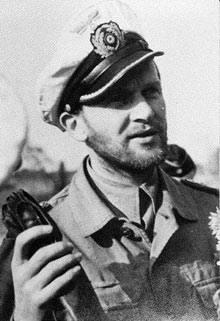
Heinz-Wilhelm Eck

Siegerjustiz and the Peleus Affair

by Dwight R. Messimer

Chapter Four

Day Four

The trial reconvened on Saturday, October 20, at 1000 a.m., for what would be the longest day of the trial-the closing arguments. Dr Todsen began his close in English, arguing that there had been no evidence to show that the survivors were intentionally killed. He also argued that Eck had no motive to kill the survivors, as had the officers of U-86 in the Llandovery Castle case. Therefore, the judgment in that case could not apply to this one. Todsen restated the "operational necessity" defense, citing the strength of Allied aircraft in the area and the fates of four previous Type IXD2 boats that had passed through that sector. Where did a U-boat captain's priority lay, Todsen asked the court rhetorically, with the boat and his crew, or with the survivors?

Dr. Todsen missed two chances to expand on the argument that the usages of war had changed by not arguing the belligerents' bombing raids against cities and the Allied killing of survivors in the Laconia Affair. He touched on both subjects, but did not elaborate. In the end he tried to hook up with Dr. Wegner's weak Caroline argument, but even then, he made only a passing reference to it.

Left: Dr. Max Pabst

Dr. Pabst addressed the court in German on behalf of Dr. Weispfennig, August Hoffmann and Wolfgang Schwender. Pabst, who read quite clearly the grim writing on the wall, followed a new line of reasoning instead of merely rehashing what the court had already heard. If the court found the accused guilty, Pabst maintained, then the court must decide if the men were guilty of murder, manslaughter or involuntary manslaughter. In an obvious attempt to sway the court away from a murder finding and open at least the possibility of a conviction of manslaughter, Pabst asserted that the judgment of the defendants was clouded by excitement and strain on the night the Peleus was sunk.

Switching gears, Pabst devoted some time and hit hard on the defense that the crewmen were obeying orders, and thus on March 13, 1944, the accused were subject to German military law. And, he added, as POWs they were still subject to German military law. He then addressed the case of each man individually, beginning with Wolfgang Schwender.

None of the testimony established that Schwender had actually aimed at a human being. In fact, the evidence showed that he had fired only at wreckage, and for only a very short time. Schwender had, argued Pabst, not participated in the killing of human beings.

August Hoffmann and Dr. Walter Weispfennig posed more difficult problems. Hoffmann had never been given a direct order to fire (and yet did so), while as a doctor, Weispfennig was prohibited from taking any offensive action (although he too had used a machine gun). With little choice, Pabst fell back on the simple plea of superior orders, citing German regulations found in the Militärstrafgesetzbuch. Since they acted on a binding order, the order lifted responsibility from them. He, too, cited the Caroline case, reciting the observation that "the English government recognizes the fact that the order of a superior does not make the subordinate responsible." He followed that with reference to the 1921 German court decision in the Dover Castle case.

The hospital ship Dover Castle, sunk on May 26, 1917, by SM UC-67 in the Mediterranean, was carrying wounded from Malta to Gibraltar. Six men were lost. UC-67's captain, Oberleutnant z.S. Karl Neumann, was never charged with a war crime, but at the direction of the German Attorney General, "an enquiry was held to decide the point whether the accused on 26 May 1917, intentionally killed six men. . . ." The proceedings ended in his acquittal. The court ruled that Neumann was following orders when he torpedoed the hospital ship.

Seizing on this case as precedent, Dr. Pabst argued that because the British had never protested the decision, they accepted the principle of superior orders. In the Llandovery Castle case, the judgment against the two officers was based on the grounds that they knew the order they had received was illegal. In the case of Weispfennig and Hoffmann, they did not know. Engineer Hans Lenz's counsel, Major Lermon, opened his closing statement by restating a portion of Dr. Pabst's closing argument no witness had testified that any of the survivors had actually been shot at. The only contrary evidence were the affidavits signed by the three Peleus survivors, and the major wondered aloud why the three crewmen had not been brought into court so they could be faced by the accused. He pointed out that the prosecution had fourteen months to arrange for their appearance in court. Lermon lectured the court on the issue of "superior orders"

"If you hold that superior orders are no defense to an individual, then you are putting in an impossible situation any individual who is subject to military law and to military discipline, particularly any member of the German Wehrmacht. As you have already heard from Dr. Pabst, and as you have already heard in evidence, under German law, when on active service, if a person refuses to obey an order, his superior has the right to mete out a death penalty. If you decide that superior orders are no defense, you put the individual into this impossible position that if he disobeys the order he is liable to be shot immediately; but if he obeys the order he is liable to come before a court and be charged on a capital offense with a war crime."

While his argument was cogent and focused, he still had to somehow explain why Lenz took the machine gun from Schwender and opened on the rafts. And, of course, there was little he could say except to restate that for Lenz, it was a matter of honor.

Colonel Halse wasted little time in getting to the heart of his argument against Eck and his crew members. Eck's orders on the night of March 13, argued Halse, were illegal in light of the German court's ruling in the Llandovery Castle case. Therefore, there could be no defense of superior orders for Weispfennig, Hoffmann and Schwender. Eck's directives, he said, amounted to "cold blooded murder."

Halse also told the court that the case against Hoffmann had been fully proven. Hoffmann admitted firing the machine gun, and he said he was the only one who threw hand grenades. One of the three survivors testified in an affidavit that one of the men on a raft had been killed by a hand grenade.

The prosecutor made his strongest attack on Dr. Weispfennig, saying that "his case is made the worse by reason of the fact that he is of the medical profession, and has no right to bear arms at all. . . ." Passing on to Lenz, he called his reason for taking the gun from Schwender "absurd." He allowed that Schwender was "in a curious position" because he was the only rating involved. But, argued Halse, "he must have known they were firing at human targets."

Colonel Halse's speech was the last made during the morning session. When the court reconvened at 2:15 p.m., the Judge Advocate began summing up the proceedings. He addressed each defense argument point by point in a manner more suited to a prosecutor's closing statement than an impartial jurist. He left the seven jurors no choice but to return a guilty verdict.

The seven members of the court took just forty minutes to reach a verdict of guilty on all counts for each defendant. There remained only the arguments for mitigation of the sentence.

Dr. Todsen made two points in his argument. The first was that the Llandovery Castle case and the Peleus case were considerably different. In the first case the sinking of a hospital ship was clearly a crime, and the captain was trying to hide his crime when he fired on the survivors. In Eck's case, he argued, the sinking of the Peleus was a legal act, and Eck's attempt to destroy the rafts was an "operational necessity."

Todsen's second point had to do with the testimony given by former U-boat ace Adalbert Schnee. Schnee was one of Germany's most experienced U-boat captains, argued Todsen, whereas Eck had little experience and was on his maiden patrol as a commander when Peleus was sunk. Schnee's statement about what his probable actions would have been had he found himself in a situation similar to Eck's represented Schnee's greater experience and confidence. Thereafter, character witnesses were called on behalf of Weispfennig, Hoffmann and Schwender. Dr. Pabst offered a statement on behalf of Weispfennig and Schwender that stressed the requirement for unquestioning obedience in the German navy. He also cited the mutual dangers shared by a U- boat's crew, and the effect that had on binding the men together. "If the accused are sentenced," Pabst told the court, "they can only be sentenced on account of their faithfulness to their commander and on account of their comradeship to one another."

Major Lermon's attempt at mitigation on behalf of Lenz consisted of trying to convince the court that Lenz "did not commit this crime out of any sordid motives of gain, or any lust of cruelty." His actions were "certainly illogical, but not unchivalrous. . . ."

The seven members of the court left the room to deliberate. Just fifty-eight minutes later they returned with their decisions Heinz Eck, August Hoffmann and Dr. Walter Weispfennig were condemned to death by firing squad; Chief Engineer Hans Lenz was sentenced to imprisonment for life, Wolfgang Schwender to fifteen years.

All five defendants stood stiffly at attention as the sentences were intoned, first in English by the court president, Brigadier C. J. V. Jones, and then in German by an interpreter. The faces of those condemned to death were as impassive as those who avoided a capital sentence. The sentences were confirmed up the line, with the last confirmation of them made by Field Marshal Sir Bernard L. Montgomery on November 12, 1945.

On November 30, 1945, a cold gray morning in Hamburg, Heinz Eck, August Hoffmann and Walter Weispfennig rose before dawn and put on their Kriegsmarine uniforms for the last time. The condemned men were marched across the Altona Prison exercise yard and down a tree-lined path to the prison firing range. Ahead of them were three posts side-by-side, all uniform in height. The prisoners were tied to the posts according to standard field regulations in such a way that after they were shot, the only visible changes in body positions would be a slight sagging at the knees and heads slumped forward. The officer in charge of the firing squad and his sergeant inspected the bindings and the latter pulled a hood over each man's head.

At 8:40 a.m., all three were executed.

Professor Wegner had told the court that "the passions of today will pass and be replaced by calmer and more peaceful judgment on war crimes and alleged German war crimes." For Eck, Hoffmann and Weispfennig, that day would never come. But it did for Hans Richard Lenz and Wolfgang Schwender. After a series of reviews and sentence reductions, Schwender was released from prison on December 21, 1951; Lenz followed him to freedom on August 27, 1952.


Were Heinz Eck and his crewmen really war criminals? The peers of the convicted crew of U-852 argued then and still do today that they were victims of the victorious Allies' vindictiveness, or pawns in British-Greek relations. Eck's supporters speak darkly of the mysterious deaths of Dr. Pabst and Dr. Todsen shortly after the trial. Pabst allegedly committed suicide, while Todsen was killed when the car in which he was riding was hit by a British army truck. Both deaths were investigated by the British Military Police, whose reports still remain sealed and unavailable.

A former senior German naval officer who commanded the German mine sweepers believed that Eck was guilty of an error in judgment. He added that many other actions in war killed defenseless people and are accepted as inevitable. Not all former German navy officers agree with that assessment. Some agree with the court's decision, describing it as harsh, but fair. Others believe Eck was simply not guilty of any wrongdoing whatsoever.

Heinz Eck's act was atrocious. He clearly overreacted to the warnings he had received from Schnee in January 1944, and perceived a greater threat of discovery than actually existed. His decision to destroy "all traces of the sinking" was unrealistic. His prolonged and futile attempt to carry out his decision showed extremely poor judgment. But poor judgment, even when it results in manslaughter, does not necessarily rise to the level of a war crime. And a conviction for manslaughter does not carry with it a death sentence. Eck violated German military and municipal law and would probably have been convicted by a German court. But a probability is not a certainty, and the British did not want to take a chance on a repeat of the 1921 Leipzig Trials.

But the fact remains that, during World War II, the usages of war with regard to killing civilians and shipwrecked survivors changed. The American press openly reported the slaughter of thousands of Japanese survivors in the Bismarck Sea, evidence that-insofar as the Americans were concerned-the rules had indeed changed.

The British were less open than the Americans about the brutal acts they justified as "operational necessities." But the British government at least tacitly approved of killing German shipwreck survivors in certain circumstances. Many belligerents in World War II slaughtered civilians by the hundreds of thousands with massive air raids on population centers. Allied loathing of Nazis atrocities, however, especially those in Eastern Europe, clouded their objectivity. All Germans were classed as Nazis, and everything the Germans did was seen as another example of Nazi barbarity. Acts committed with some regularity by virtually every army or navy in the world became war crimes when committed by Germans. For the British and their allies, these issues were seen in black and white. There was no middle ground.

Despite all the eloquent words written and spoken about the high standards and evenhandedness of the war crimes trials that followed World War II, Allied wartime propaganda and the excesses of the Nazi state made fair adjudications of the subject events virtually impossible. Before the war ended there was even serious discussion among the Allies about not holding trials at all. Former political leaders and soldiers charged with war crimes would simply be executed by executive action, "and those responsible for such action would answer for it at the bar of history."

But such drastic measures, such a wholesale repudiation of western democratic principles, were impossible to carry out. The solution lay in holding trials that were ostensibly equitable judicial inquiries. All the elements for such "equity" were present regulations governing procedures, attorneys for both the prosecution and defense, witnesses, a judge and a jury. And yet, it was under those conditions that Eck, Lenz, Hoffmann, Weispfennig and Schwender were brought before a British military tribunal and tried for their crimes. Given the circumstances, it is doubtful that even the most aggressive, best prepared defense could have altered the outcome.

Regardless of whether or not Heinz Eck and the others were guilty of war crimes, poor judgment, or of just following orders, the outcome of the trial was Siegerjustiz.

This article was published on 28 Mar 1998.

Heinz-Wilhelm Eck

Siegerjustiz and the Peleus Affair

Chapter One - Eck's career, U-852's only patrol and the sinking of SS Peleus and the loss of U-852 and its crew's imprisonment.

Chapter Two - The first day of the trial. The procecution and the defence prepare their cases.

Chapter Three - The second and third days of the trial.

Chapter Four - The fourth day of the trial. The execution of Eck and two of his crew members. Closing words.

Information about the book - Information on the book from which this section came from.

Go to the front page of


Operational Necessity, An

Griffin, Gwyn


Buy this title at


amazon.com
See more sellers

Books dealing with this subject include:

An Operational Necessity. Griffin, Gwyn, 1999. (transl.)
Silent Hunters. Savas, Theodore P. (editor), 1997. (transl.)
Trial of Heinz Eck, August Hoffmann, Walter Weisspfennig, Hans Richard Lenz and Wolfgang Schwender (The Peleus Trial). Cameron, John (editor), 1948.
Verdammter Atlantik. Herlin, Hans, 1994. (transl.)

Return to Articles main page