
Henry Glass Munson, USN
| Born | 31 Dec 1909 | Manila, Philippine Islands | |
| Died | 17 Jul 1975 | (65) | Princeton, Mercer County, New Jersey, USA |
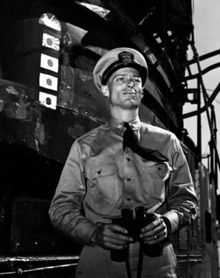 Henry Glass Munson onboard S-38 in 1942 | Ranks
Decorations
|
Warship Commands listed for Henry Glass Munson, USN
| Ship | Rank | Type | From | To |
| USS S-38 (143) | Lt. | Submarine | Jan 1942 | Jan 1943 |
| USS Crevalle (291) | T/Cdr | Submarine | 24 Jun 1943 | 16 Mar 1944 |
| USS Rasher (269) | T/Cdr | Submarine | 17 Jul 1944 | 3 Sep 1944 |
| USS Myles C. Fox (DD 829) | T/Cdr | Destroyer | 4 Feb 1948 | 29 Apr 1949 |
| USS Mispillion (AO 105) | Capt. | Oiler | Aug 1952 | Jul 1953 |
Career information
Henry Glass Munson was born in Manila, Philippine islands, on December 31, 1909, son of Mrs. Francis M. (Katharine Glass) Munson and the late Lieutenant F.M. Munson, Medical Corps, USN. He at-tended San Diego, California, High School, and after his enlistment in the U. S. Navy on June 28, 1927, completed the Naval Academy Preparatory Course at the Naval Training Station, San Diego, and entered the U. S. Naval Academy, Annapolis, Maryland, on June 29, 1928, as Midshipman from California. He was graduated and commissioned Ensign in the U. S. Navy on June 2, 1932, and through subsequent advancement attained the rank of Captain, to date from January 1, 1951.
Detached from the Naval Academy in June 1932, he joined the USS WEST VIRGINIA, in which he had various junior officer duties while that battleship (BB-48) operated as Flagship for Commander Battleships, and Commander Battleship Division 4, Battle Fleet. After three years' duty on board the WEST VIRGINIA, he served for ten months as Gunnery and Deck Officer of the USS BRIDGE, provision store ship, and remained at sea from April through December 1936 as Gunnery Officer of the USS ELLIS (DD-154).
He had submarine instruction at the U. S. Submarine School, New London, Connecticut, and from June 1937 until June 1939 served as Engineering Officer of the USS PORPOISE (SS-172). He then had shore duty at the U. S. Submarine Base, Pearl Harbor, T. H., as Mine Overhaul Officer, and in August 1940 joined the USS SCULPIN (SS-191) as Executive officer. As such he organized and trained the first submarine relief crews during the period immediately preceding the Japanese attack on the Fleet at Pearl Harbor on December 7, 1941.
From January 1942 until January 1943 he commanded the USS S-38 (SS-143), and during that period rescued 54 survivors of HMS ELECTRA, a British vessel lost by enemy action during the Battle of Java Sea in March 1942, and the same month conducted the first bombardment by a submarine of a Japanese-held shore position on Bawean island, Java Sea.
Returning to the Southwest Pacific Area, he commissioned and commanded the USS CREVALLE (SS-291) from March 1943 until March 1944, and participated in the first two of the successful War Patrols for which that submarine was awarded the Navy Unit Commendation. He commanded Relief Crews while serving on the Staff of the Commander Submarine Squadron 16 to the Southwest Pacific Theater from March to July 1944, then for four months was Commanding Officer of the USS RASHER (SS-269), which was awarded the Presidential Unit Citation for heroic action for her First, Third, Fourth and Fifth War Patrols in the Pacific during the period September 1943 until September 1944, the fifth Patrol being under his command.
For heroism and outstanding achievement in action in the Southwest Pacific Area, from December 1941 until November 1944, during which time he conducted several successful war patrols and sank numerous vessels, including a Japanese Naval carrier of TAKA class in a night surface torpedo action (October 1944) off Vlgan, Luzon, Philippine Islands, he was awarded the Navy Cross, with 2 Gold Stars in lieu of two additional awards, and two Letters of Commendation, with Ribbon, Star and Combat V. The citations follow, in part:
Navy Cross: "For extraordinary heroism as Commanding Officer of the USS CREVALLE on patrol in enemy-controlled waters from October 27 to December 7, 1943...Commander Munson took advantage of every favorable attack opportunity and, fighting his ship with determined aggressiveness, succeeded in sinking or damaging an important amount of vital hostile shipping. Displaying skillful evasive tactics in the face of vigorous enemy countermeasures, he handled his vessel with outstanding proficiency and brilliant seamanship, bringing the CREVALLE through each fierce engagement without damage.”
Gold Star in lieu of Second Navy Cross: "For extraordinary heroism as Commanding Officer of the USS CREVALLE, during the Second War Patrol of that vessel in enemy Japanese-controlled waters, from December 30, 1943 to February 20, 1944. Vigilantly searching the seas for Japanese shipping, (he) pursued one hostile ship for fifteen hours and, driven off four times by enemy escorts, relentlessly returned to press home his attack, climaxing this prolonged chase and engagement by sending the enemy to the bottom. With only two worthwhile contacts picked up by the CREVALLE, he requested and received a five-day extension of the regular patrol period, setting out with renewed vigor to intercept Japanese surface units. Tracking one escorted convoy of nine ships covered by hostile aircraft from mid-morning until dark, (he) directed the gallant submarine in a bold night surface attack and succeeded in scoring torpedo hits upon six enemy vessels...and escaping damage despite wild Japanese gunfire and intense depth-charge barrages. Under his brilliant leadership, the CREVALLE completed a daring patrol in the face of terrific opposition, sinking three freighters, one armed patrol tug and a sailing craft, and damaging four other hostile ships..."
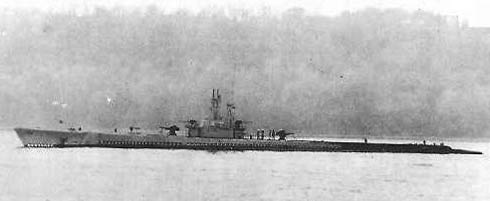
USS Crevalle, SS-293.
Gold Star in lieu of Third Navy Cross: "For extraordinary heroism as Commanding Officer of the USS RASHER during the Fifth War Patrol of that vessel in enemy Japanese waters from June 22 to September 3, 1944, and as Commander of the Coordinated Attack Group of two submarines during that period. Skillfully maneuvering his ship to penetrate strong enemy escort screens maintained around enemy shipping, Commander Munson launched bold, aggressive attacks in the face of heavy and persistent countermeasures, to score twenty-one hits out of twenty-four torpedoes fined sinking five enemy ships totaling 22,000 tons. Planning and efficiently handling his own ship and another as a group, he enabled the other to sink two 10,000-ton enemy tankers and a large freighter of 19,500 tons..."
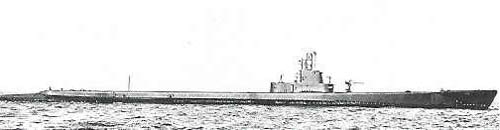
USS Rasher, SS-269.
Letter of Commendation: "For meritorious conduct in action as Commanding Officer of the USS S-38 during the Fourth War Patrol of that vessel from 22 February 1942 to 13 March 1942. With great daring and consummate skill the Commanding Officer delivered smashing torpedo attacks which severely damaged a 7,500 ton enemy cruiser. Severe enemy countermeasures kept the S-38 at deep submergence and further observations on the possible sinking of this valuable enemy vessel were impossible. The Commanding Officer skillfully evaded determined enemy counterattacks and brought his ship back to port safely..."
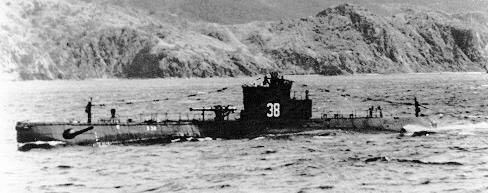
S-38, SS-143, commissioned in 1917.
Second Letter of Commendation: "For meritorious conduct...as Commanding Officer of the USS S-38 during the Seventh War Patrol of that vessel from 28 July 1942 to 22 August 1942...(He) conducted a successful torpedo attack which resulted in the sinking of 8,000 tons of enemy shipping...and brought his ship safely back to port.”
Detached from the USS RASHER in November 1944, Captain Munson returned to the U. S. Submarine School, New London, for a tour of duty as instructor and Assistant Officer in Charge, in November 1946 he became Commander Submarine Division 71, and as such conducted the first submarine launched guided missile firings. From January 1948 until April 1949 he commanded the USS MYLES C. FOX (DD-829), then reported to the Naval Postgraduate School, Annapolis, Maryland, for instruction in Advanced Science (General Physics) which he completed at the California institute of Technology at Pasadena in June 1952, receiving the degree of Master of Science.
In August 1952 he assumed command of the USS MISPILLION (AO-105), which participated in action in the Korean Area under the United Nations Command. He received a Third Letter of Commendation, with Star for his Commendation Ribbon (and Combat "V" authorized), "For meritorious service as Commanding Officer of the USS MISPILLION during combat operations against enemy North Korean and Chinese Communist forces in the Korean Theater from 14 February 1952 to 9 June 1953..."
While he was in command of the USS MISPILLION, his ship rescued fourteen survivors of a Chinese merchant ship, LIEN SHENG, lost at sea by fire in Formosa Strait in May 1952. Detached from that command in July 1953, he was ordered to the Navy Department, Washington, D. C., for a tour of shore duty in the Bureau of Ordnance as Systems Director, Nuclear Applications, He commanded Destroyer Squadron 3 in 1956 and early 1957. While in command of Destroyer Squadron 3, he directed the rescue of the passengers and crew of the New Zealand Passenger ship MATUA grounded in the Fiji islands, and accomplished the salvaging of the ship in early 1957.
Under orders of April 17, 1957 became Deputy Hydrographer, Hydrographic Office, Navy Department. On March 26, 1959, he was designated Hydrographer of the Navy, under the Chief of Naval Operations. While Hydrographer Captain Munson planned the course of the USS Triton’s SSRN-586 submerged circumnavigation in 1960 and staffed the vessel to take a complete bathyscopic and magnetic survey of the globe along her course.
In late 1960 he was attached to the Bureau of Inspection and Survey, and served as ‘a test pilot and strategy instructor’ for new nuclear attack submarines on their acceptance trials. He retired to Princeton NJ in 1961, where he directed RCA Labs Military Systems office, before retiring again and teaching Physics at Princeton High School. Captain Munson died July 17, 1975.
In addition to the Navy Cross with two Gold Stars in lieu of additional awards, the Commendation Ribbon with two stars and Combat "V," the Presidential Unit Citation Ribbon and the Navy Commendation Ribbon, Captain Munson has the American Defense Service Medal with star; Asiatic-Pacific Campaign Medal with two operation stars; American Campaign Medal; World War II Victory Medal China Service Medal (extended); National Defense Service Medal; Korean Service Medal; and United Nations Service Medal.
Captain Munson married the former Anna M. Olsen of Waukegan, Illinois in Honolulu in 1939. They had two sons, John Henry Munson (deceased 1987) and Christopher James Munson, of Arlington Virginia, and two grandchildren, Marianna Munson Erenhouse, and Noel Christopher West Munson. Captain Munson and Anna’s remains were interned in the Pacific Ocean west of Kauai on February 6th, 2002.
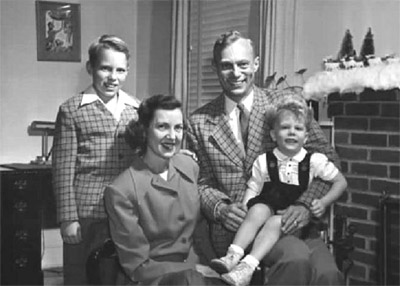
John, Anna, Hank and Christopher Munson, 1952
Original Text by U.S. NAVY - Office of Information Biographies Branch 8 May 1959
Edited and updated by Christopher Munson, January 2006
Events related to this officer
Submarine USS S-38 (143)
25 Jan 1942
USS S-38 (Lt.Cdr. H.G. Munson) departed from Surabaya for her 3rd war patrol. She was ordered to patrol in Makassar Strait off Balikpapan.
16 Feb 1942
USS S-38 (Lt.Cdr. H.G. Munson) ended her 3rd war patrol at Surabaya.
22 Feb 1942
USS S-38 (Lt.Cdr. H.G. Munson) departed from Surabaya for her 4th war patrol. She was ordered to patrol in the Java Sea.
26 Feb 1942
USS S-38 (Lt.Cdr. H.G. Munson) shells Japanese facilities at Sangkapura, Bawean Island.
28 Feb 1942
USS S-38 (Lt.Cdr. H.G. Munson) picks up 54 survivors from the British destroyer HMS Electra. On 1 March the survivors were transferred to a surface ship in Madoera Strait. S-38 then continues her patrol.
2 Mar 1942
USS S-38 (Lt.Cdr. H.G. Munson) fires four torpedoed against the Japanese light cruiser Kinu (offsite link) north-east of Cape Awarawar. All four torpedoed missed their target. USS S-38 later fires two torpedoes against a Japanese destroyer but these also miss.
3 Mar 1942
USS S-38 (Lt.Cdr. H.G. Munson) was ordered to proceed to Fremantle, Australia.
5 Mar 1942
USS S-38 (Lt.Cdr. H.G. Munson) transits Lombok Strait.
13 Mar 1942
USS S-38 (Lt.Cdr. H.G. Munson) ended her 4th war patrol at Fremantle. S-38 later proceeded to Brisbane on Australia's east coast.
28 Apr 1942
USS S-38 (Lt.Cdr. H.G. Munson) departed from Brisbane for her 5th war patrol. She was ordered to patrol off New Guinea.
24 May 1942
USS S-38 (Lt.Cdr. H.G. Munson) ended her 5th war patrol at Brisbane.
24 Jun 1942
USS S-38 (Lt.Cdr. H.G. Munson) departed from Brisbane for her 6th war patrol. She was ordered to patrol off the Solomon Islands.
7 Jul 1942
USS S-38 (Lt.Cdr. H.G. Munson) ended her 6th war patrol at Brisbane. She was forced to return to base early because of mechanical problems.
28 Jul 1942
USS S-38 (Lt.Cdr. H.G. Munson) departed from Brisbane for her 7th war patrol. She was ordered to patrol off New Britain and New Ireland.
8 Aug 1942 (position -4.52, 152.42)
USS S-38 (Lt.Cdr. H.G. Munson) torpedoed and sank the Japanese transport ship Meiyo Maru (5628 GRT, built 1940) at the southern entrance of the St. George Channel, between New Britain and New Ireland in position 04°52'S, 152°42'E.
22 Aug 1942
USS S-38 (Lt.Cdr. H.G. Munson) ended her 7th war patrol at Brisbane.
21 Sep 1942
USS S-38 (Lt.Cdr. H.G. Munson) departed from Brisbane for her 8th war patrol. She is to proceed to Pearl Harbor and then to the US west coast for an overhaul. en-route she is to reconnoitre several of the Gilbert Islands.
25 Sep 1942
USS S-38 (Lt.Cdr. H.G. Munson) topped up with fuel at Noumea, she departed from the next day.
10 Oct 1942
USS S-38 (Lt.Cdr. H.G. Munson) departed from the Gilbert Islands area bound for Pearl Harbor.
6 Nov 1942
USS S-38 (Lt.Cdr. H.G. Munson) arrived at San Diego, California for an overhaul.
Submarine USS Crevalle (291)
3 Jul 1943 (position 0.00, 0.00)
USS Crevalle (Cdr. H.G. Munson, USN) is docked at the Portsmouth Navy Yard.
6 Jul 1943 (position 0.00, 0.00)
USS Crevalle (Cdr. H.G. Munson, USN) is undocked.
11 Jul 1943
USS Crevalle (Cdr. H.G. Munson, USN) started a period of trials and exercses in the Portsmouth area.
22 Jul 1943 (position 0.00, 0.00)
USS Crevalle (Cdr. H.G. Munson, USN) is docked at the Portsmouth Navy Yard.
24 Jul 1943
USS Crevalle (Cdr. H.G. Munson, USN) is undocked.
28 Jul 1943
USS Crevalle (Cdr. H.G. Munson, USN) departed the Portsmouth area for Newport, Rhode Island.
29 Jul 1943 (position 0.00, 0.00)
USS Crevalle (Cdr. H.G. Munson, USN) arrived at Newport, Rhode Island for her torpedo trials.
31 Jul 1943
Having completed her torpedo trials, USS Crevalle (Cdr. H.G. Munson, USN), departed Newport, Rhode Island for New London, Connecticut where she arrived later the same day.
13 Aug 1943
USS Crevalle (Cdr. H.G. Munson, USN) conducted exercises in Long Island Sound together with USS Semmes (Lt.Cdr. W.I. Bull, USN).
14 Aug 1943 (position 0.00, 0.00)
USS Crevalle (Cdr. H.G. Munson, USN) is put on the Marine Railway at New London.
15 Aug 1943 (position 0.00, 0.00)
USS Crevalle (Cdr. H.G. Munson, USN) is put back in the water.
1 Sep 1943
USS Crevalle (Cdr. H.G. Munson, USN) departed New London, Connecticut for Coco Solo, Panama Canal Zone.
9 Sep 1943
USS Crevalle (Cdr. H.G. Munson, USN) arrived at Coco Solo, Panama Canal Zone from New London, Connecticut.
13 Sep 1943
USS Crevalle (Cdr. H.G. Munson, USN) transited the Panama Canal.
14 Sep 1943
USS Crevalle (Cdr. H.G. Munson, USN) departed from Balboa, Panama Canal Zone bound for Brisbane, Australia.
17 Sep 1943
USS Crevalle (Cdr. H.G. Munson, USN) calls at South Seymour Island, Galapagos Islands to take on additional fuel and provisions.
26 Sep 1943
USS Crevalle (Cdr. H.G. Munson, USN) calls at Pitcairn Island to make some repairs to the hydraulic system.
11 Oct 1943
USS Crevalle (Cdr. H.G. Munson, USN) arrived at Brisbane.
18 Oct 1943 (position 0.00, 0.00)
USS Crevalle (Cdr. H.G. Munson, USN) departed Brisbane for exercises.
20 Oct 1943
USS Crevalle (Cdr. H.G. Munson, USN) departed from Brisbane for her 1st war patrol. She was ordered to proceed to Darwin and from the departed on patrol in the Sulu and South China Seas.
For daily and attack positions (though incomplete, missing the positions for the passage from Brisbane to Darwin) of USS Crevalle during this patrol see the map below.
26 Oct 1943 (position 0.00, 0.00)
USS Crevalle (Cdr. H.G. Munson, USN) arrived at Darwin.
27 Oct 1943 (position 0.00, 0.00)
USS Crevalle (Cdr. H.G. Munson, USN) departed Darwin for her patrol area.
10 Nov 1943 (position 12.52, 121.46)
USS Crevalle (Cdr. H.G. Munson, USN) attacked a Japanese convoy east of Mindoro, Philippines. No hits were obtained although it was hought at the time that one ship had been damaged.
(All times are zone H, -8) 1143 hours - In position 12°52'N, 121°46'E sighted smoke to the eastward, commenced approach and presently determined target to consist of one trawler type escort vessel of about 800 tons, one 1700 tons coal burning transport ship, one 5640 tons coal burning transport and one 4400 tons coal burning transport. The convoy was tracked on a base course of 320°(T) at a speed of 8 knots. When first sighted the range was 16000 yards.
1243 hours - The best possible attack position was reached which was at a range of 2200 yards from the second and largest transport. In position 12°52'N, 121°46'E fired six bow torpedoes at this ship which was by now overlapping with the third transport. The first two torpedoes prematured 37 and 36 seconds after they had been fired. It is thought that the sixth torpedo either hit the target or the ship beyond.
1249 hours - Fired four stern torpedoes at the second transport. Again the first two torpedoes fired prematured. The result of the other two torpedoes could not be observed as all hell was now about to break loose. The escort was now seen to come towards with a bone in his teeth. The transports fired their deck guns in every direction but the right one. Depth charges were also dropped.
1255 hours - The escort was seen to fiercely depth charge the original firing point and then to close in our general direction. Crevalle remained at periscope depth until the escort headed directly for the submarine at 1305 hours when shee went deep and took evasive action.
1325 hours - Returned to periscope depth. Nothing in sight except one ship hull down to the northward.
1535 hours - A bomb exploded some distance off.
1537 hours - Sighted a 'Val' aircraft circling overhead. Went deep.
1552 hours - Heard two bombs explode.
1600 hours - Heard one bomb explosion.
1603 hours - Another bomb explosion. All quiet afterwards.
1813 hours - Surfaced.
15 Nov 1943 (position 14.53, 119.56)
USS Crevalle (Cdr. H.G. Munson, USN) torpedoed and sank the Japanese army cargo ship Kyokko Maru (6783 GRT, built 1920) west of Manila, Philippines in position 14°53'N, 119°56'E.
(All times are zone H, -8) 0822 hours - In position 14°54'N, 119°54'E sighted a ship in the fog at a range of 6000 yards. Started attack. The ship was zig-zagging radically on base course 150°(T).
0833 hours - In position 14°53'N, 119°56'E fired four torpedoes from 900 yards. One hit was obtained. Went deep and swung right at full speed. While passing the target breaking up noises were heard through the hull. The screws of the target stopped and were not heard again. Two small escorts were heard while we were deep. They started dropping depth charges and at one time one dropped a pattern of six rather close but they caused no damage.
1002 hours - At periscope depth. All clear.
18 Nov 1943 (position 15.08, 119.38)
USS Crevalle (Cdr. H.G. Munson, USN) claims to have sunk a Japanese escort carrier in the South China Sea east of Luzon, Philippines in position 15°08'N, 119°38'E.
(All times are zone H, -8) 1840 hours - In position 14°55'N, 119°47'E obtained SJ radar contact to the south-west on a large target at a range of 11500 yards. Stopped. Commenced tracking from ahead. A small target was near the large target, this was thought to be an escort. The plot showed the target to be zig-zagging wildly using a very radical plan with long legs with a short plan superimposed on the long legs, a method which, because of the difficulty of solution is suggested for consideration to our own surface forces. Targets base course was 330(T), speed 19 knots. It was very difficult to get into a fouvourable attack position but in the end the target changed course towards.
2015 hours - In position 15°08'N, 119°38'E fired six bow torpedoes from 1500 yards at the target which was thought to be an aircraft or escort carrier. A large explosion was seen near the bow of the enemy. Debris and water shot 500 feet into the air. The escorting destroyer, thought to be of the Mutsuki-class, now came towards.
2016 hours - Dived. Went to 350 feet. The destroyer started dropping depth charges.
2329 hours - After sound contact with the destroyer had been lost planed up to periscope depth. Made a periscope and radar search all around while at 45 feet. No contacts.
2335 hours - Surfaced.
26 Nov 1943 (position 15.24, 119.44)
USS Crevalle (Cdr. H.G. Munson, USN) claims to have sunk a Japanese transport of about 4000 tons in the South China Sea east of Luzon, Phillipines in position 15°24'N, 119°44'E.
(All times are zone H, -8) 25 November 1943 2322 hours - In position 15°24'N, 119°44'E made sight contact on a Maru of about 4000 tons to the southward. Commenced tracking. His base course was 345°(T), speed 8 knots.
26 November 1943 0022 hours - Submerged 1200 yards off the targets main course line, presented the stern tubes and waited while still tracking the enemy by sound and radar.
0041 hours - In position 15°24'N, 119°44'E fired four stern torpedoes. The first torpedo prematured but the second and third torpedo hit the target. The screws of the target speeded up but then stopped and were not heard again. The radar pip disappeared. The was no escort for this Maru. Surfaced. Cleared the area and headed for Fremantle, Australia as the four torpedoes fired in this attack were our last.
2 Dec 1943 (position 0.00, 0.00)
In the early morning hours, USS Crevalle (Cdr. H.G. Munson, USN), made the southbound passage of Lombok Strait on the surface.
7 Dec 1943
USS Crevalle (Cdr. H.G. Munson, USN) ended her 1st war patrol at Fremantle, Australia.
At Fremantle she was refitted by a relief crew from Submarine Division 161 and Submarine Repair Unit no.137.
30 Dec 1943
USS Crevalle (Cdr. H.G. Munson, USN) departed from Fremantle for her 2nd war patrol. She was ordered to patrol in the South China Sea. Before she proceeded on patrol exercises were carried out together with USS Isabel (Lt. K.F. Landis, USNR).
For daily and attack positions of USS Crevalle during this patrol see the map below.
2 Jan 1944 (position 0.00, 0.00)
USS Crevalle (Cdr. H.G. Munson, USN) made a short stop at Exmouth Gulf to top off with fuel before proceeding towards her patrol area.
7 Jan 1944
USS Crevalle (Cdr. H.G. Munson, USN) attacked a Japanese submarine in the Java Sea in position 06°10'S, 116°39'E. This was most likely the Japanese submarine RO-112 that was en-route to Surabaya from Japan.
(All times are zone H, -8) 0530 hours - In position 06°10'S, 116°39'E sighted a submarine to the northward on an opposite course. Assumed it to be a US submarine of whose presence we were not advised, asked him who he was by signal lamp in plain language. Received the correct challenge and replied to it, but noted tht he reversed course. Asked him who he was again and got an unreadable signal back. Commenced closing. He again turned south and we passed him abeam at a range of 3000 yards. His silhoutte was now seen to be anything but US so asked him who he was again an again received the correct challenge. Now saw what appeared to be two white characters painted on the side of the conning tower. I was for a moment thought that the contact was British or Dutch, as the silhoutte vaguely resembled but then he would be out of his area a lot (This is a strange passage in the patrol report, No British or Durch submarine was operating in these waters at the given time). The contact now rapidly swung around to present a 90 degree port track. Simultaneously the two white characters on his conning tower resolved themselves into the Japanese merchant flag and the submarine was identified as being one of the Japanese RO-class. Enemy course 160°(T), speed 8 knots.
0540 hours - Brought the stern tubes to bear and fired two torpedoes from a range of 1800 yards as the enemy was in the act of submerging. Both torpedoes prematured when 600 yards from Crevalle. Proceeded to clear the area at full speed.
9 Jan 1944 (position 0.30, 119.10)
USS Crevalle (Cdr. H.G. Munson, USN) sank a sampan with gunfire in Makassar Strait in position 00°30'N, 119°10'E.
(All times are zone H, -8) 1300 hours - Found a small sailing vessel, sampan hull, two masts. Fired two rounds of 20mm ahead of him whereupon the crew, which did not look native, doused sails and hid in the ships covered postion refusing to come out. Destroyed the sailing vessel with 20mm. A total of 120 rounds were used. Then proceeded towards the Sibutu passage at 10 knots.
14 Jan 1944
In the evening USS Crevalle (Cdr. H.G. Munson, USN) lays mines east of Saigon, French Indo-China.
15 Jan 1944
In the early morning hours USS Crevalle (Cdr. H.G. Munson, USN) lays more mines east of Saigon, French Indo-China.
26 Jan 1944 (position 8.27, 109.12)
USS Crevalle (Cdr. H.G. Munson, USN) torpedoed and sank the Japanese transport Busho Maru (2567 GRT, built 1921) in the South China Sea about 175 nautical miles south-east of Cape St. Jacques, French Indo-China in position 08°27'N, 109°12'E.
(All times are zone H, -8) 0345 hours - In position 09°32'N, 111°25'E made radar contact on a large transport with a small trawler-catcher type escort. Tracked from ahead. Determined the base course of the enemy as 220°(T), speed 8 knots. Worked into a position for a submerged radar attack.
0435 hours - Submerged to radar depth. The target changed it's base course to 250°(T) so the attack had to be broken off.
0548 hours - Surfaced and commenced an end around.
0617 hours - Submerged and commenced another attack. Unable to close enough so the attack had to be broken off again.
0804 hours - Surfaced. Range to the enemy was now 12 miles. Started another end around run.
1349 hours - Submerged on the enemy's track and commenced a conventional periscope approach and attack. In the final stages of the attack the enemy again changed course so this attack was also broken off.
1758 hours - After having tracked them out to 12 miles again, surfaced and commenced trailing. Then moved in position for a surface attack.
2205 hours - In our disired position for a surface attack.
2214 hours - Commenced attack on this contact for the fourth time.
2218 hours - In position 08°27'N, 109°12'E fired four torpedoes from 2500 yards. The first torpedo hit and appeared to break the ships back. She sank in about three minutes. The escort responded with dropping few depth charges at random while Crevalle retired to the southwards.
11 Feb 1944 (position 5.00, 119.06)
USS Crevalle (Cdr. H.G. Munson, USN) sank a small armed Japanese tug with gunfire off the east coast of Borneo in position 05°00'N, 119°06'E.
(All times are zone H, -8) 1500 hours - Observed a patrol vessel (converted tug type of about 150 tons) standing up from Alice Channel heading towards Labian Point. She was heading almost directly for us.
1555 hours - Battle surfaced. Manned the 4" gun and gave chase. The enemy speeded up and headed towards the shore. Opened fire when the range was 5000 yards. The enemy then turned towards and opened fire with a small deck gun and two machine guns. A near miss soon put all his guns out of action. A hit on the stern of the enemy blew up the depth charges and he was soon sinking. Closed and attempted to pick up the five survivors seen in the water but they refused to be picked up. Then cleared the area at 18 knots. During the action 28 rounds of 4" and 60 rounds of 20mm were fired.
15 Feb 1944 (position 5.10, 128.43)
USS Crevalle (Cdr. H.G. Munson, USN) attacked a Japanese convoy north of Halmahera. Hits on five ships are claimed but this could not be confirmed post-war.
The convoy attacked was convoy M-12 made up of the transports Mizuho Maru (8506 GRT, built 1912), Fuso Maru (8195 GRT, built 1909), Mitsuki Maru (6440 GRT, built 1943), Kenwa Maru (6384 GRT, built 1942), Tonegawa Maru (4999 GRT, built 1913), Kurogane Maru (2845 GRT, built 1943) and Wales Maru (6586 GRT, built 1921). They were escorted by the Japanese minesweepers W-4 and the Japanese patrol vessel PB-105.
(All times are zone H, -8) 1042 hours - In position 04°07'N, 129°09'E sighted smoke bearing 090°(T), distance about 16 nautical miles. The contact developed into a convoy of seven transports. Another transport, a staggler, was about 8 nautical miles behind the main convoy. Commenced tracking and intended to attack at night.
1718 hours - Commenced working into a position to attack from.
2008 hours - Went in to attack.
2033 hours - In position 05°10'N, 128°43'E fired six bow torpedoes. Ranges were around 2700 yards. Four hits are claimed on three of the transports.
2036 hours - Fired the three remaining stern torpedoes. Two hits are claimed on two other transports. Went full ahead to clear the scene.
16 Feb 1944 (position 0.00, 0.00)
Out of torpedoes, USS Crevalle (Cdr. H.G. Munson, USN), departed her patrol area for Fremantle via Darwin.
20 Feb 1944 (position 0.00, 0.00)
USS Crevalle (Cdr. H.G. Munson, USN) arrived at Darwin.
21 Feb 1944 (position 0.00, 0.00)
After some voyage repairs, USS Crevalle (Cdr. H.G. Munson, USN), departed Darwin for Fremantle.
28 Feb 1944
USS Crevalle (Cdr. H.G. Munson, USN) ended her 2nd war patrol at Fremantle.
Submarine USS Rasher (269)
22 Jul 1944
USS Rasher (Lt.Cdr. H.G. Munson) departed from Fremantle for her 5th war patrol. she was ordered to patrol in the South China Sea.
6 Aug 1944 (position 14.10, 117.12)
USS Rasher (Lt.Cdr. H.G. Munson) torpedoed and sank the Japanese army cargo ship Shiroganesan Maru (4379 GRT) in the South China Sea west of Luzon, Philippines in position 14°10'N, 117°12'E.
18 Aug 1944 (position 18.16, 120.21)
While attacking a Japanese convoy in the South China Sea off the west coast of Luzon, Philippines USS Rasher (Lt.Cdr. H.G. Munson) torpedoed and sank the Japanese escort carrier Taiyo (17830 tons, offsite link), the Japanese troop transport Teia Maru (17537 GRT, former French Aramis) and the Japanese army cargo ship Eishin Maru (542 GRT) in position 18°16'N, 120°21'E. Rasher also torpedoed and sank the Japanese oiler Teiyo Maru (9849 GRT) southwest of Cape Bojeador in position 18°09'N, 120°13'E, and finally she torpedoed and damaged the Japanese troop transport Noshiro Maru (7184 GRT, offsite link) southwest of Cape Bojeador in position 18°09'N, 119°56'E.
3 Sep 1944
USS Rasher (Lt.Cdr. H.G. Munson) ended her 5th war patrol at Pearl Harbor. She is now sent to the Hunters Point Navy Yard for a major overhaul.
You can help improve officers Henry Glass Munson's page
Click here to Submit events/comments/updates for this officer.
Please use this if you spot mistakes or want to improve his page.