
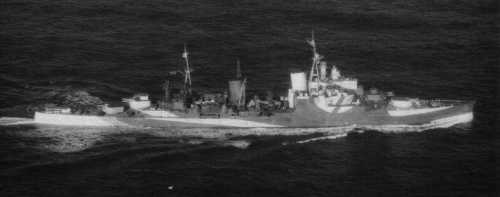
| Navy | The Royal Navy |
| Type | Light cruiser |
| Class | Southampton |
| Pennant | 21 |
| Built by | Scotts Shipbuilding & Engineering Co. (Greenock, Scotland) |
| Ordered | 17 Dec 1934 |
| Laid down | 16 Apr 1935 |
| Launched | 20 Jun 1936 |
| Commissioned | 9 Sep 1937 |
| End service | |
| History | Decommissioned and placed on the disposal list in November 1956. In July 1958 Glasgow was broken up at Blyth by Hughes Bolckow. |
Commands listed for HMS Glasgow (21)
Please note that we're still working on this section
and that we only list Commanding Officers for the duration of the Second World War.
| Commander | From | To | |
| 1 | Capt. Frank Henderson Pegram, RN | 10 Jul 1939 | 6 Jun 1940 |
| 2 | Capt. Harold Hickling, RN | 6 Jun 1940 | 5 Jan 1941 |
| 3 | Cdr. John Wilson Cuthbert, RN | 5 Jan 1941 | 8 Feb 1941 |
| 4 | Capt. Harold Hickling, RN | 8 Feb 1941 | 26 Dec 1941 |
| 5 | Cdr. John Wilson Cuthbert, RN | 26 Dec 1941 | 21 May 1942 |
| 6 | Cdr. Robert Jocelyn Oliver Otway-Ruthven, RN | 21 May 1942 | 30 Jul 1942 |
| 7 | Capt. Edward Malcolm Evans-Lombe, RN | 30 Jul 1942 | 25 Nov 1943 |
| 8 | Capt. Charles Philip Clarke, RN | 25 Nov 1943 | 6 Aug 1944 |
| 9 | Cdr. Cromwell Felix Justin Lloyd-Davies, RN | 6 Aug 1944 | 23 Oct 1944 |
| 10 | Capt. Charles Philip Clarke, DSO, RN | 23 Oct 1944 | 22 Nov 1945 |
You can help improve our commands section
Click here to Submit events/comments/updates for this vessel.
Please use this if you spot mistakes or want to improve this ships page.
Notable events involving Glasgow include:
This page dealing with the wartime history of HMS Glasgow was created in May 2024.
This page was last updated in June 2024.
1 Sep 1939
Around 2015A/1, the light cruisers HMS Southampton (Capt. F.W.H. Jeans, CVO, RN, flying the flag of Vice-Admiral G.F.B. Edward-Collins, CB, KCVO, RN), HMS Glasgow (Capt. F.H. Pegram, RN) and the destroyers HMS Jervis (Capt. P.J. Mack, RN), HMS Jackal (Cdr. T.M. Napier, RN), HMS Javelin (Cdr. A.F. Pugsley, RN), HMS Jersey (Lt.Cdr. A.M. McKillop, RN) and HMS Jupiter (Lt.Cdr. D.B. Wyburd, RN), departed Grimsby for a patrol off the coast of Norway. (1)
5 Sep 1939
Around 1430A/5, the destroyers HMS Jervis (Capt. P.J. Mack, RN) and HMS Javelin (Cdr. A.F. Pugsley, RN) were detached from HMS Southampton (Capt. F.W.H. Jeans, CVO, RN, flying the flag of Vice-Admiral G.F.B. Edward-Collins, CB, KCVO, RN), HMS Glasgow (Capt. F.H. Pegram, RN) and HMS Jupiter (Lt.Cdr. D.B. Wyburd, RN).
The destroyers that had been detached arrived at Invergordon 0715A/6.
6 Sep 1939
HMS Southampton (Capt. F.W.H. Jeans, CVO, RN, flying the flag of Vice-Admiral G.F.B. Edward-Collins, CB, KCVO, RN), HMS Glasgow (Capt. F.H. Pegram, RN) and HMS Jupiter (Lt.Cdr. D.B. Wyburd, RN) arrived at Rosyth around 0700A/6. (1)
8 Sep 1939
Operation GH.
Shortly after noon on the 8th, the light cruisers HMS Southampton (Capt. F.W.H. Jeans, CVO, RN, flying the flag of Vice-Admiral G.F.B. Edward-Collins, CB, KCVO, RN), HMS Glasgow (Capt. F.H. Pegram, RN) and the destroyers HMS Jervis (Capt. P.J. Mack, RN), HMS Javelin (Cdr. A.F. Pugsley, RN), HMS Jersey (Lt.Cdr. A.M. McKillop, RN) and HMS Jupiter (Lt.Cdr. D.B. Wyburd, RN) departed Rosyth for a patrol in the North Sea to intercept German shipping between Rotterdam and Hamburg.
Nothing of interest was sighted and the ships returned to Rosyth around 1800A/9. (1)
10 Sep 1939
Around 1800A/10, the light cruisers HMS Southampton (Capt. F.W.H. Jeans, CVO, RN, flying the flag of Vice-Admiral G.F.B. Edward-Collins, CB, KCVO, RN), HMS Glasgow (Capt. F.H. Pegram, RN) and the destroyers HMS Jervis (Capt. P.J. Mack, RN), HMS Javelin (Cdr. A.F. Pugsley, RN), HMS Jersey (Lt.Cdr. A.M. McKillop, RN) and HMS Jupiter (Lt.Cdr. D.B. Wyburd, RN) departed Rosyth for Sheerness. (1)
11 Sep 1939
Around 1200A/11, the light cruisers HMS Southampton (Capt. F.W.H. Jeans, CVO, RN, flying the flag of Vice-Admiral G.F.B. Edward-Collins, CB, KCVO, RN), HMS Glasgow (Capt. F.H. Pegram, RN) and the destroyers HMS Jervis (Capt. P.J. Mack, RN), HMS Javelin (Cdr. A.F. Pugsley, RN), HMS Jersey (Lt.Cdr. A.M. McKillop, RN) and HMS Jupiter (Lt.Cdr. D.B. Wyburd, RN) arrived at Sheerness from Rosyth. They had been sent to Sheerness to be in a position to provide cover for minelaying operations in the Dover Strait ('Operation GR'), if this was needed.
In the evening they all sailed for patrol returning to Sheerness the following morning. (1)
13 Sep 1939
HMS Southampton (Capt. F.W.H. Jeans, CVO, RN, flying the flag of Vice-Admiral G.F.B. Edward-Collins, CB, KCVO, RN), HMS Glasgow (Capt. F.H. Pegram, RN) and the destroyers HMS Jervis (Capt. P.J. Mack, RN), HMS Javelin (Cdr. A.F. Pugsley, RN), HMS Jersey (Lt.Cdr. A.M. McKillop, RN) and HMS Jupiter (Lt.Cdr. D.B. Wyburd, RN) departed Sheerness around 0345A/13 hours for a patrol off the Nore to provide cover for the minelaying operations in the Dover Strait ('Operation GR'). They returned to Sheerness around 1445A/13. (1)
14 Sep 1939
HMS Southampton (Capt. F.W.H. Jeans, CVO, RN, flying the flag of Vice-Admiral G.F.B. Edward-Collins, CB, KCVO, RN), HMS Glasgow (Capt. F.H. Pegram, RN) and the destroyers HMS Jervis (Capt. P.J. Mack, RN), HMS Javelin (Cdr. A.F. Pugsley, RN), HMS Jersey (Lt.Cdr. A.M. McKillop, RN) and HMS Jupiter (Lt.Cdr. D.B. Wyburd, RN) departed Sheerness around 0615A/14 for patrol to provide cover for minelaying operations in the Dover Strait ('Operation GR'). They arrived at Grimsby around 2330A/14. (2)
16 Sep 1939
HMS Southampton (Capt. F.W.H. Jeans, CVO, RN, flying the flag of Vice-Admiral G.F.B. Edward-Collins, CB, KCVO, RN), HMS Glasgow (Capt. F.H. Pegram, RN) and the destroyers HMS Jervis (Capt. P.J. Mack, RN) and HMS Jupiter (Lt.Cdr. D.B. Wyburd, RN) departed Grimsby around 1200A/16 for Rosyth. They arrived at Rosyth around 0600A/17. (1)
18 Sep 1939
HMS Glasgow (Capt. F.H. Pegram, RN) conducted exercises off the Firth of Forth during which she was escorted by the destroyers HMS Javelin (Cdr. A.F. Pugsley, RN) and HMS Jupiter (Lt.Cdr. D.B. Wyburd, RN). (3)
19 Sep 1939
HMS Glasgow (Capt. F.H. Pegram, RN) conducted exercises off the Firth of Forth during which she was escorted by the destroyers HMS Javelin (Cdr. A.F. Pugsley, RN) and HMS Jupiter (Lt.Cdr. D.B. Wyburd, RN). (3)
22 Sep 1939
Operation SK.
To conduct an operation against German shipping off the Norwegian coast the light cruiser HMS Aurora (Capt. G.B. Middleton, RN, flying the flag of Rear-Admiral R.H.C. Hallifax, RN) and the destroyers HMS Tartar (Capt. G.H. Warner, DSC, RN), HMS Punjabi (Cdr. J.T. Lean, RN), HMS Eskimo (Cdr. St. J.A. Micklethwait, RN) and HMS Bedouin (Cdr. J.A. McCoy, RN) departed Scapa Flow around 0700A/22 as well as the light cruisers HMS Southampton (Capt. F.W.H. Jeans, CVO, RN, flying the flag of Vice-Admiral G.F.B. Edward-Collins, CB, KCVO, RN), HMS Sheffield (Capt. E. de F. Renouf, CVO, RN), HMS Glasgow (Capt. F.H. Pegram, RN) and the destroyers HMS Jervis (Capt. P.J. Mack, RN), HMS Javelin (Cdr. A.F. Pugsley, RN) and HMS Jupiter (Lt.Cdr. D.B. Wyburd, RN) which had departed Rosyth around 0415A/22. HMS Jersey (Lt.Cdr. A.M. McKillop, RN), coming from the Chatham Dockyard, joined at sea.
To provide cover for this operation two forces were deployed from Scapa Flow. One force was made up of the battlecruisers HMS Hood (Capt. I.G. Glennie, RN, flying the flag of Rear-Admiral W.J. Whitworth, CB, DSO, RN), HMS Repulse (Capt. E.J. Spooner, DSO, RN) and the destroyers HMS Fame (Cdr. P.N. Walter, RN), HMS Firedrake (Lt.Cdr. S.H. Norris, RN), HMS Foresight (Lt.Cdr. G.T. Lambert, RN) and HMS Fortune (Cdr. E.A. Gibbs, RN). They had departed Scapa Flow around 1000A/22.
The other force was made up of the battleships HMS Nelson (Capt. G.J.A. Miles, RN, flying the flag of Admiral J.M. Forbes, KCB, DSO, RN), HMS Rodney (Capt. E.N. Syfret, RN), aircraft carrier HMS Ark Royal (Capt. A.J. Power, RN, flying the flag of Vice-Admiral L.V. Wells, CB, DSO, RN) and the destroyers HMS Faulknor (Capt. C.S. Daniel, RN), HMS Fearless (Cdr. K.L. Harkness, RN), HMS Foxhound (Lt.Cdr. P.H. Hadow, RN), HMS Somali (Capt. R.S.G. Nicholson, DSC, RN), HMS Mashona (Cdr. P.V. McLaughlin, RN) and HMS Matabele (Cdr. G.K. Whitmy-Smith, RN). Later the destroyers HMS Forester (Lt.Cdr. E.B. Tancock, RN), HMS Fury (Cdr. G.F. Burghard, RN), HMS Esk (Lt.Cdr. R.J.H. Couch, RN) and HMS Express (Cdr. J.G. Bickford, RN) joined at sea. They had departed Scapa Flow around 1030A/22.
The raid was abandoned when HMS Javelin and HMS Jersey collided in position 57°09'N, 03°08'W at 2038A/22.
All forces returned to their port of departure on 23 September but not before HMS Hood reported an explosion at 1330A/23. The destroyers HMS Firedrake and HMS Fortune were detached to investigate but no contact was obtained. In fact this was indeed an attack by a German submarine; U-24 which reported to have made a failed torpedo attack at 1328A/23 on HMS Hood and two escorting destroyers.
25 Sep 1939
At 0510A/25 a radio message was received from the submarine HMS Spearfish (Lt. J.H. Eaden, RN) that she had been badly damaged by enemy warships and that she was unable to dive and was proceeding along the Danish coast try to make it back to the U.K.
Around 0730A/25 the light cruisers HMS Southampton (Capt. F.W.H. Jeans, CVO, RN, flying the flag of Vice-Admiral G.F.B. Edward-Collins, CB, KCVO, RN) and HMS Glasgow (Capt. F.H. Pegram, RN) departed Rosyth and joined destroyers HMS Jervis (Capt. P.J. Mack, RN) and HMS Jupiter (Lt.Cdr. D.B. Wyburd, RN) near May Island shortly after 0900 hours. They were to operate off the Norwegian coast at 60°N to closely cover the retreat of the damaged submarine. with the destroyers HMS Somali (Capt. R.S.G. Nicholson, DSC, RN), HMS Eskimo (Cdr. St. J.A. Micklethwait, RN), HMS Mashona (Cdr. P.V. McLaughlin, RN) and HMS Matabele (Cdr. G.K. Whitmy-Smith, RN) which were already on patrol in that area.
The light cruisers HMS Aurora (Capt. G.B. Middleton, RN, flying the flag of Rear-Admiral R.H.C. Hallifax, RN) and HMS Sheffield (Capt. E. de F. Renouf, CVO, RN) departed Scapa Flow and were ordered to proceed well into the approaches of the Skagerrak with the destroyers HMS Fame (Cdr. P.N. Walter, RN), and HMS Foresight (Lt.Cdr. G.T. Lambert, RN) which had been on the Fare Island patrol. These ships were to try to make contact with HMS Spearfish.
To provide more distant cover for the whole operation the battlecruisers HMS Hood (Capt. I.G. Glennie, RN, flying the flag of Rear-Admiral W.J. Whitworth, CB, DSO, RN), HMS Repulse (Capt. E.J. Spooner, DSO, RN), heavy cruiser HMS Norfolk (Capt. A.G.B. Wilson, DSO, RN) and the destroyers (Capt. A.G.B. Wilson, DSO, RN) and the destroyers HMS Faulknor (Capt. C.S. Daniel, RN), HMS Fearless (Cdr. K.L. Harkness, RN), HMS Firedrake (Lt.Cdr. S.H. Norris, RN), HMS Foresight (Lt.Cdr. G.T. Lambert, RN), HMS Forester (Lt.Cdr. E.B. Tancock, RN), HMS Fortune (Cdr. E.A. Gibbs, RN) and HMS Foxhound (Lt.Cdr. P.H. Hadow, RN) departed Scapa Flow.
[It is often stated that the light cruisers HMS Newcastle (Capt. J. Figgins, RN), HMS Edinburgh (Capt. F.C. Bradley, RN) also sailed with the 'Hood-Force' but this was not the case.]
Also from Scapa Flow sailed yet another cover force made up of the battleships HMS Nelson (Capt. G.J.A. Miles, RN, flying the flag of Admiral J.M. Forbes, KCB, DSO, RN), HMS Rodney (Capt. E.N. Syfret, RN), aircraft carrier HMS Ark Royal (Capt. A.J. Power, RN, flying the flag of Vice-Admiral L.V. Wells, CB, DSO, RN) and the destroyers HMS Tartar (Capt. G.H. Warner, DSC, RN), HMS Punjabi (Cdr. J.T. Lean, RN), HMS Bedouin (Cdr. J.A. McCoy, RN) and HMS Fury (Cdr. G.F. Burghard, RN).
Around 0100A/26 the destroyers HMS Somali and HMS Eskimo made contact with HMS Spearfish which was then safely escorted to Rosyth despite German air attacks during which HMS Ark Royal was near missed and HMS Hood struck by a bomb which did not explode.
All ships returned to port late on the 26th or on the 27th September minus HMS Norfolk which was detached earlier to join the Northern Patrol being ordered to patrol in the Iceland-Faeroer gap.
28 Sep 1939
The light cruisers HMS Southampton (Capt. F.W.H. Jeans, CVO, RN, flying the flag of Vice-Admiral G.F.B. Edward-Collins, CB, KCVO, RN) and HMS Glasgow (Capt. F.H. Pegram, RN) conducted exercises off the Firth of Forth during which they were escorted by the destroyers HMS Jervis (Capt. P.J. Mack, RN) and HMS Jupiter (Lt.Cdr. D.B. Wyburd, RN).
The cruisers returned to port after a local patrol vessel obtained an A/S contact. The destroyers briefly joined the hunt for the supposed submarine but later also returned to port. (3)
29 Sep 1939
The light cruisers HMS Southampton (Capt. F.W.H. Jeans, CVO, RN, flying the flag of Vice-Admiral G.F.B. Edward-Collins, CB, KCVO, RN) and HMS Glasgow (Capt. F.H. Pegram, RN) conducted exercises off the Firth of Forth during which they were escorted by the destroyers HMS Jervis (Capt. P.J. Mack, RN), HMS Jaguar (Lt.Cdr. J.F.W. Hine, RN) and HMS Jupiter (Lt.Cdr. D.B. Wyburd, RN).
Again the cruisers returned to port after the A/S trawler HMS Amethyst (Ch.Skr. A. Liston, RNR) obtained an A/S contact. The destroyers joined the hunt for the supposed submarine but in the evening they returned to port. (3)
1 Oct 1939
The light cruisers HMS Southampton (Capt. F.W.H. Jeans, CVO, RN, flying the flag of Vice-Admiral G.F.B. Edward-Collins, CB, KCVO, RN) and HMS Glasgow (Capt. F.H. Pegram, RN) conducted exercises off the Firth of Forth during which they were escorted by the destroyers HMS Jaguar (Lt.Cdr. J.F.W. Hine, RN) and HMS Jupiter (Lt.Cdr. D.B. Wyburd, RN). (4)
2 Oct 1939
The light cruisers HMS Southampton (Capt. F.W.H. Jeans, CVO, RN, flying the flag of Vice-Admiral G.F.B. Edward-Collins, CB, KCVO, RN) and HMS Glasgow (Capt. F.H. Pegram, RN) conducted exercises off the Firth of Forth during which they were escorted by the destroyers HMS Jaguar (Lt.Cdr. J.F.W. Hine, RN) and HMS Jupiter (Lt.Cdr. D.B. Wyburd, RN). (5)
4 Oct 1939
Convoy KJ 3
This convoy departed Kingston, Jamaica on 4 October 1939 and was made up of the following merchant ships; Acavus (British (tanker), 8010 GRT, built 1935), Amakura (British, 1987 GRT, built 1924), Appalachee (British (tanker), 8826 GRT, built 1930), Athelbeach (British (tanker), 6568 GRT, built 1931), British General (British (tanker), 6989 GRT, built 1922), Calgarolite (British (tanker), 11941 GRT, built 1929), Canadolite (British (tanker), 11309 GRT, built 1926), Caprella (British (tanker), 8230 GRT, built 1931), Champagne (French (tanker), 9946 GRT, built 1938), Chaucer (British, 5792 GRT, built 1929), Conus (British (tanker), 8132 GRT, built 1931), Drupa (British (tanker), 8102 GRT, built 1939), East Wales (British, 4358 GRT, built 1925), Erodona (British (tanker), 6207 GRT, built 1937), Fresno City (British, 4955 GRT, built 1929), Frimaire (French (tanker), 9242 GRT, built 1930), Gryfevale (British, 4434 GRT, built 1929), Iddesleigh (British, 5205 GRT, built 1927), Imperial Valley (British, 4573 GRT, built 1924), Iroquois (British (tanker), 8937 GRT, built 1907), Laristan (British (tanker), 6401 GRT, built 1927), Luminetta (British (tanker), 6159 GRT, built 1927), Michigan (French, 6419 GRT, built 1920), Montrolite (British (tanker), 11309 GRT, built 1926), Pellicula (British (tanker), 6254 GRT, built 1936), Redgate (British, 4323 GRT, built 1929), Ridley (British, 4993 GRT, built 1937), Roussillon (French (tanker), 9967 GRT, built 1936), Royal Crown (British, 4367 GRT, built 1927), Sacramento Valley (British, 4573 GRT, built 1924), San Arcadio (British (tanker), 7419 GRT, built 1935), San Demetrio (British (tanker), 8073 GRT, built 1938), San Eliseo (British (tanker), 8042 GRT, built 1939), San Emiliano (British (tanker), 8071 GRT, built 1939), San Roberto (British (tanker), 5890 GRT, built 1922), Schluylkill (British (tanker), 8965 GRT, built 1928), Sheaf Holme (British, 4814 GRT, built 1929), Somme (British, 5265 GRT, built 1919), Sovac (British (tanker), 6724 GRT, built 1938), Star of Alexandria (British, 4329 GRT, built 1928), Telena (British (tanker), 7406 GRT, built 1927), Uffington Court (British, 4976 GRT, built 1929), Umberleigh (British, 4950 GRT, built 1927).
On departure from Kingston, the convoy was escorted by the light cruiser HMAS Perth (Capt. H.B. Farncomb, RAN).
Around 1400P/7, seven ships split off from the convoy to proceed towards the Mediterranean.
Around 1215P/8, HMS Berwick (Capt. I.M. Palmer, DSC, RN) joined coming from Bermuda.
Around 1140P/9, two ships of the convoy parted company to proceed to New York.
Around 0800P/10, two ships of the convoy parted company to proceed to Halifax and Montreal.
Around 1030P/15, HMS Effingham (Capt. J.M. Howson, RN) joined the convoy coming from Plymouth and HMS Berwick and HMAS Perth were detached to Bermuda.
From 22 and 23 October 1939, the light cruisers HMS Glasgow (Capt. F.H. Pegram, RN) and HMS Newcastle (Capt. J. Figgins, RN) were near the convoy to provide additional cover.
On 23 October and 24 October 1939, a French force made up of the battleship Dunkerque (Capt. M.J.M. Seguin), light cruisers Georges Leygues (Capt. R.L. Perot), Montcalm (Capt. P.J. Ronarc’h), large destroyers Le Malin (Cdr. G.E. Graziani), Le Triomphant (Cdr. M.M.P.L. Pothuau) and L'Indomptable (Capt. P.T.J. Barnaud) was also near the convoy to provide additional cover.
Around 0800A/24, the destroyers HMS Verity (Lt.Cdr. A.R.M. Black, RN) and HMS Wolverine (Cdr. R.C. Gordon, RN) joined.
Around 0730A/25, the destroyers HMS Versatile (Cdr.(Retd.) T.A. Hussey, RN) and HMS Volunteer (Lt.Cdr. H. Gartside-Tippinge, RN) joined.
Around 1800A/25, the convoy was split. HMS Verity and HMS Wolverine proceeded with the southern section towards the English Channel. Around the same time the convoy had split the destroyers HMS Glowworm (Lt.Cdr. G.B. Roope, RN) and HMS Greyhound (Cdr. W.R. Marshall A'Deane, RN) joined. Around 2200A/26, the destroyers HMS Wakeful (Cdr. R.St.V. Sherbrooke, RN) and HMS Wanderer (Cdr. R.F. Morice, RN) relieved HMS Verity and HMS Wolverine. HMS Effingham, HMS Glowworm and HMS Greyhound parted company around the same time. The southern part of the convoy arrived in the Downs on 28 October 1939.
Meanwhile the northern part of the convoy had proceeded up the Irish Sea escorted by HMS Versatile and HMS Volunteer, with the bulk of it, including the destroyers arriving at Liverpool late on the 27th.
6 Oct 1939
The light cruisers HMS Southampton (Capt. F.W.H. Jeans, CVO, RN, flying the flag of Vice-Admiral G.F.B. Edward-Collins, CB, KCVO, RN), HMS Glasgow (Capt. F.H. Pegram, RN) and HMS Edinburgh (Capt. F.C. Bradley, RN) and the destroyers HMS Jervis (Capt. P.J. Mack, RN), HMS Jaguar (Lt.Cdr. J.F.W. Hine, RN) and HMS Jupiter (Lt.Cdr. D.B. Wyburd, RN) conducted exercises off the Firth of Forth. (5)
8 Oct 1939
A force of German warships departed Kiel to operate off the south coast of Norway. They were to sink Allied shipping and lure the British Home Fleet into the range of Luftwaffe aircraft. This force was made up of the battlecruiser Gneisenau, light cruiser Köln and the destroyers Z 3 / Max Schultz, Z 5 / Paul Jacobi, Z 11 / Bernd von Arnim, Z/14 Friedrich Ihn, Z 15 / Erich Steinbrinck, Z 16 / Friedrich Eckholdt, Z 17 / Diether von Roeder, Z 20 / Karl Galster, Z 21 / Wilhelm Heidkamp. In addition, four submarines were deployed in a patrol line to attack the Home Fleet, these were U-10, U-18, U-20 and U-23.
The Admiralty took the bait and around 1600A/8 the battlecruisers HMS Hood (Capt. I.G. Glennie, RN, flying the flag of Rear-Admiral W.J. Whitworth, CB, DSO, RN), HMS Repulse (Capt. E.J. Spooner, DSO, RN), light cruisers HMS Aurora (Capt. G.B. Middleton, RN, flying the flag of Rear-Admiral R.H.C. Hallifax, RN) and HMS Sheffield (Capt. E. de F. Renouf, CVO, RN) and the destroyers HMS Somali (Capt. R.S.G. Nicholson, DSC, RN), HMS Mashona (Cdr. P.V. McLaughlin, RN), HMS Eskimo (Cdr. St. J.A. Micklethwait, RN) and HMS Ashanti (Cdr. W.G. Davis, RN) departed Scapa Flow for a position about 50 miles to the north-west of Stadlandet, Norway.
Around 1900A/8, the battleships HMS Nelson (Capt. G.J.A. Miles, RN, flying the flag of Admiral J.M. Forbes, KCB, DSO, RN), HMS Rodney (Capt. E.N. Syfret, RN), aircraft carrier HMS Furious (Capt. M.L. Clarke, DSC, RN), light cruiser HMS Newcastle (Capt. J. Figgins, RN) and the destroyers HMS Faulknor (Capt. C.S. Daniel, RN), HMS Fame (Cdr. P.N. Walter, RN), HMS Firedrake (Lt.Cdr. S.H. Norris, RN), HMS Foresight (Lt.Cdr. G.T. Lambert, RN), HMS Forester (Lt.Cdr. E.B. Tancock, RN), HMS Fury (Cdr. G.F. Burghard, RN), HMS Punjabi (Cdr. J.T. Lean, RN) and HMS Bedouin (Cdr. J.A. McCoy, RN) departed Scapa Flow for a position north of Muckle Flugga. Both forces were to reach their positions by dawn the following day and then steam towards each other in a pincer movement to cut off the German ships from their home ports.
The light cruisers HMS Southampton (Capt. F.W.H. Jeans, CVO, RN, flying the flag of Vice-Admiral G.F.B. Edward-Collins, CB, KCVO, RN), HMS Glasgow (Capt. F.H. Pegram, RN), HMS Edinburgh (Capt. F.C. Bradley, RN) and the destroyers HMS Jervis (Capt. P.J. Mack, RN), HMS Jaguar (Lt.Cdr. J.F.W. Hine, RN) and HMS Jupiter (Lt.Cdr. D.B. Wyburd, RN) departed Rosyth around 0945A/8. They were joined at sea by the destroyers HMS Jackal (Cdr. T.M. Napier, RN) and HMS Janus (Lt.Cdr. J.A.W. Tothill, RN) which came from Grimsby. This force was ordered to operate off the western end of the Skagerrak and then sweep northwards.
At 0600A/9 HMS Jaguar was ordered to return to Rosyth to refuel. En-route there she was attacked by German aircraft but she was not hit.
HMS Jervis and HMS Jupiter were ordered to search for the small Danish merchant vessel Teddy (503 GRT, built 1907) which had reported that she had picked up the crew of a German flying boat whih was shot down on the 8th. They were attacked by German aircraft at 1518A/9, but neither destroyer was damaged. However, about 1.5 hours laters HMS Jupiter broke down and had to be taken in tow by her sister ship.
HMS Jaguar meanwhile had completed refuelling at Rosyth. She left that port together with HMS Jersey (Lt.Cdr. A.M. McKillop, RN) which just finished repairs to the damage sustained in her collision of 22 September.
The were ordered to screen the withdrawal of HMS Jervis and HMS Jupiter. But it was not to be as shorty after departing Rosyth, Jaguar struck a small islet above the Forth bridge and damaged her starboard propeller shaft and HMS Jersey struck the Rosyth boom defence. Both destroyers proceeded to Leith for repairs.
Between 1120A/9 and 1645A/9 the Luftwaffe heavily bombed the 'Humber force' made up at that time of HMS Southampton, HMS Glasgow, HMS Edinburgh, HMS Jackal and HMS Janus which had arrived off the western entrance to the Skagerrak by that time. HMS Southampton and HMS Glasgow were near missed but were not damaged.
The German force returned to Kiel shortlyafter midnight during the night of 9/10 October. This news reached the C-in-C, Home Fleet in the afternoon of the 10th after which all ships were ordered to return to port.
HMS Nelson, HMS Rodney, HMS Hood, HMS Faulknor, HMS Firedrake, HMS Forester, HMS Fury, HMS Bedouin and HMS Punjabi proceeded to Loch Ewe arriving in the early evening of the 11th.
HMS Repulse, HMS Furious, HMS Aurora, HMS Newcastle, HMS Southampton, HMS Glasgow, HMS Somali, HMS Mashona, HMS Eskimo, HMS Ashanti, HMS Fame, HMS Foresight, HMS Jervis, HMS Jackal, HMS Janus and HMS Jupiter (which by now as able to proceed under her own power) arrived at Scapa Flow on the 11th. They had been joined at sea before arrival by two more destroyers which came from Scapa Flow; HMS Fearless (Cdr. K.L. Harkness, RN) and HMS Foxhound (Lt.Cdr. P.H. Hadow, RN).
HMS Edinburgh had been detached and proceeded to Rosyth where she arrived on the 10th.
HMS Sheffield had already been detached on the 9th with orders to patrol in the Denmark Strait.
12 Oct 1939
HMS Glasgow (Capt. F.H. Pegram, RN) departed Scapa Flow around 1745A/12.
HMS Newcastle (Capt. J. Figgins, RN) departed Scapa Flow around 1930A/12.
Both cruisers were to provide cover for convoys in the Western Approaches.
On 22 October 1939 they were near convoy KJ 3 to provide cover. [See the event ' Convoy KJ 3 ' for 4 October 1939 for more information on this convoy.] (6)
23 Oct 1939
At 1810Z/23, HMS Newcastle (Capt. J. Figgins, RN) and HMS Glasgow (Capt. F.H. Pegram, RN), parted company with Convoy KJ 3 to proceed to Plymouth and Portsmouth respectively. (7)
26 Oct 1939
Around 2230A/26, HMS Glasgow (Capt. F.H. Pegram, RN) arrived at Portsmouth from convoy escort duty. (8)
29 Oct 1939
Search for the American merchant vessel City of Flint.
The destroyers HMS Kelly (Capt. L.F.A.V.N. Mountbatten, GCVO, RN), HMS Bedouin (Cdr. J.A. McCoy, RN), HMS Eskimo (Cdr. St.J.A. Micklethwait, RN), HMS Matabele (Cdr. G.K. Whitmy-Smith, RN), HMS Fearless (Cdr. K.L. Harkness, RN) and HMS Foxhound (Lt.Cdr. P.H. Hadow, RN) departed Sullom Voe to search of the coast of Norway for the seized US merchant vessel City of Flint (4963 GRT, built 1920) that was on passage to Germany. HMS Fearless and HMS Foxhound were later detached to join the main cover force.
This vessel had been seized on 9 October by the German pocket battleship Deutschland in the North Atlantic while en-route from New York to the U.K. A german prize crew was to take the ship to Germany as it was carrying contraband. The ship was refused entrance into Norwegian waters and was taken to Murmansk where it arrived on 23 October. The German prize crew was interned by the Soviet authorities the next day. On 27 October, the City of Flint was returned to German control and she left the following day and set course to Germany.
Close cover for this destroyer force was provided by the light cruisers HMS Glasgow (Capt. F.H. Pegram, RN) and HMS Newcastle (Capt J. Figgins, RN) which had been diverted during their passage from the Channel area to Rosyth on 1 November.
A larger cover force for the entire operation as well as convoy ON 1 (Methil-Norway) sailed from the Clyde in the morning of November 2nd. It was made up of the battleships HMS Nelson (Capt. G.J.A. Miles, RN, flying the flag of Admiral J.M. Forbes, KCB, DSO, RN), HMS Rodney (Capt. E.N. Syfret, RN), battlecruiser HMS Hood (Capt. I.G. Glennie, RN, flying the flag of Rear-Admiral W.J. Whitworth, CB, DSO, RN) escorted by the destroyers HMS Faulknor (Capt. C.S. Daniel, RN), HMS Foresight (Lt.Cdr. G.T. Lambert, RN), HMS Fortune (Cdr. E.A. Gibbs, RN), HMS Icarus (Lt.Cdr. C.D. Maud, RN), HMS Impulsive (Lt.Cdr. W.S. Thomas, RN), HMS Foxhound (Lt.Cdr. P.H. Hadow, RN), HMS Ivanhoe (Cdr. B. Jones, RN) and HMS Punjabi (Cdr. J.T. Lean, RN).
The captured merchant ship was however not sighted.
31 Oct 1939
Around 0745A/31, HMS Newcastle (Capt. J. Figgins, RN) departed Plymouth for Spithead. Here, around 1900A/31, she joined HMS Glasgow (Capt. F.H. Pegram, RN) and the destroyers HMS Anthony (Lt.Cdr. N.V.J.T. Thew, RN), HMS Basilisk (Cdr. M. Richmond, RN), HMS Brazen (Lt.Cdr. R.H. Mills, RN) and HMS Venomous (Lt.Cdr. D.G.F.W. MacIntyre, RN). These ships then set course to proceed to Rosyth. En-route the cruisers were diverted for operations.
The destroyers parted company during 1 November, HMS Anthony at 0845A/1, HMS Basilisk and HMS Brazen around 1730A/1 and finally HMS Venomous around 1845/1. HMS Venomous had already been detached for a while in the morning.
Before arriving at Rosyth to cruisers were diverted. [See the event ' Search for the American merchant vessel City of Flint ' for 29 October 1939 for more info.] (9)
5 Nov 1939
Around 1850A/26, HMS Glasgow (Capt. F.H. Pegram, RN) arrived at Rosyth from operations. She had sustained some weather damage and was therefore sent to Rosyth for examination and some repairs by the Dockyard. (10)
11 Nov 1939
The light cruisers HMS Southampton (Capt. F.W.H. Jeans, CVO, RN, flying the flag of Vice-Admiral G.F.B. Edward-Collins, CB, KCVO, RN), HMS Glasgow (Capt. F.H. Pegram, RN), HMS Belfast (Capt. G.A. Scott, DSC, RN), HMS Aurora (Capt. G.B. Middleton, RN, flying the flag of Rear-Admiral R.H.C. Hallifax, RN) and the destroyers HMS Bedouin (Cdr. J.A. McCoy, RN), HMS Gurkha (Lt.Cdr. P.V. James, RN), HMS Mashona (Cdr. P.V. McLaughlin, RN) and HMS Tartar (Lt.Cdr. D.E. Holland-Martin, RN) departed Rosyth around 0400A/11 for Immingham where they arrived around 1700A/11.
16 Nov 1939
The light cruisers HMS Southampton (Capt. F.W.H. Jeans, CVO, RN, flying the flag of Vice-Admiral G.F.B. Edward-Collins, CB, KCVO, RN), HMS Glasgow (Capt. F.H. Pegram, RN), HMS Belfast (Capt. G.A. Scott, DSC, RN), HMS Edinburgh (Capt. F.C. Bradley, RN) and the destroyers HMS Afridi (Capt. G.H. Cresswell, DSC, RN), HMS Gurkha (Lt.Cdr. P.V. James, RN), HMS Maori (Cdr. G.N. Brewer, RN) and HMS Zulu (Cdr. J.S. Crawford, RN) departed Immingham around 1700A/16 hours for Rosyth where they arrived around 0830A/17.
20 Nov 1939
Around 0315Z/20, the light cruiser HMS Glasgow (Capt. F.H. Pegram, RN) and the destroyer HMS Maori (Cdr. G.N. Brewer, RN) departed Rosyth to try to intercept the German passenger liner Bremen (51656 GRT, built 1929) off the coast of Norway while she was trying to make her way back to Germany.
The destroyer HMS Zulu (Cdr. J.S. Crawford, RN) was to have sailed with them but was delayed due to defects. She eventually departed later after repairs had been made and joined at sea the following morning. (11)
23 Nov 1939
Sinking of the armed merchant cruiser HMS Rawalpindi
Around midday on 21 November 1939 the German battlecruisers Scharnhorst and Gneisenau, escorted by the light cruisers Köln and Leipzig and the destroyers Z 11 / Bernd von Arnim, Z 12 / Erich Giese and Z 20 / Karl Galster, departed Wilhelmshaven for a raid into the North Atlantic, this was to relieve the pressure of the pocket battleship Admiral Graf Spee operating in the South Atlantic. Late on the 21st the escorts left the battlecruisers.
Just after 1500A/23 the British armed merchant cruiser HMS Rawalpindi (Capt.(Retd.) E.C. Kennedy, RN) sighted the Scharnhorst. Rawalpindi was part of the British Northern Patrol and was stationed south-east of Iceland in the Iceland-Faroe gap. Captain Kennedy at first tried to get away from the German ship and report to the Admiralty that he sighted the German pocket battleship Deutschland, still believed to be operating in the North Atlantic, and so as to buy time so that other ships of the Northern patrol could come to his assistance. Just after 1600 hours, Rawalpindi came within range of the Scharnhorst and was quickly reduced to a flaming wreck. During this engagement Scharnhorst was hit by a 6in shell from Rawalpindi causing only light damage. Scharnhorst and Gneisenau together picked up 27 survivors from the Rawalpindi which finally sank around 2000 hours.
The British light cruiser HMS Newcastle (Capt J. Figgins, RN), that was also part of the Northern Patrol, picked up Rawalpindi's signal and closed the scene. She sighted the Gneisenau but the Germans managed to escape in the fog.
The Admiralty also thought the ship sighted by Rawalpindi and Newcastle was the Deutschland that was trying to return to Germany. In response to the sighting and destruction of the Rawalpindi the Admiralty took immediate action; The battleships HMS Nelson (Capt. G.J.A. Miles, RN, flying the flag of Admiral J.M. Forbes, KCB, DSO, RN) HMS Rodney (Capt. F.H.G. Dalrymple-Hamilton, RN) and the heavy cruiser HMS Devonshire (Capt. J.M. Mansfield, DSC, RN, flying the flag of Vice-Admiral J.H.D. Cunningham, CB, MVO, RN) escorted by the destroyers HMS Faulknor (Capt. C.S. Daniel, RN), HMS Fame (Cdr. P.N. Walter, RN), HMS Firedrake (Lt.Cdr. S.H. Norris, RN), HMS Foresight (Lt.Cdr. G.T. Lambert, RN), HMS Forester (Lt.Cdr. E.B. Tancock, RN), HMS Fortune (Cdr. E.A. Gibbs, RN) and HMS Fury (Cdr. G.F. Burghard, RN) departed the Clyde around 1930A/23 to patrol of Norway to cut off the way to Germany for the Deutschland.
The light cruisers HMS Southampton (Capt. F.W.H. Jeans, CVO, RN, flying the flag of Vice-Admiral G.F.B. Edward-Collins, CB, KCVO, RN), HMS Edinburgh (Capt. F.C. Bradley, RN) and HMS Aurora (Capt. G.B. Middleton, RN) escorted by the destroyers HMS Afridi (Capt. G.H. Creswell, DSC, RN), HMS Gurkha (Cdr. F.R. Parham, RN), HMS Bedouin (Cdr. J.A. McCoy, RN), HMS Kingston (Lt.Cdr. P. Somerville, RN) and HMS Isis (Cdr. J.C. Clouston, RN) departed Rosyth to patrol between the Orkney and Shetland islands.
Light cruiser HMS Sheffield (Capt. E. de F. Renouf, CVO, RN) was sent from Loch Ewe to the last known position of the German ship(s).
On northern patrol, south of the Faroes were the light cruisers HMS Caledon (Capt. C.P. Clark, RN), HMS Cardiff (Capt. P.K. Enright, RN) and HMS Colombo (Commodore R.J.R. Scott, RN). These were joined by HMS Dunedin (Capt. C.E. Lambe, CVO, RN) and HMS Diomede (Commodore E.B.C. Dicken, OBE, DSC, RN).
Of the ships of the Denmark strait patrol, the heavy cruisers HMS Suffolk (Capt. J.W. Durnford, RN) and HMS Norfolk (Capt. A.G.B. Wilson, MVO, DSO, RN) were ordered to proceed to the Bill Bailey Bank (to the south-west of the Faroe Islands).
The light cruiser HMS Glasgow (Capt. F.H. Pegram, RN) escorted by the destroyers HMS Maori (Cdr. G.N. Brewer, RN) and HMS Zulu (Cdr. J.S. Crawford, RN) were already at sea patrolling north-east of the Shetlands were to be joined by the destroyers HMS Inglefield (Capt. P. Todd, RN), HMS Imperial (Lt.Cdr. C.A.de W. Kitcat, RN), HMS Impulsive (Lt.Cdr. W.S. Thomas, RN) and HMS Imogen (Cdr. E.B.K. Stevens, RN).
The light cruisers HMS Calypso (Capt. N.J.W. William-Powlett, DSC, RN) and HMS Ceres (Capt. E.G. Abbott, AM, RN) were stationed off Kelso Light to act as a night attack striking force. The destroyers HMS Somali (Capt. R.S.G. Nicholson, DSC, RN), HMS Ashanti (Cdr. W.G. Davis, RN), HMS Mashona (Cdr. P.V. McLaughlin, RN) and HMS Punjabi (Cdr. J.T. Lean, RN) had just departed Belfast on escort duties. They were ordered to join Admiral Forbes. The ships they were escorting were ordered to return to Belfast.
The destroyers HMS Tartar (Lt.Cdr. D.E. Holland-Martin, RN), HMS Kandahar (Cdr. W.G.A. Robson, RN) and HMS Kashmir (Cdr. H.A. King, RN) departed Scapa Flow with orders to locate and shadow the German ships. HMS Tartar however had to return to Scapa Flow the next day due to a damaged rudder. The other two destroyers were ordered to join HMS Aurora which was to form a strike group of destroyers.
Despite the British effort to intercept the German ships, both German battlecruisers returned to Wilhelmshaven on the 27th.
26 Nov 1939
Around 0645Z/26, HMS Glasgow (Capt. F.H. Pegram, RN) arrived at Scapa Flow from operations. (10)
27 Nov 1939
Around 0930Z/27, HMS Glasgow (Capt. F.H. Pegram, RN) departed Scapa Flow to patrol off the coast of Norway. (10)
30 Nov 1939
Convoy HN 3
This convoy was assembled in Norwegian waters near Bergen on 30 November 1939 and arrived at Methil on 3 December 1939.
The convoy was made up of the following merchant vessels; Albionic (British, 2468 GRT, built 1924), Amicus (British, 3660 GRT, built 1925), Asiatic (British, 3741 GRT, built 1923), Baltrover (British, 4916 GRT, built 1913), Bore III (Finnish, 1153 GRT, built 1915), Clarissa Radcliffe (British, 5754 GRT, built 1915), Eskdene (British, 3829 GRT, built 1934), Folda (British, 1165 GRT, built 1920), Glen Tilt (British, 871 GRT, built 1920), Kalev (Estonian, 1867 GRT, built 1917), King Edwin (British, 4536 GRT, built 1927), Majorca (British, 1126 GRT, built 1921), Mall (Estonian, 1863 GRT, built 1918), Ogmore Castle (British, 2481 GRT, built 1919), Sea Valour (British, 1950 GRT, built 1930), Stancourt (British, 965 GRT, built 1909), Thistleford (British, 4781 GRT, built 1928) and Treworlas (British, 4692 GRT, built 1922).
Escort (distant cover) was provided by the heavy cruiser HMS Suffolk (Capt. J.W. Durnford, RN) and the light cruiser HMS Southampton (Capt. F.W.H. Jeans, CVO, RN, flying the flag of Vice-Admiral G.F.B. Edward-Collins, CB, KCVO, RN). HMS Suffolk was relieved by the light cruiser HMS Glasgow (Capt. F.H. Pegram, RN) on 2 December.
Close escort (A/S) was provided by the destroyers HMS Ilex (Lt.Cdr. P.L. Saumarez, RN), HMS Icarus (Lt.Cdr. C.D. Maud, RN), HMS Eskimo (Cdr. St.J.A. Micklethwait, RN) and HMS Matabele (Cdr. G.K. Whitmy-Smith, RN).
Four of the merchant ships split off on 2 December for the west coast of the U.K. The destroyers HMS Isis (Cdr. J.C. Clouston, RN) and HMS Kandahar (Cdr. W.G.A. Robson, RN) came from Scapa Flow to escort these ships.
2 Dec 1939
Around 1630Z/2, HMS Glasgow (Capt. F.H. Pegram, RN) arrived at Rosyth from a patrol off Norway. She then commenced boiler cleaning. (12)
5 Dec 1939
Convoy ON 4.
This convoy departed Methil on 5 December 1939 and arrived in Norwegian waters near Bergen on 8 December 1939.
The convoy was made up of the following merchant vessels; Baron Kelvin (British, 3081 GRT, built 1924), Crown Arun (British, 2372 GRT, built 1938), Flyingdale (British, 3918 GRT, built 1924), Otterpool (British, 4876 GRT, built 1926), Polzella (British, 4751 GRT, built 1929), Santa Clara Valley (British, 4665 GRT, built 1928) and Teano (British, 762 GRT, built 1925).
A close escort provided for the convoy was made up of the destroyers HMS Eskimo (Cdr. St.J.A. Micklethwait, RN), HMS Matabele (Cdr. G.K. Whitmy-Smith, RN), HMS Icarus (Lt.Cdr. C.D. Maud, RN) and HMS Ilex (Lt.Cdr. P.L. Saumarez, RN).
A close cover force, made up of the light cruisers HMS Glasgow (Capt. F.H. Pegram, RN) and HMS Edinburgh (Capt. F.C. Bradley, RN) departed Rosyth on 6 December.
Ships from the Home Fleet were at sea to provide distant cover.
6 Dec 1939
Around 1500Z/6, HMS Glasgow (Capt. F.H. Pegram, RN) and HMS Edinburgh (Capt. F.C. Bradley, RN), departed Rosyth to provide cover for convoys to and from Norway.
[For more info on these convoys see the events ' Convoy ON 4 ' for 5 December 1939 and ' Convoy HN 4 ' for 8 December 1939.] (13)
8 Dec 1939
Convoy HN 4.
This convoy departed from Norwegian waters near Bergen on 8 December 1939 and arrived at Methil on 12 December 1939, though four of the merchant vessels had parted company to proceed to west coast ports.
The convoy was made up of the following merchant vessels; Albuera (British, 3477 GRT, built 1921), Anglo Norse (British (tanker), 7988 GRT, built 1914), Baltannic (British, 1739 GRT, built 1913), Hardingham (British, 5415 GRT, built 1933), Hindsholm (British, 1512 GRT, built 1922), Imperial Monarch (British, 5831 GRT, built 1926), Lornaston (British, 4934 GRT, built 1925), Springtide (British, 1579 GRT, built 1937) and Temple Moat (British, 4427 GRT, built 1928).
On departure the convoy was escorted by the destroyers HMS Eskimo (Cdr. St.J.A. Micklethwait, RN), HMS Matabele (Cdr. G.K. Whitmy-Smith, RN), HMS Icarus (Lt.Cdr. C.D. Maud, RN) and HMS Ilex (Lt.Cdr. P.L. Saumarez, RN).
A close cover force, made up of the light cruisers HMS Glasgow (Capt. F.H. Pegram, RN) and HMS Edinburgh (Capt. F.C. Bradley, RN) was also present.
The convoy encountered heavy weather and at 1100Z/9 it was forced to heave to due to gale force winds. The weather did not improve until 2000Z/10. By then HMS Matabele had lost touch with the other destroyers and only four of the merchant vessels could be rounded up by the remaining destroyers. HMS Matabele never gained touch and eventually arrived in the Clyde on 12 December via the Fair Isle Channel.
At 0650Z/11, the destroyers HMS Maori (Cdr. G.N. Brewer, RN), HMS Nubian (Cdr. R.W. Ravenhill, RN) and HMS Electra (Lt.Cdr. S.A. Buss, MVO, RN) joined the escort having departed Rosyth around 2015Z/10. Another destroyer HMS Escort (Lt.Cdr. J. Bostock, RN) also joined the convoy on the 10th.
At 0835Z/11, HMS Eskimo, HMS Icarus and HMS Ilex parted company with the convoy. HMS Eskimo and HMS Ilex proceeded to the Clyde arriving there on the 12th. HMS Icarus taking the only 'westcoast' merchant vessel that was with the convoy at that time with her.
HMS Glasgow arrived at Scapa Flow on the 11th of December. HMS Edinburgh arrived at Rosyth on the same day.
What was left of the convoy arrived at Methil on 12 December 1939.
10 Dec 1939
Convoy TC 1.
This convoy of troopships departed Halifax around 0510Q/10, for the Clyde where it arrived on 17 December 1939.
The convoy was made up of the following troopships / liners; Aquitania (British, 44786 GRT, built 1914, carrying 2638 troops), Duchess of Bedford (British, 20123 GRT, built 1928, carrying 1312 troops), Empress of Australia (British, 21833 GRT, built 1914, carrying 1235 troops), Empress of Britain (British, 42348 GRT, built 1931, carrying 1303 troops) and Monarch of Bermuda (British, 22424 GRT, built 1931, carrying 961 troops),
Close escort was provided on leaving Halifax by the battleship HMS Resolution (Capt. O. Bevir, RN) and the Canadian destroyers HMCS Fraser (Cdr. W.N. Creery, RCN), HMCS Ottawa (Capt. G.C. Jones, RCN), HMCS Restigouche (Lt.Cdr. W.B.L. Holms, RCN) and HMCS St. Laurent (Lt.Cdr. H.G. de Wolf, RCN). These Canadian destroyers remained with the convoy until 12 December 1939 when they set course to return to Halifax.
Cover for the convoy was provided by the battlecruiser HMS Repulse (Capt. E.J. Spooner, DSO, RN), aircraft carrier HMS Furious (Capt. M.L. Clarke, DSC, RN), light cruiser HMS Emerald (Capt. A.W.S. Agar, VC, DSO, RN) and the destroyers HMS Hunter (Lt.Cdr. L. de Villiers, RN) and HMS Hyperion (Cdr. H.St.L. Nicholson, RN). At dusk on the 10th both destroyers were detached to join the local escort. They returned to Halifax with the Canadian destroyers.
Early on the 15th, HMS Emerald was detached, HMS Newcastle (Capt. J. Figgins, RN) had joined the cover force in the afternoon of the 14th to take her place.
When the convoy approached the British isles, the destroyers HMS Eskimo (Cdr. St.J.A. Micklethwait, RN), HMS Bedouin (Cdr. J.A. McCoy, RN), HMS Mashona (Cdr. P.V. McLaughlin, RN), HMS Somali (Capt. R.S.G. Nicholson, DSC, RN), HMS Kandahar (Cdr. W.G.A. Robson, RN), HMS Khartoum (Cdr. D.T. Dowler, RN), HMS Kingston (Lt.Cdr. P. Somerville, RN), HMS Kashmir (Cdr. H.A. King, RN), HMS Fearless (Cdr. K.L. Harkness, RN), HMS Ilex (Lt.Cdr. P.L. Saumarez, RN) and HMS Impulsive (Lt.Cdr. W.S. Thomas, RN) departed the Clyde on the 12th to sweep ahead of the convoy. HMS Imperial (Lt.Cdr. C.A.de W. Kitcat, RN) was also to have sailed but was unable to join. HMS Matabele (Cdr. G.K. Whitmy-Smith, RN) was sailed in her place and later joined the other destroyers at sea.
After German warships had been reported in the North Sea, and concerned for the safety of convoy TC.1, Admiral Forbes, departed the Clyde on the 13th to provide additional cover with the battleships HMS Warspite (Capt. V.A.C. Crutchley, VC, DSC, RN), HMS Barham (Capt. H.T.C. Walker, RN), battlecruiser HMS Hood (Capt. I.G. Glennie, RN, flying the flag of Rear-Admiral W.J. Whitworth, CB, DSO, RN) and the destroyers HMS Inglefield (Capt. P. Todd, RN), HMS Icarus (Lt.Cdr. C.D. Maud, RN), HMS Imogen (Cdr. E.B.K. Stevens, RN), HMS Imperial, HMS Isis (Cdr. J.C. Clouston, RN) and HMS Foxhound (Lt.Cdr. P.H. Hadow, RN). The destroyers HMS Forester (Lt.Cdr. E.B. Tancock, RN) and HMS Firedrake (Lt.Cdr. S.H. Norris, RN) sailed from Loch Ewe and later joined this force at sea. Three cruisers from the Northern Patrol were ordered to patrol in position 53°55’N, 25°00’W to provide cover for the convoy. These were the heavy cruisers HMS Berwick (Capt. I.M. Palmer, DSC, RN), HMS Devonshire (Capt. J.M. Mansfield, DSC, RN, flying the flag of Vice-Admiral J.H.D. Cunningham, CB, MVO, RN) and the light cruiser HMS Glasgow (Capt. F.H. Pegram, RN).
The light cruisers HMS Southampton (Capt. F.W.H. Jeans, CVO, RN), HMS Edinburgh (Cdr. C. Wauchope, RN, temporary in command) departed Rosyth to patrol between the Shetlands and the Faroes.
The destroyers HMS Afridi (Capt. G.H. Creswell, DSC, RN), HMS Maori (Cdr. G.N. Brewer, RN) and HMS Nubian (Cdr. R.W. Ravenhill, RN) departed Rosyth and proceeded north at high speed to try to cut of the enemy warhips if they were to enter the Atlantic.
The light cruisers HMS Cardiff (Capt. P.K. Enright, RN), HMS Ceres (Capt. E.G. Abbott, AM, RN), HMS Delhi (Capt L.H.K. Hamilton, DSO, RN), HMS Diomede (Commodore E.B.C. Dicken, OBE, DSC, RN) which were on the Northern Patrol were to concentrate near the Faroes where they were joined by HMS Colombo (Commodore R.J.R. Scott, RN) and HMS Dragon (Capt. R.G. Bowes-Lyon, MVO, RN) which were on passage to their patrol stations.
Around 0430Z/17, in foggy conditions, the outward bound liner Samaria (British, 19597 GRT, built 1921) collided with both HMS Furious and the Aquitania but no major damage was done to either one of the three ships.
The convoy arrived safely in the Clyde on 17 December 1939. (14)
11 Dec 1939
Around 1300Z/11, HMS Glasgow (Capt. F.H. Pegram, RN) arrived at Scapa Flow after providing cover to convoys to and from Norway.
HMS Edinburgh (Capt. F.C. Bradley, RN) arrived at Rosyth from the same duties around 1530Z/11. (13)
12 Dec 1939
HMS Glasgow (Capt. F.H. Pegram, RN) departed Scapa Flow for the Northern Patrol. She was also to provide cover for convoy TC 1 at the same time.
[For more info on this convoy see the event ' Convoy TC 1 ' for 10 December 1939.] (12)
21 Dec 1939
Around 0630Z/21, HMS Glasgow (Capt. F.H. Pegram, RN) arrived at Scapa Flow from the Northern Patrol and convoy cover duty.
She departed Scapa Flow around 1230Z/21 to proceed to Rosyth where she arrived around 1000Z/22. (12)
29 Dec 1939
Convoy ON 6.
This convoy departed Methil on 29 December 1939 and arrived in Norwegian waters near Bergen on 1 January 1940.
The convoy was made up of the following merchant vessels; Highlander (British, 1216 GRT, built 1916), Rigel (Finnish, 1477 GRT, built 1937), Salerno (British, 870 GRT, built 1924), Vienti (Finnish, 1715 GRT, built 1911) and Wanda (Finnish, 1902 GRT, built 1897).
The small minelayer HMS Ringdove (Lt. C.R. Pilgrim, RN) was also part of this convoy.
A close escort was provided for the convoy made up of the destroyers HMS Exmouth (Cdr. R.S. Benson, DSO, RN), HMS Eclipse (Lt.Cdr. I.T. Clark, RN), HMS Encounter (Lt.Cdr. E.V.St.J. Morgan, RN), HMS Escapade (Cdr. H.R. Graham, RN) and the submarine ORP Orzel (Kpt.mar. (Lt.Cdr.) J. Grudzinski, DSO).
A close cover force, made up of the light cruisers HMS Glasgow (Capt. F.H. Pegram, RN) and HMS Edinburgh (Capt. C.M. Blackman, DSO, RN, flying the flag of Vice-Admiral G.F.B. Edward-Collins, CB, KCVO, RN) departed Rosyth on 30 December.
At 0050Z/30, the Highlander parted company to proceed to Aberdeen escorted by HMS Eclipse. HMS Eclipse rejoined the convoy screen around 1000Z/30.
During the night of 29/30 December, the Vienti had straggled from the convoy and was not seen again before the convoy arrived in Norwegian waters.
At 1100Z/30, HMS Eclipse was again detached but now to escort HMS Ringdove towards Scapa Flow. At 1555Z/30, the escort was taken over by the auxiliary A/S trawler HMS Arctic Explorer (Skr. C.L. Buchan, RNR). HMS Eclipse rejoined the convoy screen around 15 minutes later. By that time the Rigel and Wanda had also straggled from the convoy being unable to keep up even at 6.5 knots. They rejoined the convoy the next day after the remainder of the convoy had doubled back for a while as Capt. Benson had been ordered to do so due the important cargoes the ships had on board.
The convoy arrived in Norwegian waters on 1 January where it was dispersed.
30 Dec 1939
Around 1500Z/30, HMS Glasgow (Capt. F.H. Pegram, RN) and HMS Edinburgh (Capt. C.M. Blackman, DSO, RN, flying the flag of Vice-Admiral G.F.B. Edward-Collins, CB, KCVO, RN) departed Rosyth to provide close cover during convoy operation to and from Norway.
[For more info on these convoys see the events ' Convoy ON 6 ' for 29 December 1939 and ' Convoy HN 6 ' for 1 January 1940.] (13)
1 Jan 1940
Convoy HN 6.
This convoy departed from Norwegian waters near Bergen on 1 January 1940 and the bulk of the convoy arrived at Methil on 4 January 1940.
The convoy was made up of the following merchant vessels; Boreas (Norwegian, 2801 GRT, built 1920), Catherine (Estonian, 1885 GRT, built 1904), Consul Bratt (Swedish, 1117 GRT, built 1913), Corona (Finish, 1569 GRT, built 1922), Crown Arun (British, 2372 GRT, built 1938), Dokka (Norwegian, 1168 GRT, built 1925), Dux (Norwegian, 1590 GRT, built 1934), Eros (Norwegian, 974 GRT, built 1922), Fagerbro (Norwegian, 994 GRT, built 1923), Garm (Swedish, 1231 GRT, built 1912), Gaston Micard (Norwegian, 982 GRT, built 1917), Glen Tilt (British, 871 GRT, built 1920), Granli (Norwegian, 1577 GRT, built 1935), Hague (British, 974 GRT, built 1919), Haukefjell (Norwegian, 2495 GRT, built 1921), Havtor (Norwegian, 1524 GRT, built 1930), Hektos (Finnish, 2108 GRT, built 1903), Ibis (Norwegian, 1367 GRT, built 1918), Iris (Swedish,1974 GRT, built 1886), Kalix (Swedish, 2801 GRT, built 1913), Kis (Norwegian, 1249 GRT, built 1915), Majorca (British, 1126 GRT, built 1921), Maurita (Norwegian, 1569 GRT, built 1925), Miranda (Norwegian, 1328 GRT, built 1920), Oria (Norwegian, 2127 GRT, built 1920), Plato (Swedish, 836 GRT, built 1898), Porjus (Swedish, 2965 GRT, built 1906), Saimaa (Finnish, 2001 GRT, built 1922), Sarmatia (Finnish, 2417 GRT, built 1901), Sirius (Swedish, 1832 GRT, built 1889), Skarv (Norwegian, 852 GRT, built 1923), Svarton (Swedish, 2475 GRT, built 1906), Transport (Norwegian, 1998 GRT, built 1921), Ulv (Norwegian, 938 GRT, built 1920), Wiima (Finnish, 3272 GRT, built 1897) and Zilos (Finnish, 1711 GRT, built 1884).
On departure the convoy was escorted by the destroyers HMS Exmouth (Cdr. R.S. Benson, DSO, RN), HMS Eclipse (Lt.Cdr. I.T. Clark, RN), HMS Encounter (Lt.Cdr. E.V.St.J. Morgan, RN), HMS Escapade (Cdr. H.R. Graham, RN) and the submarine ORP Orzel (Lt.Cdr. J. Grudzinski, DSO).
A distant cover force for the convoy was also nearby, it was made up of the light cruisers HMS Glasgow (Capt. F.H. Pegram, RN) and HMS Edinburgh (Capt. C.M. Blackman, DSO, RN, flying the flag of Vice-Admiral G.F.B. Edward-Collins, CB, KCVO, RN).
On forming up in bad visibility four of the merchant ships failed to join the convoy.
Around 1015Z/2, the destroyers HMS Eskimo (Cdr. St.J.A. Micklethwait, RN) and HMS Tartar (Lt.Cdr. D.E. Holland-Martin, DSC, RN) joined the close escort.
Around 0800Z/3, the destroyers HMS Fearless (Cdr. K.L. Harkness, RN) and HMS Fury (Cdr. G.F. Burghard, RN) joined the convoy to take the ' westcoast section ' with them. The ships that were to proceed to the westcoast were the Consul Bratt, Fagerbro, Hektos, Maurita, Oria, Saimaa and Zilos.
Around 0630A/4, the Glen Tilt and Hague parted company with the convoy and proceeded to Dundee.
The remainder of the convoy arrived off Methil on 4 January.
3 Jan 1940
Around midnight during the night of 3/4 January 1940, HMS Glasgow (Capt. F.H. Pegram, RN) and HMS Edinburgh (Capt. C.M. Blackman, DSO, RN, flying the flag of Vice-Admiral G.F.B. Edward-Collins, CB, KCVO, RN) arrived at Rosyth from convoy cover duty. (15)
6 Jan 1940
Convoy ON 7.
Convoy ON 7 departed Methill on 6 January 1940 for Norway where it was dissolved off Bergen on 9 January 1940.
It was made up of the following merchant ships; Breda (Norwegian, 1260 GRT, built 1915), Briarwood (British, 4019 GRT, built 1930), Ingerois (Finnish, 1995 GRT, built 1909), Leda (Finnish, 1283 GRT, built 1908), Otto (Estonian, 1959 GRT, built 1918), Sally (Finnish, 2547 GRT, built 1896) and Vestra (British, 1141 GRT, built 1921).
Escort was provided by the destroyers HMS Eskimo (Cdr. St.J.A. Micklethwait, DSO, RN), HMS Tartar (Lt.Cdr. D.E. Holland-Martin, DSC, RN), HMS Kashmir (Cdr. H.A. King, RN) and HMS Khartoum (Cdr. D.T. Dowler, RN). HMS Khartoum departed from Scapa Flow on the 7th and it therefore appears that she joined the convoy at sea on the 7th. HMS Eskimo developed engine problems and was replaced by HMS Encounter (Lt.Cdr. E.V.St J. Morgan, RN), Encounter herself was relieved on the 8th by HMS Kandahar (Cdr. W.G.A. Robson, RN) which had departed Scapa Flow on that day.
Also the submarine HMS Triton (Lt.Cdr. E.F. Pizey, RN) was part of the escort of the convoy.
Cover for this convoy was provided by the light cruisers HMS Glasgow (Capt. F.H. Pegram, RN) and HMS Edinburgh (Capt. C.M. Blackman, DSO, RN, flying the flag of Vice-Admiral G.F.B. Edward-Collins, CB, KCVO, RN) which sailed from Rosyth on the 7th. (16)
7 Jan 1940
Around 1500Z/7, HMS Glasgow (Capt. F.H. Pegram, RN) and HMS Edinburgh (Capt. C.M. Blackman, DSO, RN, flying the flag of Vice-Admiral G.F.B. Edward-Collins, CB, KCVO, RN) departed Rosyth to provide close cover during convoy operation to and from Norway.
[For more info on these convoys see the events ' Convoy ON 7 ' for 6 January 1940 and ' Convoy HN 7 ' for 9 January 1940.] (15)
9 Jan 1940
Convoy HN 7
This convoy was assembled in Norwegian waters near Bergen on 9 January 1940 and arrived at Methil on 12 January 1940.
Convoy ON 7 arrived in Norwegian waters near Bergen. After a few hours convoy HN 7 departed for the U.K. The convoy was made up of the following merchant vessels; Abisko (Swedish, 3088 GRT, built 1913), Activ (Norwegian, 507 GRT, built 1903), Basel (Norwegian, 1110 GRT, built 1924), Bauta (Norwegian, 1657 GRT, built 1919), Begonia (Estonian, 1591 GRT, built 1890), Bokn (Norwegian, 697 GRT, built 1890), Bolette (Norwegian, 1167 GRT, built 1920), Bollsta (Norwegian, 1832 GRT, built 1934), Burgos (Norwegian, 3220 GRT, built 1920), Corvus (Norwegian, 1317 GRT, built 1921), Elsa S. (Finnish, 1219 GRT, built 1910), Fintra (British, 2089 GRT, built 1918), Forsvik (Norwegian, GRT, 1248 built 1919), Gudvang (Norwegian, 1469 GRT, built 1912), Gudveig (Norwegian, 1300 GRT, built 1919), Hadrian (Norwegian, 1620 GRT, built 1919), Inari (Finnish, 2216 GRT, built 1900), Ivalo (Finnish, 2035 GRT, built 1902), Kaupanger (Norwegian, 1584 GRT, built 1930), Lysland (Norwegian, 1335 GRT, built 1907), Margo (British, 1245 GRT, built 1895), Merisaar (Estonian, 2136 GRT, built 1900), Merkur (Estonian, 1291 GRT, built 1913), Nordost (Swedish, 1035 GRT, built 1918), Risoy (Norwegian, 793 GRT, built 1918), Rolf (Swedish, 1120 GRT, built 1919), Salerno (British, 870 GRT, built 1924), Sarpfoss (Norwegian ,1493 GRT, built 1919), Skum (Norwegian, 1304 GRT, built 1916), Urd (Swedish, 989 GRT, built 1922), Vestmanrod (Norwegian, 691 GRT, built 1919), Vienti (Finnish, 1915 GRT, built 1911), Vim (Norwegian, 1114 GRT, built 1913), Wanda (Finnish, 1902 GRT, built 1897), Wilke (Finnish, 2598 GRT, built 1909) and Wirpi (Finnish, 1227 GRT, built 1899).
Escort was provided by the destroyers HMS Tartar (Lt.Cdr. D.E. Holland-Martin, DSC, RN) (later relieved by HMS Maori (Cdr. G.N. Brewer, RN)), HMS Kashmir (Cdr. H.A. King, RN), HMS Khartoum (Cdr. D.T. Dowler, RN) and HMS Kandahar (Cdr. W.G.A. Robson, RN). HMS Forester (Lt.Cdr. E.B. Tancock, DSC, RN) later joined at sea. Also part of the escort was the submarine HMS Triton (Lt.Cdr. E.F. Pizey, RN).
Cover for this convoy, like with convoy ON 7, was provided by the light cruisers HMS Glasgow (Capt. F.H. Pegram, RN) and HMS Edinburgh (Capt. C.M. Blackman, DSO, RN, flying the flag of Vice-Admiral G.F.B. Edward-Collins, CB, KCVO, RN).
HMS Kharthoum split off from the convoy on the 11th with five merchant vessels she was to take to the Clyde. Off Scapa Flow they were joined by two tankers; Arndale (RFA, 8296 GRT, built 1937) and Scottish American (6999 GRT, built 1920). They arrived in the Clyde on 13 January 1940. (16)
12 Jan 1940
Around 0440Z/12, HMS Glasgow (Capt. F.H. Pegram, RN) and HMS Edinburgh (Capt. C.M. Blackman, DSO, RN, flying the flag of Vice-Admiral G.F.B. Edward-Collins, CB, KCVO, RN) arrived at Rosyth from convoy cover duty. (15)
15 Jan 1940
Convoy ON 8.
Convoy ON 8 departed Methill on 15 January 1940 for Norway where it was dissolved off Bergen on 19 January 1940.
It was made up of the following merchant ships; Baron Kelvin (British, 3081 GRT, built 1924), Eros (Norwegian, 974 GRT, built 1922), Fredensborg (Danish, 2094 GRT, built 1922), Glen Tilt (British, 871 GRT, built 1920), Gullpool (British, 4868 GRT, built 1928), Hague (British, 974 GRT, built 1919), Haukefjell (British, 2495 GRT, built 1921), Mathilda (Norwegian, 3650 GRT, built 1920), Oslo (Danish, 2094 GRT, built 1922) and Vienti (Finnish, 1715 GRT, built 1911).
A close escort provided for the convoy made was up of the destroyers HMS Duncan (Cdr. J.S.C. Salter, RN), HMS Imperial (Lt.Cdr. C.A.de W. Kitcat, RN), HMS Impulsive (Lt.Cdr. W.S. Thomas, RN) and HMS Isis (Cdr. J.C. Clouston, RN) and the submarine HMS Narwhal (Lt.Cdr. E.R.J. Oddie, RN).
Close cover was provided by the light cruisers HMS Edinburgh (Capt. C.M. Blackman, DSO, RN, flying the flag of Vice-Admiral G.F.B. Edward-Collins, CB, KCVO, RN) and HMS Glasgow (Capt. F.H. Pegram, RN).
The convoy arrived in Norwegian waters on 19 January 1940.
17 Jan 1940
Around 0430Z/17, HMS Glasgow (Capt. F.H. Pegram, RN) and HMS Edinburgh (Capt. C.M. Blackman, DSO, RN, flying the flag of Vice-Admiral G.F.B. Edward-Collins, CB, KCVO, RN) to provide close cover during convoy operation to and from Norway.
[For more info on these convoys see the events ' Convoy ON 8 ' for 15 January 1940 and ' Convoy HN 8 ' for 19 January 1940.] (15)
19 Jan 1940
Convoy HN 8
This convoy was assembled in Norwegian waters near Bergen on 19 January 1940 and arrived at Methil on 22 January 1940.
The convoy was made up of the following merchant vessels; Almora (Norwegian, 2433 GRT, built 1905), Baltanglia (British, 1523 GRT, built 1921), Briarwood (British, 4019 GRT, built 1930), Brott (Norwegian, 1583 GRT, built 1937), Bruse (Norwegian, 2205 GRT, built 1933), Canopus (Finnish, 1592 GRT, built 1911), Castor (Finnish, 1225 GRT, built 1906), Cygnus (Norwegian, 1333 GRT, built 1921), Delfinus (Norwegian, 1293 GRT, built 1912), Erica (Norwegian, 1592 GRT, built 1919), Folda (British, 1165 GRT, built 1920), Galatea (Norwegian, GRT, 1151 built 1912), Granfoss (Norwegian, 1461 GRT, built 1913), Graziella (Norwegian, 2137 GRT, built 1917), Havborg (Norwegian, 1234 GRT, built 1924), Helfrid (Swedish, 719 GRT, built 1922), Komet (Norwegian, 1147 GRT, built 1912), Kongshaug (Norwegian, 1156 GRT, built 1898), Libra (Norwegian, 1536 GRT, built 1917), Nina (Norwegian, 1371 GRT, built 1917), Nydalen (Norwegian, 625 GRT, built 1920), Oinaas (Finnish, 1423 GRT, built 1910), Parma (Finnish, 2010 GRT, built 1898), Pluto (Norwegian, 1598 GRT, built 1918), Rosenborg (Finnish, 1512 GRT, built 1919), Rym (Norwegian, 1369 GRT, built 1919), Saxen (Swedish, 1135 GRT, built 1921), Sitona (Norwegian, 1143 GRT, built 1920), Skum (Norwegian, 1304 GRT, built 1916), Snyg (Norwegian, 1326 GRT, built 1918), Solhavn (Norwegian, 1630 GRT, built 1918), Spes (Norwegian, 1142 GRT, built 1918), Svanholm (British, 1321 GRT, built 1922), Sverre Nergaard (Swedish, 1030 GRT, built 1900), Thyra (Norwegian, 1655 GRT, built 1918), Torbrand (Norwegian, 308 GRT, built 1918), Veni (Norwegian, 2982 GRT, built 1901), Vespasian (Norwegian, 1570 GRT, built 1935), Vesta (Norwegian, 1310 GRT, built 1930) and Vestra (Norwegian, 1422 GRT, built 1904).
Escort was provided by the following destroyers; HMS Inglefield (Capt. P. Todd, RN), HMS Icarus (Lt.Cdr. C.D. Maud, RN), HMS Imogen (Cdr. C.L. Firth, MVO, RN), HMS Impulsive (Lt.Cdr. W.S. Thomas, RN), HMS Kashmir (Cdr. H.A. King, RN), HMS Icarus (Lt.Cdr. C.D. Maud, RN) and HMS Kimberley (Lt.Cdr. R.G.K. Knowling, RN) which all joined at sea.
Cover was provided by the light cruisers HMS Glasgow (Capt. F.H. Pegram, RN) and HMS Edinburgh (Capt. C.M. Blackman, DSO, RN, flying the flag of Vice-Admiral G.F.B. Edward-Collins, CB, KCVO, RN).
21 Jan 1940
Around 2100Z/21, HMS Glasgow (Capt. F.H. Pegram, RN) and HMS Edinburgh (Capt. C.M. Blackman, DSO, RN, flying the flag of Vice-Admiral G.F.B. Edward-Collins, CB, KCVO, RN) arrived at Scapa Flow from convoy cover duty. (15)
22 Jan 1940
HMS Glasgow (Capt. F.H. Pegram, RN) and HMS Edinburgh (Capt. C.M. Blackman, DSO, RN, flying the flag of Vice-Admiral G.F.B. Edward-Collins, CB, KCVO, RN) conducted gunnery exercises at Scapa Flow. (15)
23 Jan 1940
HMS Glasgow (Capt. F.H. Pegram, RN) and HMS Edinburgh (Capt. C.M. Blackman, DSO, RN, flying the flag of Vice-Admiral G.F.B. Edward-Collins, CB, KCVO, RN) conducted gunnery exercises off Scapa Flow. (15)
24 Jan 1940
Convoy ON 9.
This convoy was formed off Methill on 24 January 1940. It arrived in Norwegian waters near Bergen on 27 January 1940.
This convoy was made up of the following merchant vessels; Anna (Finnish, 1043 GRT, built 1897), Basel (Norwegian, 1110 GRT, built 1924), Bolette (Norwegian, 1167 GRT, built 1920), Fanefjeld (Norwegian, 1354 GRT, built 1920), Helder (Dutch, 3629 GRT, built 1920), Kalix (Swedish, 2801 GRT, built 1913), Kurikka (British, 3106 GRT, built 1918), Majorca (British, 1126 GRT, built 1921), Minorca (British, GRT, 1123 built 1921), Pollux (Finnish, 1284 GRT, built 1898), Sekstant (Norwegian, 1626 GRT, built 1919), Transport (Norwegian, 1998 GRT, built 1921) and Wanda (Finnish, 1902 GRT, built 1897).
Escort was provided by the destroyers HMS Inglefield (Capt. P. Todd, RN), HMS Isis (Cdr. J.C. Clouston, RN), HMS Tartar (Cdr. L.P. Skipwith, RN) and HMS Kashmir (Cdr. H.A. King, RN).
The submarine HMS Seal (Lt.Cdr. R.P. Lonsdale, RN) was also part of the escort.
HMS Tartar was relieved on the 25th by HMS Khartoum (Cdr. D.T. Dowler, RN) which in turn was relieved later that day by HMS Imogen (Cdr. C.L. Firth, MVO, RN).
Close cover for this convoy was provided by the light cruisers HMS Edinburgh (Capt. C.M. Blackman, DSO, RN, flying the flag of Vice-Admiral G.F.B. Edward-Collins, CB, KCVO, RN) and HMS Glasgow (Capt. F.H. Pegram, RN) which departed Scapa Flow on the 25th.
The convoy arrived safely off the Norwegian coast on the 27th.
24 Jan 1940
In the afternoon, HMS Glasgow (Capt. F.H. Pegram, RN) and HMS Edinburgh (Capt. C.M. Blackman, DSO, RN, flying the flag of Vice-Admiral G.F.B. Edward-Collins, CB, KCVO, RN) conducted gunnery exercises off Scapa Flow.
Before these gunnery exercises HMS Edinburgh conducted torpedo firing exercises. (15)
25 Jan 1940
Around 2345Z/25, HMS Glasgow (Capt. F.H. Pegram, RN) and HMS Edinburgh (Capt. C.M. Blackman, DSO, RN, flying the flag of Vice-Admiral G.F.B. Edward-Collins, CB, KCVO, RN) to provide close cover during convoy operations to and from Norway.
[For more info on these convoys see the events ' Convoy ON 9 ' for 24 January 1940 and ' Convoy HN 9A ' for 27 January 1940.] (15)
27 Jan 1940
Convoy HN 9A.
This convoy was formed near Bergen, Norway on 27 January 1940. It arrived at Methill on 31 January 1940.
This convoy was made up of the following merchant vessels; Albert (Swedish, 1745 GRT, built 1922), Carbonia (Swedish, 1918 GRT, built 1916), Ceres (Finnish, 996 GRT, built 1889), Edna (Norwegian, 915 GRT, built 1905), Eikhaug (Norwegian, 1436 GRT, built 1903), Ergo (Finnish, 1928 GRT, built 1893), Favorit (Norwegian, 2826 GRT, built 1920), Haardrade (Norwegian, 750 GRT, built 1922), Helios (Estonian, 1309 GRT, built 1894), Inga (Finnish, 2410 GRT, built 1907), Ingaro (Swedish, 1999 GRT, built 1916), Inger (Norwegian, 1409 GRT, built 1930), Ingerfire (Norwegian, 3835 GRT, built 1905), Julia (Greek, 4352 GRT, built 1914), Juta (Estonian, 1559 GRT, built 1908), Kjell Billner (Norwegian, 1128 GRT, built 1907), Knoll (Norwegian, 1151 GRT, built 1916), Kul (Norwegian, 1310 GRT, built 1907), Lab (Norwegian, 1118 GRT, built 1912), Ledaal (Norwegian, 3076 GRT, built 1899), Leonardia (Swedish, 1583 GRT, built 1906), Louis de Geer (Swedish, 1847 GRT, built 1916), Makefjell (Norwegian, 1567 GRT, built 1932), Mammy (Norwegian, 1656 GRT, built 1911), Namdo (Swedish, 2738 GRT, built 1907), Nordia (Swedish, 1316 GRT, built 1921), Nurgis (Norwegian, 700 GRT, built 1919), Ramava (Latvian, 2141 GRT, built 1900), Rigel (Nowegian, 3828 GRT, built 1924), Skotfoss (Norwegian, 1465 GRT, built 1917), Tautra (Norwegian, 1749 GRT, built 1920), Torne (Swedish, 3792 GRT, built 1913), Torni (British, 2044 GRT, built 1918), Vaga (Norwegian, 1612 GRT, built 1924), Veni (Norwegian, 2982 GRT, built 1901), Vesla (Norwegian, 1107 GRT, built 1913) and Vestfoss (Norwegian, 1388 GRT, built 1909).
Escort was provided by the destroyers HMS Inglefield (Capt. P. Todd, RN), HMS Imogen (Cdr. C.L. Firth, MVO, RN), HMS Isis (Cdr. J.C. Clouston, RN), HMS Kashmir (Cdr. H.A. King, RN) amd the submarine HMS Seal (Lt.Cdr. R.P. Lonsdale, RN).
Close cover for this convoy was provided by the light cruisers HMS Edinburgh (Capt. C.M. Blackman, DSO, RN, flying the flag of Vice-Admiral G.F.B. Edward-Collins, CB, KCVO, RN) and HMS Glasgow (Capt. F.H. Pegram, RN).
The destroyer HMS Mohawk (Cdr. J.W.M. Eaton, RN) joined on 30 January and then split off from the convoy together with HMS Inglefield and twelve ships from the convoy to proceed to the west coast of the U.K.
The bulk of the convoy arrived safely at Methill on 31 January.
31 Jan 1940
Around 1345Z/31, HMS Glasgow (Capt. F.H. Pegram, RN) and HMS Edinburgh (Capt. C.M. Blackman, DSO, RN, flying the flag of Vice-Admiral G.F.B. Edward-Collins, CB, KCVO, RN) arrived at Rosyth from convoy cover duty. (17)
9 Feb 1940
HMS Glasgow (Capt. F.H. Pegram, RN) departed Rosyth to patrol off northern Norway to intercept German shipping ('Operation WR'). She was to relieve HMS Southampton (Capt. F.W.H. Jeans, CVO, RN) which was currently on patrol there. (18)
12 Feb 1940
At 0924A/12, west-north-west of Tromo, Norway, in position 69°57'N, 17°00'E, HMS Glasgow (Capt. F.H. Pegram, RN) sighted a trawler which turned out to be the German fishing trawler Herrlichkeit (268 GRT, built 1922). The trawler surrendered and a prize crew was put on board. Fourteen Germans were removed from the ship. (18)
19 Feb 1940
Around 1100Z/19, HMS Glasgow (Capt. F.H. Pegram, RN) arrived at Scapa Flow from patrol. (18)
23 Feb 1940
Around 1900Z/23, HMS Glasgow (Capt. F.H. Pegram, RN) departed Scapa Flow for Belfast where she is to undergo a short refit including docking. Also degaussing equipment was to be fitted. (18)
24 Feb 1940
Around 1600Z/24, HMS Glasgow (Capt. F.H. Pegram, RN) arrived at Belfast from Scapa Flow. She was then taken in hand for refit. (18)
1 Mar 1940
HMS Glasgow (Capt. F.H. Pegram, RN) is docked in the Thompson graving dock at Belfast. (19)
16 Mar 1940
HMS Glasgow (Capt. F.H. Pegram, RN) is undocked. (19)
22 Mar 1940
Around 0700A/22, HMS Glasgow (Capt. F.H. Pegram, RN) departed Belfast for Greenock where she arrived around 1800A/22. Some trial and exercises had been carried out en-route. (19)
25 Mar 1940
Around 1500A/25, HMS Glasgow (Capt. F.H. Pegram, RN) departed Greenock for the Northern Patrol. She is to patrol in the Iceland - Faeroer gap. (19)
2 Apr 1940
Around 1830A/2, HMS Glasgow (Capt. F.H. Pegram, RN) arrived at Rosyth from the Northern Patrol. Before anchoring, D/G trials were carried out on the degaussing range. (20)
7 Apr 1940
HMS Devonshire (Capt. J.M. Mansfield, DSC, RN, flying the flag of Vice-Admiral J.H.D. Cunningham, CB, MVO, RN), HMS Berwick (Capt. I.M. Palmer, DSC, RN), HMS York (Capt. R.H. Portal, DSC, RN) and HMS Glasgow (Capt. F.H. Pegram, RN) embarked troops at Rosyth which were to be landed at Stavanger and Bergen in upcoming operations off Norway. (21)
8 Apr 1940
After a German force of warships was sighted which the Admiralty thought to be proceeding to the North-Atlantic, HMS Devonshire (Capt. J.M. Mansfield, DSC, RN, flying the flag of Vice-Admiral J.H.D. Cunningham, CB, MVO, RN), HMS Berwick (Capt. I.M. Palmer, DSC, RN), HMS York (Capt. R.H. Portal, DSC, RN) and HMS Glasgow (Capt. F.H. Pegram, RN), disembarked their troops and set out to sea around 1300A/8 and proceed north to intercept.
In the evening, around 2100A/8, they were joined near Rattray Head by the French light cruiser Emile Bertin (Capt. R.M.J. Battet) and the large destroyers Maille Breze (Cdr. H.M.E.A. Glotin) and Tartu (Capt. J.M. Chomel).
By then it had become apparent that the Germans were proceeding to invade Norway and the cruisers were ordered to proceed towards the Home Fleet which was also at sea.
They joined the Fleet around mid-morning on the 9th. (21)
9 Apr 1940
Around 0700A/9, HMS Manchester (Capt. H.H. Bousfield, RN) and HMS Southampton (Capt. F.W.H. Jeans, CVO, RN) both joined the C-in-C in the Home Fleet.
Around 1140A/9, HMS Manchester (Capt. H.H. Bousfield, RN), HMS Southampton (Capt. F.W.H. Jeans, CVO, RN), HMS Sheffield (Capt. C.A.A. Larcom, RN) and HMS Glasgow (Capt. F.H. Pegram, RN) were detached for an operation in Norwegian territorial waters (operate against German forces in water at and around Bergen). They were escorted by the destroyers HMS Afridi (Capt. P.L. Vian, RN), HMS Gurkha (Cdr. A.W. Buzzard, RN), HMS Sikh (Cdr. J.A. Giffard, RN), HMS Mohawk (Cdr. J.W.M. Eaton, RN), HMS Somali (Capt. R.S.G. Nicholson, DSO, DSC, RN), HMS Matabele (Cdr. G.K. Whitmy-Smith, RN) and HMS Mashona (Cdr. W.H. Selby, RN).
Soon after 1400A/9 however a signal was received cancelling the operation and the ships set course to re-join the fleet.
In the afternoon the German Luftwaffe however started to attack the ships and near missed lightly damaged HMS Southampton and HMS Glasgow. HMS Gurkha was however sunk. Survivors were picked up by HMS Aurora (Capt. L.H.K. Hamilton, DSO, RN) who was also on her way to join the Home Fleet at sea.
Later on the 9th most of the ships involved in the intended opertion against Bergen were ordered to proceed to Scapa Flow or Sullom Voe for refuelling. (22)
10 Apr 1940
Around 1900A/10, HMS Glasgow (Capt. F.H. Pegram, RN) arrived at Scapa Flow from operations. (20)
11 Apr 1940
Around 2230A/11, the light cruisers HMS Glasgow (Capt. F.H. Pegram, RN), HMS Sheffield (Capt. C.A.A. Larcom, RN) and the destroyers HMS Somali (Capt. R.S.G. Nicholson, DSO, DSC, RN), HMS Mashona (Cdr. W.H. Selby, RN), HMS Matabele (Cdr. G.K. Whitmy-Smith, RN), HMS Afridi (Capt. P.L. Vian, RN), HMS Mohawk (Cdr. J.W.M. Eaton, RN) and HMS Sikh (Cdr. J.A. Giffard, RN) departed Scapa Flow for operations off Norway.
At 1509A/12, while north-west of Alesund, in position 63°00'N, 04°47'E the destroyers parted company with the cruisers to patrol inside Norwegian waters.
Around 0545A/13, the destroyers were ordered to search for the enemy inside the fjords.
At 1418A/14, the destroyers rejoined the cruisers.
Around 1930A/14, the ships entered the Namsenfjord. HMS Mashona then went alongside HMS Glasgow to take off landing parties from the cruisers. In the meantime she took on board some fuel from the cruiser. Meanwhile HMS Matabele went alongside HMS Sheffield for the same purpose.
Having completed this HMS Somali, HMS Mashona and HMS Matabele went to Namsos to land the troops.
HMS Afridi then went alongside HMS Glasgow to fuel and HMS Sikh went alongside HMS Sheffield. Fuelling was completed very late in the evening.
Around 0040A/15, HMS Glasgow, HMS Sheffield, HMS Afridi, HMS Mohawk and HMS Sikh got underway again and proceeded to sea.
At 1910A/15, HMS Mohawk was detached to Scapa Flow to fuel. Destroyer HMS Nubian (Cdr. R.W. Ravenhill, RN) arrived in the area with the RFA tanker War Pindari (5548 GRT, built 1920)
At 0404A/17, a surfaced submarine was sighted and avoiding action was taken but the submarine soon identified herself as HMS Taku (Lt.Cdr. V.J.H. Van der Byl, RN). The submarine was searching for five German destroyers that had been reported. She had just attacked HMS Ashanti with four torpedoes which fortunately had missed. HMS Ashanti had dropped a pettern of depth charges but these fortunately did not damage the submarine which then surfaced having meanwhile identified the destroyer as British due to her tripod mast and twin gun turrets.
On the 17th, the destroyers; HMS Ashanti, HMS Mashona, HMS Matabele, HMS Nubian and HMS Sikh were used to ferry troops ashore at Namsenfjord from troopships which meanwhile had arrived in the area. HMS Somali which was low on ammunition had meanwhile been sent back to Scapa Flow arriving there very late on the 17th. Also the cruisers re-embarked their landing parties.
During the night of 17/18 April, while still in Namsenfjord, HMS Mashona took on some fuel from HMS Glasgow while HMS Nubian took on some fuel from HMS Sheffield.
Around 0300A/18, the cruisers then departed Namsenfjord to return to Scapa Flow taking HMS Matabele with them. The destroyer was detached to Sullom Voe to fuel after dark on the 18th.
HMS Glasgow and HMS Sheffield arrived at Scapa Flow around 1200A/19. (23)
20 Apr 1940
Aound 1455A/20, HMS Glasgow (Capt. F.H. Pegram, RN), HMS Sheffield (Capt. C.A.A. Larcom, RN) departed Scapa Flow for Rosyth where they arrived around 0030A/21. (24)
22 Apr 1940
Around 0700A/22, the light cruisers HMS Galatea (Capt. B.B. Schofield, RN, flying the flag of Vice-Admiral G.F.B. Edward-Collins, CB, KCVO, RN), HMS Sheffield (Capt. C.A.A. Larcom, RN, flying the flag of Rear-Admiral M.L. Clarke, DSC, RN), HMS Glasgow (Capt. F.H. Pegram, RN) and the destroyers HMS Icarus (Lt.Cdr. C.D. Maud, RN), HMS Impulsive (Lt.Cdr. W.S. Thomas, RN), HMS Ivanhoe (Cdr. P.H. Hadow, RN), HMS Campbell (Lt.Cdr. R.M. Aubrey, RN), HMS Vansittart (Lt.Cdr. W. Evershed, RN) and HMS Witch (Lt.Cdr. J.R. Barnes, RN), which had embarked around 2200 troops from the 15th Brigade, stores and three trucks on the 21st, departed Rosyth for Norway. They arrived at Åndalsnes and Molde during the night of 23/24 April 1940.
HMS Sheffield, HMS Campbell and HMS Vansittart landed their troops at Molde and the remainder at Åndalsnes.
HMS Galatea embarked around 200 cases of gold at Åndalsnes to take with her to Rosyth where she arrived late in the morning of the 25th. She proceeded part of the way with the destroyers HMS Icarus, HMS Impulsive and HMS Ivanhoe which were to proceed to Immingham where they also arrived on the 25th.
HMS Sheffield, HMS Glasgow, HMS Campbell, HMS Vansittart and HMS Witch proceeded to Scapa Flow but they were diverted en-route to proceed to the aid of the damaged AA cruiser HMS Curacoa (Capt. E.A. Aylmer, DSC, RN). The destroyers however proved to be short of fuel and they had to be detached to proceed to Scapa Flow directly where they arrived on the 25th.
HMS Sheffield and HMS Glasgow arrived at Scapa Flow in the morning of the 26th. (25)
28 Apr 1940
Around 2030A/28, HMS Glasgow (Capt. F.H. Pegram, RN) departed Scapa Flow for Molde. She was escorted by the destroyers HMS Jackal (Cdr. T.M. Napier, RN) and HMS Javelin (Cdr. A.F. Pugsley, RN).
They arrived at Molde around 2130A/29 where they were to take aboard the King of Norway, his government, almost 800 cases of gold. The passengers and gold were to be taken to Tromso. In addition, 117 survivors from several sunken British A/S trawlers were embarked for transport back to the U.K. (26)
1 May 1940
Around 1930A/1, HMS Glasgow (Capt. F.H. Pegram, RN), HMS Jackal (Cdr. T.M. Napier, RN) and HMS Javelin (Cdr. A.F. Pugsley, RN) arrived in the Malangen Fjord near Tromso.
(27)
2 May 1940
Around 0115A/2, HMS Glasgow (Capt. F.H. Pegram, RN), HMS Jackal (Cdr. T.M. Napier, RN) and HMS Javelin (Cdr. A.F. Pugsley, RN), departed the Malangen Fjord near Tromso for Greenock.
Around 1735A/2, HMS Jackal was detached to Sullom Voe where she was to fuel and make repairs to her Asdic installation.
She rejoined HMS Glasgow and HMS Javelin around 1530A/3.
They arrived at Greenock around 1700A/4. (27)
8 May 1940
Operation Fork
The landing of Royal Marines in Iceland on 10 May 1940.
On 7 May 1940, the heavy cruiser HMS Berwick (Capt. I.M. Palmer, DSC, RN) and light cruiser HMS Glasgow (Capt. F.H. Pegram, RN) embarked a detachment of Royal Marines and their material and stores. It had been intended to depart later that day but boarding suffered from delays so it was decided to postpone sailing but even by the following morning not all material had been embarked.
The cruisers departed Greenock for Reykjavik, Iceland around 0400A/8. They were joined by the destroyers HMS Fearless (Cdr. K.L. Harkness, RN) and HMS Fortune (Cdr. E.A. Gibbs, DSO, RN).
Around 0250A/10, HMS Berwick catapulted a Walrus aircraft to scout for German submarines off Reykjavik. The crew had been ordered not to fly over Reykjavik but non the less they made several circles over the town resulting that surprise was lost.
Around 0500A/10, the cruisers anchored off Reykjavik and the Royal Marines were put onboard the destroyers which ferried them to shore.
Landings were peaceful and the marines rounded up the German civilians present in Reykjavik and most if not all were put on board the cruisers.
The naval force left Reykjavik around 1820A/10 to return to the U.K.
Around 1520A/11, the destroyers were detached to Scapa Flow where they arrived around 1010A/12.
The cruisers proceeded to Liverpool where they were both to refit. They arrived at Liverpool around 2030A/12. (28)
15 May 1940
After de-ammunitioning, HMS Glasgow (Capt. F.H. Pegram, RN) is taken in hand for refit at Birkenhead at the Grayson Rollo and Clover ship repair and dry dock facility. (27)
19 May 1940
HMS Glasgow (Capt. F.H. Pegram, RN) is docked in No.6 graving dock at Birkenhead. (27)
17 Jun 1940
HMS Glasgow (Capt. H. Hickling, RN) is undocked. (29)
7 Jul 1940
With her refit completed, HMS Glasgow (Capt. H. Hickling, RN) departed Liverpool around 0900A/7 for Scapa Flow where she arrived around 1300A/8. Before entering Scapa Flow gunnery exercises were carried out in the Pentland Firth. (30)
9 Jul 1940
HMS Glasgow (Capt. H. Hickling, RN) conducted gunnery exercises at Scapa Flow on completion of which D/G and compass adjustment trials were carried out. (30)
10 Jul 1940
HMS Glasgow (Capt. H. Hickling, RN) conducted gunnery exercises off Scapa Flow. (30)
15 Jul 1940
In the afternoon, HMS Southampton (Capt. B.C.B. Brooke, RN, flying the flag of Rear-Admiral M.L. Clarke, DSC, RN), conducted gunnery exercises at Scapa Flow. She also acted as target for HMS Glasgow (Capt. H. Hickling, RN) which was carrying out torpedo firing exercises. (31)
16 Jul 1940
Around 1030A/16, a British force made up of the heavy cruisers HMS Shropshire (Capt. J.H. Edelsten, RN), HMS Sussex (Capt. R.V. Symonds-Tayler, DSC, RN), light cruisers HMS Glasgow (Capt. H. Hickling, RN), HMS Southampton (Capt. B.C.B. Brooke, RN, flying the flag of Rear-Admiral M.L. Clarke, DSC, RN) and the destroyers HMS Cossack (Capt. E.L. Berthon, DSC and Bar, RN), HMS Maori (Cdr. H.T. Armstrong, RN), HMS Sikh (Cdr. J.A. Giffard, RN), HMS Zulu (Cdr. J.S. Crawford, RN), HMS Inglefield (Capt. P. Todd, DSO, RN), HMS Imogen (Cdr. C.L. Firth, MVO, RN), HMS Fortune (Cdr. E.A. Gibbs, DSO, RN) and HMS Fury (Lt.Cdr. T.C. Robinson, RN) departed Scapa Flow to conduct a raid against German shipping off the west coast of Denmark.
The force proceeded towards the Danish west coast until shortly before 1600A/16 but then reversed course due to negative air reconnaissance reports.
HMS Shorpshire was detached to the Clyde, where she was to undergo further repairs to her turbines, around 2315A/16. She arrived at Govan around 1200A/18 and was then taken in hand at the Fairfield shipyard.
Shortly before midnight, while in the Pentland Firth and in thick fog, HMS Glasgow collided with HMS Imogen. The destroyer had to be abandoned. Seventeen ratings were killed but HMS Glasgow was able to pick up the remaining crew of which eleven were wounded, one of which later died from his wounds. HMS Glasgow sustained damage to her bow. HMS Imogen was not seen to sink but she was lost out of sight in the heavy fog.
The damaged HMS Glasgow proceeded to Scapa Flow with HMS Southampton arriving around 0945A/17.
HMS Sussex arrived at Scapa Flow around 1100A/17.
The destroyers remained out during the day searching for the hulk of HMS Imogen but it was not sighted. They arrived at Scapa Flow around 1800A/17.
19 Jul 1940
The damaged cruiser HMS Glasgow (Capt. H. Hickling, RN) departed Scapa Flow for Liverpool at 1800A/19. She was escorted by the destroyers HMS Inglefield (Capt. P. Todd, DSO, RN), HMS Ashanti (Cdr. W.G. Davis, RN) and HMS Mashona (Cdr. W.H. Selby, RN). Near Cape Wrath the destroyer HMS Diana (Lt.Cdr. E.G. Le Geyt, RN), which had been patrolling in that area, joined around 2152A/19. Around 0045A/20, HMS Ashanti and HMS Mashona parted company and set course to return to Scapa Flow where they arrived at 0500A/20.
21 Jul 1940
HMS Glasgow (Capt. H. Hickling, RN), HMS Inglefield (Capt. P. Todd, DSO, RN) and HMS Diana (Lt.Cdr. E.G. Le Geyt, RN) arrived at Liverpool around 1200A/21.
The cruiser immediately entered the Canada graving dock and commenced de-ammunitioning on completion of which she was then taken in hand for repairs by the Harland & Wolff shipyard.
HMS Inglefield, HMS Diana and HMS Watchman (Lt.Cdr. E.C.L. Day, RN) departed Liverpool around 1400A/21 for escort duty.
1 Sep 1940
HMS Glasgow (Capt. H. Hickling, RN) is undocked. (32)
4 Sep 1940
Around 1300A/4, HMS Glasgow (Capt. H. Hickling, RN) departed Liverpool for Scapa Flow. (32)
5 Sep 1940
Around 1230A/5, HMS Glasgow (Capt. H. Hickling, RN) arrived at Scapa Flow from Liverpool. (32)
6 Sep 1940
In the afternoon, HMS Glasgow (Capt. H. Hickling, RN) conducted HA gunnery exercises in the Pentland Firth. (32)
9 Sep 1940
HMS Glasgow (Capt. H. Hickling, RN) conducted HA and close range AA gunnery exercises off Scapa Flow. On return to the anchorage D/G trials were carried out. (32)
10 Sep 1940
HMS Glasgow (Capt. H. Hickling, RN) conducted HA and close range AA gunnery exercises off Scapa Flow. Also LA gunnery exercises were carried out with the close range AA guns on a target towed by HMS Tartar (Cdr. L.P. Skipwith, RN). (32)
13 Sep 1940
In the afternoon and evening, HMS Glasgow (Capt. H. Hickling, RN) conducted gunnery exercises off Scapa Flow. (32)
17 Sep 1940
HMS Glasgow (Capt. H. Hickling, RN) conducted gunnery exercises off Scapa Flow. (32)
23 Sep 1940
HMS Glasgow (Capt. H. Hickling, RN) conducted gunnery, torpedo firing and bombardment exercises at Scapa Flow. (32)
24 Sep 1940
HMS Glasgow (Capt. H. Hickling, RN) conducted gunnery exercises off Scapa Flow. A target, towed by HMS Eskimo (Cdr. St. J.A. Micklethwait, DSO and Bar, RN), was used during these exercises. (32)
24 Sep 1940
Around 2000A/24, HMS Glasgow (Capt. H. Hickling, RN) departed Scapa Flow for Immingham. On departure gunnery exercises were carried out in the Pentland Firth. (32)
25 Sep 1940
Around 1830A/25, HMS Glasgow (Capt. H. Hickling, RN) arrivd at Immingham from Scapa Flow. (32)
21 Oct 1940
Around 0920A/21, HMS Glasgow (Capt. H. Hickling, RN) departed Immingham for Rosyth where she arrived around 2030A/21. At Rosyth she is taken in hand for the fitting of Type 286 air search radar. (33)
29 Oct 1940
HMS Glasgow (Capt. H. Hickling, RN) conducted D/F calibration trials at Rosyth.
She departed Rosyth for Greenock around 1800A/29. (33)
30 Oct 1940
Around 2040A/30, HMS Glasgow (Capt. H. Hickling, RN) arrived at Greenock from Rosyth. (33)
31 Oct 1940
The aircraft carrier HMS Ark Royal (Capt. C.S. Holland, RN) landed on her aircraft while underway in the Clyde area. One Fulmar crashed into the sea, it's crew being rescued by the destroyer HMS Duncan (Cdr. A.D.B. James, RN).
Around 1300A/31, HMS Ark Royal, light cruiser HMS Glasgow (Capt. H. Hickling, RN), destroyers HMS Isis (Cdr. C.S.B. Swinley, DSC, RN), HMS Foxhound (Cdr. G.H. Peters, DSC, RN), HMS Duncan and the troop transport Pasteur (British, 29253 GRT, built 1938) departed the Clyde for Gibraltar.
Around 0815A/5, they were joined by the heavy cruiser HMS Berwick (Capt. G.L. Warren, RN).
Around 0900A/5, they were joined by the destroyers HMS Wishart (Cdr. E.T. Cooper, RN) and HMS Vidette (Lt. E.N. Walmsley, RN).
Around 0930A/5, HMS Ark Royal parted company to proceed ahead of the other ships to Gibraltar escorted by HMS Wishart and HMS Vidette. They arrived at Gibraltar around 1345A/6. Vice-Admiral J.F. Somerville, KCB, DSO, RN then hoisted his flag in HMS Ark Royal.
Around 1500A/6, HMS Berwick and HMS Glasgow arrived at Gibraltar.
Around 1700A/6, the Pasteur, HMS Isis, HMS Foxhound and HMS Duncan arrived at Gibraltar. (34)
4 Nov 1940
Several operations in the Mediterranean.
Operation MB 8, convoy operations in the Eastern Mediterranean.
Operation Coat, transfer of reinforcements from the Western Mediterranean to the Eastern Mediterranean.
Operation Crack, air attack on Cagliary, Sardinia.
Operation Judgment, air attack on Taranto.
4 November 1940.
Convoy AN 6 departed Port Said / Alexandria today for Greece. The convoy was made up of the following tankers; Adinda (Dutch, 3359 GRT, built 1939), British Sergeant (5868 GRT, built 1922), Pass of Balhama (758 GRT, built 1933) and the transports Hannah Moller (2931 GRT, built 1911), Odysseus (Greek, 4577 GRT, built 1913). Several more transports (probably Greek) were also part of this convoy.
The Pass of Balhama sailed from Alexandria, the others from Port Said.
The convoy was escorted by the A/S trawlers HMS Kingston Crystal (Lt.Cdr. G.H.P. James, RNR) and HMS Kingston Cyanite (Skr. F.A. Yeomans, RNR).
HMS Ajax (Capt. E.D. McCarthy, RN) and HMAS Sydney (Capt. J.A. Collins, CB, RAN) both proceeded from Alexandria to Port Said on this day. At Port Said the were to embark troops for Crete.
Owning to breakdowns in Kingston Crystal and Kingston Cyanite, HMS Dainty (Cdr. M.S. Thomas, DSO, RN), HMS Kingston Coral (Skr. W. Kirman, RNR) and HMS Sindonis (Ch.Skr. G. Rawding, RNR) departed Alexandria late on the 4th to rendez-vous with convoy AN 6.
5 November 1940.
Convoy MW 3 departed Alexandria for Malta. This convoy was made up of the transports Devis (6054 GRT, built 1938), Rodi (3220 GRT, built 1928, former Italian), Volo (1587 GRT, built 1938), Waiwera (12435 GRT, built 1934) and the Royal Fleet Auxiliary tanker Plumleaf (5916 GRT, built 1917).
Escort was provided by the AA cruisers HMS Coventry (Capt. D. Gilmour, RN), HMS Calcutta (Capt. D.M. Lees, DSO, RN) and the destroyers HMS Diamond (Lt.Cdr. P.A. Cartwright, RN), HMAS Vampire (Capt. H.M.L. Waller, DSO, RAN), HMAS Voyager (Cdr. J.C. Morrow, DSO, RAN), HMAS Waterhen (Lt.Cdr. J.H. Swain, RN) and the minesweeper HMS Abingdon (Lt. G.A. Simmers, RNR).
Also sailing with this convoy were the transport Brisbane Star (12791 GRT, built 1937) and the Royal Fleet Auxiliary tanker (5917 GRT, built 1917), the the armed boarding vessels HMS Chakla (Cdr. L.C. Bach, RD, RNR) and HMS Fiona (Cdr. A.H.H. Griffiths, RD, RNR), net tender HMS Protector (Cdr. R.J. Gardner, RN). They were to sail with this convoy until off Crete when they were to be detached to proceed to Suda Bay.
HMS Ajax and HMAS Sydney departed Port Said for Suda Bay with Headquarters, 14th Infantery Brigade, one light and one heavy AA battery and administrative troops.
6 November 1940.
Vice-Admiral light forces, in HMS Orion (Capt. G.R.B. Back, RN, flying the flag of Vice-Admiral H.D. Pridham-Whippell, CB, CVO, RN), left Alexandria for Piraeus to consult with the Greek authorities. Also some RAF personnel was embarked for passage.
At 0600B/6, convoy AN 6 was in position 34°40’N, 22°20’E.
The Commander-in-Chief departed Alexandria with the battleships HMS Warspite (Capt. D.B. Fisher, CBE, RN, flying the flag of Admiral Sir A.B. Cunningham, KCB, DSO, RN), HMS Valiant (A/Capt. J.P.L. Reid, RN), aircraft carrier HMS Illustrious (Capt. D.W. Boyd, DSC, RN, flying the flag of Rear-Admiral A.L.St.G. Lyster, CVO, DSO, RN). They were escorted by HMS Hyperion (Cdr. H.St.L. Nicolson, DSO and Bar, RN), HMS Hasty (Lt.Cdr. L.R.K. Tyrwhitt, RN), ), HMS Havock (Cdr. R.E. Courage, DSO, DSC, RN), HMS Hero (Cdr. H.W. Biggs, DSO, RN), HMS Hereward (Lt.Cdr. C.W. Greening, RN), HMS Ilex (Lt.Cdr. P.L. Saumarez, DSC and Bar, RN), HMS Decoy (Cdr. E.G. McGregor, DSO, RN) and HMS Defender (Lt.Cdr. G.L. Farnfield, RN).
The Rear-Admiral 1st Battle Squadron sailed with HMS Malaya (Capt. A.F.E. Palliser, DSC, RN, flying the flag of A/Rear-Admiral H.B. Rawlings, OBE, RN), HMS Ramillies (Capt. A.D. Read, RN). They were escorted by HMS Jervis (Capt. P.J. Mack, DSO, RN), HMS Janus (Cdr. J.A.W. Tothill, RN), HMS Juno (Cdr. St.J.R.J. Thyrwhitt, RN), HMS Nubian (Cdr. R.W. Ravenhill, RN) and HMS Mohawk (Cdr. J.W.M. Eaton, RN). HMS Eagle had defects and was unable to proceed to sea with this group as had been originally intended. Three aircraft from Eagle were embarked on Illustrious.
The heavy cruiser HMS York (Capt. R.H. Portal, DSC, RN) and the light cruiser HMS Gloucester (Capt. H.A. Rowley, RN, flying the flag of Rear-Admiral E. de F. Renouf, CVO, RN) also departed Alexandria for these operations.
The fleet was clear of the harbour by 1300B/6, and then proceded on a mean line of advance of 310° until 1800B/6 when it was changed to 270°. At 2000B/6, course was changed to 320°.
7 November 1940.
There were no incidents during the night.
At 0800 hours, the Commander-in-Chief was in position 34°15’N, 24°47’E.
Around 1000B/7, the Vice-Admiral light forces, arrived at Piraeus in HMS Orion.
At noon, the Commander-in-Chief was in position 34°26’N, 23°43’E. At this time the mean line of advance was changed to 320°.
At 1300B/7, aircraft were flown off to search a sector 300° to 360°. Nothing was however sighted by this search.
At 1700B/7, HMAS Sydney joined the Commander-in-Chief from Suda Bay. She reported that ships for Suda Bay had all arrived according to plan and that stores and troops had all ben landed by dark on 6 November.
At 1800B/7, the position of convoy MW 3 was 35°44’N, 22°41’E and shortly afterwards the convoy altered course to 290°.
At 2000B/7, the position of the convoy was 35°48’N. 21°45’E, course was now altered to 320°.
----------------------------------------------------------------------------------------------------------------------------
At 1800A/7, ‘Force H’ departed Gibraltar for ‘Operation Coat’ and ‘Operation Crack’. ‘Force H’ was made up of the aircraft carrier HMS Ark Royal (Capt. C.S. Holland, RN, flying the flag of Vice-Admiral J.F. Somerville, KCB, DSO, RN), light cruiser HMS Sheffield (Capt. C.A.A. Larcom, RN) and the destroyers HMS Faulknor (Capt. A.F. de Salis, RN), HMS Firedrake (Lt.Cdr. S.H. Norris, DSC, RN), HMS Forester (Lt.Cdr. E.B. Tancock, RN), HMS Fortune (Cdr. E.A. Gibbs, DSO, RN), HMS Foxhound (Cdr. G.H. Peters, DSC, RN), HMS Fury (Lt.Cdr. T.C. Robinson, RN), HMS Duncan (Cdr. A.D.B. James, RN), HMS Isis (Cdr. C.S.B. Swinley, DSC, RN). Also part of this force were a group of warships that was to reinforce the Mediterranean Fleet. These were the battleship HMS Barham (Capt G.C. Cooke, RN), heavy cruiser HMS Berwick (Capt. G.L. Warren, RN), light cruiser HMS Glasgow (Capt. H. Hickling, RN) and the destroyers HMS Gallant (Lt.Cdr. C.P.F. Brown, RN), HMS Greyhound (Cdr. W.R. Marshall A'Deane, DSC, RN) and HMS Griffin (Lt.Cdr J. Lee-Barber, DSO, RN). These ships carried troops for Malta as well as three of the destroyers from ‘Force H’, HMS Faulknor, HMS Fortune, HMS Fury. A total of 2150 troops were embarked as follows; HMS Berwick 750, HMS Barham 700, HMS Glasgow 400, and the six destroyers had each 50 troops on board.
8 November 1940.
At 0001B/8, the Commander-in-Chief was in position 36°36’N, 21°08’E, the mean line of advance was 280°.
At 0400B/8, the mean line of advance was changed to 220°.
At 0645B/8, an air search was flown off to search a sector 310° to the Greek coast. It sighted nothing.
At 0900B/8, when the Commander-in-Chief was in position 36°40’N, 18°50’E course was changed to 180° to close the convoy.
At noon, the Commander-in-Chief was in position 35°57’N, 18°46’E. The convoy was at that time in position 35°46’N, 18°41’E. Also around noon he convoy was reported by an enemy aircraft and at 1230 hours one Cant. 501 was attacked by Gladiators but apparently managed to escape.
At 1400B/8, aircraft were flown off to search between 200° and 350°. Also one aircraft was flown off with messages for Malta. The air search again sighted nothing.
At 1520B/8, the fleet was reported by enemy aircraft.
At 1610B/8, three Fulmar fighters attacked a formation of seven Italian S. 79’s shooting down two of them. The remainder jettisoned their bombs and made off.
At 1700B/8, HMS Ajax joined the fleet coming from Suda Bay.
The fleet had remained in a covering position to the north of the convoy all day and at 1830B/8, when in position 35°’20’N, 17°25’E course was changed to 000°. At that time the convoy was only five nautical miles to the southward of the fleet.
At 2130B/8, the fleet altered course to 180°.
At 2230B/8, the fleet altered course to 210°.
----------------------------------------------------------------------------------------------------------------------------
At dawn A/S air patrols were flown off by HMS Ark Royal. These were maintained throughout the day.
A fighter patrol was maintained throughout the afternoon but no enemy aircraft were encountered.
The weather was fine and visibility good it was considered very likely that the force would be sighted and attacked by enemy aircraft. So it was decided at 1530 hours that HMS Ark Royal, HMS Sheffield, HMS Glasgow and six destroyers would proceed ahead to carry out the planned attack (‘Operation Crack’) on the Cagliari aerodrome. [According to the plan these destroyers should be HMS Faulknor, HMS Foretune, HMS Fury, Gallant, HMS Greyhound and HMS Griffin. It is currently not known to us if it were indeed these destroyers that with this force when they split off from the other ships.]
That evening fighters from the Ark Royal shot down an enemy aircraft.
9 November 1940.
At 0001B/9, the Commander-in-Chief was in position 35°42’N, 17°09’E, the mean line of advance was 270°.
At 0800B/9, the convoy was closed in position 34°42’N, 15°00’E.
At 0920B/9, HMS Ramillies, HMS Hyperion, HMS Hero and HMS Ilex were detached to join the convoy and escort it to Malta. The weather was overcast and squally so no air search was flown off.
The main fleet remained to the south-west of the Medina-Bank during the day. The 3rd and 7th Cruiser Squadrons being detached to search to the north.
The main fleet was being shadowed by enemy aircraft and was reported four times between 1048B/9 and 1550B/9. One Cant 506B aircraft was shot down by a Fulmar at 1640B/9.
At noon, the Commander-in-Chief was in position 34°47’N, 16°35’E.
At 1219B/9, a Swordfish A/S patrol force landed near HMS Warspite shortly after taking off. The crew was picked up by HMS Jervis. The depth charge and A/S bombs exploded close to Warspite.
At 2100B/9, when the Commander-in-Chief was in position 34°45’N, 16°10’E, course was altered to 310° to make rendez-vous with ‘Force F’, the reinforcements for the Mediterranean Fleet coming from Gibraltar.
----------------------------------------------------------------------------------------------------------------------------
At 0430B/9, HMS Ark Royal launched a strike force of nine Swordfish aircraft to bomb Cagliari aerodrome with direct and delay action bombs. On completion of flying off, course was altered to 160° for the flying on position.
At 0745B/9, a fighter section and a section of three Fulmars that were to be transferred to HMS Illustrious (via Malta) were flown off and the nine Swordfish of the strike force landed on. The fighter section for Illustrious landed at Malta at 1020 hours.
The raid on Cagliari appeared to have been quite successful. Five Swordfish attacked the aerodrome and hits were observed on two hangars an other buildings. Two fires were seen to break out and also a large explosion occurred. One Swordfish attacked a group of seaplanes moored off the jetty. Another Swordfish attacked some factories near the power station and obtained a direct hit with a 250-lb bomb and incendiaries. The remaining two aircraft were unable to locate the target and attacked AA batteries instead. Two fires were seen to start but the AA batteries continued firing.
On completion of flying on course was altered to rendez-vous with HMS Barham, HMS Berwick and the remaining five destroyers which were sighted at 0910 hours. The ships then formed up in formation and set off on an easterly course at 18 knots.
At 0930B/9 an enemy aircraft that was shadowing the fleet was picked up by RD/F at a distance of about thirty miles. After working round the fleet clockwise the aircraft was sighted by HMS Barham and then by the Fulmar fighter patrol. The aircraft, which was a large floatplane, was shot down at 1005B/9, twenty miles on the starboard beam of the fleet.
At 1048B/9, a large formation of enemy aircraft was located by RD/F about fifty miles ahead of the fleet and closing. Five minutes later a section of Skua’s was flown off.
A section of Fulmar’s intercepted the enemy as they were working their way round to the sun and forced them to turn away but ten minutes later the enemy again approached. The fleet was then bombed from a height of 13000 feet. No British ships were hit, although HMS Barham, HMS Ark Royal and HMS Duncan had been near missed. It was believed that one of the attackers was shot down.
Throughout the remainder of the day fighter patrols were kept up but no further enemy aircraft attacked the fleet.
At 1915B/9, HMS Ark Royal, HMS Sheffield, HMS Duncan, HMS Isis, HMS Firedrake, HMS Forester and HMS Foxhound turned to the west. HMS Barham, HMS Berwick, HMS Glasgow, HMS Faulknor, HMS Fortune, HMS Fury, HMS Gallant, HMS Greyhound and HMS Griffin continued to the east under the command of Capt. Warren of the Berwick, which was the senior Captain.
10 November 1940.
At 0001B/10, the Commander-in-Chief was in position 35°13’N, 15°25’E steering 300°. Shortly afterwards, at 0010 hours, two heavy explosions were felt. It appears that the fleet had been under attack at this time.
At 0700B/10, aircraft were flown off to search a sector 315° to 045°. Shortly after takeoff one Swordfish crashed into the sea. The crew was rescued by HMS Nubian.
At 0715B/10, the 3rd and 7th Cruiser Squadrons rejoined. Shortly afterwards, at 0730B/10, HMAS Vampire, HMAS Voyager, HMAS Waterhen, HMS Dainty, HMS Diamond, HMS Hyperion, HMS Havock and HMS Ilex joined the fleet. HMS Jervis, HMS Janus, HMS Juno, HMS Nubian, HMS Mohawk, HMS Decoy, HMS Defender and HMS Hasty were detached to fuel at Malta.
At 1015B/10, rendez-vous was made with ‘Force F’ which was made up of HMS Barham, HMS Berwick, HMS Glasgow, HMS Griffin, HMS Greyhound, HMS Gallant, HMS Fury, HMS Fortune and HMS Faulknor. HMS Fortune and HMS Fury joined the destroyer screen. The other ships were ordered to proceed to Malta to land troops and stores there. The course of he fleet was changed to 110° in position 36°08’N, 13°10’E around this time.
At noon, the Commander-in-Chief was in position 35°55’N, 13°30’E.
At 1330B/10, convoy ME 3 departed Malta. It consisted of the transports Memnon (7506 GRT, built 1931), Lanarkshire (11275 GRT, built 1940), Clan Macaulay (10492 GRT, built 1936) and Clan Ferguson (7347 GRT, built 1938). Escort was provided by the battleship HMS Ramillies, AA cruiser HMS Coventry and the destroyers HMS Decoy and HMS Defender.
Around 1400B/10 the monitor HMS Terror (Cdr. H.J. Haynes, DSC, RN) and the destroyer HMAS Vendetta (Lt.Cdr. R. Rhoades RAN) departed Malta for Suda Bay. Before departure HMAS Vendetta had first carried out an A/S patrol off Valetta harbour.
At 1435B/10, HMS Mohawk rejoined the fleet.
At 1450B/10, HMS Hero was detached to Malta with correspondence.
In the afternoon three Fulmars, which had been flown to Malta from HMS Ark Royal, landed on HMS Illustrious.
At 2100B/10, the Commander-in-Chief was in position 35°15’N, 14°16’E steering 090°. The 3rd and 7th Cruiser Squadrons were detached to search between 020° to 040°.
----------------------------------------------------------------------------------------------------------------------------
In the western Mediterranean all was quiet. Fighter patrols were maintained overhead during the day. Also A/S patrols were maintained all day.
11 November 1940.
At 0001B/11, the Commander-in-Chief was in position 35°18’N, 15°14’E. At 0100 hours the fleet altered course to 060°.
At 0135B/11, HMS Ramillies, which was with convoy ME 3, reported three explosions in position 34°35’N, 16°08’E. This might have been a submarine attack. [This was indeed the case as the Italian submarine Pier Capponi attacked a battleship around this time.]
At 0700B/11, an air search was launched to search between 315° and 045°. One aircraft was flown to Malta to collect photographs of Taranto harbour.
At 0800B/11, the Commander-in-Chief was in position 36°55’N, 17°36’E.
At noon, the Vice-Admiral light forces in HMS Orion coming from Piraeus, joined the fleet in position 36°10’N, 18°30’E. Correspondence was transferred to HMS Warspite via HMS Griffin.
At 1310B/11, the Vice-Admiral light forces, in HMS Orion and with HMS Ajax and HMAS Sydney, HMS Nubian and HMS Mohawk in company, parted company to carry out an anti-shipping raid into the Straits of Otranto.
At 1800B/11, HMS Illustrious, HMS York, HMS Gloucester, escorted by HMS Hyperion, HMS Hasty, HMS Havock and HMS Ilex were detached for ‘Operation Judgement’ the torpedo and dive-bombing attack on the Italian fleet in Taranto harbour.
For this operation this force proceeded to position 38°11’N, 19°30’E. Here aircraft were flown off in two waves, at 2000 and at 2100 hours.
At 2000B/11, the Commander-in-Chief was in position 37°54’N, 19°09’E. One hour later the fleet altered course to 000°.
At 2030B/11, the Vice-Admiral light forces with the cruisers passed through position 39°10’N, 19°30’E, course 340° doing 25 knots.
At 2140B/11, HMS Juno obtained an A/S contact and attacked it with depth charges.
----------------------------------------------------------------------------------------------------------------------------
In the western Mediterranean the fleet arrived back at Gibraltar around 0800A/11.
12 November 1940.
At 0700B/12, both detached groups rejoined the fleet. The attack on Taranto harbour was reported as a success. Eleven torpedoes had been dropped and hits were claimed on a Littorio-class and two Cavour-class battleships in the outer harbour. Sticks of bombs had been dropped amongst the warships in the inner harbour. Two aircraft failed to return to HMS Illustrious. [Damage was done to the battleships Littorio (three torpedo hits), Caio Duilio and Conte di Cavour (one torpedo hit each), in fact the Conti di Cavour never returned to service. Also damaged (by bombs) were the heavy cruiser Trento and the destroyer Libeccio.]
The raid into the Straits of Otranto had also been successful as an Italian convoy had been intercepted off Valona around 0115 and largely destroyed. The convoy had been made up of four merchant vessels which had all been sunk. There had been two escorts, thought to be destroyers or torpedo boats. These managed to escape. [The merchant vessels Antonio Locatelli (5691 GRT, built 1920), Capo Vado (4391 GRT, built 1906), Catalani (2429 GRT, built 1929) and Premuda (4427 GRT, built 1907) had been sunk. Their escorts had been the armed merchant cruiser Ramb III (3667 GRT, built 1938) and the torpedo boat Nicola Fabrizi. The convoy had been en-route from Vlore, Albania to Brindisi.]
At 0800B/12, the fleet was in position 37°20’N, 20°18’E.
At 0930B/12, HMS Warspite catapulted her Walrus aircraft to take massages to Suda Bay for forwarding to the Admiralty by transmission.
At noon, the fleet was in position 37°20’N, 20°08’E. Course at that time was 140°.
As it was intended to repeat ‘Operation Judgement’ tonight the fleet remained in the area. Course being altered to 340° at 1600 hours.
Fortunately the fleet was not reported at this time. Three enemy aircraft were shot down during the day but these were shot down before they had reported the fleet.
At 1800B/12, the decision was taken not to proceed with the repeat of ‘Operation Jugement’ due to the bad weather in the Gulf of Taranto. At that time the fleet was in position 37°06’N, 19°44’E. Course was set to 140° to return to Alexandria.
At 1830B/12, HMS Malaya, HMS Ajax, HMS Dainty, HMS Diamond, HMS Greyhound, HMS Griffin and HMS Gallant were detached to fuel at Suda Bay. HMS Berwick and HMS York were detached to proceed to Alexandria where they arrived in the evening of the 13th.
13 November 1940.
At 0001B/13, the Commander-in-Chief was in position 35°44’N, 20°53’E.
At 0630B/13, HMS Terror and HMAS Vendetta arrived at Suda Bay. Terror was to remain at Suda Bay as guardship.
At 1000B/13, the force with HMS Malaya arrived at Suda Bay. After fuelling the departed later the same day for Alexandria taking HMAS Vendetta with them.
Also around 1000B/13, convoy ME 3 arrived at Alexandria.
At noon, the Commander-in-Chief was in position 34°23’N, 23°43’E.
At about 1530B/13, Fulmar’s attacked an Italian shadowing aircraft which however managed to escape although damaged.
At 1600B/13, the fleet altered course to 050° when in position 33°23’N, 26°18’E. Course was altered back to 090° at 1800B/13. RD/F later detacted an enemy formation to the southward but the fleet was not sighted.
At 2000B/13, the fleet was in position 33°38’N, 27°34’E.
14 November 1940.
Around 0700B/14, the bulk of the fleet with the Commander-in-Chief arrived at Alexandria. (35)
7 Nov 1940
Around 1800A/7, ' Force H ' , made up of the aircraft carrier HMS Ark Royal (Capt. C.S. Holland, RN, flying the flag of Vice-Admiral J.F. Somerville, KCB, DSO, RN), light cruiser HMS Sheffield (Capt. C.A.A. Larcom, RN) and the destroyers HMS Faulknor (Capt. A.F. de Salis, RN), HMS Firedrake (Lt.Cdr. S.H. Norris, DSC, RN), HMS Forester (Lt.Cdr. E.B. Tancock, RN), HMS Fortune (Cdr. E.A. Gibbs, DSO, RN), HMS Foxhound (Cdr. G.H. Peters, DSC, RN), HMS Fury (Lt.Cdr. T.C. Robinson, RN), HMS Duncan (Cdr. A.D.B. James, RN), HMS Isis (Cdr. C.S.B. Swinley, DSC, RN) departed Gibraltar for operations. Also sailing with ' Force H ' were a group of warships that were to reinforce the Mediterranean Fleet. These were the battleship HMS Barham (Capt G.C. Cooke, RN), heavy cruiser HMS Berwick (Capt. G.L. Warren, RN), light cruiser HMS Glasgow (Capt. H. Hickling, RN) and the destroyers HMS Gallant (Lt.Cdr. C.P.F. Brown, RN), HMS Greyhound (Cdr. W.R. Marshall A'Deane, DSC, RN) and HMS Griffin (Lt.Cdr J. Lee-Barber, DSO, RN).
[For more info on the operations see the event ' Several operations in the Mediterranean ' for 4 November 1940 which includes info on Operation Coat, the transfer of reinforcements from the Western Mediterranean to the Eastern Mediterranean and Operation Crack, an air attack on Cagliary, Sardinia. (36)
15 Nov 1940
Operation Barbarity
Transportation of troops from Alexandria to Piraeus.
15 November 1940.
Around 1600B/15, the heavy cruisers HMS Berwick (Capt. G.L. Warren, RN), HMS York (Capt. R.H. Portal, DSC, RN) and the light cruisers HMS Gloucester (Capt. H.A. Rowley, RN), HMS Glasgow (Capt. H. Hickling, RN) and HMAS Sydney (Capt. J.A. Collins, CB, RAN) departed Alexandria with a total of around 3400 troops to Piraeus, Greece.
These cruisers proceeded at high speed (30 knots) towards Piraeus.
HMS Orion (Capt. G.R.B. Back, RN, flying the flag of Vice-Admiral H.D. Pridham-Whippell, CB, CVO, RN) and HMS Ajax (Capt. E.D. McCarthy, RN) also departed Alexandria to give close cover.
A convoy made up of the transports Clan Macaulay (British, 10492 GRT, built 1936), Imperial Star (British, 12427 GRT, built 1934) and Nieuw Zeeland (Dutch, 11069 GRT, built 1928) also departed Alexandria for Piraeus on this day. They were escorted by the AA cruisers HMS Coventry (Capt. D. Gilmour, RN) and the destroyers HMAS Vampire (Capt. H.M.L. Waller, DSO, RAN), HMS Nubian (Cdr. R.W. Ravenhill, RN) and HMS Mohawk (Cdr. J.W.M. Eaton, RN). They were joined at sea by the transport Johan de Witt (Dutch, 10474 GRT, built 1920) that had departed Port Said on the 14th escorted by the destroyer HMAS Waterhen (Lt.Cdr. J.H. Swain, RN).
16 November 1940.
A cover force for these operations departed Alexandria today; it was made up of the battleships HMS Barham (Capt. G.C. Cooke, RN, flying the flag of A/Rear-Admiral H.B. Rawlings, OBE, RN), HMS Valiant (Capt. C.E. Morgan, DSO, RN), aircraft carrier HMS Eagle (Capt. A.R.M. Bridge, RN) and the destroyers HMS Hyperion (Cdr. H.St.L. Nicolson, DSO and Bar, RN), HMAS Vendetta (Lt.Cdr. R. Rhoades RAN), HMS Dainty (Cdr. M.S. Thomas, DSO, RN), HMS Diamond (Lt.Cdr. P.A. Cartwright, RN), HMS Jervis (Capt. P.J. Mack, DSO, RN), HMS Greyhound (Cdr. W.R. Marshall A'Deane, DSC, RN), HMS Gallant (Lt.Cdr. C.P.F. Brown, RN) and HMS Griffin (Lt.Cdr J. Lee-Barber, DSO, RN).
The cruisers with the troops arrived at Piraeus on this day as did HMS Orion and HMS Ajax.
After disembaring the troops the cruisers departed to return to Alexandria or Port Said after a short patrol in the Aegean.
Also the convoy of transports arrived at Pireaus this day. The destroyers then departed for an A/S sweep in the Aegean. HMAS Waterhen was detached to fuel at Suda Bay. After doing so she rejoined the other three destroyers. They arrived at Alexandria on the 18th after having carried out an A/S sweep in the Aegean and along the northern coast of Crete en-route. HMS Coventry remained at Piraeus to escort a convoy of Greek troopships together with Greek destroyers.
17 November 1940.
The cover force arrived at Suda Bay to refuel. They departed again later the same day to return to Alexandria where they arrived on the 19th. In the meantime HMS Barham had developed engine trouble. (37)
16 Nov 1940
Around 1500B/16, the heavy cruisers HMS Berwick (Capt. G.L. Warren, RN), HMS York (Capt. R.H. Portal, DSC, RN) and the light cruisers HMS Gloucester (Capt. H.A. Rowley, RN), HMS Glasgow (Capt. H. Hickling, RN) and HMAS Sydney (Capt. J.A. Collins, CB, RAN) arrived at Piraeus where the troops and their stores were disembarked. The departed Piraeus around 1800B/16 to patrol in the Aegean and then to return to Alexandia / Port Said except for HMAS Sydney which remained at Piraeus.
[For more info see ' operation Barbarity ' for 15 November 1940.] (37)
17 Nov 1940
The heavy cruiser HMS Berwick (Capt. G.L. Warren, RN) and the light cruisers HMS Gloucester (Capt. H.A. Rowley, RN) and HMS Glasgow (Capt. H. Hickling, RN) returned to Alexandria around 1800B/17.
HMS York (Capt. R.H. Portal, DSC, RN) arrived at Port Said around the same time.
[For more info see ' operation Barbarity ' for 15 November 1940.] (37)
23 Nov 1940
Operation MB 9.
Convoy operations in the Eastern Mediterranean.
See also the event for 25 November 1940 called ‘Operation Collar and the resulting Battle of Cape Spartivento’ for the events in the Western Mediterranean.
23 November 1940.
Convoy MW 4 departed Alexandria for Malta today. The convoy was made up of the transports HMS Breconshire (9776 GRT, built 1939), Memnon (7506 GRT, built 1931), Clan Ferguson (7347 GRT, built 1938) and Clan Macaulay (10492 GRT, built 1936). Close escort was provided by (‘Force D’) the AA cruisers HMS Coventry (Capt. D. Gilmour, RN), HMS Calcutta (Capt. D.M. Lees, DSO, RN) and the destroyers HMS Greyhound (Cdr. W.R. Marshall A'Deane, DSC, RN), HMAS Vampire (Capt. H.M.L. Waller, DSO, RAN), HMAS Vendetta (Lt.Cdr. R. Rhoades RAN) and HMAS Voyager (Cdr. J.C. Morrow, DSO, RAN).
A cover force (‘Force C’) for this convoy also departed Alexandria today. They were to proceed to Suda Bay where they were to refuel. This cover force was made up of the battleships HMS Malaya (Capt. A.F.E. Palliser, DSC, RN), HMS Ramillies (Capt. A.D. Read, RN), aircraft carrier HMS Eagle (Capt. A.R.M. Bridge, RN), light cuisers HMS Orion (Capt. G.R.B. Back, RN, flying the flag of Vice-Admiral H.D. Pridham-Whippell, CB, CVO, RN), HMS Ajax (Capt. E.D. McCarthy, RN), HMAS Sydney (Capt. J.A. Collins, CB, RAN) and the destroyers HMS Hyperion (Cdr. H.St.L. Nicolson, DSO and Bar, RN), HMS Hasty (Lt.Cdr. L.R.K. Tyrwhitt, RN), HMS Havock (Cdr. R.E. Courage, DSO, DSC, RN), HMS Ilex (Lt.Cdr. P.L. Saumarez, DSC and Bar, RN), HMS Gallant (Lt.Cdr. C.P.F. Brown, RN), HMS Dainty (Cdr. M.S. Thomas, DSO, RN), HMS Defender (Lt.Cdr. G.L. Farnfield, RN) and HMS Diamond (Lt.Cdr. P.A. Cartwright, RN).
HMS Berwick (Capt. G.L. Warren, RN) departed Alexandria later this day to make rendez-vous with ‘Force C’ off Suda Bay next morning.
24 November 1940.
Both ‘Force C’ and ‘Force D’ passed the Kaso Strait early this day. ‘Force C’ arrived at Suda Bay to refuel at 0800B/24.
At noon, the convoy was attacked by three enemy torpedo bombers in position 36°13’N, 24°48’E. The enemy planes were forced to drop their torpedoes from long range by the effective AA fire from the escorts and no hits were obtained.
In the afternoon both forces passed the Kithera Channel.
25 November 1940.
At 0200B/25, the 3rd Cruiser Squadron, HMS York (Capt. R.H. Portal, DSC, RN), HMS Gloucester (Capt. H.A. Rowley, RN, flying the flag of Rear-Admiral E. de F. Renouf, CVO, RN) and HMS Glasgow (Capt. H. Hickling, RN), departed Alexandria for exercises.
Around 0300B/25, ‘Force A’ departed Alexandria to provide cover for the operations. This force was made up of the battleships HMS Warspite (Capt. D.B. Fisher, CBE, RN, flying the flag of Admiral Sir A.B. Cunningham, KCB, DSO, RN), HMS Valiant (Capt. C.E. Morgan, DSO, RN), aircraft carrier HMS Illustrious (Capt. D.W. Boyd, DSC, RN, flying the flag of Rear-Admiral A.L.St.G. Lyster, CVO, DSO, RN) and the destroyers HMS Jervis (Capt. P.J. Mack, DSO, RN), HMS Janus (Cdr. J.A.W. Tothill, RN), HMS Juno (Cdr. St.J.R.J. Tyrwhitt, RN), HMS Nubian (Cdr. R.W. Ravenhill, RN), HMS Mohawk (Cdr. J.W.M. Eaton, RN), HMS Griffin (Lt.Cdr J. Lee-Barber, DSO, RN), HMS Decoy (Cdr. E.G. McGregor, DSO, RN), HMS Wryneck (Lt.Cdr. R.H.D. Lane, RN) and HMAS Waterhen (Lt.Cdr. J.H. Swain, RN). HMS Decoy had completed temporary repairs at Alexandria to the damage she had sustained in an air attack on 13 November. She was to proceed to the Malta Dockyard for permanent repairs.
At 0500B/25, HMS Hero (Cdr. H.W. Biggs, DSO, RN) and HMS Hereward (Lt.Cdr. C.W. Greening, RN) departed Malta to make rendez-vous the next day with ‘Force A’.
At 0645B/25, Illustrious flew off fighter and A/S patrols.
Around 1600B/25, having completed their exercises, the 3rd Cruiser Squadron joined ‘Force A’.
At 2000B/25, ‘Force A’ was in position 34°25’N, 26°33’E, steering 000°.
26 November 1940.
At 0030B/26, ‘Force A’ changed course to 285°.
At 0230B/26, HMS Illustrious, with HMS Gloucester, HMS Glasgow, HMS Janus, HMS Juno, HMS Mohawk and HMS Nubian split off for an air attack on Port Laki, Leros.
At 0300B/26, HMS Illustrious began to fly off the aircraft involved in the raid, which were a total of 15.
At 0600B/26, off Suda Bay, the aircraft returned to HMS Illustrious. They reported that targets were difficult to distinguish but fires were started in the dockyard and other areas. Two aircraft attacked a ship, believed to be a cruiser, but the results were unobserved. One aircraft failed to return.
Meanwhile, at 0500B/26, HMS York, had been detached to refuel at Suda Bay and then to join the Rear-Admiral 3rd Cruiser Squadron (in Gloucester) off Cape Matapan.
The remainder of ‘Force A’ entered Suda Bay between 0700 and 0830B/26. The destroyers were fuelled there.
A fighter patrol was maintained over the harbour until ‘Force A’ sailed again around 1030B/26. They then set course for the Kithera Channel.
Meanwhile convoy MW 4 had arrived at Malta around 0800B/26. Also HMS Malaya and HMS Ramillies had put into the harbour.
At noon, ‘Force A’ was in position 35°37’N, 24°20’E. As it was considered that the fleet had been located by enemy aircraft a fighter patrol was flown off and maintained for the remainder of the day (during daylight hours).
Also around noon HMS Ramillies, HMS Newcastle (Capt. E.A. Aylmer, DSC, RN), HMS Coventry, HMS Greyhound, HMS Gallant, HMS Hereward, HMS Defender and HMS Diamond departed Malta to join HMS Berwick at sea and then proceed westwards to join the fleet in the western Mediterranean.
At 1600B/26, ‘Force A’ was in position 35°44’N, 23°05’E. At 1630B/26, Convoy ME 4 departed Malta for Alexandria. This convoy was made up of the transports Waiwera (12435 GRT, built 1934), Cornwall (10603 GRT, built 1920), Rodi (3220 GRT, built 1928, former Italian), Volo (1587 GRT, built 1938) and Devis (6054 GRT, built 1938). Escort was provided by HMS Calcutta, HMAS Vampire, HMAS Vendetta and HMAS Voyager.
At 1815B/26, ‘Force A’ altered course to 220° and at 1930B/26, when in position 35°52’N, 22°08’E, to 290°. This course was maintained throughout the night to cover the convoy.
27 November 1940.
At 0001B/27, ‘Force A’ was in position 36°15’N, 20°40’E.
At 0600B/27, ‘Force A’ altered course to 230°.
At 0700B/27, an air search was flown off to search a sector of 295° to 025° but nothing was sighted.
At 1100B/27, the 3rd Cruiser Squadron (HMS York, HMS Gloucester and HMS Glasgow) rejoined the fleet having carried out a sweep to the north-west of the fleet through positions 36°06’N, 20°56’E and 37°48’N, 17°47’E.
At noon ‘Force A’ was in position 35°56’N, 17°47’E.
On receipt of enemy reports from ‘Force H’, the 3rd Cruiser Squadron was detached to the west to cover the ‘Collar convoy’ coming from that direction. They were to reach a rendez-vous position of 36°32’N, 12°00’E at 0400/28.
The fleet remained in a covering position for convoy ME 4 for the rest of the day. A second air search was flown off at 1430B/27 to search a sector between 310° and 010° but again sighted nothing.
28 November 1940.
At 0230B/28, ‘Force A’ was in position 35°15’N, 14°24’E. Course was altered to 320° to rendez-vous with the ‘Collar convoy’ in position 36°00’N, 13°25’E.
At 0700B/28, HMS Wryneck was detached to fuel at Malta, she returned in the afternoon.
At 0800B/28, the 3rd Cruiser Squadron was sighted and one hour later rendezvous was made with the ‘Collar convoy’ in position 36°02’N, 13°18’E. HMS Decoy and HMS Hotspur (Cdr. H.F.H Layman, DSO, RN) were detached with the merchant vessels Clan Forbes (7529 GRT, built 1938) and Clan Fraser (7529 GRT, built 1939) to Malta. Where they arrived at 1430B/27. The destroyers also remained at Malta where they were to refit / be repaired. At the same time HMS Greyhound joined the destroyer screen of the fleet.
The merchant vessel New Zealand Star (10740 GRT, built 1935) proceeded eastwards escorted by HMS Defender and HMS Hereward. Cover was provided by HMS Manchester (Capt. H.A. Packer, RN) and HMS Southampton (Capt. B.C.B. Brooke, RN).
At 1200B/28, ‘Force A’ was in position 35°41’N, 14°11’E. Half an hour later course was altered to 270° to close the corvettes HMS Peony (Lt.Cdr. (rtd.) M.B. Sherwood, DSO, RN), HMS Salvia (Lt.Cdr. J.I. Miller, DSO, RD, RNR), HMS Gloxinia (Lt.Cdr. A.J.C. Pomeroy, RNVR) and HMS Hyacinth (T/Lt. F.C. Hopkins, RNR) which were astern of the convoyas they had been unable to keep up. They were sighted at 1245B/28 and course was then altered to 180°.
At 1250B/28, HMS Glasgow was attacked by six Italian JU-87 dive bombers. One bomb fell within 30 yards from the ship but all the others missed by a wider margin. Glasgow sustained no damage or casualties.
Of the corvettes HMS Gloxinia had to put into Malta with the defects, while the remaining three proceeded to Suda Bay.
At 1600B/28, ‘Force A’ was in position 35°20’N, 14°37’E. The 3rd Cruiser Squadron was again detached to patrol to the north, this time to cover the passage of the corvettes to Suda Bay.
At 1700B/28, HMS Griffin was detached to Malta with engine defects.
Meanwhile from the escort of convoy ME 4 (the group with HMS Malaya) the destroyers HMS Diamond and HMAS Waterhen were detached to escort convoy AS 7 from the Aegean to Port Said.
29 November 1940.
At 0001B/29, ‘Force A’ was in position 35°18’N, 17°03’E.
At 0730B/29, an air search was flown off to search a sector between 310° and 020°.
At 1200B/29, ‘Force A’ was in position 35°00’N, 21°00’E. The three remaining corvettes were at that time 80 nautical miles to the north-westward.
At 1330B/29, the 3rd Cruiser Squadron was detached to Suda Bay.
At 1450B/29, HMS Manchester and HMS Southampton joined ‘Force A’ but at 1720B/29 they were detached to proceed independently to Alexandria.
At 2000B/29, ‘Force A’ was in position 34°37’N, 23°20’E.
Convoy ME 4 arrived at Alexandria this day as did her escort ‘Force C’. Some of the merchant vessels (Volo, Rodi and Cornwall) continued on to Port Said escorted by HMAS Vendetta and HMAS Voyager.
30 November 1940.
At 0001B/30, ‘Force A’ was in position 34°00’N, 24°45’E.
In the morning HMS Manchester and HMS Southampton arrived at Alexandria.
Also in the morning HMS York, HMS Gloucester and HMS Glasgow arrived at Suda Bay as did the three corvettes.
Around 1800B/30, ‘Force A’ arrived at Alexandria.
The remaining ships of the convoy and their escorts arrived at Port Said on this day. (37)
1 Dec 1940
Around 1500B/1, HMS York (Capt. R.H. Portal, DSC, RN) and HMS Glasgow (Capt. H. Hickling, RN) departed Suda Bay for a patrol in the Aegean. (38)
2 Dec 1940
Around 0800B/2, HMS York (Capt. R.H. Portal, DSC, RN) and HMS Glasgow (Capt. H. Hickling, RN) returned to Suda Bay from a night patrol in the Aegean. (38)
3 Dec 1940
At 1540B/3, the light cruiser HMS Glasgow (Capt. H. Hickling, RN), which was at anchor in Suda Bay, was struck by two torpedoes from Italian aircraft during an enemy air attack. She was seriously damaged.
The first torpedo made a twenty two foot by twenty two hole foot in the starboard side forward. It caused structural damage and flooding.
The second torpedo which struck one minute later and hit the starboard side aft. X turret was knocked out of service and two propeller shafts were bent also rendering them inoperable.
One officer and two ratings were killed and two ratings were seriously wounded.
3 Dec 1940
Around 2100B/3, HMS Gloucester (Capt. H.A. Rowley, RN, flying the flag of Rear-Admiral E. de F. Renouf, CVO, RN), HMS Glasgow (Capt. H. Hickling, RN), HMS Calcutta (Capt. D.M. Lees, DSO, RN), HMS Hasty (Lt.Cdr. L.R.K. Tyrwhitt, RN) and HMS Hereward (Cdr. C.W. Greening, RN) departed Suda Bay. HMS Glasgow was in a damaged state having been hit by torpedoes that day while anchored at Suda Bay and was to proceed to Alexandria for repairs. Speed was inititally limited to around 16 knots but later this could be increased to a little over 20 knots.
The ships remained in company until 1800B/4 when HMS Gloucester and HMS Calcutta turned to the north to provide cover for convoy operations. HMS Glasgow and the destroyers continued on to Alexandria. (39)
5 Dec 1940
Around 0300B/5, the damaged light cruiser HMS Glasgow (Capt. H. Hickling, RN) escorted by the destroyers HMS Hasty (Lt.Cdr. L.R.K. Tyrwhitt, RN) and HMS Hereward (Cdr. C.W. Greening, RN) arrived at Alexandria. (40)
12 Dec 1940
HMS Glasgow (Capt. H. Hickling, RN) is docked in the floating dock at Alexandria. (40)
24 Jan 1941
HMS Glasgow (Cdr. J.W. Cuthbert, RN) is undocked. It had not been possible to make permanent repairs at Alexandria and only two shafts were operational. It had by now been decided to sent HMS Glasgow to the East Indies station where she could be employed as ocean escort with a limited speed of 24 knots. (41)
12 Feb 1941
Around 1420B/12, HMS Glasgow (Capt. H. Hickling, RN) departed Alexandria for Port Said. (42)
13 Feb 1941
Around 1015B/13, HMS Glasgow (Capt. H. Hickling, RN) arrived at Port Said from Alexandria. (42)
14 Feb 1941
HMS Glasgow (Capt. H. Hickling, RN) proceeded from Port Said southward through the Suez Canal to the Great Bitter Lakes. (42)
15 Feb 1941
HMS Glasgow (Capt. H. Hickling, RN) proceeded from the Great Bitter Lakes to Suez.
She departed Suez for Aden around 1100B/15. (42)
18 Feb 1941
Around 1020C/18, HMS Glasgow (Capt. H. Hickling, RN) arrived at Aden from Suez.
After having fuelled, she departed for Durban around 1700C/18.
While en-route she was diverted on 21 February 1941, to search for a reported German raider (pocket battleship). (43)
22 Feb 1941
At 0515Z/22, the Dutch merchant vessel Rantaupandjang (2542 GRT, built 1922) sent out a raider signal from position 08°24'S, 51°35'E.
Then at 0818Z/22, a Walrus aircraft from the light cruiser HMS Glasgow (Capt. H. Hickling, RN) reported a German pocket battleship in position 08°30'S, 51°35'E. This was the Admiral Scheer. Later that afternoon after the aircraft had been launched again it failed to make contact with the enemy.
In response the aircraft carrier HMS Hermes (Capt. R.F.J. Onslow, DSC, MVO, RN) and light cruiser HMS Emerald (Capt. F.C. Flynn, RN) were sailed from Kilindini / Mombasa for the area the raider was spotted. The light cruiser HMS Capetown (Capt. P.H.G. James, RN) was sent to the Seychelles.
The heavy cruiser HMS Shropshire (Capt. J.H. Edelsten, RN) was operating off Somaliland. She was ordered to joined HMS Hermes and HMS Emerald.
The heavy cruiser HMAS Australia (Capt. R.R. Stewart, RN) was sent to the area the raider was spotted from escort duty with convoy WS 5B. HMS Hawkins (Capt. H.P.K. Oram, RN) remained with this convoy.
Heavy cruiser HMAS Canberra (Capt. H.B. Farncomb, RAN), which was en-route to the Maledive Islands from Colombo was ordered to proceed towards position 06°00'S, 60°00'E.
Heavy cruiser HMS Dorsetshire (Capt. B.C.S. Martin, RN) was with ' Z Force ' near Durban. She was ordered to join the East Indies command to search for the enemy. She was ordered to return to Durban the following day to continue escorting ' Z Force '.
Light cruiser HMS Leander (from the New Zealand Division) (Capt. R.H. Bevan, RN) was ordered to proceed southwards from Bombay. (44)
24 Feb 1941
Around 1645C/24, HMS Glasgow (Capt. H. Hickling, RN) arrived at Mauritius from patrol. (43)
25 Feb 1941
Around 1120C/25, HMS Glasgow (Capt. H. Hickling, RN) departed Mauritius to make a sweep to the southward and then join the ships of 'Force Z' and escort them to Aden. (43)
28 Feb 1941
Around 0800C/28, in approximate position 04°55'S, 45°00'E, the convoy (Force Z) made up of the infantery landing ships HMS Glenearn (Capt.(Retd.) L.B. Hill, OBE, RN), HMS Glengyle (A/Capt.(Retd.) C.H. Petrie, RN) and HMS Glenroy (Capt.(Retd.) Sir J.F. Paget, RN) and their escort the heavy cruiser HMS Dorsetshire (Capt. B.C.S. Martin, RN) is joined by the light cruiser HMS Glasgow (Capt. H. Hickling, RN). (45)
2 Mar 1941
Around 2200D/2, near Socotra, HMS Dorsetshire (Capt. B.C.S. Martin, RN), parted company with the convoy made up of the infantery landing ships HMS Glenearn (Capt.(Retd.) L.B. Hill, OBE, RN), HMS Glengyle (A/Capt.(Retd.) C.H. Petrie, RN) and HMS Glenroy (Capt.(Retd.) Sir J.F. Paget, RN). From now on they were escorted only by the light cruiser HMS Glasgow (Capt. H. Hickling, RN). (46)
4 Mar 1941
HMS Kandahar (Cdr. W.G.A. Robson, DSO, RN) and HMS Flamingo (Cdr. J.H. Huntley, RN) departed Aden at 0645C/4 and 0730C/4 respectively to join 'Force Z' made up of the landing ships HMS Glenearn (Capt.(Retd.) L.B. Hill, OBE, RN), HMS Glengyle (A/Capt.(Retd.) C.H. Petrie, RN) and HMS Glenroy (Capt.(Retd.) Sir J.F. Paget, RN) and their escort, the light cruiser HMS Glasgow (Capt. H. Hickling, RN). They were to escort these vessels to 21'N and then return to Aden. HMS Kandahar joined around 1000C/4 and HMS Flamingo around 1130C/4.
HMS Kandahar and HMS Flamingo parted company around 0645C/6. (47)
7 Mar 1941
Around 1700B/7, 'Force Z', made up of the infantery landing ships HMS Glenearn (Capt.(Retd.) L.B. Hill, OBE, RN), HMS Glengyle (A/Capt.(Retd.) C.H. Petrie, RN) and HMS Glenroy (Capt.(Retd.) Sir J.F. Paget, RN) and their escort, the light cruiser HMS Glasgow (Capt. H. Hickling, RN), arrived at Suez. (42)
8 Mar 1941
Around 1630B/8, HMS Glasgow (Capt. H. Hickling, RN) departed Suez for Aden. (48)
8 Mar 1941
Convoy WS 6.
This convoy departed Freetown on 8 March 1941 for South / Africa (Capetown / Durban).
It was a combined convoy made up with ships from convoy's WS 6A and WS 6B which had come to Freetown from the U.K.
The convoy was made up with the following troopships / transports; Almanzora (British, 15551 GRT, built 1914), Ascanius (British, 10048 GRT, built 1910), Bellerophon (British, 9019 GRT, built 1906), Bergensfjord (Norwegian, 11015 GRT, built 1913), Burdwan (British, 6069 GRT, built 1928), Cape Horn (British, 5643 GRT, built 1929), City of Athens (British, 6558 GRT, built 1923), City of Corinth (British, 5318 GRT, built 1918), City of Hankow (British, 7360 GRT, built 1915), City of London (British, 8956 GRT, built 1907), City of Pittsburg (British, 7377 GRT, built 1922), Consuelo (British, 4847 GRT, built 1937), Dalesman (British, 6343 GRT, built 1940), Kina II (British, 9823 GRT, built 1939), Leopoldville (Belgian, 11509 GRT, built 1929), Llandaff Castle (British, 10799 GRT, built 1926), Llanstephan Castle (British, 11348 GRT, built 1914), Logician (British, 5993 GRT, built 1928), Mahseer (British, 7911 GRT, built 1925), Manchester Citizen (British, 5343 GRT, built 1925), Mataroa (British, 12390 GRT, built 1922), Northumberland (British, 11558 GRT, built 1915), Nova Scotia (British, 6796 GRT, built 1926), Opawa (British, 10354 GRT, built 1931), Port Alma (British, 8400 GRT, built 1928), Rangitata (British, 16737 GRT, built 1929), Ruahine (British, 10832 GRT, built 1909), Salween (British, 7063 GRT, built 1937), Scythia (British, 19761 GRT, built 1920) and Thysville (Belgian, 8351 GRT, built 1922).
The convoy was escorted by the light cruisers HMS Birmingham (Capt. A.C.G. Madden, RN), HMS Phoebe (Capt. G. Grantham, RN) and the armed merchant cruiser HMS Cathay (A/Capt.(Retd.) C.M. Merewether, RN).
Heavy cruiser HMS Cornwall (Capt. P.C.W. Manwaring, RN) joined the convoy at 1126Z/11 in position 00°50'N, 06°48'W. HMS Cathay was then detached with orders to proceed direct to Capetown at her best speed.
At 0600Z/20 the Almanzora, Bergenfjord, Llanstephan Castle, Ruahine and Scythia parted company for Capetown. These ships were to take on board water at Capetown. They were escorted by HMS Birmingham.
At 1600Z/21 the Capetown section of the convoy was detached. It was made up of Ascanius, Burdwan, Cape Horn, City of Athens, Consuelo, Kina II, Leopoldville, Llandaff Castle, Nova Scotia and Opewa. They were being escorted by HMS Phoebe. These ships were to arrive at Capetown at 0700Z/22. HMS Phoebe then proceeded to Simonstown where she arrived around 1000B/22. She departed again around 1620B/22 to join the Almanzora, Bergenfjord, Llanstephan Castle, Ruahine and Scythia coming from Capetown.
At 2055Z/22 the Port Alma was detached to proceed independently to Capetown.
At 1300Z/25, HMS Phoebe with Almanzora, Bergenfjord, Llanstephan Castle, Ruahine and Scythia rejoined the convoy. Consuelo, from the Capetown section, was also present.
At dusk on the 25th, HMS Phoebe, was sent ahead to Durban with six of the faster ships to arrive two to three hours ahead of the remainder on the 26th.
The whole convoy had arrived at Durban well before noon on the 26th.
----------------------------------------------------
On 27 March 1941 the following troopships / transports sailed from Capetown; Ascanius, Burdwan, Cape Horn, City of Athens, Kina II, LLandaff Castle, Nova Scotia, Opawa and Port Alma. These was one new addition to the convoy; Leopoldville (Belgian, 11509 GRT, built 1926). They were being escorted by the heavy cruiser HMS Dorsetshire (Capt. B.C.S. Martin, RN).
On 1 April 1941 the following troopships / transports sailed from Durban; Bellerophon, Bergensfjord, City of Corinth, City of Hankow, City of London, City of Pittsburg, Consuelo, Dalesman, Llanstephan Castle, Logician, Masheer, Manchester Citizen, Salween and Thysville. There were also five new additions to the convoy, these were; City of Canterbury (British, 8331 GRT, built 1922), Costa Rica (Dutch, 8055 GRT, built 1910), Dilwara (British, 11080 GRT, built 1936), Elizabethville (Belgian, 8351 GRT, built 1922) and Yoma (British, 8131 GRT, built 1928). The Durban section was escorted by the heavy cruiser HMS Cornwall and light cruiser HMS Phoebe.
The Capetown section and Durban section made rendez-vous late in the morning of April 2nd.
HMS Phoebe parted company with the convoy in the evening of April 3rd. She arrived at Aden on 10 April.
HMS Dorsetshire parted company with the convoy in the evening of April 7th. She arrived at Durban on 10 April.
Around noon on the 10th the convoy was joined by the transport Talamba (British, 8018 GRT, built 1924) which came from the Seychelles and was escorted by HMS Glasgow (Capt. H. Hickling, RN). They had departed the Seychelles on 8 April. HMS Glasgow parted company with the convoy on 13 April when near Socotra and arrived back in the Seychelles on 16 April.
The convoy was disbanded in the morning of April 17th near Perim. Most of the ships in the convoy proceeded to Suez independently at their best speed. HMS Cornwall arrived at Aden very late in the afternoon of 17 April. (49)
11 Mar 1941
Around 1100C/11, HMS Glasgow (Capt. H. Hickling, RN) arrived at Aden from Suez. (48)
14 Mar 1941
Operation 'Appearance'.
Invasion of occupied British Somaliland.
In the late afternoon of 14 March 1941 the first group of warships; the British destroyer HMS Kandahar (Cdr. W.G.A. Robson, RN), armed boarding vessels HMS Chakdina (Lt.Cdr. W.R. Hickey, RNR), HMS Chantala (Lt.Cdr.(Retd.) C.E.I. Gibbs, RN), patrol vessels HMIS Netravati (Lt. D.A. MacDonald, RIN), HMIS Parvati (Lt. H.M.S. Choudry, RIN) and the cargo ships Beaconsfield (British, 4635 GRT, built 1938) and Tuna (British, 662 GRT, built 1907), carrying troops and towing three tugs and six lighters left Aden for the coast of British Somaliland.
Shortly after leaving however there was a problem with a tow which parted and the rope ending up in a propeller. It was decided that it would take to long to clear and delays loomed. HMS Kandahar then left the tugs and lighters to be towed by the cargo ships and in the afternoon of the 15th HMS Shoreham (Cdr. G.P. Claridge, RN) was sent out to assist.
Also in the afternoon of the 15th a second group of warships left Aden, these were the light cruisers HMS Glasgow (Capt. H. Hickling, RN), HMS Caledon (A/Cdr. C.S. Britton, RN) and the destroyer HMS Kingston (Lt.Cdr. P. Somerville, DSO, DSC, RN). They were loaded with troops. They were to make rendez-vous with the first group.
By 0100C/16 the forces were split up as follows; HMS Glasgow, HMS Caledon, HMS Chantala, HMS Chakdina, HMIS Netravati, HMIS Parvati were to land their troop to the west of the Berbera lighthouse while HMS Kandahar and HMS Kingston were to land commando troops to the east of the lighthouse.
At 0358C/16 the gap in the reef to the western beach was found and 0417C/16 HMS Glasgow opened fire with her 4" guns and pompoms after which the landing forces went in.
The gap in the reef to the eastern beach had already been found at 0330C/16 and the landing zone was bombarded for 10 minutes from 0425C/16 by HMS Kandahar following which the commandoes were landed by HMS Kingston.
The landing on both beaches were succesful.
The town of Berbera was captured around mid-morning of the 16th. More troops were then landed as by now the first group had now also arrived.
18 Mar 1941
Convoy SU 2.
This convoy departed Suez on 18 March 1941 for Durban where it arrived on 4 April 1941.
The convoy was made up of the following merchant vessels / troopships; Arundel Castle (British, 19118 GRT, built 1921), Athlone Castle (British, 25564 GRT, built 1936), Capetown Castle (British, 27000 GRT, built 1938), Duchess of Bedford (British, 20123 GRT, built 1928), Duchess of Richmond (British, 20020 GRT, built 1928), Franconia (British, 20175 GRT, built 1923), Monarch of Bermuda (British, 22424 GRT, built 1931), Nieuw Holland (British, 11066 GRT, built 1927), Samaria (British, 19597 GRT, built 1921) and Varsova (British, 4701 GRT, built 1914).
The convoy was unescorted until 20 March 1941 when the destroyer HMS Kandahar (Cdr. W.G.A. Robson, DSO, RN) and sloop HMS Flamingo (Cdr. J.H. Huntley, RN) joined.
The damaged aircraft carrier HMS Illustrious (Cdr. G.S. Tuck, RN) departed Suez on 21 March 1941 and was to join the convoy near Aden on 24 March. She was escorted by the destroyer HMS Kimberley (Lt.Cdr. J.S.M. Richardson, DSO, RN) from 0800/23.
The convoy arrived at Aden on 22 March and departed again on 24 March but now escorted by the light cruiser HMS Glasgow (Capt. H. Hickling, RN).
At sea they were joined by HMS Illustrious and HMS Kimberley.
HMS Kimberley parted company at 1030/25 and proceeded to Aden. The convoy then continued towards the south escorted by HMS Illustrious and HMS Glasgow.
The heavy cruiser HMS Hawkins (Capt. H.P.K. Oram, RN) left Kilindini / Mombasa to make rendez-vous with the convoy and relieve HMS Glasgow on 29 March. HMS Glasgow then proceeded with Arundel Castle to Kilindini / Mombasa.
The convoy arrived at Durban on 4 April escorted by HMS Illustrious and HMS Hawkins. (44)
20 Mar 1941
Around 1600C/20, HMS Glasgow (Capt. H. Hickling, RN) departed Berbera for Aden. (48)
21 Mar 1941
Around 0730C/21, HMS Glasgow (Capt. H. Hickling, RN) arrived at Aden from operations off Berbera. (48)
24 Mar 1941
Around 1700C/24, HMS Glasgow (Capt. H. Hickling, RN) departed Aden to escort convoy SU 2.
[For more info on this convoy see the event ' Convoy SU 2 ' for 18 March 1941.] (48)
25 Mar 1941
Convoy WS 7.
This convoy was assembled off Oversay on 25 March 1941 for several destinations in the Middle and Far East.
This convoy was made up of the following troopships / transports; Andes (British, 25689 GRT, built 1939), Dempo (Dutch, 17024 GRT, built 1931), Denbighshire (British, 8983 GRT, built 1938), Duchess of Atholl (British, 20119 GRT, built 1928), Duchess of York (British, 20021 GRT, built 1929), Empress of Canada (British, 21517 GRT, built 1922), Georgic (British, 27759 GRT, built 1932), Glenorchy (British, 8982 GRT, built 1939), Johan van Oldenbarnevelt (Dutch, 19429 GRT, built 1930), Orcades (British, 23456 GRT, built 1937), Orion (British, 23371 GRT, built 1935), Otranto (British, 20026 GRT, built 1925), Pasteur (British, 29253 GRT, built 1938), Stirling Castle (British, 25550 GRT, built 1936), Strathaird (British, 22281 GRT, built 1932), Strathallan (British, 23722 GRT, built 1938), Stratheden (British, 23722 GRT, built 1937), Strathmore (British, 23428 GRT, built 1935), Strathnaver (British, 22283 GRT, built 1931), Viceroy of India (British, 19627 GRT, built 1929) and Warwick Castle (British, 20107 GRT, built 1930).
These ships had come from Liverpool and from the Clyde. While proceeding to the Oversay rendezvous (from the Clyde) the Strathaird collided with the Stirling Castle and was forced to return due to the damage sustained. The Stirling Castle also had damage but was able to continue.
On departure from the U.K. waters the convoy was escorted by the battleships HMS Nelson (Capt. G.J.A. Miles, RN) (came from Scapa Flow), HMS Revenge (Capt. E.R. Archer, RN) (came from the Clyde), light cruiser HMS Edinburgh (Commodore C.M. Blackman, DSO, RN) (came from the Clyde), AA cruiser HMS Cairo (A/Capt. I.R.H. Black, RN) (came from Moelfre Bay) and the destroyers HMS Somali (Capt. C. Caslon, RN), HMS Bedouin (Cdr. J.A. McCoy, DSO, RN), HMS Mashona (Cdr. W.H. Selby, RN), HMS Matabele (Cdr. R.St.V. Sherbrooke, DSO, RN), HMS Legion (Cdr. R.F. Jessel, RN), ORP Piorun (Kmdr.por. (Cdr.) E.J.S. Plawski), HMS Broadwater (Lt.Cdr. W.M.L. Astwood, RN) (these destroyers came with the Clyde section of the convoy), HMS Whitehall (Lt.Cdr. A.B. Russell, RN), HMS Winchelsea (Lt.Cdr. W.A.F. Hawkins, DSC, RN) (came with the Liverpool section of the convoy), HMS Viceroy (Lt.Cdr. D.P. Trentham, RN), HMS Rockingham (Lt. A.H.T. Johns, RN), Léopard (Lt.Cdr. J. Evenou) (came from Londonderry), HMS Arrow (Cdr. R.E. Hyde-Smith, RN), HMS Eclipse (Lt.Cdr. I.T. Clark, RN), HMS Eskimo (Lt.Cdr. E.G. Le Geyt, RN) (had come from Scapa Flow with HMS Nelson) and HMCS St. Clair (Lt.Cdr. D.C. Wallace, RCNR) (came from Tobermory).
On assembly of the convoy, around 0800A/25, the destroyers HMS Winchelsea, HMS Arrow, HMS Eclipse and HMS Eskimo first proceeded to Londonderry to fuel. All rejoined the convoy later the same day, HMS Winchelsea at 1330A/25, at the same time HMCS St. Clair also joined. HMS Arrow, HMS Eclipse and HMS Eskimo rejoined around 1830A/25.
Around 2130A/26, HMS Winchelsea, HMS Viceroy, HMS Rockingham, HMS Legion, ORP Piorun and Léopard parted company with the convoy in position 54°05'N, 20°41'W.
Around 2200A/26, HMS Cairo also parted company with the convoy.
Around 2130A/27, HMS Arrow and HMS Eclipse parted company with the convoy to return to Scapa Flow via Londonderry. They arrived at Londonderry to fuel on the 29th and then left at 1100A/30 for Scapa Flow where they arrived around 0400A/31.
Around 0830A/28, HMS Broadwater and HMCS St. Clair parted company with the convoy in position 52°52'N, 23°54'W.
Around 1200A/28, HMS Somali, HMS Bedouin,HMS Eskimo, HMS Mashona and HMS Matabele parted company with the convoy in position 46°54'N, 27°50'W. They then set course to proceed to Scapa Flow where they arrived around 1425A/31.
Around 1230A/28, HMS Revenge parted company taking Georgic with her to escort her to Halifax.
Around 2200A/29, HMS Edinburgh parted company with the convoy to proceed to Gibraltar.
Around 1000A/1, the destroyers HMS Duncan (Lt.Cdr. A.N. Rowell, RN) and HMS Foxhound (Cdr. G.H. Peters, DSC, RN) joined the convoy coming from Bathurst.
Around 1350A/2, the destroyers HMS Wishart (Cdr. E.T. Cooper, RN) and HMS Vidette (Lt. E.N. Walmsley, RN) joined the convoy also coming from Bathurst.
The convoy arrived at Freetown on 4 April 1941.
------------------------------------------------------------------------------------------------------
The convoy departed Freetown for South Africa (Capetown and Durban) on 7 April 1941. The composition of the convoy was the same in which it had arrived at Freetown.
Escort on departure was also the same as on the convoy's arrival, battleship HMS Nelson, HMS Foxhound, HMS Duncan, HMS Wishart and HMS Vidette.
In the evening of April 7th, HMS Foxhound, picked up three crewmembers from the merchant vessel Umona that had been torpedoed and sunk on 30 March 1941 by the German submarine U-124.
At 0830Z/8 HMS Foxhound parted company with the convoy to return to Freetown due to defects.
The remaining three destroyers parted company at 1800Z/9 to return to Freetown.
Around 1430B/15, the light cruiser HMS Newcastle (Capt. E.A. Aylmer, DSC, RN) joined the convoy in position 30°30'S, 14°23'E and took over the escort. HMS Nelson then parted company to proceed to Capetown to fuel and then on to Simonstown for repairs to her leaking hull.
At 0900B/16, the convoy split up in position 33°53'S, 17°47'E in a Capetown portion and a Durban portion.
The Durban position was made up of the Denbighshire, Glenorchy, Johan van Oldenbarnevelt, Orontes, Otranto, Stirling Castle, Strathnaver, Viceroy of India and Warwick Castle. HMS Newcastle remained with this section until its arrival at Durban on 19 April 1941.
The remaining ships made up the Capetown section and arrived there on 16 April 1941. Dempo later went on independently to Durban arriving there on 20 April 1941.
------------------------------------------------------------------------------------------------------
On 20 April 1941 the Capetown portion of the convoy departed. It was made up of the Andes, Duchess of Athol, Duchess of York, Empress of Canada, Orcades, Orion, Pasteur, Strathallan, Stratheden, and Strathmore. They were escorted by the cruiser HMS Hawkins (Capt. H.P.K. Oram, RN).
On 23 April 1941 the Durban portion of the convoy departed. It was made up of the Dempo, Denbighshire, Empress of Australia, Glenorchy, Johan van Oldenbarnevelt, Orontes, Otranto, Strathnaver, Viceroy of India and Warwick Castle. They were escorted by the armed merchant cruiser HMS Carthage (Capt.(Retd.) H.L.I. Kirkpatrick, OBE, RN). The Stirling Castle which had arrived with the Durban section sailed on 26 April indepedently to Melbourne, Australia where she arrived on 10 May 1941.
These groups made rendezvous at 0900C/24 after which HMS Carthage parted company while HMS Hawkins continued on with the convoy.
Around 1600C/28, HMS Hawkins was relieved by the light cruisers HMS Glasgow (Capt. H. Hickling, RN) and HMS Colombo (Capt. C.A.E. Stanfield, RN) which both had departed Mombasa earlier that day.
On 1 May the Bombay section of the convoy split off. it was made up of the Duchess of York, Johan van Oldebarnevelt, Strathmore and Warwick Castle. HMS Colombo went with them as escort. They arrived at Bombay on 5 May 1941.
The remainder of the convoy continued on, escorted by HMS Glasgow until it was dispersed on 3 May after which the ships proceeded independently to Suez. (50)
30 Mar 1941
Around 0730C/30, HMS Glasgow (Capt. H. Hickling, RN) and the transport Arundel Castle (British, 19118 GRT, built 1921) arrived at Kilinidi / Mombasa. (48)
4 Apr 1941
Around 1830C/4, HMS Glasgow (Capt. H. Hickling, RN) departed Kilinidi / Mombasa for the Seychelles. (51)
7 Apr 1941
Around 0830D/7, HMS Glasgow (Capt. H. Hickling, RN) arrived at Port Victoria, Seychelles from Kilinidi / Mombasa. (51)
8 Apr 1941
Around 1800D/8, HMS Glasgow (Capt. H. Hickling, RN) departed
Port Victoria, Seychelles. She is escorting the transport Talamba (British, 8018 GRT, built 1924). They were to make rendezvous with convoy WS 6 which they did around noon on the 10th.
[For more info on this convoy see the event ' Convoy WS 6 ' for 8 March 1941.] (51)
13 Apr 1941
Around 1830C/13, when near Socotra, HMS Glasgow (Capt. H. Hickling, RN) parted company with convoy WS 6. She is to return to the Seychelles. (51)
16 Apr 1941
Around 1000D/16, HMS Glasgow (Capt. H. Hickling, RN) arrived at Port Victoria, Seychelles from convoy escort duty. (51)
20 Apr 1941
Around 1715D/20, HMS Glasgow (Capt. H. Hickling, RN) departed Port Victoria, Seychelles for patrol and then on to Kilindini / Mombasa. (51)
25 Apr 1941
Around 1330C/25, HMS Glasgow (Capt. H. Hickling, RN) arrived at Kilindini / Mombasa from patrol. (51)
28 Apr 1941
Around 0615C/28, HMS Colombo (Capt. C.A.E. Stanfield, RN) departed Kilindini / Mombasa.
Around 0715C/28, HMS Glasgow (Capt. H. Hickling, RN) also departed.
Both cruisers then joined convoy WS 7.
[For more info on this convoy see the event ' Convoy WS 7 ' for 25 March 1941.] (52)
3 May 1941
Around 1700C/3, HMS Glasgow (Capt. H. Hickling, RN) arrived at Aden from convoy escort duty. (53)
6 May 1941
Around 1130C/6, HMS Glasgow (Capt. H. Hickling, RN) departed Aden for the Seychelles. (53)
11 May 1941
Around 1015D/11, HMS Glasgow (Capt. H. Hickling, RN) arrived at Port Victoria, Seychelles. (53)
11 May 1941
Around 1900D/11, HMS Cornwall (Capt. P.C.W. Manwaring, RN) and HMS Glasgow (Capt. H. Hickling, RN) departed Port Victoria, Seychelles for Mauritius. (44)
17 May 1941
Around 0645D/17, HMS Cornwall (Capt. P.C.W. Manwaring, RN) and HMS Glasgow (Capt. H. Hickling, RN) arrived at Mauritius from the Seychelles.
They departed again around 0215D/18 as D/F bearings indicated a German ship within 200 nautical miles from position 06°50'S, 73°40'E.
They parted company around noon on the 18th.
On 19 May, HMS Cornwall searched the area between 10°S and 12°S and 67°E and 71°E while HMS Glasgow steered towards Peros Banhos to carry out an air search of islands to the west side of the Chagos Archipelago.
Both cruisers sighted nothing and no further indications of a German surface unit were picked up. (44)
23 May 1941
Around 1000EF/23, HMS Glasgow (Capt. H. Hickling, RN) arrived at Colombo from patrol. (53)
2 Jun 1941
Around 1330EF/2, HMS Glasgow (Capt. H. Hickling, RN) departed Colombo. She is escorting the troop transport Duchess of York (British, 20021 GRT, built 1929) part of the way to Kilindini / Mombasa. (54)
4 Jun 1941
Around 1230E/4, HMAS Canberra (Capt. H.B. Farncomb, RAN) make rendezvous with the troop transport Duchess of York (British, 20021 GRT, built 1929) in approximate position 00°53'N, 70°23'E.
She then took over the escort duties from the troopships current escort, HMS Glasgow (Capt. H. Hickling, RN) which then proceeded on patrol. (55)
8 Jun 1941
Around 0800E/8, in approximate position 00°01S, 73°04'E, HMS Glasgow (Capt. H. Hickling, RN) made rendezvouswith HMAS Bathurst (Lt.Cdr. A.V. Bunyan, RANR(S)) and HMAS Lismore (Lt.Cdr. S.H. Crawford, RANR(S)). They then set course for Port Victoria, Seychelles. (54)
13 Jun 1941
Around 0630D/13, HMS Glasgow (Capt. H. Hickling, RN), HMAS Bathurst (Lt.Cdr. A.V. Bunyan, RANR(S)) and HMAS Lismore (Lt.Cdr. S.H. Crawford, RANR(S)) arrived at Port Victoria, Seychelles. (54)
15 Jun 1941
Around 0700D/15, HMS Glasgow (Capt. H. Hickling, RN) departed Port Victoria, Seychelles for Colombo. (54)
19 Jun 1941
Around 1415EF/19, HMS Glasgow (Capt. H. Hickling, RN) arrived at Colombo from Port Victoria, Seychelles. (54)
25 Jun 1941
Around 1115EF/25, HMS Glasgow (Capt. H. Hickling, RN) departed Colombo for Singapore where she is to refit and undergo repairs to the action damage sustained in late 1940. (54)
29 Jun 1941
Around 1400G/29, HMS Glasgow (Capt. H. Hickling, RN) arrived at Singapore from Colombo. (54)
4 Jul 1941
HMS Glasgow (Capt. H. Hickling, RN) is docked in the King George VI graving dock at Singapore. (56)
23 Aug 1941
HMS Glasgow (Capt. H. Hickling, RN) is undocked. (57)
31 Aug 1941
Convoy WS 11
This convoy assembled in the Clyde area on 31 August 1941 for the far east.
The convoy was made up of the following merchant ships; Abosso (11330 GRT, built 1935), Barrister (6348 GRT, built 1939), Bhutan (6104 GRT, built 1929), City of Edinburgh (8036 GRT, built 1938), City of Manchester (8917 GRT, built 1935), Duchess of York (20021 GRT, built 1929), Empress of Australia (21833 GRT, built 1914), Glaucus (7596 GRT, built 1921), Glenorchy (8982 GRT, built 1939), Kina II (9823 GRT, built 1939), Largs Bay (14182 GRT, built 1921), Manchester Progress (5620 GRT, built 1938), Mooltan (20952 GRT, built 1923), Northumberland (11558 GRT, built 1915), Orontes (20097 GRT, built 1929), Otranto (20026 GRT, built 1925), Scythia (19761 GRT, built 1920), Viceroy of India (19627 GRT, built 1929). The netlayer HMS Guardian (A/Capt. H.A.C. Lane, RN) also sailed in this convoy.
Escort was initially provided by the battlecruiser HMS Repulse (Capt. W.G. Tennant, MVO, RN), the aircraft carrier HMS Furious (Capt. A.G. Talbot, DSO, RN), the light cruiser HMS Sheffield (Capt. A.W. Clarke, RN) (31 August – 2 September), the anti-aircraft cruiser HMS Cairo (A/Capt. I.R.H. Black, RN) (31 August – 2 September), the armed merchant cruiser HMS Derbyshire (Capt.(Retd.) E.A.B. Stanley, MVO, DSO, RN), the destroyers HMS Cossack (Capt. E.L. Berthon, DSC and Bar, RN) (31 August – 4 September), HMS Zulu (Cdr. H.R. Graham, DSO, RN) (31 August – 4 September), HMS Legion (Cdr. R.F. Jessel, RN) (31 August – 4 September), HMS Lively (Lt.Cdr. W.F.E. Hussey, DSC, RN) (31 August – 4 September), HMS Highlander (Cdr. S. Boucher, RN), HMS Winchelsea (Lt.Cdr. W.A.F. Hawkins, OBE, DSC, RN) (31 August – 2 September), HrMs Isaac Sweers (Cdr. J. Houtsmuller, RNN) (31 August – 2 September), ORP Piorun (Kmdr.por. (Cdr.) E.J.S. Plawski) (31 August – 3 September), ORP Garland (Kmdr.por. (Cdr.) K.F. Namiesniowski) (31 August – 3 September), the sloops HMIS Sutlej (Capt. P.A. Mare, RIN), HMS HMS Sennen (Lt.Cdr. D.C. Kinloch, RN) and HMS Totland (Lt.Cdr.(Emgy.) S.G.C. Rawson, RN).
Around 1530A/31, HMS Furious was detached to Bangor due to an engine room defect. HMS Lively accompanied the carrier. They arrived at Bangor around 1930A/31. The defect could be repaired quickly and they left again around 0430A/1 to rejoin the convoy which they did around around noon on 2 September. Meanwhile they had been joined around 1000A/1 by HrMs Isaac Sweers which had been detached from the convoy to join HMS Furious.
HMS Cairo and HrMs Isaac Sweers parted company with the convoy on 2 September and proceeded to Northern Ireland. HMS Sheffield also left the convoy later this day.
ORP Piorun and ORP Garland parted company with the convoy shortly after noon on 3 September to assist a merchant vessel that was being bombed by German aircraft. By then HMS Winchelsea had also left the convoy.
HMS Furious was destined for Gibraltar and operated mainly a little away from the convoy. She left the convoy around 1100 hours on 4 September arrived at Gibraltar on 7 September escorted by HMS Cossack, HMS Zulu, HMS Legion and HMS Lively.
Shortly afterwards around 1300 hours on 4 September the convoy split into two sections, these were; WS 11F (Fast); This convoy was made up of the merchants Bhutan, City of Edinburgh, Duchess of York, Empress of Australia, Glenorchy, Kina II, Largs Bay, Mooltan, Orontes, Otranto, Scythia, Viceroy of India. HMS Guardian was also part of this convoy.
Escort for this part of the convoy was provided by; HMS Repulse, HMIS Sutlej (Later went to the escort of convoy WS 11S), HMS Highlander (detached to fuel at the Azores), HMAS Nestor (Cdr. A.S. Rosenthal, RAN) (joined around noon on 4 September coming from Gibraltar) and HMS Encounter (Lt.Cdr. E.V.St J. Morgan, RN) (joined around 0800 hours on 7 September coming from Gibraltar).
Most of these ships oiled at sea from the RFA tanker Rapidol (2648 GRT, built 1917) (Master Lt.Cdr. A.E. Curtain, OBE, RNR). Rapidol later joined convoy WS 11S. At least HMS Highlander oiled at Ponta Delgada, Azores, she rejoined the convoy around noon on 6 September.
Around 0730 hours on 8 September 1941, HMAS Nestor parted company to fuel at Bathurst where she arrived around 0930 hours on 11 September 1941. She departed again around 1430 hours to rejoin the convoy. However at 1640 hours on 11 September HMAS Nestor obtained a firm A/S contact and attack with depth charges which resulted in a heavy explosion which shook the ship considerably. She the resumed course to rejoin the convoy but 30 minutes later a lubrication oil leak was reported. Course was then set to proceed direct to Freetown for repairs. Further damage was discovered afterwards which made it necessary to reduce speed.
In the morning of 11 September 1941 two destroyers coming from Freetown joined the escort, these were HMS Velox (Lt.Cdr. E.G. Roper, DSC, RN) and HMS Wrestler (Lt. E.L. Jones, DSC, RN). Later that day, around 1400 hours, the corvette HMS Starwort (Lt.Cdr. N.W. Duck, RD, RNR) also joined the escort. Shortly afterwards HMS Highlander parted company with the convoy and proceeded to Bathurst.
This part of the convoy arrived at Freetown on 13 September 1941.
The other section of the convoy was WS 11S (Slow); This convoy was made up of the merchants Abosso, Barrister, City of Manchester, Glaucus Manchester Progress and Northumberland.
Escort for this part of the convoy was provided by; HMS Derbyhire, HMS Sennen and HMS Totland.
This part of the convoy arrived at Freetown on 15 September 1941.
At Freetown the convoy (now called WS 11B) was re-grouped and departed from there on 18 September 1941 for the Cape.
The convoy was now made up of the merchants Barrister, Bhutan, City of Edinburgh, City of Manchester, Duchess of York, Empress of Australia, Glaucus, Glenorchy, Kina II, Largs Bay, Manchester Progress, Mooltan, Orontes, Otranto, Scythia, Viceroy of India and the Dutch liner (troopship) Nieuw Zeeland (11069 GRT, built 1928) joined the convoy at Freetown.
Escort was provided by the battlecruiser HMS Renown and the armed merchant cruiser Derbyshire. A/S escort was provided until 1800 hours 20 September 1941 by the destroyers HMS Velox and HMS Wrestler after which these returned to Freetown.
On 30 September the following ships put into Capetown escorted by HMS Derbyshire; Bhutan, City of Edinburgh, City of Manchester, Duchess of York, Glaucus, Glenorchy, Kina II, Largs Bay, Orontes, Viceroy of India and Nieuw Zeeland.
The other ships; Barrister, Empress of Australia, Manchester Progress, Mooltan, Otranto and Scythia arrived at Durban on 3 October escorted by HMS Repulse.
On 3 October 1941, Bhutan, City of Edinburgh, City of Manchester, Duchess of York, Glaucus, Glenorchy, Kina II, Largs Bay, Orontes, Viceroy of India and Nieuw Zeeland departed Capetown still escorted by HMS Derbyshire.
On 7 October 1941, Barrister, Manchester Progress, Mooltan, Otranto as well as the transports City of Canterbury (8331 GRT, built 1922), Dilwara (11080 GRT, built 1936), Eastern Prince (10926 GRT, built 1929), Johan de Witt (Dutch, 10474 GRT, built 1920), Llandaff Castle (10799 GRT, built 1926), Nieuw Holland (Dutch, 11066 GRT, built 1927) and Pulaski (Polish, 6516 GRT, built 1912). They were escorted by the battlecruiser Repulse until 13 October when she was relieved by HMS Ceres (Capt. H.H. McWilliam, RN). On 8 October these ships joined up with the ships coming from Capetown. HMS Derbyshire then left the convoy and returned to Capetown.
In the afternoon of 17 October 1941, HMS Glasgow (Capt. H. Hickling, DSO, RN) made rendez-vous with the convoy and then parted company taking the following ships with her; Barrister, City of Edinburgh, Duchess of York, Glaucius, Glenorchy, Johan de Witt, Kina II, Largs Bay, Orontes, Otranto, Nieuw Zeeland, Viceroy of India.
The other ships continued with HMS Ceres towards Aden where they arrived on 19 October 1941.
The ships taken over by HMS Glasgow proceeded to Bombay where they arrived on 22 October 1941. Three ships taken over by HMS Glasgow however were destined for Basra. One of these, the Barrister was unable to keep up with the convoy and was detached on 18 October. This ship arrived at Basra on 25 October. The other two ships destined for Basra, City of Edinburgh and Glenorchy were detached on 19 October and both arrived at Basra on 23 October 1941.
On 27 October 1941 the convoy departed Bombay for Colombo escorted by the armed merchant cruiser HMS Hector (Capt.(Retd.) F. Howard, DSC, RN). The convoy was now made up of the transports; Glaucus, Johan de Witt, Kina II, Largs Bay, Nieuw Zeeland, Orion (23371 GRT, built 1935) and Ellenga (5196 GRT, built 1911).
They arrived at Colombo on 30 October 1941, minus the Kina II which had been detached at 1815(EF) on 29 October 1942, in position 07°52'N, 76°29'E, and proceeded independently to Trincomalee.
On 31 October 1941 the convoy, now made up of Ellenga, Glaucus, Johan de Witt, Largs Bay, Nieuw Zeeland Orion and Rangitiki (16698 GRT, built 1929) departed Colombo for Singapore. The convoy was escorted by the light cruiser HMS Mauritius (Capt. W.D. Stephens, RN). They arrived at Singapore on 6 November 1941. (50)
14 Sep 1941
HMS Glasgow (Capt. H. Hickling, RN) conducted post refit trials off Singapore. (58)
15 Sep 1941
Around 0915GH/15, HMS Glasgow (Capt. H. Hickling, RN) departed Singapore for Trincomalee. (59)
15 Sep 1941
Convoy US 12B.
On 15 September 1941, the troopships Aquitania (British, 44786 GRT, built 1914), Johan van Oldenbarnevelt (Dutch, 19429 GRT, built 1930) and Marnix van St. Aldegonde (Dutch, 19355 GRT, built 1930) departed Wellington for Fremantle. She is escorted by the light cruiser HMS Achilles (New Zealand Division) (Capt. H.M. Barnes, RN).
On 17 September 1941 the troopship Sibajak (Dutch, 12226 GRT, built 1927) departed Sydney for Fremantle. She is escorted by the light cruiser HMAS Adelaide (Capt. H.A. Showers, RAN).
At 0830K/18, the two sections joined, HMS Achilles then parting company.
At 1300K/19, HMAS Sydney (Capt. J. Burnett, RAN) took over the escort, HMAS Adelaide then parting company proceeding to Williamstown where she arrived later the same day.
The convoy arrived at Fremantle on 25 September 1941.
The convoy departed Fremantle for Singapore on 28 September 1941 still escorted by HMAS Sydney.
Around 0700G/3, to the south-east of the Sunda Strait, in approximate position 07°30'S, 103°50'E, rendezvous was made with the light cruisers HMS Glasgow (Capt. H. Hickling, DSO, RN) and HMS Danae (A/Capt. F.J. Butler, MBE, RN). HMAS Sydney then parted company to return to Fremantle.
HMS Danae took over the escort of the Sibajak and escorted her to Singapore arriving there on 5 October.
The remainder of Convoy US 12B proceeded to Colombo escorted by HMS Glasgow. They arrived at Colombo on 8 October 1941.
The convoy departed Colombo on 10 October for Aden still escorted by HMS Glasgow.
The convoy was dispersed on the morning of 16 October 1941 in the Gulf of Aden in approximate position 12°37'N, 47°00'E.
19 Sep 1941
Around 1630F/19, HMS Glasgow (Capt. H. Hickling, RN) arrived at Trincomalee from Glasgow. (59)
20 Sep 1941
HMS Glasgow (Capt. H. Hickling, RN) gunnery and torpedo firing exercises off Trincomalee. (58)
21 Sep 1941
HMS Glasgow (Capt. H. Hickling, RN) gunnery exercises off Trincomalee. (58)
22 Sep 1941
HMS Glasgow (Capt. H. Hickling, RN) gunnery and torpedo firing exercises off Trincomalee. (58)
25 Sep 1941
Around 1600F/25, HMS Glasgow (Capt. H. Hickling, RN) departed Trincomalee to make rendezvous with the troop transport Stirling Castle (British, 25550 GRT, built 1936) and her current escort HMS Emerald (Capt. F.C. Flynn, RN). (59)
26 Sep 1941
Around 0800F/26, to the south of Ceylon, in approximate position 05°25'N, 81°00'E, HMS Glasgow (Capt. H. Hickling, RN) made rendezvous with the troop transport Stirling Castle (British, 25550 GRT, built 1936) and her current escort HMS Emerald (Capt. F.C. Flynn, RN). The troopships was on passage from Bombay to Singapore. HMS Glasgow then relieved HMS Emerald as escort. (60)
28 Sep 1941
Around 0700FG/28, in approximate position 06°08'N, 93°12'E, HMS Dauntless (A/Capt. J.G. Hewitt, DSO, RN) took over the escort of the troopship Stirling Castle (British, 25550 GRT, built 1936) from HMS Glasgow (Capt. H. Hickling, RN).
HMS Glasgow then proceeded to the south-east to make rendezvous with convoy US 12B. (61)
29 Sep 1941
Convoy WS 12
This convoy departed U.K. ports on 29 / 30 September 1941.
The convoy assembled assembled at sea near Orsay Island on 1 October 1941.
The convoy was made up of the following troop transports / transports; Almanzora (15551 GRT, built 1914), City of Paris (10902 GRT, built 1922), Clan Campbell (7255 GRT, built 1937), Clan Lamont (7250 GRT, built 1939), Dominion Monarch (27155 GRT, built 1939), Duchess of Richmond (20022 GRT, built 1928), Empire Pride (9248 GRT, built 1941), Empire Trust (8143 GRT, built 1941), Empress of Canada (21517 GRT, built 1922), Empress of Russia (16810 GRT, built 1913), Franconia (20175 GRT, built 1923), Highland Brigade (14134 GRT, built 1929), Highland Princess (14133 GRT, built 1930), Prince Badouin (3219 GRT, built 1933), Leopoldville (11509 GRT, built 1929), Mendoza (8233 GRT, built 1919), Narkunda (16632 GRT, built 1920), Ormonde (14982 GRT, built 1917), Perseus (10272 GRT, built 1923), Perthshire (10496 GRT, built 1936), HMS Royal Ulsterman (T/Cdr. H.F. Jackson, RNR) (3244 GRT, built 1936), Samaria (19597 GRT, built 1921), Sarpedon (11321 GRT, built 1923) and Strathaird (22281 GRT, built 1932).
The aircraft carrier HMS Argus (Capt. T.O. Bulteel, RN) was also with the convoy in an aircraft ferry role. She was able to operate aircraft for A/S patrol though.
On assembly off Oversay around 1200A/1, the convoy was escorted by the heavy cruiser HMS Devonshire (Capt. R.D. Oliver, DSC, RN), AA cruiser HMS Cairo (A/Capt. I.R.H. Black, RN), armed merchant cruiser, HMS Cathay (A/Capt.(Retd.) C.M. Merewether, RN), auxiliary minelayer HMS Agamemnon (Capt.(Retd.) F. Ratsey, RN), destroyers HMS Sikh (Cdr. G.H. Stokes, RN), HMCS Assiniboine (A/Lt.Cdr. J.H. Stubbs, RCN), HMCS Saguenay (Lt. P.E. Haddon, RCN), HMS Lancaster (A/Cdr. N.H. Whatley, RN), HMS Newark (Lt.Cdr. R.H.W. Atkins, RN), HMS Stanley (Lt.Cdr.(Retd.) D.B. Shaw, OBE, RN) and the escort destroyer HMS Blankney (Lt.Cdr. P.F. Powlett, DSC, RN).
The destroyer HMS Bradford (Lt.Cdr. J.N.K. Knight, RN) was also to be part of the escort. She did sail from Londonderry but had to return to that port soon after departure owning to defects.
Around 1745A/1, the destroyers HMS Verity (Cdr. R.H. Mills, RN), HMS Whitehall (Lt.Cdr. A.B. Russell, RN), HMS Witch (Lt.Cdr. C.H. Holmes, RN) joined the convoy coming from Londonderry.
Around 1715A/2, the destroyer HMS Beverley (Lt.Cdr. J. Grant, RN) joined the convoy.
Around 0940A/3, a German Focke Wolf reconnaissance aircraft was sighted to be shadowing the convoy. HMS Cairo opened fire but the aircraft, which was flying very low, kept out of range. Shadowing ceased around 1040A/2 when the convoy disappeared into a patch of fog.
Around 1800A/3, HMS Lancaster and HMS Newark were detached to proceed to Londonderry. They had reached the limit of their endurance.
Around 0100A/4, HMS Verity and HMS Witch were detached to join the battleship HMS Resolution (Capt. A.R. Halfhide, CBE, RN) which was on passage from Bermuda to the Clyde.
Around 0800A/4, HMS Whitehall parted company with the convoy to proceed to Londonderry as she had reached the limit of her endurace.
Around 0930A/4,in position 50°16'N, 26°10'W, the troop tranport Highland Princess and auxiliary minelayer HMS Agamemnon were detached to proceed to Halifax. They formed convoy CT 3. They were escorted by HMS Cathay, HMCS Assiniboine and HMCS Saguenay.
Around 1400A/4, HMS Cairo was detached. She was to overtake HMS Whitehall and then return to Londonderry in company.
In the early hours of the 5th, HMS Beverley was detached as she had not been able to fuel from HMS Devonshire as the weather conditions had prevented this. She was also unable to fuel at the Azores as she had already done so in August.
Around 1700A/5, in position 44°18'N, 27°20'W, the destroyers HMS Cossack (Capt. E.L. Berthon, DSC and Bar, RN) and HMS Zulu (Cdr. H.R. Graham, DSO, RN) were met. They then took HMS Argus and HMS Sikh with them to proceed to Gibraltar. HMS Argus maintained A/S air patrol over the convoy until 1800A/5.
Around 2030A/5, HMS Royal Ulsterman and the Prince Badouin were detached to Ponta Delgada, Azores.
Around 1255A/7, the destroyer i>HrMs Isaac Sweers (Cdr. J. Houtsmuller, RNN) joined the convoy.
Around 2000A/7, in position 35°36'N, 26°31'W, HMS Stanley and HMS Blankney were detached to Ponta Delgada, Azores.
Around 1700A/8, the destroyer HMS Gurkha (Cdr. C.N. Lentaigne, RN) joined the convoy after having failed to find it the previous day.
Around 1430A/10, HMS Royal Ulsterman and the Prince Badouin rejoined the convoy.
Around 1250A/11, in position 18°12'N, 22°25'W, the destroyer HMS Velox (Lt.Cdr. E.G. Roper, DSC, RN) joined the convoy.
Around 1600A/11, in position 17°38'N, 21°59'W, the destroyer HMS Wrestler (Lt.Cdr. E.L. Jones, DSC, RN) joined the convoy.
Around 0800Z/12, the heavy cruiser HMS Dorsetshire (Capt. A.W.S. Agar, VC, DSO, RN) joined the convoy.
Around 1120N/12, the destroyer HMS Vimy (Lt.Cdr. H.G.D. de Chair, RN) joined the convoy.
Around 1145N/13, the destroyer HMS Vansittart (Lt.Cdr. R.L.S. Gaisford, RN) and the corvettes HMS Amaranthus (T/Lt. W.S. Thomson, RNR) and HMS Armeria (T/Lt. H.N. Russell, DSC, RNR) joined the convoy.
The convoy arrived at Freetown early in the afternoon on 14 October 1941.
----------------------------------------------------------------------------
The convoy, minus the Narkunda departed Freetown for South Africa on 19 October. Escort was provided by the heavy cruiser HMS Devonshire which joined the convoy early on 20 October after having patrolled south of Freetown since 16 October.
Local A/S escort out of Freetown was provided from 19 to 21 October 1941 and consisted of the destroyers HMS Velox, HMS Wrestler and the corvettes HMS Anchusa (Lt. J.E.L. Peters, RNR), HMS Calendula (Lt.Cdr. A.D. Bruford, RNVR) and HMS Mignonette (Lt. H.H. Brown, RNR).
Around 1815Z/21, HMS Wrestler parted company with the convoy.
Around 1830Z/21, in position 02°00'N, 08°30'W, HMS Royal Ulsterman and Ulster Monarch were detached and proceeded to Takoradi. They were escorted by HMS Anchusa and HMS Calendula.
Around 1900Z/21, Prince Badouin parted company to proceed to St. Helena.
Around 1925A/22, in approximate position 02°10'S, 06°12'W, HMS Velox and HMS Mignonette parted company.
On 30 October 1941 the convoy was off Capetown and the following ships of the convoy then split off to proceed into that port; Clan Campbell, Dominion Monach, Empire Pride, Empire Trust, Empress of Canada, Leopoldville, Mendoza, Perthshire, Sarpedon and Strathaird as did HMS Devonshire which went to Simonstown.
The other ships of the convoy; Empress of Russia, Franconia, Highland Brigade, Ormonde, Perseus, Richmond and Samaria then proceeded to Durban where they arrived on 3 November escorted by the armed merchant cruiser HMS Derbyshire (Capt.(Retd.) E.A.B. Stanley, DSO, MVO, RN) which had joined them off Capetown early on 31 October.
----------------------------------------------------------------------------
On 4 November 1941 the Strathaird departed Capetown for Durban where she arrived on 7 November.
On 5 November 1941 the following ships departed Capetown to continue their passage; Dominion Monarch, Empire Pride, Empire Trust, Empress of Canada, Leopoldville, Mendoza and Perthshire. They were escorted by the armed merchant cruiser HMS Dunnottar Castle (Capt.(Retd.) C.T.A. Bunbury, RN).
On 8 November the following ships departed Durban and joined the Capetown group at sea; Almanzora, City of Paris, Clan Campbell, Clan Lamont, Duchess of Richmond, Empress of Russia, Franconia, Nieuw Amsterdam (36287 GRT, built 1938), Nova Scotia (6791 GRT, built 1926), Perseus, Samaria and Strathaird. The escort of the Capetown group HMS Dunnottar Castle was relieved by the battlecruiser HMS Repulse (Capt. W.G. Tennant, CB, MVO, RN) which escorted the convoy from then on to until 0800C/14 when she was relieved in position 08°14'S, 40°34'E, by the battleship HMS Revenge (Capt. L.V. Morgan, CBE, MVO, DSC, RN) which then escorted the convoy until it arrived off Aden on 20 November. The convoy then dispersed and all ships proceeded to Suez independently.
On 14 November the convoy was joined by the Ascania (13900 GRT, built 1925) which came from Mombasa.
Around 0900C/17, HMS Glasgow (Capt. H. Hickling, DSO, RN) made rendezvous with convoy WS 12 in approximate position 06°06'N, 50°30'E. The Dominion Monarch, Duchess of Richmond, Empress of Canada and Perseus then split off from the convoy and continued on as convoy WS 12J towards Colombo, escorted by HMS Glasgow. This convoy arrived at Colombo on 23 November.
On 24 November the Dominion Monarch and Empress of Canada departed Colombo for Singapore as convoy WS 12V. They were escorted by HMS Glasgow until 26 November when HMS Dragon (Capt. R.J. Shaw, MBE, RN) took over the escort. The convoy arrived at Singapore on 28 November 1941. (50)
3 Oct 1941
Around 0700G/3, to the south-east of the Sunda Strait, in approximate position 07°30'S, 103°50'E, the light cruisers HMS Glasgow (Capt. H. Hickling, DSO, RN) and HMS Danae (A/Capt. F.J. Butler, MBE, RN) made rendezvous with convoy US 12B and its current escort, the light cruiser HMAS Sydney (Capt. J. Burnett, RAN).
[For more info and subsequent movements see the event ' Convoy US 12B ' for 15 September 1941.] (62)
8 Oct 1941
Around 0900EF/8, HMS Glasgow (Capt. H. Hickling, DSO, RN) arrived at Colombo with convoy US 12B. (63)
10 Oct 1941
Around 0900EF/10, HMS Glasgow (Capt. H. Hickling, DSO, RN) departed Colombo with convoy US 12B to escort it to the Gulf of Aden. (63)
16 Oct 1941
Around 0700D/16, in the Gulf of Aden, in approximate position 12°36'N, 47°10'E, HMS Glasgow (Capt. H. Hickling, DSO, RN) parted company with convoy US 12B on its dispersal. HMS Glasgow then set course for Bombay. (63)
22 Oct 1941
Around 1000EF/16, HMS Glasgow (Capt. H. Hickling, DSO, RN) arrived at Bombay from convoy escort duty. (63)
30 Oct 1941
Convoy BA 8.
This convoy departed Bombay on 30 October 1941 and was made up of the troop transports Felix Roussell (British (former French), 17083 GRT, built 1930) and Westernland (Dutch, 16479 GRT, built 1918).
On departure from Bombay the convoy was escorted by the light cruiser HMS Glasgow (Capt. H. Hickling, DSO, RN).
The convoy arrived at Aden on 4 November 1941. (64)
15 Nov 1941
Around 0845C/15, HMS Glasgow (Capt. H. Hickling, DSO, RN) departed Aden to make rendezvous with convoy WS 12 to escort to Colombo section of that convoy to that destination. (65)
17 Nov 1941
Around 1000C/17, in approximate position 06°00'N, 50°36'E, HMS Glasgow (Capt. H. Hickling, DSO, RN) made rendezvous with convoy WS 12. She then took charge of the Colombo section of that convoy which split off the main convoy.
[For more info on this convoy see the event ' Convoy WS 12 ' for 29 September 1941.] (65)
23 Nov 1941
Around 0700EF/23, HMS Glasgow (Capt. H. Hickling, DSO, RN) arrived at Colombo with convoy WS 12J, the Colombo section of convoy WS 12. (65)
24 Nov 1941
Around 0800EF/24, HMS Glasgow (Capt. H. Hickling, DSO, RN) departed Colombo to escort convoy WS 12V part of the way to Singapore.
[For more info on this convoy see the event ' Convoy WS 12 ' for 29 September 1941.] (65)
26 Nov 1941
Around 0900FG/26, in approximate position 06°10'N, 92°06'E, convoy WS 12V escorted by HMS Glasgow (Capt. H. Hickling, DSO, RN) and the troop transport Awatea (British, 13482 GRT, built 1936) escorted by HMS Dragon (Capt. R.J. Shaw, MBE, RN) made rendezvous. Escorting vessels were then exchanged.
[For more info on convoy WS 12V, see the event ' Convoy WS 12 ' for 29 September 1941.] (65)
27 Nov 1941
Around 1900F/27, in approximate position 06°00'N, 82°00'E, HMS Glasgow (Capt. H. Hickling, DSO, RN) parted company with the troop transport Awatea (British, 13482 GRT, built 1936). The troop transport then proceeded to Colombo unescorted arriving there on the 28th. HMS Glasgow then set course for Madras. (65)
29 Nov 1941
Around 0800EF/29, HMS Glasgow (Capt. H. Hickling, DSO, RN) arrived at Madras from escort duty. (65)
2 Dec 1941
Around 1400EF/2, HMS Glasgow (Capt. H. Hickling, DSO, RN) departed Madras for Trincomalee. (66)
4 Dec 1941
Around 0800EF/4, HMS Glasgow (Capt. H. Hickling, DSO, RN) arrived at Trincomalee from Colombo. (66)
5 Dec 1941
Around 1445EF/5, HMS Glasgow (Capt. H. Hickling, DSO, RN) departed Trincomalee for Colombo. (66)
6 Dec 1941
Around 1015EF/6, HMS Glasgow (Capt. H. Hickling, DSO, RN) arrived at Colombo from Trincomalee.
Around 1730EF/6, she departed Colombo to patrol off the Laccadive Islands and then proceed to Bombay. (67)
9 Dec 1941
Shortly after midnight during the night of 8/9 December 1941, about 80 nautical miles west of Goa in position 15°20'N, 72°29'E, HMS Glasgow (Capt. H. Hickling, DSO, RN) in error sank the patrol vessel HMIS Prabhavati (T/Lt. D.M. Stafford, RINR) with two lighters in tow en route for Karachi. Due to difficulty with towing the barges were alongside HMIS Prabhavati at the moment and therefore she was mistaken for a large Japanese submarine.
At 2306EF/8, on board HMS Glasgow a white light was sighted and she then commenced to close to investigate.
At 2350EF/8, it was thought the contact was a submarine.
At 2355EF/8, HMS Glasgow went to action stations and seven minutes later fire was opened with the 6" main battery from 6000 yards.
At 0006EF/9, fire was ceased when the mistake was realised and the contact was closed.
At 0024EF/9, HMIS Prabhavati sank as a result of the damage sustained. Survivors were then picked up by HMS Glasgow.
At 0153EF/9, one of the lighters sank and at 0725EF/9 the second lighter also sank.
HMS Glasgow then continued her passage to Bombay where she arrived around 2230EF/9. (67)
10 Dec 1941
Around 1615EF/10, HMS Glasgow (Capt. H. Hickling, DSO, RN) departed Bombay for Colombo. (67)
13 Dec 1941
Around 0730EF/13, HMS Glasgow (Capt. H. Hickling, DSO, RN) arrived at Colombo from Bombay. (67)
18 Dec 1941
Around 1800EF/18, HMS Glasgow (Capt. H. Hickling, DSO, RN) departed Colombo for Bombay. (67)
20 Dec 1941
Around 1800EF/20, HMS Glasgow (Capt. H. Hickling, DSO, RN) arrived at Bombay from Colombo. (67)
21 Dec 1941
Convoy BM 9A.
This convoy departed Bombay on 21 December 1941 and arrived at Singapore on 3 January 1942.
It was was made up of the following ships; Devonshire (British, 11275 GRT, built 1939), Lancashire (British, 9445 GRT, built 1917), Rajula (British, 8478 GRT, built 1926), Ethiopia (British 5575 GRT, built 1922) and Varsova (British, 4691 GRT, built 1914).
On departure from Bombay it was escorted by the light cruiser HMS Glasgow (Capt. H. Hickling, DSO, RN) and the patrol vessel HMIS Sonavati (T/Lt. G.W. Barnes, RINR).
At 1340/22, in position 14°03'N, 73°02'E, HMIS Sonavati obtained a strong A/S contact and attacked with six depth charges but the contact appeared to be non-sub.
On 24 December the light cruiser HMAS Hobart (Capt. H.L. Howden, CBE, RAN) and sloop HMS Falmouth (Cdr. U.H.R. James, RN) departed Colombo and they joined the convoy around 0800EF/25 in position 05°20'N, 80°00'E. HMS Glasgow then parted company with the convoy.
On 27 December HMS Falmouth and HMIS Sonavati parted company with the convoy and proceeded to Colombo.
Around 1200GH/30, in position 02°22'S, 98°00'E, the light cruisers HMS Durban (Capt. P.G.L. Cazalet, DSC, RN), HMS Dragon (A/Capt. R.J. Shaw, MBE, RN) and the destroyer HMAS Vampire (Cdr. W.T.A. Moran, RAN) joined the convoy.
Around 1530GH/31, in position 06°10'S, 101°52'E the destroyers HMS Encounter (Lt.Cdr. E.V.St J. Morgan, RN), HMS Jupiter (Lt.Cdr. N.V.J.T. Thew, RN) joined the convoy.
The Dutch light cruisers HrMs De Ruyter (Cdr. E.E.B. Lacomblé, RNN and flagship of Rear-Admiral K.W.F.M. Doorman, RNN), HrMs Tromp (Cdr. J.B. de Meester, RNN) and the Dutch destroyers HrMs Piet Hein (Lt.Cdr. J.M.L.I. Chompff, RNN) and HrMs Banckert (Lt.Cdr. L.J. Goslings, RNN) departed Batavia on 1 January 1942 to reinforce the convoy escort. The Dutch ships joined the convoy at 1345GH/1 and remained with the convoy until 2000GH/2.
The convoy arrived safely at Singapore on 3 January 1942. (44)
22 Dec 1941
Convoy BM 9B.
This convoy departed Bombay on 22 December 1941.
It was made up of the following (troop) transports; El Madina (British, 3962 GRT, built 1937), Jalarajan (British, 5076 GRT, built 1925), Rajput (British, 5521 GRT, built 1925), Risaldar (British, 5407 GRT, built 1940) and Talma (British, 10000 GRT, built 1923).
On departure from Bombay it was escorted by the Greek armoured cruiser RHS Georgios Averoff.
Around 1530EF/26, the light cruiser HMS Glasgow (Cdr. J.W. Cuthbert, RN) departed Colombo with the transport Madura (British, 8975 GRT, built 1921). They joined the convoy around 0730EF/27 in position 04°38'N, 80°40'E. The Georgios Averoff then parted company to proceed to Colombo. The transport Talma had apparently parted company on the 26th to proceed to Colombo.
Around 1415G/31, HMS Glasgow was relieved in position 00°27'S, 94°51'E by the light cruisers HMS Danae (Capt. F.J. Butler, MBE, RN) and HrMs Java (Capt. P.B.M van Straelen, RNN).
Around 1230GH/3, the destroyers HMS Electra (Cdr. C.W. May, RN), HMS Express (Lt.Cdr. F.J. Cartwright, RN) and HMS Stronghold (Lt.Cdr.(Retd.) G.R. Pretor-Pinney, RN) joined in approximate position 06°27'S, 103°00'E.
Around 0700GH/4, HrMs Java and the transport Madura parted company to proceed to Batavia.
Around 1200GH/4, the light cruisers HrMs De Ruyter (Cdr. E.E.B. Lacomblé, RNN and flagship of Rear-Admiral K.W.F.M. Doorman, RNN), HrMs Tromp (Cdr. J.B. de Meester, RNN) and the destroyers HrMs Piet Hein (Lt.Cdr. J.M.L.I. Chompff, RNN) and HrMs Banckert (Lt.Cdr. L.J. Goslings, RNN) joined in approximate position 05°15'S, 106°20'E. They had departed Banten Bay earlier in the day.
Around 0600GH/5, the minesweepers HMAS Burnie (T/A/Lt.Cdr. G.E. Gough, RANR(S)) and HMAS Goulburn (Lt. B. Paul, RANR(S)) joined the convoy.
Around 1200GH/5, the light cruiser HMAS Hobart (Capt. H.L. Howden, CBE, RAN) joined the convoy in Banka Strait in approximate position 02°40'S, 105°49'E.
After the passage of the Banka Strait had been completed the Dutch ships that had joined around 1200GH/4 parted company around 2000GH/5.
Around 1645GH/6, HMAS Hobart parted company with the convoy to proceed to Batavia.
The convoy arrived at Singapore around 1930GH/6.
The convoy arrived at Singapore (68)
25 Dec 1941
Around 1615EF/25, HMS Glasgow (Capt. H. Hickling, DSO, RN) arrived at Colombo from convoy escort duty. (67)
26 Dec 1941
Around 1530EF/26, the light cruiser HMS Glasgow (Cdr. J.W. Cuthbert, RN) departed Colombo with the transport Madura (British, 8975 GRT, built 1921). They joined convoy BM 9B around 0730EF/27 in position 04°38'N, 80°40'E.
[For more info on this convoy see the event ' Convoy BM 9B ' for 22 December 1941.] (67)
31 Dec 1941
Around 1415G/31, in position 00°27'S, 94°51'E, HMS Glasgow (Capt. J.W. Cuthbert, RN) parted company with convoy BM 9B. She then set course to return to Colombo. (66)
3 Jan 1942
Around 0730EF/3, HMS Glasgow (Capt. J.W. Cuthbert, RN) arrived at Colombo from convoy escort duty. (69)
5 Jan 1942
Around 0800EF/5, HMS Glasgow (Capt. J.W. Cuthbert, RN) departed Colombo. She is escorting the transport Clan Forbes (British, 7529 GRT, built 1938) to Mahe, Maldives and then to Port T (Addu Atoll). (69)
6 Jan 1942
In the afternoon HMS Glasgow (Capt. J.W. Cuthbert, RN) and Clan Forbes (British, 7529 GRT, built 1938) made a short stop off Mahe, Maldives before continuing on towards Port T (Addu Atoll). (70)
7 Jan 1942
Around 1730EF/7, HMS Glasgow (Capt. J.W. Cuthbert, RN) and Clan Forbes (British, 7529 GRT, built 1938) arrived at Port T (Addu Atoll). (69)
8 Jan 1942
Around 0630EF/8, HMS Glasgow (Capt. J.W. Cuthbert, RN) departed Port T (Addu Atoll) to return to Colombo. (69)
8 Jan 1942
Convoy BM 10.
This convoy departed Bombay for Singapore on 8 January 1942.
On departure from Bombay it was made up of the following ships; British passenger / cargo ships Talthybius (10224 GRT, built 1912), Rohna (8602 GRT, built 1926), Cap St. Jaques (8009 GRT, built 1922), Takliwa (7936 GRT, built 1924), Islami (5879 GRT, built 1934), Ekma (5128 GRT, built 1911), British cargo ships Subadar (5424 GRT, built 1929), Jalavihar (5330 GRT, built 1911), Ekma (5128 GRT, built 1911), Jalakrishna (4991 GRT, built 1937), Loch Ranza (4958 GRT, built 1934) and Brittany (4772 GRT, built 1928)
Escort was initially provided by the light cruiser HMS Caledon (A/Capt. H.J. Haynes, DSO, DSC, RN).
Around 2030F/12, the light cruisers HMS Enterprise (Capt. J.C. Annesley, DSO, RN) and HMS Glasgow (Capt. J.W. Cuthbert, RN) took over from HMS Caledon in position 05°41'N, 80°00'E. They had come from Colombo escorting the British transports Jalaratna (3865 GRT, built 1930) and Silverlarch (5122 GRT, built 1924) which joined the convoy.
Around 1045F/14, the sloop HMIS Sutlej (Capt. P.A. Mare, RIN) joined the convoy in position 03°52'N, 83°20'E coming from Trincomalee.
Around 0830FG/18, the heavy cruiser HMS Exeter (Capt. O.L. Gordon, MVO, RN) and the light cruiser HMS Danae (Capt. F.J. Butler, MBE, RN) joined the convoy in position 00°41'S, 95°14'E. HMS Glasgow was detached half an hour later and returned to Colombo.
Around 1700GH/20, the destroyers HMS Electra (Cdr. C.W. May, RN), HMS Stronghold (Lt.Cdr.(Retd.) G.R. Pretor-Pinney, RN) and the sloop HMAS Yarra (Cdr. W.H. Harrington, RAN) joined the convoy in position 05°00'S, 100°57'E.
On 22 January 1942, the convoy passed through the Sunda Strait. Early in the morning of that day the light cruiser HrMs Tromp (Cdr. J.B. de Meester, RNN) and the destroyers HrMs Piet Hein (Lt.Cdr. J.M.L.I. Chompff, RNN) and HrMs Banckert (Lt.Cdr. L.J. Goslings, RNN) departed Batavia (Jakarta), Java, Netherlands East Indies, escorting the US cargo ship Collingsworth (5101 GRT, built 1920), the Dutch passenger / cargo ship Rochussen (2680 GRT, built 1904), British cargo ship Yuen Sang (3229 GRT, built 1923) and the Norwegian cargo ship Hermelin (1683 GRT, built 1940). These ships joined the convoy around 1100GH/22. When the Dutch escorts joined the destroyers HMS Electra and HMS Stronghold left the convoy and proceeded to Batavia.
Around 1110GH/24, HMS Exeter parted company and proceeded to Batavia. Later the Dutch ships also parted company.
On 25 January 1942, the convoy and escort arrived at Singapore at dawn. (71)
9 Jan 1942
Around 1730F/9, HMS Glasgow (Capt. J.W. Cuthbert, RN) arrived at Colombo from Port T (Addu Atoll). (69)
12 Jan 1942
Around 1800F/12, the light cruisers HMS Enterprise (Capt. J.C. Annesley, DSO, RN) and HMS Glasgow (Capt. J.W. Cuthbert, RN) departed Colombo to join convoy BM 10 which they did around 2030F/12.
[For more info on this convoy see the event ' Convoy BM 10 ' for 8 January 1942.] (72)
18 Jan 1942
Around 0900FG/18, in approximate position 00°41'S, 95°14'E, HMS Glasgow (Capt. J.W. Cuthbert, RN) parted company with convoy BM 9. She then set course to return to Colombo. (70)
19 Jan 1942
Convoy BM 11.
This convoy departed Bombay for Singapore on 19 January 1942.
On departure from Bombay it was made up of the following ships; British troop ships; Duchess of Bedford (20123 GRT, built 1928), Empress of Japan (26032 GRT, built 1930)
British merchant Empire Star (13479 GRT, built 1935).
American troop ships; USS Wakefield (24289 GRT, built 1931) and USS West Piont (26454 GRT, built 1940).
Escort was initially provided from 19 January to 22 January 1942 by HMS Caledon (A/Capt. H.J. Haynes, DSO, DSC, RN).
Around 1630F/22, HMS Glasgow (Capt. J.W. Cuthbert, RN) took over from HMS Caledon in position 05°10'N, 80°09'E.
Around 1500G/25, HMS Dragon (Capt. R.J. Shaw, MBE, RN) and HMS Durban (Capt. P.G.L. Cazalet, DSC, RN) joined the convoy.
On 26 January 1942, HMS Electra (Cdr. C.W. May, RN) and HMS Express (Lt.Cdr. F.J. Cartwright, RN) joined the convoy around noon.
Around 0645GH/27, HMS Exeter (Capt. O.L. Gordon, MVO, RN) and HMS Encounter (Lt.Cdr. E.V.St J. Morgan, RN) took over from HMS Glasgow in position 06°32'S, 102°29'E. HMS Glasgow then set course to return to Colombo.
It appears that HMS Exeter parted company with the convoy on 28 January and proceeded to Batavia.
The convoy arrived at Singapore on 29 January 1940. (73)
21 Jan 1942
Around 0915F/18, HMS Glasgow (Capt. J.W. Cuthbert, RN) arrived at Colombo from convoy escort duty. (70)
22 Jan 1942
Around 0800F/22, HMS Glasgow (Capt. J.W. Cuthbert, RN) departed Colombo to join convoy BM 11 which she did around 1630F/22. (70)
27 Jan 1942
Around 0645GH/27, HMS Glasgow (Capt. J.W. Cuthbert, RN) parted company with convoy BM 11 in position 06°32'S, 102°29'E. She then set course to return to Colombo. (70)
31 Jan 1942
Around 0815F/31, HMS Glasgow (Capt. J.W. Cuthbert, RN) arrived at Colombo from convoy escort duty. (70)
13 Feb 1942
Combined convoy BM 13 and JS 3.
Convoy BM 13
This convoy departed Bombay on 13 February 1942.
It was made up of the following (troop) transports; City of London (British, 8875 GRT, built 1907, 2271 troops and stores), City of Paris (British, 10902 GRT, built 1922, 1390 troops and stores), Eastern Prince (British, 10926 GRT, built 1929, 1277 troops and stores), Egra (British, 5109 GRT, built 1911, 926 troops and stores), Esperance Bay (British, 13837 GRT, built 1922, 1357 troops and stores) and Kosciuszko (Polish, 6598 GRT, built 1915, 254 troops and stores).
On departure from Bombay this convoy was escorted by the light cruiser HMS Caledon (A/Capt. H.J. Haynes, DSO, DSC, RN).
The convoy merged with convoy JS 3 around 0930F/17 in position 05°52'S, 77°18'E. HMS Caledon then parted company to proceed to Colombo.
Convoy JS 3
This convoy departed Colombo on 16 February 1942.
It was made up of the following (troop) transports; Empire Glade (7006 GRT, built 1941, 243 service personnel), Madras City (9040 GRT, built 1940 200 service personnel), Penrith Castle (6369 GRT, built 1929, 236 service personnel), Silverteak (6770 GRT, built 1930, 500 service personnel) and Silverwillow (6373 GRT, built 1930, 236 service personnel).
On departure from Colombo this convoy was escorted by the light cruiser HMS Glasgow (Capt. J.W. Cuthbert, RN), sloop HMS Falmouth (Cdr. U.H.R. James, RN) and the minesweeper HMAS Bathurst (Lt.Cdr. A.V. Bunyan, RANR(S)).
The combined convoy then set course for the Batavia area.
Around 0700F/18, HMAS Bathurst parted company with the convoy to return to Colombo.
Around 1900F/18, HMAS Falmouth parted company with the convoy to return to Colombo.
On 21 February the combined convoy was ordered to steer to the north. Later it was ordered to proceed to Colombo where it arrived on 25 February 1942.
The heavy cruiser HMS Dorsetshire (Capt. A.W.S. Agar, VC, DSO, RN) had been breefly with the convoy during the morning of 23 February 1942. (73)
16 Feb 1942
Around 1545F/16, HMS Glasgow (Capt. J.W. Cuthbert, RN) departed Colombo escorting convoy JS 3.
On departure HA gunnery exercises were carried out.
[For more info on this convoy and subsequent movements see the event ' Combined convoy BM 13 and JS 3 ' for 13 February 1942.] (74)
16 Feb 1942
Convoy WS 16.
This convoy departed the Clyde on 16 February 1942.
The convoy was made up of the troopships / transports; Awatea (British, 13482 GRT, built 1936), Bergensfjord (British, 11015 GRT, built 1913), Brisbane Star (British, 12791 GRT, built 1937), City of Edinburgh (British, 8036 GRT, built 1938), City of Lincoln (British, 8039 GRT, built 1938), Cuba (British, 11420 GRT, built 1923), Delftdijk (Dutch, 10220 GRT, built 1929), Denbighshire (British, 8983 GRT, built 1938), Duchess of Richmond (British, 20022 GRT, built 1928), Duchess of York (British, 20021 GRT, built 1929), Empire Pride (British, 9248 GRT, built 1941), Monarch of Bermuda (British, 22424 GRT, built 1931), Mooltan (British, 20952 GRT, built 1923), Nea Hellas (British, 16991 GRT, built 1922), Ormonde (British, 14982 GRT, built 1917), Port Jackson (British, 9687 GRT, built 1937), Potaro (British, 5410 GRT, built 1940), Sibajak (Dutch, 12226 GRT, built 1927), Strathaird (British, 22281 GRT, built 1932), Stratheden (British, 23722 GRT, built 1937) and Volendam (Dutch, 15434 GRT, built 1922).
The Straithaid was unable to sail with the convoy and joined at sea on 21 February 1942.
On departure from the Clyde the convoy was escorted by the battleship HMS Malaya (Capt. C. Coppinger, DSC, RN, flying the flag of Rear-Admiral E.N. Syfret, CB, RN), aircraft carriers HMS Formidable (Capt. A.W.LaT. Bisset, RN, flying the flag of Vice-Admiral J.F. Somerville, KCB, KBE, DSO, RN), HMS Eagle (Capt. E.G.N. Rushbrooke, DSC, RN), light cruiser HMS Hermione (Capt. G.N. Oliver, DSO, RN), destroyers HMS Laforey (Capt. R.M.J. Hutton, RN), HMS Lightning (Cdr. H.G. Walters, DSC, RN), HMS Panther (Lt.Cdr. R.W. Jocelyn, RN), HMS Firedrake (Lt.Cdr. S.H. Norris, DSO, DSC, RN), HMS Duncan (Lt.Cdr. A.N. Rowell, RN), HMS Active (Lt.Cdr. M.W. Tomkinson, RN), HMS Anthony (Lt.Cdr. J.M. Hodges, RN), HMS Verity (Cdr. R.H. Mills, RN), HMS Walker (Cdr. D.G.F.W. MacIntyre, DSO, RN), HMS Witherington (Lt. R. Horncastle, RN) and the escort destroyers HMS Blankney (Lt.Cdr. P.F. Powlett, DSC, RN) and HMS Croome (Lt.Cdr. J.D. Hayes, DSO, RN).
Between 1300Z/18 and 1500Z/18 the transports City of Edinburgh, City of Lincoln and Potaro reported that their cargo had shifted. The Potaro was able to continue but was ordered to proceed to Freetown independently. The other two ships had to return to the U.K.
At 0920Z/20 the destroyer HMS Anthony left the convoy to proceed to the Azores with condensor trouble.
At 1800Z/20 HMS Panther was detached to fuel at the Azores and then rejoin the convoy.
At 1300Z/21 the light cruiser HMS Newcastle (Capt. P.B.R.W. William-Powlett, DSO, RN, flying the flag of Rear-Admiral W.G. Tennant, CB, MVO, RN) and destroyer HMS Paladin (Cdr. A.D. Pugsley, RN) joined the convoy. They had the troopship Strathaird with them. They had departed from the Clyde on 18 February 1942.
At 0800Z/21 HMS Croome was detached to Gibraltar.
At 1530Z/21 HMS Malaya, HMS Eagle, HMS Hermione, HMS Laforey, HMS Lightning, HMS Duncan, HMS Active and HMS Blankney were detached to Gibraltar.
At 1600Z/21 HMS Paladin was detached to the Azores to refuel after which she was to rejoin the convoy.
At 1800Z/21 HMS Firedrake was detached. She was to return to the U.K independently.
At 1800Z/22 HMS Verity, HMS Walker and HMS Witherington were detached to the Azores where they were to fuel after which they were to proceed to Halifax.
At 1600Z/23 HMS Paladin rejoined the convoy. HMS Panther had sailed from the Azores before her but apparently she was unable to find the convoy. Eventually she joined in the evening.
At 0905Z/26 the destroyers HMS Boreas (Lt.Cdr. E.L. Jones, DSC, RN), HMS Brilliant (Lt.Cdr. A.G. Poe, RN) and HMS Wild Swan (Lt.Cdr. C.E.L. Sclater, RN) joined the convoy coming from Bathurst.
The convoy arrived safely at Freetown in the morning of 1 March 1942 escorted by HMS Formidable, HMS Newcastle, HMS Paladin, HMS Panther, HMS Boreas, HMS Brilliant and HMS Wild Swan.
------------------------------------------------------------------------------------------------------
The same ships departed Freetown on 6 March 1942 for South Africa.
Escort was provided by the light cruiser HMS Newcastle, destroyers Brilliant, Wild Swan, sloop HMS Bridgewater (A/Cdr.(Retd.) H.F.G. Leftwich, RN) and the corvettes HMS Jasmine (Lt.Cdr.(Retd.) C.D.B. Coventry, RNR) and HMS Nigella (T/Lt. L.J. Simpson, RNR).
Before deparure of the convoy HMS Newcastle conducted gunnery exercises and the A/S escorts conducted an A/S sweep off Freetown returning to meet the convoy off the boom.
At 2100Z/6, HMS Nigella was detached due to engine trouble. After repairs she was to proceed to St. Helena to fuel.
In the morning of 8 March 1942 HMS Newcastle attempted to fuel HMS Bridgewater but owning to the swell this was not possible.
At 0930Z/8, in position 01°46'N, 17°52'W, HMS Brilliant and HMS Wild Swan were detached to return to Freetown.
On 9 March 1942 further attempts were made to fuel HMS Bridgewater and some fuel was transferred.
In the afternoon of 12 March 1942 HMS Newcastle was able to fully fuel HMS Bridgewater. After dark, at 1930Z/12, HMS Jasmine was detached in position 15°44'S, 04°27'W to fuel at St. Helena.
At 1600Z/17, the armed merchant cruiser HMS Dunnottar Castle (Capt.(Retd.) C.T.A. Bunbury, RN) and the sloop HMS Milford (Cdr.(Retd.) the Hon. V.M. Wyndham-Quin, RN) joined the convoy in position 33°13'S, 16°06'E. These ships had departed Capetown at 0520Z/17. Shortly afterwards, the Capetown section, made up of; Bergensfjord, Brisbane Star, Delftdijk, Denbighshire, Nea Hellas, Port Jackson, Potaro, Sibajak, escorted by HMS Newcastle and HMS Milford splít off. The Capetown section arrived there around 0900Z/18. HMS Milford split off shortly before the convoy arrived and proceeded to Simonstown arriving there at 1410Z/18.
The Durban section, made up of the Awatea, Cuba, Duchess of Richmond, Dutchess of York, Empire Pride, Monarch of Bermuda, Mooltan, Ormonde, Strathaird, Stratheden and Volendam continued on now escorted by HMS Dunnotar Castle and HMS Bridgewater.
At 0400Z/18, the armed merchant cruiser HMS Cheshire (Capt.(Retd.) J.M. Begg, RN) and the corvettes HMS Freesia (T/Lt. R.A. Cherry, RNR) and HMS Fritillary (Lt.Cdr. W.H. Barker, RD, RNR) joined the Durban section of the convoy in position 34°55'S, 18°08'E. They had departed Capetown at 1715Z/17.
At 0630Z/18, in position 35°19'S, 18°55'E, HMS Bridgewater parted company to proceed to Simonstown where she arrived at 1156Z/18.
At 1300A/18, in position 35°57'S, 19°36'E, HMS Freesia and HMS Fritillary parted company. They arrived at Capetown at 0620Z/19.
The Durban section of the convoy arrived off Durban at 0800Z/21. The transports then entered harbour. HMS Cheshire and HMS Dunnotar Castle did not enter the harbour but set course to return to Capetown.
------------------------------------------------------------------------------------------------------
The sloop HMS Milford departed Simonstown at 0500Z on 22 March 1942 to make rendezvous with the Capetown position of the convoy in Table Bay at 1000Z/22.
On departure the convoy was also briefly escorted by HMS Jasmine and HMS Fritillary. These corvettes returned to Capetown at 1150Z/22.
At 0800Z/22, HMS Newcastle departed from Simonstown to make rendezvous with the Capetown section of the convoy.
At 1330Z/25, the Capetown section made rendezvous in position 33°30'S, 31°22'E with the Durban section of the convoy, now made up of the Awatea, Duchess of Richmond, Duchess of York, Empire Pride, Stratheden and Volendam, which had departed Durban at 1000Z/25 escorted by the light cruiser HMS Glasgow (Capt. J.W. Cuthbert, RN) and the armed merchant cruiser HMS Worcestershire (A/Capt.(Retd.) E.H. Hopkinson, RN). HMS Milford by that time was no longer with the convoy as she arrived at Simonstown at 1300Z/26. HMS Newcastle parted company with the convoy at 2200Z/25 in position 30°03'S, 33°08'E and proceeded to Durban for repairs arriving there at 0548Z/26.
At 0245Z on 1 April 1942 the light cruiser HMS Colombo (Capt. C.C.A. Allen, RN) and armed merchant cruiser HMS Alaunia (Capt.(Retd.) E.N. Kershaw, RN) joined in position 01°38'S, 44°52'E.
At 1800Z/2, HMS Colombo split off in position 04°49'N, 50°00'E with the Aden section of the convoy which was made up of the Bergensfjord, Nea Hellas and Volendam. This section of the convoy was dispersed off Aden on 6 April 1942.
The remainder of the convoy continued on to Bombay escorted by HMS Alaunia and HMS HMS Worcestershire. It arrived at Bombay on 8 April 1942. (75)
25 Feb 1942
Around 1340F/25, HMS Glasgow (Capt. J.W. Cuthbert, RN) arrived back at Colombo with the combined convoy BM 13 / JS 3. (76)
2 Mar 1942
Convoy SU 3
.This convoy departed Colombo on 2 March 1942.
It was made up of the troop transports Andes (British, 25689 GRT, built 1939), Durban Castle (British, 17388 GRT, built 1938), Orcades (British, 23456 GRT, built 1937) and Strathallan (British, 23722 GRT, built 1938).
On departure from Colombo the convoy was escorted by the light cruiser HMS Glasgow (Capt. J.W. Cuthbert, RN).
Around 2000F/4, the convoy was dispersed in position 04°00'S, 82°40'E. The troop transports then proceeded independently to Australia. [Position 04°20'N, 82°38'E, as given in ADM 199/426, is incorrect.] (77)
6 Mar 1942
Around 1530F/6, HMS Glasgow (Capt. J.W. Cuthbert, RN) arrived at Colombo from convoy escort duty. (78)
9 Mar 1942
HMS Glasgow (Capt. J.W. Cuthbert, RN) is docked at Colombo. (78)
12 Mar 1942
HMS Glasgow (Capt. J.W. Cuthbert, RN) is undocked. (78)
15 Mar 1942
Around 0800F/15, HMS Glasgow (Capt. J.W. Cuthbert, RN) departed Colombo for Durban. (77)
24 Mar 1942
Around 0615B/24, HMS Glasgow (Capt. J.W. Cuthbert, RN) arrived at Durban from Colombo. (78)
25 Mar 1942
Around 1140B/25, HMS Glasgow (Capt. J.W. Cuthbert, RN) departed Durban for escort duty with convoy WS 16.
[For more info on this convoy see the event ' Convoy WS 16 ' for 16 February 1942.] (78)
2 Apr 1942
Around 0730CD/2, HMS Glasgow (Capt. J.W. Cuthbert, RN) arrived at Kilindini / Mombasa from convoy escort duty with convoy WS 16. She had parted company with the convoy around 1000D/1.
After having fuelled she departed Kilindini / Mombasa for Durban around 1615CD/2.
HMS Glasgow is now to proceed to New York, USA where she was to be taken in hand for refit and further damage repairs (for the damage she had sustained in December 1940. (79)
6 Apr 1942
Around 0720B/6, HMS Glasgow (Capt. J.W. Cuthbert, RN) arrived at Durban from Kilindini / Mombasa.
After having fuelled she departed Durban for Simonstown around 1305B/6. (80)
8 Apr 1942
Around 1130B/8, HMS Glasgow (Capt. J.W. Cuthbert, RN) arrived at Simonstown from Durban. (80)
11 Apr 1942
Around 1130B/8, HMS Glasgow (Capt. J.W. Cuthbert, RN) is docked in the Selborne graving dock at the Simonstown Dockyard. (80)
12 Apr 1942
Around 1130B/8, HMS Glasgow (Capt. J.W. Cuthbert, RN) is undocked. (80)
15 Apr 1942
Around 1515B/15, HMS Glasgow (Capt. J.W. Cuthbert, RN) departed Simonstown for Freetown. (80)
25 Apr 1942
Around 1700Z/25, HMS Glasgow (Capt. J.W. Cuthbert, RN) arrived at Freetown from Simonstown. (80)
26 Apr 1942
Around 1600Z/26, HMS Glasgow (Capt. J.W. Cuthbert, RN) departed Freetown for New York. (80)
6 May 1942
Around 0730Q/6, HMS Glasgow (Capt. J.W. Cuthbert, RN) arrived at New York from Freetown. (81)
7 May 1942
Upon completion of de-ammunitioning, HMS Glasgow (Capt. J.W. Cuthbert, RN) proceeded to the New York Navy Yard where she was taken in hand for refit. (81)
18 May 1942
HMS Glasgow (Capt. J.W. Cuthbert, RN) is docked in No.3 graving dock at the New York Navy Yard. [The date she was undocked is not known to us. Most likely this was in July 1942 but no log is available for this month.] (81)
14 Aug 1942
HMS Glasgow (Capt. E.M. Evans-Lombe, RN) conducted full power trials off New York. (82)
15 Aug 1942
Around 1830P/15, HMS Glasgow (Capt. E.M. Evans-Lombe, RN) departed New York for Hampton Roads. (82)
16 Aug 1942
Around 1300P/16, HMS Glasgow (Capt. E.M. Evans-Lombe, RN) anchored in Hampton Roads having arrived from New York. (82)
19 Aug 1942
HMS Glasgow (Capt. E.M. Evans-Lombe, RN) conducted gunnery exercises in Chesapeake Bay. (82)
20 Aug 1942
HMS Glasgow (Capt. E.M. Evans-Lombe, RN) conducted gunnery exercises in Chesapeake Bay. (82)
21 Aug 1942
HMS Glasgow (Capt. E.M. Evans-Lombe, RN) conducted D/F calibration trials and aircraft launching and recovering exercises in Chesapeake Bay. (82)
24 Aug 1942
Around 0820P/24, HMS Glasgow (Capt. E.M. Evans-Lombe, RN) departed Norfolk, Virginia for Bermuda. (82)
25 Aug 1942
Around 1715P/25, HMS Glasgow (Capt. E.M. Evans-Lombe, RN) arrived at Bermuda from Norfolk, Virginia. (82)
27 Aug 1942
Around 0730P/27, HMS Glasgow (Capt. E.M. Evans-Lombe, RN) departed Bermuda for Portsmouth. (82)
3 Sep 1942
Around 0530A/3, in position 49°21'N, 06°16'W, HMS Glasgow (Capt. E.M. Evans-Lombe, RN) was joined by HMS Cleveland (Cdr. G.B. Sayer, RN) as escort.
Around 1110A/3, west of Portland, HNoMS Glaisdale (Lt.Cdr. T. Horve, RNN) and HMS Bleasdale (Lt. P.B.N. Lewis, RN) took over from HMS Cleveland.
Around 1515A/3, HMS Glasgow anchored in Spithead proceeding into Portsmouth harbour early in the evening. (83)
7 Sep 1942
HMS Glasgow (Capt. E.M. Evans-Lombe, RN) is taken in hand to complete her refit with outstanding work not possible in the USA. (83)
10 Sep 1942
HMS Glasgow (Capt. E.M. Evans-Lombe, RN) is docked in 'D Lock' at the Portsmouth Dockyard. (84)
27 Sep 1942
HMS Glasgow (Capt. E.M. Evans-Lombe, RN) is undocked. (83)
30 Sep 1942
At the Portsmouth Dockyard, HMS Glasgow (Capt. E.M. Evans-Lombe, RN) is inspected by His Majesty, King George VI. (83)
16 Oct 1942
HMS Glasgow (Capt. E.M. Evans-Lombe, RN) conducted D/G and compass adjustment trials off Portsmouth. (85)
17 Oct 1942
Around 0745A/17, HMS Glasgow (Capt. E.M. Evans-Lombe, RN) departed the Solent for Scapa Flow.
On passing the Needles around 0840A/17, she was joined by HMS Fernie (Lt.Cdr. H.B. Acworth, RN).
Around 1615A/17, off Falmouth, HMS Orwell (Lt.Cdr. N.H.G. Austen, DSO, RN) joined.
Around 0015A/18, off Milford Haven, HMS Fernie was detached.
Around 1800A/19, HMS Glasgow and HMS Orwell arrived at Scapa Flow where they both were to undergo a work-up period. (85)
27 Oct 1942
HMS Glasgow (Capt. E.M. Evans-Lombe, RN) conducted gunnery exercises at Scapa Flow. (85)
28 Oct 1942
HMS Glasgow (Capt. E.M. Evans-Lombe, RN) conducted exercises off Scapa Flow. (85)
29 Oct 1942
HMS Glasgow (Capt. E.M. Evans-Lombe, RN) conducted exercises off Scapa Flow. (85)
3 Nov 1942
During 3/4 November 1942, the battleships HMS Anson (Capt. H.R.G. Kinahan, CBE, RN, flying the flag of Vice-Admiral Sir B. Fraser, CB, KBE, RN), HMS Howe (Capt. C.H.L. Woodhouse, CB, RN) and light cruiser HMS Glasgow (Capt. E.M. Evans-Lombe, RN) conducted exercises off Scapa Flow during which they were escorted by the destroyers HMS Onslaught (Cdr. W.H. Selby, RN), HMS Icarus (Lt.Cdr. E.N. Walmsley, DSC, RN), HMS Impulsive (Lt.Cdr. E.G. Roper, DSC, RN), HMS Intrepid (Cdr. C.A.deW. Kitcat, RN) and HMS Vesper (Lt. D.H.R. Bromley, RN).
On completion of the exercises HMS Howe proceeded to Loch Cairnbawn (Port H.H.Z.). escorted by HMS Icarus and HMS Intrepid. (86)
6 Nov 1942
HMS Glasgow (Capt. E.M. Evans-Lombe, RN) conducted exercises off Scapa Flow. (87)
10 Nov 1942
HMS Glasgow (Capt. E.M. Evans-Lombe, RN) and HMS Orwell (Lt.Cdr. N.H.G. Austen, DSO, RN) conducted exercises off Scapa Flow. (87)
11 Nov 1942
HMS Glasgow (Capt. E.M. Evans-Lombe, RN) conducted D/G trials at Scapa Flow. These were followed by 4" HA exercises off Scapa Flow. (87)
13 Nov 1942
HMS London (Capt. R.M. Servaes, CBE, RN, flying the flag of Rear-Admiral L.H.K. Hamilton, DSO and Bar, RN) and HMS Glasgow (Capt. E.M. Evans-Lombe, RN) conducted exercises off Scapa Flow. (88)
17 Nov 1942
The battleship HMS Howe (Capt. C.H.L. Woodhouse, CB, RN) and light cruiser HMS Glasgow (Capt. E.M. Evans-Lombe, RN) conducted exercises off Scapa Flow. During these exercises HMS Howe was escorted by the destroyer HMS Matchless (Lt.Cdr. J. Mowlam, DSO, RN) and the escort destroyers HMS Limbourne (Cdr. C.B. Alers-Hankey, DSC, RN) and HMS Tanatside (Lt.Cdr. F.D. Brown, RN). (89)
18 Nov 1942
HMS Anson (Capt. H.R.G. Kinahan, CBE, RN, flying the flag of Vice-Admiral Sir B. Fraser, CB, KBE, RN) and HMS Glasgow (Capt. E.M. Evans-Lombe, RN) conducted towing exercises at Scapa Flow. (90)
19 Nov 1942
The battleship HMS Anson (Capt. H.R.G. Kinahan, CBE, RN, flying the flag of Vice-Admiral Sir B. Fraser, CB, KBE, RN) and light cruiser HMS Glasgow (Capt. E.M. Evans-Lombe, RN) conducted exercises off Scapa Flow. During the exercises HMS Anson was escorted by the destroyers HMS Quilliam (Capt. S.H. Carlill, DSO, RN), HMS Racehorse (Cdr. A.F. Burnell-Nugent, DSC, RN) and the escort destroyer HMS Limbourne (Cdr. C.B. Alers-Hankey, DSC, RN).
In the morning HMS Glasgow had also carried out in oiling at sea exercise during which the destroyer HMS Loyal (Lt.Cdr. H.E.F. Tweedie, DSC, RN) was fuelled. (90)
27 Nov 1942
In the morning, HMS Glasgow (Capt. E.M. Evans-Lombe, RN) conducted D/F calibration trials at Scapa Flow.
In the afternoon HMS Glasgow carried out A/S exercises at Scapa Flow. This must have been with HMS H 32 (Lt. C. Gordon, RN) which was the only submarine at Scapa Flow at that time. (87)
2 Dec 1942
During 2/3 December 1942, the battleship HMS Howe (Capt. C.H.L. Woodhouse, CB, RN), which was escorted by the destroyers HMS Lightning (Cdr. H.G. Walter, DSC, RN), HMS Obedient (Lt.Cdr. D.C. Kinloch, RN) and escort destroyer HMS Blankney (Lt.Cdr. P.F. Powlett DSO and Bar, DSC, RN), conducted exercises off Scapa Flow. On 2 December exercises were carried out with first, the heavy cruiser HMS Norfolk (Capt. E.G.H. Bellars, RN) and then with the light cruiser HMS Glasgow (Capt. E.M. Evans-Lombe, RN). (91)
4 Dec 1942
HMS Glasgow (Capt. E.M. Evans-Lombe, RN) conducted gunnery exercises off Scapa Flow on completion of which course was set for the Clyde. (92)
5 Dec 1942
Around 1100A/5, HMS Glasgow (Capt. E.M. Evans-Lombe, RN) arrived at Dalmuir from Scapa Flow. She is then taken in hand for repairs and to be outfitted for Arctic service. (93)
24 Dec 1942
HMS Glasgow (Capt. E.M. Evans-Lombe, RN) proceeded from Dalmuir to Greenock. She then left Greenock around 1930A/24 for Loch Ewe. (93)
25 Dec 1942
Around 1000A/25, HMS Glasgow (Capt. E.M. Evans-Lombe, RN) arrived at Loch Ewe from Greenock. (93)
26 Dec 1942
Around 0930A/26, HMS Glasgow (Capt. E.M. Evans-Lombe, RN) departed Loch Ewe for Scapa Flow where she arrived around 1600A/26. (93)
30 Dec 1942
HMS Glasgow (Capt. E.M. Evans-Lombe, RN) conducted exercises off Scapa Flow. (92)
4 Jan 1943
HMS Glasgow (Capt. E.M. Evans-Lombe, RN) conducted compass adjustment trials at Scapa Flow. These were followed by speed runs on the measured mile. (94)
5 Jan 1943
HMS Belfast (Capt. F.R. Parham, RN), HMS Carlisle (Capt. H.F. Nalder, RN), HMS Glasgow (Capt. E.M. Evans-Lombe, RN) and HMS Penelope (Capt. G.D. Belben, DSC, AM, RN) all conducted exercises off Scapa Flow. (95)
11 Jan 1943
Operation FC.
Attempted interception of German warships of the Norwegian coast.
Around 0600A/11, the destroyers HMS Faulknor (Capt. A.K. Scott-Moncrieff, RN), HMS Queenborough (Cdr. E.P. Hinton, DSO and Bar, MVO, RN), HMS Onslaught (Cdr. W.H. Selby, RN), ORP Piorun (Kmdr.ppor. (Cdr.) T. Gorazdowski), HMS Inglefield (Cdr. A.G. West, RN), HMS Echo (Lt.Cdr. N. Lanyon, RN) and HMS Vivacious (Lt.Cdr. R. Alexander, RN) departed Scapa Flow for this operation. The German battlecruiser Scharnhorst, heeavy cruiser Prinz Eugen and a destroyer had been sighted by the British air reconnaissance, forewarned through ULTRA intercepts, near the Skaw. Actually three German destroyers were present; Z 5 / Paul Jacobi, Z 14 / Friedrich Ihn and Z 24. On being reported by the aircraft the German ships returned to the Baltic.
Around 2245A/11, when in approximate position 61°05'N, 01°44'E, unaware that the Germans had turned back, Capt. Scott-Moncrieff (Capt. 8th Destroyer Flotilla), abandoned the operation due to the bad weather conditions (gale) and set course to return to Scapa Flow. HMS Vivacious had developed steering trouble and had been detached earlier.
Around 2000A/11, the light cruisers HMS Bermuda (Capt. T.H. Back, RN) and HMS Glasgow (Capt. E.M. Evans-Lombe, RN) departed Scapa Flow to provide cover for operation FC. They turned back around 0230A/12 after the operation had been abandoned.
At 0859A/12, HMS Vivacious reported that she was stopped about 30 miles east of Lerwick in position 60°15'N, 00°10'W, due to to engine lubrication failure. From the returning destroyers HMS Inglefield and HMS Echo were detached to go to her assistance. Also the rescue tug HMS Buccaneer left Scapa Flow to go to her assistance.
Around 1135A/12, HMS Bermuda and HMS Glasgow returned to Scapa Flow.
At 1144A/12, HMS Vivacious reported that she was underway proceeding to Lerwick at 3 knots. HMS Inglefield and HMS Echo were then ordered to proceed to Scapa Flow. HMS Buccaneer was also recalled.
HMS Faulknor, HMS Queenborough, HMS Onslaught and ORP Piorun arrived at Scapa Flow late in the afternoon of the 12th.
HMS Inglefield and HMS Echo returned to Scapa Flow around 0900A/13. (94)
13 Jan 1943
HMS Kent (Capt. A.E.M.B. Cunninghame-Graham, RN, flying the flag of Rear Admiral L.H.K. Hamilton, CB, DSO and Bar, RN), HMS Glasgow (Capt. E.M. Evans-Lombe, RN) and HMS Bermuda (Capt. T.H. Back, RN) conducted exercises off Scapa Flow. (96)
17 Jan 1943
Convoy JW 52.
This convoy departed Loch Ewe on 17 January 1943.
It was made up of the following merchant vessels; Atlantic (British, 5414 GRT, built 1939), Cornelius Barnett (American, 7177 GRT, built 1942), Dan-Y-Bryn (British, 5117 GRT, built 1940), Delsud (American, 4982 GRT, built 1919), El Oriente (Panamanian, 6012 GRT, built 1910), Empire Baffin (British, 6978 GRT, built 1941), Empire Clarion (British, 7031 GRT, built 1942), Empire Portia (British, 7058 GRT, built 1942), Empire Snow (British, 6327 GRT, built 1941), Empire Tristram (British, 7167 GRT, built 1942), Gulfwing (American (tanker), 10217 GRT, built 1928), Nicholas Gilman (British, 7176 GRT, built 1942), Ocean Faith (British, 7174 GRT, built 1942) and Temple Arch (British, 5138 GRT, built 1940).
The RFA tanker Oligarch (6894 GRT, built 1918) was also with the convoy.
On departure from Loch Ewe, around 1500A/17, the convoy was escorted by the escort destroyers HMS Blankney (Cdr. P.F. Powlett, DSO and Bar, DSC, RN), HMS Ledbury (Lt. D.R.N. Murdoch, RN), HMS Middleton (Lt. C.S. Battersby, RN), minesweeper HMS Britomart (Lt.Cdr. S.S. Stammwitz, RN), corvettes HMS Lotus (Lt. H.J. Hall, DSC, RNR), HMS Starwort (Lt. A.H. Kent, RNR) and the A/S trawlers HMS Northern Pride (T/Lt. A.L.F. Bell, RNR) and HMS St. Elstan (Lt. R.M. Roberts, RNR).
Around 1215A/21, the destroyers HMS Onslaught (Cdr. W.H. Selby, RN), HMS Offa (Cdr. R.A. Ewing, DSC, RN), HMS Matchless (Lt.Cdr. J. Mowlam, DSO, RN), HMS Musketeer (Cdr. E.N.V. Currey, DSC, RN), ORP Piorun (Cdr. T. Gorazdowski), HMS Beagle (Cdr. R.C. Medley, DSO, RN) and HMS Bulldog (Lt.Cdr. E.J. Lee, RN) joined the convoy in position 69°14'N, 03°24'W coming from Seidisfjord which the had around 0700A/21. HMS Blankney, HMS Ledbury and HMS Middleton were detached to Seidisfjord at 1220A/21 where they arrived on 22 January.
Also on 21 January the Empire Baffin was detached from the convoy to proceed to Akureyri where she arrived on 23 January. She was unable to keep up with the convoy.
On 23 January 1943, HMS Bulldog was fuelled by the Oligarch taking 74 tons.
Around 1215A/23, the convoy was sighted by a German reconnaissance aircraft.
Around 1225A/24, in position 73°18'N, 27°40'E, the convoy was attacked by four German HE 115 torpedo bombers. No damage was sustained though HMS Bulldog had to evade and two of the attackers were shot down by AA fire, one by HMS Bulldog and the other by combined fire from HMS Matchless and ships of the convoy.
U-boats were also in contact with the convoy. U 302 was driven off before she could attack around 0434B/24. At 2008B/24, U 622 fired four torpedoes at the convoy but no hits were obtained.
Arounf 0820B/25, U 622 was driven off by air cover. Around 1130A/25, a shadowing aircraft that had just been relieved dropped a bomb before returning home but no damage was inflicted as the bomb fell wide. It was ORP Piorun that was being attacked.
The convoy arrived in the Kola Inlet in the afternoon of the 27th January 1943.
HMS Britomart had towed in by HMS Lotus due to condenser trouble. They were screened by HMS St. Elstan.
-----------------------------------------------------------------------------------------------------------------------------------------
To provide close cover for the convoy ' Force R ' was deployed.
' Force R ', made up of the heavy cruiser HMS Kent (Capt. A.E.M.B. Cunninghame-Graham, RN, flying the flag of Rear Admiral L.H.K. Hamilton, CB, DSO and Bar, RN) and the light cruisers HMS Glasgow (Capt. E.M. Evans-Lombe, RN) and HMS Bermuda (Capt. T.H. Back, RN) departed Seidisfjord on 21 January.
At 0832B/24, the German submarine U 625 fired four torpedoes at HMS Kent and HMS Bermuda. No hits were obtained. The attack appeared to be unobserved.
' Force R ' arrived in the Kola Inlet around 0300A/26.
-----------------------------------------------------------------------------------------------------------------------------------------
To provide distant cover for the convoy a ' Battleforce ' was deployed.
The ' Battleforce ', which departed Scapa Flow on 21 January, was made up of the battleship HMS Anson (Capt. H.R.G. Kinahan, CBE, RN, flying the flag of Vice-Admiral Sir B. Fraser, CB, KBE, RN), light cruiser HMS Sheffield (Capt. A.W. Clarke, RN) and the destroyers HMS Faulknor (Capt. A.K. Scott-Moncrieff, RN), HMS Inglefield (Cdr. A.G. West, RN), HMS Eclipse (Lt.Cdr. E. Mack, DSO, DSC, RN) and HMS Montrose (A/Cdr. W.J. Phipps, OBE, RN).
On 22 January the destroyers HMS Queenborough (Cdr. E.P. Hinton, DSO and Bar, MVO, RN), HMS Raider (Lt.Cdr. K.W. Michell, RN), ORP Orkan (Cdr. S. Hryniewiecki) and HMS Echo (Lt.Cdr. N. Lanyon, RN) arrived at Seidisfjord to fuel. They departed later the same day to join the Battleforce which they did around 0700A/17 in approximate position 66°12'N, 11°50'W. The original destroyer screen was then detached. HMS Inglefield and HMS Montrose to Akureyri and HMS Faulknor and HMS Eclipse were to return to Scapa Flow.
Around 1250A/23, the ' Battleforce ' was sighed by a German reconnaissance aircraft.
During the morning of the 24th, HMS Anson fuelled HMS Echo. An attempt by HMS Sheffield to fuel ORP Orkan failed.
Around 0330A/27, the ' Battleforce ' arrived at Akureyri. (97)
18 Jan 1943
The battleship HMS King George V (Capt. P.J. Mack, DSO and Bar, RN, flying the flag of Admiral J.C. Tovey, KCB, KBE, DSO, RN, C-in-C Home Fleet) conducted exercises off Scapa Flow during which she was escorted by destroyers (these were possibly HMS Montrose (A/Cdr. W.J. Phipps, OBE, RN), HMS Echo (Lt.Cdr. N. Lanyon, RN) and HMS Raider (Lt.Cdr. K.W. Michell, RN).
The exercises were carried out with the heavy cruiser HMS Kent (Capt. A.E.M.B. Cunninghame-Graham, RN, flying the flag of Rear Admiral L.H.K. Hamilton, CB, DSO and Bar, RN) and the light cruisers HMS Glasgow (Capt. E.M. Evans-Lombe, RN) and HMS Bermuda (Capt. T.H. Back, RN). Upon completion of the exercises HMS King George V and the destroyers returned to Scapa Flow while the cruisers set course to Seidisfjord, Iceland. (98)
20 Jan 1943
Around 1200A/20, HMS Kent (Capt. A.E.M.B. Cunninghame-Graham, RN, flying the flag of Rear Admiral L.H.K. Hamilton, CB, DSO and Bar, RN), HMS Glasgow (Capt. E.M. Evans-Lombe, RN) and HMS Bermuda (Capt. T.H. Back, RN) arrived at Seidisfjord from Scapa Flow. (99)
21 Jan 1943
Around 1030A/21, HMS Kent (Capt. A.E.M.B. Cunninghame-Graham, RN, flying the flag of Rear Admiral L.H.K. Hamilton, CB, DSO and Bar, RN), HMS Glasgow (Capt. E.M. Evans-Lombe, RN) and HMS Bermuda (Capt. T.H. Back, RN) departed Seidisfjord to provide close cover for convoy JW 52.
[For more info on this convoy see the event ' Convoy JW 52 ' for 17 January 1943.] (100)
26 Jan 1943
Around 0300A/26, HMS Kent (Capt. A.E.M.B. Cunninghame-Graham, RN, flying the flag of Rear Admiral L.H.K. Hamilton, CB, DSO and Bar, RN), HMS Glasgow (Capt. E.M. Evans-Lombe, RN) and HMS Bermuda (Capt. T.H. Back, RN) arrived in the Kola Inlet from convoy cover operations. (99)
29 Jan 1943
Convoy RA 52.
This convoy departed the Kola Inlet on 29 January 1943.
On departure it was made up of the following merchant vessels; Beauregard (American, 5976 GRT, built 1920), Briarwood (British, 4019 GRT, built 1930), Daldorch (British, 5571 GRT, built 1930), Dynastic (British, 5773 GRT, built 1919), El Almirante (Panamanian, 5248 GRT, built 1917), El Oceano (Panamanian, 6767 GRT, built 1925), Empire Meteor (British, 7457 GRT, built 1940), Gateway City (American, 5432 GRT, built 1920), Greylock (American, 7460 GRT, built 1921) and Wind Rush (American, 5586 GRT, built 1918).
The damaged destroyer HMS Onslow (Lt.Cdr. T.J.G. Marchant, RN) was also part of the convoy. She was not a part of the escort.
On departure from the Kola Inlet, around 1330C/29, the convoy was escorted by the destroyers HMS Onslaught (Cdr. W.H. Selby, RN), HMS Offa (Cdr. R.A. Ewing, DSC, RN), HMS Matchless (Lt.Cdr. J. Mowlam, DSO, RN), HMS Musketeer (Cdr. E.N.V. Currey, DSC, RN), ORP Piorun (Cdr. T. Gorazdowski), HMS Icarus (Lt.Cdr. E.N. Walmsley, DSC, RN), HMS Forester (Lt.Cdr. J.A. Burnett, DSC, RN), HMS Beagle (Cdr. R.C. Medley, DSO, RN) and HMS Bulldog (Lt.Cdr. E.J. Lee, RN), minesweepers HMS Harrier (Cdr. A.D.H. Jay, DSO, DSC, RN), HMS Seagull (Lt.Cdr. C.H. Pollock, RN), corvettes HMS Honeysuckle (Lt. H.H.D. MacKillican, DSC and Bar, RNR), HMS Hyderabad (Lt. S.C.B. Hickman, DSC, RNR), HMS Oxlip (Lt. C.W. Leadbetter, RNR), HMS Rhododendron (Lt. L.A. Sayers, RNR) and the A/S trawlers Lady Madeleine (T/Lt. W.G.Ogden, DSC, RNVR), HMS Northern Gem (Skr. H.C. Aisthorpe, RNR), HMS Northern Wave (T/Lt. W.G. Pardoe-Matthews, RNR) and HMS Vizalma (T/Lt. J.R. Anglebeck, RNVR).
From 1 February onwards the convoy was shadowed by enemy U-boats.
At 0900A/2, HMS Onslow was detached to proceed independently to Scapa Flow where she arrived on 4 February.
At 1417A/3, the merchant vessel Greylock was torpedoed and sunk by the German submarine U 255.
A midnight during the night of 3/4 February, HMS Forester was detached to report the convoy's position and then proceed to Seidisfjord to fuel. Also on this day the destroyer HMS Vivacious (Lt.Cdr. R. Alexander, RN) and escort destroyers HMS Blankney (Cdr. P.F. Powlett, DSO and Bar, DSC, RN) and HMS Middleton (Lt. C.S. Battersby, RN) departed Seidisfjord to join the convoy which they did around 1115A/5 in position 66°31'N, 15°18'W.
After the relief escorts had joined on the 5th, HMS Onslaught, HMS Offa, HMS Matchless, HMS Musketeer, ORP Piorun, HMS Icarus, HMS Beagle and HMS Bulldog were then detached from convoy to Seidisfiord to fuel, arriving there around 1700A/5.
At 1120A/5, HMS Seagull and HMS Honeysuckle were also detached to Seidisfjord for some repairs and fuel. They too arrived at Seidisfjord later on the 5th.
On 6 February, HMS Seagull and HMS Honeysuckle departed Seidisfjord to rejoin the convoy which they did around 1500A/8.
At 0200A/7, HMS Vivacious was detached from the convoy to join the ' Battleforce '.
On 8 February, HMS Middleton was detached from the convoy to proceed to the Clyde. HMS Blankney, HMS Harrier and HMS Seagull were detached from the convoy to proceed to Scapa Flow.
Later on 8 February, HMS Honeysuckle, HMS Hyderabad, HMS Oxlip and HMS Rhododendron were detached from the convoy to proceed to the Clyde while HMS Lady Madeleine, HMS Northern Gem, HMS Northern Wave and HMS Vizalma were detached to proceed to Belfast.
The convoy arrived at Loch Ewe on the 9th as did all the escorts at their respective destinations.
------------------------------------------------------------------------------------------------------------------------------------------
To provide close cover for the convoy ' Force R ' was deployed.
' Force R ', made up of the heavy cruiser HMS Kent (Capt. A.E.M.B. Cunninghame-Graham, RN, flying the flag of Rear Admiral L.H.K. Hamilton, CB, DSO and Bar, RN) and the light cruisers HMS Glasgow (Capt. E.M. Evans-Lombe, RN) and HMS Bermuda (Capt. T.H. Back, RN) departed the Kola Inlet around 1500C/30.
' Force R ' arrived at Scapa Flow around 1700A/4.
------------------------------------------------------------------------------------------------------------------------------------------
To provide distant cover for the convoy a ' Battleforce ' was deployed.
The ' Battleforce ', which departed Akureyri around 0630A/29, was made up of the battleship HMS Anson (Capt. H.R.G. Kinahan, CBE, RN, flying the flag of Vice-Admiral Sir B. Fraser, CB, KBE, RN), light cruiser HMS Sheffield (Capt. A.W. Clarke, RN) and the destroyers HMS Inglefield (Cdr. A.G. West, RN), HMS Oribi (Cdr. J.E.H. McBeath, DSO, DSC, RN), HMS Obedient (Cdr. D.C. Kinloch, RN) and ORP Orkan (Cdr. S. Hryniewiecki).
Around 1030A/1, they arrived in the covering position near 73°45'N, 12°40'E. They left this position for Hvalfjord on 2 February.
Around 1500A/3, HMS Obedient was detached to fuel at Seidisfjord.
Around 1730A/4, HMS Anson, HMS Sheffield, HMS Inglefield, HMS Oribi and ORP Orkan arrived at Hvalfjord. (101)
30 Jan 1943
Around 1500C/30, HMS Kent (Capt. A.E.M.B. Cunninghame-Graham, RN, flying the flag of Rear Admiral L.H.K. Hamilton, CB, DSO and Bar, RN), HMS Glasgow (Capt. E.M. Evans-Lombe, RN) and HMS Bermuda (Capt. T.H. Back, RN) departed the Kola Inlet to provide close cover for convoy RA 52.
[For more info on this convoy see the event ' Convoy RA 52 ' for 29 January 1943.] (99)
4 Feb 1943
Around 1700A/4, HMS Kent (Capt. A.E.M.B. Cunninghame-Graham, RN, flying the flag of Rear Admiral L.H.K. Hamilton, CB, DSO and Bar, RN), HMS Glasgow (Capt. E.M. Evans-Lombe, RN) and HMS Bermuda (Capt. T.H. Back, RN) arrived at Scapa Flow from convoy cover operations. (102)
16 Feb 1943
HMS Glasgow (Capt. E.M. Evans-Lombe, RN) and HMS Newfoundland (Capt. W.R. Slayter, DSC, RN) conducted exercises off Scapa Flow. (103)
20 Feb 1943
Around 0915A/20, HMS Glasgow (Capt. E.M. Evans-Lombe, RN) departed Scapa Flow for Seidisfjord. (104)
21 Feb 1943
Around 1830A/21, HMS Glasgow (Capt. E.M. Evans-Lombe, RN) arrived at Seidisfjord from Scapa Flow. (104)
22 Feb 1943
At 0315A/22, in bad weather conditions, HMS Glasgow (Capt. E.M. Evans-Lombe, RN) dragged her anchor and briefly grounded at Seidisfjord. She sustained no damage. (105)
27 Feb 1943
Around 1800N/27, HMS Glasgow (Capt. E.M. Evans-Lombe, RN) departed Seidisfjord for Akureyri. (104)
28 Feb 1943
Around 1100N/28, HMS Glasgow (Capt. E.M. Evans-Lombe, RN) arrived at Akureyri from Seidisfjord. (104)
1 Mar 1943
Convoy RA 53.
This convoy departed the Kola Inlet on 1 March 1943.
It was made up of the following merchant vessels; Calobre (Panamanian, 6891 GRT, built 1919), Chester Valley (American, 5078 GRT, built 1919), Cornelius Harnett (American, 7177 GRT, built 1942), Dan-Y-Bryn (British, 5117 GRT, built 1940), Delsud (American, 4982 GRT, built 1919), El Oriente (Panamanian, 6012 GRT, built 1910), Empire Archer (British, 7031 GRT, built 1941), Empire Clarion (British, 7031 GRT, built 1942), Empire Emerald (British, 8032 GRT, built 1941), Empire Snow (British, 6327 GRT, built 1941), Empire Tristram (British, 7167 GRT, built 1942), Executive (American, 4978 GRT, built 1920), Gulfwing (American (tanker), 10217 GRT, built 1928), J.L.M. Curry (American, 7176 GRT, built 1942), Jefferson Myers (American, 7582 GRT, built 1920), John H.B. Latrobe (American, 7191 GRT, built 1942), Mossovet (Russian, 2981 GRT, built 1935), Nicholas Gilman (American, 7176 GRT, built 1942), Ocean Faith (British, 7174 GRT, built 1942), Oremar (American, 6854 GRT, built 1919), Puerto Rican (American, 6076 GRT, built 1919), Ralph Waldo Emerson (American, 7176 GRT, built 1942), Richard Basset (American, 7191 GRT, built 1942), Richard Bland (American, 7191 GRT, built 1942), San Cipriano (British (tanker), 7966 GRT, built 1937), Temple Arch (British, 5138 GRT, built 1940), Vermont (American, 5670 GRT, built 1919), West Gotomska (American, 5728 GRT, built 1918) and Yorkmar (British, 5612 GRT, built 1919).
The RFA (Royal Fleet Auxiliary) tanker Oligarch (6894 GRT, built 1918) was also part of the convoy.
On departure the close escort was made up of the AA cruiser HMS Scylla (Capt. I.A.P. Macintyre, CBE, DSO, RN), destroyers HMS Milne (Capt. I.M.R. Campbell, RN), ORP Orkan (Kmdr.por. (Cdr.) S. Hryniewiecki), HMS Opportune (Cdr. J. Lee-Barber, DSO and Bar, RN), HMS Obdurate (Lt.Cdr. C.E.L. Sclater, DSO, RN), HMS Obedient (Cdr. D.C. Kinloch, RN), HMS Orwell (Lt.Cdr. J.M. Hodges, DSO, RN), HMS Faulknor (Capt. A.K. Scott-Moncrieff, RN), HMS Fury (Lt.Cdr. C.H. Campbell, DSC and Bar, RN), HMS Eclipse (Lt.Cdr. E. Mack, DSO, DSC, RN), HMS Inglefield (Cdr. A.G. West, RN), HMS Impulsive (Lt.Cdr. E.G. Roper, DSC, RN), HMS Intrepid (Cdr. C.A.de W. Kitcat, RN), HMS Boadicea (Lt.Cdr. F.C. Brodrick, RN), corvettes HMS Bergamot (Lt. R.T. Horan, RNR), HMS Lotus (Lt.Cdr. H.J. Hall, DSC, RNR), HMS Poppy (Lt. N.K. Boyd, RNR), Starwort and the A/S trawlers HMS Northern Pride (T/Lt. A.L.F. Bell, RNR) and HMS St. Elstan (Lt. R.M. Roberts, RNR).
On the 2nd the convoy was reported by the German submarine U 255 on 2 February 1943 which then commenced shadowing the convoy. Later in the day U 622 and U 629 also made contact with the convoy but were driven off. In the afternoon U 657 also made contact but soon lost it. In the evening the German submarine U 622 was depth charged by some ships of the convoy escort.
Early in the afternoon U 657 was driven off and depth charged but she escaped without damage.
In the late afternoon of 3 March the German submarine U 355 made a torpedo attack on the convoy but no hits were obtained. Following this attack the German submarine was depth charged by HMS Bergamot but she managed to escape without damage.
On 4 March U 255 was twice driven off before she could attack. Early in the day U 622 was detected and depth charged by the escort but she managed to escape without damage. The shortly before noon U 657 and shortly after noon U 355 both had the same experience.
Early on the 5th the convoy was also reported by German air reconnaissance.
In the morning of the 5th the German submarine U 255 made a torpedo attack. The British merchant Executive was sunk and the American merchant Richard Brand was hit and damaged. The torpedo did not explode but went right through the ship making a hole on both sides. The damaged ship was able to remain with the convoy for the moment though.
Around 1400A/5, the convoy was attacked by German Ju.88 aircraft but no damage was done.
On the 6th the destroyer HMS Vivacious (Lt.Cdr. R. Alexander, RN) and escort destroyers HMS Ledbury (Lt. D.R.N. Murdoch, RN), HMS Meynell (Lt. B.M.D. I'Anson, RN) and HMS Pytchley (Lt.Cdr. H. Unwin, DSC and Bar, RN) departed Akureyri to join the convoy which they did only on the 9th having been delayed by ice and bad weather. HMS Vivacious had also smashed her Asdic dome while en-route.
Around 1900A/6, the destroyers HMS Faulknor, HMS Eclipse, HMS Impulsive and HMS Opportune parted company with the convoy to proceed to Seidisfjord to fuel. They arrived at Seidisfjord around 2015A/8.
On the 7th, the destroyers HMS Intrepid, HMS Boadicea, HMS Obdurate and HMS Obedient parted company with the convoy to proceed to Seidisfjord to fuel.
Around 0740A/9, HMS Scylla was detached to Akureyri where she arrived around 1140A/10.
In the morning of the 9th, HMS Vivacious, HMS Ledbury, HMS Meynell and HMS Pytchley joined the convoy while HMS Intrepid, HMS Boadicea, HMS Obdurate and HMS Obedient arrived at Seidisfjord to fuel. HMS Ledbury joined a straggler, the Cornelius Harnett to escort her to Seidisfjord where they arrived around 0900A/10.
Also on the 9th the American merchant vessel J.L.M. Curry broke up in heavy weather and sank. Apparently her hull had developed cracks earlier. Her crew was picked up by HMS St. Elstan.
HMS Faulknor, HMS Eclipse, HMS Impulsive and HMS Opportune departed Seidisfjord around 1430A/9 to rejoin the convoy which they did around 1930A/9 in position 66°38'N, 11°24'W.
Around 2220A/9, HMS Eclipse and HMS Impulsive were detached to go to the assistance of the Puerto Rican, a straggler, which had been torpedoed by U 586. They searched the area for the ship but it had sunk in about 15 minutes and no survivors were found. eventually on 12 March one survivor, wearing a survival suit, was picked up from a raft by HMS St. Elstan.
On these destroyers joining, HMS Milne, ORP Orkan, HMS Orwell and HMS Inglefield detached from the convoy to proceed to Akureyri to fuel. They arrived around 1445A/10. Except for HMS Inglefield which turned back and rejoined the convoy around 0248A/10.
Around 0835A/10, HMS Vivacious was detached to Seidisfjord due to fuel shortage.
Around 0940A/10, HMS Meynell and HMS Pytchley were detached to Seidisfjord to fuel.
Besides that, on the 10th, the merchant vessel Richard Bland, which had been damaged earlier, (see above), was again sighted by U 255 after having straggled from the convoy. The submarine now managed to sink her. HMS Eclipse and HMS Impulsive which were about to rejoin the convoy after their fruitless search for survivors of the Puerto Rican were ordered to search for survivors.
Around 2130A/10, HMS Milne and ORP Orkan departed Akureyri to search for stragglers from the convoy. HMS Orwell departed later but was ordered to rejoin the convoy.
The merchant vessel John H.B. Latrobe was towed to Seidisfjord as she had defective steering by the destroyer HMS Oppurtune which had been detached from the convoy around 2050A/10. They were escorted by HMS St. Elstan. They arrived at Seidisfjord around 2100A/11.
HMS Vivacious and HMS Pytchley also departed Seidisfjord and rejoined the convoy around 0600A/11.
Around 1035A/11, HMS Fury was detached to Seidisfjord to fuel. She was ordered to take the Oligarch with her.
Around the same time HMS Bergamot, HMS Lotus and HMS Starwort left the convoy to fuel at Seidisfjord. After doing so they left Seidisfjord later on the 11th to rejoin the convoy.
HMS Poppy also parted company with the convoy, but later then the other corvettes. She too went to Seidisfjord but did not rejoin the convoy afterwards as she was held back, together with the two A/S trawlers to escort the Oligarch.
HMS Boadicea escorting the Cornelius Harnett departed Seidisfjord on the 11th to rejoin the convoy.
Around 1600A/11, HMS Eclipse rejoined the convoy.
Around 2200A/11, HMS Fury rejoined the convoy.
Around 0200A/12, HMS Orwell joined. She had encountered another straggler, the Oremar, en-route.
Around 0400A/12, HMS Meynell joined.
Around 1315A/12, HMS Inglefield, HMS Ledbury, HMS Bergamot, HMS Lotus and HMS Starwort rejoined the convoy. HMS Inglefield however remained briefly with the convoy as she was detached to Scapa Flow almost immediately.
Around 2000A/12, HMS Faulknor, HMS Fury, HMS Eclipse and HMS Orwell were detached to Scapa Flow where they arrived around 1330A/13.
On the 13th, HMS Impulsive arrived at Seidisfjord with survivors and HMS Milne also arrived there having searched for stragglers. ORP Orkan which had also been searching for stragglers proceeded direct to Scapa Flow arriving there on the 15th.
Also on the 13th, HMS Vivacious, HMS Ledbury, HMS Meynell and HMS Pytchley detached from the convoy and proceeded to Scapa Flow where they arrived on the 14th.
Two of the merchant vessels arrived at Loch Ewe on the 13th apparently having proceeded ahead of the convoy.
On the 14th, HMS Boadicea detached from the convoy to proceed to the Clyde where she arrived on the 15th.
HMS Bergamot detached with the Clyde section of the convoy (5 ships). After having delivered them off the Clyde on the 15th, HMS Bergamot continued on to Liverpool where she arrived later on the 15th.
The Loch Ewe section of the convoy (16 ships) arrived there on the 15th.
------------------------------------------------------------------------------------------------------
To provide distant cover for this convoy the ' battlefleet ' departed Akureyri around 0600N/2. The ' battlefleet ' was made up of the battleships HMS King George V (Capt. T.E. Halsey, DSO, RN, flying the flag of Admiral J.C. Tovey, KCB, KBE, DSO, RN, C-in-C Home Fleet), HMS Howe (Capt. C.H.L. Woodhouse, CB, RN), light cruiser HMS Glasgow (Capt. E.M. Evans-Lombe, RN) and the destroyers HMS Onslaught (Cdr. W.H. Selby, RN), HMS Offa (Cdr. R.A. Ewing, DSC, RN), HMS Musketeer (Cdr. E.N.V. Currey, DSC, RN), ORP Piorun (Kmdr.ppor. (Cdr.) T. Gorazdowski), HMS Icarus (Lt.Cdr. E.N. Walmsley, DSC, RN) and HMS Forester (Lt.Cdr. J.A. Burnett, DSC, RN).
They arrived in their covering position to the north of the convoy route on the 4th.
On the 5th they left the covering position for Scapa Flow where they arrived on the 6th minus HMS Glasgow and HMS Forester which had been detached to Skaalefjord, Faeroer Islands on the 5th. These two ships arrived there on the 6th. HMS Forester then fuelled from HMS Glasgow and they departed for Scapa Flow later the same day.
HMS Glasgow and HMS Forester arrived at Scapa Flow on the 7th.
------------------------------------------------------------------------------------------------------
A cruiser, close cover, Force was also deployed. It was known as ' Force R ' and was made up of the light cruiser HMS Belfast (Capt. F.R. Parham, RN, flying the flag of Rear-Admiral R.L. Burnett, CB, OBE, RN) and the heavy cruisers HMS Cumberland (Capt. A.H. Maxwell-Hyslop, AM, RN) and HMS Norfolk (Capt. E.G.H. Bellars, RN).
They had departed the Kola Inlet around 1100C/2 and arrived at Seidisfjord around 0700A/7.
After fuelling they departed again around 1615A/8 to continue to provide cover for the convoy.
On the 9th they set course to proceed to Scapa Flow where they arrived around 0500A/11. (106) 2 Mar 1943 [For more info on this convoy see the event ' Convoy RA 53 ' for 1 March 1943.] (107) 6 Mar 1943 HMS Forester was then supplied with 110 tons of fuel by HMS Glasgow.
Around 1300A/6, the departed, in company, for Scapa Flow. (104) 7 Mar 1943 20 Mar 1943 The ' opposing force ' was made up of the battleship HMS Howe (Capt. C.H.L. Woodhouse, CB, RN), light cruisers HMS Belfast (Capt. F.R. Parham, RN, flying the flag of Rear-Admiral R.L. Burnett, CB, OBE, RN), HMS Glasgow (Capt. E.M. Evans-Lombe, RN), destroyers HMS Intrepid (Cdr. C.A.de W. Kitcat, RN), HMS Echo (Lt. R.H.C. Wyld, RN) and the escort destroyer HMS Brecon (Lt.Cdr. T.D. Herrick, DSC and Bar, RN) which had departed Scapa Flow for Hvalfjord around 0800A/20. (108) 22 Mar 1943 25 Mar 1943 30 Mar 1943 During the engagement two torpedoes were fired and the ship sank at 0625A/30 in position 66°40'N, 25°31'W.
The ship in question was the German blockade breaker Regensburg (8068 GRT, built 1928). The ship, which was on passage from Japan to Germany was scuttled by her crew to prevent her capture. HMS Glasgow picked up six survivors. Regensburg had left Batavia, Netherlands East Indies on 6 February 1943. (110) 2 Apr 1943 11 Apr 1943 16 Apr 1943 22 Apr 1943 27 Apr 1943 Around 1020A/28, the battleship HMS Howe (Capt. C.H.L. Woodhouse, CB, RN), light cruiser HMS Glasgow (Capt. E.M. Evans-Lombe, RN) and the escort destroyers HMS Blankney (Lt.Cdr. D.H.R. Bromley, RN), HMS Middleton (Lt. C.S. Battersby, RN) and HMS Brecon (Lt.Cdr. T.D. Herrick, DSC and Bar, RN) departed Hvalfjord for exercise XCJ and then onwards to Scapa Flow.
Exercise XCJ was carried out between around 0800B/29 and 1215B/29 when the two groups met.
On completion of the exercises HMS Howe, HMS Furious, HMS Glasgow, HMS Scylla, HMS Troubridge, HMS Fury, HMS Active, HMS Blankney, HMS Middleton and HMS Brecon set course for Scapa Flow where they arrived around 0620B/30.
HMS Anson, HMS Jamaica, HMS Milne, HMS Intrepid and HMS Echo continued on to Hvalfjord where they arrived around 0945A/30. (113) 28 Apr 1943 5 May 1943 This convoy was only made up of one ship, the troopship Queen Mary (British, 81235 GRT, built 1936). She departed the Clyde on 5 May 1943 for New York and had on board about 5000 German POW's and also Prime Minister Churchill and his staff.
The AA cruiser HMS Scylla (Capt. I.A.P. Macintyre, CBE, DSO, RN) departed Scapa Flow in the afternoon of the 4th May 1943 and provided close escort for the troopship.
Around midnight during the night of 4/5 May 1943, the light cruiser HMS Glasgow (Capt. E.M. Evans-Lombe, RN) departed Scapa Flow to provide cover. HMS Glasgow returned to Scapa Flow on 10 May apparently having turned back on 8 May.
Around 1100B/5, the aircraft carrier HMS Indomitable (Capt. G. Grantham, CB, DSO, RN) departed Greenock to provide air cover for the Queen Mary during the first part of her voyage. The carrier was escorted by the destroyers HMS Matchless (Lt.Cdr. J. Mowlam, DSO, RN), HMS Mahratta (Lt.Cdr. E.A.F. Drought, DSC, RN) and HMS Eclipse (Lt.Cdr. E. Mack, DSO, DSC, RN). These destroyers had departed Scapa Flow for this duty around 2100B/5.
They turned back very late on 6 May and HMS Indomitable returned to the Clyde on the 8th. HMS Matchless and HMS Mahratta were detached on the 8th to proceed to Scapa Flow where they arrived later on the same day. HMS Eclipse was detached to fuel at Londonderry on completion of which she departed around 1700B/8 for Scapa flow where she arrived around 1700B/9.
Also on 5 May 1943, around 0600B/5, the light cruiser HMS Uganda (Capt. W.G. Andrewes, RN) and AA cruiser HMS Charybdis (Capt. G.A.W. Voelcker, RN) departed Plymouth to make rendezvous with the Queen Mary.
Rendezvous was effected on 7 May. Most likely HMS Scylla then parted company as she arrived at Plymouth on 8 May. HMS Charybdis parted company around 2100A/8 to return to Plymouth where she arrived on 10 May.
The Queen Mary then continued on escorted by HMS Uganda.
At 1345N/9, the heavy cruisers USS Tuscaloosa (Capt. J.B.W. Waller, USN), USS Augusta (Capt. G. Hutchins, USN) and the destroyers USS Fitch (T/Cdr. K.C. Walpole, USN), USS Corry (T/Cdr. L.B. Ensey, USN), USS Hobson (T/Lt.Cdr. K. Loveland, USN) and Murphy (T/Cdr. L.W. Bailey, USN) joined. They had departed Argentia, Newfoundland on 6 May. HMS Uganda parted company shortly afterwards and proceeded to Argentia, arriving there around 1045OP(+2.5)/11.
In the morning of the 10th the four US destroyers were relieved by four other destroyers, these were USS Mervine (T/Cdr. S.D. Willingham, USN), USS Quick (T/Cdr. P.W. Cann, USN), USS Beatty (T/Cdr. F.C. Stelter, Jr., USN) and USS Tillman (T/Cdr. F.D. McCorkle, USN).
The Queen Mary and her USN escort arrived at New York on 11 May.
(101) 10 May 1943 14 May 1943 22 May 1943 23 May 1943 25 May 1943 31 May 1943 9 Jun 1943 12 Jun 1943 15 Jun 1943 The Home Fleet cruisers HMS Belfast (Capt. F.R. Parham, RN, flying the flag of Rear-Admiral R.L. Burnett, CB, DSO, OBE, RN), HMS Glasgow (Capt. E.M. Evans-Lombe, RN), HMS London (Capt. R.V. Symonds-Tayler, DSC, RN), HMS Sheffield (Capt. C.T. Addis, RN), screened by the Home Fleet destroyers HMS Onslow (Capt. J.A. McCoy, DSO, RN), HMS Scorpion (Lt.Cdr. W.S. Clouston, RN) and HMS Grenville (Lt.Cdr. R.P. Hill, DSO, RN) simulated an enemy fleet.
The exercises included night encounter exercises. (118) 18 Jun 1943 25 Jun 1943 25 Jun 1943 28 Jun 1943 Around 0630B/28, the auxiliary minelayers HMS Agamemnon (Commodore (Retd.) F. Ratsey, RN), HMS Port Quebec (A/Capt. (Retd.) V. Hammersley-Heenan, RN) and HMS Menestheus (Capt.(Retd.) R.H.F. de Salis, DSC and Bar, OBE, RN) departed Port ZA (Loch Alsh). They were escorted by the destroyers HMS Castleton (Cdr.(Retd.) C.W.V.T.S. Lepper, RN), HMS Lancaster (T/A/Lt.Cdr. J.R. Clarke, DSC, RNVR), HMS Newark (Lt.Cdr. D.F. Townsend, RN) and HMS St. Marys (Lt. D.B.G. Dumas, RN).
Around 1400B/28, the light cruiser HMS Glasgow (Capt. E.M. Evans-Lombe, RN) departed Scapa Flow to join them which she did around 1930B/28 in position 59°45'N, 05°30'W.
HMS Scott (Lt.Cdr. J.M. Sharpey-Schafer, RN) had laid a marker where minelaying was to commence.
In the evening of the 29th a total of 1491 mines were laid three cables either side of a line joining the following positions;
A) 63°04.3'N, 11°55.0'W.
B) 63°23.0'N, 12°17.0'W.
Depths were set to 95, 185 and 275 feet in rotation. 24 premature locks occurred among the total of 57 failures.
The ships laid as follows;
HMS Agamemnon 530 mines.
HMS Port Quebec 551 mines.
HMS Menestheus 410 mines.
Around 1630B/31, HMS Glasgow parted company with the other ships in approximate position 60°00'N, 08°35'W.
The minelayers and their escorting destroyers returned to Loch Alsh on 1 July 1943.
HMS Glasgow returned to Scapa Flow around 0845B/1.
(122) 6 Jul 1943 The object of this operation was to pin down enemy forces in Norway before the Sicilian campaign commenced.
Four forces were deployed during this operation, these were;
' The Battlefleet ' to provide cover for the operation. It was made up of the battleships HMS Duke of York (Capt. G.E. Creasy, DSO, RN, flying the flag of A/Admiral B.A. Fraser, KCB, KBE, RN, C-in-C Home Fleet), USS South Dakota (Capt. L.D. McCormick, USN, flying the flag of Rear-Admiral O.M. Hustvedt, USN), aircraft carrier HMS Furious (Capt. G.T. Philip, DSO, DSC, RN), light cruiser HMS Glasgow (Capt. E.M. Evans-Lombe, RN) and the destroyers HMS Milne (Capt. I.M.R. Campbell, DSO, RN), HMS Mahratta (Lt.Cdr. E.A.F. Drought, DSC, RN), HMS Meteor (Lt.Cdr. D.J.B. Jewitt, RN) and HMS Musketeer (Cdr. E.N.V. Currey, DSC, RN), USS Ellyson (T/Cdr. E.W. Longton, USN), USS Rodman (T/Cdr. J.F. Foley, USN), USS Emmons (T/Cdr. E.B. Billingsley, USN), USS Macomb (T/Cdr. J.C. South, USN) and USS Fitch (T/Cdr. K.C. Walpole, USN).
' Force Q ' was made up of the light cruiser HMS Belfast (Capt. F.R. Parham, RN, flying the flag of Rear-Admiral R.L. Burnett, CB, DSO, OBE, RN, Senior Officer ' Force Q ' ), heavy cruisers HMS Kent (Capt. G.A.B. Hawkins, DSC, MVO, RN), HMS London (Capt. R.V. Symonds-Tayler, DSC, RN, flying the flag of Rear Admiral L.H.K. Hamilton, CB, DSO and Bar, RN) and the destroyers HMS Obdurate (Lt.Cdr. C.E.L. Sclater, DSO and Bar, RN) and HMS Onslaught (Cdr. W.H. Selby, DSC, RN).
' Force R ', which was representing a convoy was made up of the destroyers HMS Opportune (Cdr. J. Lee-Barber, DSO and Bar, RN, Senior Officer ' Force R '), HMS Obedient (Lt.Cdr. H. Unwin, DSC and Bar, RN), trawlers HMS Bressay (T/Lt. J.E. Wilmot, RNVR), HMS Cape Barracouta (Skr.Lt.(Retd.) A. Flaws, DSC, RNR), HMS Cape Nyemetzki (T/Lt. A. Flaaten, RNR), HMS Hamlet (T/Lt. J.C. Boyd, RNVR), HMS Hawthorn (T/Lt. G.W. Fox, RNVR), HMS Larch (T/Skr. J.G. Mackay, RNR), HMS Macbeth (T/Lt. A. Parker, RNR), HMS Oak (A/Skr.Lt. P. Buchan, DSC, RNR), HMS Skye (T/Lt. W.G. Burt, RNR), HMS Sycamore (Skr. G. Reaich, RNR) and the Motor Launches HMML 276 (T/Lt. E.W. Lovelady, RNVR), HMML 286 (T/Lt. J.R.T. Ward, RNVR), HMML 345 (T/Lt. A. Priestley, RNVR), HMML 445 (T/Lt. B.W. Kelly, RNVR), HMML 452 (T/Lt. P.L.K. Wait, RNVR), HMML 466 (T/Lt.Cdr. D. Wilkie, RNVR).
' Force S ' which was made up of the heavy cruisers
HMS Berwick (Capt. H.J. Egerton, RN, Senior Officer ' Force S '), HMS Norfolk (Capt. D.K. Bain, RN) and the destroyer HMS Scorpion (Lt.Cdr. W.S. Clouston, RN).
Around 1630A/6, ' Force S ' left Hvalfiord, Iceland for position 'A' (66°13'N, 12°05'W) and then to position 'B' (66°40'N, 10°01'W).
Around 0700B/7, ' Force R ' left Scapa Flow for position ' W ' (61°15'N, 01°25'W) and then to position ' X ' (61°40'N, 01°00'E).
Around 0900B/7, ' Force Q ' (besides HMS Obdurate) left Scapa Flow for position ' T ' (62°20'N, 05°30'W) where it was joined by HMS Obdurate coming from Skaalefiord, Faeroer, and then to position ' V ' (62°20'N, 01°00'E).
Around 1700B/7, ' The Battlefleet ' left Scapa Flow for position ' Y ' (62°52'N, 01°45'W) and then to position ' Z ' (61°20'N, 01°00'E).
In the afternoon of 8 July all forces commenced to withdraw having been sighted by enemy aircraft as had been the idea.
Martlets from HMS Furious shot down one BV 138 aircraft which was shadowing the ' Battlefleet ' and ' Force R '.
On 9 July, HMS Obdurate was detached from ' Force Q ' to return to Skaalefiord.
' Force Q ' and later the ' Battlefleet ' both returned to Scapa Flow arriving around 1300B/9 and 1600B/9 respectively.
' Force R ' arrived at Sullom Voe, sailing again P.M. for Scapa Flow.
' Force S ' returned to Hvalfiord where they arrived around 2330Z/9.
' Force R ' returned to Scapa Flow around 0700A/10. (101) 13 Jul 1943 15 Jul 1943 16 Jul 1943 18 Jul 1943 19 Jul 1943 They were to proceed trough positions (F) 180° - Bishop Rock - 10 nautical miles, (G) 48°58'N, 10°21'W to reach position (H) 45°01'N, 10°21'W around 0800B/21 and then carry out an A/S patrol in area ' Musketry South-East '.
Around 0900B/20, the light cruiser HMS Glasgow (Capt. E.M. Evans-Lombe, RN) departed Plymouth to patrol off the Bay of Biscay to provide cover for the A/S forces operating off the Bay of Biscay and also for convoys passing through the area further to the westward.
At dark on 21 July ' Force W ' was to sweep eastwards to reach position (L) 44°05'N, 06°01'W at first light on 22 July and the sweep westwards to return to area ' Musketry South-East '.
' Force W ' was also ordered to discontinue patrol when fuel required and return to Plymouth through positions (G) and (F). (126) 20 Jul 1943 29 Jul 1943 4 Aug 1943 [For more info see the event ' Convoy TA 58 / Operation Quadrant' for 5 August 1943.] (127) 5 Aug 1943 This convoy was only made up of one ship, the troopship Queen Mary (British, 81235 GRT, built 1936) which departed the Clyde on 5 August.
On board the Queen Mary was Prime Minister Churchill, Chiefs of Staff and their entourage which were en-route to the Quebec conference.
Close (A/S) escort for the convoy was provided by the destroyers HMS Matchless (Lt.Cdr. J. Mowlam, DSO, RN) and HMS Scorpion (Lt.Cdr. W.S. Clouston, RN) which had departed Londonderry on 5 August. They returned to the Clyde on 8 August.
Two destroyers had already left Londonderry on the 4th, these were HMS Saumarez (Lt.Cdr. E.N. Walmsley, DSC, RN) and HMS Scourge (Lt.Cdr. G.I.M. Balfour, RN). These probably first proceeded westwards at economical speed and later took over from HMS Matchless and HMS Scorpion. They arrived at Argentia, Newfoundland on 9 August.
Cover for this convoy was provided by the aircraft carrier HMS Illustrious (Capt. R.L.B. Cunliffe, RN) which was escorted by HMS Opportune (Cdr. J. Lee-Barber, DSO and Bar, RN), HMS Obedient (Lt.Cdr. H. Unwin, DSC and Bar, RN) and HMS Obdurate (Lt.Cdr. C.E.L. Sclater, DSO and Bar, RN). They departed the Clyde around 1230B/5 and returned there around 1000B/8.
During daylight on the 6th, the light cruiser HMS Belfast (Capt. F.R. Parham, RN, flying the flag of Rear-Admiral R.L. Burnett, CB, DSO, OBE, RN) provided cover for the convoy. She had departed Scapa Flow around 0300B/5 and returned there around 0630B/8.
Close escort for the convoy was provided by the light cruiser HMS Bermuda (Capt. T.H. Back, RN) which had departed Scapa Flow around 0500B/5 and joined the troopship around 2200B/5. She remained with the troopship until around 0930B/7 when course was set to return to Scapa Flow where she arrived around 1600B/9.
The heavy cruiser HMS Kent (Capt. G.A.B. Hawkins, DSC, MVO, RN) sailed from Hvalfjord around 0130Z/5. She first sighted the Queen Mary with HMS Bermuda in company around 1930Z/6. She remained with or near the Queen Mary until 0815Z/8 when she parted company to proceed to Argentia, Newfoundland where she arrived around 1000N/9.
The light cruiser HMS Glasgow (Capt. E.M. Evans-Lombe, RN) joined HMS Kent around 0650Z/7. She parted company around 2145Z/7. HMS Glasgow had departed Plymouth around 1545B/4 and returned there around 1830B/10.
Shortly before HMS Kent parted company with the Queen Mary the heavy cruiser USS Tuscaloosa (Capt. J.B.W. Waller, USN) and the destroyers USS Isherwood (T/Cdr. R.E. Gadrow, USN), Luce (T/Cdr. D.C. Varian, USN), USS Bell (T/Cdr. L.C. Petross, USN) and Hale (T/Cdr. K.F. Poehlmann, USN) joined coming from Charleston, South Carolina which they had departed on the 4th together with the aircraft carrier USS Ranger (Capt. G. Rowe, USN, flying the flag of Rear-Admiral O.M. Hustvedt, USN) and the destroyers USS Forrest (T/Cdr. K.P. Letts, USN, with COMDESDIV 20, T/Capt. C.M. Jensen, USN on board), USS Corry (T/Cdr. L.B. Ensey, USN) and USS Hobson (T/Lt.Cdr. K. Loveland, USN) which were also in the area providing air cover with the aircraft of USS Ranger.
The convoy arrived at Halifax on the 9th. 10 Aug 1943 14 Aug 1943 17 Aug 1943 The destroyers parted company around 2110A/18 and then set course to proceed to Plymouth. This was later changed to Falmouth. (127) 22 Aug 1943 25 Aug 1943 During this refit her aircraft facilities would be removed and her close range AA armament would be modified. (128) 26 Aug 1943 7 Oct 1943 15 Oct 1943 22 Oct 1943 23 Oct 1943 26 Oct 1943 27 Oct 1943 He had passed away on 21 October 1943 in London. (129) 28 Oct 1943 Before entering harbour 4" HA gunnery exercises were carried out. (129) 29 Oct 1943 3 Nov 1943 9 Nov 1943 12 Nov 1943 17 Nov 1943 This convoy departed Port Said on 17 November 1943.
It was made up of the (troop) transports;
Duchess of Richmond (British, 22022 GRT, built 1928),
Karamea (British, 10530 GRT, built 1928),
Margrethe Bakke (Norwegian, 5478 GRT, built 1938),
Nieuw Holland (Dutch, 11066 GRT, built 1927) and
Orduna (British, 15507 GRT, built 1914).
They were escorted by the escort vessel HMS Antwerp (Cdr. J.N. Hulse, DSC, RD, RNR) and the escort destroyer RHS Kriti.
On 18 November 1943, the (troop) transports;
Cuba (British, 11420 GRT, 1923),
Staffordshire (British, 10683 GRT, built 1929) and
Tegelberg (Dutch, 14150 GRT, built 1937) departed Alexandria to join the convoy. They were escorted by the destroyer HMS Paladin (Lt. E.A.S. Bailey DSC, MBE, RN) and the escort destroyers HMS Beaufort (Lt. J.R.L. Moore, RN), HMS Belvoir (Lt. J.F.D. Bush, DSC and Bar, RN), RHS Kanaris and Pindos which also joined the convoy.
On 21 November 1943, the bulk of the convoy, Duchess of Richmond, Karamea, Margrethe Bakke, Nieuw Holland, Orduna and Tegelberg escorted by HMS Antwerp, HMS Paladin, HMS Belvoir and RHS Kriti arrived at Augusta. Meanwhile the Cuba and Staffordshire had been detached to Taranto where they arrived on 22 November 1943 escorted by HMS Beaufort, RHS Kriti and RHS Pindos.
The ships that had arrived at Taranto (convoy XIF 4) departed from there again on 24 November 1943 and arrived at Augusta the following day.
Convoy MKF 26 departed Augusta on 27 November. It was now made up of the following (troop) transports; Almanzora (British, 15551 GRT, built 1914), Cuba, Duchess of Richmond, Karamea, Margrethe Bakke, Nieuw Holland, Orduna, Staffordshire and Tegelberg. They were escorted by the escort vessel HMS Antwerp, escort destroyers HMS Beaufort, HMS Belvoir, RHS Kriti, RHS Kanaris and RHS Pindos. The destroyer HMS Nubian (Cdr. D.E. Holland-Martin, DSO, DSC, RN) joined coming from Malta which she had departed on the same day.
On 28 November 1943, the AA cruiser HMS Colombo (Capt. D.H. Hall-Thompson, RN) and the destroyer escorts USS Frederick C. Davis (Lt.Cdr. O.W. Goepner, USNR) and USS Herbert C. Jones (T/Lt.Cdr. A.W. Gardes, Jr., USN) joined the convoy escort coming from Bizerta while the Cuba was detached to Bizerta.
Later on the 28th, the troop transport Duchess of Bedford (British, 20123 GRT, built 1928) joined the convoy coming from Philippeville.
On 29 November 1943, the Karamea was detached to Algiers as were the following escorts; HMS Antwerp, HMS Beaufort, HMS Belvoir, RHS Kriti, RHS Kanaris and RHS Pindos.
The following (troop) transports joined the convoy coming from Algiers;
Franconia (British, 20175 GRT, built 1923),
Monarch of Bermuda (British, 22424 GRT, built 1931),
Samaria (British, 19597 GRT, built 1921) and
Scythia (British, 19761 GRT, built 1920). Also joining from Algiers were the following escorts; sloops HMS Pelican (Cdr. J.S. Dalison, DSO, RN), HMS Woodpecker (Lt.Cdr. H.L. Pryse, RNR) and the frigates HMS Evenlode (T/A/Lt.Cdr. A.L. Turner, RNR), HMS Jed (Lt.Cdr. R.C. Freaker, DSO and Bar, RD, RNR), HMS Rother (Lt.Cdr. W.R. Hickey, RNR) and HMS Spey (Lt.Cdr. B.A. Rogers, RD, RNR).
Later on the 29th, the (troop) transport Champollion (French, 12546 GRT, built 1924) joined the convoy coming from Oran / Mers-el-Kebir. Also joining from there were the USN transports USS Andromeda (T/Cdr. W.A. Fly, USN), USS Arcturus (T/Cdr. C.R. Woodson, USN), USS Barnett (T/Capt. G.E. Maynard, USN), USS Charles Carroll (T/Capt. H. Biesemeier, USN), USS Frederick Funston (T/Cdr. J.E. Murphy, USN), USS James O'Hara (T/Capt. C. Allen, USN), USS Joseph T. Dickman (Capt. R.J. Mauermann, USCG), USS Oberon (T/Cdr. D.G. Greenlee, Jr., USN), USS Procyon (T/Cdr. B.A. Hartt, USN) and USS Thomas Jefferson (T/Capt. P.P. Welch, USN).
Around 1945A/30, USS Frederick C. Davis and USS Herbert C. Jones parted company with the convoy to proceed to Algiers. HMS Nubian also parted company with the convoy on the 30th to fuel at Gibraltar and then rejoin the convoy when it passed through the Straits of Gibraltar.
Around 0445A/1, HMS Colombo was detached from the convoy to proceed to Gibraltar. Also on 1 December 1943 the following (troop) transports joined the convoy coming from Gibraltar; Aorangi (British, 17491 GRT, built 1924), City of Bristol (British, 8424 GRT, built 1943) and City of Capetown (British, 8046 GRT, built 1937). The destroyer HMS Velox (Lt. G.B. Barstow, RN) also joined the convoy off Gibraltar.
HMS Velox fuelled at Horta, Azores during 3/4 December 1943 and then rejoined the convoy.
Around 1800O/4, the light cruiser HMS Glasgow (Capt. C.P. Clarke, RN) joined the convoy. She parted company around 1800Z/6.
The Margrethe Bakke was detached in the North Atlantic and arrived at New York on 12 December 1943.
The convoy arrived in U.K. waters on 8/9 December 1943. 20 Nov 1943 26 Nov 1943 29 Nov 1943 4 Dec 1943 She also provided cover for convoy MKF 26 from 4 to 6 December 1943.
[For more info on this convoy see the event ' Combined convoy MKF 26 / XIF 4 ' for 17 November 1943.] (132) 8 Dec 1943 12 Dec 1943 16 Dec 1943 18 Dec 1943 22 Dec 1943 23 Dec 1943 During the latter half of November and beginning December 1943, movements of vessels considered to be possible blockade breakers along the French coast of the Bay of Biscay, together with reports received that these ships were fully loaded and likely soon to start for the Far East, gave reason for intensifying operation Stonewall. The long winter nights also would probably be used by the enemy to bring back from the Far East some of the ships which had managed to evade the blockade at the end of 1942 beginning of 1943.
The surface forces available to the C-in-C, Plymouth for the operation were two light cruisers; HMS Glasgow (Capt. C.P. Clarke, RN) and HMNZS Gambia (Capt. N.J.W. William-Powlett, DSC, RN). These were reinforced by the arrival of HMS Enterprise (Capt. H.T.W. Grant, RCN) at Plymouth on 23 December 1943 on completion of her post refit working up period at Scapa Flow.
The initial dispositions for the upcoming period were basd on the following considerations;
A) It was desirable to locate inward bound blockade breakers as far west as possible and that main reliance on this must be based on air patrols.
B) The density of these air patrol, owing to various causes, were always somewhat uncertain.
C) It was anticipated that the presence of outward bound blockade runners would be revealed at the earliest possible moment due to the aircraft on anti-uboat patrol over the Bay of Biscay.
D) Cruiser patrols should be as close as possible to the air patrol line to ensure that the earliest possible use is made of air sightings, and to reduce the likelihood of contact being lost owing to the exhaustion of fuel in the aircraft (as had happened before).
E) It was not considered desirable to maintain constant cruiser patrol east of 25°W due to the presence of German HE 177 long range bombers in Bordeaux.
F) It was considered desirable that no cruiser should have less then 3-4 days endurance remaining when the enemy would be sighted.
Arising out of the above considerations great importance was attached to the air patrol to the northward of the Azores (patrol H, between positions NN (42.05'N, 31.18'W) and OO (48°58'N, 34°04'W), 50 nautical miles on either side of this line and later patrol L, between positions QQ (43.10'N, 30.00'W) and OO (49°50'N, 30°00'W), 50 nautical miles on either side of this line).
This was backed up by the cruiser patrol from the Azores. HMS Glasgow and HMNZS Gambia relieving one other at 3 to 4 day intervals.
The endurance of HMS Enterprise, on the other hand, made her unsuitable for operations from the Azores so she was kept at Plymouth where she could be dispatched immediately on receipt of definite information regarding the enemy.
Passage of the German blockade breaker Osorno.
On 23 December 1943, HMNZS Gambia was operating on patrol line G (between positions LL (42°15'N, 30°10'W) and MM (49°10'N, 35°52'W), 50 nautical miles on either side of this line) having relieved HMS Glasgow which had returned to Horta to fuel on 22 December 1943. At 1911A/23, HMS Glasgow was informed that she was to leave Horta at 1100 hours on the 24th to relieve HMNZS Gambia on patrol G and that HMNZS Gambia was to return to Horta to fuel at 1300 hours on the 26th.
At 2035A/23, the C-in-C Plymouth, received a telephone call from the Admiralty that an aircraft from USS Card (T/Capt. A.J. Isbell, USN) had sighted an unknown vessel in position 47°45'N, 18°53'W at 1539 hours on the 23rd. This ship had been steering a course of 110° at 10 knots. This vessel could not be identified as being Allied and was therefore most probably a German blockade runner. This vessel must have passed patrol line H at some time on 21st December but had not been detected.
At the same time, reports were beginning to come in from aircraft flying patrols over the Bay of Biscay of A.S.V. (airborne surface vessel - radar) contact with surface vessels. The first of these indicated that some 12 ships were proceeding on a westerly course in position 45°38'N, 06°18'W and that their speed was 20 knots. Subsequent reports during the night gave various positions and composition of the enemy force, but all agreed that their course was westerly and that there were destroyers and also a merchant ship or ships present.
In fact there was no German outward blockade runner present. Six destroyers of the 8th German destroyer flotilla had left the Gironde around 0530B/23. These were the destroyers Z 27 (Senior Officer), Z 23, Z 24, Z 32, Z 37 and ZH 1. Half an hour before, at 0500B/23, the German 4th torpedo boat flotilla had left Brest. These were the torpedo boats T 22, T 23, T 24, T 25, T 26 and T 27. They were to join company around 1700B/23 in approximate position 45°33'N, 04°46'W (grid BF 8323) and then proceed to make rendezvous with the incoming blockade breaker.
At 2340A/23, HMS Enterprise was ordered to raise steam immediately and at the same time the Admiralty requisted the C-in-C Mediterranean to place one cruiser under the orders of the Vice-Admiral Gibraltar forthwith for anti-blockade runner duty. HMS Mauritius (Capt. W.W. Davis, RN, flying the flag of Rear-Admiral C.H.J. Harcourt, CBE, RN) was selected for this duty and the C-in-C Mediterranean requested the Vice-Admiral Malta to sail her with all despatch. She departed Malta around 1715A/23, the Rear-Admiral having quickly stuck his flag and left the ship with his staff.
HMS Enterprise left Plymouth around 0200A/24 with orders to proceed through position 180° - Wolf Rock - 10 nautical miles and then on course 258° at 25 knots. Further instructions would be signalled later.
At 0240A/24, the Admiralty signalled to all ships and authorities in the area a resume of such information as was known at the time. It was obvious that the ship seen by the aircraft of USS Card, if she was indeed an enemy blockade breaker, had successfully eluded the Allied air and surface patrols, and no surface forces now could cut her off or overtake her before she was well under the protection of enemy shore base aircraft. There remained the possible outward bound vessel and any other inward bound ship which might be following the first one sighted. In order to catch these, and especially the former, new patrols J and K were instituted, J being longitude 24°30'W between 46°12'N and 47°50'N, and K being longitude 23°00'W between 48°12'N and 49°50'N and one more L, further out, on longitude 30°00'W between 43°10'N and 49°50'N.
At 0628A/24, orders were signalled to HMS Glasgow to establish patrol J by 1000 hours on the 25th and to HMNZS Gambia to establish patrol K at the same time. If nothing had been sighted by HMS Glasgow by 1900 hours on the 25th and by HMNZS Gambia by 2000 hours on the 25th they were to leave as to establish patrol L within 60 miles from 30°00'W by daylight on the 26th. HMNZS Gambia, who would be the first that needed to refuel at Horta, taking the part to the south of 46°30'N, and HMS Glasgow taking the part north of 46°30'N. Air patrol were ordered to cover the areas to the east of these patrols.
Reports from aircraft shadowing the enemy destroyer force in the Bay of Biscay continued to come in and at daylight a report by aircraft R of 105 group, a USN Liberator, gave the composition as 7 merchant ships and 4 destroyers still on a westerly course.
At 0852A/24, however, the situation was complicated by a report from Liberator H from 53 group that two destroyers some 60 miles to the southward of previous reports had been sighted. These were steering 138° at 18 knots. It was first thought these may be Spanish but as no destroyers of that nationality were known to be in that position it seems that that these must be part of the enemy force turned back for some reason and returning along the Spanish Coast.
During the forenoon, the positions reported by various aircraft which were shadowing varied considerably, but the latitudes were all between 45°N and 46°N, and the course given was west. The speed varied between 15 and 20 knots. The composition of the force was very difficult to assess but the majority of the reports indicated 10 or 11 units, of which one or two were merchant ships.
By 1100A/24 it was quite obvious that blockade running was in full swing, and the Admiralty ordered the destroyers HMS Caldwell (Lt.Cdr. F.D. Stacpoole, RD, RNR) and HMS Chelsea (Lt.Cdr. J.E.R. Wilford, RNR), which had been in position 42°30'N, 27°01'W around 0800 hours that morning, proceeding at 15 knots to the U.K. from Horta, to come under the orders of the C-in-C, Plymouth, but their state of efficiency and the amount of fuel on board was too low for them to be effective and the orders were subsequently cancelled. The Admiralty also requested the C-in-C, Mediterranean to sail HMS Mauritius to the Azores with despatch, and to replace her at Gibraltar with another cruiser so two cruisers were now requested from the Mediterranean.
At 1127A/24, the C-in-C, Plymouth promulgated to all ships and authorities concerned his estimate of the situation, giving 9 enemy destroyers with 2 merchant ships, possibly tankers in position 45°35'N, 10°56'W steering 270° at 15 knots and two destroyers in the vicinity of Cape Ortegal, eastbound, and the inward bound blockade breaker not yet located.
Air searches were meanwhile ongoing to locate the inward bound blockade breaker and at 1220A/24, a Beaufighter of 143 Squadron reported a large merchant ship of about 5000 tons with funnel amidships and a large superstructure round the funnel. She was sighed in position 46°00'N, 11°30'W proceeding on course 090°. The enemy force had meanwhile been reported as consisting of 5 destroyers and 4 merchant vessels.
By 1245A/24, the rendezvous had been made and the enemy had turned onto an easterly course, this being reported by Beaufighters of 235 Squadron. They reported the force as consisting of 2 merchant vessels, 5 destroyers and 3 torpedo boats.
According to German files the rendezvous with the incoming blockade breaker was made at 1246B/24 in approximate position 45°33'N, 12°15'W (grid BE 9322)
Up to this time it had seemed fairly certain that there was at least one outward bound blockade breaker and possibly two, in company with the enemy destroyer force. Now doubt began to arise.
However as the enemy force was now continuously being shadowed by British aircraft, it was appreciated that the enemy would be unlikely to detach an outward bound blockade runner alone and unescorted and it was also appreciated that the enemy would attach the greatest importance to the inward bound blockade breaker.
Consequently there remained two possibilities with regard to outward bound blockade breakers (if these were indeed present);
A) That the enemy had abandoned the attempt and were returning to France with the incoming blockade breaker and the escort.
B) That they would part company with the escort after dark then to proceede once more to the westward.
HMS Enterprise was therefore ordered after passing 09°30'W to steer for position 46°20'N, 15°40'W. She altered course to comply at at 1455A/24.
During the afternoon aircraft continued to shadow the enemy convoy on its easterly course but their signals on its composition failed to resolve the doubt about the presence of outward bound blockade breakers. It seemed that there were now 12 ships in all but the number of merchant ships reported varied from 2 to 7.
Around 1600A/24, 8 Halifax aircraft from 502 Squadron arrived near the enemy convoy and attacked it with 500 lb bombs. Few were able to report the results. Flak was heavy and evasive action by the enemy prevented any accurate observation. One however reported a hit on the larger merchantman who she assessed at 5000 tons. Another aircraft claimed a very near miss on another ship. Aircraft of 19 Group continued to shadow but any attack on the convoy, except by aircraft, was now out of the question.
Besides the possibility of an outward bound blockade breaker turning to the westward after dark there was the further possibility of a second inward bound blockade breaker closely following the first.
In order to guard against these contingencies, the C-in-C, Plymouth, requested at 1624A/24, the Senior British Naval Officer, Azores to arrange for an air search at maximum density, to be carried out during daylight on the 25th in the area between longitudes 18°45'W and 22°55'W, south of latitude 50'N as far towards latitude 42°N as resources would permit, the northern part of the area being the most important. This was to be instead of patrol H. HMS Glasgow and HMNZS Gambia had been ordered to patrol on J and K to the west of this area. Subsequently to commence on the 26th December, air patrol L was instituted between (QQ) 43°10'N, 30°00'W and (RR) 49°50'N, 30°00'W and was to be maintained daily.
At 1837A/24, a further situation report was issued, informing all forces and authorities that it was estimated that an inward bound blockade breaker had joined the enemy force at 1225A/24, in position 45°42'N, 11°45'W, and that the whole force of enemy vessels had turned to the westward at about 1300A/24 in position 45°35'N, 12°08'W and that it was considered all the enemy vessels were now eastbound, though it was possible that any outward bound blockade breaker might turn to the westward after dark.
HMS Enterprise was ordered, at 2012A/24, to establish a patrol on longitude 15°W between 46°50'N and 46°01'N until 0630A/25, when she was to proceed to take up patrol in the vicinity of position 47°50'N, 19°01'W until last light on the 25th after which she is to return to Plymouth. She reached the north end of the patrol line at 0023A/25.
during the night of the 24/25 December aircraft of 19 Group maintained contact with the enemy convoy, the reports of which continued to vary on it's composition but agreed on it's easterly course. At 0255A/25 an aircraft reported that two destroyers were 15 miles astern of the main convoy. Bombs were dropped by 9 aircraft between 0100 and 0500 hours, but no apparent result was achieved.
The weather on the morning of the 25th was unfavourable for flying and shadowing of the enemy convoy could no be kept up after 1140A/25. A striking force of 14 torpedo carrying Beaufighers and two special cannon Mosquitoes, escorted by 29 Beaufighters and 12 Mosquitoes was organised, but their departure had to be delayed owing to the unfavourable weather forecast. They did however, leave in time to arrive in the area around 1530A/25 but were unable to find the enemy.
By 1200A/25, it seemed certain that the enemy had not sent out any ship, and that the inward bound vessel would reach the Gironde, unless stopped by Beaufighters. HMS Enterprise was therefore ordered to return to Plymouth forthwith so that she might be refuelled as soon as possible to be ready for the next incoming blockade breaker. At 1255A/25, HMNZS Gambia was ordered to return to Horta to arrive before dark on the 26th and fuel with despatch. HMS Glasgow was also ordered to leave the northern end of patrol J at 2000A/25 and proceed to patrol L north of 46°50'N.
The Osorno and her escorts arrived in the Gironde in the early hours of the 26th where the blockade breaker hit the wreck of the sunken Sperrbrecher 21 and started to sink. To prevent this the ship was beached. The cargo was successfully salvaged though.
During the passage, at 1850B/24, T 27 suffered a rudder failure and dropped behind for some time before she was able to rejoin. She had to be steered on the engines.
At 0927B/25, ZH 1, which was suffering from engine trouble, requested to be taken in tow for which purpose T 25 was detached. She towed the damaged destroyer to the Gironde where they arrived late in the afternoon of the 26th.
Also, around 1945B/25, T 22, T 23, T 24 and T 26 were detached to proceed to Brest where they arrived around 1015B/26.
Interception of the German blockade breaker Alsterufer.
Attention was now very much directed to the possibility, and indeed the probability, that there was a second inward bound blockade breaker in the offing. It was appreciated that the Germans would wish to meet her and escort her in as much as they had done with the Osorno, and that the rendezvous might well be in much the same vicinity. This could be achieved by the German destroyers in a minimum time of 3 days, but this would involve a very quick turn around after reaching harbour with Osorno. 4 days was considered more likely and proved in the end to be correct. A still stronger interval was by no means out of the question. On the 3 day cycle the inward bound blockade breaker might be expected to have passed patrol line H on 24 December when patrol H was not flown and on the 25th for the 4 day cycle. Also on the 25th the patrol could not be flown due to other the commitments that had been made.
A gap had thus been left in the outer reconnaissance areas, through which a blockade runner might have passed on the 25th. To guard against this, the C-in-C, Plymouth asked Headquarters Coastal Command for an air search on 26 December, in the area between 50°N and 46°N, and 19°W and 22°W, adding that he attached the greatest importance to this. He also asked that patrol L should be flown on the 26th and daily thereafter, so as to ensure early air sighting if the enemy had not passed 30°W longitude on the 25th and to allow for interception by surface vessels as far to the westward as possible, the portion of the patrol line north of 46°30'N, being considered the more important.
Headquarters Coastal Command replied at 1640A/25, that 2 Liberators and 2 Sunderlands of 15 Group would patrol the area asked for from dawn on the 26th and that aircraft from 247 Group in the Azores would fly L patrol.
The general situation was further cleared up by photographic reconnaissance of La Pallice and the Gironde on the 25th which established that none of the possible outward bound blockade breakers had moved with the possible exception of the Himalaya whose berth at Brest had not been covered.
On the 28th photographic reconnaissance showed that the Osorno was at Le Verdon, apparently aground, but being unloaded. The identity of the ship was thus established without a doubt as the Osorno.
An alteration to the patrol ordered for HMS Glasgow was made at 1732A/25 when she was ordered to leave patrol J at dark on the 25th and establish patrol M between 47°25'N, and 48°05'N, and between 20°W and 22°30'W. She was ordered to be at eastern end of this patrol at about 1400A/26 and to leave the western end at dark on that day so as to commence patrol L north of 46°31'N, at daylight on th 27th. This patrol had to be given a general east/west line on account of the U-boat situation.
On the 26th, HMS Enterprise arrived at Plymouth at 1330A/26 and immediately fuelled. The fast minelayer HMS Ariadne (Capt. Lord Ashbourne, RN) left Gibraltar at 0930A/26 for passage to the U.K. HMNZS Gambia arrived at Horta at 1830A/26. HMS Mauritius, on arrival at Gibraltar, was found to have boiler defects. Therefore at 1952A/26, HMS Penelope (Capt. G.D. Belben, DSC, AM, RN) departed Gibraltar for Horta, Azores in her place.
During the afternoon of the 26th, further modifications were made to the patrol arrangements for the following and subsequent days. HMNZS Gambia was to leave Horta as soon as she had completed fuelling and then proceed at 22 knots to patrol L north of 46°31'N. HMS Glasgow was, at dusk onn the 26th, to search westward along 47°30'N and then to establish patrol N between 46°40'N and 47°20'N and between 23°04'W and 26°02'W at daylight on the 27th. The presence of U-boats in the area made it necessary again to establish patrol in an east/west line and further west then desired. HMS Enterprise was to leave Plymouth at 2200A/26 and proceed towards position EB which was in 48°26'N, 15°01'W at speed of advance of 21 knots.
In the evening news was received from the Senior British Naval Officer, Azores that the French large destroyer Le Malin (Cdr. J.E.C. Hourcade) had arrived at Horta on that day from Bermuda and that the French Naval authorities had placed her under British command. Her sister ship, Le Fantasque (Capt. C.Y.F.M. Perzo), currently at Algiers had also been ordered to proceed to Horta via Gibraltar.
Headquarters 19 Group arranged for 8 Liberators to carry out a search in an area bounded by the following points;
49°17'N, 20°26'W,
48°35'N, 17°40'W,
46°05'N, 19°03'W,
46°50'N, 21°50'W.
This area was based on the assumption that the next rendezvous with the destroyer escort and the inward bound blockade breaker would be in roughly the same position as that which had taken place on the 24th and be timed for noon on the 28th which, was now estimated to be the earliest possible date which the enemy destroyers could keep. In case the aircraft of 19 Group would be grounded on account of the weather aircraft from 15 Group were arranged as backup.
The stage was now set for the final act and the hoped for victim made his entry on the morning of the 27th. At 1015A/27, Sunderland T of 201 Squadron, attached to 15 Group, reported a medium seized merchant vessel in position 46°40'N, 19°30'W, steering a course of 120°. HMS Glasgow was thus to the west and HMS Enterprise to the east of the enemy. At 1036A/27, they were both ordered to steer towards position 45°00'N, 15°00'W at best speed. At 1000A/27, the estimated position of HMS Glasgow was 46°59'N, 26.35'W and that she would be on course 090° at 18 knots. On receipt of the signal at 1130 hours she altered course to 100° and increased speed to 27 knots and ten minutes afterwards speed was increased to 30 knots and course was adjusted as necessary to intercept the blockade runner.
Meanwhile Sunderland V of 201 Squadron went to the position given by T/201 and from then on contact was maintained and positions, courses and speed of the enemy were sent in by shadowing aircraft. As usual positions varied considerably, but the course of the enemy was consistently reported as a little south of east, and her speed was apparently high. At 1140A/27, a description of the ship was received from T/201 which fitted rather well with Alsterufer, an expected inward bound ship of about 2730 tons and 15 knots speed.
Shadowing aircraft were ordered not to attack until they had reached their prudent limit of endurance and at 1230A/27 the first attack was made, but it was not successful. After this several more attacks were carried out as aircraft reached their endurance limit but no hits were scored. Homing procedure for aircraft worked well and the enemy was kept under constant observation.
At 1124A/27, HMNZS Gambia who had left Horta at 2344O/26 and HMS Penelope who was on her way to Horta were ordered to steer at best possible speed towards position 45°00'N, 15°00'W. HMNZS Gambia was ordered to keep south of 42°N until west of 20°W, to avoid U-boats. They were also ordered to report their position, course and speed.
The weather over the English Channel and most of France was poor with light winds, drizzle, low cloud and fog patches. Some bases in the south were available for flying but it was probable that by nightfall all the British southern bases would be out of action due to weather. The Admiralty therefore requested the help of USS Block Island (T/Capt. L.C. Ramsey, USN) with her aircraft and her escorting destroyers (USS Paul Jones (T/Lt.Cdr. G.P. Unmacht, USN, with COMDESDIV 58, T/Capt. R.B. Ellis, USN, on board), USS Barker (T/Lt.Cdr. R.G. Colbert, USN), USS Bulmer (T/Lt.Cdr. G.T. Baker, USN) and USS Parrott (T/Cdr. J.N. Hughes, USN)) which were operating in the vicinity of 45°01'N, 22°00'W on anti-submarine work, to co-operate in shadowing and attack if opportunity offered.
At 1241A/27, the C-in-C, Plymouth ordered HMS Glasgow and HMS Enterprise to intercept and sink the enemy blockade breaker and gave her position as reported by aircraft as 46°50'N, 19°25'W at 1030A/27 steering 090° at 15 knots. The cruisers were to act on aircraft reports and were told that aircraft would be homing on 385 kc/s.
Le Malin was ordered to fill, the gap left by the chase of this blockade breaker, in the outer reconnaissance area, and to leave Horta forthwith to establish patrol L north of 46°30'N.
At 1254A/27, HMS Ariadne, on passage from Gibraltar (which she had left around 1815A/26) to the U.K., was placed under the command of the C-in-C, Plymouth. She was at that time in position 36°30'N, 16°00'W and she had to reduced her speed to 15 knots owing to the weather conditions.
At 1300A/27, HMNZS Gambia had been in position 41°50'N, 29°25'W, steering 090° at 27 knots.
At 1317A/27, the C-in-C, Plymouth organised the cruisers HMNZS Gambia, HMS Glasgow, HMS Penelope and HMS Enterprise into 'Force 3', under command of the Commanding Officer of HMNZS Gambia which was the most senior.
In the meantime, a striking force of 8 Halifaxes of 502 Squadron carrying bombs, was organised by Headquarters 19 Group and took off between 1300A/27 and 1330A/27, expecting to arrive over the enemy blockade breaker at about 1800A/27, being homed to her by the shadowing aircraft.
As a result of the shadowing reports, an estimate of the enemy's position at 1500A/27, was signalled by the C-in-C, Plymouth at 1554A/27 to the cruisers of Force 3, giving the position as 46°40'N, 18°14'W, mean course 115° with a speed of 15.5 knots maximum. Shortly afterwards Force 3 was told that it was estimated, from previous experience, that the enemy might have sailed 5 or 6 destroyers and about 6 torpedo boats to rendezvous, possibly before daylight on the 28th, with the incoming blockade breaker. Ships were also given the position of the previous rendezvous on the 24th which was estimated as being 45°40'N, 12°00'W.
At 1615A/27, Liberator H of 311 Squadron, manned by Czechs, arrived over the enemy to take over shadowing and at once attacked with bombs scoring a direct hit on the target on her after part. A heavy explosion occurred, the ship caught fire, and on the arrival of the striking force of 502 Squadron around 1800A/27, she was seen to be abandoned, heavily on fire and sinking. Excellent photographs were obtained of the attack by H of 311 Squadron which left no doubt that the ship sunk was the Alsterufer.
Action against the enemy destroyers and torpedo boats.
With the incoming blockade runner now satisfactory being dispatched there remained the possibility, if the enemy were not forewarned, of bringing the action to the escort force who would almost certainly be on their way to the rendezvous with her.
The enemy were indeed en-route in the same composition that had brought in the Osorno (see above) except for ZH 1 which was out of action due the engine trouble she had suffered.
HMS Glasgow and HMS Enterprise were therefore ordered at 1817A/27, to continue their present sweep, reducing speed at their discretion in order to save fuel. An hour later, at 1926A/27, further orders were sent to these two ships to rendezvous in position (SS) 45°14'N, 15°23'W at approximately 0200A/28. They were then to leave this position at 0300A/28 and to sweep on a course of 105° to latitude 45°N and then on a course of 090° so as to reach the meridian of 12°W at 0900A/28. If no information had been received by then, they were to sweep north as far as 45°30'N, and thence on a course of 270°. This approach was designed to bring the cruisers in south of, and out of radar touch of the westbound enemy destroyers / torpedo boats, and then to move them north between the enemy and his base.
It now seemed probable that HMNZS Gambia was too far to the west to be able to make a rendezvous on the next day with HMS Glasgow and HMS Enterprise so she was therefore told, at 1945A/27, to reduce speed to 23 knots. This was done with the object of saving fuel in case an outward bound enemy blockade runner accompanied the expected escort force coming from the French coast, and evaded HMS Glasgow and HMS Enterprise while they were dealing with the escort. In such an event, HMS Gambia would be well placed to intercept, but might have to do some hours of high speed steaming.
At this time also there arose some question as to HMS Penelope's state of repair, however, in reply to a signal asking her what maximum speed she could attain, and whether she had still normal endurance, a reassuring answer was received that she could steam 30 knots, her endurance was normal, and that she had 76% of fuel remaining. She took the opportunity to give her position, course and speed as 38°50'N, 13°32'W, 350° at 19 knots. The weather being cloudy with an easterly wind force 5. She was, therefore, likely to be out of the hunt.
In order to locate the enemy force as soon as possible, Headquarters 19 Group intended to send off 2 Liberators of 224 Squadron at 2145A/27, to carry out a modified patrol on the longitude of 10°W, and the cruisers were informed of this at 2300A/27. In the event, this patrol could not leave, due to weather, and it was not until 0630A/28 that the first two Liberators of USN Squadron 105 left to patrol between latitudes 45°N and 47°N and longitudes 12°W and 13°W. the second followed at 0830A/28.
Owing to the suspected presence of U-boats ahead of her, HMNZS Gambia at 2326A/26, was ordered to pass through position 41°20'N, 20°59'W, and then as previously ordered.
About midnight, the Admiralty broadcast a signal to all forces in the area that a suspicious merchant ships, probably an inward bound blockade runner, had been sighted by aircraft in position 47°20'N, 30°15'W at 1030Z/27, on a course of 135°. This ship was subsequently identified as a straggler from an Allied convoy, but this fact was not known for several hours.
At 0022A/28, HMS Ariadne was ordered to proceed so as to reach position 45°00'N, 15°00'W at 0900A/28 if practicable, and to patrol in that area until 1200A/28, when she was to leave and steer towards position 49°00'N, 17°00'W. She should thus have been in a good position to shadow and land what assistance she could to HMS Glasgow and HMS Enterprise, though to arrange a definite rendezvous with them was impossible without impending their freedom of action on the 28th.
The movements of HMS Glasgow and HMS Enterprise on the 28th would certainly take them within easy range of enemy shore based aircraft and though the weather forecast, which indicated probable easterly winds force 4 and low cloud over north-west France and the northern half of the Bay of Biscay, was favourable for the Allies, it was considered advisable to inform the cruisers of the C-in-C, Plymouth's intentions, and to arrange to withdraw them if necessary before the danger of concentrated air attack should be accepted subject to the following factors;
A) If no news had been received by the enemy by 1200A/28, the cruisers were to withdraw to withdraw to the westward without further orders, and ...
B) If in contact with the enemy, the decision whether and then to break off action would rest with the Senior Officer present, taking into consideration the hours of daylight remaining, conditions for aircraft and the prospects of achieving decisive results.
The news mentioned above of another possible blockade runner approaching made necessary some provision to deal with her, if she evaded the outer patrols. After the expected movements on the 28th, it was certain that HMS Glasgow, HMS Enterprise and HMNZS Gambia would need refuelling and it was by now means certain here they might be. It was decided, therefore, to order HMS Penelope to proceed to Plymouth at best speed so as to be ready fur future commitments, and a signal was made to her to inform her of this. The Vice-Admiral, Gibraltar was also requested to sail HMS Mauritius, whose defect was now repaired, forthwith to reach position (NN) 46°01'N, 25°30'W by 1200 hours on the 30th December.
At 0317A/28, HMNZS Gambia was ordered to proceed at best speed. She increased to 28 knots for about an hour, but the state of the sea forced her to reduce to 27 knots, which speed she was able to maintain without sustaining damage. Meanwhile HMS Glasgow and HMS Enterprise had affected their rendezvous at about 0300A/28, by the help of radar, and were continuing their sweep, as ordered.
In order to clarify the position to Force 3, the C-in-C, Plymouth gave them his estimate of their positions at 0900A/28. They were HMS Penelope in position 42°28'N, 14°14'W, course 353° at 22 knots. HMS Ariadne patrolling near position 45°00'N, 15°00'W until 1200A/28 and then proceeding on course 342° at 20 knots. HMNZS Gambia in position 42°32'N, 18°45'E, course 050° at 20 knots. Of these positions, Ariadne's was the only oone to be considerably in error. She had been on position 40°01'N, 17°30'W at 0100A/28, thence steering north at 17.5 knots, her speed being necessitated by the adverse weather. Her Commanding Officer, states that although it was impracticable to carry out the instructions to reach 45°N, 15°W at 0900A/28, he did not break W/T silence to say so, since he had intercepted a signal sent by HMS Penelope which mentioned the weather in the area HMS Ariadne was also in. HMS Mauritius departed Gibraltar around 0915A/28 to take up the position as ordered (see above).
The first definite news of the hoped for quarry arrived at 0927A/28, when Liberator V of 105 Squadron (USN) sighted and reported 4 destroyers on a course of 270° at 14 knots. This seemed to indicate the Germans were still unaware of the sinking of the Alsterufer. A further signal from the same aircraft at 0940A/28 gave the position and course of three enemy ships as 46°48'N, 11°57'W, 270°. This appeared to be the most promising at Area Combined Headquarters at Plymouth. HMS Glasgow and HMS Enterprise were to the southward of the enemy and HMNZS Gambia was approaching from the south-west. Unless the enemy retired to the east again at high speed almost at once, the chances of contact appeared good. It was thought, moreover, that HMS Ariadne and HMS Penelope were nearer than, in fact, they were.
To facilitate enemy reports, two reference positions XX (45°00'N, 15°00'W) and YY (45°00'N, 10°00'W) were established and promulgated to Force 3 and HMS Ariadne. HMS Glasgow was ordered to take HMS Ariadne under her orders when action was joined. HMS Ariadne at 1031A/28, was ordered to proceed to patrol in the vicinity of position 45°12'N, 13°20'W her primary object being reconnaissance and shadowing.
Headquarters 19 Group at once arranged for shadowing to continue throughout the day, detailing for this purpose two Sunderlands and two Liberators. A striking force of 6 Liberators of 105 Squadron (USN) was also get ready.
HMS Glasgow and HMS Enterprise, who had turned north around 0900A/28, had meanwhile received the enemy report and at 0952A/28, increased speed to 28.5 knots and altered course to 010° to make further ground to the east of the enemy. The wind in the area of the cruisers was south-east force 5.
Further enemy reports from aircraft V/105 came in, indicating that there were probably at least 8 enemy destroyers / torpedo boats in the force sighted. This aircraft was ordered by 19 Group at 1031A/28 to carry out homing procedure, and aircraft X of 105 Squadron was ordered to listen for the homing signals.
In order to provided cover for the cruisers against enemy aircraft a force of 29 Beaufighters and 8 Mosquitoes were ordered to take off as soon as possible so as to rendezvous with with HMS Glasgow and HMS Enterprise in the vicinity of 46°32'N, 10°28'W. The cruisers were informed of this force by signal and the aircraft actually left between 1330 and 1530 hours.
At 1100A/28, V/105 reported that the enemy had reversed course and were proceeding to the eastward. Their position was 46°48'N, 11°47'W and the number of destroyers / torpedo boats was 10.
At 1130A/28, HMS Glasgow estimated the enemy's furthest on and furthest north probable position was that based on this report, which placed the enemy 45 nautical miles the the north of him, and steering east at 15 knots. This was not too good, as it meant that contact could only just be made. HMS Glasgow therefore altered course to 030°. However at 1120A/28, Sunderland Q of 10 Squadron obtained contact and made the enemy position 46°33'N, 12°30'W. This placed the enemy some 35 miles to the westward of the estimate previous given by V/105. Both shadowing aircraft were attacked by enemy aircraft but managed to beat off the attacks and were able to continue to shadow.
The situation was appreciated by the C-in-C, Plymouth and a signal made at 1155A/28, informing HMS Glasgow
that it was estimated the position of 10 enemy destroyers at 1120A/28 was 46°33'N, 12°30'W, steering 090° at 20 knots. More weight was given to the report of the Sunderland owing to the greater expercience of the crew and the fact that she had not been in the air so long as the other aircraft.
It now appeared probable that an action would take place in the afternoon, HMNZS Gambia and HMS Penelope were therefore ordered, at 1215A/28, to proceed to position 46°N, 13°W and it was now intended to sent HMS Penelope back to Gibraltar for fuel on completion of the operation.
By 1230A/28, another Liberator, X of 105 Squadron, was in contact with the enemy force. It reported 11 destroyers in position 47°05'N, 12°40'W, steering 140° at 14 knots, indicating that the enemy had turned onto a new course to the south of east.
HMS Glasgow's movement during the forenoon were unknown at Area Combined Headquarters, Plymouth, but it had been assumed that she had been making ground to the eastward on the strength of the enemy reports received. HMS Glasgow and HMS Enterprise were therefore told at 1244A/28, that if no further information had been received and if nothing had been sighted by 1430A/28, they should then sweep to the north-west, their estimated position at that time being signalled as 46°31'N, 10°38'W. Before receipt of this signal, however, HMS Glasgow at 1309A/28, had decided that they had passed within radar range of any enemy to the north and decided to turn south-east to intercept the enemy. The enemy's movements were based on the estimate given by the C-in-C, Plymouth corrected for subsequent alterations of course as reported by shadowing aircraft.
HMS Glasgow and HMS Enterprise had been sighted by enemy aircraft at 1224 hours and again at 1330 hours, so it can be assumed that the enemy were aware of their presence. This was not known at Plymouth at the time.
While turning to the south-east at 1338A/28, HMS Enterprise reported that she had heard homing signals bearing 243° and 146° or reciprocal. HMS Glasgow therefore steadied on a course of 220° in the hope of hearing more and getting a plot, but no further D/F bearings were obtained or received.
At 1306A/28, the C-in-C, Plymouth, ordered HMS Ariadne to shift her patrol to the vicinity of 46°15'N, 12°15'W. On receipt of this signal, Ariadne appreciated that the fact that she was not in a position being unknown, might effect the tactics of HMS Glasgow and HMS Enterprise, who were obviously about to engage the enemy, and decided to break wireless silence and give her position, course and speed. There was also now no need to fear that her signal might give away to the enemy that fact that cruisers were to the south-west of them, as this fact must be already known. Her signal was timed 1400A/28, and gave her position as 43°30'N, 16°34'W, course 282°. Owing to a beakdown in her W/T transmitter her speed was not signalled.
At 1332A/28, HMS Glasgow sighted the masts of two vessels bearing 238° and simultaneously obtained radar contact on the same bearing at a range of 16 nautical miles. Three minutes later she made her first enemy report ' Enemy in sight, bearing 240°, range 12.5 nautical miles, 325° - Point YY - 118 nautical miles.
It was the Commanding Officer of HMS Glasgow's intention to fight the action from outside the enemy's effective range, which he took to be 13000 yards, and to engage any destroyer / torpedo boat which looked like reaching it. If more then one attained this range he proposed to turn away to reduce the closing rate.
HMS Glasgow opened fire at 1346A/28 with 8 enemy ships in sight at a range of 18500 yards. At 1350A/28, HMS Enterprise joined in. The enemy returned fire at 1358A/28.
HMS Enterprise acted under the following general instructions which had been passed when she joined company;
A) Keep on a line of bearing approximately at right angles to the enemy.
B) Keep within supporting distance of Glasgow.
C) Act independently to avoid possible torpedo fire from the enemy.
The action commenced with HMS Glasgow and HMS Enterprise on a southerly course, the enemy bearing 234° from them. The details of the action are best read in the action report of HMS Glasgow which we will put online on her page as well as on the page of HMS Enterprise. During the action it appeared that the enemy made much use of smoke floats, retiring behind the screen as fire upon them became effective, and in consequence the movements of the enemy are impossible to follow in detail.
In broad outline, the enemy appeared to have kept together on a south-south-easterly course for about three quarteers of an hour, during which time HMS Glasgow and HMS Enterprise engaged various ships among them as smoke allowed at long range. The cruisers fire appears to have been effective, and probably damaged several of the enemy during this time.
At 1400A/28, a Focke Wolf 200 aircraft released a glider bomb but effective AA fire from HMS Glasgow caused the enemy aircraft to take evasive action and the bomb fell harmlessly into the sea.
The enemy fired torpedoes with considerable accuracy at about 1420A/28, but their tracks were successfully evaded.
At 1428A/28, the enemy divided his force, four ships turning to the north-west. This was noticed by both cruisers, and though it seems that HMS Glasgow, who was forced to turn away at 1435A/28 to avoid torpedoes, fell out of the action for a few minutes. HMS Enterprise turned away to the westward after the northbound enemy, with whom she maintained contact.
HMS Glasgow soon came in touch again with the same force, the southern remnant of the enemy by now having turned away under smoke and disappeared before 1500A/28. The four remaining enemy ships which were now engaged appeared to be heavily hit and by 1515A/28, of the four one was damaged and stopped, one was damaged and retiring under smoke, one was being engaged by HMS Enterprise and one by HMS Glasgow from a range of 10000 yards.
These last two (T 25 and T 26) were sunk around 1540A/28 and as soon as the third (Z 27, stopped and damaged since around 1430A/28) had been sunk, the Commanding Officer of HMS Glasgow reviewed the situation. HMS Glasgow had fired most of her ammunition, and HMS Enterprise, whose electric gun firing circuits were out of action, was making repairs to these. Under these conditions it was not considered justified in chasing an enemy already out of sight. So therefore line ahead formation was formed and course was altered on 275°, speed 25 knots.
Meanwhile, at Area Combined Headquarters, Plymouth, the C-in-C, Plymouth had, at 1341A/28, ordered Force 3 and HMS Ariadne to close the enemy and at 1400A/28, 4 Halifaxes of 58 Squadron and 15 Liberators of the (USN) Squadrons at Dunkeswell (5 of 110 Squadron, 4 of 103 Squadron and 6 of 105 Squadron) had been despatched to the scene of the action, the cruisers being warned to expect them around 1630A/28.
At 1500A/28, the escort destroyers HMS Tanatside (Cdr. B.J. de St. Croix, RN), HMS Wensleydale (A/Lt.Cdr. W.P. Goodfellow, RNVR) and HMS Brissenden (Lt. D.D.E. Vivian, RN), were ordered to anchor in the Plymouth Sound and remain at 1/2 hour notice. Also 5 MTB's of the 23rd Flotilla from Dartmouth left at 1700A/28, to lie in wait of Brest for the returning enemy force. The rescue tug HMRT Dexterous (?), at Falmouth, was also brought to immediate notice and the M/S trawler HMS Lindisfarne (Skr. S.G. Jinks, RNR) proceeded from Plymouth to Falmouth to escort the tug if required.
The shadowing aircraft, X/105, had reported the six enemy destroyers who had escaped to the south-eastwards, and continued to shadow until reaching prudent limit of endurance at 1610A/28. Although she carried out homing procedure, no other aircraft appear to have received her homing signals.
In the dusk, several of the USN Liberators of the striking force made contact with HMS Glasgow and HMS Enterprise, and of these, one, P of 105 Squadron attacked Glasgow at 1933A/28. The ships, unable in the half light to distinguish friend from foe, were putting up a heavy barrage of AA fire, but this did not deter the USN, who happily scored a miss about 100 yards of Glasgow's port bow. Four others of the same squadron located and attacked an enemy squadron of destroyers on an easterly course at about 1800A/28, but no hits were claimed. The remainder of the striking force failed to find the target.
Shadowing aircraft re-gained touch after dark, and the movements of the enemy forces (it was not clear how many were together) were reported on an easterly course until midnight, when touch was finally lost.
HMS Glasgow and HMS Enterprise were ordered to return to Plymouth by the C-in-C, Plymouth signal timed 1825A/28. HMS Ariadne was also ordered to resume her passage home and HMS Penelope was ordered to proceed to Gibraltar to fuel.
HMS Glasgow reported the general result of the action as two destroyers sunk as well as a torpedo boat. Glasgow's casualties were 2 killed and 6 slightly injured, with some minor damage to the ship. HMS Enterprise had no casualties and minor damage to the ship. The losses of the enemy were later ascertained to be 1 destroyer and 2 torpedo boats and not as initially reported by Glasgow. The remainder of the cruisers passage to Plymouth was uneventful and on arrival they were taken in hand at the Devonport Dockyard for action repairs.
On the 29th a lone German destroyer was sighted off the north coast of Spain, proceeding towards Bordeaux at 25 knots. She was shadowed for a short time, but bad weather conditions prevented a striking force from being sent to deal with her. Subsequent photographic reconnaissance of Brest and the Gironde established that four torpedo boats and four destroyers had returned to those ports respectively. One destroyer was subsequently seen in dock in La Pallice.
The outer cruiser patrol was maintained by HMNZS Gambia and HMNZS Mauritius, and the outer and inner air patrols maintained by aircraft of 247 Group in the Azores and 19 Group, until news was received on the th January that all the remaining inbound blockade breakers had been sunk in the South Atlantic by forces of the United States Navy. HMNZS Gambia and HMS Mauritius were then recalled to Plymouth.
Following the battle, Z 24, T 23, T 24 and T 27 proceeded to Brest. Z 32 and Z 37 proceeded to the Gironde and Z 23 and T 22 proceeded to St. Jean de Luz. (133) 24 Dec 1943 28 Dec 1943 Extract from the action report of HMS Glasgow.
At 1332A/28, masts of two vessels were sighted bearing 238°. At the same time radar 273 reported contact bearing 238°, range 16 nautical miles.
HMS Glasgow (Capt. C.P. Clarke, RN) increased to full speed and closed the enemy on the most favourable bearing, for if they turned away to the south they would be steaming head on to wind and sea (now 170°, force 4 to 5) and we could probably keep up with them, whilst if they turned to the north or east they were in any way bound to fight us.
At 1342A/28, 4 destroyers were in sight from the bridge and the first enemy report was transmitted by W/T giving their bearing as 203° and range 11 miles on course 130°. From the gunnery control 8 destroyers were in sight in two divisions of 4.
At 1346A/28, with now the 8 destroyers in sight HMS Glasgow opened fire at a range of 18500 yards. Own ships course was 180°, speed 30 knots and bearing of the enemy 234°.
HMS Enterprise (Capt. H.T.W. Grant, RCN) acted under the following general instuctions which had been passed when she joined company;
A) Keep on a line of bearing approximately at right angles to the enemy.
B) Keep within supporting distance of Glasgow.
C) Act independently to avoid possible torpedo fire from the enemy.
As there were no radar type 284 ranges of the enemy, type 273 radar was used for gunnery purposes in the early stages of the engagement. The gunnery officer was told to engage the nearest target failing any other orders from the Commanding Officer. In the event type 284 started getting range at 14400 yards and until then type 273 had been used entirely for gunnery purposes. When type 284 started ranging, type 273 swept across the enemy line to indicate the nearest target and did occasional all round sweeps to provide surface warning.
In the period from 1346 to 1400 hours, 18 salvoes were fired from ranges 18500 down to 14000 yards at three different targets.
The first target received 6 broadsides and then turned away. The second target was a large destroyer and received 3 broadsides. The third target was also a large destroyer and received 9 broadsides from the forward turrets and it was during this stage of the engagement that type 284 obtained its first ranges at 14400 yards.
HMS Enterprise opened fire, according to her own records at 1348A/28 (This was 1350A/28 on board HMS Glasgow).
At 1355A/28, the port 4" guns engaged a FW 200 aircraft and according to some reports this aircraft dropped a rocket bomb, clearly seen from the port director to fall into the sea between HMS Glasgow and HMS Enterprise.
The first recorded enemy fire was at 1358A/28. Their first shot falling over by about 200 yards on the port quarter.
During this period course changes were made as follows;
1349 hours, altered course to 190°.
1353 hours, altered course to 230°.
1357 hours, altered course to 180°.
1359 hours, altered course to 190°.
1400 hours, altered course to 160°.
In the period from 1400 to 1415 hours, 20 salvos were fired at ranges between 14000 and 15500 yards at three targets, one of which was engaged from 1402 to 1413 hours from ranges between 14000 and 15000 yards and is believed to have been hit.
At 1402A/28, HMS Glasgow sent an amplifying report by W/T of 10 destroyers bearing 204° to 224° at range of about 8 nautical miles. Enemy course 150°.
At 1404 hours, enemy shots fell very near and a hit was reported on the flag deck.
At 1407 hours, course was altered to 140° and to 170° at 1410 hours.
At 1413 hours, HMS Glasgow was straddled. Target was then shifted to an enemy bearing 180° and course was altered to 115°. An enemy bearing 232° had dropped smoke floats and was retiring behind them.
In the period from 1415 to 1430 hours, 28 salvos were fired at ranges between 15500 and 15000 yards at two targets bearing 180° to 200°.
At 1416 hours, course was altered to 135°.
At 1421 hours, course was altered to 151°.
These last two alterations were towards the enemy's fall of shot.
At 1425 hours, the enemy turned away and retired under cover of smoke.
At 1428 hours, HMS Glasgow altered course to comb torpedo tracks. Approximate course was now 030°. A torpedo passed 30 yards on the starboard quarter. Two more torpedoes passed to port at ranges of 100 and 300 yards.
At 1430 hours, course was altered to 170°.
In the period from 1430 to 1445 hours, the enemy destroyers which had turned to the south under cover of smoke were lost from sight and in view of torpedo fire from the enemy and separation of the enemy into groups course was altered 180° at 1435 hours to engage four destroyers proceeding northwards.
At 1435 hours, course was altered through port to 340° to engage a destroyer bearing 280°.
At 1441 hours, the enemy altered course away.
At 1443 hours, HMS Glasgow altered course to port to 290° to avoid torpedoes.
In the period from 1445 to 1500 hours, 15 salvos were fired between 1446 and 1452 hours at a mean range of 13000 yards.
At 1452 hours, fire was shifted to another destroyer which was engaged until 1456 hours at a range of 11000 yards. Hit were definitely obtained and the enemy turned away.
Between 1458 and 1503 hours, there was an engagement with a destroyer at a range of 12000 yards. 30 Salvos were fired during the period.
Course changes during this period was as follows;
1448 hours, course was altered to 235°.
1450 hours, course was altered to 260°.
1455 hours, course was altered to 190°.
1456 hours, course was altered to 180°.
1459 hours, course was altered to 310°.
During the period from 1500 to 1515 hours the main armament was divided from time tot time.
At 1503 hours, HMS Glasgow altered course to 340°.
At 1504 hours, fire was shifted to a new target bearing red 40° (approximately 270°). This destroyer was laying stopped and had its foremost funnel missing. 15 salvos were fired at mean range of 1000 yards when divided control was ordered. 4" guns also fired on this target. The two forward turrets were then ordered to fire on a target bearing green 30° also at a range of 1000 yards. This destroyer appeared to be on fire and turned away at 1508 hours. HMS Glasgow altered course to 180°.
At 1513 hours, the entire main armament continued to engage the destroyer on the starboard side until 1516 hours.
During the period from 1515 to 1530 hours there were 4 enemy destroyers in sight, one is damaged and stopped, one has been damaged and is retiring under smoke, one is being engaged by HMS Enterprise and the 4th, which is firing at HMS Glasgow, is now being engaged by her n a southerly course at ranges between 11000 and 9000 yards.
At 1515 hours, HMS Glasgow altered course to 260° to close. HMS Enterprise which was bearing 148° was ordered to close.
At 1521 hours, course was altered to 170°. Target was bearing 220°.
At 1527 hours, course was altered to 205°.
At 1530 hours, HMS Enterprise joined on bearing 040°. Meanwhile the enemy kept turning away.
In the period from 1530 hours until the end of the action the destroyer HMS Glasgow was engaging stopped. HMS Glasgow then closed to sink her.
By 1538A/28, it was reported the 'A' and 'B' turrets had only 15 rounds per gun left. HMS Enterprise reported defective electrical gun circuits and had expended her percussion tubes. The Commanding Officer of Glasgow therefore decided that the time had come to finish off any damaged any that could be found and subsequently retire to the westward.
HMS Enterprise was ordered to sink the southernmost destroyer which was in sight while HMS Glasgow proceeded towards the one which had lost its funnel and had been stopped at around 1430 hours. While closing the enemy did not fire so HMS Glasgow closed to 2000 yards and then sank her in 4 minutes. At 1637A/28, the destroyers magazine exploded.
All three destroyers / torpedo boats were sunk, one was definately a large destroyer, another was a large torpedo boat. It was thought the third was a large destroyer (this was not the case, it was a large torpedo boat).
On completion of the action the cruisers altered course to due west and retired from the area at 25 knots.
Sunset was at 1810A/28. At 1845A/28, in position 46°28'N, 13°01'W, five HE 177 aircraft were sighted on the port bow and were immediately engaged by the port 4" battery and the 6" armament. It is possible that one of the aircraft attacked with a glider bomb.
From 1845A/28 to 1930A/28, a number of aircraft, which could not be identified in the darkness, approached the ship as if to attack. They were engaged by the 4" and 6" armament with blind fire and then turned away.
At 1933A/28, one aircraft dropped a sticks of bombs in a salvo 100 yards short on the port bow. This was later identified as being carried out in error by a friendly aircraft.
The cruisers were given fighter cover from 1030A/29. The passage home was uneventful and they arrived at Plymouth around 1930A/29.
Extract from the action report of HMS Enterprise.
At 1338A/28, the enemy was sighted hull down bearing 238°. Fire was opened at 1348A/28 when the range was about 20000 yards according to radar type 272. Type 284 gunnery radar had failed about 20 minutes before the action commenced. All initial salvoes fired fell short. The enemy then also opened fire, salvoes falling over and ahead. During this phase HMS Enterprise confirmed as much as possible with the movements of HMS Glasgow, in order to be able to exploit mutual air defence if needed.
At 1350A/28, course was altered towards the enemy keeping 'A' arcs open, and shots were observed to fall short, but spotting was extremely difficult owing to vibration and very effective use of smoke by the enemy. As the range closed enemy fire became more concentrated and it was necessary to take avoiding action by frequent alterations of course. A speed of 30 knots was maintained with occasional reduction to 25 knots.
The action developed on a south-easterly course with HMS Glasgow drawing ahead. About 1427A/28, the enemy appeared to split into two or more groups still making use of smoke and firing with considerable accuracy. At this time what was thought to be an explosion was observed by several of the bridge personnel behind the smoke screen, and a column of smoke was seen to rise to a considerable height.
At 1430A/28, HMS Enterprise was attacked by a glider bomb which exploded 400 yards on the port quarter. The aircraft which had released this bomb was identified as a FW 200 aircraft. AA fire from both cruisers disconcerted the plane but HMS Enterprise's close range AA fire directed at the bomb was not observed to hit.
Meanwhile. at 1428A/28, the enemy was seen to alter course away to the northward. Course was altered by the cruisers to act on this by proceeding to the north-west to head them off. HMS Enterprise shifted target several times. Enemy return fire was spasmodic. During the run in a hit was observed on an enemy destroyer which was subsequently seen to stop.
At 1458A/28, course was altered to the northward and two destroyers were engaged as opportunity occurred through the smoke. At this time the ship came under heavy and accurate enemy fire and was constantly straddled. The main aerial was shot away but otherwise only some minor splinter damage was sustained.
At 1506A/28, HMS Enterprise passed with 4000 yards of the destroyer which had previously been stopped. Two torpedoes were fired at this destroyer but they both missed. By this time vibration and shell fire had dislocated control fittings causing serious problems.
By 1515A/28, only one destroyer was visibly which was engaged until he turned away at high speed five minutes later. As Enterprise's fire was was quite ineffective order were given to cease fire until director circuits were restored. HMS Enterprise turned to the southwards and reported her condition to HMS Glasgow.
By 1600A/28, the main armament was serviceable and HMS Enterprise was then ordered to sink a damaged destroyer which at that time was being engaged by HMS Glasgow. After complying course was set to the northward and a second damaged and stopped destroyer, thought to be the one hit at 1430A/28, was sunk by torpedo. Meanwhile HMS Glasgow was engaging another destroyer which was hit and seen to blow up at 1637A/28.
At 1700A/28, HMS Enterprise was ordered to take station astern of HMS Glasgow and course was set to 270° at 24 knots.
At 1850A/28, fire was opened on hostile aircraft and at 1940A/28 a bombing attack developed, apparently aimed at HMS Glasgow. Unidentified aircraft were engaged until 2000A/28 when a second attack on HMS Glasgow was carried out. She was missed by a stick of bombs.
The cruisers remained in company until arrival at Plymouth around 1945A/29. HMS Enterprise had 15% fuel remaining. (133) 30 Dec 1943 8 Jan 1944 14 Jan 1944 She joined the battleship and her escort around 1000A/16. (134) 15 Jan 1944 At 1000A/16, the light cruiser HMS Glasgow (Capt. C.P. Clarke, DSO, RN) joined and HMS Mauritius then parted company to return to Gibraltar.
At 1100A/16, the destroyers HMCS Athabaskan (Lt.Cdr. J.H. Stubbs, RCN), HMS Ashanti (Lt.Cdr. J.R. Barnes, RN) and HMS Meteor (Lt.Cdr. D.J.B. Jewitt, RN) joined coming from Horta, Azores. The original destroyer screen then parted company to return to Gibraltar.
Around 2200A/17, HMS King George V, HMS Glasgow, HMCS Athabaskan, HMS Ashanti and HMS Meteor arrived at Plymouth where the Prime Minister and his entourage were disembarked. (135) 21 Jan 1944 In the evening a night encounter exercise was carried out with three destroyers / escort destroyers (identity currently not known to us). (134) 29 Jan 1944 5 Feb 1944 9 Feb 1944 10 Feb 1944 12 Feb 1944 This convoy departed Algiers on 12 February 1944.
It was made up of the troop transports;
Arundel Castle (British, 19118 GRT, built 1921),
Stirling Castle (British, 25550 GRT, built 1936) and
Strathnaver (British, 22283 GRT, built 1931).
On departure from Algiers it was escorted by AA ship / fighter direction ship HMS Ulster Queen (A/Capt. M.H.J. Bennett, RD, RNR), destroyer HMS Undine (Cdr. T.C. Robinson, RN), escort destroyers HMS Blankney (Lt.Cdr. D.H.R. Bromley, RN), HMS Farndale (Cdr. G. Ransome, DSC, RN) and sloop HMS Pheasant (Cdr. W.E.J. Eames, DSC, RN).
On 13 February 1944 the convoy passed Gibraltar. HMS Farndale made a brief stop there but then rejoined the convoy. Also joining from Gibraltar were the light cruiser HMS Glasgow (Capt. C.P. Clarke, DSO, RN) and the sloop HMS Redpole (Lt.Cdr. I.M. Carrs, RN).
Around 1800A/16, the frigates HMS Duckworth (Cdr. R.G. Mills, DSO, DSC and Bar, RN), HMS Berry (T/A/Lt.Cdr. C.S. Pirie, RNVR), HMS Blackwood (Lt.Cdr. L.T. Sly, RD, RNR), HMS Cooke (Lt.Cdr. L.C. Hill, OBE, RD, RNR) and HMS Domett (T/A/Lt.Cdr. S. Gordon, RNVR) joined the convoy.
Shortly afterwards HMS Undine, HMS Blankney, HMS Farndale, HMS Pheasant and HMS Redpole parted company.
Around 1300A/19, HMS Glasgow parted company with the convoy to proceed to Plymouth via the west coast of Ireland.
The convoy arrived in U.K. waters later on the 19th. 13 Feb 1944 Around 2300A/13, she departed again for escort duty with convoy MKF 28A. [For more info on this convoy see the event ' Convoy MKF 28A ' for 12 February 1944.] (137) 20 Feb 1944 28 Feb 1944 2 Mar 1944 This convoy departed Port Said on 2 March 1944.
It was made up of the following (troop) transports;
Ascania (British, 14013 GRT, built 1924),
Derbyshire (British, 11660 GRT, built 1935),
Dunnotar Castle (British, 15007 GRT, built 1936),
Durban Castle (British, 17388 GRT, built 1938),
Johan de Witt (Dutch, 10474 GRT, built 1920),
Maloja (British, 20914 GRT, built 1923),
Mooltan (British, 20952 GRT, built 1923),
Mormacswan (American, 7194 GRT, built 1939),
Nea Hellas (British, 16991 GRT, built 1922),
Orbita (British, 15495 GRT, built 1915),
Otranto (British, 20026 GRT, built 1925),
Sobieski (Polish, 11030 GRT, built 1939) and
Strathaird (British, 22281 GRT, built 1932). They were escorted by the escort destroyers ORP Slazak (Kmdr.ppor. (Cdr.) R. Nalecz-Tyminski), ORP Krakowiak (Kpt.mar. (Lt.Cdr.) W. Maracewicz), HMS Haydon (Lt. R.G.R. Clay, RN), HMS Mendip (Lt. P.D. Davey, RN) and RHS Themistocles.
The troop transport Scythia (British, 19761 GRT, built 1920) departed Port Said later the same day to overtake and join the convoy. She was escorted by the escort destroyers HMS Catterick (Lt. D.P. Willan, DSC, RN) and RHS Miaoulis.
In the afternoon of 5 March 1944, the troop transport Duchess of Richmond (British, 22022 GRT, built 1928) joined the convoy coming from Augusta which she had departed earlier the same day escorted by the escort destroyers HMS Farndale (Cdr. G. Ransome, DSC, RN), HMS Blankney (Lt.Cdr. D.H.R. Bromley, RN), HMS Blencathra (Lt.Cdr. E.G. Warren, RN).
Around the same time the troop transport Aorangi (British, 17491 GRT, built 1924) joined the convoy coming from Malta which she had departed earlier the same day escorted by the AA cruiser HrMs Jacob van Heemskerck (Capt. W. Harmsen, RNethN) and the escort destroyers HMS Tetcott (Lt. A.F. Harkness, DSC, OBE, RNR) and RHS Kriti.
On these ship joining the troop transports Ascania, Derbyshire and Sobieski parted company with the convoy to proceed through the Messina Strait towards Naples where they arrived on the 6th. They were escorted by HMS Farndale, HMS Blankney, HMS Blencathra and RHS Kriti and RHS Themistocles.
HMS Tetcott returned to Augusta.
Also on 5 March the Naples section of the convoy departed that place. Convoy SNF 16 also formed part of the Naples section which was then made up of the following troop transports;
Boissevain (Dutch, 14134 GRT, built 1937),
Highland Chieftain (British, 14135 GRT, built 1929),
LLangibby Castle (British, 11951 GRT, built 1929),
Tegelberg (Dutch, 14150 GRT, built 1937) and the following from convoy SNF 16;
Almanzora (British, 15551 GRT, built 1914),
Champollion (French, 12546 GRT, built 1924),
Circassia (British, 11136 GRT, built 1937),
Hai Lee (Norwegian, 3616 GRT, built 1934),
Leopoldville (Belgian, 11509 GRT, built 1929),
Letitia ((British, 13595 GRT, built 1925) and
Winchester Castle (British, 20012 GRT, built 1930).
The Naples section was escorted by the AA cruiser HMS Colombo (Capt. H.W. Williams, RN) and the frigates HMS Bentinck (Cdr. E.H. Chavasse, DSO, DSC, RN, HMS Burges (Lt.Cdr. H. Hill, DSC, RD, RNR), HMS Byard (T/A/Lt.Cdr. E.M. Ferris, RNVR), HMS Calder (T/A/Lt.Cdr. E. Playne, RNVR), HMS Curzon (Lt.Cdr. A.A. Diggins, DSC, RN) and HMS Drury (Lt. N.J. Parker, RN).
On the 6th, off Palermo, the Naples section was joined by the troop transport Monarch of Bermuda (British, 22424 GRT, built 1931).
The Naples section merged with the main convoy around 1745A/7. The troop transport Leopoldville then proceeded to Bone while the Hai Lee arrived at Philippeville later the same day after having straggled from the convoy.
On 8 March 1944, the troop transport Winchester Castle was detached to Algiers while the troop transports Capetown Castle (British, 27002 GRT, built 1938) and Ormonde (British, 14982 GRT, built 1917) joined the convoy coming from Algiers.
On 8 March 1944, the (troop) transports Almanzora, Champollion, Circassia,Letitia and Mormacswan were detached to Oran.
On 9 March 1944, the convoy arrived at Gibraltar where part the current escort; HMS Colombo, HrMs Jacob van Heemskerck, ORP Slazak, HMS Catterick, HMS Mendip and RHS Miaoulis.
ORP Krakowiak and HMS Haydon had already arrived at Gibraltar the previous day after having proceeded ahead of the convoy.
Coming from Gibraltar the folling (troop) transports joined the convoy;
Antenor (British, 11174 GRT, built 1925),
Columbia Star (British, 8293 GRT, built 1939),
Highland Monarch (British, 14139 GRT, built 1928) and
Orduna (British, 15507 GRT, built 1914).
Also joining from Gibraltar were the battleship HMS Warspite (A/Capt. D. Edwardes, RN), escort carriers HMS Activity (Capt. G. Willoughby, RN), HMS Nairana (Capt. R.M.T. Taylor, RN), AA ship HMCS Prince Robert (Cdr. A.M. Hope, RCN), destroyer HMS Winchelsea (Lt. C.T. Shuttleworth, RNVR) and the sloops HMS Crane (Lt.Cdr. R.G. Jenkins, RN), HMS Cygnet (Cdr. D.M. MacLean, RN), HMS Redpole (Lt.Cdr. I.M. Carrs, RN) and HMS Woodcock (Cdr.(Retd.) J.F. Blackburn, DSO, RN).
On 11 March 1944, the light cruiser HMS Glasgow (Capt. C.P. Clarke, DSO, RN) joined the convoy coming from Horta, Azores which she had departed the previous day. She parted company with the convoy early on 15 March and arrived at Greenock later the same day.
The convoy arrived in U.K. waters on 16 March 1944. 4 Mar 1944 5 Mar 1944 8 Mar 1944 10 Mar 1944 [For more info on this convoy see the event ' Convoy MKF 29 ' for 2 March 1944.] (138) 15 Mar 1944 21 Mar 1944 In the afternoon bombardment exercises were carried out. (138) 22 Mar 1944 23 Mar 1944 24 Mar 1944 25 Mar 1944 26 Mar 1944 30 Mar 1944 7 Apr 1944 8 Apr 1944 11 Apr 1944 14 Apr 1944 15 Apr 1944 20 Apr 1944 21 Apr 1944 22 Apr 1944 25 Apr 1944 Shortly after departure a/s exercises were carried out with HMS Thorough (Lt.Cdr. J.G. Hopkins, RN). HMS Glasgow also acted as target for the submarine during attack exercises. (141) 26 Apr 1944 4 May 1944 10 May 1944 11 May 1944 22 May 1944 23 May 1944 24 May 1944 25 May 1944 3 Jun 1944 Around 0745B/4, HMS Glasgow, HMS Bellona and USS Murphy parted company off Falmouth. 3 Jun 1944 Shortly after 0200B/3, the battleships USS Texas (Capt. C.A. Baker, USN, flying the flag of T/R.Adm. C.F. Bryant, USN), USS Arkansas (Capt. F.G. Richards, USN), USS Nevada (Capt. P.M. Rhea, USN), light cruisers Georges Leygues (Capt. J.E.A. Laurin), Montcalm (Capt. L.M.J.A. Deprez). These ships were, with the exception off USS Nevada, part of ' Bombardment Group O ' (Task Group 124.8).
They were escorted by the destroyers USS Jeffers (T/Cdr. H.Q. Murray, USN with COMDESRON 17, T/Capt. A.C. Murdaugh, USN on board), Murphy (T/Cdr. R.A. Wolverton, USN), USS Plunkett (T/Cdr. W. Outerson, USN), USS Gherardi (T/Cdr. N.R. Curtin, USN) and Murphy (T/Cdr. R.A. Wolverton, USN) and the escort destroyers Amesbury (Lt.Cdr. A.B. Wilbor, USNR) and Blessman (Lt.Cdr. J.A. Gillis, USNR). The escort vessels were not part of the actual bombardment group but of an escort group (Task Group 124.7).
Around 0730B/4, when near Plymouth, the force turned around after a signal was received that the invastion was postponed for 24 hours. Course was set to return to the northwards along the same track.
Around 2200B/4, course was reversed again to return to the southwards.
Around 0730B/5, USS Nevada was detached to join ' Bombardment Group U '. Around the same time the light cruiser HMS Glasgow (Capt. C.P. Clarke, DSO, RN) joined the group.
Around 1215B/5, the escort destroyers HMS Tanatside (Cdr. B.J. de St. Croix, RN), HMS Talybont (Lt.Cdr. E.F. Baines, DSO, RN) and HMS Melbreak (Lt. G.J. Kirkby, DSC and Bar, RN) joined.
Around 0300B/6, the group began to arrive in the operations area. 5 Jun 1944 [For more info on the passage of ' Bombardment Group O ' from Belfast to the operations area off Normandy see the event for 3 June 1944.] (143) 6 Jun 1944 Fire was ceased at 0630B/6.
At 0634B/6, fire was opened again.
At 0640B/6, fire was ceased.
At 0804B/6, fire was opened again.
At 0810B/6, fire was ceased.
At 0836B/6, fire was opened again.
At 0859B/6, fire was ceased.
At 1001B/6, fire was opened again.
At 1014B/6, fire was ceased.
At 1035B/6, fire was opened again.
At 1101B/6, fire was ceased.
At 1410B/6, HMS Glasgow moved closer inshore.
At 1425B/6, HMS Glasgow anchored in position 007 - Vierville-sur-Mer Church - 3.1 nautical miles.
At 1459B/6, fire was opened again.
At 1511B/6, fire was ceased.
At 1519B/6, fire was opened again.
At 1531B/6, fire was ceased.
At 1728B/6, HMS Glasgow weighed anchor.
At 1739B/6, HMS Glasgow anchored in position 017 - Vierville-sur-Mer Church - 2.9 nautical miles.
At 1744B/6, fire was opened again.
At 1806B/6, fire was ceased.
At 1953B/6, fire was opened on suspected enemy batteries.
At 1859B/6, fire was ceased. (144) 7 Jun 1944 At 0721B/7, fire was ceased. She had just came under enemy fire from shore.
At 0727B/7, fire was opened again.
At 0737B/7, fire was ceased.
At 0800B/7, HMS Glasgow weighed anchor. She anchored in another position 15 minutes later.
At 0925B/7, fire was opened again.
At 0952B/7, fire was ceased.
At 1002B/7, fire was opened again.
At 1015B/7, fire was ceased.
At 1042B/7, fire was opened again.
At 1112B/7, fire was ceased.
At 1314B/7, fire was opened again.
At 1334B/7, fire was ceased.
At 1410B/7, HMS Glasgow weighed anchor. She anchored in another position 10 minutes later.
At 1453B/7, fire was opened again.
At 1519B/7, fire was ceased.
At 1527B/7, fire was opened again.
At 1554B/7, fire was ceased.
At 1728B/7, fire was opened again.
At 1747B/7, fire was ceased.
At 1751B/7, fire was opened again.
At 1759B/7, fire was ceased.
At 1823B/7, fire was opened again.
At 1832B/7, fire was ceased.
At 1847B/7, fire was opened again.
At 1904B/7, fire was ceased.
At 2110B/7, fire was opened again.
At 2125B/7, fire was ceased. (144) 8 Jun 1944 At 1130B/8, fire was opened by HMS Glasgow on a shore target in the Omaha sector.
At 1135B/8, fire was ceased.
At 1407B/8, fire was opened again.
At 1421B/8, fire was ceased.
At 1432B/8, fire was opened again.
At 1442B/8, fire was ceased.
At 1455B/8, fire was opened again.
At 1531B/8, fire was ceased.
At 1604B/8, fire was opened again.
At 1626B/8, fire was ceased.
At 1717B/8, fire was opened again.
At 1731B/8, fire was ceased.
At 1739B/8, fire was opened again.
At 1805B/8, fire was ceased.
At 1826B/8, fire was opened again.
At 1851B/8, fire was ceased. (144) 9 Jun 1944 At 2149B/9, HMS Glasgow weighed anchor. She anchored in another position at 2219B/9.
No bombardments were carried out on this day. (144) 10 Jun 1944 At 1208B/10, fire was opened by HMS Glasgow on a shore target in the Omaha sector.
At 1211B/10, fire was ceased.
This was the only bombardment carried out on this day. (144) 11 Jun 1944 She anchored off Portsmouth (in Spithead) at 1118B/11. (144) 12 Jun 1944 At 1200B/12, she anchored to transfer staff of the 2nd Army Headquarters to the headquarters ship HMS Hilary (Capt.(Retd.) J.F. Paget, RN) for further passage to the Juno sector.
At 1245B/12, she weighed anchor to continue her passage to Omaha sector where she anchored at 1515B/12.
At 2131B/12, HMS Glasgow weighed anchor. She anchored in another position 11 minutes later. (144) 13 Jun 1944 At 2146B/13, HMS Glasgow (Capt. C.P. Clarke, DSO, RN) weighed anchor. She anchored in another position 5 minutes later.
No bombardments were carried out on this day. (144) 15 Jun 1944 At 2057B/15, HMS Glasgow weighed anchor. She anchored in another position at 2128B/15. (144) 17 Jun 1944 18 Jun 1944 At 1149B/18, fire was opened on a shore target in the Utah sector.
At 1158B/18, fire was ceased.
At 2113B/18, fire was briefly opened on two enemy 88mm guns.
At 2217B/18, HMS Glasgow weighed anchor.
At 2239B/18, HMS Glasgow anchored in the night anchorage. (145) 19 Jun 1944 At 1755B/19, fire was opened on an enemy strongpoint.
At 1816B/19, fire was ceased.
At 2205B/19, HMS Glasgow weighed anchor.
At 2227B/19, HMS Glasgow anchored in the night anchorage. (145) 20 Jun 1944 At 1000B/20, fire was opened on an enemy headquarters, a troop concentration and vehicles.
At 1031B/20, fire was ceased.
At 1457B/20, fire was opened on an enemy tanks, trucks and flak positions.
At 1516B/20, fire was ceased.
At 2219B/20, HMS Glasgow weighed anchor.
At 2242B/20, HMS Glasgow anchored in the night anchorage. (145) 21 Jun 1944 25 Jun 1944 Task Force 129 was ordered to bombard and take out the large calibre German shore batteries off Cherbourg.
It was decided to split the force in two and also additional ships were added. Group I (Task Unit 129.1) was to attack the German batteries to the west of Cherbourg near Querqueville. Group II (Task Unit 129.2) was to attack the German batteries to the east of Cherbourg near Fermanville.
Group I was made up of the battleship USS Nevada (Capt. P.M. Rhea, USN), heavy cruisers USS Tuscaloosa (Capt. J.B.W. Waller, USN, flying the flag of COMCRUDIV 7 also COMTASFOR 129, T/R.Adm. M.L. Deyo, USN), USS Quincy (Capt. E.M. Senn, USN), light cruisers HMS Glasgow (Capt. C.P. Clarke, DSO, RN) and HMS Enterprise (Capt. H.T.W. Grant, DSO, RCN) and the destroyers USS Ellyson (T/Cdr. E.W. Longton, USN, with COMDESRON 10, T/Capt. A.F. Converse, USN, on board), USS Hambleton (T/Cdr. H.A. Renken, USN), USS Rodman (T/Cdr. J.F. Foley, USN), USS Emmons (T/Cdr. E.B. Billingsley, USN), Murphy (T/Cdr. R.A. Wolverton, USN) and USS Gherardi (T/Cdr. N.R. Curtin, USN).
Group II was made up of the battleships USS Texas (Capt. C.A. Baker, USN, flying the flag of COMBATDIV 5, T/R.Adm. C.F. Bryant, USN) and the destroyers USS Barton (T/Capt. J.W. Callahan, USN, with COMDESRON 60, T/Capt. W.L. Freseman, USN, on board), USS Laffey (T/Cdr. F.J. Becton, USN), USS O'Brien (T/Cdr. W.W. Outerbridge, USN), USS Plunkett (T/Cdr. W. Outerson, USN) and USS Hobson (T/Cdr. K. Loveland, USN, with COMDESDIV 20, T/Cdr. L.W. Nilon, USN, on board).
To enable this bombardment, the area had to be swept for mines for which Task Units 129.3.1 and 125.9.3 was deployed.
Task Unit 129.3.1 was made up of the following minesweepers;
HMS Sidmouth (Cdr. R.W.D. Thomson, RN), HMS Bangor (Lt. H. Sobey, RNR), HMS Blackpool (A/Lt.Cdr. G.H. Bird, RNVR), HMS Boston (T/A/Lt.Cdr. H.L. Choppin, DSC, RNVR), HMS Bridlington (T/Lt. E.M. Betts, RNR), HMS Bridport (Lt.Cdr.(Retd.) F.G. Rogers, RD, RNR), HMS Eastbourne (T/Lt. R.A. Aldred, RNVR) and HMS Tenby (A/Cdr. R.W. Wainwright, RN).
Danlayers (M/S trawlers); HMS Bryher (T/Lt. F.C.C. Knight, RNVR), HMS Dalmatia (A/Skr.Lt. C. Dale, RNR), HMS Ijuin (Skr. T.W. Doddington, RNR) and HMS Signa (T/Skr. J. More, RNR).
Motor minesweepers; HMS BYMS 2032 (T/A/Skr.Lt. P.S. Farmery, RNR), HMS BYMS 2052 (T/Lt. C.E. Haste, RNVR), HMS BYMS 2055 (T/Lt. S.R. Wakefield, RNVR), HMS BYMS 2070 (T/A/Skr.Lt. J. Hobbs, RNR), HMS BYMS 2071 (T/Lt. W.M. Dougall, RNVR), HMS BYMS 2157 (T/Lt. D. McGrath, RNVR), HMS BYMS 2173 (T/Lt. A.L. Mulcare, DSC, RNVR), HMS BYMS 2211 (T/A/Lt.Cdr. S.E. Davies, DSC and Bar, RNR).
Motor launches; [Four in number, identity currently not known to us.]
Task Unit 125.9.3 was made up of the following minesweepers;
USS Pheasant (Lt.Cdr. H.I. Pratt, USNR, with CTU 125.9.3, T/Cdr. H. Plander, USN, on board), USS Auk (Lt. D.L. Brantley, USNR), USS Broadbill (Lt.Cdr. O.B. Lundgren, USNR), USS Chickadee (Lt. W.D. Allen, USNR), USS Nuthatch (Lt.Cdr. R.A.L. Ellis, USNR), USS Swift (Lt.Cdr. R.K. Cockey, USNR), USS Threat (Lt.Cdr. H.E. Ferrill, USNR) and HMCS Thunder (A/Cdr. H.D. MacKay, RCNR). This last ship acted as danlayer. Also part of this Task Unit were three motor launches; HMML 139 (T/S.Lt. J.B. Foxlee, RNVR), HMML 257 (T/Lt. G.W. Lambert, RNVR) and HMML 275 (T.S.Lt. F.E.T. Dann, RNVR).
Movements of Group I.
Group I departed Portland around 0500B/25.
Around 1015B/25, Group I arrived in the assigned bombardment area. The minesweepers were still clearing the area at at this time.
At 1208B/25, gun flashes were seen on the beach.
At 1211B/25, HMS Enterprise opened fire. USS Rodman reported the coordinates of a battery which was firing on minesweepers sweeping in the area for the bombardment force. [We have been unable to find a detailed report of HMS Enterprise during this operation.]
At 1212B/25, USS Nevada opened fire with her main battery. Direct hits were obtained at 1221B/25. Rapid fire was then ordered. By 1229B/25 more hits had been reported. At 1232B/25, it was reported that out of the 8 guns of this target, 6 had been destroyed. By 1236B/25, more hits had been obtained and the Germans showed a white panel but Nevada was told to ignore this as there had been a previous deception. Fire was ceased on this target at 1327B/25. By then 32 two-gun salvos had been fired with excellent results. Fire was only ceased so that the main battery could also be used to engage the battery firing on USS Nevada at that time.
At 1213B/25, HMS Glasgow opened fire on an enemy shore battery that was initially firing on the minesweepers. Fire was ceased on this target at 1257B/25 after a total of 96 rounds of high explosive had being fired. Results were inconclusive according to the air spotter as it had been very difficult to observe the fall of shot as multiple ship had been firing at the same target.
At 1215B/25, more gunflashes were seen on the beach. Also the 5" battery of USS Nevada opened fire. Fire was ceased on this target at 1224B/25.
At 1216B/25, smoke was laid ahead of the minesweepers which were still being fired upon.
At 1218B/25, USS Nevada was straddled.
At 1220B/25, USS Nevada's part of 5" guns opened fire on another target. Fire was ceased after 5 minutes as the results could no longer be observed due to the smoke in the target area. It is believed that this battery was firing at HMS Glasgow.
At 1222B/25, USS Nevada was again straddled.
At 1228B/25, USS Quincy opened fire with 5" firing white phosphorus over one of the Allied destroyers laying a smoke screen which had come under enemy fire.
At 1236B/25, USS Tuscaloosa opened fire. Fire was ceased at 1252B/25.
At 1237B/25, USS Nevada was again straddled. Two shells landing 300 yards away on her port quarter. USS Nevada manoeuvred to get clear as enemy gunnery became more accurate.
At 1237B/25, enemy shells fell close astern of HMS Glasgow which took evasive action.
At 1240B/25, USS Nevada was straddled once more, now by an enemy salvo of four guns. All landed within 300 yards. Shortly afterwards and enemy three gun salvo landed 100 to 400 yards from the ship.
At 1241B/25, Four more splashed were observed close to USS Nevada landing at range between 100 and 400 yards.
At 1242B/25, a shell was seen to straddle HMS Enterpise at a distance of only 50 yards. USS Nevada was once again straddled by two shells, distance 400 yards.
At 1243B/25, two more shells landed within 50 yards of HMS Enterpise. Six splashes were seen from USS Nevada near HMS Glasgow.
At 1245B/25, a shell landed with 50 yards of USS Nevada.
At 1246B/25, HMS Glasgow was straddled. USS Nevada opened fire with 5" guns on an enemy battery of four 6" guns. Nevada's gunfire was aided by air spotting. Fire on this target ceased at 1311B/25, with undetermined results.
At 1248B/25, both USS Nevada and HMS Glasgow were straddled followed by a hit amidships on HMS Glasgow which reported being hit in the hangar. Also USS Nevada commenced firing on another target with her 5" guns. Fire was ceased on this target at 1305B/25.
At 1250B/25, an enemy shell straddled USS Nevada by 25 yards. HMS Glasgow was hit again by enemy gunfire. She reported being hit on the after superstructure.
At 1252B/25, both USS Nevada and HMS Glasgow were straddled again.
At 1256B/25, USS Tuscaloosa opened fire on another now active battery. fire was ceased at 1302B/25. The battery could not be observed by the spotter aircraft but the salvos were observed from the ship to explode near the enemy gun flashes.
At 1257B/25, USS Nevada was straddled again.
At 1258B/25, USS Emmons opened fire on a small fort where flashes of gunfire were observed. At 1308B/25, he came under fire from another shore battery and was forced to retire to the north making use of smoke that was being laid by USS Rodman. USS Emmons ceased fire at 1313B/25. 64 rounds had been expended.
At 1259B/25, USS Quincy opened fire with her 5" battery. 56 rounds were fired into the target area and hits were reported.
At 1300B/25, three enemy salvos landed 400 yards from USS Quincy. Which then opened fire on a target with her 8" main battery. Fire was ceased at 1310B/25. 10 rounds had been fired and the result was reported as successful.
At 1301B/25, an enemy three gun salvo was seen to straddle HMS Enterprise from USS Quincy.
At 1302B/25, the plane which was spotting for USS Tuscaloosa reported that it had been hit by enemy AA fire and that it was returning to her base.
At 1303B/25, HMS Enterprise was straddled twice.
At 1304B/25, USS Nevada was straddled again. It landed so close on the unengaged side that it was a miracle that it did not hit the ship. Splinters landed on No.4 gun turret.
At 1305B/25, an enemy shell landed 100 yards off the beam of USS Nevada.
At 1310B/25, it appeared that the enemy battery that had been firing on HMS Enterprise shifted target to USS Quincy.
At 1311B/25, HMS Glasgow opened fire on a new target. Fire was ceased at 1337B/25 after 54 rounds of HE had been expended. The results were not known.
At 1312B/25, enemy salvos landed astern of USS Quincy which was just ahead of USS Tuscaloosa. Both ships had to take evasive action.
At 1313B/25, USS Tuscaloosa opened fire. She ceased fire 4 minutes later to shift target.
At 1315B/25, USS Ellyson was ordered to lay smoke near HMS Glasgow.
At 1316B/25, USS Nevada was straddled by an enemy salvo that landed 200 yards short.
At 1319B/25, USS Tuscaloosa opened fire. Fire was ceased at 1324B/25 but fire was resumed 2 minutes later for 4 minutes. At 1332B/25 fire was re-opened again for another 4 minutes. Spotting had been very difficult due to smoke and haze near the target.
At 1320B/25, USS Quincy was straddled by an enemy salvo by 50 yards.
At 1320B/25, USS Murphy was ordered to conduct a fire support mission and commenced closing her assigned target at high speed. Before fire could be opened USS Murphy came under enemy fire and she was straddled several times. At 1405B/25, USS Murphy retired under smoke.
At 1323B/25, enemy shells landed only 100 yards ahead of USS Tuscaloosa.
At 1324B/25, USS Nevada is straddled again.
At 1329B/25, an enemy salvo landed 200 yards short of USS Nevada's beam. USS Nevada went full speed ahead to throw of the enemy's aim.
At 1335B/25, USS Quincy was straddled by an enemy salvo which landed ahead at a range of 100 yards. A minute later three more salvos followed. Closest one was only 50 yards off.
At 1337B/25, USS Nevada opened fire with her main battery on the enemy gun positions currently firing on her. Range was 21900 yards. Fire was ceased at 1415B/25. Individual results could not be observed as many ships were firing on the same target. During the period that USS Nevada was firing on this target, radical manoeuvring had been necessary due to accurate enemy fire. This continued on until 1434B/25.
At 1337B/25, USS Tuscaloosa established communications with a relief spotting plane.
At 1337B/25, USS Quincy was straddled by an enemy three gun salvo. It landed close under her stern.
At 1339B/25, USS Quincy was straddled. HMS Ellyson was ordered shortly afterwards to cover her with a smoke screens.
At 1342B/25, USS Tuscaloosa opened fire. It was hoped that the air spotter would be of use now, however at 1343B/25 the aircraft had to make a forced landing. Fire was ceased at 1350B/25 but re-opened 3 minutes later to be checked again at 1355B/25. After reversing course fire was re-opened again as soon as possible but was checked once more at 1414B/25. Yet another aircraft had taken over the spotting but she reported being unable to see anything due to the haze and smoke near the target. Later it was reported that the air spotter operating for HMS Glasgow, which was not firing at this time, had observed a direct hit on the target by USS Tuscaloosa.
At 1342B/25, the damaged HMS Glasgow was ordered to retire to the north. USS Ellyson and USS Emmons laid smoke to cover her.
At 1345B/25, USS Quincy was straddled again, enemy rounds landed 200 yards off. USS Emmons laid smoke to cover her. She too came under fire and was near missed by two salvos.
At 1345B/25, USS Gherardi opened fire on a shore target she had been ordered to engage. Fire was shifted to another target, close to the first one, at 1400B/25. Both targets were reported neutralised by the shore fire control party and fire was ceased at 1405B/25. 110 round of 5" HE had been expended.
At 1348B/25, USS Hambleton laid a smoke screen and two minutes later she opened fire on an enemy battery from a range of 14250 yards. On opening fire she ceased making smoke. Only two salvos were fired as USS Hambleton came under heavy fire with many near misses. She quickly retired out of range of the battery manoeuvring radically while doing so.
At 1356B/25, USS Rodman opened fire on an enemy shore battery. 8 salvos were fired before the range became to great.
At 1435B/25, HMS Glasgow was missed by some enemy shells falling ahead. Course was altered to the south-east.
At 1347B/25, USS Quincy was near missed with an enemy shell landing near her starboard bow. USS Emmons commenced to lay smoke to shield the cruiser from the enemy.
At 1405B/25, USS Ellyson commenced laying a smoke screen and then fired 27 rounds of 5" at a German shore battery near Querqueville. Fire was ceased after only one minute because of the inability to observe the fall of shot.
At 1410B/25, USS Gherardi came under enemy fire and then retired northward under smoke.
At 1421B/25, HMS Glasgow opened fire on an enemy battery. Fire was ceased at 1443B/25 when the target was no longer in range. 57 rounds of HE had been expended. Several hits had been obtained within 100 yards of the target area.
At 1423B/25, USS Tuscaloosa opened fire on an enemy battery. Fire was ceased after two minutes.
At 1426B/25, USS Quincy opened fire on an enemy battery. Fire was ceased at 1455B/25.
At 1432B/25, USS Hambleton opened fire on a shore target from 14350 yards. While engaging this target radical manoeuvring was carried out to evade return fire. Fire was ceased after six salvos at 1440B/25. She had been forced out of range by enemy fire and retired under smoke.
At 1437B/25, USS Nevada had to radically change course due to a drifting mine being sighted which she just managed to miss.
At 1437B/25, USS Tuscaloosa opened fire on an enemy battery. The air observed reported he had been able to see the battery but it soon became obscured by smoke so fire was ceased after 6 rounds had been fired.
At 1441B/25, HMS Glasgow was straddled. She turned away and streamed a smoke float.
At 1444B/25, USS Nevada opened fire with her main battery on a new target. Fire was ceased at 1455B/25, after the air spotter reported that gunfire had been excellent and that there was no need for further firing
on that target.
At 1444B/25, USS Rodman opened fire on an enemy shore battery. Fire was ceased at 1545B/25 after a total of 50 rounds had been fired from range between 15000 and 17500 yards. USS Rodman then retired under smoke having come under accurate enemy fire.
At 1446B/25, HMS Glasgow was straddled again. This was a very close call. The cruiser went full speed ahead and took evasive action.
At 1458B/25, CTF 129 ordered all ships to withdraw through swept channel 'No.3' and join up at buoy 'Charlie'.
At 1503B/25, USS Nevada came under fire again and was straddled. Fire was then opened with the main battery on the battery firing on Nevada. One hit on this battery was later reported.
At 1505B/25, USS Quincy opened fire on an enemy target aided by a shore fire control party. Fire was ceased at 1510B/25.
At 1507B/25, a three gun salvo straddled USS Nevada by 300 yards followed one minute later by a three gun salvo which was just 200 yards off.
At 1510B/25, USS Nevada had another close straddle. This one was a large calibre shell which missed by only 25 yards. Large pieces of shrapnel and splinters landed on the deck but there was no damage nor casualties. The main battery of USS Nevada now ceased firing on her current fire and intended to shift target to another enemy gun battery which was believed to be the one now straddling the battleship. The spotting aircraft however had difficulty locating the target due to enemy AA gunfire.
At 1511B/25, USS Quincy opened fire on an enemy target aided by an air spotter. Fire was ceased at 1530B/25.
At 1513B/25, an enemy salvo landed within 100 yards of USS Nevada which subsequently altered course to evade then enemy's aim.
At 1513B/25, USS Ellyson and USS Hambleton commenced laying smoke to cover the withdrawal of Group I.
At 1515B/25, USS Tuscaloosa opened fire on a casemated gun emplacement from a range of 25400 yards. Fire was ceased at 1540B/25. A direct hit was reported with more rounds hitting the immediate area around the casemate.
At 1520B/25, the aircraft spotting for USS Nevada finally located the enemy battery firing on the battleship. Fire was opened with the main battery on this target at 1522B/25. Range was 26300 yards. Fire was ceased after 6 rounds at 1525B/25. All rounds had straddled the target. Fire was ceased upon receiving the order to retire.
Around 1540B/25, Group I entered approach channel 'No.1' to return to Portland.
At 1820B/25, HMS Enterprise was detached to proceed to Portsmouth to re-ammunition there.
Around 1945B/25, Group I arrived at Portland.
Movements of Group II.
Group II departed Portland around 0330B/25.
Around 0945B/25, Group II arrived in the assigned bombardment area. The minesweepers were still sweeping the area at this time.
At 1208B/25, USS Arkansas opened fire on an enemy battery from a range of 18000 yards. Results were unknown but two hits were thought possible. Fire was ceased at 1245B/25.
At 1228B/25, Group II and accompanying mineweepers were taken under fire by German shore batteries. Their first salvo landed near USS Barton, USS O'Brien and some of the minesweepers. At 1229B/25, USS Barton and USS O'Brien immediately opened counter battery fire after USS Barton had located the source of the enemy gunfire.
At 1230B/30, USS Barton was straddled and also suffered a hit in her after diesel engine room. Fortunately the projectile was a dud.
At 1232B/30, USS Laffey was straddled and also suffered a hit in her port bow near the anchor. This projectile was also a dud.
At 1234B/30, USS Texas was straddled several times and evasive action had to be taken.
At 1235B/30, USS Barton commenced counter-battery fire.
At 1237B/30, USS Barton was ordered to draw further ahead and be prepared to make smoke.
At 1238B/25, USS Texas opened fire on a shore battery. Range was 19200 yards. The results were doubtful as it is believed the spotter aircraft was in error as to the location of the target. Only six rounds were fired.
At 1241B/25, USS Barton, USS O'Brien, USS Laffey and USS Plunkett were now covering the minesweepers with counter-battery fire as indicated by flashes on the beach. The destroyers fire was
intermittent due to the difficulty in spotting due to the heavy smoke in the target area.
At 1242B/25, USS Texas was straddled close to starboard.
At 1244B/25, USS Texas shifted fire to another shore battery.
At 1245B/25, USS Texas was straddled by two salvos followed by four more as the enemy had apparently found the range and commenced rapid firing. USS Arkansas reversed course to avoid USS Texas and therefore had to cease firing.
At 1246B/25, USS Texas was straddled to port.
At 1252B/25, USS Arkansas opened fire on a new target. 1000 yards from her previous target. Range was 20000 yards. Fire was ceased on this target at 1325B/25.
At 1254B/25, USS O'Brien was straddled followed by a hit which carried away the aft portion of the bridge. 13 of the crew were killed and 19 were injured.
At 1254B/25, USS Texas and USS Arkansas turned to the northwards with USS Hobson and USS Plunkett making smoke and screening. The minesweepers also retired to the northward making smoke.
At 1255B/25, USS Barton positioned herself between the minesweepers and the enemy laying smoke.
At 1256B/25, USS Texas was straddled astern. She then turned westwards with USS Arkansas following.
Between 1302 and 1500B/25, USS Texas fired 170 rounds with her main battery on an enemy shore battery believed to be. Many shells landed in the target area and one direct hit was observed by the air spotter.
At 1316B/25, USS Texas was hit by a large calibre enemy shell which wrecked the pilot house and all control equipment. She immediately altered course to the northward to asses the damage. There was 1 dead and 12 wounded.
At 1317B/25, USS Texas was straddled. She then took avoiding action and the escorting destroyers started to make smoke again.
At 1323B/23, a fire broke out on the stern of USS Texas which was quickly extinguished.
The enemy then concentrated on USS Arkansas which was straddled several times until smoke screens, laid by USS Plunkett and USS Hobson became too dense and the enemy fire was lifted around 1325B/25.
Around 1339B/25, USS Texas turned to the south-east after control of the ship had been transferred to the conning tower.
At 1401B/25, USS Arkansas re-opened fire from 19000 yards. Fire was ceased after 6 minutes when USS Arkansas was straddled. 8 rounds had been fired.
At 1443B/25, both USS Texas and USS Arkansas opened fire. Both fired on different targets.
At 1447B/25, USS Texas was hit by a did on the port side near frame 19 tearing a hole 3" by 2" above the waterline.
At 1454B/25, both USS Texas and USS Arkansas were straddled. It was then decided to retire northwards. USS Plunkett and USS Hobson laying smoke to cover the battleships.
At 1500B/25, both battleships ceased fire.
At 1504B/25, Group II was ordered to return to Portland by CTG 129.
Around 2230B/25, Task Unit 129.2 arrived in Portland Bay after an uneventful passage. (147) 28 Jun 1944 30 Jun 1944 1 Jul 1944 3 Jul 1944 6 Jul 1944 21 Aug 1944 10 Sep 1944 24 Nov 1944 [We have been unable to find the date she was docked. There is no such entry in the ships log.] (150) 8 Dec 1944 24 Mar 1945 20 May 1945 16 Jun 1945 18 Jun 1945 26 Jun 1945 29 Jun 1945 2 Jul 1945 5 Jul 1945 10 Jul 1945 14 Jul 1945 16 Jul 1945 17 Jul 1945 HMS Birmingham (Capt. H.W. Williams, RN), HMS Bellona (Capt. G.S. Tuck, DSO, RN) and HrMs Van Galen also conducted gunnery exercises.
HMS Glasgow also conducted radar calibration trials. (156) 19 Jul 1945 20 Jul 1945 21 Jul 1945 24 Jul 1945 26 Jul 1945 27 Jul 1945 30 Jul 1945 31 Jul 1945 3 Aug 1945 [The ships log gives no.17 dock but there is, and never was,such a dock at the Portsmouth Dockyard] (158) 16 Aug 1945 22 Aug 1945 HMS Glasgow was to join the British Pacific Fleet. (159) 25 Aug 1945 26 Aug 1945 29 Aug 1945 At Malta she commenced a short work-up period before she continued her passage to the Pacific. (159) Sources ADM numbers indicate documents at the British National Archives at Kew, London.
Around 0600N/2, the battleships HMS King George V (Capt. T.E. Halsey, DSO, RN, flying the flag of Admiral J.C. Tovey, KCB, KBE, DSO, RN, C-in-C Home Fleet), HMS Howe (Capt. C.H.L. Woodhouse, CB, RN), light cruiser HMS Glasgow (Capt. E.M. Evans-Lombe, RN) and the destroyers HMS Onslaught (Cdr. W.H. Selby, RN), HMS Offa (Cdr. R.A. Ewing, DSC, RN), HMS Musketeer (Cdr. E.N.V. Currey, DSC, RN), ORP Piorun (Cdr. T. Gorazdowski), HMS Icarus (Lt.Cdr. E.N. Walmsley, DSC, RN) and HMS Forester (Lt.Cdr. J.A. Burnett, DSC, RN) departed Akureyri, Iceland to provide distant cover for convoy RA 53.
Around 0920A/6, HMS Glasgow (Capt. E.M. Evans-Lombe, RN) and HMS Forester (Lt.Cdr. J.A. Burnett, DSC, RN) arrived at Skaalefjord, Faeroer Islands.
Around 0900A/7, HMS Glasgow (Capt. E.M. Evans-Lombe, RN) and HMS Forester (Lt.Cdr. J.A. Burnett, DSC, RN) arrived at Scapa Flow from Skaalefjord, Faeroer Islands. (104)
The battleship HMS Anson (Capt. H.R.G. Kinahan, CBE, RN, flying the flag of Vice-Admiral Sir B. Fraser, CB, KBE, RN), heavy cruiser HMS Kent (Capt. A.E.M.B. Cunninghame-Graham, RN, flying the flag of Rear Admiral L.H.K. Hamilton, CB, DSO and Bar, RN), light cruiser HMS Bermuda (Capt. T.H. Back, RN) and the destroyers ORP Piorun (Cdr. T. Gorazdowski), HMS Matchless (Lt.Cdr. J. Mowlam, DSO, RN) and HMS Icarus (Lt.Cdr. E.N. Walmsley, DSC, RN) departed Hvalfjord around 0930A/20 for Scapa Flow. En route various exercises were to be carried out with a force proceeding from Scapa Flow to Hvalfjord.
Around 0930Z/22, HMS Howe (Capt. C.H.L. Woodhouse, CB, RN), HMS Belfast (Capt. F.R. Parham, RN, flying the flag of Rear-Admiral R.L. Burnett, CB, OBE, RN), HMS Glasgow (Capt. E.M. Evans-Lombe, RN), HMS Intrepid (Cdr. C.A.de W. Kitcat, RN), HMS Echo (Lt. R.H.C. Wyld, RN) and HMS Brecon (Lt.Cdr. T.D. Herrick, DSC and Bar, RN) arrived at Hvalfjord from Scapa Flow. (109)
Around 1800Z/25, HMS Glasgow (Capt. E.M. Evans-Lombe, RN) and HMS Echo (Lt. R.H.C. Wyld, RN) departed Hvalfjord for the Denmark Strait patrol ('Patrol White'). (110)
At 0505A/30, HMS Glasgow (Capt. E.M. Evans-Lombe, RN) sighed and engaged a merchant vessel.
Around 0045Z/2, HMS Glasgow (Capt. E.M. Evans-Lombe, RN) arrived at Hvalfjord from patrol. (111)
Around 1900Z/11, HMS Glasgow (Capt. E.M. Evans-Lombe, RN) departed Hvalfjord for the Denmark Strait patrol. (111)
Around 0830Z/16, HMS Glasgow (Capt. E.M. Evans-Lombe, RN) returned to Hvalfjord from the Denmark Strait patrol. (111)
The battleship HMS Howe (Capt. C.H.L. Woodhouse, CB, RN) and the light cruiser HMS Glasgow (Capt. E.M. Evans-Lombe, RN) conducted exercises off Hvalfjord. During the exercises HMS Howe was escorted by the escort destroyers HMS Blankney (Lt.Cdr. D.H.R. Bromley, RN), HMS Middleton (Lt. C.S. Battersby, RN) and HMS Brecon (Lt.Cdr. T.D. Herrick, DSC and Bar, RN). (112)
Around 2000B/27, the battleship HMS Anson (Commodore H.R.G. Kinahan, CBE, RN), aircraft carrier HMS Furious (Capt. G.T. Philip, DSO, DSC, RN), light cruiser HMS Jamaica (Capt. J.L. Storey, DSO, RN), AA cruiser HMS Scylla (Capt. I.A.P. Macintyre, CBE, DSO, RN) and the destroyers HMS Milne (Capt. I.M.R. Campbell, DSO, RN), HMS Troubridge (Capt. C.L. Firth, MVO, RN), HMS Intrepid (Cdr. C.A.de W. Kitcat, RN), HMS Fury (Cdr. C.H. Campbell, DSC and Bar, RN), HMS Echo (Lt. R.H.C. Wyld, RN) and HMS Active (Lt.Cdr. P.G. Merriman, RN) departed Scapa Flow for exercise XCJ and after which most of the ships were to proceed to Hvalfjord.
HMS Belfast (Capt. F.R. Parham, RN, flying the flag of Rear-Admiral R.L. Burnett, CB, OBE, RN) and HMS Glasgow (Capt. E.M. Evans-Lombe, RN) conducted exercises south of Iceland on completion of which HMS Belfast returned to Hvalfjord. HMS Glasgow joined other ships to proceed to Scapa Flow. (114)Convoy TA 41B.
Around 0830B/10, HMS Glasgow (Capt. E.M. Evans-Lombe, RN) arrived at Scapa Flow from convoy cover duties. (115)
During 14/15 May 1943, the battleship HMS Valiant (Capt. L.H. Ashmore, RN) and light cruiser HMS Glasgow (Capt. E.M. Evans-Lombe, RN) conducted exercises off Scapa Flow. During these exercises HMS Valiant was screened by the destroyers HMS Milne (Capt. I.M.R. Campbell, DSO, RN), HMS Eclipse (Lt.Cdr. E. Mack, DSO, DSC, RN) and HMS Orwell (Lt.Cdr. J.M. Hodges, DSO, RN). (116)
Around 0015B/22, HMS Glasgow (Capt. E.M. Evans-Lombe, RN) departed Scapa Flow for Plymouth. (115)
Around 1530B/23, HMS Glasgow (Capt. E.M. Evans-Lombe, RN) arrived at Plymouth from Scapa Flow. (115)
Around 1945B/25, HMS Glasgow (Capt. E.M. Evans-Lombe, RN) departed Plymouth to patrol off the Bay of Biscay to intercept enemy blockade breakers. (115)
Around 1300B/31, HMS Glasgow (Capt. E.M. Evans-Lombe, RN) arrived at Scapa Flow from patrol. (115)
Rear-Admiral R.L. Burnett, CB, DSO, OBE, RN, transferred his flag from HMS Belfast (Capt. F.R. Parham, RN) to HMS Glasgow (Capt. E.M. Evans-Lombe, RN). (117)
Rear-Admiral R.L. Burnett, CB, DSO, OBE, RN, transferred his flag from HMS Glasgow (Capt. E.M. Evans-Lombe, RN) to HMS Belfast (Capt. F.R. Parham, RN). (117)
During 15/16 June, a large exercise was carried out off Scapa Flow by ships that were to participate in the upcoming landings on Sicily.
The ships that participated were; the battleships HMS Nelson (Capt. G.H.E. Russell, RN, flying the flag of Vice-Admiral A.U. Willis, KCB, DSO, RN), HMS Rodney (Capt. J.W. Rivett-Carnac, DSC, RN), HMS Valiant (Capt. L.H. Ashmore, RN), HMS Warspite (Capt. H.A. Packer, RN), aircraft carrier HMS Indomitable (Capt. G. Grantham, CB, DSO, RN, flying the flag of Rear-Admiral C. Moody, RN). They were escorted by destroyers the destroyers HMS Quilliam (Capt. S.H. Carlill, DSO, RN), HMS Quail (Lt.Cdr. R.F. Jenks, RN), HMS Queenborough (Cdr. E.P. Hinton, DSO and Bar, MVO, RN), HMS Panther (Lt.Cdr. R.W. Jocelyn, RN), HMS Pathfinder (Cdr. E.A. Gibbs, DSO and 2 Bars, RN), HMS Faulknor (Capt. A.K. Scott-Moncrieff, DSO, RN), HMS Fury (Cdr. C.H. Campbell, DSC and Bar, RN), HMS Intrepid (Cdr. C.A.de W. Kitcat, RN), HMS Arrow (Lt.Cdr. W.W. Fitzroy, RN), HMS Meteor (Lt.Cdr. D.J.B. Jewitt, RN), HMS Obdurate (Lt.Cdr. C.E.L. Sclater, DSO and Bar, RN), HMS Obedient (Lt.Cdr. H. Unwin, DSC and Bar, RN), HMS Opportune (Cdr. J. Lee-Barber, DSO and Bar, RN) (these last four remained with the Home Fleet) and escort destroyers HMS Viceroy (Lt. T.F. Hallifax, RN) and HMS Woolston (Lt. F.W. Hawkins, RN). [It is likely that even more destroyers / escort destroyers participated in these exercises.
HMS Glasgow (Capt. E.M. Evans-Lombe, RN) conduced aircraft launching and recovering, torpedo firing and 6" gunnery (bombardment) exercises at Scapa Flow. (119)
During 25/26 June 1943, HMS Diomede (Capt. H.T.W. Grant, RCN) and HMS Glasgow (Capt. E.M. Evans-Lombe, RN), conducted exercises off Scapa Flow. These included night exercises. (120)
HMS London (Capt. R.V. Symonds-Tayler, DSC, RN), HMS Norfolk (A/Capt. J.S.S. Litchfield-Speer, RN) and HMS Glasgow (Capt. E.M. Evans-Lombe, RN) conducted exercises off Scapa Flow. (121)Minelaying operation SN 222A.
Operation Camera.
HMS Thrasher (Lt.Cdr. A.R. Hezlet, DSC, RN) conducted exercises for the C.O.Q.C. (Commanding Officers Qualifying Course) at Scapa Flow. These included A/S exercises, first with HMS Mahratta (Lt.Cdr. E.A.F. Drought, DSC, RN) and HMS Meteor (Lt.Cdr. D.J.B. Jewitt, RN), later with HMS Savage (Cdr. R.C. Gordon, DSO, RN) and HMS Icarus (Lt.Cdr. R. Dyer, RN) and finally with HMS Glasgow (Capt. E.M. Evans-Lombe, RN). (123)
HMS Belfast (Capt. F.R. Parham, RN, flying the flag of Rear-Admiral R.L. Burnett, CB, DSO, OBE, RN), HMS Glasgow (Capt. E.M. Evans-Lombe, RN) and HMS Sheffield (Capt. C.T. Addis, RN) all conducted exercises off Scapa Flow. (124)
Around 1600B/16, HMS Glasgow (Capt. E.M. Evans-Lombe, RN) departed Scapa Flow for Plymouth. (125)
Around 1200B/18, HMS Glasgow (Capt. E.M. Evans-Lombe, RN) arrived at Plymouth from Scapa Flow. (125)
Around 1800B/19, ' Force W ', made up of the destroyers HMCS Athabaskan (Cdr. G.R. Miles, DSO, OBE, RCN), HMCS Iroquois (Lt. E.T.G. Madgwick, RCN) and ORP Orkan (Kmdr.por. (Cdr.) S. Hryniewiecki) departed Plymouth as part of operation ' Musketry / Seaslug '. They were to conduct an A/S patrol off and in the Bay of Biscay.
Around 0900B/20, HMS Glasgow (Capt. E.M. Evans-Lombe, RN) departed Plymouth to patrol off the Bay of Biscay to provide cover for A/S forces operating off the Bay of Biscay and also for convoys passing through the area. (125)
Around 1030B/29, HMS Glasgow (Capt. E.M. Evans-Lombe, RN) returned to Plymouth from patrol. (125)
Around 1545B/4, HMS Glasgow (Capt. E.M. Evans-Lombe, RN) departed Plymouth for Operation Quadrant.
Convoy TA 58 / Operation Quadrant.
Around 1830B/10, HMS Glasgow (Capt. E.M. Evans-Lombe, RN) returned to Plymouth from Operation Quadrant. (127)
Around 1900B/14, HMS Glasgow (Capt. E.M. Evans-Lombe, RN) departed Plymouth to patrol off the Bay of Biscay to provide cover for A/S forces operating off the Bay of Biscay. (127)
Around 2025A/17, in approximate position 45°50'N, 12°18'W, HMS Glasgow (Capt. E.M. Evans-Lombe, RN) was joined by HMCS Athabaskan (Cdr. G.R. Miles, DSO, OBE, RCN) and HMS Grenville (Lt.Cdr. R.P. Hill, DSO, RN).
Around 1530A/22, HMS Glasgow (Capt. E.M. Evans-Lombe, RN) returned to Plymouth from patrol. (127)
HMS Glasgow (Capt. E.M. Evans-Lombe, RN) is taken in hand for a short refit at the Devonport Dockyard.
HMS Glasgow (Capt. E.M. Evans-Lombe, RN) is docked in No.8 graving dock at the Devonport Dockyard at Plymouth. (127)
HMS Glasgow (Capt. E.M. Evans-Lombe, RN) is undocked. (129)
HMS Glasgow (Capt. E.M. Evans-Lombe, RN) conducted AA gunnery trials off Plymouth. (129)
HMS Glasgow (Capt. E.M. Evans-Lombe, RN) conducted trials and exercises off Plymouth. (129)
HMS Glasgow (Capt. E.M. Evans-Lombe, RN) conducted LA and HA gunnery exercises off Plymouth. (129)
Around 0720A/26, HMS Glasgow (Capt. E.M. Evans-Lombe, RN) departed Plymouth for Portsmouth where she arrived around 1650A/26. (129)
At 1315A/27, HMS Glasgow (Capt. E.M. Evans-Lombe, RN) committed the body of the late First Sea Lord, Admiral of the Fleet, Sir Alfred Dudley Pickman Rogers Pound, GCB, RN, to the sea near Portsmouth.
Around 0730A/28, HMS Glasgow (Capt. E.M. Evans-Lombe, RN) departed Portsmouth for Plymouth where she arrived around 1900A/28.
HMS Glasgow (Capt. E.M. Evans-Lombe, RN) and HMS Ceylon (Capt. G.B. Amery-Parkes, RN) both conducted gunnery exercises off Plymouth. These were followed by tactical exercises off Eddystone upon completion of which they returned to Plymouth. HMS Melbreak (Lt. G.J. Kirkby, DSC and Bar, RN) and HMS Wensleydale (Lt. J.A. McClure, DSC, RN) were also present though possibly not the entire time. (130)
Around 0715A/3, HMS Glasgow (Capt. E.M. Evans-Lombe, RN) departed Plymouth to patrol in the area to the west of Portugal, between the Azores and the Bay of Biscay, to search for German blockade breakers. (131)
Around 1030A/9, HMS Glasgow (Capt. E.M. Evans-Lombe, RN) arrived at Gibraltar from patrol. (131)
Around 1030A/12, HMS Glasgow (Capt. E.M. Evans-Lombe, RN) departed Gibraltar to patrol in the area to the west of Portugal, between the Azores and the Bay of Biscay, to search for German blockade breakers. (131)Combined convoy MKF 26 / XIF 4.
Around 1030A/20, HMS Glasgow (Capt. E.M. Evans-Lombe, RN) arrived at Plymouth from patrol. (131)
Around 1300A/26, HMS Glasgow (Capt. C.P. Clarke, RN) departed Plymouth for Horta, Azores. (131)
Around 1300O/29, HMS Glasgow (Capt. C.P. Clarke, RN) arrived at Horta, Azores from Plymouth. (131)
Around 0520O/4, HMS Glasgow (Capt. C.P. Clarke, RN) departed Horta, Azores to patrol to the north of the Azores.
Around 1015O/8, HMS Glasgow (Capt. C.P. Clarke, RN) returned to Horta, Azores from patrol. (132)
Around 1600O/12, HMS Glasgow (Capt. C.P. Clarke, RN) departed Horta, Azores to patrol to the north-north-east of the Azores. (132)
Around 1020O/16, HMS Glasgow (Capt. C.P. Clarke, RN) returned to Horta, Azores from patrol. (132)
Around 0900O/18, HMS Glasgow (Capt. C.P. Clarke, RN) departed Horta, Azores to patrol to the north-west to north-north-west of the Azores. (132)
Around 1210O/22, HMS Glasgow (Capt. C.P. Clarke, RN) returned to Horta, Azores from patrol. (132)Attempted interception, as part of Operation Stonewall, of the German blockade breaker Osorno, interception of the German blockade breaker Alsterufer and subsequent action on 28 December 1943, between HMS Glasgow and HMS Enterprise and German destroyers and torpedo boats.
Around 0815O/24, HMS Glasgow (Capt. C.P. Clarke, RN) departed Horta, Azores to patrol in the area between the Azores and the Bay of Biscay. (132)Action between HMS Glasgow and HMS Enterprise and German destroyers and torpedo boats.
HMS Glasgow (Capt. C.P. Clarke, RN) is taken in hand for battle damage repairs at the Devonport Dockyard. (132)
HMS Glasgow (Capt. C.P. Clarke, DSO, RN) conducted D/G and compass adjustment trials off Plymouth. (134)
Around 0800A/14, HMS Glasgow (Capt. C.P. Clarke, DSO, RN) departed Plymouth to make rendezvous with the battleship HMS King George V (Capt. T.E. Halsey, DSO, RN) coming from Gibraltar.
Around 0330A/15, the battleship HMS King George V (Capt. T.E. Halsey, DSO, RN) departed Gibraltar for the U.K. On board were Prime Minister Churchill and his entourage. She is escorted by light cruiser HMS Mauritius (Capt. W.W. Davis, RN) and the destroyers HMS Antelope (Cdr. J.G. Gould, RN), HMS Anthony (Lt.Cdr. J.H. Wallace, DSC, RN) and HMS Brilliant (Lt.Cdr. J. Smallwood, RN).
HMS Glasgow (Capt. C.P. Clarke, DSO, RN) conducted exercises off Plymouth. These included a range and inclination (RIX) exercise during which HMCS Athabaskan (Lt.Cdr. J.H. Stubbs, RCN) acted as target. HMCS Athabaskan then left to proceed up the Irish Sea [No further details available.]
HMS Glasgow (Capt. C.P. Clarke, DSO, RN) conducted gunnery exercises off Plymouth. (134)
HMS Glasgow (Capt. C.P. Clarke, DSO, RN) and HMS Bellona (Capt. C.F.W. Norris, RN) conducted gunnery exercises off Plymouth. (136)
HMS Glasgow (Capt. C.P. Clarke, DSO, RN) conducted torpedo firing and gunnery exercises off Plymouth. During the torpedo exercises HMS Talybont (Lt.Cdr. E.F. Baines, DSO, RN) acted as target. (137)
Around 0845A/10, HMS Glasgow (Capt. C.P. Clarke, DSO, RN) departed Plymouth for Gibraltar. (137)Convoy MKF 28A
Around 0845A/13, HMS Glasgow (Capt. C.P. Clarke, DSO, RN) arrived at Gibraltar from Plymouth.
Around 1430A/20, HMS Glasgow (Capt. C.P. Clarke, DSO, RN) arrived at Plymouth from convoy escort duty. (137)
Around 1430A/20, HMS Glasgow (Capt. C.P. Clarke, DSO, RN) conducted gunnery exercises off Plymouth. Also an rangefinding and inclination (RIX) exercises was conducted during which HMS Brissenden (Lt. D.D.E. Vivian, RN) acted as target. (137)Convoy MKF 29.
HMS Glasgow (Capt. C.P. Clarke, DSO, RN) conducted exercises off Plymouth. (138)
Around 1415A/5, HMS Glasgow (Capt. C.P. Clarke, DSO, RN) departed Plymouth for Horta, Azores. (138)
Shortly after 0800O/8, HMS Glasgow (Capt. C.P. Clarke, DSO, RN) arrived at Horta, Azores from Plymouth. (138)
Shortly after 1245O/10, HMS Glasgow (Capt. C.P. Clarke, DSO, RN) departed Horta, Azores to join convoy MKF 29.
Shortly after 1545A/15, HMS Glasgow (Capt. C.P. Clarke, DSO, RN) arrived at Greenock from convoy escort duty. (138)
In the morning, HMS Glasgow (Capt. C.P. Clarke, DSO, RN), conducted speed trials on the Arran measured mile.
In the afternoon, HMS Glasgow (Capt. C.P. Clarke, DSO, RN) conducted bombardment exercises in the Clyde area. (138)
HMS Glasgow (Capt. C.P. Clarke, DSO, RN) conducted exercises in the Clyde area. (138)
HMS Glasgow (Capt. C.P. Clarke, DSO, RN) conducted exercises in the Clyde area. (138)
Around 0715A/25, HMS Glasgow (Capt. C.P. Clarke, DSO, RN) departed Greenock for Plymouth. (138)
Around 1530A/26, HMS Glasgow (Capt. C.P. Clarke, DSO, RN) arrived at Plymouth from Greenock. (138)
Around 1530A/26, HMS Glasgow (Capt. C.P. Clarke, DSO, RN), HMS Black Prince (Capt. D.M. Lees, DSO, RN), HMCS Haida (Cdr. H.G. De Wolf, RCN) and HMCS Huron (Lt.Cdr. H.S. Rayner, DSC, RCN) conducted exercises off Plymouth. (139)
HMS Glasgow (Capt. C.P. Clarke, DSO, RN) conducted Asdic trials off Plymouth. (140)
HMS Glasgow (Capt. C.P. Clarke, DSO, RN) conducted trials / exercises off Plymouth. (140)
HMS Glasgow (Capt. C.P. Clarke, DSO, RN), HMCS Haida (Cdr. H.G. De Wolf, RCN) and HMCS Huron (Lt.Cdr. H.S. Rayner, DSC, RCN) conducted A/S and torpedo trials trials off Plymouth. (140)
Around 1100B/14, HMS Glasgow (Capt. C.P. Clarke, DSO, RN) departed Plymouth for Greenock. (140)
Around 1100B/15, HMS Glasgow (Capt. C.P. Clarke, DSO, RN) arrived at Greenock from Plymouth. (140)
HMS Glasgow (Capt. C.P. Clarke, DSO, RN) conducted bombardment exercises in the Clyde area. (140)
HMS Glasgow (Capt. C.P. Clarke, DSO, RN) conducted bombardment exercises in the Clyde area. (140)
HMS Glasgow (Capt. C.P. Clarke, DSO, RN) conducted bombardment exercises in the Clyde area. (140)
Around 0830B/25, HMS Glasgow (Capt. C.P. Clarke, DSO, RN) departed Greenock for Plymouth.
Around 1130B/26, HMS Glasgow (Capt. C.P. Clarke, DSO, RN) arrived at Plymouth from Greenock. (140)
USS Augusta (Capt. E.H. Jones, USN, flying the flag of Admiral H.R. Stark, USN. COMTASKFOR 122, T/R.Adm. A.G. Kirk, USN was also on board), HMS Glasgow (Capt. C.P. Clarke, DSO, RN), HMCS Haida (Cdr. H.G. De Wolf, RCN), HMS Tanatside (Cdr. B.J. de St. Croix, RN) and HMS Melbreak (Lt. G.J. Kirkby, DSC and Bar, RN) conducted exercises in the Plymouth - Start Point area. (140)
HMS Glasgow (Capt. C.P. Clarke, DSO, RN), HMS Tartar (Cdr. St.J.R.J. Tyrwhitt, DSC, RN) and HMCS Haida (Cdr. H.G. De Wolf, RCN) conducted exercises off Plymouth. (142)
In the evening, HMS Glasgow (Capt. C.P. Clarke, DSO, RN) conducted gunnery exercises off Plymouth. (142)
Around 1645B/22, HMS Glasgow (Capt. C.P. Clarke, DSO, RN) departed Plymouth for Belfast. (142)
Around 1350B/23, HMS Glasgow (Capt. C.P. Clarke, DSO, RN) arrived at Belfast from Plymouth. (142)
USS Texas (Capt. C.A. Baker, USN, flying the flag of T/R.Adm. C.F. Bryant, USN), USS Arkansas (Capt. F.G. Richards, USN), HMS Glasgow (Capt. C.P. Clarke, DSO, RN) and Georges Leygues (Capt. J.E.A. Laurin) conducted exercises in the Dundrum Bay area.
(142)
During 25/26 May 1944, USS Texas (Capt. C.A. Baker, USN, flying the flag of T/R.Adm. C.F. Bryant, USN), USS Arkansas (Capt. F.G. Richards, USN), HMS Glasgow (Capt. C.P. Clarke, DSO, RN), Georges Leygues (Capt. J.E.A. Laurin) and Montcalm (Capt. L.M.J.A. Deprez) conducted exercises in the Dundrum Bay area. (142)
Around 0800B/3, the heavy cruisers USS Tuscaloosa (Capt. J.B.W. Waller, USN, flying the flag of T/R.Adm. M.L. Deyo, USN), USS Quincy (Capt. E.M. Senn, USN), HMS Hawkins (Capt. J.W. Josselyn, DSC, RN), light cruisers HMS Glasgow (Capt. C.P. Clarke, DSO, RN), HMS Enterprise (Capt. H.T.W. Grant, DSO, RCN), HMS Bellona (Capt. C.F.W. Norris, RN), HMS Black Prince (Capt. D.M. Lees, DSO, RN) and the destroyers USS Butler (T/Cdr. M.D. Matthews, USN, with COMDESDIV 34, T/Capt. W.L. Benson, on board), USS Herndon T/Cdr. G.A. Moore, USN), USS Shubrick (T/Cdr. W. Blenman, USN) and Murphy (T/Cdr. R.A. Wolverton, USN) departed Belfast Lough for the operations area of Normandy.
Passage of the bulk of ' Bombardment Group O ' from Belfast to the operations area.
Around 0730B/5, to the east of Falmouth, HMS Glasgow joined ' Bombardment Group O '.
At 0500B/6, HMS Glasgow (Capt. C.P. Clarke, DSO, RN) laid a dan buoy her initial bombardment position of 49°27.02'N, 00.52.00'W (this was off Vierville-sur-Mer)
At 0554B/6, HMS Glasgow opened fire to participate in the opening bombardment for the Normandy landings. She is assigned to the Omaha sector.
At 0659B/7, fire was opened by HMS Glasgow (Capt. C.P. Clarke, DSO, RN) on a shore target in the Omaha sector.
At 0808B/8, HMS Glasgow (Capt. C.P. Clarke, DSO, RN) weighed anchor. She anchored in another position 25 minutes later.
At 1009B/9, HMS Glasgow (Capt. C.P. Clarke, DSO, RN) weighed anchor. She anchored in another position at 1114B/9.
At 0910B/10, HMS Glasgow (Capt. C.P. Clarke, DSO, RN) weighed anchor. She anchored in another position 19 minutes later.
At 0645B/11, HMS Glasgow (Capt. C.P. Clarke, DSO, RN) weighed anchor and set course for Portsmouth to re-ammunition and refuel.
Around 0800B/12, HMS Glasgow (Capt. C.P. Clarke, DSO, RN) departed Spithead to return to the operations area (Omaha sector).
At 1630B/13, HMS Glasgow (Capt. C.P. Clarke, DSO, RN) weighed anchor. She anchored in another position 25 minutes later.
At 0725B/15, HMS Glasgow (Capt. C.P. Clarke, DSO, RN) opened fire for two minutes on an enemy troop concentration.
At 2130B/17, HMS Glasgow (Capt. C.P. Clarke, DSO, RN) weighed anchor. She anchored in another position (077° - St. Marcouf Island - 3.7 nautical miles), now in the Utah sector, 40 minutes later. (144)
At 0850B/18, HMS Glasgow (Capt. C.P. Clarke, DSO, RN) weighed anchor. She anchored in 005° - St. Marcouf Island - 2.4 nautical miles 36 minutes later.
At 1530B/19, HMS Glasgow (Capt. C.P. Clarke, DSO, RN) weighed anchor. She anchored further inshore 25 minutes later.
At 0455B/20, HMS Glasgow (Capt. C.P. Clarke, DSO, RN) weighed anchor. She anchored further inshore 37 minutes later.
Around 2200 - 2230B/21, USS Tuscaloosa (Capt. J.B.W. Waller, USN, flying the flag of T/R.Adm. M.L. Deyo, USN), USS Quincy (Capt. E.M. Senn, USN), HMS Glasgow (Capt. C.P. Clarke, DSO, RN) and HMS Enterprise (Capt. H.T.W. Grant, DSO, RCN) weighed anchor to proceed from the operations area off Normandy to Portland where they arrived around 0800B/22. With these cruisers were also the destroyers USS Ellyson (T/Cdr. E.W. Longton, USN, with COMDESRON 10, T/Capt. A.F. Converse, USN, on board), USS Hambleton (T/Cdr. H.A. Renken, USN), USS Rodman (T/Cdr. J.F. Foley, USN), USS Emmons (T/Cdr. E.B. Billingsley, USN), Murphy (T/Cdr. R.A. Wolverton, USN), USS Gherardi (T/Cdr. N.R. Curtin, USN), USS Barton (T/Capt. J.W. Callahan, USN, with COMDESRON 60, T/Capt. W.L. Freseman, USN, on board), USS Laffey (T/Cdr. F.J. Becton, USN) and USS O'Brien (T/Cdr. W.W. Outerbridge, USN). (146)Bombardment of German batteries off Cherbourg
Around 1600B/28, HMS Glasgow (Capt. C.P. Clarke, DSO, RN) departed Portland Bay for Plymouth where she arrived around 2030B/28. (143)
Around 1550B/30, HMS Glasgow (Capt. C.P. Clarke, DSO, RN) departed Plymouth for Belfast Lough. (143)
Around 1215B/1, HMS Glasgow (Capt. C.P. Clarke, DSO, RN) arrived in Belfast Lough from Plymouth. Around 2145B/1, she departed for the Tyne where she is to refit. (148)
Around 0630B/3, HMS Glasgow (Capt. C.P. Clarke, DSO, RN) arrived at North Shields from Belfast Lough. (148)
HMS Glasgow (Capt. C.P. Clarke, DSO, RN) is towed up river to the Palmers shipyard where she is taken in hand for refit. (148)
HMS Glasgow (Cdr. C.F.J. Lloyd-Davies, RN) is docked at Hebburn-on-Tyne. (149)
HMS Glasgow (Cdr. C.F.J. Lloyd-Davies, RN) is undocked. (150)
HMS Glasgow (Capt. C.P. Clarke, DSO, RN) is undocked.
HMS Glasgow (Capt. C.P. Clarke, DSO, RN) is docked at Hebburn-on-Tyne. (151)
HMS Glasgow (Capt. C.P. Clarke, DSO, RN) is undocked. (152)
HMS Glasgow (Capt. C.P. Clarke, DSO, RN) underwent an inclining test in No.2 graving dock at Hebburn-on-Tyne. (153)
HMS Glasgow (Capt. C.P. Clarke, DSO, RN) proceeded from the Palmers shipyard at Hebburn-on-Tyne downriver to North Shields. (154)
HMS Glasgow (Capt. C.P. Clarke, DSO, RN) conducted gunnery trials off the Tyne. (154)
HMS Glasgow (Capt. C.P. Clarke, DSO, RN) conducted trials off the Tyne. (154)
Around 1040B/29, HMS Glasgow (Capt. C.P. Clarke, DSO, RN) departed North Shields for Rosyth where she arrived around 1915B/29. (154)
HMS Glasgow (Capt. C.P. Clarke, DSO, RN) proceeded from Rosyth to Methil. (155)
HMS Glasgow (Capt. C.P. Clarke, DSO, RN) conducted trials off Methil on completion of which he proceeded to Rosyth. (155)
HMS Glasgow (Capt. C.P. Clarke, DSO, RN) conducted trials off the Firth of Forth. (155)
Around 0800B/14, HMS Glasgow (Capt. C.P. Clarke, DSO, RN) departed Rosyth for Scapa Flow where she arrived around 2200B/14. (155)
HMS Glasgow (Capt. C.P. Clarke, DSO, RN) conducted radar calibration trials at Scapa Flow. (155)
HMS Sportsman (Lt.Cdr. N.L.A. Jewell, MBE, DSC, RN) conducted A/S exercises off Scapa Flow together with HMS Glasgow (Capt. C.P. Clarke, DSO, RN), HrMs Van Galen (Lt.Cdr. P.A. Mulock van der Vlies Bik, RNethN) and ORP Garland (Lt. K. Hess).
HMS Glasgow (Capt. C.P. Clarke, DSO, RN) conducted radar calibration trials off Scapa Flow. (155)
HMS Birmingham (Capt. H.W. Williams, RN, flying the flag of Rear-Admiral A.E.M.B. Cunninghame-Graham, CBE, RN), HMS Glasgow (Capt. C.P. Clarke, DSO, RN) and HMS Bellona (Capt. G.S. Tuck, DSO, RN) conducted exercises off Scapa Flow. (157)
HMS Glasgow (Capt. C.P. Clarke, DSO, RN) conducted radar tests with aircraft off Scapa Flow. (155)
HMS Glasgow (Capt. C.P. Clarke, DSO, RN) conducted AA gunnery and torpedo firing exercises off Scapa Flow. (155)
HMS Glasgow (Capt. C.P. Clarke, DSO, RN) conducted radar calibration trials with aircraft off Scapa Flow. On completion of the exercises she anchored in Thurso Bay. (155)
Around 0700A/27, HMS Glasgow (Capt. C.P. Clarke, DSO, RN) departed Thurso Bay for Greenock where she arrived around 2245A/27. (155)
Around 1200A/30, HMS Glasgow (Capt. C.P. Clarke, DSO, RN) departed Greenock for Portsmouth. (155)
Around 1805A/31, HMS Glasgow (Capt. C.P. Clarke, DSO, RN) arrived at Portsmouth from Greenock. (155)
HMS Glasgow (Capt. C.P. Clarke, DSO, RN) is docked in No.15 graving dock at the Portsmouth Dockyard.
HMS Glasgow (Capt. C.P. Clarke, DSO, RN) is undocked. (159)
Around 1200A/22, HMS Glasgow (Capt. C.P. Clarke, DSO, RN) departed Portsmouth for Gibraltar.
Around 0920B/25, HMS Glasgow (Capt. C.P. Clarke, DSO, RN) arrived at Gibraltar from Portsmouth. (159)
Around 0845B/26, HMS Glasgow (Capt. C.P. Clarke, DSO, RN) departed Gibraltar for Malta. (159)
Around 1800B/29, HMS Glasgow (Capt. C.P. Clarke, DSO, RN) arrived at Malta from Gibraltar.