
Allied Warships
HMS Newcastle (76)
Light cruiser of the Southampton class
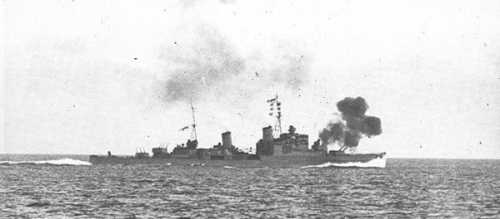
HMS Newcastle in action against German destroyers on 17 October 1940
| Navy | The Royal Navy |
| Type | Light cruiser |
| Class | Southampton |
| Pennant | 76 |
| Built by | Vickers Armstrong (Newcastle-on-Tyne, U.K.) : Vickers Armstrong (Barrow-in-Furness, U.K.) |
| Ordered | 1 May 1934 |
| Laid down | 4 Oct 1934 |
| Launched | 23 Jan 1936 |
| Commissioned | 5 Mar 1937 |
| End service | Aug 1958 |
| History | Decommissioned in August 1958. Broken up by Shipbreaking Industries Ltd. at Faslane arriving on 19 August 1959. |
Commands listed for HMS Newcastle (76)
Please note that we're still working on this section
and that we only list Commanding Officers for the duration of the Second World War.
| Commander | From | To | |
| 1 | Capt. James Figgins, RN | 26 Jul 1939 | 15 Aug 1940 |
| 2 | Capt. Edward Arthur Aylmer, DSC, RN | 15 Aug 1940 | 14 Feb 1942 |
| 3 | Capt. Peveril Barton Reibey Wallop William-Powlett, DSO, RN | 14 Feb 1942 | 8 May 1944 |
| 4 | Cdr. Sidney Hugh Pinchin, DSC, RN | 8 May 1944 | 11 Jun 1944 |
| 5 | Capt. James Gregson Roper, OBE, RN | 11 Jun 1944 | 17 Apr 1945 |
| 6 | Cdr. Sidney Hugh Pinchin, DSC, RN | 17 Apr 1945 | 22 Oct 1945 |
You can help improve our commands section
Click here to Submit events/comments/updates for this vessel.
Please use this if you spot mistakes or want to improve this ships page.
Notable events involving Newcastle include:
The page dealing with the wartime history of this light cruiser was created in November 2021.
This page was last updated in August 2024.
12 Sep 1939
HMS Newcastle (Capt. J. Figgins, RN), which had just completed a refit a the Devonport Dockyard, departed Plymouth for Scapa Flow. (1)
14 Sep 1939
HMS Newcastle (Capt. J. Figgins, RN) arrived at Scapa Flow for a short, post refit, work-up period before she joined the 18th Cruiser Squadron. (1)
18 Sep 1939
HMS Newcastle (Capt. J. Figgins, RN) conducted gunnery exercises at Scapa Flow. (1)
19 Sep 1939
HMS Newcastle (Capt. J. Figgins, RN) conducted gunnery exercises at Scapa Flow. (1)
22 Sep 1939
HMS Newcastle (Capt. J. Figgins, RN) and HMS Edinburgh (Capt. F.C. Bradley, RN) conducted gunnery and torpedo firing exercises off Scapa Flow. (2)
23 Sep 1939
In the late afternoon and evening, HMS Newcastle (Capt. J. Figgins, RN) and HMS Edinburgh (Capt. F.C. Bradley, RN), conducted exercises off Scapa Flow. (2)
25 Sep 1939
HMS Newcastle (Capt. J. Figgins, RN) and HMS Edinburgh (Capt. F.C. Bradley, RN) conducted exercises off Scapa Flow. (2)
26 Sep 1939
HMS Newcastle (Capt. J. Figgins, RN) and HMS Edinburgh (Capt. F.C. Bradley, RN) conducted exercises off Scapa Flow. (2)
27 Sep 1939
HMS Newcastle (Capt. J. Figgins, RN) and HMS Edinburgh (Capt. F.C. Bradley, RN) conducted HA gunnery exercises at Scapa Flow. (2)
28 Sep 1939
HMS Newcastle (Capt. J. Figgins, RN) and HMS Edinburgh (Capt. F.C. Bradley, RN) both conducted exercises off Scapa Flow (independently). (2)
29 Sep 1939
HMS Newcastle (Capt. J. Figgins, RN) conducted exercises off Scapa Flow. (1)
30 Sep 1939
HMS Newcastle (Capt. J. Figgins, RN) conducted D/F calibrations at Scapa Flow. (1)
4 Oct 1939
Convoy KJ 3
This convoy departed Kingston, Jamaica on 4 October 1939 and was made up of the following merchant ships; Acavus (British (tanker), 8010 GRT, built 1935), Amakura (British, 1987 GRT, built 1924), Appalachee (British (tanker), 8826 GRT, built 1930), Athelbeach (British (tanker), 6568 GRT, built 1931), British General (British (tanker), 6989 GRT, built 1922), Calgarolite (British (tanker), 11941 GRT, built 1929), Canadolite (British (tanker), 11309 GRT, built 1926), Caprella (British (tanker), 8230 GRT, built 1931), Champagne (French (tanker), 9946 GRT, built 1938), Chaucer (British, 5792 GRT, built 1929), Conus (British (tanker), 8132 GRT, built 1931), Drupa (British (tanker), 8102 GRT, built 1939), East Wales (British, 4358 GRT, built 1925), Erodona (British (tanker), 6207 GRT, built 1937), Fresno City (British, 4955 GRT, built 1929), Frimaire (French (tanker), 9242 GRT, built 1930), Gryfevale (British, 4434 GRT, built 1929), Iddesleigh (British, 5205 GRT, built 1927), Imperial Valley (British, 4573 GRT, built 1924), Iroquois (British (tanker), 8937 GRT, built 1907), Laristan (British (tanker), 6401 GRT, built 1927), Luminetta (British (tanker), 6159 GRT, built 1927), Michigan (French, 6419 GRT, built 1920), Montrolite (British (tanker), 11309 GRT, built 1926), Pellicula (British (tanker), 6254 GRT, built 1936), Redgate (British, 4323 GRT, built 1929), Ridley (British, 4993 GRT, built 1937), Roussillon (French (tanker), 9967 GRT, built 1936), Royal Crown (British, 4367 GRT, built 1927), Sacramento Valley (British, 4573 GRT, built 1924), San Arcadio (British (tanker), 7419 GRT, built 1935), San Demetrio (British (tanker), 8073 GRT, built 1938), San Eliseo (British (tanker), 8042 GRT, built 1939), San Emiliano (British (tanker), 8071 GRT, built 1939), San Roberto (British (tanker), 5890 GRT, built 1922), Schluylkill (British (tanker), 8965 GRT, built 1928), Sheaf Holme (British, 4814 GRT, built 1929), Somme (British, 5265 GRT, built 1919), Sovac (British (tanker), 6724 GRT, built 1938), Star of Alexandria (British, 4329 GRT, built 1928), Telena (British (tanker), 7406 GRT, built 1927), Uffington Court (British, 4976 GRT, built 1929), Umberleigh (British, 4950 GRT, built 1927).
On departure from Kingston, the convoy was escorted by the light cruiser HMAS Perth (Capt. H.B. Farncomb, RAN).
Around 1400P/7, seven ships split off from the convoy to proceed towards the Mediterranean.
Around 1215P/8, HMS Berwick (Capt. I.M. Palmer, DSC, RN) joined coming from Bermuda.
Around 1140P/9, two ships of the convoy parted company to proceed to New York.
Around 0800P/10, two ships of the convoy parted company to proceed to Halifax and Montreal.
Around 1030P/15, HMS Effingham (Capt. J.M. Howson, RN) joined the convoy coming from Plymouth and HMS Berwick and HMAS Perth were detached to Bermuda.
From 22 and 23 October 1939, the light cruisers HMS Glasgow (Capt. F.H. Pegram, RN) and HMS Newcastle (Capt. J. Figgins, RN) were near the convoy to provide additional cover.
On 23 October and 24 October 1939, a French force made up of the battleship Dunkerque (Capt. M.J.M. Seguin), light cruisers Georges Leygues (Capt. R.L. Perot), Montcalm (Capt. P.J. Ronarc’h), large destroyers Le Malin (Cdr. G.E. Graziani), Le Triomphant (Cdr. M.M.P.L. Pothuau) and L'Indomptable (Capt. P.T.J. Barnaud) was also near the convoy to provide additional cover.
Around 0800A/24, the destroyers HMS Verity (Lt.Cdr. A.R.M. Black, RN) and HMS Wolverine (Cdr. R.C. Gordon, RN) joined.
Around 0730A/25, the destroyers HMS Versatile (Cdr.(Retd.) T.A. Hussey, RN) and HMS Volunteer (Lt.Cdr. H. Gartside-Tippinge, RN) joined.
Around 1800A/25, the convoy was split. HMS Verity and HMS Wolverine proceeded with the southern section towards the English Channel. Around the same time the convoy had split the destroyers HMS Glowworm (Lt.Cdr. G.B. Roope, RN) and HMS Greyhound (Cdr. W.R. Marshall A'Deane, RN) joined. Around 2200A/26, the destroyers HMS Wakeful (Cdr. R.St.V. Sherbrooke, RN) and HMS Wanderer (Cdr. R.F. Morice, RN) relieved HMS Verity and HMS Wolverine. HMS Effingham, HMS Glowworm and HMS Greyhound parted company around the same time. The southern part of the convoy arrived in the Downs on 28 October 1939.
Meanwhile the northern part of the convoy had proceeded up the Irish Sea escorted by HMS Versatile and HMS Volunteer, with the bulk of it, including the destroyers arriving at Liverpool late on the 27th.
8 Oct 1939
Around 1200A/8, HMS Newcastle (Capt. J. Figgins, RN), returned to Scapa Flow from patrol. (3)
8 Oct 1939
A force of German warships departed Kiel to operate off the south coast of Norway. They were to sink Allied shipping and lure the British Home Fleet into the range of Luftwaffe aircraft. This force was made up of the battlecruiser Gneisenau, light cruiser Köln and the destroyers Z 3 / Max Schultz, Z 5 / Paul Jacobi, Z 11 / Bernd von Arnim, Z/14 Friedrich Ihn, Z 15 / Erich Steinbrinck, Z 16 / Friedrich Eckholdt, Z 17 / Diether von Roeder, Z 20 / Karl Galster, Z 21 / Wilhelm Heidkamp. In addition, four submarines were deployed in a patrol line to attack the Home Fleet, these were U-10, U-18, U-20 and U-23.
The Admiralty took the bait and around 1600A/8 the battlecruisers HMS Hood (Capt. I.G. Glennie, RN, flying the flag of Rear-Admiral W.J. Whitworth, CB, DSO, RN), HMS Repulse (Capt. E.J. Spooner, DSO, RN), light cruisers HMS Aurora (Capt. G.B. Middleton, RN, flying the flag of Rear-Admiral R.H.C. Hallifax, RN) and HMS Sheffield (Capt. E. de F. Renouf, CVO, RN) and the destroyers HMS Somali (Capt. R.S.G. Nicholson, DSC, RN), HMS Mashona (Cdr. P.V. McLaughlin, RN), HMS Eskimo (Cdr. St. J.A. Micklethwait, RN) and HMS Ashanti (Cdr. W.G. Davis, RN) departed Scapa Flow for a position about 50 miles to the north-west of Stadlandet, Norway.
Around 1900A/8, the battleships HMS Nelson (Capt. G.J.A. Miles, RN, flying the flag of Admiral J.M. Forbes, KCB, DSO, RN), HMS Rodney (Capt. E.N. Syfret, RN), aircraft carrier HMS Furious (Capt. M.L. Clarke, DSC, RN), light cruiser HMS Newcastle (Capt. J. Figgins, RN) and the destroyers HMS Faulknor (Capt. C.S. Daniel, RN), HMS Fame (Cdr. P.N. Walter, RN), HMS Firedrake (Lt.Cdr. S.H. Norris, RN), HMS Foresight (Lt.Cdr. G.T. Lambert, RN), HMS Forester (Lt.Cdr. E.B. Tancock, RN), HMS Fury (Cdr. G.F. Burghard, RN), HMS Punjabi (Cdr. J.T. Lean, RN) and HMS Bedouin (Cdr. J.A. McCoy, RN) departed Scapa Flow for a position north of Muckle Flugga. Both forces were to reach their positions by dawn the following day and then steam towards each other in a pincer movement to cut off the German ships from their home ports.
The light cruisers HMS Southampton (Capt. F.W.H. Jeans, CVO, RN, flying the flag of Vice-Admiral G.F.B. Edward-Collins, CB, KCVO, RN), HMS Glasgow (Capt. F.H. Pegram, RN), HMS Edinburgh (Capt. F.C. Bradley, RN) and the destroyers HMS Jervis (Capt. P.J. Mack, RN), HMS Jaguar (Lt.Cdr. J.F.W. Hine, RN) and HMS Jupiter (Lt.Cdr. D.B. Wyburd, RN) departed Rosyth around 0945A/8. They were joined at sea by the destroyers HMS Jackal (Cdr. T.M. Napier, RN) and HMS Janus (Lt.Cdr. J.A.W. Tothill, RN) which came from Grimsby. This force was ordered to operate off the western end of the Skagerrak and then sweep northwards.
At 0600A/9 HMS Jaguar was ordered to return to Rosyth to refuel. En-route there she was attacked by German aircraft but she was not hit.
HMS Jervis and HMS Jupiter were ordered to search for the small Danish merchant vessel Teddy (503 GRT, built 1907) which had reported that she had picked up the crew of a German flying boat whih was shot down on the 8th. They were attacked by German aircraft at 1518A/9, but neither destroyer was damaged. However, about 1.5 hours laters HMS Jupiter broke down and had to be taken in tow by her sister ship.
HMS Jaguar meanwhile had completed refuelling at Rosyth. She left that port together with HMS Jersey (Lt.Cdr. A.M. McKillop, RN) which just finished repairs to the damage sustained in her collision of 22 September.
The were ordered to screen the withdrawal of HMS Jervis and HMS Jupiter. But it was not to be as shorty after departing Rosyth, Jaguar struck a small islet above the Forth bridge and damaged her starboard propeller shaft and HMS Jersey struck the Rosyth boom defence. Both destroyers proceeded to Leith for repairs.
Between 1120A/9 and 1645A/9 the Luftwaffe heavily bombed the 'Humber force' made up at that time of HMS Southampton, HMS Glasgow, HMS Edinburgh, HMS Jackal and HMS Janus which had arrived off the western entrance to the Skagerrak by that time. HMS Southampton and HMS Glasgow were near missed but were not damaged.
The German force returned to Kiel shortlyafter midnight during the night of 9/10 October. This news reached the C-in-C, Home Fleet in the afternoon of the 10th after which all ships were ordered to return to port.
HMS Nelson, HMS Rodney, HMS Hood, HMS Faulknor, HMS Firedrake, HMS Forester, HMS Fury, HMS Bedouin and HMS Punjabi proceeded to Loch Ewe arriving in the early evening of the 11th.
HMS Repulse, HMS Furious, HMS Aurora, HMS Newcastle, HMS Southampton, HMS Glasgow, HMS Somali, HMS Mashona, HMS Eskimo, HMS Ashanti, HMS Fame, HMS Foresight, HMS Jervis, HMS Jackal, HMS Janus and HMS Jupiter (which by now as able to proceed under her own power) arrived at Scapa Flow on the 11th. They had been joined at sea before arrival by two more destroyers which came from Scapa Flow; HMS Fearless (Cdr. K.L. Harkness, RN) and HMS Foxhound (Lt.Cdr. P.H. Hadow, RN).
HMS Edinburgh had been detached and proceeded to Rosyth where she arrived on the 10th.
HMS Sheffield had already been detached on the 9th with orders to patrol in the Denmark Strait.
12 Oct 1939
HMS Glasgow (Capt. F.H. Pegram, RN) departed Scapa Flow around 1745A/12.
HMS Newcastle (Capt. J. Figgins, RN) departed Scapa Flow around 1930A/12.
Both cruisers were to provide cover for convoys in the Western Approaches.
On 22 October 1939 they were near convoy KJ 3 to provide cover. [See the event ' Convoy KJ 3 ' for 4 October 1939 for more information on this convoy.] (4)
23 Oct 1939
At 1810Z/23, HMS Newcastle (Capt. J. Figgins, RN) and HMS Glasgow (Capt. F.H. Pegram, RN), parted company with Convoy KJ 3 to proceed to Plymouth and Portsmouth respectively. (3)
26 Oct 1939
Around 1200A/26, HMS Newcastle (Capt. J. Figgins, RN), arrived at Plymouth. (3)
29 Oct 1939
Search for the American merchant vessel City of Flint.
The destroyers HMS Kelly (Capt. L.F.A.V.N. Mountbatten, GCVO, RN), HMS Bedouin (Cdr. J.A. McCoy, RN), HMS Eskimo (Cdr. St.J.A. Micklethwait, RN), HMS Matabele (Cdr. G.K. Whitmy-Smith, RN), HMS Fearless (Cdr. K.L. Harkness, RN) and HMS Foxhound (Lt.Cdr. P.H. Hadow, RN) departed Sullom Voe to search of the coast of Norway for the seized US merchant vessel City of Flint (4963 GRT, built 1920) that was on passage to Germany. HMS Fearless and HMS Foxhound were later detached to join the main cover force.
This vessel had been seized on 9 October by the German pocket battleship Deutschland in the North Atlantic while en-route from New York to the U.K. A german prize crew was to take the ship to Germany as it was carrying contraband. The ship was refused entrance into Norwegian waters and was taken to Murmansk where it arrived on 23 October. The German prize crew was interned by the Soviet authorities the next day. On 27 October, the City of Flint was returned to German control and she left the following day and set course to Germany.
Close cover for this destroyer force was provided by the light cruisers HMS Glasgow (Capt. F.H. Pegram, RN) and HMS Newcastle (Capt J. Figgins, RN) which had been diverted during their passage from the Channel area to Rosyth on 1 November.
A larger cover force for the entire operation as well as convoy ON 1 (Methil-Norway) sailed from the Clyde in the morning of November 2nd. It was made up of the battleships HMS Nelson (Capt. G.J.A. Miles, RN, flying the flag of Admiral J.M. Forbes, KCB, DSO, RN), HMS Rodney (Capt. E.N. Syfret, RN), battlecruiser HMS Hood (Capt. I.G. Glennie, RN, flying the flag of Rear-Admiral W.J. Whitworth, CB, DSO, RN) escorted by the destroyers HMS Faulknor (Capt. C.S. Daniel, RN), HMS Foresight (Lt.Cdr. G.T. Lambert, RN), HMS Fortune (Cdr. E.A. Gibbs, RN), HMS Icarus (Lt.Cdr. C.D. Maud, RN), HMS Impulsive (Lt.Cdr. W.S. Thomas, RN), HMS Foxhound (Lt.Cdr. P.H. Hadow, RN), HMS Ivanhoe (Cdr. B. Jones, RN) and HMS Punjabi (Cdr. J.T. Lean, RN).
The captured merchant ship was however not sighted.
31 Oct 1939
Around 0745A/31, HMS Newcastle (Capt. J. Figgins, RN) departed Plymouth for Spithead. Here, around 1900A/31, she joined HMS Glasgow (Capt. F.H. Pegram, RN) and the destroyers HMS Anthony (Lt.Cdr. N.V.J.T. Thew, RN), HMS Basilisk (Cdr. M. Richmond, RN), HMS Brazen (Lt.Cdr. R.H. Mills, RN) and HMS Venomous (Lt.Cdr. D.G.F.W. MacIntyre, RN). These ships then set course to proceed to Rosyth. En-route the cruisers were diverted for operations.
The destroyers parted company during 1 November, HMS Anthony at 0845A/1, HMS Basilisk and HMS Brazen around 1730A/1 and finally HMS Venomous around 1845/1. HMS Venomous had already been detached for a while in the morning.
Before arriving at Rosyth to cruisers were diverted. [See the event ' Search for the American merchant vessel City of Flint ' for 29 October 1939 for more info.] (5)
3 Nov 1939
Around 1330A/3, HMS Newcastle (Capt. J. Figgins, RN), arrived at Sullum Voe from operations. (6)
4 Nov 1939
Around 0845A/4, HMS Newcastle (Capt. J. Figgins, RN), departed Sullom Voe for the Northern Patrol. She was to patrol in the Denmark Strait. (6)
8 Nov 1939
Around 0620Z/8, HMS Newcastle (Capt. J. Figgins, RN), departed Scapa Flow for the Northern Patrol. She is ordered to patrol in the Iceland - Faeroer gap. (7)
12 Nov 1939
The German merchant vessel Parana (6038 GRT, built 1921) is intercepted west of Iceland in position 65°48'N, 25°19'W by the British light cruiser HMS Newcastle (Capt. J. Figgins, RN). However before the German ship can be captured she is scuttled by her crew.
The ship had been sighted at 1610Z/12, and her identity was established 20 minutes later. The German crew abandoned ship. Shortly afterwards the ship was seen to be on fire. She was sunk by gunfire from HMS Newcastle around 1945A/12. HMS Newcastle took on board the German crew and then continued her patrol until the next afternoon when she departed her patrol area for Kirkwall.
16 Nov 1939
Around 1300A/16, HMS Newcastle (Capt. J. Figgins, RN), arrived at Kirkwall from patrol. Here she was to land the German pow's. (6)
17 Nov 1939
HMS Newcastle (Capt. J. Figgins, RN) proceeded from Kirkwall to Loch Ewe. (6)
21 Nov 1939
HMS Newcastle (Capt. J. Figgins, RN) departed Loch Ewe for the Northern Patrol. She was ordered to patrol in the Iceland - Faeroer passage. (6)
23 Nov 1939
Sinking of the armed merchant cruiser HMS Rawalpindi
Around midday on 21 November 1939 the German battlecruisers Scharnhorst and Gneisenau, escorted by the light cruisers Köln and Leipzig and the destroyers Z 11 / Bernd von Arnim, Z 12 / Erich Giese and Z 20 / Karl Galster, departed Wilhelmshaven for a raid into the North Atlantic, this was to relieve the pressure of the pocket battleship Admiral Graf Spee operating in the South Atlantic. Late on the 21st the escorts left the battlecruisers.
Just after 1500A/23 the British armed merchant cruiser HMS Rawalpindi (Capt.(Retd.) E.C. Kennedy, RN) sighted the Scharnhorst. Rawalpindi was part of the British Northern Patrol and was stationed south-east of Iceland in the Iceland-Faroe gap. Captain Kennedy at first tried to get away from the German ship and report to the Admiralty that he sighted the German pocket battleship Deutschland, still believed to be operating in the North Atlantic, and so as to buy time so that other ships of the Northern patrol could come to his assistance. Just after 1600 hours, Rawalpindi came within range of the Scharnhorst and was quickly reduced to a flaming wreck. During this engagement Scharnhorst was hit by a 6in shell from Rawalpindi causing only light damage. Scharnhorst and Gneisenau together picked up 27 survivors from the Rawalpindi which finally sank around 2000 hours.
The British light cruiser HMS Newcastle (Capt J. Figgins, RN), that was also part of the Northern Patrol, picked up Rawalpindi's signal and closed the scene. She sighted the Gneisenau but the Germans managed to escape in the fog.
The Admiralty also thought the ship sighted by Rawalpindi and Newcastle was the Deutschland that was trying to return to Germany. In response to the sighting and destruction of the Rawalpindi the Admiralty took immediate action; The battleships HMS Nelson (Capt. G.J.A. Miles, RN, flying the flag of Admiral J.M. Forbes, KCB, DSO, RN) HMS Rodney (Capt. F.H.G. Dalrymple-Hamilton, RN) and the heavy cruiser HMS Devonshire (Capt. J.M. Mansfield, DSC, RN, flying the flag of Vice-Admiral J.H.D. Cunningham, CB, MVO, RN) escorted by the destroyers HMS Faulknor (Capt. C.S. Daniel, RN), HMS Fame (Cdr. P.N. Walter, RN), HMS Firedrake (Lt.Cdr. S.H. Norris, RN), HMS Foresight (Lt.Cdr. G.T. Lambert, RN), HMS Forester (Lt.Cdr. E.B. Tancock, RN), HMS Fortune (Cdr. E.A. Gibbs, RN) and HMS Fury (Cdr. G.F. Burghard, RN) departed the Clyde around 1930A/23 to patrol of Norway to cut off the way to Germany for the Deutschland.
The light cruisers HMS Southampton (Capt. F.W.H. Jeans, CVO, RN, flying the flag of Vice-Admiral G.F.B. Edward-Collins, CB, KCVO, RN), HMS Edinburgh (Capt. F.C. Bradley, RN) and HMS Aurora (Capt. G.B. Middleton, RN) escorted by the destroyers HMS Afridi (Capt. G.H. Creswell, DSC, RN), HMS Gurkha (Cdr. F.R. Parham, RN), HMS Bedouin (Cdr. J.A. McCoy, RN), HMS Kingston (Lt.Cdr. P. Somerville, RN) and HMS Isis (Cdr. J.C. Clouston, RN) departed Rosyth to patrol between the Orkney and Shetland islands.
Light cruiser HMS Sheffield (Capt. E. de F. Renouf, CVO, RN) was sent from Loch Ewe to the last known position of the German ship(s).
On northern patrol, south of the Faroes were the light cruisers HMS Caledon (Capt. C.P. Clark, RN), HMS Cardiff (Capt. P.K. Enright, RN) and HMS Colombo (Commodore R.J.R. Scott, RN). These were joined by HMS Dunedin (Capt. C.E. Lambe, CVO, RN) and HMS Diomede (Commodore E.B.C. Dicken, OBE, DSC, RN).
Of the ships of the Denmark strait patrol, the heavy cruisers HMS Suffolk (Capt. J.W. Durnford, RN) and HMS Norfolk (Capt. A.G.B. Wilson, MVO, DSO, RN) were ordered to proceed to the Bill Bailey Bank (to the south-west of the Faroe Islands).
The light cruiser HMS Glasgow (Capt. F.H. Pegram, RN) escorted by the destroyers HMS Maori (Cdr. G.N. Brewer, RN) and HMS Zulu (Cdr. J.S. Crawford, RN) were already at sea patrolling north-east of the Shetlands were to be joined by the destroyers HMS Inglefield (Capt. P. Todd, RN), HMS Imperial (Lt.Cdr. C.A.de W. Kitcat, RN), HMS Impulsive (Lt.Cdr. W.S. Thomas, RN) and HMS Imogen (Cdr. E.B.K. Stevens, RN).
The light cruisers HMS Calypso (Capt. N.J.W. William-Powlett, DSC, RN) and HMS Ceres (Capt. E.G. Abbott, AM, RN) were stationed off Kelso Light to act as a night attack striking force. The destroyers HMS Somali (Capt. R.S.G. Nicholson, DSC, RN), HMS Ashanti (Cdr. W.G. Davis, RN), HMS Mashona (Cdr. P.V. McLaughlin, RN) and HMS Punjabi (Cdr. J.T. Lean, RN) had just departed Belfast on escort duties. They were ordered to join Admiral Forbes. The ships they were escorting were ordered to return to Belfast.
The destroyers HMS Tartar (Lt.Cdr. D.E. Holland-Martin, RN), HMS Kandahar (Cdr. W.G.A. Robson, RN) and HMS Kashmir (Cdr. H.A. King, RN) departed Scapa Flow with orders to locate and shadow the German ships. HMS Tartar however had to return to Scapa Flow the next day due to a damaged rudder. The other two destroyers were ordered to join HMS Aurora which was to form a strike group of destroyers.
Despite the British effort to intercept the German ships, both German battlecruisers returned to Wilhelmshaven on the 27th.
28 Nov 1939
Around 1345Z/28, HMS Newcastle (Capt. J. Figgins, RN), arrived at Scapa Flow from patrol.
She departed for a new patrol around 2215Z/28. She was ordered to patrol west of Iceland but later she was ordered to make rendezvous with HMS Devonshire (Capt. J.M. Mansfield, DSC, RN) and patrol of the west coast of Norway. (6)
1 Dec 1939
Around 1030Z/1, HMS Devonshire (Capt. J.M. Mansfield, DSC, RN, flying the flag of Vice-Admiral J.H.D. Cunningham, CB, MVO, RN) and HMS Newcastle (Capt. J. Figgins, RN) made rendezvous in approximate position 62°36'N, 03°10'E.
HMS Devonshire and HMS Newcastle parted company at 0600Z/5.
HMS Newcastle arrived at Scapa Flow around 1000Z/6.
HMS Devonshire arrived at Greenock around 1415Z/6. (8)
8 Dec 1939
Around 0715Z/8, HMS Newcastle (Capt. J. Figgins, RN), departed Scapa Flow for the Northern Patrol. She was ordered to patrol in the Iceland - Faeroer Islands gap. (3)
10 Dec 1939
Convoy TC 1.
This convoy of troopships departed Halifax around 0510Q/10, for the Clyde where it arrived on 17 December 1939.
The convoy was made up of the following troopships / liners; Aquitania (British, 44786 GRT, built 1914, carrying 2638 troops), Duchess of Bedford (British, 20123 GRT, built 1928, carrying 1312 troops), Empress of Australia (British, 21833 GRT, built 1914, carrying 1235 troops), Empress of Britain (British, 42348 GRT, built 1931, carrying 1303 troops) and Monarch of Bermuda (British, 22424 GRT, built 1931, carrying 961 troops),
Close escort was provided on leaving Halifax by the battleship HMS Resolution (Capt. O. Bevir, RN) and the Canadian destroyers HMCS Fraser (Cdr. W.N. Creery, RCN), HMCS Ottawa (Capt. G.C. Jones, RCN), HMCS Restigouche (Lt.Cdr. W.B.L. Holms, RCN) and HMCS St. Laurent (Lt.Cdr. H.G. de Wolf, RCN). These Canadian destroyers remained with the convoy until 12 December 1939 when they set course to return to Halifax.
Cover for the convoy was provided by the battlecruiser HMS Repulse (Capt. E.J. Spooner, DSO, RN), aircraft carrier HMS Furious (Capt. M.L. Clarke, DSC, RN), light cruiser HMS Emerald (Capt. A.W.S. Agar, VC, DSO, RN) and the destroyers HMS Hunter (Lt.Cdr. L. de Villiers, RN) and HMS Hyperion (Cdr. H.St.L. Nicholson, RN). At dusk on the 10th both destroyers were detached to join the local escort. They returned to Halifax with the Canadian destroyers.
Early on the 15th, HMS Emerald was detached, HMS Newcastle (Capt. J. Figgins, RN) had joined the cover force in the afternoon of the 14th to take her place.
When the convoy approached the British isles, the destroyers HMS Eskimo (Cdr. St.J.A. Micklethwait, RN), HMS Bedouin (Cdr. J.A. McCoy, RN), HMS Mashona (Cdr. P.V. McLaughlin, RN), HMS Somali (Capt. R.S.G. Nicholson, DSC, RN), HMS Kandahar (Cdr. W.G.A. Robson, RN), HMS Khartoum (Cdr. D.T. Dowler, RN), HMS Kingston (Lt.Cdr. P. Somerville, RN), HMS Kashmir (Cdr. H.A. King, RN), HMS Fearless (Cdr. K.L. Harkness, RN), HMS Ilex (Lt.Cdr. P.L. Saumarez, RN) and HMS Impulsive (Lt.Cdr. W.S. Thomas, RN) departed the Clyde on the 12th to sweep ahead of the convoy. HMS Imperial (Lt.Cdr. C.A.de W. Kitcat, RN) was also to have sailed but was unable to join. HMS Matabele (Cdr. G.K. Whitmy-Smith, RN) was sailed in her place and later joined the other destroyers at sea.
After German warships had been reported in the North Sea, and concerned for the safety of convoy TC.1, Admiral Forbes, departed the Clyde on the 13th to provide additional cover with the battleships HMS Warspite (Capt. V.A.C. Crutchley, VC, DSC, RN), HMS Barham (Capt. H.T.C. Walker, RN), battlecruiser HMS Hood (Capt. I.G. Glennie, RN, flying the flag of Rear-Admiral W.J. Whitworth, CB, DSO, RN) and the destroyers HMS Inglefield (Capt. P. Todd, RN), HMS Icarus (Lt.Cdr. C.D. Maud, RN), HMS Imogen (Cdr. E.B.K. Stevens, RN), HMS Imperial, HMS Isis (Cdr. J.C. Clouston, RN) and HMS Foxhound (Lt.Cdr. P.H. Hadow, RN). The destroyers HMS Forester (Lt.Cdr. E.B. Tancock, RN) and HMS Firedrake (Lt.Cdr. S.H. Norris, RN) sailed from Loch Ewe and later joined this force at sea. Three cruisers from the Northern Patrol were ordered to patrol in position 53°55’N, 25°00’W to provide cover for the convoy. These were the heavy cruisers HMS Berwick (Capt. I.M. Palmer, DSC, RN), HMS Devonshire (Capt. J.M. Mansfield, DSC, RN, flying the flag of Vice-Admiral J.H.D. Cunningham, CB, MVO, RN) and the light cruiser HMS Glasgow (Capt. F.H. Pegram, RN).
The light cruisers HMS Southampton (Capt. F.W.H. Jeans, CVO, RN), HMS Edinburgh (Cdr. C. Wauchope, RN, temporary in command) departed Rosyth to patrol between the Shetlands and the Faroes.
The destroyers HMS Afridi (Capt. G.H. Creswell, DSC, RN), HMS Maori (Cdr. G.N. Brewer, RN) and HMS Nubian (Cdr. R.W. Ravenhill, RN) departed Rosyth and proceeded north at high speed to try to cut of the enemy warhips if they were to enter the Atlantic.
The light cruisers HMS Cardiff (Capt. P.K. Enright, RN), HMS Ceres (Capt. E.G. Abbott, AM, RN), HMS Delhi (Capt L.H.K. Hamilton, DSO, RN), HMS Diomede (Commodore E.B.C. Dicken, OBE, DSC, RN) which were on the Northern Patrol were to concentrate near the Faroes where they were joined by HMS Colombo (Commodore R.J.R. Scott, RN) and HMS Dragon (Capt. R.G. Bowes-Lyon, MVO, RN) which were on passage to their patrol stations.
Around 0430Z/17, in foggy conditions, the outward bound liner Samaria (British, 19597 GRT, built 1921) collided with both HMS Furious and the Aquitania but no major damage was done to either one of the three ships.
The convoy arrived safely in the Clyde on 17 December 1939. (9)
11 Dec 1939
HMS Newcastle (Capt. J. Figgins, RN) is ordered to leave her patrol area and to proceed into the North Atlantic to provide cover for troop convoy TC 1 coming from Canada.
[For more info on this convoy see the event ' Convoy TC 1 ' for 10 December 1939.] (7)
17 Dec 1939
Around 1445Z/17, HMS Newcastle (Capt. J. Figgins, RN), arrived at Scapa Flow from patrol / operations. (7)
21 Dec 1939
Around 0830Z/21, HMS Newcastle (Capt. J. Figgins, RN), departed Scapa Flow to patrol east of the Orkney Islands. She returned around 0100Z/22. (7)
28 Dec 1939
HMS Newcastle (Capt. J. Figgins, RN) conducted gunnery exercises at Scapa Flow. (7)
30 Dec 1939
HMS Newcastle (Capt. J. Figgins, RN) conducted HA gunnery exercises off Scapa Flow. (7)
2 Jan 1940
Around 0900A/2, HMS Newcastle (Capt. J. Figgins, RN) (Capt. J. Figgins, RN), departed Scapa Flow for the Northern Patrol. She is ordered to patrol south of Iceland.
At 1126Z/2, a disturbance was noticed in the water in position 59°13'N, 03°59'W which was thought to be a submarine. The destroyers HMS Fearless (Cdr. K.L. Harkness, RN), HMS Fury (Cdr. G.F. Burghard, RN) and by Walrus aircraft, searched for the supposed submarine. The destroyers HMS Impulsive (Lt.Cdr. W.S. Thomas, RN) and HMS Isis (Cdr. J.C. Clouston, RN) also joined in the hunt which was discontinued the following day. (10)
11 Jan 1940
HMS Newcastle (Capt. J. Figgins, RN) departed her patrol area and proceeded to patrol in the Denmark Stait to search for the German merchant vessel Bahia Blanca (8559 GRT, built 1918) which had struck an iceberg on the 9th. The German ship was not found as she had foundered on the 11th. (10)
14 Jan 1940
Around 2100Z/14, HMS Newcastle (Capt. J. Figgins, RN), arrived at Scapa Flow from the Northern Patrol. (10)
14 Jan 1940
Operation to intercept the disabled German merchant vessel Trautenfels.
On 14 January the German merchant vessel Trautenfels (6418 GRT, built 1921) was reported to be off the coast of Norway with her rudder lost and unable to steer.
The light cruiser HMS Aurora (Capt. G.B. Middleton, RN) departed Scapa Flow almost immediately the same day to try to intercept this vessel.
On the 15th the light cruiser HMS Manchester (Capt. H.H. Bousfield, RN) was also sailed from Scapa Flow for this purpose.
Also on the 15th the destroyers HMS Maori (Cdr. G.N. Brewer, RN), HMS Tartar (Lt.Cdr. D.E. Holland-Martin, DSC, RN), HMS Kandahar (Cdr. W.G.A. Robson, RN) and HMS Kashmir (Cdr. H.A. King, RN) sailed from Rosyth and the destroyers HMS Inglefield (Capt. P. Todd, RN), HMS Icarus (Lt.Cdr. C.D. Maud, RN), HMS Kelvin (Lt.Cdr. J.L. Machin, RN), HMS Khartoum (Cdr. D.T. Dowler, RN) and HMS Kimberley (Lt.Cdr. R.G.K. Knowling, RN) departed the Clyde.
On the 16th (around 0915Z/16) yet another light cruiser was sailed from Scapa Flow, this was HMS Newcastle (Capt. J. Figgins, RN).
Shortly before 0200/16 the destroyers HMS Kelvin and HMS Kimberley collided with each other. Kimberely sustained no serious damage and proceeded to Scapa Flow. Kelvin was damaged and returned to the Clyde for repairs.
The operation was cancelled on the 17th when it was reported that the Trautenfels had arrived at Narvik being towed there by the German merchant vessel Rauenfels (8460 GRT, built 1928).
HMS Aurora and HMS Manchester then proceeded to patrol to the south-east of Iceland.
HMS Maori, HMS Tartar and HMS Inglefield were ordered on the 17th to patrol off the Norwegian coast to intercept German ore ships coming from the north.
HMS Newcastle returned to Scapa Flow around 2215Z/17.
20 Jan 1940
Around 1800Z/20, HMS Sheffield (Capt. C.A.A. Larcom, RN) and HMS Newcastle (Capt. J. Figgins, RN) departed Scapa Flow. They proceeded towards the Skagerrak / Danish coast as the German light cruisers Nürnberg and Leipzig were thought to be proceeding northwards but this was not the case.
HMS Sheffield and HMS Newcastle were recalled and returned to Scapa Flow around 2215Z/21. (11)
22 Jan 1940
Around 2100Z/22, HMS Newcastle (Capt. J. Figgins, RN), departed Scapa Flow for the Northern Patrol. She was ordered to patrol south of the Faeroer Islands. (10)
29 Jan 1940
Around 1400Z/29, HMS Newcastle (Capt. J. Figgins, RN), returned to Scapa Flow from the Northern Patrol. (10)
4 Feb 1940
Around 1615Z/4, HMS Newcastle (Capt. J. Figgins, RN), departed Scapa Flow for the Northern Patrol. She is ordered to patrol near the Faeroer Islands. (12)
17 Feb 1940
Around 1000Z/17, HMS Newcastle (Capt. J. Figgins, RN), returned to Scapa Flow from the Northern Patrol. (12)
22 Feb 1940
HMS Newcastle (Capt. J. Figgins, RN) conducted gunnery and torpedo firing exercises at Scapa Flow. (12)
24 Feb 1940
Around 1130Z/24, HMS Newcastle (Capt. J. Figgins, RN), departed Scapa Flow for the Northern Patrol. She was ordered to patrol south of Iceland. (12)
5 Mar 1940
Around 0900Z/5, HMS Newcastle (Capt. J. Figgins, RN), arrived at Scapa Flow from patrol. (13)
8 Mar 1940
HMS Newcastle (Capt. J. Figgins, RN) conducted gunnery exercises at Scapa Flow. (13)
9 Mar 1940
Around 0800Z/9, HMS Newcastle (Capt. J. Figgins, RN), departed Scapa Flow for the Northern Patrol. She is ordered to patrol in the Iceland - Faeroer Islands passage. (13)
19 Mar 1940
Around 0900Z/19, HMS Newcastle (Capt. J. Figgins, RN), returned to Scapa Flow from patrol (13)
26 Mar 1940
HMS Newcastle (Capt. J. Figgins, RN) proceeded from Scapa Flow to Yarrow-on-Tyne. (13)
28 Mar 1940
Upon completion of de ammunitioning HMS Newcastle (Capt. J. Figgins, RN) shifted from Yarrow-on-Tyne to the Palmers shipyard at Hebburn where she was taken in hand for refit. (14)
23 Apr 1940
During her refit, HMS Newcastle (Capt. J. Figgins, RN), is docked at Hebburn-on-Tyne. (15)
11 May 1940
HMS Newcastle (Capt. J. Figgins, RN) is undocked. (16)
30 May 1940
With her refit completed, HMS Newcastle (Capt. J. Figgins, RN), shifted from Hebburn-on-Tyne to South Shields. (16)
2 Jun 1940
Around 1330A/2, HMS Newcastle (Capt. J. Figgins, RN), departed from South Shields to Rosyth. En-route she conducted DG trials in the Firth of Forth. She arrived at Rosyth around 0100A/3. (17)
3 Jun 1940
HMS Newcastle (Capt. J. Figgins, RN) proceeded from Rosyth to Scapa Flow. On departure from Rosyth she again ran over the DG range in the Firth of Forth. (17)
5 Jun 1940
At 2130/5 the battlecruisers HMS Renown (Capt. C.E.B. Simeon, RN, flying the flag of Vice-Admiral W.J. Whitworth, CB, DSO, RN), HMS Repulse (Capt. E.J. Spooner, DSO, RN), heavy cruiser HMS Sussex (Capt. R.V. Symonds-Tayler, DSC, RN), light cruiser HMS Newcastle (Capt. J. Figgins, RN) and the destroyers HMS Maori (Cdr. H.T. Armstrong, RN), HMS Zulu (Cdr. J.S. Crawford, RN), HMS Forester (Lt.Cdr. E.B. Tancock, RN), HMS Foxhound (Lt.Cdr. G.H. Peters, RN) and HMS Kelvin (Lt.Cdr. J.L. Machin, RN) departed Scapa Flow after two unidentified warships were spotted in position 64°45'N, 00°24'W proceeding towards the Iceland - Faroes passage.
Around 0200/8 the force was split up; HMS Renown escorted by HMS Zulu and HMS Kipling were ordered to return to Scapa Flow where they arrived at 0500/9.
HMS Repulse, HMS Sussex, HMS Newcastle, HMS Maori, HMS Forester and HMS Foxhound remained on patrol.
Around 1030/9, they were ordered to proceed eastwards to join up with other warships and to provide cover for convoys of ships that had been involved in evacuating the Narvik/Hartadt/Tromso area.
Around 1345/9, HMS Maori, HMS Forester and HMS Foxhound parted company.
At 0100/10, HMS Maori, HMS Forester and HMS Foxhound arrived at Sullom Voe to fuel. They departed again at 0800 hours to rejoin but HMS Foxhound had to return soon after with defects.
At 0900/10, HMS Repulse and the cruisers joined up with the 'HMS Valiant' group that was escorting the evacuation convoys. (18)
7 Jun 1940
Evacuation of the 'Narvik / Harstad / Tromso area'.
1st Evacuation convoy from Harstad.
The merchant vessels Acrity (403 GRT, built 1934), Blackheath (4637 GRT, built 1936), Conch (8376 GRT (tanker), built 1931), Coxwold (1124 GRT, built 1938), Cromarty Firth (538 GRT, built 1937), Harmattan (4558 GRT, built 1930), Oligarch (6897 GRT (tanker), built 1918) and Theseus (6527 GRT, built 1908).
They were escorted by the destroyer HMS Arrow (Cdr. H.W. Williams, RN) and sloop HMS Stork (Cdr. A.C. Behague, RN). The destroyers HMS Veteran (Cdr. J.E. Broome, RN) and HMS Vanoc (Lt.Cdr. J.G.W. Deneys, RN) also briefly escorted the convoy but they were soon detached.
Later the destroyer HMS Walker (Lt.Cdr. A.A. Tait, RN) joined the escort as did the heavy cruiser HMS Sussex (Capt. R.V. Symonds-Tayler, DSC, RN) and light cruiser HMS Newcastle (Capt. J. Figgins, RN).
The convoy arrived at Scapa Flow around 0500/14. It had been attacked by German aircraft on the 9th but no damage was sustained.
10 Jun 1940
In the morning, HMS Sussex (Capt. R.V. Symonds-Tayler, DSC, RN) and HMS Newcastle (Capt. J. Figgins, RN), joined an evacuation convoy from Narvik to Scapa Flow. They arrived at Scapa Flow with the convoy on the 14th.
[See the event ' 1st evacuation convoy ' for 7 June 1940 for more info on this convoy.] (19)
15 Jun 1940
HMS Newcastle (Capt. J. Figgins, RN) conducted gunnery exercises off Scapa Flow during which she was screened by the destroyers HMS Amazon (Lt.Cdr. N.E.G. Roper, RN) and HMS Kelvin (Lt.Cdr. J.L. Machin, RN).
16 Jun 1940
HMS Sussex (Capt. R.V. Symonds-Tayler, DSC, RN) and HMS Newcastle (Capt. J. Figgins, RN) departed Scapa Flow to patrol in the Iceland area. (20)
19 Jun 1940
HMS Sussex (Capt. R.V. Symonds-Tayler, DSC, RN) and HMS Newcastle (Capt. J. Figgins, RN) arrived at Scapa Flow from patrol. (20)
21 Jun 1940
Heavy cruiser HMS York (Capt. R.H. Portal, DSC, RN), light cruisers HMS Manchester (Capt. H.A. Packer, RN, flying the flag of Vice-Admiral G.F.B. Edward-Collins, CB, KCVO, RN), HMS Sheffield (Capt. C.A.A. Larcom, RN) and HMS Birmingham (Capt. A.C.G. Madden, RN) departed Rosyth escorted by the destroyer HMS Gallant (Lt.Cdr. C.P.F. Brown, RN) to rendez-vous with the heavy cruiser HMS Sussex (Capt. R.V. Symonds-Tayler, DSC, RN) and light cruiser HMS Newcastle (Capt. J. Figgins, RN) at sea (These two cruisers had departed Scapa Flow early in the morning) and then to join the battlecruisers HMS Renown (Capt. C.E.B. Simeon, RN, flying the flag of Vice-Admiral W.J. Whitworth, CB, DSO, RN), HMS Repulse (Capt. W.G. Tennant, CB, MVO, RN) and the destroyers HMS Inglefield (Capt. P. Todd, RN), HMS Zulu (Cdr. J.S. Crawford, RN), HMS Maori (Cdr. H.T. Armstrong, RN), HMS Mashona (Cdr. W.H. Selby, RN), HMS Forester (Lt.Cdr. E.B. Tancock, RN), HMS Escort (Lt.Cdr. J. Bostock, RN) and HMS Diana (Lt.Cdr. E.G. Le Geyt, RN) which had departed Scapa Flow at 1220/21.
The German battlecruiser Scharnhorst had been sighted leaving Trondheim southwards escorted by four destroyers and four torpedo-boats. The Germans however retreated inside the fjords and the British ships were recalled arriving back in port on 22 June. (21)
21 Jun 1940
HMS Sussex (Capt. R.V. Symonds-Tayler, DSC, RN) and light cruiser HMS Newcastle (Capt. J. Figgins, RN) departed Scapa Flow around 0955A/21 to make rendez-vous with the 18th Cruiser Squadron. (20)
22 Jun 1940
Around 1215A/22, HMS Sussex (Capt. R.V. Symonds-Tayler, DSC, RN) and HMS Newcastle (Capt. J. Figgins, RN), returned to Scapa Flow from patrol. (20)
23 Jun 1940
Around 1000/23, the light cruiser HMS Newcastle (Capt. J. Figgins, RN) and the destroyer HMS Echo (Cdr. S.H.K. Spurgeon, DSO, RAN) departed Scapa Flow to investigate an enemy destroyer force reported in the North Sea.
They returned to Scapa Flow around 0445A/24. (17)
24 Jun 1940
HMS Sussex (Capt. R.V. Symonds-Tayler, DSC, RN) and HMS Newcastle (Capt. J. Figgins, RN) conducted exercises in the Pentland Firth. (22)
25 Jun 1940
HMS Newcastle (Capt. J. Figgins, RN) proceeded from Scapa Flow to Rosyth. (17)
1 Jul 1940
Around 0515A/1, the light cruisers HMS Newcastle (Capt. J. Figgins, RN), HMS Sheffield (Capt. C.A.A. Larcom, RN) and HMS Manchester (Capt. H.A. Packer, RN), departed Rosyth for patrol which was to end at Sheerness. They proceeded in company with the destroyers HMS Jackal (Cdr. T.M. Napier, RN) and HMS Jaguar (Lt.Cdr. J.F.W. Hine, RN) which were to proceed to the Humber after the patrol.
The force was to be off the Aldeburgh Light float at 2359A/1.
Around 2200A/1, the destroyers HMS Malcolm ( Capt. A.W.S. Agar, VC, DSO, RN), HMS Venomous (Lt.Cdr. J.E.H. McBeath, DSO, RN), HMS Ambuscade (Lt.Cdr. R.A. Fell, RN) and HMS Achates (Cdr. R.J. Gardner, RN) joined.
Around 0600A/2, HMS Newcastle was detached to Plymoputh in accordance with orders received by signal at 1724A/1.
HMS Manchester and HMS Sheffield then proceeded to Sheerness arriving around 0930A/2.
The destroyers proceeded to either the Humber (HMS Jackal and HMS Jaguar) or Harwich (HMS Malcolm, HMS Venomous, HMS Ambuscade and HMS Achates). (23)
2 Jul 1940
At 1632A/2, HMS Newcastle (Capt. J. Figgins, RN), is attacked with 4 to 6 bombs by a single German Ju-88 aircraft in position 50°10'N, 03°20'W. HMS Newcastle was standing by the damaged merchant vessel Aeneas (British, 10058 GRT, built 1910) from convoy OA 117G. HMS Newcastle sustained no damage, the bombs fell astern.
HMS Newcastle arrived at Plymouth around 2115A/2.
(24)
3 Jul 1940
At 0400A/3, boarding parties from HMS Galatea (Capt. B.B. Schofield, RN, flying the flag of Rear-Admiral A.T.B. Curteis, CB, RN) and HMS Newcastle (Capt. J. Figgins, RN) departed to take control of the French destroyers Mistral (Lt.Cdr. G.P.C.M.J.M. de Tolouse-Latrec Montfa) and Le Triomphant (Cdr. E.E.R. Archambeaud). (25)
12 Jul 1940
At 1519A/12, the light cruiser HMS Newcastle (Capt. J. Figgins, RN) and the destroyers HMS Mackay (Cdr. G.H. Stokes, RN) and HMS Viscount (Lt.Cdr. M.S. Townsend, OBE, DSC, RN) departed Plymouth to patrol off the south coast of Ireland. The Admiralty had reported that a German auxiliary vessel, disguised as Russian, had been sighted in position 51°42'N, 07°15'W.
They returned to Plymouth around 1200A/14. (26)
15 Jul 1940
At 1348A/15, the light cruiser HMS Newcastle (Capt. J. Figgins, RN) and the destroyers HMS Mackay (Cdr. G.H. Stokes, RN), HMS Broke (Cdr. B.G. Scurfield, RN), HMS Witherington (Lt.Cdr. J.B. Palmer, RN), HMS Wolverine (Cdr. R.H. Craske, RN), HMS Hesperus (Lt.Cdr. D.G.F.W. MacIntyre, RN) and HMCS Restigouche (Cdr. H.N. Lay, RN) departed Plymouth to intercept ' suspicious ships ' reported at 0750A/15, in position 48°10'N, 07°30'W steering a course of 350°.
At 1701A/15, HMS Newcastle was ordered to detach HMS Mackay and HMS Broke to go to the aid of the bombed merchant vessel City of Limerick (British, 1959 GRT, built 1911) which had been bombed in position 48°39'N, 07°12'W. The City of Limerick could not be saved and later sank. While en-route the destroyers also encountered the small merchant vessel Alpha (Dutch, 347 GRT, built 1936) which had also been bombed but in position 48°51'N, 06°43'W. She had been abandoned but apparently was later salvaged.
At 1708A/15, HMS Newcastle was ordered to return to Plymouth with the four remaining destroyers. At 2000A/15, HMS Hesperus and HMCS Restigouche were detached to hunt a suspected enemy submarine off the Lizard. Two hours later they reported that no contact had been made.
HMS Newcastle, HMS Witherington and HMS Wolverine arrived back at Plymouth around 2245A/15. HMS Hesperus and HMCS Restigouche arrived around 0620A/16. HMS Mackay arrived back at Plymouth at 2140A/16 and HMS Broke at 1045A/17. (26)
19 Jul 1940
From 19 July to 21 July 1940, HMS Newcastle (Capt. J. Figgins, RN), was at the Devonport Dockyard to repair some defects. (24)
18 Aug 1940
HMS Newcastle (Capt. E.A. Aylmer, DSC, RN) made six runs over the DG range in Cawsand Bay. (27)
22 Aug 1940
HMS Newcastle (Capt. E.A. Aylmer, DSC, RN), HMS Volunteer (Lt.Cdr. N. Lanyon, RN) and HMS Wolverine (Cdr. R.H. Craske, RN) conducted exercises off Plymouth. (27)
23 Aug 1940
HMS Newcastle (Capt. E.A. Aylmer, DSC, RN), HMS Volunteer (Lt.Cdr. N. Lanyon, RN) and HMS Wolverine (Cdr. R.H. Craske, RN) conducted exercises off Plymouth.
In the evening night exercises were carried out by HMS Newcastle, HMS Vansittart (Lt.Cdr. W. Evershed, RN) and HMS Wolverine. (27)
11 Sep 1940
HMS Newcastle (Capt. E.A. Aylmer, DSC, RN), ORP Burza (Lt.Cdr. W. Francki) and ORP Blyscawica (Lt.Cdr. S. Hryniewiecki) conducted exercises off Plymouth. (28)
18 Sep 1940
HMS Newcastle (Capt. E.A. Aylmer, DSC, RN), ORP Burza (Lt.Cdr. W. Francki), HMS Mackay (Cdr. G.H. Stokes, RN) and HMS Vansittart (Lt.Cdr. R.L.S. Gaisford, RN) conducted exercises off Plymouth. In the evening the went to sea again for night exercises. (28)
26 Sep 1940
HMS Newcastle (Capt. E.A. Aylmer, DSC, RN), ORP Garland (Lt.Cdr. A. Doroszkowski) and ORP Blyscawica (Lt.Cdr. S. Hryniewiecki) conducted exercises off Plymouth. (28)
10 Oct 1940
Operation Medium.
Bombardment of Cherbourg.
10 October 1940.
The battleship HMS Revenge (Capt. E.R. Archer, RN) departed Plymouth for a night bombardment of Cherbourg during the night of 10/11 October. She was being escorted by the destroyers HMS Jackal (Cdr. C.L. Firth, MVO, RN), HMS Jaguar (Lt.Cdr. J.F.W. Hine, RN), HMS Javelin (Cdr. A.F. Pugsley, RN), HMS Jupiter (Cdr. D.B. Wyburd, RN), HMS Kashmir (Cdr. H.A. King, RN), HMS Kelvin (Cdr. J.H. Allison, DSO, RN) and HMS Kipling (Cdr. A. St. Clair-Ford, RN).
A cover force was also sailed from Plymouth on the same day. This force was to provide cover to the east of the bombardment force and was made up of the light cruisers HMS Newcastle (Capt. E.A. Aylmer, DSC, RN), HMS Emerald (Capt. F.C. Flynn, RN), the British destroyers HMS Broke (Cdr. B.G. Scurfield, RN), HMS Wanderer (Cdr. J.H. Ruck-Keene, DSC, RN and the Polish destroyers Garland (Cdr. K. Namiesniowski, ORP) and Burza (Cdr. A. Doroszkowski, ORP).
The light cruiser HMS Cardiff (Capt. P.K. Enright, RN) escorted by the destroyers HMS Witch (Lt.Cdr. J.R. Barnes, RN) and HMS Volunteer (Lt.Cdr. N. Lanyon, RN) departed Portsmouth to provide cover for the operation to the west of the bombardment force.
A flotilla of MA/SB boats was sailed from Plymouth to provide anti E-boat protection. These were HMS MA/SB 40, HMS MA/SB 42, HMS MA/SB 43, HMS MA/SB 44, HMS MA/SB 45, HMS MA/SB 46 and HMS MA/SB 51.
During the bombardment, which started around 0330A/11 and laster for about 20 minutes, HMS Revenge fired 120 rounds of 15” in eighteen minutes from range between 14000 and 16000 yards. Her escorting destroyers fired 801 rounds of 4.7” during the first four minutes of the bombardment and then formed a screen on the battleship.
Large fires were seen to erupt in the target area. Shore defences opened up as for being under air attack. The ships were fired on only after the bombardment had ceased. No ships were hit though despite the enemy fire being accurate.
The western cover group returned to Portsmouth at 0800A/11.
The bombardment force and the eastern cover group arrived at Portsmouth around the same time.
17 Oct 1940
After German destroyers proceeding westwards in position 48°24'N, 05°33'W had been reported at 0719 hours, the light cruisers, HMS Newcastle (Capt. E.A. Aylmer, DSC, RN), HMS Emerald (Capt. F.C. Flynn, RN) and the destroyers HMS Jackal (Cdr. C.L. Firth, MVO, RN with Capt.(D.5) Capt. L.F.A.V.N. Mountbatten, GCVO, RN on board), HMS Jupiter (Cdr. D.B. Wyburd, RN), HMS Kashmir (Cdr. H.A. King, RN), HMS Kelvin (Cdr. J.H. Allison, DSO, RN) and HMS Kipling (Cdr. A. St. Clair-Ford, RN) departed Plymouth at 1035A/17 to intercept them.
Contact with the enemy was made at 1600A/17 and seven minutes later HMS Newcastle was enganging the enemy at extreme range in position 49°29'N, 06°40'W. The enemy turned back at the British started to chase. Around 1810A/17 they broke off the action as they were ordered to return to Plymouth as adequate air protection could not be given.
The German destroyers had sortied from Brest to conduct a raid against shipping in the west entrance to the Bristol Channel. The destroyers were the Z 10 / Hans Lody, Z 14/Friedrich Ihn, Z 15 Erich Steinbrinck and Z 20 / Karl Galster. A fifth destroyers, the Z 6/Theodor Riedel had to return to Brest shortly after sailing due to problems with her boilers. (29)
18 Oct 1940
Around 0830 hours HMS Newcastle (Capt. E.A. Aylmer, DSC, RN), HMS Emerald (Capt. F.C. Flynn, RN) and the destroyers HMS Jackal (Cdr. C.L. Firth, MVO, RN, with Capt.(D.5) Capt. L.F.A.V.N. Mountbatten, GCVO, RN on board), HMS Jupiter (Cdr. D.B. Wyburd, RN), HMS Kashmir (Cdr. H.A. King, RN), HMS Kelvin (Cdr. J.H. Allison, DSO, RN) and HMS Kipling (Cdr. A. St. Clair-Ford, RN) arrived back at Plymouth. (30)
23 Oct 1940
From 23 October to 26 October 1940, HMS Newcastle (Capt. E.A. Aylmer, DSC, RN), was at the Devonport Dockyard to repair some defects. (31)
13 Nov 1940
The light cruiser HMS Newcastle (Capt. E.A. Aylmer, DSC, RN) departed Plymouth for Gibraltar. She was escorted part of the way by the destroyers HMS Kelvin (Cdr. J.H. Allison, DSO, RN) and HMS Jersey (Lt.Cdr. W. Evershed, RN).
HMS Newcastle had on board RAF personnel and stores for Malta. She was to have sailed earlier but was blocked in the harbour due to enemy mining. (32)
16 Nov 1940
HMS Newcastle (Capt. E.A. Aylmer, DSC, RN) arrived at Gibraltar. (33)
17 Nov 1940
HMS Newcastle (Capt. E.A. Aylmer, DSC, RN) departed Gibraltar for Malta. (33)
19 Nov 1940
HMS Newcastle (Capt. E.A. Aylmer, DSC, RN) arrived at Malta where the RAF personnel and stores were disembarked. (33)
23 Nov 1940
Operation MB 9.
Convoy operations in the Eastern Mediterranean.
See also the event for 25 November 1940 called ‘Operation Collar and the resulting Battle of Cape Spartivento’ for the events in the Western Mediterranean.
23 November 1940.
Convoy MW 4 departed Alexandria for Malta today. The convoy was made up of the transports HMS Breconshire (9776 GRT, built 1939), Memnon (7506 GRT, built 1931), Clan Ferguson (7347 GRT, built 1938) and Clan Macaulay (10492 GRT, built 1936). Close escort was provided by (‘Force D’) the AA cruisers HMS Coventry (Capt. D. Gilmour, RN), HMS Calcutta (Capt. D.M. Lees, DSO, RN) and the destroyers HMS Greyhound (Cdr. W.R. Marshall A'Deane, DSC, RN), HMAS Vampire (Capt. H.M.L. Waller, DSO, RAN), HMAS Vendetta (Lt.Cdr. R. Rhoades RAN) and HMAS Voyager (Cdr. J.C. Morrow, DSO, RAN).
A cover force (‘Force C’) for this convoy also departed Alexandria today. They were to proceed to Suda Bay where they were to refuel. This cover force was made up of the battleships HMS Malaya (Capt. A.F.E. Palliser, DSC, RN), HMS Ramillies (Capt. A.D. Read, RN), aircraft carrier HMS Eagle (Capt. A.R.M. Bridge, RN), light cuisers HMS Orion (Capt. G.R.B. Back, RN, flying the flag of Vice-Admiral H.D. Pridham-Whippell, CB, CVO, RN), HMS Ajax (Capt. E.D. McCarthy, RN), HMAS Sydney (Capt. J.A. Collins, CB, RAN) and the destroyers HMS Hyperion (Cdr. H.St.L. Nicolson, DSO and Bar, RN), HMS Hasty (Lt.Cdr. L.R.K. Tyrwhitt, RN), HMS Havock (Cdr. R.E. Courage, DSO, DSC, RN), HMS Ilex (Lt.Cdr. P.L. Saumarez, DSC and Bar, RN), HMS Gallant (Lt.Cdr. C.P.F. Brown, RN), HMS Dainty (Cdr. M.S. Thomas, DSO, RN), HMS Defender (Lt.Cdr. G.L. Farnfield, RN) and HMS Diamond (Lt.Cdr. P.A. Cartwright, RN).
HMS Berwick (Capt. G.L. Warren, RN) departed Alexandria later this day to make rendez-vous with ‘Force C’ off Suda Bay next morning.
24 November 1940.
Both ‘Force C’ and ‘Force D’ passed the Kaso Strait early this day. ‘Force C’ arrived at Suda Bay to refuel at 0800B/24.
At noon, the convoy was attacked by three enemy torpedo bombers in position 36°13’N, 24°48’E. The enemy planes were forced to drop their torpedoes from long range by the effective AA fire from the escorts and no hits were obtained.
In the afternoon both forces passed the Kithera Channel.
25 November 1940.
At 0200B/25, the 3rd Cruiser Squadron, HMS York (Capt. R.H. Portal, DSC, RN), HMS Gloucester (Capt. H.A. Rowley, RN, flying the flag of Rear-Admiral E. de F. Renouf, CVO, RN) and HMS Glasgow (Capt. H. Hickling, RN), departed Alexandria for exercises.
Around 0300B/25, ‘Force A’ departed Alexandria to provide cover for the operations. This force was made up of the battleships HMS Warspite (Capt. D.B. Fisher, CBE, RN, flying the flag of Admiral Sir A.B. Cunningham, KCB, DSO, RN), HMS Valiant (Capt. C.E. Morgan, DSO, RN), aircraft carrier HMS Illustrious (Capt. D.W. Boyd, DSC, RN, flying the flag of Rear-Admiral A.L.St.G. Lyster, CVO, DSO, RN) and the destroyers HMS Jervis (Capt. P.J. Mack, DSO, RN), HMS Janus (Cdr. J.A.W. Tothill, RN), HMS Juno (Cdr. St.J.R.J. Tyrwhitt, RN), HMS Nubian (Cdr. R.W. Ravenhill, RN), HMS Mohawk (Cdr. J.W.M. Eaton, RN), HMS Griffin (Lt.Cdr J. Lee-Barber, DSO, RN), HMS Decoy (Cdr. E.G. McGregor, DSO, RN), HMS Wryneck (Lt.Cdr. R.H.D. Lane, RN) and HMAS Waterhen (Lt.Cdr. J.H. Swain, RN). HMS Decoy had completed temporary repairs at Alexandria to the damage she had sustained in an air attack on 13 November. She was to proceed to the Malta Dockyard for permanent repairs.
At 0500B/25, HMS Hero (Cdr. H.W. Biggs, DSO, RN) and HMS Hereward (Lt.Cdr. C.W. Greening, RN) departed Malta to make rendez-vous the next day with ‘Force A’.
At 0645B/25, Illustrious flew off fighter and A/S patrols.
Around 1600B/25, having completed their exercises, the 3rd Cruiser Squadron joined ‘Force A’.
At 2000B/25, ‘Force A’ was in position 34°25’N, 26°33’E, steering 000°.
26 November 1940.
At 0030B/26, ‘Force A’ changed course to 285°.
At 0230B/26, HMS Illustrious, with HMS Gloucester, HMS Glasgow, HMS Janus, HMS Juno, HMS Mohawk and HMS Nubian split off for an air attack on Port Laki, Leros.
At 0300B/26, HMS Illustrious began to fly off the aircraft involved in the raid, which were a total of 15.
At 0600B/26, off Suda Bay, the aircraft returned to HMS Illustrious. They reported that targets were difficult to distinguish but fires were started in the dockyard and other areas. Two aircraft attacked a ship, believed to be a cruiser, but the results were unobserved. One aircraft failed to return.
Meanwhile, at 0500B/26, HMS York, had been detached to refuel at Suda Bay and then to join the Rear-Admiral 3rd Cruiser Squadron (in Gloucester) off Cape Matapan.
The remainder of ‘Force A’ entered Suda Bay between 0700 and 0830B/26. The destroyers were fuelled there.
A fighter patrol was maintained over the harbour until ‘Force A’ sailed again around 1030B/26. They then set course for the Kithera Channel.
Meanwhile convoy MW 4 had arrived at Malta around 0800B/26. Also HMS Malaya and HMS Ramillies had put into the harbour.
At noon, ‘Force A’ was in position 35°37’N, 24°20’E. As it was considered that the fleet had been located by enemy aircraft a fighter patrol was flown off and maintained for the remainder of the day (during daylight hours).
Also around noon HMS Ramillies, HMS Newcastle (Capt. E.A. Aylmer, DSC, RN), HMS Coventry, HMS Greyhound, HMS Gallant, HMS Hereward, HMS Defender and HMS Diamond departed Malta to join HMS Berwick at sea and then proceed westwards to join the fleet in the western Mediterranean.
At 1600B/26, ‘Force A’ was in position 35°44’N, 23°05’E. At 1630B/26, Convoy ME 4 departed Malta for Alexandria. This convoy was made up of the transports Waiwera (12435 GRT, built 1934), Cornwall (10603 GRT, built 1920), Rodi (3220 GRT, built 1928, former Italian), Volo (1587 GRT, built 1938) and Devis (6054 GRT, built 1938). Escort was provided by HMS Calcutta, HMAS Vampire, HMAS Vendetta and HMAS Voyager.
At 1815B/26, ‘Force A’ altered course to 220° and at 1930B/26, when in position 35°52’N, 22°08’E, to 290°. This course was maintained throughout the night to cover the convoy.
27 November 1940.
At 0001B/27, ‘Force A’ was in position 36°15’N, 20°40’E.
At 0600B/27, ‘Force A’ altered course to 230°.
At 0700B/27, an air search was flown off to search a sector of 295° to 025° but nothing was sighted.
At 1100B/27, the 3rd Cruiser Squadron (HMS York, HMS Gloucester and HMS Glasgow) rejoined the fleet having carried out a sweep to the north-west of the fleet through positions 36°06’N, 20°56’E and 37°48’N, 17°47’E.
At noon ‘Force A’ was in position 35°56’N, 17°47’E.
On receipt of enemy reports from ‘Force H’, the 3rd Cruiser Squadron was detached to the west to cover the ‘Collar convoy’ coming from that direction. They were to reach a rendez-vous position of 36°32’N, 12°00’E at 0400/28.
The fleet remained in a covering position for convoy ME 4 for the rest of the day. A second air search was flown off at 1430B/27 to search a sector between 310° and 010° but again sighted nothing.
28 November 1940.
At 0230B/28, ‘Force A’ was in position 35°15’N, 14°24’E. Course was altered to 320° to rendez-vous with the ‘Collar convoy’ in position 36°00’N, 13°25’E.
At 0700B/28, HMS Wryneck was detached to fuel at Malta, she returned in the afternoon.
At 0800B/28, the 3rd Cruiser Squadron was sighted and one hour later rendezvous was made with the ‘Collar convoy’ in position 36°02’N, 13°18’E. HMS Decoy and HMS Hotspur (Cdr. H.F.H Layman, DSO, RN) were detached with the merchant vessels Clan Forbes (7529 GRT, built 1938) and Clan Fraser (7529 GRT, built 1939) to Malta. Where they arrived at 1430B/27. The destroyers also remained at Malta where they were to refit / be repaired. At the same time HMS Greyhound joined the destroyer screen of the fleet.
The merchant vessel New Zealand Star (10740 GRT, built 1935) proceeded eastwards escorted by HMS Defender and HMS Hereward. Cover was provided by HMS Manchester (Capt. H.A. Packer, RN) and HMS Southampton (Capt. B.C.B. Brooke, RN).
At 1200B/28, ‘Force A’ was in position 35°41’N, 14°11’E. Half an hour later course was altered to 270° to close the corvettes HMS Peony (Lt.Cdr. (rtd.) M.B. Sherwood, DSO, RN), HMS Salvia (Lt.Cdr. J.I. Miller, DSO, RD, RNR), HMS Gloxinia (Lt.Cdr. A.J.C. Pomeroy, RNVR) and HMS Hyacinth (T/Lt. F.C. Hopkins, RNR) which were astern of the convoyas they had been unable to keep up. They were sighted at 1245B/28 and course was then altered to 180°.
At 1250B/28, HMS Glasgow was attacked by six Italian JU-87 dive bombers. One bomb fell within 30 yards from the ship but all the others missed by a wider margin. Glasgow sustained no damage or casualties.
Of the corvettes HMS Gloxinia had to put into Malta with the defects, while the remaining three proceeded to Suda Bay.
At 1600B/28, ‘Force A’ was in position 35°20’N, 14°37’E. The 3rd Cruiser Squadron was again detached to patrol to the north, this time to cover the passage of the corvettes to Suda Bay.
At 1700B/28, HMS Griffin was detached to Malta with engine defects.
Meanwhile from the escort of convoy ME 4 (the group with HMS Malaya) the destroyers HMS Diamond and HMAS Waterhen were detached to escort convoy AS 7 from the Aegean to Port Said.
29 November 1940.
At 0001B/29, ‘Force A’ was in position 35°18’N, 17°03’E.
At 0730B/29, an air search was flown off to search a sector between 310° and 020°.
At 1200B/29, ‘Force A’ was in position 35°00’N, 21°00’E. The three remaining corvettes were at that time 80 nautical miles to the north-westward.
At 1330B/29, the 3rd Cruiser Squadron was detached to Suda Bay.
At 1450B/29, HMS Manchester and HMS Southampton joined ‘Force A’ but at 1720B/29 they were detached to proceed independently to Alexandria.
At 2000B/29, ‘Force A’ was in position 34°37’N, 23°20’E.
Convoy ME 4 arrived at Alexandria this day as did her escort ‘Force C’. Some of the merchant vessels (Volo, Rodi and Cornwall) continued on to Port Said escorted by HMAS Vendetta and HMAS Voyager.
30 November 1940.
At 0001B/30, ‘Force A’ was in position 34°00’N, 24°45’E.
In the morning HMS Manchester and HMS Southampton arrived at Alexandria.
Also in the morning HMS York, HMS Gloucester and HMS Glasgow arrived at Suda Bay as did the three corvettes.
Around 1800B/30, ‘Force A’ arrived at Alexandria.
The remaining ships of the convoy and their escorts arrived at Port Said on this day. (34)
25 Nov 1940
Operation Collar and the resulting Battle of Cape Spartivento.
See also the event for 23 November 1940 called ‘Operation MB 9’ for the events in the Eastern Mediterranean.
Departure of the convoy from Gibraltar / passage through the Straits of Gibraltar and plan of the operation.
During the night of 24/25 November 1940 the three merchants / troop transports, Clan Forbes (7529 GRT, built 1938), Clan Fraser (7529 GRT, built 1939) and New Zealand Star (10740 GRT, built 1935), passed the Straits of Gibraltar. To the eastward of Gibraltar they were joined by the four corvettes (HMS Peony (Lt.Cdr. (rtd.) M.B. Sherwood, DSO, RN), (HMS Salvia (Lt.Cdr. J.I. Miller, DSO, RD, RNR), HMS Gloxinia (Lt.Cdr. A.J.C. Pomeroy, RNVR) and HMS Hyacinth (T/Lt. F.C. Hopkins, RNR) that were part of Force ‘F’, which was the close support force of the convoy. The other ships of Force ‘F’ were the light cruisers HMS Manchester (Capt. H.A. Packer, RN) and HMS Southampton (Capt. B.C.B. Brooke, RN) and the destroyer HMS Hotspur (Cdr. H.F.H Layman, DSO, RN), which was in a damaged state and was to proceed to Malta for full repairs. These last three ships sailed at 0800/25. The cruisers had each about 700 RAF and other military personnel onboard that were to be transported to Alexandria.
The cover force for this convoy, force ‘B’ also left Gibraltar at 0800/25. This force was made up of the battlecruiser HMS Renown (Capt. C.E.B. Simeon, RN, flying the flag of Vice-Admiral J.F. Somerville, KCB, DSO, RN), the aircraft carrier HMS Ark Royal (Capt. C.S. Holland, RN), the light cruisers HMS Sheffield (Capt. C.A.A. Larcom, RN) and HMS Despatch (Commodore 2nd cl. C.E. Douglas-Pennant, DSC, RN). They were escorted by destroyers from the 8th and 13th Destroyer Flotillas; HMS Faulknor (Capt. A.F. de Salis, RN, Capt. D.8), HMS Firedrake (Lt.Cdr. S.H. Norris, DSC, RN), HMS Forester (Lt.Cdr. E.B. Tancock, RN), HMS Fury (Lt.Cdr. T.C. Robinson, RN), HMS Duncan (Capt. A.D.B. James, RN, Capt. D.13), HMS Wishart (Cdr. E.T. Cooper, RN), HMS Vidette (Lt. E.N. Walmsley, RN), HMS Encounter (Lt.Cdr. E.V.St.J. Morgan, RN), HMS Kelvin (Cdr. J.H. Allison, DSO, RN) and HMS Jaguar (Lt.Cdr. J.F.W. Hine, RN).
Force ‘F’ and the merchant ship New Zealand Star were to proceed to Alexandria except for HMS Hotspur which was to detach to Malta as mentioned earlier as well as the other two merchant ships. Force ‘B’ was to cover Force ‘F’ and the merchant ships during the passage of the Western Mediterranean. To the south of Sardinia these forces were to be joined around noon on 27 November 1940 by Force ‘D’ which came from the Eastern Mediterranean and was made up of the battleship HMS Ramillies (Capt. A.D. Reid, RN), the heavy cruiser HMS Berwick (Capt. G.L. Warren, RN), the light cruiser HMS Newcastle (Capt. E.A. Aylmer, DSC, RN) and the AA cruiser HMS Coventry (Capt. D. Gilmour, RN). They were escorted by the destroyers HMS Defender (Lt.Cdr. G.L. Farnfield, RN), HMS Diamond (Lt.Cdr. P.A. Cartwright, RN), HMS Gallant (Lt.Cdr. C.P.F. Brown, RN), HMS Greyhound (Cdr. W.R. Marshall A'Deane, DSC, RN) and HMS Hereward (Lt.Cdr. C.W. Greening, RN). [actually HMS Diamond however did not join Force 'D'] All forces were then to proceed towards the Sicilian narrows for a position between Sicily and Cape Bon which was to be reached at dusk. After dark Force ’F’, reinforced by HMS Coventry and the destroyers from Force ‘D’ were then to proceed through the narrows to the Eastern Mediterranean where they would be met the next day by ships of the Mediterranean Fleet. Force ‘B’ with HMS Ramillies, HMS Berwick and HMS Newcastle from Force ‘D’ were then to return to Gibraltar.
Disposition of British forces at 0800 hours, 27 November 1940.
At 0800/27, about half an hour before sunrise, the situation was as follows. Vice-Admiral Somerville in HMS Renown, with HMS Ark Royal, HMS Sheffield and four destroyers were in position 37°48’N, 07°24’E (about 95 nautical miles south-west of Cape Spartivento, Sardinia) steering 083° at 16 knots.
Some 25 nautical miles to the south-west of him, the Vice-Admiral 18th cruiser squadron in HMS Manchester, with HMS Southampton, HMS Despatch and five destroyers were in company with the convoy in position 37°37’N, 06°54’E. The four corvettes had been unable to keep up with the convoy and were about 10 nautical miles to the westward of it. The visibility was excellent, the wind south-easterly, force 3 to 4 and the sea was calm.
At this time HMS Ark Royal flew off a section of fighters, one A/S patrol, one meteorological machine and seven reconnaissance aircraft. Vice-Admiral Somerville continued on his easterly course to concentrate with Force ‘D’ which was approaching from the Skerki Bank. At 0900 hours he changed course to the south-west to join the convoy to provide additional AA defence for the convoy for expected air attacks from Sardinian aerodromes.
Reconnaissance aircraft report enemy forces at sea.
Shortly before the course change, at 0852/27 one of Ark Royal’s aicraft sighted a group of enemy warships about 25 nautical miles to the southward of Cape Spartivento and while closing to investigate at 0906 hours sent an alarm report of four cruisers and six destroyers, which, however was not received by any ship of the British forces. On sighting the convoy at 0920 hours, HMS Renown maneuvered to pass astern of it and take station to the southward and up sun, in the probable direction of any air attack. At 0956 hours, while still on the port quarter of the convoy, Vice-Admiral Somerville received from HMS Ark Royal an aircraft report timed 0920/27, of five cruisers and five destroyers some 65 nautical miles to the north-eastward of him.
Steam was at once ordered for full speed and screens of two destroyers each were arranged for both HMS Ark Royal and the merchant ships. Further reports from aircraft, confirmed by HMS Ark Royal, established by 1015/27 the presence of enemy battleships and cruisers and HMS Renown altered course to 075° to join HMS Ramillies increasing speed as rapidly as possible to 28 knots.
Measures to safeguard the convoy and to join Force ‘D’.
At 1035/27 the plot showed enemy forces to the north-east but their composition and relative position were still in doubt. In these circumstances Vice-Admiral Somerville decided that the convoy should continue to its destination steering a south-easterly course (120°) in order to keep clear of any action which might develop. It was given an escort of two cruisers, HMS Despatch and HMS Coventry and the destroyers HMS Duncan and HMS Wishart. The remaining two cruisers and three destroyers of Force ‘F’ were ordered to join Force ‘B’ which steered to make contact with Force ‘D’ which was approaching from the east and then to attack the enemy together. HMS Ark Royal was ordered to prepare and fly off a torpedo bomber striking force. She was to act independently escorted by HMS Kelvin and HMS Jaguar and under cover from the battlefleet.
At 1058/27 a Sunderland flying boat closed HMS Renown and reported Force ‘D’ bearing 070°, range 34 nautical miles. As the junction of the two forces seemed to be assured, the speed was reduced to 24 knots, in order to maintain a position between the convoy and the enemy force which estimated position was bearing 025°, range 50 nautical miles. The Sunderland flying boat was ordered to shadow and report its composition.
The cruisers HMS Manchester, HMS Southampton and HMS Sheffield had meanwhile concentrated with the destroyers in the van, bearing 5 nautical miles from HMS Renown in the direction of the enemy.
Reports from the reconnaissance aircraft of HMS Ark Royal contained a number of discrepancies which made it impossible to obtain a clear picture of the situation. Two groups of cruisers had been reported, as well as two battleships. It seemed certain that five or six cruisers were present, but the number of battleships remained in doubt. But whatever the composition of the enemy force in order to get the convoy through Vice-Admiral Somerville wanted to attack as soon as possible. At 1115/27 the enemy was reported to be changing course to the eastward.
All this time Force ‘D’ had been coming westwards and at 1128/27 they were sighted from HMS Renown bearing 073°, range about 24 nautical miles. The aircraft reports now indicated that the enemy force was made up of two battleships, six or more cruisers and a considerable number of destroyers. The action seemed likely to develop into a chase, and HMS Ramillies was therefore ordered to steer 045°, so as not to lose ground due to her slow speed. Vice-Admiral Holland was put in command of all the cruisers in the van and HMS Berwick and HMS Newcastle from Force ‘D’ were ordered to join him. It was shortly after this that HMS Ark Royal flew off her first torpedo bombers striking force.
The approach on the enemy.
At 1134 hours, Vice-Admiral Somerville increased to 28 knots and at 1140 hours altered course to 050° to close the enemy. The position of the British forces was now as follows. Fine on the port bow of HMS Renown were HMS Manchester, HMS Southampton and HMS Sheffield in single line ahead. HMS Berwick and HMS Newcastle was coming from the eastward to join them. Two miles astern HMS Faulknor (Capt. D 8) was gradually collecting the other ships of his Flotilla and HMS Encounter some of which had been screening the convoy. The four destroyers of Force ‘D’, HMS Defender, HMS Gallant, HMS Greyhound and HMS Hereward were proceeding westwards to join and were eventually stationed bearing 270°, 3 nautical miles from her.
Ten nautical miles fine on the starboard bow of HMS Renown, HMS Ramillies was altering to a parallel course. HMS Ark Royal had dropped some distance astern. She was carrying out flying operations between the main force and the convoy, which was now about 22 nautical miles west-south-west of HMS Renown.
At 1154 hours, the Sunderland aircraft returned and reported six cruisers and eight destroyers bearing 330°, range 30 nautical miles from HMS Renown. Her report unfortunately did not give course and speed of the enemy and she disappeared from sight before these could be obtained. It appeared now that one of the enemy forces was further to the west than previously thought and might be in a position to outflank the main force and attack HMS Ark Royal and the convoy. Course was therefore altered to the north in order to avoid getting to far to the eastward.
Vice-Admiral Somerville’s appreciation of the situation at noon, 27 November 1940.
The prospects of bringing the enemy into action seemed favourable. The composition of the enemy force was still not definitely established but there did not appear to be more than two battleships with them. The British had effected their concentration of which the enemy seemed to be unaware, since no shadowing aircraft had been sighted or detected by RD/F. The speed of the enemy was reported as being 14 to 18 knots. The sun was immediately behind the British forces, giving them the advantage of light and if the nearest reported position of the enemy was correct there seemed every possibility of bringing off a simultaneous surface and torpedo bombers attack, providing that the enemy did not retire immediately at high speed. Vice-Admiral Somerville’s intentions were; To drive off the enemy from any position from which he could attack the convoy and to except some risk to the convoy providing there was a reasonable prospect of sinking one or more of the enemy battleships. To achieve the second of them he considered that the speed of the enemy would have to be reduced to 20 knots or less by torpedo bombers attacks and that the enemy battleships could be attacked by HMS Renown and HMS Ramillies in concert.
Contact with the enemy.
At 1207/27, HMS Renown developed a hot bearing on one shaft which limited her speed to 27.5 knots. At the same time puffs of smoke were observed on the horizon bearing 006°, and the cruisers of the van sighted masts between 006° and 346°. At 1213 hours a signal came in from HMS Ark Royal reporting the composition of the enemy as two battleships, six cruisers accompanied by destroyers. The British cruisers in the van by this time had formed a line of bearing 075° to 255° in the sequence from west to east, HMS Sheffield, HMS Southampton, HMS Newcastle, HMS Manchester, HMS Berwick.
The nine destroyers were stationed five miles bearing 040° from HMS Renown in order to be placed favourably to counter-attack any destroyers attempting a torpedo attack on HMS Renown or HMS Ramillies.
The situation as seen by the cruisers immediately before the action commenced was as follows. Between the bearings of 340° to 350° three enemy cruisers and some destroyers were visible at a range of about 11 nautical miles. These were steering a northerly course. This force will be referred to as ‘the Western Group’. A second group of cruisers, also accompanied by destroyers, which will be referred to as the ‘Eastern Group’ bore between 003° and 013°. This group was further away and steering approximately 100°.
The action
At 1220/27 the enemy cruisers in the ‘Western Group’ opened fire, and the British advanced forces immediately replied. The enemy’s first salvo fell close to HMS Manchester. As soon as fire was opened by the British cruisers, the Italians made smoke and retired on courses varying between north-west and north-east. Behind their smoke screen they seemed to be making large and frequent alterations of course.
At 1224 hours HMS Renown opened fire at the right hand ship in the ‘Western Group’ which was identified as a Zara-class heavy cruiser. Range was 26500 yards. After six salvoes, the target was lost in smoke. HMS Ramillies also fired two salvoes at maximum elevation to test the range but both fell short. She then dropped astern in the wake of HMS Renown and tried to follow at her best speed, 20.7 knots, throughout the action.
Just before opening fire HMS Renown had sighted two ships which were not making smoke, bearing 020° at extreme visibility. These were thought at first to be the Italian battleships but later turned out to be cruisers of the ‘Eastern Group’. On losing her first target HMS Renown altered course to starboard to close these supposed battleships and to bring the cruisers of the ‘Western Group’ broader on the bow. She had hardly done so when the centre ship of the latter group appeared momentarily through the smoke and was given two salvoes. Again course was altered to open ‘A’ arcs on the left hand ship, at which eight salvoes were fired before she too disappeared in the smoke at 1245 hours. At this moment two large ships steering westward emerged from the smoke cloud but before fire was opened these ships were identified as French liners.
The enemy by this time was on the run and had passed outside the range of our capital ships although at 1311 hours, HMS Renown fired two ranging salvoes at two ships of the ‘Eastern Group’ but both fell short. Meanwhile the British cruisers had been hotly engaged at ranges varying between 23000 and 16000 yards. Many straddles were obtained, but smoke rendered spotting and observation very difficult.
HMS Manchester, HMS Sheffield and HMS Newcastle all opened fire on the right-hand ship of the ‘Western Group’. HMS Berwick engaged the left-hand ship of the same group and HMS Southampton engaged the left-hand ship of the ‘Eastern Group’. HMS Manchester and HMS Sheffield continued to fire at the same ship for about 20 minutes (until 1236 and 1240 hours respectively) but HMS Newcastle shifted target to the ship already engaged by HMS Berwick after 18 salvoes. HMS Southampton, after 5 salvoes shifted target to a destroyer which was seen to be hit. At least one other destroyer is believed to have been hit during this phase and two hits by a large caliber shell on a cruiser were observed by HMS Faulknor at 1227 and HMS Newcastle at 1233 hours.
The enemy’s fire was accurate during the initial stages but when fully engaged it deteriorated rapidly and the spread became ragged. Their rate of fire was described as extremely slow. The only casualties on the British side occurred in HMS Berwick when at 1222 hours she received a hit from an 8” shell which put ‘Y’ turret out of action. HMS Manchester was straddled several times but despite being under continuous fire from 1221 to 1300 hours escaped unscatched. Her passengers were quite excited about having been in a sea battle.
At 1245 hours the cruisers altered course to 090° to prevent the enemy from working round ahead to attack the convoy. This brought the relative beating of the ‘Eastern Group’ to Red 40° and HMS Manchester once more engaged the left-hand ship. Five minutes later a further alteration of course to the southward was made to counter what appeared to be an attempt by the enemy to ‘cross the T’ of the cruisers. The enemy however at once resumed their north-easterly course and Vice-Admiral Holland led back to 070° at 1256 hours and 030° at 1258 hours. The rear ship of the enemy line was heavily on fire aft and she appeared to loose speed. But at 1259 hours picked up again and drew away with her consorts.
At 1301 hours the masts of a fresh enemy unit steering to the south-west were seen at extreme visibility right ahead of HMS Manchester. It bore 045° and two minutes later two battleships were identified in it. Their presence was quickly corroborated by large splashes which commenced to fall near HMS Manchester and HMS Berwick and these ships were reported to Vice-Admiral Somerville. The end on approach resulted in the range decreasing very rapidly and at 1305 hours Vice-Admiral Holland turned to cruisers to 120° with the dual purpose of working round the flank of the battleships and closing the gap to HMS Renown. The enemy battleships were not prepared to close and altered course to the north-eastward, presumably to join their 8” cruisers. Vice-Admiral Holland therefore altered course to 090° at 1308 hours and shortly afterwards to 050°. The enemy were by now rapidly running out of range and ten minutes later the action came to an end.
First attack by the torpedo bombers from HMS Ark Royal
Meanwhile a torpedo bomber striking force consisting of 11 Swordfish of no. 810 Squadron had been flown off from HMS Ark Royal at 1130 hours with orders to attack the Italian battleships. At 1216 hours they sighted two battleships and altered course as to approach them from the direction of the sun. The ships were identified as one Littorio-class and one Cavour-class. They were screened by seven destroyers. Enemy course was easterly at a speed of 18 knots. The leading battleship (Littorio-class) was selected as the target and all torpedoes were dropped inside the destroyer screen at ranges of 700 to 800 yards. One hit was observed abaft the after funnel and another explosion was seen just astern of the target. Yet another explosion was seen ahead of the Cavour-class. No other hits were seen. All aircraft returned safely to HMS Ark Royal.
Vice-Admiral Somerville’s Appreciation at 1315/27.
At 1315/27 firing had practically ceased owning to the enemy drawing out of range. The heavy smoke made by the Italians during the chase had prevented accurate fire, and so far as was known, no serious damage was inflicted on them. The torpedo bomber striking force from HMS Ark Royal had attacked but no report had been received yet but it seemed evident that the speed of the enemy had not been materially reduced.
The British forces were meanwhile rapidly closing the enemy coast. The main object of the whole operation was the safe passage of the convoy. The main enemy units had been driven off far enough that they could no longer interfere with it. It was also important to provide additional AA protection to the convoy against enemy air attack at dusk and in order to reach the convoy in time to do this course had to be set for it before 1400 hours so it was decided to break off the chase.
The chase broken off and further attacks by aircraft from HMS Ark Royal.
Around 1345/27, a damaged enemy cruiser was reported, Vice-Admiral Somerville considered sending HMS Berwick and HMS Newcastle north to finish this ship off. As these two cruisers also needed a cover/support force this idea was quickly abandoned. HMS Ark Royal was ordered to attack this cruiser with aircraft. A second torpedo bomber squadron was about to take off and Skua dive bombers were also being armed. Capt. Holland of the Ark Royal intended to attack the battleships again with the torpedo bombers and sent out the dive bombers to attack the damaged cruiser.
The torpedo bomber force of 9 Swordfish was flown off at 1415 hours. The Squadron Leader was given the enemy battleships as his objective, but with the full liberty to change it to his discretion, as he alone would be in a position to judge the possibility or otherwise achieving a successful attack.
The aircraft sighted three cruisers escorted by four destroyers about 12 nautical miles off the south-east coast of Sardinia, steering to the eastward at high speed. Some 8 nautical miles ahead of these cruisers were the two battleships escorted by about ten destroyers. There was a total absence of cloud cover, and it was considered essential to attack from the direction of the sun, if any degree of surprise were to be achieved. As any attempt, however, to gain such a position with regard to the battleships would inevitably have led to the striking force being sighted by the cruisers it was decided to attack the latter.
The attack was carried out at 1520/27 and was not sighted by the enemy until very late, only two salvoes being fired against the aircraft before the first torpedo was dropped. As the first aircraft reached the dropping position, the cruisers turned together to starboard causing several of the following Swordfish who had already committed to their drop to miss their targets. One hit was claimed on the rear cruiser and a possible one on the leading cruiser. Two Swordfish were hit by shrapnel from enemy AA fire but air aircraft returned safely to HMS Ark Royal.
A striking force of 7 Skua’s had meanwhile been flown off at 1500 hours. They failed to locate the reported damaged cruiser but reported to have carried out an attack on three light cruisers steering north of the south-west corner of Sardinia. Two near misses may have caused some damage to the rear ship. On the way back to HMS Ark Royal they encountered and shot down an Italian RO 43 reconnaissance aircraft from the battleship Vittorio Venoto.
Enemy air attacks on British Forces.
While these British flying operations were taking place Vice-Admiral Somerville had been steering to the southward in accordance with his decision to close the convoy. HMS Ark Royal had lost sight of HMS Renown to the north-eastward about 1250 hours, but since the receipt of the signal ordering the retirement of the British forces, Captain Holland had been making good a course of 090°, so far as his flying operations permitted, in order to rejoin the Flag. The first RD/F indications of the presence of enemy aircraft were received in HMS Renown at 1407 hours. Shortly afterwards bomb splashes were seen on the horizon when the Italian aircraft were attacked by Fulmars from the Ark Royal and several machines jettisoned their bombs. Ten enemy aircraft were then seen to be coming in and they eventually dropped their bombs well clear of the heavy ships but close to the screening destroyers.
Two further attacks were made around 1645/27 when two groups of five aircraft each concentrated on HMS Ark Royal, which by that time was in company with the Fleet, but owning to flying operations, not actually in the line. Apart from a few bombs being jettisoned again as a result of the interception by the Fulmar fighters, the high level bombing performed from a height of 13000 feet was most accurate. Some 30 bombs fell near HMS Ark Royal, two at least within 10 yards, and she was completely obscured by splashes.
About 1,5 minutes after this attack a stick of bombs dropped by four Caproni bombers, which had not been seen during the previous attack, missed HMS Ark Royal by a very narrow margin. HMS Ark Royal fortunately suffered no damage.
The British ships sighted the convoy at 1700/27 and proceeded to join it for passage to the Sicilian narrows.
The Battle of Cape Spartivento from the Italian side
At noon on 26 November 1940 the Italian had received reports that British forces had left Gibraltar and Alexandria the day before. The Italians then went to sea from Naples and Messina in three forces;
From Naples.
Battleships Vittorio Veneto and Giulio Cesare, escorted by the 13th Destroyer Flotilla made up of the Granatiere, Fuciliere,
From Messina. Heavy cruisers from the 3rd Cruiser Division Trieste, Trento and Bolzano and the 12th Destroyer Flotilla made up of the Lanciere, Ascari, Carabiniere and Libeccio. This last destroyer had temporarily replaced the Carabinieri.
These forces were to intercept the British forces coming from Gibraltar.
From Trapani, Sicily, torpedo-boats from the 10th Torpedo-boat Flotilla, Vega, Sagittario, Alcione and Sirio, were ordered to patrol in the Sicily narrows to scout for possible British forces proceeding westwards from the Eastern Meditarranean. Sirio actually made an unobserved torpedo attack shortly after midnight (during the night of 26/27 November) on a group of seven enemy warships (Force ‘D’).
By 1015/27 the Italian forces were in the Sardinia-Sicily Channel. The only information available to the Italian Commander-in-Chief (Admiral Campioni in the Vittorio Veneto) up to that moment was that Force H had left Gibraltar westwards on the 25th and on the same day a force had also left Alexandria westwards. He assumed correctly that the force attacked by the torpedo-boat Sirio was en-route to rendez-vous with Force H.
Then at 1015 hours he received an aircraft report (from an aircraft catapulted by the heavy cruiser Bolzano) that at 0945/27 it had sighted a group of enemy warships comprising one battleship, two light cruisers and four destroyers 20 nautical miles north of Cape de Fer. Enemy course was 090°. These were also seven warships, the same number as reported by torpedo-boat Sirio the night before but these were too far to the West to be the same ships.
Then at 1144 hours he received another aircraft report (from an aircraft catapulted by the heavy cruiser Gorizia) that confirmed the position given at 1015 hours. It did not report the two cruisers however but by that time these had split from HMS Renown and had gone ahead.
Acting on the report of the aircraft of the Bolzano the Italian Admiral turned to course 135° at 1128/27. Both divisions of cruisers also turned round. He then thought to be making for an encounter with HMS Renown and two cruisers supported by a few destroyers. The 1144/27 report from the aircraft of the Gorizia confirmed him in this belief. The Italian admiral was unaware of the fact that by that time Force ‘D’ had already joined with the other British forces. He was also unaware that HMS Ark Royal was present although he was aware of the fact that she had left Gibraltar westwards with the other ships two days before.
The Italian admiral was very careful, after the attack on Taranto only two battleships were operational and he could not afford any further reduction in strength of the capital ships. He therefore decided that his forces were not to come in action but before he could sent out a signal regarding this his cruiser were already in action with the British. They were ordered to break off the action and retire at high speed.
The Italians were then attacked by aircraft from the Ark Royal but despite the claim by the British for hits none were actually obtained. The Italians claimed to have shot down two aircraft but this also was not the case.
At 1235/27, the destroyer Lanciere was hit by a 6” shell in the after engine room. This shell is thought to have been originated from HMS Southampton. She continued at 23 knots on her forward engines but at 1240 hours another shell struck her amidships on the port side, penetrating a petrol tank. Then a third shell struck her on the starboard side without exploding and without penetrating the hull. Around 1300 hours she came to a stop with no water in her boilers, and asked for a tow. Ater about one hour her boilers were relit (seawater being used to feed them) and her forward engines were restarted. At 1440 hours, the Ascari took her in tow and both made for Cagliari at 7 knots. The 3rd Cruiser Division was ordered to protect the retreat of these destroyers.
A force of 10 bombers and 5 fighters had taken off at 1330 hours. These were driven off but the Fulmars from HMS Ark Royal. Almost two hours later, at 1520 hours a second force of 20 bombers took off. It were these aircraft that attacked and almost hit HMS Ark Royal.
Convoy operations in the Eastern Mediterranean and the subsequent movements of the ‘Collar’ convoy.
Before and during operation Collar there were also convoy movements in the Eastern Mediterranean going on. [See also the event for 23 November 1940 called ‘Operation MB 9’ for the events in the Eastern Mediterranean.]
After passing through the Sicilian narrows the Clan Forbes and Clan Fraser went to Malta escorted by HMS Hotspur and HMS Decoy. Both destroyers were to repair and refit at Malta. The New Zealand Star proceeded to Suda Bay escorted by HMS Defender and HMS Hereward and covered part of the way by HMS Manchester and HMS Southampton. (35)
29 Nov 1940
Around 1430A/29, HMS Renown (Capt. C.E.B. Simeon, RN, flying the flag of Vice-Admiral J.F. Somerville, KCB, DSO, RN), HMS Berwick (Capt. G.L. Warren, RN), HMS Sheffield (Capt. C.A.A. Larcom, RN), HMS Faulknor (Capt. A.F. de Salis, RN), HMS Firedrake (Lt.Cdr. S.H. Norris, DSC, RN), HMS Forester (Lt.Cdr. E.B. Tancock, RN) and HMS Fury (Lt.Cdr. T.C. Robinson, RN) returned from Gibraltar from operation Collar. One hour later they were followed by HMS Ramillies (Capt. A.D. Read, RN), HMS Ark Royal (Capt. C.S. Holland, RN), HMS Despatch (Commodore 2nd cl. C.E. Douglas-Pennant, DSC, RN), HMS Newcastle (Capt. E.A. Aylmer, DSC, RN), HMS Duncan (Capt. A.D.B. James, RN), HMS Wishart (Cdr. E.T. Cooper, RN), HMS Encounter (Lt.Cdr. E.V.St.J. Morgan, RN), HMS Jaguar (Lt.Cdr. J.F.W. Hine, RN) and HMS Kelvin (Cdr. J.H. Allison, DSO, RN). (36)
1 Dec 1940
HMS Newcastle (Capt. E.A. Aylmer, DSC, RN) departed Gibraltar for Freetown. She was now assigned to the South Atlantic Station. (37)
6 Dec 1940
HMS Newcastle (Capt. E.A. Aylmer, DSC, RN) arrived at Freetown. (37)
10 Dec 1940
HMS Newcastle (Capt. E.A. Aylmer, DSC, RN) departed Freetown for patrol in the South Atlantic (Rio de Janeiro area). (37)
20 Dec 1940
HMS Cumberland (Capt. G.H.E. Russell, RN, flying the broad pennant of Commodore F.H. Pegram, DSO, RN) and HMS Enterprise (Capt. J.C. Annesley, DSO, RN) made rendezvous around 1700N/20 south of Rio de Janeiro in approximate position 27°40'S, 43°40'W. They remained in company until 0630N/22 when HMS Enterprise proceeded inshore to fuel near Ilhabella Island from the RFA tanker Arndale (8296 GRT, built 1937).
Around 1100N/22, HMS Newcastle (Capt. E.A. Aylmer, DSC, RN) joined HMS Cumberland. (38)
21 Dec 1940
During the afternoon, HMS Newcastle (Capt. E.A. Aylmer, DSC, RN), fuelled from the RFA tanker Arndale (8296 GRT, built 1937) off São Sebastião, Brazil. On completion she resumed her patrol. (39)
23 Dec 1940
Around 1800N/23, HMS Enterprise (Capt. J.C. Annesley, DSO, RN), which had completed fuelling made rendezvous with HMS Cumberland (Capt. G.H.E. Russell, RN, flying the broad pennant of Commodore F.H. Pegram, DSO, RN) and HMS Newcastle (Capt. E.A. Aylmer, DSC, RN). They then proceeded to patrol in company searching for the German pocket battleships Admiral Scheer. (40)
31 Dec 1940
Around 1110N/31, HMS Enterprise (Capt. J.C. Annesley, DSO, RN) parted company with HMS Cumberland (Capt. G.H.E. Russell, RN, flying the broad pennant of Commodore F.H. Pegram, DSO, RN) and HMS Newcastle (Capt. E.A. Aylmer, DSC, RN). (40)
2 Jan 1941
Around 1345N/2, HMS Cumberland (Capt. G.H.E. Russell, RN, flying the broad pennant of Commodore F.H. Pegram, DSO, RN) and HMS Newcastle (Capt. E.A. Aylmer, DSC, RN) made rendezvous with HMS Enterprise (Capt. J.C. Annesley, DSO, RN) which then took on board mail from the other two cruisers. She parted then company again around 1430N/2 and set course to proceed to Simonstown leaving the South America Station.
HMS Newcastle parted company with HMS Cumberland to proceed to San Borombon Bay to fuel. (41)
3 Jan 1941
HMS Newcastle (Capt. E.A. Aylmer, DSC, RN) arrived at Samborombón Bay, River Plate area where she fuelled from the RFA tanker Arndale (8296 GRT, built 1937). She also received stores from the chartered transport Baltavia (2461 GRT, built 1924). (39)
4 Jan 1941
HMS Newcastle (Capt. E.A. Aylmer, DSC, RN) departed Samborombón Bay, River Plate area to continue her patrol in the South Atlantic near the Plate area.
At 1920N/4 HMS Newcastle made rendezvous with HMS Cumberland (Capt. G.H.E. Russell, RN, flying the flag of Commodore F.H. Pegram, DSO, RN) in approximate position 36°30'S, 53°00'W after which they proceeded on patrol in company with each other.
The next day HMS Cumberland proceeded to Samborombón Bay to fuel from the RFA tanker Arndale (8296 GRT, built 1937). (42)
7 Jan 1941
Around 0700N/7, HMS Cumberland (Capt. G.H.E. Russell, RN, flying the flag of Commodore F.H. Pegram, DSO, RN), having completed fuelling, made rendezvous in approximate position 35°20'S, 53°06'W with HMS Newcastle (Capt. E.A. Aylmer, DSC, RN). The cruisers then proceeded on patrol in company with each other. (42)
11 Jan 1941
At 1800N/11, HMS Cumberland (Capt. G.H.E. Russell, RN, flying the flag of Commodore F.H. Pegram, DSO, RN) and HMS Newcastle (Capt. E.A. Aylmer, DSC, RN), parted company with each other in approximate position 35°48'S, 55°00'W.
HMS Cumberland continued the patrol while HMS Newcastle proceeded to the rendezvous to fuel. (42)
12 Jan 1941
During the day, HMS Newcastle (Capt. E.A. Aylmer, DSC, RN), fuelled in Samborombón Bay, River Plate area from the RFA tanker Arndale (8296 GRT, built 1937). (43)
13 Jan 1941
Around 2030N/13, HMS Cumberland (Capt. G.H.E. Russell, RN, flying the flag of Commodore F.H. Pegram, DSO, RN) and HMS Newcastle (Capt. E.A. Aylmer, DSC, RN) made rendezvous in approximate position 34°55'S, 53°48'W. The cruisers then proceeded on patrol in company with each other. (42)
15 Jan 1941
Around 0100Z/15, a Walrus aircraft from HMS Newcastle (Capt. E.A. Aylmer, DSC, RN) force landed near Punta del Elste, Uruguay. The aircraft sank on landing and its crew were rescued but interned.
Later around 0400Z/15, HMS Newcastle and HMS Cumberland (Capt. G.H.E. Russell, RN, flying the flag of Rear-Admiral F.H. Pegram, DSO, RN) parted company. (44)
20 Jan 1941
Around 0900N/20, HMS Cumberland (Capt. G.H.E. Russell, RN, flying the flag of Rear-Admiral F.H. Pegram, DSO, RN) and HMS Newcastle (Capt. E.A. Aylmer, DSC, RN) made rendezvous in approximate position 29°03'S, 42°24'W. The cruisers then proceeded on patrol in company with each other. (45)
21 Jan 1941
At 1420N/21, HMS Cumberland (Capt. G.H.E. Russell, RN, flying the flag of Rear-Admiral F.H. Pegram, DSO, RN) and HMS Newcastle (Capt. E.A. Aylmer, DSC, RN) parted company with each other. (42)
23 Jan 1941
During the day, HMS Newcastle (Capt. E.A. Aylmer, DSC, RN), fuelled in Samborombón Bay, River Plate area from the RFA tanker Arndale (8296 GRT, built 1937). Upon completion of fuelling course was set to proceed to Buenos Aires, Argentina. (43)
24 Jan 1941
HMS Newcastle (Capt. E.A. Aylmer, DSC, RN) arrived at Buenos Aires, Argentina. (43)
25 Jan 1941
HMS Newcastle (Capt. E.A. Aylmer, DSC, RN) departed Buenos Aires, Argentina for patrol. (43)
30 Jan 1941
In the evening, HMS Cumberland (Capt. G.H.E. Russell, RN, flying the flag of Rear-Admiral F.H. Pegram, DSO, RN) and HMS Newcastle (Capt. E.A. Aylmer, DSC, RN) made rendezvous in approximate position 35°27'S, 52°55'W. The cruisers then proceeded on patrol in company with each other. (42)
6 Feb 1941
During the night of 6/7 February 1941, HMS Newcastle (Capt. E.A. Aylmer, DSC, RN) fuelled from HMS Cumberland (Capt. G.H.E. Russell, RN, flying the flag of Rear-Admiral F.H. Pegram, DSO, RN) near São Sebastião, Brazil.
Upon completion they resumed their patrol. (46)
12 Feb 1941
Around 0730ON(+1.5)/12, HMS Cumberland (Capt. G.H.E. Russell, RN, flying the flag of Rear-Admiral F.H. Pegram, DSO, RN) and HMS Newcastle (Capt. E.A. Aylmer, DSC, RN) arrived in Samborombón Bay, River Plate area to fuel and store from the RFA tanker Arndale (8296 GRT, built 1937).
The cruisers departed again around 0700ON/13, to resume their patrol. (46)
21 Feb 1941
HMS Cumberland (Capt. G.H.E. Russell, RN, flying the flag of Rear-Admiral F.H. Pegram, DSO, RN) and HMS Newcastle (Capt. E.A. Aylmer, DSC, RN) arrived in Samborombón Bay, River Plate area to fuel from the RFA tanker Arndale (8296 GRT, built 1937). (46)
22 Feb 1941
HMS Newcastle (Capt. E.A. Aylmer, DSC, RN) proceeded from Samborombón Bay to Montevideo. (47)
23 Feb 1941
HMS Newcastle (Capt. E.A. Aylmer, DSC, RN) departed Montevideo for patrol.
Around 1700O/23 she made rendezvous with HMS Cumberland (Capt. G.H.E. Russell, RN, flying the flag of Rear-Admiral F.H. Pegram, DSO, RN). The two cruisers then continued their patrol in company with each other. (46)
26 Feb 1941
Around 2200O/26, HMS Cumberland (Capt. G.H.E. Russell, RN, flying the flag of Rear-Admiral F.H. Pegram, DSO, RN) and HMS Newcastle (Capt. E.A. Aylmer, DSC, RN) parted company.
HMS Cumberland set course for Port Stanley, Falkland Islands. HMS Newcastle continued her patrol. (46)
4 Mar 1941
During the day, HMS Newcastle (Capt. E.A. Aylmer, DSC, RN), fuelled in Samborombón Bay, River Plate area from the RFA tanker Arndale (8296 GRT, built 1937). On completion of fuelling she departed again to resume her patrol off the River Plate. (48)
7 Mar 1941
HMS Newcastle (Capt. E.A. Aylmer, DSC, RN) arrived at Montevideo, Uruguay. (48)
8 Mar 1941
HMS Newcastle (Capt. E.A. Aylmer, DSC, RN) proceeded from Montevideo to Samborombón Bay where she was joined by HMS Cumberland (Capt. G.H.E. Russell, RN, flying the flag of Rear-Admiral F.H. Pegram, DSO, RN) returning from the Falkland Islands.
They departed late in the evening for patrol. (49)
13 Mar 1941
During the day, HMS Cumberland (Capt. G.H.E. Russell, RN, flying the flag of Rear-Admiral F.H. Pegram, DSO, RN) and HMS Newcastle (Capt. E.A. Aylmer, DSC, RN), fuelled from the RFA tanker Broomdale (8334 GRT, built 1937) in Samborombón Bay, River Plate area. They departed for patrol early the following day. (46)
17 Mar 1941
HMS Cumberland (Capt. G.H.E. Russell, RN, flying the flag of Rear-Admiral F.H. Pegram, DSO, RN) and HMS Newcastle (Capt. E.A. Aylmer, DSC, RN) made rendezvous north-east of the River Plate with HMS Asturias (Capt.(Retd.) H. Ardill, RN). HMS Cumberland and HMS Newcastle then transferred some personnel and mail to HMS Asturias. A tactical exercise was then carried out on completion of which HMS Asturias parted company to proceed to Beunos Aires. (50)
24 Mar 1941
Around 1600O/24, HMS Cumberland (Capt. G.H.E. Russell, RN, flying the flag of Rear-Admiral F.H. Pegram, DSO, RN) and HMS Newcastle (Capt. E.A. Aylmer, DSC, RN) parted company. HMS Newcastle then joined the RFA tanker Arndale (8296 GRT, built 1937) and escorted her to the anchorage near São Sebastião, Brazil where they arrived shortly before midnight. HMS Cumberland remained on patrol in the area. (49)
25 Mar 1941
Around 0520O/24, HMS Newcastle (Capt. E.A. Aylmer, DSC, RN) commenced fueling from the RFA tanker Arndale (8296 GRT, built 1937) off São Sebastião, Brazil. Shortly afterwards HMS Cumberland (Capt. G.H.E. Russell, RN, flying the flag of Rear-Admiral F.H. Pegram, DSO, RN) also arrived she fuelled after HMS Newcastle had completed doing so.
Both cruisers departed for patrol (in company) late in the evening. (49)
25 Mar 1941
Convoy WS 7.
This convoy was assembled off Oversay on 25 March 1941 for several destinations in the Middle and Far East.
This convoy was made up of the following troopships / transports; Andes (British, 25689 GRT, built 1939), Dempo (Dutch, 17024 GRT, built 1931), Denbighshire (British, 8983 GRT, built 1938), Duchess of Atholl (British, 20119 GRT, built 1928), Duchess of York (British, 20021 GRT, built 1929), Empress of Canada (British, 21517 GRT, built 1922), Georgic (British, 27759 GRT, built 1932), Glenorchy (British, 8982 GRT, built 1939), Johan van Oldenbarnevelt (Dutch, 19429 GRT, built 1930), Orcades (British, 23456 GRT, built 1937), Orion (British, 23371 GRT, built 1935), Otranto (British, 20026 GRT, built 1925), Pasteur (British, 29253 GRT, built 1938), Stirling Castle (British, 25550 GRT, built 1936), Strathaird (British, 22281 GRT, built 1932), Strathallan (British, 23722 GRT, built 1938), Stratheden (British, 23722 GRT, built 1937), Strathmore (British, 23428 GRT, built 1935), Strathnaver (British, 22283 GRT, built 1931), Viceroy of India (British, 19627 GRT, built 1929) and Warwick Castle (British, 20107 GRT, built 1930).
These ships had come from Liverpool and from the Clyde. While proceeding to the Oversay rendezvous (from the Clyde) the Strathaird collided with the Stirling Castle and was forced to return due to the damage sustained. The Stirling Castle also had damage but was able to continue.
On departure from the U.K. waters the convoy was escorted by the battleships HMS Nelson (Capt. G.J.A. Miles, RN) (came from Scapa Flow), HMS Revenge (Capt. E.R. Archer, RN) (came from the Clyde), light cruiser HMS Edinburgh (Commodore C.M. Blackman, DSO, RN) (came from the Clyde), AA cruiser HMS Cairo (A/Capt. I.R.H. Black, RN) (came from Moelfre Bay) and the destroyers HMS Somali (Capt. C. Caslon, RN), HMS Bedouin (Cdr. J.A. McCoy, DSO, RN), HMS Mashona (Cdr. W.H. Selby, RN), HMS Matabele (Cdr. R.St.V. Sherbrooke, DSO, RN), HMS Legion (Cdr. R.F. Jessel, RN), ORP Piorun (Kmdr.por. (Cdr.) E.J.S. Plawski), HMS Broadwater (Lt.Cdr. W.M.L. Astwood, RN) (these destroyers came with the Clyde section of the convoy), HMS Whitehall (Lt.Cdr. A.B. Russell, RN), HMS Winchelsea (Lt.Cdr. W.A.F. Hawkins, DSC, RN) (came with the Liverpool section of the convoy), HMS Viceroy (Lt.Cdr. D.P. Trentham, RN), HMS Rockingham (Lt. A.H.T. Johns, RN), Léopard (Lt.Cdr. J. Evenou) (came from Londonderry), HMS Arrow (Cdr. R.E. Hyde-Smith, RN), HMS Eclipse (Lt.Cdr. I.T. Clark, RN), HMS Eskimo (Lt.Cdr. E.G. Le Geyt, RN) (had come from Scapa Flow with HMS Nelson) and HMCS St. Clair (Lt.Cdr. D.C. Wallace, RCNR) (came from Tobermory).
On assembly of the convoy, around 0800A/25, the destroyers HMS Winchelsea, HMS Arrow, HMS Eclipse and HMS Eskimo first proceeded to Londonderry to fuel. All rejoined the convoy later the same day, HMS Winchelsea at 1330A/25, at the same time HMCS St. Clair also joined. HMS Arrow, HMS Eclipse and HMS Eskimo rejoined around 1830A/25.
Around 2130A/26, HMS Winchelsea, HMS Viceroy, HMS Rockingham, HMS Legion, ORP Piorun and Léopard parted company with the convoy in position 54°05'N, 20°41'W.
Around 2200A/26, HMS Cairo also parted company with the convoy.
Around 2130A/27, HMS Arrow and HMS Eclipse parted company with the convoy to return to Scapa Flow via Londonderry. They arrived at Londonderry to fuel on the 29th and then left at 1100A/30 for Scapa Flow where they arrived around 0400A/31.
Around 0830A/28, HMS Broadwater and HMCS St. Clair parted company with the convoy in position 52°52'N, 23°54'W.
Around 1200A/28, HMS Somali, HMS Bedouin,HMS Eskimo, HMS Mashona and HMS Matabele parted company with the convoy in position 46°54'N, 27°50'W. They then set course to proceed to Scapa Flow where they arrived around 1425A/31.
Around 1230A/28, HMS Revenge parted company taking Georgic with her to escort her to Halifax.
Around 2200A/29, HMS Edinburgh parted company with the convoy to proceed to Gibraltar.
Around 1000A/1, the destroyers HMS Duncan (Lt.Cdr. A.N. Rowell, RN) and HMS Foxhound (Cdr. G.H. Peters, DSC, RN) joined the convoy coming from Bathurst.
Around 1350A/2, the destroyers HMS Wishart (Cdr. E.T. Cooper, RN) and HMS Vidette (Lt. E.N. Walmsley, RN) joined the convoy also coming from Bathurst.
The convoy arrived at Freetown on 4 April 1941.
------------------------------------------------------------------------------------------------------
The convoy departed Freetown for South Africa (Capetown and Durban) on 7 April 1941. The composition of the convoy was the same in which it had arrived at Freetown.
Escort on departure was also the same as on the convoy's arrival, battleship HMS Nelson, HMS Foxhound, HMS Duncan, HMS Wishart and HMS Vidette.
In the evening of April 7th, HMS Foxhound, picked up three crewmembers from the merchant vessel Umona that had been torpedoed and sunk on 30 March 1941 by the German submarine U-124.
At 0830Z/8 HMS Foxhound parted company with the convoy to return to Freetown due to defects.
The remaining three destroyers parted company at 1800Z/9 to return to Freetown.
Around 1430B/15, the light cruiser HMS Newcastle (Capt. E.A. Aylmer, DSC, RN) joined the convoy in position 30°30'S, 14°23'E and took over the escort. HMS Nelson then parted company to proceed to Capetown to fuel and then on to Simonstown for repairs to her leaking hull.
At 0900B/16, the convoy split up in position 33°53'S, 17°47'E in a Capetown portion and a Durban portion.
The Durban position was made up of the Denbighshire, Glenorchy, Johan van Oldenbarnevelt, Orontes, Otranto, Stirling Castle, Strathnaver, Viceroy of India and Warwick Castle. HMS Newcastle remained with this section until its arrival at Durban on 19 April 1941.
The remaining ships made up the Capetown section and arrived there on 16 April 1941. Dempo later went on independently to Durban arriving there on 20 April 1941.
------------------------------------------------------------------------------------------------------
On 20 April 1941 the Capetown portion of the convoy departed. It was made up of the Andes, Duchess of Athol, Duchess of York, Empress of Canada, Orcades, Orion, Pasteur, Strathallan, Stratheden, and Strathmore. They were escorted by the cruiser HMS Hawkins (Capt. H.P.K. Oram, RN).
On 23 April 1941 the Durban portion of the convoy departed. It was made up of the Dempo, Denbighshire, Empress of Australia, Glenorchy, Johan van Oldenbarnevelt, Orontes, Otranto, Strathnaver, Viceroy of India and Warwick Castle. They were escorted by the armed merchant cruiser HMS Carthage (Capt.(Retd.) H.L.I. Kirkpatrick, OBE, RN). The Stirling Castle which had arrived with the Durban section sailed on 26 April indepedently to Melbourne, Australia where she arrived on 10 May 1941.
These groups made rendezvous at 0900C/24 after which HMS Carthage parted company while HMS Hawkins continued on with the convoy.
Around 1600C/28, HMS Hawkins was relieved by the light cruisers HMS Glasgow (Capt. H. Hickling, RN) and HMS Colombo (Capt. C.A.E. Stanfield, RN) which both had departed Mombasa earlier that day.
On 1 May the Bombay section of the convoy split off. it was made up of the Duchess of York, Johan van Oldebarnevelt, Strathmore and Warwick Castle. HMS Colombo went with them as escort. They arrived at Bombay on 5 May 1941.
The remainder of the convoy continued on, escorted by HMS Glasgow until it was dispersed on 3 May after which the ships proceeded independently to Suez. (51)
1 Apr 1941
Around 1645PO(+2.5)/1, HMS Cumberland (Capt. G.H.E. Russell, RN, flying the flag of Rear-Admiral F.H. Pegram, DSO, RN) and HMS Newcastle (Capt. E.A. Aylmer, DSC, RN) parted company.
HMS Cumberland then set course to proceed to Montevideo, Uruguay while HMS Newcastle remained on patrol. (52)
3 Apr 1941
HMS Newcastle (Capt. E.A. Aylmer, DSC, RN) arrived at Samborombón Bay where she fuelled from the RFA tanker Broomdale (8334 GRT, built 1937).
Very late in the evening she departed for patrol in company with HMS Cumberland (Capt. G.H.E. Russell, RN, flying the flag of Rear-Admiral F.H. Pegram, DSO, RN). (53)
8 Apr 1941
Around 1815ON(+1.5)/8, HMS Cumberland (Capt. G.H.E. Russell, RN, flying the flag of Rear-Admiral F.H. Pegram, DSO, RN) and HMS Newcastle (Capt. E.A. Aylmer, DSC, RN), parted company with each other.
HMS Cumberland is to continue her patrol while HMS Newcastle is to proceed to St. Helena to fuel and then proceed on convoy escort duty. (52)
12 Apr 1941
HMS Newcastle (Capt. E.A. Aylmer, DSC, RN) arrived at St. Helena to fuel. She departed later the same day to join convoy WS 7.
For more info on this convoy see the event ' Convoy WS 7 ' for 25 March 1941.] (53)
21 Apr 1941
HMS Newcastle (Capt. E.A. Aylmer, DSC, RN) arrived at Simonstown for refit. (53)
26 Apr 1941
HMS Newcastle (Capt. E.A. Aylmer, DSC, RN) is docked in the Selborne graving dock at the Simonstown Dockyard. (53)
12 May 1941
HMS Newcastle (Capt. E.A. Aylmer, DSC, RN) is undocked. (54)
13 May 1941
HMS Newcastle (Capt. E.A. Aylmer, DSC, RN) conducted 4" gunnery exercises in Flase Bay. (54)
14 May 1941
HMS Newcastle (Capt. E.A. Aylmer, DSC, RN) departed Simonstown for a patrol in the South Atlantic which was to end at Freetown. (54)
18 May 1941
At 0918N/18, while in position 21°31'S, 05°56'W, HMS Newcastle (Capt. E.A. Aylmer, DSC, RN) sighted a merchant vessel ahead which turned out to be the Vichy-French Lieutenant St.Loubert Bie (5878 GRT, built 1911) en route from France to Indo-China. The French ship is ordered to stop and a round had to be fired across her bow to make her do so. She was then boarded and placed under armed guard. Capt. Aylmer decided to escort the ship to Freetown.
Later the same day HMS Newcastle was ordered to take the Vichy ship to Simonstown. The armed merchant cruiser HMS Pretoria Castle (A/Capt.(Retd.) A.V. Hemming, RN) was ordered to make rendezvous with HMS Newcastle and take over the escort of the Vichy ship.
Around 0640N/19, the Vichy ship was turned over to HMS Pretoria Castle in position 22°18'S, 04°15'W.
HMS Newcastle then set course to proceed to a rendezvous with HMS Cumberland (Capt. G.H.E. Russell, RN, flying the flag of Commodore F.H. Pegram, DSO, RN) to take over from her in the South America Division. (55)
27 May 1941
HMS Newcastle (Capt. E.A. Aylmer, DSC, RN) arrived at Samborombón Bay, River Plate area where she joined HMS Cumberland (Capt. G.H.E. Russell, RN, flying the flag of Rear-Admiral F.H. Pegram, DSO, RN) and the RFA tanker Abbeydale (8299 GRT, built 1937). Shortly afterwards the armed merchant cruiser HMS Asturias (Capt.(Retd.) H. Ardill, RN) also arrived from Rio de Janeiro.
HMS Newcastle fuelled from the Abbeydale and Rear-Admiral Pegram transferred his flag to her.
Around 2100P, HMS Newcastle and HMS Cumberland proceeded on patrol in company with each other.
One hours later, HMS Asturias also left for patrol in the river plate focal area. (56)
29 May 1941
At 1155P/29, HMS Newcastle (Capt. E.A. Aylmer, DSC, RN, flying the flag of Rear-Admiral F.H. Pegram, DSO, RN) and HMS Cumberland (Capt. G.H.E. Russell, RN) parted company with each other. HMS Cumberland was to proceed to Freetown and eventually to the U.K. to refit. HMS Newcastle continued her patrol. (57)
31 May 1941
Around noon (zone PO = +2.5), HMS Newcastle (Capt. E.A. Aylmer, DSC, RN, flying the flag of Rear-Admiral F.H. Pegram, DSO, RN) made rendezvous with HMS Alcantara (Capt.(Retd.) J.G.P. Ingham, DSO, RN) south-west of Rio de Janeiro in position 25°33'S, 44°31'W. Shortly afterwards they both proceeded to patrol the area but not in company with each other. (58)
3 Jun 1941
HMS Newcastle (Capt. E.A. Aylmer, DSC, RN, flying the flag of Rear-Admiral F.H. Pegram, DSO, RN) fuelled from the RFA tanker Abbeydale (8299 GRT, built 1937) near São Sebastião, Brazil.
On completion HMS Newcastle continued her patrol. (59)
5 Jun 1941
HMS Newcastle (Capt. E.A. Aylmer, DSC, RN, flying the flag of Rear-Admiral F.H. Pegram, DSO, RN) arrived at Rio de Janeiro, Brasil. (59)
7 Jun 1941
HMS Newcastle (Capt. E.A. Aylmer, DSC, RN, flying the flag of Rear-Admiral F.H. Pegram, DSO, RN) departed Rio de Janeiro to continue her patrol. (59)
10 Jun 1941
During the night of 10/11 June 1941, HMS Newcastle (Capt. E.A. Aylmer, DSC, RN, flying the flag of Rear-Admiral F.H. Pegram, DSO, RN) fuelled from the RFA tanker Abbeydale (8299 GRT, built 1937) near São Sebastião, Brazil. On completion of the fuelling she continued her patrol. (59)
20 Jun 1941
During the afternoon and early evening, HMS Newcastle (Capt. E.A. Aylmer, DSC, RN, flying the flag of Rear-Admiral F.H. Pegram, DSO, RN), fuelled from the RFA tanker Broomdale (8334 GRT, built 1937) near Armação dos Búzios, Brazil. On completion of the fuelling she continued her patrol. (59)
27 Jun 1941
Around 0900OP(+2.5)/27, HMS Newcastle (Capt. E.A. Aylmer, DSC, RN, flying the flag of Rear-Admiral F.H. Pegram, DSO, RN) made rendezvous with HMS Carnarvon Castle (Capt.(Retd.) H.N.M. Hardy, DSO, RN) off Sao Sebastiao Island (east of Santos, Brazil). Mails and other correspondence was transferred before both ships proceeded to patrol off Rio de Janeiro as it was expected that German merchant vessels might attempt to break out into the Atlantic. (60)
1 Jul 1941
in the late afternoon and evening, HMS Newcastle (Capt. E.A. Aylmer, DSC, RN, flying the flag of Rear-Admiral F.H. Pegram, DSO, RN) fuelled from the RFA tanker Abbeydale (8299 GRT, built 1937) near São Sebastião, Brazil. On completion of the fuelling she continued her patrol. (61)
8 Jul 1941
HMS Newcastle (Capt. E.A. Aylmer, DSC, RN, flying the flag of Rear-Admiral F.H. Pegram, DSO, RN) arrived at Montevideo, Uruguay. (61)
10 Jul 1941
HMS Newcastle (Capt. E.A. Aylmer, DSC, RN, flying the flag of Rear-Admiral F.H. Pegram, DSO, RN) departed Montevideo, Uruguay for Samborombón Bay, River Plate area. (61)
11 Jul 1941
HMS Newcastle (Capt. E.A. Aylmer, DSC, RN, flying the flag of Rear-Admiral F.H. Pegram, DSO, RN) fuelled at Samborombón Bay from the RFA tanker Abbeydale (8299 GRT, built 1937). On completion of the fuelling HMS Newcastle proceeded on patrol. (61)
14 Jul 1941
Around 1000PQ(+3.5)/14, HMS Newcastle (Capt. E.A. Aylmer, DSC, RN, flying the flag of Rear-Admiral F.H. Pegram, DSO, RN) made rendezvous with HMS Carnarvon Castle (Capt.(Retd.) H.N.M. Hardy, DSO, RN). Both ships remained in company on patrol until around 1730PQ/15. In the meantime multiple exercises had been carried out.
In the upcoming days the ships sighted / or were in company with each other during daytime while patrolling the River Plate area. (62)
20 Jul 1941
HMS Newcastle (Capt. E.A. Aylmer, DSC, RN, flying the flag of Rear-Admiral F.H. Pegram, DSO, RN) fuelled at Samborombón Bay from the RFA tanker Broomdale (8334 GRT, built 1937). On completion of the fuelling HMS Newcastle proceeded to continue her patrol in the River Plate area often in company with HMS Carnarvon Castle (Capt.(Retd.) H.N.M. Hardy, DSO, RN) during daytime. (61)
25 Jul 1941
Around 0945PQ(+3.5)/25, HMS Newcastle (Capt. E.A. Aylmer, DSC, RN, flying the flag of Rear-Admiral F.H. Pegram, DSO, RN) intercepted the German merchant vessel Erlangen (6101 GRT, built 1929) south-east off the River Plate estuary in approximate position 41°00'S, 50°00'W. However before the ship could be captured the ship was set on fire by its own crew. Salavage attempts were undertaken but these were unsuccessful. In the evening sight was lost of the Erlangen due to the bad visibility and as she could not be found the next morning she must have sunk during the night of 25/26 July.
27 Jul 1941
Around 0830PQ(+3.5)/27, HMS Newcastle (Capt. E.A. Aylmer, DSC, RN, flying the flag of Rear-Admiral F.H. Pegram, DSO, RN) made rendezvous with HMS Carnarvon Castle (Capt.(Retd.) H.N.M. Hardy, DSO, RN) in approximate position 40°00'S, 53°00'W. Both ships then proceeded in company to Samborombón Bay, River Plate area. (62)
28 Jul 1941
HMS Newcastle (Capt. E.A. Aylmer, DSC, RN, flying the flag of Rear-Admiral F.H. Pegram, DSO, RN) and HMS Carnarvon Castle (Capt.(Retd.) H.N.M. Hardy, DSO, RN) arrived in Samborombón Bay, River Plate area. There HMS Newcastle transferred the German prisoners from the Erlangen to HMS Carnarvon Castle.
Also both ships fuelled from the RFA tanker Broomdale (8334 GRT, built 1937). (62)
29 Jul 1941
On completion of fuelling, HMS Newcastle (Capt. E.A. Aylmer, DSC, RN, flying the flag of Rear-Admiral F.H. Pegram, DSO, RN) departed Samborombón Bay for patrol. (61)
5 Aug 1941
HMS Newcastle (Capt. E.A. Aylmer, DSC, RN, flying the flag of Rear-Admiral F.H. Pegram, DSO, RN) arrived at Buenos Aires, Argentina. (63)
7 Aug 1941
HMS Newcastle (Capt. E.A. Aylmer, DSC, RN, flying the flag of Rear-Admiral F.H. Pegram, DSO, RN) departed Buenos Aires for Samborombón Bay. (63)
8 Aug 1941
HMS Newcastle (Capt. E.A. Aylmer, DSC, RN, flying the flag of Rear-Admiral F.H. Pegram, DSO, RN) fuelled in Samborombón Bay from the RFA tanker Broomdale (8334 GRT, built 1937). On completion of fuelling HMS Newcastle proceeded on patrol. (63)
13 Aug 1941
HMS Newcastle (Capt. E.A. Aylmer, DSC, RN, flying the flag of Rear-Admiral F.H. Pegram, DSO, RN) arrived in Samborombón Bay where she fuelled from the RFA tanker Broomdale (8334 GRT, built 1937). (63)
14 Aug 1941
HMS Newcastle (Capt. E.A. Aylmer, DSC, RN, flying the flag of Rear-Admiral F.H. Pegram, DSO, RN) is joined in Samborombón Bay by her sister ship HMS Birmingham (Capt. A.C.G. Madden, RN).
Rear-Admiral Pegram then transferred his flag and staff to HMS Birmingham as HMS Newcastle was to proceed to the USA to refit there.
HMS Birmingham also fuelled from the RFA tanker Broomdale (8334 GRT, built 1937).
Both cruisers then departed Samborombón Bay for patrol armound midnight during the night of 14/15 August 1941. (64)
18 Aug 1941
HMS Birmingham (Capt. A.C.G. Madden, RN, flying the flag of Rear-Admiral F.H. Pegram, DSO, RN) and HMS Newcastle (Capt. E.A. Aylmer, DSC, RN) made rendezvous around 0630P/18, in approximate position 24°16'S, 45°18'W with HMS Carnarvon Castle (Capt.(Retd.) H.N.M. Hardy, DSO, RN). HMS Newcastle then took over German prisoners from the Carnarvon Castle for transportation to Freetown.
The cruisers parted company with the armed merchant cruiser around 1000P/18. HMS Carnarvon Castle then set course to proceed to Montevideo. (65)
19 Aug 1941
At 1500O/19, HMS Birmingham (Capt. A.C.G. Madden, RN, flying the flag of Rear-Admiral F.H. Pegram, DSO, RN) and HMS Newcastle (Capt. E.A. Aylmer, DSC, RN) parted company with each other. HMS Birmingham continued her patrol. HMS Newcastle set course to proceed to Freetown. (64)
26 Aug 1941
HMS Newcastle (Capt. E.A. Aylmer, DSC, RN) arrived at Freetown. (63)
29 Aug 1941
Around 0830N/29, the aircraft carrier HMS Eagle (Capt. E.G.N. Rushbrooke, DSC, RN), heavy cruiser HMS Dorsetshire (Capt. A.W.S. Agar, VC, DSO, RN), light cruiser HMS Newcastle (Capt. E.A. Aylmer, DSC, RN) departed Freetown to patrol in the mid-Atlantic off St. Paul's Rocks. They were escorted until 1800N/30 by the destoyers HMS Brilliant (Lt.Cdr. F.C. Brodrick, RN), HMS Wrestler (Lt. E.L. Jones, DSC, RN). HMS Newcastle parted company with HMS Eagle and HMS Dorsetshire around 0430N/31. HMS Newcastle was to make rendezvous with the troopship Durban Castle (17388 GRT, built 1938) and the armed merchant cruiser Queen of Bermuda (Capt. A.T.G.C. Peachey, RN) that were en-route from Capetown to Trinidad.
The RFA oiler Echodale (8150 GRT, built 1941), was to fuel HMS Eagle and HMS Dorsetshire at given times while at sea. The Echodale was escorted by the corvette HMS Calendula (Lt.Cdr. A.D. Bruford, RNVR). (66)
2 Sep 1941
Around 1100ON(+1.5)/2, HMS Newcastle (Capt. E.A. Aylmer, DSC, RN) joined the troopship Durban Castle (17388 GRT, built 1938) and the armed merchant cruiser Queen of Bermuda (Capt. A.T.G.C. Peachey, RN) on their passage to Trinidad.
On board the Durban Castle was the Greek Royal family. (67)
9 Sep 1941
HMS Newcastle (Capt. E.A. Aylmer, DSC, RN), Queen of Bermuda (Capt. A.T.G.C. Peachey, RN) and the troopship Durban Castle (17388 GRT, built 1938), with the Greek Royal family on board, arrived at Trinidad. (67)
10 Sep 1941
The troopship Durban Castle (17388 GRT, built 1938), with the Greek Royal family on board, departed Trinidad for the U.K. She was escorted by the light cruiser HMS Newcastle (Capt. E.A. Aylmer, DSC, RN) and the armed merchant cruiser Queen of Bermuda (Capt. A.T.G.C. Peachey, RN).
HMS Newcastle was to proceed to Bermuda but was to escort the troopship part of the way. HMS Queen of Bermuda was to escort the troopship a little longer, until being relieved by an escort joining from the U.K. (68)
15 Sep 1941
Around 1430P/10, HMS Newcastle (Capt. E.A. Aylmer, DSC, RN), parted company in position 34°58'N, 46°30'W, with the troopship Durban Castle (17388 GRT, built 1938) and the armed merchant cruisers Queen of Bermuda (Capt. A.T.G.C. Peachey, RN) and HMCS Prince David (Cdr. K.F. Adams, RCN).
HMCS Prince David had joined them at 1100P/10.
HMS Newcastle then set course for Bermuda while the other ships continued their passage towards the U.K. (68)
17 Sep 1941
HMS Newcastle (Capt. E.A. Aylmer, DSC, RN) made a short stop at Bermuda where she disembarked her sole remaining Walrus aircraft and landed the crew of the aircraft as wel as FAA personnel.
Later the same day HMS Newcastle departed Bermuda for the Boston Navy Yard where she was to refit. (69)
19 Sep 1941
HMS Newcastle (Capt. E.A. Aylmer, DSC, RN) arrived at the Boston Navy Yard. (69)
25 Sep 1941
HMS Newcastle (Capt. E.A. Aylmer, DSC, RN) completed deammunitioning and commenced her refit at the Boston Navy Yard. (69)
31 Oct 1941
HMS Newcastle (Capt. E.A. Aylmer, DSC, RN) is docked in No.3 Dock at the Boston Navy Yard. (70)
19 Nov 1941
HMS Newcastle (Capt. E.A. Aylmer, DSC, RN) is undocked. (71)
12 Dec 1941
With her refit completed, HMS Newcastle (Capt. E.A. Aylmer, DSC, RN), departed the Boston Navy Yard for Norfolk, Virginia. (72)
14 Dec 1941
HMS Newcastle (Capt. E.A. Aylmer, DSC, RN) arrived at Norfolk, Virginia where she ran over the DG range before proceeding to Chesapeake Bay. (72)
15 Dec 1941
HMS Newcastle (Capt. E.A. Aylmer, DSC, RN) conducted D/F calibration trials in Chesapeake Bay. (72)
16 Dec 1941
HMS Newcastle (Capt. E.A. Aylmer, DSC, RN) conducted compass adjustment tests at Chesapeake Bay upon completion of which she set course for Bermuda. (72)
18 Dec 1941
HMS Newcastle (Capt. E.A. Aylmer, DSC, RN) arrived at Bermuda. (72)
19 Dec 1941
HMS Newcastle (Capt. E.A. Aylmer, DSC, RN) departed Bermuda for exercises (mostly for gunnery). She returned to Bermuda the following day. (72)
21 Dec 1941
HMS Newcastle (Capt. E.A. Aylmer, DSC, RN) departed Bermuda for the Devonport Dockyard at Plymouth where new equipment is to be fitted which had not been possible in the USA. (72)
29 Dec 1941
HMS Newcastle (Capt. E.A. Aylmer, DSC, RN) arrived at the Devonport Dockyard. (72)
27 Jan 1942
HMS Newcastle (Capt. E.A. Aylmer, DSC, RN) conducted D/F calibration trials off Plymouth upon completion of which she departed Plymouth for Scapa Flow. (73)
29 Jan 1942
HMS Newcastle (Capt. E.A. Aylmer, DSC, RN) arrived at Scapa Flow for a post-refit work-up period.
[As the logbooks for the period of February to August 1942 are not available for HMS Newcastle some details for these months might be missing.] (73)
13 Feb 1942
HMS Newcastle (Capt. E.A. Aylmer, DSC, RN) departed Scapa Flow for Greenock. (74)
14 Feb 1942
HMS Newcastle (Capt. E.A. Aylmer, DSC, RN) arrived at Greenock. (75)
15 Feb 1942
Rear-Admiral W.G. Tennant, CB, MVO, RN, hoisted his flag on board HMS Newcastle (Capt. P.B.R.W. William-Powlett, DSO, RN).
16 Feb 1942
Convoy WS 16.
This convoy departed the Clyde on 16 February 1942.
The convoy was made up of the troopships / transports; Awatea (British, 13482 GRT, built 1936), Bergensfjord (British, 11015 GRT, built 1913), Brisbane Star (British, 12791 GRT, built 1937), City of Edinburgh (British, 8036 GRT, built 1938), City of Lincoln (British, 8039 GRT, built 1938), Cuba (British, 11420 GRT, built 1923), Delftdijk (Dutch, 10220 GRT, built 1929), Denbighshire (British, 8983 GRT, built 1938), Duchess of Richmond (British, 20022 GRT, built 1928), Duchess of York (British, 20021 GRT, built 1929), Empire Pride (British, 9248 GRT, built 1941), Monarch of Bermuda (British, 22424 GRT, built 1931), Mooltan (British, 20952 GRT, built 1923), Nea Hellas (British, 16991 GRT, built 1922), Ormonde (British, 14982 GRT, built 1917), Port Jackson (British, 9687 GRT, built 1937), Potaro (British, 5410 GRT, built 1940), Sibajak (Dutch, 12226 GRT, built 1927), Strathaird (British, 22281 GRT, built 1932), Stratheden (British, 23722 GRT, built 1937) and Volendam (Dutch, 15434 GRT, built 1922).
The Straithaid was unable to sail with the convoy and joined at sea on 21 February 1942.
On departure from the Clyde the convoy was escorted by the battleship HMS Malaya (Capt. C. Coppinger, DSC, RN, flying the flag of Rear-Admiral E.N. Syfret, CB, RN), aircraft carriers HMS Formidable (Capt. A.W.LaT. Bisset, RN, flying the flag of Vice-Admiral J.F. Somerville, KCB, KBE, DSO, RN), HMS Eagle (Capt. E.G.N. Rushbrooke, DSC, RN), light cruiser HMS Hermione (Capt. G.N. Oliver, DSO, RN), destroyers HMS Laforey (Capt. R.M.J. Hutton, RN), HMS Lightning (Cdr. H.G. Walters, DSC, RN), HMS Panther (Lt.Cdr. R.W. Jocelyn, RN), HMS Firedrake (Lt.Cdr. S.H. Norris, DSO, DSC, RN), HMS Duncan (Lt.Cdr. A.N. Rowell, RN), HMS Active (Lt.Cdr. M.W. Tomkinson, RN), HMS Anthony (Lt.Cdr. J.M. Hodges, RN), HMS Verity (Cdr. R.H. Mills, RN), HMS Walker (Cdr. D.G.F.W. MacIntyre, DSO, RN), HMS Witherington (Lt. R. Horncastle, RN) and the escort destroyers HMS Blankney (Lt.Cdr. P.F. Powlett, DSC, RN) and HMS Croome (Lt.Cdr. J.D. Hayes, DSO, RN).
Between 1300Z/18 and 1500Z/18 the transports City of Edinburgh, City of Lincoln and Potaro reported that their cargo had shifted. The Potaro was able to continue but was ordered to proceed to Freetown independently. The other two ships had to return to the U.K.
At 0920Z/20 the destroyer HMS Anthony left the convoy to proceed to the Azores with condensor trouble.
At 1800Z/20 HMS Panther was detached to fuel at the Azores and then rejoin the convoy.
At 1300Z/21 the light cruiser HMS Newcastle (Capt. P.B.R.W. William-Powlett, DSO, RN, flying the flag of Rear-Admiral W.G. Tennant, CB, MVO, RN) and destroyer HMS Paladin (Cdr. A.D. Pugsley, RN) joined the convoy. They had the troopship Strathaird with them. They had departed from the Clyde on 18 February 1942.
At 0800Z/21 HMS Croome was detached to Gibraltar.
At 1530Z/21 HMS Malaya, HMS Eagle, HMS Hermione, HMS Laforey, HMS Lightning, HMS Duncan, HMS Active and HMS Blankney were detached to Gibraltar.
At 1600Z/21 HMS Paladin was detached to the Azores to refuel after which she was to rejoin the convoy.
At 1800Z/21 HMS Firedrake was detached. She was to return to the U.K independently.
At 1800Z/22 HMS Verity, HMS Walker and HMS Witherington were detached to the Azores where they were to fuel after which they were to proceed to Halifax.
At 1600Z/23 HMS Paladin rejoined the convoy. HMS Panther had sailed from the Azores before her but apparently she was unable to find the convoy. Eventually she joined in the evening.
At 0905Z/26 the destroyers HMS Boreas (Lt.Cdr. E.L. Jones, DSC, RN), HMS Brilliant (Lt.Cdr. A.G. Poe, RN) and HMS Wild Swan (Lt.Cdr. C.E.L. Sclater, RN) joined the convoy coming from Bathurst.
The convoy arrived safely at Freetown in the morning of 1 March 1942 escorted by HMS Formidable, HMS Newcastle, HMS Paladin, HMS Panther, HMS Boreas, HMS Brilliant and HMS Wild Swan.
------------------------------------------------------------------------------------------------------
The same ships departed Freetown on 6 March 1942 for South Africa.
Escort was provided by the light cruiser HMS Newcastle, destroyers Brilliant, Wild Swan, sloop HMS Bridgewater (A/Cdr.(Retd.) H.F.G. Leftwich, RN) and the corvettes HMS Jasmine (Lt.Cdr.(Retd.) C.D.B. Coventry, RNR) and HMS Nigella (T/Lt. L.J. Simpson, RNR).
Before deparure of the convoy HMS Newcastle conducted gunnery exercises and the A/S escorts conducted an A/S sweep off Freetown returning to meet the convoy off the boom.
At 2100Z/6, HMS Nigella was detached due to engine trouble. After repairs she was to proceed to St. Helena to fuel.
In the morning of 8 March 1942 HMS Newcastle attempted to fuel HMS Bridgewater but owning to the swell this was not possible.
At 0930Z/8, in position 01°46'N, 17°52'W, HMS Brilliant and HMS Wild Swan were detached to return to Freetown.
On 9 March 1942 further attempts were made to fuel HMS Bridgewater and some fuel was transferred.
In the afternoon of 12 March 1942 HMS Newcastle was able to fully fuel HMS Bridgewater. After dark, at 1930Z/12, HMS Jasmine was detached in position 15°44'S, 04°27'W to fuel at St. Helena.
At 1600Z/17, the armed merchant cruiser HMS Dunnottar Castle (Capt.(Retd.) C.T.A. Bunbury, RN) and the sloop HMS Milford (Cdr.(Retd.) the Hon. V.M. Wyndham-Quin, RN) joined the convoy in position 33°13'S, 16°06'E. These ships had departed Capetown at 0520Z/17. Shortly afterwards, the Capetown section, made up of; Bergensfjord, Brisbane Star, Delftdijk, Denbighshire, Nea Hellas, Port Jackson, Potaro, Sibajak, escorted by HMS Newcastle and HMS Milford splít off. The Capetown section arrived there around 0900Z/18. HMS Milford split off shortly before the convoy arrived and proceeded to Simonstown arriving there at 1410Z/18.
The Durban section, made up of the Awatea, Cuba, Duchess of Richmond, Dutchess of York, Empire Pride, Monarch of Bermuda, Mooltan, Ormonde, Strathaird, Stratheden and Volendam continued on now escorted by HMS Dunnotar Castle and HMS Bridgewater.
At 0400Z/18, the armed merchant cruiser HMS Cheshire (Capt.(Retd.) J.M. Begg, RN) and the corvettes HMS Freesia (T/Lt. R.A. Cherry, RNR) and HMS Fritillary (Lt.Cdr. W.H. Barker, RD, RNR) joined the Durban section of the convoy in position 34°55'S, 18°08'E. They had departed Capetown at 1715Z/17.
At 0630Z/18, in position 35°19'S, 18°55'E, HMS Bridgewater parted company to proceed to Simonstown where she arrived at 1156Z/18.
At 1300A/18, in position 35°57'S, 19°36'E, HMS Freesia and HMS Fritillary parted company. They arrived at Capetown at 0620Z/19.
The Durban section of the convoy arrived off Durban at 0800Z/21. The transports then entered harbour. HMS Cheshire and HMS Dunnotar Castle did not enter the harbour but set course to return to Capetown.
------------------------------------------------------------------------------------------------------
The sloop HMS Milford departed Simonstown at 0500Z on 22 March 1942 to make rendezvous with the Capetown position of the convoy in Table Bay at 1000Z/22.
On departure the convoy was also briefly escorted by HMS Jasmine and HMS Fritillary. These corvettes returned to Capetown at 1150Z/22.
At 0800Z/22, HMS Newcastle departed from Simonstown to make rendezvous with the Capetown section of the convoy.
At 1330Z/25, the Capetown section made rendezvous in position 33°30'S, 31°22'E with the Durban section of the convoy, now made up of the Awatea, Duchess of Richmond, Duchess of York, Empire Pride, Stratheden and Volendam, which had departed Durban at 1000Z/25 escorted by the light cruiser HMS Glasgow (Capt. J.W. Cuthbert, RN) and the armed merchant cruiser HMS Worcestershire (A/Capt.(Retd.) E.H. Hopkinson, RN). HMS Milford by that time was no longer with the convoy as she arrived at Simonstown at 1300Z/26. HMS Newcastle parted company with the convoy at 2200Z/25 in position 30°03'S, 33°08'E and proceeded to Durban for repairs arriving there at 0548Z/26.
At 0245Z on 1 April 1942 the light cruiser HMS Colombo (Capt. C.C.A. Allen, RN) and armed merchant cruiser HMS Alaunia (Capt.(Retd.) E.N. Kershaw, RN) joined in position 01°38'S, 44°52'E.
At 1800Z/2, HMS Colombo split off in position 04°49'N, 50°00'E with the Aden section of the convoy which was made up of the Bergensfjord, Nea Hellas and Volendam. This section of the convoy was dispersed off Aden on 6 April 1942.
The remainder of the convoy continued on to Bombay escorted by HMS Alaunia and HMS HMS Worcestershire. It arrived at Bombay on 8 April 1942. (76)
18 Mar 1942
At 0900Z/18, HMS Newcastle (Capt. P.B.R.W. William-Powlett, DSO, RN, flying the flag of Rear-Admiral W.G. Tennant, CB, MVO, RN), arrived at Capetown with the Capetown section of convoy WS 16.
HMS Newcastle departed Capetown at 2240Z/18 for for Simonstown where she arrived at 0550Z/19. (77)
26 Mar 1942
HMS Newcastle (Capt. P.B.R.W. William-Powlett, DSO, RN, flying the flag of Rear-Admiral W.G. Tennant, CB, MVO, RN) arrived at Durban for some repairs following convoy escort duty. (78)
2 Apr 1942
At 1730Z/2, HMS Newcastle (Capt. P.B.R.W. William-Powlett, DSO, RN, flying the flag of Rear-Admiral W.G. Tennant, CB, MVO, RN) and HMS Janus (Cdr. J.A.W. Tothill, DSC, RN) departed Durban for the Seychelles and Mombasa respectively. They proceeded in company for part of the way. (77)
7 Apr 1942
HMS Newcastle (Capt. P.B.R.W. William-Powlett, DSO, RN, flying the flag of Rear-Admiral W.G. Tennant, CB, MVO, RN) arrived at Port Victoria, Seychelles. (75)
8 Apr 1942
HMS Newcastle (Capt. P.B.R.W. William-Powlett, DSO, RN, flying the flag of Rear-Admiral W.G. Tennant, CB, MVO, RN) departed Port Victoria, Seychelles for Bombay. (75)
12 Apr 1942
HMS Newcastle (Capt. P.B.R.W. William-Powlett, DSO, RN, flying the flag of Rear-Admiral W.G. Tennant, CB, MVO, RN) arrived at Bombay. (75)
20 Apr 1942
Shortly after midnight 'Force A' of the Eastern Fleet departed Bombay for Colombo. 'Force A' was now made up of the battleship HMS Warspite (Capt. F.E.P. Hutton, RN, flying the flag of Vice-Admiral J.F. Somerville, KCB, KBE, DSO, RN), aircraft carriers HMS Indomitable (Capt. T.H. Troubridge, RN, flying the flag of Rear-Admiral D.W. Boyd, CBE, DSC, RN), HMS Formidable (Capt. A.W.LaT. Bisset, RN), light cruisers HMS Newcastle (Capt. P.B.R.W. William-Powlett, DSO, RN, flying the flag of Rear-Admiral W.G. Tennant, CB, MVO, RN), HMS Emerald (Capt. F.C. Flynn, RN), HMS Enterprise (Capt. J.C.A. Annesley, DSO, RN), AA cruiser HrMs Jacob van Heemskerck (Cdr. E.J. van Holte, RNN) and the destroyers
HMS Paladin (Cdr. A.D. Pugsley, RN),
HMS Panther (Lt.Cdr. R.W. Jocelyn, RN), HMAS Nestor (Cdr. A.S. Rosenthal, DSO and Bar, RAN), HMAS Norman (Cdr. H.M. Burrell, RAN), HMS Foxhound (Cdr. G.H. Peters, DSC, RN) and HMS Decoy (Lt.Cdr. G.I.M. Balfour, RN). (79)
23 Apr 1942
Around 0830F/23, HMS Warspite (Capt. F.E.P. Hutton, RN, flying the flag of Vice-Admiral J.F. Somerville, KCB, KBE, DSO, RN), HMS Indomitable (Capt. T.H. Troubridge, RN, flying the flag of Rear-Admiral D.W. Boyd, CBE, DSC, RN), HMS Formidable (Capt. A.W.LaT. Bisset, RN), HMS Newcastle (Capt. P.B.R.W. William-Powlett, DSO, RN, flying the flag of Rear-Admiral W.G. Tennant, CB, MVO, RN), HMS Emerald (Capt. F.C. Flynn, RN), HMS Enterprise (Capt. J.C.A. Annesley, DSO, RN), HrMs Jacob van Heemskerck (Cdr. E.J. van Holte, RNN),
HMS Paladin (Cdr. A.D. Pugsley, RN),
HMS Panther (Lt.Cdr. R.W. Jocelyn, RN), HMAS Nestor (Cdr. A.S. Rosenthal, DSO and Bar, RAN), HMAS Norman (Cdr. H.M. Burrell, RAN), HMS Foxhound (Cdr. G.H. Peters, DSC, RN) HMS Decoy (Lt.Cdr. G.I.M. Balfour, RN) and HMS Scout (Lt.Cdr.(Retd.) H. Lambton, RN) arrived at Colombo. This last destroyer had joined the previous day coming from Cochin. (79)
24 Apr 1942
Around 0800F/24, Force A departed Colombo. Force A was made up of; the battleship HMS Warspite (Capt. F.E.P. Hutton, RN, flying the flag of Vice-Admiral J.F. Somerville, KCB, KBE, DSO, RN), aircraft carriers HMS Indomitable (Capt. T.H. Troubridge, RN, flying the flag of Rear-Admiral D.W. Boyd, CBE, DSC, RN), HMS Formidable (Capt. A.W.LaT. Bisset, RN), light cruisers HMS Newcastle (Capt. P.B.R.W. William-Powlett, DSO, RN, flying the flag of Rear-Admiral W.G. Tennant, CB, MVO, RN), HMS Emerald (Capt. F.C. Flynn, RN), HMS Enterprise (Capt. J.C.A. Annesley, DSO, RN), AA cruiser HrMs Jacob van Heemskerck (Cdr. E.J. van Holte, RNN) and the destroyers
HMS Paladin (Cdr. A.D. Pugsley, RN),
HMS Panther (Lt.Cdr. R.W. Jocelyn, RN), HMAS Nestor (Cdr. A.S. Rosenthal, DSO and Bar, RAN), HMAS Norman (Cdr. H.M. Burrell, RAN), HMS Foxhound (Cdr. G.H. Peters, DSC, RN) and HMS Decoy (Lt.Cdr. G.I.M. Balfour, RN). The armed merchant cruiser HMS Alaunia (Capt.(Retd.) E.N. Kershaw, RN) also sailed with 'Force A'. She had on board many staff personnel that she was to take to Kilindini where the HQ of the Eastern Fleet was going to be based for the moment.
Aircraft of the carriers had to be flown on during the day but bad weather conditions prevented this and it had to be postponed. HMS Alaunia was therefore sent ahead escorted by HMS Emerald. They rejoined 'Force A' on 27 April.
At 1810F/26 HMS Indomitable escorted by HMS Paladin and HMS Panther were detached to fuel in the Seychelles and then proceed on other duties. (79)
30 Apr 1942
'Force A', now made up of the battleship HMS Warspite (Capt. F.E.P. Hutton, RN, flying the flag of Vice-Admiral J.F. Somerville, KCB, KBE, DSO, RN), aircraft carrier HMS Formidable (Capt. A.W.LaT. Bisset, RN), light cruisers HMS Newcastle (Capt. P.B.R.W. William-Powlett, DSO, RN, flying the flag of Rear-Admiral W.G. Tennant, CB, MVO, RN), HMS Emerald (Capt. F.C. Flynn, RN), HMS Enterprise (Capt. J.C.A. Annesley, DSO, RN), AA cruiser HrMs Jacob van Heemskerck (Cdr. E.J. van Holte, RNN) and the destroyers HMAS Nestor (Cdr. A.S. Rosenthal, DSO and Bar, RAN), HMAS Norman (Cdr. H.M. Burrell, RAN), HMS Foxhound (Cdr. G.H. Peters, DSC, RN) and HMS Decoy (Lt.Cdr. G.I.M. Balfour, RN) arrived off the Seychelles. The armed merchant cruiser HMS Alaunia (Capt.(Retd.) E.N. Kershaw, RN) was still in company. HMS Alaunia made a short stop at Port Victoria to transfer some personnel and embark some mail before she parted company with 'Force A' to proceed to Kilindini / Mombasa.
As not all ships could fuel at the same time the force had to to be split into two groups. It was also decided that fuelling would be done during daylight. Therefore HMS Formidable escorted by HMS Newcastle were ordered to make a detour to the west. The other ships, including all four destroyers, proceeded to Port Victoria to fuel. Fuelling was completed at 1800/30 and the ships returned to sea less the Dutch AA cruiser HrMs Jacob van Heemskerck which was to depart for South Africa the next morning to make repairs to her rudder for which she was to be docked.
At dawn on 1 May rendez-vous was made with HMS Formidable and HMS Newcastle after which they were detached with the four destroyers for Port Victoria to fuel there. They rejoined at 2100/1. HMS Warspite, HMS Emerald and HMS Enterprise had made a detour to the southwest during the day.
So in the evening of the 1st of May all ships in 'Force A' had completed fuelling. (79)
1 May 1942
'Force A', made up of the battleship HMS Warspite (Capt. F.E.P. Hutton, RN, flying the flag of Vice-Admiral J.F. Somerville, KCB, KBE, DSO, RN), aircraft carrier HMS Formidable (Capt. A.W.LaT. Bisset, RN), light cruisers HMS Newcastle (Capt. P.B.R.W. William-Powlett, DSO, RN, flying the flag of Rear-Admiral W.G. Tennant, CB, MVO, RN), HMS Emerald (Capt. F.C. Flynn, RN), HMS Enterprise (Capt. J.C.A. Annesley, DSO, RN) and the destroyers HMAS Nestor (Cdr. A.S. Rosenthal, DSO and Bar, RAN), HMAS Norman (Cdr. H.M. Burrell, RAN), HMS Foxhound (Cdr. G.H. Peters, DSC, RN) and HMS Decoy (Lt.Cdr. G.I.M. Balfour, RN) had completed fuelling in the Seychelles and now set course to provide cover for the upcoming landings in Madagascar.
Force A' was to reach position 12°00'S, 59°50'E at 0900/3.
During the forenoon of the 3rd an air search was conducted by aircraft from HMS Formidable. These reported having sighted nothing on their return. Course was then set to proceed to the northwest to a rendez-vous position for the following forenoon. (79)
4 May 1942
At 0830/4, in position 11°00'S, 56°00'E, 'Force A', made up of the battleship HMS Warspite (Capt. F.E.P. Hutton, RN, flying the flag of Vice-Admiral J.F. Somerville, KCB, KBE, DSO, RN), aircraft carrier HMS Formidable (Capt. A.W.LaT. Bisset, RN), light cruisers HMS Newcastle (Capt. P.B.R.W. William-Powlett, DSO, RN, flying the flag of Rear-Admiral W.G. Tennant, CB, MVO, RN), HMS Emerald (Capt. F.C. Flynn, RN), HMS Enterprise (Capt. J.C.A. Annesley, DSO, RN) and the destroyers HMAS Nestor (Cdr. A.S. Rosenthal, DSO and Bar, RAN), HMAS Norman (Cdr. H.M. Burrell, RAN), HMS Foxhound (Cdr. G.H. Peters, DSC, RN) and HMS Decoy (Lt.Cdr. G.I.M. Balfour, RN), made rendez-vous with 'Force B', made up of the battleship HMS Resolution (Capt. A.R. Halfhide, CBE, RN , flying the flag of A/Vice-Admiral A.U. Willis, DSO, RN), light cruisers HMS Dragon (Capt. R.J. Shaw, MBE, RN), HMS Caledon (A/Capt. H.J. Haynes, DSO, DSC, RN) and the destroyers HMS Griffin (Capt. H.St.L. Nicolson, DSO, RN), HMS Hotspur (Lt. T.D. Herrick, DSC, RN) and HMS Fortune (Lt.Cdr. R.D.H.S. Pankhurst, RN).
The whole force then proceeded to the south-east but later they proceeded to the north-west again.
At 0700/5 they reached their pre-arranged position of 220 nautial miles 070° from Diego Suarez.
It was intended that the whole force (Force A and Force B) would proceed to Kilindini on the 6th if the landings in the north of Madagascar went well. But they did not go as planned and a cover force was required in the area longer. As several ships did not have the endurance (due to shortage of fuel and water that would develop in several ships), HMS Resolution, HMS Emerald, HMS Enterprise, HMS Dragon, HMS Caledon, HMS Griffin, HMS Hotspur and HMS Fortune were detached at noon on the 6th with orders to proceed to Kilindini.
'Force A' (now less the E-class cruisers) remained in the area to provide cover for 'Operation Ironclad' until 1700/7 when they too set course to proceed to Kilindini. (79)
10 May 1942
Early in the afternoon the battleship HMS Warspite (Capt. F.E.P. Hutton, RN, flying the flag of Vice-Admiral J.F. Somerville, KCB, KBE, DSO, RN), aircraft carrier HMS Formidable (Capt. A.W.LaT. Bisset, RN), light cruiser HMS Newcastle (Capt. P.B.R.W. William-Powlett, DSO, RN, flying the flag of Rear-Admiral W.G. Tennant, CB, MVO, RN) and the destroyers HMAS Nestor (Cdr. A.S. Rosenthal, DSO and Bar, RAN), HMAS Norman (Cdr. H.M. Burrell, RAN), HMS Foxhound (Cdr. G.H. Peters, DSC, RN) and HMS Decoy (Lt.Cdr. G.I.M. Balfour, RN) arrived at Kilindini from operations of Madagascar. (79)
18 May 1942
Ships from the Eastern Fleet departed Kilindini in the morning for several days of exercises, these were; light cruisers HMS Caledon (A/Capt. H.J. Haynes, DSO, DSC, RN), HMS Dragon (Capt. R.J. Shaw, MBE, RN), HMS Emerald (Capt. F.C. Flynn, RN), HMS Enterprise (Capt. J.C.A. Annesley, DSO, RN) and the destroyers HMS Decoy (Lt.Cdr. G.I.M. Balfour, RN), HMS Fortune (Lt.Cdr. R.D.H.S. Pankhurst, RN), HMS Griffin (Capt. H.St.L. Nicolson, DSO, RN), HMS Hotspur (Lt. T.D. Herrick, DSC, RN) and HMAS Norman (Cdr. H.M. Burrell, RAN).
They were joined in the afternoon by the battleships HMS Revenge (Capt. L.V. Morgan, CBE, MVO, DSC, RN, flying the flag of A/Vice-Admiral A.U. Willis, DSO, RN), HMS Warspite (Capt. F.E.P. Hutton, RN) (the C-in-C had transferred his flag to HMS Adamant temporary), light cruisers HMS Newcastle (Capt. P.B.R.W. William-Powlett, DSO, RN), HMS Birmingham (Capt. H.B. Crane, RN) and the destroyers HMAS Napier (Capt. S.H.T. Arliss, DSO, RN), HMAS Nestor (Cdr. A.S. Rosenthal, DSO and Bar, RAN) and HMS Foxhound (Cdr. G.H. Peters, DSC, RN).
Exercises continued on 19 and 20 May although several ships returned to harbour. HMS Dauntless (A/Capt. J.G. Hewitt, DSO, RN) joined the exercises on the 19th.
At dawn on the 20th the last exercises were concluded and the ships proceeded as follows;
HMS Revenge, HMS Warspite, HMS Dauntless, HMS Caledon, HMAS Napier, HMAS Nestor, HMAS Norman and HMS Foxhound proceeded to Zanzibar.
HMS Newcastle, HMS Birmingham, HMS Griffin, HMS Fortune and HMS Decoy proceeded to Tanga, returning to Kilindini the following day.
HMS Emerald and HMS Enterprise proceeded to Manza Bay.
At dawn on 21 May, HMS Caledon and HMS Dauntless departed Zanzibar for Tanga where they were to join the ships that had proceeded there on their departure from Tanga.
Around 0800 hours all the other ships left their anchorages and proceeded to sea. Some ships were to conduct gunnery exercises (including night exercises), these were; HMS Revenge, HMS Warspite, HMS Decoy and HMAS Napier. They used a target that was being towed by HMS Dragon which had come from Kilindini.
The other ships returned to Kilindini on that day.
The ships that had been involved in the gunnery exercises returned to Kilindili on 22 May. (80)
27 May 1942
In the afternoon the light cruisers HMS Newcastle (Capt. P.B.R.W. William-Powlett, DSO, RN, flying the flag of Rear Admiral W.G. Tennant, CB, MVO, RN), HMS Gambia (Capt. M.J. Mansergh, CBE, RN) and the destroyers HMAS Napier (Capt. S.H.T. Arliss, DSO, RN), HMAS Nestor (Cdr. A.S. Rosenthal, DSO and Bar, RAN), HMS Inconstant (Lt.Cdr. W.S. Clouston, RN), HMS Griffin (Lt.Cdr. A.N. Rowell, RN) departed Kilindini for exercises. They were later joined by the destroyers HMS Paladin (Cdr. A.D. Pugsley, RN) and HMS Hotspur (Lt. T.D. Herrick, DSC and Bar, RN).
During the night these ships conducted exercises on completion of which HMS Gambia returned to Kilindini.
All the other ships set course for Aden.
1 Jun 1942
HMS Newcastle (Capt. P.B.R.W. William-Powlett, DSO, RN, flying the flag of Rear Admiral W.G. Tennant, CB, MVO, RN), HMAS Napier (Capt. S.H.T. Arliss, DSO, RN), HMAS Nestor (Cdr. A.S. Rosenthal, DSO and Bar, RAN), HMS Paladin (Cdr. A.D. Pugsley, RN), HMS Inconstant (Lt.Cdr. W.S. Clouston, RN), HMS Hotspur (Lt. T.D. Herrick, DSC and Bar, RN) and HMS Griffin (Lt.Cdr. A.N. Rowell, RN) arrived at Aden to fuel. (81)
2 Jun 1942
HMS Newcastle (Capt. P.B.R.W. William-Powlett, DSO, RN, flying the flag of Rear Admiral W.G. Tennant, CB, MVO, RN), HMAS Napier (Capt. S.H.T. Arliss, DSO, RN), HMAS Nestor (Cdr. A.S. Rosenthal, DSO and Bar, RAN), HMS Paladin (Cdr. A.D. Pugsley, RN), HMS Inconstant (Lt.Cdr. W.S. Clouston, RN), HMS Hotspur (Lt. T.D. Herrick, DSC and Bar, RN) and HMS Griffin (Lt.Cdr. A.N. Rowell, RN) departed Aden for Suez. (81)
6 Jun 1942
Around 0530C/6, HMS Newcastle (Capt. P.B.R.W. William-Powlett, DSO, RN, flying the flag of Rear Admiral W.G. Tennant, CB, MVO, RN), HMS Hermione (Capt. G.N. Oliver, DSO, RN), HMAS Napier (Capt. S.H.T. Arliss, DSO, RN), HMAS Nestor (Cdr. A.S. Rosenthal, DSO and Bar, RAN), HMS Paladin (Cdr. A.D. Pugsley, RN), HMS Javelin (Cdr. G.E. Fardell, RN), HMS Inconstant (Lt.Cdr. W.S. Clouston, RN), HMS Hotspur (Lt. T.D. Herrick, DSC and Bar, RN) and HMS Griffin (Lt.Cdr. A.N. Rowell, RN) arrived at Suez. (82)
8 Jun 1942
The light cruiser HMS Newcastle (Capt. P.B.R.W. William-Powlett, DSO, RN, flying the flag of Rear Admiral W.G. Tennant, CB, MVO, RN) and the destroyers HMAS Napier (Capt. S.H.T. Arliss, DSO, RN), HMAS Nestor (Cdr. A.S. Rosenthal, DSO and Bar, RAN) and HMS Javelin (Cdr. G.E. Fardell, RN) passed the Suez Canal northbound and then departed for Alexandria where they arrived at 1130C/8. (83)
11 Jun 1942
Operation Vigorous.
Convoy MW 11 from ports in the Eastern Mediterranean to Malta.
Operation Vigorous in the Eastern Mediterranean took place at the same time of Operation Harpoon in the Western Mediterranean.
11 June 1942.
On 11 June 1942, a diversionary convoy, MW 11C, departed Port Said for Malta. It was made up of the following transports; Aagtekerk (Dutch, 6811 GRT, built 1934), Bhutan (British, 6104 GRT, built 1929), City of Calcutta (British, 8063 GRT, built 1940) and Rembrandt (Dutch, 8126 GRT, built 1941).
The convoy was escorted by the AA cruiser HMS Coventry (Capt. R.J.R. Dendy, RN) and the escort destroyers HMS Airedale (Lt.Cdr. A.G. Forman, DSC, RN), HMS Aldenham (Lt. H.A. Stuart-Menteth, RN), HMS Beaufort (Lt.Cdr. S.O’G Roche, RN), HMS Croome (Lt.Cdr. R.C. Egan, RN), HMS Dulverton (Lt.Cdr. W.N. Petch, OBE, RN), HMS Eridge (Lt.Cdr. W.F.N. Gregory-Smith, DSC, RN) and HMS Hurworth (Lt.Cdr. J.T.B. Birch, RN).
The four transports all had an MTB in tow. These were HMS MTB 259, HMS MTB 261, HMS MTB 262 and HMS MTB 264.
The convoy proceeded eastwards and on 12 June the convoy was joined while near Alexandria by the escort destroyer HMS Exmoor (Lt.Cdr. L.StG. Rich, RN).
12 June 1942.
On 12 June 1942, convoy MW 11A departed Haifa for Malta. It was made up of the following transports; Ajax (British, 7540 GRT, built 1931), City of Edinburgh (British, 8036 GRT, built 1938), City of Lincoln (British, 8039 GRT, built 1938), City of Pretoria (British, 8049 GRT, built 1937), Elizabeth Bakke (British, 5450 GRT, built 1937) and Princess Marguerite (Canadian, 5875 GRT, built 1925).
On depature from Haifa this part of the convoy was escorted by the detroyers HMAS Napier (Capt. S.H.T. Arliss, DSO, RN), HMAS Nestor (Cdr. A.S. Rosenthal, DSO and Bar, RAN), HMAS Nizam (Lt.Cdr. M.J. Clark, DSC, RAN), HMAS Norman (Cdr. H.M. Burrell, RAN), HMS Inconstant (Lt.Cdr. W.S. Clouston, RN) and HMS Hotspur (Lt. T.D. Herrick, DSC and Bar, RN).
Also on 12 June 1942, convoy MW 11B departed Port Said to join up with convoy MW 11A. It was made up of the following merchant vessels; Bulkoil (American (tanker), 8071 GRT, built 1942) and Potaro (British, 5410, built 1940).
It was escorted by the destroyers HMS Pakenham (Capt. E.B.K. Stevens, DSO, DSC, RN), HMS Paladin (Cdr. A.D. Pugsley, RN) and HMS Fortune (Lt.Cdr. R.D.H.S. Pankhurst, RN).
13 June 1942.
Convoy MW 11C turned back eastward after dark on the 12th and joined convoys MW 11A and MW 11B near Alexandria on the 13th. The Hunt-class escort destroyers escorting convoy MW 11C were sent to Alexandria to fuel.
The transport City of Calcutta had been damaged by a near miss at 2100C/12 while the convoy was still proceeding to the west. She had been detached and was now escorted to Tobruk by HMS Croome and HMS Exmoor. The four MTB's that were in tow of the four merchant ships of convoy MW 11C, were slipped and also sent to Tobruk due to the bad weather conditions. MTB 259 however was damaged and sunk.
The transport Elizabeth Bakke was unable to keep up with the convoy and was therefore detached from convoy MW 11A to return to Alexandria. The decoy ship Centurion joined the convoy from Alexandria. This ship was disguised as a battleship.
The destroyers HMS Jervis (Capt. A.L. Poland, CB, DSO and Bar, DSC, RN), HMS Javelin (Lt.Cdr. G.E. Fardell, RN), HMS Kelvin (Cdr. M.S. Townsend, OBE, DSC and Bar, RN), HMS Sikh (Capt. St.J.A. Micklethwait, DSO and Bar, RN), HMS Zulu (Cdr. R.T. White, DSO and Bar, RN), HMS Hasty (Lt.Cdr. N.H.G. Austen, RN) and HMS Hero (Lt. W. Scott, RN) departed Alexandria in the afternoon to relieve all the fleet destroyers which were with the convoy at that time. The rescue ships Antwerp (British, 2957 GRT, built 1920) and Malines (British, 2969 GRT, built 1921) took passage to the convoy with these destroyers. The destroyers they were to relieve were then to proceed to Alexandria to fuel. The corvettes HMS Delphinium (Cdr.(Retd.) R.L. Spalding, RN), HMS Erica (Lt.Cdr. W.C. Riley, RNR), HMS Primula (Lt.Cdr.(Retd.) J.H. Fuller, RNR) and HMS Snapdragon (T/Lt. P.H. Potter, RNR) also joined the convoy escort from Alexandria.
At 1730C/13 the Rear Admiral Commanding, Fifteenth Cruiser Squadron, which was in overal command, sailed from Alexandria in HMS Cleopatra (Capt. G. Grantham, DSO, RN, flying the flag of Rear-Admiral P.L. Vian, KBE, DSO and 2 Bars, RN) with HMS Dido (Capt. H.W.U. McCall, RN), HMS Hermione (Capt. G.N. Oliver, DSO, RN), HMS Euryalus (Capt. E.W. Bush, DSO, DSC, RN), HMS Newcastle (Capt. P.B.R.W. William-Powlett, DSO, RN, flying the flag of Rear Admiral W.G. Tennant, CB, MVO, RN), HMS Birmingham (Capt. H.B. Crane, RN) and HMS Arethusa (Capt. A.C. Chapman, RN). They were escorted by the destroyers: HMAS Napier, HMAS Nestor, HMAS Nizam, HMAS Norman, HMS Pakenham, HMS Paladin, HMS Inconstant, HMS Fortune, HMS Griffin (Lt.Cdr. A.N. Rowell, RN), HMS Hotspur and the escort destroyers HMS Dulverton, HMS Airedale, HMS Aldenham, HMS Beaufort, HMS Eridge, HMS Hurworth and HMS Tetcott (Lt. R.H. Rycroft, RN).
14 June 1942.
HMS Erica had to be detached to Mersa Matruh during night of 13th/14th due to defects.
The escort destroyers HMS Croome and HMS Exmoor rejoined the convoy at daylight coming from Tobruk.
The transport Aagtekerk was unable to keep up with the convoy and was ordered to proceed to Tobruk escorted by HMS Tetcott and HMS Primula. She was later attacked by aircraft, set on fire and had to be grounded near Tobruk. She was later declared a total loss.
The minesweepers HMS Boston (Lt. D.H.G. Coughlan, RNR) and HMS Seaham (Lt.Cdr. R.E. Brett, RNR) joined the convoy coming from Tobruk.
During the afternoon and evening the convoy and escort were heavily bombed. The transport Bhutan was hit and sank while the transport Potaro was damaged but she was able to remain with the convoy. The rescue ships picked up crew and passengers from the Bhutan following which they parted company with the convoy and proceeded to Tobruk.
In the early evening it was reported that Italian warships had left Taranto.
15 June 1942.
Rear-Admiral Vian ordered the convoy to turn back at 0145C/15 so that an air attack could launched on the enemy fleet before contact could be made. During the night of the 14th/15th the convoy was constantly illuminated by aircraft flares and was also attacked by E-Boats and submarines. HMS Newcastle was hit forward by an E boat (S 56) torpedo around 0300C/15, her speed being reduced to 24 knots and her forward turret was put out of action. HMS Hasty was torpedoed and damaged also byan E boat (S 55) at 0525C/15 and later had to be scuttled by HMS Hotspur which also rescued her crew, only 12 of the crew of HMS Hasty were lost.
At 0630C/15 the convoy turned west again, but had to turn back to the east at 0930C/15 when the enemy was only 100 miles to the west and air attacks had not developed. At 1115C/15 a Beaufort torpedo bomber striking force reported hits on the two Littorio battleships, and the Commander in Chief Mediterranean ordered the convoy to turn westward once again. However the enemy continued to proceed to the south-east, apparently not reduced in speed. Rear-Admiral Vian, therefore, maintained his course to the eastward.
There were heavy air attacks with mainly Ju-88's and Ju-87's throughout the day and torpedo bombers attacked at dusk. Both Centurion and HMS Birmingham were damaged, but were able to continue. HMS Airedale was hit and she was later scuttled by HMS Aldenham and HMS Hurworth, casualties were fortunately once again slight. HMAS Nestor was also hit and immobilized but she did not sink and taken in tow by HMS Javelin with HMS Beaufort and HMS Eridge escorting the tow.
By 1630C/15 it had been reported that the enemy fleet had turned northward and the Commander in Chief Mediterranean again ordered the convoy to turn to the westward if in any way possible. Shortage of fuel and ammunition, however, did not permit this, and Rear-Admiral Vian was instructed to return to Alexandria with his whole force.
Submarines then intercepted the enemy fleet, but a simultaneous air attack caused the enemy to alter course and unfortunately the attacks could not be pressed home. The heavy cruiser Trento was damaged by the air attack and later sunk by HMS P 35 (Lt. S.L.C. Maydon, RN) while making her way back to Italy. HMS P 35 also reported one torpedo hit on a Littorio-class battleship but this was not the cast, she had missed the Vittorio Veneto.
16 June 1942.
At 0126C/16 HMS Hermione was torpedoed by the German submarine U-205 and sank shortly afterwards taking 88 of her crew with her. HMS Aldenham, HMS Beaufort and HMS Exmoorrescued 498 of her crew.
The efforts to tow the damaged HMAS Nestor had to be abandoned at 0530C/16 and she was scuttled by HMS Javelin who then proceeded to rejoin the 15th Cruiser Squadron and its escort.
During the day several attacks on A/S contacts were carried out by the convoy escort, but there was no evidence of damage or a submarine sunk.
In the early evening ships started to arrive back at Alexandria and all the remaining ships arrived there during the evening except the merchant vessels Bulkoil and Ajax which went on to Port Said escorted by HMS Pakenham, HMS Inconstant, HMS Griffin and HMS Fortune. (84)
15 Jun 1942
While escorting a convoy from Alexandria to Malta HMS Newcastle was hit by a torpedo from the German motor torpedo boat S-56.
The torpedo hit on the starboard side forward and did considerable damage. The ship went to Bombay, India to be patched up. She arrived at the New York Navy Yard on 10 October 1942 for permanent repairs. HMS Newcastle returned to service in March 1943.
19 Jun 1942
The damaged light cruiser HMS Newcastle (Capt. P.B.R.W. William-Powlett, DSO, RN, flying the flag of Rear Admiral W.G. Tennant, CB, MVO, RN) departed Alexandria for Port Said. She is escorted by the destroyers HMS Fortune (Lt.Cdr. R.D.H.S. Pankhurst, RN) and HMS Griffin (Lt.Cdr. A.N. Rowell, RN).
The escort destroyers HMS Aldenham (Lt. H.A. Stuart-Menteth, RN), HMS Beaufort (Lt.Cdr. S.O’G Roche, RN), HMS Croome (Lt.Cdr. R.C. Egan, RN) and HMS Eridge (Lt.Cdr. W.F.N. Gregory-Smith, DSC, RN) accompanied them until off Port Said as they were on passage to Haifa. (85)
20 Jun 1942
HMS Newcastle (Capt. P.B.R.W. William-Powlett, DSO, RN, flying the flag of Rear Admiral W.G. Tennant, CB, MVO, RN), HMS Fortune (Lt.Cdr. R.D.H.S. Pankhurst, RN) and HMS Griffin (Lt.Cdr. A.N. Rowell, RN) transited the Suez Canal southbound and then set course to proceed to Aden. (81)
24 Jun 1942
HMS Newcastle (Capt. P.B.R.W. William-Powlett, DSO, RN, flying the flag of Rear Admiral W.G. Tennant, CB, MVO, RN), HMS Fortune (Lt.Cdr. R.D.H.S. Pankhurst, RN) and HMS Griffin (Lt.Cdr. A.N. Rowell, RN) arrived at Aden. (81)
25 Jun 1942
HMS Newcastle (Capt. P.B.R.W. William-Powlett, DSO, RN, flying the flag of Rear Admiral W.G. Tennant, CB, MVO, RN), HMS Fortune (Lt.Cdr. R.D.H.S. Pankhurst, RN) and HMS Griffin (Lt.Cdr. A.N. Rowell, RN) departed Aden for Kilindini. (81)
28 Jun 1942
HMS Newcastle (Capt. P.B.R.W. William-Powlett, DSO, RN, flying the flag of Rear Admiral W.G. Tennant, CB, MVO, RN), HMS Fortune (Lt.Cdr. R.D.H.S. Pankhurst, RN) and HMS Griffin (Lt.Cdr. A.N. Rowell, RN) aborted their passage to Kilindini and turned back to return to Aden. The weather conditions were unfavourable for the damaged cruiser to proceed all the way to Kilindini and before she would be able to continue temporary repairs were to be made.
The destroyers HMAS Nizam (Lt.Cdr M.J. Clark, DSC, RAN) and HMAS Norman (Cdr. H.M. Burrell, RAN) which were on passage from Aden to Kilindini were diverted to assist. (81)
30 Jun 1942
HMS Newcastle (Capt. P.B.R.W. William-Powlett, DSO, RN, flying the flag of Rear Admiral W.G. Tennant, CB, MVO, RN), HMS Fortune (Lt.Cdr. R.D.H.S. Pankhurst, RN), HMS Griffin (Lt.Cdr. A.N. Rowell, RN), HMAS Nizam (Lt.Cdr M.J. Clark, DSC, RAN) and HMAS Norman (Cdr. H.M. Burrell, RAN) arrived at Aden. (81)
1 Jul 1942
Convoy CM 29.
This convoy departed Durban on 1 July 1942 and arrived at Aden on 17 July 1942.
The following transports / troopships were part of this convoy; Dilwara (British, 11080 GRT, built 1936), Diomed (British, 10374 GRT, built 1922), Dunera (British, 11162 GRT, built 1937), Llandaff Castle (British, 10799 GRT, built 1926), Pulaski (Polish, 6516 GRT, built 1912) and Scythia (British, 19761 GRT, built 1920).
On departure from Durban the convoy was escorted by the heavy cruiser HMS Frobisher (Capt. J.F.W. Mudford, RN) and the corvette HMS Fritillary (Lt.Cdr. W.H. Barker, RD, RNR).
On 9 July 1942, the netlayer HMS Guardian (A/Capt. H.A.C. Lane, RN) and the troop transport Sobieski (Polish, 11030 GRT, built 1939) departed Diego Suarez to join the convoy. The M/S trawler HMS Hildasay (T/Lt. H.C. Doman, RNVR) had also briefly with them on departure as escort. HMS Guardian and the Sobieski joined the convoy in the evening of the 9th.
on 9 July 1942, the troop transport Khedive Ismael (British, 7290 GRT, built 1922) departed Kilindini / Mombasa to make rendezvous with and then join the convoy. She joined on the 11th. She had been escorted to the rendezvous by the destroyer HMS Arrow (Cdr. A.M. McKillop, RN).
On 10 July the battleship HMS Royal Sovereign (Capt. R.H. Portal, DSC, RN) departed Kilindini / Mombasa to rendezvous with the convoy. She had been escorted by the destroyers HMS Duncan (Capt. H.St.L. Nicolson, DSO, RN) and HMS Active (Lt.Cdr. M.W. Tomkinson, RN). HMS Royal Sovereign joineed the convoy on 11 July. HMS Frobisher, HMS Fritillary and HMS Guardian then parted company and proceeded to Kilindini / Mombasa arriving on the 12th and 13th. HMS Duncan, HMS Active and HMS Arrow also returned to Kilindini / Mombasa.
On the 14th the armed merchant cruiser HMS Corfu (Capt.(Retd.) J.P. Landon, RN) took over from HMS Royal Sovereign which then set course to return to Kilindini / Mombasa.
Early in the morning of the 16th the Aden section of the convoy parted company. It was made up of the Diomed, Khedive Ismael, Llandaff Castle, Pulaski and Scythia. They proceeded unescorted to Aden arriving there on the 17th.
The Bombay section of the convoy (called CM 29B), made up of Dilwara, Dunera and Sobieski continued on escorted by HMS Corfu. They were joined in late on the morning of the 16th by the damaged light cruiser HMS Newcastle (Capt. P.B.R.W. William-Powlett, DSO, RN). Convoy CM 29B arrived at Bombay on 21 July 1942.
2 Jul 1942
While at Aden, Rear Admiral W.G. Tennant, CB, MVO, RN, transferred his flag from HMS Newcastle (Capt. P.B.R.W. William-Powlett, DSO, RN) to HMS Birmingham (Capt. H.B. Crane, RN). (86)
15 Jul 1942
HMS Newcastle (Capt. P.B.R.W. William-Powlett, DSO, RN) departed Aden to join convoy CM 29B for passage to Bombay where temporary repairs were to be undertaken.
[For more info on this convoy see the event ' Convoy CM 29 ' for 1 July 1942.] (75)
21 Jul 1942
HMS Newcastle (Capt. P.B.R.W. William-Powlett, DSO, RN) arrived at Bombay with convoy CM 29B. (75)
7 Sep 1942
With her temporary repairs completed HMS Newcastle (Capt. P.B.R.W. William-Powlett, DSO, RN) departed Bombay for Capetown via Mauritius.
HMS Newcastle is to proceed to the New York Navy Yard in the USA for full repairs to her action damage. (87)
13 Sep 1942
HMS Newcastle (Capt. P.B.R.W. William-Powlett, DSO, RN) made a short stop to fuel at Mauritius before departing for Capetown later the same day. (87)
19 Sep 1942
HMS Newcastle (Capt. P.B.R.W. William-Powlett, DSO, RN) arrived at Capetown. (87)
21 Sep 1942
HMS Newcastle (Capt. P.B.R.W. William-Powlett, DSO, RN) departed Capetown for Recife, Brazil. (87)
29 Sep 1942
HMS Newcastle (Capt. P.B.R.W. William-Powlett, DSO, RN) arrived at Recife. (87)
30 Sep 1942
HMS Newcastle (Capt. P.B.R.W. William-Powlett, DSO, RN) departed Recife for Bermuda. (87)
8 Oct 1942
HMS Newcastle (Capt. P.B.R.W. William-Powlett, DSO, RN) arrived at Bermuda. She departed for New York later the same day. (88)
10 Oct 1942
HMS Newcastle (Capt. P.B.R.W. William-Powlett, DSO, RN) arrived at the New York Navy Yard for full repairs to her action damage. (88)
13 Oct 1942
HMS Newcastle (Capt. P.B.R.W. William-Powlett, DSO, RN) is docked in No.3 Dock at the New York Navy Yard. (88)
3 Nov 1942
HMS Newcastle (Capt. P.B.R.W. William-Powlett, DSO, RN) is undocked. (89)
2 Dec 1942
HMS Newcastle (Capt. P.B.R.W. William-Powlett, DSO, RN) departed the New York Navy Yard for Chesapeake Bay. (90)
3 Dec 1942
HMS Newcastle (Capt. P.B.R.W. William-Powlett, DSO, RN) arrived at Chesapeake Bay. (90)
5 Dec 1942
HMS Newcastle (Capt. P.B.R.W. William-Powlett, DSO, RN) conducted D/F calibration trials and exercises in Chesapeake Bay. (90)
6 Dec 1942
HMS Newcastle (Capt. P.B.R.W. William-Powlett, DSO, RN) conducted exercises at Chesapeake Bay. (90)
7 Dec 1942
HMS Newcastle (Capt. P.B.R.W. William-Powlett, DSO, RN) conducted gunnery exercises in Chesapeake Bay. (90)
8 Dec 1942
HMS Newcastle (Capt. P.B.R.W. William-Powlett, DSO, RN) departed Norfolk, Virginia for Bermuda. (90)
10 Dec 1942
HMS Newcastle (Capt. P.B.R.W. William-Powlett, DSO, RN) arrived at Bermuda. She departed later the same day for Plymouth. (90)
18 Dec 1942
HMS Newcastle (Capt. P.B.R.W. William-Powlett, DSO, RN) arrived at Plymouth where she is to undergo modifications at the Devonport Dockyard. (90)
16 Feb 1943
HMS Newcastle (Capt. P.B.R.W. William-Powlett, DSO, RN) is docked in No.8 Dock at the Devonport Dockyard. (91)
2 Mar 1943
HMS Newcastle (Capt. P.B.R.W. William-Powlett, DSO, RN) is undocked. (91)
12 Mar 1943
HMS Newcastle (Capt. P.B.R.W. William-Powlett, DSO, RN) conducted DG trials off Plymouth. (91)
17 Mar 1943
HMS Newcastle (Capt. P.B.R.W. William-Powlett, DSO, RN) departed Plymouth for Scapa Flow. (91)
19 Mar 1943
HMS Newcastle (Capt. P.B.R.W. William-Powlett, DSO, RN) arrived at Scapa Flow to commence a work-up period. (91)
25 Mar 1943
HMS Newcastle (Capt. P.B.R.W. William-Powlett, DSO, RN) conducted gunnery and torpedo firing exercises at Scapa Flow. (91)
25 Mar 1943
In the evening, HMS Newcastle (Capt. P.B.R.W. William-Powlett, DSO, RN), conducted a night encounter exercise with HMS Brissenden (Lt. D.C. Beatty, RN). (91)
27 Mar 1943
HMS Newcastle (Capt. P.B.R.W. William-Powlett, DSO, RN) conducted a RIX (range and inclination) exercise with HMS King George V (Capt. T.E. Halsey, DSO, RN, flying the flag of Admiral J.C. Tovey, KCB, KBE, DSO, RN, C-in-C Home Fleet) which is screened by the destroyer HMS Pathfinder (Cdr. E.A. Gibbs, DSO and 2 Bars, RN) and the escort destroyers HMS Middleton (Lt. C.S. Battersby, RN) and HMS Brissenden (Lt. D.C. Beatty, RN).
Later HMS Newcastle conducted independent AA gunnery exercises. HMS King George V also conducted gunnery exercises. (91)
29 Mar 1943
HMS Newcastle (Capt. P.B.R.W. William-Powlett, DSO, RN) conducted AA gunnery exercises off Scapa Flow.
These were followed by underway refueling exercises with the RFA tanker Black Ranger (3417 GRT, built 1941).
In the evening night gunnery exercises were carried out. (91)
29 Mar 1943
HMS Usurper (Lt. D.R.O. Mott, DSC, RN) conducted A/S exercises off Scapa Flow with HMS Jamaica (Capt. J.L. Storey, DSO, RN), HMS Newcastle (Capt. P.B.R.W. William-Powlett, DSO, RN), HMS Stevenstone (Lt. P.B.N. Lewis, DSC, RN), HMCS Athabaskan (Cdr. G.R. Miles, DSO, OBE, RCN) and HMS Brissenden (Lt. D.C. Beatty, RN). (92)
30 Mar 1943
HMS Kent (Capt. A.E.M.B. Cunninghame-Graham, RN, flying the flag of Rear Admiral L.H.K. Hamilton, CB, DSO and Bar, RN), HMS Cumberland (Capt. A.H. Maxwell-Hyslop, AM, RN) and HMS Newcastle (Capt. P.B.R.W. William-Powlett, DSO, RN) conducted gunnery exercises off Scapa Flow. (93)
1 Apr 1943
During 1/2 April 1943, HMS Newcastle (Capt. P.B.R.W. William-Powlett, DSO, RN) and HMS Scylla (Capt. I.A.P. Macintyre, CBE, DSO, RN) conducted exercises off Scapa Flow. These included night exercises. (94)
6 Apr 1943
HMS Newcastle (Capt. P.B.R.W. William-Powlett, DSO, RN) departed Scapa Flow for Greenock. (95)
7 Apr 1943
HMS Newcastle (Capt. P.B.R.W. William-Powlett, DSO, RN) arrived at Greenock. (95)
16 Apr 1943
Combined convoy WS 29 / KMS 13.
This combined convoy was formed off Oversay on 16 April 1943. The convoy was divided into convoys WS 29 and KMS 13 at sea on 20 April 1943.
The combined convoy was made up of the following (troop) transports; Athlone Castle (British, 25564 GRT, built 1936), Banfora (British, 9472 GRT, built 1914), Boissevain (Dutch, 14134 GRT, built 1937), City of Edinburgh (British, 8036 GRT, built 1938), Cuba (British, 11420 GRT, built 1923), Duchess of York (British, 20021 GRT, built 1929), Dunnottar Castle (British, 15007 GRT, built 1936), Empire Kamal (British, 7862 GRT, built 1938), Empire Prime (British, 9248 GRT, built 1941), Franconia (British, 20175 GRT, built 1923), Gloucester (British, 8532 GRT, built 1941), Highland Brigade (British, 14134 GRT, built 1929), Highland Monarch (British, 14139 GRT, built 1928), Highland Princess (British, 14133 GRT, built 1930), Índrapoera (Dutch, 10825 GRT, built 1925), Nea Hellas (British, 16991 GRT, built 1922), Nieuw Holland (Dutch, 11066 GRT, built 1927), Orion (British, 23371 GRT, built 1935), Ormonde (British, 14982 GRT, built 1917), Pardo (British, 5400 GRT, built 1940), Silverwalnut (British, 6770 GRT, built 1930), Staffordshire (British, 10683 GRT, built 1929), Straat Malakka (Dutch, 6439 GRT, built 1939) and Troilus (British, 7422 GRT, built 1921).
When the convoy was formed up off Oversay the escort for the combined convoy was made up of the light cruiser HMS Newcastle (Capt. P.B.R.W. William-Powlett, DSO, RN), destroyers HMS Rapid (Lt.Cdr. M.W. Tomkinson, DSC and Bar, RN), HMS Venomous (Lt. H.D. Durell, RN), escort destroyer HMS Lauderdale (Lt. G.D. Pound, DSC, RN), sloops HMS Weston (Cdr. L.F. Durnford-Slater, RN), HMS Wellington (Lt.Cdr. J.T. Jones, RD, RNR), cutters HMS Gorleston (Cdr.(Retd.) R.W. Keymer, RN), HMS Totland (Lt.Cdr. L.E. Woodhouse, RN) and the frigates HMS Exe (A/Cdr. M.A.O. Biddulph, DSC, RN) and HMS Ness (A/Cdr. T.G.P. Crick, DSC, RN).
Around 1530B/18, the light (AA) cruiser HMS Charybdis (Capt. G.A.W. Voelcker, RN) joined the convoy having sailed from Plymouth around 1415B/17. She parted company with the convoy after dark on the 20th.
Around 1600A/20, HMS Rapid parted company with the convoy to fuel at Casablanca.
Around 2100A/20, the Nea Hellas parted company to proceed to New York unescorted. Also around the same time HMS Charybdis parted company to proceed to Gibraltar where she arrived the following day.
Around 1030A/21, the destroyer HMS Malcolm (Cdr. J.M. Money, RN), HMS Witch (Lt.Cdr. S.R.J. Woods, RNR) and HMS Wolverine (Lt. I.M. Clegg, RN) joined coming from Casablanca. The combined convoy then split up.
------------------------------------------------------------------------------------------------------
Convoy KMF 13, made up of the Banfora, Boissevai, Cuba, Duchess of York, Dunnottar Castle, Empire Pride, Franconia, Indrapoera, Nieuw Holland, Ormonde and Staffordshire escorted by HMS Weston, HMS Wellington, HMS Gorleston, HMS Totland, HMS Exe and HMS Ness set course to pass through the Straits of Gibraltar. All the merchant vessels were to proceed to Algiers, except the Dunnottar Castle which was to proceed to Gibraltar and the Boissevain and Nieuw Holland which were to proceed to Oran.
On 22 April the escort destroyer HMS Atherstone (Lt. E.N. Wood, DSC, RNVR) and HMS Holcombe (Lt.Cdr. S.H. Pinchin, DSC, RN) joined the convoy off Gibraltar.
Also the AA cruiser HMS Carlisle (Capt. H.F. Nalder, RN) joined the convoy.
The convoy arrived at Algiers on 23 April 1943.
------------------------------------------------------------------------------------------------------
Convoy WS 29, made up of the Athlone Castle, City of Edinburgh, Empire Kamal, Gloucester, Highland Brigade, Highland Monarch, Highland Princess, Orion, Pardo, Silverwalnut, Straat Malakka and Troilus escorted by HMS Newcastle, HMS Venomous, HMS Malcolm, HMS Witch, HMS Wolverine and HMS Lauderdale.
At 2020A/21, HMS Rapid rejoined from fuelling at Casablanca. HMS Venomous and HMS Lauderdale were then detached to proceed to Gibraltar.
On 24 April the Gloucester was detached.
On 26 April the transport China Mail (American, 8616 GRT, built 1942) joined coming from Dakar.
The convoy arrived at Freetown on 28 April 1943.
------------------------------------------------------------------------------------------------------
Convoy WS 29 departed Freetown for South Africa on 5 May 1943, it was now made up of the transports; Almanzora (British, 15551 GRT, built 1914), Aorangi (British, 17491 GRT, built 1924), Athlone Castle, City of Edinburgh, Clan Lamont (British, 7250 GRT, built 1935), Empire Kamal, Highland Brigade, Highland Monarch, Highland Princess, Orion, Pardo, Silverwalnut, Straat Malakka and Troilus.
On departure from Freetown the convoy was escorted by the light cruiser HMS Newcastle, destroyers HMS Rapid, HMS Boreas (Lt.Cdr. E.L. Jones, DSC, RN), HMS Malcolm, HMS Witch, HMS Wolverine and HMS Lewes (Lt.Cdr. M.V. Thorburn, DSC, RNVR) and the sloop Savorgnan de Brazza.
At 0930Z/6, Savorgnan de Brazza was detached.
At 1800Z/7, the City of Edinburgh, Highland Princess and Troilus split off from the convoy to proceed to Takoradi. The destroyers HMS Boreas and HMS Witch were their escorts.
At 2359B/11, HMS Rapid, HMS Malcolm and HMS Wolverine, were detached at 2359B/11 to Pointe Noire.
At 0700B/12, the destroyers HMS Racehorse (Cdr. A.F. Burnell-Nugent, DSC, RN), HMS Relentless (Lt.Cdr. R.A. Fell, RN) and HMS Rotherham (Lt. J.R.L. Moore, RN) joined coming from Pointe Noire.
In the afternoon of the 12th HMS Lewes fuelled from HMS Newcastle.
HMS Lewes was again fuelled by HMS Newcastle in the afternoon of the 14th.
In the afternoon of the 15th, HMS Relentless fuelled from HMS Newcastle.
On the 16th the Capetown section of the convoy split off, it was made up of the Almanzora, Athlone Castle, Empire Kamal, Pardo and Silverwalnut. They were escorted by HMS Newcastle, HMS Rotherham and HMS Lewes. They arrived at Capetown on the 17th. HMS Lewes then proceeded to Simonstown arriving there on the 18th.
The remaining ships, Aorangi, Clan Lamont, Highland Brigade, Highland Monarch, Orion and Straat Malakka made up the Durban section. They were escorted by HMS Racehorse, HMS Relentless and HMS Quadrant (Lt.Cdr. W.H. Farrington, RN). This last destroyer having joined on the 16th coming from Salanha Bay. HMS Racehorse and HMS Relentless were relieved on the 18th by the destroyers HMAS Norman (Cdr. H.M. Burrell, RAN) and HMS Redoubt (Lt.Cdr. N.E.G. Ropner, DSO, RN) which had departed Simonstown at 0815B/18. HMS Racehorse and HMS Relentless then proceeded to Capetown arriving later on the 18th. The Durban section of the convoy arrived there on 21 May 1943.
------------------------------------------------------------------------------------------------------
On 22 May 1943, the Capetown section of convoy WS 29 departed there, it was now made up of the following transports; Alcoa Pioneer, (American, 6761 GRT, built 1941), Almanzora, Athlone Castle, Empire Kamal, Llanstephan Castle (British, 11348 GRT, built 1914), Orbita (British, 15495 GRT, built 1915), Pardo and Silverwalnut. They were escorted by the destroyers HMS Racehorse, HMS Relentless and HMS Rotherham.
On 25 May 1943, HMS Racehorse arrived at Durban to fuel.
On 25 May 1943, the Durban section of the convoy departed there, it was now made up of the following transports; Bergensfjord (Norwegian, 11015 GRT, built 1913), Clan Lamont, Leopoldville (Belgian, 11509 GRT, built 1929), Ruys (Dutch, 14155 GRT, built 1937), Selandia (South African, 8482 GRT, built 1938), Straat Malakka, Strathaird (British, 22281 GRT, built 1932) and Strathmore (British, 23428 GRT, built 1935). They were escorted by the destroyers HMAS Norman, HMS Quadrant, HMS Racehorse and HMS Redoubt. The Silverwalnut had to return to Durban due to defects.
The Capetown and the Durban section made rendezvous on 26 May and then merged minus the transports Empire Kamal and Llanstephan Castle which proceeded to Durban escorted by HMS Relentless and HMS Rotherham. They arrived at Durban on 26 May 1943. HMS Racehorse joined the three destroyers that came with the Durban section.
Around 1700C/27, the convoy was joined by the light cruiser HMS Kenya (Capt. D.P. Evans, RN) which had departed Durban at 1645C/26 to overtake the convoy.
At 1650C/28, HMAS Norman parted company with the convoy.
At 2359C/28, HMS Quadrant and HMS Redoubt parted company.
At 1100C/29, HMS Racehorse parted company.
At 0810D/2, the armed merchant cruiser HMS Chitral (A/Capt.(Retd.) G.W. Hoare-Smith, RN) joined the convoy.
At 1300D/2, HMS Kenya parted company with the convoy to proceed to Kilindini where she arrived around 1700C/4.
At 0800D/3, the armed merchant cruiser HMS Alaunia (Capt. R.H.C. Crawford, OBE, RNR) joined the convoy.
At 1230D/5, the convoy was split up in the Aden section and the Bombay section.
The Aden section was made up of; Alcoa Pioneer, Bergensfjord, Clan Lamond, Leopoldville, Pardo, Ruys and Selandia. It was escorted by HMS Alaunia and arrived at Aden on 8 June 1943.
The Bombay section was made up of; Almanzora, Athlone Castle, Orbita, Straat Malakka, Strathaird and Strathmore. It was escorted by HMS Chitral and arrived at Bombay on 10 June 1943, minus the Straat Malakka which had been detached on 9 June 1943 for Karachi where she also arrived on 10 June 1943.
17 May 1943
HMS Newcastle (Capt. P.B.R.W. William-Powlett, DSO, RN) and HMS Rotherham (Lt. J.R.L. Moore, RN) arrived at Capetown from convoy escort duty. (96)
18 May 1943
HMS Newcastle (Capt. P.B.R.W. William-Powlett, DSO, RN) departed Capetown for Durban. (96)
20 May 1943
HMS Newcastle (Capt. P.B.R.W. William-Powlett, DSO, RN) arrived at Durban. (96)
22 May 1943
HMS Newcastle (Capt. P.B.R.W. William-Powlett, DSO, RN) departed Durban for Kilindini. (96)
27 May 1943
HMS Newcastle (Capt. P.B.R.W. William-Powlett, DSO, RN) arríved at Kilindini where she rejoined the Eastern Fleet. (96)
8 Jun 1943
HMS Newcastle (Capt. P.B.R.W. William-Powlett, DSO, RN, flying the flag of Rear-Admiral W.G. Tennant, CB, MVO, RN), HMAS Napier (Lt.Cdr. A.H. Green, DSC, RAN) and HMS Raider (Lt.Cdr. K.W. Michell, RN) departed Kilindini for excercises including night exercises.
The destroyers were detached early the next morning for independent exercises and then return to Kilindini.
HMS Newcastle proceeded to Manza Bay, Tanzania. (97)
14 Jun 1943
HMS Newcastle (Capt. P.B.R.W. William-Powlett, DSO, RN, flying the flag of Rear-Admiral W.G. Tennant, CB, MVO, RN) departed Manza Bay for Kilindini. En-route exercises were carried out with aircraft. Also gunnery exercises were carried out. HMS Newcastle arrived at Kilindini on 15 June. (97)
23 Jun 1943
The battleship HMS Resolution (Capt. J.W. Durnford, RN), heavy cruiser HMS Frobisher (Capt. J.F.W. Mudford, RN), light cruiser HMS Newcastle (Capt. P.B.R.W. William-Powlett, DSO, RN, flying the flag of Rear-Admiral W.G. Tennant, CB, MVO, RN), armed merchant cruiser HMS Alaunia (Capt. R.H.C. Crawford, OBE, RNR), HMS Canton (A/Capt. G.N. Loriston-Clarke, RN) and the destroyers HMAS Napier (Lt.Cdr. A.H. Green, DSC, RAN) and HMS Racehorse (Cdr. A.F. Burnell-Nugent, DSC, RN) departed Kilindini for exercises. They returned Kilindini on 25 June 1943. HMS Frobisher proceeded to Manza Bay instead. (98)
24 Jun 1943
Operation Player.
Attempt to intercept the German supply tanker Charlotte Schliemann.
On 24 June 1943, the Admiralty suspected that a German surface ship was in position 31°00'S, 45°00'E to supply German submarines. A cruiser was to search the area.
HMS Suffolk (Capt. R. Shelley, CBE, RN) was ordered to leave Durban which she did at 1151Z/24. She had been preceeded by the destroyers HMS Relentless (Lt.Cdr. R.A. Fell, RN) and HMAS Nizam (Lt. W.F. Cook, RAN) which had sailed at 0920Z/24.
An continuous air search was arranged near position 'A' (31°00'S, 45°00'E) with Catalina aircraft from first light on 25 June until dark on 26 June with instructions to locate and shadow the suspected supply ship, but not to attack it. Submarines were to be attacked though.
HMS Suffolk and the destroyers were instructed to adjust speed to pass through position 'A' at 2200Z/25 and to arrive in position 'R' (30°40'S, 47°18'E) at 0400Z/26 and to carry out a daylight search of an area to the northward of a line drawn 081° from position 'R' for a distance of 140 nautical miles, returning through the area to the southward of this line.
Two Catalina aircraft were to rendezvous with HMS Suffolk in position 'R' to search during daylight an area 60 miles on either side of the line for a distance of 160 nautical miles from position 'R'.
It was considered that should the search on the 26th prove unfruitful the enemy might be to the southward or westward of the area already searched (near position 'A') so the following course of action was determined.
On completion of the search HMS Suffolk, HMS Relentless and HMAS Nizam were to carry out a sweep to the southward as far as position 'B' (40°00'S, 49°00'E) and then back again. HMS Suffolk was to fuel both destroyers. HMAS Nizam, whose endurance was much less then the one of HMS Relentless was to be detached after the daylight search on the 28th.
It was assumed that Suffolk's endurance would allow her to remain at sea until 2 July 1943 and it was decided therefore that the light cruiser HMS Newcastle (Capt. P.B.R.W. William-Powlett, DSO, RN, flying the flag of Rear-Admiral W.G. Tennant, CB, MVO, RN) and the destroyer HMS Racehorse (Cdr. A.F. Burnell-Nugent, DSC, RN) should sail from Kilindini on 27 June to relieve HMS Suffolk and HMS Relentless. In order to have fuel as near as possible to the scene of operations the chartered tanker British Ambassador (6940 GRT, built 1924) was ordered to proceed from Diego Suarez to Tulear at best speed.
On the search near position 'A' by surface forces and Catalina aircraft during daylight hours of the 26th having drawn blank, HMS Suffolk, HMS Relentless and HMAS Nizam proceeded to the southward. HMS Suffolk fuelled both destroyers during the afternoon.
At 0715Z/27, HMS Suffolk hit a whale damaging her Asdic dome.
The lack of success in searches carried out by air and surface forces to the southward of Madagascar as far as 40°S, and the improbability of a fuelling operation taking place further to the westward, closer to the African coast, made it possible that an area further to the eastward was being used by the enemy if such an operation was in progress. Air searches of area 'A' could be maintained from Tulear and as it was important that the area to the eastward should be searched with the least possible delay it was decided that HMS Suffolk, HMS Relentless and HMAS Nizam should continue their daylight sweep in the vicinity of position 'B', but should this be unsuccessful, HMS Suffolk and HMS Relentless should carry out a sweep to the northeastward through position 'C' (30°00'S, 60°00'E) to prudent limit of endurance, refueling HMS Relentless at sea by HMS Suffolk if this was possible, otherwise detaching her to fuel at Mauritius. This course of action would keep HMS Suffolk and HMS Relentless within reasonable distance of area 'A' on the 28th until a.m. on the 30th should enemy forces by sighted by the air reconnaissance Catalina's from Tulear.
At 1800C/27, HMS Newcastle and HMS Racehorse were sailed from Kilindini to arrive at Tulear at 1400C/30 to fuel and thence to arrive in area 'A' at daylight on 2 July. The intention being that they should search area 'A' during daylight on 2 July and act as a striking force should the enemy be sighted by our aircraft. During the night of 2/3 July withdraw to the eastward to be clear of submarine making the area from the African coast and to allow speed to be reduced to conserve fuel.
On the 28th, the daylight sweep in area 'B' proved fruitless and after dark HMS Suffolk and HMS Relentless proceeded towards position 'C'. HMAS Nizam was ordered to return to Durban where she arrived at 0737Z on 1 July.
An air search by Catalina aircraft in area 'A' again produced no results and the weather in the area showed signs of deteriorating.
On the 29th it was decided that, in view of the continued lack of sighting reports from Catalina aircraft in area 'A' and of success from surface search near position 'B', to amend the previous intentions as follows: HMS Suffolk and HMS Relentless were ordered to continue searching the vicinity of position 'C' until the limit of their endurance which was anticipated to be on 2 or 3 July and then proceed to Mauritius to fuel.
HMS Newcastle and HMS Relentless were ordered to search near position 'B' until the limit of their endurance and then proceed to Tulear to fuel.
Two Catalina's to continue daylight searches of area 'A'. This disposition of forces ensured that all three suspected enemy fuelling points were covered.
Late on the 29th a signal was received from HMS Suffolk that she and HMS Relentless had to leave patrol area 'C' on 30 June in order to arrive at Mauritius with 18% fuel remaining.
In order to access the likelihood of an enemy supply ship operating in the vicinity of position 'B', HMAS Nizam, who was now approaching Durban, was ordered to sent a weather report of the conditions she had experienced. From the reply that she sent it could be made up that the conditions in that area were unfavourable to refuel submarines.
At 0300Z/30, a signal was received from the C-in-C, South Atlantic that a reliable D/F fix of a German submarine had been obtained in position 29°00'S, 50°00'E.
In view of the unfavourable weather conditions reported by HMAS Nizam and the D/F fix of this German submarine, it was considered that fuelling was inlikely to be in progress in the southern area. The continued lack of sighting reports from area 'A' made this area also improbable.
It was decided therefore that HMS Suffolk and HMS Relentless should continue to search near position 'C' until p.m. 1 july in order to intercept an enemy supply ship which might be returning to the eastward, and that HMS Newcastle and HMS Racehorse after fuelling at Tulear should proceed towards position 'C' to arrive at daylight on 3 July. This would allow ships to proceed at moderate speed to conserve fuel for future operations.
Two long range Catalina's were ordered to leave Mombasa for Mauritius on the 1st and 3rd respectively, and two Catalina's from Tulear should carry out a daylight search in the vicinity of position 'C' on 2 July on which date HMS Suffolk and HMS Relentless would be on passage to Mauritius and HMS Newcastle and HMS Racehorse still some 300 nautical miles to the westward of position 'C'.
It was also decided to maintain a reduced daylight search in area 'A' with only one Catalina.
By this time the search over a wide area to the south and east of Madagascar having drawn blank ot was appreciated that fuelling of the German submarines might have been concluded and the supply ship withdrawn from the area.
The discontinuation of Operation Player was ordered by the Admiralty during the night of 30 June / 1 July and HMS Newcastle and HMS Racehorse were ordered to return to Kilindini. HMS Suffolk and HMS Relentless were ordered to continue their passage to Mauritius to fuel after which HMS Suffolk was to proceed to Kilindini and HMS Relentless was to return to Durban. (99)
27 Jun 1943
HMS Newcastle (Capt. P.B.R.W. William-Powlett, DSO, RN, flying the flag of Rear-Admiral W.G. Tennant, CB, MVO, RN) and HMS Racehorse (Cdr. A.F. Burnell-Nugent, DSC, RN) departed Kilindini for Tulear, Madagascar. They were to participate in operation Player.
[For more information on this operation see the event ' Operation Player ' for 24 June 1943.] (100)
30 Jun 1943
HMS Newcastle (Capt. P.B.R.W. William-Powlett, DSO, RN, flying the flag of Rear-Admiral W.G. Tennant, CB, MVO, RN) and HMS Racehorse (Cdr. A.F. Burnell-Nugent, DSC, RN) arrived at Tulear, Madagascar. After fuelling they departed to participate in operation Player.
[For more information on this operation see the event ' Operation Player ' for 24 June 1943.] (100)
1 Jul 1943
HMS Newcastle (Capt. P.B.R.W. William-Powlett, DSO, RN, flying the flag of Rear-Admiral W.G. Tennant, CB, MVO, RN) and HMS Racehorse (Cdr. A.F. Burnell-Nugent, DSC, RN) are ordered to return to Kilindini. (99)
4 Jul 1943
HMS Newcastle (Capt. P.B.R.W. William-Powlett, DSO, RN, flying the flag of Rear-Admiral W.G. Tennant, CB, MVO, RN) and HMS Racehorse (Cdr. A.F. Burnell-Nugent, DSC, RN) arrived at Kilindini. (101)
12 Jul 1943
During 12/13 July 1943, HMS Newcastle (Capt. P.B.R.W. William-Powlett, DSO, RN, flying the flag of Rear-Admiral W.G. Tennant, CB, MVO, RN) and HMS Suffolk (Capt. R. Shelley, CBE, RN) conducted exercises off Kilindini. These included night exercises. (102)
16 Jul 1943
HMS Newcastle (Capt. P.B.R.W. William-Powlett, DSO, RN, flying the flag of Rear-Admiral W.G. Tennant, CB, MVO, RN) conducted exercises off Kilindini. (101)
17 Jul 1943
HMS Newcastle (Capt. P.B.R.W. William-Powlett, DSO, RN, flying the flag of Rear-Admiral W.G. Tennant, CB, MVO, RN) proceeded from Kilindini to Tanga. (101)
18 Jul 1943
HMS Newcastle (Capt. P.B.R.W. William-Powlett, DSO, RN, flying the flag of Rear-Admiral W.G. Tennant, CB, MVO, RN) proceeded Tanga to Kilindini. (101)
20 Jul 1943
HMS Newcastle (Capt. P.B.R.W. William-Powlett, DSO, RN, flying the flag of Rear-Admiral W.G. Tennant, CB, MVO, RN), HMS Suffolk (Capt. R. Shelley, CBE, RN), HMS Sussex (Capt. W.Y.La R. Beverley, RN) and HMS Frobisher (Capt. J.F.W. Mudford, RN) departed Kilindini for a few days of exercises. (103)
22 Jul 1943
HMS Newcastle (Capt. P.B.R.W. William-Powlett, DSO, RN, flying the flag of Rear-Admiral W.G. Tennant, CB, MVO, RN), HMS Suffolk (Capt. R. Shelley, CBE, RN), HMS Sussex (Capt. W.Y.La R. Beverley, RN) and HMS Frobisher (Capt. J.F.W. Mudford, RN) returned to Kilindini from exercises.
HMS Newcastle departed Kilindini for Colombo, via Port Victoria, Seychelles, later the same day. (103)
22 Jul 1943
Convoy US 21.
This convoy departed Wellington on 22 July 1943.
It was made up of the troopship Nieuw Amsterdam (Dutch, 36287 GRT, built 1938).
On departure from Wellington the convoy was escorted by the AA cruiser HrMs Jacob van Heemskerck (Capt. W. Harmsen, RNethN).
In the late morning and afternoon of 27 July 1943, HrMs Jacob van Heemskerck fuelled at Hobart following which passage towards Fremantle was resumed.
Around 1220H/1, the destroyer HrMs Tjerk Hiddes (Lt.Cdr. W.J. Kruys, RNethN) joined in approximate position 35°09'S, 113°30'E.
The convoy arrived at Fremantle around 0730H/2.
The convoy departed Fremantle around 1100H/4. Escort was again HrMs Jacob van Heemskerck and HrMs Tjerk Hiddes.
Around 2100H/4, HrMs Tjerk Hiddes parted company to return to Fremantle.
Around 1500FG/7, the light cruiser HMS Newcastle (Capt. P.B.R.W. William-Powlett, DSO, RN, flying the flag of Rear-Admiral W.G. Tennant, CB, MVO, RN) made rendezvous in approximate position 19°00'S, 94°40'E and took over the escort duties from HrMs Jacob van Heemskerck.
Around 1530F/10, in approximate position 05°50'S, 75°00'E HMS Newcastle turned over the escort of convoy US 21 to the armed merchant cruiser HMS Canton (A/Capt. G.N. Loriston-Clarke, RN). HMS Newcastle then proceeded to Addu Atoll.
HMS Canton parted company with the Nieuw Amsterdam around 2000D/13 in position 07°40'N, 55°14'E. HMS Canton then proceeded to Kilidini. The troopship then continued on unescorted towards Suez.
25 Jul 1943
HMS Newcastle (Capt. P.B.R.W. William-Powlett, DSO, RN, flying the flag of Rear-Admiral W.G. Tennant, CB, MVO, RN) arrived at Port Victoria, Seychelles.
She departed for Colombo later the same day. (101)
29 Jul 1943
HMS Newcastle (Capt. P.B.R.W. William-Powlett, DSO, RN, flying the flag of Rear-Admiral W.G. Tennant, CB, MVO, RN) arrived at Colombo. (101)
2 Aug 1943
HMS Newcastle (Capt. P.B.R.W. William-Powlett, DSO, RN, flying the flag of Rear-Admiral W.G. Tennant, CB, MVO, RN) departed Colombo for escort duty. (101)
7 Aug 1943
Around 1500FG/7, HMS Newcastle (Capt. P.B.R.W. William-Powlett, DSO, RN, flying the flag of Rear-Admiral W.G. Tennant, CB, MVO, RN) made rendezvous in approximate position 19°00'S, 94°40'E with convoy US 21.
[For more info on this convoy see the event ' Convoy US 21 ' for 22 July 1943.] (101)
10 Aug 1943
Around 1530F/10, in approximate position 05°50'S, 75°00'E HMS Newcastle (Capt. P.B.R.W. William-Powlett, DSO, RN, flying the flag of Rear-Admiral W.G. Tennant, CB, MVO, RN) handed over the escort of convoy US 21 to the armed merchant cruiser HMS Canton (A/Capt. G.N. Loriston-Clarke, RN).
HMS Newcastle then set course to Addu Atoll.
[For more info on this convoy see the event ' Convoy US 21 ' for 22 July 1943.] (104)
11 Aug 1943
HMS Newcastle (Capt. P.B.R.W. William-Powlett, DSO, RN, flying the flag of Rear-Admiral W.G. Tennant, CB, MVO, RN) arrived at Addu Atoll. (105)
12 Aug 1943
HMS Newcastle (Capt. P.B.R.W. William-Powlett, DSO, RN, flying the flag of Rear-Admiral W.G. Tennant, CB, MVO, RN) departed Addu Atoll for Kilindini. (105)
16 Aug 1943
HMS Newcastle (Capt. P.B.R.W. William-Powlett, DSO, RN, flying the flag of Rear-Admiral W.G. Tennant, CB, MVO, RN) arrived at Kilindini. (105)
20 Aug 1943
Rear-Admiral W.G. Tennant, CB, MVO, RN, transferred his flag from HMS Newcastle (Capt. P.B.R.W. William-Powlett, DSO, RN) to HMS Kenya (Capt. D.P. Evans, RN).
HMS Newcastle then departed Kilindini for Simonstown where she is to undergo a short refit and docking. (106)
26 Aug 1943
HMS Newcastle (Capt. P.B.R.W. William-Powlett, DSO, RN) arrived at Simonstown. (105)
28 Aug 1943
HMS Newcastle (Capt. P.B.R.W. William-Powlett, DSO, RN) is docked at the Simostown Dockyard. (105)
11 Sep 1943
HMS Newcastle (Capt. P.B.R.W. William-Powlett, DSO, RN) is undocked. (105)
17 Sep 1943
HMS Newcastle (Capt. P.B.R.W. William-Powlett, DSO, RN) conducted gunnery exercises off Simonstown. (105)
18 Sep 1943
HMS Newcastle (Capt. P.B.R.W. William-Powlett, DSO, RN) departed Simonstown for Kilindini. (105)
24 Sep 1943
HMS Newcastle (Capt. P.B.R.W. William-Powlett, DSO, RN) arrived at Kilindini.
Rear-Admiral W.G. Tennant, CB, MVO, RN, transferred his flag from HMS Kenya (Capt. C.L. Robertson, RN) to HMS Newcastle. (107)
30 Sep 1943
HMS Newcastle (Capt. P.B.R.W. William-Powlett, DSO, RN, flying the flag of Rear-Admiral W.G. Tennant, CB, MVO, RN) conducted gunnery exercises off Kilindini. These were followed by A/S exercises with HMS Osiris (T/Lt. M.H. Atkinson, RNR). (108)
1 Oct 1943
HMS Newcastle (Capt. P.B.R.W. William-Powlett, DSO, RN, flying the flag of Rear-Admiral W.G. Tennant, CB, MVO, RN) conducted gunnery exercises off Kilindini. (109)
8 Oct 1943
During 8/9 October 1943, the light cruisers HMS Newcastle (Capt. P.B.R.W. William-Powlett, DSO, RN, flying the flag of Rear-Admiral W.G. Tennant, CB, MVO, RN), HMS Danae (Capt. J.R.S. Haines, RN) and the destroyers HMS Rotherham (Capt. F.S.W. de Winton, RN), HMS Quality (Lt.Cdr. G.L. Farnfield, DSO, RN) and HMAS Quiberon (Cdr. G.S. Stewart, RAN) conducted exercises off Kilindini / Mombasa. These included night exercises.
HMS Quality and HMAS Quiberon joined upon returining from escort duties.
In the morning of the 9th the destroyers conducted A/S with the submarine HMS Osiris (T/Lt. M.H. Atkinson, RNR). (110)
11 Oct 1943
HMS Newcastle (Capt. P.B.R.W. William-Powlett, DSO, RN, flying the flag of Rear-Admiral W.G. Tennant, CB, MVO, RN), HMS Rotherham (Capt. F.S.W. de Winton, RN), HMS Quality (Lt.Cdr. G.L. Farnfield, DSO, RN) and HMAS Quiberon (Cdr. G.S. Stewart, RAN) conducted exercises off Kilindini.
On completion of the exercises HMS Newcastle proceeded to Manza Bay. (111)
13 Oct 1943
HMS Newcastle (Capt. P.B.R.W. William-Powlett, DSO, RN, flying the flag of Rear-Admiral W.G. Tennant, CB, MVO, RN) departed Manza Bay for Kilindini. En-route gunnery exercises were carried out. Also an RIX (rangefinding and inlination) exercise was carried out with HMS Emerald (Capt. F.J. Wylie, RN) which had departed Kilindini for exercises.
Both cruisers arrived at Kilindini later in the day. (112)
20 Oct 1943
During 20/21 October 1943, the light cruisers HMS Newcastle (Capt. P.B.R.W. William-Powlett, DSO, RN, flying the flag of Rear-Admiral W.G. Tennant, CB, MVO, RN), HMS Emerald (Capt. F.J. Wylie, RN) and HMS Danae (Capt. J.R.S. Haines, RN) conducted exercises off Kilindini / Mombasa. These included night exercises. On completion of the exercises HMS Newcastle and HMS Emerald returned to Kilindini / Mombasa. HMS Danae proceeded to Manza Bay. (113)
27 Oct 1943
During 27/28 October 1943, HMS Newcastle (Capt. P.B.R.W. William-Powlett, DSO, RN, flying the flag of Rear-Admiral W.G. Tennant, CB, MVO, RN), HMS Hawkins (Capt. J.W. Josselyn, DSC, RN), HMS Emerald (Capt. F.J. Wylie, RN) and HMS Danae (Capt. J.R.S. Haines, RN) conducted exercises off Kilindini. These included night exercises. HMS Suffolk (Capt. R. Shelley, CBE, RN), which was approaching Kilindini coming from Durban also joined in during the night.
All cruisers returned to Kilindini On the 28th. (114)
27 Oct 1943
During 27/28 October 1943, HMS Newcastle (Capt. P.B.R.W. William-Powlett, DSO, RN, flying the flag of Rear-Admiral W.G. Tennant, CB, MVO, RN), HMS Hawkins (Capt. J.W. Josselyn, DSC, RN), HMS Emerald (Capt. F.J. Wylie, RN) and HMS Danae (Capt. J.R.S. Haines, RN) conducted exercises off Kilindini / Mombasa. These included night exercises. HMS Suffolk (Capt. R. Shelley, CBE, RN), which was approaching Kilindini / Mombasa coming from Durban also joined in during the night.
All cruisers returned to Kilindini / Mombasa on the 28th. (115)
29 Oct 1943
Around 1030C/29, HMS Newcastle (Capt. P.B.R.W. William-Powlett, DSO, RN, flying the flag of Rear-Admiral W.G. Tennant, CB, MVO, RN), HMS Suffolk (Capt. R. Shelley, CBE, RN), HMS Hawkins (Capt. J.W. Josselyn, DSC, RN), HMS Emerald (Capt. F.J. Wylie, RN) and HMS Danae (Capt. J.R.S. Haines, RN) departed Kilindini / Mombasa for Diego Suarez. (116)
1 Nov 1943
Around 0900C/1, HMS Newcastle (Capt. P.B.R.W. William-Powlett, DSO, RN, flying the flag of Rear-Admiral W.G. Tennant, CB, MVO, RN), HMS Suffolk (Capt. R. Shelley, CBE, RN), HMS Hawkins (Capt. J.W. Josselyn, DSC, RN), HMS Emerald (Capt. F.J. Wylie, RN) and HMS Danae (Capt. J.R.S. Haines, RN) arrived at Diego Suarez from Kilindini / Mombasa.
On arrival, HMS Danae is immediately docked in the graving dock. (117)
3 Nov 1943
Around 1630C/3, HMS Newcastle (Capt. P.B.R.W. William-Powlett, DSO, RN, flying the flag of Rear-Admiral W.G. Tennant, CB, MVO, RN), HMS Suffolk (Capt. R. Shelley, CBE, RN) and HMS Danae (Capt. J.R.S. Haines, RN) departed Diego Suarez for Kilindini / Mombasa.
HMS Danae was undocked shortly before departure. (118)
6 Nov 1943
Around 1300C/6, HMS Newcastle (Capt. P.B.R.W. William-Powlett, DSO, RN, flying the flag of Rear-Admiral W.G. Tennant, CB, MVO, RN), HMS Suffolk (Capt. R. Shelley, CBE, RN) and HMS Danae (Capt. J.R.S. Haines, RN) arrived at Kilindini / Mombasa. Before entering the harbour exercises were carried out. (118)
8 Nov 1943
Rear-Admiral W.G. Tennant, CB, MVO, RN transferred his flag from HMS Newcastle (Capt. P.B.R.W. William-Powlett, DSO, RN) to HMS Suffolk (Capt. R. Shelley, CBE, RN). It seems that the struck his flag the following day to return to the U.K. (119)
9 Nov 1943
Rear-Admiral A.D. Read, CB, RN, hoisted his flag in HMS Newcastle (Capt. P.B.R.W. William-Powlett, DSO, RN). (119)
11 Nov 1943
During 11/12 November 1943, HMS Newcastle (Capt. P.B.R.W. William-Powlett, DSO, RN, flying the flag of Rear-Admiral A.D. Read, CB, RN) and HMS Suffolk (Capt. R. Shelley, CBE, RN, flying the flag of Rear-Admiral W.G. Tennant, CB, MVO, RN) conducted exercises off Kilindini. These included night exercises. (120)
24 Nov 1943
From 24 to 26 November 1943, HMS Ramillies (Capt. G.B. Middleton, CBE, RN), HMS Newcastle (Capt. P.B.R.W. William-Powlett, DSO, RN, flying the flag of Rear-Admiral A.D. Read, CB, RN), HMS Kenya (Capt. C.L. Robertson, RN), HMS Frobisher (Capt. J.F.W. Mudford, RN), HMS Roebuck (Cdr. J.T. Lean, DSO, RN) and HMS Quadrant (Lt.Cdr. W.H. Farrington, RN) conducted exercises off Kilindini. On the 24th HMAS Napier (Lt.Cdr. A.H. Green, DSC, RAN, with Commodore S.H.T. Arliss, DSO, RN on board) also joined for the remainder of the exercises.
On 25 November 1943 the submarine HMS Osiris (T/Lt. M.H. Atkinson, RNR) also came out to participate in the exercises.
On completion of the exercises on the 26th, HMS Ramilles, HMS Kenya and HMS Frobisher returned to Kilindini while HMS Newcastle proceeded to Manza Bay, Tanzania. (121)
30 Nov 1943
HMS Newcastle (Capt. P.B.R.W. William-Powlett, DSO, RN, flying the flag of Rear-Admiral A.D. Read, CB, RN) proceeded from Manza Bay to Kilindini / Mombasa. En-route gunnery exercises were carried out as well as exercises with aircraft. The destroyers HMAS Napier (Lt.Cdr. A.H. Green, DSC, RAN, with Commodore S.H.T. Arliss, DSO, RN, on board) and HMAS Nizam (Cdr. C.H. Brooks, RAN) had come from Kilindini / Mombasa and were with the cruiser.
HMS Newcastle entered Kilindini / Mombasa later in the afternoon. The destroyers remained out for exercises and joined HMS Ramillies (Capt. G.B. Middleton, CBE, RN), HMS Frobisher (Capt. J.F.W. Mudford, RN) and HMS Quadrant (Lt.Cdr. W.H. Farrington, RN) which had also come out from Kilindini / Mombasa for exercises. (119)
4 Dec 1943
HMS Newcastle (Capt. P.B.R.W. William-Powlett, DSO, RN, flying the flag of Rear-Admiral A.D. Read, CB, RN) and HMS Kenya (Capt. C.L. Robertson, RN) departed Kilindini for Trincomalee. (122)
9 Dec 1943
HMS Newcastle (Capt. P.B.R.W. William-Powlett, DSO, RN, flying the flag of Rear-Admiral A.D. Read, CB, RN) and HMS Kenya (Capt. C.L. Robertson, RN) arrived at Trincomalee. (122)
17 Dec 1943
HMS Newcastle (Capt. P.B.R.W. William-Powlett, DSO, RN, flying the flag of Rear-Admiral A.D. Read, CB, RN), HMS Kenya (Capt. C.L. Robertson, RN), HMS Ceylon (Capt. G.B. Amery-Parkes, RN) departed Trincomalee for exercises. (123)
19 Dec 1943
HMS Kenya (Capt. C.L. Robertson, RN) and HMS Ceylon (Capt. G.B. Amery-Parkes, RN) both returned to Trincomalee after the completion of the exercises.
HMS Newcastle (Capt. P.B.R.W. William-Powlett, DSO, RN, flying the flag of Rear-Admiral A.D. Read, CB, RN) had proceeded to Colombo and also arrived there on this day. (123)
22 Dec 1943
HMS Newcastle (Capt. P.B.R.W. William-Powlett, DSO, RN, flying the flag of Rear-Admiral A.D. Read, CB, RN) departed Colombo and HMS Kenya (Capt. C.L. Robertson, RN), HMS Ceylon (Capt. G.B. Amery-Parkes, RN) departed Trincomalee for exercises.
Around 0100/23 the ships joined company and the exercises began. (123)
24 Dec 1943
HMS Newcastle (Capt. P.B.R.W. William-Powlett, DSO, RN, flying the flag of Rear-Admiral A.D. Read, CB, RN), HMS Kenya (Capt. C.L. Robertson, RN), HMS Ceylon (Capt. G.B. Amery-Parkes, RN) arrived at Trincomalee upon completion of the exercises. (123)
29 Dec 1943
HMS Newcastle (Capt. P.B.R.W. William-Powlett, DSO, RN, flying the flag of Rear-Admiral A.D. Read, CB, RN), HMS Kenya (Capt. C.L. Robertson, RN), HMS Ceylon (Capt. G.B. Amery-Parkes, RN) departed Trincomalee for exercises. (124)
31 Dec 1943
Upon completion of the exercises, HMS Newcastle (Capt. P.B.R.W. William-Powlett, DSO, RN, flying the flag of Rear-Admiral A.D. Read, CB, RN) and HMS Kenya (Capt. C.L. Robertson, RN) returned to Trincomalee while HMS Ceylon (Capt. G.B. Amery-Parkes, RN) proceeded to Colombo arriving there on the same day. (124)
5 Jan 1944
HMS Newcastle (Capt. P.B.R.W. William-Powlett, DSO, RN, flying the flag of Rear-Admiral A.D. Read, CB, RN), HMS Kenya (Capt. C.L. Robertson, RN), HMS Ceylon (Capt. G.B. Amery-Parkes, RN) and HMS Sussex (A/Capt. M. Everard, RN) departed Trincomalee or Colombo for several days of exercises. (125)
7 Jan 1944
HMS Newcastle (Capt. P.B.R.W. William-Powlett, DSO, RN, flying the flag of Rear-Admiral A.D. Read, CB, RN), HMS Kenya (Capt. C.L. Robertson, RN), HMS Ceylon (Capt. G.B. Amery-Parkes, RN) and HMS Sussex (A/Capt. M. Everard, RN) arrived at Trincomalee after exercises. (125)
9 Jan 1944
HMS Newcastle (Capt. P.B.R.W. William-Powlett, DSO, RN, flying the flag of Rear-Admiral A.D. Read, CB, RN) and HMS Kenya (Capt. C.L. Robertson, RN) departed Trincomalee for Madras. (126)
10 Jan 1944
HMS Newcastle (Capt. P.B.R.W. William-Powlett, DSO, RN, flying the flag of Rear-Admiral A.D. Read, CB, RN) and HMS Kenya (Capt. C.L. Robertson, RN) arrived at Madras. (126)
12 Jan 1944
HMS Newcastle (Capt. P.B.R.W. William-Powlett, DSO, RN, flying the flag of Rear-Admiral A.D. Read, CB, RN) and HMS Kenya (Capt. C.L. Robertson, RN) departed Madras for Colombo. (126)
13 Jan 1944
HMS Newcastle (Capt. P.B.R.W. William-Powlett, DSO, RN, flying the flag of Rear-Admiral A.D. Read, CB, RN) and HMS Kenya (Capt. C.L. Robertson, RN) arrived at Colombo. (126)
14 Jan 1944
HMS Newcastle (Capt. P.B.R.W. William-Powlett, DSO, RN, flying the flag of Rear-Admiral A.D. Read, CB, RN), HMS Kenya (Capt. C.L. Robertson, RN) and HMS Suffolk (Rear-Admiral R. Shelley, CBE, RN) departed Colombo for Mauritius. (126)
19 Jan 1944
HMS Newcastle (Capt. P.B.R.W. William-Powlett, DSO, RN, flying the flag of Rear-Admiral A.D. Read, CB, RN), HMS Kenya (Capt. C.L. Robertson, RN) and HMS Suffolk (Rear-Admiral R. Shelley, CBE, RN) arrived at Mauritius. (126)
19 Jan 1944
Operation Thwart.
Attempt to intercept the German supply tanker Charlotte Schliemann.
The light cruiser HMS Newcastle (Capt. P.B.R.W. William-Powlett, DSO, RN, flying the flag of Rear-Admiral A.D. Read, CB, RN) and the escort carrier HMS Battler (A/Capt. F.M.R. Stephenson, RN) departed Mauritius to patrol an area roughly near position 30°00'S, 68°00'E. A German supply vessel (Charlotte Schliemann (7747 GRT, built 1928) is suspected to be operating in that area to resupply U-boats operating in the Indian Ocean.
On 21 January 1944, the heavy cruiser HMS Suffolk (Rear-Admiral R. Shelley, CBE, RN) and the frigate HMS Bann (Lt.Cdr. F.A. Shaw, RD, RNR) also departed Mauritius to join HMS Newcastle and HMS Battler.
HMS Suffolk, joined HMS Newcastle and HMS Battler around dawn on the 24th.
In the morning of the 26th HMS Suffolk fuelled HMS Bann.
Around noon on the 29th, HMS Newcastle parted company with HMS Suffolk and HMS Battler to return to Mauritius.
In the evening of the 30th, HMS Suffolk and HMS Battler set course to proceed to the westwards to pastrol their way towards Durban.
HMS Newcastle arrived at Mauritius on 31 January 1944.
HMS Bann arrived at Mauritius on 2 February 1944 [Her exact movements during this patrol are unknown to us.]
HMS Suffolk and HMS Battler arrived at Durban on 4 February 1944.
---------------------------------------------------------------------------------------------
Also on 21 January 1944, the light cruiser HMS Kenya (Capt. C.L. Robertson, RN) and the destroyer HMAS Nepal (Cdr. F.B. Morris, RAN) departed Mauritius to patrol to patrol an area roughly near position 25°00'S, 65°00'E.
HMS Nepal returned to Mauritius on 28 January 1944.
HMS Kenya returned to Mauritius on 1 February 1944.
---------------------------------------------------------------------------------------------
The armed merchant cruiser HMS Canton (Capt. J.J.E. Barclay, RNR) also departed Mauritius for the operation. She arrived at Durban from patrol around 1400C on 2 February. (127)
7 Feb 1944
HMS Newcastle (Capt. P.B.R.W. William-Powlett, DSO, RN, flying the flag of Rear-Admiral A.D. Read, CB, RN) departed Mauritius for patrol. She returned later the same day having been recalled. (128)
8 Feb 1944
Operation Canned.
Attempt to intercept the German supply tanker Charlotte Schliemann.
At 0200Z/8, the light cruiser HMS Newcastle (Capt. P.B.R.W. William-Powlett, DSO, RN, flying the flag of Rear-Admiral W.G. Tennant, CB, MVO, RN) and the destroyer HMS Relentless (Lt.Cdr. R.A. Fell, RN) departed from Mauritius to attempt to intercept a German supply vessel to the east / east-south-east of Madagascar.
It had been decided to concentrate the search in three likely areas; Area A, near position 23°00'S, 73°00'E. Area B, near position 23°00'S, 65°00'E. Area C, near position 31°00'S, 63°00'E.
HMS Relentless was ordered to patrol in area 'A' and HMS Newfoundland in area 'C'. Area 'B' which was the closest to Mauritius and therefore the least likely to be used by the enemy, was covered by aircraft. Areas A and C were also searched by aircraft.
Bad weather conditions hampered the operation. At the time of the surface ships departure from Mauritius a cyclone of moderate intensity was to the north-north-west of Mauritius and was moving slowly south-east.
Both ships arrived in their patrol areas on 10 February 1944 and then conducted sweeps across their areas. No air searches were flown on 9 and 10 February due to the weather conditions. HMS Relentless encountered better weather conditions the further she proceeded to the eastward. HMS Newcastle experienced fairly heavy weather until late on the 11th.
In the evening of the 10th the Commanding Officer of the Royal Air Force decided, as only two aircraft were servicable, to only search area 'C' and cancel the search area 'A' where the weather was still bad.
A Catalina reported a tanker with a surfaced submarine nearby in position 22°48'S, 73°05'E at 1055Z/11. The aircraft at first was not sighted but around 1115Z/11, the submarine, which was U-532, was now almost alongside the tanker was seen to dive.
At 1210Z/11, the aircraft reported the tankers new position, course 142° and speed 6 knots and then returned to base. HMS Relentless was meanwhile proceeding towards the first sighting position at 30 knots. Course was now adjusted according to the new position.
By 1720Z/11, the enemy's furthest on position on the reported course had been covered for speeds between 6 and 12 knots. A search was then started .
At 1925Z/11, a radar contact was obtained and three minutes later the tanker was sighted. She was recognised in the moonlight, it was the Charlotte Schliemann.
HMS Relentless kept on closing up moon and at 2015Z/11, fired eight torpedoes from 2000 yards. Two or three hits were obtained. Fire was then opened with the main armament. The enemy supply tanker sank at 2040Z/11 in position 23°23'S, 74°37'E. HMS Relentless then picked up 41 survivors.
At 0230Z/12, when 100 nautical miles clear from the sinking position of the enemy tanker, HMS Relentless reported that she had sunk the enemy.
Meanwhile, on receiving the first sighting reported HMS Newcastle altered course to the east and proceeded at best speed to close the reported position. She later set a course to intercept the enemy to the south if she tried to escape from HMS Relentless by proceeding that way.
HMS Newcastle arrived at Mauritius on 13 February 1944. HMS Relentless the following day. (129)
15 Feb 1944
HMS Newcastle (Capt. P.B.R.W. William-Powlett, DSO, RN, flying the flag of Rear-Admiral A.D. Read, CB, RN) departed Mauritius for Colombo. (130)
20 Feb 1944
HMS Newcastle (Capt. P.B.R.W. William-Powlett, DSO, RN, flying the flag of Rear-Admiral A.D. Read, CB, RN) arrived at Colombo. (130)
25 Feb 1944
HMS Newcastle (Capt. P.B.R.W. William-Powlett, DSO, RN, flying the flag of Rear-Admiral A.D. Read, CB, RN) departed Colombo for Mauritius. (130)
29 Feb 1944
HMS Newcastle (Capt. P.B.R.W. William-Powlett, DSO, RN, flying the flag of Rear-Admiral A.D. Read, CB, RN) arrived at Mauritius. (130)
5 Mar 1944
Operation Covered.
Attempt to intercept the German supply tanker Brake.
Around 0630D/5, the escort carrier HMS Battler (A/Capt. F.M.R. Stephenson, RN) departed Mauritius escorted by the destroyer HMS Quadrant (Lt.Cdr. W.H. Farrington, RN).
Around 1030D/5, the light cruiser HMS Newcastle (Capt. P.B.R.W. William-Powlett, DSO, RN, flying the flag of Rear-Admiral A.D. Read, CB, RN) and heavy cruiser HMS Suffolk (A/Capt. W.F.H.C. Rutherford, RN) departed Mauritius to overtake the escort carrier which they did around 1400D/5.
They then proceeded in company to the east-south-east to the area the German supply vessel was suspected.
Between 0815F/8 and 0943F/8, HMS Suffolk fuelled HMS Quadrant, 200 tons of fuel oil was passed.
Around 0700FG/10, the destroyer HMS Roebuck (Cdr. J.T. Lean, DSO, RN), which had departed Mauritius on 6 March, joined HMS Suffolk, which at that moment was detached from the other ships. Suffolk then attempted to fuel the destroyer but it was not possible due to the weather conditions. Later, between 1649FG/10 and 1829FG/10, another succesful attempt to fuel HMS Roebuck was made during which 210 tons of fuel oil were passed.
At 1440FG/10, a Swordfish from HMS Battler crashed into the sea. HMS Quadrant picked up the crew.
Around 0915FG/11, HMS Suffolk and HMS Roebuck joined HMS Newcastle, HMS Battler and HMS Quadrant.
Around 2200F/11, HMS Quadrant was detached for Mauritius where she arrived on the 14th.
At 1610F/12, a patrolling Swordfish from HMS Battler reported the sighting of an enemy supply vessel with two submarines alongside. This was the supply vessel Brake (9925 GRT, built 1937). Actually three German submarines were near the tanker, these were U-168, U-188 and U-532.
At 1623F/12, HMS Roebuck was detached to attack the tanker followed at 1640F/12 by HMS Newcastle which was to provide distant cover for HMS Roebuck.
HMS Roebuck sighted the enemy tanker at 1711F/12 and engaged it with torpedoes and gunfire from 15800 yards at 1726F/12. HMS Roebuck did not close too much due to the presence of the enemy submarines. She ceased fire at 1812F/12. The tanker was seen to sink shortly afterwards. It was thought three torpedo hits had been obtained.
HMS Battler meanwhile flew off aircraft to attack the submarines. One of which attacked U-168 with rockets.
The crew of the tanker was picked up by U-168 which took them to Batavia.
At 1210F/13, HMS Roebuck rejoined the other ships but HMS Suffolk then parted company followed shortly afterwards by HMS Newcastle.
HMS Suffolk arrived at Mauritius around 0800D/15 followed by HMS Newcastle around 1315D/15.
HMS Battler and HMS Roebuck arrived at Mauritius around 0730D/16. (131)
17 Mar 1944
HMS Newcastle (Capt. P.B.R.W. William-Powlett, DSO, RN, flying the flag of Rear-Admiral A.D. Read, CB, RN) and HMS Suffolk (A/Capt. W.F.H.C. Rutherford, RN) departed Mauritius for Colombo. (132)
22 Mar 1944
HMS Newcastle (Capt. P.B.R.W. William-Powlett, DSO, RN, flying the flag of Rear-Admiral A.D. Read, CB, RN) and HMS Suffolk (A/Capt. W.F.H.C. Rutherford, RN) arrived at Colombo. (132)
31 Mar 1944
HMS Newcastle (Capt. P.B.R.W. William-Powlett, DSO, RN, flying the flag of Rear-Admiral A.D. Read, CB, RN) departed Colombo for Trincomalee. (133)
31 Mar 1944
HMS Newcastle (Capt. P.B.R.W. William-Powlett, DSO, RN, flying the flag of Rear-Admiral A.D. Read, CB, RN) arrived at Trincomalee. (134)
2 Apr 1944
HMS Newcastle (Capt. P.B.R.W. William-Powlett, DSO, RN, flying the flag of Rear-Admiral A.D. Read, CB, RN) proceeded from Trincomalee to Jaffna. (134)
3 Apr 1944
HMS Newcastle (Capt. P.B.R.W. William-Powlett, DSO, RN, flying the flag of Rear-Admiral A.D. Read, CB, RN) departed Jaffna for Trincomalee. (134)
4 Apr 1944
HMS Newcastle (Capt. P.B.R.W. William-Powlett, DSO, RN, flying the flag of Rear-Admiral A.D. Read, CB, RN) arrived at Trincomalee. (134)
10 Apr 1944
From 10 to 12 April 1944, the light cruisers HMS Newcastle (Capt. P.B.R.W. William-Powlett, DSO, RN, flying the flag of Rear-Admiral A.D. Read, CB, RN), HMS Nigeria (Capt. S.H. Paton, RN) and HMNZS Gambia (Capt. N.J.W. William-Powlett, DSC, RN) conducted exercises off Trincomalee.
During the night of 10/11 April 1944, they were joined by the battleship HMS Valiant (Capt. G.E.M. O’Donnell, DSO, RN) and her escort of made up of the destroyers HMAS Nepal (Lt.Cdr. J. Plunkett-Cole, RAN), HMAS Nizam (Cdr. C.H. Brooks, RAN) and USS Cummings (T/Cdr. P.D. Williams, USN). HMS Valiant and her destroyer escort had first been carrying out bombardment and gunnery exercises during the 10th.
During 11 to 12 April they were joined by the heavy cruisers HMS London (Capt. R.V. Symonds-Tayler, DSC, RN), HMS Cumberland (Capt. F.J. Butler, RN) and the light cruiser HrMs Tromp (A/Capt. F. Stam, RNN). (135)
16 Apr 1944
Operation Cockpit
Carrier raid against Sabang by the Eastern Fleet.
On 16 April 1944 the Eastern Fleet put to sea from Trincomalee, Ceylon in two task forces; Task Force 69, which was made up of the battleships HMS Queen Elizabeth (Capt. H.G. Norman, CBE, RN, flying the flag of Admiral J.F. Somerville, KCB, KBE, DSO, RN, C-in-C Eastern Fleet), HMS Valiant (Capt. G.E.M. O’Donnell, DSO, RN), Richelieu (Capt. Lambert), the light cruisers HMS Newcastle (Capt. P.B.R.W. William-Powlett, DSO, RN, flying the flag of Rear-Admiral A.D. Read, CB, RN), HMS Nigeria (Capt. S.H. Paton, RN), HMS Ceylon (Capt. G.B. Amery-Parkes, RN), HMNZS Gambia (Capt. N.J.W. William-Powlett, DSC, RN), HrMs Tromp (A/Capt. F. Stam, RNethN) and the destroyers HMS Rotherham (Capt. F.S.W. de Winton, RN), HMS Racehorse (Cdr. J.J. Casement, DSC, RN), HMS Penn (Lt.Cdr. J.H. Swain, DSO, DSC, RN), HMS Petard (Lt.Cdr. R.C. Egan, DSO, RN), HMAS Quiberon (Cdr. G.S. Stewart, RAN), HMAS Napier (Lt.Cdr. A.H. Green, DSC, RAN, with Commodore S.H.T. Arliss, DSO, RN, on board), HMAS Nepal (Lt.Cdr. J. Plunkett-Cole, RAN), HMAS Nizam (Cdr. C.H. Brooks, RAN), HrMs Van Galen (Lt.Cdr. F.T. Burghard, RNethN).
Task Force 70, which was made up of the battlecruiser HMS Renown (Capt. B.C.B. Brooke, RN, flying the flag of Vice-Admiral A.J. Power, KCB, CVO, RN, second in command of the Eastern Fleet), the British aircraft carriers HMS Illustrious (Capt. R.L.B. Cunliffe, RN, flying the flag of Rear-Admiral C. Moody, CB, RN), USS Saratoga (Capt. J.H. Cassady, USN), heavy cruiser HMS London (Capt. R.V. Symonds-Tayler, DSC, RN) and the destroyers HMS Quilliam (Capt. R.G. Onslow, DSO and 2 Bars, RN), HMS Quadrant (Lt.Cdr. W.H. Farrington, RN), HMS Queenborough (Cdr. E.P. Hinton, DSO and Bar, MVO, RN), USS Cummings (Cdr. P.D. Williams, USN), USS Dunlap (Cdr. C. Iverson, USN) and USS Fanning (Lt.Cdr. J.C. Bentley, USN).
During the forenoon of the 17th the four 'N' class and two 'P' class destroyers of Force 69 were fuelled by HMS Newcastle, HMS Nigeria, HMS Ceylon, HMNZS Gambia. The three 'Q' class destroyers from Force 70 were fuelled by HMS Renown and HMS London.
On the 18th HMS Ceylon and HMNZS Gambia were transferred from Force 69 to Force 70 to bolster the latters AA defence. (On the 19th HMS Nigeria replaced HMS Ceylon in this force as HMS Ceylon had problems with one shaft and could only make 24 knots.) At sunset Force 70 was detached so as to arrive at the flying off position for the aircraft at 0530/19.
At 0530/19 the carriers launched 46 bombers and 37 fighters (17 Barracudas and 13 Corsairs from HMS Illustrious and 11 Avenges, 18 Dauntless and 24 Hellcats from USS Saratoga) to attack Sabang and nearby airfields. Besides that 12 fighters were launched to patrol overhead of both Task forces.
The enemy was taken completely by surprise and 24 Japanese aircraft were destroyed on the ground. Only 1 fighter, a Hellcat from the Saratoga, was lost on the Allied side and it's pilot was rescued out of the water by the British submarine HMS Tactician (Lt.Cdr. A.F. Collett, DSC, RN). All aircraft, except the one lost, had returned to the carriers by 0930 hours after which both task forces retired to the west. The Japanese tried to attack the Allied task force with three torpedo bombers but these were shot down by Allied fighter aircraft at 1010 hours.
At Sabang the Japanese merchants Kunitsu Maru (2722 GRT, built 1937) and Haruno Maru (775 GRT, built 1927, former Dutch Kidoel) were sunk by the Allied aircraft while the Japanese minelayer Hatsutaka was damaged.
At 0800 hours on the 20th the fleet set course to return to Trincomalee. The cruisers and destroyer meanwhile carried out attack exercises.
The fleet returned to Trincomalee on 21 April. (136)
23 Apr 1944
Rear-Admiral A.D. Read, CB, RN, transferred his flag from HMS Newcastle (Capt. P.B.R.W. William-Powlett, DSO, RN) to HMS Nigeria (Capt. S.H. Paton, RN).
HMS Newcastle departed Trincomalee later the same day to proceed to Simonstown via Mauritius. (137)
28 Apr 1944
HMS Newcastle (Capt. P.B.R.W. William-Powlett, DSO, RN) made a short stop at Mauritius to fuel before continuing her passage to Simonstown later the same day. (134)
3 May 1944
HMS Newcastle (Capt. P.B.R.W. William-Powlett, DSO, RN) arrived at the Simonstown Dockyard where she is to be taken in hand for refit. (138)
24 Jul 1944
During her refit, HMS Newcastle (Capt. J.G. Roper, OBE, RN), is docked at the Simonstown Dockyard. (139)
25 Aug 1944
HMS Newcastle (Capt. J.G. Roper, OBE, RN) is undocked. (140)
26 Sep 1944
HMS Newcastle (Capt. J.G. Roper, OBE, RN) conducted D/F trials in False Bay upon completion of which she set course to proceed to Capetown where she arrived later the same day. En-route gunnery exercises were carried out. (141)
27 Sep 1944
HMS Newcastle (Capt. J.G. Roper, OBE, RN) conducted D/G trials off Capetown on competion of which she returned to Simonstown. (141)
3 Oct 1944
HMS Newcastle (Capt. J.G. Roper, OBE, RN) conducted full power trials off Simonstown. (142)
4 Oct 1944
HMS Newcastle (Capt. J.G. Roper, OBE, RN) departed Simonstown for Kilindini. (142)
10 Oct 1944
HMS Newcastle (Capt. J.G. Roper, OBE, RN) arrived at Kilindini. (142)
11 Oct 1944
During 11-13 October 1944, HMS Newcastle (Capt. J.G. Roper, OBE, RN), conducted exercises off Kilindini. During these exercises the sloop (cutter) HMS Landguard (Lt. B.M. Skinner, RN) served as target ship on several occasions.
On completion of the exercises on 13 October HMS Newcastle proceeded to Manza Bay. (142)
15 Oct 1944
HMS Newcastle (Capt. J.G. Roper, OBE, RN) departed Manza Bay for exercises which would continue until 16 October. During some of these exercises the sloop (cutter) HMS Fishguard (Lt.Cdr. C.D. Smith, DSC, RNR).
Upon completion of the exercises on 16 October 1944 both ships proceeded to Kilindini. (142)
19 Oct 1944
HMS Newcastle (Capt. J.G. Roper, OBE, RN) departed Kilindini for Trincomalee. (142)
25 Oct 1944
HMS Newcastle (Capt. J.G. Roper, OBE, RN) arrived at Trincomalee. (142)
1 Nov 1944
During 1 / 2 November 1944, HMS Nigeria (Capt. H.A. King, DSO, RN, flying the flag of Rear-Admiral A.D. Read, CB, RN), HMS Newcastle (Capt. J.G. Roper, OBE, RN) and HMNZS Achilles (Capt. F.J. Butler, CBE, RN) conducted exercises off Trincomalee. (143)
23 Nov 1944
During 23/24 November 1944, HMS London (Capt. R.V. Symonds-Tayler, DSC, RN, flying the flag of Rear-Admiral H.T.C. Walker, CB, RN), HMS Newcastle (Capt. J.G. Roper, OBE, RN), HMS Phoebe (Capt. S.M. Raw, CBE, RN) and HMNZS Achilles (Capt. F.J. Butler, CBE, RN) conducted exercises off Trincomalee. (144)
30 Nov 1944
During 30 November / 1 December 1944, HMS Cumberland (Capt. P.K. Enright, RN), HMS Suffolk (Capt. D. Gilmour, RN) and HMS Newcastle (Capt. J.G. Roper, OBE, RN) conducted exercises off Trincomalee. These included night exercises.
During 30 November HMS London (Capt. R.V. Symonds-Tayler, DSC, RN, flying the flag of Rear-Admiral H.T.C. Walker, CB, RN) also participated in the exercises but she returned back to harbour early in the evening. (145)
1 Dec 1944
During 1/2 December 1944 the aircraft carrier HMS Illustrious (Capt. C.E. Lambe, CB, CVO, RN), light cruisers HMS Nigeria (Capt. H.A. King, DSO, RN, flying the flag of Rear-Admiral A.D. Read, CB, RN), HMS Swiftsure (Capt. R.D. Oliver, CBE, DSC, RN, flying the flag of Rear-Admiral E.J.P. Brind, CBE, CB, RN), HMS Newcastle (Capt. J.G. Roper, OBE, RN), HMNZS Achilles (Capt. F.J. Butler, CBE, RN) and the destroyers HMS Undaunted (Lt.Cdr. C.E.R. Sharp, RN) and HMS Ursa (Cdr. D.B. Wyburd, DSC, RN) conducted exercises off Trincomalee. During the exercises HMS Illustrious had a close escort made up of the destroyers HMS Raider (Lt.Cdr. J.C. Cartwright, DSC, RN) and HMS Rapid (Lt.Cdr. M.W. Tomkinson, DSC and Bar, RN). (146)
17 Dec 1944
Operation Robson.
Air strike against the Pangkalan Brandan oil refinery (North-East Sumatra).
Around 1400FG/17, Task Force 67, made up of the aircraft carriers HMS Indomitable (Capt. J.A.S. Eccles, RN, flying the flag of Rear Admiral P.L. Vian, KCB, KBE, DSO and 2 Bars, RN), HMS Illustrious (Capt. C.E. Lambe, CB, CVO, RN), light cruisers HMS Newcastle (Capt. J.G. Roper, OBE, RN), HMS Argonaut (Capt. E.W.L. Longley-Cook, CBE, RN), HMS Black Prince (Capt. D.M. Lees, DSO, RN), destroyers HMS Kempenfelt (Capt. E.G. McGregor, DSO, RN), HMS Wager (Lt.Cdr. R.C. Watkin, RN), HMS Wakeful (Lt.Cdr. G.D. Pound, DSC, RN), HMS Wessex (Lt.Cdr. R. Horncastle, RN), HMS Whelp (Cdr. G.A.F. Norfolk, RN), Whirlwind (Cdr. W.A.F. Hawkins, DSO, DSC, OBE, RN) and Wrangler (Lt.Cdr. D.W. Austin, RN) departed Trincomalee for a carrier raid on the Pangkalan Brandan oil refinery.
On 18 December, HMS Argonaut, HMS Black Prince and the destroyers topped off with fuel from the RFA tanker Wave King (8159 GRT, built 1944).
At dawn on 20 December, north of Diamond Point, a total of 28 Avengers, 16 Hellcats and 16 Corsairs were flown off to attack the Pangkalan Brandan oil refinery. On arrival they found the refinery completely obscured by clouds and they therefore attacked harbour warehouses, railway yards and oil installations at Belawan. The fighters also attacked some airfields.
The enemy was taken by surprise, no fighters were encountered and flak was light. The results were difficult to observe due to the low cloud. No aircraft were lost in the attacks.
The weather had been unfavourable and as no improvment was expected the force withdrew and no second strike was carried out.
On 21 December rendezvous was made with the tanker Wave King but apparently no ship needed to fuel. HMS Wager and HMS Whirlwind were detached to escort the tanker back to Trincomalee.
Task Force 67 arrived at Trincomalee in the morning of 22 December 1944. (147)
28 Dec 1944
Rear-Admiral A.D. Read, CB, RN, transferred his flag from HMS Nigeria (Capt. H.A. King, DSO, RN) to HMS Newcastle (Capt. J.G. Roper, OBE, RN). (148)
30 Dec 1944
Task Force 61, made up of the light cruisers HMS Newcastle (Capt. J.G. Roper, OBE, RN, flying the flag of Rear-Admiral A.D. Read, CB, RN), HMS Nigeria (Capt. H.A. King, DSO, RN), HMS Phoebe (Capt. S.M. Raw, CBE, RN) and the destroyers HMS Raider (Lt.Cdr. J.C. Cartwright, DSC, RN), HMS Rapid (Lt.Cdr. M.W. Tomkinson, DSC and Bar, RN) and HMS Pathfinder (Lt.Cdr. T.F. Hallifax, RN) departed Trincomalee for Chittagong.
They were to be deployed as a bombarding force during the upcoming assault on Akyab. HMS Phoebe was to be deployed as fighter direction ship.
They arrived at Chittagong on 1 January 1945. (149)
3 Jan 1945
HMS Newcastle (Capt. J.G. Roper, OBE, RN, flying the flag of Rear-Admiral A.D. Read, CB, RN), HMS Nigeria (Capt. H.A. King, DSO, RN), HMS Phoebe (Capt. S.M. Raw, CBE, RN) and the destroyers HMS Raider (Lt.Cdr. J.C. Cartwright, DSC, RN), HMS Rapid (Lt.Cdr. M.W. Tomkinson, DSC and Bar, RN) and HMS Pathfinder (Lt.Cdr. T.F. Hallifax, RN) departed Chittagong to give support during the landings at Akyab, Burma.
They were not required for bombardment duties as the enemy had retreated from the area and were ordered to return to Trincomalee later the same day except for HMS Phoebe which returned to Chittagong to remain behind in the area for fighter direction duty if required.
The other ships arrived at Trincomalee on 5 January 1945. (150)
8 Jan 1945
HMS Newcastle (Capt. J.G. Roper, OBE, RN, flying the flag of Rear-Admiral A.D. Read, CB, RN) conducted a practice bombardment off Trincomalee. (151)
13 Jan 1945
HMS Newcastle (Capt. J.G. Roper, OBE, RN, flying the flag of Rear-Admiral A.D. Read, CB, RN), HMS Kenya (Capt. C.L. Robertson, RN) and HMS Nigeria (Capt. H.A. King, DSO, RN) conducted exercises off Trincomalee. (152)
20 Jan 1945
HMS Newcastle (Capt. J.G. Roper, OBE, RN, flying the flag of Rear-Admiral A.D. Read, CB, RN) conducted AA gunnery exercises off Trincomalee. She also ran over the DG range. (151)
26 Jan 1945
Operation Sankey.
Landings on Cheduba Island.
Task Force 65, made up of the light cruisers HMS Newcastle (Capt. J.G. Roper, OBE, RN, flying the flag of Rear-Admiral A.D. Read, CB, RN), HMS Kenya (Capt. C.L. Robertson, RN), HMS Nigeria (Capt. H.A. King, DSO, RN) and the destroyer HMS Paladin (Lt.Cdr. M.C. Morris, RN) departed Trincomalee on 23 January 1945 with 500 Royal Marines embarked in the cruisers.
They were joined on 25 January by ships coming from Akyab, which they had departed on the 24th, these were the light cruiser HMS Phoebe (Capt. S.M. Raw, CBE, RN), escort carrier HMS Ameer (A/Capt. J.H. Lewes, OBE, RN) destroyers HMS Raider (Lt.Cdr. J.C. Cartwright, DSC, RN), HMAS Norman (Cdr. J. Plunkett-Cole, RAN) and the frigates HMS Teviot (Cdr.(Retd.) T. Taylor, DSC, RN) and HMS Spey (T/Lt.Cdr. A. Harrison, RNR).
An 26 January the destroyer HMS Rapid (Lt.Cdr. M.W. Tomkinson, DSC and Bar, RN) joined with the Landing Craft for the operation. Also small craft such as BYMS and an ML's arrived.
The landing of the marines was successful. They were later relieved by the Army and the marines were re-embarked A.M. on 31 January 1945.
During 27-31 January the cruisers supported the Army operations on Ramree Island by bombardments.
Sagu Island was occupied on 30 January after HMAS Norman and HMS Raider had neutralized Japanese field guns which had repulsed an attempted landing the previous day.
Force 65 left the the area P.M. on 31 January having carryied out a final bombardment of Ramree Island. (153)
2 Feb 1945
HMS Newcastle (Capt. J.G. Roper, OBE, RN, flying the flag of Rear-Admiral A.D. Read, CB, RN), HMS Kenya (Capt. C.L. Robertson, RN) arrived at Trincomalee from operations of the Burmese coast. (154)
12 Feb 1945
HMS Newcastle (Capt. J.G. Roper, OBE, RN) departed Trincomalee for Calcutta. (155)
14 Feb 1945
HMS Newcastle (Capt. J.G. Roper, OBE, RN) arrived at Calcutta. (155)
20 Feb 1945
HMS Newcastle (Capt. J.G. Roper, OBE, RN) departed Calcutta for Trincomalee. (155)
22 Feb 1945
HMS Newcastle (Capt. J.G. Roper, OBE, RN) arrived at Trincomalee. (155)
23 Feb 1945
HMS Newcastle (Capt. J.G. Roper, OBE, RN, flying the flag of Rear-Admiral A.D. Read, CB, RN) departed Trincomalee for Colombo. (155)
24 Feb 1945
HMS Newcastle (Capt. J.G. Roper, OBE, RN, flying the flag of Rear-Admiral A.D. Read, CB, RN) arrived at Colombo. (155)
25 Feb 1945
HMS Newcastle (Capt. J.G. Roper, OBE, RN, flying the flag of Rear-Admiral A.D. Read, CB, RN) is docked at Colombo. (155)
7 Mar 1945
HMS Newcastle (Capt. J.G. Roper, OBE, RN, flying the flag of Rear-Admiral A.D. Read, CB, RN) is undocked. (156)
10 Mar 1945
Rear-Admiral A.D. Read, CB, RN, struck his flag in HMS Newcastle (Capt. J.G. Roper, OBE, RN).
Rear-Admiral W.R. Patterson, CB, CVO, RN, then hoisted his flag. (156)
17 Mar 1945
HMS Newcastle (Capt. J.G. Roper, OBE, RN, flying the flag of Rear-Admiral W.R. Patterson, CB, CVO, RN) departed Colombo for Trincomalee. (156)
18 Mar 1945
HMS Newcastle (Capt. J.G. Roper, OBE, RN, flying the flag of Rear-Admiral W.R. Patterson, CB, CVO, RN) arrived at Trincomalee. (156)
21 Mar 1945
During 21/22 March 1945, HMS London (Capt. S.L. Bateson, RN), HMS Newcastle (Capt. J.G. Roper, OBE, RN, flying the flag of Rear-Admiral W.R. Patterson, CB, CVO, RN), HMS Ceylon (Capt. G.B. Amery-Parkes, RN) and HMS Kenya (Capt. C.L. Robertson, RN) and HrMs Tromp (A/Capt. F. Stam, RNN) conducted exercises off Trincomalee. The cruisers were later joined by three destroyers. (157)
25 Mar 1945
Rear-Admiral W.R. Patterson, CB, CVO, RN, struck his flag in HMS Newcastle (Capt. J.G. Roper, OBE, RN) and hoisted it in HMS Ceylon (Capt. G.B. Amery-Parkes, RN).
HMS Newcastle then departed Trincomalee for Fremantle later the same day. (158)
31 Mar 1945
HMS Newcastle (Capt. J.G. Roper, OBE, RN) arrived at Fremantle. (156)
1 Apr 1945
HMS Newcastle (Capt. J.G. Roper, OBE, RN) departed Fremantle for Sydney. (159)
5 Apr 1945
HMS Newcastle (Capt. J.G. Roper, OBE, RN) arrived at Sydney. (159)
22 Apr 1945
HMS Virtue (Lt. R.D. Cairns, DSC, RN), HMS Voracious (Lt. F.D.G. Challis, DSC, RN) and HMS Vox (Lt. J.M. Michell, RN) all conducted attack exercises off Sydney during which HMS Newcastle (Cdr. S.H. Pinchin, DSC, RN) served as the target.
Upon completion of the exercises HMS Newcastle departed Sydney for Fremantle. (160)
27 Apr 1945
HMS Newcastle (Cdr. S.H. Pinchin, DSC, RN) arrived at Fremantle. (159)
28 Apr 1945
HMS Newcastle (Cdr. S.H. Pinchin, DSC, RN) departed Fremantle for Colombo. (159)
6 May 1945
HMS Newcastle (Cdr. S.H. Pinchin, DSC, RN) arrived at Colombo. (161)
7 May 1945
HMS Newcastle (Cdr. S.H. Pinchin, DSC, RN) departed Colombo for Suez. (161)
14 May 1945
HMS Newcastle (Cdr. S.H. Pinchin, DSC, RN) arrived at Suez. (161)
15 May 1945
HMS Newcastle (Cdr. S.H. Pinchin, DSC, RN) transited the Suez Canal northbound and arrived at Port Said.
She departed Port Said shortly before midnight for Gibraltar. (161)
20 May 1945
HMS Newcastle (Cdr. S.H. Pinchin, DSC, RN) arrived at Gibraltar.
She departed for Plymouth later the same day. (161)
23 May 1945
HMS Newcastle (Cdr. S.H. Pinchin, DSC, RN) arrived at Plymouth. (161)
17 Jul 1945
HMS Newcastle (Cdr. S.H. Pinchin, DSC, RN) departed Plymouth for Hebburn-on-Tyne. (162)
19 Jul 1945
HMS Newcastle (Cdr. S.H. Pinchin, DSC, RN) arrived at Hebburn-on-Tyne where she is taken in hand for refit at the Palmers Shipyard.
Her refit however was broken off and she was made fit for trooping service after the war had ended. (162)
Sources
- ADM 53/109921
- ADM 53/108461 + ADM 53/109921
- ADM 53/109922
- ADM 53/108895 + ADM 53/109922
- ADM 53/108895 + ADM 53/108896 + ADM 53/109922 + ADM 53/109923
- ADM 53/109923
- ADM 53/109924
- ADM 53/108304 + ADM 53/109923
- ADM 199/367 + ADM 199/393
- ADM 53/112880
- ADM 53/112880 + ADM 53/113207
- ADM 53/112881
- ADM 53/112882
- ADM 53/112882 + ADM 199/2563
- ADM 53/112883
- ADM 53/112884
- ADM 53/112885
- ADM 199/376
- ADM 53/113291
- ADM 53/113291 + ADM 199/361
- ADM 53/112665 + ADM 199/361
- ADM 53/112885 + ADM 53/113290
- ADM 53/112666 + ADM 53/112886 + ADM 53/113213 + ADM 199/385
- ADM 53/112886
- ADM 53/112283 + ADM 112886 + ADM 199/379
- ADM 53/112886 + ADM 199/371
- ADM 53/112887
- ADM 53/112888
- ADM 53/112889 + ADM 199/372
- ADM 199/372
- ADM 53/112889
- ADM 53/112890 + ADM 199/2557 + ADM 199/2558
- ADM 53/112890
- ADM 199/387
- ADM 234/325 + ADM 234/326
- ADM 199/392
- ADM 53/112891
- ADM 53/111891 + ADM 53/112162
- ADM 53/112891 + ADM 199/381
- ADM 53/111891 + ADM 53/112162 + ADM 53/112891
- ADM 53/113989 + ADM 53/114229 + ADM 53/114781
- ADM 53/113989 + ADM 53/114781
- ADM 53/114781
- ADM 53/113989 + ADM 53/114781 + ADM 199/2222
- ADM 53/113989 + ADM 53/112891
- ADM 53/113990 + ADM 53/114782
- ADM 53/114782
- ADM 53/114783
- ADM 53/113991 + ADM 53/114783
- ADM 199/384
- ADM 199/1138
- ADM 53/113992 + ADM 53/114784
- ADM 53/114784
- ADM 53/114785
- ADM 53/11478 + ADM 199/394
- ADM 53/113650 + ADM 53/113993 + ADM 53/114785 + ADM 199/384
- ADM 53/113993 + ADM 53/114785
- ADM 53/113565 + ADM 53/114785
- ADM 53/114786
- ADM 53/113840 + ADM 53/114786 + ADM 199/384
- ADM 53/114787
- ADM 53/113841 + ADM 53/114787
- ADM 53/114788
- ADM 53/113715 + ADM 53/114788
- ADM 53/113842 + ADM 53/114788
- ADM 53/114137 + ADM 53/114193 + ADM 53/114789 + ADM 199/395
- ADM 53/114789 + ADM 53/114922
- ADM 53/114789 + ADM 53/114922 + ADM 199/402
- ADM 53/114789
- ADM 53/114790
- ADM 53/114791
- ADM 53/114792
- ADM 53/116358
- ADM 199/427 + ADM 199/2563
- ADM 199/2563
- ADM 199/653 + ADM 199/1211
- ADM 199/653
- ADM 199/653 + ADM 199/2563
- ADM 199/426
- ADM 199/426 + ADM 199/429
- ADM 199/648
- ADM 53/115434
- ADM 53/116783 + ADM 199/650
- ADM 199/650 + ADM 234/353
- ADM 199/650
- ADM 53/115435
- ADM 53/116359
- ADM 53/116360
- ADM 53/116361
- ADM 53/116362
- ADM 53/118262
- ADM 173/18389
- ADM 53/117281 + ADM 53/117691 + ADM 53/118262
- ADM 53/118263 + ADM 53/118507
- ADM 53/118263
- ADM 53/118264
- ADM 53/118265
- ADM 53/116862 + ADM 53/117109 + ADM 53/117542 + ADM 53/118265 + ADM 53/118443
- ADM 199/643
- ADM 53/118265 + ADM 199/643
- ADM 53/118266
- ADM 53/118266 + ADM 53/118584
- ADM 53/117543 + ADM 53/118266 + ADM 53/118584 + ADM 53/118605
- ADM 53/ + 117111 + ADM 53/118267
- ADM 53/118267
- ADM 53/117708 + ADM 53/118267
- ADM 53/117709 + ADM 53/118267
- ADM 53/118268
- ADM 53/118269
- ADM 53/117307 + ADM 53/118269 + Report of proceedings of HMAS Quiberon for October 1943
- ADM 53/118269 + Report of proceedings of HMAS Quiberon for October 1943
- ADM 53/117446 + ADM 53/118269
- ADM 53/117307 + ADM 53/117446 + ADM 53/118269
- ADM 53/ + ADM 53/
- ADM 53/117307 + ADM 53/117446 + ADM 53/117626 + ADM 53/118269 + ADM 53/118587
- ADM 53/117307 + ADM 53/117446 + ADM 53/117626 + ADM 53/118269 + ADM 199/643
- ADM 53/117308 + ADM 53/117447 + ADM 53/117627 + ADM 53/118270 + ADM 199/643
- ADM 53/117308 + ADM 53/118270 + ADM 53/118588 + ADM 199/643
- ADM 53/118270
- ADM 53/118270 + ADM 53/118587
- ADM 53/118270 + ADM 53/117711
- ADM 53/118271 + ADM 53/117712
- ADM 53/117188 + ADM 53/117712 + ADM 53/118271
- ADM 53/117188 + ADM 53/117712 + ADM 53/118271 + ADM 199/643
- ADM 53/119110 + ADM 53/119642 + ADM 53/120136 + ADM 53/120587
- ADM 53/119642 + ADM 53/120136
- ADM 53/118946 + ADM 53/118947 + ADM 53/120136 + ADM 53/120137 + ADM 53/120568
- ADM 53/120136
- ADM 1/29460 + ADM 223/332
- ADM 53/120137
- ADM 53/118948 + ADM 53/120138 + ADM 53/120570 + ADM 199/2291
- ADM 53/120138 + ADM 53/120570
- ADM 53/120138
- ADM 53/120139
- ADM 53/119481 + ADM 53/120139 + ADM 53/120163
- Files 2.12.03.6853 and 2.12.27.121 (Dutch Archives, The Hague, Netherlands) and WO 203 / 4621 (British National Archives, Kew, London)
- ADM 53/120139 + ADM 53/120163
- ADM 53/120140
- ADM 53/120142
- ADM 53/120143
- ADM 53/120144
- ADM 53/120145
- ADM 53/118757 + ADM 53/120146 + ADM 53/120170
- ADM 53/118757 + ADM 53/119808 + ADM 53/120146 + ADM 53/120243
- ADM 53/119179 + ADM 53/119809 + ADM 53/120147 + ADM 53/120579
- ADM 53/118758 + ADM 53/119586 + ADM 53/120605
- ADM 199/1388
- ADM 53/120147 + ADM 53/120171
- ADM 53/120147 + ADM 53/120171 + ADM 53/120244 + ADM 53/121893 + ADM 53/121917 + ADM 53/121978 + ADM 199/1388
- ADM 53/121893 + ADM 53/121917 + ADM 53/121978 + ADM 199/1457
- ADM 53/121893
- ADM 53/121582 + ADM 53/121893 + ADM 53/121917
- ADM 199/1457
- ADM 53/121582 + ADM 53/121894
- ADM 53/121894
- ADM 53/121895
- File 2.12.03.6854 (Dutch Archives, The Hague, Netherlands)
- ADM 53/121087 + ADM 53/121895
- ADM 53/121896
- ADM 173/20289
- ADM 53/121897
- ADM 53/121899
ADM numbers indicate documents at the British National Archives at Kew, London.