
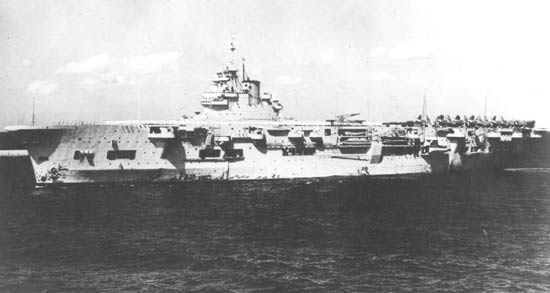
| Navy | The Royal Navy |
| Type | Aircraft Carrier |
| Class | Unicorn |
| Pennant | D 72 |
| Built by | Harland & Wolff Ltd. (Belfast, Northern Ireland) |
| Ordered | 14 Apr 1939 |
| Laid down | 29 Jun 1939 |
| Launched | 20 Nov 1941 |
| Commissioned | 12 Mar 1943 |
| End service | |
| History | Sold for scrap on 15 June 1959, and was stripped at Dalmuir and hull broken up at Troon from March 1960. |
Commands listed for HMS Unicorn (D 72)
Please note that we're still working on this section
and that we only list Commanding Officers for the duration of the Second World War.
| Commander | From | To | |
| 1 | Capt. Quintin Dick Graham, RN | 30 Nov 1942 | 14 Oct 1943 |
| 2 | Cdr. Herbert Leonard Hayes, OBE, RN | 14 Oct 1943 | 19 Oct 1943 |
| 3 | Capt. Henry Lockhart St. John Fancourt, DSO, RN | 19 Oct 1943 | 23 Dec 1944 |
| 4 | A/Capt. (Retd.) Christopher McCabe Merewether, RN | 23 Dec 1944 | 1 Feb 1946 |
You can help improve our commands section
Click here to Submit events/comments/updates for this vessel.
Please use this if you spot mistakes or want to improve this ships page.
Notable events involving Unicorn include:
The page of HMS Unicorn was created in March 2023.
This page was last updated in April 2023.
[Note: information regarding operations by the Fleet Air Arm (FAA) aircraft of HMS Unicorn is not complete on this page. Further research from first hand sources, read original documents from the National Archives, will have to be undertaken in the future.]
14 Jan 1943
HMS Unicorn (Capt. Q.D. Graham, CBE, DSO, RN) was commissioned for trials at Belfast. (1)
1 Feb 1943
HMS Unicorn (Capt. Q.D. Graham, CBE, DSO, RN) conducted compass swing trials in Belfast Lough. (2)
2 Feb 1943
HMS Unicorn (Capt. Q.D. Graham, CBE, DSO, RN) conducted trials in Belfast Lough. (2)
3 Feb 1943
HMS Unicorn (Capt. Q.D. Graham, CBE, DSO, RN) proceeded from Belfast Lough to Greenock. En-route full power trials were carried out. (2)
4 Feb 1943
HMS Unicorn (Capt. Q.D. Graham, CBE, DSO, RN) conducted speed / engine trials in the Clyde area. (2)
6 Feb 1943
HMS Unicorn (Capt. Q.D. Graham, CBE, DSO, RN) conducted gunnery, full power and steering trials in the Clyde area. (2)
9 Feb 1943
HMS Unicorn (Capt. Q.D. Graham, CBE, DSO, RN) conducted speed trials on the Arran measured mile on completion of which she proceeded to Bangor, Northern Ireland. En-route full astern trials were carried out. (2)
10 Feb 1943
HMS Unicorn (Capt. Q.D. Graham, CBE, DSO, RN) proceeded from Bangor to Greenock. (2)
11 Feb 1943
HMS Unicorn (Capt. Q.D. Graham, CBE, DSO, RN) conducted flying trials in the Clyde area. (2)
13 Feb 1943
HMS Unicorn (Capt. Q.D. Graham, CBE, DSO, RN) conducted flying trials in the Clyde area. (2)
14 Feb 1943
HMS Unicorn (Capt. Q.D. Graham, CBE, DSO, RN) conducted flying trials in the Clyde area. (2)
15 Feb 1943
HMS Unicorn (Capt. Q.D. Graham, CBE, DSO, RN) conducted flying trials in the Clyde area. (2)
16 Feb 1943
HMS Unicorn (Capt. Q.D. Graham, CBE, DSO, RN) conducted flying trials in the Clyde area. (2)
17 Feb 1943
HMS Unicorn (Capt. Q.D. Graham, CBE, DSO, RN) conducted flying trials in the Clyde area. (2)
18 Feb 1943
HMS Unicorn (Capt. Q.D. Graham, CBE, DSO, RN) conducted flying trials in the Clyde area. (2)
19 Feb 1943
HMS Unicorn (Capt. Q.D. Graham, CBE, DSO, RN) conducted flying trials in the Clyde area. (2)
20 Feb 1943
HMS Unicorn (Capt. Q.D. Graham, CBE, DSO, RN) conducted flying trials in the Clyde area. (2)
21 Feb 1943
HMS Unicorn (Capt. Q.D. Graham, CBE, DSO, RN) conducted D/F calibration trials in the Clyde area on completion of which she proceeded to Bangor, Northern Ireland. (2)
22 Feb 1943
HMS Unicorn (Capt. Q.D. Graham, CBE, DSO, RN) proceeded from Bangor to Belfast to be taken in hand for post trials repairs and alterations. (2)
12 Mar 1943
HMS Unicorn (Capt. Q.D. Graham, CBE, DSO, RN) is accepted from her builders yard and then proceeded from Belfast to Greenock. (3)
14 Mar 1943
HMS Unicorn (Capt. Q.D. Graham, CBE, DSO, RN) conducted flying trials in the Clyde area. (3)
23 Mar 1943
HMS Unicorn (Capt. Q.D. Graham, CBE, DSO, RN) conducted full speed trials in the Clyde area. (3)
24 Mar 1943
HMS Unicorn (Capt. Q.D. Graham, CBE, DSO, RN) conducted flying trials in the Clyde area. (3)
26 Mar 1943
HMS Unicorn (Capt. Q.D. Graham, CBE, DSO, RN) proceeded from Lamlash to Bangor. En-route flying exercises were carried out. (3)
27 Mar 1943
HMS Unicorn (Capt. Q.D. Graham, CBE, DSO, RN) conducted flying exercises in Belfast Lough. (3)
28 Mar 1943
HMS Unicorn (Capt. Q.D. Graham, CBE, DSO, RN) conducted flying exercises in Belfast Lough. (3)
29 Mar 1943
HMS Unicorn (Capt. Q.D. Graham, CBE, DSO, RN) proceeded from Belfast Lough to Greenock. En-route flying exercises were carried out. (3)
31 Mar 1943
HMS Unicorn (Capt. Q.D. Graham, CBE, DSO, RN) conducted flying exercises in the Clyde area. (3)
1 Apr 1943
HMS Unicorn (Capt. Q.D. Graham, CBE, DSO, RN) conducted flying exercises in the Clyde area. (4)
2 Apr 1943
HMS Unicorn (Capt. Q.D. Graham, CBE, DSO, RN) conducted flying and gunnery exercises in the Clyde area. (4)
3 Apr 1943
HMS Unicorn (Capt. Q.D. Graham, CBE, DSO, RN) conducted gunnery exercises in the Clyde area. (4)
6 Apr 1943
HMS Unicorn (Capt. Q.D. Graham, CBE, DSO, RN) conducted flying and gunnery exercises in the Clyde area. (4)
7 Apr 1943
While at anchor off Greenock, in gale force winds, HMS Unicorn (Capt. Q.D. Graham, CBE, DSO, RN) and the tanker Empire Emerald (British (tanker), 8032 GRT, built 1941) came into contact with each other and both sustained some damage. (4)
8 Apr 1943
HMS Unicorn (Capt. Q.D. Graham, CBE, DSO, RN) conducted flying exercises in the Clyde area. (4)
9 Apr 1943
HMS Unicorn (Capt. Q.D. Graham, CBE, DSO, RN) conducted flying exercises in the Clyde area. (4)
13 Apr 1943
HMS Unicorn (Capt. Q.D. Graham, CBE, DSO, RN) departed Greenock for flying exercises in the Irish Sea on completion of which she proceeded to Lamlash where she arrived on the 15th. (4)
16 Apr 1943
During 16/17 April 1943, HMS Unicorn (Capt. Q.D. Graham, CBE, DSO, RN) conducted flying exercises in the Clyde area. These included night flying exercises. (4)
17 Apr 1943
HMS Unicorn (Capt. Q.D. Graham, CBE, DSO, RN) conducted D/F calibration trials in the Clyde area on completion of which she set course for Belfast. (4)
18 Apr 1943
HMS Unicorn (Capt. Q.D. Graham, CBE, DSO, RN) arrived at Belfast from the Clyde. (4)
24 Apr 1943
HMS Unicorn (Capt. Q.D. Graham, CBE, DSO, RN) departed Belfast for the Clyde where she arrived the following day. En-route speed trials and flying exercises were carried out. (4)
28 Apr 1943
HMS Unicorn (Capt. Q.D. Graham, CBE, DSO, RN) conducted full power trials in the Clyde area on completion of which flying exercises were commenced which were only completed the following morning. These flying exercises had included night flying. (4)
29 Apr 1943
In the evening HMS Unicorn (Capt. Q.D. Graham, CBE, DSO, RN) conducted night flying exercises in the Clyde area. (4)
30 Apr 1943
In the evening HMS Unicorn (Capt. Q.D. Graham, CBE, DSO, RN) conducted flying and gunnery exercises in the Clyde area. (4)
3 May 1943
In the evening HMS Unicorn (Capt. Q.D. Graham, CBE, DSO, RN) conducted full power trials in the Clyde area. (5)
4 May 1943
During 4/5 May 1943, HMS Unicorn (Capt. Q.D. Graham, CBE, DSO, RN) conducted flying and gunnery exercises in the Clyde area. These included night flying. (5)
5 May 1943
During 5/6 May 1943, HMS Unicorn (Capt. Q.D. Graham, CBE, DSO, RN) conducted flying exercises in the Clyde area. These included night flying. (5)
5 May 1943
Vice Admiral A.L.St.G. Lyster, CB, CVO, DSO, RN, the Flag Officer Carrier Training, transferred his flag from HMS Indomitable (Capt. G. Grantham, CB, DSO, RN) to HMS Unicorn (Capt. Q.D. Graham, CBE, DSO, RN). (6)
7 May 1943
During 7/8 May 1943, HMS Unicorn (Capt. Q.D. Graham, CBE, DSO, RN) conducted flying exercises in the Clyde area. These included night flying. (5)
9 May 1943
Vice Admiral A.L.St.G. Lyster, CB, CVO, DSO, RN, the Flag Officer Carrier Training, transferred his flag from HMS Unicorn (Capt. Q.D. Graham, CBE, DSO, RN) to HMS Indomitable (Capt. G. Grantham, CB, DSO, RN). (7)
10 May 1943
During 10/11 May 1943, the aircraft carriers HMS Indomitable (Capt. G. Grantham, CB, DSO, RN), HMS Furious (Capt. G.T. Philip, DSO, DSC, RN) and HMS Unicorn (Capt. Q.D. Graham, CBE, DSO, RN, flying the flag of the Flag Officer Carrier Training, Vice Admiral A.L.St.G. Lyster, CB, CVO, DSO, RN) conducted exercises in the Irish Sea. In the evening HMS Furious was detached to Belfast Lough. She rejoined the other two carriers the next morning. On completion of the exercises the carriers returned to Greenock late in the evening of the 11th. HMS Unicorn only arrived at Greenock shorty before noon on the 12th having parted company with the other two carriers around 2200B/11. (8)
14 May 1943
HMS Unicorn (Capt. Q.D. Graham, CBE, DSO, RN) proceeded from Greenock to Belfast. (5)
18 May 1943
HMS Unicorn (Capt. Q.D. Graham, CBE, DSO, RN) proceeded from Belfast to Greenock. En-route full power trials were carried out. (5)
19 May 1943
Combined convoy WS 30 / KMS 15.
This combined convoy was formed off Oversay on 19 May 1943. The convoy was divided into convoys WS 30 and KMS 15 at sea on 25 May 1943.
The combined convoy was made up of the following (troop) transports; Arawa (British, 14462 GRT, built 1922), Argentina (American, 20614 GRT, built 1929), Boissevain (Dutch, 14134 GRT, built 1937), Brisbane Star (British, 12791 GRT, built 1937), Deseado (British, 9641 GRT, built 1942), Duchess of York (British, 20021 GRT, built 1929), Franconia (British, 20175 GRT, built 1923), H.F. Alexander (American, 8357 GRT, built 1915), Indrapoera (Dutch, 10825 GRT, built 1925), Johan van Oldenbarnevelt (Dutch, 19429 GRT, built 1930), Letitia (British, 13595 GRT, built 1925), Mataroa (British, 12390 GRT, built 1922), Ormonde (British, 14982 GRT, built 1917), Samaria (British, 19597 GRT, built 1921), Siboney (American, 6938 GRT, built 1918), Sloterdijk (Dutch, 9230 GRT, built 1940), Staffordshire (British, 10683 GRT, built 1929) and Stirling Castle (British, 25550 GRT, built 1936).
The landing ships HMS Royal Scotsman (Lt.Cdr. J.D. Armstrong, DSC, RD, RNR) and HMS Royal Ulsterman (Lt.Cdr. W.R.K. Clark, DSC, RD RNR) were also part of the convoy.
On formation off Oversay the convoy was escorted by the aircraft carrier HMS Unicorn (Capt. Q.D. Graham, CBE, DSO, RN), heavy cruiser HMS Suffolk (Capt. R. Shelley, CBE, RN), armed merchant cruiser HMS Corfu (Capt.(Retd.) C.C. Bell, DSO, RN), destroyers HMS Sardonyx (Lt.Cdr. A.F.C. Gray, RD, RNR), HMS Active (Lt.Cdr. P.G. Merriman, RN), HMS Boadicea (Lt.Cdr. F.C. Brodrick, RN), escort destroyers HMS Cleveland (Lt. J.K. Hamilton, RN), ORP Slazak (Kmdr.ppor. (Cdr.) R. Nalecz-Tyminski), sloops HMS Lowestoft (A/Cdr.(Retd.) L.H. Phillips, RN), HMS Wellington (Lt.Cdr. J.T. Jones, RD, RNR), HMS Weston (Cdr. L.F. Durnford-Slater, RN), Cutters HMS Gorleston (Cdr.(Retd.) R.W. Keymer, RN), HMS Totland (Lt.Cdr. L.E. Woodhouse, RN) and the frigates HMS Exe (A/Cdr. M.A.O. Biddulph, DSC, RN) and HMS Ness (A/Cdr. T.G.P. Crick, DSC, RN).
The destroyer HMS Sardonyx apparently parted company on 20 May.
HMS Cleveland fuelled from HMS Suffolk during the morning of 21 May.
At 1130Z/23, HMS Active sighted a surfaced submarine in position 42°16'N, 15°40'W at a range of about 6000 yards. Shortly afterwards HMS Ness also sighted this submarine. Both ships rushed towards to attack and the submarine was seen to crash dive. When the range was down to 2900 yards HMS Active obtained contact on the target with her Asdic. At 1143Z/23, HMS Active dropped a pattern of ten depth charges set at 150 and 300 feet. At 1150Z/23, HMS Ness dropped ten depth charges (150 and 300 feet). At 1158Z/23, HMS Active came back for another pattern of ten depth charges (350 and 550 feet). At 1212Z/23, HMS Ness dropped ten depth charges (350 and 550 feet). A double explosion was then heard by the two escorts. At 1223Z/23, HMS Active dropped ten depth charges (350 and 550 feet). At 1240Z/23, a small amount of wood and cork wreckage came to the surface as well as life-jackets, coffee tins marked 'Napoli' and a pair of fresh human lungs. At 1305Z/23, HMS Ness dropped a final pattern of ten depth charges (500, 550 and 700 feet). It is believed that the Italian submarine Leonardo Da Vinci was sunk in this attack. The most succesful Italian submarine of the Second World War disappeared with all hands. Nine officers and fifty-four ratings perished.
At 0630Z/24, the transports Brisbane Star and Deseado were detached from the convoy.
Around 1530Z/24 a German Focke Wulf aircraft attacked and dropped some bombs near HMS Unicorn but no damage was done.
At 1040Z/25 the convoy split up. All escorts proceeded with convoy KMF 15 except for HMS Suffolk, HMS Corfu which went along with WS 30. Convoy KMF 15 was made up of the transports Arawa, Boissevain, Duchess of York, Franconia, Indrapoera, Johan van Oldenbarnevelt, Letitia, Ormonde, Samaria, Staffordshire and Stirling Castle. HMS Royal Scotsman and HMS Royal Ulsterman were also part of this convoy.
On the 26th, the transport Letitia proceeded to Gibraltar as did HMS Unicorn which had on board Beaufighter aircraft and aircraft spares besides two operational squadrons which she had been able to operate during the passage. The escort destroyers HMS Farndale (Cdr. D.P. Trentham, RN), HMS Haydon (Lt. R.C. Watkin, RN) and HMS Tynedale (Lt. J.J.S. Yorke, DSC, RN) had come out to escort them in although HMS Haydon was later detached to proceed to the assistance of an aircraft that had crashed into the sea. HMS Active, HMS Cleveland and ORP Slazak also put into Gibraltar.
The transports Staffordshire and Stirling Castle were detached and arrived at Oran on 26 May.
The remainder of convoy KMF 15 arrived at Algiers on 27 May.
------------------------------------------------------------------------------------------------------
Convoy WS 30 continued on to Freetown and was made up of Argentina, Brisbane Star, Deseado, H.F. Alexander, Mataroa, Siboney and Sloterdijk. Their escort of HMS Suffolk and HMS Corfu was joined by the destroyers HMS Antelope (Lt.Cdr. E.N. Sinclair, RN), HMS Foxhound (Cdr. C.J. Wynne-Edwards, DSC and Bar, RN) and the escort destroyer HMS Catterick (Lt.Cdr. A. Tyson, RN) which all came from Gibraltar. HMS Boadicea also rejoined after fuelling at Casablanca.
In the morning of May 27th, HMS Antelope fuelled from HMS Suffolk.
The convoy arrived at Freetown on 31 May 1943.
------------------------------------------------------------------------------------------------------
On 3 June 1943 the convoy departed Freetown now made up of the transports Argentina, H.F. Alexander, Mataroa, Nieuw Holland (Dutch, 11066 GRT, built 1927), Siboney and Sloterdijk.
On departure from Freetown the convoy was escorted by the heavy cruiser HMS Suffolk, armed merchant cruisers HMS Carnarvon Castle (Capt.(Retd.) E.W. Kitson, RN), HMS Corfu, destroyers HMS Wolverine (Lt. I.M. Clegg, RN), HMS Boardicea, HMS Rapid (Lt.Cdr. M.W. Tomkinson, DSC and Bar, RN) and the escort destroyer HMS Catterick.
At 1500Z/6, the transport Cuba (British, 11420 GRT, 1923) and the destroyer HMS Witch (Lt.Cdr. S.R.J. Woods, RNR) joined the convoy coming from Takoradi.
At 1950Z/6, HMS Corfu and HMS Boadicea parted company with the convoy to proceed to Takoradi.
At 1445Z/9, the destroyers HMAS Norman (Cdr. H.M. Burrell, RAN), HMS Quadrant (Lt.Cdr. W.H. Farrington, RN) and HMS Redoubt (Lt.Cdr. N.E.G. Ropner, DSO, RN) joined the convoy coming from Pointe Noire.
At 1517Z/9, HMS Witch, HMS Wolverine and HMS Rapid parted company with the convoy to proceed to Pointe Noire.
Around 0730A/13, the transports Exceller (American, 6597 GRT, built 1941) and Santa Barbara (American, 6507 GRT, built 1943) joined the convoy as did the sloop Savorgnan de Brazza which had been escorting them.
On 15 June 1943 the convoy arrived at Capetown. HMS Suffolk and HMS Carnarvon Castle then went on to Simonstown. In the approaches to Capetown the destroyer HMAS Nizam (Lt. W.F. Cook, RAN) joined the escort as an enemy submarine had been reported to be operating in the area.
------------------------------------------------------------------------------------------------------
On 16 June 1943, the convoy departed Capetown for Durban. It was now made up of the transports Argentina, Cuba, Exceller, Exiria (American, 6533 GRT, built 1941), H.F. Alexander, Mataroa, Nieuw Holland, Santa Barbara, Siboney and Sloterdijk.
The convoy was escorted by the destroyers HMAS Nizam, HMAS Norman, HMS Quadrant and HMS Redoubt.
On 18 June, the transport Sibajak (Dutch, 12226 GRT, built 1927) joined the convoy presumebly coming from Port Elizabeth or East London.
The convoy arrived at Durban on 20 June.
------------------------------------------------------------------------------------------------------
On 25 June 1943, the convoy departed Durban for Aden / Bombay, now made up of the transports Cuba, General Fleischer (Norwegian, 5138 GRT, built 1943), Karagola (British, 7053 GRT, built 1917), Nieuw Holland, Sagoland (American, 5334 GRT, built 1913), Santa Barbara and Sibajak.
The convoy was now escorted by the destroyers HMAS Norman (now commanded by Cdr. H.J. Buchanan DSO, RAN), HMAS Quickmatch (Lt.Cdr. R. Rhoades, DSC, RAN) and HMS Rotherham (Lt. J.R.L. Moore, RN).
The armed mercant cruiser HMS Canton (A/Capt. G.N. Loriston-Clarke, RN) joined the convoy around 0900C/28 having departed Kilindini around 1745C/25.
Around 2000C/29, HMAS Norman parted company with the convoy to return to Durban via Tulear, Madagascar. HMS Rotherham and HMAS Quickmatch remained with the convoy for another 150 miles and then parted company to rejoin HMAS Norman and then proceed to Tulear.
Around 0900C/1, the armed merchant cruiser HMS Alaunia (Capt. R.H.C. Crawford, OBE, RNR) joined the convoy having departed Kilindini around 1730C/29. HMS Canton then parted company with the convoy to proceed to Kilindi taking the transports Karagola and Sagoland with her. They arrived at Kilindini around 1200C/2.
At 0310C/3, the transport Santa Barbara was detached to proceed independently to Colombo.
At 1115C/4, the transports General Fleischer and Sibajak were detached to proceed independently to Aden.
The transports Cuba and Nieuw Holland arrived at Bombay and their escort, HMS Alaunia, around 1000FG/9.
28 May 1943
Convoy MKF 15.
[Note: Further research on this convoy is required.]
This convoy departed Algiers on 28 May 1943 for the U.K. where it arrived on 5 June 1943.
On departure the convoy was made up of the following transports; Antenor (British, 11174 GRT, built 1925), Arawa (British, 14462 GRT, built 1922), Boissevain (British, 14134 GRT, built 1937), California (British, 16792 GRT, built 1923), Dartmouth (American, 9879 GRT, built 1943), Duchess of York (British, 20021 GRT, built 1929), Franconia (British, 20175 GRT, built 1923), Indrapoera (Dutch, 10825 GRT, built 1925), Johan van Oldenbarnevelt (Dutch, 19429 GRT, built 1930), Letitia (British, 13595 GRT, built 1925), Mooltan (British, 20952 GRT, built 1923), Ormonde (British, 14982 GRT, built 1917), Samaria (British, 19597 GRT, built 1921) and Santa Rosa (American, 9135 GRT, built 1932).
On departure from Algiers the convoy was escorted by the sloops HMS Weston (Cdr. L.F. Durnford-Slater, RN), HMS Wellington (Lt.Cdr. J.T. Jones, RD, RNR), HMS Lowestoft (A/Cdr.(Retd.) L.H. Phillips, RN), HMS Gorleston (Cdr.(Retd.) R.W. Keymer, RN), HMS Totland (Lt.Cdr. L.E. Woodhouse, RN) and the frigates HMS Exe (A/Cdr. M.A.O. Biddulph, DSC, RN) and HMS Ness (A/Cdr. T.G.P. Crick, DSC, RN).
On 29 May the transports Cristobal (American, 10021 GRT, built 1939), General George W. Goethals (American, 12093 GRT, built 1942), J.W. McAndrew (American, 7997 GRT, built 1940), John Ericsson (American, 16552 GRT, built 1928), Nea Hellas (British, 16991 GRT, built 1922), Seatrain Lakehurst (American, 8108 GRT, built 1940), Staffordshire (British, 10683 GRT, built 1929) and Stirling Castle (British, 25550 GRT, built 1936).
On 30 May the transports Felix Roussel (British, 17083 GRT, built 1930), Maloja (British, 20914 GRT, built 1923) and Scythia (British, 19761 GRT, built 1920) joined coming from Gibraltar. Also joining from Gibraltar were the aircraft carrier HMS Unicorn (Capt. Q.D. Graham, CBE, DSO, RN), escort carrier HMS Tracker (A/Capt. G.C. Dickins, RN) and the destroyers HMS Javelin (Lt.Cdr. J.M. Alliston, DSC, RN) and HMS Kelvin (Lt.Cdr. J.T.B. Birch, DSO, DSC, RN).
Later on 30 May the transports Antenor, Staffordshire and Stirling Castle were detached to proceed to Freetown via Bathurst / Dakar.
Also on 30 May the Scythia was detached to proceed to New York.
The sloop HMS Totland had to be detached due to defects and arrived at Gibraltar on 30 May 1943.
[No info available on the US ships, it seems likely that the Scythia proceeded with them to the USA but further research is required.] They probably parted company with the convoy on 1 June 1943.
At 1200Z/4, HMS Unicorn, HMS Tracker, HMS Javelin and HMS Kelvin parted company with the convoy and proceeded ahead of it to the Clyde (HMS Tracker to Belfast).
The convoy arrived in U.K. waters on 4 June 1943 with the bulk of the convoy arriving at Liverpool on 5 June 1943.
30 May 1943
Around 0630B/28, aircraft carrier HMS Unicorn (Capt. Q.D. Graham, CBE, DSO, RN), escort carrier HMS Tracker (A/Capt. G.C. Dickins, RN) and the destroyers HMS Javelin (Lt.Cdr. J.M. Alliston, DSC, RN) and HMS Kelvin (Lt.Cdr. J.T.B. Birch, DSO, DSC, RN) departed Gibraltar to join convoy MKF 15.
[For more info on this convoy see the event ' Convoy MKF 15 ' for 28 June 1943.] (5)
4 Jun 1943
HMS Unicorn (Capt. Q.D. Graham, CBE, DSO, RN), escort carrier HMS Tracker (A/Capt. G.C. Dickins, RN) and the destroyers HMS Javelin (Lt.Cdr. J.M. Alliston, DSC, RN) and HMS Kelvin (Lt.Cdr. J.T.B. Birch, DSO, DSC, RN) were detached at 1200 hours from the escort of convoy MKF 15. Around 1400 hours HMS Tracker was detached to Belfast. The other three ships arrived at Greenock early in the evening. (9)
7 Jun 1943
During 7/8 June 1943, HMS Unicorn (Capt. Q.D. Graham, CBE, DSO, RN) conducted flying exercises in the Clyde area. These included night flying. (10)
8 Jun 1943
During 8/9 June 1943, HMS Unicorn (Capt. Q.D. Graham, CBE, DSO, RN) conducted flying exercises in the Clyde area. These included night flying. (10)
10 Jun 1943
During 10/11 June 1943, HMS Unicorn (Capt. Q.D. Graham, CBE, DSO, RN) conducted flying exercises in the Clyde area. These included night flying. (10)
14 Jun 1943
During 14/15 June 1943, HMS Unicorn (Capt. Q.D. Graham, CBE, DSO, RN) conducted flying exercises in the Clyde area. These included night flying. (10)
15 Jun 1943
During 15/16 June 1943, HMS Unicorn (Capt. Q.D. Graham, CBE, DSO, RN) conducted flying exercises in the Clyde area. These included night flying. (10)
17 Jun 1943
During 17/18 June 1943, HMS Unicorn (Capt. Q.D. Graham, CBE, DSO, RN) conducted flying exercises in the Clyde area. These included night flying. (10)
21 Jun 1943
HMS Unicorn (Capt. Q.D. Graham, CBE, DSO, RN) proceeded from Greenock to Bangor. (10)
22 Jun 1943
HMS Unicorn (Capt. Q.D. Graham, CBE, DSO, RN) conducted flying exercises in the Irish Sea on completion of which she returned to Bangor. (10)
23 Jun 1943
HMS Unicorn (Capt. Q.D. Graham, CBE, DSO, RN) conducted flying exercises in the Irish Sea on completion of which she proceeded to Greenock. (10)
25 Jun 1943
HMS Unicorn (Capt. Q.D. Graham, CBE, DSO, RN) proceeded from Greenock to Belfast where she was taken in hand for repairs. (10)
30 Jun 1943
HMS Unicorn (Capt. Q.D. Graham, CBE, DSO, RN) is docked in the Thompson graving dock at Belfast. [Unknown when she was undocked.] (10)
11 Jul 1943
HMS Unicorn (Capt. Q.D. Graham, CBE, DSO, RN) proceeded from Belfast to Lamlash. (11)
14 Jul 1943
HMS Unicorn (Capt. Q.D. Graham, CBE, DSO, RN) conducted gunnery and flying exercises in the Clyde area. (11)
15 Jul 1943
HMS Unicorn (Capt. Q.D. Graham, CBE, DSO, RN) conducted flying exercises in the Clyde area. (11)
20 Jul 1943
HMS Unicorn (Capt. Q.D. Graham, CBE, DSO, RN) proceeded from Greenock to Bangor. En-route flying exercises were carried out. (11)
21 Jul 1943
HMS Unicorn (Capt. Q.D. Graham, CBE, DSO, RN) proceeded from Bangor to Greenock. En-route flying exercises were carried out. (11)
22 Jul 1943
Around 1500B/22, the battleship HMS Malaya (Capt. G.E.M. O’Donnell, DSO, RN) and the aircraft carrier HMS Unicorn (Capt. Q.D. Graham, CBE, DSO, RN) departed Greenock for Scapa Flow.
They were escorted by HMS Oribi (Lt.Cdr. J.C.A. Ingram, DSC, RN), HMS Obedient (Lt.Cdr. H. Unwin, DSC and Bar, RN) and HMS Orwell (Lt.Cdr. J.M. Hodges, DSO, RN). These destroyers had departed Scapa Flow around 2330B/21 to make rendezvous with the battleship and carrier around 1800B/22 on them leaving the Clyde.
They arrived at Scapa Flow around 1800B/23. (12)
25 Jul 1943
Operation Governor.
The object of this operation was again to pin down enemy forces in Norway and try to get the large German warships to intervene.
Five Force took part in the operation; ' Force A ', which was made up of the battleships HMS Anson (Rear-Admiral H.R.G. Kinahan, RN, flying the flag of Vice-Admiral H.R. Moore, KCB, DSO, CVO, RN) and USS Alabama (Capt. F.D. Kirtland, USN), aircraft carrier HMS Illustrious (Capt. R.L.B. Cunliffe, RN) and the destroyers HMS Milne (Capt. I.M.R. Campbell, DSO, RN), HMS Mahratta (Lt.Cdr. E.A.F. Drought, DSC, RN), HMS Meteor (Lt.Cdr. D.J.B. Jewitt, RN) and HMS Musketeer (Cdr. E.N.V. Currey, DSC, RN), USS Rodman (T/Cdr. J.F. Foley, USN), USS Emmons (T/Cdr. E.B. Billingsley, USN), USS Macomb (T/Cdr. J.C. South, USN) and USS Fitch (T/Cdr. K.C. Walpole, USN).
' Force B ' which was made up of the battleships HMS Duke of York (R.Adm. G.E. Creasy, DSO, RN, flying the flag of A/Admiral B.A. Fraser, KCB, KBE, RN, C-in-C Home Fleet), USS South Dakota (Capt. L.D. McCormick, USN, flying the flag of Rear-Admiral O.M. Hustvedt, USN), aircraft carrier HMS Unicorn (Capt. Q.D. Graham, CBE, DSO, RN), light cruiser HMS Bermuda (Capt. T.H. Back, RN) and the destroyers HMS Onslow (Capt. J.A. McCoy, DSO, RN), HMS Obdurate (Lt.Cdr. C.E.L. Sclater, DSO and Bar, RN), HMS Obedient (Lt.Cdr. H. Unwin, DSC and Bar, RN), HMS Grenville (Lt.Cdr. R.P. Hill, DSO, RN), HMS Ulster (Lt.Cdr. W.S. Donald, DSC, RN), HMS Saumarez (Lt.Cdr. E.N. Walmsley, DSC, RN), HMS Scorpion (Lt.Cdr. W.S. Clouston, RN), HMS Matchless (Lt.Cdr. J. Mowlam, DSO, RN) and HMS Impulsive (Lt. P. Bekenn, RN).
' Force C ' representing a convoy, was made up of the destroyers HMS Savage (Cdr. R.C. Gordon, DSO, RN, Senior Officer ' Force C '), HMS Ripley (Lt. L.G. Toone, RN), trawlers HMS Cedar (T/Skr. B. Godfrey, RNR), HMS Hawthorn (T/Lt. G.W. Fox, RNVR), HMS Larch (T/Skr. J.G. Mackay, RNR), HMS Lilac (T/Skr. J.W. Brown, RNR), HMS Oak (A/Skr.Lt. P. Buchan, DSC, RNR), HMS Skye (T/Lt. W.G. Burt, RNR), HMS Switha (T/Lt. L.H. Green, RNR), HMS Willow (T/Lt. J.E.W. Graves, RNVR), Motor Launches HMML 252 (T/Lt. T.R. Neale, RNVR), HMML 286 (T/Lt. J.R.T. Ward, RNVR), HMML 442 (T/Lt. R.W. Dunn, RANVR), HMML 445 (T/Lt. B.W. Kelly, RNVR), HMML 473 (T/Lt. J.C. Sargeant, RNVR), and the landing craft HMLCI(L) 167 (?).
' Force D ' was made up of the light cruiser HMS Belfast (Capt. F.R. Parham, RN, flying the flag of Rear-Admiral R.L. Burnett, CB, DSO, OBE, RN) and the destroyers HMS Oribi (Lt.Cdr. J.C.A. Ingram, DSC, RN) and HMS Orwell (Lt.Cdr. J.M. Hodges, DSO, RN).
' Force E ' which was made up of the heavy cruisers HMS London (Capt. R.V. Symonds-Tayler, DSC, RN, flying the flag of Rear Admiral L.H.K. Hamilton, CB, DSO and Bar, RN), HMS Kent (Capt. G.A.B. Hawkins, DSC, MVO, RN) and HMS Norfolk (Capt. D.K. Bain, RN).
On 25 July, ' Force C ' departed from Scapa Flow for Sullom Voe where it arrived the following day.
On 26 July ' Force A ' departed from Hvalfiord to pass through position ' N ' (66°30'N, 08°00' W) and then through position ' P ' (66°00'N, 01°30'E).
On 27 July ' Force E ' departed from Hvalfiord for position ' M ' (67°20'N, 02°00'W).
' Force B ' departed from Scapa Flow to pass through position ' W ' (61°40'N, 04°40'W) and then through position ' T ' (61°30'N, 01°30'E).
' Force C ' departed from Sullom Voe to pass through position ' U ' (61°45N, 00°50W) and then through postition ' S ' (61°50'N, 01°00'E).
' Force D ' (minus both destroyers) departed from Scapa Flow to proceed to position ' V ' (62°15'N, 05°20'W) where they were to rendezvous on the 28th with the destroyers coming from Skaalefiord, Faeroer Island and then to position ' R ' (62°00'N, 00°30'E).
On 28 July ' Force D ' was sighted and reported by enemy aircraft. The other forces were apparently not sighted by the Germans.
Beaufighters shot down two BV 138's in the vicinity of ' Force D ' and damaged two others.
Martlets from HMS Illustious shot down two BV 138's in the vicinity of Forces ' A ' and ' D '.
' Force D ' joined ' Force A ' in position ' Q ' (63°10'N, 01°30'E). The two destroyers from ' Force D ' were then detached to return to Skaalefiord where they arrived on the 29th.
All forces commenced to withdraw.
' Force C ' arrived at Sullom Voe, sailing PM for Scapa Flow.
' Force B ' arrived at Scapa Flow.
Forces ' A ' and ' D ' (less the two destroyers) arrived at Scapa Flow.
On 30 July ' Force C ' arrived at Scapa Flow and ' Force E ' arrived at Hvalfiord. (13)
26 Jul 1943
HMS Unicorn (Capt. Q.D. Graham, CBE, DSO, RN) conducted flying exercises off Scapa Flow. She was, most likely, escorted by the destroyers HMS Grenville (Lt.Cdr. R.P. Hill, DSO, RN) and HMS Ulster (Lt.Cdr. W.S. Donald, DSC, RN). (11)
27 Jul 1943
Around 1615B/7, the battleships HMS Duke of York (R.Adm. G.E. Creasy, DSO, RN, flying the flag of A/Admiral B.A. Fraser, KCB, KBE, RN, C-in-C Home Fleet), USS South Dakota (Capt. L.D. McCormick, USN, flying the flag of Rear-Admiral O.M. Hustvedt, USN), aircraft carrier HMS Unicorn (Capt. Q.D. Graham, CBE, DSO, RN), light cruiser HMS Bermuda (Capt. T.H. Back, RN) and the destroyers HMS Onslow (Capt. J.A. McCoy, DSO, RN), HMS Obdurate (Lt.Cdr. C.E.L. Sclater, DSO and Bar, RN), HMS Obedient (Lt.Cdr. H. Unwin, DSC and Bar, RN), HMS Grenville (Lt.Cdr. R.P. Hill, DSO, RN), HMS Ulster (Lt.Cdr. W.S. Donald, DSC, RN), HMS Saumarez (Lt.Cdr. E.N. Walmsley, DSC, RN), HMS Scorpion (Lt.Cdr. W.S. Clouston, RN), HMS Matchless (Lt.Cdr. J. Mowlam, DSO, RN) and HMS Impulsive (Lt. P. Bekenn, RN) departed Scapa Flow for operation Governor.
[For more information see the event ' Operation Governor ' for 25 July 1943.] (7)
29 Jul 1943
Around 0830A/29, the battleships HMS Duke of York (R.Adm. G.E. Creasy, DSO, RN, flying the flag of A/Admiral B.A. Fraser, KCB, KBE, RN, C-in-C Home Fleet), USS South Dakota (Capt. L.D. McCormick, USN, flying the flag of Rear-Admiral O.M. Hustvedt, USN), aircraft carrier HMS Unicorn (Capt. Q.D. Graham, CBE, DSO, RN), light cruiser HMS Bermuda (Capt. T.H. Back, RN) and the destroyers HMS Onslow (Capt. J.A. McCoy, DSO, RN), HMS Obdurate (Lt.Cdr. C.E.L. Sclater, DSO and Bar, RN), HMS Obedient (Lt.Cdr. H. Unwin, DSC and Bar, RN), HMS Grenville (Lt.Cdr. R.P. Hill, DSO, RN), HMS Ulster (Lt.Cdr. W.S. Donald, DSC, RN), HMS Saumarez (Lt.Cdr. E.N. Walmsley, DSC, RN), HMS Scorpion (Lt.Cdr. W.S. Clouston, RN), HMS Matchless (Lt.Cdr. J. Mowlam, DSO, RN) and HMS Impulsive (Lt. P. Bekenn, RN) returned to Scapa Flow from operation Governor. (7)
30 Jul 1943
Around 1030B/30, the aircraft carrier HMS Unicorn (Capt. Q.D. Graham, CBE, DSO, RN) departed Scapa Flow for Greenock where she arrived around 2245B/31 after first having conducted flying exercises in the Clyde area while en-route. She was escorted by the destroyers HMS Scorpion (Lt.Cdr. W.S. Clouston, RN) and HMS Grenville (Lt.Cdr. R.P. Hill, DSO, RN). The destroyers had parted company around 0530B/31. They also entered the Clyde. (11)
4 Aug 1943
HMS Unicorn (Capt. Q.D. Graham, CBE, DSO, RN) conducted flying exercises in the Clyde area. (14)
5 Aug 1943
HMS Unicorn (Capt. Q.D. Graham, CBE, DSO, RN) conducted flying exercises in the Clyde area. (14)
6 Aug 1943
HMS Unicorn (Capt. Q.D. Graham, CBE, DSO, RN) conducted flying exercises in the Clyde area. (14)
7 Aug 1943
HMS Unicorn (Capt. Q.D. Graham, CBE, DSO, RN) conducted flying exercises in the Clyde area. (14)
8 Aug 1943
HMS Unicorn (Capt. Q.D. Graham, CBE, DSO, RN) conducted flying exercises in the Clyde area. (14)
9 Aug 1943
HMS Unicorn (Capt. Q.D. Graham, CBE, DSO, RN) conducted flying exercises in the Clyde area. (14)
13 Aug 1943
Around 0600B/13, the aircraft carriers HMS Illustrious (Capt. R.L.B. Cunliffe, RN) and HMS Unicorn (Capt. Q.D. Graham, CBE, DSO, RN) departed Greenock for Gibraltar. They were escorted by the destroyers HMS Savage (Cdr. R.C. Gordon, DSO, RN), HMS Scorpion (Lt.Cdr. W.S. Clouston, RN), HMS Obdurate (Lt.Cdr. C.E.L. Sclater, DSO and Bar, RN), HMS Obedient (Lt.Cdr. H. Unwin, DSC and Bar, RN) and HMS Opportune (Cdr. J. Lee-Barber, DSO and Bar, RN). (15)
17 Aug 1943
Around 1515B/17, HMS Illustrious (Capt. R.L.B. Cunliffe, RN), HMS Unicorn (Capt. Q.D. Graham, CBE, DSO, RN), HMS Savage (Cdr. R.C. Gordon, DSO, RN), HMS Scorpion (Lt.Cdr. W.S. Clouston, RN), HMS Obdurate (Lt.Cdr. C.E.L. Sclater, DSO and Bar, RN), HMS Obedient (Lt.Cdr. H. Unwin, DSC and Bar, RN) and HMS Opportune (Cdr. J. Lee-Barber, DSO and Bar, RN) arrived at Gibraltar from Greenock. (15)
19 Aug 1943
At Gibraltar, Rear-Admiral C. Moody, RN, transferred his flag from HMS Indomitable (Capt. G. Grantham, CB, DSO, RN) to HMS Unicorn (Capt. Q.D. Graham, CBE, DSO, RN). (16)
20 Aug 1943
HMS Unicorn (Capt. Q.D. Graham, CBE, DSO, RN, flying the flag of Rear-Admiral C. Moody, RN) and HMS Stalker (Capt. H.S. Murray-Smith, RN) conducted flying exercises to the east of Gibraltar. [No details available on a possible destroyer escort.] (17)
23 Aug 1943
The aircraft carrier HMS Unicorn (Capt. Q.D. Graham, CBE, DSO, RN, flying the flag of Rear-Admiral C. Moody, RN), escort carriers HMS Attacker (Capt. W.W.P. Shirley-Rollison, RN), HMS Battler (A/Capt. F.M.R. Stephenson, RN), HMS Stalker (Capt. H.S. Murray-Smith, RN), AA cruiser, HMS Scylla (Capt. I.A.P. Macintyre, CBE, DSO, RN) and several destroyers (inluding HMS Witherington (Lt.Cdr. R.B.S. Tennant, RN), HMS Active (Lt.Cdr. P.G. Merriman, DSC, RN) and HMS Inconstant (Lt.Cdr J.H. Eaden, DSC, RN)) conducted exercises to the east of Gibraltar. They all returned to Gibraltar in the evening except HMS Scylla which was detached to Algiers where she arrived the following day. (18)
26 Aug 1943
The aircraft carrier HMS Unicorn (Capt. Q.D. Graham, CBE, DSO, RN, flying the flag of Rear-Admiral C. Moody, RN), escort carriers HMS Attacker (Capt. W.W.P. Shirley-Rollison, RN), HMS Hunter (Capt. H.H. McWilliam, RN) and HMS Stalker (Capt. H.S. Murray-Smith, RN) escorted by seven destroyers / escort destroyers conducted flying exercises to the east of Gibraltar. (19)
27 Aug 1943
The aircraft carrier HMS Unicorn (Capt. Q.D. Graham, CBE, DSO, RN) and the escort carrier HMS Hunter (Capt. H.H. McWilliam, RN) conducted flying exercises to the east of Gibraltar. [No details available on their escort.]
Rear-Admiral C. Moody, RN, was not on board HMS Unicorn during the exercises, he had boarded HMS Battler (A/Capt. F.M.R. Stephenson, RN) in the morning. He later proceeded to Malta by air and hoisted his flag in HMS Illustrious (Capt. R.L.B. Cunliffe, RN) on 31 August. (19)
29 Aug 1943
Ships from the newly formed ' Force V ' for the upcoming landings at Salerno conducted exercises off Gibraltar. The ships participating in the exercises were the aircraft carrier HMS Unicorn (Capt. Q.D. Graham, CBE, DSO, RN), escort carriers HMS Attacker (Capt. W.W.P. Shirley-Rollison, RN), HMS Battler (A/Capt. F.M.R. Stephenson, RN), HMS Hunter (Capt. H.H. McWilliam, RN), HMS Stalker (Capt. H.S. Murray-Smith, RN), light cruiser HMS Euryalus (Capt. E.W. Bush, DSO and Bar, DSC, RN, flying the flag of Rear-Admiral P.L. Vian, KBE, DSO and 2 Bars, RN), AA cruiser, HMS Scylla (Capt. I.A.P. Macintyre, CBE, DSO, RN) and ten (?) destroyers / escort destroyers [unable to establish their precise identity for the moment.] (20)
3 Sep 1943
Around 0915B/3, the aircraft carrier HMS Unicorn (Capt. Q.D. Graham, CBE, DSO, RN) departed Gibraltar for Algiers where she arrived around 1145B/4. She was escorted by the escort destroyers HMS Calpe (Lt.Cdr. H. Kirkwood, DSC, RN), HMS Liddesdale (Lt.Cdr. A.A. Mackenzie, RNR) and ORP Krakowiak (Kpt.mar. (Lt.Cdr.) W. Maracewicz). (21)
4 Sep 1943
Around 1600B/4, the escort carrier HMS Hunter (Capt. H.H. McWilliam, RN), AA cruisers HMS Charybdis (Capt. G.A.W. Voelcker, RN), HMS Scylla (Capt. I.A.P. Macintyre, CBE, DSO, RN) and the escort destroyers HMS Atherstone (Lt.Cdr. E.N. Wood, DSC, RNVR), HMS Catterick (Lt.Cdr. A. Tyson, RN) and HMS Holcombe (Lt. F.M. Graves, RN) departed Gibraltar for Malta.
They were joined around 0730B/5 by the escort carrier HMS Attacker (Capt. W.W.P. Shirley-Rollison, RN) and the escort destroyers HMS Cleveland (Lt. J.K. Hamilton, RN) and ORP Slazak (Kmdr.ppor. (Cdr.) R. Nalecz-Tyminski) coming from Oran.
More ships joined around 1940B/5. These were the aircraft carrier HMS Unicorn (Capt. Q.D. Graham, CBE, DSO, RN, flying the flag of Rear-Admiral C. Moody, RN), light cruiser HMS Euryalus (Capt. E.W. Bush, DSO and Bar, DSC, RN, flying the flag of Rear-Admiral P.L. Vian, KBE, DSO and 2 Bars, RN) and the escort destroyers HMS Calpe (Lt.Cdr. H. Kirkwood, DSC, RN), HMS Liddesdale (Lt.Cdr. A.A. Mackenzie, RNR) and ORP Krakowiak (Kpt.mar. (Lt.Cdr.) W. Maracewicz). These ships had departed Algiers around 1845B/5.
These ships were to join forces at Malta with a few more ships which had already left earlier escorting an eastbound convoy. These ships were to form ' Force V ' for the upcoming landings at Salerno.
All ships listed above arrived at Malta in the morning of September, 7th except for HMS Euryalus which proceeded ahead already arriving late on the 6th. (22)
8 Sep 1943
Operations of ' Force V ' during operation Avalanche.
Around 1100B/8, ' Force V ' departed Malta for the Tyrrhenian sea. ' Force V ' was made up of the HMS Unicorn (Capt. Q.D. Graham, CBE, DSO, RN), escort carriers HMS Attacker (Capt. W.W.P. Shirley-Rollison, RN), HMS Battler (A/Capt. F.M.R. Stephenson, RN), HMS Hunter (Capt. H.H. McWilliam, RN), HMS Stalker ( Capt. H.S. Murray-Smith, RN), light cruiser HMS Euryalus (Capt. E.W. Bush, DSO and Bar, DSC, RN, flying the flag of Rear-Admiral P.L. Vian, KBE, DSO and 2 Bars, RN), AA cruisers HMS Charybdis (Capt. G.A.W. Voelcker, RN), HMS Scylla (Capt. I.A.P. Macintyre, CBE, DSO, RN) and the escort destroyers HMS Atherstone (Lt.Cdr. E.N. Wood, DSC, RNVR), HMS Calpe (Lt.Cdr. H. Kirkwood, DSC, RN), HMS Catterick (Lt.Cdr. A. Tyson, RN), HMS Cleveland (Lt. J.K. Hamilton, RN), HMS Farndale (Cdr. D.P. Trentham, RN), HMS Haydon (Lt.Cdr. R.C. Watkin, RN), HMS Holcombe (Lt. F.M. Graves, RN), HMS Liddesdale (Lt.Cdr. A.A. Mackenzie, RNR), ORP Slazak (Kmdr.ppor. (Cdr.) R. Nalecz-Tyminski) and ORP Krakowiak (Kpt.mar. (Lt.Cdr.) W. Maracewicz).
They passed through the Messina Strait during the night of 8/9 September. At dawn on the 9th ' Force V ' arrived in the assault area. The first sortie was flown off at 0615B/9 and subsequently at hourly intervals. The aircraft maintained patrols of 80 minutes until 1930B/9 when the last aircraft landed on.
' Force V ' operated in an area 30 miles square, to the southward of the assault area, approaching the island of Capri from time to time in order to obtain accurate fixes. Three types of patrol were flown; a) A standing patrol south and east of Capri by seafires from the escort carriers. b) A high patrol over the beaches from about sunrise until 0745 hours and from 1810 hours until just before sunset by seafires from HMS Unicorn. This was during the period that fighter cover was not provided from Sicilian airfields. c) A standing high patrol over the low patrol in the Capri area during the remainder of the day by Seafires from HMS Unicorn.
A total of 265 sorties were flown on the first day. Cover over ' Force V ' was maintained by aircraft from the fleet carriers of ' Force H '. During the dark hours the force was withdrawn to the southward and operated to the east of a line joining Salerno and Palermo so as to keep clear of the convoy routes, returning to the flying-off area at dawn.
During 10 September the flying programme was repeated and 232 sorties were flown.
It had been hoped that ' Force V ' could be withdrawn on the 10th and that Montecorvino airfield could be used. The airfield had indeed been captured as planned but it remained under heavy enemy artillery fire and could only be used for forced landings. ' Force V ' therefore had to remain in the assault area, though its flying efficieny had decreased and the fuel situation of the escort destroyers was becoming difficult.
On 11 September the number of sorties flown decreased to 160. At 1900B/11, ' Force H ' on leaving for Malta flew 17 aircraft over to join ' Force V ', which now had to provide its own fighter cover. Montecorvino was still under fire and patrols were again flows off at dawn on 12 September. The total number of sorties flown on 12 September was 56.
A landing strip had been laid out at Paestrum and orders were received that all available fighters should land ashore and that ' Force V ' could then withdraw. This signal, though sent at 0909 hours was not received until 1230 hours. 26 Seafires were then flown off and ' Force V ' then withdrew arriving at Palermo around 1930B/12.
' Force V ' departed from Palermo around 0600B/13 for Bizerta arriving there around 1830B/13. (23)
20 Sep 1943
The light carrier HMS Unicorn (Capt. Q.D. Graham, CBE, DSO, RN), escort carriers HMS Attacker (Capt. W.W.P. Shirley-Rollison, RN), HMS Hunter (Capt. H.H. McWilliam, RN), HMS Stalker (Capt. H.S. Murray-Smith, RN), AA cruisers HMS Charybdis (Capt. G.A.W. Voelcker, RN), HMS Scylla (Capt. I.A.P. Macintyre, CBE, DSO, RN), destroyer HMS Wishart (Lt. J.A. Holdsworth, RN) and the escort destroyers ORP Slazak (Kmdr.ppor. (Cdr.) R. Nalecz-Tyminski), HMS Cleveland (Lt. J.K. Hamilton, RN), HMS Calpe (Lt.Cdr. H. Kirkwood, DSC, RN), HMS Catterick (Lt.Cdr. A. Tyson, RN) and HMS Haydon (Lt.Cdr. R.C. Watkin, RN) departed Bizerta for Gibraltar via Algiers.
They made a short stop at Algiers in the evening of 21 September before continuing their passage to Gibraltar. At Algiers they were joined by the escort destroyer HMS Atherstone (Lt.Cdr. E.N. Wood, DSC, RNVR).
They arrived at Gibraltar in the early hours of 23 September. (24)
5 Oct 1943
Around 2100A/5, the battleship HMS Valiant (Capt. L.H. Ashmore, RN) and the aircraft carriers HMS Illustrious (Capt. R.L.B. Cunliffe, RN, flying the flag of Rear-Admiral C. Moody, RN), HMS Formidable (Capt. A.G. Talbot, DSO, RN) and HMS Unicorn (Capt. Q.D. Graham, CBE, DSO, RN) departed Gibraltar for the U.K. They were escorted by the destroyers HMS Onslow (Capt. J.A. McCoy, DSO, RN), HMS Obedient (Lt.Cdr. H. Unwin, DSC and Bar, RN), HMS Hardy (Lt.Cdr. R. Horncastle, RN), HMS Venus (Cdr. J.S.M. Richardson DSO, RN), HNoMS Stord (Lt.Cdr. S.V. Storheill), HMS Mahratta (Lt.Cdr. E.A.F. Drought, DSC, RN), HMS Matchless (Lt.Cdr. J. Mowlam, DSO, RN) and HMS Inglefield (A/Cdr. C.F.H. Churchill, DSC, RN).
At 1948A/6, HMS Illustrious and HMS Formidable parted company to return to Gibraltar after they had been ordered to do so. They took HMS Venus, HNoMS Stord, HMS Obedient and HMS Inglefield with them. They arrived at Gibraltar around 1445A/7.
At 1745A/7, HMS Matchless broke down. HMS Mahratta was ordered to stand by her while the other ships continued. They rejoined around 1800A/8.
At 0810A/9, HMS Valiant, HMS Mahratta and HMS Matchless parted company and set course for Plymouth where they arrived around 1600A/10.
HMS Unicorn, HMS Onslow and HMS Hardy proceeded to Greenock arriving there around 1130A/10. (25)
11 Oct 1943
HMS Unicorn (Capt. Q.D. Graham, CBE, DSO, RN) proceeded from Greenock to Govan. (26)
13 Oct 1943
HMS Unicorn (Capt. Q.D. Graham, CBE, DSO, RN) proceeded Govan to Bangor, Northern Ireland. En-route her aircraft were flown off. (26)
14 Oct 1943
HMS Unicorn (Capt. Q.D. Graham, CBE, DSO, RN) proceeded Bangor to the Harland & Wolff shipyard at Belfast where she was taken in hand for repairs and alterations to suit her designed role as aircraft maintenance ship. (26)
10 Nov 1943
HMS Unicorn (Capt. H.L.St.J. Fancourt, DSO, RN) is docked in the Thompson Graving Dock at Belfast. (27)
15 Nov 1943
HMS Unicorn (Capt. H.L.St.J. Fancourt, DSO, RN) is undocked. (27)
18 Nov 1943
HMS Unicorn (Capt. H.L.St.J. Fancourt, DSO, RN) conducted D/G trials in Belfast Lough. (27)
19 Nov 1943
HMS Unicorn (Capt. H.L.St.J. Fancourt, DSO, RN) proceeded from Belfast Lough to Greenock. En-route gunnery exercises were carried out and aircraft were flown on until this had to be halted due the the weather conditions. (27)
22 Nov 1943
HMS Unicorn (Capt. H.L.St.J. Fancourt, DSO, RN) conducted full power trials and gunnery and flying exercises in the Clyde area. (27)
23 Nov 1943
HMS Unicorn (Capt. H.L.St.J. Fancourt, DSO, RN) conducted flying exercises in the Clyde area until these had to be abandoned due to the weather contitions. (27)
25 Nov 1943
HMS Unicorn (Capt. H.L.St.J. Fancourt, DSO, RN) proceeded from Greenock to Glasgow. (27)
29 Nov 1943
HMS Unicorn (Capt. H.L.St.J. Fancourt, DSO, RN) proceeded from Glasgow to Greenock. (27)
1 Dec 1943
HMS Unicorn (Capt. H.L.St.J. Fancourt, DSO, RN) conducted flying exercises in the Clyde area. (27)
2 Dec 1943
HMS Unicorn (Capt. H.L.St.J. Fancourt, DSO, RN) conducted flying and gunnery exercises in the Clyde area. (27)
7 Dec 1943
HMS Unicorn (Capt. H.L.St.J. Fancourt, DSO, RN) conducted exercises in the Clyde area. (27)
8 Dec 1943
HMS Unicorn (Capt. H.L.St.J. Fancourt, DSO, RN) conducted gunnery and flying exercises in the Clyde area. (27)
9 Dec 1943
HMS Unicorn (Capt. H.L.St.J. Fancourt, DSO, RN) conducted gunnery and flying exercises in the Clyde area. (27)
13 Dec 1943
HMS Unicorn (Capt. H.L.St.J. Fancourt, DSO, RN) conducted flying exercises in the Clyde area. Also a refuelling at sea exercise was carried out with HMS Ramsey (T/A/Lt.Cdr. G.D. Davies, DSC, RNR) (27)
13 Dec 1943
HMS Tradewind (Lt.Cdr. S.L.C. Maydon, DSO and Bar, RN) conducted exercises in the Clyde area with aircraft from HMS Unicorn (Capt. H.L.St.J. Fancourt, DSO, RN). Upon completion of these exercises HMS Tradewind proceeded to Rosneath for wiping. (28)
14 Dec 1943
HMS Unicorn (Capt. H.L.St.J. Fancourt, DSO, RN) conducted flying exercises in the Clyde area. (29)
18 Dec 1943
HMS Unicorn (Capt. H.L.St.J. Fancourt, DSO, RN) proceeded from Greenock to Govan. (29)
24 Dec 1943
HMS Unicorn (Capt. H.L.St.J. Fancourt, DSO, RN) proceeded from Govan to Greenock. (29)
30 Dec 1943
HMS Unicorn (Capt. H.L.St.J. Fancourt, DSO, RN) conducted flying exercises in the Clyde area. (29)
30 Dec 1943
Around 1745A/30, the battleships HMS Queen Elizabeth (Capt. H.G. Norman, CBE, RN), HMS Valiant (Capt. G.E.M. O’Donnell, DSO, RN) and the battlecruiser HMS Renown (Capt. B.C.B. Brooke, RN, flying the flag of Vice Admiral A.J. Power, KCB, CVO, RN, second in command of the Eastern Fleet) departed Scapa Flow with the ultimate destination, Trincomalee, Ceylon. On departure from Scapa Flow these ships were escorted by the destroyer HMS Tuscan (Lt.Cdr. C.H.de B. Newby, RN) and the frigates HMS Berry (T/A/Lt.Cdr. C.S. Pirie, RNVR), HMS Blackwood (Lt.Cdr. L.T. Sly, RD, RNR) and HMS Domett (T/A/Lt.Cdr. S. Gordon, RNVR). These ships proceeded through the Minches and were joined around 1100A/31 by the aircraft carriers HMS Illustrious (Capt. R.L.B. Cunliffe, RN, flying the flag of Rear-Admiral C. Moody, CB, RN), HMS Unicorn (Capt. H.L.St.J. Fancourt, DSO, RN) escorted by the destroyers HMS Termagant (Lt.Cdr. J.P. Scatchard, DSC, RN), HMS Tenacious (Lt.Cdr. D.F. Townsend, RN) and HMS Kempenfelt (Lt.Cdr. J.B. Marjoribanks, RN). These ships had departed the Clyde around 2200A/30. The frigates HMS Cooke (Lt.Cdr. L.C. Hill, OBE, RD, RNR), HMS Duckworth (Cdr. R.G. Mills, DSO, DSC and Bar, RN), HMS Essington (A/Lt.Cdr. W. Lambert, RNVR) and HMS Parrett (Lt.Cdr.(Retd.) T. Hood, RNR) also joined. They came from Londonderry, Northern Ireland. HMS Tuscan was now detached to the Clyde to make repairs as she had sustained weather damage during the passage from Scapa Flow. (30)
4 Jan 1944
Around 1630Z/4, HMS Queen Elizabeth (Capt. H.G. Norman, CBE, RN), HMS Valiant (Capt. G.E.M. O’Donnell, DSO, RN), HMS Renown (Capt. B.C.B. Brooke, RN, flying the flag of Vice Admiral A.J. Power, KCB, CVO, RN, second in command of the Eastern Fleet) parted company with the carriers to proceed ahead of them to Gibraltar to fuel. They took the destroyers HMS Termagant (Lt.Cdr. J.P. Scatchard, DSC, RN), HMS Tenacious (Lt.Cdr. D.F. Townsend, RN), HMS Kempenfelt (Lt.Cdr. J.B. Marjoribanks, RN) and the frigates HMS Duckworth (Cdr. R.G. Mills, DSO, DSC and Bar, RN) and HMS Essington (A/Lt.Cdr. W. Lambert, RNVR) with them as escorts.
This left the frigates HMS Berry (T/A/Lt.Cdr. C.S. Pirie, RNVR), HMS Blackwood (Lt.Cdr. L.T. Sly, RD, RNR), HMS Cooke (Lt.Cdr. L.C. Hill, OBE, RD, RNR), HMS Domett (T/A/Lt.Cdr. S. Gordon, RNVR) and HMS Parrett (Lt.Cdr.(Retd.) T. Hood, RNR) to escort the carriers HMS Illustrious (Capt. R.L.B. Cunliffe, RN, flying the flag of Rear-Admiral C. Moody, CB, RN) and HMS Unicorn (Capt. H.L.St.J. Fancourt, DSO, RN).
Also on this day the destroyers HMS Active (Lt.Cdr. P.G. Merriman, DSC, RN), HMS Anthony (Lt.Cdr. J.H. Wallace, DSC, RN), HMS Brilliant (Lt.Cdr. J. Smallwood, RN), HMS Inglefield (Cdr. C.F.H. Churchill, DSC, RN), HMS Isis (Cdr. B. Jones, DSO, DSC, RN) and HMS Urchin (Lt.Cdr. J.T.B. Birch, DSO, DSC, RN) departed Gibraltar to make rendezvous with the carriers and take over the escort from the frigates so that there too could proceed to Gibraltar to fuel. (31)
5 Jan 1944
Around 0900Z/5, the destroyers HMS Active (Lt.Cdr. P.G. Merriman, DSC, RN), HMS Anthony (Lt.Cdr. J.H. Wallace, DSC, RN), HMS Brilliant (Lt.Cdr. J. Smallwood, RN), HMS Inglefield (Cdr. C.F.H. Churchill, DSC, RN), HMS Isis (Cdr. B. Jones, DSO, DSC, RN) and HMS Urchin (Lt.Cdr. J.T.B. Birch, DSO, DSC, RN), joined HMS Illustrious (Capt. R.L.B. Cunliffe, RN, flying the flag of Rear-Admiral C. Moody, CB, RN) and HMS Unicorn (Capt. H.L.St.J. Fancourt, DSO, RN). The carriers escort made up of the frigates HMS Berry (T/A/Lt.Cdr. C.S. Pirie, RNVR), HMS Blackwood (Lt.Cdr. L.T. Sly, RD, RNR), HMS Cooke (Lt.Cdr. L.C. Hill, OBE, RD, RNR), HMS Domett (T/A/Lt.Cdr. S. Gordon, RNVR) and HMS Parrett (Lt.Cdr.(Retd.) T. Hood, RNR) then parted company to proceed ahead of the carriers to fuel at Gibraltar.
The battleship group, made up of HMS Queen Elizabeth (Capt. H.G. Norman, CBE, RN), HMS Valiant (Capt. G.E.M. O’Donnell, DSO, RN), HMS Renown (Capt. B.C.B. Brooke, RN, flying the flag of Vice Admiral A.J. Power, KCB, CVO, RN, second in command of the Eastern Fleet) and escorted by the destoyers HMS Termagant (Lt.Cdr. J.P. Scatchard, DSC, RN), HMS Tenacious (Lt.Cdr. D.F. Townsend, RN), HMS Kempenfelt (Lt.Cdr. J.B. Marjoribanks, RN) and the frigates HMS Duckworth (Cdr. R.G. Mills, DSO, DSC and Bar, RN) and HMS Essington (A/Lt.Cdr. W. Lambert, RNVR) arrived at Gibraltar around 2130A/5 and all ships commenced fuelling. (32)
6 Jan 1944
Around 0430A/6, HMS Queen Elizabeth (Capt. H.G. Norman, CBE, RN), HMS Valiant (Capt. G.E.M. O’Donnell, DSO, RN), HMS Renown (Capt. B.C.B. Brooke, RN, flying the flag of Vice Admiral A.J. Power, KCB, CVO, RN, second in command of the Eastern Fleet), HMS Termagant (Lt.Cdr. J.P. Scatchard, DSC, RN), HMS Tenacious (Lt.Cdr. D.F. Townsend, RN), HMS Kempenfelt (Lt.Cdr. J.B. Marjoribanks, RN), HMS Duckworth (Cdr. R.G. Mills, DSO, DSC and Bar, RN) and HMS Essington (A/Lt.Cdr. W. Lambert, RNVR), departed Gibraltar.
Around 0800A/6, they joined HMS Illustrious (Capt. R.L.B. Cunliffe, RN, flying the flag of Rear-Admiral C. Moody, CB, RN) and HMS Unicorn (Capt. H.L.St.J. Fancourt, DSO, RN), HMS Active (Lt.Cdr. P.G. Merriman, DSC, RN), HMS Anthony (Lt.Cdr. J.H. Wallace, DSC, RN), HMS Brilliant (Lt.Cdr. J. Smallwood, RN), HMS Inglefield (Cdr. C.F.H. Churchill, DSC, RN), HMS Isis (Cdr. B. Jones, DSO, DSC, RN) and HMS Urchin (Lt.Cdr. J.T.B. Birch, DSO, DSC, RN) which had just passed the Straits of Gibraltar eastbound.
After fuelling the frigates HMS Berry (T/A/Lt.Cdr. C.S. Pirie, RNVR), HMS Blackwood (Lt.Cdr. L.T. Sly, RD, RNR), HMS Cooke (Lt.Cdr. L.C. Hill, OBE, RD, RNR), HMS Domett (T/A/Lt.Cdr. S. Gordon, RNVR) departed Gibraltar later in the day to overtake the force. (32)
7 Jan 1944
Around 0900A/7, the frigates HMS Berry (T/A/Lt.Cdr. C.S. Pirie, RNVR), HMS Blackwood (Lt.Cdr. L.T. Sly, RD, RNR), HMS Cooke (Lt.Cdr. L.C. Hill, OBE, RD, RNR), HMS Domett (T/A/Lt.Cdr. S. Gordon, RNVR) joined the force made up of HMS Queen Elizabeth (Capt. H.G. Norman, CBE, RN), HMS Valiant (Capt. G.E.M. O’Donnell, DSO, RN), HMS Renown (Capt. B.C.B. Brooke, RN, flying the flag of Vice Admiral A.J. Power, KCB, CVO, RN, second in command of the Eastern Fleet), HMS Illustrious (Capt. R.L.B. Cunliffe, RN, flying the flag of Rear-Admiral C. Moody, CB, RN) and HMS Unicorn (Capt. H.L.St.J. Fancourt, DSO, RN), HMS Active (Lt.Cdr. P.G. Merriman, DSC, RN), HMS Anthony (Lt.Cdr. J.H. Wallace, DSC, RN), HMS Brilliant (Lt.Cdr. J. Smallwood, RN), HMS Inglefield (Cdr. C.F.H. Churchill, DSC, RN), HMS Isis (Cdr. B. Jones, DSO, DSC, RN), HMS Termagant (Lt.Cdr. J.P. Scatchard, DSC, RN), HMS Tenacious (Lt.Cdr. D.F. Townsend, RN), HMS Kempenfelt (Lt.Cdr. J.B. Marjoribanks, RN), HMS Urchin (Lt.Cdr. J.T.B. Birch, DSO, DSC, RN), HMS Duckworth (Cdr. R.G. Mills, DSO, DSC and Bar, RN) and HMS Essington (A/Lt.Cdr. W. Lambert, RNVR).
HMS Active, HMS Anthony, HMS Brilliant and HMS Isis were then detached. Shortly after doing so they were detached to hunt an enemy submarine [this was U-343].
Late in the evening HMS Termagant, HMS Tenacious and HMS Kempenfelt were detached to fuel at Bizerta. (33)
8 Jan 1944
Around 1500A/8, HMS Termagant (Lt.Cdr. J.P. Scatchard, DSC, RN), HMS Tenacious (Lt.Cdr. D.F. Townsend, RN), HMS Kempenfelt (Lt.Cdr. J.B. Marjoribanks, RN), rejoined HMS Queen Elizabeth (Capt. H.G. Norman, CBE, RN), HMS Valiant (Capt. G.E.M. O’Donnell, DSO, RN), HMS Renown (Capt. B.C.B. Brooke, RN, flying the flag of Vice Admiral A.J. Power, KCB, CVO, RN, second in command of the Eastern Fleet), HMS Illustrious (Capt. R.L.B. Cunliffe, RN, flying the flag of Rear-Admiral C. Moody, CB, RN) and HMS Unicorn (Capt. H.L.St.J. Fancourt, DSO, RN), HMS Inglefield (Cdr. C.F.H. Churchill, DSC, RN), HMS Urchin (Lt.Cdr. J.T.B. Birch, DSO, DSC, RN), HMS Berry (T/A/Lt.Cdr. C.S. Pirie, RNVR), HMS Blackwood (Lt.Cdr. L.T. Sly, RD, RNR), HMS Cooke (Lt.Cdr. L.C. Hill, OBE, RD, RNR), HMS Domett (T/A/Lt.Cdr. S. Gordon, RNVR), HMS Duckworth (Cdr. R.G. Mills, DSO, DSC and Bar, RN) and HMS Essington (A/Lt.Cdr. W. Lambert, RNVR).
Shortly after these three destroyers had rejoined the force, HMS Inglefield was detached to Bizerta.
Late on the day the destroyer HMS Urchin was detached to Malta. (32)
12 Jan 1944
HMS Queen Elizabeth (Capt. H.G. Norman, CBE, RN), HMS Valiant (Capt. G.E.M. O’Donnell, DSO, RN), HMS Renown (Capt. B.C.B. Brooke, RN, flying the flag of Vice Admiral A.J. Power, KCB, CVO, RN, second in command of the Eastern Fleet), HMS Illustrious (Capt. R.L.B. Cunliffe, RN, flying the flag of Rear-Admiral C. Moody, CB, RN) and HMS Unicorn (Capt. H.L.St.J. Fancourt, DSO, RN), HMS Termagant (Lt.Cdr. J.P. Scatchard, DSC, RN), HMS Tenacious (Lt.Cdr. D.F. Townsend, RN), HMS Kempenfelt (Lt.Cdr. J.B. Marjoribanks, RN), HMS Berry (T/A/Lt.Cdr. C.S. Pirie, RNVR), HMS Blackwood (Lt.Cdr. L.T. Sly, RD, RNR), HMS Cooke (Lt.Cdr. L.C. Hill, OBE, RD, RNR), HMS Domett (T/A/Lt.Cdr. S. Gordon, RNVR), HMS Duckworth (Cdr. R.G. Mills, DSO, DSC and Bar, RN) and HMS Essington (A/Lt.Cdr. W. Lambert, RNVR) arrived at Port Said.
All six frigates remained at Port Said. All the other ships entered the Suez Canal, although HMS Queen Elizabeth and HMS Valiant had to discharge fuel first at Port Said. (32)
13 Jan 1944
HMS Queen Elizabeth (Capt. H.G. Norman, CBE, RN), HMS Valiant (Capt. G.E.M. O’Donnell, DSO, RN), HMS Renown (Capt. B.C.B. Brooke, RN, flying the flag of Vice Admiral A.J. Power, KCB, CVO, RN, second in command of the Eastern Fleet), HMS Illustrious (Capt. R.L.B. Cunliffe, RN, flying the flag of Rear-Admiral C. Moody, CB, RN) and HMS Unicorn (Capt. H.L.St.J. Fancourt, DSO, RN) arrived at Suez. Their escorting detroyers, HMS Termagant (Lt.Cdr. J.P. Scatchard, DSC, RN), HMS Tenacious (Lt.Cdr. D.F. Townsend, RN), HMS Kempenfelt (Lt.Cdr. J.B. Marjoribanks, RN), had been ordered to return to Port Said, as they were to join the Mediterranean Fleet. (32)
16 Jan 1944
Around 0200B/16, HMS Queen Elizabeth (Capt. H.G. Norman, CBE, RN), HMS Valiant (Capt. G.E.M. O’Donnell, DSO, RN), HMS Renown (Capt. B.C.B. Brooke, RN, flying the flag of Vice Admiral A.J. Power, KCB, CVO, RN, second in command of the Eastern Fleet), returned to harbour after their exercises.
Around 0900B/16, HMS Illustrious (Capt. R.L.B. Cunliffe, RN, flying the flag of Rear-Admiral C. Moody, CB, RN) and HMS Unicorn (Capt. H.L.St.J. Fancourt, DSO, RN) departed Suez to proceed southwards through the Red Sea. They were escorted by the destroyers HMS Paladin (Lt. E.A.S. Bailey, DSC, MBE, RN), HMS Pathfinder (Lt. T.F. Hallifax, RN), HMS Petard (Lt.Cdr. R.C. Egan, RN) and HMS Rocket (Lt.Cdr. H.B. Acworth, OBE, RN).
Around 1030B/16, HMS Queen Elizabeth, HMS Valiant and HMS Renown departed Suez and headed southwards to rendezvous with the carrier force on the following day. (32)
18 Jan 1944
Around 1700C/18, HMS Renown (Capt. B.C.B. Brooke, RN, flying the flag of Vice Admiral A.J. Power, KCB, CVO, RN, second in command of the Eastern Fleet) and HMS Illustrious (Capt. R.L.B. Cunliffe, RN, flying the flag of Rear-Admiral C. Moody, CB, RN), parted company with HMS Queen Elizabeth (Capt. H.G. Norman, CBE, RN), HMS Valiant (Capt. G.E.M. O’Donnell, DSO, RN), HMS Unicorn (Capt. H.L.St.J. Fancourt, DSO, RN), HMS Paladin (Lt. E.A.S. Bailey, DSC, MBE, RN), HMS Pathfinder (Lt. T.F. Hallifax, RN), HMS Petard (Lt.Cdr. R.C. Egan, RN) and HMS Rocket (Lt.Cdr. H.B. Acworth, OBE, RN).
HMS Renown and HMS Illustrious were to proceed ahead of the other ships to Aden. (32)
19 Jan 1944
Around 1000C/19, HMS Renown (Capt. B.C.B. Brooke, RN, flying the flag of Vice Admiral A.J. Power, KCB, CVO, RN, second in command of the Eastern Fleet) and HMS Illustrious (Capt. R.L.B. Cunliffe, RN, flying the flag of Rear-Admiral C. Moody, CB, RN) were joined by the destroyers HMS Rotherham (Capt. F.S.W. de Winton, RN), HMS Racehorse (Cdr. J.J. Casement, DSC, RN), HMS Rapid (Lt.Cdr. M.W. Tomkinson, DSC and Bar, RN) and HMS Roebuck (Cdr. J.T. Lean, DSO, RN).
Shortly afterwards however, HMS Racehorce, HMS Rapid and HMS Roebuck parted company. Around 1130C/19, HMS Racehorce, HMS Rapid and HMS Roebuck joined HMS Queen Elizabeth (Capt. H.G. Norman, CBE, RN), HMS Valiant (Capt. G.E.M. O’Donnell, DSO, RN), HMS Unicorn (Capt. H.L.St.J. Fancourt, DSO, RN), HMS Paladin (Lt. E.A.S. Bailey, DSC, MBE, RN), HMS Pathfinder (Lt. T.F. Hallifax, RN), HMS Petard (Lt.Cdr. R.C. Egan, RN) and HMS Rocket (Lt.Cdr. H.B. Acworth, OBE, RN).
Around 1200C/19, HMS Unicorn, HMS Paladin, HMS Pathfinder, HMS Petard and HMS Rocket parted company with the other ships of their group to proceed to Aden to refuel.
Around 1515C/19, HMS Renown, HMS Illustrious and HMS Rotherham arrived at Aden to refuel.
Around 1630C/19, HMS Unicorn, HMS Paladin, HMS Pathfinder HMS Petard and HMS Rocket arrived at Aden to refuel.
In the evening HMS Queen Elizabeth and HMS Valiant, HMS Racehorce, HMS Rapid and HMS Roebuck arrived off Aden. As they could not refuel yet they remained out and in the meantime conducted exercises. (32)
20 Jan 1944
HMS Queen Elizabeth (Capt. H.G. Norman, CBE, RN), HMS Valiant (Capt. G.E.M. O’Donnell, DSO, RN) HMS Racehorse (Cdr. J.J. Casement, DSC, RN), HMS Rapid (Lt.Cdr. M.W. Tomkinson, DSC and Bar, RN) and HMS Roebuck (Cdr. J.T. Lean, DSO, RN) were still exercising in the Aden area until around 1700C/20 when the battleships arrived at Aden to refuel. Late in the moring HMS Racehorce embarked some fuel from HMS Valiant. [It is possible the other destroyer fuelled from HMS Queen Elizabeth but there is no mention of this in her logbook].
Around 1330C/20, HMS Illustrious (Capt. R.L.B. Cunliffe, RN, flying the flag of Rear-Admiral C. Moody, CB, RN) departed Aden followed at 1430 hours by HMS Renown (Capt. B.C.B. Brooke, RN, flying the flag of Vice Admiral A.J. Power, KCB, CVO, RN, second in command of the Eastern Fleet) and at 1515 hours by HMS Unicorn (Capt. H.L.St.J. Fancourt, DSO, RN). HMS Rocket (Lt.Cdr. H.B. Acworth, OBE, RN) also departed Aden around this time. At sea they joined HMS Racehorse (Cdr. J.J. Casement, DSC, RN), HMS Rapid (Lt.Cdr. M.W. Tomkinson, DSC and Bar, RN) and HMS Roebuck (Cdr. J.T. Lean, DSO, RN).
The force then proceeded southwards until midnight and then changed course to the north-eastward to rendezvous with the ships which were now fuelling at Aden. (32)
21 Jan 1944
Around 1700C/21, HMS Queen Elizabeth (Capt. H.G. Norman, CBE, RN), HMS Valiant (Capt. G.E.M. O’Donnell, DSO, RN), HMS Rotherham (Capt. F.S.W. de Winton, RN), HMS Paladin (Lt. E.A.S. Bailey, DSC, MBE, RN), HMS Pathfinder (Lt. T.F. Hallifax, RN), HMS Petard (Lt.Cdr. R.C. Egan, RN) and HMAS Norman (Cdr. H.J. Buchanan DSO, RAN) departed Aden.
Around 1930C/21, they joined HMS Renown (Capt. B.C.B. Brooke, RN, flying the flag of Vice Admiral A.J. Power, KCB, CVO, RN, second in command of the Eastern Fleet), HMS Illustrious (Capt. R.L.B. Cunliffe, RN, flying the flag of Rear-Admiral C. Moody, CB, RN), HMS Unicorn (Capt. H.L.St.J. Fancourt, DSO, RN), HMS Racehorse (Cdr. J.J. Casement, DSC, RN), HMS Rapid (Lt.Cdr. M.W. Tomkinson, DSC and Bar, RN), HMS Rocket (Lt.Cdr. H.B. Acworth, OBE, RN) and HMS Roebuck (Cdr. J.T. Lean, DSO, RN) which had been exercising off Aden since the early afternoon of the 20th.
The fleet then proceeded eastwards minus HMS Racehorce, HMS Rapid, HMS Rocket and HMS Roebuck which proceeded to Aden to refuel after which they were to set sail again to overtake the fleet. (32)
22 Jan 1944
Around 1200C/22, HMS Queen Elizabeth (Capt. H.G. Norman, CBE, RN), HMS Valiant (Capt. G.E.M. O’Donnell, DSO, RN), HMS Renown (Capt. B.C.B. Brooke, RN, flying the flag of Vice Admiral A.J. Power, KCB, CVO, RN, second in command of the Eastern Fleet), HMS Illustrious (Capt. R.L.B. Cunliffe, RN, flying the flag of Rear-Admiral C. Moody, CB, RN), HMS Unicorn (Capt. H.L.St.J. Fancourt, DSO, RN), HMS Rotherham (Capt. F.S.W. de Winton, RN), HMS Paladin (Lt. E.A.S. Bailey, DSC, MBE, RN), HMS Pathfinder (Lt. T.F. Hallifax, RN), HMS Petard (Lt.Cdr. R.C. Egan, RN) and HMAS Norman (Cdr. H.J. Buchanan DSO, RAN) were rejoined by HMS Racehorse (Cdr. J.J. Casement, DSC, RN), HMS Rapid (Lt.Cdr. M.W. Tomkinson, DSC and Bar, RN), HMS Rocket (Lt.Cdr. H.B. Acworth, OBE, RN) and HMS Roebuck (Cdr. J.T. Lean, DSO, RN) which had fuelled at Aden. (32)
24 Jan 1944
HMS Queen Elizabeth (Capt. H.G. Norman, CBE, RN), HMS Valiant (Capt. G.E.M. O’Donnell, DSO, RN), HMS Renown (Capt. B.C.B. Brooke, RN, flying the flag of Vice Admiral A.J. Power, KCB, CVO, RN, second in command of the Eastern Fleet), HMS Illustrious (Capt. R.L.B. Cunliffe, RN, flying the flag of Rear-Admiral C. Moody, CB, RN), HMS Unicorn (Capt. H.L.St.J. Fancourt, DSO, RN), HMS Rotherham (Capt. F.S.W. de Winton, RN), HMS Racehorse (Cdr. J.J. Casement, DSC, RN), HMS Rapid (Lt.Cdr. M.W. Tomkinson, DSC and Bar, RN), HMS Rocket (Lt.Cdr. H.B. Acworth, OBE, RN), HMS Roebuck (Cdr. J.T. Lean, DSO, RN), HMS Paladin (Lt. E.A.S. Bailey, DSC, MBE, RN), HMS Pathfinder (Lt. T.F. Hallifax, RN), HMS Petard (Lt.Cdr. R.C. Egan, RN) and HMAS Norman (Cdr. H.J. Buchanan DSO, RAN) were still proceeding eastwards to join the Eastern Fleet.
Some of the destroyers had to be fuelled as these did not had the endurance to reach their destination without doing so. Therefore HMS Queen Elizabeth refuelled HMAS Norman between 0815 and 1135 hours. HMS Valiant fuelled HMS Paladin between 0648 and 0905 hours and HMS Pathfinder between 1001 and 1148 hours. HMS Renown fuelled HMS Petard between 0935 and 1136 hours. (32)
26 Jan 1944
Around 1900FG/26, HMS Unicorn (Capt. H.L.St.J. Fancourt, DSO, RN), HMS Rapid (Lt.Cdr. M.W. Tomkinson, DSC and Bar, RN) and HMS Roebuck (Cdr. J.T. Lean, DSO, RN) parted company with HMS Queen Elizabeth (Capt. H.G. Norman, CBE, RN), HMS Valiant (Capt. G.E.M. O’Donnell, DSO, RN), HMS Renown (Capt. B.C.B. Brooke, RN, flying the flag of Vice Admiral A.J. Power, KCB, CVO, RN, second in command of the Eastern Fleet), HMS Illustrious (Capt. R.L.B. Cunliffe, RN, flying the flag of Rear-Admiral C. Moody, CB, RN), HMS Rotherham (Capt. F.S.W. de Winton, RN), HMS Racehorse (Cdr. J.J. Casement, DSC, RN), HMS Rocket (Lt.Cdr. H.B. Acworth, OBE, RN), HMS Paladin (Lt. E.A.S. Bailey, DSC, MBE, RN), HMS Pathfinder (Lt. T.F. Hallifax, RN), HMS Petard (Lt.Cdr. R.C. Egan, RN) and HMAS Norman (Cdr. H.J. Buchanan DSO, RAN).
HMS Unicorn, HMS Rapid and HMS Roebuck then set course for Cochin, India where they arrived at 0900FG/27. (32)
31 Jan 1944
Around 1400FG/31, the aircraft maintenance carrier HMS Unicorn (Capt. H.L.St.J. Fancourt, DSO, RN) and the destroyers HMAS Quiberon (Cdr. G.S. Stewart, RAN) and HMS Roebuck (Cdr. J.T. Lean, DSO, RN) departed Cochin to make rendezvous with HMS Renown (Capt. B.C.B. Brooke, RN, flying the flag of Vice Admiral A.J. Power, KCB, CVO, RN, second in command of the Eastern Fleet) and her destroyer escort and then proceed to Trincomalee. (34)
1 Feb 1944
Around 1600FG/1, HMS Renown (Capt. B.C.B. Brooke, RN, flying the flag of Vice Admiral A.J. Power, KCB, CVO, RN, second in command of the Eastern Fleet), departed Colombo for Trincomalee. She was escorted by HMAS Norman (Cdr. H.J. Buchanan DSO, RAN) and HMS Petard (Lt.Cdr. R.C. Egan, RN).
At sea, around 1700FG/1, they were joined by HMS Unicorn (Capt. H.L.St.J. Fancourt, DSO, RN), HMAS Quiberon (Cdr. G.S. Stewart, RAN) and HMS Roebuck (Cdr. J.T. Lean, DSO, RN) which came from Cochin. (35)
2 Feb 1944
Around 1615FG/2, HMS Renown (Capt. B.C.B. Brooke, RN, flying the flag of Vice Admiral A.J. Power, KCB, CVO, RN, second in command of the Eastern Fleet), HMS Unicorn (Capt. H.L.St.J. Fancourt, DSO, RN), HMAS Norman (Cdr. H.J. Buchanan DSO, RAN), HMS Petard (Lt.Cdr. R.C. Egan, RN), HMAS Quiberon (Cdr. G.S. Stewart, RAN) and HMS Roebuck (Cdr. J.T. Lean, DSO, RN), arrived at Trincomalee.
On entering the harbour HMS Renown collided with a small landing craft (LCP). (35)
18 Feb 1944
HMS Unicorn (Capt. H.L.St.J. Fancourt, DSO, RN) conducted flying exercises off Trincomalee during which she was escorted by HMS Penn (Lt.Cdr. J.H. Swain, DSO, RN) and HrMs Tjerk Hiddes (Lt.Cdr. G.A. Cox, RNethN). (36)
11 Mar 1944
HMS Unicorn (Capt. H.L.St.J. Fancourt, DSO, RN) conducted AA gunnery exercises off Trincomalee during which she was escorted by the destroyers HMAS Quiberon (Cdr. G.S. Stewart, RAN), HMS Queenborough (Cdr. E.P. Hinton, DSO and Bar, MVO, RN) and HMS Petard (Lt.Cdr. R.C. Egan, RN). (37)
20 Mar 1944
Around 1010FG/20, the maintenance carrier HMS Unicorn (Capt. H.L.St.J. Fancourt, DSO, RN) departed Trincomalee for Colombo where she arrived around 1130FG/21. She was escorted by the destroyers HMAS Quickmatch (Lt.Cdr. O.H. Becher, DSC, RAN), HMS Quality (Lt.Cdr. G.L. Farnfield, DSO, RN) and HMS Relentless (Lt.Cdr. R.A. Fell, RN). (38)
5 Apr 1944
Around 1230FG/5, the maintenance carrier HMS Unicorn (Capt. H.L.St.J. Fancourt, DSO, RN) departed Colombo for Trincomalee where she arrived around 1400FG/6. She was escorted by HMAS Nizam (Cdr. C.H. Brooks, RAN) and HMAS Nepal (Lt.Cdr. J. Plunkett-Cole, RAN). (39)
29 Apr 1944
Around 1225FG/29, the maintenance carrier HMS Unicorn (Capt. H.L.St.J. Fancourt, DSO, RN) departed Trincomalee to conduct flying exercises off Colombo. She was escorted by the destroyers HMS Petard (Lt.Cdr. R.C. Egan, DSO, RN) and HMS Penn (Lt.Cdr. J.H. Swain, DSO, DSC, RN).
On completion of the exercises they arrived at Colombo around 0930FG/3. (40)
4 May 1944
Around 1315FG/4, the maintenance carrier HMS Unicorn (Capt. H.L.St.J. Fancourt, DSO, RN) and the destroyers HMS Petard (Lt.Cdr. R.C. Egan, DSO, RN) and HMS Penn (Lt.Cdr. J.H. Swain, DSO, DSC, RN) departed Colombo for Bombay where they arrived around 0900FG/7. (41)
9 May 1944
HMS Unicorn (Capt. H.L.St.J. Fancourt, DSO, RN) is docked in the Hughes graving dock at Bombay. (42)
13 May 1944
HMS Unicorn (Capt. H.L.St.J. Fancourt, DSO, RN) is undocked. (42)
19 May 1944
Around 1520FG/19, the aircraft maintenance carrier HMS Unicorn (Capt. H.L.St.J. Fancourt, DSO, RN) departed Bombay for Colombo. She was escorted by the destroyers HMAS Nizam (Cdr. C.H. Brooks, RAN) and HMS Roebuck (Cdr. J.T. Lean, DSO, RN). (43)
21 May 1944
Around 1745FG/21, HMS Unicorn (Capt. H.L.St.J. Fancourt, DSO, RN), HMAS Nizam (Cdr. C.H. Brooks, RAN) and HMS Roebuck (Cdr. J.T. Lean, DSO, RN) arrived at Colombo from Bombay. (43)
26 May 1944
Around 0745FG/26, the aircraft maintenance carrier HMS Unicorn (Capt. H.L.St.J. Fancourt, DSO, RN) departed Colombo for Trincomalee. She was escorted by the destroyer HMS Petard (Lt.Cdr. R.C. Egan, DSO, DSC, RN) and the sloop HMIS Cauvery (A/Cdr. F.F.W. Harvey, RIN).
Around 1500FG/26, the escort carrier and frigate HMS Findhorn (Lt.Cdr. J.C. Dawson, RD, RNR) joined company. They had departed Colombo earlier that day.
They all arrived at Trincomalee around 1300FG/27. (41)
5 Jun 1944
The aircraft maintenance carrier HMS Unicorn (Capt. H.L.St.J. Fancourt, DSO, RN) conducted flying exercises off Trincomalee during which she was escorted by the destroyers HMS Racehorse (Cdr. J.J. Casement, DSC, RN), HMS Relentless (Lt.Cdr. R.A. Fell, RN) and HMS Quality (Lt.Cdr. the Viscount Jocelyn, RN). (44)
6 Jun 1944
The aircraft maintenance carrier HMS Unicorn (Capt. H.L.St.J. Fancourt, DSO, RN) conducted flying exercises off Trincomalee during which she was escorted by the destroyers HMS Racehorse (Cdr. J.J. Casement, DSC, RN), HMS Relentless (Lt.Cdr. R.A. Fell, RN) and HMS Quality (Lt.Cdr. the Viscount Jocelyn, RN). (44)
7 Jun 1944
The aircraft maintenance carrier HMS Unicorn (Capt. H.L.St.J. Fancourt, DSO, RN) conducted flying exercises off Trincomalee during which she was escorted by the destroyers HMS Racehorse (Cdr. J.J. Casement, DSC, RN), HMS Relentless (Lt.Cdr. R.A. Fell, RN) and HMS Quality (Lt.Cdr. the Viscount Jocelyn, RN). (44)
8 Jun 1944
The aircraft maintenance carrier HMS Unicorn (Capt. H.L.St.J. Fancourt, DSO, RN) conducted flying exercises off Trincomalee during which she was escorted by the destroyers HMS Racehorse (Cdr. J.J. Casement, DSC, RN), HMS Relentless (Lt.Cdr. R.A. Fell, RN) and HMS Quality (Lt.Cdr. the Viscount Jocelyn, RN). (44)
14 Jun 1944
The aircraft maintenance carrier HMS Unicorn (Capt. H.L.St.J. Fancourt, DSO, RN) conducted flying exercises off Trincomalee during which she was, most likely, escorted the destroyers HMS Quality (Lt.Cdr. the Viscount Jocelyn, RN), HMAS Quickmatch (Lt.Cdr. O.H. Becher, DSC, RAN) and HMS Petard (Lt.Cdr. R.C. Egan, DSO, DSC, RN). (44)
15 Jun 1944
The aircraft maintenance carrier HMS Unicorn (Capt. H.L.St.J. Fancourt, DSO, RN) conducted flying exercises off Trincomalee during which she was escorted by the destroyers HMS Quilliam (Capt. R.G. Onslow, DSO and 2 Bars, RN), HMS Quality (Lt.Cdr. the Viscount Jocelyn, RN) and HMS Petard (Lt.Cdr. R.C. Egan, DSO, DSC, RN). (45)
26 Jun 1944
Around 1225FG/29, the maintenance carrier HMS Unicorn (Capt. H.L.St.J. Fancourt, DSO, RN) departed Trincomalee to conduct flying exercises off Colombo. She was escorted by the destroyers HMS Quilliam (Capt. R.G. Onslow, DSO and 2 Bars, RN) and HMS Rapid (Lt.Cdr. M.W. Tomkinson, DSC and Bar, RN).
They returned to Trincomalee around 1815FG/29. (46)
29 Jul 1944
Around 0800FG/29, the battleship Richelieu (Capt. G.M.J. Merveilleux du Vignaux) and the maintenance carrier HMS Unicorn (Capt. H.L.St.J. Fancourt, DSO, RN) departed Trincomalee for Colombo where they arrived around 1230FG/30. They were escorted by the destroyers HMS Rotherham (Capt. F.S.W. de Winton, RN), HMS Rapid (Lt.Cdr. M.W. Tomkinson, DSC and Bar, RN), HMS Redoubt (Lt.Cdr. N.E.G. Ropner, DSO, RN), HMS Rocket (Lt.Cdr. H.B. Acworth, OBE, RN) and HMAS Quickmatch (Lt.Cdr. O.H. Becher, DSC, RAN). (47)
7 Aug 1944
Around 1045FG/7, the battleships HMS Howe (Capt. H.W.U. McCall, DSO, RN), Richelieu (Capt. G.M.J. Merveilleux du Vignaux), aircraft maintenance carrier HMS Unicorn (Capt. H.L.St.J. Fancourt, DSO, RN) and the destroyers HMAS Nizam (Cdr. C.H. Brooks, RAN), HrMs Van Galen (Lt.Cdr. F.T. Burghard, RNethN), HMS Queenborough (Cdr. E.P. Hinton, DSO and Bar, MVO, RN), HMS Racehorse (Cdr. J.J. Casement, DSC, RN) and HMS Raider (Lt.Cdr. K.W. Michell, DSC, RN) departed Colombo for Trincomalee. (48)
8 Aug 1944
Around 1445FG/8, HMS Howe (Capt. H.W.U. McCall, DSO, RN), Richelieu (Capt. G.M.J. Merveilleux du Vignaux), HMS Unicorn (Capt. H.L.St.J. Fancourt, DSO, RN), HMAS Nizam (Cdr. C.H. Brooks, RAN), HrMs Van Galen (Lt.Cdr. F.T. Burghard, RNethN), HMS Queenborough (Cdr. E.P. Hinton, DSO and Bar, MVO, RN), HMS Racehorse (Cdr. J.J. Casement, DSC, RN) and HMS Raider (Lt.Cdr. K.W. Michell, DSC, RN) arrived at Trincomalee from Colombo. (48)
7 Nov 1944
Around 0800FG/7, the maintenance carrier HMS Unicorn (Capt. H.L.St.J. Fancourt, DSO, RN) departed Trincomalee for Durban via Addu Atoll and Diego Suarez.
On departure from Trincomalee she was escorted by the destroyers HMS Racehorse (Cdr. J.J. Casement, DSC, RN), HMS Redoubt (Lt.Cdr. F.W.M. Carter, DSC, RN) and HMS Raider (Lt.Cdr. J.C. Cartwright, DSC, RN).
Around 1315FG/8, HMS Raider was detached to return to Trincomalee where she arrived around 1145FG/9.
HMS Unicorn, HMS Racehorce and HMS Redoubt arrived at Addu Atoll around 1000FG/9.
Around 1410FG/9, they departed Addu Atoll for Diego Suarez where they arrived around 0915C/13.
Around 1620C/13, they departed Diego Suarez for Durban. (49)
18 Nov 1944
Around 0900B/18, the maintenance carrier HMS Unicorn (Capt. H.L.St.J. Fancourt, DSO, RN) and the destroyers HMS Racehorse (Cdr. J.J. Casement, DSC, RN) and HMS Redoubt (Lt.Cdr. F.W.M. Carter, DSC, RN) arrived at Durban from Diego Suarez.
These three ships were to refit in South Africa, HMS Unicorn at Durban and the destroyers at Simonstown for which place they departed Durban later the same day. (50)
22 Nov 1944
HMS Unicorn (Capt. H.L.St.J. Fancourt, DSO, RN) is docked at Durban. (49)
6 Dec 1944
HMS Unicorn (Capt. H.L.St.J. Fancourt, DSO, RN) is undocked. (51)
21 Dec 1944
HMS Unicorn (Capt. H.L.St.J. Fancourt, DSO, RN) is fumigated at Durban. The crew returned on board on 23 December 1944. (51)
1 Jan 1945
Around 0530B/1, the aircraft maintenance carrier HMS Unicorn (A/Capt.(Retd.) C.M. Merewether, RN) departed Durban for Colombo via Diego Suarez and Addu Atoll. She was escorted by the destroyers HMAS Norman (Cdr. J. Plunkett-Cole, RAN) and HMS Paladin (Lt.Cdr. M.C. Morris, RN).
HMS Unicorn had first conducted D/F calibration trials before departing. (52)
6 Jan 1945
Around 0755C/6, HMS Unicorn (A/Capt.(Retd.) C.M. Merewether, RN), HMAS Norman (Cdr. J. Plunkett-Cole, RAN) and HMS Paladin (Lt.Cdr. M.C. Morris, RN) arrived at Diego Suarez from Durban.
After the destroyers had fuelled from the RFA tanker Olynthus (6888 GRT, built 1918) they departed again around 1200C/6 for Addu Atoll. (52)
10 Jan 1945
Around 1130FG/10, HMS Unicorn (A/Capt.(Retd.) C.M. Merewether, RN), HMAS Norman (Cdr. J. Plunkett-Cole, RAN) and HMS Paladin (Lt.Cdr. M.C. Morris, RN) arrived at Addu Atoll from Diego Suarez.
After the destroyers had fuelled from the chartered tanker British Loyalty, (6993 GRT, built 1928) they departed again around 1700FG/10 for Ceylon. (52)
12 Jan 1945
Around 0940FG/12, HMS Unicorn (A/Capt.(Retd.) C.M. Merewether, RN) was detached off the Colombo breakwater and the entered harbour.
HMAS Norman (Cdr. J. Plunkett-Cole, RAN) and HMS Paladin (Lt.Cdr. M.C. Morris, RN) did not enter harbour and set course to proceed to Trincomalee. (52)
22 Jan 1945
HMS Unicorn (A/Capt.(Retd.) C.M. Merewether, RN) conducted flying exercises off Colombo. (53)
23 Jan 1945
HMS Unicorn (A/Capt.(Retd.) C.M. Merewether, RN) conducted flying exercises off Colombo. (53)
24 Jan 1945
HMS Unicorn (A/Capt.(Retd.) C.M. Merewether, RN) departed Colombo for Cochin where she arrived the following day. She was escorted by HMS Rocket (Lt.Cdr. H.B. Acworth, OBE, RN). (53)
27 Jan 1945
HMS Unicorn (A/Capt.(Retd.) C.M. Merewether, RN) departed Cochin for Colombo where she arrived the following day. She was escorted by HMS Rocket (Lt.Cdr. H.B. Acworth, OBE, RN). (53)
29 Jan 1945
Around 1815FG/29, the maintenance carrier HMS Unicorn (A/Capt.(Retd.) C.M. Merewether, RN) and the sloops HMS Crane (Lt.Cdr. R.G. Jenkins, DSC, RN) and HMS Redpole (Lt.Cdr. E.J. Lee, RN) departed Colombo for Fremantle. (53)
1 Feb 1945
Around 1200FG/1, in approximate position 08°15'S, 85°00'E, HMS Suffolk (Capt. D. Gilmour, RN), made rendezvous with the aircraft maintenance carrier HMS Unicorn (A/Capt.(Retd.) C.M. Merewether, RN) and the sloops HMS Crane (Lt.Cdr. R.G. Jenkins, DSC, RN) and HMS Redpole (Lt.Cdr. E.J. Lee, RN).
In the early afternoon of February 2nd, HMS Suffolk fuelled HMS Redpole.
Around 1330H/4, the destroyers HMS Ulster (Lt.Cdr. R.J. Hanson, DSO and Bar, DSC, RN) and HMS Urania (Lt.Cdr. D.H.P. Gardiner, DSC, RN) joined company after which HMS Crane and HMS Redpole were detached.
HMS Suffolk, HMS Unicorn, Ulster and HMS Urania arrived at Fremantle around 0900H/7. (54)
7 Feb 1945
Around 1820H/7, the maintenance carrier HMS Unicorn (A/Capt.(Retd.) C.M. Merewether, RN) and the destroyers HMS Ulster (Lt.Cdr. R.J. Hanson, DSO and Bar, DSC, RN) and HMS Urania (Lt.Cdr. D.H.P. Gardiner, DSC, RN) departed Fremantle for Sydney.
Around 1200K/11, HMS Ulster was detached to Melbourne where she arrived later the same day.
Around 1500K/12, HMS Unicorn and HMS Urania arrived at Sydney. (55)
27 Feb 1945
On 27 February 1945, the 1st Aircraft Carrier Squadron, made up of the aircraft carriers HMS Indomitable (Capt. J.A.S. Eccles, RN, flying the flag of Rear Admiral P.L. Vian, KCB, KBE, DSO and 2 Bars, RN), HMS Victorious (Capt. M.M. Denny, CB, CBE, RN) and HMS Indefatigable (Capt. Q.D. Graham, CBE, DSO, RN) departed Sydney for exercises and the flying on of their aircraft. They were escorted by the destroyers HMAS Quickmatch (Cdr. O.H. Becher, DSC and Bar, RAN, with Capt. R.G. Onslow, DSO and 2 Bars, RN, on board), HMAS Quiberon (Lt.Cdr. G.F.E. Knox, RAN), HMS Queenborough (Cdr. P.L. Saumarez, DSC and Bar, RN) and HMS Quality (Lt.Cdr. the Viscount Jocelyn, RN).
The remainder of Task Force 113, the battleships HMS King George V (Capt. T.E. Halsey, DSO, RN, flying the flag of Vice Admiral H.B. Rawlings, KCB, OBE, RN), HMS Howe (Capt. H.W.U. McCall, DSO, RN), maintenance carrier HMS Unicorn (A/Capt.(Retd.) C.M. Merewether, RN), light cruisers HMS Swiftsure (Capt. P.V. McLaughlin, RN, flying the flag of Rear-Admiral E.J.P. Brind, CBE, CB, RN), HMNZS Gambia (Capt. N.J.W. William-Powlett, DSC, RN), HMS Argonaut (Capt. W.P. McCarthy, RN), HMS Euryalus (Capt. R. Oliver-Bellesis, RN, flying the flag of Rear-Admiral J.H. Edelsten, CB, CBE, RN), HMS Black Prince (Capt. D.M. Lees, DSO, RN) and the destroyers HMS Grenville (Capt. H.P. Henderson, RN), HMS Ulster (Lt.Cdr. R.J. Hanson, DSO and Bar, DSC, RN), HMS Undine (Cdr. T.C. Robinson, RN), HMS Urania (Lt.Cdr. D.H.P. Gardiner, DSC, RN), HMS Ursa (Cdr. D.B. Wyburd, DSC, RN), HMS Kempenfelt (Capt. E.G. McGregor, DSO, RN), HMS Wakeful (Lt.Cdr. G.D. Pound, DSC, RN), HMS Wessex (Lt.Cdr. R. Horncastle, RN), HMS Whelp (Cdr. G.A.F. Norfolk, RN) and HMS Whirlwind (Cdr. W.A.F. Hawkins, DSO, DSC, OBE, RN) departed Sydney on the 28th.
Both forces made rendezvous P.M. on the 28th and course was set to proceed to Manus.
On 2 March, HMS Urania was detached to return to Sydney as ordered in a signal from the Commander-in-Chief British Pacific Fleet.
Also on 2 March the cruisers and destroyers were fuelled by a tanker force made up of the RFA tankers Wave King (8159 GRT, built 1944), Arndale (8296 GRT, built 1937), Cedardale (8132 GRT, built 1939) and San Adolpho (7365 GRT, built 1935) escorted by the corvette (minesweeper) HMAS Whyalla (A/Cdr. N.R. Read, RAN).
Task Force 113 arrived at Manus in the afternoon of March 7th. En-route from Sydney various exercises had been carried out. (56)
21 Mar 1945
The aircraft maintenance carrier HMS Unicorn (A/Capt.(Retd.) C.M. Merewether, RN) proceeded from Seeadler Harbour to Ponam Island. She was escorted by the destroyer HMS Wessex (Lt.Cdr. R. Horncastle, RN). (57)
23 Mar 1945
Around 1030K/23, the aircraft maintenance carrier HMS Unicorn (A/Capt.(Retd.) C.M. Merewether, RN) departed Ponam Island for Leyte. She was escorted by the destroyer HMS Wessex (Lt.Cdr. R. Horncastle, RN). (57)
28 Mar 1945
Around 1200H/28, HMS Unicorn (A/Capt.(Retd.) C.M. Merewether, RN) and HMS Wessex (Lt.Cdr. R. Horncastle, RN) arrived at San Pedro Bay, Leyte from Ponam Island. (57)
23 May 1945
Around 1400I/23, the aircraft maintenance carrier HMS Unicorn (A/Capt.(Retd.) C.M. Merewether, RN) departed San Pedro Bay, Leyte for Manus. She was escorted by the destroyer HMS Queenborough (Cdr. P.L. Saumarez, DSC and Bar, RN). (58)
27 May 1945
Around 0900K/27, HMS Unicorn (A/Capt.(Retd.) C.M. Merewether, RN) and HMS Queenborough (Cdr. P.L. Saumarez, DSC and Bar, RN) arrived at Manus from Leyte.
They departed for Sydney around 1700K/27. (58)
2 Jun 1945
Around 0930K/2, HMS Unicorn (A/Capt.(Retd.) C.M. Merewether, RN) and HMS Queenborough (Cdr. P.L. Saumarez, DSC and Bar, RN) arrived at Sydney from Manus. (59)
5 Jul 1945
Around 0700K/5, HMS Unicorn (A/Capt.(Retd.) C.M. Merewether, RN) departed Sydney for Brisbane where she arrived around 1600K/6. (60)
16 Jul 1945
Around 1515K/16, HMS Unicorn (A/Capt.(Retd.) C.M. Merewether, RN) departed Brisbane for Manus where she arrived around 1100K/21.
She remained at Manus until 18 September 1945. (60)
Sources
- ADM 53/118656
- ADM 53/118657
- ADM 53/118658
- ADM 53/118659
- ADM 53/118660
- ADM 53/118660 + ADM 199/632
- ADM 199/632
- ADM 53/117553 + ADM 53/117669 + ADM 53/118660
- ADM 199/639
- ADM 53/118661
- ADM 53/118662
- ADM 53/117882 + ADM 53/118662 + ADM 199/632
- ADM 199/766
- ADM 53/118663
- ADM 53/117659 + ADM 53/118663 + ADM 199/632
- ADM 53/117672 + ADM 53/118663
- ADM 53/118573 + ADM 53/118663
- ADM 53/117004 + ADM 53/118573 + ADM 53/118663
- ADM 53/117648 + ADM 53/118663
- ADM 53/117004 + ADM 53/117494+ ADM 53/117648 + ADM 53/118510 + ADM 53/118573 + ADM 53/118663
- ADM 53/118664 + ADM 199/767
- ADM 53/117495 + ADM 53/118664 + ADM 199/641
- ADM 53/117495 + ADM 53/118664 + ADM 199/641 + ADM 234/358
- ADM 53/118574 + ADM 53/118664 + ADM 199/641 + ADM 199/767
- ADM 53/117522 + ADM 53/117661 + ADM 53/118665 + ADM 53/118677
- ADM 53/118665
- ADM 53/118666
- ADM 173/18251
- ADM 53/118667
- ADM 53/117663 + ADM 53/118390 + ADM 53/118437 + ADM 53/118667 + ADM 53/118679
- ADM 53/119575 + ADM 53/120303 + ADM 53/120374 + ADM 53/120663 + ADM 53/120675 + ADM 199/2494
- ADM 53/119575 + ADM 53/120303 + ADM 53/120374 + ADM 53/120663 + ADM 53/120675
- ADM 53/119575+ ADM 53/120303 + ADM 53/120374 + ADM 53/120663 + ADM 53/120675
- Report of proceedings of HMAS Quiberon for January 1944
- ADM 53/120375 + ADM 53/120664
- ADM 53/120664
- ADM 53/120665 + Report of proceedings of HMAS Quiberon for March 1944
- ADM 53/120665
- ADM 53/120666
- ADM 53/120666 + ADM 199/1388
- ADM 53/120667 + ADM 199/1388
- ADM 53/120667
- ADM 199/1388 + ADM 199/2547
- ADM 53/120668
- ADM 53/120668
- ADM 53/120668 + ADM 199/1388
- ADM 53/120669 + ADM 199/1388
- ADM 53/119558 + ADM 53/120670 + ADM 199/1388
- ADM 53/120673
- ADM 53/110673
- ADM 53/120674
- ADM 53/122423 + Report of proceedings of HMAS Norman for January 1945
- ADM 53/122423
- ADM 53/122321 + ADM 53/122424
- ADM 53/122424
- ADM 199/1457
- ADM 53/122425
- ADM 53/122427
- ADM 53/122428
- ADM 53/122429
ADM numbers indicate documents at the British National Archives at Kew, London.