
Allied Warships
HMS Sheffield (24)
Light cruiser of the Southampton class
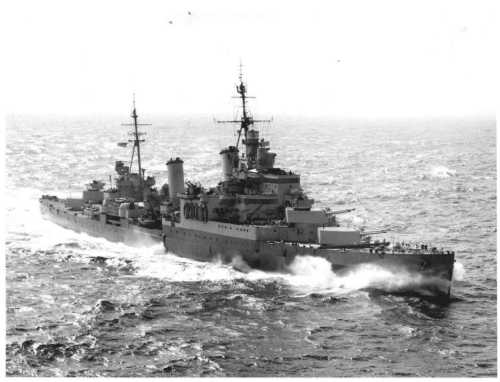
HMS Sheffield during the war. IWM photograph
| Navy | The Royal Navy |
| Type | Light cruiser |
| Class | Southampton |
| Pennant | 24 |
| Built by | Vickers Armstrong (Newcastle-on-Tyne, U.K.) |
| Ordered | 17 Dec 1934 |
| Laid down | 31 Jan 1935 |
| Launched | 23 Jul 1936 |
| Commissioned | 25 Aug 1937 |
| End service | Jan 1959 |
| History | Decommissioned in January 1959. In reserve during 1960-1966. Broken up by Shipbreaking Industries Ltd. at Faslane arriving on 18 September 1967. |
Commands listed for HMS Sheffield (24)
Please note that we're still working on this section
and that we only list Commanding Officers for the duration of the Second World War.
| Commander | From | To | |
| 1 | Capt. Edward de Faye Renouf, RN | 9 Aug 1938 | 13 Dec 1939 |
| 2 | Cdr. Charles Fred Wivell Norris, RN | 13 Dec 1939 | 14 Dec 1939 |
| 3 | Capt. Charles Arthur Aiskew Larcom, RN | 14 Dec 1939 | 2 Aug 1941 |
| 4 | Capt. Arthur Wellesley Clarke, RN | 2 Aug 1941 | 19 Apr 1942 |
| 5 | Cdr. Malcolm Walter St.Leger Searle, RN | 19 Apr 1942 | 6 Jul 1942 |
| 6 | Capt. Arthur Wellesley Clarke, RN | 6 Jul 1942 | 12 Feb 1943 |
| 7 | Capt. Charles Thorburn Addis, RN | 12 Feb 1943 | 11 Jan 1944 |
| 8 | Cdr. Geoffrey Mainwaring Sladen, DSO, DSC, RN | 11 Jan 1944 | 29 Mar 1944 |
| 9 | Capt. Charles Thorburn Addis, DSO, RN | 29 Mar 1944 | 28 Aug 1944 |
| 10 | Cdr. Geoffrey Mainwaring Sladen, DSO, DSC, RN | 28 Aug 1944 | 17 Dec 1944 |
| 11 | Cdr. Julian Liddell, RN | 17 Dec 1944 | 14 Feb 1945 |
| 12 | Capt. John Willson Musgrave Eaton, DSO, DSC, RN | 14 Feb 1945 | 14 Nov 1945 |
You can help improve our commands section
Click here to Submit events/comments/updates for this vessel.
Please use this if you spot mistakes or want to improve this ships page.
Notable events involving Sheffield include:
This page dealing with the wartime history of HMS Sheffield was created in May 2022.
This page was last updated in May 2024.
31 Aug 1939
Around 1800A/31, the Home Fleet departed Scapa Flow to patrol between Scotland, Iceland and Norway for returning German merchant vessels.
Ships that participated in this patrol were; battleships HMS Nelson (Capt. G.J.A. Miles, RN, flying the flag of Admiral J.M. Forbes, KCB, DSO, RN), HMS Rodney (Capt. E.N. Syfret, RN), aircraft carrier HMS Ark Royal (Capt. A.J. Power, RN, flying the flag of Vice-Admiral L.V. Wells, CB, DSO, RN), light cruisers HMS Aurora (Capt. G.B. Middleton, RN, flying the flag of Rear-Admiral R.H.C. Hallifax, RN), HMS Sheffield (Capt. E. de F. Renouf, CVO, RN), HMS Belfast (Capt. G.A. Scott, DSC, RN) (from the 18th Cruiser Squadron), HMS Effingham (Capt. J.M. Howson, RN), HMS Cardiff (Capt. P.K. Enright, RN), HMS Dunedin (Capt. C.E. Lambe, CVO, RN), HMS Emerald (Capt. A.W.S. Agar, VC, DSO, RN) (from the 12th Cruiser Squadron), HMS Caledon (Capt. C.P. Clark, RN), HMS Calypso (Capt. N.J.W. William-Powlett, DSC, RN), HMS Diomede (Commodore E.B.C. Dicken, OBE, DSC, RN), HMS Dragon (Capt. R.G. Bowes-Lyon, MVO, RN) (from the 7th Cruiser Squadron. These ships were escorted by destroyers from the 8th Destroyer Flotilla; HMS Faulknor (Capt. C.S. Daniel, RN), HMS Fame (Cdr. P.N. Walter, RN), HMS Fearless (Cdr. K.L. Harkness, RN), HMS Firedrake (Lt.Cdr. S.H. Norris, RN), HMS Foresight (Lt.Cdr. G.T. Lambert, RN), HMS Forester (Lt.Cdr. E.B. Tancock, RN), HMS Fortune (Cdr. E.A. Gibbs, RN), HMS Foxhound (Lt.Cdr. P.H. Hadow, RN) and HMS Fury (Cdr. G.F. Burghard, RN).
To patrol off the Skagerrak was the battlecruiser squadron which was made up of the battlecruisers HMS Hood (Capt. I.G. Glennie, RN, flying the flag of Rear-Admiral W.J. Whitworth, CB, DSO, RN), HMS Repulse (Capt. E.J. Spooner, DSO, RN) which were escorted by destroyers from the 6th Destroyer Flotilla; HMS Somali (Capt. R.S.G. Nicholson, DSC, RN), HMS Ashanti (Cdr. W.G. Davis, RN), HMS Bedouin (Cdr. J.A. McCoy, RN), HMS Eskimo (Cdr. St. J.A. Micklethwait, RN), HMS Mashona (Cdr. P.V. McLaughlin, RN), HMS Matabele (Cdr. G.K. Whitmy-Smith, RN), HMS Punjabi (Cdr. J.T. Lean, RN) and HMS Tartar (Capt. G.H. Warner, DSC, RN). These ships departed Scapa Flow around the same time.
Some of the ships had already been at sea for exercises.
The bulk of the Fleet returned to Scapa Flow in the morning of September 6th.
Most of the cruisers had acted independently to inspect shipping. HMS Caledon, HMS Calypso, HMS Cardiff and HMS Dunedin returned to Scapa Flow in the early morning of September 5th.
HMS Aurora and HMS Sheffield returned to Scapa Flow in the evening of September 5th.
HMS Belfast returned to Scapa Flow on the 6th after having joined other ships for exercises on the 5th.
HMS Diomede, HMS Dragon, HMS Effingham and HMS Emerald returned to Scapa Flow in the morning of the 7th.
Most of the destroyer had to return to Scapa Flow once to refuel, HMS Somali and HMS Ashanti were at Scapa Flow between 0100/2 and 0400/2.
HMS Faulknor, HMS Fearless, HMS Firedrake, HMS Fortune and HMS Foxhound were at Scapa Flow between 1000A/3 and 1530A/3.
HMS Bedouin, HMS Eskimo, HMS Punjabi and HMS Tartar were at Scapa Flow between 1100A/3 and 1600A/3.
HMS Fame was detached at 2359A/3 to go to the aid of the torpedoed liner Athenia but she was not needed to pick up survivors and proceeded to the Clyde arriving in the moring of the 5th having carried out an A/S sweep en-route.
HMS Matabele was detached to Scapa Flow at 1130/5. Around 2030A/5, she grounded near the boom and damaged her propellers.
HMS Foresight, HMS Forester, HMS Fury and HMS Mashona did not refuel before they returned with the Fleet in the morning of the 6th. (1)
7 Sep 1939
Around 0730A/7 the battleships HMS Nelson (Capt. G.J.A. Miles, RN, flying the flag of Admiral J.M. Forbes, KCB, DSO, RN), HMS Rodney (Capt. E.N. Syfret, RN), battlecruiser HMS Repulse (Capt. E.J. Spooner, DSO, RN), aircraft carrier HMS Ark Royal (Capt. A.J. Power, RN, flying the flag of Vice-Admiral L.V. Wells, CB, DSO, RN), light cruisers HMS Aurora (Capt. G.B. Middleton, RN, flying the flag of Rear-Admiral R.H.C. Hallifax, RN), HMS Sheffield (Capt. E. de F. Renouf, CVO, RN) and the destroyers HMS Faulknor (Capt. C.S. Daniel, RN), HMS Firedrake (Lt.Cdr. S.H. Norris, RN), HMS Foresight (Lt.Cdr. G.T. Lambert, RN), HMS Fortune (Cdr. E.A. Gibbs, RN), HMS Fury (Cdr. G.F. Burghard, RN), HMS Ashanti (Cdr. W.G. Davis, RN), HMS Bedouin (Cdr. J.A. McCoy, RN), HMS Mashona (Cdr. P.V. McLaughlin, RN), HMS Punjabi (Cdr. J.T. Lean, RN), HMS Somali (Capt. R.S.G. Nicholson, DSC, RN) and HMS Tartar (Capt. G.H. Warner, DSC, RN) departed Scapa Flow to operate off the Norwegian coast as far north as 63°00'N to intercept German shipping.
They returned to Scapa Flow in the evening of the 10th having sighted no German ships. Visibility had been bad throughout.
12 Sep 1939
HMS Sheffield (Capt. E. de F. Renouf, CVO, RN) departed Scapa Flow for Sullom Voe. (2)
13 Sep 1939
HMS Sheffield (Capt. E. de F. Renouf, CVO, RN) arrived at Sullom Voe from Scapa Flow. (2)
14 Sep 1939
HMS Sheffield (Capt. E. de F. Renouf, CVO, RN) departed Sullom Voe for the Northern Patrol. She was ordered to patrol to the east of Iceland. Later she was orderded to patrol in the Norwegian Sea. (2)
20 Sep 1939
HMS Sheffield (Capt. E. de F. Renouf, CVO, RN) arrived at Scapa Flow from patrol. (2)
22 Sep 1939
Operation SK.
To conduct an operation against German shipping off the Norwegian coast the light cruiser HMS Aurora (Capt. G.B. Middleton, RN, flying the flag of Rear-Admiral R.H.C. Hallifax, RN) and the destroyers HMS Tartar (Capt. G.H. Warner, DSC, RN), HMS Punjabi (Cdr. J.T. Lean, RN), HMS Eskimo (Cdr. St. J.A. Micklethwait, RN) and HMS Bedouin (Cdr. J.A. McCoy, RN) departed Scapa Flow around 0700A/22 as well as the light cruisers HMS Southampton (Capt. F.W.H. Jeans, CVO, RN, flying the flag of Vice-Admiral G.F.B. Edward-Collins, CB, KCVO, RN), HMS Sheffield (Capt. E. de F. Renouf, CVO, RN), HMS Glasgow (Capt. F.H. Pegram, RN) and the destroyers HMS Jervis (Capt. P.J. Mack, RN), HMS Javelin (Cdr. A.F. Pugsley, RN) and HMS Jupiter (Lt.Cdr. D.B. Wyburd, RN) which had departed Rosyth around 0415A/22. HMS Jersey (Lt.Cdr. A.M. McKillop, RN), coming from the Chatham Dockyard, joined at sea.
To provide cover for this operation two forces were deployed from Scapa Flow. One force was made up of the battlecruisers HMS Hood (Capt. I.G. Glennie, RN, flying the flag of Rear-Admiral W.J. Whitworth, CB, DSO, RN), HMS Repulse (Capt. E.J. Spooner, DSO, RN) and the destroyers HMS Fame (Cdr. P.N. Walter, RN), HMS Firedrake (Lt.Cdr. S.H. Norris, RN), HMS Foresight (Lt.Cdr. G.T. Lambert, RN) and HMS Fortune (Cdr. E.A. Gibbs, RN). They had departed Scapa Flow around 1000A/22.
The other force was made up of the battleships HMS Nelson (Capt. G.J.A. Miles, RN, flying the flag of Admiral J.M. Forbes, KCB, DSO, RN), HMS Rodney (Capt. E.N. Syfret, RN), aircraft carrier HMS Ark Royal (Capt. A.J. Power, RN, flying the flag of Vice-Admiral L.V. Wells, CB, DSO, RN) and the destroyers HMS Faulknor (Capt. C.S. Daniel, RN), HMS Fearless (Cdr. K.L. Harkness, RN), HMS Foxhound (Lt.Cdr. P.H. Hadow, RN), HMS Somali (Capt. R.S.G. Nicholson, DSC, RN), HMS Mashona (Cdr. P.V. McLaughlin, RN) and HMS Matabele (Cdr. G.K. Whitmy-Smith, RN). Later the destroyers HMS Forester (Lt.Cdr. E.B. Tancock, RN), HMS Fury (Cdr. G.F. Burghard, RN), HMS Esk (Lt.Cdr. R.J.H. Couch, RN) and HMS Express (Cdr. J.G. Bickford, RN) joined at sea. They had departed Scapa Flow around 1030A/22.
The raid was abandoned when HMS Javelin and HMS Jersey collided in position 57°09'N, 03°08'W at 2038A/22.
All forces returned to their port of departure on 23 September but not before HMS Hood reported an explosion at 1330A/23. The destroyers HMS Firedrake and HMS Fortune were detached to investigate but no contact was obtained. In fact this was indeed an attack by a German submarine; U-24 which reported to have made a failed torpedo attack at 1328A/23 on HMS Hood and two escorting destroyers.
25 Sep 1939
At 0510A/25 a radio message was received from the submarine HMS Spearfish (Lt. J.H. Eaden, RN) that she had been badly damaged by enemy warships and that she was unable to dive and was proceeding along the Danish coast try to make it back to the U.K.
Around 0730A/25 the light cruisers HMS Southampton (Capt. F.W.H. Jeans, CVO, RN, flying the flag of Vice-Admiral G.F.B. Edward-Collins, CB, KCVO, RN) and HMS Glasgow (Capt. F.H. Pegram, RN) departed Rosyth and joined destroyers HMS Jervis (Capt. P.J. Mack, RN) and HMS Jupiter (Lt.Cdr. D.B. Wyburd, RN) near May Island shortly after 0900 hours. They were to operate off the Norwegian coast at 60°N to closely cover the retreat of the damaged submarine. with the destroyers HMS Somali (Capt. R.S.G. Nicholson, DSC, RN), HMS Eskimo (Cdr. St. J.A. Micklethwait, RN), HMS Mashona (Cdr. P.V. McLaughlin, RN) and HMS Matabele (Cdr. G.K. Whitmy-Smith, RN) which were already on patrol in that area.
The light cruisers HMS Aurora (Capt. G.B. Middleton, RN, flying the flag of Rear-Admiral R.H.C. Hallifax, RN) and HMS Sheffield (Capt. E. de F. Renouf, CVO, RN) departed Scapa Flow and were ordered to proceed well into the approaches of the Skagerrak with the destroyers HMS Fame (Cdr. P.N. Walter, RN), and HMS Foresight (Lt.Cdr. G.T. Lambert, RN) which had been on the Fare Island patrol. These ships were to try to make contact with HMS Spearfish.
To provide more distant cover for the whole operation the battlecruisers HMS Hood (Capt. I.G. Glennie, RN, flying the flag of Rear-Admiral W.J. Whitworth, CB, DSO, RN), HMS Repulse (Capt. E.J. Spooner, DSO, RN), heavy cruiser HMS Norfolk (Capt. A.G.B. Wilson, DSO, RN) and the destroyers (Capt. A.G.B. Wilson, DSO, RN) and the destroyers HMS Faulknor (Capt. C.S. Daniel, RN), HMS Fearless (Cdr. K.L. Harkness, RN), HMS Firedrake (Lt.Cdr. S.H. Norris, RN), HMS Foresight (Lt.Cdr. G.T. Lambert, RN), HMS Forester (Lt.Cdr. E.B. Tancock, RN), HMS Fortune (Cdr. E.A. Gibbs, RN) and HMS Foxhound (Lt.Cdr. P.H. Hadow, RN) departed Scapa Flow.
[It is often stated that the light cruisers HMS Newcastle (Capt. J. Figgins, RN), HMS Edinburgh (Capt. F.C. Bradley, RN) also sailed with the 'Hood-Force' but this was not the case.]
Also from Scapa Flow sailed yet another cover force made up of the battleships HMS Nelson (Capt. G.J.A. Miles, RN, flying the flag of Admiral J.M. Forbes, KCB, DSO, RN), HMS Rodney (Capt. E.N. Syfret, RN), aircraft carrier HMS Ark Royal (Capt. A.J. Power, RN, flying the flag of Vice-Admiral L.V. Wells, CB, DSO, RN) and the destroyers HMS Tartar (Capt. G.H. Warner, DSC, RN), HMS Punjabi (Cdr. J.T. Lean, RN), HMS Bedouin (Cdr. J.A. McCoy, RN) and HMS Fury (Cdr. G.F. Burghard, RN).
Around 0100A/26 the destroyers HMS Somali and HMS Eskimo made contact with HMS Spearfish which was then safely escorted to Rosyth despite German air attacks during which HMS Ark Royal was near missed and HMS Hood struck by a bomb which did not explode.
All ships returned to port late on the 26th or on the 27th September minus HMS Norfolk which was detached earlier to join the Northern Patrol being ordered to patrol in the Iceland-Faeroer gap.
29 Sep 1939
HMS Sheffield (Capt. E. de F. Renouf, CVO, RN) conducted gunnery and torpedo firing exercises at Scapa Flow. (2)
2 Oct 1939
HMS Sheffield (Capt. E. de F. Renouf, CVO, RN) conducted exercises at Scapa Flow. (3)
4 Oct 1939
HMS Sheffield (Capt. E. de F. Renouf, CVO, RN) conducted gunnery exercises at Scapa Flow. (3)
5 Oct 1939
HMS Sheffield (Capt. E. de F. Renouf, CVO, RN) departed Scapa Flow for Invergordon. (3)
6 Oct 1939
HMS Sheffield (Capt. E. de F. Renouf, CVO, RN) arrived at Invergordon. She departed again later the same day to return to Scapa Flow where she arrived in the evening. (3)
8 Oct 1939
A force of German warships departed Kiel to operate off the south coast of Norway. They were to sink Allied shipping and lure the British Home Fleet into the range of Luftwaffe aircraft. This force was made up of the battlecruiser Gneisenau, light cruiser Köln and the destroyers Z 3 / Max Schultz, Z 5 / Paul Jacobi, Z 11 / Bernd von Arnim, Z/14 Friedrich Ihn, Z 15 / Erich Steinbrinck, Z 16 / Friedrich Eckholdt, Z 17 / Diether von Roeder, Z 20 / Karl Galster, Z 21 / Wilhelm Heidkamp. In addition, four submarines were deployed in a patrol line to attack the Home Fleet, these were U-10, U-18, U-20 and U-23.
The Admiralty took the bait and around 1600A/8 the battlecruisers HMS Hood (Capt. I.G. Glennie, RN, flying the flag of Rear-Admiral W.J. Whitworth, CB, DSO, RN), HMS Repulse (Capt. E.J. Spooner, DSO, RN), light cruisers HMS Aurora (Capt. G.B. Middleton, RN, flying the flag of Rear-Admiral R.H.C. Hallifax, RN) and HMS Sheffield (Capt. E. de F. Renouf, CVO, RN) and the destroyers HMS Somali (Capt. R.S.G. Nicholson, DSC, RN), HMS Mashona (Cdr. P.V. McLaughlin, RN), HMS Eskimo (Cdr. St. J.A. Micklethwait, RN) and HMS Ashanti (Cdr. W.G. Davis, RN) departed Scapa Flow for a position about 50 miles to the north-west of Stadlandet, Norway.
Around 1900A/8, the battleships HMS Nelson (Capt. G.J.A. Miles, RN, flying the flag of Admiral J.M. Forbes, KCB, DSO, RN), HMS Rodney (Capt. E.N. Syfret, RN), aircraft carrier HMS Furious (Capt. M.L. Clarke, DSC, RN), light cruiser HMS Newcastle (Capt. J. Figgins, RN) and the destroyers HMS Faulknor (Capt. C.S. Daniel, RN), HMS Fame (Cdr. P.N. Walter, RN), HMS Firedrake (Lt.Cdr. S.H. Norris, RN), HMS Foresight (Lt.Cdr. G.T. Lambert, RN), HMS Forester (Lt.Cdr. E.B. Tancock, RN), HMS Fury (Cdr. G.F. Burghard, RN), HMS Punjabi (Cdr. J.T. Lean, RN) and HMS Bedouin (Cdr. J.A. McCoy, RN) departed Scapa Flow for a position north of Muckle Flugga. Both forces were to reach their positions by dawn the following day and then steam towards each other in a pincer movement to cut off the German ships from their home ports.
The light cruisers HMS Southampton (Capt. F.W.H. Jeans, CVO, RN, flying the flag of Vice-Admiral G.F.B. Edward-Collins, CB, KCVO, RN), HMS Glasgow (Capt. F.H. Pegram, RN), HMS Edinburgh (Capt. F.C. Bradley, RN) and the destroyers HMS Jervis (Capt. P.J. Mack, RN), HMS Jaguar (Lt.Cdr. J.F.W. Hine, RN) and HMS Jupiter (Lt.Cdr. D.B. Wyburd, RN) departed Rosyth around 0945A/8. They were joined at sea by the destroyers HMS Jackal (Cdr. T.M. Napier, RN) and HMS Janus (Lt.Cdr. J.A.W. Tothill, RN) which came from Grimsby. This force was ordered to operate off the western end of the Skagerrak and then sweep northwards.
At 0600A/9 HMS Jaguar was ordered to return to Rosyth to refuel. En-route there she was attacked by German aircraft but she was not hit.
HMS Jervis and HMS Jupiter were ordered to search for the small Danish merchant vessel Teddy (503 GRT, built 1907) which had reported that she had picked up the crew of a German flying boat whih was shot down on the 8th. They were attacked by German aircraft at 1518A/9, but neither destroyer was damaged. However, about 1.5 hours laters HMS Jupiter broke down and had to be taken in tow by her sister ship.
HMS Jaguar meanwhile had completed refuelling at Rosyth. She left that port together with HMS Jersey (Lt.Cdr. A.M. McKillop, RN) which just finished repairs to the damage sustained in her collision of 22 September.
The were ordered to screen the withdrawal of HMS Jervis and HMS Jupiter. But it was not to be as shorty after departing Rosyth, Jaguar struck a small islet above the Forth bridge and damaged her starboard propeller shaft and HMS Jersey struck the Rosyth boom defence. Both destroyers proceeded to Leith for repairs.
Between 1120A/9 and 1645A/9 the Luftwaffe heavily bombed the 'Humber force' made up at that time of HMS Southampton, HMS Glasgow, HMS Edinburgh, HMS Jackal and HMS Janus which had arrived off the western entrance to the Skagerrak by that time. HMS Southampton and HMS Glasgow were near missed but were not damaged.
The German force returned to Kiel shortlyafter midnight during the night of 9/10 October. This news reached the C-in-C, Home Fleet in the afternoon of the 10th after which all ships were ordered to return to port.
HMS Nelson, HMS Rodney, HMS Hood, HMS Faulknor, HMS Firedrake, HMS Forester, HMS Fury, HMS Bedouin and HMS Punjabi proceeded to Loch Ewe arriving in the early evening of the 11th.
HMS Repulse, HMS Furious, HMS Aurora, HMS Newcastle, HMS Southampton, HMS Glasgow, HMS Somali, HMS Mashona, HMS Eskimo, HMS Ashanti, HMS Fame, HMS Foresight, HMS Jervis, HMS Jackal, HMS Janus and HMS Jupiter (which by now as able to proceed under her own power) arrived at Scapa Flow on the 11th. They had been joined at sea before arrival by two more destroyers which came from Scapa Flow; HMS Fearless (Cdr. K.L. Harkness, RN) and HMS Foxhound (Lt.Cdr. P.H. Hadow, RN).
HMS Edinburgh had been detached and proceeded to Rosyth where she arrived on the 10th.
HMS Sheffield had already been detached on the 9th with orders to patrol in the Denmark Strait.
15 Oct 1939
HMS Sheffield (Capt. E. de F. Renouf, CVO, RN) arrived at Loch Ewe from patrol. (3)
17 Oct 1939
HMS Sheffield (Capt. E. de F. Renouf, CVO, RN) departed Loch Ewe for the Northern Patrol. She was to patrol in the Denmark Strait. (3)
20 Oct 1939
Around 2215A/20, the German merchant Gloria (5896 GRT, built 1917) is intercepted north off Iceland in position 66°30'N, 22°05'W by the British light cruiser HMS Sheffield (Capt. E. de F. Renouf, CVO, RN). A prize crew was put on board around 1100A/21 which then took the German vessel to Kirkwall.
21 Oct 1939
At 1406Z/21, the armed merchant cruiser HMS Scotstoun (Capt. S.K. Smyth, RN), which was on patrol in the Denmark Strait, sighted a merchant vessel which was identified as the Danish Virginia (4088 GRT, built 1920). It was at that time not possible to board the vessel due to the weather conditions.
As the vessel was thought to be suspecious HMS Scotstoun remained in company with the vessel and at 1030Z/22, she was ordered to raise colours. She complied at 1100Z/22 when the German ensign was hoised. It was then found out that the merchant vessel was in fact the German Poseidon (5864 GRT, built 1922).
Around 1300Z/22, a boarding party was sent over. The sea boat returned with the German Captain which then informed Captain Smyth that he had just scuttled his ship and that she was sinking. At 1330Z/22, the Germans abandoned ship and rowed towards HMS Scotstoun.
The Germans were picked up which was completed around 1430Z/22.
At 1535Z/22, a boarding party was sent over. She was alongside the German ship at 1600Z/22. The boarding officer reported that she was not sinking. It was intended to take the ship to Kirkwall with the boarding party.
At 1800Z/22, the boarding party reported that they were unable to raise steam and at 2200Z/22 they reported that they were still unable to do so. At 2330Z/22, the boarding party dropped anchor.
At 0630Z/22, the boarding party weighted anchor as they had got the ships engines working.
At 0750Z/23, HMS Scotstoun lost sight of the Poseidon in a snow storm and it she was only found later by the armed merchant cruiser HMS Transylvania (Capt. F.N. Miles, OBE, RN) which took her in tow towards Reykjavik.
Light cruiser HMS Sheffield (Capt. E. de F. Renouf, CVO, RN) was briefly with HMS Transylvania on the 25th. Sheffields Engineer Officer went over to inspect the engines of the German ship.
The German ship finally sank on the 26th (or 27th) [sources differ, and there is no log available of HMS Transylvania.]
28 Oct 1939
HMS Sheffield (Capt. E. de F. Renouf, CVO, RN) arrived at Sullom Voe from patrol. She departed for Rosyth later the same day. (3)
29 Oct 1939
HMS Sheffield (Capt. E. de F. Renouf, CVO, RN) arrived at Rosyth from Sullom Voe. She was then taken in hand for some repairs and boiler cleaning. (3)
9 Nov 1939
HMS Sheffield (Capt. E. de F. Renouf, CVO, RN) departed Rosyth for the Northern Patrol. She was ordered to patrol in the Denmark Strait. (4)
21 Nov 1939
HMS Sheffield (Capt. E. de F. Renouf, CVO, RN) arrived at Loch Ewe from patrol. (4)
23 Nov 1939
Sinking of the armed merchant cruiser HMS Rawalpindi
Around midday on 21 November 1939 the German battlecruisers Scharnhorst and Gneisenau, escorted by the light cruisers Köln and Leipzig and the destroyers Z 11 / Bernd von Arnim, Z 12 / Erich Giese and Z 20 / Karl Galster, departed Wilhelmshaven for a raid into the North Atlantic, this was to relieve the pressure of the pocket battleship Admiral Graf Spee operating in the South Atlantic. Late on the 21st the escorts left the battlecruisers.
Just after 1500A/23 the British armed merchant cruiser HMS Rawalpindi (Capt.(Retd.) E.C. Kennedy, RN) sighted the Scharnhorst. Rawalpindi was part of the British Northern Patrol and was stationed south-east of Iceland in the Iceland-Faroe gap. Captain Kennedy at first tried to get away from the German ship and report to the Admiralty that he sighted the German pocket battleship Deutschland, still believed to be operating in the North Atlantic, and so as to buy time so that other ships of the Northern patrol could come to his assistance. Just after 1600 hours, Rawalpindi came within range of the Scharnhorst and was quickly reduced to a flaming wreck. During this engagement Scharnhorst was hit by a 6in shell from Rawalpindi causing only light damage. Scharnhorst and Gneisenau together picked up 27 survivors from the Rawalpindi which finally sank around 2000 hours.
The British light cruiser HMS Newcastle (Capt J. Figgins, RN), that was also part of the Northern Patrol, picked up Rawalpindi's signal and closed the scene. She sighted the Gneisenau but the Germans managed to escape in the fog.
The Admiralty also thought the ship sighted by Rawalpindi and Newcastle was the Deutschland that was trying to return to Germany. In response to the sighting and destruction of the Rawalpindi the Admiralty took immediate action; The battleships HMS Nelson (Capt. G.J.A. Miles, RN, flying the flag of Admiral J.M. Forbes, KCB, DSO, RN) HMS Rodney (Capt. F.H.G. Dalrymple-Hamilton, RN) and the heavy cruiser HMS Devonshire (Capt. J.M. Mansfield, DSC, RN, flying the flag of Vice-Admiral J.H.D. Cunningham, CB, MVO, RN) escorted by the destroyers HMS Faulknor (Capt. C.S. Daniel, RN), HMS Fame (Cdr. P.N. Walter, RN), HMS Firedrake (Lt.Cdr. S.H. Norris, RN), HMS Foresight (Lt.Cdr. G.T. Lambert, RN), HMS Forester (Lt.Cdr. E.B. Tancock, RN), HMS Fortune (Cdr. E.A. Gibbs, RN) and HMS Fury (Cdr. G.F. Burghard, RN) departed the Clyde around 1930A/23 to patrol of Norway to cut off the way to Germany for the Deutschland.
The light cruisers HMS Southampton (Capt. F.W.H. Jeans, CVO, RN, flying the flag of Vice-Admiral G.F.B. Edward-Collins, CB, KCVO, RN), HMS Edinburgh (Capt. F.C. Bradley, RN) and HMS Aurora (Capt. G.B. Middleton, RN) escorted by the destroyers HMS Afridi (Capt. G.H. Creswell, DSC, RN), HMS Gurkha (Cdr. F.R. Parham, RN), HMS Bedouin (Cdr. J.A. McCoy, RN), HMS Kingston (Lt.Cdr. P. Somerville, RN) and HMS Isis (Cdr. J.C. Clouston, RN) departed Rosyth to patrol between the Orkney and Shetland islands.
Light cruiser HMS Sheffield (Capt. E. de F. Renouf, CVO, RN) was sent from Loch Ewe to the last known position of the German ship(s).
On northern patrol, south of the Faroes were the light cruisers HMS Caledon (Capt. C.P. Clark, RN), HMS Cardiff (Capt. P.K. Enright, RN) and HMS Colombo (Commodore R.J.R. Scott, RN). These were joined by HMS Dunedin (Capt. C.E. Lambe, CVO, RN) and HMS Diomede (Commodore E.B.C. Dicken, OBE, DSC, RN).
Of the ships of the Denmark strait patrol, the heavy cruisers HMS Suffolk (Capt. J.W. Durnford, RN) and HMS Norfolk (Capt. A.G.B. Wilson, MVO, DSO, RN) were ordered to proceed to the Bill Bailey Bank (to the south-west of the Faroe Islands).
The light cruiser HMS Glasgow (Capt. F.H. Pegram, RN) escorted by the destroyers HMS Maori (Cdr. G.N. Brewer, RN) and HMS Zulu (Cdr. J.S. Crawford, RN) were already at sea patrolling north-east of the Shetlands were to be joined by the destroyers HMS Inglefield (Capt. P. Todd, RN), HMS Imperial (Lt.Cdr. C.A.de W. Kitcat, RN), HMS Impulsive (Lt.Cdr. W.S. Thomas, RN) and HMS Imogen (Cdr. E.B.K. Stevens, RN).
The light cruisers HMS Calypso (Capt. N.J.W. William-Powlett, DSC, RN) and HMS Ceres (Capt. E.G. Abbott, AM, RN) were stationed off Kelso Light to act as a night attack striking force. The destroyers HMS Somali (Capt. R.S.G. Nicholson, DSC, RN), HMS Ashanti (Cdr. W.G. Davis, RN), HMS Mashona (Cdr. P.V. McLaughlin, RN) and HMS Punjabi (Cdr. J.T. Lean, RN) had just departed Belfast on escort duties. They were ordered to join Admiral Forbes. The ships they were escorting were ordered to return to Belfast.
The destroyers HMS Tartar (Lt.Cdr. D.E. Holland-Martin, RN), HMS Kandahar (Cdr. W.G.A. Robson, RN) and HMS Kashmir (Cdr. H.A. King, RN) departed Scapa Flow with orders to locate and shadow the German ships. HMS Tartar however had to return to Scapa Flow the next day due to a damaged rudder. The other two destroyers were ordered to join HMS Aurora which was to form a strike group of destroyers.
Despite the British effort to intercept the German ships, both German battlecruisers returned to Wilhelmshaven on the 27th.
24 Nov 1939
At 0855Z/24, west of the Faeroer Islands, in approximate position 62°15'N, 08°45'W, HMS Sheffield (Capt. E. de F. Renouf, CVO, RN), sighted a merchant vessel which was thought to be an oiler. She soon lost sight of the vessel in the bad visibility due to a rain storm. HMS Sheffield did not pursue the vessel as she was searching for German warships thought to be in the area.
The vessel sighted was in fact the German merchant vessel Ludolf Oldendorff (1953 GRT, built 1903) which looked like an oiler. She managed to escape and made it back to Germany. (4)
2 Dec 1939
HMS Sheffield (Capt. E. de F. Renouf, CVO, RN) arrived at Scapa Flow from patrol.
After having fuelled she departed again to patrol in the Iceland - Faeroer passage. (5)
10 Dec 1939
HMS Sheffield (Capt. E. de F. Renouf, CVO, RN) arrived at Wallsend-on-Tyne from patrol. She is to be taken in hand for repairs to a defect to 'Y' turret. (5)
18 Dec 1939
HMS Sheffield (Capt. C.A.A. Larcom, RN) departed the Tyne for for the Northern Patrol. She was ordered to patrol in the Iceland - Faeroer passage.
During her repair period at the Tyne it had orignally been intended to give the ship a docking but no dock was however available. (6)
28 Dec 1939
HMS Sheffield (Capt. C.A.A. Larcom, RN) arrived at Scapa Flow from patrol after having been relieved by HMS Manchester (Capt. H.H. Bousfield, RN) the previous day. (5)
5 Jan 1940
HMS Sheffield (Capt. C.A.A. Larcom, RN) departed Scapa Flow for the Northern Patrol. She is ordered to patrol in the Iceland - Faeroer passage. (7)
19 Jan 1940
HMS Sheffield (Capt. C.A.A. Larcom, RN) arrived at Scapa Flow from patrol. (7)
20 Jan 1940
Around 1800Z/20, HMS Sheffield (Capt. C.A.A. Larcom, RN) and HMS Newcastle (Capt. J. Figgins, RN) departed Scapa Flow. They proceeded towards the Skagerrak / Danish coast as the German light cruisers Nürnberg and Leipzig were thought to be proceeding northwards but this was not the case.
HMS Sheffield and HMS Newcastle were recalled and returned to Scapa Flow around 2215Z/21. (8)
25 Jan 1940
HMS Sheffield (Capt. C.A.A. Larcom, RN) departed Scapa Flow for the Northern Patrol. She is ordered to patrol in the Iceland - Faeroer passage. (7)
5 Feb 1940
HMS Sheffield (Capt. C.A.A. Larcom, RN) arrived at Scapa Flow from patrol. (9)
6 Feb 1940
HMS Sheffield (Capt. C.A.A. Larcom, RN) proceeded from Scapa Flow to Rosyth. (9)
8 Feb 1940
HMS Sheffield (Capt. C.A.A. Larcom, RN) proceeded from Rosyth to the Tyne. (9)
11 Feb 1940
Having completed de-ammunitioning, HMS Sheffield (Capt. C.A.A. Larcom, RN), is docked at the Middle Docks & Engineering Company Ltd. at South Shields and taken in hand for a short refit. (9)
13 Mar 1940
HMS Sheffield (Capt. C.A.A. Larcom, RN) is undocked. (10)
15 Mar 1940
Convoy ON 20.
This convoy was formed off Methill on 15 March 1940. It arrived in Norwegian waters near Bergen on 18 March 1940.
This convoy was made up of the following merchant vessels; Ask (Norwegian, 1541 GRT, built 1917), Batavia (Norwegian, 962 GRT, built 1922), Bygdoy (Norwegian, 1251 GRT, built 1921), Cimbria (Danish, 2653 GRT, built 1921), Fritz S. (Finnish, 1475 GRT, built 1907), Fulton (Norwegian, 1109 GRT, built 1905), Glen Tilt (British, 871 GRT, built 1920), Gogovale (British, 4586 GRT, built 1927), Hardingham (British, 5415 GRT, built 1933), Iberia (Swedish, 1399 GRT, built 1903), Ingaro (British, 1999 GRT, built 1916), King (Norwegian, 645 GRT, built 1918), Leka (Norwegian, 1599 GRT, built 1922), Leo (British, 1127 GRT, built 1908), Leo (Norwegian, 1367 GRT, built 1924), Listro (Norwegian, 1998 GRT, built 1918), Lysaker IV (Norwegian, 1551 GRT, built 1924), Majorca (British, 1126 GRT, built 1921), Maria Gorthon (Swedish, 1572 GRT, built 1930), Marvel (Norwegian, 1566 GRT, built 1921), Namdo (Swedish, 2738 GRT, built 1907), Otto (Finnish, 1343 GRT, built 1907), Rimac (Norwegian, 942 GRT, built 1919), Ringhorn (Norwegian, 1298 GRT, built 1919), Sando (Swedish, 1334 GRT, built 1902), Storesund (Norwegian, 563 GRT, built 1890), Tordenskjold (British, 921 GRT, built 1906) and Valborg (Danish, 847 GRT, built 1914).
These were joined later at sea by 12 merchant vessels that departed Kirkwall in the morning of March 16th, these were; Ada Gorthon (Swedish, 2405 GRT, built 1917), Baron Blythswood (British, 3668 GRT, built 1929), Baron Vernon (British, 3642 GRT, built 1929), Basra (Panamian, 3196 GRT, built 1915), Bera (Swedish, 11286 GRT, built 1939), Havbris (Norwegian, 1315 GRT, built 1918), Koster (Swedish, 973 GRT, built 1913), La France (Norwegian, 617 GRT, built 1909), Llanberis (British, 5055 GRT, built 1928), Lovaas (Norwegian, 1891 GRT, built 1917), Mary (Panamanian, 1524 GRT, built 1884) and Stancliffe (British, 4511 GRT, built 1936).
Escort was provided by destroyers HMS Electra (Lt.Cdr. S.A. Buss, MVO, RN), HMS Encounter (Lt.Cdr. E.V.St J. Morgan, RN), HMS Escapade (Cdr. H.R. Graham, RN) and HMS Escort (Lt.Cdr. J. Bostock, RN).
Cover was provided by the AA cruiser HMS Cairo (Capt. P.V. McLaughlin, RN) which departed Scapa Flow on the 16th. She joined the convoy the next morning but soon had to depart again due to damage she sustained in the heavy seas. She arrived at Sullom Voe later the same day. She was then replaced by the licht cruiser HMS Sheffield (Capt. C.A.A. Larcom, RN) which departed the Tyne on the 17th.
The Kirkwall section was escorted by the destroyers HMS Kashmir (Cdr. H.A. King, RN) and HMS Kimberley (Lt.Cdr. R.G.K. Knowling, RN).
The convoy arrived safely off the Norwegian coast on the 18th where it was dissolved.
17 Mar 1940
HMS Sheffield (Capt. C.A.A. Larcom, RN) departed the Tyne to provide cover for convoy ON 20 and subsequently convoys HN 21 and ON 22.
[For more info on these convoys see the events ' Convoy ON 20 ' for 15 March 1940, ' Convoy HN 21 ' for 22 March 1940 and ' convoy ON 22 ' for 24 March 1940.] (10)
22 Mar 1940
Convoy HN 21.
This convoy was formed near Bergen, Norway on 22 March 1940. It arrived at Methill on 25 March 1940.
The convoy was made up of the following merchant vessels; Asgerd (Norwegian, 1308 GRT, built 1924), Becheville (British, 4228 GRT, built 1924), Bjorkhaug (Norwegian, 2094 GRT, built 1919), Bradburn (British, 4736 GRT, built 1930), Burgos (Norwegian, 3220 GRT, built 1920), Diana (Norwegian, 1154 GRT, built 1904), Eos (Estonian, 1513 GRT, built 1890), Erica (Norwegian, 1592 GRT, built 1919), Fintra (British, 2089 GRT, built 1918), Galatea (Norwegian, 1151 GRT, built 1912), Garm (Swedish, 1231 GRT, built 1912), Grangesberg (Swedish, 4575 GRT, built 1921), Gwalia (Swedish, 1258 GRT, built 1907), Hague (British, 974 GRT, built 1919), Hjalmar Wessel (Norwegian, 1742 GRT, built 1935), Johanna (Swedish, 1230 GRT, built 1881), Karen (Danish, 1194 GRT, built 1917), King Alfred (British, 5272 GRT, built 1919), Kongshavn (Norwegian, 751 GRT, built 1906), Lily (Danish, 1281 GRT, built 1920), Maud Thorden (Finnish, 1335 GRT, built 1920), Mira (Norwegian, 1152 GRT, built 1891), Navarra (Norwegian, 2118 GRT, built 1920), Nurgis (Norwegian, 700 GRT, built 1919), Pluto (Finnish, 3496 GRT, built 1907), Rigmor (Danish, 1278 GRT, built 1920), Rosenborg (Finnish, 1512 GRT, built 1919), Rosten (Norwegian, 737 GRT, built 1920), Roy (Norwegian, 1768 GRT, built 1921), Sarmatia (Finnish, 2417 GRT, built 1901), Scania (Swedish, 1980 GRT, built 1901), Sollund (Norwegian, 941 GRT, built 1908), Sophie (Danish, 945 GRT, built 1920), Trolla (Norwegian, 1598 GRT, built 1923), Vard (Norwegian, 681 GRT, built 1917), Vestland (Norwegian, 1934 GRT, built 1916), Vestmanrod (Norwegian, 691 GRT, built 1919), Vestria (British, 1141 GRT, built 1921) and Wentworth (British, 5212 GRT, built 1919).
The convoy was escorted by the destroyers HMS Janus (Cdr. J.A.W. Tothill, RN), HMS Javelin (Cdr. A.F. Pugsley, RN), HMS Juno (Cdr. W.E. Wilson, RN), HMS Eclipse (Lt.Cdr. I.T. Clark, RN) and the submarine HMS Porpoise (Cdr. P.Q. Roberts, RN).
The AA cruiser HMS Calcutta (Capt. D.M. Lees, DSO, RN) later also joined to provide AA cover.
Distant cover for the convoy was provided by the light cruiser HMS Sheffield (Capt. C.A.A. Larcom, RN).
Nine merchant vessels later split off to proceed to the west coast. To escort these ships the destroyers HMS Cossack (Capt. P.L. Vian, RN) and HMS Gurkha (Cdr. A.W. Buzzard, RN) came out from Scapa Flow.
The bulk of the convoy arrived off Methil on 25 March 1940 after which the escorts proceeded to Rosyth.
24 Mar 1940
Convoy ON 22.
This convoy was formed off Methill on 24 March 1940. It arrived in Norwegian waters near Bergen on 27 March 1940.
This convoy was made up of the following merchant vessels; Anna (Finnish, 1043 GRT, built 1897), Asiatic (British, 3741 GRT, built 1923), Barosund (Finnish, 1015 GRT, built 1920), Breda (Norwegian, 1260 GRT, built 1915), Ek (Norwegian, 995 GRT, built 1911), Eldrid (Norwegian, 1712 GRT, built 1915), Finse (Norwegian, 1618 GRT, built 1916), Gallia (Swedish, 1436 GRT, built 1926), Harlaw (British, 1141 GRT, built 1911) (To Invergordon only), Havnia (Norwegian, 1571 GRT, built 1888), Hill (Norwegian, 496 GRT, built 1920), Iris (Norwegian, 1171 GRT, built 1901), Jaerden (Norwegian, 902 GRT, built 1918), Kalix (Swedish, 2801 GRT, built 1913), Lysaker (Norwegian, 910 GRT, built 1919), Maurita (Norwegian, 1569 GRT, built 1925), P. L. Pahlsson (Swedish, 1533 GRT, built 1916), Pan (Norwegian, 1309 GRT, built 1922), Roald Jarl (Norwegian, 1404 GRT, built 1913), Romanby (British, 4887 GRT, built 1927), Sarp (Norwegian, 1113 GRT, built 1916), Sekstant (Norwegian, 1626 GRT, built 1919), Strait Fisher (Norwegian, 573 GRT, built 1917) (To Scapa Flow only), Union (Norwegian, 607 GRT, built 1893) and Vigo (Norwegian, 710 GRT, built 1920). These were joined later at sea by 7 merchant vessels that departed Kirkwall in the morning of March 16th, these were; Birk (Norwegian, 3664 GRT, built 1920), Hulda Thorden (Finnish, 2255 GRT, built 1900), Kaupanger (Norwegian, 1584 GRT, built 1930), Riverton (British, 5378 GRT, built 1928), Standard (Norwegian, 1264 GRT, built 1930), Tora Elise (Norwegian, 721 GRT, built 1919) and William Blumer (Norwegian, 3604 GRT, built 1920).
Escort was provided by destroyers HMS Escapade (Cdr. H.R. Graham, RN), HMS Zulu (Cdr. J.S. Crawford, RN), HMS Kashmir (Cdr. H.A. King, RN) and HMS Kimberley (Lt.Cdr. R.G.K. Knowling, RN).
Cover was provided by the licht cruisers HMS Sheffield (Capt. C.A.A. Larcom, RN), HMS Aurora (Capt. L.H.K. Hamilton, DSO, RN) and the AA cruiser HMS Cairo (Capt. P.V. McLaughlin, RN).
The Kirkwall section was escorted by the destroyers HMS Faulknor (Capt. A.F. de Salis, RN) and HMS Tartar (Cdr. L.P. Skipwith, RN).
29 Mar 1940
HMS Sheffield (Capt. C.A.A. Larcom, RN) arrived at Scapa Flow from patrol and convoy cover operations. (10)
31 Mar 1940
Convoy HN 23B.
This convoy was formed near Bergen, Norway on 31 March 1940. It arrived at Methill on 4 April 1940.
The convoy was made up of the following merchant vessels; Alida Gorthon (Swedish, 2373 GRT, built 1902), Becheville (British, 4228 GRT, built 1924), Belgia (Swedish, 2023 GRT, built 1930), Belgien (British, 1979 GRT, built 1922), Bifrost (Swedish, 1781 GRT, built 1923), Cathrine (Estonian, 1885 GRT, built 1904), Ceres (Finnish, 996 GRT, built 1889), Convallaria (Swedish, 1996 GRT, built 1921), Dago (Danish, 1757 GRT, built 1902), Eikhaug (Norwegian, 1436 GRT, built 1903), Embla (Swedish, 1040 GRT, built 1908), Falkvik (Swedish, 1216 GRT, built 1899), Fano (Danish, 1889 GRT, built 1922), Foss Beck (British, 4876 GRT, built 1930), Harmonic (British, 4558 GRT, built 1930), Hirondelle (British, 893 GRT, built 1925), Kejserinde Dagmar (Danish, 1597 GRT, built 1905), Knud (British, 1944 GRT, built 1900), Knut (British, 1274 GRT, built 1924), Lab (Norwegian, 1118 GRT, built 1912), Leola (Estonian, 499 GRT, built 1884), Leonardia (Swedish, 1583 GRT, built 1906), Majorca (British, 1126 GRT, built 1921), Maria Toft (Danish, 1911 GRT, built 1928), N.C. Monberg (Danish, 2301 GRT, built 1928), Ophir (Norwegian, 1005 GRT, built 1906), Parnu (Estonian, 1578 GRT, built 1909), Pollux (Estonian, 931 GRT, built 1890), Ringholn (Norwegian, 1298 GRT, built 1919), Royksund (Norwegian, 695 GRT, built 1919), Saimaa (Finnish, 2001 GRT, built 1922), Tordenskjold (Norwegian, 921 GRT, built 1906), Vega I (Swedish, 1073 GRT, built 1913) and Veronica (Swedish, 1316 GRT, built 1919).
Apparently not all these ships sailed though.
Escort was provided by the destroyers HMS Bedouin (Cdr. J.A. McCoy, RN), HMS Eskimo (Cdr. St.J.A. Micklethwait, DSO, RN), HMS Punjabi (Cdr. J.T. Lean, RN), HMS Javelin (Cdr. A.F. Pugsley, RN), HMS Juno (Cdr. W.E. Wilson, RN), HMS Eclipse (Lt.Cdr. I.T. Clark, RN) and the submarine HMS Porpoise (Cdr. P.Q. Roberts, RN).
The AA cruiser HMS Calcutta (Capt. D.M. Lees, DSO, RN) was also providing support for the convoy.
Distant cover was provided by the light cruisers HMS Arethusa (Capt. Q.D. Graham, RN) and HMS Galatea (Capt. B.B. Schofield, RN, flying the flag of Vice-Admiral G.F.B. Edward-Collins, CB, KCVO, RN) until 1 April 1940 when they were due to be relieved by HMS Penelope (Capt. G.D. Yates, RN) and HMS Sheffield (Capt. C.A.A. Larcom, RN). HMS Penelope had departed Rosyth on 1 April and HMS Sheffield had departed Scapa Flow on 2 April.
HMS Javelin, HMS Juno and HMS Eclipse parted company with the convoy shortly after dusk on 3 April and proceeded directly to Rosyth arriving there on the 4th.
The convoy and it's remaining escorts arrived of Methil on 4 April 1940 after which the destroyers went to Rosyth as did HMS Porpoise. HMS Penelope and HMS Sheffield arrived at Scapa Flow on 6 April 1940.
2 Apr 1940
HMS Sheffield (Capt. C.A.A. Larcom, RN) departed Scapa Flow to provide cover for convoy HN 23B.
[For more info on this convoy see the event ' Convoy HN 23B ' for 31 March 1940.] (11)
6 Apr 1940
HMS Penelope (Capt. G.D. Yates, RN) and HMS Sheffield (Capt. C.A.A. Larcom, RN) arrived at Scapa Flow from operations. (12)
7 Apr 1940
In the evening, ships from the Home Fleet; battleships HMS Rodney (Capt. F.H.G. Dalrymple-Hamilton, RN, flying the flag of Admiral J.M. Forbes, KCB, DSO, RN), HMS Valiant (Capt. H.B. Rawlings, OBE, RN), battlecruiser HMS Repulse (Capt. E.J. Spooner, DSO, RN), light cruisers HMS Penelope (Capt. G.D. Yates, RN), HMS Sheffield (Capt. C.A.A. Larcom, RN), Emile Bertin (Capt. R.M.J. Battet), with destroyers HMS Codrington (Capt. G.E. Creasy, MVO, RN), HMS Brazen (Lt.Cdr. M. Culme-Seymour, RN), HMS Electra (Lt.Cdr. S.A. Buss, MVO, RN), HMS Escapade (Cdr. H.R. Graham, RN), HMS Griffin (Lt.Cdr. J. Lee-Barber, RN), HMS Bedouin (Cdr. J.A. McCoy, RN), HMS Eskimo (Cdr. St.J.A. Micklethwait, DSO, RN), HMS Punjabi (Cdr. J.T. Lean, RN), HMS Jupiter (Cdr. D.B. Wyburd, RN) and HMS Kimberley (Lt.Cdr. R.G.K. Knowling, RN) departed from Scapa Flow to patrol in Norwegian waters near position 61°00'N, 01°00'E.
9 Apr 1940
Around 0700A/9, HMS Manchester (Capt. H.H. Bousfield, RN) and HMS Southampton (Capt. F.W.H. Jeans, CVO, RN) both joined the C-in-C in the Home Fleet.
Around 1140A/9, HMS Manchester (Capt. H.H. Bousfield, RN), HMS Southampton (Capt. F.W.H. Jeans, CVO, RN), HMS Sheffield (Capt. C.A.A. Larcom, RN) and HMS Glasgow (Capt. F.H. Pegram, RN) were detached for an operation in Norwegian territorial waters (operate against German forces in water at and around Bergen). They were escorted by the destroyers HMS Afridi (Capt. P.L. Vian, RN), HMS Gurkha (Cdr. A.W. Buzzard, RN), HMS Sikh (Cdr. J.A. Giffard, RN), HMS Mohawk (Cdr. J.W.M. Eaton, RN), HMS Somali (Capt. R.S.G. Nicholson, DSO, DSC, RN), HMS Matabele (Cdr. G.K. Whitmy-Smith, RN) and HMS Mashona (Cdr. W.H. Selby, RN).
Soon after 1400A/9 however a signal was received cancelling the operation and the ships set course to re-join the fleet.
In the afternoon the German Luftwaffe however started to attack the ships and near missed lightly damaged HMS Southampton and HMS Glasgow. HMS Gurkha was however sunk. Survivors were picked up by HMS Aurora (Capt. L.H.K. Hamilton, DSO, RN) who was also on her way to join the Home Fleet at sea.
Later on the 9th most of the ships involved in the intended opertion against Bergen were ordered to proceed to Scapa Flow or Sullom Voe for refuelling. (13)
10 Apr 1940
HMS Sheffield (Capt. C.A.A. Larcom, RN) arrived at Scapa Flow from operations off Norway. (11)
11 Apr 1940
Around 2230A/11, the light cruisers HMS Glasgow (Capt. F.H. Pegram, RN), HMS Sheffield (Capt. C.A.A. Larcom, RN) and the destroyers HMS Somali (Capt. R.S.G. Nicholson, DSO, DSC, RN), HMS Mashona (Cdr. W.H. Selby, RN), HMS Matabele (Cdr. G.K. Whitmy-Smith, RN), HMS Afridi (Capt. P.L. Vian, RN), HMS Mohawk (Cdr. J.W.M. Eaton, RN) and HMS Sikh (Cdr. J.A. Giffard, RN) departed Scapa Flow for operations off Norway.
At 1509A/12, while north-west of Alesund, in position 63°00'N, 04°47'E the destroyers parted company with the cruisers to patrol inside Norwegian waters.
Around 0545A/13, the destroyers were ordered to search for the enemy inside the fjords.
At 1418A/14, the destroyers rejoined the cruisers.
Around 1930A/14, the ships entered the Namsenfjord. HMS Mashona then went alongside HMS Glasgow to take off landing parties from the cruisers. In the meantime she took on board some fuel from the cruiser. Meanwhile HMS Matabele went alongside HMS Sheffield for the same purpose.
Having completed this HMS Somali, HMS Mashona and HMS Matabele went to Namsos to land the troops.
HMS Afridi then went alongside HMS Glasgow to fuel and HMS Sikh went alongside HMS Sheffield. Fuelling was completed very late in the evening.
Around 0040A/15, HMS Glasgow, HMS Sheffield, HMS Afridi, HMS Mohawk and HMS Sikh got underway again and proceeded to sea.
At 1910A/15, HMS Mohawk was detached to Scapa Flow to fuel. Destroyer HMS Nubian (Cdr. R.W. Ravenhill, RN) arrived in the area with the RFA tanker War Pindari (5548 GRT, built 1920)
At 0404A/17, a surfaced submarine was sighted and avoiding action was taken but the submarine soon identified herself as HMS Taku (Lt.Cdr. V.J.H. Van der Byl, RN). The submarine was searching for five German destroyers that had been reported. She had just attacked HMS Ashanti with four torpedoes which fortunately had missed. HMS Ashanti had dropped a pettern of depth charges but these fortunately did not damage the submarine which then surfaced having meanwhile identified the destroyer as British due to her tripod mast and twin gun turrets.
On the 17th, the destroyers; HMS Ashanti, HMS Mashona, HMS Matabele, HMS Nubian and HMS Sikh were used to ferry troops ashore at Namsenfjord from troopships which meanwhile had arrived in the area. HMS Somali which was low on ammunition had meanwhile been sent back to Scapa Flow arriving there very late on the 17th. Also the cruisers re-embarked their landing parties.
During the night of 17/18 April, while still in Namsenfjord, HMS Mashona took on some fuel from HMS Glasgow while HMS Nubian took on some fuel from HMS Sheffield.
Around 0300A/18, the cruisers then departed Namsenfjord to return to Scapa Flow taking HMS Matabele with them. The destroyer was detached to Sullom Voe to fuel after dark on the 18th.
HMS Glasgow and HMS Sheffield arrived at Scapa Flow around 1200A/19. (14)
20 Apr 1940
Aound 1455A/20, HMS Glasgow (Capt. F.H. Pegram, RN), HMS Sheffield (Capt. C.A.A. Larcom, RN) departed Scapa Flow for Rosyth where they arrived around 0030A/21. (15)
21 Apr 1940
Rear-Admiral M.L. Clarke, DSC, RN, hoisted his flag in HMS Sheffield (Capt. C.A.A. Larcom, RN). (16)
22 Apr 1940
Around 0700A/22, the light cruisers HMS Galatea (Capt. B.B. Schofield, RN, flying the flag of Vice-Admiral G.F.B. Edward-Collins, CB, KCVO, RN), HMS Sheffield (Capt. C.A.A. Larcom, RN, flying the flag of Rear-Admiral M.L. Clarke, DSC, RN), HMS Glasgow (Capt. F.H. Pegram, RN) and the destroyers HMS Icarus (Lt.Cdr. C.D. Maud, RN), HMS Impulsive (Lt.Cdr. W.S. Thomas, RN), HMS Ivanhoe (Cdr. P.H. Hadow, RN), HMS Campbell (Lt.Cdr. R.M. Aubrey, RN), HMS Vansittart (Lt.Cdr. W. Evershed, RN) and HMS Witch (Lt.Cdr. J.R. Barnes, RN), which had embarked around 2200 troops from the 15th Brigade, stores and three trucks on the 21st, departed Rosyth for Norway. They arrived at Åndalsnes and Molde during the night of 23/24 April 1940.
HMS Sheffield, HMS Campbell and HMS Vansittart landed their troops at Molde and the remainder at Åndalsnes.
HMS Galatea embarked around 200 cases of gold at Åndalsnes to take with her to Rosyth where she arrived late in the morning of the 25th. She proceeded part of the way with the destroyers HMS Icarus, HMS Impulsive and HMS Ivanhoe which were to proceed to Immingham where they also arrived on the 25th.
HMS Sheffield, HMS Glasgow, HMS Campbell, HMS Vansittart and HMS Witch proceeded to Scapa Flow but they were diverted en-route to proceed to the aid of the damaged AA cruiser HMS Curacoa (Capt. E.A. Aylmer, DSC, RN). The destroyers however proved to be short of fuel and they had to be detached to proceed to Scapa Flow directly where they arrived on the 25th.
HMS Sheffield and HMS Glasgow arrived at Scapa Flow in the morning of the 26th. (17)
23 Apr 1940
Around 1330A/23, the aircraft carriers, HMS Ark Royal (Capt. A.J. Power, RN, flying the flag of Vice-Admiral L.V. Wells, CB, DSO, RN) and HMS Glorious (Capt. G. D’Oyly-Hughes, DSO and Bar, DSC, RN) departed Scapa Flow for air operations of central Norway. On board HMS Ark Royal were 18 Skua's and 5 Rocs as well as 21 Swordfish. On board HMS Glorious were 18 Sea Gladiators and 11 Skua's. Also on board HMS Glorious were 18 RAF Gladiators which were to be flown off to Norway. The carriers were escorted by the heavy cruiser HMS Berwick (Capt. I.M. Palmer, DSC, RN), AA cruiser HMS Curlew (Capt. B.C.B. Brooke, RN) and the destroyers HMS Fearless (Cdr. K.L. Harkness, RN), HMS Fury (Cdr. E.W.B. Sim, RN), HMS Hasty (Lt.Cdr. L.R.K. Tyrwhitt, RN), HMS Hereward (Lt.Cdr. C.W. Greening, RN), HMS Hyperion (Cdr. H.St.L. Nicolson, RN) and HMS Juno (Cdr. W.E. Wilson, RN).
In the evening HMS Glorious flew off the 18 RAF Gladiators to Norway which were to be used in the air defense of the Aandalsnes and Molde area.
On the 24th air operations were carried out over Aandalsnes. All aircraft returned safely to the aircraft carriers. Two Skuas crashed landed near the carriers on their return due to lack of fuel. Their crews were rescued by destroyers.
The carrier force then proceeded to an area between Namsos and Trondheim and at 0300A/25 the carriers flew off aircraft to attack the Vaernes airfield and other enemy military targets in the Trondheim area. Both carriers lost four aircraft, some of the crews were picked up by destroyers.
At 0725A/26 the destroyer screen parted company to proceed to Sullom Voe to refuel. They arrived at Sullom Voe at 2130A/26 and departed again 0400A/27 to rejoin the force at which they did around 1800A/27. They had been relieved at 0700A/26 by a group of destroyers coming from the Narvik area, these were; HMS Grenade (Cdr. R.C. Boyle, RN), HMS Fortune (Cdr. E.A. Gibbs, DSO, RN), HMS Encounter (Lt.Cdr. E.V.St J. Morgan, RN), HMS Escort (Lt.Cdr. J. Bostock, RN), HMS Beagle (Lt.Cdr. R.H. Wright, RN) and HMS Volunteer (Lt.Cdr. N. Lanyon, RN).
During flying operations on the 26th two aircraft were lost.
During flying operations on the 27th also two aircraft were lost.
At 2100A/27, HMS Glorious parted company with the force and proceeded to Scapa Flow escorted by the destoyers HMS Hasty, HMS Grenade, HMS Fury, HMS Fortune, HMS Escort and HMS Encounter. They arrived at Scapa Flow at 1800A/28.
On the 28th, aircraft from HMS Ark Royal carried out another air raid on the Trondheim area. One aircraft was lost. During this raid the force was now made up of HMS Ark Royal, HMS Berwick, HMS Sheffield (Capt. C.A.A. Larcom, RN, flying the flag of Rear-Admiral M.L. Clarke, DSC, RN) (joined around 1200A/28), HMS Curlew (parted company around 1600A/28), HMS Fearless, HMS Hereward, HMS Hyperion and HMS Juno.
At 2100A/29, HMS Sheffield parted company.
At 0630A/30, HMS Glorious departed Scapa Flow to rejoin HMS Ark Royal at sea. Shortly after departure replacement aircraft were flown on. She was escorted by the destroyers HMS Beagle, HMS Antelope (Lt.Cdr. R.T. White, RN), HMS Acheron (Lt.Cdr. R.W.F. Northcott, RN) and HMS Volunteer. HMS Volunteer however developed defects and was soon detached to Sullom Voe arriving there at 2230A/30. Defects proved to be of such nature that she had to return to Scapa Flow for repairs. HMS Glorious and her remaining escorting destroyers joined the Ark Royal group around 1030/1.
At 0400A/30 HMS Juno was detached from the screen of HMS Ark Royal and proceeded to Sullum Voe with defects. At Sullom Voe ammunition was transferred to HMS Kimberley (Lt.Cdr. J.S.M. Richardson, RN) which then proceeded to take her place in the destroyer screen of HMS Ark Royal. HMS Juno then proceeded to Scapa Flow for repairs arriving there at 1800A/1.
Around 1100A/30, the battleship HMS Valiant (Capt. H.B. Rawlings, OBE, RN) and the destroyers HMS Fury, HMS Fortune HMS Escort and HMS Encounter joined coming from Scapa Flow which they had departed at 2100A/29.
Around 1820A/1, the force came under heavy German air attack but no damage was done.
At 2000A/1, Capt. Holland assumed command of HMS Ark Royal from Capt. Power while the ship was at sea.
At 2100A/1, HMS Hyperion and HMS Beagle were detached to Sullom Voe. HMS Hereward had already been detached around 1900A/1. HMS Hereward arrived at Sullom Voe at 1240A/2 followed aby HMS Hyperion at 2215A/2. HMS Beagle proceeded to Scapa Flow arriving there at 0630A/3.
HMS Ark Royal, HMS Glorious, HMS Valiant, HMS Berwick, HMS Acheron, HMS Antelope, HMS Encounter, HMS Escort, HMS Fearless, HMS Fortune, HMS Fury and HMS Kimberley arrived at Scapa Flow around 1030A/3. (18)
27 Apr 1940
HMS Sheffield (Capt. C.A.A. Larcom, RN, flying the flag of Rear-Admiral M.L. Clarke, DSC, RN) departed Scapa Flow for operations off Norway. She joined the group of HMS Ark Royal (Capt. C.S. Holland, RN) the following day. (11)
29 Apr 1940
Evacuation of troops from the Åndalsnes area during the night of 30 April / 1 May 1940.
Around 1230A/29, the troopships Ulster Monarch (3791 GRT, built 1929) and Ulster Prince (3791 GRT, built 1930) departed Scapa Flow for for the evacuation of troops from Åndalsnes and Molde. They were escorted by the destroyers HMS Somali (Capt. R.S.G. Nicholson, DSO, DSC, RN), HMS Mashona (Cdr. W.H. Selby, RN) and HMS Tartar (Cdr. L.P. Skipwith, RN). The destroyer HMS Sikh (Cdr. J.A. Giffard, RN) departed Scapa Flow around 1540A/29 to join them at sea.
Around 1700A/29, the light cruisers HMS Galatea (Capt. B.B. Schofield, RN, flying the flag of Vice-Admiral G.F.B. Edward-Collins, CB, KCVO, RN), HMS Arethusa (Capt. Q.D. Graham, RN) and the destroyers HMS Walker (Lt.Cdr. A.A. Tait, RN), HMS Wanderer (Cdr. R.F. Morice, RN) and HMS Westcott (Lt.Cdr. W.F.R. Segrave, RN) departed Scapa Flow for the evacuation of troops from Åndalsnes and Molde.
They were joined around 1530A/30 by the light cruisers HMS Southampton (Capt. F.W.H. Jeans, CVO, RN) and HMS Sheffield (Capt. C.A.A. Larcom, RN, flying the flag of Rear-Admiral M.L. Clarke, DSC, RN) which had already been at sea.
All forces arrived in the area in the late evening of April 30th.
During the night of 30 April / 1 May, the Ulster Prince with HMS Tartar evacuated troops at Molde. While the light cruisers HMS Galatea, HMS Arethusa and HMS Sheffield evacuated troops at Åndalsnes. The Ulster Monarch was with this force but she did not take on board troops as there was no more time available. The destroyers HMS Sikh and HMS Wanderer evacuated troops from Åfarnes and ferried them to HMS Southampton. While doing so HMS Wanderer grounded and was damaged. She had to be towed off by HMS Sikh.
The destroyers HMS Mashona, HMS Walker and HMS Westcott picked up troops from Veblungsnes just to the south-west of Åndalsnes.
On leaving the Fjords, the ships came under attack from German aircraft but no ship sustained damage.
In the afternoon of May 1st, HMS Southampton, HMS Walker and HMS Westcott arrived at Sollom Voe.
HMS Sheffield arrived at Scapa Flow around 0615A/2.
HMS Galatea arrived at Scapa Flow around 0200A/2.
HMS Arethusa arrived at Scapa Flow around 0230A/2.
HMS Wanderder arrived at Sullom Voe around 0635A/2 after having been delayed by a u-boat hunt.
Around 1235A/2, the Ulster Monarch and Ulster Prince arrived at Scapa Flow escorted by HMS Sikh.
HMS Tartar arrived at Scapa Flow around 2100B/2.
HMS Somali and HMS Mashona apparently remained at sea and took part in the evacuation during the following night. (19)
5 May 1940
Rear-Admiral M.L. Clarke, DSC, RN, transferred his flag from HMS Sheffield (Capt. C.A.A. Larcom, RN) to HMS Southampton (Capt. F.W.H. Jeans, CVO, RN). (20)
9 May 1940
HMS Sheffield (Capt. C.A.A. Larcom, RN) conducted gunnery exercises (6" and 4" HA) off Scapa Flow. (21)
9 May 1940
A group of German auxiliary minelayers with escorts has been reported to be west of Jutland, Denmark in position 56°39'N, 03°37'E. At 0900A/9 the light cruiser HMS Birmingham (Capt. A.C.G. Madden, RN) and the destroyers HMS Hyperion (Cdr. H.St.L. Nicolson, RN), HMS Hereward (Lt.Cdr. C.W. Greening, RN), HMS Havock (Lt.Cdr. R.E. Courage, RN) and HMS Janus (Cdr. J.A.W. Tothill, RN) departed Rosyth to intercept and attack them. Off Rosyth they were joined by four more destroyers; HMS Kelly (Capt. L.F.A.V.N. Mountbatten, GCVO, RN), HMS Kimberley (Lt.Cdr. J.S.M. Richardson, RN), HMS Kandahar (Cdr. W.G.A. Robson, RN) and HMS Hostile (Cdr. J.P. Wright, RN). HMS Kimberley however was short of fuel and she was soon sent to Rosyth.
At 1200A/9 the destroyers HMS Mohawk (Cdr. J.W.M. Eaton, RN), HMS Gallant (Lt.Cdr. C.P.F. Brown, RN), HMS Fury (Cdr. E.W.B. Sim, RN), HMS Foresight (Lt.Cdr. G.T. Lambert, RN) and HMS Bulldog (Lt.Cdr. J.P. Wisden, RN) were sent from Scapa Flow to proceed to position 57°21'N, 02°33'E to intercept a group of German motor torpedo boats that had been reported and then join the 'Rosyth force'.
When HMS Kandahar obtained an A/S contact she and HMS Kelly were ordered to hunt it down. They were later joined by HMS Bulldog who had lost touch with her group.
At 2230A/9 HMS Kelly was torpedoed and badly damaged by the German motor torpedo boat S 31 in position 56°48'N, 05°09'E. She was taken in tow by HMS Bulldog.
Shortly after midnight on the 10th the German motor torpedo boat S 33 collided in thick fog with HMS Bulldog and HMS Kelly. She was not able to inflict damage to the destroyers but she sustained heavy damage herself from the collision.
The destroyers HMS Kandahar, HMS Gallant and HMS Fury were ordered to escort HMS Bulldog and HMS Kelly.
At daylight on the 10th Kelly's wounded were transferred to HMS Kandahar. She had also suffered 27 casualties during the attack.
The light cruisers HMS Manchester (Capt. H.A. Packer, RN, flying the flag of Vice Admiral G. Layton, CB, DSO, RN) and HMS Sheffield (Capt. C.A.A. Larcom, RN) departed Scapa Flow at 0330A/10 to provided cover for the damaged destroyer and her escorts. They joined at 1400A/10. By that time also coastal command Hudson aircraft were patrolling overhead.
Shorlty before 0930A/10, HMS Birmingham, HMS Hyperion, HMS Hostile, HMS Hereward, HMS Havock, HMS Foresight and HMS Kimberley (this last one had apparently joined by this time having fuelled at Rosyth).
HMS Kandahar was detached to refuel and land the wounded at Rosyth before sailing again to rejoin the damaged destroyer. She arrived at Rosyth of the 11th and departed again later the same day.
Shortly after 1600A/11, HMS Manchester and HMS Sheffield parted company and proceeded to Rosyth where they arrived very early the following day.
At 0500A/12 the tugs Watermeyer and Brahman arrived at relieved HMS Bulldog from towing the damaged destroyer about two hours later.
HMS Kelly in tow of the Watermeyer and Brahman and screened by HMS Bulldog, HMS Fury, HMS Gallant and HMS Kandahar arrived at the Tyne at 1730A/13.
She was then sent to her builders yard at Hebburn-on-Tyne for major repairs. This was now the third time in a little over 8 months that HMS Kelly was at a dockyard for major repairs. (22)
15 May 1940
HMS Sheffield (Capt. C.A.A. Larcom, RN) conducted D/G trials in the Firth of Forth. (21)
27 May 1940
HMS Manchester (Capt. H.A. Packer, RN, flying the flag of Vice-Admiral G. Layton, CB, DSO, RN), HMS Sheffield (Capt. C.A.A. Larcom, RN) and HMS Birmingham (Capt. A.C.G. Madden, RN) proceeded from Rosyth to Immingham. (23)
7 Jun 1940
HMS Sheffield (Capt. C.A.A. Larcom, RN) conducted D/G trials off Immingham. (24)
10 Jun 1940
HMS Manchester (Capt. H.A. Packer, RN, flying the flag of Vice-Admiral G. Layton, CB, DSO, RN), HMS Sheffield (Capt. C.A.A. Larcom, RN) and HMS Birmingham (Capt. A.C.G. Madden, RN) proceeded from Immingham to Rosyth. (25)
21 Jun 1940
Heavy cruiser HMS York (Capt. R.H. Portal, DSC, RN), light cruisers HMS Manchester (Capt. H.A. Packer, RN, flying the flag of Vice-Admiral G.F.B. Edward-Collins, CB, KCVO, RN), HMS Sheffield (Capt. C.A.A. Larcom, RN) and HMS Birmingham (Capt. A.C.G. Madden, RN) departed Rosyth escorted by the destroyer HMS Gallant (Lt.Cdr. C.P.F. Brown, RN) to rendez-vous with the heavy cruiser HMS Sussex (Capt. R.V. Symonds-Tayler, DSC, RN) and light cruiser HMS Newcastle (Capt. J. Figgins, RN) at sea (These two cruisers had departed Scapa Flow early in the morning) and then to join the battlecruisers HMS Renown (Capt. C.E.B. Simeon, RN, flying the flag of Vice-Admiral W.J. Whitworth, CB, DSO, RN), HMS Repulse (Capt. W.G. Tennant, CB, MVO, RN) and the destroyers HMS Inglefield (Capt. P. Todd, RN), HMS Zulu (Cdr. J.S. Crawford, RN), HMS Maori (Cdr. H.T. Armstrong, RN), HMS Mashona (Cdr. W.H. Selby, RN), HMS Forester (Lt.Cdr. E.B. Tancock, RN), HMS Escort (Lt.Cdr. J. Bostock, RN) and HMS Diana (Lt.Cdr. E.G. Le Geyt, RN) which had departed Scapa Flow at 1220/21.
The German battlecruiser Scharnhorst had been sighted leaving Trondheim southwards escorted by four destroyers and four torpedo-boats. The Germans however retreated inside the fjords and the British ships were recalled arriving back in port on 22 June. (26)
23 Jun 1940
Around 1030A/23, the light cruisers HMS Sheffield (Capt. C.A.A. Larcom, RN) and HMS Birmingham (Capt. A.C.G. Madden, RN) and the destroyer HMS Gallant (Lt.Cdr. C.P.F. Brown, RN) departed Rosyth with despatch to make rendezvous with the damaged Polish submarine ORP Wilk (Kpt.mar. (Lt.Cdr.) B. Karnicki). After Wilk reported she was able to dive the British ships were ordered to return to Rosyth which they did around 1830A/23. (27)
1 Jul 1940
Around 0515A/1, the light cruisers HMS Newcastle (Capt. J. Figgins, RN), HMS Sheffield (Capt. C.A.A. Larcom, RN) and HMS Manchester (Capt. H.A. Packer, RN), departed Rosyth for patrol which was to end at Sheerness. They proceeded in company with the destroyers HMS Jackal (Cdr. T.M. Napier, RN) and HMS Jaguar (Lt.Cdr. J.F.W. Hine, RN) which were to proceed to the Humber after the patrol.
The force was to be off the Aldeburgh Light float at 2359A/1.
Around 2200A/1, the destroyers HMS Malcolm ( Capt. A.W.S. Agar, VC, DSO, RN), HMS Venomous (Lt.Cdr. J.E.H. McBeath, DSO, RN), HMS Ambuscade (Lt.Cdr. R.A. Fell, RN) and HMS Achates (Cdr. R.J. Gardner, RN) joined.
Around 0600A/2, HMS Newcastle was detached to Plymoputh in accordance with orders received by signal at 1724A/1.
HMS Manchester and HMS Sheffield then proceeded to Sheerness arriving around 0930A/2.
The destroyers proceeded to either the Humber (HMS Jackal and HMS Jaguar) or Harwich (HMS Malcolm, HMS Venomous, HMS Ambuscade and HMS Achates). (28)
5 Jul 1940
Around 1835A/5, HMS Sheffield (Capt. C.A.A. Larcom, RN) departed Sheerness to conduct patrol 'M' [Thames estuary]. She returned to Sheerness around 0740A/6.
From around 2110A/5 to 0450A/5, two destroyers [unable to establish their identity] had been in company. (29)
8 Jul 1940
Around 1838A/8, HMS Sheffield (Capt. C.A.A. Larcom, RN) departed Sheerness to conduct patrol 'O' [Thames estuary]. She returned to Sheerness around 0707A/9.
From around 2105A/5 to 0400A/9, three destroyers from Harwich [unable to establish their identity] had been in company. (29)
11 Jul 1940
Around 1843A/11, HMS Sheffield (Capt. C.A.A. Larcom, RN) departed Sheerness to conduct patrol 'M' [Thames estuary]. She returned to Sheerness around 0741A/12.
From around 2130A/11, two destroyers [unable to establish their identity] had been in company. [The logbook of HMS Sheffield does not state when the destroyers parted company.] (29)
19 Jul 1940
Around 0837A/19, HMS Sheffield (Capt. C.A.A. Larcom, RN) departed Sheerness for Scapa Flow where she arrived around 1134A/20. (29)
22 Jul 1940
HMS Sheffield (Capt. C.A.A. Larcom, RN) conducted gunnery, torpedo firing and aircraft launching and recovering exercises at Scapa Flow. (29)
23 Jul 1940
HMS Sheffield (Capt. C.A.A. Larcom, RN) conducted gunnery, torpedo firing and aircraft launching and recovering exercises at Scapa Flow. (29)
24 Jul 1940
HMS Sheffield (Capt. C.A.A. Larcom, RN) conducted torpedo firing exercises at Scapa Flow.
Very late in the evening 6" night gunnery exercises were carried out in the Pentland Firth. (29)
25 Jul 1940
HMS Sheffield (Capt. C.A.A. Larcom, RN) conducted torpedo firing exercises at Scapa Flow. (29)
25 Jul 1940
HMS Sheffield (Capt. C.A.A. Larcom, RN) conducted gunnery exercises off Scapa Flow. (29)
27 Jul 1940
In the early evening the battlecruisers HMS Renown (Capt. C.E.B. Simeon, RN, flying the flag of Vice-Admiral W.J. Whitworth, CB, DSO, RN), HMS Repulse (Capt. W.G. Tennant, CB, MVO, RN), heavy cruisers HMS Devonshire (Capt. J.M. Mansfield, DSC, RN, flying the flag of Vice-Admiral J.H.D. Cunningham, CB, MVO, RN), HMS York (Capt. R.H. Portal, DSC, RN), HMAS Australia (Capt. R.R. Stewart, RN), light cruisers HMS Sheffield (Capt. C.A.A. Larcom, RN) escorted by destroyers HMS Ashanti (Cdr. W.G. Davis, RN), HMS Mashona (Cdr. W.H. Selby, RN), HMS Punjabi (Cdr. J.T. Lean, DSO, RN), HMS Tartar (Capt. C. Caslon, RN), HMS Firedrake (Lt.Cdr. S.H. Norris, DSC, RN), HMS Fortune (Cdr. E.A. Gibbs, DSO, RN), HMS Achates (Cdr. R.J. Gardner, RN), HMS Anthony (Lt.Cdr. N.J.V. Thew, RN) and HMS Arrow (Cdr. H.W. Williams, RN) sailed from Scapa Flow in response to reports that German battlecruiser Gneisenau was proceeding from Trondheim back to Germany but in fact this German battlecruiser was at that time already nearly back in Germany having left undetected earlier and the ships reported were in fact only merchant vessels.
At 0400/28, the destroyers HMS Maori (Cdr. H.T. Armstrong, RN) and HMS Zulu (Cdr. J.S. Crawford, RN) joined the Force.
At 1800/28, HMS Devonshire was detached from the force to give cover to a convoy en-route from the Clyde to Iceland.
The force returned to Scapa Flow around 0630/29.
29 Jul 1940
Around 1100A/29, HMS Sheffield (Capt. C.A.A. Larcom, RN) departed Scapa Flow for Greenock. On leaving Scapa Flow 6" gunnery exercises were carried out.
HMS Sheffield was to proceed to Govan for repairs and a docking before she was to join ' Force H ' at Gibraltar. (29)
30 Jul 1940
Around 0700A/30, HMS Sheffield (Capt. C.A.A. Larcom, RN) arrived at Greenock from Scapa Flow. (29)
31 Jul 1940
HMS Sheffield (Capt. C.A.A. Larcom, RN) proceeded from Greenock to Glasgow where she was immediately docked in No.3 Dock. (30)
6 Aug 1940
HMS Sheffield (Capt. C.A.A. Larcom, RN) is undocked. (30)
7 Aug 1940
HMS Sheffield (Capt. C.A.A. Larcom, RN) is again docked in No.3 Dock at Govan. (30)
9 Aug 1940
HMS Sheffield (Capt. C.A.A. Larcom, RN) is undocked. (30)
11 Aug 1940
HMS Sheffield (Capt. C.A.A. Larcom, RN) conducted basin trials at Govan. (30)
12 Aug 1940
HMS Sheffield (Capt. C.A.A. Larcom, RN) proceeded from Govan to Greenock. (30)
13 Aug 1940
Around 0730A/13, HMS Sheffield (Capt. C.A.A. Larcom, RN) departed Greenock for Scapa Flow where she arrived around 0450A/14. (30)
15 Aug 1940
HMS Sheffield (Capt. C.A.A. Larcom, RN) conducted exercises at Scapa Flow. (30)
21 Aug 1940
The aircraft carrier HMS Illustrious (Capt. D.W. Boyd, DSC, RN, flying the flag of Rear-Admiral A.L.St.G. Lyster, CVO, DSO, RN), heavy cruiser HMS York (Capt. R.H. Portal, DSC, RN), light cruiser HMS Sheffield (Capt. C.A.A. Larcom, RN) and the destroyers HMS Firedrake (Lt.Cdr. S.H. Norris, DSC, RN), HMS Bedouin (Cdr. J.A. McCoy, DSO, RN), HMS Mashona (Cdr. W.H. Selby, RN) and HMS Tartar (Capt. C. Caslon, RN) departed Scapa Flow around 0730 hours to join the escort of convoy AP 1. However due to heavy weather the convoy was unable to sail the ships returned to Scapa Flow around 1430 hours.
22 Aug 1940
Convoy's AP 1 and AP 2.
This combined convoy sailed from the U.K. on 22 August 1940 and was made up of the following ships; Denbighshire (British, 8983 GRT, built 1938), Duchess of Bedford (British, 20123 GRT, built 1928), Sydney Star (British, 12696 GRT, built 1936) and Waiotira (British, 11090 GRT, built 1939).
The aircraft carrier HMS Argus (Capt. E.G.N. Rushbrooke, DSC, RN) was also part of this convoy serving in the role as aircraft transport.
The convoy was heavily escorted, mostly by warships proceeding from home waters to join other stations.
The aircraft carrier HMS Illustrious (Capt. D.W. Boyd, DSC, RN, flying the flag of Rear-Admiral A.L.St.G. Lyster, CVO, DSO, RN), heavy cruiser HMS York (Capt. R.H. Portal, DSC, RN), light cruiser HMS Sheffield (Capt. C.A.A. Larcom, RN) and the destroyers HMS Firedrake (Lt.Cdr. S.H. Norris, DSC, RN), HMS Ashanti (Cdr. W.G. Davis, RN), HMS Bedouin (Cdr. J.A. McCoy, DSO, RN) and HMS Tartar (Capt. C. Caslon, RN) departed Scapa Flow around 1045/22.
From Liverpool the battleship HMS Valiant (Capt. H.B. Rawlings, OBE, RN), light cruiser HMS Ajax (Capt. E.D. McCarthy, RN) and the destroyers HMS Faulknor (Capt. A.F. de Salis, RN), HMS Foresight (Lt.Cdr. G.T. Lambert, RN), HMS Forester (Lt.Cdr. E.B. Tancock, RN) and HMS Fury (Lt.Cdr. T.C. Robinson, RN) sailed around 1430/22.
From the Clyde the AA cruisers HMS Calcutta (Capt. D.M. Lees, DSO, RN), HMS Coventry (Capt. D. Gilmour, RN) and the destroyer HMS Fortune (Cdr. E.A. Gibbs, DSO, RN) sailed around 2030/22.
HMS Ashanti, HMS Bedouin and HMS Tartar had detached on 24 August.
HMS Valiant, HMS Illustrious, HMS Sheffield, HMS Calcutta, HMS Coventry, HMS Faulknor, HMS Firedrake, HMS Foresight, HMS Forester, HMS Fortune and HMS Fury proceeded to Gibraltar where they arrived on 29 August.
Convoy AP 1 arrived at Freetown on 1 September escorted by HMS York. It departed for Capetown later the same day.
Convoy AP 2 (Sydney Star and HMS Argus arrived at Freetown on 2 September 1940 escorted by HMS Ajax. It departed for Durban later the same day. HMS Argus parted company with the convoy on 4 September and proceeded to Takoradi.
Convoy AP 1 arrived at Capetown on 9 September. HMS York proceeed to Simonstown arriving later the same day. The convoy departed again on 10 September still escorted by HMS York.
Convoy AP 2 arrived at Durban on 13 September and sailed again later the same day still escorted by HMS Ajax.
Around 1650C/20, HMS York turned over the escort of convoy AP 1 to the light cruiser HMAS Hobart (Capt. H.L. Howden, RAN), AA cruiser HMS Coventry (Capt. D. Gilmour, RN) and the destroyers HMS Diamond (Lt.Cdr. P.A. Cartwright, RN) and HMS Kandahar (Cdr. W.G.A. Robson, RN). After turning over the convoy HMS York proceeded to Aden arriving in the evening of September, 20th.
Around 1800C/21, HMS Coventry parted company.
Around 0900C/22, HMS Kandahar parted company to proceed to Port Sudan to fuel.
Convoy AP 1, escorted by HMAS Hobart and HMS Diamond arrived at Suez around midnight during the night of 23/24 September 1940.
Convoy AP 2 arrived off Aden on 22 September, still escorted by HMS Ajax. There it was joined by the transport Amra (British, 8314 GRT, built 1938), heavy cruiser HMS York and the destroyers HMS Dainty (Cdr. M.S. Thomas, DSO, RN) and HMS Kingston (Lt.Cdr. P. Somerville, DSO, RN). HMS Ajax was then detached to Aden. The AA cruiser HMS Coventry also joined later on 22 September, parting company again at 1300/23.
Convoy AP 2 arrived at Suez on 25 September 1940.
25 Aug 1940
At 0730A/25, HMS Ark Royal (Capt. C.S. Holland, RN), HMS Enterprise (Capt. J.C. Annesley, DSO, RN), HMS Hotspur (Cdr. H.F.H. Layman, DSO, RN), HMS Griffin (Lt.Cdr. J. Lee-Barber, DSO, RN) and HMS Gallant (Lt.Cdr. C.P.F. Brown, RN) departed Gibraltar for exercises.
At 2030A/25, HMS Renown (Capt. C.E.B. Simeon, RN, flying the flag of Vice-Admiral J.F. Somerville, KCB, DSO, RN), HMS Greyhound (Cdr. W.R. Marshall A'Deane, DSO, DSC, RN), HMS Encounter (Lt.Cdr. E.V.St J. Morgan, RN), HMS Velox (Cdr.(Retd.) J.C. Colvill, RN) and HMS Vidette (Lt. E.N. Walmsley, RN) departed Gibraltar to join the Ark Royal group at sea. Course was then set into the North Atlantic to make rendezvous with ships coming from the UK.
Rendezvous was effected around 0730A/27 with HMS Valiant (Capt. H.B. Rawlings, OBE, RN), HMS Illustrious (Capt. D.W. Boyd, DSC, RN, flying the flag of Rear-Admiral A.L.St.G. Lyster, CVO, DSO, RN), HMS Sheffield (Capt. C.A.A. Larcom, RN), HMS Calcutta (Capt. D.M. Lees, DSO, RN), HMS Coventry (Capt. D. Gilmour, RN), HMS Faulknor (Capt. A.F. de Salis, RN), HMS Firedrake (Lt.Cdr. S.H. Norris, DSC, RN), HMS Foresight (Lt.Cdr. G.T. Lambert, RN), HMS Forester (Lt.Cdr. E.B. Tancock, RN), HMS Fortune (Cdr. E.A. Gibbs, DSO, RN), HMS Fury (Lt.Cdr. T.C. Robinson, RN) and the transport Royal Scotsman (3244 GRT, built 1936).
HMS Enterprise, HMS Velox and HMS Vidette then parted company and escorted the Royal Scotsman to Gibraltar where they arrived around 0900A/28.
The remaining ships arrived at Gibraltar in the morning of the 29th. (31)
29 Aug 1940
Operation Hats.
Passage of reinforcements for the Mediterranean Fleet from Gibraltar to Alexandria, subsequent operations by the fleet as well as the passage of convoys MF 2 from Alexandria to Malta and AS 3 from Piraeus to Port Said.
29 August 1940.
At 2045C/29, convoy MF 2, made up of the transports Cornwall (10603 GRT, built 1920), Volo (1587 GRT, built 1938) and the Royal Fleet Auxiliary tanker Plumleaf (5916 GRT, built 1917) departed Alexandria for Malta. These ships were escorted by the destroyers (‘Force J’) HMS Jervis (Capt. P.J. Mack, DSO, RN), HMS Juno (Cdr. W.E. Wilson, RN), HMS Dainty (Cdr. M.S. Thomas, RN) and HMS Diamond (Lt.Cdr. P.A. Cartwright, RN).
30 August 1940.
At 0445C/30, the main battlefleet (‘Force I’) departed Alexandria and was made up of the battleships HMS Warspite (Capt. D.B. Fisher, CBE, RN, flying the flag of A/Admiral A.B. Cunningham, KCB, DSO and 2 Bars, RN), HMS Malaya (Capt. Sir A.F.E. Palliser, DSC, RN, flying the flag of Rear-Admiral H.D. Pridham-Whippell, CB, CVO, RN), aircraft carrier HMS Eagle (Capt. A.R.M. Bridge, RN), light cruisers HMS Orion (Capt. G.R.B. Back, RN) and HMAS Sydney (Capt. J.A. Collins, CB, RAN). Escort was provided by the destroyers HMAS Stuart (Capt. H.M.L. Waller, RAN), HMAS Voyager (Cdr. J.C. Morrow, RAN), HMAS Vampire (Lt.Cdr. J.A. Walsh, RAN), HMAS Vendetta (Lt.Cdr. R. Rhoades, RAN), HMS Decoy (Cdr. E.G. McGregor, RN), HMS Defender (Cdr. St.J.R.J. Tyrwhitt, RN), HMS Hereward (Lt.Cdr. C.W. Greening, RN), HMS Imperial (Lt.Cdr. C.A.deW. Kitcat, RN) and ORP Garland (Kpt. mar. (Lt.Cdr.) A. Doroszkowski).
Shortly afterwards the heavy cruiser HMS Kent (Capt. D. Young-Jamieson, RN, flying the flag of Rear-Admiral E. de F. Renouf, CVO, RN), light cruisers HMS Liverpool (Capt. P.A. Read, RN), HMS Gloucester (Capt. H.A. Rowley, RN) and the destroyers Hyperion (Cdr. H.St.L. Nicolson, DSO and Bar, RN), HMS Hasty (Lt.Cdr. L.R.K. Tyrwhitt, RN) and HMS Ilex (Lt.Cdr. P.L. Saumarez, DSC, RN) also departed Alexandria. These ships were also part of ‘Force I’.
---------------------------------------------------------------------------------------------------------------------------------
From Gibraltar the following forces went to sea, they departed around 0845A/30.
’Force B’ which was made up of the battlecruiser HMS Renown (Capt C.E.B. Simeon, RN, flying the flag of Vice-Admiral J.F. Somerville, KCB, DSO, RN), aircraft carrier HMS Ark Royal (Capt. C.S. Holland, RN), light cruiser HMS Sheffield (Capt. C.A.A. Larcom, RN). Escort was provided by the destroyers HMS Faulknor (Capt. A.F. de Salis, RN), HMS Fury (Lt.Cdr. T.C. Robinson, RN), HMS Fortune (Cdr. E.A. Gibbs, DSO, RN), HMS Firedrake (Lt.Cdr. S.H. Norris, DSC, RN), HMS Foresight (Lt.Cdr. G.T. Lambert, RN), HMS Forester (Lt.Cdr. E.B. Tancock, RN) and HMS Encounter (Lt.Cdr. E.V.St J. Morgan, RN).
At the same time ‘Force F’ departed, this force was the reinforcement for the Mediterranean Fleet and was made up of the battleship HMS Valiant (Capt. H.B. Rawlings, OBE, RN), aircraft carrier HMS Illustrious (Capt. D.W. Boyd, DSC, RN, flying the flag of Rear-Admiral A.L.St.G. Lyster, CVO, DSO, RN), light (AA) cruisers HMS Coventry (Capt. D. Gilmour, RN), HMS Calcutta (Capt. D.M. Lees, DSO, RN). They were escorted by HMS Nubian (Cdr. R.W. Ravenhill, RN), HMS Mohawk (Cdr. J.W.M. Eaton, RN), HMS Janus (Cdr. J.A.W. Tothill, RN), HMS Hero (Cdr. H.W. Biggs, DSO, RN), HMS Gallant (Lt.Cdr. C.P.F. Brown, RN), HMS Greyhound (Cdr. W.R. Marshall A'Deane, DSO, DSC, RN), HMS Griffin (Lt.Cdr. J. Lee-Barber, DSO, RN) and HMS Hotspur (Cdr. H.F.H Layman, DSO, RN).
A third ‘force’, called ‘Force W’ also departed at the same time, it was made up of the destroyers HMS Velox (Cdr.(Retd.) J.C. Colvill, RN) and HMS Wishart (Cdr. E.T. Cooper, RN). These destroyers were to split off from the other forces off the Baliaric Islands and proceed northwards and transmit false messages deceiving the Italians into thinking that ‘Force H’ from Gibraltar was proceeding towards the Genoa area.
31 August 1940.
During the day HMS Eagle flew off A/S and fighter patrols.
At 0845C/31, HMS Kent, HMS Liverpool, HMS Gloucester and their escort of HMS Hyperion, HMS Hasty and HMS Ilex were sighted by enemy aircraft. They made rendez-vous with the bulk of the Mediterranean Fleet later the same day which was then also sighted by enemy aircraft.
Shortly after noon convoy MF 2 was bombed by enemy aircraft in position 35°14’N, 23°11’E.
At 1420C/31, two Gladiators were flown off by HMS Eagle. When these returned at 1530C/31 they reported that they had shot down an Italian aircraft but another shadowing aircraft was heard to be making reports.
At 1554C/31, HMS Kent, HMS Liverpool and HMS Gloucester were detached to give AA protection to the convoy. They were ordered to rejoin the fleet at 2000C/31.
At 1635C/31 an aircraft reported that the transport Cornwall had been hit aft by a bomb and that she was on fire. It was also reported that the fire was under control and that Cornwall was still proceeding with the convoy.
At 1815C/31 HMS Decoy was detached to join the three cruisers.
Also at 1815C/31, an aircraft from HMS Eagle reported sighting an enemy force of two battleship, seven cruisers and eight destroyers in position 37°18’N, 18°52’E. Which was about 140 nautical miles from Warspite at that moment. This position was later corrected to 37°02’N, 19°04’E. It was therefore decided to remain close to the convoy during the night.
At 1930C/31, the three cruisers were sighted and between 1950C/31 and 2020C/31 all aircraft returned to HMS Eagle.
At 2057C/31, HMS Jervis reported that at 2015C/31 the convoy was in position 35°24’N, 21°50’E, course 260°, speed 9.5 knots. It was also reported that Cornwall her steering gear had been wrecked and that she was steering on her main engines.
Later that evening more sighting reports of enemy warships were received coming from two submarines.
---------------------------------------------------------------------------------------------------------------------------------
At 0815C/31, HMS Ark Royal launched six search aircraft. Fighter patrol was also maintained overhead
At 1240C/31, a section of Skua’s on fighter patrol were ordered to intercept an Italian shadower that had been detected by RD/F. They managed to intercept the enemy at 1248C/31 and shoot it down in flames.
At 1630C/31, another Italian shadower was shot down by the fighter patrol.
At 2150C/31, in position 39°30’N, 04°01’E, ‘Force W’ comprising HMS Velox and HMS Wishart, was detached for the W/T diversion. They were to proceed to the north-east and during the passage they were to transmit a series of messages by W/T in approximate position 41°00’N, 04°30’E. This part of the operation was called ‘Operation Squawk’.
1 September 1940.
At 0630C/1, HMS Eagle launched nine aircraft to conduct a search between 310° and 140° to a depth of 100 miles. These aircraft sighted nothing.
At 1035C/1, four more aircraft were flown off to search between 180° and 210° to a depth of 60 miles.
At noon ‘Force I’, the main battlefleet, was in position 34°48’N, 18°59’E.
At 1300C/1, HMS Eagle flew off four more aircraft to search between 235° and 315° to a depth of 60 miles. This search was maintained for the remainder of the day. Aircraft being flown off at 1545C/1 and 1745C/1. The last patrol returned at 2015C/1. No enemy forces had been sighted.
At 1330C/1 an, enemy reconnaissance aircraft was sighted over the fleet.
At 1400C/1, HMS Orion and HMAS Sydney were detached to make rendez-vous in position 34°42’N, 16°20’E with the destroyer HMS Wryneck (Lt.Cdr. R.H.D. Lane, RN) which had been refitting and rearming at Malta and had recently recommissioned for service. They were then to make rendezvous with ‘Force J’. The convoy was sighted at 1530C/1.
A flying boat operating from Malta reported enemy warships, a force made up of two battleships, ten cruisers and a large number of destroyers was sighted in position 38°52’N, 18°16’E at 1600C/1. They were steering towards Taranto. These forces were shadowed until 1857C/1 when it was absolutely clear that the enemy was returning to their bases.
During the night the fleet would remain near the convoy with the cruiser force to the north and the battleforce to the south of the convoy.
Plumleaf and Volo, escorted by HMS Dainty and HMS Diamond were ordered to proceed to Malta at maximum speed while HMS Jervis and HMS Juno remained behind with the damaged Cornwall.
From the main battleforce HMAS Stuart, HMAS Vendetta, HMAS Vampire and HMS Defender were detached to Malta at 2000C/1 where they were to refuel.
---------------------------------------------------------------------------------------------------------------------------------
Meanwhile in the western Mediterranean at 0325C/1 a strike force was launched by HMS Ark Royal, 155 miles, 264° from Cagliari to raid Elmas aerodrome. After flying off the fleet altered course to the flying on position which was 120 miles, 226° from Cagliari.
The striking force consisted of nine Swordfish each armed with four 250lb G.P. bombs and 8 250lb incendiary bombs. Parachute flares were also carried by each plane. Weather conditions were good.
At 0600C/1, the aircraft attacked the aerodrome after establishing its position by dropping flares. Bombs were released from 3000 feet and hits were observed on the barracks, aerodrome buildings and aircraft dispersed round the aerodrome. Several fires were seen to start.
All aircraft returned safely, landing on around 0800C/1. On the way back they had attacked an enemy submarine with machine gun fire in position 38°20’N, 07°20’E. The submarine fired a yellow flare and then dived. HMS Greyhound and HMS Hotspur were then detached to hunt the submarine but they did not made contact with the enemy. The submarine involved was the Italian Diaspro. She was first machine gunned and reported the attacking aircraft as a Sunderland (sic). She then dived. Five explosions were then heard of which one was close enough to shake the submarine.
After landing on the striking force course was altered to the south-westward to give the Italians the impression that having bombed Cagliari the force had achieved its object and was withdrawing. But as there apparently there were no Italian aircraft shadowing the force at this moment this seems to have failed.
At 1030C/1, course was altered to 080°. From this time onwards fighter patrols, each of six aircraft, were maintained over the force throughout the day.
At 1630C/1, HMS Illustrious flew off seven aircraft to conduct a search to the eastward until maximum range.
At 1730C/1, RD/F reported an aircraft approaching the force from ahead. Intercepted Italian reports indicted that the force was being shadowed. Both carriers then vectored fighters. They did not sight enemy aircraft but a section of Fulmars from HMS Illustrious attacked a British Hudson in error.
At 2200C/1, when in position 38°06’N, 10°51’E, HMS Valiant, HMS Illustrious, HMS Coventry, HMS Calcutta, HMS Nubian, HMS Mohawk, HMS Janus, HMS Hero, HMS Gallant, HMS Griffin, HMS Greyhound and HMS Hotspur parted company and proceeded to the south-eastward.
The remainder of the ships proceeded to the northwards for 15 minutes and then altered course to the west and increased speed to 24 knots to reach a suitable spot for a second air strike on Cagliari.
2 September 1940.
At 0700C/2, A/S patrols were flown off by HMS Eagle and the mean line of advance was changed to 320° for the rendez-vous position with ‘Force F’. At 0800C/2 the fleet was in position 35°25’N, 13°48’E.
At 0900C/2, HMS Valiant and HMS Illustrious were sighted right ahead. With them were HMS Orion, HMAS Sydney, HMS Wryneck, HMS Gallant, HMS Greyhound, HMS Griffin and HMS Hotspur. HMS Coventry, HMS Calcutta, HMS Nubian, HMS Mohawk, HMS Janus and HMS Juno had been detached to Malta to refuel.
At 0930C/2, HMAS Vampire and HMAS Vendetta rejoined from Malta and HMS Hereward and HMS Ilex were now detached to refuel at Malta.
At 0940C/2, when the fleet was in position 35°40’N, 13°43’E, and steaming on a course of 140°, the fleet was formed as follows; HMS Warspite, HMS Illustrious, HMS Malaya, HMS Eagle, HMS Valiant. HMS Orion and HMAS Sydney were stationed 12 cables 20° on either bow. The destroyers were in Sreening Diagram No. 6A.
A standing patrol of four Fulmars from HMS Illustrious was maintained over the fleet at 12000 feet. A/S patrols were provided by Illustrious and Eagle if required.
At 1010C/2, HMS Valiant was detached to Malta with an escort of the destroyers HMS Hyperion, HMS Hasty, HMS Decoy and HMS Wryneck.
At 0930C/2 an enemy aircraft reported three cruisers and at 1030C/2, Rear-Admiral Cruiser Squadron 3 with HMS Kent, HMS Liverpool and HMS Gloucester, reported that they were being shadowed in position 35°29’N, 14°40’E. Three Fulmars for A/S protection were then flown off.
At 1050C/2, an enemy aircraft was heard to report a large naval force. An Italian reconnaissance aircraft was shot down shortly afterwards and nothing more was heard from this aircraft after this.
At 1130C/2, the Vice-Admiral Malta reported that the convoy had arrived there safely.
At noon the fleet was in position 35°29’N, 14°25’E steering 100°. The fleet remained about 35 nautical miles south of Malta during the afternoon.
At 1425C/2, HMS Janus was detached to Malta with correspondence and to refuel.
At 1504C/2, HMS Coventry, HMS Janus, HMS Juno, HMS Nubian and HMS Mohawk, joined the fleet.
At 1600C/2, the fleet was in position 35°14’N, 14°21’E. At this time a bombing attack took place. Eight bombs fell astern of HMS Eagle.
At 1645C/2, HMS Hereward and HMS Ilex rejoined the fleet.
At 1657C/2, HMS Malaya, HMS Eagle, HMS Coventry, HMS Janus, HMS Juno, HMS Dainty, HMS Diamond, HMAS Vampire, HMAS Vendetta (‘Force E’) and HMS Kent, HMS Liverpool, HMS Gloucester, HMS Nubian and HMS Mohawk (‘Force A’) were detached.
At 1730C/2, HMS Gallant and HMS Ilex reported a submarine contact and attacked with depth charges. The fleet made an emergency alteration of course.
At 1856C/2, HMAS Voyager was detached to Malta and at 1900C/2 HMS Calcutta, HMS Hasty, HMS Hero, HMS Decoy and HMS Wryneck rejoined.
Between 1900C/2 and 1910C/2, two bombing attacks were made on the fleet. During these attacks several Italian aircraft were shot down.
At 1945C/2, when in position 35°20’N, 14°07’E, the fleet altered course to 040° to close the Malta swept channel as HMS Valiant was expected to rejoin the fleet at this time. Valiant was , however, delayed until 2030C/2 owing to an air raid on Malta and course was altered to 140° at 15 knots at 2100C/2 in position 35°38’N, 14°26’E. In the meantime the last aircraft had returned at 2045C/2.
At 2200C/2, HMS Gallant, HMS Greyhound, HMS Griffin, HMS Hotspur and ORP Garland detached to Malta to refuel and then they were to proceed to Gibraltar.
At 2330C/2, HMS Valiant, screened by HMAS Stuart, HMS Hyperion, HMS Imperial and HMS Janus, was 10 nautical miles 270° from HMS Warspite. Course was altered to 090° and speed was increased to 18 knots at this time.
---------------------------------------------------------------------------------------------------------------------------------
At 0350C/2, HMS Ark Royal, launched a striking force of nine Swordfish aircraft armed with 4 250 lb. G.P. bombs and 20 lb. Cooper of 25 lb. incendiary bombs, in addition to parachute flares. Weather conditions were however not very good.
On reaching the vicinity of their objectives, the aerodrome and the power station, the aircraft encountered a layer of cloud at 5000 feet and another layer at 4000 feet. The valleys appeared to be filled with mist or fog and low clouds. Parachute flares were dropped at intervals for a period of about 45 minutes in the hope of identifying the targets, but without success.
Four aircraft then attacked searchlights, putting one of them out of action. Two attacked, what was thought to be, a flare path which turned out to be a field two miles to the north-west of the aerodrome, The three remaining aircraft jettisoned their bombs into the sea.
During the attack the aircraft encountered heavy AA barrage fire. This fire was continued until the aircraft were over 17 miles from the aerodrome. It was apparent that the AA defence had been increased since the last attack. Searchlights were few and ineffective and appeared to have no form of control.
By 0800C/2 all aircraft had returned and the fleet was in position 37°48’N, 06°11’E and the fleet proceeded at 26 knots to the westward to get out of range of the expected enemy air attack. These however did not develop as apparently the fleet was not shadowed by the enemy.
3 September 1940.
At 0130C/3, HMS Valiant took station astern of the line and HMAS Stuart, HMS Hyperion, HMS Imperial and HMS Janus joined the screen.
At 0640C/3, A/S patrols were flown off, two aircraft were searching up to a depth of 60 nautical miles.
At 0700C/3, HMS Defender rejoined. She had been delayed at Malta with a defective Asdic dome and had been docked there. Repairs however could not be made as there were no spare parts available at Malta.
At 0800C/3, the Commander-in-Chief, with ‘Force I’ was in position 35°27’N, 19°10’E, steering for the Kithera Channel and ‘Force A’ was in position 35°16’N, 20°58’E steering for the south of Crete. HMS Kent, HMS Liverpool, HMS Gloucester, HMS Nubian and HMS Mohawk had been detached at dawn and were proceeding direct to make rendez-vous with convoy AS 3 in position 37°10’N, 23°15’E (off the Gulf of Athens) at 1800/3.
Convoy AS 3 was made up of the following merchant vessels Cavallo (British, 2269 GRT , built 1922), Destro (British, 3553 GRT , built 1920), Ann Stathatos (Greek, 5685 GRT , built 1918) and Hydroussa (Greek, 2038 GRT , built 1922).
At 2200C/3, HMAS Stuart stopped with a burst steam pipe and was instructed to join convoy AS 3 after repairs.
At 2230C/3, HMS Ilex and HMS Decoy were detached for a dawn bombardment of Scarpanto.
---------------------------------------------------------------------------------------------------------------------------------
Meanwhile in the western Mediterranean nothing of further interest occured with the fleet and ' Force H ' arrived at Gibraltar around 1100A/3.
At 1645C/3, HMS Gallant, HMS Griffin, HMS Greyhound, HMS Hotspur and ORP Garland departed Malta for Gibraltar. They first made an A/S sweep to the south and west of Malta before continuing on their passage.
4 September 1940.
At 0345C/4, in position 35°44’N, 25°56’E, eight Swordfish aircraft were flow off from HMS Illustrious to attack Calatos aerodrome (Rhodes). Twelve aircraft were initially intended to carry out this attack but due to a crash on deck the remainder could not be launched. Twelve aircraft were flown off by HMS Eagle to attack Maritsa aerodrome (also on Rhodes).
At 0400C/4, HMS Calcutta parted company to join convoy AS 3.
At 0505C/4, HMS Orion and HMAS Sydney were in position 35°09’N, 26°55’E. HMAS Sydney then proceeded to bombard Makryalo aerodrome and HMS Orion to bombard Pegadia Bay.
At 0625C/4, a Swordfish aircraft from HMS Illustrious crashed while taking off, two of the crew were rescued by HMS Imperial but the observer did not survive the crash.
Between 0730C/4 and 0740C/4 the striking forces returned to HMS Illustrious and HMS Eagle. The aircraft from Illustrious reported that at 0555C/4 two of them had attacked barracks and ammunition dumps at south-east of Callato. The other six Swordfish attacked Callato and a number of aircraft parked on the north edge of the field were probably destroyed. The aircraft from Eagle reported two main hangers hit at Maritsa as well as a petrol dump, barrack blocks and workshops set on fire. The aircraft from Eagle encountered fighters and our of them failed to return.
At 0800C/4, the Commander-in-Chief with his force was in position 35°00’N, 26°54’E, steering 150°. At 0820C/4, large volumes of smoke were seen over the horizon in the direction of Rhodes.
At 1055C/4, HMS Orion, HMAS Sydney, HMS Ilex and HMS Decoy rejoined. Orion reported that no military targets could be identified at Pegadia and what might have been the military barracks had a considerable village behind it. She had fired only a few rounds. Sydney reported that the eastern part of the landing ground at Makriyalo was plasetered. Only one small building was seen and it was destroyed. Two Motor Torpedo Boats which came out were engaged by Ilex and were reported sunk. Sydney’s aircraft reported that three more were present and that two retired and the third one was damaged.
Between 1110C/4 and 1158C/4, three bombing attacks were made on the fleet. Three aircraft dropped six bombs just astern of HMS Warspite. Another aircraft dropped a stick of six bombs near the destroyer screen. Another aircraft dropped a stick of bombs near HMS Ilex.
At 1145C/4, an A/S patrol aircraft dropped a bomb on a suspected submarine some two nautical miles from Warspite. HMS Imperial obtained a faint contact and attacked but without result.
At noon, the Commander-in-Chief, in HMS Warspite was with HMS Valiant, HMS Illustrious, HMS Hyperion, HMS Hero, HMS Hasty, HMS Hereward, HMS Imperial, HMS Janus and HMS Defender in position 34°42’N, 27°35’E. HMS Malaya, HMS Eagle, HMS Juno, HMS Dainty, HMS Diamond, HMAS Vampire, HMAS Vendetta and HMS Wryneck were 40 nautical miles to the southward proceeding independently to Alexandria where they arrived at 2100C/4 on this day.
---------------------------------------------------------------------------------------------------------------------------------
Meanwhile in the western Mediterreanean, between 1225 and 1430C/4, HMS Gallant, HMS Griffin, HMS Greyhound, HMS Hotspur and ORP Garland were attacked by high level bombers without result.Garland had leaks in two boilers was towed from 1715C/4 to 1845C/4 by Griffin until she was able to proceed after repairs on one boiler.
5 September 1940.
At 0610C/5, HMS Hereward investigated a contact and the fleet made an emergency turn. Shortly afterwards, at 0700C/5, the swept channel was reached and the fleet entered Alexandria harbour without further incident.
HMS Kent, HMS Liverpool, HMS Gloucester were ordered to remain with convoy AS 3 until after dark and then to proceed to Alexandria where they arrived early the next day.
---------------------------------------------------------------------------------------------------------------------------------
HMS Gallant, HMS Griffin, HMS Greyhound, HMS Hotspur and ORP Garland arrived at Gibraltar at 2020A/5.
6 September 1940.
HMS Nubian and HMS Mohawk remained with convoy AS 3 until relieved at 0600C/6 by HMS Hereward and HMS Imperial. They arrived at Alexandria in the afternoon.
Already before noon HMS Coventry, HMS Calcutta and HMAS Stuart had arrived at Alexandria.
Convoy AS 3, now escorted by HMS Hereward and HMS Imperial arrived at Port Said in the afternoon as well. (32)
5 Sep 1940
HMS Sheffield (Capt. C.A.A. Larcom, RN) departed Gibraltar for the Clyde. She had been ordered by the Admiralty to join the Western Approaches Command. (33)
8 Sep 1940
HMS Sheffield (Capt. C.A.A. Larcom, RN) arrived at Greenock from Gibraltar. (33)
10 Sep 1940
Convoy AP 3.
This convoy departed Liverpool on 10 September 1940 for Suez where it arrived on 22 October 1940.
The convoy was made up of the following merchant vessels; Athlone Castle (British, 25564 GRT, built 1936), Brisbane Star (British, 12791 GRT, built 1937), Brittanic (British, 26943 GRT, built 1930), Clan Campbell (British, 7255 GRT, built 1937), Clan MacArthur (British, 10528 GRT, built 1936), Dominion Monarch (British, 27155 GRT, built 1939), Durban Castle (British, 17388 GRT, built 1938), Glaucus (British, 7596 GRT, built 1921), Imperial Star (British, 12427 GRT, built 1935) and Ulster Prince (British, 3791 GRT, built 1930).
On departure from the U.K. the convoy was escorted by the destroyers HMS Havelock (Capt. E.B.K. Stevens, DSC, RN), HMS Harvester (Lt.Cdr. M. Thornton, RN), HMS Highlander (Cdr. W.A. Dallmeyer, RN) and HMS Hurricane (Lt.Cdr. H.C. Simms, RN), HMS Volunteer (Lt.Cdr. N. Lanyon, RN) and HMS Wolverine (Cdr. R.H. Craske, RN). They remained with the convoy until 12 September.
In the morning of 11 September the light cruiser HMS Sheffield (Capt. C.A.A. Larcom, RN) joined the convoy until 0745/12 when she returned to the Clyde after having been ordered to do so.
Ocean escort joined around the time the destroyers left and was made up of the armed merchant cruisers HMS Cilicia (Capt.(Retd.) V.B. Cardwell, OBE, RN) and HMS Wolfe (A/Capt.(Retd.) W.G.A. Shuttleworth, RN). They remained with the convoy until it arrived at Freetown on 23 September 1940.
On 25 September 1940 the convoy departed Freetown escorted by the armed merchant cruiser HMS Carnarvon Castle (Capt.(Retd.) H.N.M. Hardy, DSO, RN).
Around noon on the 27th, the armed merchant cruiser HMS Canton (Capt. G.D. Belben, DSC, AM, RN) also joined coming from Freetown.
The convoy arrived at Capetown on 4 October 1940
On departure from Capetown on 6 October 1940, the convoy was escorted by HMS Canton until 1140B/9 when she was relieved by HMS Carthage (Capt.(Retd.) B.O. Bell-Salter, RN) which had joined the convoy around 0900B/9. This armed merchant cruiser remained with the convoy until 1220C on 15 October when she was relieved by the heavy cruiser HMS Shropshire (Capt. J.H. Edelsten, RN) which remained with the convoy until 20 October.
On 18 October the convoy was near Aden and the AA cruiser HMS Carlisle (Capt. G.M.B. Langley, OBE, RN), destroyers HMS Kandahar (Cdr. W.G.A. Robson, RN), HMS Kingston (Lt.Cdr. P. Somerville, DSO, RN) and sloop HMS Flamingo (Cdr. J.H. Huntley, RN) joined.
The escort parted company with the convoy on 20 October except HMS Kandahar which remained with the convoy until it's arrival at Suez two days later. On arrival at Suez two more ships were escorting the convoy, these were the sloop HMIS Clive (Cdr. H.R. Inigo-Jones, RIN) and the minesweeper HMS Stoke (Cdr.(Retd.) C.J.P. Hill, RN). Presumably these had joined on 20 October.
11 Sep 1940
Around 0245A/11, HMS Sheffield (Capt. C.A.A. Larcom, RN) departed Greenock for escort duty with convoy AP 3.
[For more info on this convoy see the event ' Convoy AP 3 ' for 10 September 1940.] (33)
11 Sep 1940
Around 0300A/11, HMS Sheffield (Capt. C.A.A. Larcom, RN) returned to Greenock after convoy escort duty. (33)
3 Oct 1940
Convoy WS 3A (Slow).
This convoy departed Liverpool on 3 October 1940.
This convoy was made up of the following transport vessels; Clan Cameron (British, 7243 GRT, built 1937), Dorset (British, 10624 GRT, built 1934), Highland Brigade (British, 14134 GRT, built 1929), Oropesa (British, 14118 GRT, built 1920), Perthshire (British, 10496 GRT, built 1936) and Port Chalmers (British, 8535 GRT, built 1933).
Also the destroyer tender HMS Woolwich (Capt.(Retd.) J. Fawcett, RN) was with the convoy.
On departure from Liverpool the convoy was escorted by the destroyers HMS Harvester (Lt.Cdr. C.M. Thornton, RN), HMS Havelock (Lt.Cdr. E.H. Thomas, RN), HMS Highlander (Cdr. W.A. Dallmeyer, RN) and HMS Hurricane (Lt.Cdr. H.C. Simms, RN).
At 1315A/3, the destroyers HMS Witherington (Lt.Cdr. J.B. Palmer, RN), HMS Viscount (Lt.Cdr. M.S. Townsend, OBE, DSC, RN) and HMS Versatile (Cdr.(Retd.) J.H. Jauncey, RN) joined coming from the Clyde.
Cover for the convoy was provided by the light cruiser HMS Sheffield (Capt. C.A.A. Larcom, RN) which had also departed the Clyde on the 3rd.
[For the moment we have no details regarding the exact movements of the destroyers. HMS Witherington, HMS Viscount and HMS Versatile arrived at Londonderry on 6 October. HMS Harvester, HMS Havelock and HMS Highlander arrived at Plymouth on 8 October. HMS Hurricane arrived at Greenock on the same day].
Around 1645N/9, HMS Sheffield parted company with the convoy to patrol off the Azores due to fear of a German invasion. She parted company after having been relieved by the heavy cruiser HMS Cumberland (Capt. G.H.E. Russell, RN).
The convoy arrived at Freetown on 16 October 1940.
------------------------------------------------------------------------------------------------------
The convoy departed Freetown for South Africa on 17 October 1940.
Composition of the convoy was the same. Escort was still HMS Cumberland.
The convoy arrived at Capetown on 27 October 1940. HMS Cumberland then went on to Simonstown but she returned to Capetown the following day.
------------------------------------------------------------------------------------------------------
The convoy departed Capetown on 29 October 1940 still made up of the same transports with two additions; Erinpura (British, 5143 GRT, built 1911) and Khedive Ismail (British, 7290 GRT, built 1922).
HMS Woolwich did not sail with the convoy.
Escort was still provided by the heavy cruiser HMS Cumberland until she was relieved around 0700C/1 by the armed merchant cruiser HMS Carthage (Capt.(Retd.) B.O. Bell-Salter, RN).
The convoy merged in the morning of 3 November 1940 with convoy WS 3B (Fast). (34)
14 Oct 1940
HMS Sheffield (Capt. C.A.A. Larcom, RN) arrived at Gibraltar after convoy escort duty and patrol.
At Gibraltar she rejoined ' Force H '. (35)
27 Oct 1940
HMS Sheffield (Capt. C.A.A. Larcom, RN) departed Gibraltar for an anti blockade breaker patrol off the Azores. (36)
4 Nov 1940
Several operations in the Mediterranean.
Operation MB 8, convoy operations in the Eastern Mediterranean.
Operation Coat, transfer of reinforcements from the Western Mediterranean to the Eastern Mediterranean.
Operation Crack, air attack on Cagliary, Sardinia.
Operation Judgment, air attack on Taranto.
4 November 1940.
Convoy AN 6 departed Port Said / Alexandria today for Greece. The convoy was made up of the following tankers; Adinda (Dutch, 3359 GRT, built 1939), British Sergeant (5868 GRT, built 1922), Pass of Balhama (758 GRT, built 1933) and the transports Hannah Moller (2931 GRT, built 1911), Odysseus (Greek, 4577 GRT, built 1913). Several more transports (probably Greek) were also part of this convoy.
The Pass of Balhama sailed from Alexandria, the others from Port Said.
The convoy was escorted by the A/S trawlers HMS Kingston Crystal (Lt.Cdr. G.H.P. James, RNR) and HMS Kingston Cyanite (Skr. F.A. Yeomans, RNR).
HMS Ajax (Capt. E.D. McCarthy, RN) and HMAS Sydney (Capt. J.A. Collins, CB, RAN) both proceeded from Alexandria to Port Said on this day. At Port Said the were to embark troops for Crete.
Owning to breakdowns in Kingston Crystal and Kingston Cyanite, HMS Dainty (Cdr. M.S. Thomas, DSO, RN), HMS Kingston Coral (Skr. W. Kirman, RNR) and HMS Sindonis (Ch.Skr. G. Rawding, RNR) departed Alexandria late on the 4th to rendez-vous with convoy AN 6.
5 November 1940.
Convoy MW 3 departed Alexandria for Malta. This convoy was made up of the transports Devis (6054 GRT, built 1938), Rodi (3220 GRT, built 1928, former Italian), Volo (1587 GRT, built 1938), Waiwera (12435 GRT, built 1934) and the Royal Fleet Auxiliary tanker Plumleaf (5916 GRT, built 1917).
Escort was provided by the AA cruisers HMS Coventry (Capt. D. Gilmour, RN), HMS Calcutta (Capt. D.M. Lees, DSO, RN) and the destroyers HMS Diamond (Lt.Cdr. P.A. Cartwright, RN), HMAS Vampire (Capt. H.M.L. Waller, DSO, RAN), HMAS Voyager (Cdr. J.C. Morrow, DSO, RAN), HMAS Waterhen (Lt.Cdr. J.H. Swain, RN) and the minesweeper HMS Abingdon (Lt. G.A. Simmers, RNR).
Also sailing with this convoy were the transport Brisbane Star (12791 GRT, built 1937) and the Royal Fleet Auxiliary tanker (5917 GRT, built 1917), the the armed boarding vessels HMS Chakla (Cdr. L.C. Bach, RD, RNR) and HMS Fiona (Cdr. A.H.H. Griffiths, RD, RNR), net tender HMS Protector (Cdr. R.J. Gardner, RN). They were to sail with this convoy until off Crete when they were to be detached to proceed to Suda Bay.
HMS Ajax and HMAS Sydney departed Port Said for Suda Bay with Headquarters, 14th Infantery Brigade, one light and one heavy AA battery and administrative troops.
6 November 1940.
Vice-Admiral light forces, in HMS Orion (Capt. G.R.B. Back, RN, flying the flag of Vice-Admiral H.D. Pridham-Whippell, CB, CVO, RN), left Alexandria for Piraeus to consult with the Greek authorities. Also some RAF personnel was embarked for passage.
At 0600B/6, convoy AN 6 was in position 34°40’N, 22°20’E.
The Commander-in-Chief departed Alexandria with the battleships HMS Warspite (Capt. D.B. Fisher, CBE, RN, flying the flag of Admiral Sir A.B. Cunningham, KCB, DSO, RN), HMS Valiant (A/Capt. J.P.L. Reid, RN), aircraft carrier HMS Illustrious (Capt. D.W. Boyd, DSC, RN, flying the flag of Rear-Admiral A.L.St.G. Lyster, CVO, DSO, RN). They were escorted by HMS Hyperion (Cdr. H.St.L. Nicolson, DSO and Bar, RN), HMS Hasty (Lt.Cdr. L.R.K. Tyrwhitt, RN), ), HMS Havock (Cdr. R.E. Courage, DSO, DSC, RN), HMS Hero (Cdr. H.W. Biggs, DSO, RN), HMS Hereward (Lt.Cdr. C.W. Greening, RN), HMS Ilex (Lt.Cdr. P.L. Saumarez, DSC and Bar, RN), HMS Decoy (Cdr. E.G. McGregor, DSO, RN) and HMS Defender (Lt.Cdr. G.L. Farnfield, RN).
The Rear-Admiral 1st Battle Squadron sailed with HMS Malaya (Capt. A.F.E. Palliser, DSC, RN, flying the flag of A/Rear-Admiral H.B. Rawlings, OBE, RN), HMS Ramillies (Capt. A.D. Read, RN). They were escorted by HMS Jervis (Capt. P.J. Mack, DSO, RN), HMS Janus (Cdr. J.A.W. Tothill, RN), HMS Juno (Cdr. St.J.R.J. Thyrwhitt, RN), HMS Nubian (Cdr. R.W. Ravenhill, RN) and HMS Mohawk (Cdr. J.W.M. Eaton, RN). HMS Eagle had defects and was unable to proceed to sea with this group as had been originally intended. Three aircraft from Eagle were embarked on Illustrious.
The heavy cruiser HMS York (Capt. R.H. Portal, DSC, RN) and the light cruiser HMS Gloucester (Capt. H.A. Rowley, RN, flying the flag of Rear-Admiral E. de F. Renouf, CVO, RN) also departed Alexandria for these operations.
The fleet was clear of the harbour by 1300B/6, and then proceded on a mean line of advance of 310° until 1800B/6 when it was changed to 270°. At 2000B/6, course was changed to 320°.
7 November 1940.
There were no incidents during the night.
At 0800 hours, the Commander-in-Chief was in position 34°15’N, 24°47’E.
Around 1000B/7, the Vice-Admiral light forces, arrived at Piraeus in HMS Orion.
At noon, the Commander-in-Chief was in position 34°26’N, 23°43’E. At this time the mean line of advance was changed to 320°.
At 1300B/7, aircraft were flown off to search a sector 300° to 360°. Nothing was however sighted by this search.
At 1700B/7, HMAS Sydney joined the Commander-in-Chief from Suda Bay. She reported that ships for Suda Bay had all arrived according to plan and that stores and troops had all ben landed by dark on 6 November.
At 1800B/7, the position of convoy MW 3 was 35°44’N, 22°41’E and shortly afterwards the convoy altered course to 290°.
At 2000B/7, the position of the convoy was 35°48’N. 21°45’E, course was now altered to 320°.
----------------------------------------------------------------------------------------------------------------------------
At 1800A/7, ‘Force H’ departed Gibraltar for ‘Operation Coat’ and ‘Operation Crack’. ‘Force H’ was made up of the aircraft carrier HMS Ark Royal (Capt. C.S. Holland, RN, flying the flag of Vice-Admiral J.F. Somerville, KCB, DSO, RN), light cruiser HMS Sheffield (Capt. C.A.A. Larcom, RN) and the destroyers HMS Faulknor (Capt. A.F. de Salis, RN), HMS Firedrake (Lt.Cdr. S.H. Norris, DSC, RN), HMS Forester (Lt.Cdr. E.B. Tancock, RN), HMS Fortune (Cdr. E.A. Gibbs, DSO, RN), HMS Foxhound (Cdr. G.H. Peters, DSC, RN), HMS Fury (Lt.Cdr. T.C. Robinson, RN), HMS Duncan (Cdr. A.D.B. James, RN), HMS Isis (Cdr. C.S.B. Swinley, DSC, RN). Also part of this force were a group of warships that was to reinforce the Mediterranean Fleet. These were the battleship HMS Barham (Capt G.C. Cooke, RN), heavy cruiser HMS Berwick (Capt. G.L. Warren, RN), light cruiser HMS Glasgow (Capt. H. Hickling, RN) and the destroyers HMS Gallant (Lt.Cdr. C.P.F. Brown, RN), HMS Greyhound (Cdr. W.R. Marshall A'Deane, DSC, RN) and HMS Griffin (Lt.Cdr J. Lee-Barber, DSO, RN). These ships carried troops for Malta as well as three of the destroyers from ‘Force H’, HMS Faulknor, HMS Fortune, HMS Fury. A total of 2150 troops were embarked as follows; HMS Berwick 750, HMS Barham 700, HMS Glasgow 400, and the six destroyers had each 50 troops on board.
8 November 1940.
At 0001B/8, the Commander-in-Chief was in position 36°36’N, 21°08’E, the mean line of advance was 280°.
At 0400B/8, the mean line of advance was changed to 220°.
At 0645B/8, an air search was flown off to search a sector 310° to the Greek coast. It sighted nothing.
At 0900B/8, when the Commander-in-Chief was in position 36°40’N, 18°50’E course was changed to 180° to close the convoy.
At noon, the Commander-in-Chief was in position 35°57’N, 18°46’E. The convoy was at that time in position 35°46’N, 18°41’E. Also around noon he convoy was reported by an enemy aircraft and at 1230 hours one Cant. 501 was attacked by Gladiators but apparently managed to escape.
At 1400B/8, aircraft were flown off to search between 200° and 350°. Also one aircraft was flown off with messages for Malta. The air search again sighted nothing.
At 1520B/8, the fleet was reported by enemy aircraft.
At 1610B/8, three Fulmar fighters attacked a formation of seven Italian S. 79’s shooting down two of them. The remainder jettisoned their bombs and made off.
At 1700B/8, HMS Ajax joined the fleet coming from Suda Bay.
The fleet had remained in a covering position to the north of the convoy all day and at 1830B/8, when in position 35°’20’N, 17°25’E course was changed to 000°. At that time the convoy was only five nautical miles to the southward of the fleet.
At 2130B/8, the fleet altered course to 180°.
At 2230B/8, the fleet altered course to 210°.
----------------------------------------------------------------------------------------------------------------------------
At dawn A/S air patrols were flown off by HMS Ark Royal. These were maintained throughout the day.
A fighter patrol was maintained throughout the afternoon but no enemy aircraft were encountered.
The weather was fine and visibility good it was considered very likely that the force would be sighted and attacked by enemy aircraft. So it was decided at 1530 hours that HMS Ark Royal, HMS Sheffield, HMS Glasgow and six destroyers would proceed ahead to carry out the planned attack (‘Operation Crack’) on the Cagliari aerodrome. [According to the plan these destroyers should be HMS Faulknor, HMS Foretune, HMS Fury, Gallant, HMS Greyhound and HMS Griffin. It is currently not known to us if it were indeed these destroyers that with this force when they split off from the other ships.]
That evening fighters from the Ark Royal shot down an enemy aircraft.
9 November 1940.
At 0001B/9, the Commander-in-Chief was in position 35°42’N, 17°09’E, the mean line of advance was 270°.
At 0800B/9, the convoy was closed in position 34°42’N, 15°00’E.
At 0920B/9, HMS Ramillies, HMS Hyperion, HMS Hero and HMS Ilex were detached to join the convoy and escort it to Malta. The weather was overcast and squally so no air search was flown off.
The main fleet remained to the south-west of the Medina-Bank during the day. The 3rd and 7th Cruiser Squadrons being detached to search to the north.
The main fleet was being shadowed by enemy aircraft and was reported four times between 1048B/9 and 1550B/9. One Cant 506B aircraft was shot down by a Fulmar at 1640B/9.
At noon, the Commander-in-Chief was in position 34°47’N, 16°35’E.
At 1219B/9, a Swordfish A/S patrol force landed near HMS Warspite shortly after taking off. The crew was picked up by HMS Jervis. The depth charge and A/S bombs exploded close to Warspite.
At 2100B/9, when the Commander-in-Chief was in position 34°45’N, 16°10’E, course was altered to 310° to make rendez-vous with ‘Force F’, the reinforcements for the Mediterranean Fleet coming from Gibraltar.
----------------------------------------------------------------------------------------------------------------------------
At 0430B/9, HMS Ark Royal launched a strike force of nine Swordfish aircraft to bomb Cagliari aerodrome with direct and delay action bombs. On completion of flying off, course was altered to 160° for the flying on position.
At 0745B/9, a fighter section and a section of three Fulmars that were to be transferred to HMS Illustrious (via Malta) were flown off and the nine Swordfish of the strike force landed on. The fighter section for Illustrious landed at Malta at 1020 hours.
The raid on Cagliari appeared to have been quite successful. Five Swordfish attacked the aerodrome and hits were observed on two hangars an other buildings. Two fires were seen to break out and also a large explosion occurred. One Swordfish attacked a group of seaplanes moored off the jetty. Another Swordfish attacked some factories near the power station and obtained a direct hit with a 250-lb bomb and incendiaries. The remaining two aircraft were unable to locate the target and attacked AA batteries instead. Two fires were seen to start but the AA batteries continued firing.
On completion of flying on course was altered to rendez-vous with HMS Barham, HMS Berwick and the remaining five destroyers which were sighted at 0910 hours. The ships then formed up in formation and set off on an easterly course at 18 knots.
At 0930B/9 an enemy aircraft that was shadowing the fleet was picked up by RD/F at a distance of about thirty miles. After working round the fleet clockwise the aircraft was sighted by HMS Barham and then by the Fulmar fighter patrol. The aircraft, which was a large floatplane, was shot down at 1005B/9, twenty miles on the starboard beam of the fleet.
At 1048B/9, a large formation of enemy aircraft was located by RD/F about fifty miles ahead of the fleet and closing. Five minutes later a section of Skua’s was flown off.
A section of Fulmar’s intercepted the enemy as they were working their way round to the sun and forced them to turn away but ten minutes later the enemy again approached. The fleet was then bombed from a height of 13000 feet. No British ships were hit, although HMS Barham, HMS Ark Royal and HMS Duncan had been near missed. It was believed that one of the attackers was shot down.
Throughout the remainder of the day fighter patrols were kept up but no further enemy aircraft attacked the fleet.
At 1915B/9, HMS Ark Royal, HMS Sheffield, HMS Duncan, HMS Isis, HMS Firedrake, HMS Forester and HMS Foxhound turned to the west. HMS Barham, HMS Berwick, HMS Glasgow, HMS Faulknor, HMS Fortune, HMS Fury, HMS Gallant, HMS Greyhound and HMS Griffin continued to the east under the command of Capt. Warren of the Berwick, which was the senior Captain.
10 November 1940.
At 0001B/10, the Commander-in-Chief was in position 35°13’N, 15°25’E steering 300°. Shortly afterwards, at 0010 hours, two heavy explosions were felt. It appears that the fleet had been under attack at this time.
At 0700B/10, aircraft were flown off to search a sector 315° to 045°. Shortly after takeoff one Swordfish crashed into the sea. The crew was rescued by HMS Nubian.
At 0715B/10, the 3rd and 7th Cruiser Squadrons rejoined. Shortly afterwards, at 0730B/10, HMAS Vampire, HMAS Voyager, HMAS Waterhen, HMS Dainty, HMS Diamond, HMS Hyperion, HMS Havock and HMS Ilex joined the fleet. HMS Jervis, HMS Janus, HMS Juno, HMS Nubian, HMS Mohawk, HMS Decoy, HMS Defender and HMS Hasty were detached to fuel at Malta.
At 1015B/10, rendez-vous was made with ‘Force F’ which was made up of HMS Barham, HMS Berwick, HMS Glasgow, HMS Griffin, HMS Greyhound, HMS Gallant, HMS Fury, HMS Fortune and HMS Faulknor. HMS Fortune and HMS Fury joined the destroyer screen. The other ships were ordered to proceed to Malta to land troops and stores there. The course of he fleet was changed to 110° in position 36°08’N, 13°10’E around this time.
At noon, the Commander-in-Chief was in position 35°55’N, 13°30’E.
At 1330B/10, convoy ME 3 departed Malta. It consisted of the transports Memnon (7506 GRT, built 1931), Lanarkshire (11275 GRT, built 1940), Clan Macaulay (10492 GRT, built 1936) and Clan Ferguson (7347 GRT, built 1938). Escort was provided by the battleship HMS Ramillies, AA cruiser HMS Coventry and the destroyers HMS Decoy and HMS Defender.
Around 1400B/10 the monitor HMS Terror (Cdr. H.J. Haynes, DSC, RN) and the destroyer HMAS Vendetta (Lt.Cdr. R. Rhoades RAN) departed Malta for Suda Bay. Before departure HMAS Vendetta had first carried out an A/S patrol off Valetta harbour.
At 1435B/10, HMS Mohawk rejoined the fleet.
At 1450B/10, HMS Hero was detached to Malta with correspondence.
In the afternoon three Fulmars, which had been flown to Malta from HMS Ark Royal, landed on HMS Illustrious.
At 2100B/10, the Commander-in-Chief was in position 35°15’N, 14°16’E steering 090°. The 3rd and 7th Cruiser Squadrons were detached to search between 020° to 040°.
----------------------------------------------------------------------------------------------------------------------------
In the western Mediterranean all was quiet. Fighter patrols were maintained overhead during the day. Also A/S patrols were maintained all day.
11 November 1940.
At 0001B/11, the Commander-in-Chief was in position 35°18’N, 15°14’E. At 0100 hours the fleet altered course to 060°.
At 0135B/11, HMS Ramillies, which was with convoy ME 3, reported three explosions in position 34°35’N, 16°08’E. This might have been a submarine attack. [This was indeed the case as the Italian submarine Pier Capponi attacked a battleship around this time.]
At 0700B/11, an air search was launched to search between 315° and 045°. One aircraft was flown to Malta to collect photographs of Taranto harbour.
At 0800B/11, the Commander-in-Chief was in position 36°55’N, 17°36’E.
At noon, the Vice-Admiral light forces in HMS Orion coming from Piraeus, joined the fleet in position 36°10’N, 18°30’E. Correspondence was transferred to HMS Warspite via HMS Griffin.
At 1310B/11, the Vice-Admiral light forces, in HMS Orion and with HMS Ajax and HMAS Sydney, HMS Nubian and HMS Mohawk in company, parted company to carry out an anti-shipping raid into the Straits of Otranto.
At 1800B/11, HMS Illustrious, HMS York, HMS Gloucester, escorted by HMS Hyperion, HMS Hasty, HMS Havock and HMS Ilex were detached for ‘Operation Judgement’ the torpedo and dive-bombing attack on the Italian fleet in Taranto harbour.
For this operation this force proceeded to position 38°11’N, 19°30’E. Here aircraft were flown off in two waves, at 2000 and at 2100 hours.
At 2000B/11, the Commander-in-Chief was in position 37°54’N, 19°09’E. One hour later the fleet altered course to 000°.
At 2030B/11, the Vice-Admiral light forces with the cruisers passed through position 39°10’N, 19°30’E, course 340° doing 25 knots.
At 2140B/11, HMS Juno obtained an A/S contact and attacked it with depth charges.
----------------------------------------------------------------------------------------------------------------------------
In the western Mediterranean the fleet arrived back at Gibraltar around 0800A/11.
12 November 1940.
At 0700B/12, both detached groups rejoined the fleet. The attack on Taranto harbour was reported as a success. Eleven torpedoes had been dropped and hits were claimed on a Littorio-class and two Cavour-class battleships in the outer harbour. Sticks of bombs had been dropped amongst the warships in the inner harbour. Two aircraft failed to return to HMS Illustrious. [Damage was done to the battleships Littorio (three torpedo hits), Caio Duilio and Conte di Cavour (one torpedo hit each), in fact the Conti di Cavour never returned to service. Also damaged (by bombs) were the heavy cruiser Trento and the destroyer Libeccio.]
The raid into the Straits of Otranto had also been successful as an Italian convoy had been intercepted off Valona around 0115 and largely destroyed. The convoy had been made up of four merchant vessels which had all been sunk. There had been two escorts, thought to be destroyers or torpedo boats. These managed to escape. [The merchant vessels Antonio Locatelli (5691 GRT, built 1920), Capo Vado (4391 GRT, built 1906), Catalani (2429 GRT, built 1929) and Premuda (4427 GRT, built 1907) had been sunk. Their escorts had been the armed merchant cruiser Ramb III (3667 GRT, built 1938) and the torpedo boat Nicola Fabrizi. The convoy had been en-route from Vlore, Albania to Brindisi.]
At 0800B/12, the fleet was in position 37°20’N, 20°18’E.
At 0930B/12, HMS Warspite catapulted her Walrus aircraft to take massages to Suda Bay for forwarding to the Admiralty by transmission.
At noon, the fleet was in position 37°20’N, 20°08’E. Course at that time was 140°.
As it was intended to repeat ‘Operation Judgement’ tonight the fleet remained in the area. Course being altered to 340° at 1600 hours.
Fortunately the fleet was not reported at this time. Three enemy aircraft were shot down during the day but these were shot down before they had reported the fleet.
At 1800B/12, the decision was taken not to proceed with the repeat of ‘Operation Jugement’ due to the bad weather in the Gulf of Taranto. At that time the fleet was in position 37°06’N, 19°44’E. Course was set to 140° to return to Alexandria.
At 1830B/12, HMS Malaya, HMS Ajax, HMS Dainty, HMS Diamond, HMS Greyhound, HMS Griffin and HMS Gallant were detached to fuel at Suda Bay. HMS Berwick and HMS York were detached to proceed to Alexandria where they arrived in the evening of the 13th.
13 November 1940.
At 0001B/13, the Commander-in-Chief was in position 35°44’N, 20°53’E.
At 0630B/13, HMS Terror and HMAS Vendetta arrived at Suda Bay. Terror was to remain at Suda Bay as guardship.
At 1000B/13, the force with HMS Malaya arrived at Suda Bay. After fuelling the departed later the same day for Alexandria taking HMAS Vendetta with them.
Also around 1000B/13, convoy ME 3 arrived at Alexandria.
At noon, the Commander-in-Chief was in position 34°23’N, 23°43’E.
At about 1530B/13, Fulmar’s attacked an Italian shadowing aircraft which however managed to escape although damaged.
At 1600B/13, the fleet altered course to 050° when in position 33°23’N, 26°18’E. Course was altered back to 090° at 1800B/13. RD/F later detacted an enemy formation to the southward but the fleet was not sighted.
At 2000B/13, the fleet was in position 33°38’N, 27°34’E.
14 November 1940.
Around 0700B/14, the bulk of the fleet with the Commander-in-Chief arrived at Alexandria. (37)
6 Nov 1940
HMS Sheffield (Capt. C.A.A. Larcom, RN) arrived at Gibraltar from patrol. (38)
7 Nov 1940
Around 1800A/7, ' Force H ' , made up of the aircraft carrier HMS Ark Royal (Capt. C.S. Holland, RN, flying the flag of Vice-Admiral J.F. Somerville, KCB, DSO, RN), light cruiser HMS Sheffield (Capt. C.A.A. Larcom, RN) and the destroyers HMS Faulknor (Capt. A.F. de Salis, RN), HMS Firedrake (Lt.Cdr. S.H. Norris, DSC, RN), HMS Forester (Lt.Cdr. E.B. Tancock, RN), HMS Fortune (Cdr. E.A. Gibbs, DSO, RN), HMS Foxhound (Cdr. G.H. Peters, DSC, RN), HMS Fury (Lt.Cdr. T.C. Robinson, RN), HMS Duncan (Cdr. A.D.B. James, RN), HMS Isis (Cdr. C.S.B. Swinley, DSC, RN) departed Gibraltar for operations. Also sailing with ' Force H ' were a group of warships that were to reinforce the Mediterranean Fleet. These were the battleship HMS Barham (Capt G.C. Cooke, RN), heavy cruiser HMS Berwick (Capt. G.L. Warren, RN), light cruiser HMS Glasgow (Capt. H. Hickling, RN) and the destroyers HMS Gallant (Lt.Cdr. C.P.F. Brown, RN), HMS Greyhound (Cdr. W.R. Marshall A'Deane, DSC, RN) and HMS Griffin (Lt.Cdr J. Lee-Barber, DSO, RN).
[For more info on the operations see the event ' Several operations in the Mediterranean ' for 4 November 1940 which includes info on Operation Coat, the transfer of reinforcements from the Western Mediterranean to the Eastern Mediterranean and Operation Crack, an air attack on Cagliary, Sardinia. (39)
11 Nov 1940
Shortly after 0800A/11, ' Force H ' , made up of the aircraft carrier HMS Ark Royal (Capt. C.S. Holland, RN, flying the flag of Vice-Admiral J.F. Somerville, KCB, DSO, RN), light cruiser HMS Sheffield (Capt. C.A.A. Larcom, RN) and the destroyers HMS Faulknor (Capt. A.F. de Salis, RN), HMS Firedrake (Lt.Cdr. S.H. Norris, DSC, RN), HMS Forester (Lt.Cdr. E.B. Tancock, RN), HMS Fortune (Cdr. E.A. Gibbs, DSO, RN), HMS Foxhound (Cdr. G.H. Peters, DSC, RN), HMS Fury (Lt.Cdr. T.C. Robinson, RN), HMS Duncan (Cdr. A.D.B. James, RN), HMS Isis (Cdr. C.S.B. Swinley, DSC, RN) arrived back at Gibraltar from operations. (39)
15 Nov 1940
Operation White.
Transfer of aircraft to Malta.
At 0400A/15, ' Force H ', made up of the battlecruiser HMS Renown (Capt. C.E.B. Simeon, RN, flying the flag of Vice-Admiral J.F. Somerville, KCB, DSO, RN), aircraft carriers HMS Ark Royal (Capt. C.S. Holland, RN), HMS Argus (Capt. E.G.N. Rushbrooke, DSC, RN), light cruisers HMS Sheffield (Capt. C.A.A. Larcom, RN), HMS Despatch (Commodore 2nd cl. C.E. Douglas-Pennant, DSC, RN) and the destroyers HMS Faulknor (Capt. A.F. de Salis, RN), HMS Firedrake (Lt.Cdr. S.H. Norris, DSC, RN), HMS Forester (Lt.Cdr. E.B. Tancock, RN), HMS Fortune (Lt.Cdr. E.N. Sinclair, RN), HMS Foxhound (Cdr. G.H. Peters, DSC, RN), HMS Fury (Lt.Cdr. T.C. Robinson, RN), HMS Duncan (Cdr. A.D.B. James, RN), HMS Wishart (Cdr. E.T. Cooper, RN) departed Gibraltar in bright moonlight. Course was shaped at 16 knots to pass to the south of Alboran Island.
A/S patrols were flown off at dawn. The wind was westerly, force 4 throughout the day. For flying operations course had to be reversed. During the day some training exercises were carried out.
At 1130A/15, an aircraft, most probably a Spanish air liner from Tetuan to Melilla, passed down the starboard side of the Fleet on a westerly course, in position 35°50'N, 03°56'W at a range of about 12 miles. At 1315A/15, in position 35°35'N, 03°43'W a similar machine was seen passing the Fleet in the reverse direction. By this time however, the course of the Fleet was to the eastward. It is probable that these air lines report British units whenever sighted.
All aircraft were landed on by 1800A/15. At 1900A/15 course was altered to the north-eastward.
At 2101A/15 a signal was received from the Air Officer Commanding, Mediterranean that arrangements had been made for meeting the Hurricanes. These were that a Sunderland from Malta would be in the rendezvous position of Galita Island to meet the first range of Hurricanes flying off at 0615A/17, and a Glenn Martin from Malta to meet the second range flying off at 0710A/17.
After dawn on the 16th, course was altered to the south-eastward and shortly afterwards, fighter and A/S patrols were flown off. The westerly wind had increased to force 6 and remained at that strenght throughout the day.
By noon the sea had increased and the conditions for operating aircrft had become severe. As visibility from the air was low and as the RDF screen remained clear, Vice-Admiral Somerville decided to cancel flying operations and maintain a fighter section at readiness in the carrier.
As there appeared to be every chance of avoiding detection and since bad weather conditions appeared likely to persist, Vice-Admiral Somerville decided at 1430A/16 not to carry out the intended bombing attack on Alghero aerodrome.
Italian naval units were then reported to be at sea to the south of Naples and it was decided, in view of this, to launch the aircraft for Malta from as far west as the weather conditions would admit. HMS Argus reported that in te present weather the aircraft could be flown off from longitude 06°40'E.
At 1500A/16 the course of the fleet was therefore reversed for an hour to reduce the chances of detection before dark and in order to maintain a speed of not less then 16 knots during the night.
By 0200A/17 the strong westerly wind had backed sightly and dropped considerably. Visibility had improved and was maximum at dawn.
At 0545A/17 the force was split into two groups, HMS Argus, HMS Despatch and three of the destroyers were to fly off the Hurricanes for Malta. HMS Renown, HMS Ark Royal, HMS Sheffield and the remaining five destroyers were to fly off A/S patrols, a fighter section and a reconnaissance to the eastward.
At the time of flying off, the wind at 2000 feet in the flying off position was 220°, 20 knots, and the latest forecast received from Malta, which was timed 1130A/16, reported the wind in the Malta chennel as south-west. As no further report was received it was presumed there was no change.
Te first flight took off at 0615A/17 in position 37°29'N, 06°43'E and the second flight at 0715A/17 in position 37°24'N, 06°52'E.
Arrangements had been made for a Sunderland to meet the first flight five miles to the northward of Galita Island, and for a Glen Martin to meet the second flight in the same position. From signals intercepted, it was apparent that the Sunderlandhad effected a rendezvous but that the Glen Martin had failed to do so.
On completion of flying off, the two groups joined company and ' Force H ' withdrew to the westward at 18.5 knots.
Reconnaissance aircraft returned at 0945A/17 and reported nothing in sight within 100 miles to the east of ' Force H '. Two fighter sections were maintained in the air until 1400A/17 but no enemy aircraft appeared.
From signals it was learnt that only one Skua and four Hurricanes had arrived at Malta. It is suspected that easterly winds had been encountered resullting in the loss of many aircraft and their pilots.
At 1530A/17, the wind had increased to Force 6 so speed had to be reduced t 15 knots to avoid damage to the destroyers. A/S and fighter patrols were landed on and flying was cancelled for the day.
At 1550A/17, HMS Sheffield was sent on ahead in order that she might fuel and obtain a night in harbour befor proceeding to the westward to rendezvous with the transport ships of operation Collar. She arrived at Gibraltar around 1800A/18.
Speed had to be further reduced to 12 knots at 1635A/17, and to 10 knots at 1655A/17 to allow HMS Firedrake, which had dropped behind to effect some repairs, to regain station.
At 1800A/17, Admiralty's message 1727A/17 was received ordering ' Force H ' to return to Gibraltar at maximum speed. Vice-Admiral Somerville therefore reported position, course and speed (37°34'N, 03°31'E, 265°, 9 knots) and added that all ships were steaming into a full westerly gale.
Shortly afterwards Admiralty's message 1800A/17 was received stating that the German pocket battleship Admiral Scheer was thought to be in the vicinity of the Azores and ordering HMS Renown and HMS Ark Royal and other units to proceed to Gibraltar at maximum speed, refuel and than proceed to the Azores. In reply Vice-Admiral Somerville stated that by proceeding without a destroyer screen HMS Renown and HMS Ark Royal could proceed at a somewhat hight speed, provided that the situation justified additional submarine risks.
At 2006A/17, speed was increased to 12 knots and to 13 knots at 2035A/17. At 2100A/17, Admiralty's message timed 2025A/17 was received ordering Vice-Admiral Somerville to retain the destroyers.
A small fire was observed in HMS Argus at 2140A/17. At 2310A/17, HMS Fury reported that damage was being sustained and speed was reduced to 12 knots.
At 0417A/18, speed was increased to 13 knots and at 0454A/18 to 14 knots. At 0600A/18 the Admiralty was informed of the speed and position of ' Force H ' (37°24'N, 00°57'E). A further increase of speed to 18 knots was possible at 0837A/18.
At 1110A/18, speed was increased to 19 knots. HMS Argus, HMS Despatch, HMS Wishart, HMS Duncan and HMS Fury were then detached while HMS Renown, HMS Ark Royal, HMS Faulknor, HMS Firedrake, HMS Forester, HMS Fortune and HMS Foxhound proceeded ahead. They increased speed to 20 knots but at 1335A/18 speed had to be reduced to 18 knots and at 1435A/18 to 15 knots.
From this time onwards speed was varied between 15 and 20 knots in accordance with conditions prevailing. Arrangements were made with Admiral Commanding North Atlantic Station for HMS Renown and HMS Ark Royal to oil in Gibraltar Bay, destroyers and A/S trawlers meanwhile carrying out an A/S patrol in the vicinity.
At 0230A/19, as the Renown group was about to enter Gibraltar Bay, Admiralty's message 0140A/19 was received cancelling the deployment of ships proceeding to the Azores. Renown and Ark Royal therefore proceeded into harbour. HMS Renown entered harbour at 0350A/19. HMS Argus and her group at 0850A/19. (39)
16 Nov 1940
HMS Manchester (Capt. H.A. Packer, RN) arrived at Scapa Flow. After gunnery exercises she departed for Gibraltar later the same day.
During the passage to Gibraltar she was to act as cover, together with HMS Southampton (Capt. B.C.B. Brooke, RN), for a convoy made up of the British merchants / troopships Clan Forbes (7529 GRT, built 1938), Clan Fraser (7529 GRT, built 1939), Franconia (20175 GRT, built 1923) and New Zealand Star (10740 GRT, built 1935). Other ships of the escort force were aircraft carrier HMS Furious (Capt. T.H. Troubridge, RN), light cruiser HMS Dido (Capt. H.W.U. McCall, RN) that were to proceed to Takoradi. HMS Furious was transporting 34 Hurricane fighters for Egypt. The AA cruiser HMS Cairo (Capt. P.V. McLaughlin, RN) was with the convoy until she was detached on 17 November. Destroyers provided A/S escort, initially by HMS Havelock (Cdr. E.H. Thomas, RN) and HMS Hesperus (Lt.Cdr. D.G.F.W. MacIntyre, RN) these were later joined by HMS Jaguar (Lt.Cdr. J.F.W. Hine, RN) and HMS Kelvin (Cdr. J.H. Allison, DSO, RN).
On 19 November 1940, the light cruiser HMS Sheffield (Capt. C.A.A. Larcom, RN) departed Gibraltar to make rendezvous with the convoy and relieve HMS Southampton. Around 1200A/21 rendezvous was effected. (40)
19 Nov 1940
HMS Sheffield (Capt. C.A.A. Larcom, RN) departed Gibraltar to make rendezvous with the convoy coming from the U.K for the upcoming operation Collar.
She arrived back at Gibraltar very late on the 24th. (38)
25 Nov 1940
Operation Collar and the resulting Battle of Cape Spartivento.
See also the event for 23 November 1940 called ‘Operation MB 9’ for the events in the Eastern Mediterranean.
Departure of the convoy from Gibraltar / passage through the Straits of Gibraltar and plan of the operation.
During the night of 24/25 November 1940 the three merchants / troop transports, Clan Forbes (7529 GRT, built 1938), Clan Fraser (7529 GRT, built 1939) and New Zealand Star (10740 GRT, built 1935), passed the Straits of Gibraltar. To the eastward of Gibraltar they were joined by the four corvettes (HMS Peony (Lt.Cdr. (rtd.) M.B. Sherwood, DSO, RN), (HMS Salvia (Lt.Cdr. J.I. Miller, DSO, RD, RNR), HMS Gloxinia (Lt.Cdr. A.J.C. Pomeroy, RNVR) and HMS Hyacinth (T/Lt. F.C. Hopkins, RNR) that were part of Force ‘F’, which was the close support force of the convoy. The other ships of Force ‘F’ were the light cruisers HMS Manchester (Capt. H.A. Packer, RN) and HMS Southampton (Capt. B.C.B. Brooke, RN) and the destroyer HMS Hotspur (Cdr. H.F.H Layman, DSO, RN), which was in a damaged state and was to proceed to Malta for full repairs. These last three ships sailed at 0800/25. The cruisers had each about 700 RAF and other military personnel onboard that were to be transported to Alexandria.
The cover force for this convoy, force ‘B’ also left Gibraltar at 0800/25. This force was made up of the battlecruiser HMS Renown (Capt. C.E.B. Simeon, RN, flying the flag of Vice-Admiral J.F. Somerville, KCB, DSO, RN), the aircraft carrier HMS Ark Royal (Capt. C.S. Holland, RN), the light cruisers HMS Sheffield (Capt. C.A.A. Larcom, RN) and HMS Despatch (Commodore 2nd cl. C.E. Douglas-Pennant, DSC, RN). They were escorted by destroyers from the 8th and 13th Destroyer Flotillas; HMS Faulknor (Capt. A.F. de Salis, RN, Capt. D.8), HMS Firedrake (Lt.Cdr. S.H. Norris, DSC, RN), HMS Forester (Lt.Cdr. E.B. Tancock, RN), HMS Fury (Lt.Cdr. T.C. Robinson, RN), HMS Duncan (Capt. A.D.B. James, RN, Capt. D.13), HMS Wishart (Cdr. E.T. Cooper, RN), HMS Vidette (Lt. E.N. Walmsley, RN), HMS Encounter (Lt.Cdr. E.V.St.J. Morgan, RN), HMS Kelvin (Cdr. J.H. Allison, DSO, RN) and HMS Jaguar (Lt.Cdr. J.F.W. Hine, RN).
Force ‘F’ and the merchant ship New Zealand Star were to proceed to Alexandria except for HMS Hotspur which was to detach to Malta as mentioned earlier as well as the other two merchant ships. Force ‘B’ was to cover Force ‘F’ and the merchant ships during the passage of the Western Mediterranean. To the south of Sardinia these forces were to be joined around noon on 27 November 1940 by Force ‘D’ which came from the Eastern Mediterranean and was made up of the battleship HMS Ramillies (Capt. A.D. Reid, RN), the heavy cruiser HMS Berwick (Capt. G.L. Warren, RN), the light cruiser HMS Newcastle (Capt. E.A. Aylmer, DSC, RN) and the AA cruiser HMS Coventry (Capt. D. Gilmour, RN). They were escorted by the destroyers HMS Defender (Lt.Cdr. G.L. Farnfield, RN), HMS Diamond (Lt.Cdr. P.A. Cartwright, RN), HMS Gallant (Lt.Cdr. C.P.F. Brown, RN), HMS Greyhound (Cdr. W.R. Marshall A'Deane, DSC, RN) and HMS Hereward (Lt.Cdr. C.W. Greening, RN). [actually HMS Diamond however did not join Force 'D'] All forces were then to proceed towards the Sicilian narrows for a position between Sicily and Cape Bon which was to be reached at dusk. After dark Force ’F’, reinforced by HMS Coventry and the destroyers from Force ‘D’ were then to proceed through the narrows to the Eastern Mediterranean where they would be met the next day by ships of the Mediterranean Fleet. Force ‘B’ with HMS Ramillies, HMS Berwick and HMS Newcastle from Force ‘D’ were then to return to Gibraltar.
Disposition of British forces at 0800 hours, 27 November 1940.
At 0800/27, about half an hour before sunrise, the situation was as follows. Vice-Admiral Somerville in HMS Renown, with HMS Ark Royal, HMS Sheffield and four destroyers were in position 37°48’N, 07°24’E (about 95 nautical miles south-west of Cape Spartivento, Sardinia) steering 083° at 16 knots.
Some 25 nautical miles to the south-west of him, the Vice-Admiral 18th cruiser squadron in HMS Manchester, with HMS Southampton, HMS Despatch and five destroyers were in company with the convoy in position 37°37’N, 06°54’E. The four corvettes had been unable to keep up with the convoy and were about 10 nautical miles to the westward of it. The visibility was excellent, the wind south-easterly, force 3 to 4 and the sea was calm.
At this time HMS Ark Royal flew off a section of fighters, one A/S patrol, one meteorological machine and seven reconnaissance aircraft. Vice-Admiral Somerville continued on his easterly course to concentrate with Force ‘D’ which was approaching from the Skerki Bank. At 0900 hours he changed course to the south-west to join the convoy to provide additional AA defence for the convoy for expected air attacks from Sardinian aerodromes.
Reconnaissance aircraft report enemy forces at sea.
Shortly before the course change, at 0852/27 one of Ark Royal’s aicraft sighted a group of enemy warships about 25 nautical miles to the southward of Cape Spartivento and while closing to investigate at 0906 hours sent an alarm report of four cruisers and six destroyers, which, however was not received by any ship of the British forces. On sighting the convoy at 0920 hours, HMS Renown maneuvered to pass astern of it and take station to the southward and up sun, in the probable direction of any air attack. At 0956 hours, while still on the port quarter of the convoy, Vice-Admiral Somerville received from HMS Ark Royal an aircraft report timed 0920/27, of five cruisers and five destroyers some 65 nautical miles to the north-eastward of him.
Steam was at once ordered for full speed and screens of two destroyers each were arranged for both HMS Ark Royal and the merchant ships. Further reports from aircraft, confirmed by HMS Ark Royal, established by 1015/27 the presence of enemy battleships and cruisers and HMS Renown altered course to 075° to join HMS Ramillies increasing speed as rapidly as possible to 28 knots.
Measures to safeguard the convoy and to join Force ‘D’.
At 1035/27 the plot showed enemy forces to the north-east but their composition and relative position were still in doubt. In these circumstances Vice-Admiral Somerville decided that the convoy should continue to its destination steering a south-easterly course (120°) in order to keep clear of any action which might develop. It was given an escort of two cruisers, HMS Despatch and HMS Coventry and the destroyers HMS Duncan and HMS Wishart. The remaining two cruisers and three destroyers of Force ‘F’ were ordered to join Force ‘B’ which steered to make contact with Force ‘D’ which was approaching from the east and then to attack the enemy together. HMS Ark Royal was ordered to prepare and fly off a torpedo bomber striking force. She was to act independently escorted by HMS Kelvin and HMS Jaguar and under cover from the battlefleet.
At 1058/27 a Sunderland flying boat closed HMS Renown and reported Force ‘D’ bearing 070°, range 34 nautical miles. As the junction of the two forces seemed to be assured, the speed was reduced to 24 knots, in order to maintain a position between the convoy and the enemy force which estimated position was bearing 025°, range 50 nautical miles. The Sunderland flying boat was ordered to shadow and report its composition.
The cruisers HMS Manchester, HMS Southampton and HMS Sheffield had meanwhile concentrated with the destroyers in the van, bearing 5 nautical miles from HMS Renown in the direction of the enemy.
Reports from the reconnaissance aircraft of HMS Ark Royal contained a number of discrepancies which made it impossible to obtain a clear picture of the situation. Two groups of cruisers had been reported, as well as two battleships. It seemed certain that five or six cruisers were present, but the number of battleships remained in doubt. But whatever the composition of the enemy force in order to get the convoy through Vice-Admiral Somerville wanted to attack as soon as possible. At 1115/27 the enemy was reported to be changing course to the eastward.
All this time Force ‘D’ had been coming westwards and at 1128/27 they were sighted from HMS Renown bearing 073°, range about 24 nautical miles. The aircraft reports now indicated that the enemy force was made up of two battleships, six or more cruisers and a considerable number of destroyers. The action seemed likely to develop into a chase, and HMS Ramillies was therefore ordered to steer 045°, so as not to lose ground due to her slow speed. Vice-Admiral Holland was put in command of all the cruisers in the van and HMS Berwick and HMS Newcastle from Force ‘D’ were ordered to join him. It was shortly after this that HMS Ark Royal flew off her first torpedo bombers striking force.
The approach on the enemy.
At 1134 hours, Vice-Admiral Somerville increased to 28 knots and at 1140 hours altered course to 050° to close the enemy. The position of the British forces was now as follows. Fine on the port bow of HMS Renown were HMS Manchester, HMS Southampton and HMS Sheffield in single line ahead. HMS Berwick and HMS Newcastle was coming from the eastward to join them. Two miles astern HMS Faulknor (Capt. D 8) was gradually collecting the other ships of his Flotilla and HMS Encounter some of which had been screening the convoy. The four destroyers of Force ‘D’, HMS Defender, HMS Gallant, HMS Greyhound and HMS Hereward were proceeding westwards to join and were eventually stationed bearing 270°, 3 nautical miles from her.
Ten nautical miles fine on the starboard bow of HMS Renown, HMS Ramillies was altering to a parallel course. HMS Ark Royal had dropped some distance astern. She was carrying out flying operations between the main force and the convoy, which was now about 22 nautical miles west-south-west of HMS Renown.
At 1154 hours, the Sunderland aircraft returned and reported six cruisers and eight destroyers bearing 330°, range 30 nautical miles from HMS Renown. Her report unfortunately did not give course and speed of the enemy and she disappeared from sight before these could be obtained. It appeared now that one of the enemy forces was further to the west than previously thought and might be in a position to outflank the main force and attack HMS Ark Royal and the convoy. Course was therefore altered to the north in order to avoid getting to far to the eastward.
Vice-Admiral Somerville’s appreciation of the situation at noon, 27 November 1940.
The prospects of bringing the enemy into action seemed favourable. The composition of the enemy force was still not definitely established but there did not appear to be more than two battleships with them. The British had effected their concentration of which the enemy seemed to be unaware, since no shadowing aircraft had been sighted or detected by RD/F. The speed of the enemy was reported as being 14 to 18 knots. The sun was immediately behind the British forces, giving them the advantage of light and if the nearest reported position of the enemy was correct there seemed every possibility of bringing off a simultaneous surface and torpedo bombers attack, providing that the enemy did not retire immediately at high speed. Vice-Admiral Somerville’s intentions were; To drive off the enemy from any position from which he could attack the convoy and to except some risk to the convoy providing there was a reasonable prospect of sinking one or more of the enemy battleships. To achieve the second of them he considered that the speed of the enemy would have to be reduced to 20 knots or less by torpedo bombers attacks and that the enemy battleships could be attacked by HMS Renown and HMS Ramillies in concert.
Contact with the enemy.
At 1207/27, HMS Renown developed a hot bearing on one shaft which limited her speed to 27.5 knots. At the same time puffs of smoke were observed on the horizon bearing 006°, and the cruisers of the van sighted masts between 006° and 346°. At 1213 hours a signal came in from HMS Ark Royal reporting the composition of the enemy as two battleships, six cruisers accompanied by destroyers. The British cruisers in the van by this time had formed a line of bearing 075° to 255° in the sequence from west to east, HMS Sheffield, HMS Southampton, HMS Newcastle, HMS Manchester, HMS Berwick.
The nine destroyers were stationed five miles bearing 040° from HMS Renown in order to be placed favourably to counter-attack any destroyers attempting a torpedo attack on HMS Renown or HMS Ramillies.
The situation as seen by the cruisers immediately before the action commenced was as follows. Between the bearings of 340° to 350° three enemy cruisers and some destroyers were visible at a range of about 11 nautical miles. These were steering a northerly course. This force will be referred to as ‘the Western Group’. A second group of cruisers, also accompanied by destroyers, which will be referred to as the ‘Eastern Group’ bore between 003° and 013°. This group was further away and steering approximately 100°.
The action
At 1220/27 the enemy cruisers in the ‘Western Group’ opened fire, and the British advanced forces immediately replied. The enemy’s first salvo fell close to HMS Manchester. As soon as fire was opened by the British cruisers, the Italians made smoke and retired on courses varying between north-west and north-east. Behind their smoke screen they seemed to be making large and frequent alterations of course.
At 1224 hours HMS Renown opened fire at the right hand ship in the ‘Western Group’ which was identified as a Zara-class heavy cruiser. Range was 26500 yards. After six salvoes, the target was lost in smoke. HMS Ramillies also fired two salvoes at maximum elevation to test the range but both fell short. She then dropped astern in the wake of HMS Renown and tried to follow at her best speed, 20.7 knots, throughout the action.
Just before opening fire HMS Renown had sighted two ships which were not making smoke, bearing 020° at extreme visibility. These were thought at first to be the Italian battleships but later turned out to be cruisers of the ‘Eastern Group’. On losing her first target HMS Renown altered course to starboard to close these supposed battleships and to bring the cruisers of the ‘Western Group’ broader on the bow. She had hardly done so when the centre ship of the latter group appeared momentarily through the smoke and was given two salvoes. Again course was altered to open ‘A’ arcs on the left hand ship, at which eight salvoes were fired before she too disappeared in the smoke at 1245 hours. At this moment two large ships steering westward emerged from the smoke cloud but before fire was opened these ships were identified as French liners.
The enemy by this time was on the run and had passed outside the range of our capital ships although at 1311 hours, HMS Renown fired two ranging salvoes at two ships of the ‘Eastern Group’ but both fell short. Meanwhile the British cruisers had been hotly engaged at ranges varying between 23000 and 16000 yards. Many straddles were obtained, but smoke rendered spotting and observation very difficult.
HMS Manchester, HMS Sheffield and HMS Newcastle all opened fire on the right-hand ship of the ‘Western Group’. HMS Berwick engaged the left-hand ship of the same group and HMS Southampton engaged the left-hand ship of the ‘Eastern Group’. HMS Manchester and HMS Sheffield continued to fire at the same ship for about 20 minutes (until 1236 and 1240 hours respectively) but HMS Newcastle shifted target to the ship already engaged by HMS Berwick after 18 salvoes. HMS Southampton, after 5 salvoes shifted target to a destroyer which was seen to be hit. At least one other destroyer is believed to have been hit during this phase and two hits by a large caliber shell on a cruiser were observed by HMS Faulknor at 1227 and HMS Newcastle at 1233 hours.
The enemy’s fire was accurate during the initial stages but when fully engaged it deteriorated rapidly and the spread became ragged. Their rate of fire was described as extremely slow. The only casualties on the British side occurred in HMS Berwick when at 1222 hours she received a hit from an 8” shell which put ‘Y’ turret out of action. HMS Manchester was straddled several times but despite being under continuous fire from 1221 to 1300 hours escaped unscatched. Her passengers were quite excited about having been in a sea battle.
At 1245 hours the cruisers altered course to 090° to prevent the enemy from working round ahead to attack the convoy. This brought the relative beating of the ‘Eastern Group’ to Red 40° and HMS Manchester once more engaged the left-hand ship. Five minutes later a further alteration of course to the southward was made to counter what appeared to be an attempt by the enemy to ‘cross the T’ of the cruisers. The enemy however at once resumed their north-easterly course and Vice-Admiral Holland led back to 070° at 1256 hours and 030° at 1258 hours. The rear ship of the enemy line was heavily on fire aft and she appeared to loose speed. But at 1259 hours picked up again and drew away with her consorts.
At 1301 hours the masts of a fresh enemy unit steering to the south-west were seen at extreme visibility right ahead of HMS Manchester. It bore 045° and two minutes later two battleships were identified in it. Their presence was quickly corroborated by large splashes which commenced to fall near HMS Manchester and HMS Berwick and these ships were reported to Vice-Admiral Somerville. The end on approach resulted in the range decreasing very rapidly and at 1305 hours Vice-Admiral Holland turned to cruisers to 120° with the dual purpose of working round the flank of the battleships and closing the gap to HMS Renown. The enemy battleships were not prepared to close and altered course to the north-eastward, presumably to join their 8” cruisers. Vice-Admiral Holland therefore altered course to 090° at 1308 hours and shortly afterwards to 050°. The enemy were by now rapidly running out of range and ten minutes later the action came to an end.
First attack by the torpedo bombers from HMS Ark Royal
Meanwhile a torpedo bomber striking force consisting of 11 Swordfish of no. 810 Squadron had been flown off from HMS Ark Royal at 1130 hours with orders to attack the Italian battleships. At 1216 hours they sighted two battleships and altered course as to approach them from the direction of the sun. The ships were identified as one Littorio-class and one Cavour-class. They were screened by seven destroyers. Enemy course was easterly at a speed of 18 knots. The leading battleship (Littorio-class) was selected as the target and all torpedoes were dropped inside the destroyer screen at ranges of 700 to 800 yards. One hit was observed abaft the after funnel and another explosion was seen just astern of the target. Yet another explosion was seen ahead of the Cavour-class. No other hits were seen. All aircraft returned safely to HMS Ark Royal.
Vice-Admiral Somerville’s Appreciation at 1315/27.
At 1315/27 firing had practically ceased owning to the enemy drawing out of range. The heavy smoke made by the Italians during the chase had prevented accurate fire, and so far as was known, no serious damage was inflicted on them. The torpedo bomber striking force from HMS Ark Royal had attacked but no report had been received yet but it seemed evident that the speed of the enemy had not been materially reduced.
The British forces were meanwhile rapidly closing the enemy coast. The main object of the whole operation was the safe passage of the convoy. The main enemy units had been driven off far enough that they could no longer interfere with it. It was also important to provide additional AA protection to the convoy against enemy air attack at dusk and in order to reach the convoy in time to do this course had to be set for it before 1400 hours so it was decided to break off the chase.
The chase broken off and further attacks by aircraft from HMS Ark Royal.
Around 1345/27, a damaged enemy cruiser was reported, Vice-Admiral Somerville considered sending HMS Berwick and HMS Newcastle north to finish this ship off. As these two cruisers also needed a cover/support force this idea was quickly abandoned. HMS Ark Royal was ordered to attack this cruiser with aircraft. A second torpedo bomber squadron was about to take off and Skua dive bombers were also being armed. Capt. Holland of the Ark Royal intended to attack the battleships again with the torpedo bombers and sent out the dive bombers to attack the damaged cruiser.
The torpedo bomber force of 9 Swordfish was flown off at 1415 hours. The Squadron Leader was given the enemy battleships as his objective, but with the full liberty to change it to his discretion, as he alone would be in a position to judge the possibility or otherwise achieving a successful attack.
The aircraft sighted three cruisers escorted by four destroyers about 12 nautical miles off the south-east coast of Sardinia, steering to the eastward at high speed. Some 8 nautical miles ahead of these cruisers were the two battleships escorted by about ten destroyers. There was a total absence of cloud cover, and it was considered essential to attack from the direction of the sun, if any degree of surprise were to be achieved. As any attempt, however, to gain such a position with regard to the battleships would inevitably have led to the striking force being sighted by the cruisers it was decided to attack the latter.
The attack was carried out at 1520/27 and was not sighted by the enemy until very late, only two salvoes being fired against the aircraft before the first torpedo was dropped. As the first aircraft reached the dropping position, the cruisers turned together to starboard causing several of the following Swordfish who had already committed to their drop to miss their targets. One hit was claimed on the rear cruiser and a possible one on the leading cruiser. Two Swordfish were hit by shrapnel from enemy AA fire but air aircraft returned safely to HMS Ark Royal.
A striking force of 7 Skua’s had meanwhile been flown off at 1500 hours. They failed to locate the reported damaged cruiser but reported to have carried out an attack on three light cruisers steering north of the south-west corner of Sardinia. Two near misses may have caused some damage to the rear ship. On the way back to HMS Ark Royal they encountered and shot down an Italian RO 43 reconnaissance aircraft from the battleship Vittorio Venoto.
Enemy air attacks on British Forces.
While these British flying operations were taking place Vice-Admiral Somerville had been steering to the southward in accordance with his decision to close the convoy. HMS Ark Royal had lost sight of HMS Renown to the north-eastward about 1250 hours, but since the receipt of the signal ordering the retirement of the British forces, Captain Holland had been making good a course of 090°, so far as his flying operations permitted, in order to rejoin the Flag. The first RD/F indications of the presence of enemy aircraft were received in HMS Renown at 1407 hours. Shortly afterwards bomb splashes were seen on the horizon when the Italian aircraft were attacked by Fulmars from the Ark Royal and several machines jettisoned their bombs. Ten enemy aircraft were then seen to be coming in and they eventually dropped their bombs well clear of the heavy ships but close to the screening destroyers.
Two further attacks were made around 1645/27 when two groups of five aircraft each concentrated on HMS Ark Royal, which by that time was in company with the Fleet, but owning to flying operations, not actually in the line. Apart from a few bombs being jettisoned again as a result of the interception by the Fulmar fighters, the high level bombing performed from a height of 13000 feet was most accurate. Some 30 bombs fell near HMS Ark Royal, two at least within 10 yards, and she was completely obscured by splashes.
About 1,5 minutes after this attack a stick of bombs dropped by four Caproni bombers, which had not been seen during the previous attack, missed HMS Ark Royal by a very narrow margin. HMS Ark Royal fortunately suffered no damage.
The British ships sighted the convoy at 1700/27 and proceeded to join it for passage to the Sicilian narrows.
The Battle of Cape Spartivento from the Italian side
At noon on 26 November 1940 the Italian had received reports that British forces had left Gibraltar and Alexandria the day before. The Italians then went to sea from Naples and Messina in three forces;
From Naples.
Battleships Vittorio Veneto and Giulio Cesare, escorted by the 13th Destroyer Flotilla made up of the Granatiere, Fuciliere,
From Messina. Heavy cruisers from the 3rd Cruiser Division Trieste, Trento and Bolzano and the 12th Destroyer Flotilla made up of the Lanciere, Ascari, Carabiniere and Libeccio. This last destroyer had temporarily replaced the Carabinieri.
These forces were to intercept the British forces coming from Gibraltar.
From Trapani, Sicily, torpedo-boats from the 10th Torpedo-boat Flotilla, Vega, Sagittario, Alcione and Sirio, were ordered to patrol in the Sicily narrows to scout for possible British forces proceeding westwards from the Eastern Meditarranean. Sirio actually made an unobserved torpedo attack shortly after midnight (during the night of 26/27 November) on a group of seven enemy warships (Force ‘D’).
By 1015/27 the Italian forces were in the Sardinia-Sicily Channel. The only information available to the Italian Commander-in-Chief (Admiral Campioni in the Vittorio Veneto) up to that moment was that Force H had left Gibraltar westwards on the 25th and on the same day a force had also left Alexandria westwards. He assumed correctly that the force attacked by the torpedo-boat Sirio was en-route to rendez-vous with Force H.
Then at 1015 hours he received an aircraft report (from an aircraft catapulted by the heavy cruiser Bolzano) that at 0945/27 it had sighted a group of enemy warships comprising one battleship, two light cruisers and four destroyers 20 nautical miles north of Cape de Fer. Enemy course was 090°. These were also seven warships, the same number as reported by torpedo-boat Sirio the night before but these were too far to the West to be the same ships.
Then at 1144 hours he received another aircraft report (from an aircraft catapulted by the heavy cruiser Gorizia) that confirmed the position given at 1015 hours. It did not report the two cruisers however but by that time these had split from HMS Renown and had gone ahead.
Acting on the report of the aircraft of the Bolzano the Italian Admiral turned to course 135° at 1128/27. Both divisions of cruisers also turned round. He then thought to be making for an encounter with HMS Renown and two cruisers supported by a few destroyers. The 1144/27 report from the aircraft of the Gorizia confirmed him in this belief. The Italian admiral was unaware of the fact that by that time Force ‘D’ had already joined with the other British forces. He was also unaware that HMS Ark Royal was present although he was aware of the fact that she had left Gibraltar westwards with the other ships two days before.
The Italian admiral was very careful, after the attack on Taranto only two battleships were operational and he could not afford any further reduction in strength of the capital ships. He therefore decided that his forces were not to come in action but before he could sent out a signal regarding this his cruiser were already in action with the British. They were ordered to break off the action and retire at high speed.
The Italians were then attacked by aircraft from the Ark Royal but despite the claim by the British for hits none were actually obtained. The Italians claimed to have shot down two aircraft but this also was not the case.
At 1235/27, the destroyer Lanciere was hit by a 6” shell in the after engine room. This shell is thought to have been originated from HMS Southampton. She continued at 23 knots on her forward engines but at 1240 hours another shell struck her amidships on the port side, penetrating a petrol tank. Then a third shell struck her on the starboard side without exploding and without penetrating the hull. Around 1300 hours she came to a stop with no water in her boilers, and asked for a tow. Ater about one hour her boilers were relit (seawater being used to feed them) and her forward engines were restarted. At 1440 hours, the Ascari took her in tow and both made for Cagliari at 7 knots. The 3rd Cruiser Division was ordered to protect the retreat of these destroyers.
A force of 10 bombers and 5 fighters had taken off at 1330 hours. These were driven off but the Fulmars from HMS Ark Royal. Almost two hours later, at 1520 hours a second force of 20 bombers took off. It were these aircraft that attacked and almost hit HMS Ark Royal.
Convoy operations in the Eastern Mediterranean and the subsequent movements of the ‘Collar’ convoy.
Before and during operation Collar there were also convoy movements in the Eastern Mediterranean going on. [See also the event for 23 November 1940 called ‘Operation MB 9’ for the events in the Eastern Mediterranean.]
After passing through the Sicilian narrows the Clan Forbes and Clan Fraser went to Malta escorted by HMS Hotspur and HMS Decoy. Both destroyers were to repair and refit at Malta. The New Zealand Star proceeded to Suda Bay escorted by HMS Defender and HMS Hereward and covered part of the way by HMS Manchester and HMS Southampton. (41)
29 Nov 1940
Around 1430A/29, HMS Renown (Capt. C.E.B. Simeon, RN, flying the flag of Vice-Admiral J.F. Somerville, KCB, DSO, RN), HMS Berwick (Capt. G.L. Warren, RN), HMS Sheffield (Capt. C.A.A. Larcom, RN), HMS Faulknor (Capt. A.F. de Salis, RN), HMS Firedrake (Lt.Cdr. S.H. Norris, DSC, RN), HMS Forester (Lt.Cdr. E.B. Tancock, RN) and HMS Fury (Lt.Cdr. T.C. Robinson, RN) returned from Gibraltar from operation Collar. One hour later they were followed by HMS Ramillies (Capt. A.D. Read, RN), HMS Ark Royal (Capt. C.S. Holland, RN), HMS Despatch (Commodore 2nd cl. C.E. Douglas-Pennant, DSC, RN), HMS Newcastle (Capt. E.A. Aylmer, DSC, RN), HMS Duncan (Capt. A.D.B. James, RN), HMS Wishart (Cdr. E.T. Cooper, RN), HMS Encounter (Lt.Cdr. E.V.St.J. Morgan, RN), HMS Jaguar (Lt.Cdr. J.F.W. Hine, RN) and HMS Kelvin (Cdr. J.H. Allison, DSO, RN). (39)
5 Dec 1940
HMS Sheffield (Capt. C.A.A. Larcom, RN) departed Gibraltar for an anti-invasion patrol off the Azores. (42)
15 Dec 1940
HMS Sheffield (Capt. C.A.A. Larcom, RN) arrived at Gibraltar from patrol. (43)
15 Dec 1940
Operations MC 2, MC 3 and HIDE
Convoy operations in the Mediterranean (MC 2), raid by the Mediterranean fleet into the Straits of Otranto (MC 3) and the passage of two transports from Malta, HMS Malaya and five destroyers to Gibraltar (HIDE).
15 December 1940.
The Port Said section of convoy MW 5B departed today. It was made up of the transports Volo (1587 GRT, built 1938), Rodi (3220 GRT, built 1928, former Italian), tanker Pontfield (8290 GRT, built 1940) and transport Ulster Prince (3791 GRT, built 1930). They were escorted by the corvette HMS Peony (Lt.Cdr.(Retd.) M.B. Sherwood, RN).
Also on this day HMS Orion (Capt. G.R.B. Back, RN, flying the flag of Vice-Admiral H.D. Pridham-Whippell, CB, CVO, RN) departed Alexandria for Suda Bay and Piraeus.
16 December 1940.
The Alexandria section of convoy MW 5B departed today. It was made up of the transport Devis (6054 GRT, built 1938) and the tanker Hoegh Hood (9351 GRT, built 1936, Norwegian). The submarine HMS Parthian (Lt.Cdr. M.G. Rimington, DSO, RN) also took passage in this convoy to Malta. Escort for this convoy was provided by HMS Havock (Cdr. R.E. Courage, DSO, DSC, RN). This convoy sailed before noon. The corvettes HMS Salvia (Lt.Cdr. J.I. Miller, DSO, RD, RNR) and HMS Hyacinth (T/Lt. F.C. Hopkins, RNR) joined the convoy at sea coming from Suda Bay.
Another convoy for Malta also departed today, MW 5A, this convoy was made up of the faster transports Waiwera (12435 GRT, built 1934), Lanarkshire (8167 GRT, built 1940). Close escort for this convoy was made up of the battleship HMS Malaya (Capt. A.F.E. Palliser, DSC, RN) and the destroyers HMS Defender (Lt.Cdr. G.L. Farnfield, RN) and HMS Diamond (Lt.Cdr. P.A. Cartwright, RN). This convoy sailed in the afternoon.
Cover for these convoys was provided by ships from the Mediterranean fleet which for this sortie was made up of the battleships HMS Waspite (Capt. D.B. Fisher, CBE, RN, flying the flag of Admiral Sir A.B. Cunningham, KCB, DSO, RN), HMS Valiant (Capt. C.E. Morgan, DSO, RN), aircraft carrier HMS Illustrious (Capt. D.W. Boyd, DSC, RN, flying the flag of Rear-Admiral A.L.St.G. Lyster, CVO, DSO, RN), heavy cruiser HMS York (Capt. R.H. Portal, DSC, RN), light cruiser HMS Gloucester (Capt. H.A. Rowley, RN, flying the flag of Rear-Admiral E. de F. Renouf, CVO, RN) and the destroyers HMS Jervis (Capt. P.J. Mack, DSO, RN), HMS Janus (Cdr. J.A.W. Tothill, RN), HMS Juno (Cdr. St.J.R.J. Thyrwhitt, RN), HMS Mohawk (Cdr. J.W.M. Eaton, RN), HMS Greyhound (Cdr. W.R. Marshall-A’Deane, DSO, DSC, RN), HMS Dainty (Cdr. M.S. Thomas, DSO, RN), HMS Hyperion (Cdr. H.St.L. Nicolson, DSO and Bar, RN), HMS Hasty (Lt.Cdr. L.R.K. Tyrwhitt, RN), HMS Hero (Cdr. H.W. Biggs, DSO, RN), HMS Hereward (Lt.Cdr. C.W. Greening, RN) and HMS Ilex (Lt.Cdr. P.L. Saumarez, DSC and Bar, RN) . This cover force sailed from Alexandria around 0100 hours.
At 0745 hours, HMS York, HMS Gloucester, HMS Dainty and HMS Greyhound were detached to fuel at Suda Bay.
At noon the Commander-in-Chief in HMS Warspite was in position 33°36’N, 28°14’E. Course was set for the Kaso Strait which was reached at midnight.
Also on this day HMS Orion arrived at Piraeus. HMS Ajax (Capt. E.D. McCarthy, RN) and HMAS Sydney (Capt. J.A. Collins, CB, RAN) then departed that port for Suda Bay.
17 December 1940.
At 0400 hours, the Commander-in-Chief was in position 35°50’N, 25°56’E. Between 0345 and 0430 hours ten aircraft were flown off by HMS Illustrious to attack Stampalia and Rhodes. Results of these attacks were difficult to observe but several fires were seen to have been started at Stampalia. The weather over Rhodes was bad and only one aircraft was able to locate the target there.
At 0500 hours HMS York, HMS Gloucester, HMS Dainty and HMS Greyhound arrived at Suda Bay where they immediately started to fuel. They departed again at 0700 hours joined by the destroyer HMS Gallant (Lt.Cdr. C.P.F. Brown, DSC, RN). The 3rd Cruiser Squadron was to patrol off the Kithera Channel and the destroyers were to carry out an A/S patrol off the bay when the fleet was to fuel at Suda Bay.
At 0600 hours, HMS Orion arrived at Suda Bay from Piraeus. She sailed at 1130 hours to join HMS Ajax and HMAS Sydney which were patrolling to the west of Crete and had departed Suda Bay at 0300 hours today.
At 0800 hours, the Alexandria and Port Said sections of convoy MW 5B made rendez-vous in position 33°40’N, 27°10’E. Owning to the slow speed of the Hoegh Hood she was detached escorted by HMS Havock.
At 0830 hours, the fleet entered Suda Bay and the destroyers were fuelled.
At 1130 hours, the Rear-Admiral Aircraft Carriers proceeded independently with HMS Illustrious, HMS Valiant, HMS Jervis, HMS Janus, HMS Juno and HMS Mohawk. They were to make rendez-vous with the remainder of the fleet on the 18th but until then had to act independently.
At 1415 hours, the remainder of the fleet also departed. Course was set for the Anti-Kithera Channel which was passed at 1830 hours.
At 1600 hours, the destroyer HMS Griffin (Lt.Cdr. J. Lee-Barber, RN) departed Malta to join the Commander-in-Chief.
The 3rd Cruiser Squadron (York and Gloucester) and the 7th Cruiser Squadron (Orion, Ajax and Sydney) carried out a sweep to the north-west during the night.
At midnight the Commander-in-Chief was in position 34°42’N, 21°45’E.
18 December 1940.
At 0900 hours, the 3rd and 7th Cruiser Squadrons rejoined the Commander-in-Chief in position 36°45’N, 20°28’E. Also HMS Griffin joined from Malta.
At 0930 hours, the Rear-Admiral Aircraft Carriers, also joined.
During the afternoon the weather deteriorated, with high winds and bad visibility, and it appeared unlikely that the proposed bombardment of Valona could take place and that air operations were certainly out of the question.
It was however decided to proceed with the sweep into the Adriatic.
At 1600 hours therefore, a striking force made up of HMS Orion, HMS Ajax, HMAS Sydney, HMS Jervis, HMS Juno and HMS Mohawk was detached. They were ordered to cross latitude 40°25’N at 2330 hours.
At 1800 hours the air striking force, made up of HMS Illustrious, HMS York, HMS Gloucester, HMS Dainty, HMS Greyhound, HMS Gallant and HMS Griffin was also detached. They were to be in position 39°00’N, 20°00’E by 2200 hours.
At 2000 hours, the Commander-in-Chief was in position 39°19’N, 19°20’E.
19 December 1940.
At 0001 hours, the Commander-in-Chief was in position 40°15’N, 19°05’E and at that time the weather had undergone great improvement with good visibility.
It was therefore decided to go ahead with the bombardment. Course was altered to 120° at 0030 hours to close Valona. At 0110 hours, course was altered to a firing course of 140°. HMS Hasty and HMS Hereward swept ahead of HMS Warspite with T.S.D.S. (Two Speed Destroyer Sweep) but no mines were encountered.
At 0113 hours, fire was opened and ceased seven minutes later. About 100 round having been fired. The results of the firing could not be observed.
Between 0130 and 0200 hours, enemy starshell and searchlights were seen in the neighbourhood of Saseno but the bombardment appeared to be a complete surprise to the enemy.
Couse was altered to 210° at 0130 and to 170° and 0230 hours.
In the meantime the striking force had swept up to the line Bari – Durazzo but sighted nothing.
At 0800 hours, the Vice-Admiral light forces (in HMS Orion and his force rejoined the Commander-in-Chief in position 38°33’N, 19°32’E.
One hour later, the Rear-Admiral Aircraft Carriers (in HMS Illustrious and his force also rejoined the Commander-in-Chief. Course was then altered to 220°.
At noon, when in position 34°42’N, 18°44’E, the cuisers HMS Orion, HMS Ajax, HMAS Sydney, HMS Gloucester and HMS York as well as the destroyers HMS Dainty, HMS Gallant, HMS Greyhound, HMS Griffin and HMS Hasty were detached to cover the convoy’s.
At 1400 hours, one aircraft was flown off by HMS Illustrious to carry correspondence to Malta.
There were no further incidents during the day and course was altered to 180° at 1400 hours, to 240° at 2000 hours.
At midnight the Commander-in-Chief was in position 35°40’N, 16°37’E.
20 December 1940.
At 0300 hours, course was altered to 270°.
Early in the morning, convoy MW 5A and her escort of HMS Malaya, HMS Defender, HMS Diamond and now also HMS Nubian (Cdr. R.W. Ravenhill, RN) and HMS Wryneck (Lt.Cdr. R.H.D. Lane, RN) arrived at Malta. After fuelling the destroyers left Malta to join the Commander-in-Chief which they did around 0800 hours.
After these destroyers joined the Commander-in-Chief, HMS Hyperion, HMS Hero, HMS Hereward and HMS Ilex were then detached to fuel.
Meanwhile, at 0630 hours, the destroyers HMS Dainty, HMS Gallant, HMS Greyhound, HMS Griffin and HMS Hasty arrived at Malta to refuel. They had been detached by the Vice-Admiral light forces (in HMS Orion). After fuelling these five destroyers joined the Commander-in-Chief at 1000 hours.
At noon the Commander-in-Chief was in position 35°40’N, 14°10’E. HMS Warspite escorted by HMS Jervis, HMS Janus and HMS Juno then proceeded into Grand Harbour, Malta.
At 1205 hours, the first part of convoy MW 5B arrived at Malta, the other part arrived a little over an hour later except for the Hoegh Hood and her escort HMS Havock.
At 1250 hours, HMS Malaya, escorted by HMS Hyperion, HMS Hereward and HMS Ilex departed Malta to join HMS Illustrious and HMS Valiant and the remaining destroyers at sea.
At 1450 hours, convoy ME 5A sailed from Malta for the east. It was made up of the transports Clan Ferguson (7347 GRT, built 1938), Clan Macaulay (10492 GRT, built 1936), Memnon (7506 GRT, built 1931) and HMS Beconshire (9776 GRT, built 1939). They were escorted by the AA cruiser HMS Calcutta and the corvettes HMS Peony, HMS Salvia and HMS Hyacinth. The destroyer HMS Wryneck also joined.
---------------------------------------------------------------------------------------------------------------------------------
Meanwhile in the western Mediterranean ‘Force H’ was to sail from Gibraltar today to provide cover for convoy MG 1 (see below) and HMS Malaya during their passage to Gibraltar.
At 0930 hours, five destroyers; HMS Duncan (A/Capt. A.D.B. James, RN), HMS Encounter (Lt.Cdr. E.V.St.J. Morgan, RN), HMS Isis (Cdr. C.S.B. Swinley, DSC, RN), HMS Jaguar (Lt.Cdr. J.F.W. Hine, RN) and HMS Wishart (Cdr. E.T. Cooper, RN) departed Gibraltar eastward. This was done so they could sweep ahead of the fleet and that they could also economise fuel in a proportion of the destroyers so the be able to conduct another A/S sweep ahead of ‘Force H’ later in the Skerki Channel.
The remainder of ‘Force H’; battlecruiser HMS Renown (Capt. C.E.B. Simeon, RN, flying the flag of Vice-Admiral J.F. Somerville, KCB, DSO, RN), aircraft carrier HMS Ark Royal (Capt. C.S. Holland, RN), light cruiser HMS Sheffield (Capt. C.A.A. Larcom, RN) and the destroyers HMS Faulknor (Capt. A.F. de Salis, RN), HMS Firedrake (Lt.Cdr. S.H. Norris, DSO, DSC, RN), HMS Forester (Lt.Cdr. E.B. Tancock, DSC and Bar, RN), HMS Fortune (Lt.Cdr. E.N. Sinclair, RN), HMS Foxhound (Lt.Cdr. G.H. Peters, DSC, RN) and HMS Fury (Lt.Cdr. T.C. Robinson, RN), departed Gibraltar westwards at 18 knots at 1800 hours. It was then still daylight. At 1930 hours, when it was completely dark, they reversed course to pass Gibraltar eastwards and also increased speed to 23 knots.
21 December 1940.
At 0700 hours, Hoegh Hood and HMS Havock arrived at Malta.
At 0845 hours, the Vice-Admiral Light Forces which was escorting convoy ME 5, detached HMAS Sydney to Suda Bay where she was to pick up her damaged Walrus aircraft following which Sydney was to proceed to Malta for a short refit.
At 1000 hours, HMS Hyperion, HMS Hero, HMS Hereward and HMS Ilex put into Malta.
At noon, convoy MG 1 departed Malta for Gibraltar, it was made up of transports Clan Forbes (7529 GRT, built 1938) and Clan Fraser (7529 GRT, built 1939) escorted by HMS Hyperion, HMS Hasty, HMS Hero, HMS Hereward and HMS Ilex. At sea HMS Malaya also joined.
Also at noon, HMS Jervis, HMS Janus and HMS Juno departed Malta to proceed ahead of convoy MG 1 on an A/S sweep to the north-west of Pantelleria.
At 1300 hours, a reconnaissance aircraft from HMS Illustrious sighted an enemy convoy. This convoy was then attacked by nine Swordfish fitted with torpedoes. They managed to sink two Italian transports in position 34°39’N, 10°48’E. These were the Norge (6511 GRT, built 1907) and Peuceta (1926 GRT, built 1902).
---------------------------------------------------------------------------------------------------------------------------------
As dawn broke the five destroyers that had sailed earlier were sighted by ‘Force H’ and then joined the fleet. Speed was reduced to 18 knots. A/S patrol aircraft were launched by Ark Royal and a section of fighters was kept at the ready but the RD/F (radar) screens remained clear.
At 1800 hours, four destroyers; HMS Duncan, HMS Encounter, HMS Isis and HMS Jaguar went ahead at 26 knots to make the A/S sweep referred to earlier. ‘Force H’ meanwhile increased speed to 20 knots and at 1930 hours to 22.5 knots.
22 December 1940.
At 0240 hours, HMS Malaya reported that HMS Hyperion had been mined in positon 37°04’N, 11°31’E. HMS Ilex was detached to pick up survivors which she did. She then proceeded to Malta to land them there.
HMS Dainty and HMS Greyhound were detached by the Rear-Admiral Aircraft Carriers to Malta to escort HMS Warspite which was due to return to rejoin the fleet at sea. She departed Malta at 0700 hours escorted by these two destroyers as well as HMS Havock. They rejoined the fleet shortly after 1100 hours in position 35°38’N, 14°06’E
Earlier that morning HMS Illustrious had launched a total of fifteen Swordfish aircraft, in two waves, at 0515 and 0615 hours, to attack Tripoli. Fires were seen to have been started and a warehouse was seen to blew up. All aircraft returned safely.
At 0900 hours, convoy MG 1 and her escort made rendez-vous with ‘Force H’ near Galita Island and continued on the west.
At noon, the Commander-in-Chief was in position 35°34’N, 14°15’E. Course was then set for the eastward.
At 1415 hours, an air search was flown off to search between the Sicilian coast and 070°. This search sighted nothing except a hospital ship.
At 1715 hours, HMS Dainty, HMS Greyhound and HMS Ilex departed Malta to joined the Commander-in-Chief around 0900 hours the next day.
The fleet proceeded to the eastward without incident. Course being altered to 070° at 1800 hours and to 100° at 2030 hours.
At midnight the Commander-in-Chief was in position 35°17’N, 17°56’E.
---------------------------------------------------------------------------------------------------------------------------------
The moon rose at 0135 hours and visibility was high. Therefore a torpedo bomber striking force was made ready on board HMS Ark Royal as of 0200 hours.
At 0400 hours, a signal was received from HMS Malaya, that one of the destroyers in her screen, HMS Hyperion, had been mined in position 37°04’N, 11°34’E.
At 0834 hours, a signal was received that HMS Hyperion had sunk and that HMS Ilex had the survivors on board and was proceeding to Malta leaving three destroyers with HMS Malaya.
Shortly before dawn eight aircraft were flown off by HMS Ark Royal but these sighted no enemy ships. Two enemy aircraft were sighted, one by a Swordfish aircraft and one by HMS Jaguar. HMS Duncan and HMS Isis rejoined with ‘Force H’. HMS Encounter and HMS Jaguar had been detached to join HMS Malaya which made rendez-vous with ‘Force H’ at 0940 hours. They then proceeded westwards at 15 knots.
Ark Royal launched a feighter patrol at 1020 hours and this was maintained throughout the day.
At 1245 hours another air search was flown off but again they sighted no enemy ships.
Shortly afterwards, when ‘Force H’ was in position 37°49’N, 08°33’E an aircraft was detected by RD/F and Ark Royal reported that her Skua patrol had driven off an Italian aircraft.
The remainder of the day was uneventful except for sighting a Vichy-French convoy which was not molested.
23 December 1940.
At 0745 hours, an air search was flown off to search a sector between 290° and 270°.
At 0800 hours, the Commander-in-Chief was in position 35°02’N, 20°35’E. Course was 095°.
At 1315 hours, HMS Dainty, HMS Greyhound and HMS Ilex joined the fleet. They had been delayed due to a defect to the steering gear of HMS Greyhound.
At 1400 hours, HMS Defender and HMS Griffin were detached for convoy escort duty with convoy AS 9. They arrived at Suda Bay later this day.
There were no further incidents during the day.
The Vice-Admiral Light Forces in HMS Orion arrived at Alexandia today with HMS Ajax and convoy ME 5. The third cruiser squadron (HMS Gloucester and HMS York) had been detached earlier for Piraeus where they arrived on this day. They had made a short stop at Suda Bay on 22 December.
HMAS Sydney arrived at Malta for a shot refit.
---------------------------------------------------------------------------------------------------------------------------------
Meanwhile in the western Mediterranean all was quiet as well. Air patrol was kept up throughout the day but they saw no action. Some destroyers carried out exercises.
At 1700 hours, the force was split into two groups; HMS Renown, HMS Malaya and HMS Ark Royal went ahead with a screen on nine destroyers (HMS Faulknor, HMS Firedrake, HMS Forester, HMS Fortune, HMS Foxhound, HMS Fury, HMS Hasty, HMS Hero and HMS Hereward) and set course for Gibraltar at 18 knots. The merchant vessels proceeded at 13 knots escorted by HMS Sheffield and five destroyers (HMS Duncan, HMS Encounter, HMS Isis, HMS Jaguar and HMS Wishart).
24 December 1940.
At 0001 hours, the Commander-in-Chief was in position 33°34’N, 25°27’E steering 120°.
There were no incidents during the day and Alexandria was reached around 1500 hours.
’Force H’ and convoy MG 1 and it’s escort all arrived at Gibraltar today. At 0730 hours, HMS Renown and three destroyers (HMS Faulknor, HMS Forester and HMS Foxhound had increased speed to 24 knots to exercises with the defences of Gibraltar. All ships of the ‘fast group’ had entered Gibraltar by 1230 hours. The ‘slow group’ entered Gibraltar around 1500 hours. (37)
20 Dec 1940
At 0930A/20, five destroyers; HMS Duncan (A/Capt. A.D.B. James, RN), HMS Encounter (Lt.Cdr. E.V.St.J. Morgan, RN), HMS Isis (Cdr. C.S.B. Swinley, DSC, RN), HMS Jaguar (Lt.Cdr. J.F.W. Hine, RN) and HMS Wishart (Cdr. E.T. Cooper, RN) departed Gibraltar eastward for an A/S sweep.
Around 1800A/20, the remainder of ' Force H ' made up of the battlecruiser HMS Renown (Capt. C.E.B. Simeon, RN, flying the flag of Vice-Admiral J.F. Somerville, KCB, DSO, RN), aircraft carrier HMS Ark Royal (Capt. C.S. Holland, RN), light cruiser HMS Sheffield (Capt. C.A.A. Larcom, RN) and the destroyers HMS Faulknor (Capt. A.F. de Salis, RN), HMS Firedrake (Lt.Cdr. S.H. Norris, DSO, DSC, RN), HMS Forester (Lt.Cdr. E.B. Tancock, DSC and Bar, RN), HMS Fortune (Lt.Cdr. E.N. Sinclair, RN), HMS Foxhound (Lt.Cdr. G.H. Peters, DSC, RN) and HMS Fury (Lt.Cdr. T.C. Robinson, RN), departed Gibraltar westwards for operations.
' Force H ' returned to Gibraltar, in several groups, on 24 December 1940.
[For more info on these operations see the event ' Operations MC 2, MC 3 and HIDE ' for 15 December 1940.] (39)
25 Dec 1940
Operations by 'Force H' following the attack by the German heavy cruiser Admiral Hipper on convoy WS 5A.
[For more info on convoy WS 5A on the first leg of her passage, it's composition, and the attack by the German cruiser Admiral Hipper see the event ' Convoy WS 5A and the attack by the German heavy cruiser Admiral Hipper ' for 18 December 1940 on for instance the page of HMS Berwick.]
25 December 1940.
At 1020/25 an enemy report of a pocket battleships (later corrected to an 8" cruiser), in position 43°59'N, 25°08'W, was received from HMS Berwick (Capt. G.L. Warren, RN). Vice-Admiral Somerville immediately ordered 'Force H' (less HMS Malaya) to come to one hour's notice for full speed. Twenty minutes later, instructions were received from the Admiralty for 'Force H' to raise steam with all despatch, and shortly afterwards for the force to proceed to sea.
Ships commenced to leave Gibraltar at 1315 hours and by 1430 hours; battlecruiser HMS Renown (Capt. C.E.B. Simeon, RN, flying the flag of Vice-Admiral J.F. Somerville, KCB, DSO, RN), aircraft carrier HMS Ark Royal (Capt. C.S. Holland, RN), light cruiser HMS Sheffield (Capt. C.A.A. Larcom, RN) and the destroyers HMS Faulknor (Capt. A.F. de Salis, RN), HMS Firedrake (Lt.Cdr. S.H. Norris, DSO, DSC, RN), HMS Fortune (Lt.Cdr. E.N. Sinclair, RN), HMS Foxhound (Lt.Cdr. G.H. Peters, DSC, RN), HMS Duncan (A/Capt. A.D.B. James, RN), HMS Hero (Cdr. H.W. Biggs, DSO, RN), HMS Hereward (Lt.Cdr. C.W. Greening, RN) and HMS Wishart (Cdr. E.T. Cooper, RN), were clear of the harbour and on a Westerly course.
Course was set to position 37°00'N, 16°00'W as this was considered to be the best position to either cover the convoy or assist in the hunt for the enemy. Vice-Admiral Somerville reported to the Admiralty that 'Force H' was proceeding to this position at high speed with eight destroyers, who would remain in company or follow, depending on the weather.
At 1500/25 a signal was received from the Admiralty ordering the convoy and escort to proceed to Gibraltar. At this time Vice-Admiral Somerville was not aware - nor apparently were the Admiralty - that the convoy had scattered. As there now appeared little chance to bringing the raider to action. Vice-Admiral Somerville decided to join the convoy and reported accordingly to the Admiralty. Weather conditions enabled the destroyers to remain in company at 27 knots.
An hour later a further signal was received from the Admiralty directing the convoy to pass through positions 41°00'N, 19°00'W and 37°00'N, 16°00'W. These instructions were only passed to HM Ships, all of whom, it was subsequently learnt, were out of touch with the scattered convoy.
In view of the low endurance of HMS Wishart, she was detached at 1845/25 with instructions to follow at economical speed and join the convoy during daylight on December, 27th in position 37°00'N, 16°00'W.
The first indication that the convoy had scattered was received at 2000/25 when HMS Dunedin (Capt. R.S. Lovatt, RN) reported that she had met the City of Canterbury who was proceeding to the convoy Commodore's Noon/26 rendez-vous.
Shortly after this reported a report was received from the corvette HMS Clematis confirming that the Commodore had ordered to convoy to scatter, it also stated that the troopship Empire Trooper was damaged, believed slightly.
At 2200/25, general instructions to all units were received from the Admiralty, still acting on the assumption that escort and convoy were in company. 'Force H' was directed to rendez-vous with HMS Berwick and escort the convoy until 'Force K' (aircraft carrier HMS Formidable (Capt. A.W.La T. Bisset, RN) and heavy cruiser HMS Norfolk (Capt. A.J.L. Phillips, RN) joined. 'Force K' was then to escort the main body of the convoy to Freetown, whilst 'Force H', with aircraft carrier HMS Argus (Capt. E.G.N. Rushbrooke, DSC, RN) and light cruisers HMS Bonaventure (Capt. H.G. Egerton, RN) and HMS Dunedin escorted the 'Operation Excess' section to Gibraltar. The damaged heavy cruiser HMS Berwick was to proceed to the U.K. if fit for passage. It also directed that if needed the upcoming 'Operation Excess' could be postponed for 24 hours.
26 December 1940.
At 0200/26 a signal was received from the Admiralty stating that the convoy had scattered and that the ships were most likely proceeding to one of the following positions; the Commodore's noon/26 rendezvous; position 41°00'N, 19°00'W; or direct to Gibraltar. Vice-Admiral Somerville was ordered to take charge.
As he was unaware of the position of 'Force K' he ordered the Senior Officer 'Force K' to report his position, course, speed and intention. Later the aircraft carrier HMS Furious (Capt. A.G. Talbot, DSO, RN) was also ordered to report similarly. All units were informed of the position, course and speed of 'Force H'.
No further news had been received regarding the damaged troopship Empire Trooper. At 0801/26, Vice-Admiral Somerville, ordered the armed merchant cruiser HMS Derbyshire (Capt.(Retd.) E.A.B. Stanley, DSO, MVO, RN) to proceed to her assistance.
At 1100/26, the situation was still obscure. No reply had been received from 'Force K' and HMS Furious. HMS Bonaventure had just reported that she was proceeding to the assistance of the corvette HMS Cyclamen (Lt. H.N. Lawson, RNR). Ships of the convoy were apparently scattered over a wide area, each making for one of three different positions. Visibility to the westward was apparently very low. Vice-Admiral Somerville therefore requested the Admiralty to broadcast instructions on commercial wave to ships of the convoy to proceed to position 37°00'N, 16°00'W. He also informed the Admiralty that it was his intention to have HMS Derbyshire to take over from HMS Bonaventure to enable Bonaventure to proceed to Gibraltar for 'Operation Excess'.
'Force K' and HMS Furious reported between 1200 and 1300/26. 'Force K' was intending to collect the convoy at the Commodor's noon/26 rendez-vous and escort them to 37°00'N, 16°00'W. HMS Furious reported that she was in company with HMS Argus so as to reach position 37°00'N, 16°00'W at 1300/27. Also it was reported that she needed to refuel at Gibraltar before she could proceed to Freetown.
A reconnaissance of nine aircraft was flow off by HMS Ark Royal at 1300 hours in position 38°23'N, 15°45'W but nothing was sighted by these aircraft.
A report from HMS Bonaventure was received at 1630/26. She had intercepted the German merchant ship Baden (8204 GRT, built 1922) in position 44°00'N, 25°07'W. The German ship could not be boarded in the foul weather and the Germans had also set it on fire. HMS Bonaventure sank the German ship with a torpedo. She also stated that she had not yet sighted the Empire Trooper.
The situation at 1700/26 was as follows; the approximate position of all H.M. Ships in the area was known (except for the corvettes). HMS Cyclamen, with her W/T out of action, was believed to be standing by the Empire Trooper, and it appeared probable that the three remaining corvettes (HMS Jonquil (Lt.Cdr. R.E.H. Partington, RNR), HMS Clematis (Cdr. Y.M. Cleeves, DSO, DSC, RD, RNR) and HMS Geranium (T/Lt. A. Foxall, RNR)) had proceeded to Ponta Delgada to fuel. Only one merchant ship had been located. The City of Canterbury, in company with HMS Dunedin. Whilst the situation of the Empire Trooper caused some anxiety priority was given to assist in rounding up and covering the remainder of the convoy which might be making for position 37°00'N, 16°00'W.
At 1720/26, all units were instructed to act as follows; 'Force H' was to maintain position between the northern and southern appoaches to position 37°00'N, 16°00'W. 'Force K' was to continue to search for ships passing through position 39°08'N, 21°38'W. HMS Furious was to arrive in position 37°00'N, 16°00'W at 1400/27, searching to the north and east for ships proceeding direct to Gibraltar. HMS Berwick was to search to the north and west of position 37°00'N, 16°00'W, during the forenoon of December, 27th. She was to make rendez-vous with 'Force H' at 1400/27. HMS Dunedin was also to make rendez-vous with 'Force H' at 1400/27. All ships were directed to report at 2200/26 and 1200/27 the number of merchant ships in company.
The 2200 reports received indicated that only three merchant ships had been located, two by 'Force K' and one by HMS Dunedin. Both HMS Norfolk and HMS Dunedin reported to be getting low on fuel. At the same time HMS Berwick reported to the Admiralty that she had to proceed to Gibraltar to make good underwater damage, to free 'X' turret and to fuel.
27 December 1940.
At 0145/27 the Admiralty informed Vice-Admiral Somerville that further steps were required to locate the Empire Trooper who had 2500 troops on board. In view of the existing fuel situation and the necessity for providing air reconnaissance to locate the damaged ship and as there were no further indications of the precense of the enemy cruiser Vice-Admiral Somerville decided to proceed with HMS Renown and HMS Ark Royal to locate the Empire Trooper, whose last known position was some 600 nautical miles to the north-west. This nescessitated dropping the screening destroyers. Vice-Admiral Somerville therefore informed the Admiralty accordingly and directed 'Force K' to take charge of operations in connection to the convoy. At the same time Vice-Admiral Somerville instructed HMS Derbyshire to report her position, course and speed, and ordered HMS Clematis to report the position of the corvettes and to provide any further information regarding the condition of the Empire Trooper.
HMS Renown and HMS Ark Royal proceeded at 22 knots, later increasing to 24 knots, to the north-westward, with the intention of locating the Empire Trooper by air after daylight the following morning.
At 0800/27, Vice-Admiral Somerville ordered HMS Cyclamen, if still in touch with the Empire Trooper, to report her position, course and speed and also requested the Admiralty to order the Empire Trooper herself to report her position.
Two hours later, HMS Clematis reported that she had sighted the Empire Trooper through the mist half an hour after the latter had been hit in No.1 hold. The transport was then steaming 13 knots and damage was not believed to be serious. Owning to low visibility the other corvettes had not been located. Shortly after this HMS Derbyshire reported her position, course and speed at 1000/27 and added that visibility was half a mile.
In view of the low visibility prevailing, which would preelude air reconnaissance, and of the encourageing report from HMS Clematis of Empire Trooper's condition, it appeared to Vice-Admiral Somerville doubtful wheter the presence of HMS Renown and HMS Ark Royal would serve any useful purpose. Whilst so far to the northward they were unable to afford any protection to the remaining ships of the convoy, whose escorts in some cases were running short of fuel. Furtherm to remain in this position would inevitably result in delay in carrying out the upcoming 'Operation Excess'. Vice-Admiral Somerville there proposed to the Admiralty that HMS Derbyshire should remain in the vicinity of the Empire Trooper's last reported position and that HMS Renown and HMS Ark Royal should return to Gibraltar, covering the convoy.
Pending the Admiralty reply to this signal, HMS Renown and HMS Ark Royal proceeded to a suitable position to carry out a dawn reconnaissance with aircraft to locate the Empire Trooper should this be required whilst at the same time enabling Renown and Ark Royal to return to Gibraltar at high speed in time to carry out 'Operation Excess'.
Reports received from all units indicated that a total of four merchant ships had been located by 1200/27. The Senior Officer 'Force K', at this time ordered HMS Furious, HMS Argus, HMS Dunedin and the five transports which were to participate in 'Operation Excess', when collected, to proceed to Gibraltar with the nescessary destroyers. HMS Berwick, HMS Sheffield and the remaining destroyers to remain at the rendez-vous position until 'Force K' arrived there.
The Admiralty reply to Vice-Admiral Somerville's proposal was received at 1500/27 and directed the Vice-Admiral to remain in the area with HMS Renown and HMS Ark Royal until the situation regarding the Empire Trooper had been cleared up or as long as endurance of the screen allowed.
As Vice-Admiral Somerville had previously reported that HMS Renown and HMS Ark Royal had proceeded unscreened at 0200/27, he was uncerain how to interpret this signal. He assumed that it was intended that he should rejoin his destroyers in the vicinity of 37°00'N, 16°00'W and this was reported to the Admiralty accordingly.
At 1700/27 a report was intercepted from HMS Cyclamen that she was standing by the Empire Trooper who had been holed in No.1 and No.4 hatches and whose situation was serious. Her position at 0800/27 was given as 41°00'N, 22°09'W, course 138°, speed 4 knots. Shortly afterwards a report in Merchant Navy Code was intercepted from the Empire Trooper, in which she suggested that assistance should be sent to disembark the troops if necessary. The position given by the Empire Trooper differed considerably from that reported by HMS Cyclamen, whilst first class D/F bearing obtained at this time was also at variance with both positions. From all the evidence available it appeared that the Empire Trooper was in approximate position 40°40'N, 21°16'W at 1730/27.
in view of these less satisfactory reports, Vice-Admiral Somerville at once ordered HMS Bonaventure to proceed to the Empire Trooper estimated position. As it appeared possible that transfer of troops at sea might be necessary, the Vice-Admiral ordered HMS Sheffield to detach the two destroyers with the most fuel remaining to proceed at 16 knots towards the Empire Trooper. It was doubtful wheter these had enough endurance to return to Gibraltar, but in emergency they could proceed to the Azores if refuelling at sea was impracticable. In the meantime HMS Renown and HMS Ark Royal proceeded westwards to reach the most favourable position for flying off a dawn reconnaissance should weather conditions enable this to be done.
At 2030/27, Admiralty instructions were received for Empire Trooper to steer for Ponta Delgada as soon as weather permitted. Twenty-five minutes later a signal from the Admiralty was received the the light cruiser HMS Kenya (Capt. M.M. Denny, CB, RN, flying the flag of Rear-Admiral H.M. Burrough, CB, RN), who had previously had been ordered to join convoy SL 59, was ordered to join the Empire Trooper instead.
At 2300/27 Admiralty instructions to all concerned regarding the Empire Trooper were received. HMS Kenya, HMS Berwick, HMS Cyclamen, HMS Clematis, HMS Jonquil and HMS Geranium were ordered to join the Empire Trooper and escort her to Punta Delgada. If it was found that HMS Berwick could remain with the Empire Trooper, HMS Bonaventure was to be released for 'Operation Excess' as soon as HMS Berwick relieved her, otherwise HMS Bonaventure was to remain with the Empire Trooper.
HMS Berwick reported she expected to join the Empire Trooper by 1700/28. As Bonaventure's shortage of fuel would prelude her joining the Empire Trooper before the latter had been joined by HMS Berwick, Vice-Admiral Somerville ordered HMS Bonaventure to proceed to Gibraltar.
At midnight, Vice-Admiral Somerville received a signal from 'Force K' containing proposals for the future movements of the convoy and escort.
28 December 1940.
A report was received from HMS Cyclamen at 0330/28 giving the position of the Empire Trooper at 2000/27 as 40°12'N, 21°13'W, speed 6 knots. The damaged ship had thus made good some 250 nautical miles since being attacked. As it now appeared that sufficient ships would be available to stand by her and in view of the critical fuel situation in the two destroyer that had been ordered to join her (these were HMS Duncan and HMS Hero) they were ordered to proceed to Gibraltar.
The fore end of HMS Renown's starboard bulge, which had started to tear away some time previously, now became more serious, rendering it inadvisable for the ship to exceed 20 knots. As weather conditions still precluded flying, and as HMS Kenya, HMS Berwick, HMS Derbyshire and the four corvettes were all in the vicinity of or approaching the Empire Trooper, it dit not appear that any useful purpose would be served by HMS Renown and HMS Ark Royal remaining unscreened in submarine infested waters and risking further damage to Renown's bulge.
The Admiralty was then informed that HMS Renown and HMS Ark Royal were returning to Gibraltar. Also a signal was sent to prepare No.1 dock at Gibraltar for HMS Renown with all despatch.
As the docking of HMS Renown would involve some delay in 'Operation Excess', Vice-Admiral Somerville informed the Admiralty and the Commander-in-Chief Mediterranean, that the earliest possible D.1 for would be January, 1st, and that even this date was dependent on it being possible for Renown to be made seaworthy within 24 hours of docking.
By 1500/28 the weather had improved sufficiently for an A/S patrol to be flown off. This was maintained till dusk.
During the afternoon further damage was caused to the bulge. By this time about 30 feet of the top strake had been town away and a large number of rivets were leaking. Shores and cofferdams were placed.
In order to provide a screen for HMS Renown and HMS Ark Royal, Vice-Admiral Somerville ordered HMS Duncan and HMS Hero, now on passage to Gibraltar, to rendez-vous with the capital ships at 1000/29, and also the Admiral Commanding, North Atlantic Station was asked to sail additional destroyers if pacticable. HMS Faulknor, HMS Firedrake, HMS Hasty (Lt.Cdr. L.R.K. Tyrwhitt, RN) and HMS Jaguar (Lt.Cdr. J.F.W. Hine, RN) were sailed from Gibraltar to rendez-vous with the capital ships at 1100/29.
Air reconnaissance sighted nothing of interest during the day. At dusk couse was altered to pass north of convoy HG 49 which had left Gibraltar at 1800/28 and speed was reduced to 18 knots to increase the efficiency of the Asdic operating.
29 December 1940.
HMS Faulknor, HMS Firedrake, HMS Hasty and HMS Jaguar indeed joined 'Force H' at 1100/29.
30 December 1940.
HMS Renown, HMS Ark Royal, HMS Faulknor, HMS Firedrake, HMS Duncan, HMS Hasty, HMS Hero and HMS Jaguar arrived at Gibraltar at 0830 hours when HMS Renown immediately entered No.1 Dock. (39)
30 Dec 1940
Around 0130A/30, HMS Sheffield (Capt. C.A.A. Larcom, RN) arrived at Gibraltar from operations. (44)
6 Jan 1941
Operations Excess and Operation MC 4.
Convoy operations in the Mediterranean.
Timespan; 6 January to 18 January 1941.
The principal object of this operation was the passage of a convoy of four ships (five were intended, see below) from Gibraltar to Malta and Piraeus (Operation Excess). One of these was to unload her stores at Malta, the other three had supplies on board for the Greek army.
Three subsidiary convoys (Operation M.C. 4) were to be run between Malta and Egypt. These consisted of two fast ships from Malta to Alexandria (convoy M.E. 5½), two fast ships from Alexandria to Malta (convoy M.W. 5½) and six slow ships from Malta to Port Said and Alexandria (convoy M.E. 6).
Composition of the convoys and their escort.
The ‘Excess convoy from Gibraltar’ was made up of one ship that was to proceed with stores to Malta. This was the Essex (11063 GRT, built 1936). The three other ships were to proceed with stores to Piraeus, these were the Clan Cumming (7264 GRT, built 1938), Clan Macdonald (9653 GRT, built 1939) and Empire Song (9228 GRT, built 1940). It had the light cruiser HMS Bonaventure (Capt. H.G. Egerton, RN) and the destroyers HMS Hasty (Lt.Cdr. L.R.K. Tyrwhitt, RN), HMS Hero (Cdr. H.W. Biggs, DSO, RN), HMS Hereward (Cdr. C.W. Greening, RN) and HMS Duncan (A/Capt. A.D.B. James, RN) as close escort (‘Force F’). A fifth merchant ship was to have been part of this convoy and was to have proceeded to Malta with stores and troops. However this ship, the Northern Prince (10917 GRT, built 1929) grounded at Gibraltar and was not able to join the convoy. The about four-hundred troops now boarded HMS Bonaventure for passage to Malta.
The most dangerous part of the ‘Excess convoy’ would be the part between Sardinia and Malta. For a stretch of about 400 nautical miles ships were exposed to enemy air attack from bases in Sardinia and Sicily less then 150 nautical miles away from the convoy’s track. Also submarines and surface torpedo craft were a constant menace. An attack by large enemy surface forces was thought less likely although this was potentially more dangerous.
’Convoy M.W.5 ½ from Alexandria to Malta’ made the passage westwards at the same time as the Mediterranean fleet moved westwards (see below). This convoy was made up of HMS Breconshire (9776 GRT, built 1939) and Clan Macauley (10492 GRT, built 1936). These ships were escorted by HMS Calcutta (Capt. D.M. Lees, DSO, RN), HMS Defender (Lt.Cdr. G.L. Farnfield, RN) and HMS Diamond (Lt.Cdr. P.A. Cartwright, RN).
’Convoy’s M.E. 5½ and M.E. 6’ that sailed from Malta to Egypt will be dealth with later on.
Cover forces for these convoy’s
At Gibraltar there was ‘Force H’ which had the following ships available for the operation. Battlecruiser HMS Renown (Capt. C.E.B. Simeon, RN and flagship of Vice-Admiral J.F. Somerville, RN, KCB, DSO, RN), battleship HMS Malaya (Capt. A.F.E. Palliser, DSC, RN), aircraft carrier HMS Ark Royal (Capt. C.S. Holland, RN), light cruiser HMS Sheffield (Capt. C.A.A. Larcom, RN) and the destroyers HMS Faulknor (Capt. A.F. de Salis, RN), HMS Firedrake (Lt.Cdr. S.H. Norris, DSO, DSC, RN), HMS Forester (Lt.Cdr. E.B. Tancock, DSC and Bar, RN), HMS Fortune (Lt.Cdr. E.N. Sinclair, RN), HMS Foxhound (Cdr. G.H. Peters, DSC, RN), HMS Fury (Lt.Cdr. T.C. Robinson, RN) and HMS Jaguar (Lt.Cdr. J.F.W. Hine, RN).
’Force H’ was to provide cover for the ‘Excess convoy’ from Gibraltar to the Sicilian narrows.
South-south-west of Sardina ‘Force H’ was to be reinforced by ‘Force B’ which came from the eastern Mediterranean and was made up of the light cruisers HMS Gloucester (Capt. H.A. Rowley, RN, flying the flag of Rear-Admiral E. de F. Renouf, CVO, RN), HMS Southampton (Capt. B.C.B. Brooke, RN) and the destroyer HMS Ilex (Capt. H.St.L. Nicholson, DSO and Bar, RN). The destroyer HMS Janus (Cdr. J.A.W. Tothill, RN) had also been part of 'Force B' during the passage from Alexandria to Malta but remained there for a quick docking. After this docking she departed Malta around noon on the 10th to join 'Force A'.
Further cover was to be provided by ‘Force A’, this was the Mediterranean fleet based at Alexandria. This force was made up of the following warships. Battleships HMS Warspite (Capt. D.B. Fisher, CBE, RN, flying the flag of Admiral Sir A.B. Cunningham, KCB, DSO, RN), HMS Valiant (Capt. C.E. Morgan, DSO, RN), aircraft carrier HMS Illustrious (Capt. D.W. Boyd, CBE, DSC, RN, flying the flag of Rear-Admiral A.L.St.G. Lyster, CB, CVO, DSO, RN) and the destroyers HMS Jervis (Capt. P.J. Mack, DSO, RN), HMS Juno (Cdr. St.J.R.J. Thyrwhitt, RN), HMS Mohawk (Cdr. J.W.M. Eaton, RN), HMS Nubian (Cdr. R.W. Ravenhill, RN), HMS Greyhound (Cdr. W.R. Marshall-A’Deane, DSO, DSC, RN), HMS Gallant (Lt.Cdr. C.P.F. Brown, DSC, RN), HMS Griffin (Lt.Cdr. J. Lee-Barber, RN) and HMS Dainty (Cdr. M.S. Thomas, DSO, RN).
During the passage of the ‘Excess convoy’ three submarines were stationed off Sardinia. HMS Pandora off the east coast and HMS Triumph and HMS Upholder were stationed to the south of Sardinia.
Chronology of events
The actual ‘Excess convoy’ and it’s escort (Force F) departed Gibraltar before dark in the evening of January 6th. Course was set to the west as if to proceed into the Atlantic. This was done to deceive enemy spies based in Spain. They turned back in the night after moonset and passes Europa Point well before daylight next morning. At dawn the next morning HMS Bonaventure parted company with the convoy to make rendez-vous with ‘Force H’ which departed Gibraltar around that time. All that day the ‘Excess convoy’ followed the Spanish coast so as if to make for a Spanish port. During the night of 7/8 January the convoy crossed over towards the coast of North-Africa and steered eastwards towards the Sicilian narrows while keeping about 30 nautical miles from the shore of North Africa. ‘Force H’ overtook the convoy during the night and was now stationed to the north-east of it to shield it from Italian air attack. If Italian naval units were reported the plan was that he would join the convoy.
In the morning of the 8th, HMS Bonaventure rejoined the actual ‘Excess convoy’. Late in the afternoon of the 8th HMS Malaya escorted by HMS Firedrake and HMS Jaguar parted company with ‘Force H’ and joined the ‘Excess convoy’ very early in the evening.
At dawn on the 9th ‘Force H’ was ahead of the convoy. At 0500/9, while in position 37°45’N, 07°15’E, HMS Ark Royal flew off five Swordfish aircraft for Malta which was still some 350 nautical miles away. All of which arrived safely. ‘Force H’ then turned back and joined the ‘Excess convoy’ at 0900/9 about 120 nautical miles south-west of Sardinia. HMS Ark Royal meanwhile had launched several aircraft, one of her reconnaissance aircraft reported at 0918 hours that it had sighted two enemy cruisers and two destroyers but this soon turned out to be Rear-Admiral Renouf’s ‘Force B’ which was to join the Excess convoy for the passage through the Sicilian narrows. They joined the convoy about one hour later.
’Force B’ had departed Alexandria in the morning of the 6th with troop for Malta on board. They had arrived at Malta in the morning of the 8th and after disembarking the troops (25 officers and 484 other ranks of the Army and RAF) sailed early in the afternoon. At 0900/9 ‘Force B’ was sighted by an Italian reconnaissance aircraft. This aircraft soon made off when being fired at. One hour later another Italian reconnaissance aircraft was however sighted. It was engaged by the fighter patrol from HMS Ark Royal but managed to escape. At 1320 hours, while in position 37°38’N, 08°31’E, Italian bombers arrived on the scene and made their attack on the convoy.
The convoy of the four merchant ships was steaming in two columns in line ahead, 1500 yards apart. HMS Gloucester and HMS Malaya were leading the columns while HMS Bonaventure and HMS Southampton were the sternmost ships. The seven destroyers were placed as a screen ahead of the convoy. ‘Force H’, with HMS Renown, HMS Ark Royal, HMS Sheffield and their five escorting destroyers were on the convoy’s port quarter, operating in close support. The mean line of advance was 088° and the ships were zigzagging at 14 knots.
The enemy consisted of ten Savoia bombers. HMS Sheffield detected them on her radar about 43 nautical miles off, this was the maximum range of her radar equipment. They were fine on the starboard bow and came into sight fourteen minutes later, flying down the starboard side of the convoy out of range of the AA guns at a eight of about 11000 feet. At 1346 hours, when they were broad on the bow, they started their attack. They came in from 145°, which was the bearing of the sun. All the ships opened up a very heavy fire and the enemy was diverted of their course. Eight of the aircraft were seen to drop bombs, some of which fell close to HMS Gloucester and HMS Malaya but no damage was caused. The other two bombers were seen to turn away during their approach. Both were shot down by a Fulmar fighter from HMS Ark Royal. Three men from their crews were picked up from the water. Another bombers is thought to have been shot down by HMS Bonaventure. The other seven are thought to have got away.
Nothing more happened during the afternoon of the 9th. Reconnaissance showed that the Italian fleet was not at sea so at dusk, while in position 37°42’N, 09°53’E, some 30 nautical miles west of the Sicilian narrows and north of Bizerta, Tunisia, ‘Force H’ parted company with the ‘Excess convoy’ and set course to return to Gibraltar. Rear-Admiral Renouf in HMS Gloucester meanwhile continued eastwards with the convoy with his three cruisers and five destroyers of forces ‘B’ and ‘F’.
They had a quiet night, passing Pantelleria after moonset. They remained in deep water to reduce the danger of mines. Next morning, at dawn on the 10th at 0720 hours, they encountered two Italian torpedo boats in position 36°30’N, 12°10’E. HMS Jaguar, the port wing destroyer in the screen, and HMS Bonaventure, stationed astern of the convoy columns, sighted the enemy at the same time. Initially thinking they might be destroyers from the Mediterranean Fleet, which the convoy was due to meet. British ships reported the contact by signal to Rear-Admiral Renouf. HMS Bonaventure challenged the ‘strangers’ and fired a star shell and then turned to engage the enemy working up to full speed. Rear-Admiral Renouf meanwhile turned away with the bulk of the convoy. HMS Southampton, HMS Jaguar and HMS Hereward hauled out from their stations on the engaged side of the convoy and made for the enemy. HMS Bonaventure meanwhile was engaging the right-hand ship of the pair. When the other three ships arrived on the scene Bonaventure shifted her fire to the other enemy ship which came towards her at full speed to attack. The enemy fired her torpedoes which HMS Bonaventure avoided. The four British ships now quickly stopped the enemy but she did not sink. In the end HMS Hereward torpedoed the damaged Italian torpedo boat some 40 minutes later. The other Italian torpedo-boat meanwhile had disappeared. [The Italian ships were the torpedo-boats Vega, which was sunk, and the Circe. HMS Boneventure had sustained some superficial damage from splinters during the action.
Enemy air attacks during 10 January.
At 0800/10, Admiral Cunningham arrived on the scene with ‘Force A’ before the fight was finished. ‘Force A’ turned to the south-east in the wake of the ‘Excess convoy around 0830 hours. While doing so, the destroyer HMS Gallant hit a mine and had her bow blown off. [This was a mine from the Italian minefield ‘7 AN’]. HMS Mohawk took the stricken destroyer in tow towards Malta escorted by HMS Bonaventure and HMS Griffin. They were later joined by HMS Gloucester and HMS Southampton. While HMS Mohawk was passing the towline two Italian torpedo planes attacked but they had to drop their torpedoes from long range and they missed. Between 1130 and 1800 hours, as the tow crept along at five or six knots, with their escort zig-zagging at 20 knots, they were attacked or threatened by aircraft ten times. Nearly all German high level bombers, which came in ones, twos or threes. The enemy dropped bombs in five out of the ten attempts but no hits were obtained. At 1300 hours German dive bombers arrived an obtained a near miss on HMS Southampton causing some minor damage.
At 0500/11, when about 15 nautical miles from Malta, all was going well and Rear-Admiral Renouf made off with for Suda Bay, Crete with HMS Gloucester, HMS Southampton and HMS Diamond. This last ship had joined the evening before. HMS Gallant, still being towed by HMS Mohawk and escorted by HMS Bonaventure and HMS Griffin arrived at Malta in the forenoon. At Malta, HMS Bonaventure disembarked the soldiers she had on board. [HMS Gallant was further damaged by bombs while at Malta and was eventually found to be beyond economical repair and was cannibalized for spares.]
Meanwhile, Admiral Cunningham in ‘Force A’ had a similar experience on a larger scale. He had sailed from Alexandria on the 7th and enemy aircraft spotted his force already on the same day. During the afternoon of the 10th heavy dive bombing attacks were pressed home by the enemy with skill and determination. The main target was HMS Illustrious. Had the enemy attacked the convoy itself the four transports would most likely all have been sunk, instead the Ilustrious was disabled and she would be out of action of many months.
At noon on the 10th the transports were steering south-eastward, zigzagging at 14 to 15 knots with an escort of three destroyers. At 1320 hours, HMS Calcutta joined them. HMS Warspite, HMS Illustrious and HMS Valiant were steaming in line ahead on the convoy’s starboard quarter, course 110° and zigzagging at 17 to 18 knots. These ships were screened by seven destroyers. The weather was clear, with high cloud.
The fleet was in position 35°59’N, 13°13’E some 55 nautical miles west of Malta when the battle began with an air attack by two Savoia torpedo planes which were detected six nautical miles away on the starboard beam at 1220 hours. They came in at a steady level, 150 feet above the water and dropped their torpedoes about 2500 yards from the battleships. They were sighted a minute before firing and the ships received them with a barrage from long- and short-range guns, altering course to avoid the torpedoes, which passed astern of the rearmost ship HMS Valiant. Five Fulmar fighters from the Illustrious had been patrolling above the fleet. One had returned before the attack being damaged while assisting to destroy a shadower some time before the attack. The other four aircraft chased the torpedo aircraft all the way to Linosa Island, which was about 20 miles to the westward. They claimed to have damaged both the enemy machines.
Directly after this attack, while the ships were reforming the line, a strong force of aircraft were reported at 1235 hours, coming from the northward some 30 miles away. The Fulmars, of course, were then a long way off, flying low and with little ammunition remaining. Actually two were even out of ammunition. They were ordered to return and the Illustrious sent up four fresh fighters as well as reliefs for the anti-submarine patrol. This meant a turn of 100° to starboard into the wind to fly off these aircraft. The enemy aircraft came into sight in the middle of this operation which lasted about four minutes. All the ships opened fire. The fleet had just got back to the proper course, 110°, and the Admiral had made the signal to assume loose formation, when the new attack began. The enemy had assembled astern of their target ‘in two very loose and flexible formations’ at a height of 12000 feet.
They were Junkers dive bombers, perhaps as many as 36, of which 18 to 24 attacked HMS Illustrious at 1240 hours, while a dozen attacked the battleships and the destroyer screen. They came down in flights of three on different bearings astern and on either beam, to release their bombs at heights from 1500 to 800 feet, ‘a very severe and brilliantly executed dive-bombing attack’ says Captain Boyd of the Illustrious. The ships altered course continually, and beginning with long-range controlled fire during the approach, shifted to barrage fire as the enemy dived for attack. The ships shot down at least three machines, while the eight Fulmar fighters that were up shot down five more, at the coast of one British machine. Even the two Fulmars that were out of ammo made dummy attacks and forced two Germans to turn away. But, as Captain Boyd pointed out ‘ at least twelve fighters in the air would have been required to make any impression on the enemy, and double that number to keep them off’.
HMS Illustrious was seriously damaged. She was hit six times, mostly with armour-piercing bombs of 1100 pounds. They wrecked the flight deck, destroyed nine aircraft on board and put half the 4.5” guns out of action, and did other damage, besides setting the ship on fire fore and aft and killing and wounding many of the ship’s company (13 officers and 113 ratings killed and 7 officers and 84 ratings injured) . The Warspite too, narrowly escaped serious injury, but got away with a split hawsepipe and a damaged anchor.
As HMS Illustrious was now useless as a carrier and likely to become a drag on the fleet Captain Boyd decided to make for Malta. The Commander-in-Chief gave her two destroyers as escort, one from his own screen and one from the convoy’s (these were HMS Hasty and HMS Jaguar) and she parted company accordingly. She had continual trouble with her steering gear, which at last broke down altogether, so that she had to steer with the engines, making only 17 to 18 knots. Her aircraft that were in the air also proceeded to Malta.
A third attack came at 1330 hours. By this time HMS Illustrious was 10 nautical miles north-eastward of the battleships which, due to the manoeuvres during the previous attack, were nearly as far away from the transports. The enemy came in again with high level bombers. Seven machines attacked the Illustrious and seven more the battleships. They were received with heavy AA fire. All the bombs they dropped fell wide. HMS Calcutta claimed to have destroyed one of the attackers.
More serious in it’s results was a second dive-bombing attack upon HMS Illustrious at 1610 hours. There were 15 JU-87’s Stuka’s escorted by 5 fighters. Actually 9 of the Stuka’s dropped their bombs, the other 6 were kept at bay due to heavy AA fire from the Illustrious, Hasty and Jaguar. One bomb hit and two near misses on the Illustrious were obtained by the enemy for the loss of one of their aircraft which was shot down by the Illustrious and the Jaguar. A few minutes later the 6 Stuka’s that had been driven off attacked the battleships but they again retired after fire was opened on them.
At 1715 hours, 17 more Stuka’s attacked the battleships. Again they were received with heavy AA fire. The enemy dropped their bombs from a greater height and non of them hit although splinters from a near miss killed a rating on board HMS Valiant and a bombs fell very near HMS Janus but it did not explode. The ships may have destroyed one aircraft with their AA fire. Three of the Fulmars from the Illustrious came from Malta and destroyed three of the attackers.
This turned out to be the end of the ordeal for the ‘Excess Convoy’ and its supporting ships of war, but not for HMS Illustrious which had one more encounter with the enemy before she reached Malta. At about 1920 hours, a little more then an hour after sunset and in moonlight, some aircraft approached from seaward when she was only five nautical miles from the entrance to Grand Harbour, Malta. She had received warning from Malta that enemy aircraft were about and she sighted two – probably torpedo planes. Illustrious, Hasty and Jaguar fired a blind barrage on which the enemy disappeared. Directly afterwards HMS Hasty obtained an Asdic contact and attacked it with depth charges, but whether it was a submarine remains uncertain. HMS Illustrious finally entered harbour at 2100 hours accompanied by HMS Jaguar which had passengers to land.
Movements of the actual ‘Excess Convoy’.
In the meantime, after the mild attack at 1340/10, the convoy went on its way unhindered. Its movements then became involved in those of the Malta to Egypt convoys, which were to sail under cover of the main operation with the special support of Vice-Admiral Pridham-Whippell’s ‘Force D’ which was made up of the cruisers HMS Orion (Capt. G.R.B. Back, RN, flying the flag of Vice-Admiral H.D. Pridham-Whippell, CB, CVO, RN), HMS Ajax (Capt. E.D.B. McCarthy, RN), HMAS Perth (Capt. P.W. Bowyer-Smith, RN) and HMS York (Capt. R.H. Portal, DSC, RN). The first of these convoys, the two ships of M.W. 5½ (see above), had left Alexandria for Malta on 7 January, some hours after Admiral Cunningham sailed westwards with ‘Force A’ to meet the ‘Excess Convoy’. To reinforce ' Force D ' the light cruiser HMAS Sydney (Capt. J.A. Collins, CB, RAN) and destroyer HMAS Stuart (Capt. H.M.L. Waller, DSO, RAN) departed Malta on 8 January 1941. They joined ' Force D ' on the 9th. Both transports of this convoy reached Malta without adventure in the morning of the 10th escorted by HMS Calcutta, HMS Diamond and HMS Defender. On arrival HMS Calcutta joined the six slow ships which made up convoy M.E. 6 which was bound for Port Said and Alexandria. The ships in this convoy were the; Devis (6054 GRT, built 1938), Hoegh Hood (tanker, Norwegian, 9351 GRT, built 1936), Pontfield (tanker, 8290 GRT, built 1940), Rodi (3220 GRT, built 1928, former Italian), Trocas (tanker, 7406 GRT, built 1927) and Volo (1587 GRT, built 1938). They were escorted by four corvettes; HMS Peony (Lt.Cdr.(Retd.) M.B. Sherwood, DSO, RN), HMS Salvia (Lt.Cdr. J.I. Miller, DSO, RN, RNR), HMS Hyacinth (T/Lt. F.C. Hopkins, RNR), HMS Gloxinia (Lt.Cdr. A.J.C. Pomeroy, RNVR). At the end of the searched channel this convoy was joined by ‘Force D’. HMS Calcutta was then ordered to join the ‘Excess Convoy’ and arrived in time to defend it from the Italian bombers as already described.
The last convoy, M.E. 5½, two fast ships (the Lanarkshire (8167 GRT, built 1940) and Waiwera (12435 GRT, built 1934)) bound for Alexandria, also left Malta in the morning of the 10th under escort of HMS Diamond. They were to join the ‘Excess Convoy’ until they were to turn to the south to clear Crete and then proceed to Alexandria. The ‘Excess Convoy’ would then proceed to Piraeus, Greece. The two convoys met that afternoon. The transport Essex then left and proceeded to Malta escorted by HMS Hero. After the Essex was safely inside Grand Harbour, HMS Hero joined the fleet.
Vice-Admiral Pridham-Whippell stayed with convoy M.E. 6 until dark on the 10th. As ‘Force A’ was somewhat behind due to the air attacks and Admiral Cunningham ordered Vice Admiral Pridham-Whippell to position HMS Orion and HMAS Perth to the north of the convoy to be in a good position in case of an attack by Italian surface forces. ‘Force A’ made good ground during the night and was some 25 nautical miles north of the convoy by daylight on the 11th at which time Orion and Perth joined ‘Force A’. Their forces stayed within a few miles of the convoy until the afternoon when they turned back to help HMS Gloucester, HMS Southampton which had come under air attack (see below). In the evening the ships destined for Alexandria left the convoy, while HMS Calcutta went ahead to Suda Bay to fuel there. The three ships and their destroyer escort continued on to Piraeus where they arrived safely next morning, at 1000 on the 12th.
HMS Ajax and HMS York had been ordered to join convoy M.E. 6. HMS Ajax however was ordered to proceed to Suda Bay soon after she had joined the convoy. In the morning of the 11th therefore, Rear-Admiral Renouf in HMS Gloucester and with HMS Southampton and HMS Diamond in company, was ordered to overtake the convoy and support it. They were at that moment steering for Suda Bay having left the disabled Gallant off Malta some hours before. Rear-Admiral Renouf altered course accordingly and made 24 knots against the convoys 9 to 10 knots. He also send up a Walrus aircraft to find the convoy.
The sinking of HMS Southampton.
At 1522 hours, when his ships were some 30 nautical miles astern of the convoy, and in position 34°56’N, 18°19’E, they were suddenly attacked by a dozen German Ju-87 ‘Stuka’ dive-bombers. Fortune was against them. The attack came as an entire surprise and according to Captain Rowley of the Gloucester the ‘aircraft were not sighted until the whistle of the first bomb was heard’. Six machines attacked each cruiser, diving steeply from the direction of the sun, releasing a 550-lb bomb each, at heights of around 1500 to 800 feet. The ships opened fire with 4” AA guns and smaller AA guns. They also increased speed and altered course to avoid the attack but two bombs, perhaps three hit HMS Southampton causing disastrous damage. Another hit and some near misses did some damage to HMS Gloucester, most important damage was to her DCT (director control tower). Half-an-hour later seven high-level bombers attacked but they were detected in time and taken under fire as a result of which all bombs fell wide. During the attack the Walrus from HMS Gloucester returned and ditched alongside HMS Diamond which took off the crew and then scuttled the aircraft.
Rear-Admiral Renouf immediately reported the damage to his cruisers to Admiral Cunningham who went to their aid. He send Vice-Admiral Pridham-Whippell ahead with the Orion, Perth, Jervis and Janus. From Malta HMS Griffin and HMS Mohawk were sent. Before they arrived however, Rear-Admiral Renouf reported that the Southampton must be abandoned and that he would sink her. HMS Gloucester took on board 33 officers and 678 ratings of which 4 officers and 58 ratings were wounded while HMS Diamond took on board 16 wounded ratings. Upon this signal the battleships turned east again. HMS Southampton had cought fire badly upon being hit. For a time the ships company fought the fire successfully and kept the ship in action and under control but in the end the fire got out of control. Also it was found that some magazines could not be flooded. In the end the crew had to give it up and was taken off. A torpedo was fired into her by HMS Gloucester but it did not sink her. Soon afterwards Vice-Admiral Pridham-Whippell arrived on the scene and his flagship, HMS Orion then scuttled her with three more torpedoes (four were fired).
Further proceedings of the convoys and the fleet.
Next morning, the 12th, HMS Orion, HMS Perth, HMS Gloucester, HMS Jervis and HMS Janus joined Admiral Cunningham’s Force off the west end of Crete meeting there also A/Rear-Admiral Rawlings (‘Force X’) in HMS Barham (Capt. G.C. Cooke, RN, flying the flag of A/Rear-Admiral H.B. Rawlings, OBE, RN) and with HMS Eagle (Capt. A.R.M. Bridge, CBE, RN), HMS Ajax and their destroyer screen made up of HMAS Stuart, HMAS Vampire (Cdr. J.A. Walsh, RAN), HMAS Vendetta (Lt.Cdr. R. Rhodes, RAN), HMAS Voyager (Cdr. J.C. Morrow, DSO, RAN) and HMS Wryneck (Lt.Cdr. R.H.D. Lane, RN) which had departed Alexandria on 11 January. These ships were to have begun a series of attacks on the Italian shipping routes but the disabling of HMS Illustrious put an end to that part of the plan so Admiral Cunningham took HMS Warspite, HMS Valiant, HMS Gloucester and the destroyers HMS Jervis, HMS Janus, HMS Greyhound, HMS Diamond, HMS Defender, HMS Hero and HMAS Voyager straight to Alexandria where they arrived in the early morning hours of the 13th.
HMS Barham, HMS Eagle, HMS York, HMS Orion, HMS Ajax, HMAS Perth, HMAS Stuart, HMAS Vampire, HMAS Vendetta, HMS Wryneck, HMS Griffin and HMS Mohawk then proceeded to Suda Bay to fuel where they arrived around 1900/12.
After fuelling at Suda Bay, Vice-Admiral Pridham-Whippell took HMS Orion, HMAS Perth to Piraeus where they arrived at 0230/13. There they took some troops from the ‘Excess Convoy’ on board and departed for Malta at 0600/13, a task the Southampton was to have done. They arrived at Malta around 0830/14. After unloading HMS Orion departed for Alexandria later the same day together with HMS Bonaventure and HMS Jaguar. They arrived at Alexandria in the morning of the 16th. HMAS Perth remained at Malta due to defects.
Meanwhile the six ships of convoy M.E. 6 arrived safely at their destinations on 13 January.
HMS Barham, HMS Eagle, HMS Ajax, HMAS Stuart, HMS Juno, HMS Hereward, HMS Hasty and HMS Dainty departed Suda Bay for operations south-west of Crete early in the morning of the 13th. The destroyers HMS Ilex, HMS Wryneck, HMAS Vampire and HMAS Vendetta also departed Suda Bay to conduct a sweep in the Kythera Channel. They joined ‘Force X’ around noon but Vampire and Vendetta were soon detached to investigate explosions which turned out to be underwater volcano activity. Meanwhile Ilex and Wryneck were also detached for a sweep towards Stampalia. These four destroyers fuelled at Suda Bay on the 14th and then departed for Piraeus where they arrived in the evening of the 14th. An A/S sweep had been carried out en-route.
’Force X’ returned to Suda Bay in the afternoon of the 15th and departed from there on the 16th for Alexandria where they arrived on the 18th, although some of the destroyers remained behind at Suda Bay.Leave van given to their crews at Piraeus and the destroyers departed Piraeus early on the 16th. HMS Ilex proceeded independently while HMAS Vampire, HMAS Vendetta and HMS Wryneck peroceeded to Suda Bay joining ' Force X ' on its departure.
Not a single of the 14 merchant ships in the convoys was lost but the fleet paid a heavy price for this loosing a light cruiser and a valuable aircraft carrier out of action for many months. As there were now German aircraft based in Italy future operations for the supply of Malta would be extremely difficult and dangerous.
The return of ' Force H' to Gibraltar.
That now leaves us with the return of ' Force H ' to Gibraltar which parted company with the eastbound convoy and its escort at 1920/9 in position 37°42'N, 09°53'E. ' Force H ' turned away to port. At 1935/9, ' Force H ' alter course to 300° and increased speed to 20 knots. Further alterations to course were made at 2200/9 to 260° and at mindnight durng the night of 9/10 January to 290°.
At 0100/10 course was altered for a quarter of an hour to clear three merchant vessels which had been sighted to the northward in position 38°03'N, 07°58'N, steering 180°. At 0900/10, course was altered to 246° and speed reduced to 18 knots.
A reconnaissance flight of seven aircraft was flown off to carry out an all round search to a depth of 50 miles from position 38°44'N, 05°18'E. On their return at 1030/10, they had nothing to report. Visibility was variable - from 5 to 15 miles. There was a slight sea and wind, force 3 from south-south-west. Speed was increased to 19 knots at 1110/10 since there appeared vibration in HMS Malaya when proceeding at 18 knots.
During the afternoon, three attack exercises were carried out on ' Force H ' by a total of nine Swordfish. Flying was completed by 1800/10. Moonlight exercises were cancelled due to a deterioration of weather and visibility. During the night the wind veered to the southwest and increased to force 6.
At 2345/10, Captain (D), 8th Destroyer Flottila, reported that the destroyers could maintain 19 knots provided that their A/S domes were housed, but would have to reduce to 16 knots if they were to remain lowered. Destroyers were accordingly orderd to house their domes.
The sea increased considerably, and by 0020/11 it was necessary to reduce speed to 14 knots in order to prevent damage to the destroyers. Course was altered for a short time at 0135/11 to avoid a merchant ship sighted in position 36°37'N, 00°06'W, steering to the north. Speed was further reduced to 11 knots by 0310/11, but gradual improvement in sea conditions permitted a corresponding increase of speed, so that by 0700/11, ' Force H ' was proceeding at 17 knots. Later in the day HMS Fury reported tat her forward gun shield had been distorted and that the gun could not be trained.
Six Swordfish were flown off by HMS Ark Royal at 0715/11 in order to carry out a light torpedo attack on ' Force H '. They were landed at 0815/11. At 0930/11, course was altered to 270° and speed increased to 19 knots. Weather conditions continued unfavourable, and not only had air training to be abandoned, but also the projected reconnaissance flight to Oran and Mers-el-Kebir to obtain photographs requisted by the Admiralty.
A London flying boat sent out from Gibraltar as A/S patrol ahead of ' Force H ' was sighted at 1015/11. By 1220/11, the sea had moderated sufficiently for the destroyers to increase speed and HMS Renown, HMS Sheffield, HMS Faulknor and HMS Foxhound proceeded ahead at 24 knots, increasing at 1730/11 to 26 knots. They arrived in harbour at 1920/11. The remainder of ' Force H ' arrived in harbour at 2020/11. (45)
27 Jan 1941
Around 1830A/27, HMS Sheffield (Capt. C.A.A. Larcom, RN) and HMS Neptune (Capt. R.C. O'Conor, RN) departed Gibraltar to provide cover for convoys west of Gibraltar.
Around 1900A/28, HMS Neptune was detached to return to Gibraltar where she arrived around 0900A/29.
HMS Sheffield returned to Gibraltar around 1130A/30. (46)
30 Jan 1941
Convoy SLS 64.
This convoy departed Freetown on 30 January 1941 for the U.K.
The convoy was made up of the following merchant vessels; Anna Mazaraki (Greek, 5411 GRT, built 1913), Blairatholl (British, 3319 GRT, built 1925), Borgestad (Norwegian, 3924 GRT, built 1924), Bur (Norwegian, 4343 GRT, built 1917), Clunepark (British, 3491 GRT, built 1928), Derrynane (British, 4896 GRT, built 1938), Empire Energy (British, 6589 GRT, built 1923), Kalliopi (British, 4965 GRT, built 1910), Lornaston (British, 4934 GRT, built 1925), Margot (British, 4545 GRT, built 1926), Nailsea Lass (British, 4289 GRT, built 1917), Oswestry Grange (British, 4684 GRT, built 1935), Perseus (Greek, 5172 GRT, built 1919), Polyktor (Greek, 4077 GRT, built 1914), Shrewsbury (British, 4542 GRT, built 1924), Varangberg (Norwegian, 2842 GRT, built 1915), Volturno (British, 3420 GRT, built 1914), Warlaby (British, 4875 GRT, built 1927) and Westbury (British, 4712 GRT, built 1928).
The convoy was not escorted.
On 12 February 1941, the convoy was intercepted east of the Azores in approximate position 37°10'N, 21°20'W by the German heavy cruiser Admiral Hipper, which managed to sink the following merchant vessels; Borgestad, Derrynane, Oswestry Grange, Shrewsbury, Warlaby, Westbury, and Perseus. The Lornaston sustained heavy damage and Kalliopi sustained light damage. The Lornaston went to Ponta Delgada where she arrived on the 18th. The Kalliopi arrived at Gibraltar on the 18th.
The convoy scattered on being attacked.
The Ocean Boarding Vessels HMS Camito (Lt.Cdr. A.A. Barnet, RNR), HMS Cavina (Cdr. C.B. Osborne, RD, RNR), HMS Corinthian (A/Cdr. E.J.R. Pollitt, RNR) and HMS Maron (Cdr. (Retd.) J.H. Blair, DSC, RD, RNR) were ordered to the area to search for survivors.
Also the light cruiser HMS Sheffield (Capt. C.A.A. Larcom, RN) was ordered to the area to provide cover for the remaining ships.
On 24 February, the Nailsea Lass was torpedoed and sunk south-south-west of Ireland by the German submarine U-48.
31 Jan 1941
Operations Picket and Result.
Operations against the Lake Omodeo Dam in central Sardinia (Picket) and the bombardment of Genoa (Result).
31 January 1941.
'Force H' departed Gibraltar for these operations. It was diverted into four groups, these were;
Group 1 was made up of the battlecruiser HMS Renown (Capt R.R. McGrigor, RN, flying the flag of Vice-Admiral J.F. Somerville, KCB, DSO, RN), battleship HMS Malaya (Capt. A.F.E. Palliser, DSC, RN), aircraft carrier HMS Ark Royal (Capt. C.S. Holland, RN) and the light cruiser HMS Sheffield (Capt. C.A.A. Larcom, RN).
Group 2 was made up of the destroyers HMS Fearless (Cdr. A.F. Pugsley, RN), HMS Firedrake (Lt.Cdr. S.H. Norris, DSO, DSC, RN), HMS Foresight (Cdr. J.S.C. Salter, RN), HMS Foxhound (Lt.Cdr. G.H. Peters, DSC, RN), HMS Fury (Lt.Cdr. T.C. Robinson, RN) and HMS Jersey (Lt.Cdr. A.F. Burnell-Nugent, DSC, RN).
Group 3 was made up of the destroyers HMS Duncan (A/Capt. A.D.B. James, RN), HMS Encounter (Lt.Cdr. E.V.St.J. Morgan, RN), HMS Isis (Cdr. C.S.B. Swinley, DSC, RN) and HMS Jupiter (Lt.Cdr. N.V.J.P. Thew, RN).
And finally Group 4 was made up of the RFA tanker Orangeleaf (5927 GRT, built 1917) escorted by the auxiliary A/S trawlers HMS Arctic Ranger (Cdr.(Retd.) J.H. Young, RN) and HMS Haarlem (T/Lt. L.B. Merrick, RNR).
On leaving harbour HMS Ark Royal flew off one aircraft for A/S patrol. This patrol was maintained throughout the day.
At 1930/31, group 2 (six destroyers) were detached in position 36°25'N, 03°24'W and were ordered to proceed at economical speed to a position to the north of the Balearics where they were to rendez-vous with the remainder of the force (minus the tanker group) during the forenoon of 2 February.
1 February 1941.
At 0845/1, when in position 37°05'N, 00°32'E, groups 1 and 3 altered course to the north-east.
From 1130/1 onwards a section of fighters from HMS Ark Royal was maintained overhead until dusk.
At 1500/1 course was altered to 084°.
By 1810/1 all aircraft had returned to HMS Ark Royal.
At 1900/1, HMS Malaya escorted by HMS Encounter and HMS Jupiter were detached and ordered to rendez-vous with the remainder of 'Force H' at 0900/2 in position 40°55'N, 06°30'E. This was to economize fuel in HMS Malaya to enable to her to retreat after the bombardment of Genoa at a higher speed.
At 1910/1, HMS Renown, HMS Ark Royal, HMS Sheffield, HMS Duncan and HMS Isis, altered course to 062° and increased speed to 24 knots to arrive in the flying off position for Operation Picket.
2 February 1941.
At 0555/2, eight Swordfish were flown off from HMS Ark Royal in position 40°07'N, 06°54'E. They were armed with torpedoes to attack the dam.
At 0730/2, two more Swordfish were flown off to locate HMS Malaya and her two escorting destroyers and direct her to a rendez-vous position of 40°34'N, 06°38'E at 1000/2.
The first of seven Swordfish that returned from the raid on the dam landed on at 0830/2. The last aircraft landed on at 0848/2. One Swordfish failed to return.
The two Swordfish that had located HMS Malaya returned at 0900/2.
The striking force had encountered rain and hail showers over the land and severe icing conditions in a cloud level of 5000 feet. Ground defences were unduly alart and after the first five miles over the land, fire was encountered from Bofors and light automatic guns apparently posted along the roads leading to Tirso. throughout the final approach fire was heavy, becoming intense in the vicinity of the dam.
One aircraft becoming lost in the cloud, never located the target and finally returned to HMS Ark Royal with his torpedo. The remaining seven aircraft made individual approaches and all except one came under heavy fire. As a result of intense opposition and icing conditions in the clouds, two aircraft jettisoned their torpedoes. Of the remaining five, one was shot down, one made a high drop, nose down, two dropped approximately correctly, and one was able to take good, steady aim. No explosions were observed. The last pilot, after his attack, flew over the dam at a height of 60 feet, machine gunning the defences. He observed no damage on the south face of the dam. It is thought that if the torpedoes failed to reach the dam their run may have been stopped by a bank of silt. Information was later received from an Italian broadcast that the crew of the Swordfish that had been shot down had been taken prisoner.
The wind was by now force 6, with a rising sea, and HMS Duncan reported damage to the gun shield of 'A' gun. Visibility was moderate but improving.
At 1005/2 course was altered to 290° and eight minutes later HMS Malaya and her two escorting destroyers were sighted.
By 1115/2 HMS Malaya, HMS Encounter and HMS Jupiter had rejoined. At noon HMS Ark Royal reported that flying conditions were becoming hazardous so the A/S patrol was abandoned. Only a section of Fulmar fighters were maintained in the air as conditions were unsuitable for Skua's. At times HMS Ark Royal was dipping her flight deck into the sea. Speed had also to be reduced to 15 knots as this was the maximum speed the destroyers could proceed without sustaining damage.
At 1530/2 HMS Malaya requisted permission to turn down wind to make repairs as her cable lockers were flooding beyond the capacity of the pumps. Course was altered and speed was reduced to 10 knots at 1540/2. The original course and 15 knots speed were resumed at 1635/2.
Four Swordfish aircraft, which had been flown off to locate the six detached destroyers reported them as bearing 285°, distance 40 nautical miles at 1615/2. Course was altered to 000° at 1730/2 to ensure contact was made before dark and one hour later the destroyers joined the screen.
The northwesterly gale which had persisted all day had prevented 'Force H' from making the nesecssary ground to the west and north. Throughout the day various destroyers had reported damage at a speed of 15 knots and by the time the rendezvous with the six detached destroyers had been effected, Vice-Admiral Somerville was left with the choice of abanadoning operastion Result or making good a speed of 20 knots thoughout the night. This latter would have been impossible with the destroyers in company and problematical without them. Consideration was given to only attack Genoa with aircraft from HMS Ark Royal but in the end it was decided to abandon the operation.
3 February 1941.
At 0400/3 course was altered to 210°. The wind was still force 6, with a short sea. HMS Fearless reported at 0530/3 tht she was beginning to bump badly and speed was reduced to 13 knots.
HMS Ark Royal flew off three Swordfish at 0745/3 to seach for shipping between Cape Tortosa and Alicante up to fifty miles from the coast. A similar search was carried out in the afternoon between Cape San Antonio and Cape Palos. It was the intention to detach destroyers to close and investigate all ships reported by the aircraft but the only ship located was already in the approaches to Valencia and therefore could not be intercepted in time before it reached that port.
During the forenoon exercises were carried out during which HMS Jersey was serving as 'target'.
Course was altered to south at 1335/3 and speed was increased to 18 knots. The wind had veered to north-north-west and was still force 6. The wind eased a little towards the end of the afternoon but then increased to force 8 by 1700/3.
At 1715/3, dive bombing exercises were carried out on the fleet by four Skua's. After the first attack one aircraft force-landed in the sea on the starboard beam of the Fleet close to the destroyer screen. The crew was picked up by HMS Jupiter. The aircraft then sank.
All flying was completed by 1815/3. After dark course was reversed for twenty minutes in preparation for a night encounter exercises with HMS Jersey and HMS Jupiter which had been detached from the screen at dusk. These two destroyers, attacking from leeward, were sighted at long range. Evasion, counter-attack, star-shell and searchlights were exercised and the practice was completed by 2038/3.
4 February 1941.
A speed of 17 knots was maintained during the night and at 0100/4 course was altered to the westward. The wind remained a steady force 6 from the north-north-west.
At 0630/4, HMS Ark Royal screened by three of the destroyers hauled out of the line and they proceeded independently for flying off Swordfish aircraft for a dawn light torpedo attack on the Fleet. This attack was well delivered.
At 0800/4 speed was increased to 18 knots and HMS Sheffield took station eleven miles on the starboard beam to act as a target for gunnery exercises by HMS Renown and HMS Malaya. On completion HMS Sheffield then carried out an exercise with the leading destroyer of the screen. Finally HMS Fearless and HMS Foresight then carried out an exercise on HMS Sheffield.
By noon the sea had moderated and the wind had dropped to force 5. During the afternoon destroyers of the screen carried out exercises.
The ships of 'Force H' entered harbour at Gibraltar between 1715 and 2000 hours. (47)
6 Feb 1941
Convoy HG 53.
This convoy departed Gibraltar on 6 February 1941.
It was made up of the following merchant vessels, though some of them joined later at sea coming from Spain or Portugal; Brandenburg (British, 1473 GRT, built 1910), Britannic (British, 2490 GRT, built 1918), Courland (British, 1325 GRT, built 1932), Coxwold (British, 1124 GRT, built 1938), Dagmar I (British, 2471 GRT, built 1903), Dago (British, 1757 GRT, built 1902), Disa (Swedish, 2002 GRT, built 1918), Egyptian Prince (British, 3490 GRT, built 1922), Empire Lough (British, 2824 GRT, built 1940), Empire Tern (British, 2479 GRT, built 1919), Empire Warrior (British, 1306 GRT, built 1921), Estrellano (British, 1982 GRT, built 1920), Iceland (British, 1236 GRT, built 1914), Jura (British, 1759 GRT, built 1929), Marklyn (British, 3090 GRT, built 1918), Ousel (British, 1533 GRT, built 1922), Sally Maersk (British, 3252 GRT, built 1923), Tejo (Norwegian, 967 GRT, built 1916), Toward (British (rescue ship), 1571 GRT, built 1923), Vanellus (British, 1886 GRT, built 1921), Varna (British, 1514 GRT, built 1924) and Wrotham (British, 1884 GRT, built 1927).
On departure from Gibraltar the convoy was escorted by the destroyer HMS Velox (Lt.Cdr. E.G. Roper, DSC, RN) and the sloop HMS Deptford (Lt.Cdr. G.A. Thring, DSO, RN).
The convoy was spotted at 0729B/8 by the German submarine U-37.
At 2145B/8, the German submarine attacked the convoy with three torpedoes but no hits were obtained.
At 0430B/9, U-37 again attacked the convoy with two torpedoes. Now the merchant vessels Courland and Estrellano were hit and sunk in position 35°53'N, 13°13'W.
At 0545B/9, U-37 attack with one torpedo but no hit was obtained.
During 9 February U-37 sent out homing signals and the convoy was then attacked in the afternoon by 5 FW 200 aircraft from 2/KG.40. These managed to sink the following ships; Britannic, Dagmar I, Jura, Tejo and Varna in position 35°42'N, 14°38'W.
At 2227B/9, U-37 attacked again with one torpedo but it missed it's intended target.
At 0427B/10, U-37 attacked yet again, this time with two torpedoes. Again no hits were obtained.
At 0632B/10, U-37 again fired two torpedoes. This time the merchant vessel Brandenburg was hit and sunk in position 36°10'N, 16°38'W. Following this attack U-37 was depth charges by HMS Deptford but she was not damaged.
On 11 February 1941, a straggler from the convoy was sunk in position 37°03'N, 19°50'W by the German heavy cruiser Admiral Hipper.
On 11 February 1941, HMS Velox parted company with the convoy to return to Gibraltar.
On 12 February, when it had become apparent that the German heavy cruiser Admiral Hipper had been operating in the Atlantic, ' Force H ' departed Gibraltar at 1830A/12 to provide cover for convoys of which HG 53 was one. ' Force H ' was made up of the battlecruiser HMS Renown (Capt R.R. McGrigor, RN, flying the flag of Vice-Admiral J.F. Somerville, KCB, DSO, RN), aircraft carrier HMS Ark Royal (Capt. C.S. Holland, RN), light cruiser HMS Sheffield (Capt. C.A.A. Larcom, RN) and the destroyers HMS Wishart (Cdr. E.T. Cooper, RN), HMS Firedrake (Lt.Cdr. S.H. Norris, DSO, DSC, RN), HMS Foxhound (Lt.Cdr. G.H. Peters, DSC, RN), HMS Fury (Lt.Cdr. T.C. Robinson, RN) and HMS Jersey (Lt.Cdr. A.F. Burnell-Nugent, DSC, RN).
On 18 February 1941, the convoy was joined by the sloop HMS Londonderry (Cdr. J.S. Dalison, RN).
On 22 February 1941, the convoy was joined by the destroyers HMS Leamington (Lt.Cdr. H.G. Bowerman, RN), HMS Sabre (Lt. P.W. Gretton, DSC, RN) and the corvette HMS Anemone (Lt.Cdr. H.G. Boys-Smith, DSO, RNR).
The convoy arrived in U.K. waters on 24 February 1941.
6 Feb 1941
Operation Grog.
Bombardment of Genoa.
6 February 1941.
'Force H' departed Gibraltar for this operation. It was diverted into three groups, these were;
Group 1 was made up of the battlecruiser HMS Renown (Capt R.R. McGrigor, RN, flying the flag of Vice-Admiral J.F. Somerville, KCB, DSO, RN), battleship HMS Malaya (Capt. A.F.E. Palliser, DSC, RN), aircraft carrier HMS Ark Royal (Capt. C.S. Holland, RN) and the light cruiser HMS Sheffield (Capt. C.A.A. Larcom, RN).
Group 2 was made up of the destroyers HMS Fearless (Cdr. A.F. Pugsley, RN), HMS Firedrake (Lt.Cdr. S.H. Norris, DSO, DSC, RN), HMS Foresight (Cdr. J.S.C. Salter, RN), HMS Foxhound (Lt.Cdr. G.H. Peters, DSC, RN), HMS Fury (Lt.Cdr. T.C. Robinson, RN), HMS Encounter (Lt.Cdr. E.V.St.J. Morgan, RN) and HMS Jersey (Lt.Cdr. A.F. Burnell-Nugent, DSC, RN).
Group 3 was made up of the destroyers HMS Duncan (A/Capt. A.D.B. James, RN), HMS Firedrake (Lt.Cdr. S.H. Norris, DSO, DSC, RN), HMS Isis (Cdr. C.S.B. Swinley, DSC, RN) and HMS Jupiter (Lt.Cdr. N.V.J.P. Thew, RN).
Group 2 departed Gibraltar between 1200 and 1400 hours in pairs of two. They proceeded eastwards as to be on patrol or exerising. When out of sight from land they continued on to the eastwards at economical speed to rendez-vous with groups 1 and 3 later on.
Groups 1 and 3 were clear of the harbour by 1700 hours. They then proceeded westwards as to cover convoy HG 53 which was forming up in the Strait of Gibraltar at this time.
The force was cut up into small sections and one by one they passed the Strait of Gibraltar to the eastward.
7 February 1941.
At 0300/7 all ships of groups 1 and 3 had joined company again and continued their passage eastwards.
An A/S patrol was flown off by HMS Ark Royal at 0730/7 and maintained throughout the day. Visibility was good with wind force 3 from the west. Six Skua's were flown off at 0835/7 to carry out dummy dive bombing attacks on the Fleet. Opportunity was taken to exercises all forms of AA armament.
By 1100/7 the wind had dropped to light westerly airs and there was a slight haze over the horizon which limited visibility to 10/15 miles throughout the day.
At 1155/7, in position 36°37'N, 01°21'W, HMS Firedrake investigated a contact and fired two depth charges. This contact was most likely non-sub.
All flying was completed by 1815/7. No radar contacts had been obtained all day and it seems probable that the fleet was not detected.
At 1930/7 course was altered to 035° in order to pass between Ibiza and Majorca during the dark hours.
8 February 1941.
Course was altered to 340° at 0100/8 and to 035° at 0500/8 for the passage west of the Balearics. An A/S air patrol was flown off at 0730/8 and a fighter patrol at 0930/8. These were maintained throughout the day. The six destroyers of group 2 joined at 0830/8.
During the day six aircraft were sighted but none are thought to have been enemy, almost all could be identified as being French.
During the day, a Skua and a Fulmar crashed on the deck of HMS Ark Royal when landing but no one was injured. All flying was completed by 1800 hours and ten minutes later course was altered to 090° and speed to 18 knots. At 1900/8 speed was increased to 21 knots.
At 2330/8 course was altered to the final approach course towards Genoa.
9 February 1941.
At 0400/9 HMS Ark Royal parted company escorted by HMS Duncan, HMS Encounter and HMS Isis so as the carrier could act independently to carry out air attacks on Leghorn and La Spezia.
At 0505/9, when in position 43°19'N, 08°41'E, HMS Ark Royal flew off a striking force of 14 Swordfish, followed by four Swordfish carrying magnetic mines and later by three standby spotting aircraft with an escorting section of fighters.
At 0719/9 a section of Fulmars was flown off to patrol over HMS Ark Royal.
Meanwhile the bombardment force continued on towards Genoa. At 0635/9 some unidentifiable mountain tops were just visible above the haze, silhouetted against the sky to the north-east of Rapallo, but it was not until 0649 hours that the headland of Porto Fino could be identified. It was soon seen that the Fleet was almost exactly in the position they wanted to be in.
Between 0630 and 0707 hours, HMS Sheffield and HMS Malaya catapulted their aircraft for spotting duties. HMS Renown also launched her spotting aircraft [time is not noted in the report.]
Course was altered to 290° at 0655/9 and speed was reduced to 18 knots. 13 minutes later course was altered to 270° and at 0713 back to 290°.
At 0711/9 Renown's spotting aircraft reported that no battleships were present. By 0714 hours, when fire was opened, nothing could be seen of Genoa from the ships, so the firing was carried out under direction of the spotting aircraft.
The observers in the spotting aircraft were able to indentify their targets with the greatest ease as they had been trained by using a model that had been constructed by a Commissioned Gunner of HMS Renown.
The opening salvoes from HMS Renown fell as anicipated south of Malo Principe and were quickly spotted onto the Ansaldo Works, marshalling Yards and factories on both banks of the Torrente Polcevera. Numerous explosions and considerable fires were obsevered in this area. Target was then shifted to the vicinity of the commercial basin where a big fire was caused and a merchant ship was hit. A salvo in the vicinity of the power station caused a perticularly violent explosion and an oil tank was observed to be on fire. The smoke from this and various warehouses prevented the spotting of several salvoes but a little later rounds were observed to fall in the area west of Ponte Daglio Asscreto and Ponte Caracciolo. The last salvoes fired in this area fell on the latter causing an explosion followed by a considerable fire. Target was again shifted, and the electrical works appeared to recieve a direct hit. Fire was moved up the left bank of the Torrente Polcevera and having crossed it salvoes were spotted directly on to Ansaldo Works, but smoke by then rendered observation difficult. The secondary armament engaged the area along the water front.
HMS Malaya engaged the dry docks a d targets in their vicinity throughout. Big explosions were observed in the docks and among warehouses. Several salvoes could not be spotted owing to smoke, but the last four were seen to fall among houses just north-east of the docks.
Sheffield's opening salvoes were placed short in the sea and were readily spotted. Having found range, rapid salvoes were ordered and fire was directed at the industrial installations on the left bank at the mouth of the Torrente Polcevera. Many fires and two big explosions were caused in this area. Later, as smoke was obscuring the area, fire was shifted to a tanker under way off the port and although three salvoes straddled no actual hits were observed.
The only opposition encountered by the bombarding ships was from a shore battery mounting about two 6" guns, and by the spotting aircraft from long and close range AA weapons. In both cases the fire was quite inefficient. During the bombardment two of the destroyers were ordered to make smoke to hamper gun fire from the shore battery.
The following ammunition was expended; HMS Renown 125 rounds of 15" HE and 400 rounds of 4.5" HE, HMS Malaya 148 rounds of 15" CPC and HMS Sheffield 782 rounds of 6" HE.
Whilst the main force was approaching Genoa, HMS Ark Royal's striking force of fourteen Swordfish each armed with four 250lbs. G.P. bombs and sixteen incendiaries had proceeded to attack the Azienda Oil Refinery at Leghorn. Eleven aircraft dropped their bombs on the refinery but no clear estimate could be formed of the amount of damage inflicted except that one definite explosion was observed. Surprise was evidently achieved as only one or two HA guns opened fire when the attack started. About six minutes later however, the HA fire became severe.
Two of the striking force, having mistaken their landfall, attacked alternative targets, one attacks Pisa aerodrome and the other Pisa railway junction.
One of the aircraft that attacked the refinery failed to return.
Three of the minelaying Swordfishmade a gliding approach over the town of Spezzia, two laying in the western entrance of the harbour and one in the eastern entrance. The fourth aircraft approached from the opposite direction and laid in the western entrance. There was only a partial black out of the town. Short range AA weapons of the Bofors type engaged the aircraft during their final approach and these was also some AA fire from guns round the town, but these appeared to be firing blind into the air.
Balloon barrages were noticed at Leghorn over the town and west of the Azienda Refinery along the coast and also at Genoa by the Torrente Polcevera.
By 0848 all spotting, minelaying and striking force aircraft had landed on (with the exception of the one reported missing) and HMS Ark Royal proceeded to rendez-vous with the rest of 'Force H' in position 43°48'N, 08°50'E at 0900/9. By 0919/9 the whole force was steering 180° at 22 knots.
It was evident that both the ship and air bombardment had effected complete surprise, and that no precautions had been taken by the enemy to guard against an invasion into the Gulf by 'Force H'.
Throughout the day six fighters were kept patrolling over the Fleet. At 0934/9 two aircraft were detected by RD/F bearing 060° waiting at 27 miles. Ten minutes later a Cant. flying boat was sighted low down to the north-north-east. The aircraft withdrew before the fighters could get in touch. The other aircraft also withdrew on a bearing 070°. The visibility at this time was six miles at 3000 feet and 15 miles at 15000 feet. After this the RD/F sreen remained clear until 1047 hours when a raid was detected at 40 miles closing from 070°. This turned out to be a shadower, a Cant. 506B, which was located and shot down by fighters to the north of the fleet. Course was altered to 200° at 0955/9 and to 244° at 1035/9.
At 1120/9 a raid was detected at 30 miles closing on a bearing of 350°. This raid consisted of two aircraft which appeared to be Fiat BR.20 bombers. Four bombs were dropped well astern of HMS Ark Royal and the aircraft then retired to the northward. Fighters were unable to make contact with the enemy who were at about 12000 feet.
A convoy of seven merchant vessels was encountered at noon in position 43°07'N, 08°08'E, steering 090° and HMS Foresight was detached to investigate. The convoy consisted of six French and one Turkish merchant vessels outward bound and was allowed to proceed.
A formation of aircraft was detected at 1210/9 on a bearing of 160° but it dit not close and eventually faded.
At 1300/9 the weather became very favourable to a succesful withdrawal, the visibility having decreased and the sky overcast with low cloud. A shadower was detected at 1325/9 astern of the fleet. it was located by the fighters and proved to be a Cant. Z.1007B, it was shot down at 1355/9.
Several formations were detected by RD/F to the eastward at 1412/9 but they did not close to less than about 30 miles and finally faded. At 1500/9 the fighters chased a shadower but lost him in the clouds.
Between 1615 and 1700 hours several raids were again detected to the eastward but none materialised. Thereafter the RD/F screen remained clear until 'Force H' arrived at Gibraltar.
Two aircraft were launched at 1651/9 to search for the destroyers HMS Firedrake and HMS Jupiter which had been detached to carry out a W/T diversion east of Minorca at 2345/8 to cover the approach of the force to Genoa.
Course 232°, speed 17 knots was maintained during the night.
10 February 1941.
At 0740/10 HMS Ark Royal flew off two A/S patrols and five Swordfish to carry out a search for shipping in the area between lines joining Cape San Sebastian to Minorca and Cape San Antonio to Ibiza. Five French ships and the Spanish ships were reported.
Only one ship was within range and the Spanish ship Maria (347 GRT, built 1907) was boarded (by HMS Foresight). She was bound from Barcelona to Cartagena with a general cargo and was therefore allowed to proceed.
HMS Firedrake and HMS Jupiter rejoined at 0915/10. At 1300/10 course was altered to 184°. In the afternoon four aircraft searched an area 50 miles from territorial waters between Valencia and Cartagena but only a French merchant vessel was sighted steering northwards very close to the Spanish territorial waters.
Course was altered to 222° at 1804/10 and a few minutes later HMS Ark Royal was detached with three destroyers to act independently for the remainder of the passage to Gibraltar in order to facilitate training flights. HMS Fearless and HMS Fury were detached at dusk in order to shadow the Fleet from the port quarter and to deliver a dummy attack at dawn.
11 February 1941.
Course was altered to the westward at 0230/11. At 0735/11 HMS Fearless and HMS Fury carried out an attack from the port bow, ships in the line and on the screen were using searchlights.
It had been intended to exercise dive bombing on the fleet and smoke burst target practice for destroyers but low cloud prevented this. At 1100/11 six Swordfish aircraft carried out light torpedo attacks and nine Swordfish runner attacks on the fleet. HMS Fearless and HMS Fury were again detached but now to pick up torpedoes.
On approaching the Rock a range and inclination exercise was carried out for the benefit of the shore defences, destroyers were screening the heavy ships with smoke.
'Force H' entered the harbour between 1430 and 1615 hours. (47)
9 Feb 1941
Convoy SL 65.
The bulk of this convoy departed Freetown on 10 February 1941 and arrived in U.K. waters on 8 March 1941.
Part of this convoy departed Freetown on day earlier, on 9 February 1941 and joined up with the main part of the convoy on 14 February 1941. This part of the convoy was known as convoy SLS [SL Slow] 65.
Convoy SLS 65 was made up of the following merchant vessels; Agios Vlasios (Greek, 2974 GRT, built 1918), Batna (British, 4399 GRT, built 1928), Baxtergate (British, 5531 GRT, built 1925), Camerata (British, 4875 GRT, built 1931), Deido (British, 3894 GRT, built 1928), Glaisdale (British, 3777 GRT, built 1929), Harmonic (British, 4558 GRT, built 1930), Hollinside (British, 4172 GRT, built 1930), Michael L. Embiricos (Greek, 5202 GRT, built 1918), Nevada II (British, 5693 GRT, built 1918), Ocean Coast (British, 1173 GRT, built 1935), Senta (Norwegian, 3785 GRT, built 1917), Trongate (British, 3979 GRT, built 1924), Wearpool (British, 4982 GRT, built 1936) and Zeeland (Dutch, 2776 GRT, built 1930).
SLS 65 had no escort.
-----------------------------------------------------------------------------------------------------------------------------------------
Convoy SL 65 was made up of the following merchant vessels; Belinda (Norwegian (tanker), 8325 GRT, built 1939), Belita (Norwegian (tanker), 6323 GRT, built 1933), Bencruachan (British, 5920 GRT, built 1928), Benvrackie (British, 6434 GRT, built 1922), Blairclova (British, 5083 GRT, built 1938), British Confidence (British (tanker), 8494 GRT, built 1936), British Endurance (British (tanker), 8406 GRT, built 1936), British Engineer (British (tanker), 6993 GRT, built 1922), British Governor (British (tanker), 6840 GRT, built 1926), British Renown (British (tanker), 6997 GRT, built 1928), British Workman (British (tanker), 6994 GRT, built 1922), Bur (Norwegian, 4343 GRT, built 1917), Chile (British, 6956 GRT, built 1915), City of Adelaide (British, 6528 GRT, built 1920), City of Canton (British, 6692 GRT, built 1916), City of Evansville (British, 6528 GRT, built 1922), City of Exeter (British, 9654 GRT, built 1914), City of Khios (British, 5574 GRT, built 1925), City of Ripon (British, 6368 GRT, built 1915), City of Winchester (British, 7120 GRT, built 1917), City of Worcester (British, 5469 GRT, built 1927), Cliftonhall (British, 5063 GRT, built 1938), Cordillera (British, 6865 GRT, built 1920), David Livingstone (British, 5013 GRT, built 1930), Dunstan (British, 5149 GRT, built 1925), Eskbank (British, 5137 GRT, built 1937), Fernlane (Norwegian, 4310 GRT, built 1927), Glenfinlas (British, 7479 GRT, built 1917), John Holt (British, 4975 GRT, built 1938), Kalewa (British, 4389 GRT, built 1940), Kana (British, 2783 GRT, built 1929), Marquesa (British, 8979 GRT, built 1918), Matadian (British, 4275 GRT, built 1936), Medon (British, 5444 GRT, built 1923), Morgenen (Norwegian (tanker), 7093 GRT, built 1930), Nariva (British, 8714 GRT, built 1920), Nela (British, 7220 GRT, built 1916), Polartank (Norwegian (tanker), 6356 GRT, built 1930), Port Adelaide (British, 8422 GRT, built 1919), Southern Princess (British (tanker), 12156 GRT, built 1915), Strategist (British, 6255 GRT, built 1937), Tacoma Star (British, 7924 GRT, built 1919), Tactician (British, 5996 GRT, built 1928), Thistlegorm (British, 4898 GRT, built 1940), Thornliebank (British, 5569 GRT, built 1939), Tiba (Dutch, 5239 GRT, built 1938), Ville d'Amiens (British, 6975 GRT, built 1924), Wayfarer (British, 5068 GRT, built 1925) and Zamalek (British (rescue ship), 1567 GRT, built 1921).]
[It is possible some of these ships did not sail from Freetown but joined the convoy at sea.]
On departure from Freetown the convoy was escorted by the armed merchant cruiser HMS Bulolo (Capt.(Retd.) R.L. Hamer, RN) and the sloop HMS Milford (Capt.(Retd.) S.K. Smyth, RN).
At 0900N/11, the corvettes HMS Asphodel (Lt.Cdr.(Retd.) K.W. Stewart, RN) and HMS Calendula (Lt.Cdr. A.D. Bruford, RNVR).
On 13 February 1941, the light cruiser HMS Kenya (Capt. M.M. Denny, CB, RN, flying the flag of Rear-Admiral H.M. Burrough, CB, RN) joined SLS 65 having departed Freetown on 11 February 1941.
Around 0900N/14, convoy SLS 65 merged with convoy SL 65.
At 1820N/14, HMS Milford, HMS Asphodel and HMS Calendula parted company with the convoy to return to Freetown.
At 1100D/20, the light cruiser HMS Sheffield (Capt. C.A.A. Larcom, RN) joined the convoy escort. HMS Kenya then parted company to proceed to Gibraltar.
HMS Sheffield parted company with the convoy in the afternoon of 1 March 1941 and returned to Gibraltar.
At 1300D/2, the light cruiser HMS Dido (Capt. H.W.U. McCall, RN) joined the convoy escort. HMS Bulolo then parted company with the convoy to proceed to the Clyde.
Ships from the local A/S escort commenced to join on 4 March, these were the destroyers HMS Vanoc (Lt.Cdr. J.G.W. Deneys, RN), HMS Volunteer (Lt.Cdr. N. Lanyon, RN), HMS Walker (Cdr. D.G.F.W. MacIntyre, RN), HMS Brighton (Cdr. (Retd.) C.W.V.T.S. Lepper, RN), HMS Broadway (Lt.Cdr. T. Taylor, RN), HMS Caldwell (Lt.Cdr. E.M. Mackay, RNR), HMS Rockingham (Lt. A.H.T. Johns, RN), sloop HMS Fleetwood (Cdr. R.W. Moir, RN), corvettes HMS Dianella (T/Lt. J.G. Rankin, RNR), HMS Sunflower (Lt.Cdr. J.T. Jones, RNR), HMS Tulip (Lt.Cdr. A. Wilkinson, RNR), A/S yacht HMS Philante (Capt.(Retd.) H.S. Bowlby, RN) and the catapult ship HMS Pegasus (Capt.(Retd.) P.G. Wodehouse, DSO, RN). The destroyers HNoMS Mansfield (Cdr. F. Ulstrup, RNorN) and HMS Woolston (Lt.Cdr. W.J. Phipps, OBE, RN) joined on 5 March.
12 Feb 1941
Due to a report of an enemy raider 'Force H' departed Gibraltar to proceed into the Atlantic to provide cover for convoy HG 53.
'Force H' departed Gibraltar at 1830/12 and was made up of the battlecruiser HMS Renown (Capt R.R. McGrigor, RN, flying the flag of Vice-Admiral J.F. Somerville, KCB, DSO, RN), aircraft carrier HMS Ark Royal (Capt. C.S. Holland, RN), light cruiser HMS Sheffield (Capt. C.A.A. Larcom, RN) and the destroyers HMS Wishart (Cdr. E.T. Cooper, RN), HMS Firedrake (Lt.Cdr. S.H. Norris, DSO, DSC, RN), HMS Foxhound (Lt.Cdr. G.H. Peters, DSC, RN), HMS Fury (Lt.Cdr. T.C. Robinson, RN) and HMS Jersey (Lt.Cdr. A.F. Burnell-Nugent, DSC, RN).
Later that evening Vice-Admiral Somerville was informed that her was to take over the escort of troop convoy WS 6 and to make the rendez-vous he decided that he had to let go of his destroyer sceen which would be unable to keep up due to the weather conditions. The destroyers were ordered to return to Gibraltar arriving there at 0830/13. [For more info on convoy WS 6, see the event ' Convoy WS 6 ' for 9 February 1941.]
At 1130/13, HMS Sheffield parted company with HMS Renown and HMS Ark Royal to proceed to cover convoy SLS 64 and HG 53.
[For more info on convoy SLS 64, see the event ' Convoy SLS 64 ' for 30 January 1941.]
[For more info on convoy HG 53, see the event ' Convoy HG 53 ' for 6 February 1941.] (47)
17 Feb 1941
HMS Sheffield (Capt. C.A.A. Larcom, RN) arrived at Gibraltar from convoy cover duties. (48)
18 Feb 1941
HMS Sheffield (Capt. C.A.A. Larcom, RN) departed Gibraltar for escort duty with convoy SL 65.
[For more info on this convoy see the event ' SL 65 ' for 9 February 1941.] (48)
4 Mar 1941
HMS Sheffield (Capt. C.A.A. Larcom, RN) arrived at Gibraltar after convoy escort duty.
She immediately entered No.1 dock. (49)
5 Mar 1941
No.1 Dock at the Gibraltar Dockyard, with HMS Sheffield (Capt. C.A.A. Larcom, RN) in it, was pumped out. (49)
10 Mar 1941
HMS Sheffield (Capt. C.A.A. Larcom, RN) is undocked. (49)
11 Mar 1941
Around 1930A/11, the troopship Strathmore (British, 23428 GRT, built 1935) departed Gibraltar for the Clyde.
She was escorted by the light cruisers HMS Sheffield (Capt. C.A.A. Larcom, RN), HMS Arethusa (Capt. Q.D. Graham, RN) and the destroyers HMS Fearless (Cdr. A.F. Pugsley, RN), HMS Foresight (Cdr. J.S.C. Salter, RN) and HMS Fortune (Lt.Cdr. E.N. Sinclair, RN).
Around 2000A/12, in approximate position 36°46'N, 12°16'W , the destroyers were detached to return to Gibraltar.
At 0334A/15, HMS Arethusa was detached to convoy HG 55 which had just been sighted.
At 1700A/15, the destroyers HMS Legion (Cdr. R.F. Jessel, RN), HMS Broadwater (Lt.Cdr. W.M.L. Astwood, RN) and HMS Burwell (Lt.Cdr. S.R.J. Woods, RNR) joined coming from Falmouth. Destroyer HMS Ripley (Lt.Cdr. J.A. Agnew, RN) had also been sent but she did not made contact.
At 0552A/17, HMS Sheffield a mine was exploded close aboard in position 55°34'N, 07°05'W.
At 0616A/17, a second mine exploded close aboard in position 55°32'N, 06°53'W. Some damage to the oil fuel tanks was later found for which she was to be docked on return to Gibraltar.
All ships arrived in the Clyde around 1315A/17. (50)
21 Mar 1941
Around 1940A/21, the aircraft carrier HMS Argus (Capt. T.O. Bulteel, RN), light cruiser HMS Sheffield (Capt. C.A.A. Larcom, RN), armed merchant cruiser HMS Dunnottar Castle (Capt.(Retd.) C.T.A. Bunbury, RN) and the submarine tender HMS Maidstone (Capt. G.A.W. Voelcker, RN) departed the Clyde for Gibraltar. With them was also the troopships Highland Monarch (British, 14139 GRT, built 1928) and Largs Bay (British, 14182 GRT, built 1921). They were escorted by the destroyers HMAS Napier (Capt. S.H.T. Arliss, RN), HMAS Nizam (Lt.Cdr. M.J. Clark, RAN), HMCS Ottawa (Cdr. E.R. Mainguy, RCN) and ORP Garland (Lt.Cdr. K.F. Namiesniowski, ORP).
Around 0800A/22, the destroyer HMCS St.Francis (Lt.Cdr. H.F. Pullen, RCN) joined.
Around 1425A/22, the destroyer HMS Ripley (Lt.Cdr. J.A. Agnew, RN) joined.
At 1030A/24, HMCS Ottawa and ORP Garland were detached.
At 1800A/24, HMS Ripley and HMCS St. Francis were detached.
At 2050A/26, HMS Dunnottar Castle and the Largs Bay were detached to Freetown.
At 0830A/28, the destroyers HMS Velox (Lt.Cdr. E.G. Roper, DSC, RN) and HMS Wrestler (Lt. E.L. Jones, DSC, RN) joined. (51)
29 Mar 1941
Around 1530A/29, HMS Argus (Capt. T.O. Bulteel, RN), HMS Sheffield (Capt. C.A.A. Larcom, RN), HMS Maidstone (Capt. G.A.W. Voelcker, RN), HMAS Napier (Capt. S.H.T. Arliss, RN), HMAS Nizam (Lt.Cdr. M.J. Clark, RAN), HMS Velox (Lt.Cdr. E.G. Roper, DSC, RN) and HMS Wrestler (Lt. E.L. Jones, DSC, RN) arrived at Gibraltar. (51)
29 Mar 1941
Around 2300A/29, the light cruiser HMS Sheffield (Capt. C.A.A. Larcom, RN) and the destroyers HMS Faulknor (Capt. A.F. de Salis, RN (Capt. D.8)), HMS Fearless (Cdr. A.F. Pugsley, RN), HMS Forester (Lt.Cdr. E.B. Tancock, DSC and Bar, RN) and HMS Fury (Lt.Cdr. T.C. Robinson, RN) departed Gibraltar to sweep along the North African coast towards Oran to search for Vichy-French merchant vessels and try capture them.
At 0830A/30, in approximate position 35°32'N, 01°44'W, the Vichy French convoy K 42 was sighted made up of the merchant vessels Azrou (2998 GRT, built 1931), Bankok (8056 GRT, built 1919), Cap Varela (7677 GRT, built 1922) and San Diego (6013 GRT, built 1930). They were escorted by the destroyer Simoun.
The convoy made off towards the coast and eventually entered Nemours [now Ghazaouet]. When HMS Fearless closed she was taken under fire by French shore batteries. HMS Sheffield returned fire but eventually the British withdrew.
At 1217A/30 and 1301A/30, the British were attacked by French aircraft but they did not obtain any hits. HMS Sheffield sustained some minor damage by a near miss.
Around 2250A/30, HMS Sheffield, HMS Faulknor, HMS Fearless, HMS Forester and HMS Fury returned to Gibraltar. (52)
2 Apr 1941
Operation Winch.
Around 0300/2, the battlecruiser HMS Renown (Capt. R.R. McGrigor, RN, flying the flag of Vice-Admiral J.F. Somerville, KCB, DSO, RN), aircraft carrier HMS Ark Royal (Capt. L.E.H. Maund, RN) and the destroyers HMS Faulknor (Capt. A.F. de Salis, RN (Capt. D.8)), HMS Fearless (Cdr. A.F. Pugsley, RN), HMS Foresight (Cdr. J.S.C. Salter, RN), HMS Fortune (Lt.Cdr. E.N. Sinclair, RN) and HMS Fury (Lt.Cdr. T.C. Robinson, RN) departed Gibraltar and proceeded eastwards. HMS Ark Royal had on board 12 Hurricane fighters for Malta.
Light cruiser HMS Sheffield (Capt. C.A.A. Larcom, RN) was delayed in leaving the harbour and joined at sea at dawn.
The weather was very favouravle for the evasion of merchant vessels. Visibility was moderate at daylight but deteriorated steadily until at 1630/2 it was as low as 4000 yards. The wind, which had been light from the west, increased to force 4 by this this time. In order to avoid delays caused by turning back into the wind, with some risk to the Hurricanes parked on deck, no flying was carried out by HMS Ark Royal. No aircraft were sighted during the day.
A course of 060° was steered from 1220/2, to simulate a move to the north-eastward in the event of ' Force H ' being sighted and reported. At 2000/2 course was altered to 093° for the flying off position, and half-an-hour later ' Force H ' emerged from the area of low visibility and the wind dropped to light westerly airs.
At 0050/3 and 0430/3, Vice-Admiral Somerville received satisfactory weather reports from Malta. At 0450/3 a fix on the Bourgaronie light showed that ' Force H ' was further to the south then intended and course was altered to 060°.
At 0600/3, course was altered to 250° into a light breeze, and twelve Hurricanes and two Skua's were flown off for Malta from position 37°42'N, 06°52'E. The Hurricanes took off easily and in most cases were air-borne between the island and the bow of HMS Ark Royal. ' Force H ' then withdrew to the westward at 24 knots.
The weather at this time was fair with good visibility, and with wat little wind there was favourable to the aircraft on passage to Malta.
Speed was soon increased to 27 knots on a course of 285° and an A/S patrol was flown off at 0745/3.
At 0815/3, a Cant floatplane was sighted low down seven miles away on bearing 030°, steering east. This aircrft had not been detected by RDF until after it was spotted. Three Fulmars were flown off by HMS Ark Royal to intercept it.
At 0840/3, a second Cant floatplane was sighted at a range of about 10 miles, bearing 060° and very low. Position was 37°50'N, 05°37'E. Fire was opened by HMS Ark Royal to indicate this aircraft to the fighters. Also a second section of fighters was flown off.
This shadower, a Cant 506, was sighted and chased by the fighters. It was eventually caught just before entering a cloud bank 40 miles to the eastward of ' Force H ' and shot down by two Fulmars.
As the fighters were returning they sighted the first Cant. 506 and attacked and hit it before it finally managed to escape into the clouds.
During the forenoon the A/S patrol was dispensed with in order to reduce the delays caused by having to turn into the wind, and to leave HMS Ark Royal free to develop the maximum fighter effort should it be required. One Fulmar crashed into the safety barrier on landing. There were no casualties.
At 1050/3 an aircraft, which appeared to be a Heinkel was sighted by HMS Renown bearing 250°, distant 8 miles. Fire was opened on it to indicate it to the fighters. The latter, however, failed to locate the aircraft before it retired to the south-east in low cloud in position 37°40'N, 04°21'E. Later it was heard that a German reconnaissance plane had reported warships at this time in position 38°00'N, 05°00'E. This report cleary referred to ' Force H ' but the course given in the report was 180° in error.
By 1100/3, the sky was completely overcast and there was reduced visibility ahead. Information was received from Malta at 1106/3 that all aircraft had arrived safely.
By 1130/3, ' Force H ' had run into very poor visibility with heavy overcast sky and intermittent rain. At noon speed was reduced to 24 knots, all fighters landed on and an A/S patrol was established.
At 1400/3, a tanker, evidently in ballast, was sighted to the south-west. Immediately on sighting ' Force H ' she turned inshore and proceeded towards Algiers, distant some 30 miles.
Information was received that H.M.Government might decide to prevent the Vichy-French battlecruiser Dunkerque leaving Mers-El-Kebir the follwimg day by torpedoing her without warning, and that two submarines were being sailed to take up an intercepting position.
The weather cleared about 1600/3 and in view of a report received from the Captain on the Staff, Alexandria, at 1530/3, that at 1005 GMT a German aircraft had been ordered to make weather reports for the area between 01°30'E and 05°30'E in latitude 38°30'N, fighter patrols were resumed till dark.
At 1630/3, information was received from the Vice-Admiral Commanding North Atlantic Station, that the submarines referred to earlier had sailed from Gibraltar at 1400/3. HMS Olympus (Lt.Cdr. H.G. Dymott, RN) routed through 36°15'N, 03°00'W to patrol in position 37°00'N, 00°40'W and HMS Otus (Lt.Cdr. E.C.F. Nicolay, RN) routed through 35°45'N, 03°00'W to patrol in position 35°55'N, 00°40'W. Their speed of advance was 12 knots.
The course of ' Force H ' was adjusted, by altering to 250° at 1730/3, to give these submarines as wide a berth as possible and at 0330/4 they were approximately 20 miles north and south of ' Force H ' respectively when course was altered to 270° to pass north of Alboran Island.
At 0300/4, Admiralty message 0204/4 was received informing Vice-Admiral Somerville that operation Principal (attack on the Dunkerque was to be carried out. At this time, an subsequently, Vice-Admiral Somerville was not aware whether any specific warning had been issued to the Vichy-French Government that the departure of Dunkerque from Mers-el-Kebir would be opposed. If no warning had been given, it seemed probable that departure would not take place until after dark. On the other hand, if the Vichy-French had reason to believe that departure would be opposed, it was probable that the ship would sail as soon after news was received of the arrival of ' Force H ' at Gibraltar.
It appeared that in any case, if Dunkerque was torpedoed, the Vichy-French would assime at once that this had been done by a British submarine since their can be little doubt but that they would have advised the Italians of the intended movement.
If Dunkerque was torpedoed, an immediate and heavy air attack on Gibraltar must be expected, and having regard to the relatively low standard of AA defence at this base, it was imperative that the harbour should be cleared of as many ships as possible. Vice-Admiral Somerville informed the Admiralty to this effect in his message 0503/4. Speed was increased to 24 knots to arrive at Gibraltar as soon as possible.
At 0700/4, HMS Ark Royal with HMS Faulknor and HMS Fortune went ahead at full speed to Gibraltar. They arrived at Gibraltar around 1115/4. The other ships arrived half-an-hour later. (47) 4 Apr 1941 Swapping of aircraft between HMS Ark Royal and HMS Furious.
At 1915A/4, HMS Renown (Capt. R.R. McGrigor, RN, flying the flag of Vice-Admiral J.F. Somerville, KCB, DSO, RN), HMS Ark Royal (Capt. L.E.H. Maund, RN), HMS Furious (Capt. A.G. Talbot, DSO, RN), HMS Sheffield (Capt. C.A.A. Larcom, RN), HMS Faulknor (Capt. A.F. de Salis, RN (Capt. D.8)), HMS Fearless (Cdr. A.F. Pugsley, RN), HMS Foresight (Cdr. J.S.C. Salter, RN), HMS Fortune (Lt.Cdr. E.N. Sinclair, RN) departed Gibraltar and proceeded to the eastward at 18 knots until 2200A/4 when course was reversed and speed increased to 20 knots.
During the night information was received that operation 'Principal' (attack on the Vichy-French battlecruiser Dunkerque) was cancelled until further orders.
An A/S patrol was flown off at 0700A/5. HMS Ark Royal and HMS Furious each screened by two destroyers, operated independently from 0830a/4 and carried out operation 'Tender'. Four Swordfish (fitted with ASV) and ten Fulmars were transferred from HMS Furious to HMS Ark Royal while four Swordfish and nine Skuas were transferred from HMS Ark Royal to HMS Furious. Another Skua was unable to take off from HMS Ark Royal due to defects. One of the Fulmars broke its back on lading on HMS Ark Royal.
Operation 'Tender' was completed at 1045A/5, at which time HMS Furious escorted by HMS Faulknor and HMS Fortune were detached to join the Repulse group which had departed Gibraltar earlier in the day.
' Force H ' then set course to return to Gibraltar at 24 knots in order to enter harbour late in the evening. HMS Ark Royal carried out deck landing training for the remainder of the forenoon.
' Force H ' entered harbour at 2230A/5. As HMS Renown was securing, a massage from the Admiralty was received ordering ' Force H ' and HMS Fiji to raise steam. HMS Ark Royal was at this time entering harbour. Pending further instructions, ships were ordered to complete with fuel with all despatch. (47) 6 Apr 1941 Shortly after midnight Vice-Admiral Somerville was informed that there were indications that the German battlecruisers Scharnhorst and Gneisenau might leave Brest on the night of 6/7 April. He was instructed to leave Gibraltar with ' Force H ' as soon as possible and proceed westwards. ' Force H ' was placed under the orders of the Commander-in-Chief, Home Fleet.
At 0300 'Force H', made up of the following ships; battlecruiser HMS Renown (Capt. R.R. McGrigor, RN, flying the flag of Vice-Admiral J.F. Somerville, KCB, DSO, RN), aircraft carrier HMS Ark Royal (Capt. L.E.H. Maund, RN), light cruisers HMS Sheffield (Capt. C.A.A. Larcom, RN), HMS Fiji (Capt. P.B.R.W. William-Powlett, RN), destroyers HMS Faulknor (Capt. A.F. de Salis, RN (Capt. D.8)), HMS Fearless (Cdr. A.F. Pugsley, RN) and HMS Foresight (Cdr. J.S.C. Salter, RN), departed Gibraltar. They were ordered to patrol off the Bay of Biscay.
At 0650/6, an A/S patrol was flown off and at 0730/6 three Fulmars and five Swordfish were landed on coming from North Front (the airbase at Gibraltar). An additional A/S patrol was glown off in view of information received from th Vice-Admiral Commanding North Atlantic Station, that five Italian submarines might be passing through the Straits into the Atlantic. Speed was increased to 23 knots at 1000/6 to reach a position from which a reconnaissance from HMS Ark Royal on the evening of the 7th might locate the enemy should he leave Brest on the previous night and steer south-west.
In the late afternoon / early evening an exercise was carried out during which ranges and bearings were obtained by the new radar set in HMS Fiji and were passed on to HMS Renown. HMS Sheffield served as the 'target' during this exercise. This was to investigate the possibility of HMS Renown engaging the enemy at night or in low visibility. Results were promising, but not entirely satisfactory, largely owing to lack of experience in HMS Fiji in operating this new radar set.
At 2000/6, when in position 37°46'N, 11°04'W, course was altered to 328° and speed increased to 24 knots. Further instructions for all units taking part in the operation were received.
Shortly after midnight Vice-Admiral Somerville leant that reconnaissance at 1830/6 had located both enemy battlecruisers at Brest. He therefore decided to maintain the course and speed of ' Force H ' till 1000/7 asnd then if no report had been received if the enemy having left Brest during the night of 6/7 April to reduce speed and alter course to the westward. As it was anticipated that activity by Focke Wulf aircraft would probably accompany the departure of the battlecruisers from Brest, a section of fighters was ranged on deck of HMS Ark Royal after the usual A/S patrol had flown off at 0655/7.
During the forenoon the employment of HMS Fiji's radar set by HMS Renown was again exercises on HMS Sheffield. During the afternoon each destroyer proceeded alongside HMS Renown and received 105 tons of oil. The time taken averaged 1 hour 14 minutes. During this period HMS Renown maintained a steady course of 290° at 10 knots. HMS Ark Royal acted independently. Weather conditions for fuelling were moderate.
At 1420/7 the A/S patrol aircraft, which was then seven miles to the northward of HMS Renown, reported having sighted three miles to the north-west of his position what appreared to be a four-engine monoplane flying 090° at 1000 feet. Renown's position was then 43°05'N, 15°47'W, and the visibility from 1000 feet, 7 miles. The aircraft was at first presumed to be a Focke Wulf, and it was doubtful whether or not ' Force H ' had been sighted. Nothing however was picked up on HMS Fiji's radar and later the crew of the Swordfish reported it was possible that they had seen a section of Fulmars which was flying in formation at that time and mistaken it for the single large aircraft reported.
No report having been received y 1500/7 regarding the presence or otherwise of the enemy battlecruisers at Brest, Vice-Admiral Somerville decided to send off a reconnaissance from HMS Ark Royal to search their furthest-on position assuming theyy had let Brest at nightfall on 6 April and passed between our submarine patrols and Cape Finisterre. Accordingly at 1625/7, nine aircraft were flown off from position 43°15'N, 16°15'W to search between 000° and 110°. Just after they had taken off a report was received that at 1145/6 the enemy was still in Brest harbour. The reconnaissance landed at 2010/7, having searched to a depth of 130 miles without sighting anything. Earlier receipt of the Brest report would have obviated the necessity for this reconnaissance.
Course was altered to the southward at 2130/7 amd to the eastward at 0200/8 to remain in the most favourable position for covering the south-west corner of the Bay of Biscay should the enemy leave Brest during the night.
At 0510/8 the result of the photographic reconnaissance of Brest on the afternoon of the 7th came in. This showed one battlecruiser had moved into dry dock. The other was in the harbour.
The A/S patrol was flown off at 0655/8 and at 0800/8 course was altered to 065° to reach a good position for an evening reconnaissance in the event of no information having been received that the enemy were still in Brest, and to enable a surface reconnaissance to be established the south-west of Cape Finisterre during the night if definite information wre received of the enemy's departure.
During the forenoon RDF trials were again carried out between HMS Fiji and HMS Renown, HMS Sheffield again acting as the 'target'. At the end of the exercise two rounds of 15" were fired with the object of HMS Fiji could range on the splashes but nothing was detacted on the screen. The exercises continued to show promise. A search and plotting exercise was also carried out during the forenoon.
The visibility was variable throughout the day and by 1120/8 the A/S patrol had to be abandoned. It was possible to restart it an hour later when one aircraft was flown off and instructed to investigate some flashes that had been reported by HMS Faulknor just above the horizon, on a bearing 130°. This observation could not be confirmed and nothing was seen by the aircraft.
Between 1600/8 and 1845/8 ' Force H' entered fog and at times the visibility was only a few hundred yards. The A/S patrol was fitted with ASV and by mean of this succeeded in landing on HMS Ark Royal down wind sustained some damage in the safety net. As any form of reconnaissance was clearly out of the question in this area, course was altered to the westward at 1700/8 and later the the southward in ordered to cover by air reconnaissance next moring, a possible enemy break out between our submarine patrols and Cape Finisterre.
At 2100/8 Vice-Admiral Somerville received instructions that the Commander-in-Chief, Home Fleet in HMS King George V was to return to Scapa Flow and that HMS Repulse was to proceed to Gibraltar and the command of the remaining forces in the Bay of Biscay area was now transferred to Vice-Admiral Somerville.
The position allocated to HMS Queen Elizabeth and to a less extent that allocated to HMS Hood appeared to Vice-Admiral Somerville to be too far to the westward to provide a reasonable prospect of making contact with the enemy before shadowing by shore base aircraft ceased owing to darkness or distance from their base. Vice-Admiral Somerville, however, cosidered that it was justigiable to break W/T silence at this stage.
At 0645/9, an A/S patrol was flown off, followed at 0800/9 by a reconnaissance of nine aircraft from position 42°03'N, 15°41'W. An all round search was flown with the object of locating the enemy battlecruisers should they had left Brest during the night of 7/8 April and passed south of our submarine patrol in the Bay of Biscay. The reconnaissance was limited by poor visibility and some aircraft had to return early. Nothing was sighted.
Soon after 1000/9 an immediate plain language signal was interepted from 19 Group, Headquartes, instructing RAF aircraft SQ8M to 'patrol to maximum prudent limit of endurance. Battlecruisers may have left 0830'. The time of origin of this signal was 1009/9. Vice-Admiral Somerville was surprised that a signal of this nature should have been made in plain language.
Course was altered to 320° at 0915/9 for oiling the destroyers and each of the three took 107 tons in an average of 67 minutes. On completion of oiling this course was maintained in order to close HMS Repulse, who was returning to Gibraltar in accordance with Admiralty signal 1859/8, as Vice-Admiral Somerville wanted to pass a cypher to her for transmission on the first occasion of breaking W/T silence.
At 1140/9, a signal was intercepted from the Commander-in-Chief, Plymouth, informing HMS Dunedin, who was on passage to Gibraltar, that a large vessel, possibly a warship, escorted by three destroyers, was leaving Brest. This vessel eventually proved to be a merchant vessel. News of the enemy leaving Brest was eagerly awaited in HMS Renown as this was the anniversary of Renown's previous encounter with the battlecruisers of Norway.
A reconnaissance of eight aircraft flew off at 1600/9 from position 42°11'N, 16°04'W, to search between 220° and 000° with the object of locating HMS Repulse. She was sighted fine on the starboard bow, and passed at a distance of seven miles at 2000/9 in position 43°00'N, 16°53'W. The reconnaissance aircraft dropped onboard HMS Repulse a message to be transmitted to the Admiralty as soon as the breaking W/T silence was considered justified. This message requisted the Admiralty to move HMS Hood and HMS Queen Elizabeth further in towards Brest and to give earlier information concerning the results of air reconnaissance.
HMS Ark Royal's reconnaissance also sighted at 1635/9 a Bermuda rigged cutter in position 42°11'N, 16°52'W steering 240° and wearing no flag. This report was not received till shortly before dark and as the position was then some 45 miles on Renown's port quarted Vice-Admiral Somerville did not detach a destroyer to investigate. This cutter, which was probably a Portugese fruit boat, was heading for the Azores.
Course was altered to 215° at 2000/9 and continued throughout the night so as to be in position at 0800/10 to cover the enemy;s furthest on position had they left Brest on the night of 8/9 April and steered south-west. No news of the enemy was received all day.
At 0230/10 a signal was received stating that photographs taken at 1830/9 showed both battlecruisers still at Brest. An A/S patrol was flown off at 0700/10 and at 0740/10 speed was reduced to 14 knots on account of the sea and rising wind from north-east. Course was altered to 340° to bring the sea on the beam and thus improve conditions for the destroyers.
During the forenoon HMS Sheffield was stationed 12 miles on the port beam for an exercise. At 1300/10 course was altered to 120° to avoid getting too far to the north-west and to keep as much to windward as possible without punishing the destroyers.
At 2000/10 course was altered to 330° for the night. This took ' Force H ' about 60 miles north of its area by 0800/10 but it was considered desirable for A/S reasons to get clear of the area in which we have been operating fo the last 48 hours. There were no indications of early departure of the enemy and the weather reports suggested that the area to the north-west would in all probability be the least favourable for air reconnaissance.
At 2100/10, HMS Fiji was detached in position 41°56'N, 14°36'W, to return to Gibraltar to fuel and sail for Freetown in accordance with Admiralty's 1829/8. The wind and sea had risen considerably and a speed of 12 knots could not be exceeded without the destroyers bumping excessively.
At 0200/11, Vice-Admiral Somerville received the Commander-in-Chief. Home Fleet's intended dispositions for the patrol. These coincided very closely with his own but necessitated ships moving further eastward then Vice-Admiral Somerville had suggester in his signal sent 1330/9.
The usual A/S patrol flew off at 0720/11, and by 0830/11 the sea had moderated sufficiently to allow a speed of 16 knots. A reconnassance of 12 aircraft was flown off at 0904/11 in position 43°48'N, 16°10'W, for an all round search for the enemy battlecruisers in case they might be in the vicinity, no news having been received of them later than that spplied by photographs at 1830/9.
At 1000/11, signals were received which showed both battlecruisers at Brest at 1620/10. These signals from the Admiralty were in Naval Code with no indication of priority. They were originated at 2324/10 and 0234/11 but were not received in HMS Renown until 0845/11 and there was then a futher delay in decoding due to this lack of any indication of priority. As a result 12 aircraft had been flown off on a needless reconnaissance in conditions where there was considerable chance of damage on landing and ' Force H ' was committed to a definite course and speed till all aircraft returned.
Speed had to be reduced to 15 knots at 1130/11 as the destroyers had again started to bump.
The reconnaissance landed on at 1300/11 having sighted nothing. Course was then altered to the westward for two hours with the object of avoiding steaming through the same water when making ground to the north-west.
Course was altered to 330° at 1530/11. The decisiom to move north-west was based on several factors. HMS Queen Elizabeth was proceeding from her patrol position in the vicinity of 45°00'N, 23°00'W, to fuel at Gibraltar, and would therefore temporarily cover the sector previously patrolled by ' Force H ', whilst the latter Force would be moving towards Queen Elizabeth's former position. The centre sector of the Bay of Biscay was being uncovered by the removal of our submarines to the UK and Gibraltar. Weather reports indicated better prospects for efficient reconnaissance to the north-west and it was clearly advantageous from an A/S point of view to shift the area of operations.
At 1700/11, information was received that both enemy battlecruisers were still in Brest at 1400/11. This early receipt of the results of reconnaissance was of great value.
HMS Fearless investigated an A/S contact at 2130/11 in position 44°24'N, 17°02'W, and HMS Faulknor assisted, but the echo was not good and was considered to be non-sub. After dropping a pattern of depth charges the destroyers rejoined.
Having made enough ground tp the north-ward course was altered to 270° at 0100/12 to avoid approaching the position where HMS Fearless had obtained a contact. HMS Sheffield was detached at 0500/12 on receipt of instructions that she was to return to Gibraltar.
Course was altered to the eastward at 0650/12 to aoid moving too far from Brest, and as weather conditions were then favourable for oiling destroyers, course was altered to 140° at 1030/12 and speed reduced to 10 knots for this purpose. Each destroyers received approximately 77 tons.
A short search and plotting exercise was carried out during the forenoon and HMS Ark Royal exercised fighters. Further fighter training and a dummy torpedo bombing attack was carried out p.m.
At 1800/12, in position 44°08'N, 16°50'W, a life saving raft marked Bianca was sighted. This position was 110 miles 274° from where the Bianca had been scuttled on March 20th when intercepted by HMS Renown. During the morning watch an empty lifeboat had been investigated and it is probable this also belonged to either the Bianca or San Casimiro, who had been scuttled some 60 miles north-west of the Bianca on the same day.
On completion of oiling, course was altered to 090° to make ground to windward and towards Brest in case any report should be received of the enemy leaving harbour. At 1700/12 information was received that up to 1300/12 reconnaissance of Brest had been unsuccessful. No reconnaissance was flown as he position of ' Force H ' and visibility did not suggest that any useful results would be otained. Course was maintained to the eastward.
At 0019/13, a signal was received stating that the ASV patrol off Brest was not being flown and since there had been no reconnaissance of the port the previous day it was decided to turn to, the north-eastward to take up the best position for an air reconnaissance from HMS Ark Royal in the evening to cover the possible position of the enemy if they had left during the night of 12/13 April. Course was accordingly altered to 060° at 0400/13.
HMS Faulknor dropped depth charge on a contact in position 44°48'N, 14°06'W at 1400/13 but resumed station at once as the contact was considered doubtful and a large fish was seen to break surface near the depth charge explosions.
At 1530/13, course was altered to 150°. information was received at 1625/13 (Admiralty message 1456/13) that up to 1300/13 no reconnaissance of Brest had been possible. Twelve aircraft were flown off at 1630/13 from position 44°43'N, 13°33'W, to cover the enemy's possible position had he sailed during the first half of last night and steered between 220° and 255° between 20 and 24 knots. These aircraft landed on at 2000/13 having sight nothing except a 3-masted brigantine 120 miles north of HMS Renown heading to the westward. No steps were taken to investigate this craft as it would have been dark before a destroyer could reach the position.
Course was altered to 210° for the night to enable a morning reconnaissance to cover the enemy's possible position if he had avoided detection by, or passed to the south-east of the area covered by, the days search. News was received at 2125/13 that no reconnaissance of Brest had been carried out up to 1800/13 and that a report hat stated that Gneisenau had been seriously hit aft by two bombs.
An A/S and security patrol was flown off at 0650/14. At 0800/14 course was altered to 320° to maintain the same distance from Brest, and a reconnaissance of eight aircraft was flown off from position 41°30'N, 14°50'W, to carry out a search to the north-eastward to a depth of 120 miles. Nothing was sighted. Course was altered to 065° at noon so that the evening reconnaissance from HMS Ark Royal could cover the enemy's furthest on position should the reconnaissance of Brest indicate that the battlecruisers had sailed.
During the day HMS Renown and HMS Ark Royal carried out 4.5" gunnery exercises at a target towed by one of the destroyers. Dummy dive bombing practices were carried out on the destroyers by Fulmars.
Information was received at 1245/14 that one battlecruiser had been seen at Brest at 0730/14 but owing to low visibility the dry dock had not been seen.
At 1630/14, a signal (C-in-C, Home Fleet, 1435/14) was received directing the Commander-in-Chief, Home Fleet, to assume command of all the units operating in the Bay of Biscay area from 1600/14.
Failing further news of the enemy Vice-Admiral Somerville did not consider it desirable to carry out an evening reconnaissance, as to reach his possible position it would have been nesccessary for the aircraft to fly off very late and to carry out a very deep search. As nothing more was heard by 1800/14 course was altered to the westward for two hours and then to 150° to return to Gibraltar. It was etimated that HMS Repulse, northbound to start her patrol, would cross the latitude of ' Force H ', southbound, a.m. on the 15th.
At dawn on the 15th the usual A/S patrols were flown off. Speed was increased to 19 knots at 1000/19. During the forenoon fighters carried out dummy dive bombing attacks on HMS Renown for the training of the close range AA personnel.
Information was received at 1300/15 that both the enemy battlecruisers had been seen at Brest at 0845/15.
At 1345/15, when in position 39°05'N, 11°24'W, a signal was received that a German Focke Wulf aircraft had been operating near 38°00'N, 12°00'W at 1135/15. In the afternoon two sections of fighters were therefore flown off to maintain a high and low patrol. These patrols landed at 1610/15, nothing had been sighted.
There were signs of considerable U-boat activity in the Gibraltar area. Three definite reports of sightings were made in the past twenty-four hours, one 53 miles east of Gibraltar, one 100 miles were of Tarifa, and one 28 miles of Lisbon. Course was accordingly altered to 180° at 2000/15 in case ' Force H ' had been sighted and reported by U-boat or aircraft.
At 2255/15, a raider signal was received from an unknown ship in position 37°09'N, 18°43'W, some 400 miles due west of ' Force H '. With the fuel remaining only one search over a relatively small area was possible and the destroyers could not accompany the force. In view of the reported presence of U-boats in the vicinity and the very small prospects of effecting contact coupled with the necessity for ships and destroyers of ' Force H ' to make good defects in preparation for forthcoming operations, Vice-Admiral Somerville decided that it was undisirable to investigate this report. The ocean boarding vessel HMS Camito was known to be in the vicinity of the position or the raider report.
Course was altered to the eastward at 2330/15 and speed was increased to 24 knots at midnight.
A double A/S patrol was flown off at 0625/16 and later five aircraft were flown off to land at North Front landing ground to be available for various training exercises while the ships would be in harbour.
' Force H ' entered harbour at 1245/16. (47) 14 Apr 1941 20 Apr 1941 22 Apr 1941 The new arrivals then took over the escort of the carrier towards Gibraltar. HMS London then parted company for escort duty with northbound convoy SL 71. (54) 24 Apr 1941 24 Apr 1941 Transfer of fighter aircraft to Malta and reinforcements for the Mediterranean Fleet.
Timespan: 24 to 28 April 1941.
24 April 1941.
At 2200/25, ‘Force S’, made up of the light cruiser HMS Dido (Capt. H.W.U. McCall, RN, Senior Officer), fast minelayer HMS Abdiel (Capt. Hon. E. Pleydell-Bouverie, MVO, RN), destroyers HMS Kelly (Capt. L.F.A.V.N. Mountbatten, GCVO, DSO, RN), HMS Kashmir (Cdr. H.A. King, RN), HMS Kelvin (Cdr. J.H. Allison, DSO, RN), HMS Kipling (Cdr. A. St. Clair-Ford, RN), HMS Jackal (Lt.Cdr. R.McC.P. Jonas, DSC, RN) and HMS Jersey (Lt.Cdr. A.F. Burnell-Nugent, DSC, RN) departed Gibraltar westwards but they soon turned eastwards again to pass Gibraltar eastwards after dark. The ships also had on board stores for Malta. Most of these on HMS Dido and HMS Abdiel.
They were followed one hour later, at 2300/25, by ‘Force H’. They departed Gibraltar and immediately turned eastwards. ‘Force H’ for this occasion was made up of the battlecruiser HMS Renown (Capt. R.R. McGrigor, RN, flying the flag of Vice-Admiral J.F. Somerville, KCB, DSO, RN), aircraft carrier HMS Ark Royal (Capt. L.E.H. Maund, RN), light cruiser HMS Sheffield (Capt. C.A.A. Larcom, RN) and the destroyers HMS Faulknor (Capt. A.F. de Salis, RN), HMS Fearless (Cdr. A.F. Pugsley, RN), HMS Forester (Lt.Cdr. E.B. Tancock, DSC and Bar, RN), HMS Fortune (Lt.Cdr. E.N. Sinclair, RN) and HMS Fury (Lt.Cdr. T.C. Robinson, RN).
25 April 1941.
On 26 April 1941 both forces proceeded to the east independently. At 2050 hours ‘Force H’ altered course and increased speed to reach the flying off position for the Hurricanes for Malta. They were to reach approximate position 37°40’N, 06°10’E at dawn the next day.
At 2120 hours a signal was received from Malta reporting that the weather was unsuitable and that the flying off had to be postponed for 24 hours. Speed was then reduced and at 2300 hours ‘Force H’ altered course to the westwards for an area to the south-west of Ibiza.
26 April 1941.
In the morning weather reports came in from Malta which were favourable. ‘Force H’ then altered course to 220° and at 1100 hours course was altered to the north-east. The object was to remain unsighted throughout the day. This was successful due to the poor visibility. Two more favourable weather reports came from Malta throughout the day.
In the evening a signal was received from HMS Dido stating that ‘Force S’ had also postponed their passage to Malta by 24 hours.
At 2100 hours ‘Force H’ was in position 38°35’N, 02°14’E. They then altered course to 106° and increased speed to 24 knots to again reach the flying off position for the Hurricanes at dawn.
27 April 1941.
Two more favourable weather reports were received during the early hours of the night. Weather in ‘Force H’ position was however not so good and at 0445 hours, in position 37°40’N, 05°55’E the destroyers had to be detached as they had difficulty keeping up with the other ships in the rising sea.
Flying off started at 0515 hours and was completed at 0613 hours. A total of 23 Hurricanes were flown off in two batches of eight and one of seven. These were all led by a Fulmar. On completion of flying off the Hurricanes an A/S patrol was launched as well as some Fulmars for fighter protection while the ships retired to the northwest on course 300° at 27 knots.
Though visibility was poor, a lone Heinkel appeared from the clouds over HMS Renown at 0850 hours and fire was opened on it. The enemy aircraft then made off the north-east with some of the Fulmars chasing it. The enemy was able to get back in the clouds before the Fulmars could overtake it. This aircraft reported the position, course and speed of the formation.
At 1000 hours a new section of Fulmars was flown off to relieve the others and at 1036 hours a signal was received from Malta that all the Hurricanes and their escorting Fulmars had landed safely.
At noon the destroyers rejoined and formed an A/S screen. Speed was reduced to 18 knots. ‘Force H’ remained in a position to support ‘Force S’ if needed. Aircraft for A/S and fighter protection were flown off during the day.
By 2000 hours all aircraft had returned to HMS Ark Royal and course was set to return to Gibraltar.
28 April 1941.
At dawn nine Swordfish were flown off for a practice attack on ‘Force H’. However one of the Swordfish hit the bridge of HMS Ark Royal and crashed into the sea. HMS Sheffield was able to pick up two of the three crew members. There was now sign of the air gunner and he was missing, presumed killed in the crash.
More air exercises were carried out during the day.
At 1130 hours, HMS Sheffield was detached to proceed to Gibraltar for a docking.
All ships of ‘Force H’ arrived at Gibraltar later on the day.
The ships of ‘Force S’ arrived safely at Malta on the 28th. (47) 28 Apr 1941 2 May 1941 5 May 1941 Timespan: 5 to 12 May 1941.
5 May 1941.
Western Mediterranean.
Part of Convoy WS 8A was approaching Gibraltar from the west. This part of convoy WS 8A was to proceed to Malta during operation ‘Tiger’.
It was made up of five transports; Clan Campbell (7255 GRT, built 1937), Clan Chattan (7262 GRT, built 1937), Clan Lamont (7250 GRT, built 1939), Empire Song (9228 GRT, built 1940) and New Zealand Star (10740 GRT, built 1935). During the passage from the U.K. it had been escorted by the battlecruiser HMS Repulse (Capt. W.G. Tennant, CB, MVO, RN), light cruiser HMS Naiad (Capt. M.H.A. Kelsey, DSC, RN, flying the flag of Rear-Admiral E.L.S. King, CB, MVO, RN) and the destroyers HMS Harvester (Lt.Cdr. M. Thornton, DSC, RN), HMS Havelock (Cdr. E.H. Thomas, DSC, RN) and HMS Hesperus (Lt.Cdr. A.A. Tait, RN) (with the additional local escorts when still close to the U.K.)
Around 0700A/5, HMS Repulse, HMS Harvester, HMS Havelock and HMS Hesperus were relieved from the escort by the battleship HMS Queen Elizabeth (Capt. C.B. Barry, DSO, RN) and the destroyers HMS Fearless (Cdr. A.F. Pugsley, RN) , HMS Foresight (Cdr. J.S.C. Salter, RN) , HMS Fortune (Lt.Cdr. E.N. Sinclair, RN) and HMS Velox (Lt.Cdr. E.G. Roper, DSC, RN). The Repulse and the three H-class destroyers then proceeded to Gibraltar to refuel where they arrived shortly before 1800 hours. It had originally been intended to include Repulse in the upcoming operation but she was left at Gibraltar due to her inadequate anti-aircraft armament.
HMS Naiad had already arrived at Gibraltar around 0900/4, having been relieved shortly after noon on the 2nd of May by HMS Mauritius (Capt. W.D. Stephens, RN). Around the same time HMS Naiad arrived at Gibraltar the cruiser HMS Fiji (Capt. P.B.R.W. William-Powlett, RN) arrived, she had been part of the escort of convoy SL 72.
Around 0930A/5, the battlecruiser HMS Renown (Capt. R.R. McGrigor, RN, flying the flag of Vice-Admiral J.F. Somerville, KCB, DSO, RN), aircraft carrier HMS Ark Royal (Capt. L.E.H. Maund, RN), light cruisers HMS Sheffield (Capt. C.A.A. Larcom, RN), HMS Fiji and the destroyers HMS Kashmir (Cdr. H.A. King, RN), HMS Kipling (Cdr. A. St. Clair-Ford, RN) and HMS Wrestler (Lt. E.L. Jones, DSC, RN). Kashmir and Kipling had departed a little earlier and carried out an A/S sweep in Gibraltar Bay first.
For the upcoming operation two groups were formed; The cover force which was formed on Renown was group I, the close escort, which was to remain with the transports was group II. When they arrived near the convoy at 1800A/5, group I was formed and was made up of Renown, Queen Elizabeth, Ark Royal, Sheffield, Fiji, Kashmir and Kipling. Group II remained with the convoy and was (for the moment) made up of Fearless, Foresight, Fortune, Velox and Wrestler. Group II and the convoy proceeded towards the Straits of Gibraltar at 13 knots while Group I proceeded to the south until 2130 hours when course was changed to 074°. At 1930 hours, Group I, had been joined by HMS Naiad. This cruiser had sailed from Gibraltar at 1300 hours.
Eastern Mediterranean.
Convoy MW 7B departed Alexandria for Malta this day. It was made up of the Norwegian tankers Hoegh Hood (9351 GRT, built 1936) and Svenor (7616 GRT, built 1931). These tankers were able to proceed at 10 knots. Escort was provided by the AA-cruisers HMS Carlisle (Capt. T.C. Hampton, RN), HMS Coventry (Capt. D. Gilmour, RN), destroyers HMS Defender (Lt.Cdr. G.L. Farnfield, RN), HMS HMS Greyhound (Cdr. W.A. Marshall-A’Deane, DSO, DSC, RN) and HMS Hasty (Lt.Cdr. L.R.K. Tyrwhitt, DSC, RN). Also part of the escort of this convoy was the corvette HMS Gloxinia (Lt.Cdr. A.J.C. Pomeroy, RNVR) which was to serve as minesweeper at Malta and the whaler HMS Swona which was to be outfitted as minesweeper (LL-sweep) at the Malta Dockyard.
6 May 1941.
Western Mediterranean.
The convoy with Group II passed through the Straits of Gibraltar between 0130 and 0330 hours followed by Group I between 0300 and 0430 hours. Although the moon did not set until 0314 hours the sky was completely overcast and visibility was low.
At 0330 hours, HMS Faulknor (Capt. A.F. de Salis, RN), HMS Forester (Lt.Cdr. E.B. Tancock, DSC and Bar, RN), HMS Fury (Lt.Cdr. T.C. Robinson, RN), HMS Harvester, HMS Havelock and HMS Hesperus departed Gibraltar followed at 0420 hours by HMS Gloucester (Capt. H.A. Rowley, RN) which had completed her repairs and undocking shortly before.
By 0550 hours, Group I was about 32 miles to the east of Gibraltar with the convoy and Group II 10 miles to the north. At this time Faulknor, Forester and Fury joined Group I. At 0615 hours Queen Elizabeth with Kashmir and Kelvin was detached to join Group II, followed thirty minutes later by Naiad.
At 0625 hours, Gloucester joined Group I and speed was then increased to 24 knots to draw well ahead of the convoy. During the day Group I steered 060°. Group II was steering parallel to the Spanish coast at 13 knots. Velox and Wrestler were detached from Group II to arrive at Gibraltar after dark to avoid being sighted returning from the East.
At 1740 hours Renown, in position 37°05’N, 00°21’W sighted a French merchant ship most likely en-route to Oran. On sighting the British ships she immediately steered clear to the westward. Shorty afterwards Group I reduced speed to 17 knots as to not get too far ahead of Group II and the convoy.
By midnight Group I was about 150 nautical miles east-north-east of Group II.
Eastern Mediterranean.
The Mediterranean Fleet departed Alexandria in the forenoon, it was made up of the battleships HMS Warspite (Capt. D.B. Fisher, CBE, RN, flying the flag of Admiral Sir A.B. Cunningham, GCB, DSO and 2 Bars, RN), HMS Barham (Capt. G.C. Cooke, RN), HMS Valiant (Capt. C.E. Morgan, DSO, RN), aircraft carrier HMS Formidable (Capt. A.W.la T. Bisset, RN), light cruisers HMS Orion (Capt. G.R.B. Back, RN, flying the flag of Vice-Admiral H.D. Pridham-Whippell, CB, CVO, RN), HMS Ajax (Capt. E.D.B. McCarthy, RN), HMAS Perth (Capt. P.W. Bowyer-Smith, RN), destroyers (D.14) HMS Jervis (Capt. P.J. Mack, DSO, RN), HMS Jaguar (Lt.Cdr. J.F.W. Hine, RN), HMS Juno (Cdr. St. J.R.J. Tyrwhitt, RN), HMS Kandahar (Cdr. W.G.A. Robson, DSO, RN), HMS Kimberley (Lt.Cdr. J.S.M. Richardson, DSO, RN), HMS Kingston (Lt.Cdr. P. Somerville, DSO, DSC, RN), (D.7) HMAS Napier (Capt. S.H.T. Arliss, RN), HMAS Nizam (Lt.Cdr. M.J. Clark, RAN), HMS Imperial (Lt.Cdr. C.A.de W. Kitcat, RN), HMS Havock (Lt. G.R.G. Watkins, RN), HMS Hotspur (Lt.Cdr. C.P.F. Brown, DSC, RN) and HMS Griffin (Lt.Cdr. J. Lee-Barber, DSO, RN). The fast minesweeper HMS Abdiel (Capt. E. Pleydell-Bouverie, MVO, RN) and the naval transport HMS Breconshire (9776 GRT, built 1939) also sailed with the Fleet. HMS Abdiel was to lay a minefield off Lampedusa. HMS Breconshire had on board oil and petrol for Malta as well as oil to supply this to destroyers at sea. Abdiel took station in the destroyer screen while Breconshire took station in the battleship line. After sailing the fleet proceeded to the northwest. No aircraft were flown off by HMS Formidable due to a dust storm and very limited visibility.
After the Fleet sailed, convoy MW 7A departed Alexandria. It was made up of four transport vessels; Amerika (10218 GRT, built 1930), Settler (6202 GRT, built 1939), Talabot (6798 GRT, built 1936) and Thermopylae (6655 GRT, built 1930). These were able to proceed at 14 knots. Escort was provided by the light cruisers HMS Dido (Capt. H.W.U. McCall, RN), HMS Phoebe (Capt. G. Grantham, RN), AA-cruiser HMS Calcutta (Capt. D.M. Lees, DSO, RN) and the destroyers (D.2) HMS Ilex (Capt. H.St.L. Nicholson, DSO and Bar, RN), HMS Isis (Cdr. C.S.B. Swinley, DSC, RN), HMS Hereward (Lt. W.J. Munn, RN) and HMS Hero (Cdr. H.W. Biggs, DSO, RN).
One of the destroyers from the escort of convoy MW 7B, HMS Defender, that had sailed on the 5th had to return to Alexandria due to condenser problems.
7 May 1941.
Western Mediterranean.
At 0400 hours, Group II, which was approximately 30 nautical miles east of Cape Palos, altered course to the south for about two hours before turning eastwards for the run to Malta.
Group I meanwhile had altered course to the northward at 0130 hours to pass between Ibiza and Majorca in order to carry out a diversion to the north of the Baleares during the day should this appear desirable.
By 0715 hours there was no indication that Group I had been sighted, and as visibility varied from poor to moderate, course was altered to pass again between Ibiza and Majorca to reach a position well ahead of Group II so as to divert any attention of any enemy aircraft from Group II and the convoy.
At 1000 hours, when 33 nautical miles south-west of Malta, Group I encountered a small Spanish fishing vessel which was seen to proceed towards Palma de Majorca.
At noon, Group I altered course to 140°. At 1630 hours course was altered to 100° to keep about 40 nautical miles to the eastward of Group II. Group I streamed paravanes at 1800 hours.
At 1945 hours, two Sunderland flying boats flying east passed north of the force and did not identify themselves till challenged. At the same time smoke was sighted astern and shortly afterwards a fighter aircraft reported that it was the convoy at a distance of 26 nautical miles.
At 2100 hours, Group I altered course to the north-east until dark in order to mislead any hostile aircraft. The sky had been overcast all day but towards the evening the visibility improved considerably and the convoy was clearly visible to the southwestward making a great deal of smoke.
At 2225 hours, RD/F in Fiji detected a group of aircraft bearing 170°, range 30 miles. The bearing changed to 154° and the range opened to 40 miles until the echo faded at 2230 hours. Group I altered course to 080° at 2300 hours.
Eastern Mediterranean.
All forces continued on their way during the day without incident. Destroyers were being fuelled from Breconshire one at a time.
The submarine HMS Triumph reported three transports proceeding towards Benghazi. Accordingly HMS Ajax, HMS Havock, HMS Hotspur and HMS Imperial were detached to attack Benghazi during the night of 7/8 May.
The Vice-Admiral Malta reported that the harbour had been mined and that the destroyers based at Malta were therefore unable to leave the harbour and participate in the convoy operations.
8 May 1941.
Western Mediterranean.
Soon after midnight Group I had to alter course to avoid being sighted by a lighted merchant ship steering a course of 110°.
At 0535 hours, HMS Ark Royal launched three reconnaissance A.S.V. aircraft in position 38°06’N, 06°26’E to search to the eastward south of Sardinia. At 0700 hours a fourth aircraft was flown off to search to the west of Sardinia. These aircraft returned at 0800 hours and had nothing to report. They had covered 140 miles to the eastward and 50 miles to the westward. Group I then proceeded to join the convoy. The first fighter patrol was flown off by Ark Royal at 0830 hours.
By 1000 hours, Group I had joined the convoy, which was proceeding on a course of 085° at 14 knots. This was the Clan Campbell’s best speed. Renown and Ark Royal took station on the starboard side of the convoy in order to facilitate flying operations and at the same time provide AA protection for the convoy. Queen Elizabeth took station astern of Ark Royal to provide AA protection for this vulnerable ship. Gloucester and Fiji formed on the transport ships.
At 1115 hours an enemy signal was intercepted that our forces had been sighted at 0800 hours. Naiad detected an enemy aircraft approaching at 1133 hours and three minutes later a large float-plane emerged from the clouds ahead of the convoy. Naiad opened fire and the aircraft retreated into the clouds. Fighters were sent in pursuit but failed to intercept. At noon a full and accurate report was made by this float-plane on the composition of our forces.
The sky cleared to some extent at noon, it had been overcast all morning. Visibility continued to improve all day although considerable cloud prevailed until the evening.
At 1345 hours, eight aircraft were seen approaching very low, fine on the starboard bow. These were engaged as they approached, but the AA fire appeared to be not very well directed. Torpedoes were dropped from outside the destroyer screen, which was roughly 3000 yards ahead of the convoy and extended to starboard to cover Renown, Ark Royal and Queen Elizabeth. The four Fulmar fighters on patrol at this time were engaging CR. 42 fighters that had accompanied these torpedo aircraft.
Torpedoes were evidently aimed at Renown and Ark Royal but by very skilful handling by the Commanding Officers of these two ships all tracks were combed or avoided. Two torpedoes passed close to Renown. A third which was being successfully combed made a sudden alteration of 60° towards Renown and a hit forward seemed inevitable when the torpedo reached the end of it’s run and sank. Two torpedoes passed to port and two to starboard of Ark Royal.
Of the eight aircraft which attacked one was brought down during the approach, probably by AA fire from the destroyers. Two others were seen to fall from the sky during their retirement. The destroyers were disappointingly slow in opening fire on the approaching torpedo-bombers and a full barrage never developed. During the action between the Fulmar’s and the CR. 42’s one Fulmar was brought down and the crew of two was lost.
At 1400 hours a few bomb splashes were observed on the horizon to the northwestward.
At 1525 hours, two sections of Fulmar’s attacked and shot down in flames an S.79 shadower. On returning from this attack one Fulmar had to make a forced landing on the water about 9 nautical miles from the fleet. HMS Foresight closed the position and was able to pick up the crew of two. At this time the fleet was about 28 nautical miles north of Galita Island.
At 1600 hours, as the wind had backed from south of east to north of east. The starboard column; Renown, Ark Royal and Queen Elizabeth, was moved over to the port quarter of the convoy and the destroyer screen was readjusted accordingly. This allowed freedom of manoeuvre for flying operations and enabled the column to increase speed and snake the line whenever a bombing attack developed, in order to hamper the bombers and at the same time remain in a position to afford full AA support of the convoy.
The first high level bombing attack of the day developed at 1622 hours when three S.79’s approached from astern at about 5000 feet, i.e. just under the cloud level. One, diverted by AA fire, jettisoned his bombs and subsequently crashed astern of the Fleet. The other two dropped twelve bombs close ahead of Ark Royal and escaped into the clouds. It is probable that both of these were hit by the concentrated AA fire with which they were met. About 10 minutes later a single aircraft approached from astern and encountering heavy AA fire turned across the stern of the Fleet, dropping its bombs well clear.
At 1710 hours, another S.79 shadower was shot down in flames on the port quarter of the Fleet by a Fulmar fighter. Twenty minutes later five S.79’s attacked the fleet from south to north. Two broke formation under gunfire and the remainder delivered a poor attack, bombs falling near the destroyer screen. A similar attack by three S.79’s took place at 1800 hours, when bombs were again dropped near the destroyer screen.
The provision a adequate fighter protection for the Fleet was a difficult problem with the small numbers of fighters available. Aircraft returned to the carrier at various times with damage and failure of undercarriage, and every opportunity was taken, whenever the RD/F screen cleared to land on, refuel and rearm the Fulmars, sometimes singly and sometimes two or three at a time. There were occasions when no more then two fighters were in the air, but whenever an attack appeared to be impending every fighter that could be made serviceable was sent up.
At 1910 hours enemy aircraft were detected at a range of 70 miles approaching from Sicily. At this time only seven Fulmars remained serviceable of which only three were in the air. The other four were immediately flown off. The total number of hostile aircraft is uncertain, but the Fulmars sighted three separate formations of sixteen Ju.87’s, twelve Ju.87’s and six Me.110’s. One formation was seen from Renown for a short time at 1933 hours in a patch of clear sky. RD/F indicated several formations circling to the northwest of the Fleet for nearly one hour and several bomb splashes were seen well away to the northward and northwestward. During this period Fulmars intercepted the enemy and, although greatly outnumbered, fought several vigorous and gallant actions, resulting in the certain destruction of one Ju.87 and damage to several others, including at least one Me.110. These attacks disorganised the enemy and forced them to the northward with the result that they probably missed sighting the Fleet. They then entered thick cloud and it is possible that the groups became separated and all cohesion in the attack disappeared. Whatever the reason RD/F showed these groups retiring to the northward and no attack on the Fleet developed.
The Fleet reached the entrance to the Skerki Channel at 2015 hours. ‘Force B’ then turned westwards. It was made up of Renown, Ark Royal, Sheffield, Harvester, Havelock and Hesperus. Queen Elizabeth was ordered to join ‘Force F’.
The turn to the west was just being completed when ‘Force B’ was attacked at 2030 hours by three torpedo-bombers which came from right ahead. The destroyers were still manoeuvering to take up their screening positions and did not sight the enemy aircraft in time to put up a barrage of AA fire. This attack was pressed home by the enemy with great determination. All three aircraft were heavily engaged and two were seen to be hit. Renown combed the torpedo tracks, two passing close down the port side and one down the starboard side.
During this attack No. P (port) 3, 4.5” gun turret in Renown malfunctioned and fired two round into the back of No. P 2 gun turret. This resulted in five ratings killed, five seriously wounded of which one later died and one officer and twenty-five ratings wounded.
Speed was increased to 24 knots at 2038 hours and a westerly course was maintained throughout the night.
As a result of the day’s air attacks, seven enemy aircraft were destroyed, two probably destroyed and at least three, probably more, damaged. Of the seven destroyed AA fire accounted for four and feighters for three. No hits, either by bomb or torpedo were obtained on our ships, nor were there any casualties besides than caused by the accident in Renown. Two Fulmars were lost, the crew of one of them was saved.
Meanwhile the convoy continued eastwards escorted now by HMS Queen Elizabeth, HMS Naiad, HMS Gloucester, HMS Fiji, HMS Faulknor, HMS Fearless, HMS Foresight, HMS Forester, HMS Fortune, HMS Fury, HMS Kashmir and HMS Kipling.
Eastern Mediterranean.
Visibility was still poor with patches of heavy rain. This helped the Fleet and convoy from being detected by the enemy and attacked by aircraft. On the other hand it resulted in the loss of two Albacore aircraft. One Fulmar was lost in combat with enemy aircraft.
HMS Ajax, HMS Havock, HMS Hotspur and HMS Imperial rejoined the Fleet at 1700 hours. Their attack on Benghazi had been successful although there was little shipping in the harbour two transports were intercepted after the bombardment. The largest blew up, and the other was ran aground and was left on fire after several explosions. These were the Italian Tenace (1142 GRT, built 1881) and Capitano A. Cecchi (2321 GRT, built 1933).
The Fleet remained with convoy MW 7A during the day and at dark moved to the southward. HMS Dido, HMS Phoebe, HMS Calcutta, HMS Carlisle and HMS Coventry were detached from their convoy’s to join the Tiger convoy coming from Gibraltar.
Both MW convoy’s made direct for Malta escorted by HMS Hotspur, HMS Havock and HMS Imperial. All other destroyers had been oiled from Breconshire during the past two days.
9 May 1941.
Western Mediterranean.
Further torpedo-bomber attacks were expected and a screen made up of Sheffield and the three destroyers was stationed ahead, astern and on either beam of Renown and Ark Royal at 5000 yards. The night was however uneventful and at 0800 hours speed was reduced to 20 knots and screening diagram no.4 was resumed by the escorts.
A shadower was detected, bearing 115°, range 12 nautical miles at 1027 hours. Two fighters were flown off but failed to intercept the enemy. An enemy sighting report was intercepted in Renown.
At 1100 hours a merchant vessel was sighted in position 37°54’N, 03°30’E about 8 nautical miles to the northward. At the same time Ark Royal reported that a periscope had been sighted about 4000 yards away. No further action was taken as detaching a single destroyer to search for the submarine was thought to be of little use and it was not thought wise to detach more then one destroyer as there were only three present.
At 1300 hours course was altered to 145° and speed reduced to 16 knots to conserve fuel in the destroyers.
At 1700 hours five search aircraft were flown off from position 37°27’N, 01°29’E to search between bearings 045° and 340° from Oran and south of parallel 38°45’N. Nothingwas sighted except for a merchant vessel. A Fulmar was also flown off to carry out a reconnaissance of Oran. This aircraft took photographs and reported the battlecruiser Dunkerque in her usual position at Mers-el-Kebir surrounded by nets, with lighters alongside and a pontoon gangway to the shore. One large and two small destroyers were sighted inside Oran harbour and probably six or seven submarines.
The six destroyers from the 8th Destroyer Flotilla which had taken part in getting the ‘Tiger’ convoy to as far as Malta sailed from there at 2000B/9 for their return passage to Gibraltar. HMS Foresight however had to return to Malta with an engine problem.
At 2200 hours ‘Force B’ altered course to the eastward as to be in a position to support the destroyers during their passage west at daylight the next day when they were passing south of Sardinia.
The Tiger convoy and it’s escort.
Shortly after midnight the transport Empire Song was mined and damaged. Initially she was able to remain with the convoy but around 0140 hours she was slowly sinking having also been on fire. The destroyers HMS Foresight and HMS Fortune were detached to stand by her. In the end Empire Song blew up during which Foresight was damaged.
The transport New Zealand Star was also damaged but she was able to remain with the convoy as her speed was not affected.
The convoy was attacked by torpedo-bombers early in the night but no damage was done by them. One torpedo passed very close to HMS Queen Elizabeth.
Around 0700 hours the Tiger convoy was joined by HMS Dido and HMS Phoebe. An hour later HMS Calcutta, HMS Carlisle and HMS Coventry also joined.
At 1515 hours the Tiger convoy made rendez-vous with the Mediterreanean Fleet about 50 nautical miles south of Malta.
Eastern Mediterranean.
Convoy’s MW 7A and MW 7B both arrived safely at Malta. Both were swept in by HMS Gloxinia who succeeded in exploding a number of mines. The 5th Destroyer Flotilla was then also able to leave the harbour and they joined the Mediterranean Fleet; these were HMS Kelly (Capt. L.F.A.V.N. Mountbatten, GCVO, DSO, RN), HMS Kelvin (Cdr. J.H. Allison, DSO, RN) , HMS Jackal (Lt.Cdr. R.McC.P. Jonas, DSC, RN) and HMS Janus (Cdr. J.A.W. Tothill, RN)
Also Breconshire arrived at Malta where she fuelled HMS Hotspur, HMS Havock and HMS Imperial.
As said above, at 1515 hours the Tiger convoy made rendez-vous with the Mediterreanean Fleet about 50 nautical miles south of Malta. HMS Queen Elizabeth then joined the battleship column. The Fleet then turned eastward but remained near the convoy for the remainder of the day. During the night he Fleet covered the convoy from a position to the north-eastward of it.
10 May 1941.
Western Mediterranean.
At 0700 hours, when in position 37°35’N, 03°02’E, course was altered to the westward at 15 knots. This being the most comfortable speed for the destroyers in the rising westerly gale.
At 1000 hours, the Capt. (D) 8th Destroyer Flotilla, reported he was in position 37°18’N, 08°45’E steering 275° at 28 knots. He also reported hat his ships were being shadowed by enemy aircraft. The enemy aircraft report was intercepted at 1025 hours. Course was then altered by ‘Force B’ to the eastward to reduce the distance between the two forces.
At 1100 hours, the Capt. (D) 8th Destroyer Flotilla, reported he was in position 37°22’N, 07°54’E, still steering 275° at 28 knots. The destroyers were still being shadowed.
At noon ‘Force B’ altered course to the westward. The wind was by then force 8 with a rising sea. Ten minutes later the enemy aircraft was again heard to report the position of the 8th Destroyer Flotilla and it’s course and speed.
At 1300 hours, the Capt. (D) 8th Destroyer Flotilla, reported he was in position 37°25’N, 07°01’E, steering 270° at 28 knots and that his ships were still being shadowed. At this time ‘Force B’ was 134 nautical miles to the westward and they could only maintain 13 knots in the sea without suffering damage. In view of the weather conditions and the fact that HMS Ark Royal had now only four serviceable fighters available it was not possible to afford the 8th Destroyer Flotilla any fighter protection without hazarding Ark Royal unduly. It was hoped that if an attack would develop the destroyers were able to avoid damage by high speed manoeuvring.
At 1430 hours a signal was received that the 8th Destroyer Flotilla was being bombed in position 37°25’N, 06°18’E and that HMS Fortune had been hit and her speed had been reduced to 8 knots. ‘Force B’ immediately altered course to the eastward and ran before the sea at 24 knots the maximum safe speed for the destroyers in the prevailing weather conditions.
An unidentified aircraft that had been detected by RD/F overtook the force at 1530 hours and was fired at by HMS Sheffield. The aircraft retired to the northward before resuming it’s easterly course. A reconnaissance of three aircraft was flown off at 1600 hours to cover the area to the northward and eastward of the 8th Destroyer Flotilla to maximum depth, in case enemy surface units were out in pursuit. These aircraft reported having sighted nothing on their return.
At 1750 hours a signal was received that the 8th Destroyer Flotilla had been subjected to another bombing attack but that no damage had been done. ‘Force B’ continued eastwards to provide close support in case of more air attacks.
At 1820 hours rendes-vous was made with the 8th Destroyer Flotilla and all ships proceeded westwards steering 280° at 12 knots. This was the best course and speed HMS Fortune could maintain. By this time this destroyer was down by the stern with seas breaking continually over her quarterdeck.
Five search aircraft were flown off by Ark Royal to search to maximum depth between 025° and 090°. Nothing was sighted except for one enemy aircraft. By 2030 hours all aircraft had returned.
As a speed of 12 knots subjected Fortune’s bulkhead to undue strain, HMS Fury was ordered to escort Fortune and proceed at 8 knots for the night. The remainder of the force zig-zagged, clear of these two destroyers, at higher speed.
It became also clear that Fortune had not received a direct hit but that five near misses had bent one shaft and caused flooding in several compartments aft, and minor flooding in the engine room.
Eastern Mediterranean.
The Battlefleet remained near the convoy for the entire day. Visibility improved throughout the day although conditions were still difficult for the enemy to attack from the air. One Ju.88 aircraft was shot down and another one was damaged. One Fulmar was lost when taking off from Formidable.
No enemy air attacks developed until dark when a number of aircraft, probably torpedo bombers, endeavoured to attack the convoy and battlefleet. A very heavy blind barrage of AA fire however kept them off and no torpedoes were seen.
At 1700 hours, Capt. D.5 in HMS Kelly was detached with the ships of the 5th Destroyer Flotilla (besides Kelly these were Kashmir, Kelvin, Kipling and Jackal) to bombard Benghazi before returning to Malta. The bombardment was carried out successfully. Following the bombardment they were dive bombed by German aircraft and all but Kipling were near missed. The Flotilla reached Malta p.m. on the 11th.
11 May 1941.
Western Mediterranean.
At 0532 hours, Vice-Admiral Somerville sent a signal to the Vice-Admiral commanding the North Atlantic station at Gibraltar reporting the position, course and speed of his forces. He also requested a tug to be sent for the assistance of HMS Fortune.
The wind eased considerably during the morning and at daylight Fortune and Fury were sighted about 4 nautical miles in advance of the Fleet and making good about 10 knots.
A reconnaissance of six aircraft were flown off at 0700 hours. These searched for a depth of about 140 miles between 030° and 085°. Visibility was reported as being 10 to 20 miles. Also a search was conducted for a depth of about 100 miles between 085° and 110° with a visibility of 3 to 5 miles. Only a few French merchant vessels were sighted.
Nothing happened during the day.
At 1700 hours a reconnaissance was flown of from position 36°54’N, 01°11’E to a depth of 180 nautical miles between north and east and to a depth of 90 nautical miles between north and 290°. The visibility was reported as being 10 to 15 nautical miles. Nothing was sighted.
The Fleet turned to the eastward for an hour before dark to take up a position well astern of Fortune and Fury during the night.
Eastern Mediterranean.
The Tiger convoy and the Fleet continued eastwards. Enemy aircraft were in the vicinity all day but no attacks developed. One Ju.88 was shot down and another one was damaged, one Fulmar was lost. At dark the cruisers were detached to proceed to Alexandria and the Fleet went on ahead of the convoy.
12 May 1941.
Western Mediterranean.
Just before daylight contact was made by the Fleet with Fortune and Fury. At dawn the tug HMS St. Day and four ML’s arrived from Gibraltar.
HMS Sheffield, HMS Harvester, HMS Hesperus and the four ML’s then remained with HMS Fortune and HMS Fury. Fortune was now able to make 12 knots.
HMS Renown and HMS Ark Royal, screened by HMS Faulknor, HMS Fearless, HMS Forester, HMS Foresight and HMS Havelock, then proceeded ahead to conduct flying exercises east of Gibraltar before entering harbour.
A reconnaissance was flown off at 0800 hours to search to the east but nothing was sighted. On their return these aircraft made a practice attack on Renown and Ark Royal. More exercises were carried out during the day.
The Fleet arrived at Gibraltar at 1800 hours. Renown berthed in no.1 dock to enable her damaged 4.5” gun turret to be hoised out.
HMS Sheffield entered harbour at 2030 hours followed shortly afterwards by the damaged Fortune and her escorts.
Eastern Mediterranean.
The bulk of the Fleet arrived at Alexandria around 1000 hours. The convoy arrived later, around 1300 hours. Some ships had been detached from the fleet to arrive early, fuel and then depart again for escort duties.
(57) 16 May 1941 They returned to Gibraltar between 1930A/17 and 2045A/17. (47) 18 May 1941 Part I.
Departure of the Bismarck from the Baltic.
At 2130B/18 the German battleship Bismarck and the German heavy cruiser Prinz Eugen departed Gotenhafen for an anti-shipping raid in the North Atlantic. The following morning they were joined off Cape Arkona by the German destroyers Z 16 / Friedrich Eckhold and Z 23. They then proceeded through the Great Belt. The four ships were joined by a third destroyer, Z 10 / Hans Lody shortly before midnight on 19 May.
First reports of Bismarck and British dispositions 20-21 May 1941.
On 20 May 1941 two large warships with a strong escort were seen at 1500 hours northward out of the Kattegat. This information originated from the Swedish cruiser Gotland which had passed the Germans off the Swedish coast in the morning. The Naval Attaché at Stockholm received the news at 2100/20 and forwarded it to the Admiralty. At 0900/21 the Bismarck and her consorts entered Kors Fjord, near Bergen, Norway and anchored in nearby fiords. A reconnaissance aircraft flying over Bergen at 1330/21 reported having seen two Hipper class heavy cruisers there. One of these ships was later identified on a photograph as being the Bismarck. This intelligence went out at once to the Home Fleet.
The ships of the Home Fleet were at this time widely dispersed on convoy duties, patrols, etc. Some of the units were ranging as far as Gibraltar and Freetown. The Commander-in-Chief, A/Admiral Sir John Tovey, was at Scapa Flow in his flagship, HMS King George V (Capt. W.R. Patterson, CVO, RN). With him were her newly commissioned sister ship HMS Prince of Wales (Capt. J.C. Leach, MVO, RN), the battlecruiser HMS Hood (Capt. R. Kerr, CBE, RN, with Vice-Admiral L.E. Holland, CB, RN, onboard), the aircraft carrier HMS Victorious (Capt. H.C. Bovell, RN), the light cruisers HMS Galatea (Capt. E.W.B. Sim, RN, flying the flag of Rear-Admiral K.T.B. Curteis, CB, RN), HMS Aurora (Capt. W.G. Agnew, RN), HMS Kenya (Capt. M.M. Denny, CB, RN), HMS Neptune (Capt. R.C. O'Conor, RN) and the destroyers HMS Achates (Lt.Cdr. Viscount Jocelyn, RN), HMS Active (Lt.Cdr. M.W. Tomkinson, RN), HMS Antelope (Lt.Cdr. R.B.N. Hicks, DSO, RN), HMS Anthony (Lt.Cdr. J.M. Hodges, RN), HMS Echo (Lt.Cdr. C.H.deB. Newby, RN), HMS Electra (Cdr. C.W. May, RN), HMS Icarus (Lt.Cdr. C.D. Maud, DSO, RN), HMS Punjabi (Cdr. S.A. Buss, MVO, RN) and HMAS Nestor (Cdr. A.S. Rosenthal, RAN). HMS Victorious was under orders to escort troop convoy WS 8B from the Clyde to the Middle East. HMS Neptune was working up for service with the Mediterranean Fleet and was to escort convoy WS 8X from the Clyde to the Middle East on completion. She did not sail to operate against the Bismarck having only just began her post-refit work-up programme.
Rear-Admiral W.F. Wake-Walker (commanding the first Cruiser Squadron), with the heavy cruisers HMS Norfolk (Capt. A.J.L. Phillips, RN) (flag) and HMS Suffolk (Capt. R.M. Ellis, RN) was on patrol in the Denmark Straight. The light cruisers HMS Manchester (Capt. H.A. Packer, RN) and HMS Birmingham (Capt. A.C.G. Madden, RN) were patrolling between Iceland and the Faeroes. The battlecruiser HMS Repulse (Capt. W.G. Tennant, CB, MVO, RN) was at the Clyde to escort troop convoy WS 8B.
Action taken by the Commander-in-Chief, Home Fleet
Admiral Tovey took the following action when he received the news the Bismarck had been spotted at Bergen. Vice-Admiral Holland with the Hood, Prince of Wales, Achates, Antelope, Anthony, Echo, Electra and Icarus was ordered to cover Rear Admiral Wake-Walker's cruisers in the Denmark Straight. His force departed Scapa Flow around 0100/22.
HMS Arethusa (Capt. A.C. Chapman, RN), which was taking the Vice-Admiral, Orkneys and Shetlands, to Reykjavik on a visit of inspection, was ordered to remain at Hvalfiord and placed at Rear-Admiral Wake-Walkers disposal. HMS Manchester and HMS Birmingham were ordered to top off with fuel at Skaalefiord and them to resume their patrol. The other ships that remained at Scapa Flow were brought to short notice for steam.
The Free French submarine FFS Minerve (Lt. P.M. Sonneville), which was on patrol off south-west Norway was ordered to proceed to position 61°53'N, 03°15'E and HMS P 31 (Lt. J.B.de B. Kershaw, RN) was ordered to proceed to position 62°08'N, 05°08'E which is to the west of Stadtlandet.
The sailing of HMS Repulse and HMS Victorious with troop convoy WS 8B was cancelled and the ships were placed at the disposal of Admiral Tovey.
A reconnaissance aircraft flying over Bergen reported that the German ships were gone. This information reached Admiral Tovey at 2000/22. HMS Suffolk which had been fuelling at Hvalfiord was ordered to rejoin HMS Norfolk in the Denmark Strait. HMS Arethusa was ordered to join HMS Manchester and HMS Birmingham to form a patrol line between Iceland and the Faeroes. Vice-Admiral Holland, on his way to Iceland was told to cover the patrols in Denmark Strait north of 62°N. Admiral Tovey would cover the patrols south of 62°N.
Commander-in-Chief leaves Scapa Flow on 22 May 1941
The King George V, with Admiral Tovey on board, departed Scapa Flow at 2245/22. With the King George V sailed, HMS Victorious, HMS Galatea, HMS Aurora, HMS Kenya, HMS Hermione (Capt. G.N. Oliver, RN), HMS Windsor (Lt.Cdr. J.M.G. Waldegrave, DSC, RN), HMS Active, HMS Inglefield (Capt. P. Todd, DSO, RN), HMS Intrepid (Cdr. R.C. Gordon, DSO, RN), HMS Punjabi, HMS Lance (Lt.Cdr. R.W.F. Northcott, RN) and HMAS Nestor. HMS Lance however had to return to Scapa Flow due to defects.
At A.M. 23 May they were joined off the Butt of Lewis by HMS Repulse escorted by HMS Legion (Cdr. R.F. Jessel, RN), HMCS Assiniboine (A/Lt.Cdr. J.H. Stubbs, RCN) and HMCS Saguenay (Lt. P.E. Haddon, RCN) coming from the Clyde area which they departed on 22 May.
The Commander-in-Chief was 230 miles north-west of the Butt of Lewis in approximate position 60°20'N, 12°30'W when at 2032/23 a signal came in from HMS Norfolk that she had sighted the Bismarck in the Denmark Strait.
HMS Suffolk and HMS Norfolk made contact with the Bismarck in the Denmark Strait on 23 May 1941.
At 1922/23 HMS Suffolk sighted the Bismarck and Prinz Eugen in position 67°06'N, 24°50'W. They were proceeding to the south-west skirting the edge of the ice in Denmark Strait. HMS Suffolk immediately sent out an enemy report and made for the mist to the south-east. HMS Norfolk then commenced closing and sighted the enemy at 2030 hours. They were only some six nautical miles off and the Bismarck opened fire. HMS Norfolk immediately turned away, was not hit and also sent out an enemy report.
Although HMS Suffolk had sighted the enemy first and also sent the first contact report this was not received by the Commander-in-Chief. The enemy was 600 miles away to the north-westward.
Vice-Admiral Holland had picked up the signal from the Suffolk. He was at that moment about 300 nautical miles away. Course was changed to intercept and speed was increased by his force to 27 knots.
Dispositions, 23 May 1941.
At the Admiralty, when the Norfolk's signal came in, one of the first considerations was to safeguard the convoys at sea. At this time there were eleven crossing the North-Atlantic, six homeward and five outward bound. The most important convoy was troop convoy WS 8B of five ships which had left the Clyde the previous day for the Middle East. She was at this moment escorted by the heavy cruiser HMS Exeter (Capt. O.L. Gordon, MVO, RN), light cruiser (AA cruiser) HMS Cairo (A/Capt. I.R.H. Black, RN) and the destroyers HMS Cossack (Capt. P.L. Vian, DSO, RN), HMS Maori (Cdr. G.H. Stokes, DSC, RN), HMS Zulu (Cdr. H.R. Graham, DSO, RN), ORP Piorun (Kmdr.por. (Cdr.) E.J.S. Plawski), HMCS Ottawa (Cdr. E.R. Mainguy, RCN), HMCS Restigouche (Cdr. H.N. Lay, RCN) and the escort destroyer HMS Eridge (Lt.Cdr. W.F.N. Gregory-Smith, RN). HMS Repulse was also intended to have sailed with this convoy but she had joined the Commander-in-Chief instead.
Force H was sailed around 0200/24 from Gibraltar to protect this important convoy on the passage southwards. Force H was made up of the battlecruiser HMS Renown (Capt Sir R.R. McGrigor, RN), aircraft carrier HMS Ark Royal (Capt. L.E.H. Maund, RN), light cruiser HMS Sheffield (Capt. C.A.A. Larcom, RN) and the destroyers HMS Faulknor (Capt. A.F. de Salis, RN), HMS Foresight (Cdr. J.S.C. Salter, RN), HMS Forester (Lt.Cdr. E.B. Tancock, RN), HMS Foxhound (Cdr. G.H. Peters, DSC, RN), HMS Fury (Lt.Cdr. T.C. Robinson, RN) and HMS Hesperus (Lt.Cdr. A.A. Tait, RN).
HMS Norfolk and HMS Suffolk shadowing Bismarck 23 / 24 May 1941.
During the night of 23 / 24 May 1941 HMS Norfolk and HMS Suffolk hung on to the enemy, The Norfolk on their port quarter, Suffolk on their starboard quarter. All through the night they sent signals with updates on the position, course and speed of the enemy. At 0516 hours HMS Norfolk sighted smoke on her port bow and soon HMS Hood and HMS Prince of Wales came in sight.
HMS Hood and HMS Prince of Wales 23 / 24 May 1941.
At 2054/23 the four remaining escorting destroyers were ordered to follow at best speed in the heavy seas if they were unable to keep up with the capital ships which were proceeding at 27 knots. Two destroyers, HMS Antelope and HMS Anthony had been ordered to proceed to Iceland to refuel at 1400/23. The destroyers all managed to keep up for now and at 2318 hours they were ordered to form a screen ahead of both capital ships. At 0008/24 speed was reduced to 25 knots and course was altered to due north at 0017 hours. It was expected that contact with the enemy would be made at any time after 0140/24. It was just now that the cruisers lost contact with the enemy in a snowstorm and for some time no reports were coming in. At 0031 hours the Vice-Admiral signalled to the Prince of Wales that if the enemy was not in sight by 0210 hours he would probably alter course to 180° until the cruisers regained touch. He also signalled that he intended to engage the Bismarck with both capital ships and leave the Prinz Eugen to Norfolk and Suffolk.
The Prince of Wales' Walrus aircraft was ready for catapulting and it was intended to fly it off, but visibility deteriorated and in the end it was defuelled and stowed away at 0140 hours. A signal was then passed to the destroyers that when the capital ships would turn to the south they were to continue northwards searching for the enemy. Course was altered to 200° at 0203/24. As there was now little chance of engaging the enemy before daylight the crews were allowed to rest.
At 0247/24 HMS Suffolk regained touch with the enemy and by 0300 hours reports were coming in again. At 0353 hours HMS Hood increased speed to 28 knots and at 0400/24 the enemy was estimated to be 20 nautical miles to the north-west. By 0430 hours visibility had increased to 12 nautical miles. At 0440 hours orders were given to refuel the Walrus of HMS Prince of Wales but due to delays due to water in the fuel it was not ready when the action began and it was damaged by splinters and eventuelly jettisoned into the sea.
At 0535/24 hours a vessel was seen looming on the horizon to the north-west, it was the Bismarck. She was some 17 nautical miles away bearing 330°. Prinz Eugen was ahead of her but this was not immediately realised and as the silhoutte of the German ships was almost similar the leading ship was most likely thought to be the Bismarck on board HMS Hood.
Battle of the Denmark Strait, action with the Bismarck and Prinz Eugen. Loss of HMS Hood.
At 0537/24 HMS Hood and HMS Prince of Wales were turned together 40° to starboard towards the enemy. At 0549 hours course was altered to 300° and the left hand ship was designated as the target. This was a mistake as this was the Prinz Eugen and not the Bismarck. This was changed to the Bismarck just before fire was opened at 0552 hours. At 0554 hours the Bismarck and Prinz Eugen also opened fire. In the meantime Prince of Wales had also opened fire at 0053 hours. Her first salvo was over. The sixth salvo was a straddle. The Norfolk and Suffolk were too far astern of the enemy to take part in the action.
At 0555 hours Hood and Prince of Wales turned two points to port. This opened up Prince of Wales' A arcs as her ninth salvo was fired.
Shortly before 0605 hours Hood signalled that another turn of two points to port had to be executed. Bismarck had just fired her fifth salvo when the Hood was rent in two by a huge explosion rising apparently between the after funnel and the mainmast. The fore part began to sink seperately, bows up, whilst the after part remained shrouded in a pall of smoke. Three or four minutes later, the Hood had vanished between the waves leaving a vast cloud of smoke drifting away to the leeward. She sank in position 63°20'N, 31°50'W (the wreck was found in 2001 in approximate position 63°22'N, 32°17'W, the exact position has not been released to the public.)
The Prince of Wales altered course to starboard to avoid the wreckage of the Hood. The Bismarck now shifted fire from her main and secondary armament to her. Range was now 18000 yards. Within a very short time she was hit by four 15" and three 6" shells. At 0602 hours a large projectile wrecked the bridge, killing or wounding most of the personnel and about the same time the ship was holed underwater aft. It was decided temporarily to discontinue the action and at 0613 hours HMS Prince of Wales turned away behind a smoke screen. The after turret continued to fire but it soon malfunctioned and was out of action until 0825 hours. When the Prince of Wales ceased firing the range was 14500 yards. She had fired 18 salvos from the main armament and five from the secondary. The Bismarck made no attempt to follow or continue the action. She had also not escaped unscatched and had sustained two severe hits.
Such was the end of the brief engagement. The loss by an unlucky hit of HMS Hood with Vice-Admiral Holland, Captain Kerr and almost her entire ships company was a grievous blow, but a great concentration of forces was gathering behind the Commander-in-Chief, and Admiral Somerville with Force H was speeding towards him from the south.
The chase
When the Hood blew up, HMS Norfolk was 15 nautical miles to the northward coming up at 28 knots. By 0630/24 she was approaching HMS Prince of Wales and Rear-Admiral Wake-Walker, signalling his intention to keep in touch, told her to follow at best speed. The destroyers that had been with HMS Hood and HMS Prince of Wales were still to the northward. They were ordered to search for survivors but only HMS Electra found three. The Prince of Wales reported that she could do 27 knots and she was told to open out to 10 nautical miles on a bearing of 110° so that HMS Norfolk could fall back on her if she was attacked. Far off the Prinz Eugen could be seen working out to starboard of the Bismarck while the chase continued to the southward.
At 0757 hours, HMS Suffolk reported that the Bismarck had reduced speed and that she appeared to be damaged. Shortly afterwards a Sunderland that had taken off from Iceland reported that the Bismarck was leaving behind a broad track of oil. The Commander-in-Chief with HMS King George V was still a long way off, about 360 nautical miles to the eastward, and Rear-Admiral Wake-Walker on the bridge of HMS Norfolk had to make an important decision, was he to renew the action with the help of the Prince of Wales or was he to make it his business to ensure that the enemy could be intercepted and brought to action by the Commander-in-Chief. A dominant consideration in the matter was the state of the Prince of Wales. Her bridge had been wrecked, she had 400 tons of water in her stern compartments and two of her guns were unserverable and she could go no more then 27 knots. She had only been commissioned recently and barely a week had passed since Captain Leach had reported her ready for service. Her turrets were of a new and an untried model, liable for 'teething' problems and evidently suffering from them, for at the end of the morning her salvoes were falling short and wide. It was doubted if she was a match for the Bismarck in her current state and it was on these grounds that Rear-Admiral Wake-Walker decided that he would confine himself to shadowing and that he would not attempt to force on an action. Soon after 1100/24 visibility decreased and the Bismarck was lost out of sight in mist and rain.
Measures taken by the Admiralty, 24 May 1941.
After the loss of HMS Hood the following measures were taken by the Admiralty. To watch for an attempt by the enemy to return to Germany, HMS Manchester, HMS Birmingham and HMS Arethusa had been ordered at 0120/24 to patrol off the north-east point of Iceland. They were told to proceed to this location with all despatch.
HMS Rodney (Capt. F.H.G. Dalrymple-Hamilton, RN), which with four destroyers was escorting the troopship Britannic (26943 GRT, built 1930) westward, was ordered at 1022/24 to steer west on a closing course and if the Britannic could not keep up she was to leave her with one of the destroyers. Rodney was about 550 nautical miles south-east of the Bismarck. At 1200/24 she left the Britannic in position 55°15'N, 22°25'W and left HMS Eskimo (Lt.Cdr. E.G. Le Geyt, RN) with her. HMS Rodney then proceeded with HMS Somali (Capt. C. Caslon, RN), HMS Tartar (Cdr. L.P. Skipwith, RN) and HMS Mashona (Cdr. W.H. Selby, RN) westwards on a closing course.
Two other capital ships were in the Atlantic; HMS Ramillies (Capt. A.D. Read, RN) and HMS Revenge (Capt. E.R. Archer, RN). The Ramillies was escorting convoy HX 127 from Halifax and was some 900 nautical miles south of the Bismarck. She was ordered at 1144/24 to place herself to the westward of the enemy and leaving her convoy at 1212/24 in position 46°25'N, 35°24'W, she set course to the north. HMS Revenge was ordered to leave Halifax and close the enemy.
Light cruiser HMS Edinburgh (Capt. C.M. Blackman, DSO, RN) was patrolling in the Atlantic between 44°N and 46°N for German merchant shipping and was ordered at 1250/24 to close the enemy and take on relief shadower. At 1430/24 she reported her position as 44°17'N, 23°56'W and she was proceeding on course 320° at 25 knots.
Rear-Admiral Wake-Walker was ordered to continue shadowing even if he ran short of fuel so to bring the Commander-in-Chief into action.
The Bismack turns due south at 1320 hours on 24 May 1941.
In the low state of visibility, HMS Norfolk and HMS Suffolk had to be constantly on the alert against the enemy falling back and attacking them. At 1320/24 the Bismarck and Prinz Eugen altered course to the south and reduced speed. HMS Norfolk sighted them through the rain at a range of only 8 nautical miles. Norfolk had to quickly turn away under the cover of a smoke screen.
It was at 1530/24 when HMS Norfolk received a signal made by the Commander-in-Chief at 0800/24 from which it was estimated that the Commander-in-Chief would be near the enemy at 0100/25. This was later changed to 0900/25.
At 1545/24, Rear-Admiral Wake-Walker was asked by the Admiralty to answer four questions;
1) State the remaining percentage of the Bismarck's fighting efficiency.
2) What amout of ammunition had the Bismarck expended.
3) What are the reasons for the frequent alterations of course by the Bismarck.
4) What are your intentions as regards to the Prince of Wales' re-engaging the Bismarck.
The answers by Rear-Admiral Wake-Walker were as follows.
1) Uncertain but high.
2) About 100 rounds.
3) Unaccountable except as an effort to shake off HMS Norfolk and HMS Suffolk.
4) Consider it wisely for HMS Prince of Wales to not re-engage the Bismarck until other capital ships are in contact, unless interception failed. Doubtful if she has the speed to force an action.
The afternoon drew on towards evening. Still the Bismarck and Prinz Eugen held on to the south while the Norfolk, Suffolk and Prince of Wales were still keeping her in sight.
At 1711/24 in order to delay the enemy if possible, by attacking him from astern, the Prince of Wales was stationed ahead of the Norfolk. The enemy was not in sight from the Norfolk at that time, but the Suffolk was still in contact.
At 1841/24 the Bismarck opened fire on the Suffolk. Her salvoes fell short, but one or two shorts came near enough to cause some minor damage to her hull plating aft. HMS Suffolk replied with nine broadsides before turning away behind a smoke screen.
On seeing the Suffolk being attacked, HMS Norfolk turned towards and she and HMS Prince of Wales opened fire, the latter firing 12 salvoes. By 1856 hours the action was over. Two of the guns on the Prince of Wales malfuntioned again. After the action the cruisers started to zig-zag due to fear for German submarines.
British dispositions at 1800 hours on 24 May 1941.
From the Admiralty at 2025/24, there went out a signal summarising the situation at 1800/24. The position, course and speed of the Bismarck was given as 59°10'N, 36°00'W, 180°, 24 knots with HMS Norfolk, HMS Suffolk and HMS Prince of Wales still in touch. The Commander-in-Chiefs estimated position at 1800/24 was 58°N, 30°W, with HMS King George V and HMS Repulse. HMS Victorious was with the 2nd Cruiser Squadron (HMS Galatea, HMS Aurora, HMS Kenya). They had parted company with the Commander-in-Chief at 1509/24. Heavy cruiser HMS London (Capt. R.M. Servaes, CBE, RN) was in position 42°45'N, 20°10'W and had been ordered to leave her convoy and close the enemy. HMS Ramillies was in estimated position 45°45'N, 35°40'W. She had been ordered to place herself to the west of the enemy. HMS Manchester, HMS Birmingham and HMS Arethusa were returning from their position off the north-east of Iceland to refuel. HMS Revenge had left Halifax and was closing convoy HX 128. HMS Edinburgh was in approximate position 45°15'N, 25°10'W. She had been ordered to close and take over stand by shadower.
Evening of 24 May 1941.
At 2031/24 HMS Norfolk received a signal sent by the Commander-in-Chief at 1455/24 stating that aircraft from HMS Victorious might make an attack at 2200/24 and Rear-Admiral Wake-Walker now waited for an air attack which he expected at 2300 hours. By that time Bismarck had been lost from sight but at 2330/24 HMS Norfolk briefly sighted her at a distance of 13 nautical miles. At 2343/24 aircraft from HMS Victorious were seen approaching. They circled round HMS Prince of Wales and HMS Norfolk and the latter was able to direct them to the enemy. At 0009/25 heavy anti-aircraft gunfire was seen and the Bismarck was just visible as the aircraft attacked.
HMS Victorious and the 2nd Cruiser Squadron detached by the Commander-in-Chief.
At 1440/24 the Commander-in-Chief ordered the 2nd Cruiser Squadron (HMS Galatea, HMS Aurora, HMS Kenya, HMS Hermione) and HMS Victorious to a position within 100 nautical miles from Bismarck and to launch a torpedo bombing attack and maintain contact as long as possible. The object of the torpedo bombing attack was to slow the enemy down. On board the Victorious were only 12 Swordfish torpedo bombers and 6 Fulmar fighters. Victorious was only recently commissioned and her crew was still rather green. She had on board a large consignment of crated Hurricane fighters for Malta which were to be delivered to Gibraltar.
At 2208/24 HMS Victorious commenced launching 9 Swordfish in position 58°58'N, 33°17'E. Two minutes later al were on their way to find the Bismarck. The Squadron was led by Lt.Cdr.(A) E. Esmonde, RN.
HMS Victorious aircraft attack the Bismarck.
When the Swordfish took off from HMS Victorious the Bismarck was estimated to be in position 57°09'N, 36°44'W and was steering 180°, speed 24 knots. At 2330/24 they sighted the Bismarck but contact was lost in the bad weater. Shortly afterwards the Swordfish sighted HMS Prince of Wales, HMS Norfolk and HMS Suffolk. HMS Norfolk guided them to the enemy which was 14 nautical miles on her starboard bow. At 2350 hours a vessel was detected ahead and the squadron broke cloud to deliver an attack. To their surprise they found themselves over a United States Coastguard cutter. The Bismarck was 6 nautical miles to the southward and on sighting the aircraft opened up a heavy barrage fire. Lt.Cdr. Esmonde pressed home his attack, 8 of the Swordfish were able to attack, the other had lost contact in the clouds.
The 8 planes attacked with 18" torpedoes, fitted with Duplex pistols set for 31 feet. At midnight three Swordfish attacked simultaneously on the port beam. Three others made a longer approach low down attacking on the port bow a minute later. One took a longer course, attacking on the port quarter. One went round and attacked on the starboard bow a couple of minutes after midnight. At least one hit was claimed on the starboard side abreast the bridge. The Germans however state that no hit was scored but that the violent maneuvering of the ship to avoid the attack, together with the heavy firing by the Bismarck caused the leak in no.2 boiler room to open up. No.2 boiler room was already partially flooded and now had to be abandoned.
All Swordfish from the striking had returned to HMS Victorious by 0201/25. Two Fulmars launched at 2300/24 for shadowing failed to find their ship in the darkness due to the failure of Victorious' homing beacon. Their crews were in the end picked up from the chilly water.
HMS Norfolk and HMS Suffolk loose contact at 0306/25.
While the aircraft from HMS Victorious were making their attack, HMS Norfolk sighted a ship to the south-west and gave the order to open fire. HMS Prince of Wales was able to identify it in time as an American coast guard cutter, but in the movements prepartory to opening fire HMS Norfolk lost touch with the enemy for a time and it was not until 0116/25 that she suddenly sighted the Bismarck only 8 nautical miles away. There followed a brief exchange of fire. HMS Norfolk and HMS Prince of Wales turned to port to bring their guns to bear and the latter was ordered to engage. It was then 0130/25. The Prince of Wales fired two salvoes at 20000 yards by radar. The Bismarck answered with two salvoes which fell a long way short. The light was failing and the enemy was again lost to sight. HMS Suffolk, which had to most reliable RDF set was told to act independently so as to keep in touch.
Around 0306/25 the Suffolk lost touch with the Bismarck. At 0552/25 Rear-Admiral Wake-Walker asked if HMS Victorious could launch aircraft for a search at dawn.
Search measures, 25 May 1941.
With the disappearance of the Bismarck at 0306/25 the first phase of the pursuit ended. The Commander-in-Chief, in HMS King George V with HMS Repulse in company was then about 115 nautical miles to the south-east. At 0616/25, Rear-Admiral Wake-Walker signalled that it was most probable that Bismarck and Prinz Eugen made a 90° turn to the west or turned back and 'cut away' to the eastward astern of the cruisers. Suffolk was already searching to the south-west and Norfolk was waiting for daylight to do the same. Prince of Wales was ordered to join the King George V and Repulse.
Force H was still on a course to intercept the Bismarck while steaming on at 24 knots. The Rear-Admiral commanding the 2nd Cruiser Squadron in HMS Galatea had altered course at 0558/25 to 180° for the position where the enemy was last seen and the Victorious was getting 8 aircraft ready to fly off at 0730/25 for a search to the eastward. This plan however was altered on orders being recieved from the Commander-in-Chief to take the cruisers and Victorious and carry out a search to the north-west of the Bismarck's last reported position. Five Fulmars had already been up during the night, two of them had not returned to the ship. The search therefore had to be undertaken by Swordfish, the only aircraft available. At 0810/25, seven Swordfish were flown off from position 56°18'N, 36°28'W to search between 280° and 040° up to 100 nautical miles. The search was supplemented by Victorious herself as well as the cruisers from the 2nd Cruiser Squadron (Galatea, Aurora, Kenya and Hermione) which were spread some miles apart.
DF position of the Bismarck of 0852/25.
HMS King George V was still proceeding to the south-west when at 1030/25 the Commander-in-Chief recieved a signal from the Admiralty that the Bismarck's position had been obtained by DF (direction finding) and that it indicated that the Bismarck was on a course for the North Sea by the Faeroes-Iceland passage. To counter this move by the enemy the Commander-in-Chief turned round at 1047/25 and made for the Faeroes-Iceland passage at 27 knots. HMS Repulse was no longer in company with HMS King George V, she had been detached at 0906/25 for Newfoundland to refuel. Suffolk also turned to the eastward to search, her search to the south-west had been fruitless. The search by HMS Victorious, her aircraft and the 2nd Cruiser Squadron to the north-west also had no result. Six Swordfish were landed on by 1107/25, one failed to return. HMS Galatea, HMS Aurora and HMS Kenya now turned towards the DF position of the Bismarck to search in that direction. HMS Hermione had to be detached to Hvalfiord, Iceland to refuel as she was by now down to 40%. The other cruisers slowed down to 20 knots to economise their remaining fuel supply wich was also getting low. At this moment HMS King George V had about 60% remaining.
Events during 25 May 1941.
At 1100/25, HMS King George V, HMS Suffolk and HMS Prince of Wales were proceeding to the north-east in the direction of the enemy's DF signal. HMS Rodney was in position 52°34'N, 29°23'W some 280 nautical miles to the south-eastward on the route towards the Bay of Biscay. On receiving the Commander-in-Chiefs signal of 1047/25 she too proceeded to the north-east.
Meanwhile to Admiralty had come to the conclusion that the Bismarck most likely was making for Brest, France. This was signalled to the Commander-in-Chief at 1023/25 to proceed together with Force H and the 1st Cruiser Squadron on that assumption.
In the absence however of definite reports it was difficult to be certain of the position of the enemy. The DF bearings in the morning had not been very definite. At 1100/25, HMS Renown (Force H), was in position 41°30'N, 17°10'W was ordered to act on the assumption the enemy was making for Brest, France. She shaped course accordingly and prepared a comprehensive sheme of air search. At 1108/25, HMS Rodney, was told to act on the assumption that the enemy was making for the Bay of Biscay. At 1244/25 the Flag Officer Submarines ordered six submarines to take up intercepting positions about 120 nautical miles west of Brest. The submarines involved were HMS Sealion (Cdr. B. Bryant, DSC, RN), HMS Seawolf (Lt. P.L. Field, RN), HMS Sturgeon (Lt.Cdr. D. St. Clair-Ford, RN) from the 5th Submarine Flottilla at Portsmouth, HMS Pandora (Lt.Cdr. J.W. Linton, DSC, RN), which was on passage to the U.K. from the Mediterranean to refit, HMS Tigris (Lt.Cdr. H.F. Bone, DSO, DSC, RN), from the 3rd Submarine Flottilla at Holy Loch and HMS H 44 (Lt. W.N.R. Knox, DSC, RN), a training boat from the 7th Submarine Flotilla at Rothesay which happened to be at Holyhead. Seawolf, Sturgeon and Tigris were already on patrol in the Bay of Biscay, Sealion departed Portsmouth on the 25th as did H 44 but she sailed from Holyhead. Pandora was on passage to the U.K. to refit and was diverted.
At 1320/25 a good DF fix located an enemy unit within a 50 mile radius from position 55°15'N, 32°00'W. This was sent by the Admiralty to the Commander-in-Chief at 1419/25 and it was received at 1530/25. It was only in the evening that it was finally clear to all involved that Bismarck was indeed making for a French port. Air searches had failed to find her during the day. (58) 18 May 1941 Part II.
26 May 1941.
By now the question of fuel was becoming acute. For four days ships had been steaming at high speeds and the Commander-in-Chief was faced with the reality of fuel limits. HMS Repulse had already left for Newfoundland, HMS Prince of Wales had by now been sent to Iceland to refuel. HMS Victorious and HMS Suffolk had been forced to reduce speed to economise their fuel.
Coastal Command started air searches along the route towards the Bay of Biscay by long range Catalina flying boats. Lack of fuel was effecting the destroyer screens of the capital ships. There was no screen available for HMS Victorious. The 4th Destroyer Flotilla, escorting troop convoy WS 8B, was ordered at 0159/26 to join the Commander-in-Chief in HMS King George V and HMS Rodney as was HMS Jupiter (Lt.Cdr. N.V.J.P. Thew, RN) which sailed from Londonderry. Leaving the convoy the 4th D.F. proceeded to the north-east. Force H in the meantime was also approaching the immediate area of operations. These forces were to play an important part in the final stages of the chase of the Bismarck.
Force H, 26 May 1941.
HMS Renown, HMS Ark Royal and HMS Sheffield were having a rough passage north in heavy seas, high wind, rain and mist. Their escorting destroyers had already turned back towards Gibraltar at 0900/25. At dawn on the 26th there was half a gale blowing from the north-west. At 0716/26 HMS Ark Royal launched a security patrol in position 48°26'N, 19°13'W to search to the north and to the west just in case the Scharnhorst and Gneisenau had departed Brest to come to the aid of the Bismarck. At 0835/26 there followed an A/S patrol of ten Swordfish. All planes had returned by 0930. None had seen anything.
Bismarck sighted at 1030/26.
It was at 1030/26 that one of the long range Catalina's of the Coastal Command sighted the Bismarck in position 49°30'N, 21°55'W. It was received in HMS King George V at 1043 hours and in HMS Renown in 1038 hours. It placed the enemy well to the westward of the Renown. It was confirmed within the hour when two Swordfish from the Ark Royal which reported the Bismarck in position 49°19'N, 20°52'W some 25 miles east of the position given by the Catalina. The Commander-in-Chief was at that moment about 130 miles to the north of the Bismarck but it was soon clear that the Bismarck had too great a lead to permit her being overtaken unless her speed could be reduced. Nor was the question one merely of distance and speed. The Bismarck was approaching a friendly coast and could run her fuel tanks nearly dry and was sure of air protection, while the British ships would have a long journey back to base in the face of air and submarine attack. HMS Renown was ahead of the Bismarck but it was important that she did not engage the Bismarck unless the latter was already heavily engaged by the better armoured HMS King George V and HMS Rodney.
When the Catalina found the Bismarck at 1030 hours, the 4th Destroyer Flotilla was steering east to join the Commander-in-Chief. They seem to have crossed astern of the enemy's track about 0800/26. The Catalina's report reached Capt. Vian in HMS Cossack at 1054/26 and 'knowing that the Commander-in-Chief would order him to intercept the enemy' Capt. Vian altered course to the south-east.
First attack by aircraft from the Ark Royal.
At 1315/26 HMS Sheffield was detached to the southward with orders to close and shadow the enemy, who was estimated to be 40 nautical miles south-west of the Renown. The visual signal ordering this movement was not repeated to HMS Ark Royal, an omission which had serious consequenses for the aircraft that were to take off did not know that HMS Sheffield had parted company.
At 1450/26 HMS Ark Royal launched a striking force of 14 Swordfish aircraft with the orders to proceed to the south and attack the Bismarck with torpedoes. Weather and cloud conditions were bad and a radar contact was obtained on a ship some 20 nautical miles from the estimated position of the enemy that had been given to the leader shortly before takeoff. At 1550 hours they broke through the clouds and fired 11 torpedoes. Unfortunately the supposed enemy was HMS Sheffield which managed to avoid all torpedoes. The Bismarck at that time was some 15 nautical miles to the southward. The striking force then returned an all aircraft had landed on by 1720/26.
At 1740/26, HMS Sheffield, sighted the Bismarck in position 48°30'N, 17°20'W and took station about 10 nautical miles astern and commenced shadowing the enemy.
Ark Royal's second attack, 2047/26.
The first striking force on its way back sighted the 4th Destroyer Flotilla 20 nautical miles west of Force H. As soon as the aircraft from the first strike had landed they were refuelled and rearmed as fast as possible. Take off started at 1910/26, a total of 15 Swordfish were launched. Reports coming in from HMS Sheffield placed the Bismarck at 167°, 38 nautical miles from the Ark Royal. The striking force was ordered to contact HMS Sheffield who was told to use DF to guide them in.
At 1955/26 HMS Sheffield was sighted but soon lost in the bad weather conditions. She was found again at 2035 hours, she guided the Swordfish in and directed them by visual signal on the enemy bearing 110°, 12 nautical miles. The force took departure for the target in subflights in line astern at 2040/26.
At 2047/26 no.1 subflight of three Swordfish dived through the clouds and sighted the Bismarck 4 nautical miles off to the south-east. One Swordfish of no.3 subflight was with them. Approaching again just inside the cloud they made their final dive at 2053/26 on the port beam under a very intense and accurate fire from the enemy. They dropped four torpedoes of which one was seen to hit. No.2 subflight, made up of two Swordfish, lost touch with no.1 subflight in the clouds, climed to 9000 feet, then dived on a bearing obtained by radar and then attacked from the starboard beam, again under heavy and intense fire. They dropped two torpedoes for one possible hit. The third plane of this subflight had lost touch with the other two and had returned to HMS Sheffield to obtained another range and bearing to the enemy. It then flew ahead of the enemy and carried out a determined attack from his port bow under heavy fire and obtained a torpedo hit on the port side amidships.
Subflight no.4 followed subflight no.3 into the clouds but got iced up at 6600 feet. It then dived through the clouds and was joined by no.2 aircraft from subflight no.3. The Bismarck was then sighted engaging subflight no.2 to starboard. The four aircraft then went into the clouds and cicled the German battleships stern and then dived out of the clouds again and attack simultaneously from the port side firing four torpedoes. All however missed the Bismarck. They came under a very heavy and fierce fire from the enemy and one of the aircraft was heavily damaged, the pilot and air gunner being wounded.
The two aircraft of subflight no.5 lost contact with the other subflights and then with each other in the cloud. They climbed to 7000 feet where ice began to form. When coming out of the cloud at 1000 feet aircraft 4K sighted the Bismarck down wind, she then went back into the cloud under fire from the enemy. She saw a torpedo hit on the enemy's starboard side, reached a position on the starboard bow, withdrew to 5 miles, then came in just above the sea and just outside 1000 yards fired a torpedo which did not hit. The second plane of this flight lost his leader diving through the cloud, found himself on the starboard quarter and after two attempts to attack under heavy fire was forced to jettison his torpedo.
Of the two Swordfish of subflight no.6 one attacked the Bismarck on the starboard beam and dropped his torpedo at 2000 yards without success. The second plane lost the enemy, returned to the Sheffield for a new range and bearing and after searching at sea level attacked on the starboard beam but was driven off by intense fire. The attack was over by 2125/26. Thirteen torpedoes had been fired and it was thought two hits and one probable hit had been obtained. Two torpedoes were jettisoned. The severe nature and full effect of the damage done was at first not fully realised. Actually the Bismarck had received a deadly blow. The last of the shadowing aircraft to return had seen her make two complete circles. One torpedo had struck her on the port side amidships doing little damage but th other torpedo that hit was on the starboard quarter damaging her propellors, wrecking her steering gear and jambing her rudders, it was this torpedo hit that sealed her fate.
HMS Sheffield was still shadowing astern when at 2140/26 the Bismarck turned to port and fired six accurate salvoes of 15". None actually hit Sheffield but a near miss killed three men and seriously injured two. HMS Sheffield turned away and while doing so she sighted HMS Cossack and the other destroyers from the 4th DF approaching from the westward. She then gave them the approximate position of the Bismarck. At 2155/26, HMS Sheffield lost touch with the Bismarck. The destroyers continued to shadow and eventually attack. Meanwhile HMS Renown and HMS Ark Royal shaped course for the southward to keep the road clear for the Commander-in-Chief in HMS King George V and for HMS Rodney. Also in the Ark Royal aircraft were being got ready for an attack on the Bismarck at dawn.
Bismarck, 26 May 1941.
The Bismarck could no longer steer after the torpedo hit aft. The steering motor room was flooded up to the main deck and the rudders were jambed. Divers went down to the steering room and managed to centre one rudder but the other remained immovable. She was by this time urgently in need of fuel. It was hoped by the Germans that while she was nearing the French coast strong forces of aircraft and submarines would come to her assistance.
At 2242/26, Bismarck sighted the British destroyers. A heavy fire was opened on them. Their appearence greatly complicated the situation. Before their arrival however, Admiral Lütjens seems to have made up his mind as one hour earlier he had signalled to Berlin 'ship out of control. We shall fight to the last shell. Long live the Führer.'
The fourth Destroyer Flotilla makes contact, 26 May 1941.
Just as the sun was setting, Captain Vian (D.4) in HMS Cossack with HMS Maori, HMS Sikh, HMS Zulu and the Polish destroyer ORP Piorun arrived on the scene.
Shortly after 1900/26 HMS Renown and HMS Ark Royal were sighted to the northward. Ark Royal was just about to fly off the second striking force. The destroyers continued on the the south-east. At 2152/26 HMS Sheffield was sighted and from her Captain Vian obtained the approximate position of the enemy.
The destroyers were spread 2.5 nautical miles apart on a line bearing 250° - 070° in the order from north-east to south-west, Piorun, Maori, Cossack, Sikh, Zulu. During the latter stages of the approach speed was reduced and the flotilla manoeuvred so as to avoid making a high speed end-on contact.
At 2238/26, ORP Piorun on the port wing reported the Bismarck 9 nautical miles distant, bearing 145° and steering to the south-eastward.
Destroyers shadowing, late on 26 May 1941.
At the time the Piorun reported being in contact with the Bismarck the destroyers were steering 120°. All were at once ordered to take up shadowing positions. Four minutes later the Bismarck opened a heavy fire with her main and secondary armaments on the Piorun and Maori. Two attempts were made by these ships to work round to the northward of the enemy but they were silhouetted against the north-western horizon making them easy to spot. The Bismarck's fire was unpleasantly accurate, through neither destroyer was actually hit. The Commanding Officer of the Maori then decided to work round to the southward and altered course accordingly.
The Piorun closed the range and herself opened fire from 13500 yards but after firing three salvoes, she was straddled by a salvo which fell about 20 yards from the ships side. She then ceased fire and turned away to port while making smoke. During this engagement she lost touch with the other destroyers and later also with the Bismarck. She remained under fire for about one hour but was not hit. She worked round to the north-east of the Bismarck but eventually lost touch with her prey at 2355/26.
The other destroyers, meanwhile, had been working round to the southward of the enemy to take up shadowing positions to the eastward of him. Soon after the initial contact it was evident the the Bismarck's speed had been so seriously reduced that interception by the battlefleet was certain, provided that contact could be held. In these circumstances Captain Vian defined his object at firstly, to deliver the enemy to the Commander-in-Chief at the time he desired, and secondly, to sink or immoblise her with torpedoes during the night but not with to great a risk for the destroyers. Accordingly at 2248/26 as signal was made to all ordering them to shadow and this operation was carried out through the night, though torpedo attacks were carried out later under the cover of darkness.
As darkness came on, the weather deteriorated and heavy rain squalls became frequent. Visibility varied between 2.5 nautical miles and half a mile but the Bismarck, presumably using radar, frequently opened up accurate fire outside these ranges.
About half an hour after sunset, the destroyers were ordered at 2324/26 to take up stations prepartory to carrying out a synchronised torpedo attack. This was subsequently cancelled on account of the adverse weather conditions and they were ordered to attack independently as opportunity offered. At about 2300 hours the Bismarck altered course to the north-westward.
At this time HMS Zulu was in touch with her and kept her under observation from the southward. At 2342 hours the Bismarck opened fire on HMS Cossack, then about 4 miles to the south-south-west and shot away her aerials. The Cossack turned away under the cover of smoke, shortly afterwards resuming her course to the eastward.
A few minutes later, at 2350 hours, HMS Zulu came under heavy fire from the Bismarck's 15" guns. The first three salvoes straddled wounding an officer and two ratings. Drastic avoiding action was taken as a result of which Zulu lost touch. HMS Sikh, however, who had lost sight of the enemy half an hour previously, had observed her firing at HMS Cossack and now succeeded in shadowing from astern until 0020/27 when the enemy made a large alteration to port and commenced firing at her. HMS Sikh altered course to port, intending to fire torpedoes, but the view of the Torpedo Control Officer was obscured by shell splashes and Sikh then withdrew to the southward.
Destroyer night torpedo attacks, 26/27 May 1941.
HMS Zulu, after her escape at 2345/26, had steered to the northward and at 0030/27 fell in with HMS Cossack. Shortly afterwards she sighted ORP Piorun. On receipt of a signal from Captain Vian, timed 0040/27, to take any opporunity to fire torpedoes, HMS Zulu altered course to the westward,and at 0100/27 sighted the Bismarck steering 340°.
Positions of the destroyers was now as follows; to the north-eastward of the enemy, HMS Cossack was working round to the north and west. HMS Maori, since losing touch, had been making to the westward. She was now to the south-west of the Bismarck. HMS Sikh was some distance to the southward, not having received any information regarding the position of the Bismarck since 0025/27. HMS Zulu was astern of the enemy and in contact. Range was only 5000 yards. Bismarck finally spotted Zulu and at once opened fire with her main and secondary armament and straddled Zulu. She fired four torpedoes at 0121/27 but no hits were observed and they are believed to have missed ahead. Zulu then ran out to the northward in order to be clear of the other destroyers. Shortly afterwards they widnessed a successful attack by HMS Maori.
HMS Maori had seen the Bismarck opening fire on the Zulu at 0107/27. Maori then closed to 4000 yards on Bismarck's port quarter apparently undetected. When abeam of the enemy, who then appeared to be altering course to starboard Maori fired a star shell to see what he was about. Two minutes later, at 0137/27, two torpedoes were fired and course was altered towards the Bismarck with the intention of attacking again from her starboard bow once the enemy had steadied on her new course. Whilst Maori was turning a torpedo hit was observed on the enemy. A bright glow illuminated the waterline of the enemy battleship from stem to stern. Shortly afterwards there appeared between the bridge and the stem a glare that might have been a second hit. The enemy immediately opened up a very heavy fire with both main and secondairy armaments and quick firing guns. As the Maori was being straddled, she turned away, and increased to full speed. Shots continued to fall on both sides of the ship until the range had been opened up to 10000 yards. Maori was not actually hit. Meanwhile HMS Cossack had been creeping up from the north-eastward and at 0140/27, only three minutes after Maori had fired two torpedoes, Cossack launched three torpedoes from 6000 yards. Bismarck stood out plainly, silhoutted by the broadsides she was firing at the Maori. One torpedo was seen to hit. Flames blazed on the forecastle of the Bismarck after this hit but they were quickly extinguished. Probably as a consequence of the torpedo hits the Bismarck stopped dead in the water, this was reported by HMS Zulu at 0148/27. After about one hour the Bismarck got underway again. On receipt of this report, HMS Sikh, who was closing the scene of the action from the southward, made an attack. Four torpedoes were fired at 0218/27 at the stopped battleship. It is believed that one hit was obtained. After this attack Sikh remained in radar contact with the enemy until 0359/27 when contact was lost.
Around 0240/27 the Bismarck was underway again, proceeding very slowly to the north-westward. At 0335/27, HMS Cossack made another attack firing her last remaining torpedo from a range of 4000 yards. It missed. HMS Cossack then came under a heavy fire. She withdrew to the northward under the cover of smoke, altering to a westerly course shortly afterwards.
At 0400/27 all destroyers had lost touch with the enemy. HMS Cossack was then to the north-west and HMS Sikh, HMS Zulu and HMS Maori were between the south-west and south-east of the Bismarck. All destroyers now endeavoured to regain contact.
Touch with the enemy was not regained until shortly before 0600 hours. By that time ORP Piorun, which was running short of fuel, had been ordered to proceed to Plymouth.
Destroyers shadowing, morning twilight, 27 May 1941, final attack.
Touch was regained by HMS Maori at 0550/27 when she sighted the Bismarck zigzagging slowly on a base course of 340° at about 7 knots. Maori commenced shadowing until daylight. At 0625 hours, HMS Sikh was also in contact when the Bismarck emerged from a rain squal 7000 yards on her starboard bow. By then it was nearly full daylight but to the surprise of the crew of the Sikh she got away with it without being fired at.
Shortly before sunrise a final torpedo attack was carried out by HMS Maori, which fired two torpedoes at 0656/27 from 9000 yards. Both missed. The Bismarck opened fire and straddled Maori which escaped at 28 knots.
At daylight the destroyers were stationed in four sectors from which they were able to keep the enemy under continuous observation until the arrival of the Battle Fleet at 0845 hours.
Force H, 26/27 May 1941.
While the destroyers were shadowing the Bismarck, the pursuing forces were drawing steadily closer. To the north was the Commander-in-Chief with the King George V and the Rodney with the Norfolk closing on them. In the south HMS Dorsetshire (Capt. B.C.S. Martin, RN) was coming up, while Force H was waiting for the dawn. When Captain Vian's destroyers got in touch at 2251/26 the Renown and Ark Royal were north-west of the enemy. It was not possible to attack with aircraft during the night
but all preparations were made to attack at dawn with 12 Swordfish. Course was shaped to the northward and then to the west for a time and at 0115/27 Force H turned south. Shortly afterwards instructions were received from the Commander-in-Chief to keep not less then 20 miles to the southward of the Bismarck so as to leave a clear approach for the Battle Fleet. Force H accordingly continued to the southward during the night. Bursts of starshell and gunfire could be seen during the night while the destroyers attacked. At 0509/27 an aircraft was flown off from HMS Ark Royal to act as a spotter for HMS King George V but it failed to find the Bismarck in the bad weather. The striking of force of 12 Swordfish was ready but due to the bad weather to strike was cancelled.
At 0810/27, HMS Maori was sighted. She reported the Bismarck 11 miles to the north of her. The made the enemy 17 miles to the north of HMS Renown so course was shaped to the south-west. At 0915/27 heavy gunfire could be heard and the striking force was flown off. They found the Bismarck at 1016/27. By then the battle was almost over, her guns were silenced and she was on fire. They saw her sink. At 1115/27 they had all landed back on HMS Ark Royal. A German Heinkel aircraft dropped a couple of bombs near HMS Ark Royal when they were landing on.
HMS Norfolk, 26/27 May 1941.
When the Catalina report (1030/26) came in, HMS Norfolk altered course to the south-west and increased speed to 27 knots. At 2130/26 the Bismarck was still some 160 nautical miles to the southward and speed was increased to 30 knots. At 2228/26 the report on the torpedo hit by the aircraft from Ark Royal came in and the Norfolk turned to the southward, continuing to close the enemy. At 0753/27 Norfolk sighted the Bismarck. She did not open fire and was lost to sight after ten minutes. At 0821/27, HMS King George V, was sighted to the westward, 12 nautical miles away. The position of the enemy was passed to the Commander-in-Chief. The action opened at 0847/27 at which time HMS Norfolk was then some 10 nautical miles from the Commander-in-Chief and due north of the Bismarck. HMS Norfolk had seen the beginning and was now to see the end.
HMS Dorsetshire, 26/27 May 1941.
On 26 May 1941, HMS Dorsetshire, was with convoy SL 74 proceeding from Freetown to the U.K. When she received the sighting report from the Catalina at 1056/26 she was some 360 nautical miles to the south of the Bismarck. She then left the protection of the convoy to the Armed Merchant Cruiser HMS Bulolo (Capt.(Retd.) R.L. Hamer, RN) and set course for the northward to take up the possible task of shadowing. By 2343/26 it became clear from reports that the Bismarck was making no ground to the eastward and that at 0230/27 she appeared to be laying stopped. Due to the heavy seas HMS Dorsetshire was forced to reduce speed to 25 knots and later even to 20 knots. At 0833/27 a destroyer was sighted ahead at a range of 8 nautical miles, it was HMS Cossack which reported the enemy at a range of 6 nautical miles. At 0850/27 the flashes of the Bismarck's guns could be seen to the westward. HMS Dorsetshire arrived at the scene of the action in the nick of time.
HMS King George V and HMS Rodney, 26/27 May 1941.
During 26 May 1941 the Commander-in-Chief in HMS King George V had been making hard to the south-east at 25 knots. He had been joined by HMS Rodney at 1806/26. They were then some 90 nautical miles north of the Bismarck. Fuel was a matter of grave anxiety. At noon on the 26th, HMS King George V, had only 32% remaining and HMS Rodney reported that she had to return at 0800/27. Speed had to be reduced on this account to 22 knots at 1705/26. In these circumstances it was no longer possible to hope to intercept the enemy, and the Commander-in-Chief decided that unless the enemy's speed had been reduced by 2400/26, he must turn at that hour. The only hope lay in the Bismarck being slowed up by the Swordfish attacking from HMS Ark Royal. A report came in that the striking force had left. Then at 2132/26, HMS Sheffield, reported that the enemy was steering 340° followed by 000° four minutes later. These reports indicated that the Bismarck was not able to hold her course and that her steering gear must have been damaged. It might still be possible to intercept her.
The Commander-in-Chief turned to the south at once hoping to make contact from the eastward in the failing light. Due to the bad weather conditions and visibility the Commander-in-Chief decided to haul off the the eastward and northward and then work round to engage from the westward at dawn. He turned eastward at 2306/26. During the night reports from Captain Vian's destroyers came in confirming the northerly course of the Bismarck. At 0236/27 the Commander-in-Chief ordered Captain Vian that the destroyers were to fire star-shell every half hour, but frequent rain squalls prevented these from being seen and they tended to attrack the enemy's fire. The Bismarck was still a formidable opponent for at 0353/27 Captain Vian reported that during the last hour she had done 8 nautical miles and that she was still capable of heavy and accurate fire. The Commander-in-Chief decided not to make a dawn approach but to wait until daylight while approaching from the west taking advantage of wind, sea and light. At 0529/27 HMS Rodney reported sighting HMS Norfolk to the eastward by DF. It was light at 0600 hours. At 0820 hours HMS Norfolk was sighted on the port bow of HMS King George V. She signalled 'enemy 130°, 16 nautical miles'. At 0843/27 looming on the starboard bow there emerges out of a rain squall the dark grey blot of a large ship. 'Enemy in sight'.
Bismarck 26/27 May 1941.
The Bismarck after altering course to the north-west had been labouring along with a jambed rudder, steering an erratic course at 8 knots. During the night the attacking destroyers were met with heavy and accurate salvoes. Sixteen torpedoes were fired at her. Early in the morning a glare of star-shell burst over her, lighting her up. Three torpedoes followed from a destroyer on the port bow (HMS Maori) of which one hit on the port side amidships. Three minutes later three more came from the starboard side (these were fired by HMS Cossack) of which one hit on the starboard bow. The damage that was sustained from these torpedo hits is not known. The Bismarck lay stopped for over one hour. At 0140/27 a message was received that a large number of Junkers bombers were coming to her aid as were U-boats but the Bismarck was beyond their help besides that the aircraft did not find her. One U-boat (U-556, which was out of torpedoes) on its way back from the Atlantic joined her and was within sight during the night. Another (U-74) arrived at 0600/27 but had been damaged in a depth charge attack and could do nothing as well. In the Bismarck the crew was exhausted and men were falling asleep at their posts. It was under these conditions that at 0840/27 two British battleships were seen to approach from the westward.
Situation before the action, 27 May 1941.
A north-westerly gale was blowing when dawn broke with a good light and clear horizon to the north-eastward. Reports received during the night indicated that, despite reduced speed and damaged rudders, Bismarck's armament was functioning effectively. Given the weather conditions the Commander-in-Chief decided to approach on a west-north-westerly bearing and, if the enemy continued his northerly course, to deploy to the southward on opposite course at a range of about 15000 yards. Further action was to be dictated by events.
Between 0600 and 0700 hours a series of enemy reports from HMS Maori which was herself located by DF bearings. This enabled HMS King George V to plot her position relatively to the Bismarck which had apparently settled down on a course of 330° at 10 knots. At 0708/27, HMS Rodney, was ordered to keep station 010° from the flagship. HMS Norfolk came in sight to the eastward at 0820/27 and provided a visual link between the Commander-in-Chief and the enemy. After the line of approach had been adjusted by two alterations of course, the Bismarck was sighted at 0843/27 bearing 118°, range about 25000 yards. Both British battleships was then steering 110° almost directly towards the enemy in line abreast formation, 8 cables apart.
Commencement of action 0847/27.
HMS Rodney opened fire at 0847/27, her first salvo sending a column of water 150 feet into the air. HMS King George V opened fire one minute later. Bismarck opened fire at 0850 hours after turning to open up A arcs. The first German salvo was short. The third and fourth salvoes straddled and nearly hit, but the Rodney manoeuvered succesfully to avoid them and the nearest fell 20 yards short. At 0854/27, HMS Norfolk joined in, but the target was not clearly visible and she opened fire without obtaining a range.
Observers state that the German gunnery was accurate at first, but commenced to deteriorate after 8 to 10 salvoes. The first hit on the Bismarck was believed to be scored by the Rodney at 0854 hours with her third salvo. Both British battleships made small alterations of course away from the enemy shortly after opening fire, the King George V to increase her distance from the Rodney and the latter to open her A arcs. From then onwards they manoeuvered independently although HMS Rodney conformed to the Flagship's general movements. The Bismarck's secondary armament came into action during this phase. HMS Rodney opened fire with her secondary armament at 0858 hours.
Run to the southward.
HMS King George V deployed to the southward at 0859/27 when the Bismarck was 16000 yards distant. HMS Rodney, 2.5 nautical miles to the northward, followed suit a minute or two later. Cordite smoke was hanging badly with the following wind and spotting was most difficult. Considerable smoke interference was therefore experienced on the southerly course which was partly overcome by radar. The Bismarck had transferred her fire to the King George V shortly after the turn but except for an occasional splash the latter hardly knew that she was under fire. At 0902/27, HMS Rodney saw a 16” shell hit the Bismarck on the upper deck forward, apparently putting the forward turrets out of action. At 0904 hours, HMS Dorsetshire joined in the firing from the eastwards from a range of 20000 yards but observation of the target was difficult and she had to check fire from 0913 to 0920 hours. Between 0910 and 0915 hours the range in King George V was more or less steady at 12000 yards.
The fate of the Bismarck was decided during this phase of the action although she did not sink until later. Around 0912 hours, the Bismarck was hit on her forward control position. During the run to the south HMS Rodney fired six torpedoes from 11000 yards and HMS Norfolk four from 16000 yards. No hits were obtained. The King George V’s secondary battery came into action at 0905 hours but this increased the smoke interference and was accordingly ordered to cease fire after two or three minutes.
Run to the northward.
At 0916/27 the Bismarck’s bearing was drawing rapidly aft and HMS Rodney turned 16 points to close and head her off. The King George V followed a minute or so later and both ships re-opened fire at ranges from 8600 and 12000 yards respectively. The Bismarck shifted her target to the Rodney about this time. A near miss damaged the sluice of her starboard torpedo tube. Most of the enemy’s guns had however been silenced at this time. Only one turret from her main armament was firing at this time as was part of her secondary armament. A fire was blazing amidships and she had a heavy list to port. During the run to the north HMS Rodney obtained a very favourable position on the Bismarck’s bow from which she poured in a heavy fire from close range. She also fired two torpedoes from 7500 yards but no hits were obtained.
HMS King George V’s position, further to leeward, was less favourable. Her view was obscured by smoke and splashes surrounding the target and her radar had temporarily broken down. Mechanical failures in the 14” turrets constituted, however, a more serious handicap at this stage. ‘A’, ‘X’ and ‘Y’ turrets were out of action for 30, 7 and a unspecified short period, respectively. This resulted in reduction of firepower of 80% for 7 minutes and 40% for 23 minutes which might have had serious effects under less favourable conditions. There were also several defects of individual guns in addition to those effecting the turrets.
At 0925/27, HMS King George V, altered outwards to 150° and reduced speed to avoid getting too far ahead of the Bismarck. She closed in again at 1005 hours, fired several salvoes from a range of only 3000 yards and then resumed her northerly course. Meanwhile HMS Rodney was zigzagging across the Bismarck’s line of advance at a range of about 4000 yards firing her main and secondary armaments. She also fired four torpedoes, one of which is thought to have hit. By 1015 hours the Bismarck was no more than a wreck. All her guns were silenced, her mast had been blown away, she was a black ruin, pouring high into the air a great cloud of smoke and flame. Men were seen jumping overboard at this time and the Captain of the King George V later remarked had he known it he would have ceased fire.
End of the action.
The Commander-in-Chief was confident that the enemy could never get back to harbour, and as both battleships were running short of fuel and as further gunfire was unlikely to hasten the Bismarck’s end, the Commander-in-Chief signalled the King George V and Rodney to steer 027° at 1015/27 in order to break off the action and return to base. At 1036/27 the Commander-in-Chief ordered HMS Dorsetshire to use her torpedoes, if she had any, on the enemy. In the meantime HMS Norfolk had been closing the target but due to the movements of the King George V and Rodney, had not fired her torpedoes until 1010 hours when she fired four torpedoes from 4000 yards and two possible hits were reported. The Dorsetshire was then approaching a mile or so to the southward, and anticipating the Commander-in-Chief’s signal at 1025 hours fired two torpedoes from 3600 yards into the enemy’s starboard side. She then steamed round the Bismarck’s bow and at 1036 hours fired another torpedo but now into her port side from 2600 yards. This was the final blow, the Bismarck heeled over quickly to port and commenced to sink by the stern. The hull turned over keel up and disappeared beneath the waves at 1040/27.
The Dorsetshire then closed and signalled to one of HMS Ark Royal’s aircraft to carry out a close A/S patrol while she was to pick up survivors assisted by HMS Maori. After 110 men had been picked up by both ships from the water both ships got underway again as a submarine was suspected to be in the area.
Damage to the Bismarck.
Survivors have told the story of terrible damage inflicted on her. The fore turrets seem to have been knocked out at 0902 hours. The fore control position was knocked out around 0912 hours. The after control position followed about 0915 hours. The after turrets were at that moment still in action. Then the aftermost gun turret was disabled by a direct hit on the left gun which burst sending a flash right through the turret. ‘C’ turret was the last one in action.
One survivor stated that around 0930 hours a shell penetrated the turbine room and another one entered a boiler room. A hit in the after dressing station killed all the medical staff and wounded that were in there at that moment. The upper deck was crowded with killed and wounded men and the seas surging in washed them overboard. Conditions below were even more terrible. Hatches and doors were jammed by concussion and blocked with wreckage. The air was thick with smoke and even more smoke was coming in from great holes in the upper deck. By 1000 hours all heavy guns were out of action and 10 minutes later the all secondary guns were also silent.
Commander-in-Chief returns.
As HMS King George V and HMS Rodney turned northwards they were joined by HMS Cossack, HMS Sikh and HMS Zulu at by 1600/28 more detroyers had joined the screen (HMS Maori, HMS Jupiter, HMS Somali, HMS Eskimo, HMS Punjabi, HMAS Nestor, HMS Inglefield, HMS Lance, HMS Vanquisher (Cdr. N.V. Dickinson, DSC, RN), HMCS St. Clair (Lt.Cdr. D.C. Wallace, RCNR), HMCS Columbia (Lt.Cdr. (Retd.) S.W. Davis, RN) and HMS Ripley (Lt.Cdr. J.A. Agnew, RN). Heavy air attacks were expected that day, but only four enemy aircraft appeared, one of which bombed the screen while another one jettisoned her bombs on being attacked by a Blenheim fighter. The destroyers HMS Mashona and HMS Tartar, 100 nautical miles to the southward, were not so furtunate. They were attacked in position 52°58’N, 11°36’W at 0955/28 by German aircraft. HMS Mashona was hit and sank at noon with the loss of 1 officer and 45 men. The Commander-in-Chief reached Loch Ewe at 1230/29. Vice-Admiral Somerville with Force H was on his way back to Gibraltar. HMS Renown, HMS Ark Royal, HMS Sheffield made rendezvous at 0800/29 with the destroyers HMS Faulknor (Capt. A.F. de Salis, RN), HMS Forester (Lt.Cdr. E.B. Tancock, DSC and Bar, RN), HMS Fury (Lt.Cdr. T.C. Robinson, RN) and HMS Wishart (Cdr. E.T. Cooper, RN). At 1605/29, HMS Forester and HMS Fury were detached to hunt a submarine further to the west. Force H, minus the two destroyers that had been detached, arrived at Gibraltar around 2030/29.
End of ‘Operation Rheinübung’.
The Bismarck’s consort, heavy cruiser Prinz Eugen, was not heard off until 4 June 1941 when aircraft reported her having arrived at Brest. After leaving the Bismarck at 1914/24, the Prinz Eugen’s primary need was to replenish her fuel stock. She set course for a rendez-vous with two tankers, the Spichern (9323 GRT, built 1935, former Norwegian Krossfonn) and the Esso Hamburg (9849 GRT, built 1939) which were position to the north-west of the Azores. All next day the German cruiser made her way southwards, and at 0906/26 , some 600 nautical miles west-north-west of the Azores she sighted the Spichern and refuelled. Two reconnaissance ships had also been ordered into this area, the Gonzenheim and the Kota Pinang. On the 28th Prinz Eugen fuelled from the Esso Hamburg. She then proceeded southwards to carry out cruiser warfare against independently routed ships in the area to the north and west of the Cape Verde Islands but an inspection of her engines the next day showed that an extensive overhaul was needed. Her Commanding Officer then decided to break off the action and course was set for Brest, France where she arrived at 2030/1 June.
A German reconnaissance ship, a supply vessel and two tankers were intercepted by Royal Navy warships and sunk by their own crew or sunk with gunfire. Also two tankers were captured. These were in chronological order; tanker Belchen (6367 GRT, built 1932, former Norwegian Sysla) by gunfire from HMS Kenya and HMS Aurora on 3 June 1941 in the Greenland area in approximate position 59°00'N, 47°00'W. On 4 June the tanker Esso Hamburg by HMS London and HMS Brilliant (Lt.Cdr. F.C. Brodrick, RN) in position 07°35'N, 31°25'W, tanker Gedania (8966 GRT, built 1920) was captured in the North Atlantic in position 43°38'N, 28°15'W by naval auxiliary (Ocean Boarding Vessel) HMS Marsdale (Lt.Cdr. D.H.F. Armstrong, RNR), she was put into service with the MOWT as Empire Garden, reconnaissance vessel Gonzenheim (4000 GRT, built 1937, former Norwegian Kongsfjord) was scuttled by her own crew after being sighted by HMS Esperance Bay ((Capt.(ret) G.S. Holden, RN) and intercepted by HMS Nelson (Capt. G.J.A. Miles, RN) and finally ordered to be boarded by HMS Neptune in position 43°29'N, 24°04'W. The next day (5 June) supply vessel Egerland (10040 GRT, built 1940) was intercepted by HMS London and HMS Brilliant in approximate position 07°00'N, 31°00'W. On 12 June, HMS Sheffield, intercepted tanker Friedrich Breme (10397 GRT, built 1936) in position 49°48'N, 22°20'W and finally on 15 June, HMS Dunedin (Capt. R.S. Lovatt, RN), captured the tanker Lothringen (10746 GRT, built 1940, former Dutch Papendrecht) in position 19°49'N, 38°30'W which had first been sighted by an aircraft from HMS Eagle (Capt. E.G.N. Rushbrooke, DSC, RN). The Lothringen was sent to Bermuda and was put into service by the MOWT as Empire Salvage. (58) 19 May 1941 Fighter aircraft to be flown off to Malta.
Around 0330A/19, ' Force H ', made up of the battlecruiser HMS Renown (Capt. R.R. McGrigor, RN, flying the flag of Vice-Admiral J.F. Somerville, KCB, DSO, RN), aircraft carrier HMS Ark Royal (Capt. L.E.H. Maund, RN), light cruiser HMS Sheffield (Capt. C.A.A. Larcom, RN) and the destroyers HMS Harvester (Lt.Cdr. M. Thornton, DSC, RN), HMS Havelock (Cdr. E.H. Thomas, DSC, RN) and HMS Hesperus (Lt.Cdr. A.A. Tait, RN) departed Gibraltar to the westward.
At 1500A/19, the aircraft carrier HMS Furious (Capt. A.G. Talbot, DSO, RN), heavy cruiser HMS London (Capt. R.M. Servaes, CBE, RN) and the destroyers HMS Faulknor (Capt. A.F. de Salis, RN), HMS Forester (Lt.Cdr. E.B. Tancock, RN), HMS Foxhound (Cdr. G.H. Peters, DSC, RN) and HMS Fury (Lt.Cdr. T.C. Robinson, RN) departed Gibraltar to the westward to make rendezvous with ' Force H '.
At 1445A/19, ' Force H ' had altered course to the eastward to pass through position 35°40'N, 07°05'W at 1900A/19.
At 1920A/19, HMS Furious, HMS London and the four destroyers were sighted. HMS London, HMS Harvester and HMS Havelock were then detached to briefly provide cover for the dummy battleship HMS Centurion (resembling HMS Anson, King George V-class, Lt.Cdr.(Retd.) R.W.J. Martin, RN) which had departed Gibraltar for Freetown. HMS London, HMS Harvester and HMS Havelock returned to Gibraltar around 2300A/20.
At 2130A/19, the destroyer HMS Brilliant (Lt.Cdr. F.C. Brodrick, RN) departed Gibraltar to the eastward to make rendezvous with ' Force H ' after dawn.
At 2245A/19, ' Force H ' entered the Straits of Gibraltar. It was a bright starlit night and it was thought to be almost impossible to pass the Straits without being observed by fishing vessels.
At 0720B/20, HMS Brilliant joined ' Force H '. A section of fighters was kept ranged in HMS Ark Royal to be flown off if shadowers appeared.
An aircraft was detected by RDF at 1128B/20 passing along the African coast from west to east. It did not approach neared than 38 miles, a distance greater than existing visibility, and finally faded from the screen at a range of 48 miles.
At 1215B/20, when 70 miles north fo Oran, ' Force H ' passed through a very straggling and unescorted northbound Vichy French convoy. Given the loose formation of this convoy there was no way of avoiding detection but no ships were heard making a report though.
At 1350B/20, an aircraft was detected by RDF passing rapidly down the port beam of ' Force H ' at a range of ten miles and was held between bearings of 020° and 220°. The aircraft was nog sighted. As a precauteionary measure course was altered towards Ibiza.
At 1515B/20, a favourable weather report was received from the Naval Officer in Charge, Malta. This indicated that a westerly wind of not less than ten miles per hour might be expected and HMS Ark Royal reported that a flying off position of 06°00'E would be acceptavle. Speed was then reduced to 20 knots.
Further favourable weather reports from the Naval Officer in Charge, Malta were received at 2000B/20 as also from the Vice-Admiral Commanding North Atlantic Station at 1520B/20.
Three groups of aircraft were detected at 2135B/20, 18 miles to the southward, steering 080° at 160 knots. It was thought that these aircraft were Wellingtons proceeding from Gibraltar to Malta.
At 2215B/20, course was altered to 097° and speed increased to 22 knots so as to arrive in appoximate position 37°50'N, 06°00'E at dawn the following morning for flying off the fighters to Malta. Visibility inceased to 14 miles in the evening. There was so far no indication that ' Force H ' had been reported by aircraft or shipping.
At 2300B/20, when in position 38°05'N, 03°10'E, three lighted merchant vessels were sighted to the southward steering approximately 225°.
At 0200B/21, when in position 37°56'N, 04°29'E, a lighted merchant ship passed ahead of ' Force H ' northbound, evidently from Bougie. Weather reports indicating westerly winds of 10 miles an hour or over were received from the Naval Officer in Charge, Malta at 0200B/21 and 0430B/21, and from the Vice-Admiral Commanding North Atlantic Station at 0330B/21. Information was also received from the Naval Officer in Command, Malta that only two Glenn-Martin bombers would be available to guide the first two flights of Hurricanes in.
At 0535B/21, an all-round screen was formed and 15 minutes later, course was altered to 300° into the wind for flying-off. The first aircraft took off at 0600B/21 in position 37°47'N, 06°08'E. The Fulmar flown off by HMS Furious to lead the first flight of Hurricanes was unable to retract its undercarriage. The stand-by Fulmar was then flown-off by HMS Furious at 0617B/21 as a relief. However the Hurricanes had already formed up on the defective aircraft and the Hurricanes could not be persuaded to follow the relief aircraft so finally both Fulmars went off in company, each leading a portion of the Hurricane flight.
The complete flying-off programme was as follows;
0600 - First Hurricane flew off from HMS Furious.
0605 - First Hurricane flew off from HMS Ark Royal..
0608 - First flight of 9 Hurricanes from HMS Furious was airborne.
0610 - First flight of 11 Hurricane from HMS Ark Royal was airborne.
0635 - Second flight of 10 Hurricanes was airborne from HMS Ark Royal.
0650 - Second flight of 9 Hurricanes from HMS Furious was airborne.
0729 - Third flight of 9 Hurricanes from HMS Furious was airborne.
The Hurricanes took off very well, the take-off distance being between 300 feet and 380 feet with a wind speed of 30 knots over the deck and with auxiliary tanks full.
When all Hurricanes had left HMS Ark Royal flew off a section of two Fulmars to patrol over the fleet and transferred a Fulmar crew by Swordfish to HMS Furious, who had four Fulmars on board wit only three trained crews. Each of the carriers then ranged four Fulmars on deck.
At 0750B/21, HMS Ark Royal's second flight returned and the escorting Fulmar made an emergency landing due to heavy oil leakage. It was decided that HMS Ark Royal was to fly off another Fulmar instead and at 0815B/21, the Hurricanes departed for Malta again now with their new leader.
An Italian signal was intercepted at 0824B/21, reporting that 9 aircraft had been sighted at 0750 hours steering 150°. At 0900B/21, a Cant floatplane was sighed low down 10 miles to the southward, shadowing the fleet which was then retiring to the westward. HMS Renown fired a few salvoes of 4.5" to indicate the enemy to the Fulmars, but these were unable to intercept. At 0930 hours and Italian signal was intercepted revealing the correct composition of ' Force H '. These two sightings must have revealed the whole operation to the enemy.
At 0940B/21, HMS Ark Royal flew off a second section of Fulmars. The visibility was 20 miles from 2000 feet at 15 miles from 1000 feet, with cloud base at this height.
Information was received from the Naval Officer in Charge, Malta at 1015B/21 that the first formation had landed and the second was in sight. This was followed at 1100B/21 by a report that the fourth formation had landed and that the fifth was approaching. Information of the delayed third flight was not received until 1400B/21 when the Naval Officer in Charge, Malta reported that 5 Fulmars and 47 Hurricanes had arrived, and that one Hurricane had been seen to dive into the sea off Cape Bon. One Fulmar was therefore missing and the Naval Officer in Charge Malta was informed accordingly. Weather conditions for the flight had been favourable, the average wind at 2000 feet being 15 miles an hour from the north-west. Visibility had been 10 to 15 miles.
A further Italian signal was intercepted at 1230B/21 indicating that ' Force H ' had been reported at 1100 hours. At 1310B/21, a formation of aircraft was sighted low down 15 miles to the southward on an easterly course. These were probably Blenheims on passage from Gibraltar to Malta. At 1320B/21, a single aircraft, probably a Vichy-French plane bound for Algiers, was detected by RDF bearing 345°, distant 26 miles.
Information was received from the Vice-Admiral Commanding North Atlantic Station at 1321B/21 that an SOS had been heard from one of the Blenheims en-route for Malta and that its estimated position was approximately 02°00'E and 04°00'E. Four TSR aircraft were at once flown off from position 37°57'N, 02°56'E to carry out a search over the area indicated. The visibility was 40 miles to the north and east but rain persisted to the southward with visibility down to half a mile. These aircraft landed on at 1800B/21 having sighted nothing.
At 1855B/21, the A/S patrol reported a dinghy with one occupant bearing 290°, distant 12 miles from ' Force H ' (37°22'N, 01°13'E). HMS Hesperus was detached and picked up one officer, which was the navigator of the aircraft that had sent out the SOS.
At 0045B/22, course was altered briefly to avoid a merchant vessel steering approximately 300°.
At 0530B/22, HMS Ark Royal flew off seven Swordfish to carry out exercises with ' Force H '.
At 0544B/22, a signal was received from the Naval Officer in Command, Malta that the destroyer HMS Foresight (Cdr. J.S.C. Salter, RN) had departed from there for Gibraltar at 2030B/21 and that her estimated time of arrival at Gibraltar was 1600A/23.
HMS Furious, escorted by HMS Brilliant and HMS Hesperus, was detached at 0800B/22 to proceed at best speed towards Gibraltar for a quick docking. They arrived at Gibraltar around 1215A/22.
During the forenoon more exercises were carried out by ' Force H '.
At 1038A/22, an intercepted Italian signal indicated that HMS Foresight was being shadowed by enemy aircraft. Her estimated position was midway between Galita Island and Bougie. ' Force H ' therefore altered course to the west to close and instructed HMS Foresight to report immediately in case she was being attacked by enemy bombers and the result of such attacks.
No report had been received from HMS Foresight by 1600A/22 and as it was though that by now she would be (almost) out of range of enemy bombers, ' Force H ' revised course to the west and increased speed to 25 knots.
' Force H ' arrived at Gibraltar around 2245A/22. (59) 24 May 1941 At 0800A/25, the destroyers parted company.
[For more information see the events ' Chase and sinking of the German battleship Bismarck,
18 to 27 May 1941, Part I and Part II ' both for 18 May 1941.] (59) 29 May 1941 30 May 1941 This convoy departed Freetown on 30 May 1941 for the U.K.
The convoy was made up of the following merchant vessels;
Albion Star (British, 7946 GRT, built 1919),
Anadyr (British, 5321 GRT, built 1930),
Asphalion (British, 6274 GRT, built 1924),
Bactria (British, 2407 GRT, built 1928),
Bennevis (British, 5356 GRT, built 1918),
Bothnia (British, 2407 GRT, built 1928),
Calabria (British, 1277 GRT, built 1916),
Cape of Good Hope (British, 4963 GRT, built 1925),
Capo Olmo (British, 4712 GRT, built 1923),
Cathrine (British, 2727 GRT, built 1919),
Clan MacPherson (British, 6940 GRT, built 1929),
Clan Murray (British, 5953 GRT, built 1918),
Dahomian (British, 5277 GRT, built 1929),
Diomed (British, 10374 GRT, built 1922),
Djurdjura (British, 3460 GRT, built 1922),
Eirini Kyriaidgou (Greek, 3781 GRT, built 1922),
Elswick Park (British, 4138 GRT, built 1920),
English Trader (British, 3953 GRT, built 1934),
Glenapp (British, 9503 GRT, built 1920),
Gudrun Maersk (British, 2294 GRT, built 1937),
Hamla (British, 4416 GRT, built 1929),
Hampton Lodge (British, 3645 GRT, built 1911),
Harbury (British, 5081 GRT, built 1933),
Hatasu (British, 3198 GRT, built 1921),
Kana (British, 2783 GRT, built 1929),
Kerma (British, 4333 GRT, built 1928),
Kiruna (Swedish, 5484 GRT, built 1921),
Lackenby (British, 5112 GRT, built 1928),
Lafian (British, 4876 GRT, built 1937),
Lerwick (British, 5626 GRT, built 1938),
Leto (Dutch, 4712 GRT, built 1929),
Macgregor (British, 2498 GRT, built 1919),
Magdala (Dutch (tanker), 8248 GRT, built 1931),
Marylyn (British, 4555 GRT, built 1930),
Miguel de Larrinaga (British, 5231 GRT, built 1924),
Montferland (Dutch, 5790 GRT, built 1921),
New Brunswick (British, 6529 GRT, built 1919),
Observer (British, 5881 GRT, built 1928),
Ogmore Castle (British, 2481 GRT, built 1919),
Orfor (British, 6578 GRT, built 1921),
Peebles (British, 4982 GRT, built 1936),
Rinos (Greek, 4649 GRT, built 1919),
River Afton (British, 5479 GRT, built 1935),
Rothley (British, 4996 GRT, built 1936),
Sheridan (British, 4665 GRT, built 1918),
Silverlaurel (British, 6142 GRT, built 1939),
Sitoebondo (Dutch, 7049 GRT, built 1916),
St. Clair II (British, 3753 GRT, built 1929),
Steaua Romana (British (tanker), 5311 GRT, built 1914),
Sutherland (British, 5170 GRT, built 1940),
Tantalus (British, 7724 GRT, built 1923),
Teucer (British, 9079 GRT, built 1906),
Thode Fagelund (Norwegian, 5757 GRT, built 1920),
Ella (British, 1575 GRT, built 1930),
Umvuma (British, 4419 GRT, built 1914) and
Weirbank (British, 5150 GRT, built 1925).
On departure from Freetown the convoy was escorted by the armed merchant cruiser HMS Moreton Bay (Capt.(Retd.) C.C. Bell, RN) and the corvettes HMS Amaranthus (Lt. N.B.J. Stapleton, RNR), HMS Asphodel (Lt.Cdr.(Retd.) K.W. Stewart, RN), HMS Clematis (Cdr. Y.M. Cleeves, DSC, RD, RNR) and HMS Columbine (T/Lt. S.J. Lavis, RNR).
At 1410N/1, HMS Amaranthus parted company with the convoy to return to Freetown with engine defects.
At 2320N/1, HMS Clematis parted company with the convoy.
At 2010N/4, the destroyer HMS Velox (Lt.Cdr. E.G. Roper, DSC, RN) joined the escort of the convoy in position 18°23'N, 19°37'W.
At 1800N/6, HMS Velox parted company with the convoy in position 22°56'N, 19°41'W.
At 0600N/7, HMS Asphodel and HMS Columbine parted company with the convoy in position 23°40'N, 19°27'W.
Around 1200Z/10, the heavy cruiser HMS Cumberland (Capt. G.H.E. Russell, RN) joined the convoy escort in position 32°26'N, 20°59'W.
In the early hours of 13 June the convoy was attacked by the Italian submarine Benedetto Brin which managed to sink two merchant vessels; the Djurdjura and the Eirini Kyriakides
At 1855/13, the convoy was joined in position 40°30'N, 22°35'W by the corvettes HMS Coreopsis (Lt.Cdr. A.H. Davies, RNVR) and HMS Fleur de Lys (Lt.Cdr. L.M. Carter, RNR).
During the morning of the 14th, HMS Coreopsis and HMS Fleur de Lys fuelled from HMS Moreton Bay.
During the fuelling of the corvettes the light cruiser HMS Sheffield (Capt. C.A.A. Larcom, RN) joined around 1130Z/14 in position 42°09'N, 22°07'W.
At 1030Z/16, the armed boarding vessel HMS Corinthian (A/Cdr. E.J.R. Pollitt, RNR) joined in position 47°25'N, 21°47'W.
At 1600Z/16, the armed boarding vessel Maron (Cdr. (Retd.) J.H. Blair, DSC, RD, RNR) joined in position 47°55'N, 21°51'W.
At 1630Z/16, the destroyers HMS Roxborough (Lt. V.A. Wight-Boycott, OBE, RN) and ORP Piorun (Cdr. S. Hryniewiecki) joined in position 47°55'N, 21°51'W.
At 2200Z/16, HMS Cumberland and HMS Sheffield parted company with the convoy in position 48°48'N, 21°48'W.
In the early hours of the 17th the merchant vessel Cathrine, which had straggled from the convoy, was torpedoed and sunk by the German submarine U-43.
At 1730Z/18, the destroyer HMS Westcott (Cdr. I.H. Bockett-Pugh, RN) and the corvettes HMS Auricula (T/Lt. W.W. White, RNR), HMS Marigold (T/Lt. J. Renwick, RNR) and HMS Periwinkle (Lt.Cdr. P.G. MacIver, RNR) joined.
At 1740Z/18, HMS Coreopsis and HMS Fleur de Lys parted company.
At 0620A/19, the destroyer HMS Wanderer (Cdr. A.F.St.G. Orpen, RN) and the corvettes HMS Freesia (Lt.Cdr. T.P.G. Crick, RN) and HMS Hibiscus (Lt. H. Roach, RNR) joined in position 53°44'N, 17°35'W.
At 2000A/19, HMS Roxborough parted company.
On 21 June 1941 the convoy arrived in British waters and at 0625A/21, the convoy split in position 55°50'N, 08°00'W. The Clyde, Belast, Mersey and Bristol Channel sections of the convoy (25 ships) proceeded up the North Channel escorted by HMS Moreton Bay, HMS Corinthian, HMS Maron, HMS Westcott, ORP Piorun, HMS Marigold, HMS Auricula, HMS Coreopsis and HMS Fleur de Lys. The remainder of the convoy proceeded to Oban where it arrived around 1900A/21 escorted by HMS Wanderer, HMS Hibiscus, HMS Periwinkle and HMS Freesia.
In the early hours of 22 June the Swedish merchant vessel Calabria, a straggler of convoy SL 76, was torpedoed and sunk by the German submarine U-141. 3 Jun 1941 5 Jun 1941 Fighter aircraft to be flown off to Malta.
At 1030A/5, the light cruiser HMS Sheffield (Capt. C.A.A. Larcom, RN) departed Gibraltar to the eastwards to serve as target for the defences of Gibraltar.
Around 1200A/5, the remainder of ' Force H ', made up of the battlecruiser HMS Renown (Capt. R.R. McGrigor, RN, flying the flag of Vice-Admiral J.F. Somerville, KCB, DSO, RN), aircraft carriers HMS Ark Royal (Capt. L.E.H. Maund, RN), HMS Furious (Capt. A.G. Talbot, DSO, RN) and the destroyers HMS Faulknor (Capt. A.F. de Salis, RN (Capt. D.8)), HMS Fearless (Cdr. A.F. Pugsley, RN), HMS Foresight (Cdr. J.S.C. Salter, RN), HMS Forester (Lt.Cdr. E.B. Tancock, DSC and Bar, RN), HMS Foxhound (Cdr. G.H. Peters, DSC, RN) and HMS Fury (Lt.Cdr. T.C. Robinson, RN) also departed Gibraltar and proceeded eastwards where they were joined by HMS Sheffield. During the afternoon some exercises were carried out while on passage eastwards.
The weather was fine and calm, with fair visibility. At 1742A/5 an aircraft was detected by RDF, bearing 190°, distant 11 miles. Eight minutes later it was sighted bearing 180°, apparently shadowing ' Force H '. The aircraft was thought to be Vichy-French.
At 1810A/5, a Catalina, which was carrying out an A/S patrol ahead of ' Force H ' sighted an object which might have been the conning tower of a submarine some 15 miles to the southward. She closed to investigate but saw nothing further. Whilst rejoining she was followed in by an unidentified aircraft which shadowed ' Force H ' from 1915A/5 to 1945A/5. This aircraft was aloso thought to be Vichy-French. At 2115A/5 a lighted merchant vessel was passed on opposite courses.
At dawn on 6 June the weather was fair, with a calm sea, clear sky, fair visibility, and a north-easterly wind, force 2. A favourable weather report was received from Malta at 0640A/6, which indicated a northwesterly wind from 10 to 27 miles an hour in the Malta area. Information was received at 0855A/6 that the first pair of Blenheim aircraft detailed to lead the Hurricanes to Malta had left Gibraltar at 0715A/6 and should arrive at the flying off position at 1015A/6.
At 0900A/6, HMS Ark Royal, HMS Sheffield, HMS Fearless and HMS Fury were detached to act independently to the southward of the other ships.
At 0930A/6, the first Blenheims was detected by RDF bearing 255°, distant 22 miles from HMS Sheffield. Eight minutes later it commenced to circle HMS Ark Royal. This was half an our earlier then expected. HMS Ark Royal at once started up her Hurricanes and worked up to speed for flying off.
The first Hurricane took off at 0958A/6 and the whole flight of twelve was airborne by 1004A/6. As this flight took its departure at 1013A/6, second Blenheim of the first pair arrived and circled HMS Furious which then flew off her first Hurricane at 1024 and the last of the first flight of ten at 1028A/6 at which time the second pair of Blenheims was seen approaching. Four minutes later the first flight of HMS Furious took its departure.
Position where the aircraft were launched was approximately 37°25'N, 03°26'E.
At 1041A/6, a Blenheim was one again circling each carrier. At 1049A/6 the first Hurricane of Ark Royal's second flight took off, followed two minutes later by the first one of the second flight of HMS Furious. The twelfth and last from Ark Royal's second flight took off at 1054A/6 and the tenth and last from Furious at 1055A/6. At 1100A/6 both these flights took their departure.
At 1108A/6, the two remaining Blenheims (spare) arrived and one Hurricane from Ark Royal's second flight returned with engine trouble. The Blenheims were ordered to proceed to Malta while the Hurricane landed on HMS Furious. HMS Ark Royal meanwhile flew of a fighter patrol of two Fulmars.
Course was altered to 260° at 1130A/6 and withdrawal to the eastward was made at 24 knots. Each carrier kept a section of fighters ranged.
At 1255A/6 RDF detected an aircraft bearing 070° distant 31 miles. Touch was lost at 1303A/6. Two minutes later this aircraft was seen bearing 120° and was thought to be a Vichy-French aircraft bound for Algiers.
The fighter patrol was landed on at 1330A/6 and an A/S patrol was flown off. Another aircraft was detected by RDF at 1455A/6, 18 miles to the south-eastward. Contact was lost after ten minutes.
A signal was received from Malta at 1852A/6 stating that 43 Hurricanes and 8 Blenheims had arrived safely at Malta.
At 1930A/6, the A/S patrol reported a Vichy-French merchant vessel bearing 245° distant 30 miles from HMS Renown steering 020° at 8 knots. No action was taken in regard to this ship.
At 2030A/6, information was received that the Vichy-French battlecruiser Dunkerque had left Mers-el-Kebir. At 2100A/6, one aircraft was then flown off to carry out a reconnaissance of the port by moonlight. This aircraft returned at 2230A/6 reporting the the Dunkerque was still in her usual berth at Mers-el-Kebir. This information was passed on to the Admiralty and the Vice-Admiral Commanding North Atlantic Station.
Having passed to the southward of Alboran Island, course was altered to 275° at 0200A/7 and HMS Ark Royal flew off ten Fulmars to land at Gibraltar to afford protection to the Fortress in case of bombing attack.
At 0730A/7 an exercise was started with the shore defences at Gibraltar. ' Force H ' entered harbour at 0845A/7. (59) 7 Jun 1941 At 2230A/7, ' Force H ', made up of HMS Renown (Capt. R.R. McGrigor, RN, flying the flag of Vice-Admiral J.F. Somerville, KCB, DSO, RN), HMS Ark Royal (Capt. L.E.H. Maund, RN), HMS Sheffield (Capt. C.A.A. Larcom, RN), HMS Faulknor (Capt. A.F. de Salis, RN (Capt. D.8)), HMS Fearless (Cdr. A.F. Pugsley, RN), HMS Foresight (Cdr. J.S.C. Salter, RN), HMS Forester (Lt.Cdr. E.B. Tancock, DSC and Bar, RN), HMS Foxhound (Cdr. G.H. Peters, DSC, RN) and HMS Fury (Lt.Cdr. T.C. Robinson, RN) departed Gibraltar to the westward to be clear of the harbour as Vichy-French reprisals (air attacks) were expected after the start of the Syrian campaign. The aircraft carrier HMS Furious (Capt. A.G. Talbot, DSO, RN) was also with ' Force H '. Also rendezvous was to be made with the aircraft carrier HMS Victorious (Capt. H.C. Bovell, RN) coming from the UK.
A speed of 17 knots was maintained, with the object of economising fuel in the destroyers and of ensuring efficient Asdic operating.
HMS Victorious was ordered to remain outside the submarine danger area and to pass through position 37°05'N, 13°48'W, at 0700A/9 steering 155° making good 16 knots.
Two outer and one inner A/S patrols were flown off at dawn on the 8th and maintained throughout the day. During the day a westerly wind enabled HMS Ark Royal to carry out deck landing training from inside the screen and full advantage was taken of this.
At 1800A/8, when in position 35°10'N, 11°08'W, a signal was received from a Catalina that she had unsuccessfully attacked a submarine at 1615A/8 in position 35°50'N, 13°00'W. Two relief A/S patrols were being ranged at tis time and these were flown off to search for and attack this submarine if she surfaced after the Catalina's attack. At 1845A/8 the Catalina, who returned to base after the attack, signalled that the submarine dived in position 36°02'N, 11°50'W. This latter position was based on a fix obtained at 1800A/8, presumably from the land and was some 60 miles further eastward then initially reported. The A/S striking force landed on at 1925 having sighted northing.
The submarine attacked was the Italian Velella. The bombs were close but caused no damage.
At 2030A/8, ' HMS Force H ' entered a patch of very low visibility which lased for about an hour. Course was altered to 330° at 2200A/8 when in position 35°00'N, 12°21'W to make rendzvous with HMS Victorious at dawn.
Throughout the day HMS Sheffield kept RDF watch, and fighters were kept at short notice in both HMS Furious and HMS Ark Royal in case Vichy-French aircraft should take offensive action. No aircraft were seen or detected.
At 0600A/9 HMS Ark Royal flew off two outer and one inner A/S patrol with instructions to locate HMS Victorious. At 0630A/9 one of these aircraft reported HMS Victorious to the northward and course was altered to close. HMS Victorous, screened by HMS Vansittart (Lt.Cdr. R.L.S. Gaisford, RN), HMS Wild Swan (Lt.Cdr. C.E.L. Sclater, RN), HMS Wivern (Cdr. M.D.C. Meyrick, RN) and HMS Wrestler (Lt. E.L. Jones, DSC, RN) was sighted at 0650A/9 and HMS Furious, HMS Sheffield and HMS Fury were detached to join her and form ' Group II '. The remaining ships of ' Force H ' formed ' Group I '.
HMS Victorious then transferred 5 Fulmars to HMS Ark Royal who flew off 6 Swordfish to ferry the Hurricane erecting personnel from HMS Furious to HMS Victorious.
HMS Wivern, who was short of fuel and had a leaking fuel tank was detached at 1030A/9 to return to Gibraltar.
The transfer of 75 members of the Hurricane ercting party was completed by noon under somewhat unfavourable weather conditions. HMS Furious, escorted by HMS Sheffield, was detached to overtake and rendezvous with HMS Argus (Capt. T.O. Bulteel, RN) in position 47°00'N, 24°00'W, at 1200A/11. HMS Sheffield was ordered to part company from HMS Furious in latitude 45°N and patrol an area between that latitue and 44°N, and between longitudes 23°W and 25°W, till dusk on the 14th with the object of intercepting enemy shipping. She was also with convoy SL 76 between 1130Z/14 and 2200Z/16.
Around noon, HMS Vansittart, HMS Wild Swan and HMS Wrestler were detached to return to Gibraltar.
HMS Renown, HMS Ark Royal, HMS Victorious screened by the six 'F'-class destroyers, steered to the south-west at 16 knots, to keep clear of the submarine concentration to the eastward. At 1500A/9, HMS Ark Royal flew off a reconnaissance of six aircraft from position 37°06'N, 15°06'W, to search from 130° through south to 310° to a depth of 80 miles to locate enemy shipping and submarines. These aircraft landed on at 1730A/9 having sighted nothing.
At 0100A/10, Admiralty's instructions were received that the next ferry trip of fighter aircraft to Malta was to be carried out as soon as possible. Course was therefore altered to 090° and speed increased to 20 knots and an hour later to 26 knots. Two out and one inner A/S patrols were flown off at dawn.
At 0750A/10 one of the outer A/S patrols flying at 800 feet sighted a submarine breaking surface heading south-west about 1500 yards distant. The aircraft attacked and dropped a stick of 6 100lb. A/S bombs from a height of 150 feet. All bombs missed over and failed to explode, the low height being insufficient for aiming. The submarine was submerged by the time the bombs were released. This incident occurred in position 35°31'N, 14°12'W. On receipt of the W/T report from the aircraft the course of the Fleet was altered to clear. This was probably the Italian submarine Veniero which was operating in the area but did not report being attacked though although she did report sighting an aircraft at 0850A/10 (Rome time) an also at 1050A/10 (Rome time) during which he dived.
At 1000A/10, information was received that ' Force H ' had been sighted at 0038 by an enemy submarine.
At 1610A/10, four corvettes were sighted in position 35°50'N, 10°30'W, carrying out an A/S sweep in conjunction with five ML's who were working 30 miles to the southward.
' Force H ' arrived in Gibraltar Bay at 0330A/11 and then entered harbour. (59) 10 Jun 1941 Around 2355A/10, HMS Sheffield parted company with the carriers and the troop transport.
Around 1145B/11, HMS Furious, HMS Argus and the Nea Hellas were joined by the destroyers HMS Cossack (Capt. P.L. Vian, DSO and Bar, RN), HMS Maori (Cdr. R.E. Courage, DSO, DSC and Bar, RN) and HMS Sikh (Cdr. G.H. Stokes, RN).
Around 2200B/11, the destroyers HMS Vanquisher (Cdr. N.V. Dickinson, DSC, RN), HMS Winchelsea (Lt.Cdr. W.A.F. Hawkins, OBE, DSC, RN) joined.
Around 2200B/13, HMS Winchelsea parted company to proceed to Londonderry arriving there on the 14th.
Around 0600B/14, HMS Furious, HMS Argus, HMS Cossack, HMS Maori and HMS Sikh arrived at Greenock.
HMS Vanquisher continued on to Liverpool arriving there later on the 14th. (61) 18 Jun 1941 20 Jun 1941 23 Jun 1941 21 Jul 1941 6 Aug 1941 12 Aug 1941 15 Aug 1941 19 Aug 1941 20 Aug 1941 21 Aug 1941 22 Aug 1941 27 Aug 1941 29 Aug 1941 Off Scapa Flow they were joined by HMS Sheffield (Capt. A.W. Clarke, RN) which also took passage to Greenock. 30 Aug 1941 31 Aug 1941 This convoy assembled in the Clyde area on 31 August 1941 for the far east.
The convoy was made up of the following merchant ships; Abosso (11330 GRT, built 1935), Barrister (6348 GRT, built 1939), Bhutan (6104 GRT, built 1929), City of Edinburgh (8036 GRT, built 1938), City of Manchester (8917 GRT, built 1935), Duchess of York (20021 GRT, built 1929), Empress of Australia (21833 GRT, built 1914), Glaucus (7596 GRT, built 1921), Glenorchy (8982 GRT, built 1939), Kina II (9823 GRT, built 1939), Largs Bay (14182 GRT, built 1921), Manchester Progress (5620 GRT, built 1938), Mooltan (20952 GRT, built 1923), Northumberland (11558 GRT, built 1915), Orontes (20097 GRT, built 1929), Otranto (20026 GRT, built 1925), Scythia (19761 GRT, built 1920), Viceroy of India (19627 GRT, built 1929). The netlayer HMS Guardian (A/Capt. H.A.C. Lane, RN) also sailed in this convoy.
Escort was initially provided by the battlecruiser HMS Repulse (Capt. W.G. Tennant, MVO, RN), the aircraft carrier HMS Furious (Capt. A.G. Talbot, DSO, RN), the light cruiser HMS Sheffield (Capt. A.W. Clarke, RN) (31 August – 2 September), the anti-aircraft cruiser HMS Cairo (A/Capt. I.R.H. Black, RN) (31 August – 2 September), the armed merchant cruiser HMS Derbyshire (Capt.(Retd.) E.A.B. Stanley, MVO, DSO, RN), the destroyers HMS Cossack (Capt. E.L. Berthon, DSC and Bar, RN) (31 August – 4 September), HMS Zulu (Cdr. H.R. Graham, DSO, RN) (31 August – 4 September), HMS Legion (Cdr. R.F. Jessel, RN) (31 August – 4 September), HMS Lively (Lt.Cdr. W.F.E. Hussey, DSC, RN) (31 August – 4 September), HMS Highlander (Cdr. S. Boucher, RN), HMS Winchelsea (Lt.Cdr. W.A.F. Hawkins, OBE, DSC, RN) (31 August – 2 September), HrMs Isaac Sweers (Cdr. J. Houtsmuller, RNN) (31 August – 2 September), ORP Piorun (Kmdr.por. (Cdr.) E.J.S. Plawski) (31 August – 3 September), ORP Garland (Kmdr.por. (Cdr.) K.F. Namiesniowski) (31 August – 3 September), the sloops HMIS Sutlej (Capt. P.A. Mare, RIN), HMS HMS Sennen (Lt.Cdr. D.C. Kinloch, RN) and HMS Totland (Lt.Cdr.(Emgy.) S.G.C. Rawson, RN).
Around 1530A/31, HMS Furious was detached to Bangor due to an engine room defect. HMS Lively accompanied the carrier. They arrived at Bangor around 1930A/31. The defect could be repaired quickly and they left again around 0430A/1 to rejoin the convoy which they did around around noon on 2 September. Meanwhile they had been joined around 1000A/1 by HrMs Isaac Sweers which had been detached from the convoy to join HMS Furious.
HMS Cairo and HrMs Isaac Sweers parted company with the convoy on 2 September and proceeded to Northern Ireland. HMS Sheffield also left the convoy later this day.
ORP Piorun and ORP Garland parted company with the convoy shortly after noon on 3 September to assist a merchant vessel that was being bombed by German aircraft. By then HMS Winchelsea had also left the convoy.
HMS Furious was destined for Gibraltar and operated mainly a little away from the convoy. She left the convoy around 1100 hours on 4 September arrived at Gibraltar on 7 September escorted by HMS Cossack, HMS Zulu, HMS Legion and HMS Lively.
Shortly afterwards around 1300 hours on 4 September the convoy split into two sections, these were; WS 11F (Fast); This convoy was made up of the merchants Bhutan, City of Edinburgh, Duchess of York, Empress of Australia, Glenorchy, Kina II, Largs Bay, Mooltan, Orontes, Otranto, Scythia, Viceroy of India. HMS Guardian was also part of this convoy.
Escort for this part of the convoy was provided by; HMS Repulse, HMIS Sutlej (Later went to the escort of convoy WS 11S), HMS Highlander (detached to fuel at the Azores), HMAS Nestor (Cdr. A.S. Rosenthal, RAN) (joined around noon on 4 September coming from Gibraltar) and HMS Encounter (Lt.Cdr. E.V.St J. Morgan, RN) (joined around 0800 hours on 7 September coming from Gibraltar).
Most of these ships oiled at sea from the RFA tanker Rapidol (2648 GRT, built 1917) (Master Lt.Cdr. A.E. Curtain, OBE, RNR). Rapidol later joined convoy WS 11S. At least HMS Highlander oiled at Ponta Delgada, Azores, she rejoined the convoy around noon on 6 September.
Around 0730 hours on 8 September 1941, HMAS Nestor parted company to fuel at Bathurst where she arrived around 0930 hours on 11 September 1941. She departed again around 1430 hours to rejoin the convoy. However at 1640 hours on 11 September HMAS Nestor obtained a firm A/S contact and attack with depth charges which resulted in a heavy explosion which shook the ship considerably. She the resumed course to rejoin the convoy but 30 minutes later a lubrication oil leak was reported. Course was then set to proceed direct to Freetown for repairs. Further damage was discovered afterwards which made it necessary to reduce speed.
In the morning of 11 September 1941 two destroyers coming from Freetown joined the escort, these were HMS Velox (Lt.Cdr. E.G. Roper, DSC, RN) and HMS Wrestler (Lt. E.L. Jones, DSC, RN). Later that day, around 1400 hours, the corvette HMS Starwort (Lt.Cdr. N.W. Duck, RD, RNR) also joined the escort. Shortly afterwards HMS Highlander parted company with the convoy and proceeded to Bathurst.
This part of the convoy arrived at Freetown on 13 September 1941.
The other section of the convoy was WS 11S (Slow); This convoy was made up of the merchants Abosso, Barrister, City of Manchester, Glaucus Manchester Progress and Northumberland.
Escort for this part of the convoy was provided by; HMS Derbyhire, HMS Sennen and HMS Totland.
This part of the convoy arrived at Freetown on 15 September 1941.
At Freetown the convoy (now called WS 11B) was re-grouped and departed from there on 18 September 1941 for the Cape.
The convoy was now made up of the merchants Barrister, Bhutan, City of Edinburgh, City of Manchester, Duchess of York, Empress of Australia, Glaucus, Glenorchy, Kina II, Largs Bay, Manchester Progress, Mooltan, Orontes, Otranto, Scythia, Viceroy of India and the Dutch liner (troopship) Nieuw Zeeland (11069 GRT, built 1928) joined the convoy at Freetown.
Escort was provided by the battlecruiser HMS Renown and the armed merchant cruiser Derbyshire. A/S escort was provided until 1800 hours 20 September 1941 by the destroyers HMS Velox and HMS Wrestler after which these returned to Freetown.
On 30 September the following ships put into Capetown escorted by HMS Derbyshire;
Bhutan, City of Edinburgh, City of Manchester, Duchess of York,
Glaucus, Glenorchy, Kina II, Largs Bay, Orontes, Viceroy of
India and Nieuw Zeeland.
The other ships; Barrister, Empress of Australia, Manchester Progress,
Mooltan, Otranto and Scythia arrived at Durban on 3 October escorted by
HMS Repulse.
On 3 October 1941, Bhutan, City of Edinburgh, City of Manchester,
Duchess of York, Glaucus, Glenorchy, Kina II, Largs Bay,
Orontes, Viceroy of India and Nieuw Zeeland departed Capetown still escorted
by HMS Derbyshire.
On 7 October 1941, Barrister, Manchester Progress, Mooltan,
Otranto as well as the transports City of Canterbury (8331 GRT, built
1922), Dilwara (11080 GRT, built 1936), Eastern
Prince (10926 GRT, built 1929), Johan de Witt (Dutch, 10474
GRT, built 1920), Llandaff Castle (10799 GRT, built 1926),
Nieuw Holland (Dutch, 11066 GRT, built 1927) and
Pulaski (Polish, 6516 GRT, built 1912). They were escorted by the
battlecruiser Repulse until 13 October when she was relieved by HMS Ceres (Capt. H.H. McWilliam, RN). On 8 October
these ships joined up with the ships coming from Capetown. HMS Derbyshire then left the
convoy and returned to Capetown.
In the afternoon of 17 October 1941, HMS
Glasgow (Capt. H. Hickling, DSO, RN) made rendez-vous with the convoy and then parted
company taking the following ships with her; Barrister, City of Edinburgh, Duchess
of York, Glaucius, Glenorchy, Johan de Witt, Kina II, Largs Bay,
Orontes, Otranto, Nieuw Zeeland, Viceroy of India.
The other ships continued with HMS Ceres towards Aden where they arrived on 19
October 1941.
The ships taken over by HMS Glasgow proceeded to Bombay where they arrived on 22
October 1941. Three ships taken over by HMS Glasgow however were destined for Basra. One
of these, the Barrister was unable to keep up with the convoy and was detached on 18
October. This ship arrived at Basra on 25 October. The other two ships destined for Basra, City of
Edinburgh and Glenorchy were detached on 19 October and both arrived at Basra on 23
October 1941.
On 27 October 1941 the convoy departed Bombay for Colombo escorted by the armed
merchant cruiser HMS Hector (Capt.(Retd.) F. Howard, DSC, RN). The convoy was now made up of the transports;
Glaucus, Johan de Witt, Kina II, Largs Bay, Nieuw Zeeland,
Orion (23371 GRT, built 1935) and
Ellenga (5196 GRT, built 1911).
They arrived at Colombo on 30 October 1941, minus the Kina II which had been detached at 1815(EF) on 29 October 1942, in position 07°52'N, 76°29'E, and proceeded independently to Trincomalee.
On 31 October 1941 the convoy, now made up of Ellenga, Glaucus, Johan de
Witt, Largs Bay, Nieuw Zeeland Orion and
Rangitiki (16698 GRT, built 1929) departed Colombo for Singapore. The
convoy was escorted by the light cruiser HMS
Mauritius (Capt. W.D. Stephens, RN). They arrived at Singapore on 6 November 1941. (65) 4 Sep 1941 8 Sep 1941 10 Sep 1941 11 Sep 1941 12 Sep 1941 Rear-Admiral H.M. Burrough, CB, RN, then transferred his flag from HMS Kenya (Capt. M.M. Denny, CB, RN) to HMS Sheffield (Capt. A.W. Clarke, RN).
HMS Sheffield departed Greenock later the same day for Gibraltar tansporting 300 service personnel from various services to that place. (67) 17 Sep 1941 17 Sep 1941 On 16 September 1941 the ships Ajax (7797 GRT, built 1931), City of Lincoln (8039 GRT, built 1938) departed from Liverpool to make rendes-vous the following day off Orsay Island with the following ships that had departed the Clyde on the 17th; City of Calcutta (8063 GRT, built 1940), Clan Ferguson (7347 GRT, built 1938),
Clan Macdonald (9653 GRT, built 1939),
Dunedin Star (11168 GRT, built 1936), Imperial Star (12427 GRT, built 1934),
Rowallan Castle (7801 GRT, built 1939),
HMS Breconshire (9776 GRT, built 1939) (Capt.(ret.) C.A.G. Hutchison, RN),
HMS Princess Beatrix (4136 GRT, built 1939) (Cdr.(ret.) T.B. Brunton, RN),
HMS Queen Emma (4136 GRT, built 1939) (Capt.(ret.) G.L.D. Gibbs, DSO, RN),
HMS Royal Scotsman (3288 GRT, built 1936) (T/Cdr. J.W. Peters, RNR),
HMS Ulster Monarch (3791 GRT, built 1929) (T/Cdr. J. Wilson, RNR) and Leinster (4302 GRT, built 1937).
Most of the ships of this convoy were to form the convoy for operation Halberd from Gibraltar to Malta. The following ships made only the passage to Gibraltar with convoy WS 11X; HMS Princess Beatrix, HMS Queen Emma, HMS Royal Scotsman, HMS Ulster Monarch and Leinster.
Escort for this convoy was provided by; battleship HMS Prince of Wales (Capt. J.C. Leach, MVO, RN), light cruisers HMS Kenya (Capt. M.M. Denny, CB, RN), HMS Euryalus (Capt. E.W. Bush, DSO, DSC, RN), destroyers HMS Laforey (Capt. R.M.J. Hutton, DSO, RN), HMS Lightning (Cdr. R.G. Stewart, RN), HMS Oribi (Lt.Cdr. J.E.H. McBeath, DSO, RN), HMS Havelock (Cdr. E.H. Thomas, DSC, RN), HMS Harvester (Lt.Cdr. M. Thornton, DSC, RN), HMS Whitehall (Lt.Cdr. A.B. Russell, RN), HMS Witch (Lt.Cdr. C.H. Holmes, RN), HMS Blankney (Lt.Cdr. P.F. Powlett, DSC, RN), ORP Piorun (Cdr. E.J.S. Plawski), ORP Garland (Lt.Cdr. K.F. Namiesniowski, ORP) and HrMs Isaac Sweers (Cdr. J. Houtsmuller, RNethN).
In the evening of the 19th (2115 hours, B.S.T.) the destroyers HMS Havelock and HMS Harvester were detached from the convoy to escort the liner (troopship) Stratheden (23722 GRT, built 1937) all the way to Halifax. Until that moment the Stratheden had also been part of convoy WS 11X. The position in which these ships were detached was 50°57'N, 24°55'E.
On 21 September the convoy was joined by three destroyers coming from Gibraltar; HMS Zulu (Cdr. H.R. Graham, DSO, RN), HMS Lance (Lt.Cdr. R.W.F. Northcott, RN), HMS Gurkha (Cdr. C.N. Lentaigne, RN). These destroyers had sailed from Gibraltar on the 18th.
Also sailed from Gibraltar on the 18th was the aircraft carrier HMS Furious (Capt. A.G. Talbot, DSO, RN) escorted the destroyers HMS Foresight (Cdr. J.S.C. Salter, RN), HMS Forester (Lt.Cdr. E.B. Tancock, DSC and Bar, RN), HMS Fury (Lt.Cdr. T.C. Robinson, RN) and HMS Legion (Cdr. R.F. Jessel, RN) to provide cover for the convoy. Following this HMS Furious was then to proceed to Bermuda and finally to the US for a refit. The destroyers then made rendes-vous with the British battleship HMS Rodney (Capt. J.W. Rivett-Carnac, DSC, RN) coming from a refit in the United States. They then provided cover for the convoy joining it around 1200/21. Shortly after Rodney had joined the convoy HMS Prince of Wales left the convoy for Gibraltar escorted by HMS Laforey, HMS Lightning and HMS Oribi. They arrived at Gibraltar to fuel late on the 23th. They departed Gibraltar around 0400/24 and rejoined the convoy west of Gibraltar around 1200/24. Before HMS Prince of Wales rejoined the convoy HMS Rodney had departed the convoy and also headed for Gibraltar escorted by the destroyers ORP Piorun, ORP Garland and HrMs Isaac Sweers. HMS Rodney and her escorting destroyers arrived at Gibraltar at 0900/24. In the evening of the 24th, HMS Nelson sailed westwards escorted by the same destroyers that had brought HMS Rodney in giving the German and Italian spies across the Bay in Spanish Algeciras the impression that HMS Rodney had just relieved HMS Nelson as flagship of Force H. This diversion seemed to have had the desired effect. During the night HMS Nelson and her escorting destroyers reversed course and passed the Straits of Gibraltar to the eastward unseen after dark.
On the 20th the cruiser HMS Sheffield (Capt. A.W. Clarke, RN) and the destroyer HMS Lively (Lt.Cdr. W.F.E. Hussey, DSC, RN) also departed Gibraltar to provide cover for the convoy.
On the 21th the cruisers HMS Kenya and HMS Euryalus departed the convoy for Gibraltar where they both arrived at 2300/22. After fuelling they departed before daylight on the 23th to rejoin the convoy to the west of Gibraltar. At Gibraltar Rear-Admiral H.M. Burrough, CB, RN, had hoised his flag on board HMS Kenya.
On the 23th the destroyer HMS Cossack (Capt. E.L. Berthon, DSC, RN) and escort destroyers HMS Heythrop (Lt.Cdr R.S. Stafford, RN) and HMS Farndale (Cdr. S.H. Carlill, RN) bolstered the escort in the approaches to Gibraltar joining the convoy around 0800/24. Also on the 24th light cruiser HMS Edinburgh (Capt. H.W. Faulkner, RN, flying the flag of Rear-Admiral E.N. Syfret, RN) departed Gibraltar at 1230 hours to join the convoy.
Also on the 24th two groups of destroyers arrived at Gibraltar to refuel. The destroyers HMS Foresight, HMS Forester, HMS Gurkha and HMS Lance arrived at 1600 hours. The destroyers HMS Legion, HMS Lively and HMS Zulu arrived at 1800 hours.
See 25 September 1941 'Convoy operation Halberd' for the continuation of the events.. 20 Sep 1941 [For more info on this convoy and the subsequent momevents see the events ' Convoy WS 11X, Troop convoy from Liverpool / Clyde to Gibraltar ' for 17 September 1941 and ' Operation Halberd
Supply convoy to Malta ' for 25 September 1941.] (68) 25 Sep 1941Operation Tender.
Around 0700A/14, HMS Sheffield returned to Gibraltar from patrol (53)
Around 1830A/20, the light cruiser HMS Sheffield (Capt. C.A.A. Larcom, RN) and the destroyers HMS Faulknor (Capt. A.F. de Salis, RN, HMS Fortune (Lt.Cdr. E.N. Sinclair, RN) and HMS Wrestler (Lt. E.L. Jones, DSC, RN) departed Gibraltar to make rendezvous with the aircraft carrier HMS Argus (Capt. T.O. Bulteel, RN) and her current escort, the heavy cruiser HMS London (Capt. R.M. Servaes, CBE, RN). (53)
Around 1130A/22, the aircraft carrier HMS Argus (Capt. T.O. Bulteel, RN) and the heavy cruiser HMS London (Capt. R.M. Servaes, CBE, RN) made rendezvous with the light cruiser HMS Sheffield (Capt. C.A.A. Larcom, RN) and the destroyers HMS Faulknor (Capt. A.F. de Salis, RN, HMS Fortune (Lt.Cdr. E.N. Sinclair, RN) and HMS Wrestler (Lt. E.L. Jones, DSC, RN) coming from Gibraltar.
Around 0700A/24, HMS Argus (Capt. T.O. Bulteel, RN), HMS Sheffield (Capt. C.A.A. Larcom, RN), HMS Faulknor (Capt. A.F. de Salis, RN, HMS Fortune (Lt.Cdr. E.N. Sinclair, RN) and HMS Wrestler (Lt. E.L. Jones, DSC, RN) arrived at Gibraltar. (55)Operations Dunlop and Salient.
On the return of ' Force H ' from operations, HMS Sheffield (Capt. C.A.A. Larcom, RN), was immediately docked in No.2 Dock for repairs to the damage she had sustained on 17 March 1941. (53)
HMS Sheffield (Capt. C.A.A. Larcom, RN) is undocked. (56)Operation Tiger, supply convoy from Gibraltar to Alexandria and reinforcements for the Mediterranean Fleet and Operation MD 4, supply convoy from Alexandria to Malta and taking up the reinforcements for the Mediterranean Fleet.
Around 2000A/16, HMS Renown (Capt. R.R. McGrigor, RN), HMS Ark Royal (Capt. L.E.H. Maund, RN, temporary flying the flag of Vice-Admiral J.F. Somerville, KCB, DSO, RN), HMS Sheffield (Capt. C.A.A. Larcom, RN), HMS Wrestler (Lt. E.L. Jones, DSC, RN), HMS Fearless (Cdr. A.F. Pugsley, RN), HMS Forester (Lt.Cdr. E.B. Tancock, DSC and Bar, RN) and HMS Fury (Lt.Cdr. T.C. Robinson, RN) departed Gibraltar westwards for exercises.
Chase and sinking of the German battleship Bismarck, 18 to 27 May 1941.
Chase and sinking of the German battleship Bismarck, 18 to 27 May 1941.
Operation Splice.
Around 0245A/24, ' Force H ', made up of the battlecruiser HMS Renown (Capt. R.R. McGrigor, RN, flying the flag of Vice-Admiral J.F. Somerville, KCB, DSO, RN), aircraft carrier HMS Ark Royal (Capt. L.E.H. Maund, RN), light cruiser HMS Sheffield (Capt. C.A.A. Larcom, RN) and the destroyers HMS Faulknor (Capt. A.F. de Salis, RN), HMS Foresight (Cdr. J.S.C. Salter, RN), HMS Forester (Lt.Cdr. E.B. Tancock, RN), HMS Foxhound (Cdr. G.H. Peters, DSC, RN), HMS Fury (Lt.Cdr. T.C. Robinson, RN) and HMS Hesperus (Lt.Cdr. A.A. Tait, RN) departed Gibraltar for operation in the Atlantic to try to intercept the German battleship Bismarck and heavy cruiser Prinz Eugen.
Around 2030A/29, ' Force H ', HMS Renown (Capt. R.R. McGrigor, RN, flying the flag of Vice-Admiral J.F. Somerville, KCB, DSO, RN), HMS Ark Royal (Capt. L.E.H. Maund, RN) and HMS Sheffield (Capt. C.A.A. Larcom, RN) made rendezvous at 0800A/29 with the destroyers HMS Faulknor (Capt. A.F. de Salis, RN), HMS Forester (Lt.Cdr. E.B. Tancock, DSC and Bar, RN), HMS Fury (Lt.Cdr. T.C. Robinson, RN) and HMS Wishart (Cdr. E.T. Cooper, RN). At 1605A/29, HMS Forester and HMS Fury were detached to hunt a submarine that had been reported further to the west. ' Force H ', minus the two destroyers that had been detached, arrived at Gibraltar around 2030A/29. (59)Convoy SL 76.
HMS Sheffield (Capt. C.A.A. Larcom, RN) conducted exercises off Gibraltar. (60)Operation Rocket.
Around 1700A/10, the aircraft carrier HMS Furious (Capt. A.G. Talbot, DSO, RN) and the light cruiser HMS Sheffield (Capt. C.A.A. Larcom, RN) joined the aircraft carrier HMS Argus (Capt. T.O. Bulteel, RN) and the troop transport Nea Hellas (British, 16991 GRT, built 1922).
Around 2135A/18, HMS Sheffield (Capt. C.A.A. Larcom, RN) arrived at Scapa Flow. (60)
HMS Sheffield (Capt. C.A.A. Larcom, RN) proceeded from Scapa Flow to Rosyth where she was to refit. (60)
HMS Sheffield (Capt. C.A.A. Larcom, RN) is docked in No.2 Dock at the Rosyth Dockyard. (60)
At the Rosyth Dockyard, HMS Sheffield (Capt. C.A.A. Larcom, RN) is undocked from No.2 Dock and immediately docked in No.1 Dock. (62)
HMS Sheffield (Capt. A.W. Clarke, RN) is undocked. (63)
HMS Sheffield (Capt. A.W. Clarke, RN) conducted D/G trials in the Firth of Forth on completion of which she departed for Scapa Flow where she arrived later the same day. (63)
HMS Sheffield (Capt. A.W. Clarke, RN) conducted torpedo firing exercises at Scapa Flow. (63)
HMS Sheffield (Capt. A.W. Clarke, RN) conducted gunnery and torpedo firing exercises at Scapa Flow. (63)
In the afternoon, HMS Penelope (Capt. A.D. Nicholl, RN), conducted gunnery exercises at Scapa Flow. She also carried out a rangefinding and inclination exercise (RIX) with HMS Sheffield (Capt. A.W. Clarke, RN) off Scapa Flow which was also conducting exercises herself, mostly gunnery exercises. (64)
HMS Sheffield (Capt. A.W. Clarke, RN) conducted D/G trials at Scapa Flow. (63)
During the night of 22/23 August 1941, HMS Sheffield (Capt. A.W. Clarke, RN) conducted exercises off Scapa Flow. (63)
HMS Sheffield (Capt. A.W. Clarke, RN) conducted D/G trials at Scapa Flow followed by exercises at Scapa Flow. (63)
Around 1300 hours HMS Repulse (Capt. W.G. Tennant, CB, MVO, RN) departed Scapa Flow for Greenock. She was escorted by the destroyers HMS Lightning (Cdr. R.G. Stewart, RN), HMS Vivacious (Lt.Cdr. R. Alexander, RN) and the escort destroyer HMS Badsworth (Lt.Cdr. M.S. Townsend, DSC and Bar, OBE, RN).
Around 1000 hours, HMS Repulse (Capt. W.G. Tennant, CB, MVO, RN), HMS Sheffield (Capt. A.W. Clarke, RN), HMS Lightning (Cdr. R.G. Stewart, RN), HMS Vivacious (Lt.Cdr. R. Alexander, RN) and HMS Badsworth (Lt.Cdr. M.S. Townsend, DSC and Bar, OBE, RN) arrived at Greenock.Convoy WS 11
HMS Sheffield (Capt. A.W. Clarke, RN) returned to Scapa Flow from convoy escort duty. (66)
HMS Sheffield (Capt. A.W. Clarke, RN) conducted HA gunnery exercises off Scapa Flow. (66)
HMS Sheffield (Capt. A.W. Clarke, RN) departed Scapa Flow for Greenock. (66)
HMS Sheffield (Capt. A.W. Clarke, RN) arrived at Greenock from Scapa Flow. (66)
HMS Kenya (Capt. M.M. Denny, CB, RN, flying the flag of Rear-Admiral H.M. Burrough, CB, RN) arrived at Greenock where some engine repairs were to be made.
HMS Sheffield (Capt. A.W. Clarke, RN, flying the flag of Rear-Admiral H.M. Burrough, CB, RN) arrived at Gibraltar. Rear-Admiral Burrough then left the ship. (66)Convoy WS 11X,
Troop convoy from Liverpool / Clyde to Gibraltar.
HMS Sheffield (Capt. A.W. Clarke, RN) and the destroyer HMS Lively (Lt.Cdr. W.F.E. Hussey, DSC, RN) both departed Gibraltar to join convoy WS 11X coming from the U.K.
Operation Halberd
Supply convoy to Malta.
Continuation of the events of 17 September 1941, convoy WS 11X.
Situation at 1800 hours on 24 September 1941.
At 1800B/24 the situation was as follows; Convoy WS 11X was to the west of Gibraltar escorted at that moment by the British battleship HMS Prince of Wales (Capt. J.C. Leach, MVO, RN, flying the flag of Vice-Admiral A.T.B. Curteis, CB, RN), the British light cruisers HMS Edinburgh (Capt. H.W. Faulkner, RN, flying the flag of Rear-Admiral E.N. Syfret, RN), HMS Kenya (Capt. M.M. Denny, CB, RN), HMS Euryalus (Capt. E.W. Bush, DSO, DSC, RN), HMS Sheffield (Capt. A.W. Clarke, RN), the British destroyers HMS Laforey (Capt. R.M.J. Hutton, DSO, RN), HMS Lightning (Cdr. R.G. Stewart, RN), HMS Oribi (Lt.Cdr. J.E.H. McBeath, DSO, RN), HMS Cossack (Capt. E.L. Berthon, DSC, RN), HMS Fury (Lt.Cdr. T.C. Robinson, RN), the British escort destroyers HMS Farndale (Cdr. S.H. Carlill, RN) and HMS Heythrop (Lt.Cdr R.S. Stafford, RN).
At Gibraltar were the British battleships HMS Nelson (Capt. T.H. Troubridge, RN, flying the flag of Vice-Admiral J.F. Somerville, KCB, DSO, RN), HMS Rodney (Capt. J.W. Rivett-Carnac, DSC, RN), the British aircraft carrier HMS Ark Royal (Capt. L.E.H. Maund, RN), the British light cruiser HMS Hermione (Capt. G.N. Oliver, RN), the British destroyers HMS Duncan (Lt.Cdr. A.N. Rowell, RN with Capt. D.(13) Capt. H.W. Williams, RN, on board), HMS Foresight (Cdr. J.S.C. Salter, RN), HMS Forester (Lt.Cdr. E.B. Tancock, DSC and Bar, RN), HMS Lively (Lt.Cdr. W.F.E. Hussey, DSC, RN), HMS Legion (Cdr. R.F. Jessel, RN), the Polish destroyers ORP Piorun (Kmdr.por. (Cdr.) E.J.S. Plawski), ORP Garland (Kmdr.por. (Cdr.) K.F. Namiesniowski) and the Dutch destroyer HrMs Isaac Sweers (Cdr. J. Houtsmuller, RNethN). Also at Gibraltar was the RFA oiler Brown Ranger (3417 GRT, built 1941) and the British corvette HMS Fleur de Lys (Lt.(Retd.) A. Collins, RNR).
Approaching Gibraltar from the west were the British destroyers HMS Zulu (Cdr. H.R. Graham, DSO, RN), HMS Gurkha (Cdr. C.N. Lentaigne, RN) and HMS Lance (Lt.Cdr. R.W.F. Northcott, RN).
Movement of forces on the night of 24/25 September.
At 1815 hours, HMS Nelson departed Gibraltar and after passing farewell messages to HMS Rodney she proceeded westwards screened by HrMs Isaac Sweers, ORP Piorun and ORP Garland. These ships reversed course at 2130 hours and proceeded eastwards.
Shortly after HMS Nelson and her three escorting destroyers had departed Gibraltar harbour HMS Gurkha, HMS Zulu and HMS Lance, wich had been sent ahead to fuel aft Gibraltar, entered harbour.
At 2030B/24 RFA Brown Ranger and her escort, corvette HMS Fleur de Lys departed Gibraltar to take up a position eastwards to fuel the destroyers that were to protect the Halberd convoy.
At 2300B/24 HMS Rodney, HMS Ark Royal, HMS Hermione escorted by HMS Duncan, HMS Foresight, HMS Forester, HMS Lively, HMS Zulu, HMS Gurkha, HMS Legion and HMS Lance departed from Gibraltar eastwards to simulate a normal sortie by 'Force H' and to rendezvous with the convoy to the eastward of Gibraltar at 0800B/25.
'Force Z', consisting of, HMS Princess Beatrix (4136 GRT, built 1939) (Cdr.(ret.) T.B. Brunton, RN), HMS Queen Emma (4136 GRT, built 1939) (Capt.(ret.) G.L.D. Gibbs, DSO, RN), HMS Royal Scotsman (3288 GRT, built 1936) (T/Cdr. J.W. Peters, RNR) (whose ultimate destination was Freetown), HMS Ulster Monarch (3791 GRT, built 1929) (T/Cdr. J. Wilson, RNR) and Leinster (4302 GRT, built 1937) escorted by the British corvettes HMS Jonquil (Lt.Cdr. R.E.H. Partington, RD, RNR), HMS Spiraea (T/Lt. L.C. Head, RNVR) and HMS Azalea (Lt. G.C. Geddes, RNR) had been stationed behind the main convoy at dusk was ordered to proceed into Gibraltar Bay. It was hoped that the presence of these ships in the Bay would lay suspicion in the event of the convoy having been sighted and reported while passing through the Straits.
The remainder of convoy WS 11X, made up of transport ships Ajax (7797 GRT, built 1931), City of Calcutta (8063 GRT, built 1940), City of Lincoln (8039 GRT, built 1938), Clan Ferguson (7347 GRT, built 1938), Clan Macdonald (9653 GRT, built 1939), Dunedin Star (11168 GRT, built 1936), Imperial Star (12427 GRT, built 1934), Rowallan Castle (7801 GRT, built 1939) and HMS Breconshire (9776 GRT, built 1939) (Capt.(ret.) C.A.G. Hutchison, RN), with the escort, organised in two groups one mile apart, and led by the Vice Admiral, 2nd in Command, Home Fleet in HMS Prince of Wales, and the Rear Admiral commanding 18th Cruiser Squadron in HMS Edinburgh respectively, passed south of Europa Point at 0130B/25. This disposition was adopted to reduce the frontage of the convoy during its passage through the Straits.
At 0730B/25 HMS Rodney, HMS Ark Royal and their screening destroyers were sighted from HMS Nelson at a range of about 10 nautical miles. Half an hour later the convoy and its escort was sighted.
The escorting force was now reorganised into two groups; Group 1: HMS Nelson, HMS Ark Royal, HMS Hermione, HMS Cossack, HMS Zulu, HMS Foresight, HMS Forester, HMS Laforey and HMS Lightning.
Group 2: HMS Prince of Wales, HMS Rodney, HMS Kenya, HMS Edinburgh, HMS Sheffield, HMS Euryalus, HMS Duncan, HMS Gurkha, HMS Legion, HMS Lance, HMS Lively, HMS Oribi, HrMs Iscaac Sweers, ORP Piorun, ORP Garland, HMS Fury, HMS Farndale and HMS Heytrop and the entire convoy.
Events of group 1 and group 2 during 25 September
At 1700B/25 (time zone -2) HMS Duncan obtained an Asdic contact in position 36°36'N, 01°58'W and attacked with a pattern of four depth charges (more were intended but the starboard thrower failed to fire. Another depth charge attack was carried out by HMS Grukha at 1716 hours. She dropped a pattern of fourteen depth charges. HMS Duncan attacked again at 1750 hours with a second depth charge pattern. Both destroyers then proceeded to rejoin the screen at 1758 hours. Both ships sighted bubbles rising to the surface possibly from a damaged submarine.
Meanwhile on the 25th all destroyers of group 2 were fuelled by RFA Brown Ranger but not without delay as Brown Rangers speed was slower then anticipated and she was therefore further to the west then anticipated. This resulted in that not all destroyers were back in position at dusk. HMS Oribi was unable to find group 2 during the night and joined up with group 1 until daylight of the 26th when she rejoined group 1.
Events of group 1 and group 2 during 26 September
At 0932B/26 lookouts on HMS Nelson spotted an Italian aircraft shadowing group 1 at a range of 10 miles. The aircraft was flying very low and had not been picked up by RDF. The fighters from HMS Ark Royal that were in the air failed to intercept this aircraft due to failure of the R/T equipment in the flight leaders aircraft. An enemy report from the aircraft was intercepted at 0935 hours. A re-broadcast of this signal by an Italian shore station was picked up 20 minutes later.
At 1300 hours Group 1 reversed course to close the distance to group 2 and HMS Hermione was stationed astern of HMS Ark Royal for RDF purposes and to give additional AA protection to the carrier.
At 1537 hours two aircraft were sighted low down to the eastward by HMS Zulu, HMS Nelson and HMS Hermione. These aircraft were at first thought to be Hudsons but turned out to be enemy when a signal they made was intercepted. By now it was too late to vector fighters towards them.
Movements of group 1 and group 2 and enemy air attacks during 27 September.
Around 0730B/27 group 1 and 2 joined. HMS Ark Royal was now protected by HMS Euryalus (ahead) and HMS Hermione (astern) as close escort. Four Fulmar fighters were flown off at 0800 hours. This number was increased to ten at 1000 hours and twelve at 1100 hours and finally to sixteen at 1200 hours when it was though most likely air attacks might develop due to the fact the the forcehad been shadowed and reported by enemy aircraft from at least 0810 hours.
At 1255 hours RDF picked up enemy aircraft formations closing in on the convoy, one from the north and one from the east, both 30 miles distant. Position was 37°48'N, 08°50'E. Fighters were vertored towards these formations and one enemy aircraft was shot down at 1300 hours. Six enemy torpedo bombers approached from the port bow and beam of the convoy. Two were shot down at 1302 hours, most likely by AA fire from HMS Rodney and HMS Prince of Wales. An unknown number of torpedoes were dropped by the other aircraft. No hits were obtained but HMS Lance was narrowly missed by two of these torpedoes. HrMs Isaac Sweers was missed with one torpedo by 30 yards and HMS Rodney by one torpedo by 100 yards. One of the attacking aircraft was shot down by the destroyers while another torpedo bomber meanwhile was shot down by the Fulmars from the Ark Royal. Finally at 1310 hours a Fulmar was accidentaly shot down by HMS Prince of Wales. The first attack was was now over.
At 1327B/27 RDF reported a group of aircraft splitting into two formations and approaching from the east. Destroyers on the starboard wing of the screen opened fire at 1329 hours when six or seven torpedo bombers (BR 20's) were seen approaching very low from the starboard bow and beam. Position was 37°49'N, 08°58'E.
Three of these aircraft pressed on through the barrage put up by the destroyers and made a most determined attack on HMS Nelson who was swinging to starboard to comb the tracks. On aircraft dropped its torpedo out 450 yards 20° on Nelson's starboard bow passing over the ship at a height of 200 feet. This aircraft was almost certainly shot down astern of HMS Nelson by HMS Sheffield and HMS Prince of Wales. The track of the torpedo was not seen until about 150 yards ahead of the ship and no avoiding action was possible and the torpedo hit HMS Nelson on the port bow 10 feet below the waterline. The speed of HMS Nelson was reduced to 18 knots.
The second aircraft of this formation missed HMS Nelson with its torpedo by about 100 yards while the third aircraft was claimed to have been shot down by HMS Laforey. It's W/T operator, the only one of the crew alive but wounded, was picked up by HMS Forester.
Three or four aircraft from this group attacked from the starboard quarted but without result.
One torpedo bomber was shot down by the Fulmars at 1336 hours. One of the Fulmars was now shot down by mistake by pompom fire from HMS Rodney but the crew was rescued by HMS Duncan.
At 1345 hours the third attack started. RDF reported a group coming in from the south-west. Ten or eleven S.79's split into two groups and were seen coming in low over the water and were taken under fire from the escorting ships on the starboard side of the convoy. Seven or eight of the attackers then retired to the south-west and disappeared but three others tried to work round the starboard bow of the convoy which then turned ay 60° to port. The three attackers were then driven off by gunfire from the destroyer screen and dropped their torpedoes at long range but one torpedo narrowly missed HMS Lightning. One of these aircraft was shot down by a Fulmar as it retired. Position of this attack was 37°50'N, 09°06'E.
At 1354 hours three of the aircraft that had initialy turned away returned from astern. Two of these retired again on being fired at but the third pressed on to attack HMS Ark Royal but it was shot down by AA fire from that ship and HMS Nelson before it had dropped it's torpedo.
At 1358 hours one aircraft, seen right ahead of HMS Nelson, dropped a torpedo outside the screen. HMS Cossack was able to avoid this torpedo by the HE of this torpedo being picked up by her Asdic set.
Attempt to intercept the Italian battlefleet
While the third air attack was still in progress at 1404 hours an emergency report was received from an aircraft operating from Malta that it had sighted two Italian battleships and eight destroyers in position 38°20'N, 10°40'E steering a course of 190° at 20 knots at 1340 hours. The position of HMS Nelson when this report was received was 37°46'N, 09°04'E so the enemy was only 70-75 miles away. At this time HMS Nelson, with it's gun armament unimpaired was thought to be capable of 18 knots or more. Admiral Somerville decided to proceed towards the enemy at best speed with HMS Nelson, HMS Prince of Wales, HMS Rodney and the destroyers HMS Duncan, HMS Gurkha, HMS Lance, HMS Lively, HrMs Isaac Sweers and ORP Garland, leaving HMS Kenya, HMS Edinburgh, HMS Sheffield and ten destroyers with the convoy. HMS Euryalus, HMS Hermione and the destoyers HMS Piorun and HMS Legion remained with the Ark Royal.
It was also decided to fly off two Swordfish aircraft from the Ark Royal to take over shadowing duties from the aircraft operating out of Malta and to arm and fly off air striking force as soon as possible.
Ark Royal launched the two Swordfish at 1448 hours. It was intended to have launched them earlier but the launch was delayed due to the main armamant of HMS Ark Royal being in action and the recovery of two Fulmar fighters which were short on fuel.
In the meantime, at 1425 hours, the aircraft that was in contact with the Italians now also reported four cruisers and eight destroyers 15 nautical miles west-south-west of the enemy battlefleet. They were steering the same course and speed.
Meanwhile, at 1417 hours, the battleships had been ordered to form on HMS Nelson who had increased speed and proceeded ahead of the convoy. However at 1433 hours it became necessary for HMS Nelson to reduce speed to avoid further flooding due to the damage sustained. The Vice Admiral, 2nd in Command, Home Fleet in HMS Prince of Wales was now ordered to proceed with his flagship, HMS Rodney, HMS Edinburgh, HMS Sheffield and six destroyers to close the enemy at best speed. HMS Nelson meanwhile took station astern of the convoy.
While these instructions were carried out a report was received that the enemy had reversed course to 360°. This was followed by a further report that the enemy was steering 060°. Also a report was received that the battleships were of the Littorio class and not Cavour's as was previously believed. It was now clear that the enemy tried to avoid contact. It was still hoped that a striking force from HMS Ark Royal would be able to inflict damage to the enemy and reduced his speed allowing our battleships to overtake him before dark.
At 1530 hours a Fulmar fighter which was short of fuel force landed on the water astern of the Ark Royal. The crew was picked up by ORP Piorun.
At 1540 hours, HMS Ark Royal launched her stiking force of twelve Swordfish and four Fulmars. These aircraft did not find the enemy force and all aircraft returned to HMS Ark Royal around 1900 hours.
Between 1620 and 1645 hours, Fulmars from the CAP drove off an air attack threatening from the port side of the convoy. Later a shadowing enemy aircraft was shot down by Fulmars.
At 1658 hours, the Vice Admiral, second in Command Home Fleet, was ordered to reverse course and rejoin the convoy which was done at 1851 hours. No further reports of the enemy had been received for almost two hours and even if the striking force from HMS Ark Royal was able to inflict damage on the enemy these could not be intercepted before dark.
Detachment of Force X and the convoy.
At 1855 hours, on reaching the Skerki Channel, the escort of the convoy was split up into two forces, Force A, made up of HMS Nelson, HMS Prince of Wales, HMS Rodney, HMS Ark Royal, HMS Duncan, HMS Gurkha, HMS Legion, HMS Lively, HMS Lance, HMS Fury, HrMs Isaac Sweers, ORP Piorun and ORP Garland split off from the convoy while Force X, made up of HMS Kenya, HMS Edinburg, HMS Sheffield, HMS Hermione, HMS Euryalus, HMS Cossack, HMS Zulu, HMS Foresight, HMS Forester, HMS Laforey, HMS Lightning, HMS Oribi, HMS Farndale and HMS Heythrop remained with the convoy.
Between 1915 and 1930 hours enemy aircraft twice approached the convoy but turned away after fire had been opened on them. They were probably CR.42 fighters.
Night T/B attack on Force X and the convoy and loss of the Imperial Star.
Between 2000 and 2040 hours four torpedo bomber attacks were made on the convoy and Force X from the port beam, two or three aircraft taking part in each attack. The first two attacks had no result for the Italians.
During the third attack the two rear ships in the port column of the convoy collided with each other, these were the Rowallan Castle and the City of Calcutta. No serious damage was sustained and both were able to proceed on their way.
During the fourth attack, at 2032 hours, in position 37°31'N, 10°46'E the Imperial Star was struck by a torpedo on her port side aft. HMS Oribi was also attacked and narrowly missed by a torpedo four minutes later. She was able to shoot down the aircraft that had dropped this torpedo with her pompom and oerlikons.
When the Imperial Star was torpedoed it is probable that the explosion blew away both propellers and her rudder. In addition no.6 hold and the after engine room were both flooded.
HMS Heythrop, the rear ship of the port screen, proceeded alongside, but did not attempt to take Imperial Star in tow as she did not consider she was a suitable vessel to do so.
About 2045 hours HMS Oribi was ordered by HMS Euryalus to go to the assistance of the Imperial Star. When Oribi closed Heythrop was already standing by, and while Heythtop took off the passengers of the Imperial Star, HMS Oribi proceeded alongside to receive a report of the damage. It was decided to attempt to tow her to Malta.
For two hours the most determined attemps were made by HMS Oribi to tow the Imperial Star to Malta and although a speed of 8 knots was obtained nothing could be done to prevent her steering in circles. At is thought that her damaged stern was now acting as rudder.
Eventually, at 0120B/28, HMS Oribi found herself being dragged stern first by her tow sheering off and she was forced to slip the tow. Oribi went alongside to consult again and it was reluctantly decided that there was no other choice then to scuttle the ship. Three depth charges were placed lashed together abreast a bulkhead and these were fired by a safety fuse.
HMS Oribi cast off 0340B/28 and the depth charges were fired eleven minutes later, starting a large fire aft. As this did not spread quickly, Oribi shelled Imperial Star with 4.7" S.A.P. shells. Oribi finally left her at 0452 hours. Imperial Star was by that time heavily on fire fore and aft and listing badly. Aircraft from Malta could not find the wreck of the Imperial Star so there is no doubt that she sank.
HMS Oribi then made off from the scene along the convoy route at 32 knots and came with them near Malta 1215B/28 having passed unmolested within 7 nautical miles from the Sicilian coast in daylight.
Passage of the convoy and Force X through the narrows.
In the meantime the convoy and Force X had proceeded through the narrows along the south coast of Sicily.
In the meantime. at 2030B/27, HMS Hermione had departed the convoy to carry out a bombardment of Pantellaria harbour. Having completed the bombardment HMS Hermione rejoined Force X at 0615B/28. At daylight HMS Farndale and HMS Heythrop were detached to fuel at Malta.
Although several formations of enemy aircraft were detected between dawn and the arrival of the convoy at Malta, the excellent protection given by shore based fighters from Malta prevented any attack from developing.
At 0800B/28 a report was received that no enemy surface forces were reported near the convoy. The cruisers HMS Kenya, HMS Sheffield, HMS Euryalus and HMS Hermione then proceeded ahead to Malta to fuel where they arrived at 1130 hours. The remainder of Force X and the entire convoy, with the exception of the Imperial Star, arrived later in the afternoon.
Movements of Force A during 28 September.
While Force X and the convoy continued on to Malta, Force A proceeded to the west at 14 knots, which was the best speed of HMS Nelson at that time.
At 0725B/28 HMS Ark Royal flew off one A/S patrol and three fighters. At 0812 hours one enemy shadower was seen but it escaped into a cloud.
At 1025 hours HMS Nelson sighted a Cant. 506 aircraft very low down and fighters were vectored in. After a chase to the south-east this aircraft was shot down near Cape de Fer, Algeria.
Shadowers were again reported at 1640 hours and again one hour later but due to a failure of the R/T transmitter in Ark Royal it was not possible to vector fighters in time to intercept. An enemy report made by Italian aircraft was intercepted at 1720 hours.
At 1942B/28 one of the destroyers of the screen, HMS Duncan, obtained an Asdic contact in position 37°30'N, 03°45'E. She carried out two depth charge attacks but with no apparent result. HMS Legion closed to co-operate but did not gain contact. Both ships left the area at 2012 hours to rejoin the screen.
At 2020 hours speed was reduced to 12 knots to reduce the strain on bulkheads and decks of HMS Nelson. At this time Nelson was about 8 feet down by the bows and it was estimated that 3500 tons of water had entered the ship.
At 2100B/28, HMS Prince of Wales, HMS Rodney, HMS Ark Royal, HMS Gurkha, HMS Lance, HMS Legion, HMS Lively, HMS Fury and HrMs Isaac Sweers were detached to proceed to the eastward and rendezvous with Force X. HMS Nelson, escorted by HMS Duncan, ORP Piorun and ORP Garland, continued on to Gibraltar.
At 0555B/29, in position 37°30'N, 06°25'E, HMS Prince of Wales obtained an RDF surface echo ahead, and an emergency turn of 40° to port was carried out with all ships at 0609 hours. Three minutes after this turn HMS Gurkha sighted a torpedo track approaching. It was too late to alter course to avoid. A second torpedo track followed a few seconds later. Both torpedoes appeared to pass underneath the ship. HMS Gurkha then turned to port in the direction from which the torpedoes had approached and HrMs Isaac Sweers also joined to hunt the submarine. No A/S contacts were obtained and no depth charges were dropped. HMS Gurkha and HrMs Isaac Sweers rejoined the screen at 0700B/29. The attacker was the Italian submarine Diaspro which managed to escape unharmed.
At 0810B/29 HMS Gurkha obtained an A/S contact in position 37°26'N, 07°14'E. At 0815 hours a pattern of fourteen depth charges was dropped. Six minutes later a heavy underwater explosion was heard. At 0841 hours HMS Gurkha was ordered to rejoin screen and the hunt was abandoned.
Movements of Force X during 28/29 September on the return trip from Malta.
In the meantime the ships that are part of Force X had all fuelled at Malta and at 1500B/28 the escort destroyers HMS Farndale and HMS Heythrop were sailed followed at 1615 hours by HMS Kenya, HMS Edinburgh and HMS Oribi. The remainder of Force X sailed at 1830 hours. HMS Farndale and HMS Heythrop joined Force A at 0835B/29. The remainder of Force X joined Force A at 1030B/29.
Movements of HMS Nelson and passage to Gibraltar.
In the meantime HMS Nelson and her three escorting destroyers were still proceeding to the west. They were joined by aircraft to provide additional A/S protection from 0730B/29 onwards.
At 1110B/29, ORP Piorun obtained a doubtful A/S contact and dropped one depth charge.
At 1909B/29, HMS Duncan also obtained A/S contact and dropped one depth charge.
At 1945B/29 the A/S screen was reinforced by the destroyer HMS Rockingham (Lt.Cdr. A.H.T. Johns, RN) coming from Gibraltar. Later in the evening four corvettes also joined for additional A/S protection of the damaged battleship, HMS Samphire (Lt.Cdr. F.T. Renny, DSC, RNR) joined at 2120B/29, HMS Jonquil (Lt.Cdr. R.E.H. Partington, RD, RNR) at 2140B/29, HMS Fleur de Lys at 2150B/29 and finally HMS Arbutus (T/Lt. A.L.W. Warren, DSC, RNR) at 2340B/29. Nelson's screen now consisted of four destroyers and four corvettes.
At 0130B/30 HMS Samphire and HMS Arbutus obtained an A/S contact and dropped depth charges without result, the contact was probably non-sub.
At 1200B/30 HMS Nelson entered Gibraltar Harbour.
Movements of Force A and Force X as of 1030 hours on 29 September.
Meanwhile after all ships of Force X had joined up with force A at 1030B/29 course was shaped to the westward, keeping 40 nautical miles clear of the African coast.
At 1645B/29, in position 37°26'N, 04°37'E, HMS Lively, sighted an object resembling a ship's lifeboat with mast at a range of 1000 yards. This was soon identified as the conning tower and periscope of a submarine momentarily breaking surface. Two torpedo tracks were sighted shortly afterwards. Lively immediately attacked with a pattern of fourteen depth charges at 1650 hours. HMS Legion, which was next to Lively in the destroyer screen, had already dropped a pattern of five depth charges about a minute and a half earlier. HMS Legion then joined up with HMS Lively to hunt this submarine.
At 1700 hours HMS Lively obtained a definate A/S contact and attacked with another pattern of fourteen depth charges five minutes later. After having dropped this pattern contact was regained at 1715 hours. Contact was however soon lost at and not regained. The hunt was abandoned at 1745 hours.
At 1930B/29, HMS Prince of Wales, HMS Kenya, HMS Sheffield, HMS Laforey, HMS Lightning, HMS Oribi, HMS Foresight, HMS Forester and HMS Fury parted company with the rest of the force and proceeded ahead to arrive at Gibraltar p.m. 30 September 1941. They arrived at Gibraltar at 1800B/30.
At 0928B/30, in position 37°10'N, 00°56'E, HMS Gurkha, obtained Asdic contact wich was confirmed as a submarine. She immediately attacked and fired a pattern if fourteen depth charges at 0935 hours. A black circular buoy with electric cable attached to it came to the surface after this attack. At 0945 hours a loud underwater explosion was heard and felt and oil started to come to the surface. Gurkha was unable to gain contact on the submarine from now on. HMS Legion who was by now assisting Gurkha in the hunt obtained contact and attacked with a fourteen depth charge pattern at 0955 hours. A second fourteen depth charge pattern was fired at 1009 hours. During Legion's second attack wreckage and oil came to the surface. Among the wreckage picked up was an Italian dictionary, a mattess, a pillow, numerous pieces of wood, some with bright screws and a piece of human scalp attached to a piece of wood by a splinter of metal. The interiors of the dictionary, the mattress and the pillow were dry. There was now no doubt that an Italian submarine was sunk by HMS Gurkha and HMS Legion.
All ships in this force entered Gibraltar harbour between 0700 and 0900 hours on 1 October.
Convoy MG 2, passage of three merchant vessels from Malta to Gibraltar.
At noon on the 26th the first out of three empty transports, the Melbourne Star (11076 GRT, built 1936), departed Malta for Gibraltar. At 1030B/27 the other two ships Port Chalmers (8535 GRT, built 1933) and City of Pretoria (8049 GRT, built 1937). These last two ships were escorted by the corvette HMS Gloxinia (Lt.Cdr. A.J.C. Pomeroy, RNVR) until 1930B/27. After an uneventful passage the Melbourne Star arrived at Gibraltar at 0700B/29. The Port Chalmers and City of Pretoria were spotted and reported by Italian aircraft at 1200B/27, shortly after leaving Malta. No enemy surface craft were seen until 2320B/27 when it was believed that an E-boat was sighted by the Port Chalmers which was following in the wake of the City of Pretoria. The Port Chalmers opened fire on the E-boats bow wave with it's 4" gun. The enemy then returned fire with a machine gun. After six rounds of 4" the enemy crossed the stern of the Port Chalmers and was not seen again. The City of Pretoria had not seen the enemy at all. The action had taken place about 15 nautical miles south-south-west of Pantelleria.
At 0535B/28 the Commodore of the convoy ordered he Port Chalmers to part company. Port Chalmers then proceeded at full speed, wearing French colours.
At 0915B/28 an Italian Cant. 506 seaplane approached from the direction of the French north African coast and circled the City of Pretoria. This aircraft then made off to the westward and gave the Port Chalmers the same attention. Both ships were wearing French colours and had taken care to keep all service personnel out of sight. Both ships were fully ready for action, but did not open fire as the aircraft took no offensive action.
At 1015B/28 the City of Pretoria was circled several times by a large three-engine seaplane, with distinct French markings, which approached from the direction of Bizerta.
At 1145B/28 the City of Pretoria sighted a twin-engined Italian seaplane stopped on the water, five nautical miles to the north. She lost sight of this aircraft at 1215 hours.
The Port Chalmers was circled by an Italian aircraft at 1555B/28. The aircraft did not attack.
At 1725B/28 the City of Pretoria was attacked by three Italian torpedo bombers. As the aircraft approached with obviously hostile intentions the British colours were hoised and fire was opened as soon as the leader came in range. By skilful handling all three torpedoes were avoided. A submarine periscope was then reported on the starboard quarter by two independent lookouts. Three smoke floats and a depth charge set to 150 feet were dropped and under the cover of the smoke the City of Pretoria turned away.
When the City of Pretoria was approaching Cape de Gata at 0200B/30 an unidentified vessel, possibly a submarine, was seen to be following. Two or three rapid shots, followed by a dull explosion, were heard. City of Pretoria made smoke and dropped smoke floats and then made close in Almeira Bay, into territorial waters, thus shaking off her pursuer.
The Port Chalmers arrived at Gibraltar at 0900B/30. City of Pretoria followed during the afternoon. (69)
1 Oct 1941
HMS Kenya (Capt. M.M. Denny, CB, RN, flying the flag of Rear-Admiral H.M. Burrough, CB, RN) and HMS Sheffield (Capt. A.W. Clarke, RN) departed Gibraltar for patrol and then on to the Clyde.
They were to search for a German supply vessel known to have sailed from Bordeaux. (70)
6 Oct 1941
HMS Kenya (Capt. M.M. Denny, CB, RN, flying the flag of Rear-Admiral H.M. Burrough, CB, RN) and HMS Sheffield (Capt. A.W. Clarke, RN) arrived at Greenock from Gibraltar. (70)
10 Oct 1941
HMS Kenya (Capt. M.M. Denny, CB, RN, flying the flag of Rear-Admiral H.M. Burrough, CB, RN) and HMS Sheffield (Capt. A.W. Clarke, RN) departed Greenock for Scapa Flow. (70)
11 Oct 1941
HMS Kenya (Capt. M.M. Denny, CB, RN, flying the flag of Rear-Admiral H.M. Burrough, CB, RN) and HMS Sheffield (Capt. A.W. Clarke, RN) arrived at Scapa Flow. (70)
13 Oct 1941
HMS Sheffield (Capt. A.W. Clarke, RN) conducted gunnery exercises at Scapa Flow. (71)
14 Oct 1941
In the morning, HMS Kent (Capt. A.E.M.B. Cunninghame-Graham, RN), conducted underway refuelling exercises at Scapa Flow with the RFA tanker Gold Ranger (3417 GRT, built 1941).
In the afternoon and evening HMS Kent and HMS Sheffield (Capt. A.W. Clarke, RN) conducted exercises off Scapa Flow. These included RIX (range and inclination) exercises. (72)
15 Oct 1941
Durning the night of 15/16 October 1941, HMS Malaya (Capt. C. Coppinger, DSC, RN) and HMS Sheffield (Capt. A.W. Clarke, RN) conducted night encounter exercises off the Orkneys. (73)
15 Oct 1941
HMS Kenya (Capt. M.M. Denny, CB, RN, flying the flag of Rear-Admiral H.M. Burrough, CB, RN) and HMS Sheffield (Capt. A.W. Clarke, RN) conducted RD/F exercises off Scapa Flow. (74)
17 Oct 1941
In the evening, HMS Malaya (Capt. C. Coppinger, DSC, RN), HMS London (Capt. R.M. Servaes, CBE, RN) and HMS Sheffield (Capt. A.W. Clarke, RN) conducted exercises off the Orkneys. (73)
23 Oct 1941
In the afternoon, HMS Edinburgh (Capt. H.W. Faulkner, RN, flying the flag of Rear-Admiral E.N. Syfret, RN) and HMS Sheffield (Capt. A.W. Clarke, RN), conducted an RIX (rangefinding and inclination) exercises off Scapa Flow. (75)
24 Oct 1941
HMS Sheffield (Capt. A.W. Clarke, RN) conducted aircraft launching and recovering exercises off Scapa Flow. (71)
30 Oct 1941
Minelaying operation SN 83A.
Minelaying operation by the 1st Minelaying Squadron.
At 0920A/30, the auxiliary minelayers HMS Menestheus (Capt. J.S. Crawford, DSO, RN, flying the flag of Rear-Admiral R.L. Burnett, OBE, RN), HMS Port Quebec (Capt.(Retd.) E.C. Watson, RN) and the fast minelayer HMS Welshman (Capt. W.H.D. Friedberger, RN) departed Port Z.A. (Loch Alsh) to lay minefield SN 83A. They were escorted by the destroyers HMS Brighton (Cdr. (Retd.) C.W.V.T.S. Lepper, RN), HMS Offa (Lt.Cdr. R.A. Ewing, RN) and HMS Oribi (Lt.Cdr. J.E.H. McBeath, DSO, RN). Later they were joined by the destroyer HMS Onslow (Capt. H.T. Armstrong, DSC and Bar, RN) which had sailed from Scapa Flow.
Around 0900A/31, the light cruiser HMS Sheffield (Capt. A.W. Clarke, RN) joined coming from Scapa Flow.
The minefield made up of 1118 mines, was laid in the early afternoon of 31 October, along a line joining positions, 62°33'3"N, 09°04'0"W and 62°45'0"N, 09°59'0"W. Depths were set between 15 and 17 feet.
The minelayers laid as follows; HMS Menestheus 410 mines, HMS Port Quebec 550 mines and HMS Welshman 158 mines.
Around 1500A/31, HMS Sheffield parted company to return to Scapa Flow arriving around 0830A/1.
HMS Menestheus, HMS Port Quebec and HMS Brighton arrived at Port Z.A. (Loch Alsh) around 2200A/1.
HMS Onslow, HMS Offa and HMS Oribi had been detached earlier and had arrived at Scapa Flow around 1800A/1. (76)
30 Oct 1941
Around 1230A/30, HMS Edinburgh (Capt. H.W. Faulkner, RN, flying the flag of Rear-Admiral E.N. Syfret, RN) and HMS Sheffield (Capt. A.W. Clarke, RN) departed Scapa Flow for an RIX (rangefinding and inclination) exercise off Scapa Flow.
On completion of the exercise HMS Edinburgh returned to Scapa Flow around 1650A/30 while HMS Sheffield proceeded on operations [See the event ' Minelaying operation SN 83 ' for 30 October 1941 for more info.] (75)
1 Nov 1941
Around 2030A/1, HMS Edinburgh (Capt. H.W. Faulkner, RN, flying the flag of Rear-Admiral E.N. Syfret, RN) and HMS Sheffield (Capt. A.W. Clarke, RN), departed Scapa Flow for Hvalfiord, Iceland. (77)
3 Nov 1941
Around 1300A/3, HMS Edinburgh (Capt. H.W. Faulkner, RN, flying the flag of Rear-Admiral E.N. Syfret, RN) and HMS Sheffield (Capt. A.W. Clarke, RN), arrived at Hvalfiord, Iceland. (77)
5 Nov 1941
Around 1745N/5, HMS Edinburgh (Capt. H.W. Faulkner, RN, flying the flag of Rear-Admiral E.N. Syfret, RN), HMS Sheffield (Capt. A.W. Clarke, RN) and HMS Suffolk (Capt. R.M. Ellis, DSO, RN) departed Hvalfiord to patrol in the Denmark Strait. They were however recalled before they arrived in their patrol areas and returned to Hvalfiord around 1015N/6. (78)
13 Nov 1941
HMS Sheffield (Capt. A.W. Clarke, RN) departed Hvalfjord for the Iceland - Faeroer patrol. (79)
20 Nov 1941
HMS Sheffield (Capt. A.W. Clarke, RN) departed her patrol area after having been relieved by HMS Norfolk (Capt. A.J.L. Phillips, RN, flying the flag of Rear-Admiral W.F. Wake-Walker CB, OBE, RN). (79)
21 Nov 1941
HMS Sheffield (Capt. A.W. Clarke, RN) arrived at Scapa Flow from patrol. (79)
25 Nov 1941
HMS Sheffield (Capt. A.W. Clarke, RN) departed Scapa Flow for Seidisfjord. (79)
27 Nov 1941
HMS Sheffield (Capt. A.W. Clarke, RN) arrived at Seidisfjord from Scapa Flow. She had been delayed by heavy weather. (80)
27 Nov 1941
Convoy PQ 5.
This convoy departed Hvalfjord for Archangelsk on 27 November 1941.
It was made up of the following merchant vessels; Briarwood (British, 4019 GRT, built 1930), Chulmleigh (British, 5445 GRT, built 1938), Empire Stevenson (British, 6209 GRT, built 1941), Komiles (Russian, 3962 GRT, built 1932), Petrovski (Russian, 3771 GRT, built 1921), St. Clears (British, 4312 GRT, built 1936) and Trehata (British, 4817 GRT, built 1928).
On departure from Hvalfjord the convoy was escorted by the minesweepers HMS Sharpshooter (Lt.Cdr. D. Lampen, RN), HMS Hebe (Lt.Cdr. J.B.G. Temple, DSC, RN) and HMS Hazard (Lt.Cdr. J.R.A. Seymour, RN).
The light cruiser HMS Sheffield (Capt. A.W. Clarke, RN) departed Seidisfjord to provide close cover for the convoy.
On 5 December 1941, the minesweepers HMS Bramble (Capt. J.H.F. Crombie, RN) and HMS Seagull (Lt.Cdr. C.H. Pollock, RN) departed Murmansk to joined the convoy which the did around 0600Z/27. HMS Sheffield, HMS Hebe and HMS Hazard then parted company to proceed to Murmansk where they arrived on the 8th. HMS Sheffield had parted company with the minesweepers around 2200Z/27 and arrived ahead of them in the Kola Inlet.
The convoy, now escorted by HMS Bramble, HMS Seagull and HMS Sharpshooter arrived at Archangelsk on 13 December.
30 Nov 1941
HMS Sheffield (Capt. A.W. Clarke, RN) departed Seidisfjord to provide cover for convoy PQ 5.
[For more info on this convoy see the event ' Convoy PQ 5 ' for 27 November 1941.] (79)
8 Dec 1941
HMS Sheffield (Capt. A.W. Clarke, RN) arrived in the Kola Inlet after convoy cover duty. (81)
16 Dec 1941
HMS Sheffield (Capt. A.W. Clarke, RN) departed the Kola Inlet for Scapa Flow. (81)
20 Dec 1941
HMS Sheffield (Capt. A.W. Clarke, RN) arrived at Scapa Flow from the Kola Inlet. (81)
30 Dec 1941
HMS Sheffield (Capt. A.W. Clarke, RN) conducted exercises off Scapa Flow, during which she also served as target for aircraft of HMS Victorious (Capt. H.C. Bovell, CBE, RN). (81)
31 Dec 1941
HMS Sheffield (Capt. A.W. Clarke, RN) conducted exercises off Scapa Flow. (81)
5 Jan 1942
HMS Nigeria (Capt. J.G.L. Dundas, CBE, RN, flying the flag of Rear-Admiral H.M. Burrough, CB, RN) and HMS Sheffield (Capt. A.W. Clarke, RN) conducted exercises off Scapa Flow. (82)
6 Jan 1942
HMS Nigeria (Capt. J.G.L. Dundas, CBE, RN, flying the flag of Rear-Admiral H.M. Burrough, CB, RN) and HMS Sheffield (Capt. A.W. Clarke, RN) conducted exercises off Scapa Flow.
HMS Nigeria returned to Scapa Flow in the evening while HMS Sheffield was then deployed to provide cover for operation ' Repeat Kitbag ' only returing to Scapa Flow early in the afternoon on the 7th. (82)
6 Jan 1942
Operation Repeat Kitbag.
The object of this operation was an anti-shipping sweep in the Helle Fjord area.
The destroyers HMS Inglefield (Capt. P. Todd, DSO, RN) and HMS Intrepid (Lt.Cdr. J.H. Lewes, DSC, RN) departed Scapa Flow around 0300A/6. In the afternoon, after having completed exercises off Scapa Flow, the light cruiser HMS Sheffield (Capt. A.W. Clarke, RN) proceeded to a position so as to provide cover for the destroyers.
The Dutch submarine HrMs O 14 (Lt.Cdr. G. Quint, RNN(R)) was deployed as a navigational beacon to guide the destroyers in.
The destroyers first proceeded to the anchorage near Botnane but found it empty. They then proceeded to bombard the anchorage quays at Floro. A merchant vessel of about 2000 tons was claimed to have been sunk and damage was done to two trawlers, a cold storage plant and a canning factory. The destroyers retired from the area around midnight.
HMS Sheffield returned to Scapa Flow early in the afternoon of the 7th.
The destroyers returned to Scapa Flow around 1530A/7.
In fact the German transport Hedwigshütte (2240 GRT, built 1923) had been damaged while the patrol vessel V 5104 / Orkan had been grounded. (83)
12 Jan 1942
HMS Sheffield (Capt. A.W. Clarke, RN) conducted aircraft launching and recovering exercises at Scapa Flow. (84)
14 Jan 1942
Rear-Admiral S.S. Bonham-Carter, CB, CVO, DSO, RN, transferred his flag from HMS Edinburgh (Capt. H.W. Faulkner, RN) to HMS Sheffield (Capt. A.W. Clarke, RN). (85)
17 Jan 1942
Around 1630A/17, the battleships HMS King George V (Capt. W.R. Patterson, CB, CVO, RN, flying the flag of A/Admiral J.C. Tovey, KCB, KBE, DSO, RN, C-in-C Home Fleet), HMS Rodney (Capt. J.W. Rivett-Carnac, DSC, RN), aircraft carrier HMS Victorious (Capt. H.C. Bovell, CBE, RN), heavy cruiser HMS Suffolk (Capt. R.M. Ellis, DSO, RN), light cruisers HMS Sheffield (Capt. A.W. Clarke, RN, flying the flag of Rear-Admiral S.S. Bonham-Carter CB, CVO, DSO, RN), HMS Kenya (Capt. M.M. Denny, RN), HMS Nigeria (Capt. J.G.L. Dundas, CBE, RN, flying the flag of Rear-Admiral H.M. Burrough, CB, RN) and the destroyers HMS Inglefield (Capt. P. Todd, DSO, RN), HMS Faulknor (Capt. A.F. de Salis, DSO, RN), HMS Panther (Lt.Cdr. R.W. Jocelyn, RN), HMS Marne (Lt.Cdr. H.N.A. Richardson, DSC, RN), HMS Ashanti (Cdr. R.G. Onslow, RN), HMS Bedouin (Cdr. B.G. Scurfield, OBE, RN), HMS Eskimo (Cdr. E.G. Le Geyt, RN), HMS Intrepid (Lt.Cdr. J.H. Lewes, DSC, RN), HMS Echo (Lt.Cdr. C.H.deB. Newby, RN) and HMS Escapade (Lt.Cdr. E.N.V. Currey, DSC, RN) departed Scapa Flow for Hvalfiord. The German battleship Tirpitz was reported to be at sea. (86)
19 Jan 1942
Around 1230N/19, the battleships HMS King George V (Capt. W.R. Patterson, CB, CVO, RN, flying the flag of A/Admiral J.C. Tovey, KCB, KBE, DSO, RN, C-in-C Home Fleet), HMS Rodney (Capt. J.W. Rivett-Carnac, DSC, RN), aircraft carrier HMS Victorious (Capt. H.C. Bovell, CBE, RN), heavy cruiser HMS Suffolk (Capt. R.M. Ellis, DSO, RN), light cruisers HMS Sheffield (Capt. A.W. Clarke, RN, flying the flag of Rear-Admiral S.S. Bonham-Carter CB, CVO, DSO, RN), HMS Kenya (Capt. M.M. Denny, RN), HMS Nigeria (Capt. J.G.L. Dundas, CBE, RN, flying the flag of Rear-Admiral H.M. Burrough, CB, RN) and the destroyers HMS Inglefield (Capt. P. Todd, DSO, RN), HMS Faulknor (Capt. A.F. de Salis, DSO, RN), HMS Panther (Lt.Cdr. R.W. Jocelyn, RN), HMS Marne (Lt.Cdr. H.N.A. Richardson, DSC, RN), HMS Ashanti (Cdr. R.G. Onslow, RN), HMS Bedouin (Cdr. B.G. Scurfield, OBE, RN), HMS Eskimo (Cdr. E.G. Le Geyt, RN), HMS Intrepid (Lt.Cdr. J.H. Lewes, DSC, RN), HMS Echo (Lt.Cdr. C.H.deB. Newby, RN) and HMS Escapade (Lt.Cdr. E.N.V. Currey, DSC, RN) arrived at Hvalfiord. (86)
27 Jan 1942
HMS Sheffield (Capt. A.W. Clarke, RN, flying the flag of Rear-Admiral S.S. Bonham-Carter CB, CVO, DSO, RN) departed Hvalfjord to relieve HMS Kenya (Capt. M.M. Denny, RN) on patrol in the Iceland - Faeroer gap. (87)
2 Feb 1942
HMS Sheffield (Capt. A.W. Clarke, RN, flying the flag of Rear-Admiral S.S. Bonham-Carter CB, CVO, DSO, RN) departed the patrol in the Iceland - Faeroer gap for Hvalfjord after having been relieved by HMS Kenya (Capt. M.M. Denny, RN). (88)
3 Feb 1942
HMS Sheffield (Capt. A.W. Clarke, RN, flying the flag of Rear-Admiral S.S. Bonham-Carter CB, CVO, DSO, RN) arrived at Hvalfjord from patrol. (89)
7 Feb 1942
HMS Sheffield (Capt. A.W. Clarke, RN, flying the flag of Rear-Admiral S.S. Bonham-Carter CB, CVO, DSO, RN) departed Hvalfjord to patrol in the Iceland - Faeroer gap. She was also to provide cover for minelaying operation SN 5B. (90)
8 Feb 1942
Minelaying operation SN 5B.
Minelaying operation by the 1st Minelaying Squadron.
On 8 February 1942, the auxiliary minelayers HMS Menestheus (Capt.(Retd.) R.H.F. de Salis, DSC, OBE, RN, flying the flag of Rear-Admiral R.L. Burnett, OBE, RN) and HMS Agamemnon (Capt.(Retd.) F. Ratsey, RN) departed Port Z.A. (Loch Alsh) to lay minefield SN 5B. They were escorted by the destroyers HMS Lancaster (A/Cdr. N.H. Whatley, RN), HMS Newark (Lt.Cdr. T.A. Pack-Beresford, RN) and HMS St. Marys (Lt.Cdr. K.H.J.L. Phibbs, RN).
Late in the morning of the 9th, they were joined by the light cruiser HMS Sheffield (Capt. A.W. Clarke, RN, flying the flag of Rear-Admiral S.S. Bonham-Carter CB, CVO, DSO, RN).
Minelaying took place in the afternoon of the 9th.
A total of 442 mines were laid along two lines;
A) From position 61°45'0"N, 06°41'7"W in a direction of 216° for 6 cables, thence 231° for 11 cables and 204° for 12 cables.
B) From position 61°42'6"N, 06°45'3"W in a direction of 236° for 9 cables, thence 233° for 22 cables, 223° for 17 cables and finally 235° for 6 cables.
The minelayers laid as follows; HMS Agamemnon 228 mines and HMS Menestheus 214 mines.
The ships from the 1st Minelaying Squadron returned to Port Z.A. (Loch Alsh) on the 10th.
HMS Sheffield resumed her patrol in the Iceland - Faeroer gap. (91)
11 Feb 1942
HMS Sheffield (Capt. A.W. Clarke, RN, flying the flag of Rear-Admiral S.S. Bonham-Carter CB, CVO, DSO, RN) arrived at Scapa Flow from patrol and operations. (89)
18 Feb 1942
HMS Sheffield (Capt. A.W. Clarke, RN, flying the flag of Rear-Admiral S.S. Bonham-Carter CB, CVO, DSO, RN) and HMS Javelin (Cdr. G.E. Fardell, RN) conducted exercises at Scapa Flow. (89)
19 Feb 1942
HMS Sheffield (Capt. A.W. Clarke, RN, flying the flag of Rear-Admiral S.S. Bonham-Carter CB, CVO, DSO, RN) departed Scapa Flow to patrol in the Iceland - Faeroer gap. Shortly after departed it was thought that an enemy submarine was sighted and even later some depth charges were dropped. No enemy submarine was in the area though. The escort destroyers HMS Middleton (Lt.Cdr. D.C. Kinloch, RN), HMS Grove (Lt.Cdr. J.W. Rylands, RN) and HMS Aldenham (Lt. J.M. Palmer, RN) were sent from Scapa Flow to conduct an A/S sweep in the area but they found nothing and they returned to Scapa Flow early the following day. (90)
26 Feb 1942
HMS Sheffield (Capt. A.W. Clarke, RN, flying the flag of Rear-Admiral S.S. Bonham-Carter CB, CVO, DSO, RN) arrived at Hvalfjord from patrol. (90)
1 Mar 1942
Convoys PQ 12 and QP 8.
Convoy PQ 12 from Iceland to Northern Russia and Convoy QP 8 from Northern Russia to Iceland.
On 1 March 1942 convoy PQ 12 departed Reykjavik for ports in Northern Russia.
The convoy was made up of the following merchant vessels; Artigas (Panamanian, 5613 GRT, built 1920), Bateau (Panamanian, 4687 GRT, built 1926), Beaconstreet (British (tanker), 7467 GRT, built 1927), Belomorcanal (Russian, 2900 GRT, built 1936), Capulin (Panamanian, 4977 GRT, built 1920), Dneprostroi (Russian, 4756 GRT, built 1919), Earlston (British, 7195 GRT, built 1941), El Coston (Panamanian, 7286 GRT, built 1924), El Occidente (Panamanian, 6008 GRT, built 1910), Empire Byron (British, 6645 GRT, built 1941), Lancaster Castle (British, 5172 GRT, built 1937), Llandaff (British, 4825 GRT, built 1937), Navarino (British, 4841 GRT, built 1937), Sevzaples (Russian, 3974 GRT, built 1932), Stone Street (Panamanian, 6131 GRT, built 1922) and Temple Arch (British, 5138 GRT, built 1940).
Close escort on departure from Reykjavik was provided by the A/S trawlers HMS Angle (T/Lt. E. Playne, RNVR), Chiltern (Ch.Skr.(Retd.) B. Bevans, RNR), HMS Notts County (T/Lt. R.H. Hampton, RNR) and HMS Stella Capella (Lt. W.L. Sadgrove, RANVR). These trawlers parted company with the convoy early on 5 March. the minesweeper HMS Gossamer (Lt.Cdr. T.C. Crease, RN) and the A/S whaler Sulla (T/Skr. T. Meadows, RNR) were to join the convoy coming from Reykjavik as well as the destroyers HMS Offa (Lt.Cdr. R.A. Ewing, RN), HMS Oribi (Cdr. J.E.H. McBeath, DSO, DSC, RN) and the A/S whalers HMS Shera (T/Lt. W.E. Bulmer, RNR), Shusa (S.Lt. J.B. Powell, RNR), Stefa (T/Lt. T. Costley, RNVR) and Svega (T/Lt. F.P. Maitland, RNVR) which came from Seidisfjord.
Of the whalers Sulla later had to turn back.Shusa and Stefa were able to join the convoy while Svega made the passage to Murmansk independently with Shera until that ship sank on 9 March, presumably as a result of stability problems as she suddenly capsized. The Svega was able to pick up three survivors from the freezing water.
HMS Offa and HMS Oribi joined the convoy early on the 5th 100 miles south of Jan Mayen Island while HMS Gossamer could not find the convoy and proceeded to Murmansk independently.
The light cruiser HMS Kenya (Capt. M.M. Denny, RN) also joined on the 5th. She had departed Hvalfiord with the cover force at 0600/3. She parted company again on the 6th. She was however ordered to rejoin the convoy and she did so in the evening of the 6th.
The same evening the escorts were informed that a German heavy ship, thought to be the Tirpitz had left Trondheim and was proceeding northwards. The same evening the convoy encountered ice and course had to be changed from north-east to south-east. One of the merchant ships, the Bateau and the whaler Sulla had to turn back. The destroyer HMS Oribi sustained ice damage.
On the 7th the convoy was able to resume its original course. At noon on the 7th it passed convoy QP 8 in position 72°09'N, 10°34'E, some 200 miles south-west of Bear Island.
Around 1400/7, HMS Kenya sighted smoke on the horizon to the northward so she set off to investigate. Visibility was now at the maximum. It soon became apparent that it was a staggler from convoy QP 8 so Kenya then rejoined convoy PQ 12 at 1515/7.
Then around 1600/7 HMS Kenya received Admiralty signal 1519A/7 stating that enemy surface forces might be nearby. The convoy was ordered to steer north so at 1640/7 course was altered to 360°. Shortly afterwards a signal timed 1632/7 was received from the Russian merchant vessel Izhora, a staggler from convoy QP 8, that she was being gunned by an enemy warship in position 72°35'N, 10°50'E although the position was doubtful and the signal was garbled. It was thought this was the merchant vessel we sighted a few hours earlier. This ship was now thought to be 35 to 40 miles to the eastward of convoy PQ 12 and its northerly course might drive the convoy straight into the arms of the enemy.
Capt. Denny then decided to change course to 60°. Kenya's Walrus aircraft was launched at 1720/7 to search between 270° and 210°. The Walrus returned soon after 1800/7 having sighted nothing after searching to a depth of 45 miles. Course was therefore altered to 040° to bring the convoy closer to its original track.
No more news was heard from the Izhora or the enemy but soon after midnight another signal from the Admiralty was received telling the convoy to steer north of Bear Island, if ice permitted, a very considerable diversion from the original route. At daylight therefore the convoy altered further to the northward. Capt. Denny warning the convoy Commodore not to take the destroyers through the ice. The weather and information about the icefield, soon determined Capt. Denny and the convoy Commodore to disregard the Admiralty signal and they altered course to the south-east a little after mid-day, intending to cross the miridian of Bear Island to the southward after dark that evening. About 1530/8, between snowstorms, they sighted the island 40 miles off to the north-east, and the icefield at the same time. At dusk, 1700/8, they ran into the fringe of the ice.
it took the convoy three hours to work clear and reform, whereupon, to avoid further damage to HMS Oribi, Captain Denny detached her to make her own way to Murmansk, which she reached on March 10th.
The convoy went on, keeping as far north as the ice allowed. On the 9th, HMS Offa detected a patrolling aircraft by her radar, but thick and persistent sea smoke rising many feet into the air, combined with a change of course for two hours, prevented discovery, while intercepted signals showed that the Tirpitz was no longer likely to be a threat, for which she had been attacked off the Lofoten Islands by aircraft from HMS Victorious.
The convoy arrived at Murmansk on 12 March 1942.
-----------------------------------------------------------------------------------------------------
On 1 March 1942 convoy QP 8 departed Murmansk for Iceland.
The convoy was made up of the following merchant vessels; Atlantic (British, 5414 GRT, built 1939), British Pride (British (tanker), 7106 GRT, built 1931), British Workman (British (tanker), 6994 GRT, built 1922), Cold Harbor (Panamanian, 5105 GRT, built 1921), El Lago (Panamanian, 4219 GRT, built 1920), Elona (British (tanker), 6192 GRT, built 1936), Empire Selwyn (British, 7167 GRT, built 1941), Explorer (British, 6235 GRT, built 1935), Fridrikh Engels (Russian, 3972 GRT, built 1930), Izhora (Russian, 2815 GRT, built 1921), Larranga (American, 3892 GRT, built 1917), Noreg (Norwegian (tanker), 7605 GRT, built 1931), Revolutsioner (Russian, 2900 GRT, built 1936), Tbilisi (Russian, 7169 GRT, built 1912) and West Nohno (American, 6186 GRT, built 1919).
Close escort on departure from Murmansk was provided by the destroyers Gremyashchiy, Gromkiy, corvettes HMS Oxlip (Lt.Cdr.(Retd.) F.B. Collinson, RD, RNR), HMS Sweetbriar (Lt.(Retd.) J.W. Cooper, RNR) and the HMS Harrier (Cdr. E.P. Hinton, DSO, RN), HMS Hazard (Lt.Cdr. J.R.A. Seymour, RN), HMS Salamander (Lt. W.R. Muttram, RN) and HMS Sharpshooter (Lt.Cdr. D. Lampen, RN).
The two Soviet destroyers, HMS Harrier and HMS Sharpshooter parted company with the convoy on 3 March. The other escorts remained with the convoy until it arrived in Iceland.
Close cover for the convoy was provided from 3 to 7 March by the light cruiser HMS Nigeria (Capt. J.G.L. Dundas, CBE, RN) which had departed the Kola Inlet on 2 March and arrived at Scapa Flow on 8 March.
On 4 March the convoy scattered due to the bad weather conditions but was later reformed. On 9 March the convoy was disbanded after wich most ships arrived in Icelandic ports on 11 March 1942 minus a staggler from the convoy, the Soviet Izhora, which had been found and sunk around 1630/7 by the German destroyer Z 14 / Friedrich Ihn.
-----------------------------------------------------------------------------------------------------
Distant cover for these convoys was provided by battleship HMS Duke of York (Capt. C.H.J. Harcourt, CBE, RN), battlecruiser HMS Renown (Capt. C.S. Daniel, CBE, DSO, RN, flying the flag of Vice-Admiral A.T.B. Curteis, CB, RN, second in command Home Fleet), light cruiser HMS Kenya and the destroyers HMS Faulknor (Capt. A.K. Scott-Moncrieff, RN), HMS Fury (Lt.Cdr. C.H. Campbell, DSC and Bar, RN), HMS Echo (Lt.Cdr. N. Lanyon, RN), HMS Eclipse (Lt.Cdr. E. Mack, DSC, RN), HMS Eskimo (Cdr. E.G. Le Geyt, RN) and HMS Punjabi (Lt.Cdr. J.M.G. Waldegrave, DSC, RN). These ships had departed Hvalfjord, Iceland at 0600/3.
At 0600/4 the battleship HMS King George V (Capt. W.R. Patterson, CB, CVO, RN, flying the flag of A/Admiral J.C. Tovey, KCB, KBE, DSO, RN, C-in-C Home Fleet), aircraft carrier HMS Victorious (Capt. H.C. Bovell, CBE, RN), heavy cruiser HMS Berwick (Capt. G.H. Faulkner, DSC, RN) and the destroyers HMS Onslow (Capt. H.T. Armstong, DSC and Bar, RN), HMS Lookout (Lt.Cdr. C.P.F. Brown, DSC and Bar, RN), HMS Ashanti (Cdr. R.G. Onslow, RN), HMS Bedouin (Cdr. B.G. Scurfield, OBE, RN), HMS Icarus (Lt.Cdr. C.D. Maud, DSC and Bar, RN) and HMS Intrepid (Cdr. C.A. de W. Kitcat, RN) departed Scapa Flow.
At 0700/4, the destoyers HMS Faulknor and HMS Eskimo were detached from the Renown group to refuel at Seidisfjord.
At 1600/4, HMS Berwick was detached from the King George V'-group to return to Scapa escorted by HMS Bedouin. She had developed engine trouble. The cruiser HMS Sheffield (Capt. A.W. Clarke, RN) was ordered to take over her place after refuelling at Seidisfjord.
At 2300/4, HMS Kenya was detached from the Renown group to provide close cover for convoy PQ 12. Around the same time HMS Bedouin was ordered to part company with HMS Berwick and go to the aid of HMS Sheffield which had been mined near the Seidisfjord. HMS Faulknor and HMS Eskimo were also ordered to assist the damaged cruiser.
At 1200/5 the 'Renown'-group was in position 66°45'N, 06°30'W steering a northerly course. This was about 100 miles south of convoy PQ 12.
At the same time the 'King George V'-group was about 100 miles bearing 154° from the 'Renown'-group and was also steering a northerly course.
At 1900/5 HMS Kenya joined the close escort of convoy PQ 12.
At 2000/5, the 'Renown'-group altered course easterly to affect a rendezvous with the 'King George V'-group the next morning. Admiral Tovey had decided to concentrate his forces.
At 1030/6, both groups made rendezvous in position 71°00'N, 04°30'E amd the two forces joined together. They continued to steer a northerly course. The entire force was now made up of the battleships HMS King George V, HMS Duke of York, battlecruiser HMS Renown, aircraft carrier HMS Victorious and the destroyers HMS Onslow, HMS Lookout, HMS Ashanti, HMS Punjabi, HMS Icarus, HMS Intrepid, HMS Fury, HMS Echo and HMS Elcipse.
Around 1100A/6, the German battleship Tirpitz escorted by the destroyers escorted by the destroyers Z 5 / Paul Jacobi, Z 7 / Hermann Schoemann, Z 14 / Friedrich Ihn, Z 25 and the torpedo boats T 5 and T 12. [Z 5 / Paul Jacobi and the two torpedo boats were detached in the evening to return to Trondheim] departed Trondheim and steered north to intercept a convoy (PQ 12) reported by Focke Wulf reconnaissance aircraft.
At 1400/6, the Home Fleet altered course to the south.
In a signal timed 1801/6 the submarine HMS Seawolf (Lt. R.P. Raikes, RN) reported sighting the Tirpitz off Kya. At 0010/7, Admiral Tovey received the news of Seawolf's sighting. Tovey now knew that Tirpitz was out but he was unsure if the German battleships was out to attack the convoy or to break out into the Atlantic. It had been intended to fly off search aircraft from HMS Victorious but the weather conditions prevented any flying from taking place.
At 1750/7, the Home Fleet altered course to the east and the destroyers HMS Icarus and HMS Intrepid detached to refuel in Iceland.
At 2000/7, the Home Fleet altered course to the north. At the same time the destroyers HMS Onslow, HMS Ashanti, HMS Punjabi, HMS Fury, HMS Echo and HMS Eclipse were detached to sweep north between the Home Fleet and the Lofoten Islands along what Admiral Tovey thought to be the enemy’s most likely route to return to Trondheim. After this sweep the destroyers were to proceed to Seidisfjord to refuel. Apparently only HMS Lookout remained with the Fleet.
At 2400/7, the Home Fleet altered course to the south so that the Fleet could be in position off the Lofoten Islands to launch a strike force at dawn in case the Tirpitz would be sighted by the destroyers. At 0400/8 Admiral Tovey concluded that he had missed the German battleships and since he was without destroyers except for HMS Lookout and in submarine infected waters, he turned south-west towards Iceland to collect some destroyers that had already refuelled.
At 1820/8 the Home Fleet altered course to the north-east despite that no destroyer had joined so far. Admiral Tovey then broke radio silence sending a signal to the Admiralty requesting destroyers to be sent out and refuelling facilities at sea for his destroyers. The heavy cruiser HMS London (Capt. R.M. Servaes, CBE, RN, flying the flag of Rear-Admiral L.H.K. Hamilton, DSO and Bar, RN) departed from Iceland with orders to rendezvous with the heavy cruiser HMS Kent (Capt. A.E.M.B. Cunninghame-Graham, RN) coming from the Denmark patrol and the light cruisers HMS Liverpool (Capt. W.R. Slayter, DSC, RN) and HMS Trinidad (Capt. L.S. Saunders, RN) departed Scapa Flow on 7 March. These cruisers were ordered to refuel destroyers at sea.
The heavy cruisers apparently did not fuel any destroyers. The light cruisers fuelled HMS Punjabi and HMS Fury on the 9th. HMS Echo was unable to fuel from them due to the bad weather conditions. She went to Seidisfjord to fuel as did HMS Onslow HMS Ashanti and HMS Eclipse.
Around 2000/8 the Tirpitz, having been unable to find the convoy, set course to return to Trondheim.
At 0240/9, the Admiralty informed Admiral Tovey that the Tirpitz was heading south so the Home Fleet altered course to the south-east to close the Lofoten Islands.
At 0640/9, Admiral Tovey ordered HMS Victorious to fly off a reconnaissance force of 6 Albacores on a diverging search between 105° and 155° to a depth of 150 miles to search for the German battleship.
At 0730/9, a strike force of 12 torpedo-carrying Albacores were flown off.
At 0802/9, one of the reconnaissance aircraft the Tirpitz and a destroyer (Z 14 / Friedrich Ihn) sailing south and made a report. Shortly after being sighted the Germans however altered course towards the Vestfjord and Narvik.
At 0917/9, the Tirpitz was attacked by the strike force. No hits were obtained though one torpedo only missed the battleships stern by 30 feet. Two of the attacking Albacores were shot down by AA fire.
At 0940/9, the Home Fleet turned west and then south-west.
At 1545/9, the Home Fleet was attacked by 3 Ju-88 bombers, one bomb landed close astern of HMS Victorious but no damaged was caused.
At 1620/9, The Tirpitz and Z 14 / Friedrich Ihn arrived at Narvik.
At 1840/9 the destroyers HMS Faulknor, HMS Bedouin, HMS Eskimo and HMS Tartar (Cdr. R.T. White, DSO, RN) joined the Home Fleet coming from Iceland. The Home Fleet now set course to return to Scapa Flow.
Around 0800/10 the destroyers HMS Javelin (Cdr. G.E. Fardell, RN), HMS Inconstant (Lt.Cdr. W.S. Clouston, RN) and the escorted destroyers HMS Grove (Lt.Cdr. J.W. Rylands, RN) and HMS Ledbury (Lt.Cdr. R.P. Hill, RN) joined coming from Iceland.
Around 0920/10 the destroyers Verdun (Lt.Cdr. W.S. Donald, DSC, RN), HMS Woolston (Lt.Cdr. K.W. Michell, RN), HMS Lancaster (A/Cdr. N.H. Whatley, RN) and HMS Wells (Lt. L.J. Pearson, RN) joined after they had fuelled at Scapa Flow coming from Rosyth (first two) and Port ZA (last two) respetively.
Around 1200/10 the destroyers HMS Intrepid and HMS Icarus joined.
Around 2300/10 the Home Fleet arrived at Scapa Flow. Shortly before arriving the destroyers HMS Verdun and HMS Woolston were detached to return to Rosyth and HMS Lancaster and HMS Wells were detached to return to Port ZA.
HMS Liverpool, HMS Trinidad, HMS Punjabi and HMS Fury arrived at Scapa Flow at 0930/11. (92)
2 Mar 1942
HMS Sheffield (Capt. A.W. Clarke, RN, flying the flag of Rear-Admiral S.S. Bonham-Carter CB, CVO, DSO, RN) departed Hvalfjord to patrol in the Iceland - Faeroer gap. (93)
3 Mar 1942
HMS Sheffield (Capt. A.W. Clarke, RN, flying the flag of Rear-Admiral S.S. Bonham-Carter CB, CVO, DSO, RN) is ordered to leave patrol, top off with fuel at Seidisfjord and then join the distant cover force for convoys PQ 12 and QP 8.
[For more info on these convoys see the event ' Convoys PQ 12 and QP 8 ' for 1 March 1942. (93)
4 Mar 1942
At 1523A/4, HMS Sheffield (Capt. A.W. Clarke, RN, flying the flag of Rear-Admiral S.S. Bonham-Carter CB, CVO, DSO, RN) arrived at Seidisfjord to top off with fuel. This was completed at 1820Z/4 and she then immediately departed to make rendezvous with the Commander-in-Chief, Home Fleet's Force.
At 2220A/4, HMS Sheffield hit a mine in position 65°49'N, 12°28'W sustaining severe damage.
At 2340A/4, She was joined by the destroyers HMS Faulknor (Capt. A.K. Scott-Moncrieff, RN) and HMS Eskimo (Cdr. E.G. Le Geyt, RN).
5 Mar 1942
At 1115A/5, the damaged light cruiser HMS Sheffield (Capt. A.W. Clarke, RN, flying the flag of Rear-Admiral S.S. Bonham-Carter CB, CVO, DSO, RN) and her escorting destroyers, HMS Faulknor (Capt. A.K. Scott-Moncrieff, RN) and HMS Eskimo (Cdr. E.G. Le Geyt, RN), arrived at Seidisfjord. HMS Eskimo was left out to conduct an A/S patrol off the entance to the fjord. For the next few days one of the destroyers kept patrolling one at a time off the entrance of the fjord until they were relieved by A/S trawlers. (93)
12 Mar 1942
Rear-Admiral S.S. Bonham-Carter CB, CVO, DSO, RN, struck his flag at Seidisfjord in the damaged light cruiser HMS Sheffield (Capt. A.W. Clarke, RN) and hoisted it in the destroyers HMS Onslow (Capt. H.T. Armstong, DSC and Bar, RN).
HMS Onslow then departed Seidisfjord for Scapa Flow together with the destroyer HMS Ashanti (Cdr. R.G. Onslow, RN). (94)
26 Mar 1942
Having completed temporary repairs, HMS Sheffield (Capt. A.W. Clarke, RN), conducted trials off Seidisfjord. (95)
27 Mar 1942
Around 1100Z/27, the damaged light cruiser HMS Sheffield (Capt. A.W. Clarke, RN) departed Seidisfjord for Scapa Flow. She was escorted by the escort destroyers HMS Ledbury (Lt.Cdr. R.P. Hill, RN), HMS Middleton (Lt.Cdr. D.C. Kinloch, RN) and HMS Wheatland (Lt. R.deL. Brooke, RN). (96)
29 Mar 1942
Around 1200A/29, HMS Sheffield (Capt. A.W. Clarke, RN), HMS Ledbury (Lt.Cdr. R.P. Hill, RN), HMS Middleton (Lt.Cdr. D.C. Kinloch, RN) and HMS Wheatland (Lt. R.deL. Brooke, RN) arrived at Scapa Flow from Seidisfjord. (93)
1 Apr 1942
Around 1230A/1, the damaged light cruiser HMS Sheffield (Capt. A.W. Clarke, RN) departed Scapa Flow for the Tyne where she arrived around 1700A/2. She had been escorted by the destroyer HMS Marne (Lt.Cdr. H.N.A. Richardson, DSC, RN) which then returned to Scapa Flow arriving there around 0630A/3.
HMS Escapade (Lt.Cdr. E.N.V. Currey, DSC, RN) was to have joined HMS Marne but she was given other duties at the last moment. (97)
8 Apr 1942
HMS Sheffield (Capt. A.W. Clarke, RN) is docked at the Palmers Dockyard at Hebburn-on-Tyne and taken in hand for damage repairs and refit. (98)
28 Jun 1942
HMS Sheffield (Capt. A.W. Clarke, RN) is undocked. (99)
10 Jul 1942
HMS Sheffield (Capt. A.W. Clarke, RN) is docked at the Palmers Shipyard for an inclination test. (100)
11 Jul 1942
HMS Sheffield (Capt. A.W. Clarke, RN) is undocked and then proceeded to North Shields. (100)
19 Jul 1942
HMS Sheffield (Capt. A.W. Clarke, RN) conducted D/G trials off North Shields. (100)
20 Jul 1942
HMS Sheffield (Capt. A.W. Clarke, RN) proceeded from North Shields to Rosyth. (100)
22 Jul 1942
HMS Sheffield (Capt. A.W. Clarke, RN) entered the Rosyth Dockyard. (100)
24 Jul 1942
HMS Sheffield (Capt. A.W. Clarke, RN) departed Rosyth for Scapa Flow where she arrived later the same day. (100)
28 Jul 1942
HMS Sheffield (Capt. A.W. Clarke, RN) conducted D/F trials at Scapa Flow. (100)
29 Jul 1942
HMS Sheffield (Capt. A.W. Clarke, RN) conducted compass swing trials and gunnery exercises at Scapa Flow. (100)
31 Jul 1942
HMS Sheffield (Capt. A.W. Clarke, RN) conducted gunnery exercises at Scapa Flow. (100)
3 Aug 1942
HMS Sheffield (Capt. A.W. Clarke, RN) conducted gunnery exercises at Scapa Flow. (101)
4 Aug 1942
The light cruisers HMS Aurora (Capt. W.G. Agnew, CB, RN, with Vice-Admiral S.S. Bonham-Carter, CB, CVO, DSO, RN, on board), HMS Sheffield (Capt. A.W. Clarke, RN), HMS Jamaica (Capt. J.L. Storey, RN) and AA cruiser HMS Scylla (Capt. I.A.P. Macintyre, CBE, RN) conducted exercises off Scapa Flow. HMS Sheffield and HMS Scylla remained out through the night for night exercises returning only back to Scapa Flow the following morning. (102)
7 Aug 1942
HMS Sheffield (Capt. A.W. Clarke, RN) departed Scapa Flow for gunnery exercises. These were however cancelled and the ship returned to Scapa Flow where she conducted A/S exercises with the submarine HMS Upright (Lt.Cdr. A.F. Collett, DSC, RN) following which HMS Sheffield also carried out torpedo firing exercises during which HMS Avon Vale (Lt.Cdr. P.A.R. Withers, DSO, RN) acted as target. (101)
8 Aug 1942
HMS Sheffield (Capt. A.W. Clarke, RN) conducted gunnery exercises off Scapa Flow. (101)
11 Aug 1942
HMS Sheffield (Capt. A.W. Clarke, RN) conducted aircraft launching and recovering exercises at Scapa Flow. (101)
13 Aug 1942
HMS Sheffield (Capt. A.W. Clarke, RN) departed Scapa Flow for a few days of exercises. She returned to Scapa Flow on the 15th. (101)
18 Aug 1942
HMS King George V (Capt. P.J. Mack, DSO and Bar, RN, flying the flag of A/Admiral J.C. Tovey, KCB, KBE, DSO, RN, C-in-C Home Fleet) conducted exercises off Scapa Flow. She was escorted by the destroyers HMS Eclipse (Lt.Cdr. E. Mack, DSO, DSC, RN), HMS Windsor (Lt.Cdr. D.H.F. Hetherington, DSC, RN) and HMS Worcester (Lt.Cdr. W.A. Juniper, RN). These exercises included a range and inclination exercise during which HMS Sheffield (Capt. A.W. Clarke, RN), which was also out exercising, acted as target. (103)
21 Aug 1942
The light cruisers HMS Sheffield (Capt. A.W. Clarke, RN) and HMS Argonaut (Capt. E.W.L. Longley-Cook, RN) departed Scapa Flow for exercises. At sea they joined the AA cruiser HMS Scylla (Capt. I.A.P. Macintyre, CBE, RN) which had already been at sea since the 20th. The three cruisers then conducted exercises during the day and then returned to Scapa Flow. (104)
24 Aug 1942
HMS Sheffield (Capt. A.W. Clarke, RN) conducted exercises off Scapa Flow. (101)
27 Aug 1942
HMS Sheffield (Capt. A.W. Clarke, RN) conducted exercises at and later off Scapa Flow. (101)
1 Sep 1942
During 1/2 September 1942, the battleship HMS King George V (Capt. P.J. Mack, DSO and Bar, RN, flying the flag of A/Admiral J.C. Tovey, KCB, KBE, DSO, RN, C-in-C Home Fleet), conducted exercises off Scapa Flow. She was, most likely, escorted by the destroyers HMS Intrepid (Cdr. C.A.deW. Kitcat, RN), HMS Echo, HMS Eclipse (Lt.Cdr. E. Mack, DSO, DSC, RN) and HMS Windsor (Lt.Cdr. D.H.F. Hetherington, DSC, RN).
In the evening the destroyers HMS Milne (Capt. I.M.R. Campbell, RN) and HMS Meteor (Lt.Cdr. D.J.B. Jewitt, RN) made exercises torpedo attacks on her. Also a night encounter exercise was carried out with the light cruiser HMS Sheffield (Capt. A.W. Clarke, RN). (105)
2 Sep 1942
Operation EV, convoy operations to and from northern Russia, convoy's PQ 18 and QP 14.
Convoy PQ 18 from Loch Ewe to the Kola Inlet and convoy QP 14 from the Kola Inlet to Loch Ewe.
Convoy PQ 18 departed Loch Ewe on 2 September 1942 and arrived in the Kola Inlet on 21 September 1942.
On departure from Loch Ewe it was made up of the following merchant vessels; Africander (Panamanian, 5441 GRT, built 1921), Atheltemplar (British (tanker), 8992 GRT, built 1930), Campfire (American, 5671 GRT, built 1919), Charles R. McCormick (American, 6027 GRT, built 1920), Dan-Y-Bryn (British, 5117 GRT, built 1940), Empire Baffin (British, 6978 GRT, built 1941), Empire Beaumont (British, 7044 GRT, built 1942), Empire Morn (British, 7092 GRT, built 1941), Empire Snow (British, 6327 GRT, built 1941), Empire Stevenson (British, 6209 GRT, built 1941), Empire Trinstram (British, 7167 GRT, built 1942), Esek Hopkins (American, 7191 GRT, built 1942), Gateway City (American, 5432 GRT, built 1920), Goolistan (British, 5851 GRT, built 1929), Hollywood (American, 5498 GRT, built 1920), John Penn II (American, 7177 GRT, built 1942), Kentucky (American, 5446 GRT, built 1921), Lafayette (Russian, 5887 GRT, built 1919), Macbeth (Panamanian, 4941 GRT, built 1920), Mary Luckenbach (American, 5049 GRT, built 1919), Meanticut (American, 6061 GRT, built 1921), Nathaniel Greene (American, 7177 GRT, built 1942), Ocean Faith (British, 7174 GRT, built 1942), Oliver Ellsworth (American, 7191 GRT, built 1942), Oregonian (American, 4862 GRT, built 1917), Oremar (American, 6854 GRT, built 1919), Patrick Henry (American, 7191 GRT, built 1941), Sahale (American, 5028 GRT, built 1919), San Zotico (British (tanker), 5582 GRT, built 1919), Schoharie (American, 4971 GRT, built 1919), St. Olaf (American, 7191 GRT, built 1942), Temple Arch (British, 5138 GRT, built 1940), Virginia Dare (American, 7177 GRT, built 1942), Wacosta (American, 5432 GRT, built 1920), White Clover (Panamanian, 5462 GRT, built 1920) and William Moultrie (American, 7177 GRT, built 1942).
The RFA (Royal Fleet Auxiliary) tankers Black Ranger (3417 GRT, built 1941) and Grey Ranger (3313 GRT, built 1941) were also part of the convoy. These ships were known as ' Force Q '.
As was the rescue ship Copeland (British, 1526 GRT, built 1923).
The merchant vessel Beauregard (American, 5976 GRT, built 1920) had also sailed with the convoy but soon returned to Loch Ewe with engine trouble.
On departure from Loch Ewe the convoy was escorted by the destroyers HMS Campbell (A/Cdr. E.C. Coats, DSO, DSC, RN), HMS Mackay ( Lt. J.B. Marjoribanks, RN), escort destroyers HNoMS Eskdale (Lt.Cdr. S. Storheill), HMS Farndale (Cdr. D.P. Trentham, RN) and the A/S trawlers HMS Arab (T/Lt. F.M. Procter, RCNVR), HMS Duncton (T/Lt. J.P. Kilbee, RNR), HMS Hugh Walpole (T/Lt. J. Mackenzie, RNR), HMS King Sol (Lt. P.A. Read, RNR) and HMS Paynter (Lt. R.H. Nossiter, RANVR).
On 6 September 1942 the escort was reinforced by the destroyers HMS Montrose (Lt.Cdr. W.J. Phipps, OBE, RN), HMS Echo (Lt.Cdr. N. Lanyon, RN) and HMS Walpole (Lt. A.S. Pomeroy, RN) which came from Hvalfjord.
On 7 September 1942 three ships which had taken passage in this convoy arrived at Reykjavik, Iceland, these were the Gateway City, Oremar and San Zotico. Also the five A/S trawlers had parted company with the convoy.
Also on this day eight more merchant vessels joined the convoy coming from Reykjavik, these were the; Andre Marti (Russian, 2352 GRT, built 1918), Exford (American, 4969 GRT, built 1919), Komiles (Russian, 3962 GRT, built 1932), Petrovski (Russian, 3771 GRT, built 1921), Richard Bassett (American, 7191 GRT, built 1942), Stalingrad (Russian, 3559 GRT, built 1931), Sukhona (Russian, 3124 GRT, built 1918) and Tblisi (Russian, 7169 GRT, built 1912).
The Richard Bassett however soon returned to Reykjavik.
Also with this section were three motor minesweepers which were to be transferred to the Russian Navy, these were MMS 90 (Skr. J. Dinwoodie, RNR), MMS 203 ( Skr. J.H. Petherbridge, DSC, RNR) and MMS 212 ( T/Lt. W.J. Walker, RNVR).
These ships were escorted by the destroyers HMS Malcolm (A/Cdr. A.B. Russell, RN), HMS Amazon (Lt.Cdr.(Emgy) Lord Teynham, RN), HMS Achates (Lt.Cdr. A.H.T. Johns, RN), minesweepers HMS Gleaner (Lt.Cdr. F.J.G. Hewitt, DSC, RN), HMS Harrier (Cdr. A.D.H. Jay, DSC, RN), corvettes HMS Bergamot (Lt. R.T. Horan, RNR), HMS Bluebell (Lt. G.H. Walker, RNVR), HMS Bryony (Lt.Cdr. J.P. Stewart, DSC, RNR), HMS Camellia (T/Lt. R.F.J. Maberley, RNVR), A/S trawlers HMS Cape Argona (T/A/Lt.Cdr. E.R. Pate, RNR), HMS Cape Mariato (T/Lt. H.T.S. Clouston, RNVR), HMS Daneman (T/Lt. G.O.T.D. Henderson, RNVR), HMS St. Kenan (Lt. J. Mackay, RNR) and the AA ships HMS Alynbank (A/Capt.(Retd.) H.F. Nash, RN) and HMS Ulster Queen (A/Capt.(Retd.) C.K. Adam, RN).
When the Reykjavik section joined the convoy the escort destroyers HNoMS Eskdale and HMS Farndale parted company and proceeded to Hvalfjord. HMS Walpole also returned to Hvalfjord with defects as did HMS Amazon. After repairs, HMS Amazon proceeded to Akureyri.
HMS Campbell and HMS Mackay arrived at Hvalfjord on the 9th, having been detached from the convoy escort. They later went on to Akureyri.
Around 0615A/8 the minesweepers HMS Sharpshooter (Lt.Cdr. W.L. O'Mara, RN) departed Seidisfjord escorting the submarines HMS P 614 (Lt. D.J. Beckley, RN) and HMS P 615 (Lt. P.E. Newstead, RN). All three ships joined the convoy shortly after noon on the 9th.
Around 2100A/8, ' Force A ', made up of the destroyers HMS Onslow (Capt H.T. Armstrong, DSC and Bar, RN), HMS Offa (Lt.Cdr. R.A. Ewing, RN), HMS Onslaught (Cdr. W.H. Selby, RN), HMS Opportune (Cdr. M.L. Power, OBE, RN), HMS Ashanti (Cdr. R.G. Onslow, DSO, RN), HMS Eskimo (Cdr. E.G. Le Geyt, RN), HMS Somali (Lt.Cdr. C.D. Maud, DSC and Bar, RN) and HMS Tartar (Cdr. St.J.R.J. Tyrwhitt, DSC, RN) departed Akureyri for Spitsbergen where they were to refuel from ' Force P ' (see below).
Around 2145A/8, ' Force B ', made up of the AA cruiser HMS Scylla (Capt. I.A.P. Macintyre, CBE, RN, flying the flag of Rear-Admiral R.L. Burnett, OBE, RN) and the destroyers HMS Milne (Capt. I.M.R. Campbell, RN), HMS Marne (Lt.Cdr. H.N.A. Richardson, DSO, DSC, RN), HMS Martin (Cdr. C.R.P. Thomson, DSO, RN), HMS Meteor (Lt.Cdr. D.J.B. Jewitt, RN), HMS Faulknor (Capt. A.K. Scott-Moncrieff, RN), HMS Fury (Lt.Cdr. C.H. Campbell, DSC and Bar, RN), HMS Impulsive (Lt.Cdr. E.G. Roper, DSC, RN), HMS Intrepid (Cdr. C.A.deW. Kitcat, RN) and the ' Carrier Force ' made up of the escort carrier HMS Avenger (Cdr. A.P. Colthurst, RN) and the escort destroyers HMS Wheatland (Lt.Cdr. R.de.L Brooke, RN) and HMS Wilton (Lt. A.P. Northey, DSC, RN) departed Seidisfjord to join the convoy which they did around 2200A/9.
Around 2230A/9, HMS Echo parted company with the convoy to return to Hvalfjord as did HMS Montrose which proceeded to Akureyri. Both destroyers arrived at their destinations on the 10th.
' Force A ', made up of the destroyers HMS Onslow, HMS Offa, HMS Onslaught, HMS Opportune, HMS Ashanti, HMS Eskimo, HMS Somali and HMS Tartar, arrived at Spitsbergen on the 11th, fuelled from ' Force P ' and departed P.M. to join convoy PQ 18 which they did in the morning of the 13th.
Meanwhile HMS Scylla, HMS Milne, HMS Marne, HMS Martin, HMS Meteor and HMS Intrepid parted company with the convoy at 1130A/11 to proceed to Spitsbergen to fuel from ' Force P '. The other destroyers / escort destroyers with the convoy fuelled from ' Force Q '.
HMS Scylla, HMS Milne, HMS Marne, HMS Martin, HMS Meteor and HMS Intrepid completed fuelling in the morning of the 13th and they rejoined the convoy around 1400A/13. The escort was complete then.
Meanwhile the convoy, had been picked up again by German aircraft on the 12th. Also at 2109A/12, the destroyer HMS Faulknor attacked a contact ahead of the convoy with depth charges in position 75°04'N, 04°49'E, this meant the end of the German submarine U-88.
On 13 September the convoy was heavily attacked by the enemy resulting in the loss of ten of the merchant vessels; by U-boat (U-408) Stalingrad and the Oliver Ellsworth and by German aircraft the Wacosta, Oregonian, Macbeth, Africander, Empire Stevenson, Empire Beaumont, John Penn and Sukhona.
On 14 September the German submarine U-457 hit the tanker Atheltemplar. The tanker burst into flames and was abandoned by her crew. HMS Harrier tried to scuttle the tanker with gunfire but failed to do so and she was last seen heavily on fire but still afloat. The capsized wreck was sunk by the German submarine U-408 in the afternoon.
Early in the afternoon the German submarine U-589 was hunted by Swordfish aircraft from HMS Avenger and she was sunk in position 75°40'N, 20°32'E with depth charges by HMS Onslow.
The German airforce also attacked the convoy on this day but concentrated initially on attacking the escort instead of the merchant ships. The HMS Avenger was heavily attacked but she was not hit though she had a lucky escape during a dive bomb attack. Torpedoes fired at her were dropped from long range due to effecive fire from her close escort, the escort destroyers HMS Wheatland and HMS Wilton and the AA ship HMS Ulster Queen which had also come to her aid.
In the afternoon the merchant vessel Mary Luckenbach was torpedoed. She exploded and completely vaporised due to her cargo of 1000 tons of TNT. There were no survivors.
On September 15th, German aircraft could not inflict damage to the convoy though some ships had narrow escapes. The U-boats could be kept at bay by the escorts.
In the early hours of the 16th, the German submarine U-457 tried to attack the convoy but she was depth charged and sunk by HMS Impulsive in position 75°05'N, 43°15'E.
Shortly before noon the destroyers HMS Offa and HMS Opportune conducted depth charge attacks on the German submarines U-255 and U-378 during which the former sustained some damage.
Around 1530A/16, HMS Scylla, HMS Avenger, Milne, Marne, Martin, Meteor, Faulknor, Fury, Impulsive, Intrepid, HMS Onslow, HMS Offa, HMS Onslaught, HMS Opportune, HMS Ashanti, HMS Eskimo, HMS Somali, HMS Tartar, HMS Wheatland, HMS Wilton, HMS Alynbank, HMS P 614 and HMS P 615 parted company with PQ 18 to join the westbound convoy QP 14 (see below) which they did the following morning. The two RFA tankers from ' Force Q ' were also with them.
On September 17th, the Russian destroyers Gremyashchiy, and Sokrushitelny joined the convoy escort.
On September 18th, the Russian destroyers Valerian Kyubishev and Uritsky joined the convoy as did the British minesweepers HMS Britomart (Lt.Cdr. S.S. Stammwitz, RN), HMS Halcyon (Lt.Cdr. C.H. Corbet-Singleton, DSC and Bar, RN), HMS Hazard (Lt.(Retd.) G.C. Hocart, RNR), HMS Salamander (Lt. W.R. Muttram, RN) joined the convoy escort. Also on this day the merchant vessel Kentucky was lost due to a German air attack.
The convoy arrived at Archangelsk on 21 September 1941. Some delay having been experienced due to heavy weather on the 19th.
------------------------------------------------------------------------------------------------------
Convoy QP 14 departed Archangelsk on 13 September 1942 and arrived at Loch Ewe on 26 September 1942.
On departure from Archangelsk it was made up of the following merchant vessels; Alcoa Banner (American, 5035 GRT, built 1919), Bellingham (American, 5345 GRT, built 1920), Benjamin Harrison (American, 2191 GRT, built 1942), Deer Lodge (American, 6187 GRT, built 1919), Empire Tide (British, 6978 GRT, built 1941), Harmatris (British, 5395 GRT, built 1932), Minotaur (American, 4554 GRT, built 1918), Ocean Freedom (British, 7173 GRT, built 1942), Ocean Voice (British, 7174 GRT, built 1941), Samuel Chase (American, 7191 GRT, built 1942), Silver Sword (British, 4937 GRT, built 1919), Tobruk (Polish, 7048 GRT, built 1942), Troubadour (Panamanian, 6428 GRT, built 1920), West Nilus (American, 5495 GRT, built 1920) and Winston Salem (American, 6223 GRT, built 1920).
The rescue vessels Rathlin (British, 1600 GRT, built 1936) and Zamalek (British, 1567 GRT, built 1921) were also part of the convoy.
On departure from Archangelsk the convoy was escorted by the (Russian) destroyer Kuibyshev, Uritski, escort destroyers HMS Blankney (Lt.Cdr. P.F. Powlett, DSO and Bar, DSC, RN), HMS Middleton (Lt.Cdr. D.C. Kinloch, RN), minesweepers Britomart, HMS Bramble (Capt. J.H.F. Crombie, DSO, RN), Halcyon, Hazard, HMS Leda (A/Cdr.(Retd.) A.H. Wynne-Edwards, RN), Salamander, HMS Seagull (Lt.Cdr. C.H. Pollock, RN), corvettes HMS Dianella (T/Lt. J.G. Rankin, RNR), HMS La Malouine (T/Lt. V.D.H. Bidwell, RNR), HMS Lotus (Lt. H.J. Hall, RNR), HMS Poppy (Lt. N.K. Boyd, RNR), A/S trawlers HMS Ayrshire (T/Lt. L.J.A. Gradwell, RNVR), HMS Lord Austin (T/Lt. O.B. Egjar, RNR), HMS Lord Middleton (T/Lt. R.H. Jameson, RNR), HMS Northern Gem (Skr.Lt. W.J.V. Mullender, DSC, RD, RNR), and the AA ships HMS Palomares (A/Capt.(rtd.) J.H. Jauncey, RN) and HMS Pozarica (A/Capt.(rtd.) E.D.W. Lawford, RN).
In the morning of the 17th, HMS Scylla, HMS Avenger, Milne, Marne, Martin, Meteor, Faulknor, Fury, Impulsive, Intrepid, HMS Onslow, HMS Offa, HMS Onslaught, HMS Opportune, HMS Ashanti, HMS Eskimo, HMS Somali, HMS Tartar, HMS Wheatland, HMS Wilton, HMS Alynbank, HMS P 614 and HMS P 615 joined the convoy. The two RFA tankers from ' Force Q ' were also with them.
Also on the 17th, the Kuibyshev, Uritski, Britomart, Halcyon, Hazard and Salamander parted company with the convoy to join the escort of convoy PQ 18 (see above).
On the 18th (or early on the 19th ?) the destroyers HMS Fury and HMS Impulsive were detached from the convoy for Spitsbergen. They rejoined the convoy around 1700A/19 having escorted the RFA tanker Oligarch from Spitsbergen to the convoy. The destroyer HMS Worcester was also with them.
On 20 September U-boats began to attack the convoy and the minesweeper HMS Leda was torpedoed and sunk around 0530A/20 by U-435 in position 76°30'N, 05°00'E. She sank around 0700A/20.
Shortly after noon, the submarines HMS P 614 and HMS P 615 also parted company with the convoy to proceed to Lerwick but they first swept astern of the convoy to try to attack shadowing enemy submarines. HMS P 614 attacked U-408 with four torpedoes thinking to have sunk the enemy but this was not the case.
Later that day the merchant vessel Silver Sword was torpedoed and sunk by U-255. The Silver Sword did not sink immediately, her wreck was scuttled by gunfire from the destroyer HMS Worcester.
And finally on the 20th, the destroyer HMS Somali was torpedoed and damaged around 1850A/20 by the U-703. The ship was taken in tow towards Akureyri or Seidisfjord by her sistership HMS Ashanti and screened by HMS Opportune, HMS Eskimo and HMS Intrepid but HMS Somali finally breaking in two around 0230A/24 when the weather conditions had worsened. Both halves sank quickly.
Also on this day, Rear-Admiral Burnett transferred his flag from HMS Scylla to HMS Milne. HMS Scylla, HMS Avenger, HMS Fury, HMS Wheatland and HMS Wilton parted company to proceed to Seidisfjord where they arrived on 22 September. The destroyer HMS Onslaught was detached to escort the staggler Troubadour. They later joined the remainder of ' Force P ' (RFA tanker Blue Ranger, destroyer HMS Windsor and the escort destroyers HMS Cowdray and HMS Oakley) which had departed Spitsbergen. On 22 September they joined HMS Somali under tow by HMS Ashanti and the escorting destroyers HMS Opportune, HMS Eskimo and HMS Intrepid.
Three German submarines were attacked by the A/S escort on 20 September, these were U-378 by a Swordfish aircraft from HMS Avenger, U-212 by HMS Ashanti and finally U-255 by HMS Eskimo. All submarines managed to escape without damage.
On 21 September a Catalina (RAF(Norwegian) 330Sq./Z) attacked the German submarine U-606 but the aircraft is shot down by the enemy.
Early on 22 September, HMS Milne detached from the convoy to proceed to Seidisfjord where she arrived in the evening.
On 22 September the German submarine U-435 again attacked the convoy and managed to sink the merchant vessels Bellingham, Ocean Voyce and the RFA tanker Grey Ranger.
On 23 September, HMS Onslow, HMS Offa, HMS Worcester and the two rescue ships, were detached to Seidisfjord arriving there later on the same day.
Also on 23 September, HMS Scylla, HMS Avenger, HMS Milne, HMS Wheatland and HMS Wilton departed Seidisfjord for Scapa Flow where they arrived on the 24th.
The staggler Troubadour was detached from ' Force P ' on the 24th to proceed to Akureyri.
On 24 September, HMS Marne was detached to proceed to Seidisfjord to land the survivors that she had picked up from the Catalina aircraft that had been shot down on 21 September by U-606. She rejoined the convoy later the same day. HMS Onslow, HMS Offa, HMS Worcester and the two rescue ship left Seidisfjord to rejoin the convoy which they did on the 25th.
On the 25th, HMS Martin was detached to escort the staggler Winston Salem while HMS Ayrshire was detached to Seidisfjord with defects.
Around 2115A/25, HMS Ashanti, HMS Intrepid, HMS Onslaught and HMS Opportune arrived at Scapa Flow. HMS Eskimo arrived around 0700A/26. Following the sinking of Somali they had detached from ' Force P ' on the 24th.
On the 26th, HMS Faulknor, HMS Onslow, HMS Offa, HMS Marne, HMS Meteor, HMS Tartar, HMS Impulsive, HMS Worcester, HMS Blankney, HMS Middleton, HMS Bramble, HMS Seagull and the tankers Oligarch and Black Ranger were detached to Scapa Flow where they arrived on the same day.
The convoy arrived at Loch Ewe on the 26th.
The staggler Winston Salem arrived at Loch Ewe the following day after which HMS Martin proceeded to Scapa Flow arriving around 1930A/27.
' Force P ', Blue Ranger escorted by HMS Windsor, HMS Cowdray and HMS Oakley arrived at Scapa Flow on the 27th.
------------------------------------------------------------------------------------------------------
To provide cover and support for this convoy four forces were deployed.
' Force P ' was the Spitsbergen refueling force. It was made up of the RFA tankers Blue Ranger (3417 GRT, built 1941) and Oligarch (6894 GRT, built 1918) and departed Scapa Flow on 3 September escorted by the destroyer HMS Windsor (Lt.Cdr. D.H.F. Hetherington, DSC, RN) and the escort destroyers HMS Bramham (Lt. E.F. Baines, RN), HMS Cowdray (Lt.Cdr. C.W. North, RN), and Oakley (Lt.Cdr. T.A. Pack-Beresford, RN).
On 4 September the destroyer HMS Worcester (Lt.Cdr. W.A. Juniper, RN), coming from Seidisfjord, Iceland, relieved HMS Bramham which then proceeded to Seidisfjord. She later went on to Akureyri.
' Force P ' arrived at Spitsbergen (Lowe Sound) on 10 September. [For futher movements of ' Force P ' see the text above and below.]
------------------------------------------------------------------------------------------------------
There was also the ' Cruiser Force ' was was to provide close cover for the convoys during their passage through the most dangerous area. Also two ships of the force were to land stores, personnel and dogs on Spitsbergen (Operation Gearbox II). It was made up of the heavy cruisers HMS Norfolk (Capt. E.G.H. Bellars, RN, flying the flag of Vice-Admiral S.S. Bonham-Carter, CB, CVO, DSO, RN), HMS London (Capt. R.M. Servaes, CBE, RN), HMS Cumberland (Capt. A.H. Maxwell-Hyslop, AM, RN), HMS Suffolk (Capt. R. Shelley, CBE, RN), light cruiser HMS Sheffield (Capt. A.W. Clarke, RN) and the destroyers HMS Echo, HMS Eclipse (Lt.Cdr. E. Mack, DSO, DSC, RN) and HMS Bulldog (Cdr. M. Richmond, OBE, DSO, RN). They departed Hvalfjord around 1145Z/14.
Around 1330A/15, they were joined in position 67°40'N, 19°55'W by HMS Amazon coming from Akureyri.
Around 1200A/16, HMS Cumberland and HMS Eclipse were detached for operation Gearbox II.
In the evening of the 16th the destroyers were fuelled by the cruisers. Due to these ships having to be available to intercept and engage German surface forces in case these would come out to attack the convoys the fuel levels in the destroyers were kept as high as possible. HMS Bulldog was fuelled by HMS Norfolk, HMS Echo was fuelled by HMS London, HMS Amazon was fuelled by HMS Suffolk.
At 0600A/17, HMS Eclipse was detached by HMS Cumberland to patrol to seaward while HMS Cumberland went on to Barentsburg. She anchored there around 1420A/17 and the first boat with stores was underway at 1445A/17. At 1900A/17, HMS Eclipse came alongside to fuel. This was completed at 2110A/17 and she got underway. At 2145A/17 weighed and departed Barentsburg to rejoin the other cruisers which she did around 0600A/18.
At 2200A/17, HMS Sheffield parted company with the other cruisers for her part in Operation Gearbox II. She anchored off Barentsburg around 1530A/18 and commenced disembarking. At 1930A/18, HMS Eclipse went alongside to fuel which was completed at 2105A/18. HMS Sheffield and HMS Eclipse departed the fjord around 2130A/18. They rejoined the other ships around 1050A/19.
Meanwhile in the late afternoon / early evening of the 17th, HMS Amazon, HMS Bulldog and HMS Echo were fuelled by ' Force P ' which had come out of the fjords. The destroyers were again topped off by ' Force P ' in the later morning / afternoon of the 18th.
The ' Cruiser Force ' returned to Hvalfjord around 1730Z/22.
------------------------------------------------------------------------------------------------------
And finally there was the ' Distant Cover / Battlefleet Force '. This force was made up of the battleships HMS Anson (Capt. H.R.G. Kinahan, CBE, RN, flying the flag of Vice-Admiral B.A. Fraser, CB, KBE, RN, 2nd in Command, Home Fleet), HMS Duke of York (Capt. G.E. Creasy, DSO, RN), light cruiser HMS Jamaica (Capt. J.L. Storey, RN), destroyers HMS Keppel (Cdr. J.E. Broome, RN), HMS Campbell, HMS Mackay, HMS Montrose and the escort destroyer HMS Bramham. They departed from Akureyri around 1700Z/11 to provide cover for convoy PQ 18. The destroyers had sailed a little earlier presumably to conduct an A/S sweep off the fjord first.
They returned to Akureyri around 0900Z/14 except for HMS Bramham which had been detached to proceed to Hvalfjord.
HMS Anson, HMS Duke of York, HMS Jamaica, HMS Keppel, HMS Campbell, HMS Mackay and HMS Montrose departed again around 0630Z/19 to provide cover for convoy QP 14. The destroyer HMS Broke (Lt.Cdr. A.F.C. Layard, RN) had meanwhile joined them at Akureyri and sailed with them. Once again the destroyers joined off the fjord presumable having conducted an A/S sweep of the fjord first.
The ' Battlefleet Force ' arrived at Hvalfjord around 2100Z/22.
6 Sep 1942
The heavy cruiser HMS Cumberland (Capt. A.H. Maxwell-Hyslop, AM, RN), light cruiser HMS Sheffield (Capt. A.W. Clarke, RN) and the destroyer HMS Eclipse (Lt.Cdr. E. Mack, DSO, DSC, RN) departed Scapa Flow for Greenock where they arrived the following day. (106)
8 Sep 1942
The heavy cruiser HMS Cumberland (Capt. A.H. Maxwell-Hyslop, AM, RN), light cruiser HMS Sheffield (Capt. A.W. Clarke, RN) and the destroyer HMS Eclipse (Lt.Cdr. E. Mack, DSO, DSC, RN) departed Greenock for Hvalfjord, Iceland. (106)
10 Sep 1942
The heavy cruiser HMS Cumberland (Capt. A.H. Maxwell-Hyslop, AM, RN), light cruiser HMS Sheffield (Capt. A.W. Clarke, RN) and the destroyer HMS Eclipse (Lt.Cdr. E. Mack, DSO, DSC, RN) arrived Hvalfjord from Greenock. (106)
14 Sep 1942
Around 1145Z/14, the heavy cruisers HMS Norfolk (Capt. E.G.H. Bellars, RN, flying the flag of Vice-Admiral S.S. Bonham-Carter, CB, CVO, DSO, RN), HMS London (Capt. R.M. Servaes, CBE, RN), HMS Cumberland (Capt. A.H. Maxwell-Hyslop, AM, RN), HMS Suffolk (Capt. R. Shelley, CBE, RN), light cruiser HMS Sheffield (Capt. A.W. Clarke, RN) and the destroyers HMS Echo (Lt.Cdr. N. Lanyon, RN), HMS Eclipse (Lt.Cdr. E. Mack, DSO, DSC, RN) and HMS Bulldog (Cdr. M. Richmond, OBE, DSO, RN) departed Hvalfjord for operations.
[For their subsequent movements and info on these operations see the event ' Convoy operations to and from northern Russia, convoy's PQ 18 and QP 14 ' for 2 September 1942. (107)
22 Sep 1942
The heavy cruisers HMS Norfolk (Capt. E.G.H. Bellars, RN, flying the flag of Vice-Admiral S.S. Bonham-Carter, CB, CVO, DSO, RN), HMS London (Capt. R.M. Servaes, CBE, RN), HMS Cumberland (Capt. A.H. Maxwell-Hyslop, AM, RN), HMS Suffolk (Capt. R. Shelley, CBE, RN), light cruiser HMS Sheffield (Capt. A.W. Clarke, RN) and the destroyers HMS Echo (Lt.Cdr. N. Lanyon, RN), HMS Eclipse (Lt.Cdr. E. Mack, DSO, DSC, RN), HMS Bulldog (Cdr. M. Richmond, OBE, DSO, RN) and HMS Amazon (Lt.Cdr.(Emgy.) Lord Teynham, RN) arrived at Hvalfjord from operations. (107)
23 Sep 1942
Vice-Admiral S.S. Bonham-Carter, CB, CVO, DSO, RN, transferred his flag from HMS Norfolk (Capt. E.G.H. Bellars, RN) to HMS Sheffield (Capt. A.W. Clarke, RN). (108)
24 Sep 1942
Around 0845Z/24, HMS London (Capt. R.M. Servaes, CBE, RN), HMS Cumberland (Capt. A.H. Maxwell-Hyslop, AM, RN), light cruiser HMS Sheffield (Capt. A.W. Clarke, RN, flying the flag of Vice-Admiral S.S. Bonham-Carter, CB, CVO, DSO, RN) and the destroyers HMS Eclipse (Lt.Cdr. E. Mack, DSO, DSC, RN), HMS Bulldog (Cdr. M. Richmond, OBE, DSO, RN) and HMS Amazon (Lt.Cdr.(Emgy.) Lord Teynham, RN) departed Hvalfjord for the U.K.
Around 2245A/25, north of the Butt of Lewis, HMS Sheffield and HMS Eclipse parted company with the other ships and proceeded to Scapa Flow where they arrived around 0600A/26.
HMS London, HMS Cumberland, HMS Bulldog and HMS Amazon proceeded to the Clyde arriving around 1530A/26. (109)
4 Oct 1942
Vice-Admiral S.S. Bonham-Carter, CB, CVO, DSO, RN, struck his flag on board HMS Sheffield (Capt. A.W. Clarke, RN). (88)
5 Oct 1942
Rear-Admiral C.H.J. Harcourt, CBE, RN, hoisted his flag in HMS Sheffield (Capt. A.W. Clarke, RN). (88)
6 Oct 1942
HMS Sheffield (Capt. A.W. Clarke, RN, flying the flag of Rear-Admiral C.H.J. Harcourt, CBE, RN) conducted exercises at Scapa Flow. (110)
7 Oct 1942
HMS Sheffield (Capt. A.W. Clarke, RN, flying the flag of Rear-Admiral C.H.J. Harcourt, CBE, RN) joined HMS Argonaut (Capt. E.W.L. Longley-Cook, RN), which was already out since the previous day, for exercises. (111)
8 Oct 1942
HMS Sheffield (Capt. A.W. Clarke, RN, flying the flag of Rear-Admiral C.H.J. Harcourt, CBE, RN), HMS Bermuda (Capt. T.H. Back, RN) and HMS Jamaica (Capt. J.L. Storey, RN) all conducted exercises off Scapa Flow. (112)
12 Oct 1942
HMS Sheffield (Capt. A.W. Clarke, RN, flying the flag of Rear-Admiral C.H.J. Harcourt, CBE, RN) and HMS Scylla (Capt. I.A.P. Macintyre, CBE, RN) conducted exercises off Scapa Flow. (113)
13 Oct 1942
During 13/14 October 1942, HMS Rodney (Capt. J.W. Rivett-Carnac, DSC, RN, flying the flag of Vice-Admiral B.A. Fraser, CB, KBE, RN, second in Command Home Fleet), HMS Sheffield (Capt. A.W. Clarke, RN, flying the flag of Rear-Admiral C.H.J. Harcourt, CBE, RN) and HMS Scylla (Capt. I.A.P. Macintyre, CBE, RN) conducted exercises at / off Scapa Flow. These included night exercises.
In the afternoon of the 14th HMS Sheffield and HMS Scylla were joined by HMS Bermuda (Capt. T.H. Back, RN) and HMS Jamaica (Capt. J.L. Storey, RN) which also had come out for exercises. HMS Rodney around that time returned to Scapa Flow.
[No details could be found on a destroyer escort of HMS Rodney] (114)
20 Oct 1942
HMS Sheffield (Capt. A.W. Clarke, RN, flying the flag of Rear-Admiral C.H.J. Harcourt, CBE, RN) and HMS Jamaica (Capt. J.L. Storey, RN) departed Scapa Flow for Greenock. On departure they briefly joined other ships during exercises. (112)
20 Oct 1942
The battleships HMS King George V (Capt. P.J. Mack, DSO and Bar, RN, flying the flag of Vice-Admiral B.A. Fraser, CB, KBE, RN, second in Command Home Fleet), HMS Nelson (Capt. H.B. Jacomb, RN), heavy cruiser HMS Cumberland (Capt. A.H. Maxwell-Hyslop, AM, RN) and briefly the light cruisers HMS Sheffield (Capt. A.W. Clarke, RN, flying the flag of Rear-Admiral C.H.J. Harcourt, CBE, RN) and HMS Jamaica (Capt. J.L. Storey, RN) conducted exercises off Scapa Flow. Destroyers were also present but many were exercising in the area and the logs don't mention with ones were present to escort the battleships during the exercises but most likely HMS King George V had been escorted by HMS Milne (Capt. I.M.R. Campbell, RN), HMS Martin (Cdr. C.R.P. Thomson, DSO, RN) and HMS Meteor (Lt.Cdr. D.J.B. Jewitt, RN. HMS Nelson was most likely escorted by HMS Onslow (Capt H.T. Armstrong, DSC, RN), HMS Offa (Lt.Cdr. R.A. Ewing, RN) and HMS Redoubt (Lt.Cdr. N.E.G. Ropner, DSO, RN) which last destroyer was replaced by HMS Opportune (Cdr. M.L. Power, OBE, RN) during the exercises. (115)
21 Oct 1942
HMS Sheffield (Capt. A.W. Clarke, RN, flying the flag of Rear-Admiral C.H.J. Harcourt, CBE, RN) and HMS Jamaica (Capt. J.L. Storey, RN) arrived at Greenock from Scapa Flow. (112)
22 Oct 1942
Convoys KMS 1, KMF 1 for the landings at Algiers and Oran during Operation Torch.
Convoy KMS 1.
This convoy was assembled off Oversay on 23 October 1942.
It was made up of the following transports; Alcinous (Dutch, 6189 GRT, built 1925), Alphard (Dutch, 5483 GRT, built 1937), Ardeola (British, 2609 GRT, built 1912), Benalbanach (British, 7153 GRT, built 1940), Charles H. Cramp (American, 6220 GRT, built 1920), Chattanooga City (American, 5687 GRT, built 1921), City of Worcester (British, 5469 GRT, built 1927), Clan MacTaggart (British, 7622 GRT, built 1920), Delilian (British, 6423 GRT, built 1923), Edward Ruthledge (American, 7177 GRT, built 1942), Empire Confidence (British, 5023 GRT, built 1925), Empire Mordred (British, 7024 GRT, built 1942), Fort McLoughlin (British, 7129 GRT, built 1942), Glenfinlas (British, 7479 GRT, built 1917), Havildar (British, 5401 GRT, built 1940), Hopecrown (British, 5180 GRT, built 1937), Jean Jadot (Belgian, 5859 GRT, built 1929), Lalande (British, 7453 GRT, built 1920), Lochmonar (British, 9412 GRT, built 1924), Lycaon (British, 7350 GRT, built 1913), Macharda (British, 7998 GRT, built 1938), Manchester Port (British, 7071 GRT, built 1935), Mark Twain (American, 7176 GRT, built 1942), Maron (British, 6487 GRT, built 1930), Mary Slessor (British, 5027 GRT, built 1930), Ocean Rider (British, 7178 GRT, built 1942), Ocean Viceroy (British, 7174 GRT, built 1942), Ocean Volga (British, 7174 GRT, built 1942), Ocean Wanderer (British, 7178 GRT, built 1942), Pacific Exporter (British, 6734 GRT, built 1928), Recorder (British, 5981 GRT, built 1930), Salacia (British, 5495 GRT, built 1937), Sobo (British, 5353 GRT, built 1937), St. Essylt (British, 5634 GRT, built 1941), Stanhill (British, 5969 GRT, built 1942), Tadorna (British, 1947 GRT, built 1928), Theseus (British, 6527 GRT, built 1908), Tiba (Dutch, 5239 GRT, built 1938), Urlana (British, 6852 GRT, built 1941), Walt Whitman (American, 7176 GRT, built 1942), William M. Floyd (American, 7176 GRT, built 1942), William Wirt (American, 7191 GRT, built 1942) and Zebulon B. Vance (American, 7176 GRT, built 1942).
Also part of the convoy were the landing ships Derwentdale (8390 GRT, built 1941), Dewdale (8265 GRT, built 1941) and Ennerdale (8280 GRT, built 1941).
On assembly the convoy was escorted by the escort carrier HMS Avenger (Cdr. A.P. Colthurst, RN), AA ship HMS Alynbank (A/Capt.(Retd.) H.F. Nash, RN), destroyer HMS Vansittart (Lt.Cdr. T. Johnston, RN), sloops HMS Deptford (Lt.Cdr. H.R. White, RN), HMS Stork (Cdr. G.N. Brewer, RN), corvettes HMS Convolvulus (A/Lt.Cdr. R.F.R. Yarde-Buller, RNVR), HMS Gardenia (T/Lt. M.M. Firth, RNVR), HMS Marigold (Lt. J.A.S. Halcrow, RD, RNR), HMS Pentstemon (Lt.Cdr.(Retd.) J. Byron, DSC, RNR), HMS Rhododendron (Lt.Cdr. L.A. Sayers, RNR), HMS Samphire (Lt.Cdr. F.T. Renny, DSC, RNR), HMS Vetch (T/A/Lt.Cdr. H.J. Beverley, DSO, DSC, RNR), HMS Violet (Lt. C.N. Stewart, RNR) and the minesweepers HMS Acute (Lt.Cdr. D. Lampen, DSO, RN), HMS Alarm (T/Lt.Cdr. R. Patterson, SANF(V)), HMS Albacore (Lt.Cdr. J.D.L. Williams, RN) and HMS Cadmus (Lt.Cdr. J.B.G. Temple, DSC, RN).
Around 1000A/4, the convoy was split up into two sections KMS A1 and KMS O1. KMS A1 was destined for Algiers and KMS O1 was destined for Oran. KMS O1 then proceeded to the westwards so as to pass the Straits of Gibraltar later.
------------------------------------------------------------------------------------------------------------------------------------------
Convoy KMS A 1.
Convoy KMS A 1 was to pass the Strait of Gibraltar around 2345A/5; it was made up of the transports; City of Worcester, Glenfinlas, Jean Jadot, Lalande, Lochmonar, Macharda, Manchester Port, Maron, Ocean Rider, Ocean Viceroy, Ocean Volga, Ocean Wanderer, Sobo, Stanhill, Tiba and Urlana.
The landing ships Dewdale and Ennerdale were also part of the convoy.
The convoy was escorted by the sloop HMS Stork, corvettes HMS Convolvulus, HMS Marigold, HMS Pentstemon, HMS Samphire [this corvette might have already parted company though, see below] and the minesweepers HMS Acute, HMS Alarm, HMS Albacore and HMS Cadmus.
Around 0700A/5, the corvette HMS Samphire arrived at Gibraltar with defects from convoy KMS A1.
Around 0800A/5, the minesweepers HMS Algerine (Lt.Cdr. W.A. Cooke, RN), HMS Hussar (Lt. R.C. Biggs, DSO, DSC, RN) and HMS Speedwell (Lt.Cdr. T.E. Williams, RNR) departed Gibraltar to join convoy KMS A1.
Around 1830A/5, the M/S trawlers HMS Cava (T/Lt. R.L. Petty-Major, RNVR), HMS Juliet (Lt. L.B. Moffatt, RNR), HMS Othello (T/Lt. S.C. Dickinson, RNVR), HMS Stroma (Skr. J.S. Harper, RNR), HMS Hoy (T/Lt. G.H. McNair, MBE, RNVR), HMS Inchcolm (Skr. A.C. Whitcombe, RNR), HMS Mull (Lt. J. Plomer, RCNVR), HMS Rysa (T/Lt. J.H. Cooper, RNVR) and the motor launches ML 238, ML 273, ML 283, ML 295, ML 307, ML 336, ML 338, ML 444 departed Gibraltar to join convoy KMS A1.
Around 2230A/5, the monitor HMS Roberts (Capt. J.G.Y. Loveband, RN), escort destroyers HMS Bicester (Lt.Cdr. S.W.F. Bennetts, RN), HMS Bramham (Lt. E.F. Baines, DSO, RN), HMS Cowdray (Lt.Cdr. C.W. North, RN), HMS Zetland (Lt. J.V. Wilkinson, RN) and the corvette HMS Samphire (with her repairs completed) departed Gibraltar to join convoy KMS A1.
------------------------------------------------------------------------------------------------------------------------------------------
Convoy KMS O 1.
Convoy KMS O 1 was to pass the Strait of Gibraltar around 1630A/6; it was made up of the transports; Alcinous, Alphard, Benalbanach, Charles H. Cramp, Chattanooga City, Clan Mactaggart, Delinlian, Edward Rutledge, Empire Confidence, Empire Mordred, Havildar, Lycaon, Mark Twain, Mary Slessor, Pacific Exporter, Recorder, Salacia, St. Essylt, Thesues, Walt Whitman, William Floyd, William Wirt and Zebulon B. Vance.
The landing ship Derwentdale was also part of this convoy.
The convoy was escorted by the AA ship HMS Alynbank, sloop HMS Deptford, corvettes HMS Gardenia, HMS Rhododendron, HMS Vetch and HMS Violet.
Around 1500A/6, the minesweepers HMS Brixham (Lt. G.A. Simmers, RNR), HMS Bude (Lt. F.A.J. Andrew, RN), HMS Clacton (A/Lt.Cdr.(Retd.) L.S. Shaw, RNR) and HMS Felixstowe (T/Lt. C.G. Powney, RNVR) departed Gibraltar to join the convoy KMS O1.
After dark on the 6th, the M/S trawlers HMS Coriolanus (T/Lt. N. Hunt, RNVR), HMS Eday (T/Lt. W.Y. Surtees, RNR), HMS Inchmarnock (T/Lt. C.G.V. Corneby, RNR), HMS Kerrera (Skr. R.W. Slater, RNR) and the motor launches ML 280, ML 458, ML 463, ML 469, ML 471, ML 480, ML 483 and HDML 1127, HDML 1128 and HDML 1139 departed Gibraltar to join convoy KMS O1.
------------------------------------------------------------------------------------------------------------------------------------------
Operation Crupper.
Two ships from Convoy KMS 1, the Ardeola and Tadorna formed part of Convoy KMS 1A after the convoy had split up. They were to proceed to Malta unescorted. The Admiralty had decided to make use of the expected confusion of the landings in North Africa to run two 'small' merchant ships with important cargo to Malta. These ships were considered expendable. They parted company with convoy KMS 1A on 8 November. They did not reach Malta however. When off Cape Bon on 9 November, they were taken under fire by Vichy French coastal batteries, despite the darkness, and then captured by motor torpedo boats. They were brought into Bizerta where their cargo was unloaded. The ships were later taken over by the Italians.
------------------------------------------------------------------------------------------------------------------------------------------
Convoy KMF 1.
This convoy was assembled off Oversay on 26 October 1942.
It was made up of the following (troop) transports; Awatea (British, 13482 GRT, built 1936), Batory (Polish, 14287 GRT, built 1936), Cathay (British, 15225 GRT, built 1925), Dempo (Dutch, 17024 GRT, built 1931), Derbyshire (British, 11660 GRT, built 1935), Duchess of Bedford (British, 20123 GRT, built 1928), Durban Castle (British, 17388 GRT, built 1938), Ettrick (British, 11279 GRT, built 1938), Exceller (American, 6597 GRT, built 1941), Leinster (British, 4302 GRT, built 1937) Letitia (British, 13595 GRT, built 1925), Llangibby Castle (British, 11951 GRT, built 1929), Marnix van St. Aldegonde (Dutch, 19355 GRT, built 1930), Monarch of Bermuda (British, 22424 GRT, built 1931), Mooltan (British, 20952 GRT, built 1923), Nieuw Zeeland (Dutch, 11069 GRT, built 1928), Orbita (British, 15495 GRT, built 1915), Otranto (British, 20026 GRT, built 1925), Reina del Pacifico (British, 17702 GRT, built 1931), Sobieski (Polish, 11030 GRT, built 1939), Strathnaver (British, 22283 GRT, built 1931), Tegelberg (Dutch, 14150 GRT, built 1937), Viceroy of India (British, 19627 GRT, built 1929), Warwick Castle (British, 20107 GRT, built 1930) and Winchester Castle (British, 20012 GRT, built 1930).
The headquarters ships HMS Bulolo (Capt.(Retd.) R.L. Hamer, RN), HMS Largs (Cdr. E.A. Divers, OBE, RNR), the landing ships HMS Glengyle (Capt.(Retd.) D.S. McGrath, RN), HMS Karanja (Lt.Cdr.(Emgy.) D.S. Hore-Lacy, RN), HMS Keren (A/Cdr. S.E. Crewe-Read, RN), HMS Princess Beatrix (Cdr.(Retd.) T.B. Brunton, DSC, RN), HMS Queen Emma (Capt.(Retd.) G.L.D. Gibbs, DSO and Bar, RN), HMS Royal Scotsman (Lt.Cdr. J.D. Armstrong, DSC, RD, RNR), HMS Royal Ulsterman (A/Lt.Cdr. W.R.K. Clark, DSC, RD RNR) and HMS Ulster Monarch (Lt.Cdr. N.A.F. Kingscote, RNR) and the attack transports USS Almaack (T/Capt. C.L. Nichols, USN), USS Leedstown (Cdr. D. Cook, USNR), USS Samuel Chase (Capt. R.C. Heimer, USCG) and USS Thomas Stone (Capt. O.R. Bennehoff, USN) were also part of the convoy.
On assembly off Oversay on the 27th the convoy was escorted by the light cruiser HMS Sheffield (Capt. A.W. Clarke, RN, flying the flag of Rear-Admiral C.H.J. Harcourt, CBE, RN), escort carrier HMS Biter (Capt. E.M.C. Abel Smith, RN), destroyer HMS Clare (Lt.Cdr. L.H. Landman, RN), sloops HMS Aberdeen (Lt.Cdr. H. Day, RN), HMS Enchantress (Lt.Cdr. A.E.T. Christie, OBE, RN), HMS Ibis (Lt.Cdr. H.M. Darell-Brown, RN), cutters HMS Hartland (Lt.Cdr. G.P. Billot, RNR), HMS Walney (Lt.Cdr. P.C. Meyrick, RN), frigates HMS Exe (A/Cdr. M.A.O. Biddulph, DSC, RN), HMS Rother (Lt.Cdr. R.V.E. Case, DSC and Bar, RD, RNR), HMS Spey (Cdr. H.G. Boys-Smith, DSO and Bar, RD, RNR), HMS Swale (Lt.Cdr. J. Jackson, RNR) and HMS Tay (Lt.Cdr. R.E. Sherwood, RNR).
Around 1120A/2, the destroyers HrMs Isaac Sweers (Capt. W. Harmsen, RNN) and HMS Escapade (Cdr. E.N.V. Currey, DSC, RN) joined coming from the Azores.
Around 0200A/3, the AA ships HMS Palomares (A/Capt.(Retd.) J.H. Jauncey, RN), HMS Pozarica (Capt.(Retd.) L.B. Hill, DSO, OBE, RN) and the destroyers HMS Achates (Lt.Cdr. A.H.T. Johns, RN), HMS Antelope (Lt.Cdr. E.N. Sinclair, RN), HMS Amazon (Lt.Cdr.(Emgy.) Lord Teynham, RN), HMS Velox (Lt. G.B. Barstow, RN), HMS Verity, (Lt.Cdr. R. Horncastle, RN), HMS Westcott (Cdr. I.H. Bockett-Pugh, DSO, RN) and HMS Wishart (Cdr. H.G. Scott, RN) departed Gibraltar to join the convoy. At 1045A/3, the destroyer HMS Wivern (Cdr. M.D.C. Meyrick, RN) also departed to join the convoy. She had been unable to depart earlier due to defects.
Around 0800A/3, the destroyer HMS Marne (Lt.Cdr. H.N.A. Richardson, DSO, DSC, RN) joined the convoy coming from the Azores.
Around 1300A/3, the light cruiser HMS Jamaica (Capt. J.L. Storey, RN) also departed Gibraltar to join the convoy.
Around 1830Z/3, HMS Sheffield parted company with the convoy to proceed to Gibraltar where she arrived at 0815A/3, she was to fuel and then join ' Force O '.
Around noon on 4 November 1942, the convoy was split up into two sections KMF A1 and KMF O1. KMF A1 was destined for Algiers and KMF O1 was destined for Oran. KMF O1 then proceeded to the westwards so as to pass the Straits of Gibraltar later.
------------------------------------------------------------------------------------------------------------------------------------------
Convoy KMF A 1.
Convoy KMF A 1 was to pass the Strait of Gibraltar around 0100A/6; it was made up of the (troop) transports; Almaack, Awatea, Cathay, Dempo, Ettrick, Exceller, Leedstown, Marnix van St. Aldegonde, Otranto, Sobieski, Strathnaver, Viceroy of India and Winchester Castle.
The headquarters ship HMS Bulolo and the landing ships HMS Karanja, HMS Keren, HMS Royal Scotsman, HMS Royal Ulsterman and Ulster Monarch and the attack transports USS Samuel Chase and USS Thomas Stone were also part of the convoy.
[exactly which ships of the escort went on with this part of the convoy will have to be researched further.]
In the morning of 5 November, HrMs Isaac Sweers parted company with the convoy to join ' Force H '. HMS Escapade and HMS Marne were apparently detached to Gibraltar on the convoy passing the Strait of Gibraltar.
Also on 5 November, the corvettes HMS Spiraea (Lt.Cdr. R.S. Miller, DSC, RNR) and HMS Jonquil (Lt.Cdr. R.E.H. Partington, RD, RNR) departed Gibraltar to join convoy KMF A1.
Around 0200A/6, the destroyers HMS Broke (Lt.Cdr. A.F.C. Layard, RN), HMS Malcolm (A/Cdr. A.B. Russell, RN), HMS Vanoc ( A/Cdr. C.F.H. Churchill, RN) and HMS Wrestler (Lt. R.W.B. Lacon, DSC, RN) departed Gibraltar to join convoy KMF A1 and relieve HMS Achates, HMS Antelope, HMS Amazon and HMS Wivern. After having been relieved these destroyers arrived at Gibraltar around 0545A/6. Also arriving at Gibraltar were the Leinster, HMS Royal Scotsman, HMS Royal Ulsterman and Ulster Monarch.
Around 1000A/6, HMS Broke, HMS Malcolm, HMS Vanoc and HMS Wrestler joined ' Force O ' while the screen on ' Force O ' joined the convoy, the destroyers / escort destroyers involved were ORP Blyskawica (Lt.Cdr. L. Lichodziejewski, ORP), HMS Lamerton (Lt.Cdr. C.R. Purse, DSC, RN), HMS Wheatland (Lt.Cdr. R. de L. Brooke, DSC, RN) and HMS Wilton (Lt. A.P. Northey, DSC, RN). The AA ship HMS Tynwald (Capt.(Retd.) P.G. Wodehouse, DSO, RN) also joined the convoy from ' Force O ' at the same time.
Around 0535A/7, in position 37°34'N, 00°01'W, the attack transport USS Thomas Stone was torpedoed and damaged by an enemy aircraft. HMS Spey remained with the damaged ship. At 2040A/7, the destroyers HMS Wishart and HMS Velox joined and the ship was taken in tow by HMS Wishart. HMS Spey by that time had departed with the ships 24 landing craft in which the ships troops had embarked. She was to escort them to Algiers but all had to be scuttled and the troops were taken on board HMS Spey. At 0535A/8 the tug St. Day joined which also passed a tow. The damaged ship anchored off Algiers around 1030A/11 being towed there by HMS Wishart and HMS St. Day.
Around 0725Z/7, HMS Clare parted company to join ' Force O ' which she did around 0913Z/7.
Around 1815A/7, the section destined for ' C Sector ' (Charlie Sector) parted company with the convoy. It was made up of the USS Almaack, USS Leedstown, USS Samuel Chase, Exceller and Dempo. With them were also transports from convoy KMS A1. They were escorted by the AA ship HMS Tynwald, escort destroyers HMS Cowdray, HMS Zetland, sloop HMS Enchantress, minesweepers HMS Algerine, HMS Hussar, HMS Speedwell, corvettes HMS Pentstemon, HMS Samphire, MS trawlers HMS Cava, HMS Othello and the motor launches HMS ML 273 and HMS ML 295. At 2135A/7, the beacon submarine HMS P 45 (Lt. H.B. Turner, RN) made contact with the force and the ships were guided to their positions for the landings. From convoy KMS A1 the transports Macharda and Maron were destined for Charlie sector. They were escorted by the sloop HMS Stork and the corvettes HMS Pentstemon and HMS Samphire.
Around 1900A/7, The remainder of convoy KMF A1 split into two sections, one for ' A Sector ' (Apple Sector) and one for ' B Sector ' (Beer Sector).
The force for ' A Sector ' was made up of HMS Karanja and the Marnix van St. Aldegonde and Viceroy of India. With them were also transports from convoy KMS A1. They were escorted by the AA ship HMS Pozarica, escort destroyers HMS Bicester, HMS Bramham, frigate HMS Rother, minesweeper HMS Cadmus, MS trawlers HMS Juliet, HMS Rysa, HMS Stroma and the motor launches HMS ML 283, HMS ML 336 and HMS ML 338. At 2214A/7, the made contact with their beacon submarine HMS P 221 (Lt. M.F.R. Ainslie, DSC, RN). A few minutes later they stopped and the landings commenced. From convoy KMS A1 the following ships were assigned to ' A Sector '; Dewdale, Lalande, Manchester Port, Ocean Viceroy and Ocean Wanderer. They were escorted by the corvettes HMS Convolvulus and HMS Marigold.
The force for ' B Sector ' was made up of HMS Bulolo, HMS Keren and the Awatea, Cathay, Otranto, Sobieski, Strathnaver and Winchester Castle. With them were also transports from convoy KMS A1. They were escorted by the AA ship HMS Palomeres, destroyer ORP Blyskawica, escort destroyers HMS Lamerton, HMS Wheatland, HMS Wilton, minesweepers HMS Acute, HMS Alarm, HMS Albacore, MS trawlers HMS Hoy, HMS Incholm, HMS Mull and the motor launches HMS ML 238, HMS ML 307 and HMS ML 444. They made contact with their beacon submarine HMS P 48 (Lt. M.E. Faber, RN) around 2220A/7 hours and landing operation commenced shortly afterwards. From convoy KMS A1 the following ships were assigned to ' A Sector '; City of Worcester, Ennerdale, Glenfinlas, Jean Jadot, Lochmonar, Ocean Rider, Ocean Volga, Sobo, Stanhill, Tiba and Urlana. They were escorted by the sloop HMS Stork and the corvettes HMS Pentstemon and HMS Samphire which then went on with the ships for the ' Charlie sector '.
On 9 November the ships involved in the landings anchored in Algiers Bay.
------------------------------------------------------------------------------------------------------------------------------------------
Convoy KMF O 1.
Convoy KMF O 1 was to pass the Strait of Gibraltar around 2230A/6; it was made up of the (troop) transports; Batory, Duchess of Bedford, Durban Castle, Letitia, Llangibby Castle, Monarch of Bermuda, Mooltan, Nieuw Zeeland, Orbita, Reina del Pacifico, Tegelberg and Warwick Castle.
The headquarters ship HMS Largs and the landing ships HMS Glengyle, HMS Princess Beatrix and HMS Queen Emma were also part of the convoy.
Around 1950A/4, the light cruiser HMS Aurora (Capt. W.G. Agnew, CB, RN) departed Gibraltar to join convoy KMF O1.
For the landings at Oran three main beaches were selected. ' X ', ' Y ' and ' Z ' beach. There was also one subsidiary beach, ' R '.
The fast convoy, KMF O1, would, after passing through the Straits of Gibraltar make rendezvous with the slow convoy, KMS O1 in position 36°26'N, 01°15'W.
The convoys would then be diverted into nine groups, these were; For ' X ' beach Group I, 1st Division; Batory, HMS Princess Beatrix, Queen Emma, 2nd Division; Benalbenach, Mark Twain, Mary Slessor and Walt Whitman. They were escorted by the light cruiser HMS Aurora, destroyer HMS Wivern, corvettes HMS Gardenia, HMS Vetch and the motor launch HMS HDML 1139. Group VIII, LST HMS Bachaquero (A/Lt.Cdr.(Retd.) A.W. McMullan, RNR) escorted by the M/S trawler HMS Horatio (T/Lt. C.A. Lemkey, RNR).
For ' Y ' beach Group II; HMS Glengyle, Monarch of Bermuda, Llangibby Castle, Clan Mactaggart and Salacia. They were escorted by the destroyers Brilliant, HMS Verity, M/S trawlers HMS Coriolanus, HMS Eday, HMS Inchmarnock, HMS Kerrera and the motor launches HMS ML 458, HMS ML 463, HMS ML 469, HMS ML 471 and HMS HDML 1128.
For ' Z ' beach Group III, 1st Division; Duchess of Bedford, Durban Castle, Ettrick, Warwick Castle. 2nd Division; Derwentdale, Reina del Pacifico and Tegelberg. They were escorted by the light cruiser HMS Jamaica, escort destroyers HMS Calpe (Lt.Cdr. H. Kirkwood, DSC, RN), HMS Farndale (Cdr. D.P. Trentham, RN), minesweepers HMS Brixham, HMS Bude, HMS Clacton, HMS Felixtowe, HMS Polruan (Lt.Cdr.(Retd.) J.S. Landers, RNR), HMS Rothesay (Cdr. A.A. Martin, DSC, RD, RNR), HMS Rhyl (Cdr. L.J.S. Ede, DSO, RN), HMS Stornoway (T/A/Lt.Cdr. C.R. Fraser, RNR) and the motor launches HMS ML 280, HMS HDML 1127.
Group V; Alcinous, Alphard, Charles H. Cramp, Chatanooga City, Delilian, Recorder and Zebulon B. Vance. They were escorted by the sloop HMS Deptford, cutters HMS Hartland, HMS Walney, corvettes HMS Rhododendron, HMS Violet and the motor launches HMS ML 480 and HMS ML 483.
Group VI, 1st division; Derbyshire, Letitia, Mooltan and Nieuw Zeeland. 2nd division, Empire Confidence, Lycaon and Theseus.
Group VII, 1st division, Empire Mordred, Havildar, Pacific Exporter and St. Essylt. 2nd division; Edward Rutledge, William Floyd and William Wirt. Groups VI and VII were escorted by the light (AA) cruiser HMS Delhi (Capt. A.T.G.C. Peachey, RN), destroyer HMS Vansittart, sloop HMS Aberdeen and the frigates HMS Exe and HMS Swale.
Group IX; LST's HMS Misoa (T/Lt. K.G. Graham, RNR) and HMS Tasajera (Lt.Cdr. W.E. Gelling, DSC, RD, RNR). They were escorted by the M/S trawlers HMS Fluellen (T/Lt. B.J. Hampson, RNR), HMS Ronaldsay (T/Lt. A. Stirling, RNR) and HMS Shiant (T/Lt. A.C. Elton, RNR).
For ' R ' beach Group IV; HMS Royal Scotsman, HMS Royal Ulsterman and HMS Ulster Monarch. They had the same escort as Group III.
Two submarines were stationed off the beaches as beacons, these were HMS Ursula (Lt. R.B. Lakin, DSC, RN) and HMS P 54 (Lt. C.E. Oxborrow, DSC, RN).
24 Oct 1942
HMS Victorious (Capt. H.C. Bovell, CBE, RN, flying the flag of Rear Admiral A.L.St.G. Lyster, CB, CVO, DSO, RN), HMS Argus (Capt. G.T. Philip, RN), HMS Sheffield (Capt. A.W. Clarke, RN, flying the flag of Rear-Admiral C.H.J. Harcourt, CBE, RN) and HMS Jamaica (Capt. J.L. Storey, RN) conducted exercises in the Clyde area. On completion of the exercises HMS Sheffield proceeded to Belfast. (116)
25 Oct 1942
HMS Sheffield (Capt. A.W. Clarke, RN, flying the flag of Rear-Admiral C.H.J. Harcourt, CBE, RN) departed the Clyde for escort duty with convoy KMF 1.
[See the event ' Convoys KMS 1, KMF 1 for the landings at Algiers and Oran during Operation Torch ' for 22 October 1942 for more info.] (110)
5 Nov 1942
Around 2030A/5, ' Force O ', made up of the light cruiser HMS Sheffield (Capt. A.W. Clarke, RN, flying the flag of Rear-Admiral C.H.J. Harcourt, CBE, RN), aircraft carrier HMS Argus (Capt. G.T. Philip, RN), AA cruisers HMS Charybdis (Capt. G.A.W. Voelcker, RN), HMS Scylla (Capt. I.A.P. Macintyre, CBE, RN), AA ship HMS Tynwald (Capt.(Retd.) P.G. Wodehouse, DSO, RN), destroyer ORP Blyskawica (Kmdr.ppor. (Cdr.) Ludwik Lichodziejewski) and the escort destroyers HMS Lamerton (Lt.Cdr. C.R. Purse, DSC, RN), HMS Wheatland (Lt.Cdr. R. de L. Brooke, DSC, RN) and HMS Wilton (Lt. A.P. Northey, DSC, RN) departed Gibraltar to provide cover for ships of the Eastern Task Force, en-route to and during the landings near Algiers.
Around 1000A/6, HMS Tynwald, ORP Blyskawica, HMS Lamerton, HMS Wheatland and HMS Wilton joined convoy KMF A 1 while the destroyers HMS Broke (Lt.Cdr. A.F.C. Layard, RN), HMS Malcolm (A/Cdr. A.B. Russell, RN), HMS Vanoc ( A/Cdr. C.F.H. Churchill, RN) and HMS Wrestler (Lt. R.W.B. Lacon, DSC, RN) which had been with the convoy joined ' Force O '. Around the same time the escort carrier HMS Avenger (Cdr. A.P. Colthurst, RN), which had been with convoy KMS A1, joined ' Force O '.
Around 0913Z/7, the destroyer HMS Clare (Lt.Cdr. L.H. Landman, RN) joined ' Force O '.
The escorts varied from time to time until their return to Gibraltar.
Around 1500A/8, HMS Sheffield was detached for bombardment duties. The target she was to bombard however surrendered shortly before fire would be opened. HMS Sheffield then rejoined ' Force O ' around 1800A/8.
Around 1600A/9, HMS Sheffield parted company to join the Force destinated for a landing at Bougie (Operation Perpetual) but as this landing was postponed due to unsuitable weather conditions she rejoined ' Force O ' temporarily. In the afternoon of the 10th she parted company again for this operation.
Shortly after 1700A/9, ' Force O ' was attacked by enemy aircraft but no damage was sustained. HMS Avenger reported being missed by two torpedoes fired by an HE 111 aircraft.
Around 0615A/10, HMS Avenger, HMS Charybdis and HMS Clare were ordered to proceed to Algiers Bay. Both HMS Avenger and HMS Clare had reported engine defects and they were therefore sent to Algiers Bay to try to effect repairs.
Around 0625A/10, HMS Sheffield rejoined, the landings at Bougie having been postponed.
Around 1430A/10, the sloop HMS Ibis (Lt.Cdr. H.M. Darell-Brown, RN) joined.
Around 1530A/10, HMS Sheffield parted company again for the landings at Bougie.
Around 1645A/10, a formation of enemy aircraft was reported to be about 70 miles to the north-east of ' Force O ' and closing. At 1705A/10, 11 Ju-88's were sighted and they started dive bombing attacks. At 1717A/10, HMS Argus was straddled and then hit by one bomb. Damage was done but it was not serious and she was able to continue to operate. At 1727A/10, HMS Ibis was observed to be hit by a torpedo and she sank in about five minutes. After dark HMS Scylla proceeded to the spot and was able to pick up 5 officers and 102 ratings. Around 2030A/10, HMS Clare arrived in the area and she picked up another 3 ratings.
Around 2200A/10, ' Force O ' set course to the eastwards so as to be off Bougie by dawn on 11 November.
Around 1300A/11, HMS Sheffield rejoined and ' Force O ' proceeded back to the westwards.
Around 1720A/11, a few torpedo bombers attacked ' Force O ' but no damage was done. A torpedo exploded in the wake of HMS Scylla.
At 1855Z/12, the destroyer HMS Clare, attacked a submarine in position 37°41'N, 00°10'W and she considered to have destroyed it. It was later classified as probably destroyed. The submarine on the receiving end was the German U-596 who managed to escape without damage.
At dawn on the 13th, ' Force O ' left the operations area to return to Gibraltar. HMS Avenger had rejoined coming from Algiers having taken three fast transports with her. HMS Avenger had departed Algiers around 1800A/12, with the attack transport USS Samuel Chase (10812 GRT, built 1941), transport Almaack (American, 9902 GRT, built 1940) and the troop transport Dempo (Dutch, 17024 GRT, built 1931) in company. They were escorted out by the destroyers HMS Wishart (Cdr. H.G. Scott, RN), HMS Velox (Lt. G.B. Barstow, RN) and the escort destroyer HMS Zetland (Lt. J.V. Wilkinson, RN). HMS Zetland however did not join ' Force O '.
Around 0830A/14, ' Force O ', now made up of light cruiser HMS Sheffield, aircraft carrier HMS Argus, escort carrier HMS Avenger, AA cruisers HMS Charybdis, HMS Scylla and the destroyers HMS Wishart, HMS Wrestler, HMS Vanoc, HMS Velox and HMS Clare returned to Gibraltar. (117)
10 Nov 1942
Operation Perpetual.
Landings at Bougie at dawn on 11 November.
At 1830A/10, the landing ship HMS Karanja (Lt.Cdr.(Emgy.) D.S. Hore-Lacy, RN) and the troopships Awatea (British, 13482 GRT, built 1936), Cathay (British, 15225 GRT, built 1925) and Marnix van St. Aldegonde (Dutch, 19355 GRT, built 1930) departed Algiers Bay for Bougie. They were escorted by the AA ship HMS Tynwald (Capt.(Retd.) P.G. Wodehouse, DSO, RN), escort destroyers HMS Bicester (Lt.Cdr. S.W.F. Bennetts, RN), HMS Bramham (Lt. E.F. Baines, DSO, RN), HMS Wilton (Lt. A.P. Northey, DSC, RN), frigates HMS Rother (Lt.Cdr. R.V.E. Case, DSC and Bar, RD, RNR), HMS Spey (Cdr. H.G. Boys-Smith, DSO and Bar, RD, RNR) and the minesweepers HMS Hussar (Lt. R.C. Biggs, DSO, DSC, RN) and HMS Speedwell (Lt.Cdr. T.E. Williams, RNR). The troops were to be landed on 'Duff White' beach east of Cape Aokas, outside the range of shore batteries.
Around 0345A/11, the light cruiser HMS Sheffield (Capt. A.W. Clarke, RN, flying the flag of Rear-Admiral C.H.J. Harcourt, CBE, RN) took station to seaward of the convoy and by 0430A/11, the convoy was approaching the release position 4 miles off 'Duff White' beach. HMS Sheffield closed right in under Cape Buac where the fort's guns could not depress and the monitor HMS Roberts (Capt. J.G.Y. Loveband, RN) escorted by the corvette HMS Samphire (Lt.Cdr. F.T. Renny, DSC, RNR), which had parted company with the slow convoy (see below), took up a good position to carry out a bombardment, if required. HMS Tynwald joined them.
By 0446A/11, HMS Karanja was off Cape Aokas and started lowering her landing craft which proceeded to collect troops from the Cathay. As it had been decided to land all troops on 'Duff White' beach, the landing force from the Marnix van St. Aldegonde set off for that beach at 0500A/11. However it was thought that opposition would be encountered on that beach the flotilla of landing craft made for a beach further east. They were however, diverted by one of the escorts back to 'Duff White' beach where the troops were landed despite the heavy surf. The arrival of the Allied Force had not escaped the notice of the Vichy-French, for at 0522A/11 a searchlight at Bougie signalled 'what ship' but this signal was ignored.
Meanwhile the Awatea, carrying RAF petrol and stores had proceeded to Djidjelli to land troops with orders to capture the airfield. She was escorted by the escort destroyers HMS Bicester and HMS Wilton. Heavy swell however made landing impracticalble and the Awatea steered for 'Duff White' beach where the sea was almost flat, thought the swell was breaking in heavy surf on the beach. By this time the troops landed earlier, treating all French as hostile, were marching on the town of Bougie. The flotilla of landing craft from the Marnix van St. Aldegonde proceeded inshore and at 0533A/11 landed too far east and shortly before 0600A/11, Karanja's landing craft also set out for 'Duff White' beach.
Earlier at 1430A/10, a slower convoy, made up of the landing ship Dewdale and the transports Glenfinlas (British, 7479 GRT, built 1917), Ocean Volga (British, 7174 GRT, built 1942), Stanhill (British, 5969 GRT, built 1942) and Urlana (British, 6852 GRT, built 1941) had departed Algiers Bay so as to arrive with supplies after the initial landings had been made. On departure the were escorted by the monitor HMS Roberts, escort destroyers HMS Cowdray (Lt.Cdr. C.W. North, RN), HMS Zetland (Lt. J.V. Wilkinson, RN), corvettes HMS Pentstemon (Lt.Cdr.(Retd.) J. Byron, DSC, RNR), HMS Samphire and the M/S trawlers HMS Hoy (T/Lt. G.H. McNair, MBE, RNVR), HMS Inchcolm (Skr. A.C. Whitcombe, RNR), HMS Mull (Lt. J. Plomer, RCNVR) and HMS Rysa (T/Lt. J.H. Cooper, RNVR). The slow convoy was sighted by the other ships and around 0609A/11 they were in company.
When the first wave of landing craft returned from 'Duff White' beach they reported a strong undertow and that four landing craft had stranded. They were ordered not to return to the beach and at 0702A/11, HMS Bramham and HMS Wilton were instructed to ascertain the intentions of the French and reported that the Garrison Commander had agreed to permit the ships to enter the Bay. By this time all landing craft had been hoisted and the ships had closed the harbour. At 1000A/10, HMS Karanja and the Awatea, Cathay and Marnix van St. Aldegonde anchored off the port followed shortly afterwards by the ships of the 'slow convoy'. The 36th Infantry Brigade then landed unopposed at Bougie, and although the idea of assauling Djidjelli airfield from the sea had to be abandoned on account of the surf (see above), the airfield was attacked by paratroops.
The delay in operating Djidjelli airfield had far-reaching effects though, for it restricted fighter protection and for a time the landing forces were subjected to heavy bombing attacks. The first took place at dusk on the 11th when the upper dock of HMS Roberts was seriously damaged and set alight. The Cathay was severely damaged at the same time and was abandoned at 1745A/11 when 1200 military personnel remaining on board were landed and her ships company had been transferred to HMS Karanja. At 2200A/11 she caught fire and finally settled on the bottom 12 hours later.
Meanwhile around 1700A/11, the Awatea had been bombed and after catching fire she was finally abandoned off Cape Carbon. In the course of these attacks only one enemy bomber was shot down. During a dawn bombing attack next day, 12th November, HMS Karanja was sent on fire and sank later. The anchorage off Bougie was again heavily attacked by more then 30 bombers between 1110A/12 and 1200A/12 but no damage was done this time and 3 enemy bombers were destroyed. There was another fierce but abortive air attack at dusk. That day, HMS Tynwald, which was standing by the damaged HMS Roberts was shaken by a heavy explosion attributed to a torpedo and sank in seven fathoms of water with the loss of three officers and seven ratings. This was actually a torpedo attack by the Italian submarine Argo. For nearly two days the landing force had been virtually without air cover and had borne the brunt of devastating air attacks, but much needed rerief was at hand. Early next day, the 13th, RAF Spitfires were operatating from Djidjelli airfield and the situation improved so rapidly thet when the enemy again attacked shipping off Bougie on the 14th, eleven raiders were destroyed and others were damaged.
In the meantime an unopposed landing had been made at Bone, 125 miles east of Bougie, at 0300A/12, when the 6th Commando and two companies of the 3rd Battalion Royal West Kents landed from the escort destroyers HMS Lamerton (Lt.Cdr. C.R. Purse, DSC, RN) and HMS Wheatland (Lt.Cdr. R. de L. Brooke, DSC, RN). The escort destroyers fortunately escaped damage in spite of frequent dive-bombing attacks. (118)
14 Nov 1942
Around 0830A/14, ' Force O ', now made up of light cruiser HMS Sheffield (Capt. A.W. Clarke, RN, flying the flag of Rear-Admiral C.H.J. Harcourt, CBE, RN), aircraft carrier HMS Argus (Capt. G.T. Philip, RN), escort carrier HMS Avenger (Cdr. A.P. Colthurst, RN), AA cruiser HMS Charybdis (Capt. G.A.W. Voelcker, RN), HMS Scylla (Capt. I.A.P. Macintyre, CBE, RN) and the destroyers HMS Wishart (Cdr. H.G. Scott, RN), HMS Wrestler (Lt. R.W.B. Lacon, DSC, RN), HMS Vanoc ( A/Cdr. C.F.H. Churchill, RN), HMS Velox (Lt. G.B. Barstow, RN) and HMS Clare (Lt.Cdr. L.H. Landman, RN) arrived at Gibraltar from operations. (119)
14 Nov 1942
Rear-Admiral C.H.J. Harcourt, CBE, RN, transferred his flag from HMS Sheffield (Capt. A.W. Clarke, RN) to HMS Bermuda (Capt. T.H. Back, RN). (120)
14 Nov 1942
Around 2135A/14, HMS Sheffield (Capt. A.W. Clarke, RN) and HMS Jamaica (Capt. J.L. Storey, RN) departed Gibraltar for the U.K.
En-route they were to conduct an anti-blockade breaker patrol west of the Bay of Biscay. (121)
20 Nov 1942
Around 0915A/20, HMS Sheffield (Capt. A.W. Clarke, RN) and HMS Jamaica (Capt. J.L. Storey, RN) arrived at Scapa Flow from patrol and passage which had started at Gibraltar. (122)
2 Dec 1942
HMS Sheffield (Capt. A.W. Clarke, RN) conducted gunnery exercises at Scapa Flow. (123)
3 Dec 1942
HMS Sheffield (Capt. A.W. Clarke, RN) conducted exercises at Scapa Flow.
These included a RIX (rangefinding and inclination exercise) during which the battleship HMS Howe (Capt. C.H.L. Woodhouse, CB, RN) served as target. The battleship was escorted by the destroyers HMS Lightning (Cdr. H.G. Walter, DSC, RN), HMS Obedient (Lt.Cdr. D.C. Kinloch, RN) and escort destroyer HMS Blankney (Lt.Cdr. P.F. Powlett DSO and Bar, DSC, RN). (124)
7 Dec 1942
HMS Sheffield (Capt. A.W. Clarke, RN) conducted aircraft launching and recovering exercises at Scapa Flow. (123)
10 Dec 1942
During 10/11 December 1942, the battleships HMS King George V (Capt. P.J. Mack, DSO and Bar, RN, flying the flag of Admiral J.C. Tovey, KCB, KBE, DSO, RN, C-in-C Home Fleet), HMS Anson ((Capt. H.R.G. Kinahan, CBE, RN, flying the flag of Vice-Admiral Sir B. Fraser, CB, KBE, RN), light cruiser HMS Sheffield (Capt. A.W. Clarke, RN) and the destroyers HMS Onslow (Capt. R.St.V. Sherbrooke, DSO, RN), HMS Obedient (Lt.Cdr. D.C. Kinloch, RN), HMS Opportune (Cdr. J. Lee-Barber, DSO and Bar, RN), HMS Inglefield (Cdr. A.G. West, RN) and HMS Eclipse (Lt.Cdr. E. Mack, DSO, DSC, RN) conducted exercises off Scapa Flow. These included night exercises.
The following morning they were joined for a few hours by the light cruiser HMS Penelope (Capt. G.D. Belben, DSC, AM, RN). (125)
12 Dec 1942
The light cruiser HMS Sheffield (Capt. A.W. Clarke, RN) conducted underway refuelling exercises at Scapa Flow with the destroyers HMS Matchless (Lt.Cdr. J. Mowlam, DSO, RN) and HMS Musketeer (Cdr. E.N.V. Currey, DSC, RN). (123)
13 Dec 1942
Rear-Admiral R.L. Burnett, CB, DSO, OBE, RN, transferred his flag from Tyne (Capt. C.T.M. Pizey, CB, DSO and Bar, RN) to HMS Sheffield (Capt. A.W. Clarke, RN). (126)
14 Dec 1942
HMS Sheffield (Capt. A.W. Clarke, RN, flying the flag of Rear-Admiral R.L. Burnett, CB, DSO, OBE, RN) proceeded from Scapa Flow to Loch Ewe so that the Rear-Admiral could be present at the convoy conferance for convoy JW 51A. (123)
15 Dec 1942
Convoy JW 51A.
This convoy departed Loch Ewe on 15 December 1942.
The convoy was made up of the following merchant vessels; Beauregard (American, 5976 GRT, built 1920), Briarwood (British, 4019 GRT, built 1930), Dynastic (American, 5773 GRT, built 1919), El Almirante (Panamanian, 5248 GRT, built 1917), El Oceano (Panamanian, 6767 GRT, built 1925), Empire Meteor (British, 7457 GRT, built 1940), Gateway City (American, 5432 GRT, built 1920), Greylock (American, 7460 GRT, built 1921), J.L.M Curry (American, 7176 GRT, built 1942), Oremar (American, 6854 GRT, built 1919), Richard Bassett (American, 7191 GRT, built 1942), Richard Bland (American, 7191 GRT, built 1942), San Cipriano (British (tanker), 7966 GRT, built 1937), West Gotomska (American, 5728 GRT, built 1918) and Wind Rush (American, 5586 GRT, built 1918).
The RFA (Royal Fleet Auxiliary) tanker Oligarch (6894, built 1918) was also part of the convoy.
On departure from Loch Ewe the convoy was escorted by the escort destroyers HMS Blankney (Lt.Cdr. P.F. Powlett DSO and Bar, DSC, RN), HMS Chiddingfold (Lt.Cdr. L.W.L. Argles, RN), HMS Ledbury (Lt. D.R.N. Murdoch, RN), minesweeper HMS Seagull (Lt.Cdr. C.H. Pollock, RN), corvettes HMS Honeysuckle (Lt. H.H.D. MacKillican, DSC and Bar, RNR), HMS Oxlip (Lt. C.W. Leadbetter, RNR) and the A/S trawlers Lady Madeleine (T/Lt. W.G.Ogden, DSC, RNVR) and HMS Northern Wave (T/Lt. W.G. Pardoe-Matthews, RNR).
On the 17th the destroyers HMS Faulknor (Capt. A.K. Scott-Moncrieff, RN), HMS Inglefield (Cdr. A.G. West, RN), HMS Fury (Lt.Cdr. C.H. Campbell, DSC and Bar, RN), HMS Echo (Lt.Cdr. N. Lanyon, RN), HMS Eclipse (Lt.Cdr. E. Mack, DSO, DSC, RN), HMS Beagle (Cdr. R.C. Medley, DSO, RN) and HMS Boadicea (Lt.Cdr. F.C. Brodrick, RN) departed Seidisfjord to join the convoy which they did on the 18th. After the destroyers had joined the convoy the three escort destroyer parted company with the convoy.
On the 24th five of the merchant ships were detached to proceed to Molotovsk. They were escorted by the Russian destroyers Razyarenniy and Valerian Kyubishev.
The Murmansk section of the convoy arrived in the Kola Inlet on the 25th.
The Molotovsk section of the convoy arrived there on the 27th.
------------------------------------------------------------------------------------------------------
To provide distant cover for the convoy a ' battlefleet ' was deployed which was made up of the battleship HMS King George V (Capt. P.J. Mack, DSO and Bar, RN, flying the flag of Admiral J.C. Tovey, KCB, KBE, DSO, RN, C-in-C Home Fleet), heavy cruiser HMS Berwick (Capt. G.H. Faulkner, DSC, RN) and the destroyers HMS Musketeer (Cdr. E.N.V. Currey, DSC, RN), HMS Quadrant (Lt.Cdr. W.H. Farrington, RN) and HMS Raider (Lt.Cdr. K.W. Michell, RN). They departed Scapa Flow on 19 December 1942.
On 21 December they reached their covering position and cruiser to the southward of the convoy's route.
They arrived back at Scapa Flow on 25 December 1942.
------------------------------------------------------------------------------------------------------
To provide close cover for the convoy ' Force R ' a cruiser cover force was deployed. It was made up of the light cruisers HMS Sheffield (Capt. A.W. Clarke, RN, flying the flag of Rear-Admiral R.L. Burnett, CB, DSO, OBE, RN), HMS Jamaica (Capt. J.L. Storey, RN) and the destroyers HMS Matchless (Lt.Cdr. J. Mowlam, DSO, RN) and HMS Opportune (Cdr. J. Lee-Barber, DSO and Bar, RN). They had departed Scapa Flow on the 16th except for HMS Sheffield which joined them at sea later on the 16th coming from Loch Ewe.
On the 18th, both destroyers entered Seidisfjord to fuel. The cruisers did not do so due to thick fog and proceeded to cover the convoy without the destroyers.
On the 20th, the destroyers finally departed Seidisfjord to join the cruisers. They had been delayed due to defects in HMS Matchless.
On 23 December 1942 the destroyers joined the cruisers.
' Force R ' arrived in the Kola Inlet on 24 December 1942. (107)
16 Dec 1942
Around 1245A/16, the light cruiser HMS Jamaica (Capt. J.L. Storey, RN) and the destroyers HMS Opportune (Cdr. J. Lee-Barber, DSO and Bar, RN) and HMS Matchless (Lt.Cdr. J. Mowlam, RN) departed Scapa Flow.
Around 1715A/16, they joined the light cruiser HMS Sheffield (Capt. A.W. Clarke, RN, flying the flag of Rear-Admiral R.L. Burnett, CB, DSO, OBE, RN) coming from Loch Ewe which she had departed around 1345A/16.
They were to proceed to Seidisfjord, Iceland to fuel and then to provide cover for convoy JW 51A to Northern Russia.
[For more info see the event ' Convoy JW 51A ' for 15 December 1942.] (127)
22 Dec 1942
Convoy JW 51B and the Battle of the Barents Sea.
This convoy departed Loch Ewe on 22 December 1942 and arrived in the Kola Inlet on 3 January 1943.
The convoy was made up of the following merchant vessels; Ballot (Panamanian, 6131 GRT, built 1922), Calobre (Panamanian, 6891 GRT, built 1919), Chester Valley (American, 5078 GRT, built 1919), Daldorch (British, 5571 GRT, built 1930), Dover Hill (British, 5815 GRT, built 1918), Empire Archer (British, 7031 GRT, built 1942), Empire Emerald (British (tanker), 8032 GRT, built 1941), Executive (American, 4978 GRT, built 1920), Jefferson Meyers (American, 7582 GRT, built 1920), John H.B. Latrobe (American, 7191 GRT, built 1942), Pontfield (British (tanker), 8319 GRT, built 1940), Puerto Rican (American, 6076 GRT, built 1919), Ralph Waldo Emerson (American, 7176 GRT, built 1942), Vermont (American, 5670 GRT, built 1919) and Yorkmar (American, 5612 GRT, built 1919).
On departure from Loch Ewe the convoy was escorted by the escort destroyers HMS Blankney (Lt.Cdr. P.F. Powlett DSO and Bar, DSC, RN), HMS Chiddingfold (Lt.Cdr. L.W.L. Argles, RN), HMS Ledbury (Lt. D.R.N. Murdoch, RN), corvettes HMS Hyderabad (Lt. S.C.B. Hickman, DSC, RNR), HMS Rhododendron (Lt. L.A. Sayers, RNR), minesweeper HMS Bramble (Cdr. H.T. Rust, DSO, RN) and the A/S trawlers HMS Northern Gem (Skr. H.C. Aisthorpe, RNR) and HMS Vizalma ( T/Lt. J.R. Anglebeck, RNVR).
On 21 December the destroyers HMS Bulldog (Cdr. M. Richmond, OBE, DSO, RN) and HMS Achates (Lt.Cdr. A.H.T. Johns, RN) departed the Clyde to fuel at Seidisfjord and then join the close convoy escort. However on 22 December they ran into a Force 12 gale near Stokksnes Light, Iceland and both sustained weather damage. Damage to HMS Bulldog, whose Commanding Officer was to become the Senior Officer of the close escort, was of such nature that she was unable to join the convoy and she returned to the Clyde for repairs. HMS Achates was able to continue to Seidisfjord.
The convoy was most likely detected by a German Focke Wolf reconnaissance aircraft on the 24th.
Late on the 24th the destroyers HMS Onslow (Capt. R.St.V. Sherbrooke, DSO, RN), HMS Oribi (Cdr. J.E.H. McBeath, DSO, DSC, RN), HMS Obdurate (Lt.Cdr. C.E.L. Sclater, DSO, RN), HMS Obedient (Lt.Cdr. D.C. Kinloch, RN), HMS Orwell ( Lt.Cdr. N.H.G. Austen, DSO, RN) and HMS Achates departed Seidisfjord and joined the convoy the following day.
During the night of 28/29 December 1942, five merchant vessels, HMS Oribi and HMS Vizalma separated from the convoy during a gale about half way between Jan Mayen and Bear Islands.
In the afternoon of the 29th, HMS Bramble was detached to search for the missing merchantmen.
On 30 December 1942, three of the merchantmen managed to find and rejoin the convoy.
HMS Oribi reached the Kola Inlet alone on 31 December 1942 having searched for the convoy but having failed to do so.
HMS Bramble was sunk on 31 December 1942 before she was able to rejoin the convoy.
HMS Vizalma and one of the merchantmen rejoined the convoy on 1 January 1943.
The last merchantmen that had separated from the convoy was unable to find it and arrived in the Kola Inlet on 5 January 1943, two days after the main body of the convoy had arrived.
------------------------------------------------------------------------------------------------------
Meanwhile in the afternoon of 27 December 1941, ' Force R ' had departed the Kola Inlet to support the convoy. ' Force R ' was made up of the light cruisers HMS Sheffield (Capt. A.W. Clarke, RN, flying the flag of Rear-Admiral R.L. Burnett, CB, DSO, OBE, RN), HMS Jamaica (Capt. J.L. Storey, RN) and the destroyers HMS Opportune (Cdr. J. Lee-Barber, DSO and Bar, RN) and HMS Matchless (Lt.Cdr. J. Mowlam, RN). They were to provide cover of the convoy going as far west as 11°00'E.
On the 29th he turned back and the destroyers were then detached to proceed to Scapa Flow where they arrived early in the afternoon of 1 January 1943.
As the cruisers went east again they kept well south of the expected convoy route and on reaching the meridian of the Kola Inlet on the 30th, they turned north-west to cross the expected convoy route early the next day with the intention to then steer a parallel course a few miles north of the route and to cover the convoy from 40 to 50 miles astern. This was the direction from which an attack was most likely to develop. The intention by Rear-Admiral Burnett to keep to the North of the convoy route was to gain the advantage of the light over any enemy that might appear and also to avoid detection by enemy air reconnaissance and leading enemy aircraft to the convoy.
Nothing however came of this plan as the convoy was further to the south and much further to the west than had been anticipated. The result was that Rear-Admiral Burnett did not cross the route behind the convoy but well ahead of it and by 0830 hours on 31 December 1942 was nearly 30 miles due north of it. This ignorance of the relative position of the convoy exercised great influence on the Rear-Admiral's decisions throughout the action that ensued.
Up to that morning, the 31st, there had been little sign that the Germans knew of the convoy's progress since the 24th.
Actually the convoy had been sighted by a German submarine (this was U-354) around noon on the 30th. The U-boat reported it was 'weakly protected'. A German squadron, made up of the heavy cruisers Admiral Hipper (Kpt.z.S.(Capt.) H. Hartmann, flying the flag of Vice-Admiral O. Kummetz), Lützow (Kpt.z.S.(Capt.) R. Stange) and the destroyers of the 5th Destroyer Flotilla (Kpt.z.S.(Capt.) A. Schemmel), Z 16 / Friedrich Eckhold (K.Kpt.(Lt.Cdr.) H. Bachmann, with Capt. Schemmel on board), Z 4 / Richard Beitzen (K.Kpt.(Lt.Cdr.) H. von Davidson), Z 6 / Theodor Riedel (K.Kpt.(Lt.Cdr.) W. Riede), Z 29 (F.Kpt.(Cdr.) K. Rechel), Z 30 (F.Kpt.(Cdr.) H. Kaiser) and Z 31 (K.Kpt.(Lt.Cdr.) H. Alberts) then wasted no time in putting to sea. Vice Admiral Kummetz was not aware of the cruisers of Rear Admiral Burnett. He was also hampered by the orders not to risk an action with equal or superior enemy forces. Also night attack was ruled out. Also the Lützow showed a bit timid action in the engagement that was to follow, this was she was to avoid damage as she was to break out into the Atlantic immediately following the attack on the convoy.
Vice-Admiral Kummetz decided to approach from astern of the convoy thereby obtaining advantage of light, and to attack it from both sides, anticipating that the escort would be drawn off towards the first contact and that the convoy would turn away from it, thereby falling an easy prey to the other force. To give effect to this plan he devided his squadron into two forces. The Admiral Hipper, Z 16 / Friedrich Eckholdt, Z 4 / Richard Beitzen and Z 29 were to attack from the north-west and the Lützow, Z 6 / Theodor Riedel, Z 30 and Z 31 were to operate from the southward. During the night the Lützow-group was detached with orders to be 75 miles 180° from the Admiral Hipper-group at 0800/31. The Hipper-group would be in position 73°40'N, 28°00'E. On arriving in their positions a sweep to the eastward was to commence with the destroyers spread 15 miles apart on a line 15 miles ahead of the heavy ships.
Admiral Kummentz was later criticised for adopting a plan which split his force and introduced complications such timing difficulties, identification of own forces in the Arctic dusk and qualls, etc., but it is worth noting that his tactical dispositions did in fact work out exactly as he intended. The Lützow and her destroyers passed two or three miles south of the convoy while practically all its escorts were attending to the Hipper-group in the north, and but for the extreme caution of Capt. Strange of the Lützow there seems no reason why he should not have virtually annihilated the convoy.
To return to convoy JW 51B, the situation at 0830/31 was thus approximately as follows. The convoy, temporarily reduced to 12 ships, with five destroyers, two corvettes and a trawler still in company, was on an easterly course in position 73°15'N, 29°00'E. This was about 220 miles north-west of the Kola Inlet. Some 45 miles to the northward was the trawler HMS Vizalma with one merchant vessel in company. About 15 miles to the north-eastward was HMS Bramble. Rear-Admiral Burnett in HMS Sheffield and with HMS Jamaica was about 30 miles north of the convoy and 15 miles south of the Vizalma. None of these four groups knew each other's relative positions and there was also another straggler somewhere in the neighbourhood. Quite unknown to the British, for there had been no sign of the enemy being aware of their progress, still less that he was at sea in force, the Admiral Hipper had just crossed the wake of the convoy and was then within 20 miles to the north-westward, while the Lützow, still some 50 miles off, was closing in from the southward.
The weather was generally clear, the twilight visibility being about seven miles to the northward and ten miles to the southward, but at intervals much reduced by snow squalls. The sky was mostly covered with low cloud. The wind came from the west-north-west, force 3, the sea slight with no swell. There were 16 degrees of frost and there was ice on all ships.
At 0830/31, HMS Obdurate, on the starboard beam of the convoy, reported two destroyers to the south-west. Actually, they had been sighted ten minutes previously by HMS Hyderabad (on the starboard quarter of the convoy) but she had taken them for Russians coming to reinforece the escort and made no report. Captain Sherbrooke sent HMS Obdurate to investigate. A third destroyer soon came into sight. These were the Z 16 / Friedrich Eckholdt, Z 4 / Richard Beitzen and Z 29 gradually opening from the Admiral Hipper in anticipation of the order to turn and sweep to the eastward. They altered course away from the Obdurate to the north-west. At 0930 hours - an hour after she had first sighted them - the Obdurate had closed them to 8000 yards, and they opened fire on her, so she turned away and steered to rejoin the convoy. The enemy made no attempt to follow and disappeared to the north-westward. This was the beginning of a series of disconnected skirmishes fought in the gloom of the Arctic twilight, in which smoke screens and snowstorms made it often impossible for ships of either side to identify their opponents with certainty, or indeed even to be sure of their numbers.
Captain Sherbrooke had already turned HMS Onslow towards the gun flashes and he signalled HMS Orwell, HMS Obedient and HMS Obdurate to join him, leaving HMS Achates and the three smaller warships with the convoy to cover it with smoke.
A more formidable opponent, however, diverted Captain Sherbooke's attention from the three destroyers. At 0939 hours, he sighted a large ship eight miles to the north-westward, a little on his starboard bow standing towards him. With HMS Onslow at this moment was only HMS Orwell as HMS Obedient had to come from the far side of the convoy. At 0941 hours, the big German turned away to port to open fire on HMS Achates, then showing clearly to windward of her smoke, and thus disclosing herself to be the Admiral Hipper, as her four gun turrets proved. HMS Onslow and HMS Orwell returned the fire, at a range of about 11000 yards, and followed round to a similar course. Captain Sherbrooke soon formed the opinion that the enemy was unwilling to face the risk of torpedo attack by the destroyers and made good use of the fact. For half an hour they skirmished fitfully, the British ships firing by radar, the Admiral Hipper sometimes hiding in the smoke and sometimes firing towards the convoy and all the time edging towards the north-east.
Meanwhile, the convoy had turned from east to south-east at 0945/31ç and was going off at nearly 9 knots, screened by smoke from HMS Achates, HMS Rhododendron and HMS Northern Gem. By 0955 hours, HMS Obedient had joined Captain Sherbrooke, and HMS Obdurate was in sight returning from the south-west He ordered these two ships to join the convoy, anxious lest it should be attacked by the three German destroyers, which he had never seen himself and whose movements he could not trace. Actually they had been ordered to join the Hipper at 0933 hours (just after opening fire on HMS Obdurate). HMS Obedient steered away to the southward at 1008 hours, and signalled to HMS Obdurate to join her, turning eastward later to lay a smokescreen across the wake of the convoy before joining it. A signal from HMS Sheffield that she was approaching on course 170° had been received ' with acclamation ' a few minutes previously.
At the same time HMS Obedient turned south the Admiral Hipper hauled right up to the northward out of action and it was thought that she had received three hits [this was not the case though]. Her firing had been ' aimless and erratic ' and whenever the range came within 11000 yards she had turned away. This was partly in pursuance of the plan to lure the escort away to the northward and so leave the field clear for the Lützow, and partly because Admiral Kummetz could form no clear picture of the situation owing to the smoke and poor visibility.
However, a few minutes later she ' suddenly pulled herself together ' and turned back to fight to two remaining destroyers. After a few inaccurate salvos she found the Onslow's range and at 1020 hours scored four hits in rapid succession inflicting considerable damage. 'A' and 'B' guns were put out of action, the aft superstructure and mess deck were set on fire, the main aerials and both W/T sets were destroyed, the engine room holed, and Captain Sherbrooke severely wounded in the face, so that he could not see. Despite his wounds he continued to direct the flotilla and his ship till a further hit compelled him to disengange the Onslow, only then, after receiving reports as to her condition and assuring himself that the order to Lt.Cdr. Kinloch of HMS Obedient to take charge of the destroyers was being acted on, did he leave the bridge. By the time Lt.Cdr. Kinloch learnt that he was in command (1035 hours), a snowstorm had reduced the visibility to about two miles and the Admiral Hipper had disappeared. This was the end of the first action.
By this time Rear-Admiral Burnett with HMS Sheffield and HMS Jamaica was coming into the picture. Unfortunately he had been delayed from steering for the gunfire as early as he might have done by a radar contact picked up at 0858/31 of a ship some 15000 yards ahead while he was still steering to the north-west. As the plot developed, at 0905 hourss the stranger seemed to be doing at least 25 knots, though it subsequently appeared that her speed had been greatly over estimated. Just before this ' a ship was dimly in sight ' for a moment on the correct bearing and Rear-Admiral Burnett ' hauled away ' to the south-east and then closed at 0930 hours, in order to ' track and establish touch '. It was in fact, a merchant vessel, wihch had parted company with the convoy earlier and was now with the trawler HMS Vizalma. These were shortly yo see the two British cruisers stretching away to the southward ten miles on their starboard bow, without knowing whether they were friend or foe. Two minutes later, at 0932 hours, gun flashes were seen over the southern horizon and were taken for anti-aircraft fire. It must have been the skirmish between HMS Obdurate and the German destroyers that opened the day's fighting.
Rear-Admiral Burnett was in a perplexing position. He had no idea of the actual position of the convoy, whose safety was his prime objective, and which he supposed to be well to the eastward of him. Past experience had taught him that stragglers were to be expected after the heavy gales. The brief exchange of gunfire seen at 0932 hours had soon died down and might well have come from one or a detached escort vessel. On the whole it seemed likely hat the convoy was somewhere ahead of the Vizalma and her straggler and with this in mind he continued to track them by radar steering to the east and north-east.
Then, at 0946/31, heavy gunfire was observed to the southward and very shortly afterwards an enemy report of three destroyers was received from Capt. Sherbrooke. Though by then suspecting that the convoy was considerably further south than anticipated, the Rear-Admiral held on for some minutes and it was not until 0955 hours that he altered course and increasing to 25 knots and ' steamed towards the sight of the guns '.
In hindsight, it is clear that the cruisers could have intervened in the action earlier, had Rear-Admiral Burnett at once applied the two fundamental principles of British fighting policy, viz ' when in doubt, steer for the sound of the guns ' and ' the unfailing support given in battle by one British unit to another '. On the other hand the ' safe and timely arrival ' of the still unlocated convoy was his object, and human reactions are known to be slow when subjected to the rigours of the bitter Arctic climate.
As the cruisers ran south they worked up to 31 knots, and the could see through the smoke the later stages of the destroyers first fight with the Admiral Hipper, though the could not distinguish the ships engaged. At about 1030 hours, they had radar contacts of ships bearing 180° and 140°, at ranges of about 24000 and 30000 yards respectively, both ships apparently standing to the eastward at high speed. As the situation was not yet clear Rear-Admiral Burnett turned eastward himself at 1035 hours. A minute later there was a burst of firing on his starboard bow. He continued to the eastward to close this while taking care to preserve the light in his favour. At 1045/31 the nearer and western ship of the two radar contacts came in sight for a moment, she was ' larger then a destroyer, therefore necessarily an enemy' but that was all that could be said of her. The ships of the other contact, further east, altered course to the southward at 1054 hours and at 1055 hours the British cruisers turned to the southward in chase.
Ten minutes later they had a contact a little on the starboard bow at 19000 yards, and this was the ship they subsequently engaged. At 1112 hours she was seen to be firing to the eastward. Rear-Admiral Burnett then altered course towards her.
Now lets return to the convoy. The situation that Lt.Cdr. Kinloch had to cope with on taking over command of the escort at 1035 hours was by no means clear. The convoy, by this time steering 180°, was some three miles to the southward of HMS Obedient and HMS Obdurate, which were closing it. HMS Orwell, somewhat to the north-east, was steering to join them. HMS Achates a little to the westward was continuing to lay smoke, and the damaged HMS Onslow was taking station ahead of the convoy from whence she could home ' Force R '. Just about this time, HMS Rhododendron from the port quarter of the convoy reported smoke to the south-west, followed ten minutes later by a report of a large vessel bearing 160° only two miles off, steering to the north-east. These reports necessarily engaged the attention of Lt.Cdr. Kinloch, but he did not accept them for want of corroboration by ships nearer to the strangers, and continued to follow the convoy to the southward, keeping between it and the direction in which the Admiral Hipper had disappeared. For some reason HMS Hyderabad, stationed on the starboard side of the convoy, which just previously had seen two destroyers and a large ship cross ahead from west to east, made no report. This was the Lützow's force, but provindentially a heavy snow-squall just then partially blotted out the convoy, and her Captain, though aware of its presence, considered it too risky to attack and decided to stand off to the eastward till the weather should be clear.
Meanwhile the Admiral Hipper, after disabling HMS Onslow had stood on the east-north-east at 31 knots. At 1036 hours, she fell in with HMS Bramble, which no doubt had altered course towards the gunfire of the previous engagements, and damaged her with a few salvoes at short range. At 1047 hours, she altered course to the southward, detaching Z 16 / Friedrich Eckholdt a few minutes later to finish off HMS Bramble.
Lt.Cdr. Kinloch with his three destroyers continued to the southward, gradually overhauling the convoy and passing down its port side. His last news of the Hipper had been a report from the Orwell placing her 038° eight miles from her at 1040 hours. The weather cleared somewhat at about 1100 hours and HMS Obedient then sighted a cruiser and two destroyers bearing 060°. This was the Lützow waiting for the weather to clear. Lt.Cdr. Kinloch led round towards her mad made smoke. She seemed to be steering about 150°, and the British destroyers soon conformed, keeping between her and the convoy. At 1106 hours the enemy opened fire, but no fall of shot could be seen from HMS Obedient. Actually, the ship firing was the Admiral Hipper, which was approaching at 31 knots on course 190° on a bearing nearly the same as the Lützow's. The Admiral Hipper at that time was firing on destroyers to the eastward, which she claimed to have set on fire. No British destroyers were in this position at the time. A possible explanation is that this was the unfortunate Bramble again, which in the murk and gloom had limped off to the southward. Be that as it may, the Admiral Hipper continued at high speed on course 220°, and at 1115 hours engaged HMS Achates, then just clearing her smoke screen in response to orders from Lt.Cdr. Kinloch to join HMS Onslow ahead of the convoy. After three minutes, HMS Achates received a hit which crippled her, killing her Commanding Officer, Lt.Cdr. A.H.T. Johns, and some 40 others. Lt. Peyton-Jones, who then took command, found he could only overtake the convoy very slowly, so he disregarded orders and continued to lay smoke as before.
The Admiral Hipper then shifted her fire to HMS Obedient, which had led her destroyers to the northward again to keep between her and the convoy, and had opened fire on her at a range of 8500 yards at 1120/31. At 1125 hours the Admiral Hipper hauled up o the north-westward (310°), and having straddled HMS Obedient and put her wireless out of action at 1128 hours, altered course to 360° at 1130 hours in order to clear the torpedo menace. At the same time Lt.Cdr. Kinloch, as the range was rapidly opening, altered course to port again to close the convoy.
At this moment the Admiral Hipper received an unpleasant shock. Firing broke out from the northward, and before it was realised what was happening she received a hit which reduced her speed to 28 knots. ' Force R ' had arrived. Her turn to the north-westward at 1125 houres had revealed her broadside to the approaching cruisers, then some sever or eight miles off. Rear-Admiral Burnett led round a roughly parallel course and at 1130 hours, HMS Sheffield opened fire under helm at about 13000 yards, HMS Jamaica firing directly afterwards from her forward turrects. Taken completely by surprise, the Admiral Hipper failed to reply till after the fourth salvo had arrived. She made smoke and altered course towards them, swinging through east to 240°, and receiving two more hits before she was round. This was too much for Vice-Admiral Kimmetz, who thus found himself between Lt.Cdr. Kinloch's destroyers to the southward and an unknown force engaging him from the northward, and at 1137 hours he made a general signal ordering all ships to break off action and retire to the west.
The British ships conformed with her turn and the range at one stage fell as low as 8000 yards, unluckily the Admiral Hipper then became obscured, and HMS Sheffield had to cease fire from 1136 to 1139 hours, losing three precious minutes at short range. At 1143, when both sides were pointing southward again, two German destroyers appeared in an ideal position to attack with torpedoes at 4000 yards range. HMS Sheffield reversed her helm and headed for one destroyer. This was the Z 16 / Friedrich Eckholdt, which had mistaken the British cruisers for the Admiral Hipper and Lützow, which she was trying to rejoin. HMS Sheffield engaged her with all guns down to pompoms, passing within half a mile of her and reducing her to a shambles in ten minutes. HMS Jamaica astern fired first at the other destroyer, which was further off and which turned away seemingly unharmed [This was the Z 4 / Richard Beitzen]. Then she shifted her aim to the Sheffield's target, but refrained from firing on the blazing wreck, which the enemy subsequently admitted had been sunk. Meanwhile the Admiral Hipper having completed the full circle of her turn passed out of sight to the westward. She had suffered three hits in the brief action. Her no.3 boiler room was flooded and her hangar on fire. They only salvo she got off at her opponents had fallen harmlessly in the sea.
Before the British cruiser found the enemy again, HMS Obedient and her consorts had one more fight. After disengaging from the Admiral Hipper at 1130 hours, they stood to the southward to close the convoy. The flashes of Rear-Admiral Burnett's guns to the north-eastward had been a welcome sight. Though they had known he was on his way, they could not know when he would arrive. They also saw another engagement further east at 1138 hours, apparently between a large ship and a much smaller one, the latter firing a single gun. This may have been the Z 16 / Friedrich Eckholdt sinking HMS Bramble. Then, some three minutes later, a large ship began shelling the convoy from the north-east at a distance of about nine miles. Some of the merchant ships were not yet screened by the smoke the destroyers had been laying, and one of them, the Calobre, was damaged. This was the Lützow, which seeing no possibility of attacking the convoy from the east, had altered course at 1126 to the north-westward, in order to maintain contact with the Admiral Hipper, which she had seen firing and identified by exchange of recognition signals ten minutes previously.
The convoy made an emergency turn to 225°, while Lt.Cdr. Kinloch hauled round to the eastward to cover it with smoke, and opened fire. According to the Lützow all shots fell short. One of the German destroyers following the Lützow fired a few ineffective rounds. After about five minutes, the smoke screen became effective and the Lützow ceased fire. Immediately afterwards Lt.Cdr. Kinloch sighted the Admiral Hipper and her two destroyers on a south-westerly course four to five miles to the northward. The three British destroyers turned together to the north-west which put HMS Obdurate, to whom Lt.Cdr. Kinloch had turned over the direction of the destroyer when his own wireless was disabled, at the head of the line and steered between the convoy and the new enemy. The Germans altered away to a similar course, but by this time the Lützow was steaming to join the Admiral Hipper at 24 knots and she opened an accurate fire on HMS Obdurate at 1155/31, to which the British destroyers replied. At 1202 hours, after the Obdurate had been damaged by a near miss, they turned away to keep between the convoy and the most likely direction of attack if the enemy should close again, while the Lützow continued to the westward. But this was the last attempt the Germans made. Vice-Admiral Kummetz had repeated his signal to withdraw at 1149 hours, and no more was seen of them by the destroyers. At 1240 hours, with no enemy in sighted and night drawing on, the steered south to overtake the convoy.
All this time the crippled HMS Achates, her bows deep in the water and listing ominously, had continued to screen the convoy with smoke. By 1300 hours the list had increased to about 60°, and a quarter of an hour later she lost steam. Lt. Peyton-Jones then signalled for assistance, and HMS Northern Gem closed her at once. She capsized suddenly and sank at 1330 hours. HMS Northern Gem picked up 81 survivors.
Meanwhile HMS Sheffield and HMS Jamaica had ceased fire at 1154 ad alter to the westward. At 1215 hours, they sighted the Admiral Hipper for a moment 12 miles away on the port bow going also to the westward. Then at 1223 hours two destroyers came in sight four or five miles to the southward in a good position for firing torpedoes. Rear-Admiral Burnett turned towards them to engage. As the guns were training on the target, however, HMS Sheffield sighted a larger ship, the Lützow, further away on the same bearing. At 1229 hours, the British cruisers opened fire on her from 14000 yards. She replied at once and the Admiral Hipper joined in the fight two or three minutes later from further ahead. The Lützow's shots fell consistently short, but the Hipper's fire was dangerously accurate, so Rear-Admiral Burnett hauled up to the northward to avoid being engaged ' from both sides at once ' and to lessen the risk from torpedoes fired gt the destroyers, which were not being engaged. By 1236 hours the fight was over, HMS Jamaica claiming one hit on the Lützow [this was not the case]. The Germans continued to the westward, and the British ships soon turned west also, tracking the enemy by radar till at 1400 hours they lost contact. By this time the radar operators in HMS Sheffield, who had been operating their apparatus in an exposed position in a temperature well below freezing point for hours, were completely exhausted. HMS Jamaica's radar had been out of action due to her own salvo firing. Rear-Admiral Burnett also did not want to get too far from the convoy, of whose position he was still very uncertain. The big German ships had been driven off, but it was known that the light cruiser Nürnberg had been with them at Altenfjord. It was though that she was also at sea nearby. Rear-Admiral Burnett to the southward, between the convoy and the big German ships still with the advantage of what little light remained.
So the fighting ended. The British forces had lost the Achates and Bramble but the convoy was intact and the had sunk the Friedrich Eckholdt and seriously damaged the Admiral Hipper. As a result of these actions, too, the Germans abandoned the plan for the Lützow to break out onto the Atlantic which was deemed impossible of fulfulment, and thouroughly discouraged they steered for the Altenfjord.
Convoy JW 51B had no more encounters with the enemy after the action on 31 December. In the afternoon of January 2nd, the minesweepers HMS Harrier (Cdr. A.D.H. Jay, DSO, DSC, RN) and HMS Seagull (Lt.Cdr. C.H. Pollock, RN) as well as two Russian destroyers joined. The Russians taking charge of ships bound for Archangelsk, which then parted company. The main body of the convoy entered the Kola Inlet on the 3rd and the Archangelsk detachment arrived there on the 6th.
Rear-Admiral Burnett had patrolled with HMS Sheffield and HMS Jamaica to the westward of convoy JW 51B up to 1830/31 when he followed it to the south-east and finally turned north early on 1 January to give protection to westbound convoy RA 51. These two cruiser eventually arrived at Seidisfjord on 4 January 1943.
------------------------------------------------------------------------------------------------------
A distant cover force had also been deployed. It was made up of the battleship the battleship HMS Anson (Capt. H.R.G. Kinahan, CBE, RN, flying the flag of Vice-Admiral B.A. Fraser, CB, KBE, RN, 2nd in Command, Home Fleet), heavy cruiser HMS Cumberland (Capt. A.H. Maxwell-Hyslop, AM, RN) and the destroyers HMS Forester (Lt.Cdr. J.A. Burnett, DSC, RN), HMS Icarus (Lt.Cdr. E.N. Walmsley, DSC, RN) and HMS Impulsive (Lt.Cdr. E.G. Roper, DSC, RN) and had left Akureyri, Iceland on shortly after noon on 26 December. At 0400/29 they had arrived in position 72°36'N, 13°07'E after which they turned back for Iceland.
In the early evening of 30 December HMS Cumberland was detached to Hvalfjord where she arrived very late in the evening of 31 December.
HMS Anson and the three destroyers then proceeded to Seidisfjord where they arrived early in the afternoon of 31 December but not before they had been joined by the escort destroyers HMS Blankney, HMS Chiddingfold and HMS Ledbury earlier in the day. (128)
24 Dec 1942
Around 1145C/24, ' Force R ', made up of the light cruisers HMS Sheffield (Capt. A.W. Clarke, RN, flying the flag of Rear-Admiral R.L. Burnett, CB, DSO, OBE, RN), HMS Jamaica (Capt. J.L. Storey, RN) and the destroyers HMS Matchless (Lt.Cdr. J. Mowlam, DSO, RN) and HMS Opportune (Cdr. J. Lee-Barber, DSO and Bar, RN) arrived in the Kola Inlet after convoy cover duty. (129)
27 Dec 1942
Around 1445C/27, ' Force R ', made up of the light cruisers HMS Sheffield (Capt. A.W. Clarke, RN, flying the flag of Rear-Admiral R.L. Burnett, CB, DSO, OBE, RN), HMS Jamaica (Capt. J.L. Storey, RN) and the destroyers HMS Matchless (Lt.Cdr. J. Mowlam, DSO, RN) and HMS Opportune (Cdr. J. Lee-Barber, DSO and Bar, RN) departed the Kola Inlet for convoy cover duty for convoys JW 51B and RA 51.
[For more info on these convoy's see the events ' Convoy JW 51B and the Battle of the Barents Sea ' for 22 December 1942 and ' Convoy RA 51 ' for 30 December 1942.] (129)
30 Dec 1942
Convoy RA 51.
This convoy departed the Kola Inlet on 30 December 1942.
It was made up of the following merchant vessels; Belorussia (Russian, 2900 GRT, built 1936), Campfire (American, 5671 GRT, built 1919), Empire Galliard (British, 7170 GRT, built 1942), Empire Scott (British, 6150 GRT, built 1941), Hopemount (British, 7434 GRT, built 1929), Hugh Williamson (American, 7177 GRT, built 1942), John Walker (American, 7191 GRT, built 1942), Kotlin (Russian, 2545 GRT, built 1921), Meanticut (American, 6061 GRT, built 1921), Okhta (Russian, 1357 GRT, built 1918), Revolutsioner (Russian, 2900 GRT, built 1936), Richard Halvey (American, 7191 GRT, built 1942) and Volga (Russian, 2847 GRT, built 1935).
The RFA (Royal Fleet Auxiliary) tanker Oligarch (6894 GRT, built 1918) was also part of the convoy.
On departure from the Kola Inlet the convoy was escorted by the destroyers HMS Faulknor (Capt. A.K. Scott-Moncrieff, RN), HMS Inglefield (Cdr. A.G. West, RN), HMS Fury (Lt.Cdr. C.H. Campbell, DSC and Bar, RN), HMS Echo (Lt.Cdr. N. Lanyon, RN), HMS Eclipse (Lt.Cdr. E. Mack, DSO, DSC, RN), HMS Beagle (Cdr. R.C. Medley, DSO, RN), minesweeper HMS Gleaner (Lt.Cdr. F.J.G. Hewitt, DSC, RN) and the A/S trawlers HMS Cape Argona (T/A/Lt.Cdr. E.R. Pate, RNR), HMS Cape Mariato (T/Lt. H.T.S. Clouston, RNVR), HMS Daneman (T/Lt. G.O.T.D. Henderson, RNVR), HMS St. Kenan (Lt. J. Mackay, RNR).
On 31 December 1942, the convoy was spotted by German air reconnaissance.
The destroyer HMS Montrose (A/Cdr. W.J. Phipps, OBE, RN) and the escort destroyers HMS Blankney (Lt.Cdr. P.F. Powlett DSO and Bar, DSC, RN) and HMS Ledbury (Lt. D.R.N. Murdoch, RN) departed Seidisfjord to join the convoy which they did the following day.
HMS Faulknor, HMS Inglefield, HMS Fury, HMS Echo, HMS Eclipse and HMS Beagle were then detached to proceed to Seidisfjord.
Also the RFA tanker Oligarch was detached to Hvalfjord escorted by HMS Cape Mariato and HMS St. Kenan. They arrived at Hvalfjord on the 8th.
On the 7th, HMS Daneman had to be detached to Seidisfjord due to engine trouble.
The destroyer HMS Worcester (Lt.Cdr. W.A. Juniper, RN) left Seidisfjord and joined the convoy.
On the 9th, HMS Blankney was detached from the convoy to proceed to Scapa Flow arriving later the same day.
On the 10th, HMS Worcester was detached from the convoy to Stornoway due to condenser trouble.
HMS Montrose, HMS Ledbury and HMS Gleaner were detached from the convoy to Scapa Flow where they arrived on the 11th.
On the 11th, the convoy arrived at Loch Ewe escorted by HMS Cape Argona.
------------------------------------------------------------------------------------------------------
A close cover force ' Force R ' was deployed. It was made up of the light cruisers HMS Sheffield (Capt. A.W. Clarke, RN, flying the flag of Rear-Admiral R.L. Burnett, CB, DSO, OBE, RN) and HMS Jamaica (Capt. J.L. Storey, RN) which had departed the Kola Inlet on 27 December to provide cover, first for eastbound convoy JW 51B and then for westbound convoy RA 50.
They had engaged enemy surface forces on 31 December 1942 during the defence of convoy JW 51B and then had turned west to provide cover for convoy RA 51.
On 2 January 1943 they set course to proceed to Seidisfjord where they arrived on 4 January.
------------------------------------------------------------------------------------------------------
A battleforce, made up of the battleships HMS King George V (Capt. P.J. Mack, DSO and Bar, RN, flying the flag of Admiral J.C. Tovey, KCB, KBE, DSO, RN, C-in-C Home Fleet) and HMS Howe (Capt. C.H.L. Woodhouse, CB, RN), heavy cruisers HMS Kent (Capt. A.E.M.B. Cunninghame-Graham, RN, flying the flag of Rear Admiral L.H.K. Hamilton, DSO and Bar, RN) and HMS Berwick (Capt. G.H. Faulkner, DSC, RN), light cruiser HMS Bermuda (Capt. T.H. Back, RN) and the destroyers HMS Raider (Lt.Cdr. K.W. Michell, RN), HMS Queenborough (Cdr. E.P. Hinton, DSO and Bar, MVO, RN), HMS Musketeer (Cdr. E.N.V. Currey, DSC, RN), ORP Piorun (Cdr. T. Gorazdowski), HMS Montrose and HMS Worcester departed Scapa Flow on 31 December 1942 and steered north to cover the passage of convoy RA 51 between latitudes 70°00'N and 71°30'N and longitude 01°00'E to 05°00'E.
As the battlefleet proceeded to the north they ran into heavy weather on 1 Janauary 1943 and they had to slow down to enable the destroyers to keep up without sustaining weather damage. HMS Kent and HMS Berwick were then detached to proceed ahead to reach the covering position at the intended time.
On the 2nd, HMS Montrose was detached to Seidisfjord where she arrived on the 3rd.
On the 3rd the battlefleet, minus HMS Kent and HMS Berwick turned back towards Scapa Flow. HMS Worcester was detached to Seidisfjord where she arrived on the 4th.
HMS King George V, HMS Howe, HMS Bermuda, HMS Raider, HMS Queenborough, HMS Musketeer and ORP Piorun returned to Scapa Flow on the 5th.
HMS Kent and HMS Berwick returned to Scapa Flow on the 6th. (130)
4 Jan 1943
Around 0400A/4, HMS Sheffield (Capt. A.W. Clarke, RN, flying the flag of Rear-Admiral R.L. Burnett, CB, DSO, OBE, RN) and HMS Jamaica (Capt. J.L. Storey, RN) arrived at Seidisfjord after convoy cover duties. (131)
5 Jan 1943
Around 0400A/4, HMS Sheffield (Capt. A.W. Clarke, RN, flying the flag of Rear-Admiral R.L. Burnett, CB, DSO, OBE, RN) and HMS Jamaica (Capt. J.L. Storey, RN) departed Seidisfjord for Scapa Flow. (131)
6 Jan 1943
Around 1615A/6, HMS Sheffield (Capt. A.W. Clarke, RN, flying the flag of Rear-Admiral R.L. Burnett, CB, DSO, OBE, RN) and HMS Jamaica (Capt. J.L. Storey, RN) arrived at Scapa Flow from Seidisfjord.
Rear-Admiral Burnett then struck his flag in HMS Sheffield and hoisted it in Tyne (Capt. C.T.M. Pizey, CB, DSO and Bar, RN). (131)
8 Jan 1943
HMS Sheffield (Capt. A.W. Clarke, RN) departed Scapa Flow for the Clyde for minor repairs and to give leave to her crew. (132)
9 Jan 1943
HMS Sheffield (Capt. A.W. Clarke, RN) arrived at Greenock from Scapa Flow. (133)
12 Jan 1943
HMS Sheffield (Capt. A.W. Clarke, RN) proceeded from Greenock to Dalmuir. (133)
17 Jan 1943
HMS Sheffield (Capt. A.W. Clarke, RN) proceeded Dalmuir to Greenock. She departed from Greenock for Scapa Flow later the same day. (133)
17 Jan 1943
Convoy JW 52.
This convoy departed Loch Ewe on 17 January 1943.
It was made up of the following merchant vessels; Atlantic (British, 5414 GRT, built 1939), Cornelius Barnett (American, 7177 GRT, built 1942), Dan-Y-Bryn (British, 5117 GRT, built 1940), Delsud (American, 4982 GRT, built 1919), El Oriente (Panamanian, 6012 GRT, built 1910), Empire Baffin (British, 6978 GRT, built 1941), Empire Clarion (British, 7031 GRT, built 1942), Empire Portia (British, 7058 GRT, built 1942), Empire Snow (British, 6327 GRT, built 1941), Empire Tristram (British, 7167 GRT, built 1942), Gulfwing (American (tanker), 10217 GRT, built 1928), Nicholas Gilman (British, 7176 GRT, built 1942), Ocean Faith (British, 7174 GRT, built 1942) and Temple Arch (British, 5138 GRT, built 1940).
The RFA tanker Oligarch (6894 GRT, built 1918) was also with the convoy.
On departure from Loch Ewe, around 1500A/17, the convoy was escorted by the escort destroyers HMS Blankney (Cdr. P.F. Powlett, DSO and Bar, DSC, RN), HMS Ledbury (Lt. D.R.N. Murdoch, RN), HMS Middleton (Lt. C.S. Battersby, RN), minesweeper HMS Britomart (Lt.Cdr. S.S. Stammwitz, RN), corvettes HMS Lotus (Lt. H.J. Hall, DSC, RNR), HMS Starwort (Lt. A.H. Kent, RNR) and the A/S trawlers HMS Northern Pride (T/Lt. A.L.F. Bell, RNR) and HMS St. Elstan (Lt. R.M. Roberts, RNR).
Around 1215A/21, the destroyers HMS Onslaught (Cdr. W.H. Selby, RN), HMS Offa (Cdr. R.A. Ewing, DSC, RN), HMS Matchless (Lt.Cdr. J. Mowlam, DSO, RN), HMS Musketeer (Cdr. E.N.V. Currey, DSC, RN), ORP Piorun (Cdr. T. Gorazdowski), HMS Beagle (Cdr. R.C. Medley, DSO, RN) and HMS Bulldog (Lt.Cdr. E.J. Lee, RN) joined the convoy in position 69°14'N, 03°24'W coming from Seidisfjord which the had around 0700A/21. HMS Blankney, HMS Ledbury and HMS Middleton were detached to Seidisfjord at 1220A/21 where they arrived on 22 January.
Also on 21 January the Empire Baffin was detached from the convoy to proceed to Akureyri where she arrived on 23 January. She was unable to keep up with the convoy.
On 23 January 1943, HMS Bulldog was fuelled by the Oligarch taking 74 tons.
Around 1215A/23, the convoy was sighted by a German reconnaissance aircraft.
Around 1225A/24, in position 73°18'N, 27°40'E, the convoy was attacked by four German HE 115 torpedo bombers. No damage was sustained though HMS Bulldog had to evade and two of the attackers were shot down by AA fire, one by HMS Bulldog and the other by combined fire from HMS Matchless and ships of the convoy.
U-boats were also in contact with the convoy. U 302 was driven off before she could attack around 0434B/24. At 2008B/24, U 622 fired four torpedoes at the convoy but no hits were obtained.
Arounf 0820B/25, U 622 was driven off by air cover. Around 1130A/25, a shadowing aircraft that had just been relieved dropped a bomb before returning home but no damage was inflicted as the bomb fell wide. It was ORP Piorun that was being attacked.
The convoy arrived in the Kola Inlet in the afternoon of the 27th January 1943.
HMS Britomart had towed in by HMS Lotus due to condenser trouble. They were screened by HMS St. Elstan.
-----------------------------------------------------------------------------------------------------------------------------------------
To provide close cover for the convoy ' Force R ' was deployed.
' Force R ', made up of the heavy cruiser HMS Kent (Capt. A.E.M.B. Cunninghame-Graham, RN, flying the flag of Rear Admiral L.H.K. Hamilton, CB, DSO and Bar, RN) and the light cruisers HMS Glasgow (Capt. E.M. Evans-Lombe, RN) and HMS Bermuda (Capt. T.H. Back, RN) departed Seidisfjord on 21 January.
At 0832B/24, the German submarine U 625 fired four torpedoes at HMS Kent and HMS Bermuda. No hits were obtained. The attack appeared to be unobserved.
' Force R ' arrived in the Kola Inlet around 0300A/26.
-----------------------------------------------------------------------------------------------------------------------------------------
To provide distant cover for the convoy a ' Battleforce ' was deployed.
The ' Battleforce ', which departed Scapa Flow on 21 January, was made up of the battleship HMS Anson (Capt. H.R.G. Kinahan, CBE, RN, flying the flag of Vice-Admiral Sir B. Fraser, CB, KBE, RN), light cruiser HMS Sheffield (Capt. A.W. Clarke, RN) and the destroyers HMS Faulknor (Capt. A.K. Scott-Moncrieff, RN), HMS Inglefield (Cdr. A.G. West, RN), HMS Eclipse (Lt.Cdr. E. Mack, DSO, DSC, RN) and HMS Montrose (A/Cdr. W.J. Phipps, OBE, RN).
On 22 January the destroyers HMS Queenborough (Cdr. E.P. Hinton, DSO and Bar, MVO, RN), HMS Raider (Lt.Cdr. K.W. Michell, RN), ORP Orkan (Cdr. S. Hryniewiecki) and HMS Echo (Lt.Cdr. N. Lanyon, RN) arrived at Seidisfjord to fuel. They departed later the same day to join the Battleforce which they did around 0700A/17 in approximate position 66°12'N, 11°50'W. The original destroyer screen was then detached. HMS Inglefield and HMS Montrose to Akureyri and HMS Faulknor and HMS Eclipse were to return to Scapa Flow.
Around 1250A/23, the ' Battleforce ' was sighed by a German reconnaissance aircraft.
During the morning of the 24th, HMS Anson fuelled HMS Echo. An attempt by HMS Sheffield to fuel ORP Orkan failed.
Around 0330A/27, the ' Battleforce ' arrived at Akureyri. (134)
18 Jan 1943
HMS Sheffield (Capt. A.W. Clarke, RN) arrived at Scapa Flow from the Clyde. (133)
21 Jan 1943
The battleship HMS Anson (Capt. H.R.G. Kinahan, CBE, RN, flying the flag of Vice-Admiral Sir B. Fraser, CB, KBE, RN), light cruiser HMS Sheffield (Capt. A.W. Clarke, RN) and the destroyers HMS Faulknor (Capt. A.K. Scott-Moncrieff, RN), HMS Inglefield (Cdr. A.G. West, RN), HMS Eclipse (Lt.Cdr. E. Mack, DSO, DSC, RN) and HMS Montrose (A/Cdr. W.J. Phipps, OBE, RN) departed Scapa Flow to provide cover for Convoy JW 52.
[For more info on this convoy see the event ' Convoy JW 52 ' for 17 January 1943.] (135)
27 Jan 1943
Around 0330A/27, the battleship HMS Anson (Capt. H.R.G. Kinahan, CBE, RN, flying the flag of Vice-Admiral Sir B. Fraser, CB, KBE, RN), light cruiser HMS Sheffield (Capt. A.W. Clarke, RN) and the destroyers HMS Queenborough (Cdr. E.P. Hinton, DSO and Bar, MVO, RN), HMS Raider (Lt.Cdr. K.W. Michell, RN), ORP Orkan (Cdr. S. Hryniewiecki) and HMS Echo (Lt.Cdr. N. Lanyon, RN) arrived at Akureyri from operations.
After having fuelled HMS Queensborough, HMS Raider and HMS Echo departed Akureyri around 1230A/27 for Scapa Flow. (135)
29 Jan 1943
Convoy RA 52.
This convoy departed the Kola Inlet on 29 January 1943.
On departure it was made up of the following merchant vessels; Beauregard (American, 5976 GRT, built 1920), Briarwood (British, 4019 GRT, built 1930), Daldorch (British, 5571 GRT, built 1930), Dynastic (British, 5773 GRT, built 1919), El Almirante (Panamanian, 5248 GRT, built 1917), El Oceano (Panamanian, 6767 GRT, built 1925), Empire Meteor (British, 7457 GRT, built 1940), Gateway City (American, 5432 GRT, built 1920), Greylock (American, 7460 GRT, built 1921) and Wind Rush (American, 5586 GRT, built 1918).
The damaged destroyer HMS Onslow (Lt.Cdr. T.J.G. Marchant, RN) was also part of the convoy. She was not a part of the escort.
On departure from the Kola Inlet, around 1330C/29, the convoy was escorted by the destroyers HMS Onslaught (Cdr. W.H. Selby, RN), HMS Offa (Cdr. R.A. Ewing, DSC, RN), HMS Matchless (Lt.Cdr. J. Mowlam, DSO, RN), HMS Musketeer (Cdr. E.N.V. Currey, DSC, RN), ORP Piorun (Cdr. T. Gorazdowski), HMS Icarus (Lt.Cdr. E.N. Walmsley, DSC, RN), HMS Forester (Lt.Cdr. J.A. Burnett, DSC, RN), HMS Beagle (Cdr. R.C. Medley, DSO, RN) and HMS Bulldog (Lt.Cdr. E.J. Lee, RN), minesweepers HMS Harrier (Cdr. A.D.H. Jay, DSO, DSC, RN), HMS Seagull (Lt.Cdr. C.H. Pollock, RN), corvettes HMS Honeysuckle (Lt. H.H.D. MacKillican, DSC and Bar, RNR), HMS Hyderabad (Lt. S.C.B. Hickman, DSC, RNR), HMS Oxlip (Lt. C.W. Leadbetter, RNR), HMS Rhododendron (Lt. L.A. Sayers, RNR) and the A/S trawlers Lady Madeleine (T/Lt. W.G.Ogden, DSC, RNVR), HMS Northern Gem (Skr. H.C. Aisthorpe, RNR), HMS Northern Wave (T/Lt. W.G. Pardoe-Matthews, RNR) and HMS Vizalma (T/Lt. J.R. Anglebeck, RNVR).
From 1 February onwards the convoy was shadowed by enemy U-boats.
At 0900A/2, HMS Onslow was detached to proceed independently to Scapa Flow where she arrived on 4 February.
At 1417A/3, the merchant vessel Greylock was torpedoed and sunk by the German submarine U 255.
A midnight during the night of 3/4 February, HMS Forester was detached to report the convoy's position and then proceed to Seidisfjord to fuel. Also on this day the destroyer HMS Vivacious (Lt.Cdr. R. Alexander, RN) and escort destroyers HMS Blankney (Cdr. P.F. Powlett, DSO and Bar, DSC, RN) and HMS Middleton (Lt. C.S. Battersby, RN) departed Seidisfjord to join the convoy which they did around 1115A/5 in position 66°31'N, 15°18'W.
After the relief escorts had joined on the 5th, HMS Onslaught, HMS Offa, HMS Matchless, HMS Musketeer, ORP Piorun, HMS Icarus, HMS Beagle and HMS Bulldog were then detached from convoy to Seidisfiord to fuel, arriving there around 1700A/5.
At 1120A/5, HMS Seagull and HMS Honeysuckle were also detached to Seidisfjord for some repairs and fuel. They too arrived at Seidisfjord later on the 5th.
On 6 February, HMS Seagull and HMS Honeysuckle departed Seidisfjord to rejoin the convoy which they did around 1500A/8.
At 0200A/7, HMS Vivacious was detached from the convoy to join the ' Battleforce '.
On 8 February, HMS Middleton was detached from the convoy to proceed to the Clyde. HMS Blankney, HMS Harrier and HMS Seagull were detached from the convoy to proceed to Scapa Flow.
Later on 8 February, HMS Honeysuckle, HMS Hyderabad, HMS Oxlip and HMS Rhododendron were detached from the convoy to proceed to the Clyde while HMS Lady Madeleine, HMS Northern Gem, HMS Northern Wave and HMS Vizalma were detached to proceed to Belfast.
The convoy arrived at Loch Ewe on the 9th as did all the escorts at their respective destinations.
------------------------------------------------------------------------------------------------------------------------------------------
To provide close cover for the convoy ' Force R ' was deployed.
' Force R ', made up of the heavy cruiser HMS Kent (Capt. A.E.M.B. Cunninghame-Graham, RN, flying the flag of Rear Admiral L.H.K. Hamilton, CB, DSO and Bar, RN) and the light cruisers HMS Glasgow (Capt. E.M. Evans-Lombe, RN) and HMS Bermuda (Capt. T.H. Back, RN) departed the Kola Inlet around 1500C/30.
' Force R ' arrived at Scapa Flow around 1700A/4.
------------------------------------------------------------------------------------------------------------------------------------------
To provide distant cover for the convoy a ' Battleforce ' was deployed.
The ' Battleforce ', which departed Akureyri around 0630A/29, was made up of the battleship HMS Anson (Capt. H.R.G. Kinahan, CBE, RN, flying the flag of Vice-Admiral Sir B. Fraser, CB, KBE, RN), light cruiser HMS Sheffield (Capt. A.W. Clarke, RN) and the destroyers HMS Inglefield (Cdr. A.G. West, RN), HMS Oribi (Cdr. J.E.H. McBeath, DSO, DSC, RN), HMS Obedient (Cdr. D.C. Kinloch, RN) and ORP Orkan (Cdr. S. Hryniewiecki).
Around 1030A/1, they arrived in the covering position near 73°45'N, 12°40'E. They left this position for Hvalfjord on 2 February.
Around 1500A/3, HMS Obedient was detached to fuel at Seidisfjord.
Around 1730A/4, HMS Anson, HMS Sheffield, HMS Inglefield, HMS Oribi and ORP Orkan arrived at Hvalfjord. (130)
30 Jan 1943
Around 0630A/30, A ' Battleforce ', which was made up of the battleship HMS Anson (Capt. H.R.G. Kinahan, CBE, RN, flying the flag of Vice-Admiral Sir B. Fraser, CB, KBE, RN), light cruiser HMS Sheffield (Capt. A.W. Clarke, RN) and the destroyers HMS Inglefield (Cdr. A.G. West, RN), HMS Oribi (Cdr. J.E.H. McBeath, DSO, DSC, RN), HMS Obedient (Cdr. D.C. Kinloch, RN) and ORP Orkan (Cdr. S. Hryniewiecki) departed Akureyri to provide distant cover for convoy RA 52.
[For more info on this convoy see the event ' Convoy RA 52 ' for 29 January 1943.] (136)
4 Feb 1943
HMS Anson (Capt. H.R.G. Kinahan, CBE, RN, flying the flag of Vice-Admiral Sir B. Fraser, CB, KBE, RN), HMS Sheffield (Capt. A.W. Clarke, RN), HMS Inglefield (Cdr. A.G. West, RN), HMS Oribi (Cdr. J.E.H. McBeath, DSO, DSC, RN) and ORP Orkan (Cdr. S. Hryniewiecki) arrived at Hvalfjord from operations. (137)
8 Feb 1943
the battleship HMS Anson (Capt. H.R.G. Kinahan, CBE, RN, flying the flag of Vice-Admiral Sir B. Fraser, CB, KBE, RN), light cruiser HMS Sheffield (Capt. A.W. Clarke, RN) and the destroyers HMS Inglefield (Cdr. A.G. West, RN), HMS Oribi (Cdr. J.E.H. McBeath, DSO, DSC, RN) and HMS Vivacious (Lt.Cdr. R. Alexander, RN) departed Hvalfjord for Scapa Flow.
During the night of 9/10 February 1943, they conducted exercises with the battleship HMS Howe (Capt. C.H.L. Woodhouse, CB, RN), heavy cruisers HMS Kent (Capt. A.E.M.B. Cunninghame-Graham, RN, flying the flag of Rear Admiral L.H.K. Hamilton, CB, DSO and Bar, RN), HMS Berwick (Capt. G.H. Faulkner, DSC, RN) and the destroyers HMS Intrepid (Cdr. C.A.de W. Kitcat, RN), HMS Fury (Lt.Cdr. C.H. Campbell, DSC and Bar, RN) and HMS Eclipse (Lt.Cdr. E. Mack, DSO, DSC, RN) which had departed Scapa Flow for Hvalfjord on 7 February. (138)
11 Feb 1943
HMS Anson (Capt. H.R.G. Kinahan, CBE, RN, flying the flag of Vice-Admiral Sir B. Fraser, CB, KBE, RN), HMS Sheffield (Capt. A.W. Clarke, RN), HMS Inglefield (Cdr. A.G. West, RN), HMS Oribi (Cdr. J.E.H. McBeath, DSO, DSC, RN) and HMS Vivacious (Lt.Cdr. R. Alexander, RN) arrived at Scapa Flow from Hvalfjord. (135)
16 Feb 1943
HMS Sheffield (Capt. C.T. Addis, RN) departed Scapa Flow for Seidisfjord. (139)
19 Feb 1943
HMS Sheffield (Capt. C.T. Addis, RN) which was en-route to Seidisfjord had been much delayed by heavy weather. Force 10 winds having been encountered while en-route.
Yet around 0800A/19, wind had now increased to Force 11 and two hours later even to Force 12, hurricane force winds.
At 1054A/19, part of the armoured roof of 'A' turret broke off due to the heavy seas. (139)
20 Feb 1943
HMS Sheffield (Capt. C.T. Addis, RN) finally arrived at Seidisfjord. She was however unfit to proceed on operations due to the damage she had sustained. (139)
24 Feb 1943
Having effected some temporary repairs, HMS Sheffield (Capt. C.T. Addis, RN) departed Seidisfjord for the Clyde where she was to undergo repairs. (139)
26 Feb 1943
HMS Sheffield (Capt. C.T. Addis, RN) arrived at Greenock. She later went up river for repairs and some modifications at Dalmuir.
[No logs are available for March, April and May 1943 so no details can be given for the time she spent at the shipyard.] (140)
6 Jun 1943
HMS Sheffield (Capt. C.T. Addis, RN) proceeded from Dalmuir to Greenock. (141)
11 Jun 1943
HMS Sheffield (Capt. C.T. Addis, RN) departed Greenock for Scapa Flow. (141)
11 Jun 1943
HMS Sheffield (Capt. C.T. Addis, RN) arrived at Scapa Flow from Greenock. (141)
11 Jun 1943
HMS Syrtis (Lt. M.H. Jupp, DSC, RN) conducted attack exercises in the Clyde area during which HMS Sheffield (Capt. C.T. Addis, RN) served as the target. (142)
12 Jun 1943
HMS Sheffield (Capt. C.T. Addis, RN) arrived at Scapa Flow from Greenock. (141)
15 Jun 1943
During 15/16 June, a large exercise was carried out off Scapa Flow by ships that were to participate in the upcoming landings on Sicily.
The ships that participated were; the battleships HMS Nelson (Capt. G.H.E. Russell, RN, flying the flag of Vice-Admiral A.U. Willis, KCB, DSO, RN), HMS Rodney (Capt. J.W. Rivett-Carnac, DSC, RN), HMS Valiant (Capt. L.H. Ashmore, RN), HMS Warspite (Capt. H.A. Packer, RN), aircraft carrier HMS Indomitable (Capt. G. Grantham, CB, DSO, RN, flying the flag of Rear-Admiral C. Moody, RN). They were escorted by destroyers the destroyers HMS Quilliam (Capt. S.H. Carlill, DSO, RN), HMS Quail (Lt.Cdr. R.F. Jenks, RN), HMS Queenborough (Cdr. E.P. Hinton, DSO and Bar, MVO, RN), HMS Panther (Lt.Cdr. R.W. Jocelyn, RN), HMS Pathfinder (Cdr. E.A. Gibbs, DSO and 2 Bars, RN), HMS Faulknor (Capt. A.K. Scott-Moncrieff, DSO, RN), HMS Fury (Cdr. C.H. Campbell, DSC and Bar, RN), HMS Intrepid (Cdr. C.A.de W. Kitcat, RN), HMS Arrow (Lt.Cdr. W.W. Fitzroy, RN), HMS Meteor (Lt.Cdr. D.J.B. Jewitt, RN), HMS Obdurate (Lt.Cdr. C.E.L. Sclater, DSO and Bar, RN), HMS Obedient (Lt.Cdr. H. Unwin, DSC and Bar, RN), HMS Opportune (Cdr. J. Lee-Barber, DSO and Bar, RN) (these last four remained with the Home Fleet) and escort destroyers HMS Viceroy (Lt. T.F. Hallifax, RN) and HMS Woolston (Lt. F.W. Hawkins, RN). [It is likely that even more destroyers / escort destroyers participated in these exercises.
The Home Fleet cruisers HMS Belfast (Capt. F.R. Parham, RN, flying the flag of Rear-Admiral R.L. Burnett, CB, DSO, OBE, RN), HMS Glasgow (Capt. E.M. Evans-Lombe, RN), HMS London (Capt. R.V. Symonds-Tayler, DSC, RN), HMS Sheffield (Capt. C.T. Addis, RN), screened by the Home Fleet destroyers HMS Onslow (Capt. J.A. McCoy, DSO, RN), HMS Scorpion (Lt.Cdr. W.S. Clouston, RN) and HMS Grenville (Lt.Cdr. R.P. Hill, DSO, RN) simulated an enemy fleet.
The exercises included night encounter exercises. (143)
17 Jun 1943
HMS Sheffield (Capt. C.T. Addis, RN) conducted A/S exercises at Scapa Flow with the French submarine FFS Curie (Lt. P.M. Sonneville). Following these exercises HMS Sheffield conducted torpedo firing exercises. (141)
21 Jun 1943
The battleship HMS Anson (Commodore H.R.G. Kinahan, CBE, RN), heavy cruiser HMS Norfolk (A/Capt. J.S.S. Litchfield-Speer, RN) and the light cruiser HMS Sheffield (Capt. C.T. Addis, RN) conducted exercises off Scapa Flow. During the exercises HMS Anson was escorted by the destroyers HMS Opportune (Cdr. J. Lee-Barber, DSO and Bar, RN), HMS Obdurate (Lt.Cdr. C.E.L. Sclater, DSO and Bar, RN) and HMS Grenville (Lt.Cdr. R.P. Hill, DSO, RN). (144)
22 Jun 1943
During 22/23 June 1943, HMS Sheffield (Capt. C.T. Addis, RN) and HMS Colombo (Capt. D.H. Hall-Thompson, RN) both conducted exercises off Scapa Flow. (145)
30 Jun 1943
HMS Sheffield (Capt. C.T. Addis, RN) conducted torpedo firing exercises at Scapa Flow. These were followed by underway refuelling exercises with the destroyer HMS Savage (Cdr. R.C. Gordon, DSO, RN) and the escort destroyer HMS Talybont (Lt. E.F. Baines, DSO, RN).
HMS Sheffield then departed Scapa Flow for exercises in the Pentland Firth during which she also served as target for HMS Norfolk (A/Capt. J.S.S. Litchfield-Speer, RN) and a submarine (either HMS Tantalus (Lt.Cdr. H.S. Mackenzie, DSO and Bar, RN) or HMS Thrasher (Lt.Cdr. A.R. Hezlet, DSC, RN). (141)
1 Jul 1943
In the morning HMS Thrasher (Lt.Cdr. A.R. Hezlet, DSC, RN) conducted exercises for the C.O.Q.C. (Commanding Officers Qualifying Course) at Scapa Flow. HMS Renown (Capt. W.E. Parry, CB, RN) served as the target.
In the afternoon Thrasher participated in A/S exercises. Possibly with HMIS Narbada (Lt.Cdr. A.W. Beeton, RIN)
In the afternoon HMS Renown then conducted exercises with HMS Kent (Capt. A.E.M.B. Cunninghame-Graham, RN) and HMS Sheffield (Capt. C.T. Addis, RN).
HMS Renown then returned to harbour while the cruisers continued their exercises during the night of 1 / 2 July and only returned the following morning. (146)
2 Jul 1943
In the morning, HMS London (Capt. R.V. Symonds-Tayler, DSC, RN, flying the flag of Rear Admiral L.H.K. Hamilton, CB, DSO and Bar, RN) conducted exercises off Scapa Flow.
In the afternoon she was joined by HMS Sheffield (Capt. C.T. Addis, RN) for rangefinding and inclination and gunnery exercises. (147)
7 Jul 1943
HMS Sheffield (Capt. C.T. Addis, RN) conducted torpedo firing and gunnery exercises off Scapa Flow. (148)
8 Jul 1943
During 8/9 July 1943, HMS Renown (Capt. W.E. Parry, CB, RN), HMS Sheffield (Capt. C.T. Addis, RN) and HMS Diomede (Capt. H.T.W. Grant, RCN), conducted exerciss off Scapa Flow. These included night exercises. Several destroyers were also present but their identity is currently not known to us except that one of them was HMS Beagle (Lt.Cdr. N.R. Murch, RN). HMS Savage (Cdr. R.C. Gordon, DSO, RN) might have been one of the other ones. (149)
13 Jul 1943
Convoy SL 133.
This convoy departed Freetown on 13 July 1943.
It was made up of the following merchant vessels; Adrastus (British, 7905 GRT, built 1923), Amstelkerk (Dutch, 4457 GRT, built 1929), Baron Maclay (British, 6317 GRT, built 1924), Bendoran (British, 5567 GRT, built 1910), Benledi (British, 5943 GRT, built 1930), Carlton (British, 7210 GRT, built 1942), City of Exeter (British, 9654 GRT, built 1914), Cochrane (British, 7203 GRT, built 1923), Cypria (Norwegian, 4366 GRT, built 1931), David Livingstone (British, 5013 GRT, built 1930), Desirade (British, 9645 GRT, built 1921), Egyptian Prince (British, 3490 GRT, built 1922), Empire Addison (British, 7010 GRT, built 1942), Empire Buckler (British, 7046 GRT, built 1942), Empire Cougar (British, 5758 GRT, built 1919), Empire Forest (British, 7025 GRT, built 1942), Empire Simba (British, 5691 GRT, built 1919), Empire Trent (British, 5006 GRT, built 1927), Fort Douglas (British, 7129 GRT, built 1942), Fort Tremblant (British, 7128 GRT, built 1942), Gambian (British, 5452 GRT, built 1937), Gascony (British, 4716 GRT, built 1925), John Holt (British, 4964 GRT, built 1943), Kaipara (British, 5882 GRT, built 1938), Mafuta (Belgian, tanker, 6322 GRT, built 1920), Malayan Prince (British, 8953 GRT, built 1926), Maplewood (British, 4566 GRT, built 1930), Mount Rhodope (Greek, 5182 GRT, built 1919), New Northland (Canadian, 3445 GRT, built 1926), Norma (Norwegian, 4487 GRT, built 1930), Ocean Hope (British, 7173 GRT, built 1942), Pinzon (British, 1365 GRT, built 1922), Rhesus (British, 6530 GRT, built 1911), Stuyvesant (Dutch, 4249 GRT, built 1918), Troilus (British, 7422 GRT, built 1921) and Wearpool (British, 4982 GRT, built 1936).
On departure from Freetown the convoy was escorted by the sloops HMS Enchantress (Cdr. A.E.T. Christie, OBE, DSC, RN), HMS Leith (Lt.Cdr.(Retd.) A.W. Preston, RN), destroyer HMS Amazon (Lt.Cdr. D.H.P. Gardiner, DSC, RN), corvettes HMS Anchusa ( T/Lt. H.V. Gordon, RNVR), HMS Columbine (T/A/Lt.Cdr. W.J. Griffiths, RNR), HMS Coreopsis (T/Lt. B.C. Hamilton, RNR), HMS Violet (Lt. C.N. Stewart, RNR) and the armed boarding vessel HMS Corinthian (Cdr. E.J.R. Pollitt, RD, RNR).
Around 0600Z/15, in position 10°49'N, 17°02'W, the Wearpool was detached to proceed to Buenos Aires.
Around 1900Z/15, HMS Enchantress was detached to fuel at Dakar.
Around 0230Z/15, HMS Amazon was detached to fuel at Dakar.
Around 0600Z/16, the merchant vessel Kaipara was torpedoed and damaged by the German U-boat U-306. She was able to proceed to Dakar under her own power escorted by HMS Violet until this corvette was relieved by HMS Yestor (Lt. R.C. Holt, RNVR).
Around 1230Z/16, in approximate position 14°34'N, 17°47'W, the merchant vessel Bactria (British, 2407 GRT, built 1928) joined the convoy coming from Bathurst.
Around 1330Z/16, in position 14°36'N, 17°47'W, the merchant vessel New Northland was detached to Dakar. The Fort Douglas was also detached to Dakar with engine defects at the same time. They were escorted to Dakar by the ASW trawler HMS Fandango (T/Lt. A.G. Fisher, RNR) which had also brought out the Dakar section of the convoy (see below).
Around 1330Z/16, in position 14°36'N, 17°47'W, the merchant vessels El-Biar (French, 4678 GRT, built 1927), Finistere (French, 1158 GRT, built 1909) and Grand Quevilly (French, 2844 GRT, built 1914) joined the convoy coming from Dakar.
Around 1430Z/16, in position 14°35'N, 17°50'W, HMS Enchantress and HMS Amazon returned from fuelling at Dakar.
Around 0830Z/22, in position 29°12'N, 18°48'W, HMS Columbine and HMS Coreopsis were detached to fuel at Casablanca.
Around 2030Z/22, in position 30°08'N, 17°00'W, HMS Anchusa and HMS Violet were detached to fuel at Casablanca.
Around 1200Z/24, in position 33°54'N, 09°46'W, HMS Columbine and HMS Coreopsis returned from fuelling at Casablanca. HMS Leith was then detached to fuel at Casablanca. She rejoined on the 25th.
Around 1400Z/24, in position 34°04'N, 09°46'W, the El-Biar, Finistere and Grand Quevilly were detached to Casablanca. The patrol vessels USS PC-474 (Lt. A.D. Weekes, Jr., USNR), USS PC-482 (Lt. N.P. Hallowell, Jr., USNR) and USS PC-473 (Lt. D.F. Welch, USNR) had come out from Casablanca to escort them.
Around 1500Z/24, in position 34°14'N, 09°35'W, HMS Amazon was detached to Gibraltar where she arrived the following day.
Around 1200Z/24, in position 34°17'N, 10°30'W, HMS Anchusa and HMS Violet returned from fuelling at Casablanca.
Around 1700B/24, in position 35°45'N, 11°15'W, the convoy merged with convoy MKS 18G coming from Gibraltar. This convoy was made up of the following ships; Antonio (British, 5225 GRT, built 1918), Badjestan (British, 5573 GRT, built 1928), Cape Wrath (British, 4512 GRT, built 1940), Clearpool (British, 5404 GRT, built 1935), Eastern City (British, 5185 GRT, built 1941), Empire Darwin (British, 6765 GRT, built 1941), Empire Tide (British, 6978 GRT, built 1941), Empire Wolfe (British, 2888 GRT, built 1941), Explorer (British, 6235 GRT, built 1935), Fauzon (French, 4376 GRT, built 1938), Gerard Dou (Dutch, 7242 GRT, built 1941), Hopestar (British, 5267 GRT, built 1936), Kingsland (British, 3669 GRT, built 1930), Schiaffino (French, 3236 GRT, built 1929), Stanhope (British, 2337 GRT, built 1919), Star (Norwegian, 1531 GRT, built 1922) and Vinriver (British, 3881 GRT, built 1917).
The landing ship Ennerdale (British, 8280 GRT, built 1941) and the tug HMRT Allegiance towing the damaged escort destroyer Derwent (Lt. P.R.C. Higham, RN) was also part of the convoy.
They were escorted by the destroyers HMS Hurricane (Cdr. E.C. Bayldon, DSC, RN), HMS Rockingham (Lt.Cdr. N.W. Duck, DSC, RD, RNR) and the corvettes HMS Borage (T/Lt.Cdr. A. Harrison, RNR), HMS Dahlia (T/Lt. M.S. Work, RNR), HMS Meadowsweet (T/Lt. W.E. Saunders, RNVR) and HMS Monkshood (Lt. G.W. McGuiness, RNR). Off these, HMS Rockingham could only use one propeller and her speed was limited to 15 knots.
Around 0750B/28, in approximate position 41°30'N, 16°04'W, the light (AA) cruiser HMS Scylla (Capt. I.A.P. Macintyre, CBE, DSO, RN) joined the convoy.
In the evening of the 28th, the convoy was attacked by German FW 200 bombers / reconnaissance aircraft. No damage was done and one of the attackers was shot down. HMS Hurricane picked up six survivors of this aircraft. Four of them wounded.
Around 0930B/29, the light cruiser HMS Sheffield (Capt. C.T. Addis, RN) joined the convoy.
In the second half of the morning of the 29th, the convoy was once more attacked by German aircraft but again no damage was done though bombs landed near HMS Scylla, HMS Rockingham, HMS Borage and HMS Meadowsweet.
Around 2225B/29, in approximate position 46°30'N, 16°00'W, HMS Scylla parted company with the convoy to proceed to Gibraltar.
Around an hour before the departure of HMS Scylla eleven of the merchant vessels split off from the main convoy and formed the ' fast section '. These then proceeded ahead escorted by the original escort of the convoy which had been with the convoy on departure from Freetown (minus HMS Amazon which had been detached to Gibraltar earlier).
Around 2200B/30, in position 50°01'N, 15°24'W, HMS Enchantress was detached from the 'fast section' to proceed to the Clyde via the south of Ireland.
Around the same time, HMS Sheffield parted company from the 'slow section' to proceed to
The 'fast section' of the convoy arrived in U.K. waters on 2 July 1943.
The 'slow section' of the convoy arrived in U.K. waters on 3 July 1943. (150)
15 Jul 1943
HMS Belfast (Capt. F.R. Parham, RN, flying the flag of Rear-Admiral R.L. Burnett, CB, DSO, OBE, RN), HMS Glasgow (Capt. E.M. Evans-Lombe, RN) and HMS Sheffield (Capt. C.T. Addis, RN) all conducted exercises off Scapa Flow. (151)
16 Jul 1943
In the morning HMS Sheffield (Capt. C.T. Addis, RN) conducted radar exercises off Scapa Flow. (148)
16 Jul 1943
HMAS Shropshire (Capt. J.A. Collins, CB, RAN) conducted exercises in the Pentland Firth. These included rangefinding and inclination exercises (RIX) with HMS Sheffield (Capt. C.T. Addis, RN), exercises with aircraft and AA gunnery exercises. (152)
22 Jul 1943
HMS Belfast (Capt. F.R. Parham, RN, flying the flag of Rear-Admiral R.L. Burnett, CB, DSO, OBE, RN) and HMS Sheffield (Capt. C.T. Addis, RN) conducted exercises off Scapa Flow. These included gunnery exercises. (153)
23 Jul 1943
HMS Renown (Capt. W.E. Parry, CB, RN) and HMS Sheffield (Capt. C.T. Addis, RN) conducted exercises off Scapa Flow.
HMS Sheffield remained out for night exercises and only returned to Scapa Flow the following morning. (154)
24 Jul 1943
Around 1800B/24, HMS Sheffield (Capt. C.T. Addis, RN) departed Scapa Flow for Plymouth. (148)
26 Jul 1943
Around 1045B/26, HMS Sheffield (Capt. C.T. Addis, RN) arrived at Plymouth from Scapa Flow. (148)
26 Jul 1943
Around 2055B/26, HMS Sheffield (Capt. C.T. Addis, RN) departed Plymouth for an anti-blockade breaker patrol off the Bay of Biscay.
She was also with the combined convoy SL 133 / MKS 18 from 28 to 30 July 1943.
[For more info on this convoy see the event ' Convoy SL 133 ' for 13 July 1943.] (155)
31 Jul 1943
Around 1920B/31, HMS Sheffield (Capt. C.T. Addis, RN) returned to Plymouth from patrol. (148)
7 Aug 1943
HMS Sheffield (Capt. C.T. Addis, RN) is docked in No.8 Dock at the Devonport Dockyard and taken in hand for a short refit and repairs. (156)
25 Aug 1943
HMS Sheffield (Capt. C.T. Addis, RN) is undocked. (156)
29 Aug 1943
Around 1710A/29, HMS Sheffield (Capt. C.T. Addis, RN) departed Plymouth for an anti-blockade breaker patrol off the Bay of Biscay. (157)
7 Sep 1943
Around 0945A/29, HMS Sheffield (Capt. C.T. Addis, RN) returned to Plymouth from patrol. (157)
10 Sep 1943
Around 1740A/10, HMS Sheffield (Capt. C.T. Addis, RN) departed Plymouth for an anti-blockade breaker patrol off the Bay of Biscay. (158)
18 Sep 1943
Around 1015A/18, HMS Sheffield (Capt. C.T. Addis, RN) returned to Plymouth from patrol. (159)
21 Sep 1943
Around 0430A/21, HMS Sheffield (Capt. C.T. Addis, RN) departed Plymouth for Gibraltar. She is to temporarily join the Mediterranean Fleet. (160)
23 Sep 1943
Around 1100A/23, HMS Sheffield (Capt. C.T. Addis, RN) arrived at Gibraltar.
After having fuelled she departed for Malta around 1900A/23. (159)
25 Sep 1943
Around 1115B/25, HMS Sheffield (Capt. C.T. Addis, RN) arrived at Malta from Gibraltar. (159)
27 Sep 1943
Around 0515A/27, HMS Mauritius (Capt. W.W. Davis, RN, flying the flag of Rear-Admiral C.H.J. Harcourt, CBE, RN) and HMS Sheffield (Capt. C.T. Addis, RN) proceeded from Malta to the Gulf of Salerno where they arrived around 1830A/27. (161)
5 Oct 1943
Around 0715A/5, the light cruisers HMS Mauritius (Capt. W.W. Davis, RN, flying the flag of Rear-Admiral C.H.J. Harcourt, CBE, RN), HMS Sheffield (Capt. C.T. Addis, RN) and the destroyers HMS Laforey (Capt. R.M.J. Hutton, DSO and Bar, RN), HMS Lookout (Lt.Cdr. A.G. Forman, DSC and Bar, RN) and HMS Tartar (Cdr. St.J.R.J. Tyrwhitt, DSC, RN) proceeded from the Gulf of Salerno to Augusta via the Strait of Messina. They arrived at Augusta around 1915A/5. (162)
9 Oct 1943
HMS Sheffield (Capt. C.T. Addis, RN) proceeded from Augusta to Malta. (163)
13 Oct 1943
HMS Sheffield (Capt. C.T. Addis, RN) proceeded from Malta to Naples. (163)
16 Oct 1943
HMS Sheffield (Capt. C.T. Addis, RN) departed Naples for Taranto. (163)
17 Oct 1943
HMS Sheffield (Capt. C.T. Addis, RN) arrived at Taranto from Naples. (163)
28 Oct 1943
HMS Mauritius (Capt. W.W. Davis, RN, flying the flag of Rear-Admiral C.H.J. Harcourt, CBE, RN) and HMS Sheffield (Capt. C.T. Addis, RN) conducted gunnery exercises in the Gulf of Taranto. (162)
3 Nov 1943
The light cruisers HMS Mauritius (Capt. W.W. Davis, RN, flying the flag of Rear-Admiral C.H.J. Harcourt, CBE, RN) and HMS Sheffield (Capt. C.T. Addis, RN) conducted exercises in the Gulf of Taranto. (164)
8 Nov 1943
HMS Sheffield (Capt. C.T. Addis, RN) departed Taranto for Malta. On board are Vice-Admiral A.J. Power, CB, CVO, RN and his staff for passage. (165)
9 Nov 1943
HMS Sheffield (Capt. C.T. Addis, RN) arrived at Malta from Taranto. (165)
18 Nov 1943
HMS Sheffield (Capt. C.T. Addis, RN) departed Malta for Mers-el-Kebir. (165)
19 Nov 1943
HMS Sheffield (Capt. C.T. Addis, RN) arrived at Mers-el-Kebir from Malta.
Admiral of the Fleet, Sir A.B. Cunningham, GCB, DSO and 2 Bars, RN, then hoisted his flag in HMS Sheffield. (165)
20 Nov 1943
Admiral of the Fleet, Sir A.B. Cunningham, GCB, DSO and 2 Bars, RN, struck his flag on-board HMS Sheffield (Capt. C.T. Addis, RN). (165)
20 Nov 1943
The battleship USS Iowa (Capt. J.L. McCrea, USN) arrived at Mers El Kebir where her 'passengers' left the ship.
She departed Mers El Kebir later the same day to proceed to Bahia, Brazil.
At sea she (re-)joined the light cruiser USS Brooklyn (Capt. R.W. Cary, Jr., USN) and the destroyers USS Trippe (Lt.Cdr. R.C. Williams, USN), USS Edison (Lt.Cdr. H.A. Pearce, USN), HMS Troubridge (Capt. C.L. Firth, MVO, RN), HMS Teazer (Lt.Cdr. A.A.F. Talbot, DSO and Bar, RN) and HMS Tyrian (Cdr. C.W. Greening, RN). The light cruiser HMS Sheffield (Capt. C.T. Addis, RN) had also departed Mers-el-Kebir and joined them.
21 Nov 1943
Around 0800A/21, HMS Sheffield (Capt. C.T. Addis, RN) arrived at Gibraltar having parted company with the US ships around 0530A/21.
Around 1815A/21, she departed Gibraltar to return to the U.K. (165)
24 Nov 1943
HMS Sheffield (Capt. C.T. Addis, RN) arrived at Plymouth from Gibraltar. (165)
5 Dec 1943
HMS Sheffield (Capt. C.T. Addis, RN) departed Plymouth for Scapa Flow. (166)
7 Dec 1943
HMS Sheffield (Capt. C.T. Addis, RN) arrived at Scapa Flow from Plymouth. (166)
12 Dec 1943
Operation FV, passage of convoys JW 55A and JW 55B to Northern Russia and RA 55A and RA 55B from Northern Russia and the sinking of the German battleship Scharnhorst.
Convoy JW 55A
.This convoy departed Loch Ewe in the afternoon of 12 December 1943 for Northern Russia.
It was made up of the following merchant vessels; Collis P. Huntington (American, 7177 GRT, built 1942), Daniel Willard (American, 7200 GRT, built 1942), Empire Archer (British, 7031 GRT, built 1942), Empire Pickwick (British, 7068 GRT, built 1943), Fort Astoria (British, 7189 GRT, built 1943), Fort Hall (British, 7157 GRT, built 1943), Fort Missanabie (British, 7147 GRT, built 1943), Fort Thompson (British, 7134 GRT, built 1942), George Weems (American, 7191 GRT, built 1942), James A. Farrell (American, 7176 GRT, built 1943), James Woodrow (American, 7200 GRT, built 1942), Lapland (British, 2897 GRT, built 1942), Lewis Emery Jr. (American, 7176 GRT, built 1943), Lucerna (British (tanker), 6556 GRT, built 1930), Philip Livingston (American, 7176 GRT, built 1941), San Ambrosio (British (tanker), 7410 GRT, built 1935), Stage Door Canteen (American, 7176 GRT, built 1943), Thistledale (British, 7241 GRT, built 1942) and Thomas Scott (American, 7176 GRT, built 1942).
On departure from Loch Ewe the convoy was escorted by the destroyer HMS Westcott (Lt.Cdr.(Retd.) H. Lambton, RN), minesweepers HMS Harrier (Cdr. H.E.H. Nicholls, RN), HMS Speedwell (Lt.Cdr. T.E. Williams, RD, RNR), HMS Cockatrice (A/Lt.Cdr. C.W. Armstrong, RNR) and the corvette HNoMS Acanthus (?).
Around 1430A/15, the destroyers HMS Milne (Capt. I.M.R. Campbell, DSO, RN), HMS Matchless (Lt. W.D. Shaw, RN), HMS Meteor (Lt.Cdr. D.J.B. Jewitt, RN), HMS Musketeer (Cdr. R.L. Fisher, OBE, RN), HMS Opportune (Cdr. J. Lee-Barber, DSO and Bar, RN), HMS Virago (Lt.Cdr. A.J.R. White, RN), HMS Ashanti (Lt.Cdr. J.R. Barnes, RN) and HMCS Athabaskan (Lt.Cdr. J.H. Stubbs, RCN) joined the convoy coming from Skaalefjord, Faeroer Islands. HMS Harrier and HMS Cockatrice were then detached with orders to proceed to Skaalefjord.
During 16/17 attempts were made to refuel destroyers from the San Ambrosio but the weather conditions were unsuitable.
On 18 December, HMS Musketeer was able to take on board 70 tons of fuel before the hose parted.
At 1605A/18, HMCS Athabaskan obtained a radar contact ahead of the convoy. She proceeded to investigate firing star shell. The radar contact then faded and nothing was disclosed by the illumination.
At 1610A/18, HMCS Athabaskan obtained an A/S contact and attacked it with a full pattern of depth charges. Contact was subsequently lost and not regained. This was indeed a German submarine, the U-354 but she managed to slip away without being damaged.
Around 1100A/20, in position 69°34'N, 35°20'E, and in thick snow, the local escort for the White Sea section joined. This was made up of the minesweepers HMS Hussar (Lt.Cdr. R.C. Biggs, DSO, DSC, RN), HMS Halcyon (T/A/Lt.Cdr. L.J. Martin, RNVR), the Russian destroyers Gromkiy, Grozniy, Valerian Kyubishev as well as three Russian minesweepers.
The White Sea section was made up of the following merchant vessels; Empire Archer (destination Molotovsk), Fort Astoria (destination Port Ekonomiya), Fort Missanabie (destination Molotovsk), Fort Thompson (destination Port Ekonomiya), George Weems (destination Molotovsk), James A. Farrell (destination Molotovsk), James Woodrow (destination Molotovsk) and Lucerna (destination Molotovsk). The White Sea section arrived at it's destination on 22 December.
The Murmansk section, made up of the remaining merchant vessels and escorts arrived at its destination during the night of 20/21 December. HMS Milne and HMS Westcot had detached shortly before arrival and had entered port ahead of the convoy.
------------------------------------------------------------------------------------------------------------------------------------------
Convoy JW 55B
.This convoy departed Loch Ewe in the afternoon of 20 December 1943 for Northern Russia.
It was made up of the following merchant vessels; Bernard N. Baker (American, 7191 GRT, built 1943), British Statesman (British (tanker), 6991 GRT, built 1923), Brockhorst Livingston (American, 7176 GRT, built 1942), Cardinal Gibbons (American, 7191 GRT, built 1942), Fort Kullyspell (British, 7190 GRT, built 1943), Fort Nakasley (British, 7132 GRT, built 1943), Fort Verscheres (British, 7128 GRT, built 1942), Harold L. Winslow (American, 7176 GRT, built 1943), John J. Abel (American, 7191 GRT, built 1943), John Vining (American, 7191 GRT, built 1942), John Wanamaker (British, 7176 GRT, built 1943), Norlys (Panamanian (tanker), 9892 GRT, built 1936), Ocean Messenger (British, 7178 GRT, built 1942), Ocean Pride (British, 7173 GRT, built 1942), Ocean Valour (British, 7174 GRT, built 1942), Ocean Viceroy (British, 7174 GRT, built 1942), Thomas U. Walter (American, 7176 GRT, built 1943) and Will Rogers (American, 7200 GRT, built 1942).
On departure from Loch Ewe the convoy was escorted by the destroyers HMS Whitehall (Lt.Cdr. P.J. Cowell, DSC, RN), HMS Wrestler (Lt. R.W.B. Lacon, DSC, RN), minesweepers HMS Gleaner (Lt.Cdr. F.J.G. Hewitt, DSC and Bar, RN), Hound (A/Cdr.(Retd.) A.H. Wynne-Edwards, RN), Hydra (T/A/Lt.Cdr. C.T.J. Wellard, RNR) and the corvettes HMS Borage (Lt. W.S. MacDonald, DSC, RNVR), HMS Honeysuckle (Lt. H.H.D. MacKillican, DSC, RNR), HMS Oxlip (Lt. C.W. Leadbetter, RNR) and HMS Wallflower (Lt. G.R. Greaves, RNR).
Around 1515A/22, in position 64°28'N, 03°55'W, the destroyers HMS Onslow (Capt. J.A. McCoy, DSO, RN), HMS Onslaught (Cdr. W.H. Selby, DSC, RN), HMS Orwell (Lt.Cdr. J.M. Hodges, DSO, RN), HMS Impulsive (Lt.Cdr. P. Bekenn, RN), HMS Scourge (Lt.Cdr. G.I.M. Balfour, RN), HMCS Iroquois (Cdr. J.C. Hibbard, DSC, RCN), HMCS Haida (Cdr. H.G. De Wolf, RCN) and HMCS Huron (Lt.Cdr. H.S. Rayner, DSC, RCN) joined the convoy coming from Skaalefjord, Faeroer Islands. HMS Hound, HMS Hydra, HMS Borage and HMS Wallflower were detached to Skaalefjord shortly afterwards.
Around 1600A/22, the merchant vessel Ocean Gipsy (British, 7178 GRT, built 1942), which had sailed late, overtook and joined the convoy P.M. on 22 December.
On 23 December, HMS Wrestler was fuelled.
From 23 December onwards the convoy was shadowed by enemy aircraft, U-boats joined them the following day.
On 24 December, HMCS Haida was fuelled.
On 24 December, the convoy reversed it's course for a few hours in order to have the battle cover force ' Force 2 ' close the distance due to the threat to the convoy of the German battlecruiser Scharnhorst [see below for more info in the resulting ' Battle of the North Cape '.]
Around 1250A/25, in position 72°20'N, 08°00'E, the destroyers HMS Musketeer, HMS Matchless, HMS Opportune and HMS Virago joined the convoy having detached from convoy RA 55A. They took position ahead of the convoy. They were detached around 0445A/26 to conduct a sweep from which they returned around 0815A/26.
On 26 December the convoy was diverted to the north to evade the Scharnhorst. A signal to do so was received around 0605A/26 (C-in-C, Home Fleet's signal timed 0401A/26). At 0705A/26 (C-in-C, Home Fleet's signal timed 0628A/26), the convoy was ordered to proceed to the north-east.
Around 0930A/26, a brisk gun action developed to the south-eastwards. The majority of the destroyers immediately proceeded in that direction at full speed to engage the enemy but they returned to the convoy around 1330A/26 as the enemy was retiring. The convoy meanwhile was ordered to proceed northwards. Around 0951A/26, HMS Musketeer, HMS Matchless, HMS Opportune and HMS Virago were ordered to join ' Force 1 '.
Later in the day, following the sinking of the German ship the convoy resumed its normal course.
Around 1200A/28, HMCS Iroquois, HMCS Haida and HMCS Huron, having the least fuel remaining, were detached to proceed ahead of the convoy to the Kola Inlet.
Around 1830Z/28, in position 70°38'N, 38°30'W, the convoy split into two sections, one for the Kola Inlet with the original escort and one for the White Sea for which the minesweepers HMS Hussar, HMS Halcyon, HMS Speedwell, the Russian destroyers Razyarenniy, Razumniy, Valerian Kyubishev as well as four Russian minesweepers had just joined. The White Sea section was made up of following merchant vessels; British Statesman (destination Molotovsk), Fort Nakasley (destination Port Ekonomiya), Harold L. Winslow (destination Molotovsk), John J. Abel (destination Molotovsk), Ocean Messenger (destination Molotovsk), Ocean Pride (destination Port Ekonomiya), Ocean Valour (destination Molotovsk) and Thomas U. Walter (destination Molotovsk).
The Ocean Gipsy was no longer with the convoy as she had straggled. her destination was Molotovsk, and she later arrived safely.
The Kola Inlet section arrived at its destination late in the morning of 29 December 1943.
The White Sea section arrived at it's destination a day later.
------------------------------------------------------------------------------------------------------------------------------------------
Convoy RA 55A
.This convoy departed the Kola Inlet (Murmansk) in the morning of 22 December 1943.
It was made up of the following merchant vessels; Arthur L. Perry (American, 7176 GRT, built 1943), Daniel Drake (American, 7176 GRT, built 1943), Edmund Fanning (American, 7176 GRT, built 1943), Empire Carpenter (British, 7025 GRT, built 1943), Empire Celia (British, 7025 GRT, built 1943), Empire Nigel (British, 7067 GRT, built 1943), Fort McMurray (British, 7133 GRT, built 1942), Fort Yukon (British, 7153 GRT, built 1943), Gilbert Stuart (American, 7176 GRT, built 1943), Henry Villard (American, 7176 GRT, built 1942), James Smith (American, 7181 GRT, built 1942), Junecrest (British, 6945 GRT, built 1942), Mijdrecht (Dutch (tanker), 7493 GRT, built 1931), Ocean Strength (British, 7173 GRT, built 1942), Ocean Vanity (British, 7174 GRT, built 1942), Ocean Verity (British, 7174 GRT, built 1942), Park Holland (American, 7176 GRT, built 1943), San Adolfo (British (tanker), 7365 GRT, built 1935), Thomas Kearns (American, 7194 GRT, built 1943), Thomas Sim Lee (American, 7191 GRT, built 1942), William L. Marcy (American, 7176 GRT, built 1942) and William Windom (American, 7194 GRT, built 1943).
The rescue vessel Rathlin (British, 1600 GRT, built 1936) was also with the convoy.
On departure from the Kola Inlet the convoy was escorted by the destroyers HMS Milne, HMS Matchless, HMS Meteor, HMS Musketeer, HMS Opportune, HMS Virago, HMS Ashanti, HMCS Athabaskan, HMS Westcott, HMS Beagle (Lt.Cdr. N.R. Murch, RN), minesweeper HMS Jason (Cdr. H.G.A. Lewis, RN) and the corvettes HMS Dianella (T/Lt. J.F. Tognola, RNR) and HMS Poppy (T/Lt. D.R.C. Onslow, RNR).
Around 1830A/22, in position 69°29'N, 34°42'E, the merchant vessel Thomas Kearns had to return to the Kola Inlet with engine defects.
Around 0100A/25, south of Bear Island, in position 73°57'N, 19°04'E, HMS Musketeer, HMS Matchless, HMS Opportune and HMS Virago were detached to join JW 55B. Shortly afterwards the convoy was ordered to proceed to the north-west.
On 26 December the convoy got partially scattered during a gale but later reassembled.
Around 1140A/26, in position 74°00'N, 09°05'E, HMCS Athabaskan (with condenser defects) and HMS Beagle were detached to Skaalefjord, Faeroer Islands to fuel where they arrived on the 29th. It had been impossible to fuel at sea.
On the 27th, attempts to fuel escorts were still unsuccesful.
Around 1200A/28, in position 69°18'N, 00°35'E, HMS Ashanti was detached to the Faeroer Islands to fuel.
In the early afternoon of the 29th, HMS Milne and HMS Meteor were detached to Scapa Flow.
Around 1941A/31, the minesweepers HMS Hound, HMS Hydra and the corvettes HMS Borage and HMS Wallflower finally joined the convoy. They had departed Skaalefjord around 1900A/29. They had been unable to make rendezvous with the convoy earlier due to the bad weather conditions.
On 31 December HMS Westcott rejoined the convoy after fuelling at Skaalefiord.
After HMS Hound took over as Senior Officer of the escort in the evening of 31 December, HMS Seagull was detached for Scapa Flow.
The convoy arrived at Loch Ewe on 1 January 1944, escorted by HMS Acanthus, HMS Borage and HMS Wallflower.
HMS Hound and HMS Hydra had been detached to return to Skaalefiord where they arrived on 2 January 1944.
HMS Westcott, HMS Dianella and HMS Poppy had been detached to proceed to east coast ports to rejoin the Western Approaches Command. They arrived at their destinations on 2 January 1944.
Convoy RA 55B
.This convoy departed the Kola Inlet (Murmansk) on 31 December 1943 for the U.K.
It was made up of the following merchant vessels; Empire Stalwart (British, 7045 GRT, built 1943), Fort Columbia (British, 7155 GRT, built 1942), Fort Poplar (British, 7134 GRT, built 1942), James Gordon Bennett (American, 7176 GRT, built 1942), San Ambrosio (British (tanker), 7410 GRT, built 1935) and Thomas Kearns (American, 7194 GRT, built 1943).
On departure from the Kola Inlet the convoy was escorted by the destroyers HMS Onslow, HMS Onslaught, HMS Orwell, HMS Impulsive, HMCS Iroquois, HMCS Haida, HMCS Huron, HMS Whitehall, HMS Wrestler and the corvettes HMS Honeysuckle, HMS Oxlip and HMS Rhododendron (T/Lt. O.B. Medley, RNVR).
Around 1100A/1, in position 70°40'N, 38°42'E, the merchant vessels Daldorch (British, 5571 GRT, built 1930) and Lucerna (British (tanker), 6556 GRT, built 1930) joined coming from the White Sea. They were escorted by the minesweepers HMS Halcyon, HMS Hussar, HMS Speedwell which did not join the convoy but proceeded to the Kola Inlet where they arrived the following day.
Around 1100A/6, in position 65°44'N, 03°37'W, HMCS Huron, HMS Honeysuckle, HMS Oxlip and HMS Rhododendron fuelled at Skaalefjord and then departed to rejoin the convoy, except HMCS Huron which joined the destroyers listed below that parted company with the convoy on 7 January to proceed direct to Scapa Flow.
Around 0830A/7, the minesweepers Ready (Cdr. A.V. Walker, RN) and Orestes (Lt.Cdr. A.W.R. Adams, RN) joined the convoy coming from Skaalefjord, Faeroer Islands.
Around 0830A/7, the minesweepers Ready (Cdr. A.V. Walker, RN) and Orestes (Lt.Cdr. A.W.R. Adams, RN) joined the convoy coming from Skaalefjord, Faeroer Islands which they had departed around 0400A/7.
Around 1215A/7, HMS Onslow, HMS Onslaught, HMS Orwell, HMS Impulsive, HMCS Iroquois and HMCS Haida parted company with the convoy to proceed to Scapa Flow where they arrived later the same day. HMCS Huron had joined them around 1430A/7 after having fuelled at the Faeroer Islands.
Around 1920A/7, HMS Honeysuckle, HMS Oxlip and HMS Rhododendron rejoined the convoy after fuelling at the Faeroer Islands.
In the early afternoon of 8 January 1944, the convoy arrived at Loch Ewe escorted by HMS Ready and HMS Orestes.
HMS Whitehall, HMS Wrestler, HMS Honeysuckle, HMS Oxlip and HMS Rhododendron had parted company shortly before arrival to proceed to East coast ports to rejoin the Western Approaches Command.
------------------------------------------------------------------------------------------------------------------------------------------
' Force 1 '
.' Force 1 ' was the cruiser cover force for these convoy's. It was made up of the light cruisers HMS Belfast (Capt. F.R. Parham, RN, flying the flag of Vice-Admiral R.L. Burnett, CB, DSO, OBE, RN), HMS Sheffield (Capt. C.T. Addis, RN) and the heavy cruiser HMS Norfolk (Capt. D.K. Bain, RN).
Around 2100A/15, ' Force 1 ', departed Seidisfjord, Iceland to provide cover for Convoy JW 55A.
Around 0010C/20, ' Force 1 ', arrived in the Kola Inlet.
Around 0330C/23, ' Force 1 ', departed the Kola Inlet to provide cover for convoys RA 55A and JW 55B.
Around 1230C/26, ' Force 1 ', was joined by the destroyers HMS Musketeer, HMS Matchless, HMS Opportune and HMS Virago and ' Force 1 ' was in action with the German battlecruiser Scharnhorst during which HMS Sheffield and HMS Norfolk were damaged [see below for more info.]
Around 1700C/27, ' Force 1 ' arrived in the Kola Inlet to fuel and make temporary repairs to the damaged ships.
Around 2300C/29, ' Force 1 ' (HMS Belfast, HMS Sheffield and HMS Norfolk) departed the Kola Inlet for Scapa Flow where they arrived around 2315A/1.
------------------------------------------------------------------------------------------------------------------------------------------
' Force 2 '
.' Force 2 ' was the battle cover force for these convoy's. It was made up of the battleship HMS Duke of York (Capt. G.H.E. Russell, CBE, RN, flying the flag of A/Admiral B.A. Fraser, KCB, KBE, RN), light cruiser HMS Jamaica (Capt. J. Hugh-Hallett, DSO, RN) and the destroyers HMS Savage (Cdr. R.C. Gordon, DSO, RN), HMS Saumarez (Lt.Cdr. E.N. Walmsley, DSC, RN), HMS Scorpion (Lt.Cdr. W.S. Clouston, RN) and HNoMS Stord (Lt.Cdr. S.V. Storheill).
Around 1300A/12, ' Force 2 ' had departed Scapa Flow for the Kola Inlet where it arrived around 1300C/16.
Around 0900C/18, ' Force 2 ', departed the Kola Inlet to provide cover from convoy JW 55A.
Around 1145Z/21, ' Force 2 ', arrived at Akureyri, Iceland. ' Force 2 ' was swept in by the minesweepers HMS Loyalty (Lt.Cdr. James Edward Maltby, RNR).
Around 2145Z/23, ' Force 2 ', departed Akureyri to provide cover for convoys JW 55B and RA 55A.
On 26 December 1943, ' Force 2 ' was in action with the German battlecruiser Scharnhorst [see below for more info.]
Around 1245C/27, ' Force 2 ' arrived in the Kola Inlet to fuel and to make some repairs.
Around 1700C/28, ' Force 4 ', made up of HMS Duke of York, HMS Jamaica, HMS Musketeer, HMS Matchless, HMS Opportune, HMS Virago, HMS Savage, HMS Scorpion and HNoMS Stord departed the Kola Inlet for Scapa Flow. HMS Saumarez was unable to sail, her action damage some more repairs.
Around 0930A/1, ' Force 4 ' arrived at Scapa Flow.
------------------------------------------------------------------------------------------------------------------------------------------
Action with and sinking of the German battlecruiser Scharnhorst, 26 December 1943.
.Dispositions at 0400A/26.
At 0400A/26, the situation in the Bear Island area was as follows;
Westbound convoy RA 55A was about 220 nautical miles to the westward of Bear Island in approximate position 74°42'N, 05°27'E, steering 267°, speed 8 knots. This convoy was apparently still not detected by the enemy.
Eastbound convoy JW 55B was about 50 miles south of Bear Island in approximate position 73°31'N, 18°54'E, steering 070°, speed 8 knots.
' Force 1 ', the cruiser force, was in position 73°52'N, 27°12'E (some 150 nautical miles to the eastward of convoy JW 55B. They were steering 235° at 18 knots.
' Force 2 ', the battle force, was in position 71°07'N, 10°48'E, some 350 miles to the south-west of the cruisers. They were proceeding on course 080° at 24 knots. In the weather conditions the destroyers had difficulty keeping up and the bow of HMS Duke of York was almost constantly under water.
Convoy JW 55B had been sighted and shadowed by aircraft for a while and when flying conditions deteriorated U-boats had been in contact with the convoy. Admiral Fraser had no doubt that this convoy would be the target for the German battlecruiser Scharnhorst and the destroyers Z 29, Z 30, Z 33, Z 34 and Z 38 which were known to be at sea. He therefore decided to divert the convoy to the northward in order to increase the enemy's difficulties in finding it. This would entail breaking wireless silence and revealing the presence of covering forces but the decided that the safety of the convoy must be the primery object. At 0628A/26, Convoy JW 55B was ordered to steer 045° and ' Force 1 ' was ordered to close it for support.
' Force 1 ' altered course to 270° at 0712A/26 in order to approach the convoy from the southward and thus, in the event of action, to avoid steaming into the strong south-westerly wind and heavy seas. Course was held for an hour, and after receiving the position, course and speed of the convoy, course was altered to 300° at 0815A/26. Speed was increased to 24 knots.
Meanwhile the German battlegroup had continued to proceed northwards and at 0730 hours was in estimated position 73°52'N, 23°10'E. Soon afterwards the destroyers were detached to form a reconnaissance line 10 miles ahead of the Scharnhorst. Some of the destroyers did not receive this order and as a result they moved ahead but the area of their search was not the one intended. At 0800 hours the German battlegroup altered course to 230°, probably on account of a submarine report on the position of the convoy. At this time the destroyers were some 10 miles ahead of the battlecruiser, spread approximately in line abreast but it seems that soon afterwards the Scharnhorst turned to the north-eastward, and all communication between her and the destroyers broke down. Communication was restored two hours later but the destroyers never rejoined the battlecruiser.
First contact with the enemy.
At 0840A/26, HMS Belfast picked up a radar contact at 35000 yards, bearing 295°. The Belfast's estimasted position was then 73°35'N, 23°21'E and Vice-Admiral Burnett reckoned the convoy was bearing 287°, 48 nautical miles from him. At the same time Capt. McCoy in HMS Onslow placed the enemy about 36 nautical miles, bearing 125°, from the convoy.
In the Belfast the range of the main echo decreased rapidly, and twenty minutes later - at 0900A/26 - a second echo was obtained, bearing 299°, 24500 yards. This second echo remained on a steady bearing till 0930A/26, when, from its estimated speed of 8-10 knots, the Vice-Admiral considered that it was probably a merchant ship from the convoy, and disregarded it. It may well have been, however, one of the enemy destroyers, detached to shadow the convoy.
At 0915A/26 the main echo bore 250°, 13000 yards, speed approximately 18 knots. At this time ' Force 1 ' was formed on a line of bearing 180°, in the order HMS Belfast, HMS Sheffield and HMS Norfolk, HMS Belfast being the northern ship. The line of bearing had just been altered to 160°, when at 0921A/26, HMS Sheffield reported ' enemy in sight ' bearing 222°, 13000 yards. At 0924A/26, HMS Belfast opened fire with starshell and at 0929A/26, ' Force 1 ' was ordered to engage with main armament, course being altered 40° towards the enemy, to 265°. HMS Norfolk opened fire at a range of 9800 yards, but had to drop back to clear the Belfast's range. She continued firing till 0940 and obtained one git, with her second or third salvo, either on the crow's nest of the bridge port director, which caused several casualties, and possible a hit on the forecastle. The 6" cruisers did not fire during this phase of the action, nor did the enemy, whole altered course to about 150°, steaming at 30 knots. ' Force 1 ' altered to 105° at 0938A/26 and to 170° at 0946A/26 by which time the range had opened to 24000 yards and chased to the southward, but the enemy drew away and the range continued to increase.
At 0955A/26, the Scharnhorst altered course to the north-east, and Vice-Admiral Burnett at once appreciated that she was trying to work round to the northward of the convoy for a second attempt to attack it. Possibly this was the result of an exhortation from Admiral Dönitz which appears to have been received and read to her ship's company around this time. In the prevailing weather conditions - wind force 7 to 8 from the southwest - ' Force 1's ' maximimum speed was 24 knots, and as that of the enemy appeared to be 4 to 6 knots faster the Vice-Admiral decided that he must get between the Scharnhorst and the convoy. He therefore altered course to 305° at 1000A/26, and to 325° at 1014A/26, with result that six minutes later contact was lost with the enemy bearing 078°, 36000 yards, and steering to the north-east at about 28 knots.
Meanwhile the Commander-in-Chief had ordered Capt. McCoy, the escort commander, to turn the convoy to the northward at 0930A/26, and to send four destroyers to join ' Force 1 ' at 0937A/26. HMS Musketeer, HMS Matchless, HMS Opportune and HMS Virago were detached at 0951A/26. They joined Vice-Admiral Burnett at 1024A/26. By 1030A/26, when it was clear to the Commander-in-Chief that ' Force 1 ' had lost touch with the enemy, and he was again closing the convoy, he ordered convoy JW 55B to resume course 045°.
Second engagement of ' Force 1 '.
Half an hour after losing touch with the enemy ' Force 1 ' made radar contact with the convoy, bearing 324°, 28000 yards, at 1050A/1, and the cruisers commenced zigzagging 10 miles ahead of it, with the four destroyers disposed ahead as a screen.
At 1058A/1, the Commander-in-Chief informed Vice-Admiral Burnett that ' Force 2 ' wound have little chance of finding the enemy unless some unit regained touch with him and shadowed, but in view of the enemy's advantage in speed under the prevailing weather conditions, the Vice-Admiral ' rightly considered it undesirable to split his force by detaching one or more ships to search, feeling confident that the enemy would return to the convoy from the north or north-east '. An hour went by, and the Commander-in-Chief found himself faced with the difficult question of the destroyers fuel situation. He had ' either to turn back or go to the Kola Inlet, and if the Scharnhorst had already turned for home, these was obviously no chance of catching him. This latter contingency was by no means improbable, for ' Force 2 ' had been shadowed from the starboard quarter by three enemy aircraft since about 1000A/26, and their reports had presumably been passed to the Scharnhorst. Then, at 1205A/26, came a signal from HMS Belfast reporting radar contact again with the enemy, and he knew that there was every prospect of cutting him off.
The convoy had remained on a course of 045° till just before noon, when Capt. McCoy, who had been ordered by the Commander-in-Chief at 1122 hours to use his discretion as to its course, altered to 125° in order to keep ' Force 1 ' between the convoy and the probable direction of the enemy. HMS Norfolk had reported a radar contact at 27000 yards at 1137A/26, but had lost it a few minutes later, and by noon, when the convoy was turning to 125°, ' Force 1 ' was in position 74°11'N, 22°18'E, steering 045°, 18 knots, with the convoy about 9 miles on the port quarter. Five minutes later (1205A/26), HMS Belfast radar picked up the enemy bearing 075°, 30500 yards. Vice-Admiral Burnett concentrated his four destroyers on his starboard bow, and at 1219A/26, altered course to 100°. The enemy course and speed was estimated at 240°, 20 knots. A minute later the Scharnhorst appeared to alter course slightly to the westward and at 1221A/26, HMS Sheffield reported ' enemy in sight '. ' Force 1 ' immediately opened fire, and the destroyers were ordered to attack with torpedoes, but were unable to reach a firing position owing to the weather conditions, and the enemy's hurried retirement.
This second action, fought by the cruisers at ranges from 9000 to 16000 yards, lasted about 20 minute, and again the Scharnhorst was ' most effectively driven off the convoy by Force 1's determined attack '. The enemy altered course from west round to south-east, increasing speed to 28 knots, and the range soon began to open. Several hits were claimed by the cruisers, but only one, which struck the port side aft and apparently failed to explode, was subsequently confirmed by prisoners. HMS Musketeer, however, which was herself engaging the enemy at a range of 4500 yards, consided there were others, and the prisoners agreed that the cruisers fire was unpleasantly accurate and filled the air with fragments.
At 1233A/26, 12 minutes after the action started, HMS Norfolk received two hits, one through the barbette of 'X' turret, which was put out of action, and one amidships. All radar, except Type 284, became unsericeable and these were several casualties. One officer and six ratings were killed and five seriously wounded. At the same time an 11" salvo straddled HMS Sheffield, and several pieces of shell, came inboard, fragments penetrated the ship at various points.
By 1241A/26, the enemy was on a course of 110° steaming 28 knots, and the range had opened to 12400 yards. Vice-Admiral Burnett decided to check fire, and to shadow with his whole force until the Scharnhorst could be engaged by ' Force 2 '. He therefore increased speed to 28 knots, and at 1250A/26, the enemy range and bearing were steady at 13400 yards, 138°. The destroyers, to the westward of the cruisers, continued to pursue the enemy in line ahead, their range opeing to 20000 yards and then remaining steady.
Shadowing operations.
The Scharnhorst had by this time given up all idea of attacking the convoy and for the next three hours her course was to the south-east and south. As she was retiring on a course so favourable for interception by ' Force 2 ', Vice-Admiral Burnett did not re-engage, and kept his cruisers concentrated, shadowing by radar from just outside visual range, about 7.5 nautical miles and slightly to the eastward of the enemy's course. The four destroyers of ' Force 1 ', which owing to the heavy sea had been unable to close the enemy sufficiently to attack with torpedoes, was stationed to the westward by the Commander-in-Chief at about 1600A/26 to guard against the Scharnhorst breaking back in that direction towards the convoy or Alten Fjord.
Despite her damage HMS Norfolk kept up with ' Force 1 ' throughout the afternoon, but at 1603A/26, she was obliged to reduce speed to fight a fire and a few minutes later, at 1607A/26, HMS Sheffield dropped back, reporting her port inner shaft out of action and speed reduced to 10 knots. By 1621A/26, she was able to proceed at 23 knots, but the delay and reduction of speed prevented her from rejoining HMS Belfast until about 2100A/26. For the rest of the action she remained some 10 miles astern. HMS Norfolk was able to rejoin HMS Belfast around 1700A/26.
Movements of the German destroyers.
All this time, while the Scharnhorst was being gradually haunded to her doom, the German destroyers had played a singularly ineffective part. After losting contact soon after 0800A/26, they continued on the south-westerly course (230°) to which the force had just turned, spread approximately five miles apart. No orders were received from the Flag Officer, Battle Group, until 1009A/26 - just after the close of the first action with Vice-Admiral Burnett's cruisers - when a signal was received directing the destroyers ' to advance into the immediate vicinity of the convoy '. To this Z 29, the Flotilla Leader, replied that they were advancing according to plan, course 230°, speed 12 knots. Twenty minutes later, Admiral Bey had apparently come to the conclusion that the convoy was further to the north then that he had previously supposed, and at 1027 he ordered the Flotilla to alter course to 070° and to increase speed to 25 knots, an hour later (1135A/26) he ordered a further change of course to 030°.
At 0945A/26, a report from the submarine U-277 had been received in the Scharnhorst placing the convoy in position 73°58'N, 19°30'E, but this seems to have been disregarded by Admiral Bey and it was not until two-and-a-half hours later (1218A/26), that he ordered the destroyers to operate in this area. Course was accordingly altered to 280° and the flotilla concentrated on the northern ship but it was too late and the convoy was well to the north-eastward of the position reported by the U-boat, though the destroyers must have passed within 10 miles of it at about 1300A/26 on passage to the new area, owing to Capt. McCoy's turn to the south-eastward at noon. On this Admiral Bey was unaware, and at 1418A/26, he ordered the destroyers to break off the operation and make for the Norwegian coast. With the excetion of Z 33, which had become separated in the bad weather, the Flotilla - then some 16 nautical miles south-east of Bear Island - at once altered course to 180° and eventually entered Norwegian coastal waters at about 0200A/27.
Z 33 made her own way back, at 1810A/26, she sighted what was believed to be a straggler from the convoy. At this target she fired four torpedoes, which missed, and continued on her way to her base.
Movements of the Commander-in-Chief, Home Fleet ' Force 2 '.
Meanwhile ' Force 2 ', acting on reports of Vice-Admiral Burnett's cruisers, had been steering throughout the day to intercept. During the first two cruiser engagements the composition of the enemy's force was not clear to the Commander-in-Chief, but on confirmation by the Vice-Admiral that only one heavy unit was present, he decided to engage on similar courses, with HMS Jamaica in support, opening fire at about 13000 yards and detaching his destroyers to make a torpedo attack. At 1400A/26 he estimated that if the enemy maintained his course and speed, ' Force 2 ' would engage him at about 1715A/26, but the Scharnhorst altered to the south soon afterwards, and at 1617A/26 the Duke of York's Type 273 radar picked her up at 45500 yards bearing 020°. The range closed rapidly, and soon HMS Belfast was picked up astern of the target. At 1632A/26, a quarter of an hour after the first contact, the Duke of York's Type 284 found the enemy at 29700 yards, apparently zig-zagging on a mean course of 160°. Five minutes later, the destroyers, which had formed sub-divisions on either bow of the flagship shortly after first contact, were ordered to take up most advantageous position for torpedo attack, but not to attack until ordered to do so. The destroyers had formed sub-divisions as follows, HMS Savage with HMS Saumarez and HMS Scorpion with HNoMS Stord.
At 1642A/26, the enemy seemed to alter course slightly to port and two minutes later ' Force 2 ' altered to 080° in order to open 'A' arcs. At 1647A/26, HMS Belfast opened fire with starshell, followed at 1648A/26 by HMS Duke of York. Those from the latter illuminated the enemy at 1650A/26. The Commander-in-Chief then made an enemy report and ' Force 2 ' opened fire with their main armament.
' Force 2 ' engages, 1650-1844 hours, 26 December 1943.
When HMS Duke of York and HMS Jamaica opened fire at 12000 yards. There was every indication that the Scharnhorst was completely unaware of their presence, her turrets were reported trained fore and aft, she did not immediately reply to the fire of ' Force 2 ' and when she did her fire was erratic. Prisoners subsequently confirmed that she had made no radar contact during the approach of ' Force 2 '. They had been told they would not have to engage anything larger then a cruiser and were badly shaken when informed that a capital ship to the southward was engaging them.
The Scharnhorst altered round at once to the northward, and the Duke of York to 360° to follow and also to avoid torpedoes which the enemy, had he been on the alert, might have been fired. On this, HMS Belfast prepared to fire torpedoes, but the Scharnhorst altered away to the eastward, probably with the double object of avoiding ' Force 1 ' and opening 'A' arcs, and HMS Belfast and HMS Norfolk then engaged her with their main armamant, steering northerly and north-easterly courses in order to prevent her breaking back to the north-westward, until 1712A/26, when she ran out of range, after firing two ineffective salvoes at the cruisers. Vice-Admiral Burnett continued to the north-north-west until 1720A/26, and it was then apparent that the enemy meant to escape to the eastward, gradually altered round to follow. Just then orders were received from the Commander-in-Chief to ' steer 140° ' and join him, and the cruisers steadied on a south-easterly course at 1727A/26.
The hunt was up, and for the next hour there was a chase to the eastward, HMS Duke of York and HMS Jamaica engaging at ranges which gradually increased, as the enemy's superior speed began to tell. By 1708A/26, the Scharnhorst was steadily on an easterly course and engaging HMS Duke of York and HMS Jamaica with her main armamant. Her tactics were to turn to the southward, fire a broadside, and then turn on end-on away to the east till ready to fire the next salvo, making the Duke of York's gunners a problem.
By 1730A/26, the situation was as follows. To the south-west of the enemy HMS Duke of York and HMS Jamaica were engaging him and pursuing similar tactics. ' Force 2's ' destroyers - still well astern of him - were endeavouring to gain bearing to attack with torpedoes, taking individual avoiding action when fired on, HMS Savage and HMS Saumarez edging over to get on his port side while HMS Scorpion and HNoMS Stord remained on the starbord side. To the north-west, HMS Musketeer, HMS Matchless, HMS Opportune and HMS Virago, which had turned at 1700A/26, was creeping up on a easterly course roughly parallel to that of the enemy and some miles to the northward. Further to the north-west HMS Belfast and HMS Norfolk were steering to the south-eastward to join the Commander-in-Chief, with HMS Sheffield some distance astern, and dropping owing to her reduced speed. What the German Admiral though of the situation may be judged from his signal to the German War Staff (timed 1724 hours); ' Am surrounded by heavy units '.
HMS Duke of York probably obtained hits with her first and third salvoes, which, accordingly to prisoners, were on the quarter deck close to ' C ' turret, and low down forward. This latter may have put ' A ' turret out of action as it did not fire again. Little is known about other hits during this first engagement, but it seems certain that HMS Duke of York had obtained hits which may have caused some underwater damage that eventually reduced the Scharnhorst speed. HMS Jamaica claimed on hit.
The Scharnhorst's gunfire was erratic to begin with but later improved as the range increased. Between ranges of 17000 - 20000 yards HMS Duke of York was straddled several times. Her hull was not hit but both masts were shot through by 11" shells which fortunately did not explode.
By 1742A/26, the range had opened to 18000 yards and HMS Jamaica then ceased fire, her blind fire at this range considered of doubtful value and liable to confuse the Duke of York's radar spotting. At this time all the cruisers were out of range, and the destroyers had not yet been seriously engaged by the enemy. The gun duel between HMS Duke of York and the Scharnhorst continued till 1820A/26 when the enemy ceased firing at 20000 yards, and reduced speed, though this was not immediately apparent. At the same time the Commander-in-Chief decided to turn south-eastward towards the Norwegian coast, in the hope she would also lead round and so to give his destroyers a chance to attack. At 1824A/26, the range having opened to 21400 yards, HMS Duke of York checked fire. She had fired 52 broadsides, of which 31 have been reported as straddles and 16 as within 200 yards of the enemy.
Just at this moment the Scharnhorst was sending her final signal - a message from Admiral Bey to the Führer - ' We shall fight to the last shell '. This was the last report the German Naval Staff received from her as to her fate, though no doubt they were able to draw their conclusions three-quarters of an hour later (1919A/26) when they intercepted a British signal ' Finish her off with torpedoes '.
First destroyer attack, 1850 hours, 26 December 1943.
At 1824A/26, the Commander-in-Chief was of the opinion that the Scharnhorst might escape and much depended on the four 'S-class' destroyers to damage of sink her. Since 1713A/26, when they had been ordered to attack, they had been gradually gaining bearing on the Scharnhorst, but their progress was very slow and their chances of attack depended on a radical alteration of course by their quarry. Then, at 1820A/26, when they had closed to 12000 yards they started to forge ahead. The enemy had reduced speed. By 1840A/26, the first sub-division (HMS Savage and HMS Saumarez), astern of the enemy, and the second sub-division (HMS Scorpion and HNoMS Stord), on his starboard beam, had each closed to about 10000 yards. Some three minutes earlier, the Commander-in-Chief, observing on his radar plot the enemy's reduction of speed, had altered course directly towards her, and was beginning to close rapidly.
The Scharnhorst opened a fairly heavy, though ineffective, fire on HMS Savage and HMS Saumarez, which they returned when the range closed to 7000 yards. As these two approached from the north-westward, drawing the enemy's fire, HMS Scorpion and HNoMS Stord were closing in apparently unseen, and certainly unengaged from the south-eastward. At 1849A/26, starshells from HMS Savage illuminated the enemy, and she was seen to be turning to the southward. The Scorpion and Stord immediately swung to starboard, each firing eight torpedoes at 2100 and 1800 yards respectively. HMS Scorpion claimed one hit, HNoMS Stord none, probably due to the Scharnhorst combing the latter's tracks. Both destroyers were engaged by the enemy's secondary and light armament while retiring, the the firing was wild and inflicted no damage. They returned the fire and scored several hits on the superstructure. The Scharnhorst continued to alter round to starboar after this attack till on a south-westerly course, thus placing HMS Savage and HMS Saumarez in an excellent position on her starboard bow. Her movements could be followed clearly in the light of their starshell, and HMS Savage with HMS Saumarez on her starboard quarter, hastily training their torpedo tubes to starboard, turned in to attack at 1855A/26, coming under heavy fire from the enemy's entire armament as they did so. HMS Savage fired eight torpedoes from 3500 yards, but HMS Saumarez received damage which prevented her training one set of tubes, and got off only four from 1800 yards. Subsequent analysis credited there attacks with three hits altogether. The destroyers then withdrew to the northward, engaging the Scharnhorst as they did so. Fortunately damage to HMS Saumarez was all above the waterline. Shells had passed through her director and rengefinders without exploding, but she had suffered considerably from splinters which reduced her speed to 10 knots on one engine only. One officer and ten ratings were killed and eleven ratings were wounded.
Second engagement of ' Force 2 '.
As the destroyers withdrew to the northward, HMS Duke of York and HMS Jamaica coming up from the south-west, re-engaged at a range of 10400 yards, opening fire at 1901A/26. Hits were immediately scored, while the enemy continued to fire at the retiring destroyers. HMS Norfolk, too joined in from the northward, but had difficulty in finding the right target, and checked fire after a couple of salvoes. After five minutes, when the Scharnhorst had been repeatedly hit and fires and flashes from exploding ammunition were flaring up, she shifted her secondary armament fire to HMS Duke of York at a range of about 8000 yards. During this second action she apparently engaged HMS Duke of York and HMS Jamaica with only part of her main armament, and that intermittently.
The battle was then approaching its end. Between 1901A/26 and 1926A/26 the enemy's speed fell drastically from 20 to about 5 knots. At 1915A/26, HMS Belfast opened fire on her at a range of 17000 yards, and a few minutes later she steadied on a northerly course. About this time (1919A/26) the Commander-in-Chief ordered HMS Jamaica and HMS Belfast to close the enemy, who was then almost stationary, and to sink her with torpedoes. HMS Duke of York continued firing - getting of 25 broadsides, of which 21 were straddles - till 1928A/26, when she checked fire to enable the cruisers, which had altered course towards the enemy to diliver their torpedo attacks. According to prisoners HMS Duke of York had obtained at least 10 hits.
Torpedo attacks by HMS Belfast and HMS Jamaica.
In the Scharnhorst - battered by gunfire and crippled by four torpedoes - resistance was pracically at an end as the cruisers closed in from north and south. Prisoners subsequently stated that after sending their final signal to Hitler, assuring him that the Scharnhorst would fight to the last shell, the Admiral and Captain had shot themselves on the bridge but this could not be confirmed.
HMS Jamaica fired three torpedoes to port (one of which misfired) at 1925A/26 from 3500 yards but claimed no hits as the enemy's speed appeared to have been underestimated. Two minutes later HMS Belfast also fired three torpedoes, one of which may have git, though this was subsequently considered unlikely. Both cruisers then hauled round to fire their remaining tubes. Meanwhile HMS Jamaica scored several hits with her main and secondary armamant. The Scharnhorst replied with wild fire from her secondary armamant and light weapons which did no damage and had ceased firing altogether when at 1937A/26, at a range of 3750 yards, HMS Jamaica fired three torpedoes to starboard at the enemy, broadside on and almost stopped. The result could not be seenm as the target was completely hidden by smoke, but underwater explosions were heard after the correct time interval, and it is probable that two torpedoes took effect. Two minutes earlier (1935A/26), HMS Belfast had turned to fire her port torpedoes but then HMS Musketeer, HMS Matchless, HMS Opportune and HMS Virago arrived at the scene and HMS Belfast retired to the south to await developments.
Torpedo attacks by the 36th Destroyer Division.
The 36th Division, made up of HMS Musketeer, HMS Matchless, HMS Opportune and HMS Virago, starting the chase well to the westward of the other forces, had been tracking the enemy by radar and slowly gaining bearing on a parallel course to the northward throughout the action. The destroyers now closed in sub-divisions (HMS Musketeer with HMS Matchless and HMS Opportune with HMS Virago) from the north and astern. At 1930A/27 they commenced their attacks, HMS Musketeer and HMS Matchless from the port side and HMS Opportune and HMS Virago from the starboard side. HMS Opportune fired two salvoes of four torpedoes each at 1931A/26 and 1933A/26 from range of 2100 and 2500 yards. She claimed two hits. HMS Virago followed her in, and at 1934A/26 fired seven torpedoes from 2800 yards. Two hits were observed and the sub-division then retired to the westward with HMS Virago firing on the enemy as long as possible.
On the port side, HMS Musketeer fired four torpedoes from 1000 yards at 1933A/26 and observed two and possibly three hits and then withdrew to the westward. HMS Matchless could not fire as her torpedo tubes training had been effected by a heavy sea. She therefore hauled round without firing and then came in to attack again from the enemy's port bow, but before she could fire the Scharnhorst had sunk. She then joined HMS Scorpion in picking up survivors. The German ship was last seen around 1938A/26 though no ship saw her actually sinking. This most probably occured at 1945A/26 when a large underwater explosion was felt.
For the next hour, HMS Belfast, HMS Norfolk and most of the destroyers searched the area for survivors. In all only thirty were picked up in the heavy weather from the icy waters by HMS Scorpion and six by HMS Matchless. No officer was among them. The most senior was the equivalant rating of Acting Petty Officer.
Conclusion.
Around 2100A/26, HMS Sheffield rejoined ' Force 1 ' and all forces in the area were ordered to proceed independently to the Kola Inlet where they all arrived unmolested the next day.
(167)
13 Dec 1943
At 0001A/13, HMS Norfolk (Capt. D.K. Bain, RN) and HMS Sheffield (Capt. C.T. Addis, RN) departed Scapa Flow for Seidisfjord where they arrived around 1230A/14. (168)
15 Dec 1943
Around 2100A/15, ' Force 1 ', made up of the light cruisers HMS Belfast (Capt. F.R. Parham, RN, flying the flag of Vice-Admiral R.L. Burnett, CB, DSO, OBE, RN), HMS Sheffield (Capt. C.T. Addis, RN) and the heavy cruiser HMS Norfolk (Capt. D.K. Bain, RN) departed Seidisfjord for Operation EV.
[For more info and their subsequent movements see the event ' Operation FV, passage of convoys JW 55A and JW 55B to Northern Russia and RA 55A and RA 55B from Northern Russia and the sinking of the German battleship Scharnhorst. ' for 12 December 1943.] (169)
20 Dec 1943
Shortly after midnight during the night of 19/20 December 1943, HMS Belfast (Capt. F.R. Parham, RN, flying the flag of Vice-Admiral R.L. Burnett, CB, DSO, OBE, RN), HMS Sheffield (Capt. C.T. Addis, RN) and the heavy cruiser HMS Norfolk (Capt. D.K. Bain, RN) arrived in the Kola Inlet from convoy cover operations. (170)
23 Dec 1943
Around 0330C/23, ' Force 1 ', made up of the light cruisers HMS Belfast (Capt. F.R. Parham, RN, flying the flag of Vice-Admiral R.L. Burnett, CB, DSO, OBE, RN), HMS Sheffield (Capt. C.T. Addis, RN) and the heavy cruiser HMS Norfolk (Capt. D.K. Bain, RN) departed the Kola Inlet to provide cover for the convoys RA 55A and JW 55B.
[For more info and their subsequent movements see the event ' Operation FV, passage of convoys JW 55A and JW 55B to Northern Russia and RA 55A and RA 55B from Northern Russia and the sinking of the German battleship Scharnhorst. ' for 12 December 1943.] (170)
27 Dec 1943
Around 1730C/27, Around 0330C/23, ' Force 1 ', made up of the light cruisers HMS Belfast (Capt. F.R. Parham, RN, flying the flag of Vice-Admiral R.L. Burnett, CB, DSO, OBE, RN), HMS Sheffield (Capt. C.T. Addis, RN) and the heavy cruiser HMS Norfolk (Capt. D.K. Bain, RN) arrived back in the Kola Inlet from the Battle of the North Cape.
The destroyers HMS Savage (Cdr. R.C. Gordon, DSO, RN), HMS Saumarez (Lt.Cdr. E.N. Walmsley, DSC, RN), HMS Scorpion (Lt.Cdr. W.S. Clouston, RN), HNoMS Stord (Lt.Cdr. S.V. Storheill), HMS Virago (Lt.Cdr. A.J.R. White, RN), HMS Opportune (Cdr. J. Lee-Barber, DSO and Bar, RN), HMS Musketeer (Cdr. R.L. Fisher, OBE, RN and HMS Matchless (Lt. W.D. Shaw, RN) also arrived in the Kola Inlet on this day. (170)
29 Dec 1943
HMS Belfast (Capt. F.R. Parham, RN, flying the flag of Vice-Admiral R.L. Burnett, CB, DSO, OBE, RN), HMS Sheffield (Capt. C.T. Addis, RN) and the heavy cruiser HMS Norfolk (Capt. D.K. Bain, RN) departed the Kola Inlet for Scapa Flow. (169)
1 Jan 1944
HMS Belfast (Capt. F.R. Parham, RN, flying the flag of Vice-Admiral R.L. Burnett, CB, DSO, OBE, RN), HMS Sheffield (Capt. C.T. Addis, RN) and the heavy cruiser HMS Norfolk (Capt. D.K. Bain, RN) arrived at Scapa Flow from the Kola Inlet.
HMS Sheffield had defects to her shafts. (171)
22 Jan 1944
HMS Sheffield (Cdr. G.M. Sladen, DSO and Bar, DSC, RN) departed Scapa Flow for Liverpool. (172)
23 Jan 1944
HMS Sheffield (Cdr. G.M. Sladen, DSO and Bar, DSC, RN) arrived at Liverpool from Scapa Flow. She is then taken in hand for repairs to her shafts as these had proven to be impossible to repair at Scapa Flow. (172)
26 Jan 1944
HMS Sheffield (Cdr. G.M. Sladen, DSO and Bar, DSC, RN) is docked in No.6 Dock at the Cammell Laird shipyard. (172)
8 Feb 1944
HMS Sheffield (Cdr. G.M. Sladen, DSO and Bar, DSC, RN) is undocked. (173)
9 Feb 1944
With the repairs completed, HMS Sheffield (Cdr. G.M. Sladen, DSO and Bar, DSC, RN), departed Liverpool for Scapa Flow. (173)
10 Feb 1944
HMS Sheffield (Cdr. G.M. Sladen, DSO and Bar, DSC, RN) arrived at Scapa Flow from Liverpool. (173)
15 Feb 1944
HMS Sheffield (Cdr. G.M. Sladen, DSO and Bar, DSC, RN) conducted AA gunnery exercises at Scapa Flow. (173)
17 Feb 1944
HMS Sheffield (Cdr. G.M. Sladen, DSO, DSC, RN) and HMS Nigeria (Capt. S.H. Paton, RN) conducted exercises off Scapa Flow. (174)
23 Feb 1944
During 23/24 February 1944, HMS Sheffield (Cdr. G.M. Sladen, DSO, DSC, RN) and HMS Diadem (Capt. E.G.A. Clifford, RN) conducted exercises off Scapa Flow. (175)
29 Feb 1944
HMS Sheffield (Cdr. G.M. Sladen, DSO and Bar, DSC, RN) conducted gunnery exercises off Scapa Flow. (173)
3 Mar 1944
HMS Tudor (Lt. S.A. Porter, DSC, RN) participated in A/S exercises off Scapa Flow.
The day started with A/S exercises with HMS Sheffield (Cdr. G.M. Sladen, DSO, DSC, RN). (176)
4 Mar 1944
Around 1200A/4, HMS Sheffield (Cdr. G.M. Sladen, DSO, DSC, RN) and HMS Diadem (Capt. E.G.A. Clifford, RN) departed Scapa Flow for the Clyde where they were to conduct bombardment exercises. (177)
5 Mar 1944
Around 0700A/5, HMS Sheffield (Cdr. G.M. Sladen, DSO, DSC, RN) and HMS Diadem (Capt. E.G.A. Clifford, RN) arrived at Greenock from Scapa Flow. (178)
7 Mar 1944
HMS Sheffield (Cdr. G.M. Sladen, DSO, DSC, RN) and HMS Diadem (Capt. E.G.A. Clifford, RN) both conducted bombardment exercises in the Clyde area. (178)
8 Mar 1944
HMS Sheffield (Cdr. G.M. Sladen, DSO, DSC, RN) and HMS Diadem (Capt. E.G.A. Clifford, RN) conducted bombardment exercises in the Clyde area. (178)
11 Mar 1944
HMS Sheffield (Cdr. G.M. Sladen, DSO and Bar, DSC, RN) departed Greenock for Scapa Flow. (177)
11 Mar 1944
HMS Thorough (Lt.Cdr. J.G. Hopkins, RN) and HMS Trenchant (Lt.Cdr. A.R. Hezlet, DSC, RN) both conducted attack exercises in the Clyde area during which HMS Sheffield (Cdr. G.M. Sladen, DSO, DSC, RN) served as the target. These included night exercises. (179)
11 Mar 1944
HMS Virtue (Lt. R.D. Cairns, DSC. RN) conducted exercises in the Clyde area. The included night exercises and practice attacks on HMS Sheffield (Cdr. G.M. Sladen, DSO, DSC, RN). (180)
12 Mar 1944
HMS Sheffield (Cdr. G.M. Sladen, DSO and Bar, DSC, RN) arrived at Scapa Flow from Greenock. (177)
16 Mar 1944
The light cruiser HMS Belfast (Capt. F.R. Parham, DSO, RN, flying the flag of flying the flag of Rear-Admiral F.H.G. Dalrymple-Hamilton, CB, RN), HMS Sheffield (Cdr. G.M. Sladen, DSO, DSC, RN), HMS Bermuda (Capt. J.S. Bethell, CBE, RN) and HMS Diadem (Capt. E.G.A. Clifford, RN) conducted exercises off Scapa Flow. (181)
23 Mar 1944
Exercises were carried out off Scapa Flow. The following ships participated, battleship HMS Duke of York (Capt. G.H.E. Russell, CBE, DSO, RN, flying the flag of Adm. B.A. Fraser, GCB, KBE, RN), heavy cruisers HMS Kent (Capt. G.A.B. Hawkins, DSC, MVO, RN), HMS Berwick (Capt. N.V. Grace, RN), light cruisers HMS Belfast (Capt. F.R. Parham, DSO, RN, flying the flag of flying the flag of Rear-Admiral F.H.G. Dalrymple-Hamilton, CB, RN), HMS Sheffield (Cdr. G.M. Sladen, DSO, DSC, RN) and several destroyers of which HMCS Algonquin (Lt.Cdr. D.W. Piers, DSC, RCN), HMS Ursa (Cdr. D.B. Wyburd, DSC, RN), HMS Obedient (Lt.Cdr. H. Unwin, DSC and Bar, RN) and HMS Orwell (Lt.Cdr. J.M. Hodges, DSO, RN) were present for sure. (182)
28 Mar 1944
During 28/29 March 1944, HMS Sheffield (Cdr. G.M. Sladen, DSO and Bar, DSC, RN), HMS Jamaica (Capt. J. Hugh-Hallett, DSO, RN) conducted exercises off Scapa Flow. These included night exercises.
On return to harbour Capt. C.T. Addis, DSO, RN, returned to HMS Sheffield and again took command. (183)
30 Mar 1944
Operation Tungsten
Air attacks by the FAA against the German battleship Tirpitz
Around 1200A/30, ' Force 1 ', departed Scapa Flow. It was made up of the battleships HMS Duke of York (Capt. G.H.E. Russell, RN, flying the flag of Admiral B.A. Fraser, GCB, KBE, RN), HMS Anson (Capt. E.D.B. McCarthy, DSO and Bar, RN flying the flag of Vice-Admiral H.R. Moore, KCB, DSO, CVO, RN), aircraft carrier HMS Victorious (Capt. M.M. Denny, CB, CBE, RN), light cruiser HMS Belfast (Capt. F.R. Parham, DSO, RN) and the destroyers HMS Onslaught (Cdr. the Hon. A. Pleydell-Bouverie, RN), HMS Javelin (Lt.Cdr. P.B.N. Lewis, DSC, RN), ORP Piorun (Kmdr.ppor. (Cdr.) T. Gorazdowski), HMCS Algonquin (Lt.Cdr. D.W. Piers, DSC, RCN) and HMCS Sioux (A/Lt.Cdr. E.E.G. Boak, RCN).
Ships of ' Force 1 ' was first to provide cover for Convoy JW 58 for part of it's passage to Northern Russia.
Around 1900A/30, ' Force 2 ' departed Scapa Flow. It was made up of the light cruisers HMS Royalist (Capt. M.H. Evelegh, RN, flying the flag of Rear-Admiral A.W.la T. Bisset, RN), HMS Sheffield (Capt. C.T. Addis, DSO, RN), HMS Jamaica (Capt. J. Hugh-Hallett, DSO, RN), aircraft carrier HMS Furious (Capt. G.T. Philip, DSO, DSC, RN), escort carriers HMS Searcher (Capt. G.O.C. Davies, RN), HMS Pursuer (A/Capt. H.R. Graham, DSO, DSC, RN), HMS Fencer (A/Capt. W.W.R. Bentinck, OBE, RN), HMS Emperor (A/Capt. T.J.N. Hilken, DSO, RN) and the destroyers HMS Swift (Lt.Cdr. J.R. Gower, RN), HMS Verulam (Lt.Cdr. W.S. Thomas, DSC, RN), HMS Vigilant (Lt.Cdr. L.W.L. Argles, RN), HMS Virago (Lt.Cdr. A.J.R. White, RN) and HMS Wakeful (Lt.Cdr. G.D. Pound, DSC, RN).
The RFA oilers Black Ranger (3417 GRT, built 1941) and Blue Ranger (3417 GRT, built 1941) were also with ' Force 2 '.
Around 0250A/31, the destroyers HMS Milne (Capt. I.M.R. Campbell, DSO, RN), HMS Marne (Lt.Cdr. P.A.R. Withers, DSO, RN), HMS Matchless (Lt.Cdr. E.N. Walmsley, DSC and Bar, RN), HMS Meteor (Lt.Cdr. D.J.B. Jewitt, RN), HMS Undaunted (Lt.Cdr. A.A. Mackenzie, RD, RNR) and HMS Ursa (Cdr. D.B. Wyburd, DSC, RN) joined ' Force 1 ' coming from Skaalefjord, Faeroer Islands.
Around 0340A/31, the original destroyer screen of ' Force 1 ' was detached to Skaalefjord arriving there later the same day.
On 2 April ' Force 1 ' fuelled its destroyers (by the battleships) and proceeded to join ' Force 2 ' coming from Scapa Flow for the upcoming Operation Tungsten. Rendezvous was effected around 1600A/2.
Some regrouping was done and the battleship HMS Duke of York and the destroyers HMS Marne and HMS Matchless parted company to proceed to position 74°00'N, 12°30'E from where they were to provide cover for the operation.
' Force 1 ' was now made up of HMS Anson, HMS Victorious, HMS Furious, HMS Belfast, HMS Jamaica, HMS Milne, HMS Meteor, HMS Swift, HMS Ursa, HMS Undaunted and HMS Virago. This force proceeded to the flying off position for Operation Tungsten which was in approximately 71°30'N, 19°00'E.
' Force 2 ' was now made up of HMS Royalist, HMS Sheffield, HMS Searcher, HMS Pursuer, HMS Fencer, HMS Emperor, HMS Onslaught, HMS Verulam, HMS Vigilant, HMS Wakeful, HMCS Algonquin and HMS Sioux.
And there was also ' Force 7 ' the oiling force made up of the RFA oilers Black Ranger, Blue Ranger escorted by ORP Piorun and HMS Javelin.
In the morning of 3 April, HMS Victorious and HMS Furious launched air strikes against the German battleship Tirpitz in the Altafjord. In two strikes the German battleship was hit by a total of 15 bombs. In total 123 of the crew of the Tirpitz were killed and 329 were wounded for the loss of only four British aircraft.
Course was then set by all units to return to Scapa Flow.
Around 1400A/3, the escort carrier HMS Searcher, which had developed engine trouble, parted company with ' Force 2 '. She was given an escort, made up of the the light cruiser HMS Jamaica and the destroyers HMS Virago and HMS Wakeful.
On 4 April the destroyer HMS Ulysses (Lt.Cdr. R.J. Hanson, DSO, DSC, RN) departed Scapa Flow to join ' Force 7 ', the oiling force as additional escort.
HMS Duke of York, HMS Marne and HMS Matchless arrived around 0915A/5.
' Force 1 ' and ' Force 2 ' arrived around 1600A/6.
Around 0115A/7, HMS Searcher, HMS Jamaica, HMS Virago and HMS Wakeful arrived at Scapa Flow.
Around 0330A/7, the fuelling force arrived at Scapa Flow. (184)
13 Apr 1944
Operation Pitchbowl.
The object of this operation was to provide fighter protection to RAF Beaufighters operating in two strikes against shipping in the Norwegian Leads.
The light cruiser HMS Royalist (Capt. M.H. Evelegh, RN, flying the flag of Rear-Admiral A.W.la T. Bisset, RN), HMS Sheffield (Capt. C.T. Addis, DSO, RN), heavy cruiser HMS Berwick (Capt. N.V. Grace, RN), escort carriers HMS Emperor (A/Capt. T.J.N. Hilken, DSO, RN), HMS Fencer (A/Capt. W.W.R. Bentinck, OBE, RN), HMS Pursuer (A/Capt. H.R. Graham, DSO, DSC, RN) and the destroyers HMS Marne (Lt.Cdr. P.A.R. Withers, DSO, RN), HMS Matchless (Lt.Cdr. E.N. Walmsley, DSC and Bar, RN), HMS Meteor (Lt.Cdr. D.J.B. Jewitt, RN), HMS Musketeer (Cdr. R.L. Fisher, OBE, DSC, RN), HMS Onslaught (Cdr. the Hon. A. Pleydell-Bouverie, RN), HMCS Sioux (A/Lt.Cdr. E.E.G. Boak, RCN) and ORP Piorun (Kmdr.ppor. (Cdr.) T. Gorazdowski) left Scapa Flow to proceed to the flying off position in 62°00'N, 02°30'E.
Visibility was poor throughout the day and no flying was possible. On the following day, the first RAF strike was postponed owing to bad weather conditions and the force reversed its course.
In the afternoon of the 14th there was no improvement in the weather and the second RAF strike was also cancelled. The following day was the weather was the same and the operation was now abandoned. The force then returned to Scapa Flow arriving in the afternoon of the 15th. (185)
17 Apr 1944
HMS Sheffield (Capt. C.T. Addis, DSO, RN) departed Scapa Flow for the Clyde. (186)
18 Apr 1944
HMS Sheffield (Capt. C.T. Addis, DSO, RN) arrived at Greenock from Scapa Flow. (186)
21 Apr 1944
HMS Sheffield (Capt. C.T. Addis, DSO, RN) proceeded to the Scotts Shipyard for some alterations. (186)
2 May 1944
HMS Sheffield (Capt. C.T. Addis, DSO, RN) conducted trials and exercises in the Clyde area. (187)
9 May 1944
HMS Sheffield (Capt. C.T. Addis, DSO, RN) departed Greenock for Scapa Flow. (187)
10 May 1944
HMS Sheffield (Capt. C.T. Addis, DSO, RN) arrived at Scapa Flow from Greenock. (187)
11 May 1944
HMS Sheffield (Capt. C.T. Addis, DSO, RN) conducted D/G and Asdic trials at Scapa Flow. (187)
12 May 1944
Operations Brawn, Proteus and Potluck.
Operation Brawn was planned as a repetition of Operation Tungsten, (the Fleet Air Arm attack on the German battleship Tirpitz in the Altenfiord in Northern Norway). Operation Proteus was a repetition of Operation Veritas (reconnaissance of a seaborne assault of the Narvik area, as part of the cover plan for the upcoming landings in Normandy (Operation Neptune). The two Operations to be carried out by the same force while the escort carrier squadron was to act a diversion to the south by attacking shipping off the Norwegian coast (Operation Potluck).
' Force 7 ', made up of the aircraft carriers HMS Victorious (Capt. M.M. Denny, CB, CBE, RN, flying the flag of Vice-Admiral H.R. Moore, KCB, DSO, CVO, RN, Second-in-Command Home Fleet), HMS Furious (Capt. G.T. Philip, DSO, DSC, RN), heavy cruisers HMS Kent (Capt. G.A.B. Hawkins, DSC, MVO, RN, flying the flag of Rear-Admiral R.R. McGrigor, CB, DSO, RN), HMS Devonshire (Capt. D.K. Bain, DSO, RN) and the destroyers HMS Milne (Capt. M. Richmond, DSO, OBE, RN), HMS Marne (Lt.Cdr. P.A.R. Withers, DSO, RN), HMS Matchless (Lt.Cdr. E.N. Walmsley, DSC and Bar, RN), HMS Musketeer (Cdr. R.L. Fisher, OBE, DSC, RN), HMS Oribi (Lt.Cdr. J.C.A. Ingram, DSC and Bar, RN), HMS Savage (Cdr. M.D.C. Meyrick, DSO, RN) and HMS Venus (Cdr. J.S.M. Richardson DSO, RN) departed Scapa Flow on 12 May and proceeded to the flying off position for Altenfiord reaching the area P.M. on the 14th. At this time it was evident that weather conditions would be unsuitable and the force stood off to the north-west until the following day.
P.M. on the 15th the weather conditions were again not favourable but the strike was flown off in the hope of an improvement in the weather conditions over the target. Unfortunately the target was covered by a thick bank of cloud with no apparent opening and the strike had no option but to return, being landed on without incident.
Having meanwhile lost the advantage of surprise, Vice-Admiral, Moore abandoned Operation Brawn and proceeded to the southward to carry out Operation Proteus the following day.
By 0900B/16 weather conditions had deteriorated sufficiently to prevent any flying operations and 'Force 7 ' again withdrew to the north-west. A weather reconnaissance was flown by two Barracudas from HMS Victorious to try and find a suitable break in the weather for Operation Proteus. One Barracuda returned and reported bad weather conditions for at least 120 miles to the south-west. The other Barracuda could not find HMS Victorious and was lost with her crew.
Operation Proteus too then had to be abandoned and ' Force 7 ' withdrew to Scapa Flow arriving there P.M. on 18 May 1944.
------------------------------------------------------------------------------------------------------------------------------------------
Meanwhile operation Potluck was carried out. This operation was planned as another strike against shipping on the Norwegian coast, between Rorvik and Frohavet, by the Escort Carrier Squadron, the main object was to create a diversion for Operation Brawn, being carried out simultaneously further north. In this it was completely successful as Vice Admiral Moore's ' Force 7 ' remained apparently undetected in their operation area for about 48 hours.
The result of Operation Potluck was damage to several merchant ships and armed trawlers. Also a fish oil factory was hit by bombs. 4 German He-115 floatplanes were shot down, a FW-200 and a Me-110 were damaged. Own losses were one aircraft.
The force involved was made up of the escort carriers HMS Emperor (A/Capt. T.J.N. Hilken, DSO, RN), HMS Striker (Capt. W.P. Carne, RN), light cruisers HMS Royalist (Capt. M.H. Evelegh, RN, flying the flag of Rear-Admiral A.W.la T. Bisset, RN), HMS Sheffield (Capt. C.T. Addis, DSO, RN) and the destroyers HMS Onslow (Capt. J.A. McCoy, DSO, RN), HMS Obedient (Lt.Cdr. H. Unwin, DSC and Bar, RN), HMS Wakeful (Lt.Cdr. G.D. Pound, DSC, RN), HMS Ursa (Cdr. D.B. Wyburd, DSC, RN), ORP Piorun (Cdr. T. Gorazdowski) and ORP Blyscawica (Cdr. K.F. Namiesniowski). It had left Scapa Flow on 12 May and proceeded towards the Norwegian coast, arriving in the flying off position around 1230B/14 by which time the force had been detected by German aircraft which were now shadowing the force. In view of the main object of the operation, see bave, this was all to the good as it had been the intention.
After withdrawing to the westward, the force was attacked by six to eight German Me-110's. Gunfire from the 5.25" turrets of HMS Royalist turned the formation away and Sea Hurricane fighters from HMS Striker caused them to jettison their bombs and make flee at high speed for home, one of them meanwhile having been damaged)
On 15th May, the force closed the Norwegian coast again and at 0425B/15 a second strike of eight bombers and seven fighters which proceeded to attack the fish oil factory at Fosnavaag and two armed coasters off the shore. The strike returned without loss and due to the unfavourable weather reports from inshore, Rear-Admiral Bisset decided not to carry out any further strikes and returned towards the west. The Force arrived back at Scapa Flow on 16 May 1944. (184)
25 May 1944
HMS Sheffield (Capt. C.T. Addis, DSO, RN) conducted exercises to the west of the Orkney's. These included a bombardment exercise. (187)
31 May 1944
HMS Sheffield (Capt. C.T. Addis, DSO, RN) conducted gunnery exercises at Scapa Flow. She then left Scapa Flow for A/S exercises followed by exercises with aircraft. On completion of these exercises she returned to Scapa Flow. (187)
9 Jun 1944
HMS Sheffield (Capt. C.T. Addis, DSO, RN) conducted torpedo firing exercises at Scapa Flow. (188)
10 Jun 1944
A group of six cruisers went into the North Sea with the intention to be sighted by German air reconnaissance on the 11th. Object was to create a diversion for the operations off Normandy.
The following ships were taking part, heavy cruisers HMS Kent (Capt. G.A.B. Hawkins, DSC, MVO, RN, flying the flag of Rear-Admiral R.R. McGrigor, CB, DSO, RN), HMS Berwick (Capt. N.V. Grace, RN), HMS Devonshire (Capt. D.K. Bain, DSO, RN), HMS Sheffield (Capt. C.T. Addis, DSO, RN), HMS Bermuda (Capt. J.S. Bethell, CBE, RN) and HMS Jamaica (Capt. J. Hugh-Hallett, DSO, RN).
They returned to Scapa Flow in the afternoon of the 11th. They appear not to have been sighted by the enemy. (189)
16 Jun 1944
HMS Kent (Capt. G.A.B. Hawkins, DSC, MVO, RN, flying the flag of Rear-Admiral R.R. McGrigor, CB, DSO, RN), HMS Sheffield (Capt. C.T. Addis, DSO, RN) and HMS Bermuda (Capt. J.S. Bethell, CBE, RN) all conducted exercises off Scapa Flow. (190)
20 Jun 1944
Operation Wanderers.
The object of this operation was to create a diversion in Norwegian waters so that the enemy was tempted to retain his large U-boat force in that area.
The light cruisers HMS Royalist (Capt. M.H. Evelegh, RN, flying the flag of Rear-Admiral A.W.la T. Bisset, RN), HMS Sheffield (Capt. C.T. Addis, DSO, RN), escort carriers HMS Striker (Capt. W.P. Carne, RN), HMS Fencer (A/Capt. W.W.R. Bentinck, OBE, RN) and the destroyers HMS Milne (Capt. M. Richmond, DSO, OBE, RN), HMS Marne (Lt.Cdr. P.A.R. Withers, DSO, RN), HMS Meteor (Lt.Cdr. D.J.B. Jewitt, RN), HMS Musketeer (Cdr. R.L. Fisher, OBE, DSC, RN), HMS Wakeful (Lt.Cdr. G.D. Pound, DSC, RN) and WESSEX departed Scapa Flow on 20 June 1944.
No actual U-boats were sighted by the aircraft from the escort carriers.
The Force returned to Scapa Flow on 25 June 1944. (191)
28 Jun 1944
HMS Sheffield (Capt. C.T. Addis, DSO, RN) departed Scapa Flow for Greenock. (188)
29 Jun 1944
HMS Sheffield (Capt. C.T. Addis, DSO, RN) arrived at Greenock from Scapa Flow. (188)
18 Jul 1944
HMS Sheffield (Capt. C.T. Addis, DSO, RN) departed Greenock for Boston, USA, where she is to undergo a major refit. (192)
25 Jul 1944
HMS Sheffield (Capt. C.T. Addis, DSO, RN) arrived at the South Boston Navy Yard. She was soon taken in hand for refit. (193)
19 Sep 1944
HMS Sheffield (Cdr. G.M. Sladen, DSO and Bar, DSC, RN) is undocked at the (South) Boston Navy Yard.
[We have been unable to find out the exact date when she entered the dry dock, several pages of the logbook we have photographed are unfortunately blurred.] (194)
18 Apr 1945
HMS Sheffield (Capt. J.W.M. Eaton, DSO, DSC, RN) is docked at the Boston Navy Yard. (195)
4 May 1945
HMS Sheffield (Capt. J.W.M. Eaton, DSO, DSC, RN) is undocked. (196)
17 May 1945
HMS Sheffield (Capt. J.W.M. Eaton, DSO, DSC, RN) conducted basin trials at the Boston Navy Yard. (196)
21 May 1945
From 21 to 23 May 1945, HMS Sheffield (Capt. J.W.M. Eaton, DSO, DSC, RN) conducted trials and exercises in the Gulf of Maine. She was escorted by the destroyers USS Somers (T/Lt.Cdr. E.M. Luby, USN) and USS Davis (T/Lt.Cdr. T.D. Cunningham, USN). (196)
28 May 1945
HMS Sheffield (Capt. J.W.M. Eaton, DSO, DSC, RN) conducted DG trials off Boston. (196)
29 May 1945
HMS Sheffield (Capt. J.W.M. Eaton, DSO, DSC, RN) departed Boston for Portsmouth, England where she is to continue her refit and the installation of new equipment. (196)
5 Jun 1945
HMS Sheffield (Capt. J.W.M. Eaton, DSO, DSC, RN) arrived at Portsmouth from Boston, USA. (197)
2 Jul 1945
HMS Sheffield (Capt. J.W.M. Eaton, DSO, DSC, RN) is berthed in No.14 Dock at the Portsmouth Dockyard. The dock was not yet pumped dry though. (198)
20 Jul 1945
No.14 Dock at the Portsmouth dockyard, holding, HMS Sheffield (Capt. J.W.M. Eaton, DSO, DSC, RN), is pumped out. (199)
27 Jul 1945
HMS Sheffield (Capt. J.W.M. Eaton, DSO, DSC, RN) underwent a tilt test in No.14 Dock at the Portsmouth Dockyard.
It is currently not known to us when the dock had been flooded. (198)
18 Aug 1945
At the Portsmouth Dockyard, HMS Sheffield (Capt. J.W.M. Eaton, DSO, DSC, RN) shifted from No.14 Dock to No.15 Dock. (200)
1 Sep 1945
HMS Sheffield (Capt. J.W.M. Eaton, DSO, DSC, RN) again underwent a tilt test but now in No.15 Dock at the Portsmouth Dockyard.
[HMS Sheffield remained in dockyard hands until mid 1946.] (201)
Sources
- ADM 199/393
- ADM 53/110555
- ADM 53/110556
- ADM 53/110557
- ADM 53/110558
- ADM 53/110558 + ADM 199/2570
- ADM 53/113207
- ADM 53/112880 + ADM 53/113207
- ADM 53/113208
- ADM 53/113209
- ADM 53/113210
- ADM 53/112958 + ADM 53/113210
- ADM 53/112663 + ADM 186/798
- ADM 53/112294 + ADM 53/113210 + ADM 199/361 + ADM 199/376
- ADM 53/112294 + ADM 53/113210
- ADM 53/113210 + ADM 199/388
- ADM 53/112280 + ADM 53/112294 + ADM 53/113210 + ADM 199/361 + ADM 199/376 + ADM 199/379
- ADM 199/376 (+ ADM 53/111432 and ADM 53/111433)
- ADM 53/111410 + ADM 53/112280 + ADM 199/361 + ADM 199/376 + ADM 199/379
- ADM 53/113211 + ADM 53/113252
- ADM 53/113211
- ADM 199/361 + ADM 199/363 + ADM 199/375 + ADM 199/385
- ADM 53/111575 + ADM 53/112664 + ADM 53/113211
- ADM 53/113212
- ADM 53/111576 + ADM 53/112665 + ADM 53/113212
- ADM 53/112665 + ADM 199/361
- ADM 53/111576 + ADM 53/113212 + ADM 199/385
- ADM 53/112666 + ADM 53/112886 + ADM 53/113213 + ADM 199/385
- ADM 53/113213
- ADM 53/113214
- ADM 199/391
- ADM 199/386 + ADM 199/387 + ADM 199/391
- ADM 53/113215
- ADM 199/1136
- ADM 53/113216
- ADM 53/113216 + ADM 199/392
- ADM 199/387 + ADM 199/392
- ADM 53/113217 + ADM 199/392
- ADM 199/392
- ADM 53/112670 + ADM 199/361
- ADM 234/325 + ADM 234/326
- ADM 199/113218 + ADM 199/392
- ADM 199/113218
- ADM 53/113218
- ADM 199/414 + ADM 199/656 + ADM 223/679 + ADM 234/335
- ADM 53/114770 + ADM 53/115050
- ADM 199/656
- ADM 53/115051
- ADM 53/115052
- ADM 53/113603 + ADM 53/115052
- ADM 53/113615 + ADM 53/114577 + ADM 53/115052
- ADM 53/115052 + ADM 199/2225
- ADM 53/115053
- ADM 53/113616 + ADM 53/114554 + ADM 53/115053
- ADM 53/113616 + ADM 53/115053
- ADM 53/115054
- ADM 199/414 + ADM 199/656
- ADM 234/322
- ADM 199/657
- ADM 53/115055
- ADM 53/113618 + ADM 53/114291 + ADM 53/115055
- ADM 53/115056
- ADM 53/115057
- ADM 53/114849 + ADM 53/115057
- ADM 199/1138
- ADM 53/115058
- ADM 53/114495
- ADM 53/115058 + ADM 199/661
- ADM 199/831
- ADM 53/114496 + ADM 53/105059
- ADM 53/115059
- ADM 53/114485 + ADM 53/115059
- ADM 53/114607
- ADM 53/114496 + ADM 53/115059
- ADM 53/105059
- ADM 53/115059 + ADM 115060 + ADM 199/411 + ADM 234/560 + ADM 234/561
- ADM 53/105060
- ADM 53/115060 + ADM 53/115105 + ADM 199/396
- ADM 53/115060
- ADM 53/115060 + ADM 199/396
- ADM 53/115061
- ADM 53/116363 + ADM 53/116622
- ADM 53/116622 + ADM 199/427 + ADM 199/429
- ADM 53/116622
- ADM 199/427
- ADM 199/427 + ADM 199/429
- ADM 53/116622 + ADM 199/644
- ADM 199/644
- ADM 53/116623
- ADM 53/116623 + ADM 199/644
- ADM 53/116623 + ADM 199/421 + ADM 234/560 + ADM 199/234/561
- ADM 234/340
- ADM 53/116624 + ADM 199/644
- ADM 53/116624 + ADM 199/429 + ADM 199/644
- ADM 53/116624
- ADM 53/116624 + ADM 199/429
- ADM 53/116625 + ADM 199/429
- ADM 53/116625
- ADM 53/116627
- ADM 53/116628
- ADM 53/116629
- ADM 53/115406 + ADM 53/116096 + ADM 53/116617 + ADM 53/116629
- ADM 53/116138
- ADM 53/115354 + ADM 53/116617 + ADM 53/116629
- ADM 53/116139
- ADM 53/115689 + ADM 53/116630 + ADM 199/644
- ADM 199/427 + ADM 199/429 + ADM 199/644
- ADM 53/116390 + ADM 53/116630 + ADM 199/427
- ADM 53/115689 + ADM 53/116175 + ADM 53/116630 + ADM 199/644
- ADM 53/116631
- ADM 53/115356 + ADM 53/116631
- ADM 53/116098 + ADM 53/116631
- ADM 53/116619 + ADM 53/116631
- ADM 53/ + ADM 53/116597 + ADM 53/116619 + ADM 53/116631
- ADM 53/115690 + ADM 53/116098 + ADM 53/116140 + ADM 53/116355 + ADM 53/116709
- ADM 53/115367 + ADM 53/116098 + ADM 53/116631 + ADM 53/116742
- ADM 53/115368 + ADM 53/115580 + ADM 53/116620 + ADM 53/116632 + ADM 199/662 + ADM 199/904 + ADM 234/359
- ADM 199/904 + ADM 234/359
- ADM 199/662 + ADM 199/904
- ADM 53/116632 + ADM 199/662
- ADM 53/116099 + ADM 53/116632 + ADM 199/662
- ADM 53/116099 + ADM 53/116632
- ADM 53/116633
- ADM 53/116072 + ADM 53/116633
- ADM 53/115326 + ADM 53/116142 + ADM 53/116431 + ADM 53/116633
- ADM 53/116633 + ADM 53/116711 + ADM 199/427
- ADM 53/116100 + ADM 53/116633 + ADM 199/427 + ADM 199/429
- ADM 234/369
- ADM 53/116100 + ADM 53/116633 + ADM 199/427
- ADM 199/632
- ADM 53/117674 + ADM 53/118524 + ADM 199/644
- ADM 53/118524 + ADM 199/644
- ADM 53/118524
- ADM 199/73 + ADM 199/632
- ADM 53/116896 + ADM 53/118524 + ADM 199/632
- ADM 53/115327 + ADM 53/118524 + ADM 199/644
- ADM 53/115328 + ADM 53/118525 + ADM 199/644
- ADM 53/116896 + ADM 53/117036 + ADM 53/117630 + ADM 53/117690 + ADM 53/118524 + ADM 199/632 + ADM 199/766
- ADM 53/118525 + ADM 199/644
- ADM 53/118525
- ADM 53/118526
- ADM 173/18160
- ADM 53/117014 + ADM 53/117576 + ADM 53/117670 + ADM 53/117839 + ADM 53/118252 + ADM 53/118480 + ADM 53/118629 + ADM 53/118673 + ADM 53/118714
- ADM 53/116901 + ADM 53/118301 + ADM 53/118526
- ADM 53/117260 + ADM 53/118526
- ADM 53/117695 + ADM 53/ADM 53/18227 + ADM 53/118527 + ADM 53/118432 + ADM 173/18227
- ADM 53/117840 + ADM 53/118527
- ADM 53/118527
- ADM 53/117389 + ADM 53/118432 + ADM 53/118527
- ADM 199/585 + ADM 199/964 + ADM 199/2101
- ADM 53/117015 + ADM 53/117577 + ADM 53/118527
- ADM 53/118550
- ADM 53/117015 + ADM 53/118527
- ADM 53/118432 + ADM 53/118527
- ADM 53/118527 + ADM 199/2278
- ADM 53/118528
- ADM 53/118528 + ADM 199/2275
- ADM 53/118529 + ADM 199/2276
- ADM 53/118529
- ADM 53/118529 + ADM 199/2277
- ADM 53/117902 + ADM 53/118529 + ADM 199/641
- ADM 53/117903 + ADM 53/118530
- ADM 53/118530
- ADM 53/117904 + ADM 53/118531
- ADM 53/118531
- ADM 53/118532
- ADM 199/77 + ADM 199/632 + ADM 234/343
- ADM 53/118307 + ADM 53/118532 + ADM 199/632 + ADM 199/766
- ADM 53/117020 + ADM 53/118307 + ADM 53/118532 + ADM 199/632
- ADM 53/117020 + ADM 53/118307 + ADM 53/118532
- ADM 53/118963 + ADM 53/120172 + ADM 53/120482 + ADM 199/632 + ADM 199/1427
- ADM 53/120482
- ADM 53/120483
- ADM 53/120161 + ADM 53/120483
- ADM 53/120483 + ADM 53/119259
- ADM 53/120484 + ADM 173/19135
- ADM 53/120484
- ADM 53/120484 + ADM 53/119260
- ADM 173/19007
- ADM 173/19400
- ADM 53/118965 + ADM 53/118984 + ADM 53/119260 + ADM 53/120484
- ADM 53/118965 + ADM 53/118995 + ADM 53/119291 + ADM 53/119632 + ADM 53/120484
- ADM 53/119620 + ADM 53/120484
- ADM 199/1427
- ADM 53/118996 + ADM 53/119343 + ADM 53/119422 + ADM 53/120283 + ADM 53/120421 + ADM 53/120485 + ADM 199/1427
- ADM 53/120485
- ADM 53/120486
- ADM 53/120487
- ADM 53/118987 + ADM 53/118998 + ADM 53/119251 + ADM 53/119623 + ADM 53/119635 + ADM 53/120487 + ADM 199/1427
- ADM 53/118987 + ADM 53/119635 + ADM 53/120487
- ADM 53/119424 + ADM 53/120423 + ADM 53/120487 + ADM 53/120560 + ADM 199/1427
- ADM 53/120488 + ADM 199/2570
- ADM 53/120488
- ADM 53/120490
- ADM 53/122231
- ADM 53/122232
- ADM 53/122233
- ADM 53/122234
- Portsmouth Dockyard docking register
- ADM 53/122235
- ADM 53/122236 + ADM 199/2572
ADM numbers indicate documents at the British National Archives at Kew, London.